

The Predictive Value of Monocyte/High-Density Lipoprotein Ratio (MHR) and Positive Symptom Scores for Aggression in Patients with Schizophrenia
Open accessThe DOI matches its Crossref record; 89 of the 90 references it cites were found in a registry or an index; 1 of the 10 sources its claims cite were checked for support.
Abstract
Background and Objectives: Schizophrenia with aggression often has an inflammatory abnormality. The monocyte/high-density lipoprotein ratio (MHR), neutrophil/high-density lipoprotein ratio (NHR), platelet/high-density lipoprotein ratio (PHR) and lymphocyte/high-density lipoprotein ratio (LHR) have lately been examined as novel markers for the inflammatory response. The objective of this study was to assess the relationship between these new inflammatory biomarkers and aggression in schizophrenia patients. Materials and Methods: We enrolled 214 schizophrenia inpatients in our cross-sectional analysis. They were divided into the aggressive group (n = 94) and the non-aggressive group (n = 120) according to the Modified Overt Aggression Scale (MOAS). The severity of schizophrenia was assessed using the Positive and Negative Syndrome Scale (PANSS). The numbers of platelets (PLT), neutrophils (NEU), lymphocytes (LYM), monocytes (MON) and the high-density lipoprotein (HDL) content from subjects were recorded. The NHR, PHR, MHR and LHR were calculated. We analyzed the differences between those indexes in these two groups, and further searched for the correlation between inflammatory markers and aggression. Results: Patients with aggression had higher positive symptom scores (p = 0.002). The values of PLT, MON, MHR and PHR in the aggressive group were considerably higher (p < 0.05). The NHR (r = 0.289, p < 0.01), LHR (r = 0.213, p < 0.05) and MHR (r = 0.238, p < 0.05) values of aggressive schizophrenia patients were positively correlated with the total weighted scores of the MOAS. A higher MHR (β = 1.529, OR = 4.616, p = 0.026) and positive symptom scores (β = 0.071, OR = 1.047, p = 0.007) were significant predictors of aggression in schizophrenia patients. Conclusions: The MHR and the positive symptom scores may be predictors of aggressive behavior in schizophrenia patients. The MHR, a cheap and simple test, may be useful as a clinical tool for risk stratification, and it may direct doctors’ prevention and treatment plans in the course of ordinary clinical care.
Overview
CoChat Summary
TL;DR
In 214 schizophrenia inpatients, aggression was associated with higher monocyte/HDL ratio (MHR), platelet count, monocyte count, PHR, and positive symptom scores. Higher MHR and positive symptom scores were independent predictors of aggression in logistic regression.
Key findings
- Aggressive patients (n = 94) had significantly higher positive symptom scores than non-aggressive patients (n = 120; p = 0.002), and were disproportionately male (p = 0.028).
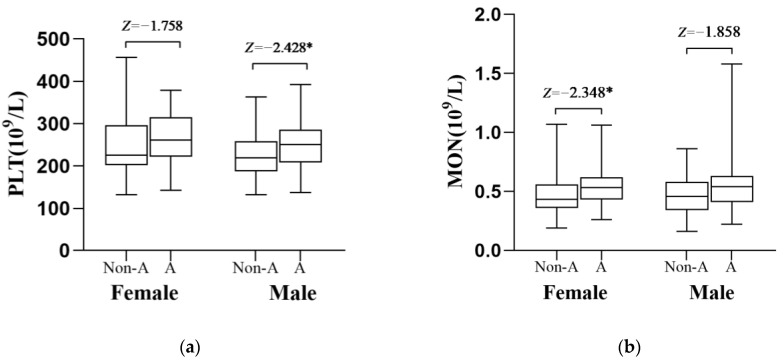
- PLT, MON, MHR, and PHR were significantly higher in the aggressive group (p < 0.05), while HDL, NEU, LYM, NHR, and LHR did not differ significantly between groups.
- In the aggressive group, MOAS total weighted scores correlated positively with NHR (r = 0.289, p < 0.01), LHR (r = 0.213, p < 0.05), and MHR (r = 0.238, p < 0.01).
- In binary logistic regression, higher MHR (β = 1.529, OR = 4.616, p = 0.026) and positive symptom scores (β = 0.071, OR = 1.047, p = 0.007) were significant predictors of aggression; gender, NHR, LHR, and PHR were not.
Methods
- Cross-sectional study of 214 schizophrenia inpatients aged 18–65 at The Affiliated Xuzhou Eastern Hospital of Xuzhou Medical University, January 2021–June 2022, diagnosed by DSM-5 and free of psychiatric, immunosuppressive, or lipid-lowering drugs for at least 3 months.
- Aggression was assessed with the Modified Overt Aggression Scale (MOAS); total weighted scores > 5 defined the aggressive group. Symptom severity was assessed with PANSS. Blood samples measured PLT, NEU, LYM, MON, and HDL, and NHR, PHR, MHR, and LHR were calculated.
- Analyses used Shapiro–Wilk tests, median/IQR, Mann–Whitney U tests, chi-square tests, Spearman correlations in the aggressive group, and binary logistic regression including variables with p < 0.05.
Limitations
- The paper states that the cross-sectional design cannot demonstrate causation and that longitudinal study is needed.
- The paper states that subjects were not first-episode schizophrenia patients, no healthy control group was used, and prior medications or other drugs may have had effects.
- The paper notes that other cholesterol types were not included, and that the MHR odds ratio confidence interval ranged from nearly 1.2 to 17.750, suggesting possible small sample size or modest MHR variance; it also states that smoking, alcoholism, hormone levels, job, diet, and exercise were not addressed in the analysis.
Model-written summary. Check it against the paper before relying on it.
Integrity signals
Registry
Cites
Statistics
Figures
Verification
Claims the paper makes
1 Valid · 0 Not valid · 5 Not checked · 46 Own results and interpretations
A result the paper reports from its own data — it cites no other source for it, so there is none to check. The quote shows it is in the paper.
In the paper
“The LHR was positively correlated with total weighted scores (r = 0.213, p < 0.05) and physical aggression (r = 0.215, p < 0.05).”
§ The Predictive Value of Monocyte/High-Density Lipoprotein Ratio (MHR) and Positive Symptom Scores for Aggression in Patients with Schizophrenia > 3. Results > 3.4. Correlations among the NHR, LHR, MHR, PHR and the MOAS in the Aggressive Group
plainstates an association- Asserted: passes — The authors put it forward as true.
- Checkable: passes — It can be checked against evidence.
- Load-bearing: passes — The paper’s conclusions depend on it.
- Based: passes — The paper gives a reason why it holds.
A result the paper reports from its own data — it cites no other source for it, so there is none to check. The quote shows it is in the paper.
In the paper
“A higher MHR (β = 1.529, OR = 4.616, p = 0.026) and positive symptom scores (β = 0.071, OR = 1.047, p = 0.007) were significant predictors of aggression in schizophrenia patients.”
- Also stated in: § 3.5. The Related Factors for Aggression in Schizophrenia · plain
“The result which operated by likelihood ratio revealed that a higher MHR (β = 1.529, OR = 4.616, p < 0.05) and positive symptom scores (β = 0.071, OR = 1.047, p < 0.05) were significant predictors of aggression, whereas gender (p = 0.055), NHR (p = 0.692), LHR (p = 0.264) and PHR (p = 0.321) were not.”
§ The Predictive Value of Monocyte/High-Density Lipoprotein Ratio (MHR) and Positive Symptom Scores for Aggression in Patients with Schizophrenia > Abstract
plainstates an association- Asserted: passes — The authors put it forward as true.
- Checkable: passes — It can be checked against evidence.
- Load-bearing: passes — The paper’s conclusions depend on it.
- Based: passes — The paper gives a reason why it holds.
- Also stated in: § 3.5. The Related Factors for Aggression in Schizophrenia · plain
A result the paper reports from its own data — it cites no other source for it, so there is none to check. The quote shows it is in the paper.
In the paper
“Aggressive patients’ positive symptom scores were greater than those of non-aggressive patients in this study.”
§ The Predictive Value of Monocyte/High-Density Lipoprotein Ratio (MHR) and Positive Symptom Scores for Aggression in Patients with Schizophrenia > 4. Discussion
plainstates an association- Asserted: passes — The authors put it forward as true.
- Checkable: passes — It can be checked against evidence.
- Load-bearing: passes — The paper’s conclusions depend on it.
- Based: passes — The paper gives a reason why it holds.
A result the paper reports from its own data — it cites no other source for it, so there is none to check. The quote shows it is in the paper.
In the paper
“The values of PLT, MON, MHR and PHR in the aggressive group were considerably higher (p < 0.05).”
- Also stated in: § 3.2. Comparison of Hematological Parameters in the Two Groups · plain
“All of the aforementioned indices—aside from HDL, NEU, LYM, NHR, and LHR—revealed differences between the two groups.”
- Also stated in: § 4. Discussion · plain
“Our analysis detected a significant increase in the values of MON, PLT, PHR and MHR in schizophrenia patients with aggression.”
§ The Predictive Value of Monocyte/High-Density Lipoprotein Ratio (MHR) and Positive Symptom Scores for Aggression in Patients with Schizophrenia > Abstract
plainstates an associationn = 94 ·- Asserted: passes — The authors put it forward as true.
- Checkable: passes — It can be checked against evidence.
- Load-bearing: passes — The paper’s conclusions depend on it.
- Based: passes — The paper gives a reason why it holds.
- Also stated in: § 3.2. Comparison of Hematological Parameters in the Two Groups · plain
A result the paper reports from its own data — it cites no other source for it, so there is none to check. The quote shows it is in the paper.
In the paper
“The NHR (r = 0.289, p < 0.01), LHR (r = 0.213, p < 0.05) and MHR (r = 0.238, p < 0.05) values of aggressive schizophrenia patients were positively correlated with the total weighted scores of the MOAS.”
- Also stated in: § 3.4. Correlations among the NHR, LHR, MHR, PHR and the MOAS in the Aggressive Group · plain
“The value of the NHR was significantly positively correlated with total weighted scores (r = 0.289, p < 0.01) and auto-aggression (r = 0.319, p < 0.01).”
§ The Predictive Value of Monocyte/High-Density Lipoprotein Ratio (MHR) and Positive Symptom Scores for Aggression in Patients with Schizophrenia > Abstract
plainstates an association- Asserted: passes — The authors put it forward as true.
- Checkable: passes — It can be checked against evidence.
- Load-bearing: unclear — It is unclear whether the paper’s conclusions depend on it.
- Based: passes — The paper gives a reason why it holds.
- Also stated in: § 3.4. Correlations among the NHR, LHR, MHR, PHR and the MOAS in the Aggressive Group · plain
23 more claims
Create a free account to see all 52 claims and to verify the 9 references still open.
- It may state two separate claims as one. 8
- Probably not a substantial claim. 16
Claims other papers make about this one
Each is checked against this paper’s own text: does it say what the citing paper says it does?
The source backs part of the claim, not all of it — or backs it for a different population, condition or comparison.
In the citing paper
“MHR in schizophrenia 19,22,68,69 , NHR, PHR and LHR in schizophrenia 19,22 , NLR and MHR in bipolar depression 19,36,37 , MHR in unipolar depression 70 and MHR in post-stroke depression 71 were found higher.”
From Neutrophil/high-density lipoprotein cholesterol (HDL), monocyte/HDL and platelet/HDL ratios are increased in acute mania as markers of inflammation, even after controlling for confounding factors (2023) · cites this paper as [22]
Experimental — accuracy not yet measuredThe source backs part of the claim, not all of it — or backs it for a different population, condition or comparison.
In the citing paper
“MHR in schizophrenia 19,22,68,69 , NHR, PHR and LHR in schizophrenia 19,22 , NLR and MHR in bipolar depression 19,36,37 , MHR in unipolar depression 70 and MHR in post-stroke depression 71 were found higher.”
From Neutrophil/high-density lipoprotein cholesterol (HDL), monocyte/HDL and platelet/HDL ratios are increased in acute mania as markers of inflammation, even after controlling for confounding factors (2023) · cites this paper as [22]
Experimental — accuracy not yet measuredThe check wasn’t confident either way, so it gives no verdict — never disputed.
In the citing paper
“MHR in schizophrenia 19,22,68,69 , NHR, PHR and LHR in schizophrenia 19,22 , NLR and MHR in bipolar depression 19,36,37 , MHR in unipolar depression 70 and MHR in post-stroke depression 71 were found higher.”
From Neutrophil/high-density lipoprotein cholesterol (HDL), monocyte/HDL and platelet/HDL ratios are increased in acute mania as markers of inflammation, even after controlling for confounding factors (2023) · cites this paper as [22]
Experimental — accuracy not yet measuredIn the citing paper
“MHR in schizophrenia 19,22,68,69 , NHR, PHR and LHR in schizophrenia 19,22 , NLR and MHR in bipolar depression 19,36,37 , MHR in unipolar depression 70 and MHR in post-stroke depression 71 were found higher.”
Self-check
Percentages, sums and reported differences re-computed from the paper’s own numbers.
Each contradiction between two passages listed here was confirmed by an independent check.
Rated minor: it would not touch a result — a value no result rests on, a p-value that stays on the same side of the significance level, or a conflict that is clerical, resolved elsewhere in the paper, or outside its own findings.
In the paper
§ The Predictive Value of Monocyte/High-Density Lipoprotein Ratio (MHR) and Positive Symptom Scores for Aggression in Patients with Schizophrenia > 4. Discussion > Study Limitations and Future Prospects
“Thirdly, other influencing factors were controlled, such as smoking, alcoholism, the levels of hormones, job, diet and exercise.”
§ The Predictive Value of Monocyte/High-Density Lipoprotein Ratio (MHR) and Positive Symptom Scores for Aggression in Patients with Schizophrenia > 4. Discussion
“Another reason for the above results may be that the influences of diet, habits and sports were not considered.”
Citations
Cites
The Positive and Negative Syndrome Scale (PANSS) for schizophrenia.
Kay, S. R., Fiszbein, A., & Opler, L. A. (1987) · Schizophrenia Bulletin · doi:10.1093/schbul/13.2.261 · Cited by 21,378
Diagnostic and Statistical Manual of Mental Disorders(DSM)
(2008) · Encyclopedia of Counseling · doi:10.4135/9781412963978.n182 · Cited by 10,830
Battle, D. E. (2013) · CoDAS · doi:10.1590/s2317-17822013000200017 · Cited by 1,569
Cytokine-Associated Emotional and Cognitive Disturbances in Humans
Reichenberg, A., Yirmiya, R., Schuld, A., Kraus, T., Haack, M., Morag, A., & Pollmächer, T. (2001) · Archives of General Psychiatry · doi:10.1001/archpsyc.58.5.445 · Cited by 1,365 · cited 1×
“The study of injecting lipopolysaccharide into healthy volunteers showed that serum IL-6 increased in the peripheral immune system, and symptoms such as depression, anxiety and cognitive decline were caused [65].”
BackgroundNeutrophil: A Cell with Many Roles in Inflammation or Several Cell Types?
Rosales, C. (2018) · Frontiers in Physiology · doi:10.3389/fphys.2018.00113 · Cited by 1,334
Jauhar, S., Johnstone, M., & McKenna, P. J. (2022) · The Lancet · doi:10.1016/s0140-6736(21)01730-x · Cited by 996
In vivo labeling with 2H2O reveals a human neutrophil lifespan of 5.4 days
Pillay, J., den Braber, I., Vrisekoop, N., Kwast, L. M., de Boer, R. J., Borghans, J. A. M., Tesselaar, K., & Koenderman, L. (2010) · Blood · doi:10.1182/blood-2010-01-259028 · Cited by 872
A National Study of Violent Behavior in Persons With Schizophrenia
Swanson, J. W., Swartz, M. S., Van Dorn, R. A., Elbogen, E. B., Wagner, H. R., Rosenheck, R. A., Stroup, T. S., McEvoy, J. P., & Lieberman, J. A. (2006) · Archives of General Psychiatry · doi:10.1001/archpsyc.63.5.490 · Cited by 807 · cited 1×
“6% of the participants exhibiting severe violent behavior [6].”
BackgroundMoreno-Küstner, B., Martín, C., & Pastor, L. (2018) · PLOS ONE · doi:10.1371/journal.pone.0195687 · Cited by 562
The role of platelets in inflammation
Storey, R., & Thomas, M. (2015) · Thrombosis and Haemostasis · doi:10.1160/th14-12-1067 · Cited by 534 · cited 1×
“Interestingly, there is growing evidence that suggests platelets (PLT) play a role in schizophrenia pathophysiology via the serotonin route and inflammation theory [24,25].”
BackgroundDiagnostic and Statistical Manual of Mental Disorders (DSM)
Matsuno, E. (2024) · The Sage Encyclopedia of LGBTQ+ STUDIES · doi:10.4135/9781071891414.n132 · Cited by 510
The effects of antipsychotic therapy on serum lipids: a comprehensive review
Meyer, J. M., & Koro, C. E. (2004) · Schizophrenia Research · doi:10.1016/j.schres.2004.01.014 · Cited by 407 · cited 1×
“An increasing number of studies indicated that antipsychotic medicines’ multi-receptor mechanism of action frequently leads to metabolic problems in patients, including weight gain, hyperglycemia and hyperlipidemia [81].”
BackgroundIozzino, L., Ferrari, C., Large, M., Nielssen, O., & de Girolamo, G. (2015) · PLOS ONE · doi:10.1371/journal.pone.0128536 · Cited by 401
Krakowski, M. I., Czobor, P., Citrome, L., Bark, N., & Cooper, T. B. (2006) · Archives of General Psychiatry · doi:10.1001/archpsyc.63.6.622 · Cited by 352 · cited 1×
“Atypical antipsychotics, including clozapine, risperidone, quetiapine and ziprasidone, were widely believed to be the most effective medications for treating individuals with aggressive and violent behavior in the past [83,84].”
BackgroundA review and meta‐analysis of the patient factors associated with psychiatric in‐patient aggression
Dack, C., Ross, J., Papadopoulos, C., Stewart, D., & Bowers, L. (2013) · Acta Psychiatrica Scandinavica · doi:10.1111/acps.12053 · Cited by 265
Molecular Mechanisms of SERT in Platelets: Regulation of Plasma Serotonin Levels
Mercado, C. P., & Kilic, F. (2010) · Molecular Interventions · doi:10.1124/mi.10.4.6 · Cited by 261 · cited 1×
“Interestingly, there is growing evidence that suggests platelets (PLT) play a role in schizophrenia pathophysiology via the serotonin route and inflammation theory [24,25].”
BackgroundPillinger, T., D’Ambrosio, E., McCutcheon, R., & Howes, O. D. (2019) · Molecular Psychiatry · doi:10.1038/s41380-018-0058-9 · Cited by 230
Weltens, I., Bak, M., Verhagen, S., Vandenberk, E., Domen, P., van Amelsvoort, T., & Drukker, M. (2021) · PLOS ONE · doi:10.1371/journal.pone.0258346 · Cited by 200
Violence in schizophrenia and bipolar disorder.
Volavka, J. (2013) · PubMed · Cited by 175
Ranjit, N., Diez-Roux, A. V., Shea, S., Cushman, M., Ni, H., & Seeman, T. (2007) · Circulation · doi:10.1161/circulationaha.107.706226 · Cited by 168 · cited 5×
“IL-6 levels were found to be significantly higher in intermittent explosive disorder (IED) patients compared to controls, according to Emil et al. [54].”
BackgroundInfluentialHostility and pain are related to inflammation in older adults
Graham‐Engeland, J. E., Robles, T. F., Kiecolt‐Glaser, J. K., Malarkey, W. B., Bissell, M. G., & Glaser, R. (2006) · Brain Behavior and Immunity · doi:10.1016/j.bbi.2005.11.002 · Cited by 155
Coccaro, E. F., Lee, R., & Coussons-Read, M. (2014) · JAMA Psychiatry · doi:10.1001/jamapsychiatry.2013.3297 · Cited by 154
Pogorzelska, K., Krętowska, A., Krawczuk-Rybak, M., & Sawicka-Żukowska, M. (2020) · Advances in Medical Sciences · doi:10.1016/j.advms.2020.05.002 · Cited by 153 · cited 1×
“In many physiological and pathological circumstances, activated platelets exhibit inflammatory properties, and can also control endothelial cell permeability [49].”
BackgroundThe neurobiology of aggression and rage: Role of cytokines
Zalcman, S. S., & Siegel, A. (2006) · Brain Behavior and Immunity · doi:10.1016/j.bbi.2006.05.002 · Cited by 143 · cited 1×
“Furthermore, the application of proinflammatory proteins can boost defensive anger in cats [13].”
BackgroundNazir, S., Jankowski, V., Bender, G., Zewinger, S., Rye, K.-A., & van der Vorst, E. P. C. (2020) · Advanced Drug Delivery Reviews · doi:10.1016/j.addr.2020.10.006 · Cited by 140
Soran, H., Hama, S., Yadav, R., & Durrington, P. N. (2012) · Current Opinion in Lipidology · doi:10.1097/mol.0b013e328355ca25 · Cited by 137
Özdin, S., & Böke, Ö. (2019) · Psychiatry Research · doi:10.1016/j.psychres.2018.11.043 · Cited by 129
Course of Violence in Patients With Schizophrenia: Relationship to Clinical Symptoms
Krakowski, M., Czobor, P., & Chou, J. C.-Y. (1999) · Schizophrenia Bulletin · doi:10.1093/oxfordjournals.schbul.a033397 · Cited by 127
Huang, J.-B., Chen, Y.-S., Ji, H.-Y., Xie, W.-M., Jiang, J., Ran, L.-S., Zhang, C.-T., & Quan, X.-Q. (2020) · Lipids in Health and Disease · doi:10.1186/s12944-020-01238-2 · Cited by 123
Self-citationThe Cost of Staff Injuries From Inpatient Violence
Hunter, M., & Carmel, H. (1992) · Psychiatric Services · doi:10.1176/ps.43.6.586 · Cited by 118 · cited 1×
“The cautious estimate for the average cost per injury was $5719, for a total annual loss of $766,290 [11].”
BackgroundCarrillo, M., Ricci, L. A., Coppersmith, G., & Melloni, R. H. (2009) · Psychopharmacology · doi:10.1007/s00213-009-1543-2 · Cited by 116 · cited 1×
“Inflammatory factors or inflammatory cells not only participate in the autoimmune reaction leading to brain dysfunction, but also decrease the activity of dopamine and 5-HT in the frontal lobe and hippocampus [56].”
BackgroundInflammatory Mediators in Mood Disorders: Therapeutic Opportunities
Pfau, M. L., Ménard, C., & Russo, S. J. (2018) · Annual Review of Pharmacology and Toxicology · doi:10.1146/annurev-pharmtox-010617-052823 · Cited by 115 · cited 1×
“As the largest white blood cells in the body, monocytes are crucial for the release of cytokines that are pro-inflammatory and pro-oxidant [47].”
BackgroundLiu, Z., Fan, Q., Wu, S., Wan, Y., & Lei, Y. (2021) · Lipids in Health and Disease · doi:10.1186/s12944-021-01462-4 · Cited by 112 · cited 1×
“The NHR not only has strong predictive value for Parkinson’s disease, but is also closely related to disease duration [32].”
BackgroundMeta‐analysis of total and differential white blood cell counts in schizophrenia
Jackson, A. J., & Miller, B. J. (2020) · Acta Psychiatrica Scandinavica · doi:10.1111/acps.13140 · Cited by 103 · cited 1×
“Lymphocytes (LYM), neutrophils (NEU) and monocytes (MON) play significant roles in the inflammatory response [21].”
BackgroundConnecting cytokines and brain: a review of current issues.
Quan, N., & Herkenham, M. A. (2002) · PubMed · doi:10.14670/hh-17.273 · Cited by 101 · cited 1×
“For the purposes of the research on inflammatory factors and their relationship, we presumptively believe that inflammatory factors not only have the ability to directly affect particular brain regions, but also to activate the distal neural circuit by triggering the primary triggers at a distance, which in turn trigg…”
BackgroundWei, Y., Wang, T., Li, G., Feng, J., Deng, L., Xu, H., Yin, L., Ma, J., Chen, D., & Chen, J. (2022) · Frontiers in Psychiatry · doi:10.3389/fpsyt.2022.941728 · Cited by 99
Prognostic value of the systemic inflammation response index in human malignancy: A meta-analysis
Wei, L., Xie, H., & Yan, P. (2020) · Medicine · doi:10.1097/md.0000000000023486 · Cited by 93
Prevalence of aggression in hospitalized patients with schizophrenia in C hina: A meta‐analysis
Zhou, J., Zhong, B., Xiang, Y., Chen, Q., Cao, X., Correll, C. U., Ungvari, G. S., Chiu, H. F. K., Lai, K. Y. C., & Wang, X. (2015) · Asia-Pacific Psychiatry · doi:10.1111/appy.12209 · Cited by 93
Zaborskis, A., Ilionsky, G., Tesler, R., & Heinz, A. (2019) · Crisis · doi:10.1027/0227-5910/a000536 · Cited by 84 · cited 1×
“Some researchers found that girls engaged in more indirect aggression, such as cyber-aggression, when compared with boys [73].”
Jialal, I., Jialal, G., & Adams‐Huet, B. (2021) · Diabetes/Metabolism Research and Reviews · doi:10.1002/dmrr.3403 · Cited by 83 · cited 1×
“Researchers also discovered that the PHR is a valid biomarker of nascent metabolic syndrome [64].”
BackgroundCoccaro, E. F., & Lee, R. (2010) · Journal of Neural Transmission · doi:10.1007/s00702-009-0359-x · Cited by 76 · cited 1×
“A study reported that the attack score and concentration of 5-hydroxyindoleacetic acid in cerebrospinal fluid showed a strong negative connection, indicating that the severity of such violent behavior was inversely connected to 5-HT [55].”
BackgroundThe Modified Overt Aggression Scale
Knoedler, D. W. (1989) · American Journal of Psychiatry · doi:10.1176/ajp.146.8.1081b · Cited by 74 · cited 2×
“According to previous studies [40], subjects with total weighted scores greater than five were assigned to the aggressive group.”
MethodCoccaro, E. F. (2005) · Journal of Psychiatric Research · doi:10.1016/j.jpsychires.2005.04.005 · Cited by 73
Lipid rafts and pathogens: the art of deception and exploitation
Bukrinsky, M., Mukhamedova, N., & Sviridov, D. (2019) · Journal of Lipid Research · doi:10.1194/jlr.tr119000391 · Cited by 69 · cited 1×
“It has been shown that lipid rafts play an important role in neurodegenerative diseases [30].”
BackgroundYin, W., Gallagher, N. R., Sawicki, C. M., McKim, D. B., Godbout, J. P., & Sheridan, J. F. (2019) · Brain, Behavior, and Immunity · doi:10.1016/j.bbi.2019.01.015 · Cited by 67 · cited 1×
“A study found that anxiety, depression and hostile emotions promote monocyte accumulation [48].”
BackgroundWu, Y., Kang, R., Yan, Y., Gao, K., Li, Z., Jiang, J., Chi, X., & Xia, L. (2018) · Journal of International Medical Research · doi:10.1177/0300060518786634 · Cited by 66
Coccaro, E. F., Lee, R., & Gozal, D. (2014) · Biological Psychiatry · doi:10.1016/j.biopsych.2014.01.014 · Cited by 63 · cited 1×
“According to one study, oxidative stress may play a role in neuro-modulatory activity; it indirectly affects aggressiveness [57].”
BackgroundBiological Aspects of Aggression and Violence in Schizophrenia
Cho, W., Shin, W.-S., An, I., Bang, M., Cho, D.-Y., & Lee, S.-H. (2019) · Clinical Psychopharmacology and Neuroscience · doi:10.9758/cpn.2019.17.4.475 · Cited by 62 · cited 1×
“At the moment, clozapine may be the only antipsychotic drug that effectively curbs violent behavior [80].”
BackgroundNeutrophil/lymphocyte, platelet/lymphocyte and monocyte/lymphocyte ratios in schizophrenia
Zhu, X., Zhou, J. L., Zhu, Y., Yan, F., Han, X., Tan, Y., & Li, R. (2021) · Australasian Psychiatry · doi:10.1177/10398562211022753 · Cited by 59 · cited 1×
“Increased levels of blood lymphocytes, monocytes, neutrophils and platelets, along with an increase in severity, were associated with the onset of aggressive behavior in patients with schizophrenia [23].”
BackgroundBhatt, S., Bhatt, R., Zalcman, S. S., & Siegel, A. (2007) · Brain Behavior and Immunity · doi:10.1016/j.bbi.2007.07.011 · Cited by 57 · cited 1×
“In other animal models, aggressive behavior was induced by the injection of proinflammatory cytokines in the key brain areas [15].”
BackgroundTreatment of acute agitation in psychotic disorders.
Mohr, P., Pečeňák, J., Švestka, J., Swingler, D., & Treuer, T. (2005) · PubMed · Cited by 57
Gender, Race, and Aggression in Mainstream Pornography
Shor, E., & Golriz, G. (2018) · Archives of Sexual Behavior · doi:10.1007/s10508-018-1304-6 · Cited by 56 · cited 1×
“Yet a study about borderline personality disorder showed that gender difference was not significant in aggression [72].”
BackgroundAraya, T., Ebnemelek, E., & Getachew, R. (2020) · BioMed Research International · doi:10.1155/2020/7571939 · Cited by 55 · cited 2×
“According to many previous studies, men are more likely than women to engage in violent behavior [60,70,71].”
BackgroundResultFanning, J. R., Lee, R., Gozal, D., Coussons‐Read, M. E., & Coccaro, E. F. (2015) · Biological Psychology · doi:10.1016/j.biopsycho.2015.09.003 · Cited by 53 · cited 1×
“Immune system disruptions affect brain processes related to controlling aggressive behavior [19,20].”
BackgroundHuang, W., Ren, F., Luo, L., Zhou, J. M., Huang, D., Pan, Z., & Tang, L. (2020) · Lara D. Veeken · doi:10.1093/rheumatology/keaa266 · Cited by 50 · cited 2×
“According to an earlier study, both psychiatric and neurodegenerative diseases have been linked to chronic inflammation of specific brain areas, which is defined by an infiltration of peripheral immune cells that may aggravate brain damage and lead to symptomatic clinical presentation [46].”
BackgroundBhatt, S., & Siegel, A. (2005) · Behavioural Brain Research · doi:10.1016/j.bbr.2005.09.011 · Cited by 48
Macrophage Regulation of Granulopoiesis and Neutrophil Functions
Schulz, C., Petzold, T., & Ishikawa-Ankerhold, H. C. (2020) · Antioxidants and Redox Signaling · doi:10.1089/ars.2020.8203 · Cited by 46
Aggression as an independent entity even in psychosis- the role of inflammatory cytokines
Das, S. K., Deuri, S. K., Sarmah, A., Pathak, K., Baruah, A., Sengupta, S., Mehta, S., Avinash, P., Kalita, K. N., & Hazarika, J. (2016) · Journal of Neuroimmunology · doi:10.1016/j.jneuroim.2016.01.012 · Cited by 46 · cited 1×
“For the purposes of the research on inflammatory factors and their relationship, we presumptively believe that inflammatory factors not only have the ability to directly affect particular brain regions, but also to activate the distal neural circuit by triggering the primary triggers at a distance, which in turn trigg…”
BackgroundMelo, M. C. A., Garcia, R. F., de Araújo, C. F. C., Abreu, R. L. C., de Bruin, P. F. C., & de Bruin, V. M. S. (2019) · Psychiatry Research · doi:10.1016/j.psychres.2018.10.077 · Cited by 45
Low cholesterol, impulsivity and violence revisited
Tomson-Johanson, K., & Harro, J. (2018) · Current Opinion in Endocrinology Diabetes and Obesity · doi:10.1097/med.0000000000000395 · Cited by 44
Zhang, Q., Hong, W., Li, H., Peng, F., Wang, F., Li, N., Xiang, H., Zhang, Z., Su, Y., Huang, Y., et al. (2017) · International Journal of Psychophysiology · doi:10.1016/j.ijpsycho.2017.02.001 · Cited by 42 · cited 1×
“In 2017, Zhang et found that the hsCRP/IL-10 ratio was positively correlated with aggression [67].”
BackgroundBhatt, S., Zalcman, S. S., Hassanain, M., & Siegel, A. (2005) · Neuroscience · doi:10.1016/j.neuroscience.2005.01.065 · Cited by 42
Positive Correlation Between Serum Interleukin‐1β and State Anger in Rugby Athletes
Pesce, M., Speranza, L., Franceschelli, S., Ialenti, V., Iezzi, I., Patruno, A., Rizzuto, A., Robazza, C., Lutiis, M. A. D., Felaco, M., et al. (2012) · Aggressive Behavior · doi:10.1002/ab.21457 · Cited by 38 · cited 1×
“A different study on athletes found that when a game was coming up, football players’ rage triggered their immune system, leading to elevated IL-1 levels [66].”
BackgroundCirculating inflammatory markers impact cognitive functions in bipolar depression
Poletti, S., Mazza, M. G., Calesella, F., Vai, B., Lorenzi, C., Manfredi, E., Colombo, C., Zanardi, R., & Benedetti, F. (2021) · Journal of Psychiatric Research · doi:10.1016/j.jpsychires.2021.05.071 · Cited by 37
He, Y., Tanaka, A., Kishi, T., Li, Y., Matsunaga, M., Tanihara, S., Iwata, N., & Ota, A. (2022) · Neuropsychopharmacology Reports · doi:10.1002/npr2.12286 · Cited by 36 · cited 1×
“Schizophrenia, with a global prevalence of 1%, is a multi-system disease with no recognized cause, and is one of the fifteen leading causes of disability [1,2].”
BackgroundElevated Platelet Parameter in First-Episode Schizophrenia Patients: A Cross-Sectional Study
Yu, Q., Weng, W., Zhou, H., Tang, Y., Ding, S., Huang, K., & Liu, Y. (2020) · Journal of Interferon & Cytokine Research · doi:10.1089/jir.2020.0117 · Cited by 33 · cited 2×
“Similar to earlier research projects, our findings demonstrated that aggressive behavior in schizophrenia is associated with significantly higher PLT and MON counts [26,51].”
BackgroundResultNeural mechanisms of persistent aggression
Guthman, E. M., & Falkner, A. L. (2022) · Current Opinion in Neurobiology · doi:10.1016/j.conb.2022.102526 · Cited by 32 · cited 1×
“By changing the link between brain activity and the “threshold” for aggression, sex hormones promote persistent aggressive behavior [75].”
BackgroundGoossens, J., Morrens, M., & Coppens, V. (2021) · Molecular Diagnosis & Therapy · doi:10.1007/s40291-021-00516-8 · Cited by 31 · cited 1×
“The level of HDL fluctuates when inflammation occurs in the body, and it can prevent the activation of monocytes [28].”
BackgroundSahpolat, M., Ayar, D., Ari, M., & Karaman, M. A. (2021) · Clinical Psychopharmacology and Neuroscience · doi:10.9758/cpn.2021.19.1.112 · Cited by 31 · cited 2×
“first found significant differences in the MHR between patients with schizophrenia and healthy populations in a small sample study [37].”
BackgroundAhrén‐Moonga, J., Lekander, M., von Blixen, N., Rönnelid, J., Holmgren, S., & af Klinteberg, B. (2010) · Neuropsychobiology · doi:10.1159/000321832 · Cited by 30
Eriksen, B. M. S., Bjørkly, S. K., Lockertsen, Ø., Færden, A., & Roaldset, J. O. (2017) · Psychiatry Research · doi:10.1016/j.psychres.2017.05.010 · Cited by 28 · cited 1×
“Low cholesterol levels have been linked to an increased risk of hostile, aggressive or suicidal conduct, according to numerous research studies [60,61].”
ResultElevated monocyte-to-HDL cholesterol ratio predicts post-stroke depression
Li, Y., Zhang, M., Xue, M., Liu, D., & Sun, J. (2022) · Frontiers in Psychiatry · doi:10.3389/fpsyt.2022.902022 · Cited by 27 · cited 1×
“Such inflammatory markers have also been correlated with depressive disorders [35,36].”
BackgroundPotential role of anti-inflammatory HDL subclasses in metabolic unhealth/obesity
Tang, H., Xiang, Z., Li, L., Shao, X., Zhou, Q., You, X., Xiong, C., Ning, J., Chen, T., Deng, D., et al. (2021) · Artificial Cells, Nanomedicine, and Biotechnology · doi:10.1080/21691401.2021.1961798 · Cited by 27
O’Brien, J. R., Loi, E. C., Byrne, M. L., Zalewski, M., & Casement, M. D. (2021) · Child Psychiatry & Human Development · doi:10.1007/s10578-021-01224-4 · Cited by 26
Kohsari, M., Moradinazar, M., Rahimi, Z., Najafi, F., Pasdar, Y., & Shakiba, E. (2022) · Wiener klinische Wochenschrift · doi:10.1007/s00508-022-02029-8 · Cited by 24 · cited 1×
“Significantly positive correlations between the MHR and LHR and cardiometabolic risk variables were observed [63].”
BackgroundKadihasanoglu, M., Karabay, E., Yucetas, U., Erkan, E., & Ozbek, E. (2018) · Aktuelle Urologie · doi:10.1055/s-0042-123163 · Cited by 23
The Neutrophil‐Lymphocyte Ratio Is Positively Correlated with Aggression in Schizophrenia
Tong, Z., Zhu, J., Wang, J., Yang, Y.-J., & Hu, W. (2022) · BioMed Research International · doi:10.1155/2022/4040974 · Cited by 21 · cited 2×
“Similar to earlier research projects, our findings demonstrated that aggressive behavior in schizophrenia is associated with significantly higher PLT and MON counts [26,51].”
BackgroundResultKelly, A. M., Abreu, J. A. G., & Thompson, R. R. (2022) · Proceedings of the Royal Society B Biological Sciences · doi:10.1098/rspb.2022.0453 · Cited by 21 · cited 1×
“Nevertheless, studies in Mongolian gerbils have shown that androgens can alter pro-social responses over both short- and long-term periods, promoting or inhibiting pro-social behavior depending on the social situation, but not affecting aggression [76].”
BackgroundPan, Y.-Z., Xie, X., Tang, Y., Ng, C. H., Wang, G., & Xiang, Y. (2021) · Journal of Affective Disorders · doi:10.1016/j.jad.2021.09.071 · Cited by 19 · cited 2×
“According to many previous studies, men are more likely than women to engage in violent behavior [60,70,71].”
BackgroundResultNedic Erjavec, G., Tudor, L., Nikolac Perkovic, M., Podobnik, J., Dodig Curkovic, K., Curkovic, M., Svob Strac, D., Cusek, M., Bortolato, M., & Pivac, N. (2022) · Progress in Neuro-Psychopharmacology and Biological Psychiatry · doi:10.1016/j.pnpbp.2022.110542 · Cited by 18 · cited 1×
“Secondly, a major source of peripheral 5-hydroxytryptamine (5-HT) linked to aggressive behavior is platelets [50].”
BackgroundGöttlich, M., Buades‐Rotger, M., Wiechert, J., Beyer, F., & Krämer, U. M. (2021) · Neuropsychologia · doi:10.1016/j.neuropsychologia.2021.108113 · Cited by 14
Pillinger, T., D’Ambrosio, E., McCutcheon, R. A., & Howes, O. D. (2018) · Molecular Psychiatry · doi:10.1038/s41380-018-0275-2 · Cited by 14 · cited 1×
“Schizophrenia, with a global prevalence of 1%, is a multi-system disease with no recognized cause, and is one of the fifteen leading causes of disability [1,2].”
BackgroundDepartment of Psychiatry, D. U. M. F., Uyar, B., Budak, E. A., & Department of Psychiatry, D. U. M. F. (2022) · PSYCHIATRIA DANUBINA · doi:10.24869/psyd.2022.687 · Cited by 12 · cited 1×
“Such inflammatory markers have also been correlated with depressive disorders [35,36].”
BackgroundHermans, R. A., Ringeling, L. T., Liang, K., Kloosterboer, S. M., de Winter, B. C. M., Hillegers, M. H. J., Koch, B. C. P., & Dierckx, B. (2022) · BMC Psychiatry · doi:10.1186/s12888-022-04445-6 · Cited by 10
Clozapine treatment of schizophrenia: implications for forensic psychiatry
Buckley, P. F., Kausch, O., & Gardner, G. (1995) · Journal of Clinical Forensic Medicine · doi:10.1016/1353-1131(95)90034-9 · Cited by 10 · cited 1×
“Atypical antipsychotics, including clozapine, risperidone, quetiapine and ziprasidone, were widely believed to be the most effective medications for treating individuals with aggressive and violent behavior in the past [83,84].”
BackgroundMongirdienė, A., Laukaitienė, J., Skipskis, V., Kuršvietienė, L., & Liobikas, J. (2021) · Medicina · doi:10.3390/medicina57060557 · Cited by 6 · cited 1×
“One study found that patients with higher neutrophil counts also had higher PLT and MON counts [44].”
BackgroundAnalysis of Lipids and Lipid Rafts in Borrelia
Toledo, A. M., Huang, Z., Benach, J. L., & London, E. (2017) · Methods in molecular biology · doi:10.1007/978-1-4939-7383-5_6 · Cited by 6 · cited 2×
“can change synaptic transmission and nerve plasticity, and can also affect the levels of serotonin and dopamine [29].”
BackgroundAydın, F. Y., Eynel, E., Oruç, İ., İnce, H., Yüksel, E., & Aydın, E. (2021) · Cureus · doi:10.7759/cureus.20345 · Cited by 6
Loi, E. C., Byrne, M. L., Zalewski, M., Casement, M. D., & O'Brien, J. (2020) · OSF Preprints (OSF Preprints) · Cited by 2
Cited by
Korkmaz, Ş. A., & Kızgın, S. (2023) · Current Medical Research and Opinion · doi:10.1080/03007995.2023.2260302 · Cited by 33
Sun, Y., Jiang, W., Yu, H., Zhang, J., Zhou, Y., Yin, F., Su, H., & Jia, Y. (2023) · BMC Psychiatry · doi:10.1186/s12888-023-05296-5 · Cited by 11
“The results of this study showed that aggressive behavior were positively correlated with positive symptoms and childhood traumas in patients with schizophrenia, corroborated by prior investigations [31, 32].”
ResultChen, L., Zheng, C., Luan, H., & Chen, X. (2024) · Journal of Inflammation Research · doi:10.2147/jir.s473528 · Cited by 10
“33 In our study, PHR levels were also elevated in AN-FES patients compared to HCs, while no significant differences were observed between CS and HCs. Interestingly, the AN-FES group had higher PLT counts than the CS group, suggesting a protective role for platelets in CS.”
BackgroundResultKaşak, M., Okumuş, H. G., Çelik, Y. S., Kırşan, F. Z., Öztürk, Y., & Efe, A. (2025) · Frontiers in Psychiatry · doi:10.3389/fpsyt.2025.1621767 · Cited by 10
Ma, J., Yuzhen, P., Zhen, L., Juan, W., Wang, H., & Ya-jia, L. (2025) · Frontiers in Public Health · doi:10.3389/fpubh.2025.1563742 · Cited by 4
Metadata
- Authors
- Cheng, N., Ma, H., Zhang, K., Zhang, C., & Geng, D.
- Affiliations
- Department of Psychiatry, First Clinical College, Xuzhou Medical University, Xuzhou 221000, China
- Xuzhou Medical College (CN)
- Corresponding author
- Zhang, Caiyi
- Geng, Deqin
- Venue
- Medicina
- Publisher
- MDPI AG
- Published
- 2023-03-03
- Volume
- 59
- Issue
- 3
- Pages
- 503
- ISSN
- 1010-660X (ISSN-L)
- 1648-9144
- PMC
- PMC10055014
- OpenAlex
- W4323318775
- Semantic Scholar
- 2e6ca8528b31cc360065b1a47cc2e7bb138f4512
- Cited by
- 17
- References
- 90
- Citations by year
- 2026: 3 · 2025: 5 · 2024: 6 · 2023: 3
- FWCI
- 3.46
- Type
- journal article
- Language
- en
- Open access
- gold
- doi.org
- Licence
- Locations
- Medicina (publishedVersion, cc-by)
- PubMed Central (publishedVersion, cc-by)
- PubMed (publishedVersion)
- DOAJ (DOAJ: Directory of Open Access Journals) (submittedVersion, cc-by-sa)
- Funders
- Jiangsu Health Commission Sponsored Medical Research Project (M2022111, JSWSJY20210703)
- Jiangsu Health Emergency Research Institute (M2022111, JSWSJY20210703)
- Topics
- Health Sciences › Medicine › Psychiatry and Mental health › Schizophrenia research and treatment
- Life Sciences › Neuroscience › Biological Psychiatry › Tryptophan and brain disorders
- Health Sciences › Medicine › Oncology › Inflammatory Biomarkers in Disease Prognosis
- Keywords
- schizophrenia, aggression, inflammatory markers, positive symptoms, Modified Overt Aggression Scale, risk stratification, inflammation, high-density lipoprotein, platelets, neutrophils, lymphocytes, monocytes
- MeSH terms
- Cross-Sectional Studies, Humans, Lipoproteins, HDL, Cholesterol, HDL, Monocytes, Retrospective Studies, Schizophrenia, Biomarkers
About these checks
Registry, retraction, Cites and statistics results are computed, not judged, with one exception: a printed reference that no index lists is read once by a model before it counts as a citation error. Claims are extracted by a model and kept only when their quote appears verbatim in the text; each cited source is then checked, with a model’s help, for whether it says what the claim relies on. Those verdicts can be wrong — read the claim’s quote and the cited source before relying on one.
The claim verdicts this report counts are experimental: their accuracy is not yet measured.
A language model drew the claims from the paper on 2026-10-06, under version 3 of the claim definition (model deepseek-v4.1-flash, prompt extract-v3).
A second model labelled each claim on 2026-10-06 (model jev-1.13-20260917, definition revision gold-guideline-v0.2).
Statistics and arithmetic are recomputed, not judged.
Confidence bands are shown only for fields calibrated on our annotated test set. None is calibrated yet, so no band is shown.
What counts as a claim ›How we measure confidence ›How we check this ›
Are you an author, or do you see a problem with this page? Request a review
Data sources
Bibliographic data: Semantic Scholar, OpenAlex, Crossref.
Contains information from the Semantic Scholar Academic Graph Datasets, made available under the ODC Attribution License (ODC-BY 1.0).
Semantic Scholar’s data is described in: Kinney, R., et al. (2023). The Semantic Scholar Open Data Platform. arXiv:2301.10140.
