

Visceral and Dysfunctional Adiposity Indices as Predictors of Insulin Resistance and Metabolic Syndrome in Women with Polycystic Ovary Syndrome: A Cross-Sectional Study
Open accessThe DOI matches its Crossref record; 35 of the 37 references it cites were found in a registry or an index; 17 of the 26 sources its claims cite were checked for support.
Abstract
Background and Objectives: Polycystic ovary syndrome (PCOS) is one of the most common endocrine disorders in women of reproductive age. Women with PCOS often have metabolic disorders such as insulin resistance (IR), type 2 diabetes (T2DM), obesity, and metabolic syndrome (MetS). The assessment of visceral adiposity and dysfunctional adipose tissue is crucial for understanding the metabolic risks associated with PCOS. The visceral adiposity index (VAI) and the dysfunctional adiposity index (DAI) are two novel metabolic indices that more specifically assess adipose tissue dysfunction and visceral fat accumulation. This study aimed to evaluate the clinical utility of VAI and DAI as predictive markers for metabolic complications such as insulin resistance (IR) and metabolic syndrome (MetS) in women with PCOS. Materials and Methods: This cross-sectional study included 92 women diagnosed with PCOS based on the 2023 revised Rotterdam criteria, as well as 68 healthy controls. Anthropometric and biochemical parameters, including fasting glucose, insulin, lipid profile, and hormonal markers, were recorded. VAI and DAI were calculated using established formulas derived from previous validated studies. Results: The mean VAI in PCOS patients was 4.26 ± 3.23, compared to 2.61 ± 1.92 in controls (p = 0.003). The mean DAI in PCOS patients was 3.00 ± 1.86, while in controls it was 1.86 ± 1.22 (p = 0.003). Both VAI (Area Under the Curve [AUC] = 0.639) and DAI (AUC = 0.635) did not demonstrate statistically significant diagnostic performance for PCOS itself, but they were strongly associated with metabolic disturbances within the PCOS group. VAI and DAI values were significantly elevated in PCOS patients with IR (p < 0.001) and MetS (p < 0.001). For MetS in PCOS patients, VAI demonstrated the highest predictive ability, with an AUC of 0.87 and a cutoff of 4.73 (sensitivity 62%, specificity 92%), while DAI had an AUC of 0.86 with a cutoff of 2.44 (sensitivity 74%, specificity 80%). Regarding IR in PCOS patients, VAI had an AUC of 0.75 with a cutoff of 2.56 (sensitivity 82%, specificity 56%), while DAI had an AUC of 0.74 with a cutoff of 1.59, showing a sensitivity of 82% and a specificity of 55%. Conclusions: Although VAI and DAI are not suitable for diagnosing PCOS, they provide valuable insights into the metabolic risks associated with the condition. VAI and DAI can serve as promising biomarkers for identifying IR and MetS risk in women with PCOS. Their integration into clinical practice may facilitate the early detection of cardiometabolic complications, offering a more specific metabolic risk assessment compared to traditional anthropometric measures.
Overview
CoChat Summary
## TL;DR
This retrospective cross-sectional study of 92 women with PCOS and 68 age-matched healthy controls found that visceral adiposity index (VAI) and dysfunctional adiposity index (DAI) were higher in PCOS and were associated with insulin resistance and metabolic syndrome, but they were not good diagnostic tools for PCOS itself. The authors conclude VAI and DAI may be useful screening markers for metabolic risk in PCOS, especially for MetS and IR.
## Key findings
- In the abstract, mean VAI was 4.26 ± 3.23 in PCOS vs 2.61 ± 1.92 in controls (p = 0.003); mean DAI was 3.00 ± 1.86 in PCOS vs 1.86 ± 1.22 in controls (p = 0.003).
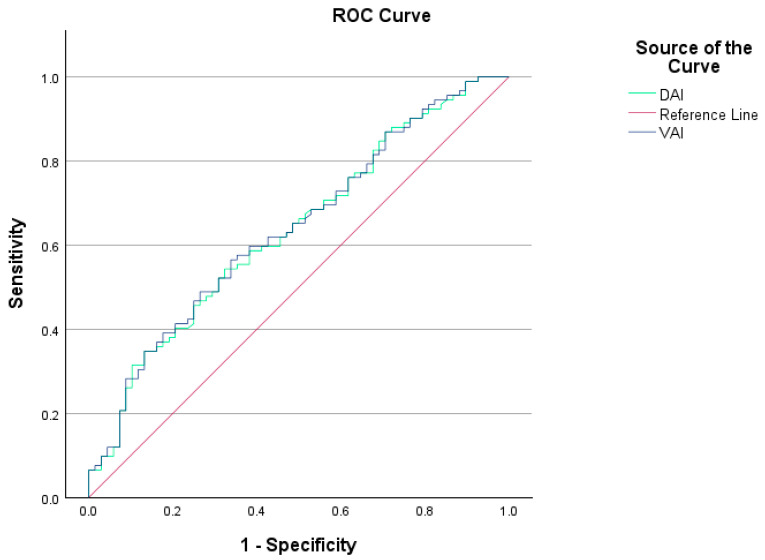
- For diagnosing PCOS, VAI and DAI had limited performance: VAI AUC = 0.639 with cutoff 3.10 (56% sensitivity, 66% specificity), and DAI AUC = 0.635 with cutoff 0.22 (54% sensitivity, 67% specificity).
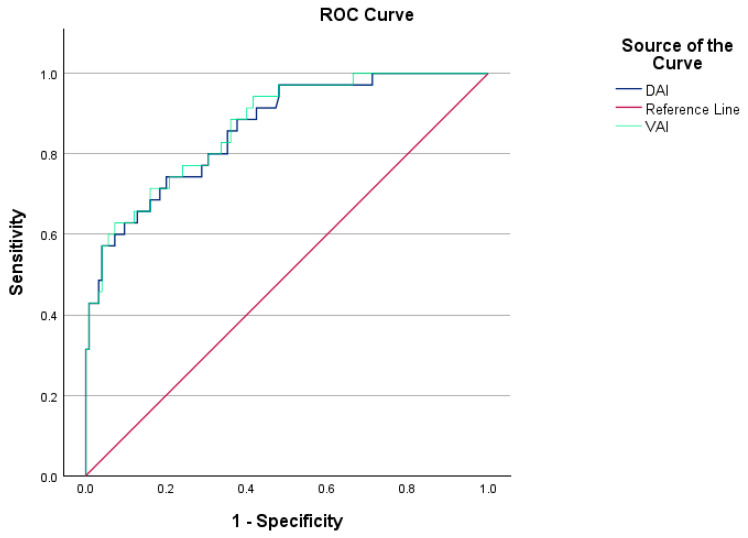
- For predicting metabolic syndrome in PCOS, VAI performed well: cutoff 4.73, 62% sensitivity, 92% specificity, AUC = 0.870; DAI also performed well: cutoff 2.44, 74% sensitivity, 80% specificity, AUC = 0.862.
- For predicting insulin resistance in PCOS, VAI had cutoff 2.56, 82% sensitivity, 56% specificity, AUC = 0.754; DAI had cutoff 1.59, 82% sensitivity, 55% specificity, AUC = 0.749.
## Methods
- Retrospective cross-sectional study at a single outpatient clinic at Düzce University, conducted between October 2018 and June 2024, with ethical approval 2024/173.
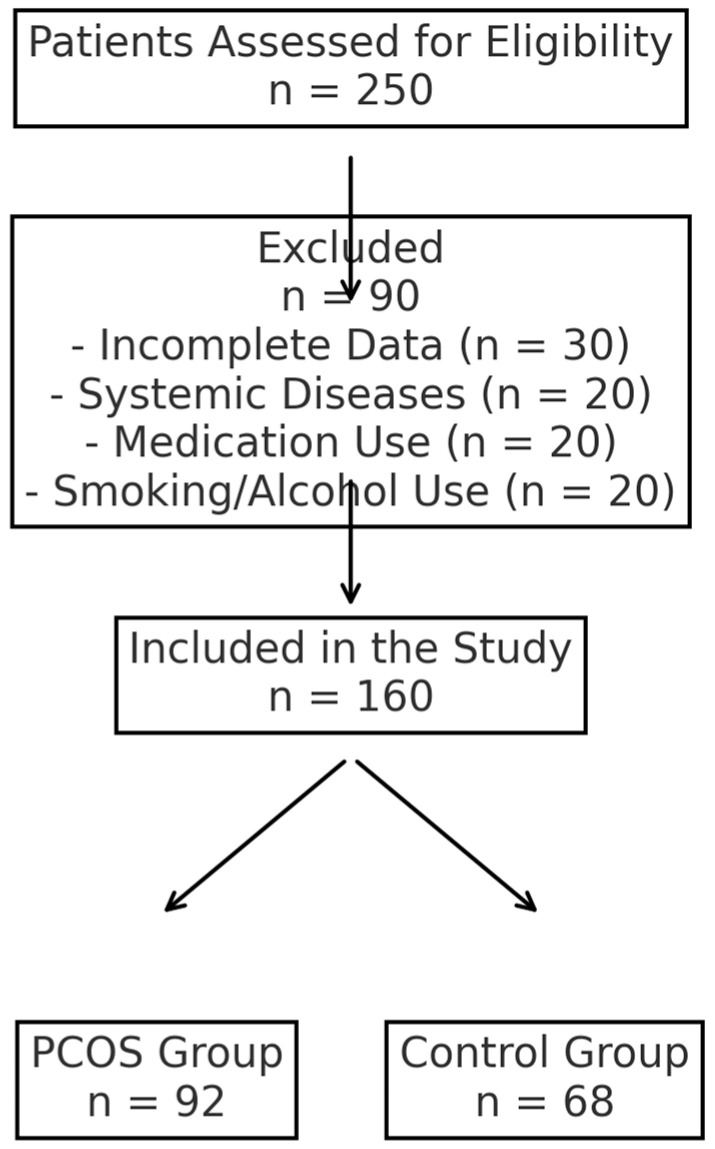
- Sample: 160 women aged 18–45 years; 92 PCOS cases diagnosed by 2023 Rotterdam criteria and 68 age-matched healthy controls; exclusions included major endocrine/systemic disease, medication use affecting metabolism/hormones, smoking, alcohol use, and incomplete records.
- Data were extracted from medical records; fasting blood samples were used to measure glucose, insulin, lipids, and hormones; HOMA-IR, VAI, and DAI were calculated, and group comparisons plus ROC curve analysis were used to assess predictive performance.
## Limitations
- The paper explicitly states that the cross-sectional design prevents causal inference.
- The paper explicitly states it was a single-center study, which may limit generalizability.
- The paper explicitly states that physical activity, dietary intake, and socioeconomic status were not assessed, which could have influenced results.
- Evident from the text: the study is based on retrospective medical records, so it depends on available documentation and may be vulnerable to missing or unmeasured confounding.
Model-written summary. Check it against the paper before relying on it.
Integrity signals
Registry
Cites
Statistics
Figures
Verification
Claims the paper makes
10 Valid · 2 Not valid · 5 Not checked · 31 Own results and interpretations
At least one cited source doesn’t support this claim or points to a different paper, and none confirmed it — see the verdicts below.
In the paper
“Nonetheless, numerous studies, including ours, demonstrate that VAI is a strong indicator for identifying IR(+) and MetS(+) PCOS patients [21].”
§ Visceral and Dysfunctional Adiposity Indices as Predictors of Insulin Resistance and Metabolic Syndrome in Women with Polycystic Ovary Syndrome: A Cross-Sectional Study > 4. Discussion
What the sources say
- Disputedcites [21] Uysal E. Tammo O. Soylemez E. Incebıyık M. Filiz D. Alci M. Significance of measuring anthropometric and atherogenic indices in patients with polycystic ovary syndrome BMC Endocr. Disord. 2024 24 160 10.1186/s12902-024-01701-6 39198818 PMC11351255 sourceExperimental — accuracy not yet measured
The Results (Table 4; page unavailable) show no significant correlation between VAI and HOMA-IR (r = 0.114, p = 0.074), and the Results explicitly state that no significant relationship with VAI was observed. That runs contrary to calling VAI a strong indicator for identifying insulin-resistant PCOS patients. The cited copy does not report a test of VAI for identifying MetS-positive patients. (LLM, conf=0.86)
Checked by a reasoning model — may be wrong.
boostedstates an association- Asserted: passes — The authors put it forward as true.
- Checkable: passes — It can be checked against evidence.
- Load-bearing: passes — The paper’s conclusions depend on it.
- Based: passes — The paper gives a reason why it holds.
- Disputed
The cited sources support only part of this claim — read each source’s verdict below.
In the paper
“The VAI is an established marker of abdominal obesity and IR, integrating WC, triglyceride (TG) levels, and high-density lipoprotein cholesterol (HDL-C) to predict metabolic risk.”
§ Visceral and Dysfunctional Adiposity Indices as Predictors of Insulin Resistance and Metabolic Syndrome in Women with Polycystic Ovary Syndrome: A Cross-Sectional Study > 1. Introduction
What the sources say
- Partly supportedcites [9] Yu S.R. Shin K.A. Visceral Adiposity Index and Lipid Accumulation Product as Effective Markers of Different Obesity Phenotypes in Korean Adults: A Cross-Sectional Analysis Diabetes Metab. Syndr. Obes. Targets Ther. 2023 16 495 504 10.2147/DMSO.S397043 36824322 PMC9942502 sourceExperimental — accuracy not yet measured
The Introduction (page unavailable) describes VAI as a measure of visceral obesity calculated from waist circumference, triglycerides, HDL-cholesterol and BMI, and says it helps predict metabolic obesity. The paper measures insulin resistance using HOMA-IR, but the cited passages do not establish VAI as a marker of insulin resistance specifically. (LLM, conf=0.84)
- Could not verifycites [10] Sadeghi H.M. Adeli I. Polycystic Ovary Syndrome: A Comprehensive Review of Pathogenesis, Management, and Drug Repurposing Int. J. Mol. Sci. 2022 23 583 10.3390/ijms23020583 35054768 PMC8775814 sourceExperimental — accuracy not yet measured
Section 4.2.5 discusses visceral obesity and insulin resistance, but does not describe the visceral adiposity index (VAI) as a marker. Searches for VAI and for waist circumference, triglycerides, and HDL-C did not find a passage defining its components or supporting its use to predict metabolic risk. (LLM, conf=0.76)
- Partly supportedcites [11] Wang D. Fang R. Han H. Zhang J. Chen K. Fu X. He Q. Yang Y. Association between visceral adiposity index and risk of prediabetes: A meta-analysis of observational studies J. Diabetes Investig. 2022 13 543 551 10.1111/jdi.13685 PMC8902389 34592063 sourceExperimental — accuracy not yet measured
The Introduction describes VAI as a validated index combining WC, TG, HDL and BMI, and as an indicator of visceral fat function and insulin sensitivity. The Discussion supports an association with prediabetes risk, but cautions that publication bias and heterogeneity limit the findings. Thus, the claim’s unqualified statement that VAI predicts metabolic risk is stronger and broader than this paper supports. (LLM, conf=0.83)
boostedstates an association- Asserted: passes — The authors put it forward as true.
- Checkable: passes — It can be checked against evidence.
- Load-bearing: passes — The paper’s conclusions depend on it.
- Based: passes — The paper gives a reason why it holds.
- Partly supported
The cited sources support only part of this claim — read each source’s verdict below.
In the paper
“Visceral adipose tissue dysfunction plays a central role in the development of IR, chronic low-grade inflammation, and cardiometabolic complications in PCOS patients.”
§ Visceral and Dysfunctional Adiposity Indices as Predictors of Insulin Resistance and Metabolic Syndrome in Women with Polycystic Ovary Syndrome: A Cross-Sectional Study > 1. Introduction
What the sources say
- Partly supportedcites [6] Bril F. Ezeh U. Amiri M. Hatoum S. Pace L. Chen Y.H. Bertrand F. Gower B. Azziz R. Adipose Tissue Dysfunction in Polycystic Ovary Syndrome J. Clin. Endocrinol. Metab. 2023 109 10 24 10.1210/clinem/dgad356 37329216 PMC10735305 sourceExperimental — accuracy not yet measured
Bril et al. (2023) do support adipose tissue (AT) dysfunction as central to IR, subacute/low-grade inflammation and downstream cardiometabolic sequelae in PCOS ('What Is Adipose Tissue Dysfunction?' — AT inflammation and decreased insulin sensitivity as common final pathways with systemic repercussions; 'Cytokine dysregulation and subacute inflammation in adipose tissue'; 'Dysregulated lipolysis' — ectopic fat and lipotoxicity; Abstract — AT dysfunction plays an important role in PCOS pathophysiology even without excess adiposity). However, the claim's specification of VISCERAL AT is not what the paper attributes: in 'Subcutaneous vs Visceral Adipose Tissue' it reports that insulin sensitivity in PCOS was primarily associated with SAT and not VAT, that fat distribution did not differ from controls, and concludes 'these data support the concept that AT dysfunction, more than AT distribution, contributes to the metabolic abnormalities in PCOS,' adding that it is 'difficult to determine if VAT per se is a driver of the metabolic abnormalities or just a confounding factor.' The visceral-tissue framing is therefore the part the source does not support (and partly counters). (LLM, conf=0.80)
- Not matchedcites [7] Rey-Roldan E. Perez Lana M.B. Galluzzo L. Blanco G. Onetto C. Straminsky V. Nolting M.P. Is the polycystic ovary syndrome the causative of the increase in inflammatory markers and metabolic risk? Gynecol. Endocrinol. Off. J. Int. Soc. Gynecol. Endocrinol. 2013 29 141 144 10.3109/09513590.2012.730581 23116196
We searched by its title and found no matching paper.
plainstates a cause- Asserted: passes — The authors put it forward as true.
- Checkable: passes — It can be checked against evidence.
- Load-bearing: passes — The paper’s conclusions depend on it.
- Based: passes — The paper gives a reason why it holds.
- Partly supported
The cited sources support only part of this claim — read each source’s verdict below.
In the paper
“The evidence indicates that VAI is superior to BMI in predicting IR and MetS.”
§ Visceral and Dysfunctional Adiposity Indices as Predictors of Insulin Resistance and Metabolic Syndrome in Women with Polycystic Ovary Syndrome: A Cross-Sectional Study > 4. Discussion
What the sources say
- Partly supportedcites [31] Oh J.Y. Sung Y.A. Lee H.J. The visceral adiposity index as a predictor of insulin resistance in young women with polycystic ovary syndrome Obesity 2013 21 1690 1694 10.1002/oby.20096 23585246 sourceExperimental — accuracy not yet measured
The Results (and Table 4, Discussion) support the insulin-resistance half: after controlling for age, SBP, FPG, fasting insulin, testosterone and SHBG, the VAI predicted clamp-measured insulin sensitivity (b = -0.93, P < 0.0001) whereas BMI and WC were not associated with the M value, and the Discussion concludes only the VAI correlated with the visceral-to-subcutaneous ratio. However, this was a single study of 180 young Korean women with PCOS, not general 'evidence', and our copy contains no metabolic-syndrome outcome — MetS appears only as background, i.e. the Introduction's statement that WC replaced BMI for defining a MetS diagnosis and the Discussion's citation of Amato et al.'s age-stratified VAI cutoffs for MetS in a Caucasian Sicilian population. Thus the 'and MetS' portion, and the population-free framing, are not attributable to this source. (LLM, conf=0.82)
hedgedstates an association- Asserted: passes — The authors put it forward as true.
- Checkable: passes — It can be checked against evidence.
- Load-bearing: passes — The paper’s conclusions depend on it.
- Based: passes — The paper gives a reason why it holds.
- Partly supported
A result the paper reports from its own data — it cites no other source for it, so there is none to check. The quote shows it is in the paper.
In the paper
“The average BMI and WC values of PCOS patients were also significantly higher compared to those in the control group (p = 0.015 and p = 0.034, respectively).”
§ Visceral and Dysfunctional Adiposity Indices as Predictors of Insulin Resistance and Metabolic Syndrome in Women with Polycystic Ovary Syndrome: A Cross-Sectional Study > 3. Results
plain- Asserted: passes — The authors put it forward as true.
- Checkable: passes — It can be checked against evidence.
- Load-bearing: unclear — It is unclear whether the paper’s conclusions depend on it.
- Based: passes — The paper gives a reason why it holds.
22 more claims
Create a free account to see all 48 claims and to verify the 4 references still open.
- Probably not a substantial claim. 11
- It may state two separate claims as one. 15
Citations
Cites
Metabolic syndrome: definitions and controversies
Kassi, E., Pervanidou, P., Kaltsas, G., & Chrousos, G. (2011) · BMC Medicine · doi:10.1186/1741-7015-9-48 · Cited by 1,565 · cited 1×
“…criteria: fasting plasma glucose levels greater than 100 mg/dL or a prior diagnosis of type 2 diabetes, triglyceride levels greater than 150 mg/dL or specific lipid-lowering treatment, and reduced HDL-C levels (<50 mg/dL in women) or specific therapeutic intervention for dyslipidemia [17].”
Polycystic Ovary Syndrome: A Comprehensive Review of Pathogenesis, Management, and Drug Repurposing
Sadeghi, H. M., Adeli, I., Calina, D., Docea, A. O., Mousavi, T., Daniali, M., Nikfar, S., Tsatsakis, A., & Abdollahi, M. (2022) · International Journal of Molecular Sciences · doi:10.3390/ijms23020583 · Cited by 445
Current Guidelines for Diagnosing PCOS
Christ, J. P., & Cedars, M. I. (2023) · Diagnostics · doi:10.3390/diagnostics13061113 · Cited by 340 · cited 1×
“A PCOS diagnosis was established when at least two of the following criteria were met: irregular menstrual cycles, biochemical or clinical hyperandrogenism, and ultrasound evidence of polycystic ovarian morphology [12].”
Oh, J., Sung, Y., & Lee, H. J. (2013) · Obesity · doi:10.1002/oby.20096 · Cited by 154 · cited 1×
“Oh et al. initially proposed that VAI could effectively replace visceral computed tomography as a marker for visceral adiposity, demonstrating its predictive capacity for IR in young women with PCOS [31].”
Adipose Tissue Dysfunction in Polycystic Ovary Syndrome
Bril, F., Ezeh, U., Amiri, M., Hatoum, S., Pace, L., Chen, Y.-H., Bertrand, F., Gower, B., & Azziz, R. (2023) · The Journal of Clinical Endocrinology & Metabolism · doi:10.1210/clinem/dgad356 · Cited by 123
Cardio-Metabolic Disease and Polycystic Ovarian Syndrome (PCOS): A Narrative Review
Sangaraju, S. L., Yepez, D., Grandes, X. A., Manjunatha, R. T., & Habib, S. (2022) · Cureus · doi:10.7759/cureus.25076 · Cited by 95 · cited 1×
“The association between PCOS and increased CVD risk is primarily attributed to abdominal fat accumulation and visceral adipose tissue dysfunction [3,4].”
Liu, D., Gao, X., Pan, X., Zhou, T., Zhu, C., Li, F., Fan, J., Targher, G., & Zhao, J. (2023) · BMC Medicine · doi:10.1186/s12916-023-02775-0 · Cited by 94
Horáková, D., Štěpánek, L., Janout, V., Janoutová, J., Pastucha, D., Kollárová, H., Petráková, A., Štěpánek, L., Husár, R., & Martiník, K. (2019) · Medicina · doi:10.3390/medicina55050158 · Cited by 87 · cited 1×
“Higher HOMA-IR values indicate greater insulin resistance, which is a key feature of metabolic syndrome and type 2 diabetes [16].”
Durmus, U., Duran, C., & Ecirli, S. (2017) · Journal of Endocrinological Investigation · doi:10.1007/s40618-016-0582-x · Cited by 87
Polycystic Ovary Syndrome: Challenges and Possible Solutions
Che, Y., Yu, J., Li, Y., Zhu, Y., & Tao, T. (2023) · Journal of Clinical Medicine · doi:10.3390/jcm12041500 · Cited by 87 · cited 1×
“Polycystic ovary syndrome (PCOS) is one of the most common endocrine disorders in women of reproductive age, affecting approximately 6–15% of women worldwide depending on diagnostic criteria [1,2].”
Mantovani, A., Mingolla, L., Rigolon, R., Pichiri, I., Cavalieri, V., Zoppini, G., Lippi, G., Bonora, E., & Targher, G. (2016) · International Journal of Cardiology · doi:10.1016/j.ijcard.2016.10.040 · Cited by 82 · cited 1×
“They also noted that DAI is associated with early cardiometabolic abnormalities independent of adiposity and other risk factors [33].”
Fu, L., Xie, N., Qu, F., Zhou, J., & Wang, F. (2023) · Reproductive Sciences · doi:10.1007/s43032-022-00864-8 · Cited by 49 · cited 1×
“…among PCOS patients, as reflected in our study, where its prevalence was significantly higher in the PCOS group than in the control group ( p < 0.001) [24]. reflected in our study, where its prevalence was significantly higher in the PCOS group than in the control group ( p < 0.001) [24].”
InfluentialMouchti, S., Orliacq, J., Reeves, G., & Chen, Z. (2023) · BMC Medical Imaging · doi:10.1186/s12880-023-01063-w · Cited by 38 · cited 1×
“Women diagnosed with PCOS exhibit a higher prevalence of central obesity and an increased risk of metabolic disturbances [27,28].”
Body image and mental health in women with polycystic ovary syndrome–a cross-sectional study
Hofmann, K., Decrinis, C., Bitterlich, N., Tropschuh, K., Stute, P., & Bachmann, A. (2025) · Archives of Gynecology and Obstetrics · doi:10.1007/s00404-024-07913-4 · Cited by 37 · cited 1×
“The association between PCOS and increased CVD risk is primarily attributed to abdominal fat accumulation and visceral adipose tissue dysfunction [3,4].”
Reyes-Barrera, J., Sainz-Escárrega, V. H., Medina-Urritia, A. X., Jorge-Galarza, E., Osorio-Alonso, H., Torres-Tamayo, M., Leal-Escobar, G., Posadas-Romero, C., Torre-Villalvazo, I., & Juárez-Rojas, J. G. (2021) · Adipocyte · doi:10.1080/21623945.2021.1893452 · Cited by 36 · cited 3×
“Reyes-Barrera et al. emphasized that DAI serves as a clinical surrogate for evaluating adipose tissue functionality and cardiometabolic health, reporting that DAI demonstrated good diagnostic values for detecting increased pericardial fat volume [15].”
InfluentialOkamura, T., Hashimoto, Y., Hamaguchi, M., Obora, A., Kojima, T., & Fukui, M. (2020) · Clinics and Research in Hepatology and Gastroenterology · doi:10.1016/j.clinre.2019.04.002 · Cited by 32 · cited 1×
“A higher VAI score indicates increased metabolic risk A higher VAI score indicates increased metabolic risk and insulin re ‐ sistance [14]. resistance [14].”
Polikistik Over Sendromu Olan Kadınlarda Beden Algısı, Benlik Saygısı ve Depresif Belirtiler
ANNAGÜR, B. B., TAZEGÜL, A., & AKBABA, N. (2014) · Nöro Psikiyatri Arşivi · doi:10.4274/npa.y6778 · Cited by 32
López-González, A. A., Jover, A. M., Martínez, C. S., Artal, P. M., Bote, S. A., Jané, B. A., & Ramírez-Manent, J. I. (2022) · Scientific Reports · doi:10.1038/s41598-022-19343-w · Cited by 31 · cited 1×
“In one study, 172,282 women were included, and DAI showed an AUC of 0.819 for MetS [35].”
InfluentialWang, D., Fang, R., Han, H., Zhang, J., Chen, K., Fu, X., He, Q., & Yang, Y. (2022) · Journal of Diabetes Investigation · doi:10.1111/jdi.13685 · Cited by 25 · cited 1×
“Similarly, the DAI has been developed as a more specific measure of adipose tissue dysfunction by combining WC, BMI, TG levels, and HDL-C [9–11].”
Uysal, E., Tammo, O., Soylemez, E., Incebıyık, M., Filiz, D., & Alci, M. (2024) · BMC Endocrine Disorders · doi:10.1186/s12902-024-01701-6 · Cited by 23 · cited 4×
“Although prior studies have examined the as ‐ sociation of VAI with metabolic risk factors, therapeutic outcomes, and IR in PCOS pa ‐ tients, this study is the first to assess the relationship between DAI and both the diagnosis of PCOS and its association with IR and MetS [19–21].”
InfluentialFry, J. M., & Temple, J. (2022) · BMC Public Health · doi:10.1186/s12889-022-14326-y · Cited by 19 · cited 1×
“Consequently, there is an urgent need to develop more specific indices that integrate anthropometric assessments with biochemical markers to accurately characterize visceral adiposity and its associated cardiometabolic complications, including IR and MetS, in individuals with PCOS [29,30].”
Szydłowska, I., Nawrocka-Rutkowska, J., Gorzko, A., Pawłowski, H., Starczewski, A., & Szczuko, M. (2025) · Nutrients · doi:10.3390/nu17030405 · Cited by 16 · cited 1×
“Women diagnosed with PCOS exhibit a higher prevalence of central obesity and an increased risk of metabolic disturbances [27,28].”
Hatami, H., Montazeri, S. A., Hashemi, N., & Tehrani, F. R. (2017) · Intern J Endocrinol Metab · doi:10.5812/ijem.12353 · Cited by 15 · cited 1×
“However, VAI is not a purely biochemical parameter; its geographic and racial variations due to the parameters used in its calculation, such as WC and BMI, may contribute to variability in study outcomes [32].”
Rey-Roldán, E. B., Lana, M. B. P., Galluzzo, L., Blanco, G., Onetto, C., Straminsky, V., & Nolting, M. (2012) · Gynecological Endocrinology · doi:10.3109/09513590.2012.730581 · Cited by 14 · cited 1×
“This limitation has led to the development of alternative metabolic indices that can more accurately reflect visceral adiposity and adipose tissue dysfunction [6,7].”
Yu, S. R., & Shin, K.-A. (2023) · Diabetes, Metabolic Syndrome and Obesity · doi:10.2147/dmso.s397043 · Cited by 13
Jalali, M., Bahadoran, Z., Mirmiran, P., Azizi, F., & Hosseinpanah, F. (2024) · BMC Public Health · doi:10.1186/s12889-023-17381-1 · Cited by 10
Jungert, A., & Frank, J. (2021) · Antioxidants · doi:10.3390/antiox10030448 · Cited by 9 · cited 1×
“…assessments included follicle-stimulating hormone (FSH) Hormonal assess ‐ ments included follicle ‐ stimulating hormone (FSH), luteinizing hormone (LH), total tes ‐ tosterone, and thyroid ‐ stimulating hormone (TSH) [13]. luteinizing hormone testosterone, and thyroid-stimulating hormone (TSH) [13].”
Wu, Z., Liang, G., Zhang, Y., & Li, R. (2025) · Endocrine Practice · doi:10.1016/j.eprac.2025.01.011 · Cited by 7 · cited 1×
“Polycystic ovary syndrome (PCOS) is one of the most common endocrine disorders in women of reproductive age, affecting approximately 6–15% of women worldwide depending on diagnostic criteria [1,2].”
Akinola, L. A., Inyangudo, G. N., Ottun, A. T., Olumodeji, A. M., Adewunmi, A. A., Olalere, F. D. H., Omololu, O. M., & Ogungbemile, B. D. (2024) · Cureus · doi:10.7759/cureus.60975 · Cited by 6 · cited 1×
“This finding underscores the need for integrated metabolic indices that assess adipose dysfunction beyond conventional lipid measurements [9,25].”
Pourkhani, Z., Jahanian Sadatmahalleh, S., Moini, A., & Nasiri, M. (2025) · Scientific Reports · doi:10.1038/s41598-025-89745-z · Cited by 5 · cited 1×
“…and WC ( p = 0.034) were found to be significantly higher in women with PCOS compared to healthy controls, consistent with previous studies. p IR is recognized as a fun ‐ damental component of the pathophysiology of PCOS, and its effects are exacerbated by obesity [22,23]. by obesity [22,23].”
Influential(2022) · PubMed · doi:10.26355/eurrev_202210_29907 · Cited by 5 · cited 2×
“Although prior studies have examined the as ‐ sociation of VAI with metabolic risk factors, therapeutic outcomes, and IR in PCOS pa ‐ tients, this study is the first to assess the relationship between DAI and both the diagnosis of PCOS and its association with IR and MetS [19–21].”
Reyes-Barrera, J., Antonio‐Villa, N. E., Posadas‐Sánchez, R., Vargas‐Alarcón, G., & Medina-Urrutia, A. X. (2024) · Nutrition Metabolism and Cardiovascular Diseases · doi:10.1016/j.numecd.2024.03.021 · Cited by 5
Anthropometric Equations to Predict Visceral Adipose Tissue in European and American Youth
Samouda, H., Lee, S., Arslanian, S. A., Han, M., & Kuk, J. L. (2022) · The Journal of Pediatrics · doi:10.1016/j.jpeds.2022.09.009 · Cited by 4 · cited 1×
“Consequently, there is an urgent need to develop more specific indices that integrate anthropometric assessments with biochemical markers to accurately characterize visceral adiposity and its associated cardiometabolic complications, including IR and MetS, in individuals with PCOS [29,30].”
Liu, X., Wang, F., Wang, X., & Luan, Q. (2024) · Gynecological Endocrinology · doi:10.1080/09513590.2024.2405097 · Cited by 4 · cited 1×
“The results indicated that a minimum of 52 participants per group was required [18].”
Altered Visceral Adipose Tissue Predictors and Women’s Health: A Unicenter Study
Moreira, V. C., de Souza Silva, C. M., & da Silva, I. C. R. (2022) · International Journal of Environmental Research and Public Health · doi:10.3390/ijerph19095505 · Cited by 3 · cited 1×
“However, these measurements do not differentiate between subcutaneous and visceral fat, nor do they capture functional impairments in adipose tissue metabolism [5].”
Research works printed but not linked: 1
- Vicente-Herrero M.T. Egea Sancho M. Ramírez Íñiguez de la Torre M.V. López González Á.A. Visceral adiposity index (VAI) and dysfunctional adiposity index (DAI). Relationship with obesity parameters Semergen 2023 49 101965 10.1016/j.semerg.2023.101965 37075595 · DOI · Paper page
Cited by
The Visceral Adiposity Index and Its Usefulness in the Prediction of Cardiometabolic Disorders
Jakubiak, G. K., Bădicu, G., Surma, S., Waluga, E., Chwalba, A., & Pawlas, N. (2025) · Nutrients · doi:10.3390/nu17142374 · Cited by 57
“Moreover, among patients with PCOS, the VAI was significantly elevated in individuals with IR and MetS [59].”
Predicting Metabolic Syndrome Using Supervised Machine Learning: A Multivariate Parameter Approach
Vega, R. I. V., Noboa-Velástegui, J. A., Fletes-Rayas, A. L., Álvarez, I., Ramos-Márquez, M. E., Ruíz-Quezada, S. L., Torres-Carrillo, N. M., & Navarro-Hernández, R. E. (2025) · International Journal of Molecular Sciences · doi:10.3390/ijms26209897 · Cited by 8
“Another study involving women with Polycystic Ovary Syndrome found that the DAI index had an AUC of 0.86, with a sensitivity of 74% and a specificity of 80% for diagnosing MetS [28].”
InfluentialNowak, J., Jabczyk, M., Borszcz, J., Jagielski, P., & Zubelewicz‐Szkodzińska, B. (2026) · Frontiers in Endocrinology · doi:10.3389/fendo.2025.1756679 · Cited by 3
Kim, H. S., & Yoo, J. (2025) · Medicina · doi:10.3390/medicina61081498 · Cited by 1
“…metabolic indices such as the visceral adiposity index (VAI) and dysfunctional adiposity index (DAI) to better capture the degree of visceral fat accumulation and adipose tissue impairment, thereby emphasizing the intricate association between central adiposity and insulin resistance [19].”
Yekenkurul, E., Çetin, M. F., Gürsoy, F., & GÖNÜLLÜ, M. E. (2026) · Düzce Tıp Fakültesi Dergisi · doi:10.18678/dtfd.1901466
Metadata
- Authors
- Keyif, B., & Yavuzcan, A.
- Affiliations
- Düzce Üniversitesi (TR)
- Sağlık Bilimleri Üniversitesi (TR)
- Corresponding author
- Keyif, Betül
- Venue
- Medicina
- Publisher
- MDPI AG
- Published
- 2025-02-28
- Volume
- 61
- Issue
- 3
- Pages
- 424
- ISSN
- 1010-660X (ISSN-L)
- 1648-9144
- PMC
- PMC11944119
- OpenAlex
- W4408056350
- Cited by
- 11
- References
- 37
- Citations by year
- 2026: 6 · 2025: 5
- FWCI
- 9.56
- Type
- journal article
- Language
- en
- Open access
- gold
- doi.org
- Licence
- Locations
- Medicina (publishedVersion, cc-by)
- PubMed Central (publishedVersion, cc-by)
- PubMed (publishedVersion)
- DOAJ (DOAJ: Directory of Open Access Journals) (submittedVersion)
- Topics
- Health Sciences › Medicine › Reproductive Medicine › Ovarian function and disorders
- Health Sciences › Medicine › Endocrinology, Diabetes and Metabolism › Diabetes, Cardiovascular Risks, and Lipoproteins
- Health Sciences › Medicine › Endocrinology, Diabetes and Metabolism › Adipokines, Inflammation, and Metabolic Diseases
- Keywords
- polycystic ovary syndrome, visceral adiposity index, insulin resistance, metabolic syndrome, visceral fat, adipose tissue dysfunction, type 2 diabetes risk, diagnostic biomarkers, women's health, Rotterdam criteria, metabolic syndrome prediction, obesity, dyslipidemia, hyperinsulinemia, hyperandrogenism, hypertriglyceridemia
- MeSH terms
- Adult, Cross-Sectional Studies, Female, Humans, Insulin Resistance, Polycystic Ovary Syndrome, ROC Curve, Biomarkers, Metabolic Syndrome, Intra-Abdominal Fat, Adiposity
About these checks
Registry, retraction, Cites and statistics results are computed, not judged, with one exception: a printed reference that no index lists is read once by a model before it counts as a citation error. Claims are extracted by a model and kept only when their quote appears verbatim in the text; each cited source is then checked, with a model’s help, for whether it says what the claim relies on. Those verdicts can be wrong — read the claim’s quote and the cited source before relying on one.
The claim verdicts this report counts are experimental: their accuracy is not yet measured.
A language model drew the claims from the paper on 2026-10-10, under version 3 of the claim definition (model deepseek-v4.1-flash, prompt extract-v3).
A second model labelled each claim on 2026-10-10 (model jev-1.13-20260917, definition revision gold-guideline-v0.2).
Cited sources are checked with a language model’s help (gpt-6-sol and qwen3.8-omni-flash).
Statistics and arithmetic are recomputed, not judged.
Confidence bands are shown only for fields calibrated on our annotated test set. None is calibrated yet, so no band is shown.
What counts as a claim ›How we measure confidence ›How we check this ›
Are you an author, or do you see a problem with this page? Request a review
Data sources
Bibliographic data: Semantic Scholar, OpenAlex, Crossref.
Contains information from the Semantic Scholar Academic Graph Datasets, made available under the ODC Attribution License (ODC-BY 1.0).
Semantic Scholar’s data is described in: Kinney, R., et al. (2023). The Semantic Scholar Open Data Platform. arXiv:2301.10140.
