

Polyphenol Microbial Metabolites Exhibit Gut and Blood–Brain Barrier Permeability and Protect Murine Microglia against LPS-Induced Inflammation
Open accessThe DOI matches its Crossref record; 57 of the 57 references it cites were found in a registry or an index; 14 of the 37 sources its claims cite were checked for support.
Abstract
Increasing evidence supports the beneficial effects of polyphenol-rich diets, including the traditional Mediterranean diet, for the management of cardiovascular disease, obesity and neurodegenerative diseases. However, a common concern when discussing the protective effects of polyphenol-rich diets against diseases is whether these compounds are present in systemic circulation in their intact/parent forms in order to exert their beneficial effects in vivo. Here, we explore two common classes of dietary polyphenols, namely isoflavones and lignans, and their gut microbial-derived metabolites for gut and blood-brain barrier predicted permeability, as well as protection against neuroinflammatory stimuli in murine BV-2 microglia. Polyphenol microbial metabolites (PMMs) generally showed greater permeability through artificial gut and blood-brain barriers compared to their parent compounds. The parent polyphenols and their corresponding PMMs were evaluated for protective effects against lipopolysaccharide-induced inflammation in BV-2 microglia. The lignan-derived PMMs, equol and enterolactone, exhibited protective effects against nitric oxide production, as well as against pro-inflammatory cytokines (IL-6 and TNF-α) in BV-2 microglia. Therefore, PMMs may contribute, in large part, to the beneficial effects attributed to polyphenol-rich diets, further supporting the important role of gut microbiota in human health and disease prevention.
Overview
CoChat Summary
## TL;DR
This study tested whether polyphenol parent compounds and their gut microbial metabolites can cross artificial gut and blood–brain barriers and reduce LPS-induced inflammation in murine BV-2 microglia. The microbial metabolites enterolactone (EL) and equol (EQ) generally showed greater permeability and the strongest anti-inflammatory effects among the metabolites tested.
## Key findings
- In SwissADME, all six compounds tested were predicted to have high gut absorbance; EQ, DAI, and EL were predicted to be BBB permeable.
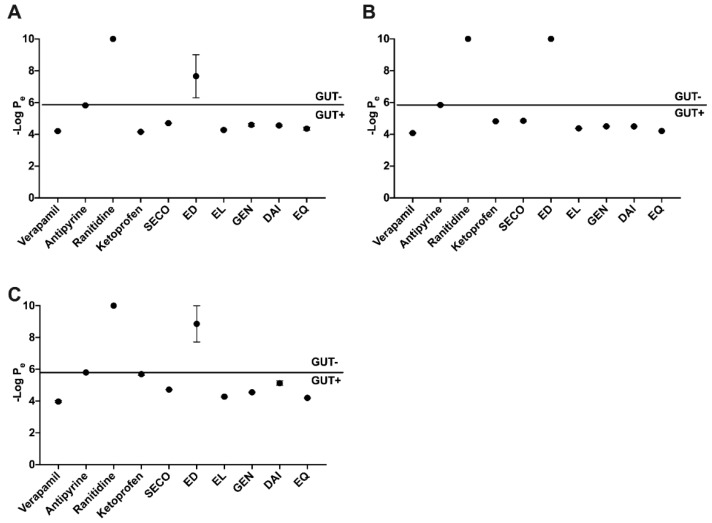
- In gut PAMPA, SECO, GEN, DAI, EL, and EQ showed high permeability across pH 5.0, 6.2, and 7.4, while ED had the lowest permeability of all test compounds.
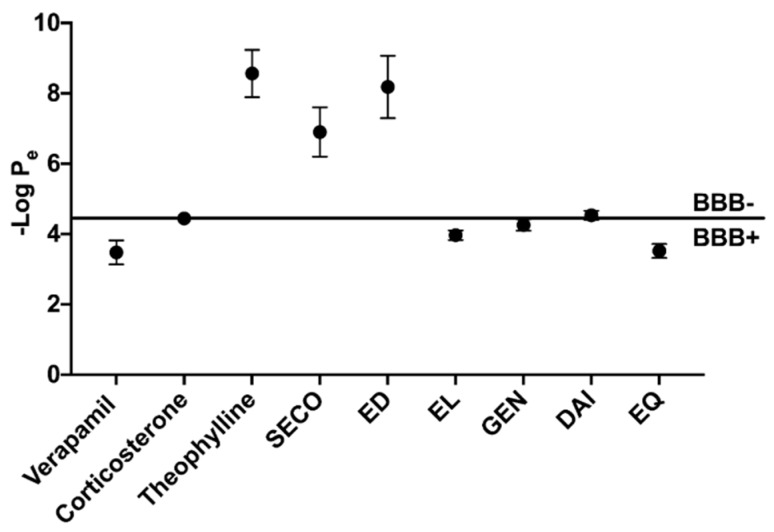
- In BBB PAMPA, EL and EQ showed high permeability, with -log Pe values of 3.97 ± 0.14 and 3.52 ± 0.20, respectively; GEN and DAI were intermediate, while SECO and ED were low.
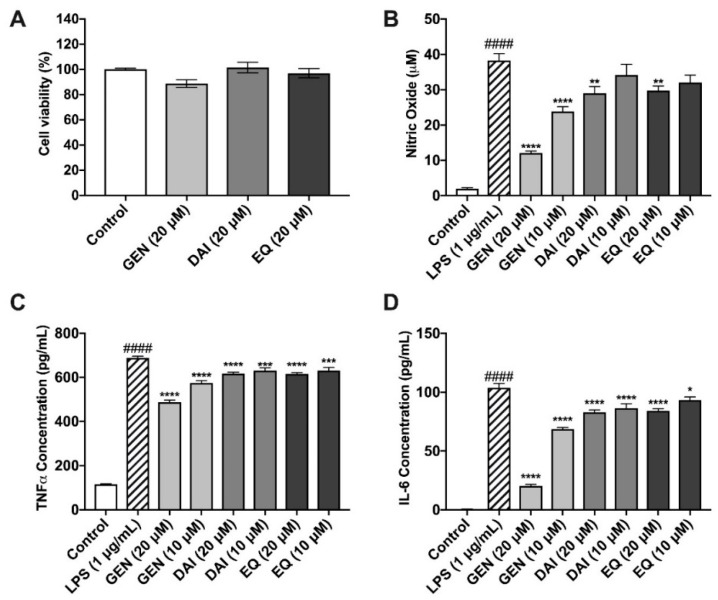
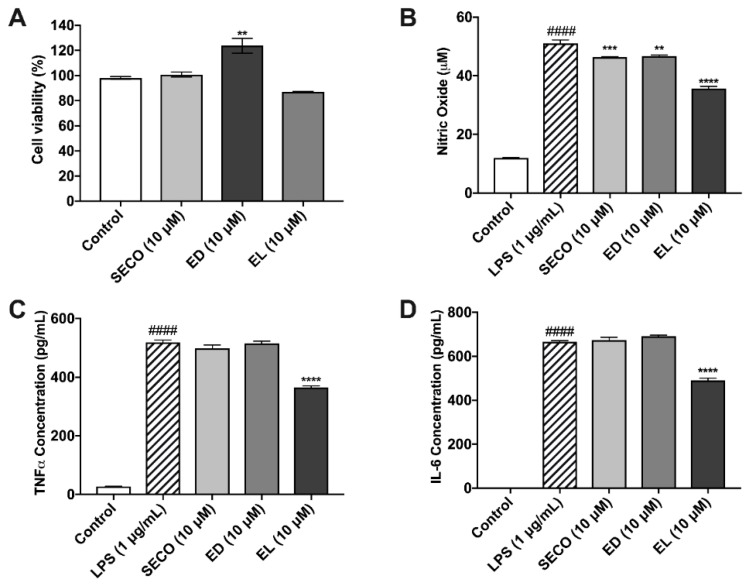
- In BV-2 microglia, LPS increased nitric oxide species to 41.5 ± 5.6 μM and TNF-α to 687.7 ± 8.0 pg/mL and IL-6 to 103.7 ± 3.6 pg/mL; GEN produced the strongest anti-inflammatory response, reducing nitric oxide by 68% at 20 μM and IL-6 by 80.4% at 20 μM, while EL was the most effective lignan-derived metabolite.
## Methods
- The study combined in silico prediction (SwissADME) with in vitro parallel artificial membrane permeability assays (PAMPA) to assess gut and BBB passive permeability of parent polyphenols and microbial metabolites.
- Murine BV-2 microglia were exposed to compounds before LPS stimulation (1 μg/mL for 23 h), with compound concentrations of 20 or 10 μM depending on the compound.
- Cell viability was measured by CellTiter-Glo; nitric oxide was quantified by Griess assay; IL-6 and TNF-α were measured by ELISA; statistical analysis used ANOVA with Dunnett’s or Tukey’s tests.
## Limitations
- The paper states that PAMPA only considers passive transport, so it does not capture active transport or other in vivo influences on permeability.
- The experiments were performed in artificial membrane systems and in a murine microglial cell line, so in vivo human bioavailability and neuroprotective effects are not directly demonstrated in the paper.
- The text makes evident that some compounds were tested at different concentrations and only selected metabolites were advanced to the cell assays; this limits direct comparability across all compounds.
Model-written summary. Check it against the paper before relying on it.
Integrity signals
Registry
Cites
Statistics
Figures
Verification
Claims the paper makes
11 Valid · 1 Not valid · 15 Not checked · 49 Own results and interpretations
The cited sources support only part of this claim — read each source’s verdict below.
In the paper
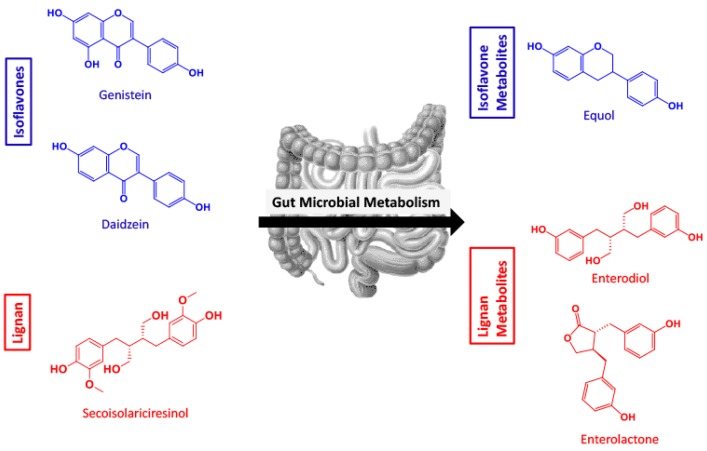
“When metabolized in the gut by intestinal microflora, these isoflavones are converted into equol (EQ) (Figure 1) [25].”
§ Polyphenol Microbial Metabolites Exhibit Gut and Blood–Brain Barrier Permeability and Protect Murine Microglia against LPS-Induced Inflammation > 1. Introduction
What the sources say
- Partly supportedcites [25] Setchell K.D.R. Clerici C. Equol: History, chemistry, and formation J. Nutr. 2010 3 1355 1362 10.3945/jn.109.119776 20519412 PMC2884333 sourceExperimental — accuracy not yet measured
The section “Role of intestinal bacteria in the formation of S-(-)Equol” describes intestinal bacterial conversion of the soy isoflavones daidzin and daidzein to equol. But it says that, in humans, equol is formed from daidzein rather than genistein; the Abstract also specifies that only some adults produce equol. The claim is therefore too broad if “these isoflavones” means isoflavones generally. (LLM, conf=0.88)
plainstates a cause- Asserted: passes — The authors put it forward as true.
- Checkable: passes — It can be checked against evidence.
- Load-bearing: passes — The paper’s conclusions depend on it.
- Based: passes — The paper gives a reason why it holds.
- Partly supported
The cited sources support only part of this claim — read each source’s verdict below.
In the paper
“Rather, a growing consensus is that dietary polyphenols are metabolized by microbiota in the colon to yield bioactive gut microbial metabolites [12,13,14,15,16].”
§ Polyphenol Microbial Metabolites Exhibit Gut and Blood–Brain Barrier Permeability and Protect Murine Microglia against LPS-Induced Inflammation > 1. Introduction
What the sources say
- Not checked — no full text of the sourcecites [12] Yuan T. Ma H. Liu W. Niesen D.B. Shah N. Crews R. Rose K.N. Vattem D.A. Seeram N.P. Pomegranate’s neuroprotective effects against Alzheimer’s disease are mediated by urolithins, its ellagitannin-gut microbial derived metabolites ACS Chem. Neurosci. 2015 7 26 33 10.1021/acschemneuro.5b00260 26559394 source
- Supportedcites [13] D’Archivio M. Filesi C. Varì R. Scazzocchio B. Masella R. Bioavailability of the polyphenols: Status and controversies Int. J. Mol. Sci. 2010 11 1321 1342 10.3390/ijms11041321 20480022 PMC2871118 source
The Host Related Factors section says that polyphenols not absorbed in the small intestine reach the colon, where colonic microflora break them down and produce active metabolites. This supports the cited claim, with the qualification that it describes polyphenols that reach the colon. (LLM, conf=0.93)
- Partly supportedcites [14] Subedi L. Ji E. Shin D. Jin J. Yeo J. Kim S. Equol, a dietary daidzein gut metabolite attenuates microglial activation and potentiates neuroprotection in vitro Nutrients 2017 9 207 10.3390/nu9030207 PMC5372870 28264445 sourceExperimental — accuracy not yet measured
The Introduction (page unavailable) says gut microflora convert dietary daidzein into equol, an intestinal metabolite with biological activity. This supports the claim by example, but the paper does not establish the broader statement about dietary polyphenols generally or specify that the conversion occurs in the colon. (LLM, conf=0.84)
- Not checked — no full text of the sourcecites [15] Lewandowska U. Szewczyk K. Hrabec E. Janecka A. Gorlach S. Overview of metabolism and bioavailability enhancement of polyphenols J. Agric. Food Chem. 2013 61 12183 12199 10.1021/jf404439b 24295170 source
- Not matchedcites [16] Marín L. Miguélez E.M. Villar C.J. Lombó F. Bioavailability of dietary polyphenols and gut microbiota metabolism: Antimicrobial properties BioMed Res. Int. 2015 2015 905215 10.1155/2015/905215 25802870 PMC4352739
We searched by its title and found no matching paper.
boostedstates a cause- Asserted: passes — The authors put it forward as true.
- Checkable: passes — It can be checked against evidence.
- Load-bearing: passes — The paper’s conclusions depend on it.
- Based: passes — The paper gives a reason why it holds.
The cited sources support only part of this claim — read each source’s verdict below.
In the paper
“However, continuous activation of microglia can lead to the over-production of inflammatory cytokines, as identified in postmortem brains of Alzheimer’s and Parkinson’s disease patients [49].”
§ Polyphenol Microbial Metabolites Exhibit Gut and Blood–Brain Barrier Permeability and Protect Murine Microglia against LPS-Induced Inflammation > 3. Discussion
What the sources say
- Partly supportedcites [49] Yuste J.E. Tarragon E. Campuzano C.M. Ros-Bernal F. Implications of glial nitric oxide in neurodegenerative diseases Front. Cell. Neurosci. 2015 9 1 13 10.3389/fncel.2015.00322 26347610 PMC4538301 sourceExperimental — accuracy not yet measured
The Parkinson’s Disease section (page unavailable) reports elevated inflammatory cytokines in postmortem brains of PD patients and links chronic inflammation to activated microglia and astroglia. The Alzheimer’s Disease section links amyloid plaques to production of inflammatory cytokines, but does not identify cytokine overproduction in postmortem AD brains. The source therefore does not support the claim’s postmortem finding for both diseases. (LLM, conf=0.87)
plainstates a cause- Asserted: passes — The authors put it forward as true.
- Checkable: passes — It can be checked against evidence.
- Load-bearing: passes — The paper’s conclusions depend on it.
- Based: passes — The paper gives a reason why it holds.
- Partly supported
The cited sources support only part of this claim — read each source’s verdict below.
In the paper
“One mechanism of microglia activation is the increase in LPS levels in peripheral blood, due to poor diet [50,51].”
§ Polyphenol Microbial Metabolites Exhibit Gut and Blood–Brain Barrier Permeability and Protect Murine Microglia against LPS-Induced Inflammation > 3. Discussion
What the sources say
- Partly supportedcites [50] Cai D. Neuroinflammation and neurodegeneration in overnutrition-induced diseases Trends Endocrinol. Metab. 2013 24 40 47 10.1016/j.tem.2012.11.003 23265946 PMC3556486 sourceExperimental — accuracy not yet measured
The section on hypothalamic neurogenesis links chronic overnutrition to inflammation involving microglial cells, and the section on central NF-κB activation discusses diet-related neuroinflammation. Neither passage identifies increased LPS in peripheral blood as the mechanism of microglial activation; searches for LPS, lipopolysaccharide, and endotoxemia found no such statement in our copy. (LLM, conf=0.82)
- Not checked — no full text of the sourcecites [51] Cancello R. Clément K. Is obesity an inflammatory illness? Role of low-grade inflammation and macrophage infiltration in human white adipose tissue BJOG 2006 113 1141 1147 10.1111/j.1471-0528.2006.01004.x 16903845 source
plainstates a cause- Asserted: passes — The authors put it forward as true.
- Checkable: passes — It can be checked against evidence.
- Load-bearing: unclear — It is unclear whether the paper’s conclusions depend on it.
- Based: passes — The paper gives a reason why it holds.
- Partly supported
A result the paper reports from its own data — it cites no other source for it, so there is none to check. The quote shows it is in the paper.
In the paper
“Furthermore, our PAMPA in vitro study supported these results, reporting high permeability of EL and EQ.”
§ Polyphenol Microbial Metabolites Exhibit Gut and Blood–Brain Barrier Permeability and Protect Murine Microglia against LPS-Induced Inflammation > 3. Discussion
plainstates an association- Asserted: passes — The authors put it forward as true.
- Checkable: passes — It can be checked against evidence.
- Load-bearing: passes — The paper’s conclusions depend on it.
- Based: passes — The paper gives a reason why it holds.
28 more claims
Create a free account to see all 76 claims and to verify the 6 references still open.
- Probably not a substantial claim. 22
- It may state two separate claims as one. 28
- The quote only partly states this claim. 2
Claims other papers make about this one
Each is checked against this paper’s own text: does it say what the citing paper says it does?
The source backs part of the claim, not all of it — or backs it for a different population, condition or comparison.
In the citing paper
“Lignan derived microbial metabolites such as equol and enterolactone protected against nitric oxide–, TNF-α–, and IL-6–induced barrier dysfunction.151”
From Regulation of Intestinal Barrier Function by Microbial Metabolites (2021) · cites this paper as [151]
Experimental — accuracy not yet measuredIn the citing paper
“Microglia are important to the development of SAE (33, 34).”
From Sepsis-Induced Gut Dysbiosis Mediates the Susceptibility to Sepsis-Associated Encephalopathy in Mice (2022) · cites this paper as [34]
In the citing paper
“Johnson et al151 reported that dietary polyphenols such as isoflavones and lignans and corresponding microbial metabolites protected the gut epithelium by reducing permeability and inhibited LPS-induced inflammation.”
From Regulation of Intestinal Barrier Function by Microbial Metabolites (2021) · cites this paper as [151]
In the citing paper
“Dietary polyphenols are metabolized by microorganisms in the colon, and microbial metabolites of polyphenol, isoflavones, and lignans generally show greater permeability through the man-made gut and blood–brain barrier than their parent compound [29].”
From Flavonoid-rich orange juice intake and altered gut microbiome in young adults with depressive symptom: a randomized controlled study (2020) · cites this paper as [29]
Citations
Cites
Daina, A., Michielin, O., & Zoete, V. (2017) · Scientific Reports · doi:10.1038/srep42717 · Cited by 18,367 · cited 1×
“Predicted permeability was assessed for each individual compound and control, as previously explained [56].”
Plant Polyphenols as Dietary Antioxidants in Human Health and Disease
Pandey, K. B., & Rizvi, S. I. (2009) · Oxidative Medicine and Cellular Longevity · doi:10.4161/oxim.2.5.9498 · Cited by 3,942
Dietary Intake and Bioavailability of Polyphenols
Scalbert, A., & Williamson, G. (2000) · The Journal of Nutrition · doi:10.1093/jn/130.8.2073s · Cited by 3,658
Gut microbiota in cardiovascular health and disease
Tang, W. H. W., Kitai, T., & Hazen, S. L. (2017) · Circulation Research · doi:10.1161/circresaha.117.309715 · Cited by 1,670 · cited 1×
“The in vivo permeability may change if these substances are compatible with active transporters, as well as differences based on the individual’s GI environment and diet [43].”
BackgroundDisease-Associated Microglia: A Universal Immune Sensor of Neurodegeneration
Deczkowska, A., Keren-Shaul, H., Weiner, A., Colonna, M., Schwartz, M., & Amit, I. (2018) · Cell · doi:10.1016/j.cell.2018.05.003 · Cited by 1,474 · cited 2×
“Microglia are the resident macrophages of the brain that work to eliminate debris from the brain [48].”
BackgroundKansy, M., Senner, F., & Gubernator, K. (1998) · Journal of Medicinal Chemistry · doi:10.1021/jm970530e · Cited by 1,304
High throughput artificial membrane permeability assay for blood–brain barrier
Di, L., Kerns, E. H., Fan, K., McConnell, O. J., & Carter, G. T. (2003) · European Journal of Medicinal Chemistry · doi:10.1016/s0223-5234(03)00012-6 · Cited by 1,195
Pi-Sunyer, X. (2009) · Postgraduate Medicine · doi:10.3810/pgm.2009.11.2074 · Cited by 1,025 · cited 1×
“There have been many studies that link obesity to an increased risk of developing other diseases, such as cardiovascular disease, diabetes, and Alzheimer’s disease [1].”
BackgroundThe Mediterranean Diet, its Components, and Cardiovascular Disease
Widmer, R. J., Flammer, A. J., Lerman, L. O., & Lerman, A. (2015) · The American Journal of Medicine · doi:10.1016/j.amjmed.2014.10.014 · Cited by 963 · cited 2×
“The Mediterranean diet is characterized by high intake of polyphenols and unsaturated fats, with most of the beneficial effects from this diet being attributed to the high polyphenol intake [6,7].”
BackgroundBioavailability of the polyphenols: Status and controversies
D’Archivio, M., Filesi, C., Varì, R., Scazzocchio, B., & Masella, R. (2010) · International Journal of Molecular Sciences · doi:10.3390/ijms11041321 · Cited by 950
Research works printed but not linked: 1
- Esch H.L. Kleider C. Scheffler A. Lehmann L. Isoflavones: Toxicology aspects and efficacy Nutraceuticals: Efficacy, Safety, and Toxicity Gupta R.C. Elsevier Inc. Amsterdam, The Netherlands 2016 465 487
Cited by
Regulation of Intestinal Barrier Function by Microbial Metabolites
Ghosh, S., Whitley, C. S., Haribabu, B., & Jala, V. R. (2021) · Cellular and Molecular Gastroenterology and Hepatology · doi:10.1016/j.jcmgh.2021.02.007 · Cited by 835
Health benefits of polyphenols: A concise review
Rana, A., Samtiya, M., Dhewa, T., Mishra, V., & Aluko, R. E. (2022) · Journal of Food Biochemistry · doi:10.1111/jfbc.14264 · Cited by 761
Diet and the Microbiota–Gut–Brain Axis: Sowing the Seeds of Good Mental Health
Berding, K., Vlckova, K., Marx, W., Schellekens, H., Stanton, C., Clarke, G., Jacka, F., Dinan, T. G., & Cryan, J. F. (2021) · Advances in Nutrition · doi:10.1093/advances/nmaa181 · Cited by 451
Gut liver brain axis in diseases: the implications for therapeutic interventions
Yan, M., Man, S., Sun, B., Ma, L., Guo, L., Huang, L., & Gao, W. (2023) · Signal Transduction and Targeted Therapy · doi:10.1038/s41392-023-01673-4 · Cited by 287
Oxidative stress in alzheimer’s disease: A review on emergent natural polyphenolic therapeutics
Cassidy, L., Fernandez, F., Johnson, J. B., Naiker, M., Owoola, A. G., & Broszczak, D. A. (2020) · Complementary Therapies in Medicine · doi:10.1016/j.ctim.2019.102294 · Cited by 275
The Impact of Gut Microbiota Disorders on the Blood–Brain Barrier
Tang, W., Zhu, H., Feng, Y., Guo, R., & Wan, D. (2020) · Infection and Drug Resistance · doi:10.2147/idr.s254403 · Cited by 161
Kujawska, M., Jourdes, M., Kurpik, M., Szulc, M., Szaefer, H., Chmielarz, P., Kreiner, G., Krajka-Kuźniak, V., Mikołajczak, P. Ł., Teissedre, P.-L., et al. (2019) · International Journal of Molecular Sciences · doi:10.3390/ijms21010202 · Cited by 159
“The current research trends also cover their metabolic derivatives, in particular, bioavailable gut microbiota metabolites, which offer a novel preventive approach for the disease [2].”
BackgroundPark, M., Choi, J., & Lee, H.-J. (2020) · Nutrients · doi:10.3390/nu12061815 · Cited by 139
“Dietary polyphenols are metabolized by microorganisms in the colon, and microbial metabolites of polyphenol, isoflavones, and lignans generally show greater permeability through the man-made gut and blood–brain barrier than their parent compound [29].”
BackgroundInfant microbes and metabolites point to childhood neurodevelopmental disorders
Ahrens, A. P., Hyötyläinen, T., Petrone, J. R., Igelström, K. M., George, C. D., Garrett, T. J., Orešič, M., Triplett, E. W., & Ludvigsson, J. (2024) · Cell · doi:10.1016/j.cell.2024.02.035 · Cited by 173
Lignans and Gut Microbiota: An Interplay Revealing Potential Health Implications
Senizza, A., Rocchetti, G., Mosele, J. I., Patrone, V., Callegari, M. L., Morelli, L., & Lucini, L. (2020) · Molecules · doi:10.3390/molecules25235709 · Cited by 146
Bioactive Polyphenols and Neuromodulation: Molecular Mechanisms in Neurodegeneration
Meo, F. D., Valentino, A., Petillo, O., Peluso, G., Filosa, S., & Crispi, S. (2020) · International Journal of Molecular Sciences · doi:10.3390/ijms21072564 · Cited by 142
Balasubramanian, R., Schneider, E., Gunnigle, E., Cotter, P. D., & Cryan, J. F. (2024) · Neuroscience & Biobehavioral Reviews · doi:10.1016/j.neubiorev.2024.105562 · Cited by 153
Gut microbiota-derived metabolites and their importance in neurological disorders
Swer, N. M., Venkidesh, B. S., Murali, T. S., & Mumbrekar, K. D. (2022) · Molecular Biology Reports · doi:10.1007/s11033-022-08038-0 · Cited by 133
Yang, Y., Shi, C.-Y., Xie, J., Dai, J., He, S., & Tian, Y. (2020) · Molecules · doi:10.3390/molecules25010189 · Cited by 108
Gut Microbiota, an Additional Hallmark of Human Aging and Neurodegeneration
Molinero, N., Antón‐Fernández, A., Hernández, F., Ávila, J., Bartolomé, B., & Moreno-Arribas, M. V. (2023) · Neuroscience · doi:10.1016/j.neuroscience.2023.02.014 · Cited by 110
Sepsis-Induced Gut Dysbiosis Mediates the Susceptibility to Sepsis-Associated Encephalopathy in Mice
Fang, H., Wang, Y., Deng, J., Zhang, H., Wu, Q., He, L., Xu, J., Shao, X., Ouyang, X., He, Z., et al. (2022) · mSystems · doi:10.1128/msystems.01399-21 · Cited by 87
“Microglia are important to the development of SAE (33, 34).”
BackgroundFang, Y., Zhang, J., Zhu, S., He, M., Ma, S., Jia, Q., Sun, Q., Song, L., Wang, Y., & Duan, L. (2021) · Pharmacological Research · doi:10.1016/j.phrs.2021.105439 · Cited by 80
Modulation of Glial Function in Health, Aging, and Neurodegenerative Disease
Hanslik, K. L., Marino, K. M., & Ulland, T. K. (2021) · Frontiers in Cellular Neuroscience · doi:10.3389/fncel.2021.718324 · Cited by 72
Cheng, W., Ho, J. Y. S., & Chang, R. C. (2022) · Ageing Research Reviews · doi:10.1016/j.arr.2022.101620 · Cited by 75
Singh, B., Mal, G., Sharma, D., Sharma, R., Antony, C. P., & Kalra, R. S. (2020) · Trends in Food Science & Technology · doi:10.1016/j.tifs.2020.09.022 · Cited by 65
Gut Metabolites Acting on the Gut-Brain Axis: Regulating the Functional State of Microglia
Deng, W., Yi, P., Xiong, Y., Ying, J., Lin, Y., Dong, Y., Wei, G., Wang, X., & Hua, F. (2023) · Aging and Disease · doi:10.14336/ad.2023.0727 · Cited by 72
Microbiota-targeted interventions for mental health
Berding, K., & Cryan, J. F. (2021) · Current Opinion in Psychiatry · doi:10.1097/yco.0000000000000758 · Cited by 76
Zheng, S., Zhang, H., Liu, R., Huang, C.-L., Li, H., Deng, Z., & Tsao, R. (2020) · Food Research International · doi:10.1016/j.foodres.2020.109833 · Cited by 64
Prasanth, M. I., Sivamaruthi, B. S., Cheong, C. S. Y., Verma, K., Tencomnao, T., Brimson, J. M., & Prasansuklab, A. (2024) · Antioxidants · doi:10.3390/antiox13050606 · Cited by 71
Hao, W., Gan, H. T., Wang, L., Huang, J., & Chen, J. (2022) · Critical Reviews in Food Science and Nutrition · doi:10.1080/10408398.2022.2099808 · Cited by 54
Zhang, X., Veliky, C. V., Birru, R. L., Barinas‐Mitchell, E., Magnani, J. W., & Sekikawa, A. M. (2021) · Nutrients · doi:10.3390/nu13113739 · Cited by 59
Johnson, S. L., Park, H. Y., Vattem, D. A., Grammas, P., Ma, H., & Seeram, N. P. (2020) · Plant Foods for Human Nutrition · doi:10.1007/s11130-020-00840-0 · Cited by 53
Self-citationMicroglia, neurodegeneration and loss of neuroendocrine control
Chowen, J. A., & García‐Segura, L. M. (2019) · Progress in Neurobiology · doi:10.1016/j.pneurobio.2019.101720 · Cited by 46
Modulatory Effects of Phytochemicals on Gut–Brain Axis: Therapeutic Implication
Jaberi, K. R., Alamdari-Palangi, V., Savardashtaki, A., Vatankhah, P., Jamialahmadi, T., Tajbakhsh, A., & Sahebkar, A. (2024) · Current Developments in Nutrition · doi:10.1016/j.cdnut.2024.103785 · Cited by 51
Ticinesi, A., Nouvenne, A., Cerundolo, N., Parise, A., Mena, P. R., & Meschi, T. (2024) · Aging Clinical and Experimental Research · doi:10.1007/s40520-024-02707-9 · Cited by 55
Ghassab, F. T., Mahmoudi, F. S., Tinjani, R. T., Meibodi, A. E., Zali, M. R., & Yadegar, A. (2024) · Life Sciences · doi:10.1016/j.lfs.2024.122748 · Cited by 41
The Role of Fermented Vegetables as a Sustainable and Health-Promoting Nutritional Resource
Borrego-Ruiz, A., González-Domenech, C. M., & Borrego, J. J. (2024) · Applied Sciences · doi:10.3390/app142310853 · Cited by 46
From the gut to the brain: the long journey of phenolic compounds with neurocognitive effects
Domínguez‐López, I., López‐Yerena, A., Vallverdú‐Queralt, A., Pallàs, M., Lamuela-Raventós, R. M., & Pérez, M. (2024) · Nutrition Reviews · doi:10.1093/nutrit/nuae034 · Cited by 49
Li, D., Luo, F., Guo, T., Han, S., Wang, H., & Lin, Q. (2022) · Critical Reviews in Food Science and Nutrition · doi:10.1080/10408398.2022.2026871 · Cited by 44
Natural polyphenols in preclinical models of epilepsy
Dhir, A. (2020) · Phytotherapy Research · doi:10.1002/ptr.6617 · Cited by 37
Neuroprotective mechanisms of red clover and soy isoflavones in Parkinson's disease models
Jacquet, A. D. R., Ambaw, A., Tambe, M. A., Ma, S. Y., Timmers, M. A., Grace, M. H., Wu, Q., Simon, J. E., McCabe, G. P., Lila, M. A., et al. (2021) · Food & Function · doi:10.1039/d1fo00007a · Cited by 37
Xiang, L., Du, T., Zhang, J., Zhang, T., Zhou, Y., Zhao, Y., Zhou, Y. C., & Ma, L. (2023) · European Journal of Nutrition · doi:10.1007/s00394-023-03246-1 · Cited by 29
Casani-Cubel, J., Benlloch, M., Sanchis-Sanchis, C. E., Marín, R., Lajara-Romance, J. M., & Ortí, J. E. D. L. R. (2021) · Metabolites · doi:10.3390/metabo11020120 · Cited by 33
Florkowski, M. R., Abiona, E., Frank, K. M., & Brichacek, A. L. (2024) · Frontiers in Nutrition · doi:10.3389/fnut.2024.1392666 · Cited by 29
Redox Paradox of Polyphenols: Bioavailability, Hormesis, and Safety Concerns
Vranková, S., Cebová, M., Klimentová, J., & Pechanova, O. (2026) · Phytotherapy Research · doi:10.1002/ptr.70268 · Cited by 42
Ortí, J. E. D. L. R., Platero, J. L., Yang, I. H., Cerón, J. M. C., Tvarijonaviciute, A., Selvi-Sabater, P., Benlloch, M., Sancho-Cantus, D., & Sancho-Castillo, S. (2021) · Nutrients · doi:10.3390/nu13093230 · Cited by 26
Li, H., He, H., Liu, C., Akanji, T., Gutkowski, J., Li, R., Ma, H., Wan, Y., Wu, P., Li, D., et al. (2021) · International Journal of Food Sciences and Nutrition · doi:10.1080/09637486.2021.1996542 · Cited by 26
Self-citationProbing gut‐brain links in Alzheimer's disease with rifaximin
Suhocki, P. V., Ronald, J., Diehl, A. M., Murdoch, D. M., & Doraiswamy, P. M. (2022) · Alzheimer s & Dementia Translational Research & Clinical Interventions · doi:10.1002/trc2.12225 · Cited by 32
Mueed, A., Ibrahim, M., Shibli, S., Madjirebaye, P., Deng, Z., & Jahangir, M. (2022) · Critical Reviews in Food Science and Nutrition · doi:10.1080/10408398.2022.2140643 · Cited by 24
Balakrishnan, R., Kang, S.-I., Lee, J. Y., Rho, Y., Kim, B.-K., & Choi, D. (2024) · Aging and Disease · doi:10.14336/ad.2024.1362 · Cited by 39
Mini-review: microbiota have potential to prevent PEDV infection by improved intestinal barrier
Yang, S., Liu, G., Savelkoul, H. F. J., Jansen, C. A., & Li, B. (2023) · Frontiers in Immunology · doi:10.3389/fimmu.2023.1230937 · Cited by 26
Rajeev, R., Seethalakshmi, P. S., Jena, P. K., Prathiviraj, R., Kiran, G. S., & Selvin, J. (2021) · Critical Reviews in Food Science and Nutrition · doi:10.1080/10408398.2021.1916429 · Cited by 20
Tuli, H. S., Kumar, A., Sak, K., Aggarwal, D., Gupta, D., Kaur, G., Vashishth, K., Dhama, K., Kaur, J., Saini, A. K., et al. (2022) · Pharmaceuticals · doi:10.3390/ph15111418 · Cited by 18
Ciccone, L., Nencetti, S., Rossello, A., & Orlandini, E. (2023) · Pharmaceuticals · doi:10.3390/ph16071036 · Cited by 21
Gallucci, A., Patel, D. C., Thai, K., Trinh, J., Gude, R., Shukla, D., & Campbell, S. L. (2021) · Epilepsia · doi:10.1111/epi.16979 · Cited by 20
Microbiota-Gut-Brain Axis in Age-Related Neurodegenerative Diseases
Nie, T., Li, Y., Tang, F., Duan, Y., Nepovimová, E., Kuča, K., Wu, Q., & Wei, W. (2024) · Current Neuropharmacology · doi:10.2174/1570159x23666241101093436 · Cited by 25
Gut microbiota-generated metabolites: missing puzzles to hosts’ health, diseases, and aging
Zhang, Y., Wei, S., Zhang, H., Jo, Y., Kang, J., Ha, K., Joo, J., Lee, H. J., & Ryu, D. (2024) · BMB Reports · doi:10.5483/bmbrep.2024-0022 · Cited by 19
Extracellular vesicle miRNAs as key mediators in diet-gut microbiome-host interplay
Dong, X., Liu, Y., Yang, X., & Li, T. (2023) · Trends in Food Science & Technology · doi:10.1016/j.tifs.2023.05.005 · Cited by 19
Liu, C., Xu, Y., Kirk, R. D., Li, H., Li, D., DaSilva, N. A., Bertin, M. J., Seeram, N. P., & Ma, H. (2020) · Journal of Functional Foods · doi:10.1016/j.jff.2020.104208 · Cited by 14
Self-citationXiao, R., Chen, H., Han, H., Luo, G., & Lin, Y. (2022) · RSC Advances · doi:10.1039/d2ra05053f · Cited by 16
The gut-derived metabolites as mediators of the effect of healthy nutrition on the brain
Leyrolle, Q., Prado-Perez, L., & Layé, S. (2023) · Frontiers in Nutrition · doi:10.3389/fnut.2023.1155533 · Cited by 14
Balaj, G., Tamanai‐Shacoori, Z., Olivier‐Jimenez, D., Sauvager, A., Faustin, M., Bousarghin, L., Gall‐David, S. L., Guyot, S., Nebija, D., Tomasi, S., et al. (2022) · Food & Function · doi:10.1039/d1fo04304h · Cited by 16
Glyphosate as a direct or indirect activator of pro-inflammatory signaling and cognitive impairment
Izumi, Y., O’Dell, K. A., & Zorumski, C. F. (2023) · Neural Regeneration Research · doi:10.4103/1673-5374.391331 · Cited by 13
Food and Mood: Current Evidence on Mental Health and the Microbiota-Gut-Brain Axis
Morse, M., & Garcia, B. (2025) · Current Psychiatry Reports · doi:10.1007/s11920-025-01636-2 · Cited by 11
Redox System Dysfunction as a Key Mechanism in Autism Spectrum Disorder Pathogenesis
de Oliveira, C. A., Iorio, E. L., & Espíndola, F. S. (2025) · International Journal of Molecular Sciences · doi:10.3390/ijms26209850 · Cited by 13
Samal, M., Srivastava, V., Khan, M., Insaf, A., Penumallu, N. R., Alam, A., Parveen, B., Ansari, S. H., & Ahmad, S. (2024) · Phytotherapy Research · doi:10.1002/ptr.8344 · Cited by 9
Nanoparticle-based delivery of polyphenols for the treatment of inflammation-associated diseases
Fuior, E.-V., & Călin, M. (2020) · Elsevier eBooks · doi:10.1016/b978-0-12-819666-3.00012-2 · Cited by 10
Arcusa, R., Carrillo, J. Á., Cerdá, B., Durand, T., Gil‐Izquierdo, Á., Medina, S., Galano, J., Zafrilla, P., & Marhuenda, J. (2023) · Antioxidants · doi:10.3390/antiox12030721 · Cited by 6
Mechanism of Soy Isoflavone Daidzein-Induced Female-Specific Anorectic Effect
Fujitani, M., Mizushige, T., Adhikari, S., Bhattarai, K., & Kishida, T. (2022) · Metabolites · doi:10.3390/metabo12030252 · Cited by 7
Khezri, M. R., Esmaeili, A., & Ghasemnejad‐Berenji, M. (2023) · ACS Chemical Neuroscience · doi:10.1021/acschemneuro.3c00418 · Cited by 8
Parilli‐Moser, I., López-Solís, R., Domínguez‐López, I., Vallverdú‐Queralt, A., Hurtado‐Barroso, S., & Lamuela-Raventós, R. M. (2023) · Journal of Functional Foods · doi:10.1016/j.jff.2023.105746 · Cited by 5
Frosini, M., Marcolongo, P., Gamberucci, A., Tamasi, G., Pardini, A., Giunti, R., Fiorenzani, P., Aloisi, A. M., Rossi, C., & Pessina, F. (2021) · Pathophysiology · doi:10.3390/pathophysiology28010012 · Cited by 5
Jahan, N., Singh, L., & Sharma, J. (2025) · NeuroMolecular Medicine · doi:10.1007/s12017-025-08875-9 · Cited by 7
Polyphenols as next-generation prebiotics targeting intestinal mucosal tolerance
Ferreira, C., Vieira, P., Figueirinha, A., Salgueiro, L., Pintado, M. M., Malva, J. O., Branco, M. C., Reis, F., & Viana, S. (2026) · Biomedicine & Pharmacotherapy · doi:10.1016/j.biopha.2026.119592 · Cited by 7
Yang, C., Zhang, X., Bie, J., Kang, W., Sun, G., Qing, Z., Lihua, L., & Hu, Q. (2026) · Pharmacological Research · doi:10.1016/j.phrs.2026.108161 · Cited by 4
Kiecka, A., & Szczepanik, M. (2025) · Pharmacological Reports · doi:10.1007/s43440-025-00800-y · Cited by 6
The microbiota-microglia axis: A novel clue for diet and brain health
Song, Z., Song, R., Liu, Y., Zhu, Y., & Zhang, X. (2025) · Trends in Food Science & Technology · doi:10.1016/j.tifs.2025.104942 · Cited by 4
Systematic review and meta-analysis of isoflavone interventions on cognitive function
Till, L., Lamport, D. J., & Williams, C. M. (2026) · Neuroscience & Biobehavioral Reviews · doi:10.1016/j.neubiorev.2025.106533 · Cited by 4
Zhang, S., Chen, W., Ma, C., Luo, Y., Dong, L., Hu, X., Chen, F., & Li, D. (2024) · Food Science and Human Wellness · doi:10.26599/fshw.2024.9250215 · Cited by 2
Wen, S., Zhao, Y., Wang, L., & Yuan, Y. (2025) · Journal of Biochemical and Molecular Toxicology · doi:10.1002/jbt.70299 · Cited by 4
Rodriguez, M. T., McLaurin, K. A., Shtutman, M. S., Kubinak, J. L., Mactutus, C. F., & Booze, R. M. (2023) · Pharmacology Biochemistry and Behavior · doi:10.1016/j.pbb.2023.173592 · Cited by 2
Cogrowth advantage: Intestinal microbiota analysis of Bufo gargarizans and Rana chensinensis
Li, K., Li, J., Luo, S., & Chai, L. (2024) · Comparative Biochemistry and Physiology Part A Molecular & Integrative Physiology · doi:10.1016/j.cbpa.2024.111764 · Cited by 2
Xiong, J., Wang, M., Tian, Y., Ling, A., Shan, S., Zhao, L., & Cheng, G. (2022) · Toxicological & Environmental Chemistry Reviews · doi:10.1080/02772248.2022.2055031 · Cited by 2
Gut Biotransformation of Phytometabolites
Singh, B., Mal, G., Kalra, R. S., & Marotta, F. (2024) · Springer eBooks · doi:10.1007/978-3-031-65455-8_10 · Cited by 1
Rodrigue, A. F., Pereira, B. B., Freije, G., Sweet, A., Mahmoudian, L., Aly, M., Mahmoodianfard, S., Kishore, L., Audet, M., Minicucci, M. F., et al. (2026) · Nutrients · doi:10.3390/nu18030461 · Cited by 1
Microbiome-Based Therapies for Mental Health Disorders
Maqsood, Q., Aman, M., Hussain, N., Saleem, M., & Mahnoor, M. (2024) · Springer eBooks · doi:10.1007/978-981-97-3790-1_15 · Cited by 1
Food-gut microbiota interactions
Berding, K., Kaulmann, D., & Cryan, J. F. (2022) · Elsevier eBooks · doi:10.1016/b978-0-323-85170-1.00011-7 · Cited by 3
Kwon, K. M., Lee, K., Park, S. Y., Baek, Y. E., Lee, S., Kim, D. K., Chae, Y., Yang, G., Chea, J. M., & Hwang, I. H. (2026) · Journal of Natural Products · doi:10.1021/acs.jnatprod.5c01441 · Cited by 1
McLaurin, K. A., Li, H., Mactutus, C. F., & Booze, R. M. (2023) · NeuroImmune Pharmacology and Therapeutics · doi:10.1515/nipt-2023-0008 · Cited by 1
Iachizzi, M., Zajac, N., Ruiz, J. L., Güller, T., RABIN, R., Schalbetter, S. M., Cillis, F. D., Moccia, M., Cattaneo, A., Cryan, J. F., et al. (2026) · Brain Behavior and Immunity · doi:10.1016/j.bbi.2026.106571
Nanoparticles and the gut-microbiome: a dual strategy for oral brain delivery
Negahdari, R., Pouyanfar, N., Masoudifar, R., Aftabi, P., Fendereski, F., Anvari, Z., Masoumi, N., Faizi, M., & Ghorbani‐Bidkorbeh, F. (2026) · International Journal of Pharmaceutics · doi:10.1016/j.ijpharm.2026.127477
Ischemic Stroke Shifts the Protein and Metabolite Profiles of Colon in Mice
Gao, Y., Zhang, Z., Qi, D., & Liu, S. (2023) · Neuroscience · doi:10.1016/j.neuroscience.2023.07.006 · Cited by 1
Das, S. K., Mamatha, K., Nerune, S. M., Parveen, A., & Karak, P. (2026) · Frontiers in Nutrition · doi:10.3389/fnut.2026.1895218
Ngoumou, G. B., Schepanski, S. N., Nejati, F., Diedering, A., Cassagnau, N., Beyrow, C., Wicaksono, W. A., Berg, G., & Seifert, G. (2026) · Frontiers in Nutrition · doi:10.3389/fnut.2026.1903488 · Cited by 1
Metabolic Outputs of the Gut Microbiome: Implications for Epilepsy
Gallucci, A., Guo, X., Shukla, D., & Campbell, S. L. (2026) · Cells · doi:10.3390/cells15161492
The Human Microbiome as Source of Therapeutics
Singh, B., Mal, G., Kalra, R. S., & Marotta, F. (2024) · Springer eBooks · doi:10.1007/978-3-031-65459-6_2
Li, X., Zhao, Y., Liao, A.-M., Pan, L., Xing, Y., Cheng, J.-J., Liu, J., & Huang, J.-H. (2026) · Food Bioscience · doi:10.1016/j.fbio.2026.108774
Nájera-Maldonado, J. M., Molina-Manzano, P., Flores‐Alfaro, E., Espinoza-Rojo, M., Parra‐Rojas, I., Fitz, P. Á., Lamas, M., Salazar, R., & Ramírez, M. (2026) · Journal of Xenobiotics · doi:10.3390/jox16040142
Tan, J., Li, L., Li, X., Han, X., Deng, B., Zhang, Y., Zhai, X., & Lu, Y. (2023) · Phytomedicine Plus · doi:10.1016/j.phyplu.2023.100409 · Cited by 1
RetractedINVESTIGATING NAT PRODUCTS & PHARMACEUTICALS TARGETING INFLAMMATION IN NEURODEGENERATIVE DISEASES
Johnson, S. L. (2020) · Digital Commons - URI (University of Rhode Island) · doi:10.23860/diss-johnson-shelby-2020
Self-citationCho, E.-H., Hong, S.-W., Seo, E., & Kim, S. (2026) · Brain Behavior & Immunity - Health · doi:10.1016/j.bbih.2026.101327
Metadata
- Authors
- Johnson, S. L., Kirk, R. D., DaSilva, N. A., Ma, H., Seeram, N. P., & Bertin, M. J.
- Affiliations
- University of Rhode Island (US)
- Corresponding author
- Seeram, Navindra P.
- Bertin, Matthew J.
- ORCID
- Venue
- Metabolites
- Publisher
- MDPI AG
- Published
- 2019-04-19
- Volume
- 9
- Issue
- 4
- Pages
- 78
- ISSN
- 2218-1989 (ISSN-L)
- PMC
- PMC6523162
- OpenAlex
- W2940306410
- Cited by
- 101
- References
- 57
- Citations by year
- 2026: 15 · 2025: 7 · 2024: 18 · 2023: 16 · 2022: 16 · 2021: 13 · 2020: 13 · 2019: 3
- FWCI
- 5.63
- Type
- journal article
- Language
- en
- Open access
- gold
- dx.doi.org
- Licence
- Locations
- Metabolites (publishedVersion, cc-by)
- Europe PMC (PubMed Central) (publishedVersion, cc-by)
- PubMed Central (publishedVersion, cc-by)
- PubMed (publishedVersion)
- Journal of Media Literacy Education (submittedVersion, cc-by)
- Digital Commons - URI (University of Rhode Island) (submittedVersion, cc-by)
- DOAJ (DOAJ: Directory of Open Access Journals) (submittedVersion, cc-by-sa)
- Funders
- National Institute of General Medical Sciences (P20GM103430)
- Topics
- Health Sciences › Medicine › Biochemistry (medical) › Phytochemicals and Antioxidant Activities
- Life Sciences › Biochemistry, Genetics and Molecular Biology › Molecular Biology › Gut microbiota and health
- Life Sciences › Neuroscience › Neurology › Neuroinflammation and Neurodegeneration Mechanisms
- Keywords
- gut microbiota, blood-brain barrier permeability, isoflavones, lignans, equol, enterolactone, microglia, lipopolysaccharide-induced neuroinflammation, nitric oxide, inflammatory cytokines, BV-2 cells, neuroprotection
About these checks
Registry, retraction, Cites and statistics results are computed, not judged, with one exception: a printed reference that no index lists is read once by a model before it counts as a citation error. Claims are extracted by a model and kept only when their quote appears verbatim in the text; each cited source is then checked, with a model’s help, for whether it says what the claim relies on. Those verdicts can be wrong — read the claim’s quote and the cited source before relying on one.
The claim verdicts this report counts are experimental: their accuracy is not yet measured.
A language model drew the claims from the paper on 2026-10-10, under version 3 of the claim definition (model deepseek-v4.1-flash, prompt extract-v3).
A second model labelled each claim on 2026-10-10 (model jev-1.13-20260917, definition revision gold-guideline-v0.2).
Cited sources are checked with a language model’s help (gpt-6-sol).
Statistics and arithmetic are recomputed, not judged.
Confidence bands are shown only for fields calibrated on our annotated test set. None is calibrated yet, so no band is shown.
What counts as a claim ›How we measure confidence ›How we check this ›
Are you an author, or do you see a problem with this page? Request a review
Data sources
Bibliographic data: Semantic Scholar, OpenAlex, Crossref.
Contains information from the Semantic Scholar Academic Graph Datasets, made available under the ODC Attribution License (ODC-BY 1.0).
Semantic Scholar’s data is described in: Kinney, R., et al. (2023). The Semantic Scholar Open Data Platform. arXiv:2301.10140.
