

Deep Eutectic Solvent-Based Microwave-Assisted Method for Extraction of Hydrophilic and Hydrophobic Components from Radix Salviae miltiorrhizae
Open accessThe DOI matches its Crossref record; 35 of the 35 references it cites were found in a registry or an index.
Abstract
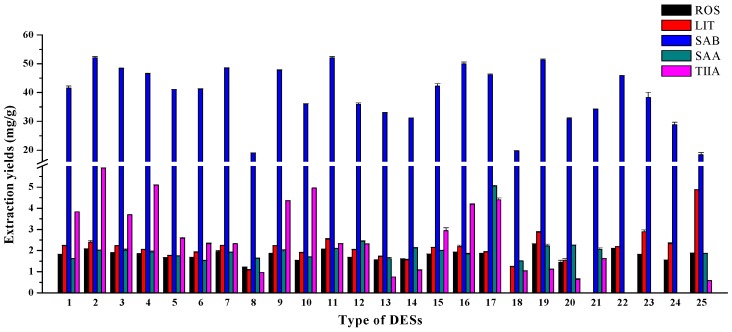
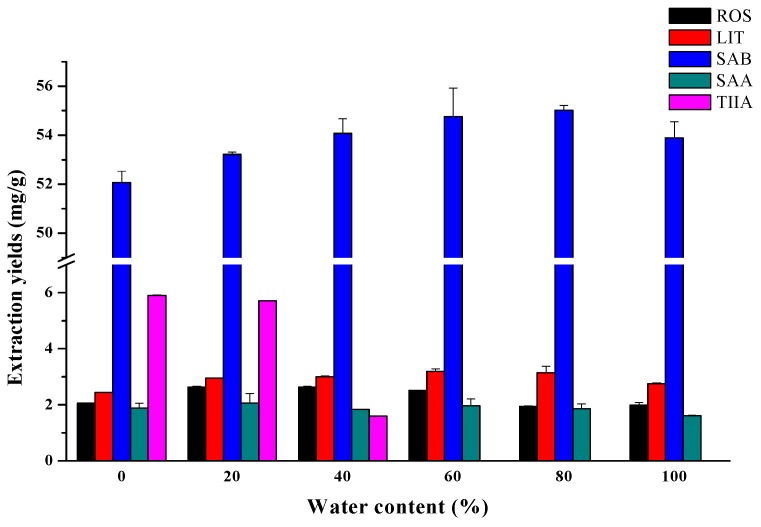
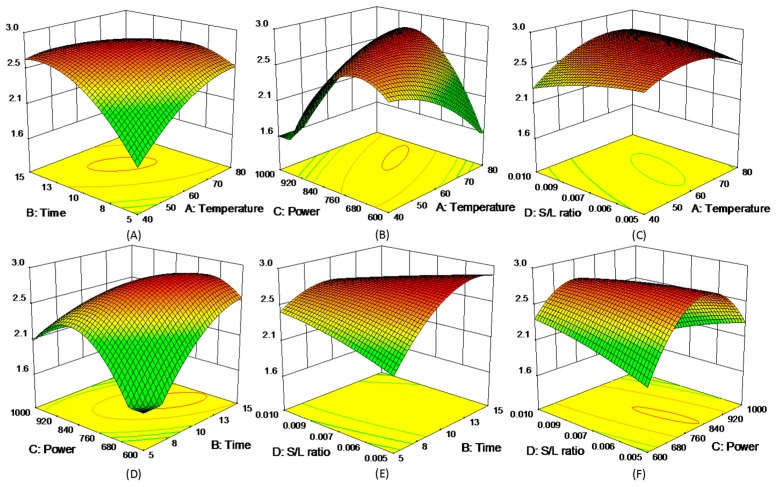
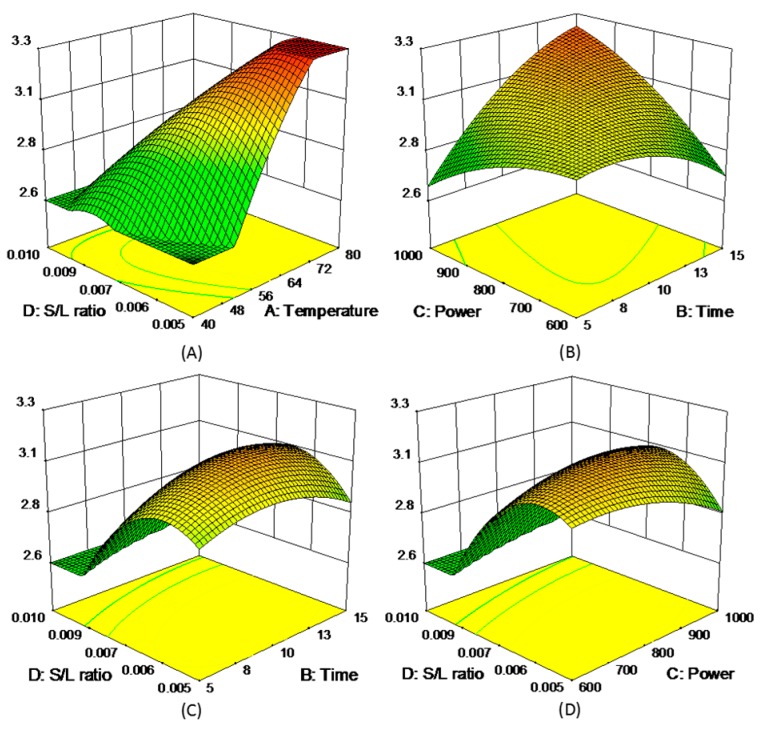
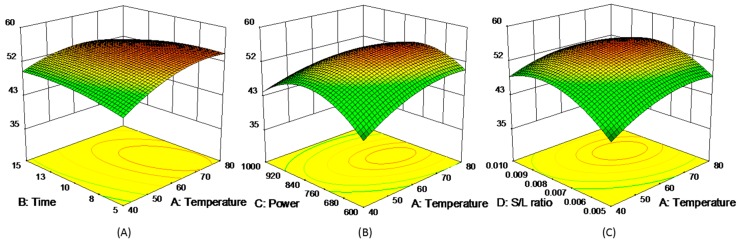
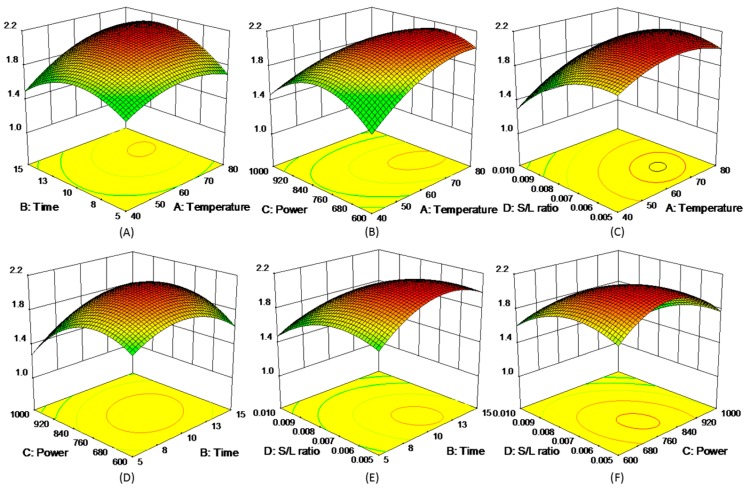
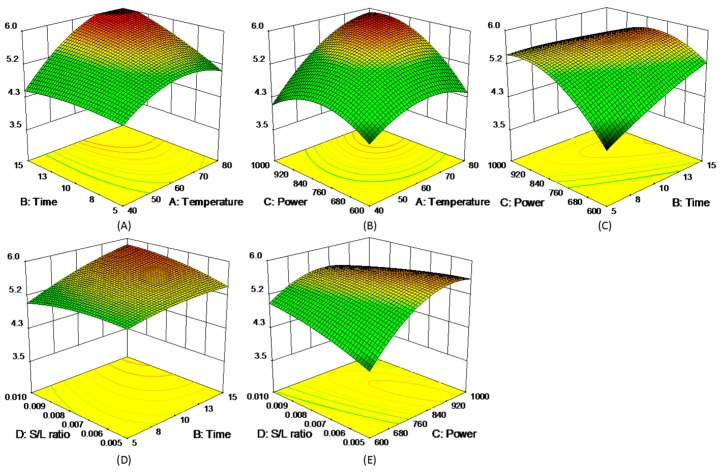
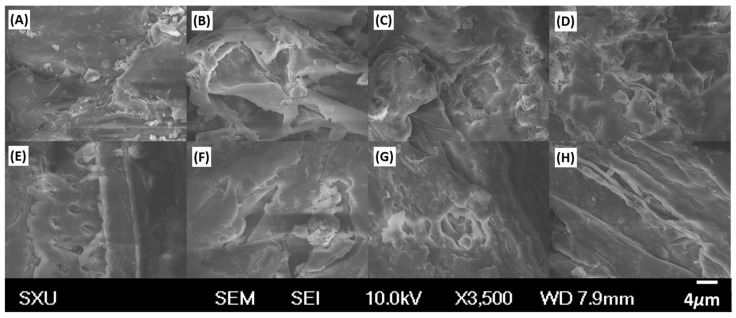
Deep eutectic solvents (DESs) have attracted significant attention as a promising green media. In this work, twenty-five kinds of benign choline chloride-based DESs with microwave-assisted methods were applied to quickly extract active components from Radix Salviae miltiorrhizae. The extraction factors, including temperature, time, power of microwave, and solid/liquid ratio, were investigated systematically by response surface methodology. The hydrophilic and hydrophobic ingredients were extracted simultaneously under the optimized conditions: 20 vol% of water in choline chloride/1,2-propanediol (1:1, molar ratio) as solvent, microwave power of 800 W, temperature at 70 °C, time at 11.11 min, and solid/liquid ratio of 0.007 g·mL−1. The extraction yield was comparable to, or even better than, conventional methods with organic solvents. The microstructure alteration of samples before and after extraction was also investigated. The method validation was tested as the linearity of analytes (r2 > 0.9997 over two orders of magnitude), precision (intra-day relative standard deviation (RSD) < 2.49 and inter-day RSD < 2.96), and accuracy (recoveries ranging from 95.04% to 99.93%). The proposed DESs combined with the microwave-assisted method provided a prominent advantage for fast and efficient extraction of active components, and DESs could be extended as solvents to extract and analyze complex environmental and pharmaceutical samples.
Overview
The claims and statistics of this paper haven’t been checked yet.
Free: it reads the open-access text and checks the first 5 claims that cite a source we can check. Create a free account to check every claim.
Integrity signals
Registry
Cites
Statistics
Figures
Verification
Claims the paper makes
The claims and statistics of this paper haven’t been checked yet.
Free: it reads the open-access text and checks the first 5 claims that cite a source we can check. Create a free account to check every claim.
Claims other papers make about this one
Each is checked against this paper’s own text: does it say what the citing paper says it does?
The source backs part of the claim, not all of it — or backs it for a different population, condition or comparison.
In the citing paper
“Various interactions (such as anion exchange, weak non-covalent interactions, π-π and/or hydrogen bonding) take place, amongst an HBD and an HBA in various combinations and molar ratios that contribute to some of the physicochemical properties discussed below [35].”
From Microextraction Techniques with Deep Eutectic Solvents (2020) · cites this paper as [35]
Experimental — accuracy not yet measuredThe source backs part of the claim, not all of it — or backs it for a different population, condition or comparison.
In the citing paper
“Physicochemical properties of deep eutectic solvents derive from the various interactions between an HBA and HBD, which depend on the molar ratios, the organic compounds themselves, and the nature of the interactions (π-π and/or hydrogen bonding, anion exchange, weak non-covalent interactions) [36].”
From Applications of Deep Eutectic Solvents in Sample Preparation and Extraction of Organic Molecules (2022) · cites this paper as [36]
Experimental — accuracy not yet measured
Self-check
Percentages, sums and reported differences re-computed from the paper’s own numbers.
The self-check needs the paper’s full text.
Citations
Cites
Abbott, A. P., Capper, G., Davies, D. L., Rasheed, R. K., & Tambyrajah, V. (2003) · Chemical Communications · doi:10.1039/b210714g · Cited by 5,738 · cited 1×
“in 2003 [1], which were generally formed by mixing a hydrogen bonding acceptor (HBA) with a hydrogen bonding donor (HBD) after continuous heating and stirring.”
BackgroundAbbott, A. P., Boothby, D., Capper, G., Davies, D. L., & Rasheed, R. K. (2004) · Journal of the American Chemical Society · doi:10.1021/ja048266j · Cited by 4,340 · cited 1×
“DESs are always named as ‘ionic liquid analogues’ for their similar properties to ionic liquids, such as eco-friendliness, negligible volatility, and adjustable viscosity [2,3].”
BackgroundLow-transition-temperature mixtures (LTTMs): A new generation of designer solvents
Francisco, M., van den Bruinhorst, A., & Kroon, M. C. (2013) · Angewandte Chemie International Edition · doi:10.1002/anie.201207548 · Cited by 1,378
Evaluation of toxicity and biodegradability of choline chloride based deep eutectic solvents
Radošević, K., Cvjetko Bubalo, M., Gaurina Srček, V., Grgas, D., Landeka Dragičević, T., & Radojčić Redovniković, I. (2015) · Ecotoxicology and Environmental Safety · doi:10.1016/j.ecoenv.2014.09.034 · Cited by 770 · cited 1×
“Compared with ionic liquids, which are the most popular green solvents [4–6], DESs have the advantage of low cost, easy synthesis, biodegradability [7], high solubilization strength [8,9], and lowor even non-toxicity [10,11].”
BackgroundDeep Eutectic Solvents: The Organic Reaction Medium of the Century
Alonso, D. A., Baeza, A., Chinchilla, R., Guillena, G., Pastor, I. M., & Ramón, D. J. (2016) · European Journal of Organic Chemistry · doi:10.1002/ejoc.201501197 · Cited by 709
Dai, Y., Witkamp, G.-J., Verpoorte, R., & Choi, Y. H. (2013) · Analytical Chemistry · doi:10.1021/ac400432p · Cited by 678 · cited 1×
“Compared with ionic liquids, which are the most popular green solvents [4–6], DESs have the advantage of low cost, easy synthesis, biodegradability [7], high solubilization strength [8,9], and lowor even non-toxicity [10,11].”
BackgroundAre deep eutectic solvents benign or toxic?
Hayyan, M., Hashim, M. A., Hayyan, A., Al-Saadi, M. A., AlNashef, I. M., Mirghani, M. E. S., & Saheed, O. K. (2013) · Chemosphere · doi:10.1016/j.chemosphere.2012.11.004 · Cited by 675 · cited 1×
“Compared with ionic liquids, which are the most popular green solvents [4–6], DESs have the advantage of low cost, easy synthesis, biodegradability [7], high solubilization strength [8,9], and lowor even non-toxicity [10,11].”
BackgroundTang, B., Zhang, H., & Row, K. H. (2015) · Journal of Separation Science · doi:10.1002/jssc.201401347 · Cited by 522
Ionic liquids and deep eutectic mixtures: Sustainable solvents for extraction processes
Pena‐Pereira, F., & Namieśnik, J. (2014) · ChemSusChem · doi:10.1002/cssc.201301192 · Cited by 432
Phosphonium-Based Ionic Liquids Analogues and Their Physical Properties
Kareem, M. A., Mjalli, F. S., Hashim, M. A., & AlNashef, I. M. (2010) · Journal of Chemical & Engineering Data · doi:10.1021/je100104v · Cited by 426 · cited 1×
“DESs are always named as ‘ionic liquid analogues’ for their similar properties to ionic liquids, such as eco-friendliness, negligible volatility, and adjustable viscosity [2,3].”
Background
Research works printed but not linked: 1
- Jin, 2014, Study on the thermal stability of salvianolic acid B, Drug Develop., 35, 78
Cited by
Green and sustainable solvents in chemical processes
Clarke, C. J., Tu, W.-C., Levers, O., Bröhl, A., & Hallett, J. P. (2018) · Chemical Reviews · doi:10.1021/acs.chemrev.7b00571 · Cited by 2,071
Extraction techniques with deep eutectic solvents
Cunha, S. C., & Fernandes, J. O. (2018) · TrAC Trends in Analytical Chemistry · doi:10.1016/j.trac.2018.05.001 · Cited by 760
Hydrophobic deep eutectic solvents in microextraction techniques–A review
Makoś, P., Słupek, E., & Gębicki, J. (2020) · Microchemical Journal · doi:10.1016/j.microc.2019.104384 · Cited by 469
“The physicochemical properties of HDES are usually attributed to various combinations of HBA and HBD that result in unique interactions (such as hydrogen bonding, π-π bonding or anion exchange) during the extraction process [48].”
BackgroundDeep Eutectic Solvents for Pretreatment, Extraction, and Catalysis of Biomass and Food Waste
Kalhor, P., & Ghandi, K. (2019) · Molecules · doi:10.3390/molecules24224012 · Cited by 305
Deep eutectic solvents are not only effective extractants
Shishov, A., Pochivalov, A., Nugbienyo, L., Andruch, V., & Bulatov, A. (2020) · TrAC Trends in Analytical Chemistry · doi:10.1016/j.trac.2020.115956 · Cited by 278
Green solvents in analytical chemistry
Pacheco-Fernández, I., & Pino, V. (2019) · Current Opinion in Green and Sustainable Chemistry · doi:10.1016/j.cogsc.2018.12.010 · Cited by 252
Ivanović, M., Islamčević Razboršek, M., & Kolar, M. (2020) · Plants · doi:10.3390/plants9111428 · Cited by 230
Ionic deep eutectic solvents for the extraction and separation of natural products
Huang, J., Guo, X., Xu, T., Fan, L., Zhou, X., & Wu, S. (2019) · Journal of Chromatography A · doi:10.1016/j.chroma.2019.03.046 · Cited by 221
Ekezie, F.-G. C., Sun, D.-W., & Cheng, J.-H. (2017) · Trends in Food Science & Technology · doi:10.1016/j.tifs.2017.06.006 · Cited by 216
Jablonský, M., Škulcová, A., Malvis, A., & Šima, J. (2018) · Journal of Biotechnology · doi:10.1016/j.jbiotec.2018.06.349 · Cited by 189
Taghizadeh, M., Taghizadeh, A. A., Vatanpour, V., Saeb, M. R., & Saeb, M. R. (2020) · Separation and Purification Technology · doi:10.1016/j.seppur.2020.118015 · Cited by 157
Airouyuwa, J. O., Mostafa, H., Riaz, A., & Maqsood, S. (2022) · Ultrasonics Sonochemistry · doi:10.1016/j.ultsonch.2022.106233 · Cited by 163
Kalyniukova, A., Holuša, J., Musiolek, D., Sedláková-Kaduková, J., Płotka‐Wasylka, J., & Andruch, V. (2021) · Industrial Crops and Products · doi:10.1016/j.indcrop.2021.114047 · Cited by 121
Deep eutectic solvents as sustainable extraction media for plants and food samples: A review
Kaoui, S., Chebli, B., Zaidouni, S., Basaid, K., & Mir, Y. (2022) · Sustainable Chemistry and Pharmacy · doi:10.1016/j.scp.2022.100937 · Cited by 112
Microextraction of bioactive compounds using deep eutectic solvents: a review
Nakhle, L., Kfoury, M., Mallard, I., Landy, D., & Greige‐Gerges, H. (2021) · Environmental Chemistry Letters · doi:10.1007/s10311-021-01255-2 · Cited by 109
Silva, Y. P. A., Ferreira, T. A. P. C., Jiao, G., & Brooks, M. S. (2019) · Journal of Food Science and Technology · doi:10.1007/s13197-019-03618-8 · Cited by 101
Lu, W., & Liu, S. (2020) · Biomass Conversion and Biorefinery · doi:10.1007/s13399-020-00753-7 · Cited by 102
Ali, A., Chua, B. L., & Chow, Y. H. (2019) · TrAC Trends in Analytical Chemistry · doi:10.1016/j.trac.2019.05.040 · Cited by 101
Microextraction Techniques with Deep Eutectic Solvents
Plastiras, O.-E., Andreasidou, E., & Samanidou, V. (2020) · Molecules · doi:10.3390/molecules25246026 · Cited by 84
“Various interactions (such as anion exchange, weak non-covalent interactions, π-π and/or hydrogen bonding) take place, amongst an HBD and an HBA in various combinations and molar ratios that contribute to some of the physicochemical properties discussed below [35].”
BackgroundDesign Strategy and Application of Deep Eutectic Solvents for Green Synthesis of Nanomaterials
Nam, N. N., Do, H. D. K., Trinh, K. T. L., & Lee, N. Y. (2023) · Nanomaterials · doi:10.3390/nano13071164 · Cited by 85
“Different HBDs, including urea, polyhydric acid, polyhydric alcohols, and saccharides, have been explored [33].”
BackgroundAirouyuwa, J. O., Mostafa, H., Riaz, A., Stathopoulos, C., & Maqsood, S. (2022) · Food and Bioprocess Technology · doi:10.1007/s11947-022-02960-8 · Cited by 80
Wang, H., Ma, X., Cheng, Q., Wang, L., & Zhang, L. (2018) · Molecules · doi:10.3390/molecules23123233 · Cited by 71
Self-citationLanjekar, K. J., & Rathod, V. K. (2021) · Process Biochemistry · doi:10.1016/j.procbio.2020.11.023 · Cited by 67
Santana, A. P. R., Andrade, D. F., Mora-Vargas, J. A., Amaral, C. D. B., Oliveira, A., & Gonzalez, M. H. (2019) · Talanta · doi:10.1016/j.talanta.2019.02.083 · Cited by 60
Shikov, A. N., Shikova, V. A., Whaley, A. O., Буракова, М. А., Флисюк, Е. В., Whaley, A. K., Terninko, I. I., Generalova, Y. E., Gravel, I. V., & Pozharitskaya, O. N. (2022) · Molecules · doi:10.3390/molecules27227690 · Cited by 63
“A key advantage of NADES as perspective solvents is that they can be tuned to have different functionality owing to diverse possible combinations of starting components [11,14,16].”
BackgroundGioia, M. L. D., Nardi, M., Costanzo, P., Nino, A. D., Maiuolo, L., Oliverio, M., & Procopio, A. (2018) · Molecules · doi:10.3390/molecules23081891 · Cited by 57
He, X., Yang, J., Huang, Y., Zhang, Y., Wan, H., & Li, C. (2019) · Molecules · doi:10.3390/molecules25010140 · Cited by 58
“The relationship pattern is similar to previous studies on the extraction of medical plants using DES [8,23].”
MethodResultNguyen, D., Huynh, T. V., Nguyễn, V. S., Cao, P.-L. D., Nguyen, H. T., Wei, T., Tran, P. H., & Nguyen, P. T. (2021) · RSC Advances · doi:10.1039/d1ra03273a · Cited by 56
Farooq, M. Q., Zeger, V. R., & Anderson, J. L. (2021) · Journal of Chromatography A · doi:10.1016/j.chroma.2021.462588 · Cited by 51
Applications of Deep Eutectic Solvents in Sample Preparation and Extraction of Organic Molecules
Plastiras, O.-E., & Samanidou, V. (2022) · Molecules · doi:10.3390/molecules27227699 · Cited by 45
“Physicochemical properties of deep eutectic solvents derive from the various interactions between an HBA and HBD, which depend on the molar ratios, the organic compounds themselves, and the nature of the interactions (π-π and/or hydrogen bonding, anion exchange, weak non-covalent interactions) [36].”
BackgroundAlternative Assisted Extraction Methods of Phenolic Compounds Using NaDESs
Coscarella, M., Nardi, M., Alipieva, K. I., Bonacci, S., Popova, M., Procopio, A., Scarpelli, R., & Simeonov, S. P. (2023) · Antioxidants · doi:10.3390/antiox13010062 · Cited by 116
“The following year, Chen et al. presented the MAE-DES methodology for the isolation of bioactive compounds from the Radix Salviae miltior-rhizae [189].”
MethodKehili, M., İşçi, A., Thieme, N., Kaltschmitt, M., Zetzl, C., & Smirnova, I. V. (2022) · Biomass Conversion and Biorefinery · doi:10.1007/s13399-022-03027-6 · Cited by 47
Ciardi, M., Ianni, F., Sardella, R., Bona, S. D., Cossignani, L., Germani, R., TIECCO, M., & Clementi, C. (2021) · Materials · doi:10.3390/ma14216465 · Cited by 47
“Based on the last property, DESs are fruitfully applied in extraction and preconcentration procedures from different matrices, encompassing vegetal and biological ones [39,40].”
BackgroundAgieienko, V. N., & Buchner, R. (2020) · Physical Chemistry Chemical Physics · doi:10.1039/d0cp03334k · Cited by 40
Nadia, J., Shahbaz, K., Ismail, M., & Farid, M. M. (2017) · ACS Sustainable Chemistry & Engineering · doi:10.1021/acssuschemeng.7b03221 · Cited by 42
Messaoudi, N. E., Aydin, F. A., Miyah, Y., Fernine, Y., Georgin, J., Wasilewska, M., Benjelloun, M. C., Graba, B. B., & Knani, S. (2025) · Journal of Molecular Liquids · doi:10.1016/j.molliq.2025.126955 · Cited by 43
Pradeepkumar, P., Subbiah, A., & Rajan, M. (2019) · SN Applied Sciences · doi:10.1007/s42452-019-0591-4 · Cited by 45
Zhang, R., Chen, H., Yu, Q., Zhang, Y., Liu, F., Wang, F., Chen, X., & Liu, Y. (2023) · Chemical Engineering Science · doi:10.1016/j.ces.2023.118630 · Cited by 37
Alsaud, N., Shahbaz, K., & Farid, M. M. (2020) · Chemical Engineering Research and Design · doi:10.1016/j.cherd.2020.11.028 · Cited by 36
Dong, J., Wu, G., Dong, Z., Yang, D., Bo, Y., An, M., & Zhao, L. (2021) · RSC Advances · doi:10.1039/d1ra06338c · Cited by 36
Lawal, K. G., Nazir, A., Sundarakani, B., Stathopoulos, C., & Maqsood, S. (2024) · International Journal of Biological Macromolecules · doi:10.1016/j.ijbiomac.2024.135593 · Cited by 35
Ma, W., & Row, K. H. (2020) · Molecules · doi:10.3390/molecules25020280 · Cited by 30
Deep eutectic solvents in analysis, delivery and chemistry of pharmaceuticals
Ganorkar, S. B., Hadole, P. M., Patil, M. R., Pardeshi, C. V., Bobade, P. S., Shirkhedkar, A. A., & Heyden, Y. V. (2025) · International Journal of Pharmaceutics · doi:10.1016/j.ijpharm.2025.125278 · Cited by 32
Sengane, M. V., Sihlahla, M., Nomngongo, P. N., & Mketo, N. (2024) · Microchemical Journal · doi:10.1016/j.microc.2024.111984 · Cited by 27
Lu, Y., Wang, X., Gu, H., & Gao, M. (2021) · Microchemical Journal · doi:10.1016/j.microc.2021.106626 · Cited by 26
Destandau, É., & Michel, T. (2022) · Royal Society of Chemistry eBooks · doi:10.1039/9781839165894-00144 · Cited by 42
Qian, J., Xu, X., Su, J., Zeng, W., Han, B., Hao, X., & Kai, G. (2021) · Composites Part B Engineering · doi:10.1016/j.compositesb.2021.109563 · Cited by 24
Ng, M. H., & Hadi, N. A. (2021) · Current Research in Green and Sustainable Chemistry · doi:10.1016/j.crgsc.2021.100155 · Cited by 25
Alsaud, N., Shahbaz, K., & Farid, M. M. (2021) · Chemical Engineering Research and Design · doi:10.1016/j.cherd.2021.08.004 · Cited by 24
Green pre-concentration techniques during pesticide analysis in food samples
Musarurwa, H., Chimuka, L., & Tavengwa, N. T. (2019) · Journal of Environmental Science and Health Part B · doi:10.1080/03601234.2019.1633213 · Cited by 23
“DESs are generally formed by mixing a hydrogen bonding acceptor with a hydrogen bonding donor after continuous heating and stirring.([31]) This eutectic mixture has comparable characteristics to ILs but are cheaper to produce due to lower cost of the raw materials, less toxic, and often biodegradable.”
BackgroundConstantinescu-Aruxandei, D., & Oancea, F. (2023) · International Journal of Environmental Research and Public Health · doi:10.3390/ijerph20032096 · Cited by 23
Emerging technologies for the recovery of bioactive compounds from saffron species
Shinwari, K. J. (2020) · Elsevier eBooks · doi:10.1016/b978-0-12-821219-6.00004-x · Cited by 18
Extraction of Plant and Algal Polyphenols Using Eutectic Solvents
Percevault, L., Limanton, E., Gauffre, F., Lagrost, C., & Paquin, L. (2020) · Environmental chemistry for a sustainable world · doi:10.1007/978-3-030-53069-3_7 · Cited by 18
Thu, H. N., Huyen, T. V. T., & Phuong, N. V. (2021) · Phytochemical Analysis · doi:10.1002/pca.3099 · Cited by 14
Rosa, R., Ferrari, É., & Veronesi, P. (2018) · InTech eBooks · doi:10.5772/intechopen.73651 · Cited by 19
Preanalytical Treatments: Extraction With Deep Eutectic Solvents
González, C. G., Choi, Y. H., & Verpoorte, R. (2019) · Elsevier eBooks · doi:10.1016/b978-0-12-816911-7.00019-0 · Cited by 37
Dong, J., Dong, Z., Zhao, L., Yang, D., Bo, Y., Zhang, X., Wu, G., & An, M. (2022) · Sustainable Chemistry and Pharmacy · doi:10.1016/j.scp.2022.100838 · Cited by 14
Synthesis and Characterisation of Thymol‐Based Hydrophobic Deep Eutectic Solvents
Adeoye, D. O., Gano, Z. S., Ahmed, O. U., Shuwa, S. M., Atta, A. Y., & Jubril, B. Y. (2023) · ECSOC 2023 · doi:10.3390/ecsoc-27-16380 · Cited by 12
“These properties are usually attributed to different HBA and HBD combinations, which create unique interactions [6].”
Recycling of deep eutectic solvent in the extraction of ferulic acid from oil palm empty fruit bunch
Ng, M. H., Hadi, N. A., & Hasliyanti, A. (2024) · Journal of Separation Science · doi:10.1002/jssc.202300842 · Cited by 11
Zhao, W., Xu, L., Wang, H., He, T., & Xie, X. (2023) · Analytical Sciences · doi:10.1007/s44211-023-00451-0 · Cited by 9
Deep Eutectic Solvents in Extraction and Sorption Technology
Marcus, Y. (2018) · Springer eBooks · doi:10.1007/978-3-030-00608-2_5 · Cited by 11
New Sample Preparation Strategies for Analytical Determinations
Quintana, J. B., Ramil, M., Rodil, R., Rodríguez, I., & Cela, R. (2014) · Wiley eBooks · doi:10.1002/9780470027318.a9392 · Cited by 11
Alperth, F., Feistritzer, T., Huber, M., Kunert, O., & Bučar, F. (2024) · Molecules · doi:10.3390/molecules29030612 · Cited by 9
“Water addition can increase the extraction of hydrophilic targets, while reducing extraction of hydrophobic compounds [39].”
BackgroundRoshni, A., Tivana, S. S., Taharat, S. F., & Islam, N. (2026) · Applied Food Research · doi:10.1016/j.afres.2026.101893 · Cited by 7
Application of deep eutectic solvents in sample preparation
Han, X., Chen, J., Zhang, H., Li, Z., & Qiu, H. (2018) · Scientia Sinica Chimica · doi:10.1360/n032018-00192 · Cited by 6
Self-citationNakhle, L., Kfoury, M., Mallard, I., Landy, D., & Greige‐Gerges, H. (2020) · Environmental chemistry for a sustainable world · doi:10.1007/978-3-030-53069-3_6 · Cited by 8
Dheyab, A. S., Ibrahim, A. J. K., Aljumily, E. K., AlOmar, M. K., Bakar, M. F. A., & Sabran, S. F. (2022) · Materials Today Proceedings · doi:10.1016/j.matpr.2022.06.017 · Cited by 6
Hei, J., Wang, J., Wang, J., Zhang, D., Song, W., Xun, H., Guo, X., & Yao, X. (2024) · Separations · doi:10.3390/separations11080220 · Cited by 4
“30 1:30 1.922 40 Nevertheless, the saturation of the dissolution ability of DES after the addition of water led to a stagnation in the increasing trend in total phenol content, causing it to drop from 50% to 60% [32,33].”
BackgroundInfluentialDeep eutectic solvents as recyclable media for metal removal from crude oil
Mirinn, E., Abbott, A. P., & Kilpatrick, A. F. R. (2026) · RSC Advances · doi:10.1039/d5ra09189f · Cited by 4
Han, N. M. (2023) · Journal of Oil Palm Research · doi:10.21894/jopr.2023.0022 · Cited by 4
Zhao, W., Sun, Y., Wei, X., Niu, G., & Zhou, C. (2023) · Analytical Methods · doi:10.1039/d3ay00958k · Cited by 4
Ali, Z., Yadav, P., Tiwari, A., Dixit, S., Panday, V., & Patel, D. K. (2026) · Journal of Molecular Liquids · doi:10.1016/j.molliq.2026.129768 · Cited by 3
Antidiabetic potential from selected Himalayan underutilized herbs: a review
Zahoor, I., Mir, T. A., Ganaie, T. A., Allai, F. M., Ayoub, W. S., & Farooq, S. (2024) · Food and Humanity · doi:10.1016/j.foohum.2024.100297 · Cited by 3
Aydın, Ç. M. (2023) · Middle East Journal of Science · doi:10.51477/mejs.1236628 · Cited by 3
“[12] enhanced the extraction efficiency of the selected compounds by adding water to ChCI-1,2-Propanediol up to a certain extent.”
BackgroundMethodResultInfluentialRomero, A. M., Zampini, I. C., & Isla, M. I. (2024) · Plants · doi:10.3390/plants13182563 · Cited by 4
Sample Preparation Strategies for Analytical Determinations
Cela, R., González‐Mariño, I., Montes, R., Álvarez, J. B. Q., Ramil, M., Rodríguez, M. R. R., & Pereiro, I. R. (2019) · Wiley eBooks · doi:10.1002/9780470027318.a9392.pub2 · Cited by 3
Zhao, W., Xie, X., He, T., Zhang, J., & Liu, J. (2024) · Revue Roumaine de Chimie · doi:10.33224/rrch.2024.69.7-8.09 · Cited by 2
Hydrophobic deep eutectic solvents: Synthesis, properties, and emerging applications
Maharana, S., Mishra, S., & Panda, P. (2026) · Separation Science and Technology · doi:10.1080/01496395.2026.2675567 · Cited by 2
“[58] The structure of HDES impacts properties like density, viscosity, surface tension and conductivity.”
Asif, M., & Ahmed, D. (2026) · Discover Green Chemistry · doi:10.1007/s44509-026-00025-z · Cited by 1
“It enhances the DES’s mobility by breaking the rigid hydrogen-bonding network, which slightly decreases density and significantly reduces viscosity, modifying the overall structure of the solvent [64].”
Singh, M., Singh, A. P., Tiwari, N., Ramdas, & Shanker, K. (2024) · Comprehensive analytical chemistry · doi:10.1016/bs.coac.2023.08.002 · Cited by 1
Extraction of Active Compounds from Plants and Animals Using Deep Eutectic Solvents (DESs)
Elgharbawy, A. A. M., Noor, N. M., Khan, H. W., Azmi, N. A. N., & Salleh, H. M. (2026) · Engineering materials · doi:10.1007/978-981-95-1912-5_5
Triaux, Z. (2019) · theses.fr (ABES) · doi:10.70675/608b6e98z5d41z4297za08cz8a7ef57950c3 · Cited by 2
Achkar, T. E. (2020) · theses.fr (ABES) · doi:10.70675/6a306a76zaa05z4bf9z8bf5z02e942195fa8 · Cited by 3
Asif, M., Iftikhar, H., & Ahmed, D. (2026) · Chemical Papers · doi:10.1007/s11696-026-05736-y
Sadeghi, R., & Ebrahimi, N. (2026) · RSC Advances · doi:10.1039/d6ra05714d
Metadata
- Authors
- Chen, J., Liu, M., Wang, Q., Du, H., & Zhang, L.
- Affiliations
- Shanxi University (CN)
- Institute of Molecule Science, Key Laboratory of Chemical Biology and Molecular Engineering of Ministry of Education, Shanxi University, Taiyuan 030006, China
- Corresponding author
- Zhang, Liwei
- Venue
- Molecules
- Publisher
- MDPI AG
- Published
- 2016-10-17
- Volume
- 21
- Issue
- 10
- Pages
- 1383
- ISSN
- 1420-3049 (ISSN-L)
- PMC
- PMC6274102
- OpenAlex
- W2533555904
- Cited by
- 85
- References
- 35
- Citations by year
- 2026: 8 · 2025: 2 · 2024: 9 · 2023: 9 · 2022: 9 · 2021: 11 · 2020: 13 · 2019: 13 · 2018: 8 · 2017: 2
- FWCI
- 2.55
- Type
- journal article
- Language
- en
- Open access
- gold
- doi.org
- Licence
- Locations
- Molecules (publishedVersion, cc-by)
- Europe PMC (PubMed Central) (publishedVersion, cc-by)
- PubMed Central (publishedVersion, cc-by)
- PubMed (publishedVersion)
- DOAJ (DOAJ: Directory of Open Access Journals) (submittedVersion, cc-by-sa)
- Funders
- Education innovation project of graduate in Shanxi province (No. 2016BY030)
- Topics
- Physical Sciences › Chemistry › Physical and Theoretical Chemistry › Ionic liquids properties and applications
- Health Sciences › Medicine › Complementary and alternative medicine › Traditional Chinese Medicine Analysis
- Life Sciences › Agricultural and Biological Sciences › Food Science › Agricultural and Biological Research
- Keywords
- deep eutectic solvents, microwave-assisted extraction, Radix Salviae Miltiorrhizae, choline chloride, propylene glycol, extraction optimization, green solvents, response surface methodology
- MeSH terms
- Choline, Chromatography, High Pressure Liquid, Microwaves, Plant Extracts, Solvents, Temperature, Water, Propylene Glycol, Salvia miltiorrhiza, Hydrophobic and Hydrophilic Interactions
About these checks
Registry, retraction, Cites and statistics results are computed, not judged, with one exception: a printed reference that no index lists is read once by a model before it counts as a citation error. Claims are extracted by a model and kept only when their quote appears verbatim in the text; each cited source is then checked, with a model’s help, for whether it says what the claim relies on. Those verdicts can be wrong — read the claim’s quote and the cited source before relying on one.
Statistics and arithmetic are recomputed, not judged.
Confidence bands are shown only for fields calibrated on our annotated test set. None is calibrated yet, so no band is shown.
What counts as a claim ›How we measure confidence ›How we check this ›
Are you an author, or do you see a problem with this page? Request a review
Data sources
Bibliographic data: Semantic Scholar, OpenAlex, Crossref.
Contains information from the Semantic Scholar Academic Graph Datasets, made available under the ODC Attribution License (ODC-BY 1.0).
Semantic Scholar’s data is described in: Kinney, R., et al. (2023). The Semantic Scholar Open Data Platform. arXiv:2301.10140.
