

The DOI matches its Crossref record; 113 of the 114 references it cites were found in a registry or an index.
Dietary Sugars and Endogenous Formation of Advanced Glycation Endproducts: Emerging Mechanisms of Disease
Open accessPublished version of a preprint
Abstract
The rapid increase in metabolic diseases, which occurred in the last three decades in both industrialized and developing countries, has been related to the rise in sugar-added foods and sweetened beverages consumption. An emerging topic in the pathogenesis of metabolic diseases related to modern nutrition is the role of Advanced Glycation Endproducts (AGEs). AGEs can be ingested with high temperature processed foods, but also endogenously formed as a consequence of a high dietary sugar intake. Animal models of high sugar consumption, in particular fructose, have reported AGE accumulation in different tissues in association with peripheral insulin resistance and lipid metabolism alterations. The in vitro observation that fructose is one of the most rapid and effective glycating agents when compared to other sugars has prompted the investigation of the in vivo fructose-induced glycation. In particular, the widespread employment of fructose as sweetener has been ascribed by many experimental and observational studies for the enhancement of lipogenesis and intracellular lipid deposition. Indeed, diet-derived AGEs have been demonstrated to interfere with many cell functions such as lipid synthesis, inflammation, antioxidant defences, and mitochondrial metabolism. Moreover, emerging evidence also in humans suggest that this impact of dietary AGEs on different signalling pathways can contribute to the onset of organ damage in liver, skeletal and cardiac muscle, and the brain, affecting not only metabolic control, but global health. Indeed, the most recent reports on the effects of high sugar consumption and diet-derived AGEs on human health reviewed here suggest the need to limit the dietary sources of AGEs, including added sugars, to prevent the development of metabolic diseases and related comorbidities.
Overview
The claims and statistics of this paper haven’t been checked yet.
Run the check — free, no account needed. It reads the open-access text and checks the sources it cites.
Integrity signals
Registry
Cites
Statistics
Figures
Verification
Claims the paper makes
The claims and statistics of this paper haven’t been checked yet.
Run the check — free, no account needed. It reads the open-access text and checks the sources it cites.
Claims other papers make about this one
Each is checked against this paper’s own text: does it say what the citing paper says it does?
In the citing paper
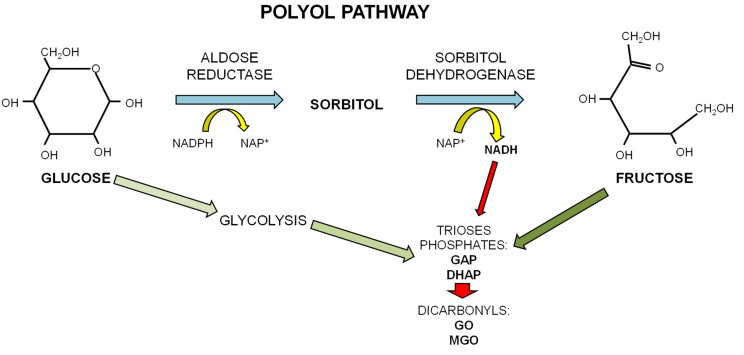
“In addition to nonenzymatic glycation, AGEs can be formed through the polyol pathway and lipid peroxidation in the presence and absence of hyperglycemia, depending on the substrate type, reactant concentration, exposure time, and host cellular context14–17.”
From Advanced glycation end products (AGEs) and other adducts in aging-related diseases and alcohol-mediated tissue injury (2021) · cites this paper as [14]
Self-check
Percentages, sums and reported differences re-computed from the paper’s own numbers.
The self-check needs the paper’s full text.
Citations
Cites
1 retracted
Targeting the NLRP3 inflammasome to Reduce Diet-induced Metabolic Abnormalities in Mice
Chiazza, F., Couturier-Maillard, A., Benetti, E., Mastrocola, R., Nigro, D., Cutrìn, J. C., Serpe, L., Aragno, M., Fantozzi, R., Ryffel, B., et al. (2015) · Molecular Medicine · doi:10.2119/molmed.2015.00104 · Cited by 80
Self-citationRetractedInflammation and metabolic disorders
Hotamisligil, G. S. (2006) · Nature · doi:10.1038/nature05485 · Cited by 9,199
Changes in diet and lifestyle and long-term weight gain in women and men
Mozaffarian, D., Hao, T., Rimm, E. B., Willett, W. C., & Hu, F. B. (2011) · New England Journal of Medicine · doi:10.1056/nejmoa1014296 · Cited by 2,527
Consumption of high-fructose corn syrup in beverages may play a role in the epidemic of obesity
Bray, G. A., Nielsen, S. J., & Popkin, B. M. (2004) · The American Journal of Clinical Nutrition · doi:10.1093/ajcn/79.4.537 · Cited by 1,990
Stanhope, K. L., Schwarz, J. M., Keim, N. L., Griffen, S. C., Bremer, A. A., Graham, J. L., Hatcher, B., Cox, C. L., Dyachenko, A., Zhang, W., et al. (2009) · Journal of Clinical Investigation · doi:10.1172/jci37385 · Cited by 1,765
Sugar-Sweetened Beverages, Obesity, Type 2 Diabetes Mellitus, and Cardiovascular Disease Risk
Malik, V. S., Popkin, B. M., Bray, G. A., Després, J.-P., & Hu, F. B. (2010) · Circulation · doi:10.1161/circulationaha.109.876185 · Cited by 1,641
Schulze, M. B. (2004) · JAMA · doi:10.1001/jama.292.8.927 · Cited by 1,639
Avena, N. M., Rada, P., & Hoebel, B. G. (2008) · Neuroscience & Biobehavioral Reviews · doi:10.1016/j.neubiorev.2007.04.019 · Cited by 1,358
Understanding RAGE, the receptor for advanced glycation end products
Bierhaus, A., Humpert, P. M., Morcos, M., Wendt, T., Chavakis, T., Arnold, B., Stern, D. M., & Nawroth, P. P. (2005) · Journal of Molecular Medicine · doi:10.1007/s00109-005-0688-7 · Cited by 1,297
Added sugar intake and cardiovascular diseases mortality among US adults
Yang, Q., Zhang, Z., Gregg, E. W., Flanders, W. D., Merritt, R., & Hu, F. B. (2014) · JAMA Internal Medicine · doi:10.1001/jamainternmed.2013.13563 · Cited by 947 · cited 1×
“On the other hand, results from experimental models confirm that the consumption of sugar-added foods is associated with increased risk for obesity [7], as well as cardiovascular diseases [8,9], metabolic disorders [10], non-alcoholic fatty liver disease (NAFLD) [11,12], and cognitive decline [13].”
Background
Cited by
Sorted by citations
Rungratanawanich, W., Qu, Y., Wang, X., Essa, M. M., & Song, B.-J. (2021) · Experimental & Molecular Medicine · doi:10.1038/s12276-021-00561-7 · Cited by 411
Periodontal Disease: The Good, The Bad, and The Unknown
Sedghi, L. M., Bacino, M. S., & Kapila, Y. L. (2021) · Frontiers in Cellular and Infection Microbiology · doi:10.3389/fcimb.2021.766944 · Cited by 409
Shen, C., Lu, C., Wu, C.-H., Li, K., Kuo, Y., Hsieh, S., & Yu, C. (2020) · Molecules · doi:10.3390/molecules25235591 · Cited by 316
Grosso, G., Laudisio, D., Frias-Toral, E., Barrea, L., Muscogiuri, G., Savastano, S., & Colao, A. (2022) · Nutrients · doi:10.3390/nu14061137 · Cited by 255
Snelson, M., & Coughlan, M. (2019) · Nutrients · doi:10.3390/nu11020215 · Cited by 230
Redox Signaling and Advanced Glycation Endproducts (AGEs) in Diet-Related Diseases
Cepas, V., Collino, M., Mayo, J. C., & Sainz, R. M. (2020) · Antioxidants · doi:10.3390/antiox9020142 · Cited by 216
The impact of dietary macronutrient intake on cognitive function and the brain
Muth, A.-K., & Park, S. Q. (2021) · Clinical Nutrition · doi:10.1016/j.clnu.2021.04.043 · Cited by 197
Fernando, D. H., Forbes, J. M., Angus, P. W., & Herath, C. B. (2019) · International Journal of Molecular Sciences · doi:10.3390/ijms20205037 · Cited by 184
In vitro Models of Bone Remodelling and Associated Disorders
Owen, R., & Reilly, G. C. (2018) · Frontiers in Bioengineering and Biotechnology · doi:10.3389/fbioe.2018.00134 · Cited by 201
Man, A. W. C., Li, H., & Xia, N. (2020) · Oxidative Medicine and Cellular Longevity · doi:10.1155/2020/1496462 · Cited by 182
Cellular Stresses and Stress Responses in the Pathogenesis of Insulin Resistance
Onyango, A. N. (2018) · Oxidative Medicine and Cellular Longevity · doi:10.1155/2018/4321714 · Cited by 167
Impact of advanced glycation end products (AGEs) signaling in coronary artery disease
Kosmopoulos, M., Drekolias, D., Zavras, P. D., Piperi, C., & Papavassiliou, A. G. (2019) · Biochimica et Biophysica Acta (BBA) - Molecular Basis of Disease · doi:10.1016/j.bbadis.2019.01.006 · Cited by 136
Polyphenols and AGEs/RAGE axis. Trends and challenges
González, I., Morales, M. A., & Armando Rojas, R. (2019) · Food Research International · doi:10.1016/j.foodres.2019.108843 · Cited by 101
Advanced glycation end products in food and their effects on intestinal tract
Nie, C., Li, Y., Qian, H., Ying, H., & Wang, L. (2020) · Critical Reviews in Food Science and Nutrition · doi:10.1080/10408398.2020.1863904 · Cited by 97
Seo, Y., Kingsley, S. F., Walker, G., Mondoux, M. A., & Tissenbaum, H. A. (2018) · Proceedings of the National Academy of Sciences · doi:10.1073/pnas.1714178115 · Cited by 98
Rare mono- and disaccharides as healthy alternative for traditional sugars and sweeteners?
van Laar, A., Grootaert, C., & Camp, J. V. (2020) · Critical Reviews in Food Science and Nutrition · doi:10.1080/10408398.2020.1743966 · Cited by 96
The Intestinal Microbiota and Metabolites in the Gut-Kidney-Heart Axis of Chronic Kidney Disease
Huang, Y., Xin, W., Xiong, J., Yao, M., Zhang, B., & Zhao, J. (2022) · Frontiers in Pharmacology · doi:10.3389/fphar.2022.837500 · Cited by 93
C9orf72 expansion within astrocytes reduces metabolic flexibility in amyotrophic lateral sclerosis
Allen, S. P., Hall, B., Woof, R., Francis, L. I., Gatto, N., Shaw, A. C., Myszczynska, M. A., Hemingway, J., Coldicott, I., Willcock, A., et al. (2019) · Brain · doi:10.1093/brain/awz302 · Cited by 89
Sweet but Bitter: Focus on Fructose Impact on Brain Function in Rodent Models
Spagnuolo, M. S., Iossa, S., & Cigliano, L. (2020) · Nutrients · doi:10.3390/nu13010001 · Cited by 85
Metabolic syndrome: epidemiology, mechanisms, and current therapeutic approaches
Hamooya, B. M., Siame, L., Muchaili, L., Masenga, S. K., & Kirabo, A. (2025) · Frontiers in Nutrition · doi:10.3389/fnut.2025.1661603 · Cited by 113
The Effects of Dietary Advanced Glycation End-Products on Neurocognitive and Mental Disorders
D'Cunha, N. M., Sergi, D., Lane, M. M., Naumovski, N., Gamage, E., Rajendran, A., Kouvari, M., Gauci, S., Dissanayaka, T. D., Marx, W., et al. (2022) · Nutrients · doi:10.3390/nu14122421 · Cited by 84
Diet’s Role in Modifying Risk of Alzheimer’s Disease: History and Present Understanding
Grant, W. B., & Blake, S. M. (2023) · Journal of Alzheimer s Disease · doi:10.3233/jad-230418 · Cited by 82
Probing Protein Glycation by Chromatography and Mass Spectrometry: Analysis of Glycation Adducts
Soboleva, A., Vikhnina, M., Grishina, T., & Frolov, A. (2017) · International Journal of Molecular Sciences · doi:10.3390/ijms18122557 · Cited by 68
Dietary Patterns, Carbohydrates, and Age-Related Eye Diseases
Francisco, S. G., Smith, K., Aragonès, G., Whitcomb, E. A., Weinberg, J., Wang, X., Bejarano, E., Taylor, A., & Rowan, S. (2020) · Nutrients · doi:10.3390/nu12092862 · Cited by 73
Too sweet: Problems of protein glycation in the eye
Bejarano, E., & Taylor, A. (2018) · Experimental Eye Research · doi:10.1016/j.exer.2018.08.017 · Cited by 64
Brandon, H., & Yan, L. (2019) · Diabetes Metabolic Syndrome and Obesity · doi:10.2147/dmso.s198968 · Cited by 67
RAGE is a Potential Cause of Onset and Progression of Nonalcoholic Fatty Liver Disease
Asadipooya, K., Lankarani, K. B., Raj, R., & Kalantarhormozi, M. (2019) · International Journal of Endocrinology · doi:10.1155/2019/2151302 · Cited by 63
Plemmenos, G., & Piperi, C. (2022) · Life · doi:10.3390/life12020218 · Cited by 59
Advanced Glycation End Products: key player of the pathogenesis of atherosclerosis
Singh, S., Siva, B. V., & Ravichandiran, V. (2022) · Glycoconjugate Journal · doi:10.1007/s10719-022-10063-x · Cited by 55
Higher sugar intake is associated with periodontal disease in adolescents
Moreira, A. R. O., Batista, R. F. L., Ladeira, L. L. C., Thomaz, É. B. A. F., Alves, C. M. C., Saraiva, M. D. C. P., da Sílva, A. A. M., Brondani, M., & Ribeiro, C. C. C. (2020) · Clinical Oral Investigations · doi:10.1007/s00784-020-03387-1 · Cited by 55
Advanced glycation end product signaling and metabolic complications: Dietary approach
Khan, M. I., Ashfaq, F., Alsayegh, A. A., Hamouda, A., Khatoon, F., Altamimi, T. N. A., Alhodieb, F. S., & Beg, M. M. A. (2023) · World Journal of Diabetes · doi:10.4239/wjd.v14.i7.995 · Cited by 59
Garay‐Sevilla, M. E., Beeri, M. S., de la Maza, M. P., Armando Rojas, R., Salazar‐Villanea, S., & Uribarri, J. (2020) · Nutrition Research Reviews · doi:10.1017/s0954422420000104 · Cited by 55
Subedi, L., Lee, J. H., Gaire, B. P., & Kim, S. Y. (2020) · Antioxidants · doi:10.3390/antiox9090792 · Cited by 47
Kehm, R., Raupbach, J., Weber, D., Deubel, S., Grune, T., & Höhn, A. (2019) · Nutrition and Diabetes · doi:10.1038/s41387-019-0077-x · Cited by 46
Ketogenic Ratio Determines Metabolic Effects of Macronutrients and Prevents Interpretive Bias
Zilberter, T., & Zilberter, Y. (2018) · Frontiers in Nutrition · doi:10.3389/fnut.2018.00075 · Cited by 43
Katsi, V. K., Papakonstantinou, I. P., & Tsioufis, K. P. (2023) · International Journal of Molecular Sciences · doi:10.3390/ijms241411786 · Cited by 43
The depressogenic potential of added dietary sugars
Reis, D. J., Ilardi, S. S., Namekata, M. S., Wing, E. K., & Fowler, C. H. (2019) · Medical Hypotheses · doi:10.1016/j.mehy.2019.109421 · Cited by 45
Bacterial processing of glucose modulates C. elegans lifespan and healthspan
Kingsley, S. F., Seo, Y., Allen, C., Ghanta, K. S., Finkel, S. E., & Tissenbaum, H. A. (2021) · Scientific Reports · doi:10.1038/s41598-021-85046-3 · Cited by 39
Yang, X., Song, J., & Yan, L. (2019) · Antioxidants · doi:10.3390/antiox8020032 · Cited by 42
Biomarkers of intake for tropical fruits
Vázquez-Manjarrez, N., Ulaszewska, M., Garcia‐Aloy, M., Mattivi, F., Praticò, G., Dragsted, L. O., & Manach, C. (2020) · Genes & Nutrition · doi:10.1186/s12263-020-00670-4 · Cited by 42
Toxic AGE (TAGE) Theory for the Pathophysiology of the Onset/Progression of NAFLD and ALD
Takeuchi, M., Takino, J.-I., Sakai, A., Takata, T., & Tsutsumi, M. (2017) · Nutrients · doi:10.3390/nu9060634 · Cited by 41
Costa, S. A., Nascimento, G. G., Colins, P. M. G., Alves, C. M. C., Thomaz, É. B. A. F., Souza, S. D. F. C., da Sílva, A. A. M., & Ribeiro, C. C. C. (2022) · Journal Of Clinical Periodontology · doi:10.1111/jcpe.13625 · Cited by 38
Biological Aspects of Inflamm-Aging in Childhood Cancer Survivors
Rossi, F., Paola, A. D., Pota, E., Argenziano, M., Pinto, D., Marrapodi, M. M., Leva, C. D., Martino, M. D., & Tortora, C. (2021) · Cancers · doi:10.3390/cancers13194933 · Cited by 36
Wang, W., Chen, Z., Zheng, T., & Zhang, M. (2021) · Future Medicinal Chemistry · doi:10.4155/fmc-2021-0241 · Cited by 33
Harsha, P. S. C. S., & Lavelli, V. (2019) · Nutrients · doi:10.3390/nu11081917 · Cited by 33
Donato, L., Scimone, C., Alibrandi, S., Nicocia, G., Rinaldi, C., Sidoti, A., & D’Angelo, R. (2020) · Antioxidants · doi:10.3390/antiox9050416 · Cited by 32
Castro‐Webb, N., Cozier, Y. C., Barbhaiya, M., Ruiz-Narváez, E., Li, S., Costenbader, K. H., & Rosenberg, L. A. (2021) · American Journal of Clinical Nutrition · doi:10.1093/ajcn/nqab224 · Cited by 31
Smith, K. R., Hayat, F., Andrews, J., Migaud, M. E., & Gassman, N. R. (2019) · Chemical Research in Toxicology · doi:10.1021/acs.chemrestox.9b00230 · Cited by 31
Obesity, Insulin Resistance, Caries, and Periodontitis: Syndemic Framework
Ladeira, L. L. C., Nascimento, G. G., Leite, F. R. M., Costa, S. A., Barbosa, J. M. A., Alves, C. M. C., Thomaz, É. B. A. F., Batista, R. F. L., & Ribeiro, C. C. C. (2023) · Nutrients · doi:10.3390/nu15163512 · Cited by 32
Protective mechanism of fruit vinegar polyphenols against AGEs-induced Caco-2 cell damage
Wu, Q., Kong, Y., Liang, Y., Niu, M., Feng, N., Zhang, C., Qi, Y., Guo, Z., Xiao, J., Zhou, M., et al. (2023) · Food Chemistry X · doi:10.1016/j.fochx.2023.100736 · Cited by 34
Spagnuolo, M. S., Bergamo, P., Crescenzo, R., Iannotta, L., Treppiccione, L., Iossa, S., & Cigliano, L. (2018) · Nutritional Neuroscience · doi:10.1080/1028415x.2018.1501532 · Cited by 30
Evidence for Toxic Advanced Glycation End-Products Generated in the Normal Rat Liver
Takata, T., Sakai, A., Takino, J.-I., & Takeuchi, M. (2019) · Nutrients · doi:10.3390/nu11071612 · Cited by 30
Bermejo-Millo, J. C., Guimarães, M. R. M., de Luxán‐Delgado, B., Potes, Y., Pérez-Martínez, Z., Díaz-Luis, A., Caballero, B., Solano, J. J., Vega‐Naredo, I., & Coto‐Montes, A. M. (2018) · Molecular Neurobiology · doi:10.1007/s12035-018-0967-2 · Cited by 27
del Castillo, M. D., Iriondo‐DeHond, A., Iriondo-DeHond, M., González, I., Medrano, A., Filip, R., & Uribarri, J. (2020) · Nutrition Research Reviews · doi:10.1017/s0954422420000141 · Cited by 32
Lee, K. J., Yoo, J. W., Kim, Y. K., Choi, J. H., Ha, T., & Gil, M. (2017) · Biochemical and Biophysical Research Communications · doi:10.1016/j.bbrc.2017.11.182 · Cited by 29
Kong, Y., Dong, Q., Yu, Z., Yan, H., Liu, L., & Shen, Y. (2023) · Food Research International · doi:10.1016/j.foodres.2023.112683 · Cited by 28
Băbțan, A.-M., Ilea, A., Boşca, A. B., Crişan, M., Petrescu, N. B., Collino, M., Sainz, R. M., Gerlach, J. Q., & Câmpian, R. S. (2019) · Biomarkers in Medicine · doi:10.2217/bmm-2018-0448 · Cited by 29
Zellers, J. A., Eekhoff, J. D., Walk, R. E., Hastings, M. K., Tang, S. Y., & Lake, S. P. (2021) · Scientific Reports · doi:10.1038/s41598-021-03574-4 · Cited by 27
Is carbonyl/AGE/RAGE stress a hallmark of the brain aging?
Semchyshyn, H. M. (2021) · Pflügers Archiv - European Journal of Physiology · doi:10.1007/s00424-021-02529-y · Cited by 27
Alahmary, S. A., Alduhaylib, S. A., Alkawii, H. A., Olwani, M. M., Shablan, R. A., Ayoub, H., Sebastian, T., Abuzaid, O., & Khattab, R. Y. (2019) · American Journal of Lifestyle Medicine · doi:10.1177/1559827619870476 · Cited by 26
Short-Term High Fructose Intake Impairs Diurnal Oscillations in the Murine Cornea
He, J., Jiao, X., Sun, X., Huang, Y., Xu, P., Xue, Y., Fu, T., Liu, J., & Li, Z. (2021) · Investigative Ophthalmology & Visual Science · doi:10.1167/iovs.62.10.22 · Cited by 26
Liu, F., Ma, H., Wang, G., Liu, W., Seeram, N. P., Mu, Y., Xu, Y., Huang, X., & Li, L. (2018) · Food & Function · doi:10.1039/c8fo00583d · Cited by 26
Chronic oral diseases burden: The confluence of caries and periodontitis throughout life
Costa, S. A., Ribeiro, C. C. C., Leite, F. R. M., Peres, M. A., Souza, S. D. F. C., & Nascimento, G. G. (2022) · Journal Of Clinical Periodontology · doi:10.1111/jcpe.13761 · Cited by 25
Siemen, A., Kosciow, K., Schweiger, P., & Deppenmeier, U. (2017) · Applied Microbiology and Biotechnology · doi:10.1007/s00253-017-8699-1 · Cited by 25
Shen, C., Wu, C.-H., Lu, C., Kuo, Y., Li, K., Hsieh, S., & Yu, C. (2019) · Molecules · doi:10.3390/molecules24132461 · Cited by 25
Oxidative Stress in Type 2 Diabetes: The Case for Future Pediatric Redoxomics Studies
Alu, S. N., LOS, E. A., Ford, G. A., & Stone, W. L. (2022) · Antioxidants · doi:10.3390/antiox11071336 · Cited by 25
High-fructose drinks affect microRNAs expression differently in lean and obese mice
Hanousková, B., Neprašová, B., Skálová, L., Maletı́nská, L., Zemanová, K., Ambrož, M., & Matoušková, P. (2019) · The Journal of Nutritional Biochemistry · doi:10.1016/j.jnutbio.2019.03.001 · Cited by 25
Perrone, L., Sampaolo, S., & Melone, M. A. B. (2020) · Cancers · doi:10.3390/cancers12020454 · Cited by 24
Amyotrophic lateral sclerosis alters the metabolic aging profile in patient derived fibroblasts
Gerou, M., Hall, B., Woof, R., Allsop, J., Kolb, S. J., Meyer, K., Shaw, P. J., & Allen, S. P. (2021) · Neurobiology of Aging · doi:10.1016/j.neurobiolaging.2021.04.013 · Cited by 26
Cepas, V., Manig, F., Mayo, J. C., Hellwig, M., Collotta, D., Sanmartino, V., Carrocera, R., Collino, M., Henle, T., & Sainz, R. M. (2021) · Oxidative Medicine and Cellular Longevity · doi:10.1155/2021/9912240 · Cited by 23
Dysmetabolism and Neurodegeneration: Trick or Treat?
Capucho, A. M., Chegão, A., Martins, F. O., Miranda, H. V., & Conde, S. V. (2022) · Nutrients · doi:10.3390/nu14071425 · Cited by 26
Deo, P., Chern, C., Peake, B., & Tan, S. (2020) · International Journal of Food Sciences and Nutrition · doi:10.1080/09637486.2020.1712683 · Cited by 23
Santos, H. O., & Penha‐Silva, N. (2021) · European Journal of Clinical Nutrition · doi:10.1038/s41430-021-01028-8 · Cited by 22
Contribution of RAGE axis activation to the association between metabolic syndrome and cancer
Garay‐Sevilla, M. E., Gómez-Ojeda, A., González, I., Luévano‐Contreras, C., & Armando Rojas, R. (2021) · Molecular and Cellular Biochemistry · doi:10.1007/s11010-020-04022-z · Cited by 22
Santolla, M. F., Talia, M., Cirillo, F., Scordamaglia, D., Rosis, S. D., Spinelli, A., Miglietta, A., Nardo, B., Filippelli, G., Francesco, E. M. D., et al. (2022) · Cells · doi:10.3390/cells11152402 · Cited by 23
Bednarska, K., & Fecka, I. (2022) · International Journal of Molecular Sciences · doi:10.3390/ijms232314738 · Cited by 22
Bates, M. E., Troop, L. D., Brown, M. E., & Puetzer, J. L. (2022) · Acta Biomaterialia · doi:10.1016/j.actbio.2023.02.024 · Cited by 22
Deo, P., McCullough, C. L., Almond, T., Jaunay, E. L., Donnellan, L., Dhillon, V. S., & Fenech, M. F. (2020) · Mutagenesis · doi:10.1093/mutage/geaa002 · Cited by 22
White, D. L., Hoogeveen, R. C., Chen, L., Richardson, P., Ravishankar, M., Shah, P., Tinker, L. F., Rohan, T. E., Whitsel, E. A., El‐Serag, H. B., et al. (2018) · Cancer Medicine · doi:10.1002/cam4.1426 · Cited by 20
Pocovi-Gerardino, G., Correa‐Rodríguez, M., Callejas-Rubio, J. L., Ríos-Fernández, R., Martín-Amada, M., Cruz-Caparrós, M.-G., Rueda‐Medina, B., & Ortego‐Centeno, N. (2019) · Journal of the Academy of Nutrition and Dietetics · doi:10.1016/j.jand.2019.06.007 · Cited by 23
Recent advances in histone glycation: emerging role in diabetes and cancer
Mir, A. R., Habib, S., & Uddin, M. (2021) · Glycobiology · doi:10.1093/glycob/cwab011 · Cited by 20
Aglago, E. K., Mayén, A., Knaze, V., Freisling, H., Fedirko, V., Hughes, D. J., Jiao, L., Eriksen, A. K., Tjønneland, A. M., Boutron‐Ruault, M., et al. (2021) · Nutrients · doi:10.3390/nu13093132 · Cited by 20
Protein Advanced Glycation End Products and Their Implications in Pancreatic Cancer
Senavirathna, L. K., Pan, S., & Chen, R. (2023) · Cancer Prevention Research · doi:10.1158/1940-6207.capr-23-0162 · Cited by 20
Padilha, L. L., Vianna, É. O., Vale, A. T. M., Nascimento, J. X. P. T., da Sílva, A. A. M., & Ribeiro, C. C. C. (2020) · Pediatric Allergy and Immunology · doi:10.1111/pai.13243 · Cited by 17
Liu, T., Wang, Y., Qian, B., & Li, P. (2024) · BioMed Research International · doi:10.1155/2024/6640796 · Cited by 18
Felicetti, F., Cento, A. S., Fornengo, P., Cassader, M., Mastrocola, R., D'Ascenzo, F., Settanni, F., Benso, A. S., Arvat, E., Collino, M., et al. (2019) · Pediatric Blood & Cancer · doi:10.1002/pbc.28106 · Cited by 18
Self-citationOmar, N. A. M., Frank, J., Kruger, J., Bello, F. D., Medana, C., Collino, M., Zamaratskaia, G., Michaëlsson, K., Wolk, A., & Landberg, R. (2021) · Molecular Nutrition & Food Research · doi:10.1002/mnfr.202001133 · Cited by 17
Zhou, Q., Liang, W., Wan, J., & Wang, M. (2023) · Current Research in Food Science · doi:10.1016/j.crfs.2023.100490 · Cited by 16
Logan, A. C., & Prescott, S. L. (2017) · Challenges · doi:10.3390/challe8020024 · Cited by 16
Ali, M. Y., Jung, H. A., Jannat, S., & Choi, J. S. (2017) · Archives of Pharmacal Research · doi:10.1007/s12272-017-0999-6 · Cited by 16
Hoffmann, J. J., Hövels, M., Kosciow, K., & Deppenmeier, U. (2019) · Journal of Biotechnology · doi:10.1016/j.jbiotec.2019.11.001 · Cited by 18
Gouldin, A. G., Brown, M. E., & Puetzer, J. L. (2021) · Connective Tissue Research · doi:10.1080/03008207.2021.1991333 · Cited by 15
Kotańska, M., Wojtaszek, K., Kubacka, M., Bednarski, M., Nicosia, N., & Wojnicki, M. (2023) · Antioxidants · doi:10.3390/antiox13010013 · Cited by 14
Iqbal, A., Kamran, S. H., Siddique, F., Ishtiaq, S., Hameed, M., & Manzoor, M. (2024) · PLoS ONE · doi:10.1371/journal.pone.0303060 · Cited by 16
Du, C., Bai, H., Chen, J., Wang, J., Wang, Z., & Zhang, Z. (2022) · Frontiers in Plant Science · doi:10.3389/fpls.2022.830140 · Cited by 14
Lyu, L., Yu, J., Liu, Y., He, S., Zhao, Y., Qi, M., Yang, N., He, L., Wang, J., Ping, F., et al. (2022) · Diabetes Research and Clinical Practice · doi:10.1016/j.diabres.2022.110154 · Cited by 13
Estrada-Cruz, N. A., Almanza-Pérez, J. C., Fortis-Barrera, Á., Gallardo, J. M., Manuel‐Apolinar, L., Segura-Uribe, J. J., Orozco-Suárez, S. A., Coyoy-Salgado, A., & Guerra‐Araiza, C. (2018) · Experimental and Clinical Endocrinology & Diabetes · doi:10.1055/a-0659-9928 · Cited by 13
Fujii, T. M. D. M., Norde, M. M., Fisberg, R. M., Marchioni, D. M. L., & Rogero, M. M. (2019) · Nutrition and Health · doi:10.1177/0260106019830844 · Cited by 13
Cai, W., Li, J., Shi, J., Yang, B., Tang, J., Truby, H., & Li, D. (2017) · Clinical Nutrition · doi:10.1016/j.clnu.2017.01.023 · Cited by 13
Brewer, D. P., Bellamy, H., Hoover, A., Koempel, A., & Gaetke, L. M. (2019) · Environmental Health Insights · doi:10.1177/1178630219836992 · Cited by 13
Metadata
- Authors
- Aragno, M., & Mastrocola, R.
- Affiliations
- University of Turin (IT)
- Corresponding author
- Mastrocola, Raffaella
- Venue
- Nutrients
- Publisher
- MDPI AG
- Published
- 2017-04-14
- Volume
- 9
- Issue
- 4
- Pages
- 385
- ISSN
- 2072-6643 (ISSN-L)
- PMC
- PMC5409724
- OpenAlex
- W2593393776
- Cited by
- 239
- References
- 114
- Citations by year
- 2026: 10 · 2025: 23 · 2024: 27 · 2023: 24 · 2022: 34 · 2021: 36 · 2020: 28 · 2019: 33 · 2018: 14 · 2017: 10
- FWCI
- 3.04
- Type
- journal article
- Language
- en
- Open access
- gold
- doi.org
- Licence
- Locations
- Nutrients (publishedVersion, cc-by)
- Preprints.org (acceptedVersion, cc-by)
- PubMed Central (publishedVersion, cc-by)
- PubMed (publishedVersion)
- Institutional Research Information System University of Turin (University of Turin) (submittedVersion, other-oa)
- Funders
- Università degli Studi di Torino
- Topics
- Life Sciences › Biochemistry, Genetics and Molecular Biology › Clinical Biochemistry › Advanced Glycation End Products research
- Health Sciences › Medicine › Endocrinology, Diabetes and Metabolism › Diet, Metabolism, and Disease
- Life Sciences › Agricultural and Biological Sciences › Food Science › Potato Plant Research
- Keywords
- advanced glycation end products, dietary sugar, fructose, insulin resistance, lipid metabolism, lipogenesis, inflammation, mitochondrial metabolism, antioxidant defense, metabolic disorders, organ damage, sweetened beverages, added sugars
- MeSH terms
- Animals, Brain, Diet, Feeding Behavior, Fructose, Glycosylation, Heart, Humans, Insulin Resistance, Liver, Metabolic Diseases, Muscles, Sweetening Agents, Glycation End Products, Advanced, Lipid Metabolism
About these checks
Registry, retraction, Cites and statistics results are computed, not judged, with one exception: a printed reference that no index lists is read once by a model before it counts as a citation error. Claims are extracted by a model and kept only when their quote appears verbatim in the text; each cited source is then checked, with a model’s help, for whether it says what the claim relies on. Those verdicts can be wrong — read the claim’s quote and the cited source before relying on one.
Statistics and arithmetic are recomputed, not judged.
Confidence bands are shown only for fields calibrated on our annotated test set. None is calibrated yet, so no band is shown.
What counts as a claim ›How we measure confidence ›How we check this ›
Are you an author, or do you see a problem with this page? Request a review
