

The DOI matches its Crossref record; 113 of the 114 references it cites were found in a registry or an index.
Dietary Sugars and Endogenous Formation of Advanced Glycation Endproducts: Emerging Mechanisms of Disease
Open accessPublished version of a preprint
Abstract
The rapid increase in metabolic diseases, which occurred in the last three decades in both industrialized and developing countries, has been related to the rise in sugar-added foods and sweetened beverages consumption. An emerging topic in the pathogenesis of metabolic diseases related to modern nutrition is the role of Advanced Glycation Endproducts (AGEs). AGEs can be ingested with high temperature processed foods, but also endogenously formed as a consequence of a high dietary sugar intake. Animal models of high sugar consumption, in particular fructose, have reported AGE accumulation in different tissues in association with peripheral insulin resistance and lipid metabolism alterations. The in vitro observation that fructose is one of the most rapid and effective glycating agents when compared to other sugars has prompted the investigation of the in vivo fructose-induced glycation. In particular, the widespread employment of fructose as sweetener has been ascribed by many experimental and observational studies for the enhancement of lipogenesis and intracellular lipid deposition. Indeed, diet-derived AGEs have been demonstrated to interfere with many cell functions such as lipid synthesis, inflammation, antioxidant defences, and mitochondrial metabolism. Moreover, emerging evidence also in humans suggest that this impact of dietary AGEs on different signalling pathways can contribute to the onset of organ damage in liver, skeletal and cardiac muscle, and the brain, affecting not only metabolic control, but global health. Indeed, the most recent reports on the effects of high sugar consumption and diet-derived AGEs on human health reviewed here suggest the need to limit the dietary sources of AGEs, including added sugars, to prevent the development of metabolic diseases and related comorbidities.
Overview
The claims and statistics of this paper haven’t been checked yet.
Run the check — free, no account needed. It reads the open-access text and checks the sources it cites.
Integrity signals
Registry
Cites
Statistics
Figures
Verification
Claims the paper makes
The claims and statistics of this paper haven’t been checked yet.
Run the check — free, no account needed. It reads the open-access text and checks the sources it cites.
Claims other papers make about this one
Each is checked against this paper’s own text: does it say what the citing paper says it does?
In the citing paper
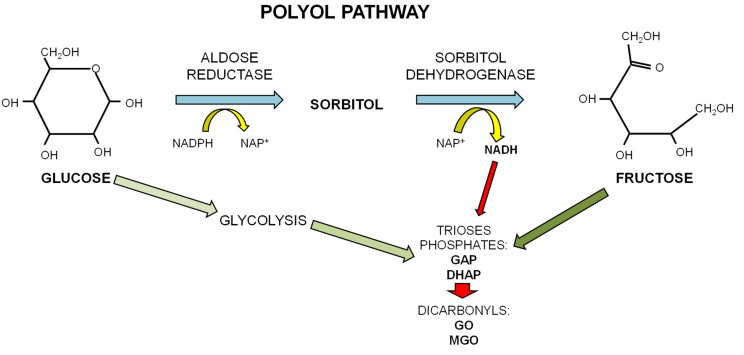
“In addition to nonenzymatic glycation, AGEs can be formed through the polyol pathway and lipid peroxidation in the presence and absence of hyperglycemia, depending on the substrate type, reactant concentration, exposure time, and host cellular context14–17.”
From Advanced glycation end products (AGEs) and other adducts in aging-related diseases and alcohol-mediated tissue injury (2021) · cites this paper as [14]
Self-check
Percentages, sums and reported differences re-computed from the paper’s own numbers.
The self-check needs the paper’s full text.
Citations
Cites
1 retracted
Targeting the NLRP3 inflammasome to Reduce Diet-induced Metabolic Abnormalities in Mice
Chiazza, F., Couturier-Maillard, A., Benetti, E., Mastrocola, R., Nigro, D., Cutrìn, J. C., Serpe, L., Aragno, M., Fantozzi, R., Ryffel, B., et al. (2015) · Molecular Medicine · doi:10.2119/molmed.2015.00104 · Cited by 80
Self-citationRetractedInflammation and metabolic disorders
Hotamisligil, G. S. (2006) · Nature · doi:10.1038/nature05485 · Cited by 9,199
Changes in diet and lifestyle and long-term weight gain in women and men
Mozaffarian, D., Hao, T., Rimm, E. B., Willett, W. C., & Hu, F. B. (2011) · New England Journal of Medicine · doi:10.1056/nejmoa1014296 · Cited by 2,527
Consumption of high-fructose corn syrup in beverages may play a role in the epidemic of obesity
Bray, G. A., Nielsen, S. J., & Popkin, B. M. (2004) · The American Journal of Clinical Nutrition · doi:10.1093/ajcn/79.4.537 · Cited by 1,990
Stanhope, K. L., Schwarz, J. M., Keim, N. L., Griffen, S. C., Bremer, A. A., Graham, J. L., Hatcher, B., Cox, C. L., Dyachenko, A., Zhang, W., et al. (2009) · Journal of Clinical Investigation · doi:10.1172/jci37385 · Cited by 1,765
Sugar-Sweetened Beverages, Obesity, Type 2 Diabetes Mellitus, and Cardiovascular Disease Risk
Malik, V. S., Popkin, B. M., Bray, G. A., Després, J.-P., & Hu, F. B. (2010) · Circulation · doi:10.1161/circulationaha.109.876185 · Cited by 1,641
Schulze, M. B. (2004) · JAMA · doi:10.1001/jama.292.8.927 · Cited by 1,639
Avena, N. M., Rada, P., & Hoebel, B. G. (2008) · Neuroscience & Biobehavioral Reviews · doi:10.1016/j.neubiorev.2007.04.019 · Cited by 1,358
Understanding RAGE, the receptor for advanced glycation end products
Bierhaus, A., Humpert, P. M., Morcos, M., Wendt, T., Chavakis, T., Arnold, B., Stern, D. M., & Nawroth, P. P. (2005) · Journal of Molecular Medicine · doi:10.1007/s00109-005-0688-7 · Cited by 1,297
Added sugar intake and cardiovascular diseases mortality among US adults
Yang, Q., Zhang, Z., Gregg, E. W., Flanders, W. D., Merritt, R., & Hu, F. B. (2014) · JAMA Internal Medicine · doi:10.1001/jamainternmed.2013.13563 · Cited by 947 · cited 1×
“On the other hand, results from experimental models confirm that the consumption of sugar-added foods is associated with increased risk for obesity [7], as well as cardiovascular diseases [8,9], metabolic disorders [10], non-alcoholic fatty liver disease (NAFLD) [11,12], and cognitive decline [13].”
BackgroundVistoli, G., De Maddis, D., Cipak, A., Zarkovic, N., Carini, M., & Aldini, G. (2013) · Free Radical Research · doi:10.3109/10715762.2013.815348 · Cited by 823
Haus, J. M., Kashyap, S. R., Kasumov, T., Zhang, R., Kelly, K. R., DeFronzo, R. A., & Kirwan, J. P. (2008) · Diabetes · doi:10.2337/db08-1228 · Cited by 665
Havel, P. J. (2005) · Nutrition Reviews · doi:10.1111/j.1753-4887.2005.tb00132.x · Cited by 607
Reaction of Monosaccharides with Proteins: Possible Evolutionary Significance
Bunn, H. F., & Higgins, P. J. (1981) · Science · doi:10.1126/science.12192669 · Cited by 598
Dekker, M. J., Su, Q., Baker, C., Rutledge, A. C., & Adeli, K. (2010) · American Journal of Physiology-Endocrinology and Metabolism · doi:10.1152/ajpendo.00283.2010 · Cited by 431
Ussher, J. R., Koves, T. R., Cadete, V. J. J., Zhang, L., Jaswal, J. S., Swyrd, S. J., Lopaschuk, D. G., Proctor, S. D., Keung, W., Muoio, D. M., et al. (2010) · Diabetes · doi:10.2337/db09-1293 · Cited by 381
Lê, K., Ith, M., Kreis, R., Faeh, D., Bortolotti, M., Tran, C., Boesch, C., & Tappy, L. (2009) · American Journal of Clinical Nutrition · doi:10.3945/ajcn.2008.27336 · Cited by 377
Mechanisms for the acute effect of fructose on postprandial lipemia
Chong, M. F., Fielding, B. A., & Frayn, K. N. (2007) · American Journal of Clinical Nutrition · doi:10.1093/ajcn/85.6.1511 · Cited by 367
High-fat and high-sucrose (western) diet induces steatohepatitis that is dependent on fructokinase
Ishimoto, T., Lanaspa, M. A., Rivard, C. J., Roncal-Jiménez, C. A., Orlicky, D. J., Cicerchi, C., McMahan, R. H., Abdelmalek, M. F., Rosen, H. R., Jackman, M. R., et al. (2013) · Hepatology · doi:10.1002/hep.26594 · Cited by 333
Restriction of Advanced Glycation End Products Improves Insulin Resistance in Human Type 2 Diabetes
Uribarri, J., Cai, W., Ramdas, M., Goodman, S., Pyzik, R., Chen, X., Zhu, L., Striker, G. E., & Vlassara, H. (2011) · Diabetes Care · doi:10.2337/dc11-0091 · Cited by 320
Sugar Industry and Coronary Heart Disease Research
Kearns, C. E., Schmidt, L. A., & Glantz, S. A. (2016) · JAMA Internal Medicine · doi:10.1001/jamainternmed.2016.5394 · Cited by 312
Soft drink consumption is associated with fatty liver disease independent of metabolic syndrome
Abid, A., Taha, O., Nseir, W., Farah, R. E., Grosovski, M., & Assy, N. (2009) · Journal of Hepatology · doi:10.1016/j.jhep.2009.05.033 · Cited by 287
Livesey, G., & Taylor, R. (2008) · American Journal of Clinical Nutrition · doi:10.3945/ajcn.2007.25700 · Cited by 267
Marriott, B. P., Olsho, L. E. W., Hadden, L. S., & Connor, P. (2010) · Critical Reviews in Food Science and Nutrition · doi:10.1080/10408391003626223 · Cited by 264
Increased Fructose Concentrations in Blood and Urine in Patients With Diabetes
Kawasaki, T., Akanuma, H., & Yamanouchi, T. (2002) · Diabetes Care · doi:10.2337/diacare.25.2.353 · Cited by 253
Nonenzymatic Glycation of Bovine Serum Albumin by Fructose (Fructation)
Suárez, G., Rajaram, R., Oronsky, A. L., & Gawinowicz, M. A. (1989) · Journal of Biological Chemistry · doi:10.1016/s0021-9258(19)84904-9 · Cited by 244
A review of sugar consumption from nationally representative dietary surveys across the world
Newens, K. J., & Walton, J. (2015) · Journal of Human Nutrition and Dietetics · doi:10.1111/jhn.12338 · Cited by 232
Gugliucci, A. (2017) · Advances in Nutrition · doi:10.3945/an.116.013912 · Cited by 225
Hudgins, L. C., Hellerstein, M. K., Seidman, C. E., Neese, R. A., Tremaroli, J. D., & Hirsch, J. (2000) · Journal of Lipid Research · doi:10.1016/s0022-2275(20)32407-x · Cited by 216
Xue, M., Weickert, M. O., Qureshi, S. A., Kandala, N., Anwar, A., Waldron, M., Shafie, A., Messenger, D. J., Fowler, M. I., Jenkins, G., et al. (2016) · Diabetes · doi:10.2337/db16-0153 · Cited by 212
ChREBP regulates fructose-induced glucose production independently of insulin signaling
Kim, M.-S., Krawczyk, S. A., Doridot, L., Fowler, A. J., Wang, J. X., Trauger, S. A., Noh, H.-L., Kang, H. J., Meissen, J. K., Blatnik, M., et al. (2016) · Journal of Clinical Investigation · doi:10.1172/jci81993 · Cited by 212
The effect of sugar, amino acid, metal ion, and NaCl on model Maillard reaction under pH control
Kwak, E. J., & Lim, S.-I. (2004) · Amino Acids · doi:10.1007/s00726-004-0067-7 · Cited by 209
Dietary fructose and the metabolic syndrome
Miller, A., & Adeli, K. (2008) · Current Opinion in Gastroenterology · doi:10.1097/mog.0b013e3282f3f4c4 · Cited by 208
Fructose-mediated non-enzymatic glycation: sweet coupling or bad modification
Schalkwijk, C. G., Stehouwer, C. D. A., & van Hinsbergh, V. W. M. (2004) · Diabetes/Metabolism Research and Reviews · doi:10.1002/dmrr.488 · Cited by 206 · cited 1×
“After absorption, nevertheless, the metabolism of the two monosaccharides follows different pathways, since glucose can be used directly by the cells to produce energy in a variety of organs, while fructose is primarily metabolized in the liver, which takes up at least 50% of the initial fructose flux [26].”
BackgroundSoft drinks consumption and nonalcoholic fatty liver disease
Nseir, W. (2010) · World Journal of Gastroenterology · doi:10.3748/wjg.v16.i21.2579 · Cited by 205
Gaens, K. H. J., Goossens, G. H., Niessen, P., van Greevenbroek, M. M. J., Kallen, C., Niessen, H. W. M., Rensen, S. S., Buurman, W. A., Greve, J. W. M., Blaak, E. E., et al. (2014) · Arteriosclerosis Thrombosis and Vascular Biology · doi:10.1161/atvbaha.113.302281 · Cited by 196
Lustig, R. H., Mulligan, K. M., Noworolski, S. M., Tai, V., Wen, M., Erkin‐Cakmak, A., Gugliucci, A., & Schwarz, J. (2015) · Obesity · doi:10.1002/oby.21371 · Cited by 195
Incomplete absorption of pure fructose in healthy subjects and the facilitating effect of glucose.
Truswell, A., Seach, J., & Thorburn, A. (1988) · The American Journal of Clinical Nutrition · doi:10.1093/ajcn/48.6.1424 · Cited by 189
Cai, W., He, C., Zhu, L., Xue, C., Zheng, F., Striker, G. E., & Vlassara, H. (2008) · American Journal Of Pathology · doi:10.2353/ajpath.2008.080152 · Cited by 188
Beck-Nielsen, H., Pedersen, O., & Lindskov, H. (1980) · American Journal of Clinical Nutrition · doi:10.1093/ajcn/33.2.273 · Cited by 185
Hu, Q., Zhang, X., Pan, Y., Li, Y., & Kong, L. (2012) · Biochemical Pharmacology · doi:10.1016/j.bcp.2012.03.005 · Cited by 174
Pejnovic, N. N., Pantic, J. M., Jovanović, I., Radosavljevic, G. D., Milovanović, M., Nikolić, I., Zdravkovic, N. S., Djukić, A., Arsenijević, N., & Lukić, M. L. (2013) · Diabetes · doi:10.2337/db12-0222 · Cited by 172
Hamada, Y., Araki, N., Koh, N., Nakamura, J., Horiuchi, S., & Hotta, N. (1996) · Biochemical and Biophysical Research Communications · doi:10.1006/bbrc.1996.1695 · Cited by 169 · cited 1×
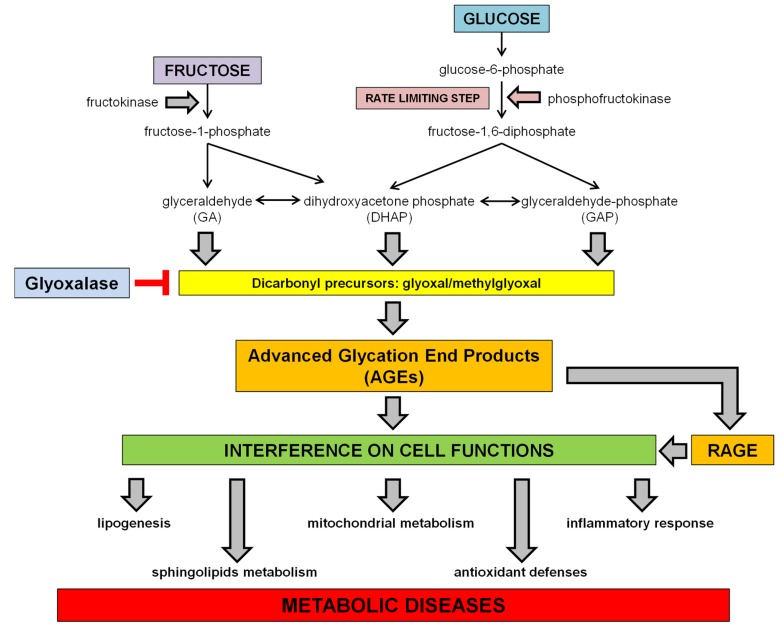
“A second aspect linking high fructose levels to AGE production is related to the peculiar fructose metabolism that evokes rapid generation and accumulation of GAP and DHAP, both effective glycating agents and precursors of the dicarbonyls compounds glyoxal and methylglyoxal, which, in turn, are precursors of more stab…”
BackgroundKoo, H.-Y., Wallig, M. A., Chung, B. H., Nara, T. Y., Cho, B. H. S., & Nakamura, M. T. (2008) · Biochimica et Biophysica Acta (BBA) - Molecular Basis of Disease · doi:10.1016/j.bbadis.2008.02.007 · Cited by 164
Oral glycotoxins are a modifiable cause of dementia and the metabolic syndrome in mice and humans
Cai, W., Uribarri, J., Zhu, L., Chen, X., Swamy, S., Zhao, Z., Grosjean, F., Simonaro, C. M., Kuchel, G. A., Beeri, M. S., et al. (2014) · Proceedings of the National Academy of Sciences · doi:10.1073/pnas.1316013111 · Cited by 160
Cox, C. L., Stanhope, K. L., Schwarz, J. M., Graham, J. L., Hatcher, B., Griffen, S. C., Bremer, A. A., Berglund, L., McGahan, J. P., Keim, N. L., et al. (2012) · Nutrition & Metabolism · doi:10.1186/1743-7075-9-68 · Cited by 159
Wang, W., Ding, X., Gu, T.-T., Song, L., Li, J., Xue, Q., & Kong, L. (2015) · Free Radical Biology and Medicine · doi:10.1016/j.freeradbiomed.2015.02.029 · Cited by 155
Reddy, P. H. (2006) · BioMed Research International · doi:10.1155/jbb/2006/31372 · Cited by 154
Kellow, N. J., & Savige, G. S. (2013) · European Journal of Clinical Nutrition · doi:10.1038/ejcn.2012.220 · Cited by 152
Beeri, M. S., Moshier, E. L., Schmeidler, J., Godbold, J., Uribarri, J., Reddy, S., Sano, M. C., Grossman, H. T., Cai, W., Vlassara, H., et al. (2011) · Mechanisms of Ageing and Development · doi:10.1016/j.mad.2011.10.007 · Cited by 145
Vlassara, H., Cai, W., Tripp, E., Pyzik, R., Yee, K., Goldberg, L., Tansman, L., Chen, X., Mani, V., Fayad, Z. A., et al. (2016) · Diabetologia · doi:10.1007/s00125-016-4053-x · Cited by 145
Role of diet and fuel overabundance in the development and progression of heart failure
Chess, D. J., & Stanley, W. C. (2008) · Cardiovascular Research · doi:10.1093/cvr/cvn074 · Cited by 143
Dietary fructose as a risk factor for non-alcoholic fatty liver disease (NAFLD)
Alwahsh, S. M., & Gebhardt, R. (2016) · Archives of Toxicology · doi:10.1007/s00204-016-1892-7 · Cited by 143
The Scientific Basis of Guideline Recommendations on Sugar Intake
Erickson, J. M., Sadeghirad, B., Lytvyn, L., Slavin, J. L., & Johnston, B. C. (2016) · Annals of Internal Medicine · doi:10.7326/m16-2020 · Cited by 133
Long-Term Fructose Consumption Accelerates Glycation and Several Age-Related Variables in Male Rats
Levi, B., & Werman, M. J. (1998) · Journal of Nutrition · doi:10.1093/jn/128.9.1442 · Cited by 132
Kang, L.-L., Zhang, D., Ma, C., Zhang, J., Jia, K., Liu, J.-H., Wang, R., & Kong, L. (2016) · Scientific Reports · doi:10.1038/srep27460 · Cited by 128
Reactivities of d -glucose and d -fructose during Glycation of Bovine Serum Albumin
Yeboah, F. K., Alli, I., & Yaylayan, V. A. (1999) · Journal of Agricultural and Food Chemistry · doi:10.1021/jf981289v · Cited by 120
Yamagishi, S., Ueda, S., & Okuda, S. (2007) · Current Pharmaceutical Design · doi:10.2174/138161207781757051 · Cited by 119
Crescenzo, R., Bianco, F., Falcone, I., Coppola, P., Liverini, G., & Iossa, S. (2012) · European Journal of Nutrition · doi:10.1007/s00394-012-0356-y · Cited by 118
He, Q., You, H., Li, X., Liu, T., Wang, P., & Wang, B.-E. (2012) · Asian Pacific Journal of Cancer Prevention · doi:10.7314/apjcp.2012.13.4.1365 · Cited by 116
Nutrition and Alzheimer's disease: The detrimental role of a high carbohydrate diet
Seneff, S., Wainwright, G., & Mascitelli, L. (2011) · European Journal of Internal Medicine · doi:10.1016/j.ejim.2010.12.017 · Cited by 113
Spatial memory impairments in a prediabetic rat model
Soares, E. F. P., Prediger, R. D., Nunes, S., de Castro, A. A., Viana, S., Lemos, C., Souza, C. M. D. A., Agostinho, P. M., Cunha, R. A., Carvalho, E., et al. (2013) · Neuroscience · doi:10.1016/j.neuroscience.2013.07.055 · Cited by 110
Significance of fructose-induced protein oxidation and formation of advanced glycation end product
Takagi, Y., Kashiwagi, A., Tanaka, Y., Asahina, T., Kikkawa, R., & Shigeta, Y. (1995) · Journal of Diabetes and its Complications · doi:10.1016/1056-8727(94)00022-g · Cited by 108
DeChristopher, L. R., Uribarri, J., & Tucker, K. L. (2015) · Public Health Nutrition · doi:10.1017/s1368980015000865 · Cited by 108
Wehmeyer, M. H., Zyriax, B., Jagemann, B., Roth, E., Windler, E. E. T., Wiesch, J. S. Z., Lohse, A. W., & Kluwe, J. (2016) · Medicine · doi:10.1097/md.0000000000003887 · Cited by 107
Brozinick, J. T., Hawkins, E., Bui, H. H., Kuo, M.-S., Tan, B., Kievit, P., & Grove, K. L. (2012) · International Journal of Obesity · doi:10.1038/ijo.2012.191 · Cited by 101
Nlrp3 is a key modulator of diet-induced nephropathy and renal cholesterol accumulation
Bakker, P. J., Butter, L. M., Kors, L., Teske, G. J. D., Aten, J., Sutterwala, F. S., Florquin, S., & Leemans, J. C. (2013) · Kidney International · doi:10.1038/ki.2013.503 · Cited by 98
Geoffroy, K., Wiernsperger, N. F., Lagarde, M., & Bawab, S. E. (2004) · Journal of Biological Chemistry · doi:10.1074/jbc.m403273200 · Cited by 97
Fructose and carbonyl metabolites as endogenous toxins
Lee, O., Bruce, W. R., Dong, Q., Bruce, J., Mehta, R., & O'Brien, P. J. (2008) · Chemico-Biological Interactions · doi:10.1016/j.cbi.2008.10.011 · Cited by 95
Zhang, Q., Pan, Y., Wang, R., Kang, L.-L., Xue, Q., Wang, X., & Kong, L. (2014) · The Journal of Nutritional Biochemistry · doi:10.1016/j.jnutbio.2013.11.014 · Cited by 95
Sadowska‐Bartosz, I., Galiniak, S., & Bartosz, G. (2014) · Molecules · doi:10.3390/molecules19044880 · Cited by 91
Jeftic, I. D., Jovicic, N. U., Pantic, J. M., Arsenijević, N., Lukić, M. L., & Pejnovic, N. N. (2015) · Molecular Medicine · doi:10.2119/molmed.2014.00178 · Cited by 89
Mock, K., Lateef, S. S., Benedito, V. A., & Tou, J. C. L. (2016) · The Journal of Nutritional Biochemistry · doi:10.1016/j.jnutbio.2016.09.010 · Cited by 89
Sugars, obesity, and cardiovascular disease: results from recent randomized control trials
Rippe, J. M., & Angelopoulos, T. J. (2016) · European Journal of Nutrition · doi:10.1007/s00394-016-1257-2 · Cited by 88 · cited 1×
“Excessive soft drink consumption has only been associated with increased risk for metabolic disorders such as obesity and insulin resistance [98,99], but their effects are often attributed to an unspecific calorie excess [100,101].”
BackgroundWang, X., Zhang, D., Gu, T., Ding, X., Fan, C., Zhu, Q., Shi, Y., Hong, Y., & Kong, L. (2013) · Biochemical Pharmacology · doi:10.1016/j.bcp.2013.10.005 · Cited by 87
Galectin‐3 regulates inflammasome activation in cholestatic liver injury
Tian, J., Yang, G., Chen, H., Hsu, D. K., Tomilov, A. A., Olson, K., Dehnad, A., Fish, S. R., Cortopassi, G. A., Zhao, K., et al. (2016) · The FASEB Journal · doi:10.1096/fj.201600392rr · Cited by 84
DeChristopher, L. R., Uribarri, J., & Tucker, K. L. (2016) · Nutrition and Diabetes · doi:10.1038/nutd.2016.7 · Cited by 80
Santos, J. C., Valentim, I. B., de Araújo, O. R. P., Ataíde, T. D. R., & Goulart, M. O. F. (2013) · International Journal of Molecular Sciences · doi:10.3390/ijms141019846 · Cited by 77
Janevski, M., Ratnayake, S., Siljanovski, S., McGlynn, M. A., Cameron-Smith, D., & Lewandowski, P. (2012) · Food Funct. · doi:10.1039/c1fo10111k · Cited by 76
Maessen, D. E., Brouwers, O., Gaens, K. H. J., Wouters, K., Cleutjens, J. P. M., Janssen, B. J., Miyata, T., Stehouwer, C. D. A., & Schalkwijk, C. G. (2015) · Diabetes · doi:10.2337/db15-1390 · Cited by 76
Mastrocola, R., Nigro, D., Chiazza, F., Medana, C., Bello, F. D., Boccuzzi, G., Collino, M., & Aragno, M. (2015) · Free Radical Biology and Medicine · doi:10.1016/j.freeradbiomed.2015.12.022 · Cited by 76
Self-citationYamagishi, S., & Matsui, T. (2015) · Nutrition · doi:10.1016/j.nut.2015.08.001 · Cited by 73
Cognitive and behavioural effects of sugar consumption in rodents. A review
Kendig, M. D. (2014) · Appetite · doi:10.1016/j.appet.2014.04.028 · Cited by 72
Hayashi, T., & Namiki, M. (1986) · Agricultural and Biological Chemistry · doi:10.1080/00021369.1986.10867692 · Cited by 72
Mastrocola, R., Nigro, D., Cento, A. S., Chiazza, F., Collino, M., & Aragno, M. (2016) · Neurobiology of Disease · doi:10.1016/j.nbd.2016.02.005 · Cited by 67
Self-citationAssociation between carbohydrate nutrition and prevalence of depressive symptoms in older adults
Gopinath, B., Flood, V. M., Burlutksy, G., Louie, J. C. Y., & Mitchell, P. L. R. (2016) · British Journal Of Nutrition · doi:10.1017/s0007114516004311 · Cited by 65
Mastrocola, R., Collino, M., Penna, C. R. R., Nigro, D., Chiazza, F., Fracasso, V., Tullio, F., Alloatti, G., Pagliaro, P., & Aragno, M. (2015) · Oxidative Medicine and Cellular Longevity · doi:10.1155/2016/3480637 · Cited by 64
Self-citationMastrocola, R., Collino, M., Rogazzo, M., Medana, C., Nigro, D., Boccuzzi, G., & Aragno, M. (2013) · American Journal of Physiology-Gastrointestinal and Liver Physiology · doi:10.1152/ajpgi.00450.2012 · Cited by 63
Self-citationHan, J., Tan, C., Wang, Y., Yang, S., & Tan, D. (2015) · Chemico-Biological Interactions · doi:10.1016/j.cbi.2014.12.032 · Cited by 60
Post-translational modification derived products (PTMDPs): toxins in chronic diseases?
Gillery, P., & Jaisson, S. (2013) · Clinical Chemistry and Laboratory Medicine (CCLM) · doi:10.1515/cclm-2012-0880 · Cited by 59
DeChristopher, L. R., Uribarri, J., & Tucker, K. L. (2015) · Nutrition Journal · doi:10.1186/s12937-015-0097-x · Cited by 58
Ito, S., Iwaki, S., Koike, K., Yuda, Y., Nagasaki, A., Ohkawa, R., Yatomi, Y., Furumoto, T., Tsutsui, H., Sobel, B. E., et al. (2013) · Coronary Artery Disease · doi:10.1097/mca.0000000000000033 · Cited by 56
Gugliucci, A., Lustig, R. H., Caccavello, R. J., Erkin‐Cakmak, A., Noworolski, S. M., Tai, V., Wen, M., Mulligan, K. M., & Schwarz, J. (2016) · Atherosclerosis · doi:10.1016/j.atherosclerosis.2016.06.048 · Cited by 56
Yeh, W.-J., Yang, H., Pai, M., Wu, C., & Chen, J. (2016) · The Journal of Nutritional Biochemistry · doi:10.1016/j.jnutbio.2016.09.014 · Cited by 56
Bains, Y., & Gugliucci, A. (2016) · Fitoterapia · doi:10.1016/j.fitote.2016.12.006 · Cited by 53
Nigro, D., Menotti, F., Cento, A. S., Serpe, L., Chiazza, F., Bello, F. D., Romaniello, F., Medana, C., Collino, M., Aragno, M., et al. (2017) · The Journal of Nutritional Biochemistry · doi:10.1016/j.jnutbio.2017.01.010 · Cited by 52
Self-citationYuan, Y., Zhao, L., Chen, Y., Moorhead, J. F., Varghese, Z., Powis, S. H., Minogue, S., Sun, Z., & Ruan, X. Z. (2011) · American Journal of Physiology-Renal Physiology · doi:10.1152/ajprenal.00646.2010 · Cited by 50
Collino, M., Benetti, E., Rogazzo, M., Mastrocola, R., Yaqoob, M. M., Aragno, M., Thiemermann, C., & Fantozzi, R. (2012) · Biochemical Pharmacology · doi:10.1016/j.bcp.2012.10.014 · Cited by 46
Self-citationBenetti, E., Mastrocola, R., Rogazzo, M., Chiazza, F., Aragno, M., Fantozzi, R., Collino, M., & Minetto, M. A. (2013) · Mediators of Inflammation · doi:10.1155/2013/509502 · Cited by 44
Self-citationAging risk factors and Parkinson's disease: contrasting roles of common dietary constituents
Hipkiss, A. R. (2013) · Neurobiology of Aging · doi:10.1016/j.neurobiolaging.2013.11.032 · Cited by 43
The effect of high-fat–high-fructose diet on skeletal muscle mitochondrial energetics in adult rats
Crescenzo, R., Bianco, F., Coppola, P., Mazzoli, A., Cigliano, L., Liverini, G., & Iossa, S. (2014) · European Journal of Nutrition · doi:10.1007/s00394-014-0699-7 · Cited by 39
Q&A: 'Toxic' effects of sugar: should we be afraid of fructose?
Tappy, L. (2012) · BMC Biology · doi:10.1186/1741-7007-10-42 · Cited by 39
New Unsweetened Truths About Sugar
Schmidt, L. A. (2014) · JAMA Internal Medicine · doi:10.1001/jamainternmed.2013.12991 · Cited by 38
Cannizzaro, L., Rossoni, G., Savi, F., Altomare, A., Marinello, C., Saethang, T., Carini, M., Payne, D. M., Pisitkun, T., Aldini, G., et al. (2017) · Nutrition & Metabolism · doi:10.1186/s12986-016-0149-z · Cited by 38
Chen, C., Huang, K., Hao, J., Huang, J., Yang, Z., Xiong, F., Liu, P., & Huang, H. (2016) · Molecular and Cellular Endocrinology · doi:10.1016/j.mce.2016.03.003 · Cited by 32
Effects of chronic sugar consumption on lipid accumulation and autophagy in the skeletal muscle
Stefanis, D. D., Mastrocola, R., Nigro, D., Costelli, P., & Aragno, M. (2015) · Zeitschrift für Ernährungswissenschaft · doi:10.1007/s00394-015-1086-8 · Cited by 30
Self-citationCollino, M., Mastrocola, R., Nigro, D., Chiazza, F., Aragno, M., D’Antona, G., & Minetto, M. A. (2014) · BioMed Research International · doi:10.1155/2014/569623 · Cited by 29
Self-citationGalectin-3 is a regulator of metaflammation in adipose tissue and pancreatic islets
Pejnovic, N. N., Pantic, J. M., Jovanović, I., Radosavljevic, G. D., Djukić, A., Arsenijević, N., & Lukić, M. L. (2013) · Adipocyte · doi:10.4161/adip.24881 · Cited by 28
Guidelines to Limit Added Sugar Intake: Junk Science or Junk Food?
Schillinger, D., & Kearns, C. E. (2016) · Annals of Internal Medicine · doi:10.7326/m16-2754 · Cited by 27
Energy and Nutrient Timing for Weight Control
McCrory, M. A., Shaw, A. C., & Lee, J. A. (2016) · Endocrinology and Metabolism Clinics of North America · doi:10.1016/j.ecl.2016.04.017 · Cited by 25
Lüers, L., Rysiewski, K., Dumpitak, C., & Birkmann, E. (2012) · Rejuvenation Research · doi:10.1089/rej.2011.1284 · Cited by 20
Zhang, Y., & Zhang, Y. (2016) · Biochemical and Biophysical Research Communications · doi:10.1016/j.bbrc.2016.02.111 · Cited by 19
Cai, W., Li, J., Shi, J., Yang, B., Tang, J., Truby, H., & Li, D. (2017) · Clinical Nutrition · doi:10.1016/j.clnu.2017.01.023 · Cited by 13
Cited by
Sorted by citations
Rungratanawanich, W., Qu, Y., Wang, X., Essa, M. M., & Song, B.-J. (2021) · Experimental & Molecular Medicine · doi:10.1038/s12276-021-00561-7 · Cited by 411
Periodontal Disease: The Good, The Bad, and The Unknown
Sedghi, L. M., Bacino, M. S., & Kapila, Y. L. (2021) · Frontiers in Cellular and Infection Microbiology · doi:10.3389/fcimb.2021.766944 · Cited by 409
Shen, C., Lu, C., Wu, C.-H., Li, K., Kuo, Y., Hsieh, S., & Yu, C. (2020) · Molecules · doi:10.3390/molecules25235591 · Cited by 316
Grosso, G., Laudisio, D., Frias-Toral, E., Barrea, L., Muscogiuri, G., Savastano, S., & Colao, A. (2022) · Nutrients · doi:10.3390/nu14061137 · Cited by 255
Snelson, M., & Coughlan, M. (2019) · Nutrients · doi:10.3390/nu11020215 · Cited by 230
Metadata
- Authors
- Aragno, M., & Mastrocola, R.
- Affiliations
- University of Turin (IT)
- Corresponding author
- Mastrocola, Raffaella
- Venue
- Nutrients
- Publisher
- MDPI AG
- Published
- 2017-04-14
- Volume
- 9
- Issue
- 4
- Pages
- 385
- ISSN
- 2072-6643 (ISSN-L)
- PMC
- PMC5409724
- OpenAlex
- W2593393776
- Cited by
- 239
- References
- 114
- Citations by year
- 2026: 10 · 2025: 23 · 2024: 27 · 2023: 24 · 2022: 34 · 2021: 36 · 2020: 28 · 2019: 33 · 2018: 14 · 2017: 10
- FWCI
- 3.04
- Type
- journal article
- Language
- en
- Open access
- gold
- doi.org
- Licence
- Locations
- Nutrients (publishedVersion, cc-by)
- Preprints.org (acceptedVersion, cc-by)
- PubMed Central (publishedVersion, cc-by)
- PubMed (publishedVersion)
- Institutional Research Information System University of Turin (University of Turin) (submittedVersion, other-oa)
- Funders
- Università degli Studi di Torino
- Topics
- Life Sciences › Biochemistry, Genetics and Molecular Biology › Clinical Biochemistry › Advanced Glycation End Products research
- Health Sciences › Medicine › Endocrinology, Diabetes and Metabolism › Diet, Metabolism, and Disease
- Life Sciences › Agricultural and Biological Sciences › Food Science › Potato Plant Research
- Keywords
- advanced glycation end products, dietary sugar, fructose, insulin resistance, lipid metabolism, lipogenesis, inflammation, mitochondrial metabolism, antioxidant defense, metabolic disorders, organ damage, sweetened beverages, added sugars
- MeSH terms
- Animals, Brain, Diet, Feeding Behavior, Fructose, Glycosylation, Heart, Humans, Insulin Resistance, Liver, Metabolic Diseases, Muscles, Sweetening Agents, Glycation End Products, Advanced, Lipid Metabolism
About these checks
Registry, retraction, Cites and statistics results are computed, not judged, with one exception: a printed reference that no index lists is read once by a model before it counts as a citation error. Claims are extracted by a model and kept only when their quote appears verbatim in the text; each cited source is then checked, with a model’s help, for whether it says what the claim relies on. Those verdicts can be wrong — read the claim’s quote and the cited source before relying on one.
Statistics and arithmetic are recomputed, not judged.
Confidence bands are shown only for fields calibrated on our annotated test set. None is calibrated yet, so no band is shown.
What counts as a claim ›How we measure confidence ›How we check this ›
Are you an author, or do you see a problem with this page? Request a review
