

The DOI matches its Crossref record; 7 of the 7 references it cites were found in a registry or an index.
Interaction between Intestinal Parasites and the Gut Microbiota: Implications for the Intestinal Immune Response and Host Defence
Abstract
Intestinal parasites, including helminths and protozoa, account for a significant portion of the global health burden. The gastrointestinal (GI) tract not only serves as the stage for these parasitic infections but also as the residence for millions of microbes. As the intricacies of the GI microbial milieu continue to unfold, it is becoming increasingly apparent that the interactions between host, parasite, and resident microbes help dictate parasite survival and, ultimately, disease outcomes. Across both clinical and experimental models, intestinal parasites have been shown to impact microbial composition and diversity. Reciprocally, microbes can directly influence parasitic survival, colonization and expulsion. The gut microbiota can also indirectly impact parasites through the influence and manipulation of the host. Studying this host–parasite–microbiota axis may help bring about novel therapeutic strategies for intestinal parasitic infection as well as conditions such as inflammatory bowel disease (IBD). In this review, we explore the relationship between intestinal parasites, with a particular focus on common protozoa and helminths, and the gut microbiota, and how these interactions can influence the host defence and intestinal immune response. We will also explore the impact of this tripartite relationship in a clinical setting and its broader implications for human health.
Overview
The claims and statistics of this paper haven’t been checked yet.
Run the check — free, no account needed. It reads the open-access text and checks the sources it cites.
Integrity signals
Registry
Cites
Statistics
Figures
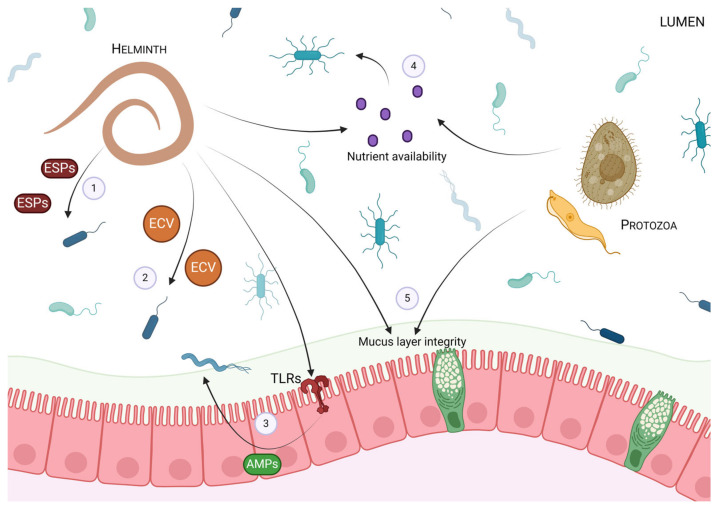
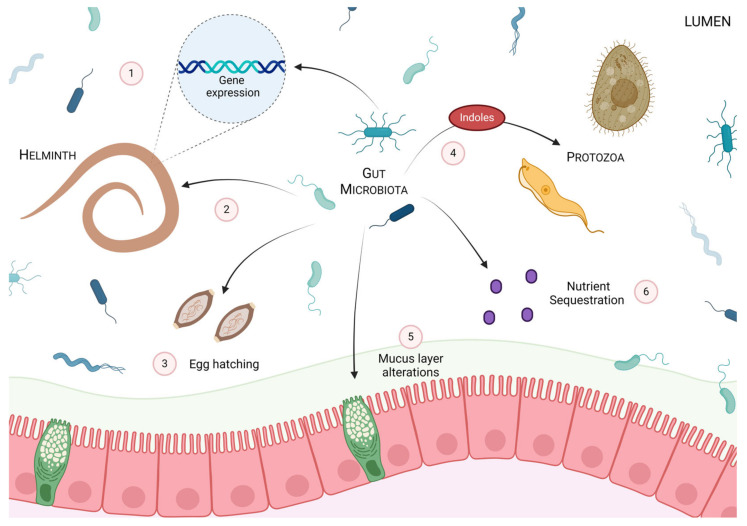
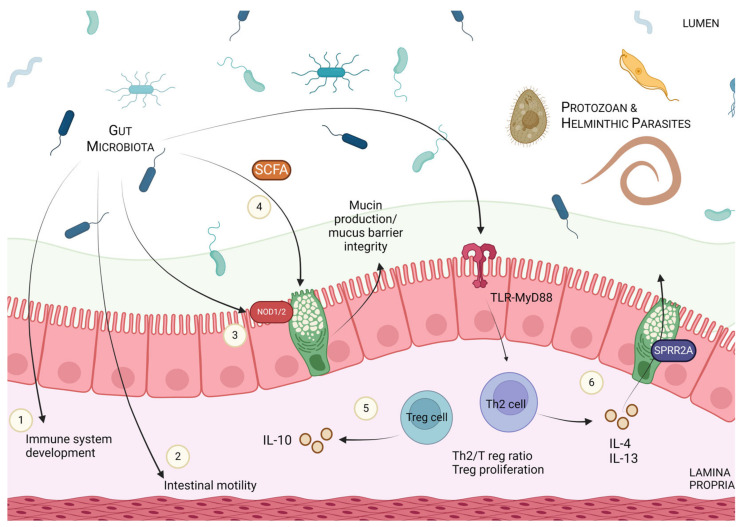
Verification
Claims the paper makes
The claims and statistics of this paper haven’t been checked yet.
Run the check — free, no account needed. It reads the open-access text and checks the sources it cites.
Claims other papers make about this one
Each is checked against this paper’s own text: does it say what the citing paper says it does?
In the citing paper
“Recent studies indicate that intestinal protozoa, such as Giardia intestinalis and Cryptosporidium spp., may cause gastrointestinal symptoms, including diarrhea and abdominal pain, and may disrupt the gut microbiota, thereby influencing immune homeostasis and potentially modifying allergic responses (Grondin et al. 2024; Sardinha-Silva et al. 2022).”
From Parasites and allergies: a complex bidirectional relationship from evolutionary origins to modern therapeutics (2026) · cites this paper as Grondin et al. 2024
Self-check
Percentages, sums and reported differences re-computed from the paper’s own numbers.
The self-check needs the paper’s full text.
Citations
Cites
Gut microbiota functions: metabolism of nutrients and other food components
Rowland, I., Gibson, G., Heinken, A., Scott, K., Swann, J., Thiele, I., & Tuohy, K. (2018) · European Journal of Nutrition · doi:10.1007/s00394-017-1445-8 · Cited by 2,878 · cited 1×
“The gut microbiota is essential to the development of a functional host immune system [30] and also helps to provide direct competition and protection from pathogenic organisms [31–33].”
BackgroundRole of the gut microbiota in immunity and inflammatory disease
Kamada, N., Seo, S.-U., Chen, G. Y., & Núñez, G. (2013) · Nature reviews. Immunology · doi:10.1038/nri3430 · Cited by 2,256
Buck, A. H., Coakley, G., Simbari, F., McSorley, H. J., Quintana, J. F., Le Bihan, T., Kumar, S., Abreu-Goodger, C., Lear, M., Harcus, Y., et al. (2014) · Nature Communications · doi:10.1038/ncomms6488 · Cited by 770
The co-pathogenesis of influenza viruses with bacteria in the lung.
McCullers, J. A. (2014) · Nature Reviews Microbiology · doi:10.1038/nrmicro3231 · Cited by 722
Molyneux, D. H., Hotez, P. J., & Fenwick, A. (2005) · PLoS Medicine · doi:10.1371/journal.pmed.0020336 · Cited by 557
Grainger, J. R., Smith, K. A., Hewitson, J. P., McSorley, H. J., Harcus, Y., Filbey, K. J., Finney, C. A. M., Greenwood, E. J. D., Knox, D. P., Wilson, M. S., et al. (2010) · Journal of Experimental Medicine · doi:10.1084/jem.20101074 · Cited by 469
Ramanan, D., Tang, M. S., Bowcutt, R., Loke, P., & Cadwell, K. (2014) · Immunity · doi:10.1016/j.immuni.2014.06.015 · Cited by 269
Research works printed but not linked: 109
- Sitotaw, B., Mekuriaw, H., and Damtie, D. (2019). Prevalence of Intestinal Parasitic Infections and Associated Risk Factors among Jawi Primary School Children, Jawi Town, North-West Ethiopia. BMC Infect. Dis., 19. · DOI
- Alum, 2010, The Global War against Intestinal Parasites—Should We Use a Holistic Approach?, Int. J. Infect. Dis., 14, e732, 10.1016/j.ijid.2009.11.036 · DOI
- Borges, 2017, Co-Niche Construction between Hosts and Symbionts: Ideas and Evidence, J. Genet., 96, 483, 10.1007/s12041-017-0792-9 · DOI
- Helm, 2015, The Influence of Biological Rhythms on Host–Parasite Interactions, Trends Ecol. Evol., 30, 314, 10.1016/j.tree.2015.03.012 · DOI
- Sorci, 1997, Genetics of Host-Parasite Interactions, Trends Ecol. Evol., 12, 196, 10.1016/S0169-5347(97)01056-2 · DOI
- Alizon, 2014, What Is a Pathogen? Toward a Process View of Host-Parasite Interactions, Virulence, 5, 775, 10.4161/21505594.2014.960726 · DOI
- Mideo, 2012, Plasticity in Parasite Phenotypes: Evolutionary and Ecological Implications for Disease, Future Microbiol., 7, 17, 10.2217/fmb.11.134 · DOI
- Drew, 2021, Microbial Evolution and Transitions along the Parasite–Mutualist Continuum, Nat. Rev. Microbiol., 19, 623, 10.1038/s41579-021-00550-7 · DOI
- Wolinska, 2009, Environment Can Alter Selection in Host-Parasite Interactions, Trends Parasitol., 25, 236, 10.1016/j.pt.2009.02.004 · DOI
- Laine, 2005, Evolution of Host Resistance: Looking for Coevolutionary Hotspots at Small Spatial Scales, Proc. R. Soc. B Biol. Sci., 273, 267, 10.1098/rspb.2005.3303 · DOI
- Gandon, 1998, Local Adaptation and Host–Parasite Interactions, Trends Ecol. Evol., 13, 214, 10.1016/S0169-5347(98)01358-5 · DOI
- Penczykowski, 2016, Understanding the Ecology and Evolution of Host–Parasite Interactions across Scales, Evol. Appl., 9, 37, 10.1111/eva.12294 · DOI
- Gerth, 2022, Microbial Protection Favors Parasite Tolerance and Alters Host-Parasite Coevolutionary Dynamics, Curr. Biol., 32, 1593, 10.1016/j.cub.2022.01.063 · DOI
- Rook, 2012, Hygiene Hypothesis and Autoimmune Diseases, Clin. Rev. Allergy Immunol., 42, 5, 10.1007/s12016-011-8285-8 · DOI
- Grondin, J.A., Kwon, Y.H., Far, P.M., Haq, S., and Khan, W.I. (2020). Mucins in Intestinal Mucosal Defense and Inflammation: Learning from Clinical and Experimental Studies. Front. Immunol., 11. · DOI
- Sansonetti, 2011, To Be or Not to Be a Pathogen: That Is the Mucosally Relevant Question, Mucosal Immunol., 4, 8, 10.1038/mi.2010.77 · DOI
- Koskella, 2006, Pathogen Relatedness Affects the Prevalence of Within-Host Competition, Am. Nat., 168, 121, 10.1086/505770 · DOI
- Susi, 2015, Host Genotype and Coinfection Modify the Relationship of within and between Host Transmission, Am. Nat., 186, 252, 10.1086/682069 · DOI
- Susi, 2015, Co-Infection Alters Population Dynamics of Infectious Disease, Nat. Commun., 6, 5975, 10.1038/ncomms6975 · DOI
- Brosschot, 2018, The Impact of a Helminth-Modified Microbiome on Host Immunity, Mucosal Immunol., 11, 1039, 10.1038/s41385-018-0008-5 · DOI
- Rausch, S., Midha, A., Kuhring, M., Affinass, N., Radonic, A., Kühl, A.A., Bleich, A., Renard, B.Y., and Hartmann, S. (2018). Parasitic Nematodes Exert Antimicrobial Activity and Benefit from Microbiota-Driven Support for Host Immune Regulation. Front. Immunol., 9. · DOI
- Midha, A., Janek, K., Niewienda, A., Henklein, P., Guenther, S., Serra, D.O., Schlosser, J., Hengge, R., and Hartmann, S. (2018). The Intestinal Roundworm Ascaris Suum Releases Antimicrobial Factors Which Interfere with Bacterial Growth and Biofilm Formation. Front. Cell. Infect. Microbiol., 8. · DOI
- Kato, 1996, ASABF, a Novel Cysteine-Rich Antibacterial Peptide Isolated from the Nematode Ascaris Suum: Purification, primary structure, and molecular cloning of CDNA, J. Biol. Chem., 271, 30493, 10.1074/jbc.271.48.30493 · DOI
- Abner, 2001, Trichuris Suis: Detection of Antibacterial Activity in Excretory-Secretory Products from Adults, Exp. Parasitol., 99, 26, 10.1006/expr.2001.4643 · DOI
- Rooney, 2022, Excretory-Secretory Products from the Brown Stomach Worm, Teladorsagia circumcincta, Exert Antimicrobial Activity in in Vitro Growth Assays, Parasites Vectors, 15, 354, 10.1186/s13071-022-05443-z · DOI
- Rooney, 2024, Structural and Functional Analyses of Nematode-Derived Antimicrobial Peptides Support the Occurrence of Direct Mechanisms of Worm-Microbiota Interactions, Comput. Struct. Biotechnol. J., 23, 1522, 10.1016/j.csbj.2024.04.019 · DOI
- Hooper, 2012, Interactions between the Microbiota and the Immune System, Science, 336, 1268, 10.1126/science.1223490 · DOI · Paper page
- Ubeda, 2017, Roles of the Intestinal Microbiota in Pathogen Protection, Clin. Transl. Immunol., 6, e128, 10.1038/cti.2017.2 · DOI
- Houlden, A., Hayes, K.S., Bancroft, A.J., Worthington, J.J., Wang, P., Grencis, R.K., and Roberts, I.S. (2015). Chronic Trichuris Muris Infection in C57BL/6 Mice Causes Significant Changes in Host Microbiota and Metabolome: Effects Reversed by Pathogen Clearance. PLoS ONE, 10. · DOI
- Von Huth, S., Thingholm, L.B., Kofoed, P.E., Bang, C., Rühlemann, M.C., Franke, A., and Holmskov, U. (2021). Intestinal Protozoan Infections Shape Fecal Bacterial Microbiota in Children from Guinea-Bissau. PLoS Negl. Trop. Dis., 15. · DOI
- Holm, J.B., Sorobetea, D., Kiilerich, P., Ramayo-Caldas, Y., Estellé, J., Ma, T., Madsen, L., Kristiansen, K., and Svensson-Frej, M. (2015). Chronic Trichuris Muris Infection Decreases Diversity of the Intestinal Microbiota and Concomitantly Increases the Abundance of Lactobacilli. PLoS ONE, 10. · DOI
- Walk, 2010, Alteration of the Murine Gut Microbiota during Infection with the Parasitic Helminth Heligmosomoides polygyrus, Inflamm. Bowel Dis., 16, 1841, 10.1002/ibd.21299 · DOI
- Jin, X., Liu, Y., Vallee, I., Karadjian, G., Liu, M., and Liu, X. (2022). Lentinan -Triggered Butyrate-Producing Bacteria Drive the Expulsion of the Intestinal Helminth Trichinella spiralis in Mice. Front. Immunol., 13. · DOI
- Jin, X., Liu, X., Ding, J., Zhang, L., Yang, Y., Wang, X., Yang, Y., and Liu, M. (2020). Lentinan Improved the Efficacy of Vaccine against Trichinella spiralis in an NLRP3 Dependent Manner. PLoS Negl. Trop. Dis., 14. · DOI
- Barash, 2017, Giardia Alters Commensal Microbial Diversity throughout the Murine Gut, Infect. Immun., 85, e00948-16, 10.1128/IAI.00948-16 · DOI
- Lee, S.C., Tang, M.S., Lim, Y.A.L., Choy, S.H., Kurtz, Z.D., Cox, L.M., Gundra, U.M., Cho, I., Bonneau, R., and Blaser, M.J. (2014). Helminth Colonization Is Associated with Increased Diversity of the Gut Microbiota. PLoS Negl. Trop. Dis., 8. · DOI
- Jenkins, T.P., Rathnayaka, Y., Perera, P.K., Peachey, L.E., Nolan, M.J., Krause, L., Rajakaruna, R.S., and Cantacessi, C. (2017). Infections by Human Gastrointestinal Helminths Are Associated with Changes in Faecal Microbiota Diversity and Composition. PLoS ONE, 12. · DOI
- Morton, E.R., Lynch, J., Froment, A., Lafosse, S., Heyer, E., Przeworski, M., Blekhman, R., and Ségurel, L. (2015). Variation in Rural African Gut Microbiota Is Strongly Correlated with Colonization by Entamoeba and Subsistence. PLOS Genet., 11. · DOI
- Manivel, 2019, Genome-Wide Analysis of Excretory/Secretory Proteins in Trypanosoma brucei brucei: Insights into Functional Characteristics and Identification of Potential Targets by Immunoinformatics Approach, Genomics, 111, 1124, 10.1016/j.ygeno.2018.07.007 · DOI
- Lightowlers, 1988, Excretory-Secretory Products of Helminth Parasites: Effects on Host Immune Responses, Parasitology, 96, S123, 10.1017/S0031182000086017 · DOI
- Harnett, 2014, Secretory Products of Helminth Parasites as Immunomodulators, Mol. Biochem. Parasitol., 195, 130, 10.1016/j.molbiopara.2014.03.007 · DOI
- Szewczak, 2021, The Production of Excretory-Secretory Molecules from Heligmosomoides polygyrus bakeri Fourth Stage Larvae Varies between Mixed and Single Sex Cultures, Parasit. Vectors, 14, 1
- McSorley, 2013, Immunomodulation by Helminth Parasites: Defining Mechanisms and Mediators, Int. J. Parasitol., 43, 301, 10.1016/j.ijpara.2012.11.011 · DOI
- Hewitson, 2011, Proteomic Analysis of Secretory Products from the Model Gastrointestinal Nematode Heligmosomoides polygyrus Reveals Dominance of Venom Allergen-Like (VAL) Proteins, J. Proteom., 74, 1573, 10.1016/j.jprot.2011.06.002 · DOI
- Harris, J.B., Podolsky, M.J., Bhuiyan, T.R., Chowdhury, F., Khan, A.I., LaRocque, R.C., Logvinenko, T., Kendall, J., Faruque, A.S.G., and Nagler, C.R. (2009). Immunologic Responses to Vibrio cholerae in Patients Co-Infected with Intestinal Parasites in Bangladesh. PLoS Negl. Trop. Dis., 3. · DOI
- Venugopal, 2009, Activation and Regulation of Toll-Like Receptors (TLRs) by Helminth Parasites, Immunol. Res., 43, 252, 10.1007/s12026-008-8079-0 · DOI
- Sun, 2011, Toll-like Receptor Activation by Helminths or Helminth Products to Alleviate Inflammatory Bowel Disease, Parasit. Vectors, 4, 186, 10.1186/1756-3305-4-186 · DOI
- Kolasa, 2012, Hymenolepis diminuta: Analysis of the Expression of Toll-like Receptor Genes (TLR2 and TLR4) in the Small and Large Intestines of Rats, Exp. Parasitol., 130, 261, 10.1016/j.exppara.2011.12.002 · DOI
- Zakeri, 2016, Interaction Between Helminths and Toll-Like Receptors: Possibilities and Potentials for Asthma Therapy, Int. Rev. Immunol., 35, 219, 10.3109/08830185.2015.1096936 · DOI
- Rooney, 2022, Parasitic Helminths and the Host Microbiome—A Missing ‘Extracellular Vesicle-Sized’ Link?, Trends Parasitol., 38, 737, 10.1016/j.pt.2022.06.003 · DOI
- Hicks, 2000, The Role of Mucins in Host-Parasite Interactions. Part I-Protozoan Parasites, Parasitol. Today, 16, 476, 10.1016/S0169-4758(00)01773-7 · DOI
- Kim, 2013, Goblet Cells and Mucins: Role in Innate Defense in Enteric Infections, Pathogens, 2, 55, 10.3390/pathogens2010055 · DOI
- Hayes, 2010, Exploitation of the Intestinal Microflora by the Parasitic Nematode Trichuris muris, Science, 328, 1391, 10.1126/science.1187703 · DOI
- Xu, 2023, Microbiota-Produced Indole Metabolites Disrupt Mitochondrial Function and Inhibit Cryptosporidium parvum Growth, Cell Rep., 42, 112680, 10.1016/j.celrep.2023.112680 · DOI
- Jin, 2022, β-Glucan-Triggered Akkermansia muciniphila Expansion Facilitates the Expulsion of Intestinal Helminth via TLR2 in Mice, Carbohydr. Polym., 275, 118719, 10.1016/j.carbpol.2021.118719 · DOI
- Gaboriaud, P., Sadrin, G., Guitton, E., Fort, G., Niepceron, A., Lallier, N., Rossignol, C., Larcher, T., Sausset, A., and Guabiraba, R. (2020). The Absence of Gut Microbiota Alters the Development of the Apicomplexan Parasite Eimeria tenella. Front. Cell. Infect. Microbiol., 10. · DOI
- Alam, 2022, Phylogenetic Analysis of Eimeria tenella Isolated from the Litter of Different Chicken Farms in Mymensingh, Bangladesh, Vet. Med. Sci., 8, 1563, 10.1002/vms3.799 · DOI
- Beyhan, Y.E., and Yıldız, M.R. (2023). Microbiota and Parasite Relationship. Diagn. Microbiol. Infect. Dis., 106. · DOI
- Burgess, 2017, Parasitic Protozoa and Interactions with the Host Intestinal Microbiota, Infect. Immun., 85, e00101-17, 10.1128/IAI.00101-17 · DOI
- Rajamanikam, A., Isa, M.N.M., Samudi, C., Devaraj, S., and Govind, S.K. (2023). Gut Bacteria Influence Blastocystis Sp. Phenotypes and May Trigger Pathogenicity. PLoS Negl. Trop. Dis., 17. · DOI
- Shute, 2020, Worm Expulsion Is Independent of Alterations in Composition of the Colonic Bacteria That Occur during Experimental Hymenolepis diminuta—Infection in Mice, Gut Microbes, 11, 497, 10.1080/19490976.2019.1688065 · DOI
- Sulima-Celińska, A., Kalinowska, A., and Młocicki, D. (2022). The Tapeworm Hymenolepis diminuta as an Important Model Organism in the Experimental Parasitology of the 21st Century. Pathogens, 11. · DOI
- Mckay, 2003, STAT-6 Is an Absolute Requirement for Murine Rejection of Hymenolepis diminuta, J. Parasitol., 89, 188, 10.1645/0022-3395(2003)089[0188:SIAARF]2.0.CO;2 · DOI
- Reynolds, 2014, Commensal-Pathogen Interactions in the Intestinal Tract: Lactobacilli Promote Infection with, and Are Promoted by, Helminth Parasites, Gut Microbes, 5, 522, 10.4161/gmic.32155 · DOI
- Su, 2017, Helminth-Induced Alterations of the Gut Microbiota Exacerbate Bacterial Colitis, Mucosal Immunol., 11, 144, 10.1038/mi.2017.20 · DOI
- Moyat, 2022, Microbial Regulation of Intestinal Motility Provides Resistance against Helminth Infection, Mucosal Immunol., 15, 1283, 10.1038/s41385-022-00498-8 · DOI
- Robertson, 2018, Parasites in Food: From a Neglected Position to an Emerging Issue, Adv. Food Nutr. Res., 86, 71, 10.1016/bs.afnr.2018.04.003 · DOI
- Coakley, 2020, The Intestinal Epithelium at the Forefront of Host–Helminth Interactions, Trends Parasitol., 36, 761, 10.1016/j.pt.2020.07.002 · DOI
- McClemens, 2013, Lactobacillus rhamnosus Ingestion Promotes Innate Host Defense in an Enteric Parasitic Infection, Clin. Vaccine Immunol., 20, 877, 10.1128/CVI.00047-13 · DOI
- Wang, 2016, New Role of Nod Proteins in Regulation of Intestinal Goblet Cell Response in the Context of Innate Host Defense in an Enteric Parasite Infection, Infect. Immun., 84, 275, 10.1128/IAI.01187-15 · DOI
- Kumar, 2020, The Delicate Balance between Entamoeba Histolytica, Mucus and Microbiota, Gut Microbes, 11, 118, 10.1080/19490976.2019.1614363 · DOI
- Leon-Coria, A., Kumar, M., Moreau, F., and Chadee, K. (2018). Defining Cooperative Roles for Colonic Microbiota and Muc2 Mucin in Mediating Innate Host Defense against Entamoeba histolytica. PLOS Pathog., 14. · DOI
- Mukherjee, 2015, Antimicrobial Defense of the Intestine, Immunity, 42, 28, 10.1016/j.immuni.2014.12.028 · DOI
- Gallo, 2012, Epithelial Antimicrobial Defence of the Skin and Intestine, Nat. Rev. Immunol., 12, 503, 10.1038/nri3228 · DOI
- Hu, 2021, Small Proline-Rich Protein 2A Is a Gut Bactericidal Protein Deployed during Helminth Infection, Science, 374, eabe6723, 10.1126/science.abe6723 · DOI
- Ramanan, 2016, Helminth Infection Promotes Colonization Resistance via Type 2 Immunity, Science, 352, 608, 10.1126/science.aaf3229 · DOI
- Liu, 2022, The Role of NOD2 in Intestinal Immune Response and Microbiota Modulation: A Therapeutic Target in Inflammatory Bowel Disease, Int. Immunopharmacol., 113, 109466, 10.1016/j.intimp.2022.109466 · DOI
- Pullan, 2014, Global Numbers of Infection and Disease Burden of Soil Transmitted Helminth Infections in 2010, Parasites Vectors, 7, 37, 10.1186/1756-3305-7-37 · DOI
- Blair, 2015, Update on Prevention and Treatment of Intestinal Helminth Infections, Curr. Infect. Dis. Rep., 17, 12, 10.1007/s11908-015-0465-x · DOI
- Horton, 2003, Global Anthelmintic Chemotherapy Programs: Learning from History, Trends Parasitol., 19, 405, 10.1016/S1471-4922(03)00171-5 · DOI
- Jones, 2008, Global Trends in Emerging Infectious Diseases, Nature, 451, 990, 10.1038/nature06536 · DOI · Paper page
- Farthing, 2006, Treatment Options for the Eradication of Intestinal Protozoa, Nat. Clin. Pract. Gastroenterol. Hepatol., 3, 436, 10.1038/ncpgasthep0557 · DOI
- Sarjapuram, 2017, The Potential of Lactobacillus casei and Entercoccus faecium Combination as a Preventive Probiotic Against Entamoeba, Probiotics Antimicrob. Proteins, 9, 142, 10.1007/s12602-016-9232-z · DOI
- Shukla, 2008, Effect of Lactobacillus casei as a Probiotic on Modulation of Giardiasis, Dig. Dis. Sci., 53, 2671, 10.1007/s10620-007-0197-3 · DOI
- Shukla, 2011, Lactobacillus rhamnosus GG as an Effective Probiotic for Murine Giardiasis, Interdiscip. Perspect. Infect. Dis., 2011, 795219
- Dinleyici, 2011, Clinical Efficacy of Saccharomyces boulardii or Metronidazole in Symptomatic Children with Blastocystis hominis Infection, Parasitol. Res., 108, 541, 10.1007/s00436-010-2095-4 · DOI
- Eren, 2010, Clinical Efficacy Comparison of Saccharomyces boulardii and Yogurt Fluid in Acute Non-Bloody Diarrhea in Children: A Randomized, Controlled, Open Label Study, Am. J. Trop. Med. Hyg., 82, 488, 10.4269/ajtmh.2010.09-0529 · DOI
- Dehbashi, 2003, Efficacy of Saccharomyces boulardii with Antibiotics in Acute Amoebiasis, World J. Gastroenterol., 9, 1832, 10.3748/wjg.v9.i8.1832 · DOI
- Sonnenburg, 2019, The Ancestral and Industrialized Gut Microbiota and Implications for Human Health, Nat. Rev. Microbiol., 17, 383, 10.1038/s41579-019-0191-8 · DOI · Paper page
- Rooney, 2020, Helminths, Hosts, and Their Microbiota: New Avenues for Managing Gastrointestinal Helminthiases in Ruminants, Expert Rev. Anti. Infect. Ther., 18, 977, 10.1080/14787210.2020.1782188 · DOI
- Dheilly, 2023, The Helminth Holobiont: A Multidimensional Host–Parasite–Microbiota Interaction, Trends Parasitol., 39, 91, 10.1016/j.pt.2022.11.012 · DOI
- Sonnenburg, 2019, Vulnerability of the Industrialized Microbiota, Science, 366, eaaw9255, 10.1126/science.aaw9255 · DOI
- Teixeira, 2006, The Mutual Influence of Nematode Infection and Allergy, Chem. Immunol. Allerg., 90, 14
- Yazdanbakhsh, 2005, The Role of Helminth Infections in Protection from Atopic Disorders, Curr. Opin. Allergy Clin. Immunol., 5, 386, 10.1097/01.all.0000182541.52971.eb · DOI
- Weinstock, 2002, The Possible Link between De-Worming and the Emergence of Immunological Disease, J. Lab. Clin. Med., 139, 334, 10.1067/mlc.2002.124343 · DOI
- Saunders, 2007, Inhibition of Autoimmune Type 1 Diabetes by Gastrointestinal Helminth Infection, Infect. Immun., 75, 397, 10.1128/IAI.00664-06 · DOI
- Panelli, 2020, Inflammatory Bowel Diseases, the Hygiene Hypothesis and the Other Side of the Microbiota: Parasites and Fungi, Pharmacol. Res., 159, 104962, 10.1016/j.phrs.2020.104962 · DOI
- Danese, 2006, Etiopathogenesis of Inflammatory Bowel Diseases, World J. Gastroenterol., 12, 4807, 10.3748/wjg.v12.i30.4807 · DOI
- Manichanh, 2012, The Gut Microbiota in IBD, Nat. Rev. Gastroenterol. Hepatol., 9, 599, 10.1038/nrgastro.2012.152 · DOI · Paper page
- Mak, 2019, The Epidemiology of Inflammatory Bowel Disease: East Meets West, J. Gastroenterol. Hepatol., 35, 380, 10.1111/jgh.14872 · DOI · Paper page
- Kaplan, 2015, The Global Burden of IBD: From 2015 to 2025, Nat. Rev. Gastroenterol. Hepatol., 12, 720, 10.1038/nrgastro.2015.150 · DOI · Paper page
- Arai, 2022, Potential of Human Helminth Therapy for Resolution of Inflammatory Bowel Disease: The Future Ahead, Exp. Parasitol., 232, 108189, 10.1016/j.exppara.2021.108189 · DOI
- Khan, 2002, Intestinal Nematode Infection Ameliorates Experimental Colitis in Mice, Infect. Immun., 70, 5931, 10.1128/IAI.70.11.5931-5937.2002 · DOI
- Motomura, 2009, Helminth Antigen-Based Strategy to Ameliorate Inflammation in an Experimental Model of Colitis, Clin. Exp. Immunol., 155, 88, 10.1111/j.1365-2249.2008.03805.x · DOI
- Summers, 2005, Trichuris Suis Therapy in Crohn’s Disease, Gut, 54, 87, 10.1136/gut.2004.041749 · DOI · Paper page
- Summers, 2005, Trichuris Suis Therapy for Active Ulcerative Colitis: A Randomized Controlled Trial, Gastroenterology, 128, 825, 10.1053/j.gastro.2005.01.005 · DOI · Paper page
- Shields, 2022, Use of Helminth Therapy for Management of Ulcerative Colitis and Crohn’s Disease: A Systematic Review, Parasitology, 149, 145, 10.1017/S0031182021001670 · DOI · Paper page
- Shute, A., Callejas, B.E., Li, S.H., Wang, A., Jayme, T.S., Ohland, C., Lewis, I.A., Layden, B.T., Buret, A.G., and McKay, D.M. (2021). Cooperation between Host Immunity and the Gut Bacteria Is Essential for Helminth-Evoked Suppression of Colitis. Microbiome, 9. · DOI
- Pace, 2018, Helminth Infection in Mice Improves Insulin Sensitivity via Modulation of Gut Microbiota and Fatty Acid Metabolism, Pharmacol. Res., 132, 33, 10.1016/j.phrs.2018.04.008 · DOI
Cited by
Sorted by citations
Packi, K., Świerczewski, D., Klimczak, S., Ochab, D., Gałęziewska, J., Gromek, P., Kruczkowska, W., Płuciennik, E., Kałuzińska-Kołat, Ż., & Kołat, D. (2026) · Antonie van Leeuwenhoek · doi:10.1007/s10482-026-02425-4
Metadata
- Authors
- Grondin, J. A., Jamal, A., Mowna, S., Seto, T., & Khan, W. I.
- Venue
- Pathogens
- Publisher
- MDPI AG
- Published
- 2024-07-23
- Volume
- 13
- Issue
- 8
- Pages
- 608
- ISSN
- 2076-0817
- PMC
- PMC11356857
- Cited by
- 44
- References
- 7
- Language
- en
- Funders
- Natural Sciences and Engineering Research Council of Canada (RGPIN-2019-06739)
About these checks
Registry, retraction, Cites and statistics results are computed, not judged, with one exception: a printed reference that no index lists is read once by a model before it counts as a citation error. Claims are extracted by a model and kept only when their quote appears verbatim in the text; each cited source is then checked, with a model’s help, for whether it says what the claim relies on. Those verdicts can be wrong — read the claim’s quote and the cited source before relying on one.
Statistics and arithmetic are recomputed, not judged.
Confidence bands are shown only for fields calibrated on our annotated test set. None is calibrated yet, so no band is shown.
What counts as a claim ›How we measure confidence ›How we check this ›
Are you an author, or do you see a problem with this page? Request a review
