

GANAB as a Novel Biomarker in Multiple Sclerosis: Correlation with Neuroinflammation and IFI35
Open accessThe DOI matches its Crossref record; 36 of the 36 references it cites were found in a registry or an index.
Abstract
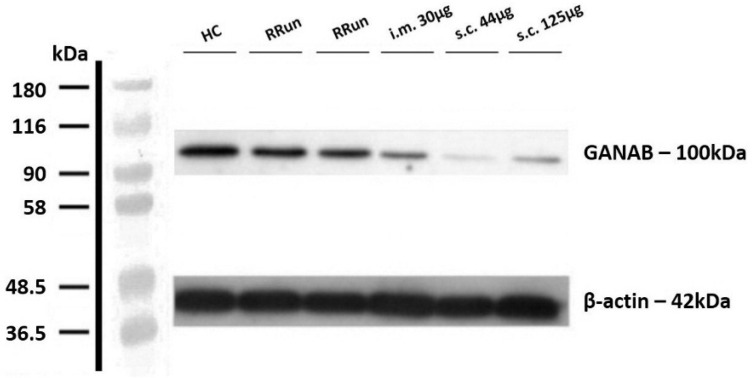
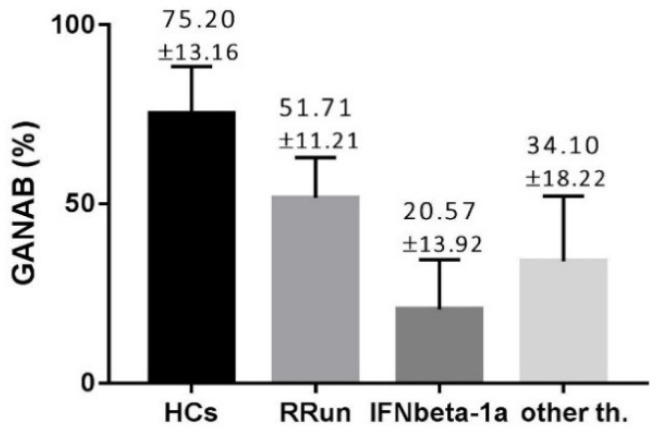
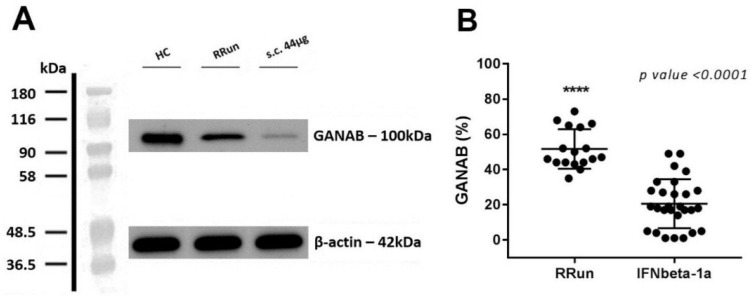
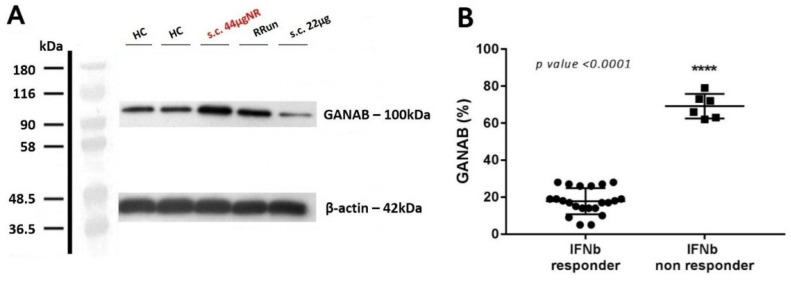
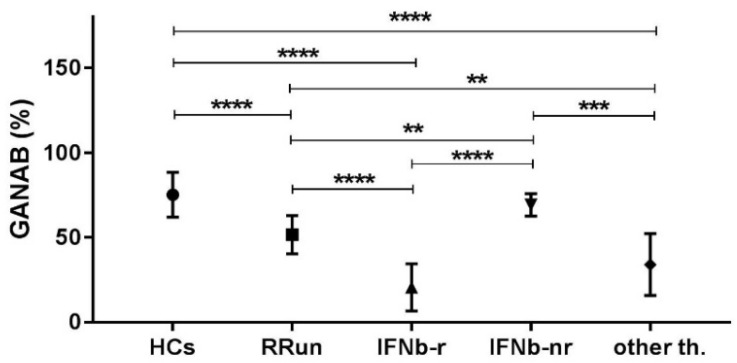
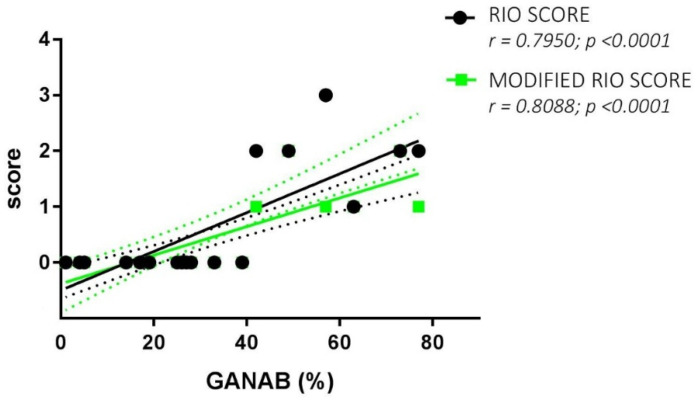
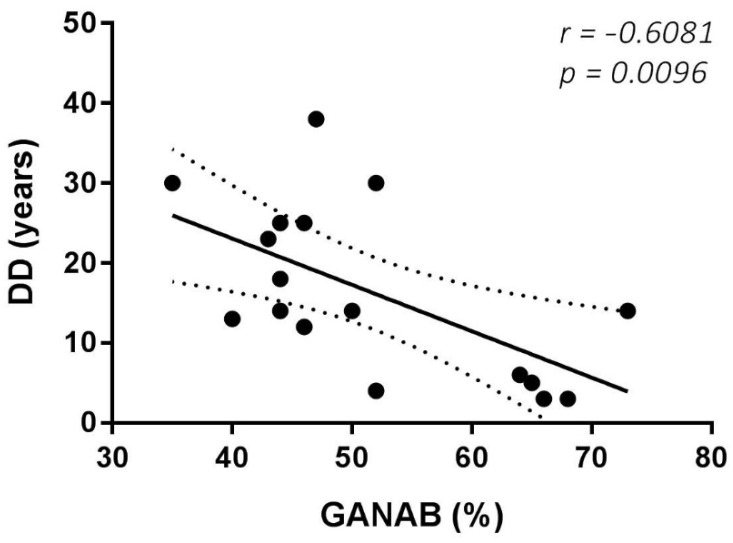
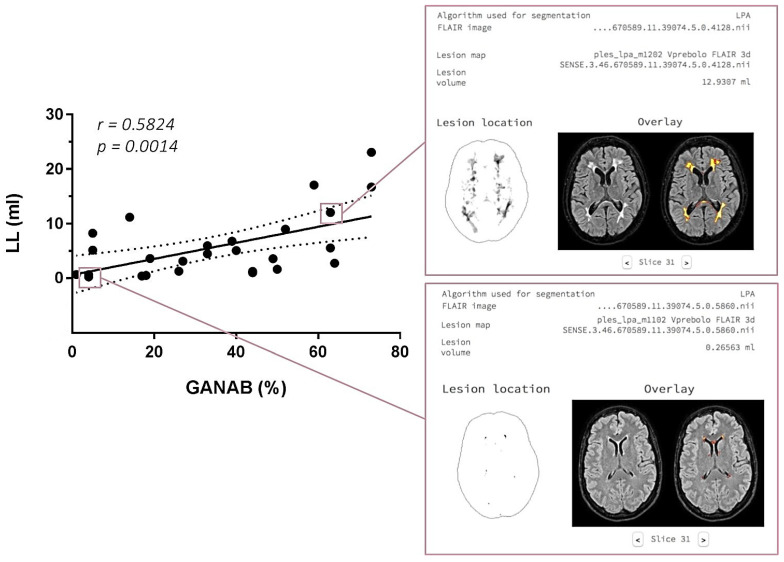
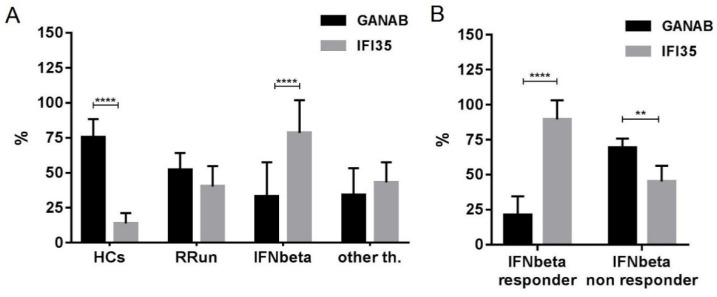
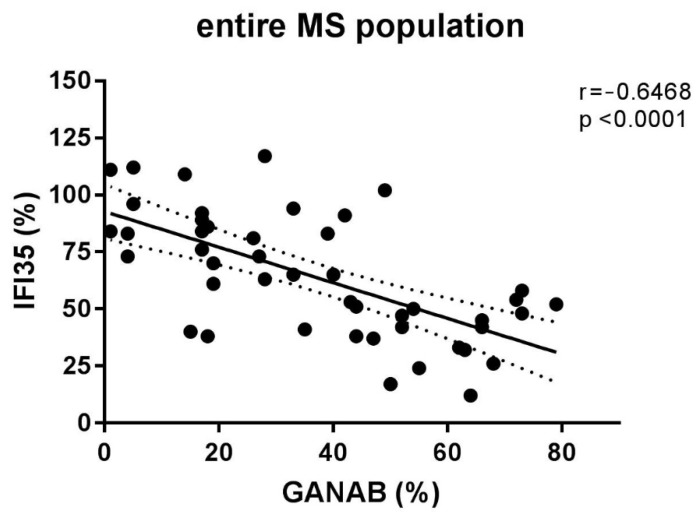
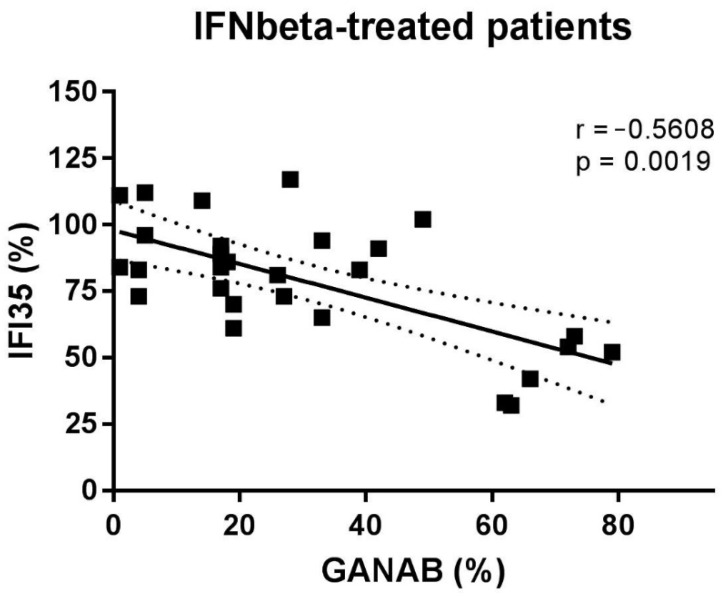
Multiple sclerosis (MS) still lacks reliable biomarkers of neuroinflammation predictive for disease activity and treatment response. Thus, in a prospective study we assessed 55 MS patients (28 interferon (IFN)-treated, 10 treated with no-IFN therapies, 17 untreated) and 20 matched healthy controls (HCs) for the putative correlation of the densitometric expression of glucosidase II alpha subunit (GANAB) with clinical/paraclinical parameters and with interferon-induced protein 35 (IFI35). We also assessed the disease progression in terms of the Rio Score (RS) in order to distinguish the responder patients to IFN therapy (RS = 0) from the non-responder ones (RS ≥ 1). We found GANAB to be 2.51-fold downregulated in the IFN-treated group with respect to the untreated one (p < 0.0001) and 3.39-fold downregulated in responder patients compared to the non-responders (p < 0.0001). GANAB correlated directly with RS (r = 0.8088, p < 0.0001) and lesion load (LL) (r = 0.5824, p = 0.0014) in the IFN-treated group and inversely with disease duration (DD) (r = −0.6081, p = 0.0096) in the untreated one. Lower mean values were expressed for GANAB than IFI35 in IFN responder (p < 0.0001) and higher mean values in the non-responder patients (p = 0.0022). Inverse correlations were also expressed with IFI35 in the overall patient population (r = −0.6468, p < 0.0001). In conclusion, the modular expression of GANAB reflects IFI35, RS, DD, and LL values, making it a biomarker of neuroinflammation that is predictive for disease activity and treatment response in MS.
Overview
The claims and statistics of this paper haven’t been checked yet.
Free: it reads the open-access text and checks the first 5 claims that cite a source we can check. Create a free account to check every claim.
Integrity signals
Registry
Cites
Statistics
Figures
Verification
Claims the paper makes
The claims and statistics of this paper haven’t been checked yet.
Free: it reads the open-access text and checks the first 5 claims that cite a source we can check. Create a free account to check every claim.
Claims other papers make about this one
Each is checked against this paper’s own text: does it say what the citing paper says it does?
The source backs part of the claim, not all of it — or backs it for a different population, condition or comparison.
In the citing paper
“In addition, Glucosidase II is involved in human polycystic disease [8,9,10] and finally in the demyelinating ones of the central nervous system (CNS), according to the latest evidence [11].”
From GANAB and N-Glycans Substrates Are Relevant in Human Physiology, Polycystic Pathology and Multiple Sclerosis: A Review (2022) · cites this paper as [11]
Experimental — accuracy not yet measuredThe source backs part of the claim, not all of it — or backs it for a different population, condition or comparison.
In the citing paper
“thus assuming higher expression values in relapsing patients than in clinically stable ones.”
From GANAB and N-Glycans Substrates Are Relevant in Human Physiology, Polycystic Pathology and Multiple Sclerosis: A Review (2022) · cites this paper as [11]
Experimental — accuracy not yet measuredThe cited source says what the claim attributes to it.
In the citing paper
“also described a significant correlation between GANAB expression and the Rio score [11]”
From GANAB and N-Glycans Substrates Are Relevant in Human Physiology, Polycystic Pathology and Multiple Sclerosis: A Review (2022) · cites this paper as [11]
The cited source says what the claim attributes to it.
In the citing paper
“Interestingly, levels of the glycozyme were higher in healthy controls (HCs) than in RRMS untreated patients”
From GANAB and N-Glycans Substrates Are Relevant in Human Physiology, Polycystic Pathology and Multiple Sclerosis: A Review (2022) · cites this paper as [11]
The cited source says what the claim attributes to it.
In the citing paper
“The molecule, in fact, resulted upregulated in RRMS untreated patients compared to the IFN-treated ones as well as the ones treated with disease modifying therapies (DMTs) other than IFN, including Dimethyl Fumarate (DMF, also called BG12).”
From GANAB and N-Glycans Substrates Are Relevant in Human Physiology, Polycystic Pathology and Multiple Sclerosis: A Review (2022) · cites this paper as [11]
3 more claims about this paper
Create a free account to see every claim other papers make about this one.
Self-check
Percentages, sums and reported differences re-computed from the paper’s own numbers.
The self-check needs the paper’s full text.
Citations
Cites
Rating neurologic impairment in multiple sclerosis: An expanded disability status scale (EDSS)
Kurtzke, J. F. (1983) · Neurology · doi:10.1212/wnl.33.11.1444 · Cited by 15,011 · cited 1×
“The EDSS, which was developed by Kurtzke in 1983 [36], is a universal scale for neurologic impairment assessment in MS.”
BackgroundDiagnosis of multiple sclerosis: 2017 revisions of the McDonald criteria
Thompson, A. J., Banwell, B. L., Barkhof, F., Carroll, W. M., Coetzee, T., Comi, G., Correale, J., Fazekas, F., Filippi, M., Freedman, M. S., et al. (2018) · The Lancet Neurology · doi:10.1016/s1474-4422(17)30470-2 · Cited by 8,167 · cited 4×
“The latter is also assessed by the intrathecal synthesis of oligoclonal bands (OCB) [28].”
BackgroundMethodInfluentialGlycosylation and the Immune System
Rudd, P. M., Elliott, T., Cresswell, P., Wilson, I. A., & Dwek, R. A. (2001) · Science · doi:10.1126/science.291.5512.2370 · Cited by 1,588 · cited 1×
“of glycosylation in the maturation process of key proteins of both innate and adaptive immune responses has already been described [9,10].”
BackgroundTrowbridge, I. S. (1994) · Annual Review of Immunology · doi:10.1146/annurev.immunol.12.1.85 · Cited by 755 · cited 1×
“It has been shown that CD45 activity is essential in the cascade events of signal transduction, leading to thymocyte maturation and T cell activation [20].”
BackgroundUse of the brain parenchymal fraction to measure whole brain atrophy in relapsing-remitting MS
Rudick, R. A., Fisher, E., Lee, J.-C., Simon, J., Jacobs, L., & the Multiple Sclerosis Collaborative Research Group (1999) · Neurology · doi:10.1212/wnl.53.8.1698 · Cited by 736
Miller, D. H., Barkhof, F., Berry, I., Kappos, L., Scotti, G., & Thompson, A. J. (1991) · Journal of Neurology, Neurosurgery & Psychiatry · doi:10.1136/jnnp.54.8.683 · Cited by 370 · cited 1×
“5-T Philips MR apparatus (180 mT/m) (Achieva, Philips Medical Systems, Best, Netherlands), in accordance with international guidelines [34].”
Adaptive immune activation: glycosylation does matter
Wolfert, M. A., & Boons, G.-J. (2013) · Nature Chemical Biology · doi:10.1038/nchembio.1403 · Cited by 327 · cited 1×
“of glycosylation in the maturation process of key proteins of both innate and adaptive immune responses has already been described [9,10].”
BackgroundMeta-analysis of the Age-Dependent Efficacy of Multiple Sclerosis Treatments
Weideman, A. M., Tapia-Maltos, M. A., Johnson, K., Greenwood, M., & Bielekova, B. (2017) · Frontiers in Neurology · doi:10.3389/fneur.2017.00577 · Cited by 310
Getting In and Out from Calnexin/Calreticulin Cycles
Caramelo, J. J., & Parodi, A. J. (2008) · Journal of Biological Chemistry · doi:10.1074/jbc.r700048200 · Cited by 307 · cited 1×
“Calnexin and its luminal homolog calreticulin are two membrane-bound chaperones that are involved in the mechanism control of protein folding; they require a monoglycosylated glycan to bind proteins in their maturation phase [22], and this glucose trimming is carried out by GANAB.”
BackgroundInterferon-β mechanisms of action in multiple sclerosis
Dhib-Jalbut, S., & Marks, S. (2010) · Neurology · doi:10.1212/wnl.0b013e3181c97d99 · Cited by 298
Treatment strategies for multiple sclerosis: When to start, when to change, when to stop?
Gajofatto, A., & Benedetti, M. D. (2015) · World Journal of Clinical Cases · doi:10.12998/wjcc.v3.i7.545 · Cited by 256 · cited 1×
“Despite the many studies suggesting the critical role of peripheral autoreactive T-cells in the demyelination process and axonal loss [1], there is still no usable cell-based biomarker of disease activity [2,3].”
BackgroundEndoplasmic reticulum stress in disorders of myelinating cells
Lin, W., & Popko, B. (2009) · Nature Neuroscience · doi:10.1038/nn.2273 · Cited by 252
Genetics and the environment converge to dysregulate N-glycosylation in multiple sclerosis
Mkhikian, H., Grigorian, A., Li, C. F., Chen, H.-L., Newton, B., Zhou, R. W., Beeton, C., Torossian, S., Tatarian, G. G., Lee, S.-U., et al. (2011) · Nature Communications · doi:10.1038/ncomms1333 · Cited by 174
The Immune Pathogenesis of Multiple Sclerosis
Weissert, R. (2013) · Journal of Neuroimmune Pharmacology · doi:10.1007/s11481-013-9467-3 · Cited by 115 · cited 1×
“Despite the many studies suggesting the critical role of peripheral autoreactive T-cells in the demyelination process and axonal loss [1], there is still no usable cell-based biomarker of disease activity [2,3].”
BackgroundNMI and IFP35 serve as proinflammatory DAMPs during cellular infection and injury
Xiahou, Z., Wang, X., Shen, J., Zhu, X., Xu, F., Hu, R., Guo, D., Li, H., Tian, Y., Liu, Y., et al. (2017) · Nature Communications · doi:10.1038/s41467-017-00930-9 · Cited by 115 · cited 1×
“With regard to the IFI35, this is a biomolecular marker of neuroinflammation that has been actively studied in our group and in the Xiahou one [31] independently.”
BackgroundThe unfolded protein response in multiple sclerosis
Stone, S., & Lin, W. (2015) · Frontiers in Neuroscience · doi:10.3389/fnins.2015.00264 · Cited by 104
Harnessing the integrated stress response for the treatment of multiple sclerosis
Way, S. W., & Popko, B. (2016) · The Lancet Neurology · doi:10.1016/s1474-4422(15)00381-6 · Cited by 71
de Seny, D., Bianchi, E., Baiwir, D., Cobraiville, G., Collin, C., Deliège, M., Kaiser, M.-J., Mazzucchelli, G., Hauzeur, J., Delvenne, P., et al. (2020) · Scientific Reports · doi:10.1038/s41598-020-70803-7 · Cited by 58
Arendt, C. W., & Ostergaard, H. L. (1997) · Journal of Biological Chemistry · doi:10.1074/jbc.272.20.13117 · Cited by 55
Unfolded protein response in myelin disorders
Lin, W., & Stone, S. (2020) · Neural Regeneration Research · doi:10.4103/1673-5374.266903 · Cited by 55 · cited 5×
“Moreover, GANAB is involved in the endoplasmic reticulum (ER) stress response (ERSR), also called unfolded protein response (UPR) [15,16].”
BackgroundInfluentialPathogenesis of multiple sclerosis via environmental and genetic dysregulation of N-glycosylation
Grigorian, A., Mkhikian, H., Li, C. F., Newton, B. L., Zhou, R. W., & Demetriou, M. (2012) · Seminars in Immunopathology · doi:10.1007/s00281-012-0307-y · Cited by 54 · cited 1×
“This context also includes the role of vitamin D3, which inhibits T lymphocyte activation and differentiation into Th1 by regulating their Nglycosylation [14].”
BackgroundGene profiling involved in immature CD4+ T lymphocyte responsible for systemic lupus erythematosus
Deng, Y. J., Huang, Z. X., Zhou, C. J., Wang, J. W., You, Y., Song, Z. Q., Xiang, M. M., Zhong, B. Y., & Hao, F. (2006) · Molecular Immunology · doi:10.1016/j.molimm.2005.07.039 · Cited by 51 · cited 1×
“Furthermore, other studies have shown the overexpression of GANAB in the Th1 cells of patients with lupus erythematosus in the active stage of the disease [24].”
BackgroundPavlović, N., & Heindryckx, F. (2021) · Biology · doi:10.3390/biology10070640 · Cited by 43 · cited 1×
“This leads to proteostatic achievement by enhancing the degradation of mRNAs via IRE1-dependent decay [17,18].”
BackgroundInterplay between ER stress and autophagy: A possible mechanism in multiple sclerosis pathology
Andhavarapu, S., Mubariz, F., Arvas, M., Bever, C. T., & Makar, T. K. (2019) · Experimental and Molecular Pathology · doi:10.1016/j.yexmp.2019.04.016 · Cited by 39 · cited 5×
“Moreover, GANAB is involved in the endoplasmic reticulum (ER) stress response (ERSR), also called unfolded protein response (UPR) [15,16].”
BackgroundInfluentialAbnormal galactosylation of immunoglobulin G in cerebrospinal fluid of multiple sclerosis patients
Decker, Y., Schomburg, R., Németh, E., Vitkin, A., Fousse, M., Liu, Y., & Fassbender, K. C. (2016) · Multiple Sclerosis Journal · doi:10.1177/1352458516631036 · Cited by 31
De Masi, R., Vergara, D., Pasca, S., Acierno, R., Greco, M., Spagnolo, L., Blasi, E., Sanapo, F., Trianni, G., & Maffia, M. (2009) · Journal of Neuroimmunology · doi:10.1016/j.jneuroim.2009.03.002 · Cited by 26 · cited 2×
“In previous two-dimensional electrophoresis studies, some differentially expressed proteins (DEPs) have been highlighted in PBMCs from IFN-treated MS patients in comparison to untreated ones as well as healthy controls (HCs) [6,7].”
BackgroundResultCalnexin is necessary for T cell transmigration into the central nervous system
Jung, J., Eggleton, P., Robinson, A., Wang, J., Gutowski, N. J., Holley, J. E., Newcombe, J., Dudek, E., Paul, A. M., Zochodne, D. W., et al. (2018) · JCI Insight · doi:10.1172/jci.insight.98410 · Cited by 26
Baldwin, T. A., & Ostergaard, H. L. (2001) · The Journal of Immunology · doi:10.4049/jimmunol.167.7.3829 · Cited by 25 · cited 1×
“These modifications of CD45 glycosylation would have important implications in various biological processes, such as the development of the plasma membrane, vesicular trafficking, and cell adhesion [21].”
BackgroundSantos‐Laso, Á., Izquierdo‐Sánchez, L., Rodrigues, P. M., Huang, B. Q., Azkargorta, M., Lapitz, A., Muñoz-Garrido, P., Arbelaiz, A., Caballero-Camino, F. J., Fernández‐Barrena, M. G., et al. (2020) · Liver International · doi:10.1111/liv.14485 · Cited by 25 · cited 1×
“This leads to proteostatic achievement by enhancing the degradation of mRNAs via IRE1-dependent decay [17,18].”
BackgroundUtility of the Rio Score and Modified Rio Score in Korean Patients with Multiple Sclerosis
Hyun, J., Kim, S., Jeong, I. H., Ahn, S.-W., Huh, S., Park, M. S., Eom, Y. I., Joo, I. S., Cho, J., Cho, E. B., et al. (2015) · PLoS ONE · doi:10.1371/journal.pone.0129243 · Cited by 24 · cited 1×
“The Rio Score (RS) or Modified Rio Score (MRS) are the only currently available tools as clinical predictors of treatment response to IFNbeta [5].”
MethodJung, J., Dudek, E., & Michalak, M. (2014) · Biochimica et Biophysica Acta (BBA) - Molecular Cell Research · doi:10.1016/j.bbamcr.2014.12.023 · Cited by 18
Endoplasmic reticulum stress response as a potential therapeutic target in multiple sclerosis
Getts, M. T., Getts, D. R., Kohm, A. P., & Miller, S. D. (2008) · Therapy · doi:10.2217/14750708.5.5.631 · Cited by 18 · cited 5×
“Moreover, GANAB is involved in the endoplasmic reticulum (ER) stress response (ERSR), also called unfolded protein response (UPR) [15,16].”
BackgroundInfluentialThe clinical potential of blood-proteomics in multiple sclerosis
Masi, R. D., Pasca, S., Scarpello, R., Idolo, A., & Donno, A. D. (2013) · BMC Neurology · doi:10.1186/1471-2377-13-45 · Cited by 14 · cited 1×
“In previous two-dimensional electrophoresis studies, some differentially expressed proteins (DEPs) have been highlighted in PBMCs from IFN-treated MS patients in comparison to untreated ones as well as healthy controls (HCs) [6,7].”
ResultIFI35 as a biomolecular marker of neuroinflammation and treatment response in multiple sclerosis
Masi, R. D., & Orlando, S. (2020) · Life Sciences · doi:10.1016/j.lfs.2020.118233 · Cited by 14 · cited 6×
“PBMC separation and protein extraction were carried out as previously described [8].”
BackgroundMethodInfluentialSelf-citationThe definition of non-responder to multiple sclerosis treatment: neuroimaging markers
Rovaris, M. (2008) · Neurological Sciences · doi:10.1007/s10072-008-0943-0 · Cited by 8 · cited 1×
“Despite the many studies suggesting the critical role of peripheral autoreactive T-cells in the demyelination process and axonal loss [1], there is still no usable cell-based biomarker of disease activity [2,3].”
BackgroundDe Masi, R., Orlando, S., & De Donno, A. (2021) · Pharmaceuticals · doi:10.3390/ph14020081 · Cited by 5 · cited 1×
“Consistently, the importance of age as a biological variable influencing the natural course of the disease and its response to therapy is an emerging topic in research on MS and other chronic inflammatory human diseases [32,33].”
BackgroundSelf-citation
Cited by
De Masi, R., & Orlando, S. (2022) · International Journal of Molecular Sciences · doi:10.3390/ijms23137373 · Cited by 20
“In addition, Glucosidase II is involved in human polycystic disease [8–10] and finally in the demyelinating ones of the central nervous system (CNS), according to the latest evidence [11].”
BackgroundSelf-citationXue, X., Wu, X., Liu, L., Liu, L., & Zhu, F. (2023) · Viruses · doi:10.3390/v15061298 · Cited by 15
Withana, M., & Castorina, A. (2023) · Cells · doi:10.3390/cells12222633 · Cited by 12
Recent advances to Neuroprotection: repurposing drugs against neuroinflammatory disorders
Bilal, W., Khawar, M. B., Afzal, A., Naseer, A., Hamid, S. E., Shahzaman, S., & Qamar, F. (2023) · Molecular Biology Reports · doi:10.1007/s11033-023-08490-6 · Cited by 4
Masi, R. D., Orlando, S., Carata, E., & Panzarini, E. (2024) · International Journal of Molecular Sciences · doi:10.3390/ijms25136867 · Cited by 4
“However, the expected effect of protein misfolding/unfolding on membrane trafficking is still to be confirmed in MS.”
BackgroundSelf-citation
Metadata
- Authors
- De Masi, R., & Orlando, S.
- Affiliations
- Complex Operative Unit of Neurology, “F. Ferrari” Hospital, Casarano, 73042 Lecce, Italy
- Laboratory of Neuroproteomics, Multiple Sclerosis Centre, “F. Ferrari” Hospital, Casarano, 73042 Lecce, Italy
- Corresponding author
- Orlando, Stefania
- Venue
- Pharmaceuticals
- Publisher
- MDPI AG
- Published
- 2021-11-21
- Volume
- 14
- Issue
- 11
- Pages
- 1195
- ISSN
- 1424-8247 (ISSN-L)
- PMC
- PMC8625565
- OpenAlex
- W3217556981
- Cited by
- 10
- References
- 36
- Citations by year
- 2026: 2 · 2025: 1 · 2024: 1 · 2023: 5 · 2022: 1
- FWCI
- 1.17
- Type
- journal article
- Language
- en
- Open access
- gold
- doi.org
- Licence
- Locations
- Pharmaceuticals (publishedVersion, cc-by)
- PubMed Central (publishedVersion, cc-by)
- PubMed (publishedVersion)
- DOAJ (DOAJ: Directory of Open Access Journals) (submittedVersion, cc-by-sa)
- Topics
- Health Sciences › Medicine › Clinical Neurology › Multiple Sclerosis Research Studies
- Life Sciences › Immunology and Microbiology › Immunology › Psoriasis: Treatment and Pathogenesis
- Life Sciences › Neuroscience › Neurology › Neuroinflammation and Neurodegeneration Mechanisms
- Keywords
- multiple sclerosis, GANAB, IFI35, interferon-beta, interferon therapy response, neuroinflammation, biomarkers, disease activity, lesion load, disease duration, densitometry
About these checks
Registry, retraction, Cites and statistics results are computed, not judged, with one exception: a printed reference that no index lists is read once by a model before it counts as a citation error. Claims are extracted by a model and kept only when their quote appears verbatim in the text; each cited source is then checked, with a model’s help, for whether it says what the claim relies on. Those verdicts can be wrong — read the claim’s quote and the cited source before relying on one.
Statistics and arithmetic are recomputed, not judged.
Confidence bands are shown only for fields calibrated on our annotated test set. None is calibrated yet, so no band is shown.
What counts as a claim ›How we measure confidence ›How we check this ›
Are you an author, or do you see a problem with this page? Request a review
Data sources
Bibliographic data: Semantic Scholar, OpenAlex, Crossref.
Contains information from the Semantic Scholar Academic Graph Datasets, made available under the ODC Attribution License (ODC-BY 1.0).
Semantic Scholar’s data is described in: Kinney, R., et al. (2023). The Semantic Scholar Open Data Platform. arXiv:2301.10140.
