

Genome Editing Weds CRISPR: What Is in It for Phytoremediation?
Open accessThe DOI matches its Crossref record; 61 of the 61 references it cites were found in a registry or an index.
Abstract
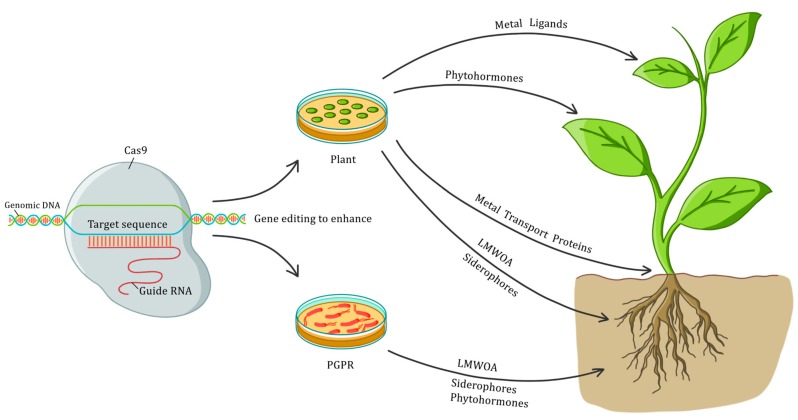
The arrival of sequence-specific endonucleases that allow genome editing has shaken the pillars of basic and applied plant biology. Clustered regularly interspaced palindromic repeats (CRISPR) is a revolutionary genome-engineering tool that enables the enhancement of targeted traits in plants. Numerous plants, including energy crops, known for their potential to tolerate, immobilize, and stabilize inorganic and organic pollutants, have already been edited using different CRISPR systems. Moreover, a large array of genes responsible for increased metal tolerance, metal uptake and hyperaccumulation have already been identified. Thus, the CRISPR-mediated genome reprogramming of plants, including its use in gene expression regulation through transcriptional repression or activation (CRISPRi and CRISPRa), could be of paramount importance for phytoremediation. The simplicity, inexpensiveness, and capabilities of this gene editing technique could soon be used to enhance plants and bacteria involved in phytotechnologies, such as phystabilization, phytoextraction, phytomining, phytovolatilization, and bio-energy generation. In this brief viewpoint piece, we posit some of the potential benefits of CRISPR for phytoremediation.
Overview
The claims and statistics of this paper haven’t been checked yet.
Free: it reads the open-access text and checks the first 5 claims that cite a source we can check. Create a free account to check every claim.
Integrity signals
Registry
Cites
Statistics
Figures
Verification
Claims the paper makes
The claims and statistics of this paper haven’t been checked yet.
Free: it reads the open-access text and checks the first 5 claims that cite a source we can check. Create a free account to check every claim.
Claims other papers make about this one
Each is checked against this paper’s own text: does it say what the citing paper says it does?
The source backs part of the claim, not all of it — or backs it for a different population, condition or comparison.
In the citing paper
“Effective phytoremediation requires plants with high capacity for bioconcentration factors, pollution tolerance, and translocation factors (Basharat et al. 2018).”
From Sustainable management of post-phytoremediation biomass (2025) · cites this paper as Basharat et al. 2018
Experimental — accuracy not yet measured
Self-check
Percentages, sums and reported differences re-computed from the paper’s own numbers.
The self-check needs the paper’s full text.
Citations
Cites
A Programmable Dual-RNA–Guided DNA Endonuclease in Adaptive Bacterial Immunity
Jinek, M., Chylinski, K., Fonfara, I., Hauer, M., Doudna, J. A., & Charpentier, E. (2012) · Science · doi:10.1126/science.1225829 · Cited by 17,116 · cited 3×
“Substantial progress is increasingly being made in this realm, as tools and methods of CRISPR usage in genome editing continue to expand due to its considerable advantage over competing techniques, like zinc finger nucleases (ZFNs) and transcription activator-like effector nucleases (TALENs) [5–7].”
MethodRNA-Guided Human Genome Engineering via Cas9
Mali, P., Yang, L., Esvelt, K. M., Aach, J., Guell, M., DiCarlo, J. E., Norville, J. E., & Church, G. M. (2013) · Science · doi:10.1126/science.1232033 · Cited by 9,210 · cited 3×
“Substantial progress is increasingly being made in this realm, as tools and methods of CRISPR usage in genome editing continue to expand due to its considerable advantage over competing techniques, like zinc finger nucleases (ZFNs) and transcription activator-like effector nucleases (TALENs) [5–7].”
MethodDNA targeting specificity of RNA-guided Cas9 nucleases
Hsu, P. D., Scott, D. A., Weinstein, J. A., Ran, F. A., Konermann, S., Agarwala, V., Li, Y., Fine, E. J., Wu, X., Shalem, O., et al. (2013) · Nature Biotechnology · doi:10.1038/nbt.2647 · Cited by 4,741 · cited 1×
“This system is centred on a guide RNA (gRNA) facilitated direction of the bacterial Cas9 nuclease to a target site (Hsu et al., 2013).”
BackgroundPhytoremediation of heavy metals—concepts and applications
Ali, H., Khan, E., & Sajad, M. A. (2013) · Chemosphere · doi:10.1016/j.chemosphere.2013.01.075 · Cited by 3,961 · cited 1×
“Likewise, maize is a fast-growing, high biomass yield species with a pronounced metal accumulation capability, and has presented favorable results in phytoremediation and phytomining [52,53].”
BackgroundCRISPR-Cas systems for editing, regulating and targeting genomes
Sander, J. D., & Joung, J. K. (2014) · Nature Biotechnology · doi:10.1038/nbt.2842 · Cited by 3,153 · cited 1×
“CRISPR-Cas9 and the novel CRISPR-Cpf1 have been harnessed for generating knock-outs, targeting transcriptional regulation or making substitutions in the genome [2,3].”
BackgroundGenome-Scale CRISPR-Mediated Control of Gene Repression and Activation
Gilbert, L. A., Horlbeck, M. A., Adamson, B., Villalta, J. E., Chen, Y., Whitehead, E. H., Guimaraes, C., Panning, B., Ploegh, H. L., Bassik, M. C., et al. (2014) · Cell · doi:10.1016/j.cell.2014.09.029 · Cited by 2,728 · cited 2×
“These techniques, known as CRISPRi (interference) and CRISPRa (activation), can modulate gene expression over a 1000-fold range [45] and have been effectively employed on plants [21,46,47].”
BackgroundMethodThe CRISPR/Cas9 system for plant genome editing and beyond
Bortesi, L., & Fischer, R. (2015) · Biotechnology Advances · doi:10.1016/j.biotechadv.2014.12.006 · Cited by 1,187 · cited 2×
“To make the most of this strategy, it might be imperative to amalgamate diverse gRNAs with Cas9 in a single T-DNA, as an all-in-one plasmid approach would definitely improve editing [5,41].”
BackgroundMendez, M. O., & Maier, R. M. (2008) · Environmental Health Perspectives · doi:10.1289/ehp.10608 · Cited by 1,028 · cited 1×
“Phytoremediation is a green, solar energy driven, and low cost technology to mitigate the impact of harmful pollutants, which represents a sustainable alternative to other costly, impracticable and often hazardous physicochemical solutions [8].”
BackgroundPhytoremediation Technology: Hyper-accumulation Metals in Plants
Padmavathiamma, P. K., & Li, L. Y. (2007) · Water, Air, and Soil Pollution · doi:10.1007/s11270-007-9401-5 · Cited by 879 · cited 1×
“Ideally, phytoremediators should feature a fast growth rate, high biomass yield, hardiness, tolerance to elevated metal levels, large root system and the capacity to immobilize and/or uptake significant amounts of contaminants [9].”
BackgroundA CRISPR/Cas9 Toolbox for Multiplexed Plant Genome Editing and Transcriptional Regulation
Lowder, L. G., Zhang, D., Baltes, N. J., Paul, J. W., Tang, X., Zheng, X., Voytas, D. F., Hsieh, T.-F., Zhang, Y., & Qi, Y. (2015) · Plant Physiology · doi:10.1104/pp.15.00636 · Cited by 707 · cited 3×
“These techniques, known as CRISPRi (interference) and CRISPRa (activation), can modulate gene expression over a 1000-fold range [45] and have been effectively employed on plants [21,46,47].”
BackgroundMethod
Cited by
Heavy Metal Pollutions: State of the Art and Innovation in Phytoremediation
DalCorso, G., Fasani, E., Manara, A., Visioli, G., & Furini, A. (2019) · International Journal of Molecular Sciences · doi:10.3390/ijms20143412 · Cited by 428
“vittata) and the improvement of bioinformatic tools have opened new opportunities for the use of CRISPR-Cas9 genome editing in the improvement of plant phytoremediation potential [55].”
BackgroundInfluentialRemoval of heavy metals in contaminated soil by phytoremediation mechanism: a review
Awa, S. H., & Hadibarata, T. (2020) · Water, Air, & Soil Pollution · doi:10.1007/s11270-020-4426-0 · Cited by 414
“In this process, the plant that is being used to carry out phytostabilization alters the soil chemistry and hence, facilitates the absorption and precipitation processes of heavy metals in soil (Basharat et al. 2018; Garcia-Sanchez et al. 2018; Zhang et al. 2009).”
BackgroundZinc hyperaccumulation in plants: A review
Balafrej, H., Bogusz, D., Triqui, Z.-E. A., Guedira, A., Bendaou, N., Smouni, A., & Fahr, M. (2020) · Plants · doi:10.3390/plants9050562 · Cited by 275
Alves, A. R. A., Yin, Q., Oliveira, R. S., Silva, E. F., & Novo, L. A. B. (2022) · Science of The Total Environment · doi:10.1016/j.scitotenv.2022.156435 · Cited by 215
“…could lead to tailor-made PGPB with enhanced ability to synthesize organic acids, biosurfactants, siderophores, phytohormones, and other key ACC, 1-Aminocyclopropane-1-carboxylate; IAA, indole-3-acetic acid. compounds in the context of microbe-assisted phytoremediation (Basharat et al., 2018).”
Self-citationSingh, A. K., Bilal, M., Iqbal, H. M. N., Meyer, A. S., & Raj, A. (2021) · Science of The Total Environment · doi:10.1016/j.scitotenv.2021.145988 · Cited by 205
Rai, P. K., Kim, K.-H., Lee, S. S., & Lee, J.-H. (2020) · Science of The Total Environment · doi:10.1016/j.scitotenv.2019.135858 · Cited by 198
Hu, H., Li, X., Wu, S., & Yang, C. (2020) · Bioresource Technology · doi:10.1016/j.biortech.2020.123809 · Cited by 194
Sarker, A., Masud, M. A. A., Deepo, D. M., Das, K., Nandi, R., Ansary, M. W. R., Islam, A. R. M. T., & Islam, T. (2023) · Chemosphere · doi:10.1016/j.chemosphere.2023.138861 · Cited by 197
Phytoremediation using genetically engineered plants to remove metals: a review
Özyiğit, İ. İ., Can, H., & Doğan, İ. (2020) · Environmental Chemistry Letters · doi:10.1007/s10311-020-01095-6 · Cited by 136
Rai, P. K., Sonne, C., & Kim, K. (2023) · The Science of The Total Environment · doi:10.1016/j.scitotenv.2023.162327 · Cited by 134
Enhancing phytoremediation of hazardous metal(loid)s using genome engineering CRISPR–Cas9 technology
Sarma, H., Islam, N. F., Prasad, R., Prasad, M. N. V., Ma, L. Q., & Rinklebe, J. (2021) · Journal of Hazardous Materials · doi:10.1016/j.jhazmat.2021.125493 · Cited by 117
Zhou, B., Zhang, T., & Wang, F. (2023) · Applied Sciences · doi:10.3390/app13148439 · Cited by 116
“Metallothioneins and phytochelatins can be synthesized more efficiently with CRISPR-Appl mediated gene expression [152].”
BackgroundUpadhyay, S. K., Rajput, V. D., Kumari, A., Espinosa-Sáiz, D., Menéndez, E., Minkina, T., Dwivedi, P., & Манджиева, С. С. (2022) · Environmental Geochemistry and Health · doi:10.1007/s10653-022-01433-3 · Cited by 116
“Thus, by employing CRISPR to equip PGPR with desired genes such as nitrogen fixation, phosphate solubilization, iron sequestration, phytohor-mone production, and biocontrol, plants can not only thrive but also survive stressful environments (Basharat et al., 2018).”
BackgroundEdgar, V.-N., Fabián, F.-L., Mario, P.-C. J., & Ileana, V.-R. (2021) · Applied Sciences · doi:10.3390/app11072982 · Cited by 91
Reducing heavy metal contamination in soil and water using phytoremediation
Zhakypbek, Y., Kossalbayev, B. D., Belkozhayev, A. M., Murat, T., Tursbekov, S., Abdalimov, E., Pashkovskiy, P., Kreslavski, V., Kuznetsov, V., & Allakhverdiev, S. I. (2024) · Plants · doi:10.3390/plants13111534 · Cited by 86
“The work by Basharat et al. (2018) further explored the horizon of genome editing in phytoreme-diation [115].”
BackgroundGenetic engineering of plants for phytoremediation: advances and challenges
Kumar, K., Shinde, A., Aeron, V., Verma, A., & Arif, N. S. (2022) · Journal of Plant Biochemistry and Biotechnology · doi:10.1007/s13562-022-00776-3 · Cited by 91
“This led to the development of more easily customizable and usable CRISPR-Cas9 technology (Basharat et al. 2018).”
BackgroundMontreemuk, J., Stewart, T. N., & Prapagdee, B. (2023) · Environmental Technology & Innovation · doi:10.1016/j.eti.2023.103488 · Cited by 95
Current Techniques to Study Beneficial Plant-Microbe Interactions
Gamalero, E., Bona, E., & Glick, B. R. (2022) · Microorganisms · doi:10.3390/microorganisms10071380 · Cited by 88
Phytoremediation: Harnessing plant power and innovative technologies for effective soil remediation
Oubohssaine, M., & Dahmani, I. (2024) · Plant Stress · doi:10.1016/j.stress.2024.100578 · Cited by 87
Engineering Abiotic Stress Tolerance in Crop Plants through CRISPR Genome Editing
Rahman, M., Zulfiqar, S., Raza, M. A., Ahmad, N., & Zhang, B. (2022) · Cells · doi:10.3390/cells11223590 · Cited by 75
Agarwal, P., Giri, B. S., & Rani, R. (2020) · Current Genomics · doi:10.2174/1389202921999200623133240 · Cited by 77
Nayeri, S., Dehghanian, Z., Lajayer, B. A., Thomson, A., Astatkie, T., & Price, G. W. (2023) · Journal of Cleaner Production · doi:10.1016/j.jclepro.2023.139512 · Cited by 61
Bernardino, C. A. R., Mahler, C. F., Santelli, R. E., Freire, A. S., Braz, B. F., & Novo, L. A. B. (2019) · Environmental Monitoring and Assessment · doi:10.1007/s10661-019-7265-y · Cited by 54
Self-citationInsights into the Molecular Mechanism of Arsenic Phytoremediation
Thakur, S., Choudhary, S., Majeed, A., Singh, A., & Bhardwaj, P. (2019) · Journal of Plant Growth Regulation · doi:10.1007/s00344-019-10019-w · Cited by 48
Sustainable management of post-phytoremediation biomass
Mukherjee, S., Leri, A. C., Bandaranayaka, C., Vázquez-Núñez, E., Barros, R., Khan, A. H. A., Zhou, P., Zhang, T., Bernal, M. P., Clemente, R., et al. (2025) · Energy, Ecology and Environment · doi:10.1007/s40974-025-00364-w · Cited by 45
“Effective phytoremediation requires plants with high capacity for bioconcentration factors, pollution tolerance, and translocation factors (Basharat et al. 2018).”
Huang, Y., Xi, Y., Gan, L., Johnson, D., Wu, Y., Ren, D., & Liu, H. (2019) · International Journal of Phytoremediation · doi:10.1080/15226514.2019.1594686 · Cited by 49
“The major mechanisms involved in phytoremediation include plant extraction, rhizofiltration, plant evaporation, plant stabilization, plant decomposition, and rhizosphere decomposition (Steven and Jerald 2010; Hooda 2007; January et al. 2008; Mbakara and Etim 2017; Basharat and Yasmin 2016).”
BackgroundPalanivel, H., Abda, E. M., Shah, S., Prabhu, S. V., Jayakumar, M., Karmegam, N., Kim, W., & Govarthanan, M. (2023) · Journal of Environmental Management · doi:10.1016/j.jenvman.2023.117382 · Cited by 44
Prado, J., Chicaiza-Ortiz, C., Mejía-Pérez, A. B., Freire-Torres, C., Viteri-Yánez, M., Deng, L., Barba‐Ostria, C., & Guamán, L. P. (2025) · Discover Applied Sciences · doi:10.1007/s42452-025-06609-x · Cited by 49
Bhattacharyya, N., Anand, U., Kumar, R. S., Ghorai, M., Aftab, T., Jha, N. K., Rajapaksha, A. U., Bundschuh, J., Bontempi, E., & Dey, A. (2022) · Environmental Chemistry Letters · doi:10.1007/s10311-022-01474-1 · Cited by 46
Shakeel, A., Khan, A. A., & Ahmad, G. (2019) · SN Applied Sciences · doi:10.1007/s42452-019-0404-9 · Cited by 47
Naz, M., Benavides‐Mendoza, A., Tariq, M., Zhou, J., Wang, J., Qi, S., Dai, Z., & Du, D. (2022) · Journal of Environmental Management · doi:10.1016/j.jenvman.2022.116296 · Cited by 41
Agarwal, P., & Rani, R. (2022) · Environmental Technology & Innovation · doi:10.1016/j.eti.2022.102463 · Cited by 40
Pan, P., Lei, M., Qiao, P., Zhou, G., Wan, X., & Chen, T. (2019) · Environmental Science and Pollution Research · doi:10.1007/s11356-019-05655-4 · Cited by 39
Salifu, M., John, M. A., Abubakar, M. A., Bankole, I. A., Ajayi, N. D., & Amusan, O. C. (2024) · Journal of Environmental Protection · doi:10.4236/jep.2024.154026 · Cited by 37
Khanna, K., Kohli, S. K., Kaur, R., Handa, N., Bakshi, P., Sharma, P., Ohri, P., & Bhardwaj, R. (2022) · Journal of Plant Growth Regulation · doi:10.1007/s00344-022-10879-9 · Cited by 33
“Genome editing for fine tuning the hyperaccumu-lator plants for effective phytoremediation can be attained via CRISPER/Cas9 toolbox (Basharat et al. 2018).”
MethodInfluentialMicro and vermicompost assisted remediation of heavy metal contaminated soils using phytoextractors
Aransiola, S. A., Josiah, I. U. J., Abioye, O. P., Bala, J. D., Rivadeneira-Mendoza, B. F., Prasad, R., Luque, R., Rodríguez-Díaz, J. M., & Maddela, N. R. (2024) · Case Studies in Chemical and Environmental Engineering · doi:10.1016/j.cscee.2024.100755 · Cited by 33
Microbiome engineering for bioremediation of emerging pollutants
Singha, L. P., & Shukla, P. (2022) · Bioprocess and Biosystems Engineering · doi:10.1007/s00449-022-02777-x · Cited by 30
Plant-assisted metal remediation in mine-degraded land: a scientometric review
Bandyopadhyay, S. (2021) · International Journal of Environmental Science and Technology · doi:10.1007/s13762-021-03396-x · Cited by 32
“The accessibility of genome sequences from model hyperaccumulator organisms (like Noccaea caerulescens as Cd, Ni, and Zn hyperaccumulator, Arabidopsis halleri as Cd and Zn hyperaccumulator or Pteris Vittata as As hyperaccumulator, Hirschfeldia incana as Pb hyperaccumulator) and the advancement of bioinformatics tools…”
MethodLuo, J., Cao, M., Zhang, C., Wu, J., & Gu, X. (2020) · Journal of Hazardous Materials · doi:10.1016/j.jhazmat.2020.122406 · Cited by 28
Thijs, S., Sillen, W. M. A., Truyens, S., Beckers, B., Hamme, J. D. V., van Dillewijn, P., Samyn, P., Carleer, R., Weyens, N., & Vangronsveld, J. (2018) · Frontiers in Plant Science · doi:10.3389/fpls.2018.01134 · Cited by 24
Recent advances in phytoremediation using genome engineering CRISPR–Cas9 technology
Saxena, P., Singh, N. K., Harish, Singh, A. K., Pandey, S., Thanki, A. A., & Yadav, T. C. (2020) · Elsevier eBooks · doi:10.1016/b978-0-12-819025-8.00005-3 · Cited by 31
Chen, F., Yang, Y., Mi, J., Liu, R., Hou, H., & Zhang, S. (2019) · Sustainability · doi:10.3390/su11020397 · Cited by 23
Liu, Y., Yang, Y., Li, C., Ni, X., Ma, W., & Wei, H. (2018) · Sustainability · doi:10.3390/su10082686 · Cited by 23
“Although in the future, the genetic engineering of plants may help improving phytoremediation [17], presently, there is an urgent demand to select promising species from native plants [18–20].”
BackgroundCRISPR-assisted strategies for futuristic phytoremediation
Patel, H., Shakhreliya, S., Maurya, R., Pandey, V. C., Gohil, N., Bhattacharjee, G., Alzahrani, K. J., & Singh, V. (2022) · Assisted Phytoremediation · doi:10.1016/b978-0-12-822893-7.00006-9 · Cited by 19
Bioremediation of Smog: Current Trends and Future Perspectives
Isha, I., Ali, S., Khalid, A., Naseer, I. A., Raza, H., & Chang, Y. (2024) · Processes · doi:10.3390/pr12102266 · Cited by 23
Garg, A., Chauhan, P., Kaur, C., Arora, P. K., Garg, S. K., Singh, V. P., Singh, K. P., & Srivastava, A. (2025) · Biodegradation · doi:10.1007/s10532-025-10165-x · Cited by 18
“So, modified PGPR and microbes are a successful strategy to transform the heavy metals (Basharat et al. 2018).”
Tziourrou, P., & Golia, E. E. (2025) · Soil Systems · doi:10.3390/soilsystems9040137 · Cited by 20
“…of recent advancements in molecular biology and omics technologies may also facilitate the identification of candidate species possessing desirable characteristics for environments with multiple pollutants, thereby allowing for a more focused and effective phytoremediation strategy [172].”
Bernardino, C. A. R., Mahler, C. F., Alvarenga, P., Castro, P. M. L., da Silva, E. F., & Novo, L. A. B. (2019) · Springer eBooks · doi:10.1007/978-981-13-1891-7_10 · Cited by 18
Self-citationThe history of phytoremediation
Tonelli, F. M. P., Bhat, R. A., Dar, G. H., & Hakeem, K. R. (2021) · Elsevier eBooks · doi:10.1016/b978-0-323-89874-4.00018-2 · Cited by 22
Matinvafa, M. A., Makani, S., Parsasharif, N., Zahed, M. A., Movahed, E., & Ghiasvand, S. (2023) · 3 Biotech · doi:10.1007/s13205-023-03786-7 · Cited by 20
“In Brassica juncea plants, Se tolerance and accumulation were enhanced by the transfer of the genes APS and SMT , which are in charge of producing ATP sulfurylase and selenocysteine methyltransferase, respectively (Basharat et al. 2018; Patel et al. 2022).”
BackgroundChen, L., Wang, D., Zeng, C. L., & Long, C. (2019) · Soil and Sediment Contamination An International Journal · doi:10.1080/15320383.2019.1613957 · Cited by 15
Singh, R., Misra, A. N., & Sharma, P. (2021) · Environmental Science and Pollution Research · doi:10.1007/s11356-021-14507-z · Cited by 15
“Arsenic uptake, transport, and vacuolar sequestration gene can be targeted for genome editing of hyperaccumulators or non-accumulators to enhance As phytoremediation efficacy using CRISPR/Cas9 (Chen et al. 2017a; Basharat et al. 2018).”
BackgroundInfluentialGenetically engineered plants for phytoremediation of heavy metals
Yadav, M., Singh, M., Nanda, K., & Singh, S. P. (2022) · Elsevier eBooks · doi:10.1016/b978-0-323-99907-6.00017-7 · Cited by 17
Role of bacteria and mycorrhizal fungi in phytomining: status and future perspectives
Alves, A. R. A., Oliveira, R. S., da Silva, E. F., & Novo, L. A. B. (2020) · Elsevier eBooks · doi:10.1016/b978-0-12-821199-1.00002-x · Cited by 17
“Lastly, phytomining could also profit from the application of advanced gene editing techniques like clustered regularly interspaced short palindromic repeats (CRISPR) to obtained more efficient or tailor-made PGPR (Basharat et al., 2018).”
BackgroundSelf-citationTransgenic plant-mediated phytoremediation: Applications, challenges, and prospects
Ojuederie, O. B., Igwe, D. O., & Popoola, J. O. (2021) · Elsevier eBooks · doi:10.1016/b978-0-12-822893-7.00009-4 · Cited by 15
CRISPR/Cas-Mediated Abiotic Stress Tolerance in Crops
Ahmad, A., Ashraf, S., Munawar, N., Jamil, A., Ghaffar, A., & Shahbaz, M. (2021) · Springer eBooks · doi:10.1007/978-981-15-7142-8_6 · Cited by 19
Isingoma, C. L., Bhattacharya, S., Dey, S., Mandal, S., Gupta, K., Biswas, J. K., Sengupta, S., & Watts, M. (2025) · Total environment engineering. · doi:10.1016/j.teengi.2025.100014 · Cited by 15
Luo, J., He, W., Wu, J., & Gu, X. S. (2019) · Journal of Environmental Management · doi:10.1016/j.jenvman.2019.04.045 · Cited by 12
Crawford, K. M., Dice, C. G., & Clark, G. S. (2026) · New Phytologist · doi:10.1111/nph.70995 · Cited by 12
“…nitrogen fixation, phosphate solubilization, iron sequestration, phytohormone production, or biocontrol – into plant growth-promoting rhizobacteria (Basharat et al ., 2018), but field implementation is unlikely in the near future because significant testing is needed to vet the efficacy and safety of…”
Understanding assisted phytoremediation: Potential tools to enhance plant performance
Malik, G., Hooda, S., Majeed, S., & Pandey, V. C. (2021) · Elsevier eBooks · doi:10.1016/b978-0-12-822893-7.00015-x · Cited by 16
Motrescu, I., & Luchian, C. E. (2026) · Agriculture · doi:10.3390/agriculture16111215 · Cited by 15
Niu, X., Zhou, Y. H., Zhou, J. W., Wang, X., Gao, Z., & Huang, D. (2019) · Forests · doi:10.3390/f10020077 · Cited by 9
Kolhi, M. L., Hussain, A., Junejo, A. R., Zhang, L., Gu, Y., Zhu, Y., Wang, P., & Liu, H. (2026) · Plant Stress · doi:10.1016/j.stress.2026.101284 · Cited by 10
Phytoremediation at Molecular Level
Mansoor, S., Khan, N. F., Farooq, I., Kaur, N., Manhas, S., Raina, S., & Khan, I. F. (2021) · Elsevier eBooks · doi:10.1016/b978-0-323-89874-4.00011-x · Cited by 10
Sonawane, H. B., Arya, S. S., Bedi, A., & Jaiswar, A. (2021) · Elsevier eBooks · doi:10.1016/b978-0-323-89874-4.00007-8 · Cited by 7
Bioremediation of heavy metals by soil-dwelling microbes: an environment survival approach
Khan, A. A., Sharma, R. S., Panthari, D., Kukreti, B., Singh, A. V., & Upadhayay, V. K. (2023) · Elsevier eBooks · doi:10.1016/b978-0-323-91643-1.00002-8 · Cited by 11
Zhu, Y., Che, R., Dong, Z., Guo, T., He, X. H., Li, J., & Wang, F. (2024) · The Science of The Total Environment · doi:10.1016/j.scitotenv.2024.175990 · Cited by 6
Phytoremediation using CRISPR-Cas9 technology
Sharma, P., Singh, S. P., & Tong, Y. W. (2022) · Elsevier eBooks · doi:10.1016/b978-0-323-99907-6.00009-8 · Cited by 7
Scotti, A., Silvani, V. A., Milia, S., Cappai, G., Ubaldini, S., Ortega, V., Colombo, R. P., Godeas, A. M., & Gómez, M. (2022) · IntechOpen eBooks · doi:10.5772/intechopen.101584 · Cited by 9
CRISPR/Cas Editing in Relation to Phytoremediation
Dey, S., Anand, U., Pandey, D. K., Ghorai, M., Shekhawat, M. S., Hoda, M., Nongdam, P., & Dey, A. (2023) · Wiley eBooks · doi:10.1002/9781119852131.ch19 · Cited by 4
Sharma, S., Raghuvanshi, K., Dadhwal, R., Banerjee, R., & Malik, T. (2026) · Journal of the Indian Chemical Society · doi:10.1016/j.jics.2026.102593 · Cited by 5
Molecular-Assisted Breeding of Cadmium Pollution-Safe Cultivars
Ni, W.-J., Mubeen, S., Leng, X.-M., He, C., & Yang, Z. (2023) · Journal of Agricultural and Food Chemistry · doi:10.1021/acs.jafc.3c04967 · Cited by 11
Heavy Metal Remediation in Wetlands: Mangroves as Potential Candidates
Sarath, N. G., Sruthi, P., Shackira, A. M., & Puthur, J. T. (2020) · Springer eBooks · doi:10.1007/978-3-030-17854-3_123-1 · Cited by 8
Combinatorial genetic engineering approaches in phytoremediation of pollutants
Sharma, B., Chaudhary, T., & Shukla, P. (2022) · Elsevier eBooks · doi:10.1016/b978-0-323-99907-6.00001-3 · Cited by 3
Pharmaceutical wastewater management
Sharma, T., Khandelwal, V., Gupta, S. K., Singh, A. K., Kaur, R., Pathak, S., Sharma, M. K., Sharma, A., Sharma, B. P., Singh, J., et al. (2024) · Elsevier eBooks · doi:10.1016/b978-0-323-99278-7.00014-6 · Cited by 4
Genome Engineering and Essential Mineral Enrichment of Crops
Shoeb, E., Badar, U., Venkataraman, S., Hashim, G. M., & Hefferon, K. L. (2021) · Wiley eBooks · doi:10.1002/9781119672425.ch13 · Cited by 3
Budzyńska, S., Nowicka, M., Nguyen, V. K., Salam, M. M. A., Wojciechowska, Z., & Mleczek, M. (2025) · The Science of The Total Environment · doi:10.1016/j.scitotenv.2025.180296 · Cited by 3
Kongkham, B., Duraivadivel, P., Gupta, N., Shraban, N., & Kumar, P. (2026) · Discover Geoscience · doi:10.1007/s44288-026-00532-3 · Cited by 2
Hefferon, K. L. (2021) · Royal Society of Chemistry eBooks · doi:10.1039/9781788017862-00412 · Cited by 2
CRISPR: the Janus god of modern science
Khare, P., Mandal, S., Verma, A. K., Parashar, D., Jadhav, K., & Gupta, S. K. (2024) · Elsevier eBooks · doi:10.1016/b978-0-323-91808-4.00006-7 · Cited by 2
Role of redox system in enhancement of phytoremediation capacity in plants
Emam, M. M., Khattab, H., Morsy, A. A., Salama, K. H. A., & Mansour, M. M. F. (2020) · Elsevier eBooks · doi:10.1016/b978-0-12-819382-2.00010-7 · Cited by 3
Optimizations on Steps Involved on Biofuel Obtainment and their Validation
Bhat, R. A., Singh, D. V., Tonelli, F. M. P., & Hakeem, K. R. (2022) · Springer eBooks · doi:10.1007/978-3-030-94074-4_6 · Cited by 2
Designer plants for climate-resilient phytoremediation
Pandey, V. C., Gajić, G., Sharma, P., & Roy, M. (2022) · Elsevier eBooks · doi:10.1016/b978-0-12-823831-8.00007-4 · Cited by 2
Occurrence, Fate, and Remediation of Arsenic
Singh, G., Singh, A., Shukla, R., Karwadiya, J., Gupta, A. R., Naheed, A., & Mishra, V. K. (2021) · Wiley eBooks · doi:10.1002/9781119693635.ch14 · Cited by 2
Rahman, M. E., Shamsuzzaman, S. M., Mahmud, K., Uddin, M. K., Gani, S. S. A., Shukor, M. Y. A., Sadeq, B. M., Chompa, S. S., Akter, A., Nabayi, A., et al. (2025) · Chemistry and Ecology · doi:10.1080/02757540.2025.2486960 · Cited by 1
“Thus, the goal of CRISPR-Cas9 is to fi nd and modify genes in the possible plant candidates that enhance arsenic absorption, transfer and resistance [72,73].”
Genetic Engineering of Plants for Remediation of Toxic Metals and Metalloids
Nisa, S. G., Hameed, M., Eman, I., Fatima, N., Sadiq, S., Rafique, S., Khan, Z., & Shah, T. M. (2025) · CABI biotechnology series. · doi:10.1079/9781800627659.0013 · Cited by 1
Transgenic fiber crops in phytoremediation
Pandey, V. C., Mahajan, P., Saikia, P., & Praveen, A. (2022) · Elsevier eBooks · doi:10.1016/b978-0-12-823993-3.00003-6 · Cited by 1
Phosphate-solubilizing bacteria-assisted phytoremediation of metalliferous soils
Bhagat, S., & Jain, A. (2024) · Elsevier eBooks · doi:10.1016/b978-0-443-21911-5.00008-8 · Cited by 1
Heavy Metal Remediation in Wetlands: Mangroves as Potential Candidates
Sarath, N. G., Sruthi, P., Shackira, A. M., & Puthur, J. T. (2021) · Springer eBooks · doi:10.1007/978-3-030-57635-6_123 · Cited by 1
Role of Rhizobacteria in Phytoremediation of Metal-Impacted Sites
Sinha, D., Dey, S., & Singh, A. (2022) · Springer eBooks · doi:10.1007/978-3-031-08830-8_14 · Cited by 1
Digital dissection of arsenate reductase enzyme from an arsenic hyperccumulating fern Pteris vittataPreprint
Basharat, Z., Baig, D. N., & Yasmin, A. (2016) · bioRxiv (Cold Spring Harbor Laboratory) · doi:10.1101/056036 · Cited by 1
Self-citationEngineering Plants for Metal Tolerance and Accumulation
Tonelli, F. M. P., Tonelli, F. C. P., Lemos, M. S., Cordeiro, H. G., & Ferreira, D. R. C. (2022) · Bioresource Technology · doi:10.1002/9781119789444.ch12 · Cited by 1
Policy implications and future prospects for adaptive phytoremediation practices
Pandey, V. C., Gajić, G., Sharma, P., & Roy, M. (2022) · Elsevier eBooks · doi:10.1016/b978-0-12-823831-8.00006-2
Remediation Strategies of Cd Contaminated Soil in Mining Areas
Dong, Z., Li, Y.-H., Sun, Y., Zhang, L., & Dong, B.-X. (2023) · Environmental science and engineering · doi:10.1007/978-3-031-27431-2_20
Designing crops for adaptation to polluted land
Pandey, V. C., Gajić, G., Lebrun, M., & Mahajan, P. (2023) · Elsevier eBooks · doi:10.1016/b978-0-323-95618-5.00007-5
Current State and Future Prospects of Microbial Genomics in Ecosystem Restoration
Nagendran, S., & Mehta, P. (2024) · BENTHAM SCIENCE PUBLISHERS eBooks · doi:10.2174/9789815256598124010010
Future of World Health by Bioremediation
Krishna, T. P. A., Maharajan, T., Hillary, V. E., & Ceasar, S. A. (2025) · Springer eBooks · doi:10.1007/978-981-96-3069-1_18
Bhatt, E., & Upadhyay, A. (2025) · Defence Life Science Journal · doi:10.14429/dlsj.10.20037
Rasheed, A., Khan, N., Shehzadi, N., Hyder, S., Rizvi, Z. F., Gondal, A. S., Khalid, N., Sandoval, P. H. M., Santos‐Villalobos, S. D. L., Gurbanova, L., et al. (2025) · Biodegradation · doi:10.1007/s10532-025-10201-w
Exploring Genetic and Molecular Methods to Induce Crop Plant Tolerance Under Various Contamination
Kavidayal, H., Dabral, A., Dobriyal, M. J., Sarkar, B. C., & Singh, I. (2025) · Smart nanomaterials technology · doi:10.1007/978-981-96-6099-5_11
Metadata
- Authors
- Basharat, Z., Novo, L. A. B., & Yasmin, A.
- Affiliations
- University of Karachi (PK)
- Universidade Católica Portuguesa (PT)
- Fatima Jinnah Women University (PK)
- Corresponding author
- Basharat, Zarrin
- Novo, Luís A. B.
- Venue
- Plants
- Publisher
- MDPI AG
- Published
- 2018-06-28
- Volume
- 7
- Issue
- 3
- Pages
- 51
- ISSN
- 2223-7747 (ISSN-L)
- PMC
- PMC6161122
- OpenAlex
- W2387731660
- Cited by
- 104
- References
- 61
- Citations by year
- 2026: 10 · 2025: 11 · 2024: 10 · 2023: 12 · 2022: 20 · 2021: 16 · 2020: 10 · 2019: 12 · 2018: 2
- FWCI
- 3.56
- Type
- journal article
- Language
- en
- Open access
- gold
- doi.org
- Licence
- Locations
- Plants (publishedVersion, cc-by)
- Europe PMC (PubMed Central) (publishedVersion, other-oa)
- PubMed Central (publishedVersion, cc-by)
- PubMed (publishedVersion)
- DOAJ (DOAJ: Directory of Open Access Journals) (submittedVersion, cc-by-sa)
- Portuguese National Funding Agency for Science, Research and Technology (RCAAP Project by FCT) (submittedVersion, cc-by)
- Funders
- Fundação para a Ciência e a Tecnologia (SFRH/BPD/103476/2014)
- European Regional Development Fund (PhytoSUDOE-SOE1/P5/E0189)
- Topics
- Life Sciences › Biochemistry, Genetics and Molecular Biology › Molecular Biology › CRISPR and Genetic Engineering
- Physical Sciences › Environmental Science › Pollution › Microbial bioremediation and biosurfactants
- Physical Sciences › Environmental Science › Pollution › Heavy metals in environment
- Keywords
- CRISPR, genome editing, phytoremediation, metal hyperaccumulation, metal tolerance, energy crops, phytoextraction, phytomining, phytovolatilization, transcriptional repression, transcriptional activation, gene expression regulation
About these checks
Registry, retraction, Cites and statistics results are computed, not judged, with one exception: a printed reference that no index lists is read once by a model before it counts as a citation error. Claims are extracted by a model and kept only when their quote appears verbatim in the text; each cited source is then checked, with a model’s help, for whether it says what the claim relies on. Those verdicts can be wrong — read the claim’s quote and the cited source before relying on one.
Statistics and arithmetic are recomputed, not judged.
Confidence bands are shown only for fields calibrated on our annotated test set. None is calibrated yet, so no band is shown.
What counts as a claim ›How we measure confidence ›How we check this ›
Are you an author, or do you see a problem with this page? Request a review
Data sources
Bibliographic data: Semantic Scholar, OpenAlex, Crossref.
Contains information from the Semantic Scholar Academic Graph Datasets, made available under the ODC Attribution License (ODC-BY 1.0).
Semantic Scholar’s data is described in: Kinney, R., et al. (2023). The Semantic Scholar Open Data Platform. arXiv:2301.10140.
