

The DOI matches its Crossref record; 163 of the 163 references it cites were found in a registry or an index; 23 of the 164 sources its claims cite were checked for support.
Block Copolymers: Synthesis, Self-Assembly, and Applications
Open accessAbstract
This review briefly discusses recent progress in block copolymer synthesis, followed by fundamentals of self-assembly and applications.
Overview
CoChat Summary
TL;DR
This review summarizes progress in block copolymer (BCP) synthesis, self-assembly, and applications, emphasizing controlled/living polymerization, coupling chemistry, and morphology control. It highlights BCP uses as thermoplastic elastomers, drug-delivery vehicles, soft-lithography templates, and mesoporous materials.
Key findings
- BCP synthesis is dominated by sequential controlled/living polymerization—especially ATRP, RAFT, NMP, and living anionic polymerization—and by coupling/click or supramolecular routes; living anionic polymerization can give very low PDI, e.g. 1.04 in one multiblock example.
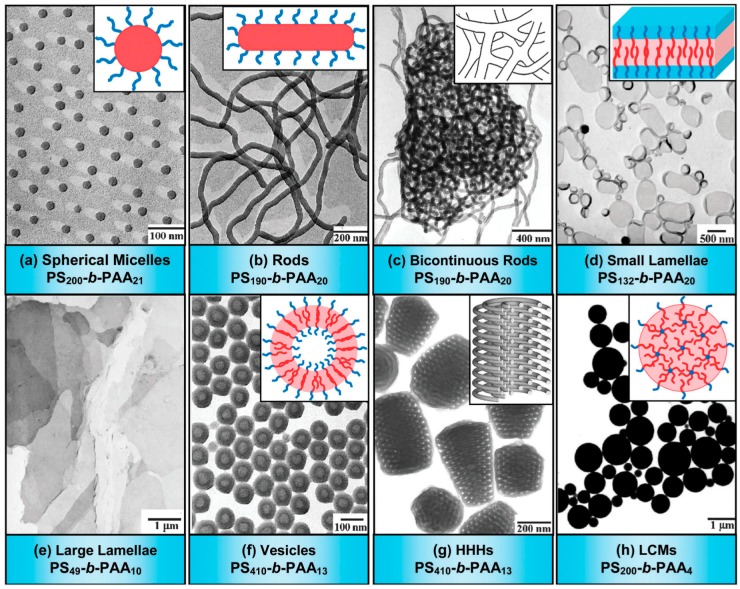
- Self-assembly in bulk is governed by χ, N, and volume fraction f, producing spheres, cylinders, gyroids, and lamellae; solution self-assembly is controlled largely by the packing parameter p = v/a0lc, yielding micelles, vesicles, tubules, and related structures.
- Applications include thermoplastic elastomers, where a tetrafunctional multigraft copolymer with 10 branching points showed elongation at break ~2100% versus ~1050% for commercial Kraton®, and mesoporous materials, where PEO-b-PS templating achieved silica pore diameters up to 30.8 nm.
- In soft lithography, PS-b-PMMA is limited to ~13 nm feature size due to low χ (~0.039 at 150 °C), while high-χ systems such as PS-b-PEO, PLA-PDMS-PLA, and silicon-containing BCPs have demonstrated 3-nm, 7-nm, and 5-nm features, respectively.
Methods
- Design: narrative review of BCP synthesis, self-assembly, and applications, with sections on controlled polymerization, living anionic polymerization, coupling strategies, bulk/solution self-assembly, and application areas.
- Data/sample: no primary experimental dataset; the paper synthesizes and discusses selected literature examples, figures, schemes, and prior reports.
- Analysis: qualitative synthesis of published results, including reported morphologies, mechanical properties, feature sizes, pore dimensions, and synthetic strategies.
Limitations
- The paper states that challenges remain in establishing structure-property relationships and that more interdisciplinary collaborations are needed across synthesis, characterization, theory, and simulation.
- Evident from the text: as a review, it presents no new experimental data and does not use a systematic or quantitative literature-search methodology.
- Evident from the text: coverage is explicitly selective, e.g. the authors state it is beyond the scope to cover all aspects of self-assembly and external-field effects.
Model-written summary. Check it against the paper before relying on it.
Integrity signals
Registry
Cites
Statistics
Figures






Verification
Claims the paper makes
16 Valid · 9 Not valid · 113 Not checked · 51 Own results and interpretations
The sources with a verdict support this claim; the rest weren’t checked yet, have no full text we could read, or their verdicts aren’t rated yet.
In the paper
“Thanks to the advancement of polymer synthetic strategies and techniques, e.g., controlled polymerization techniques along with facile post-polymerization functionalization, BCPs with precisely controlled molecular weights and defined macromolecular architectures can be prepared [2,3,4,5,6,7,8].”
§ Block Copolymers: Synthesis, Self-Assembly, and Applications > 1. Introduction
What the sources say
- Supportedcites [2] Hadjichristidis, 2006, Macromolecular architectures by living and controlled/living polymerizations, Prog. Polym. Sci. sourceExperimental — accuracy not yet measured
The exact sentence appears in “Block Copolymers: Synthesis, Self-Assembly, and Applications” (Semantic Scholar score 0.80), but that is the citing paper: it attributes the statement to references [2–8], including Hadjichristidis (2006), rather than presenting itself as an alternative source. The cited review’s title directly concerns living and controlled polymerizations and macromolecular architectures, consistent with the core claim. No paper-scoped snippet was available to verify whether it also discusses post-polymerization functionalization, so that part remains uncertain; the matching sentence alone is not evidence of misattribution. (LLM, conf=0.72)
- Supportedcites [3] Uhrig, 2005, Experimental techniques in high-vacuum anionic polymerization, J. Polym. Sci. Part A Polym. Chem. sourceExperimental — accuracy not yet measured
The prior search result places the claim in “Block Copolymers: Synthesis, Self-Assembly, and Applications,” where the sentence cites references [2–8], a group that includes Uhrig (2005) according to the citing document. Uhrig’s title, “Experimental techniques in high-vacuum anionic polymerization,” is relevant to the controlled-polymerization part of this broad claim; the sentence’s appearance in a later review is not, by itself, evidence of misattribution. The cited paper has no available full-text snippets, so its support for the post-polymerization-functionalization part cannot be checked directly. (LLM, conf=0.72)
- Could not verifycites [4] Zhang, 2002, Synthesis of block copolymers of styrene and methyl methacrylate by conventional free radical polymerization in room temperature ionic liquids, Macromolecules sourceExperimental — accuracy not yet measured
The cited Zhang paper concerns synthesizing styrene–methyl methacrylate block copolymers in ionic liquids, but both paper-scoped searches returned no text to verify precise molecular-weight control, defined architectures, or post-polymerization functionalization. The verbatim match is in “Block Copolymers: Synthesis, Self-Assembly, and Applications”—the citing work itself, which attributes the sentence collectively to references [2]–[8], not an independent source of the claim. A separate snippet says ionic liquids can be used to synthesize these block copolymers, but does not establish the claim’s more specific assertions. The evidence is insufficient to confirm the full attribution or to call it misattributed. (LLM, conf=0.72)
- Could not verifycites [5] Uhrig, 2002, Synthesis of combs, centipedes, and barbwires: Poly (isoprene-graft-styrene) regular multigraft copolymers with trifunctional, tetrafunctional, and hexafunctional branch points, Macromolecules sourceExperimental — accuracy not yet measured
The cited Uhrig paper’s title concerns the synthesis of regular multigraft copolymers with defined branch-point architectures, so it is relevant to the claim. The paper-scoped search returned no snippets, and its full text and abstract were unavailable here; the specific combination of controlled polymerization and post-polymerization functionalization therefore could not be checked. The close wording identified in *Block Copolymers: Synthesis, Self-Assembly, and Applications* is the citing sentence itself, which cites several papers, not evidence that Uhrig was wrongly credited. The evidence does not meet the requirements for a misattribution verdict. (LLM, conf=0.62)
- Not checked — no full text of the sourcecites [6] Hong, 1999, Living anionic polymerization, Curr. Opin. Solid State Mater. Sci. source
- Not checked — no full text of the sourcecites [7] Pochan, 1996, Morphologies of microphase-separated A2B simple graft copolymers, Macromolecules source
- Not checked — no full text of the sourcecites [8] Bates, 1999, Block copolymers—Designer soft materials, Phys. Today source
plainstates a cause- Asserted: passes — The authors put it forward as true.
- Checkable: passes — It can be checked against evidence.
- Load-bearing: unclear — It is unclear whether the paper’s conclusions depend on it.
- Based: passes — The paper gives a reason why it holds.
- Supported
The cited sources support only part of this claim — read each source’s verdict below.
In the paper
“The preparation of BCPs using sequential CRP relies on the fact that the reactive polymer chain end is preserved by a reversible reaction between the active species and the dormant species [17,18,19].”
§ Block Copolymers: Synthesis, Self-Assembly, and Applications > 2. Synthesis of BCPs > 2.1. Sequential Addtion Polymerization
What the sources say
- Not checked — no full text of the sourcecites [17] Braunecker, 2007, Controlled/living radical polymerization: Features, developments, and perspectives, Prog. Polym. Sci. source
- Partly supportedcites [18] Gody, 2016, The limits of precision monomer placement in chain growth polymerization, Nat. Commun. sourceExperimental — accuracy not yet measured
The introductory section (page unavailable) identifies controlled radical polymerization as reversible-deactivation radical polymerization, and ‘Absolute position of monomers’ discusses sequentially prepared blocks and activation–deactivation cycles. Our copy does not state that a reaction between active and dormant species preserves the reactive chain end, so it supports the general context but not the claimed mechanism. (LLM, conf=0.79)
- Could not verifycites [19] Cao, 2017, A star-shaped single lithium-ion conducting copolymer by grafting a poss nanoparticle, Polymer sourceExperimental — accuracy not yet measured
The Conclusion (p. 23) describes attaching PEO and a RAFT chain-transfer agent to POSS, followed by RAFT polymerization; the thermal-analysis section (p. 16) also describes a diblock copolymer made from PEO-terminated RAFT-CTA. Neither passage addresses sequential controlled radical polymerization or explains preservation of a reactive chain end through a reversible reaction between active and dormant species. Searches for that mechanism found no passage stating it. (LLM, conf=0.76)
plainstates a cause- Asserted: passes — The authors put it forward as true.
- Checkable: passes — It can be checked against evidence.
- Load-bearing: unclear — It is unclear whether the paper’s conclusions depend on it.
- Based: passes — The paper gives a reason why it holds.
The cited sources support only part of this claim — read each source’s verdict below.
In the paper
“Controlled radical polymerization (CRP) techniques represent the most versatile and facile approach for BCP synthesis, mainly due to their compatibility with a wide spectrum of monomers, high tolerance of functional groups and impurities, and ease of experimental setup [14,15,16].”
§ Block Copolymers: Synthesis, Self-Assembly, and Applications > 2. Synthesis of BCPs > 2.1. Sequential Addtion Polymerization
What the sources say
- Could not verifycites [14] Fan, 2016, Effect of molecular weight on the ion transport mechanism in polymerized ionic liquids, Macromolecules sourceExperimental — accuracy not yet measured
Split into 2 atoms — 0 confirmed, 0 partially supported, 0 disputed, 0 misattributed, 2 unverifiable. Expand the claim to see per-atom verdicts.
- Partly supportedcites [15] Matyjaszewski, 2005, Controlled/living radical polymerization, Mater. Today sourceExperimental — accuracy not yet measured
The Scope of CRP section (page unavailable) says CRP can make block copolymers, adapts to different polymerization systems, and tolerates functional groups on monomers. The Abstract (page unavailable) describes nonstringent conditions and a wide monomer range for conventional free radical polymerization, but the paper does not establish that CRP is the most versatile or facile approach to block-copolymer synthesis, or that CRP has high impurity tolerance and an easy experimental setup. (LLM, conf=0.86)
- Not checked — no full text of the sourcecites [16] Matyjaszewski, K., Sumerlin, B.S., and Tsarevsky, N.V. (2012). Progress in Controlled Radical Polymerization: Mechanisms and Techniques, American Chemical Society. source
plainstates a cause- Asserted: passes — The authors put it forward as true.
- Checkable: passes — It can be checked against evidence.
- Load-bearing: unclear — It is unclear whether the paper’s conclusions depend on it.
- Based: passes — The paper gives a reason why it holds.
- Could not verify
The cited sources support only part of this claim — read each source’s verdict below.
In the paper
“However, ATRP still does not work for some monomers, though it has many advantages compared to other polymerization methods for block copolymerization. For example, some monomers contain functionality that can form complexes with transition metal catalyst and have a detrimental effect on polymerization, such as side reactions resulting in a broad polydispersity index (PDI) [15].”
§ Block Copolymers: Synthesis, Self-Assembly, and Applications > 2. Synthesis of BCPs > 2.1. Sequential Addtion Polymerization
What the sources say
- Partly supportedcites [15] Matyjaszewski, 2005, Controlled/living radical polymerization, Mater. Today sourceExperimental — accuracy not yet measured
The Abstract identifies ATRP as transition-metal-catalyzed, and Corporate CRP research describes its advantages for making block copolymers. Scope of CRP notes unavoidable side reactions in an ATRP-made star polymer, but reports a narrow polydispersity index of 1.04. No passage found says that monomer functionality complexes with the catalyst, prevents ATRP for some monomers, or causes a broad PDI. (LLM, conf=0.80)
plainstates a cause- Asserted: passes — The authors put it forward as true.
- Checkable: passes — It can be checked against evidence.
- Load-bearing: unclear — It is unclear whether the paper’s conclusions depend on it.
- Based: passes — The paper gives a reason why it holds.
- Partly supported
The cited sources that could be checked couldn’t confirm or dispute this claim.
In the paper
“Because of its superior control over the molecular weight, architecture, composition, and functionality as compared to controlled radical polymerization, almost all well-defined BCPs with complex architectures such as star, comb, graft, dendritic, etc. are achievable via the combination of anionic polymerization and linking chemistry [6,42,43,44,45,46,47].”
§ Block Copolymers: Synthesis, Self-Assembly, and Applications > 2. Synthesis of BCPs > 2.1. Sequential Addtion Polymerization
What the sources say
- Not checked — no full text of the sourcecites [6] Hong, 1999, Living anionic polymerization, Curr. Opin. Solid State Mater. Sci. source
- Not checked — no full text of the sourcecites [42] Matsuo, 2004, Synthesis of well-defined dendrimer-like branched polymers and block copolymer by the iterative approach involving coupling reaction of living anionic polymer and functionalization, Macromolecules source
- Not checked — no full text of the sourcecites [43] Advincula, 2002, Polymer brushes by living anionic surface initiated polymerization on flat silicon (sio x) and gold surfaces: Homopolymers and block copolymers, Langmuir source
- Not checked — no full text of the sourcecites [44] Hirao, 2000, Synthesis of well-defined functionalized polymers and star branched polymers by means of living anionic polymerization using specially designed 1,1-diphenylethylene derivatives, Macromol. Rapid Commun. doi:10.1002/1521-3927(20001101)21:17
- Not checked — no full text of the sourcecites [45] Zhou, 2001, Living anionic surface initiated polymerization (sip) of styrene from clay surfaces, Chem. Mater. source
- Could not verifycites [46] Wojnarowska, 2017, Effect of chain rigidity on the decoupling of ion motion from segmental relaxation in polymerized ionic liquids: Ambient and elevated pressure studies, Macromolecules sourceExperimental — accuracy not yet measured
Split into 2 atoms — 0 confirmed, 0 partially supported, 0 disputed, 0 misattributed, 2 unverifiable. Expand the claim to see per-atom verdicts.
- Not checked — no full text of the sourcecites [47] Wojnarowska, Z., Feng, H., Diaz, M., Ortiz, A., Ortiz, I., Knapik-Kowalczuk, J., Vilas, M., Verdía, P., Tojo, E., and Saito, T. (2017). Revealing the charge transport mechanism in polymerized ionic liquids: Insight from high pressure conductivity studies. Chem. Mater. source
plainstates a cause- Asserted: passes — The authors put it forward as true.
- Checkable: passes — It can be checked against evidence.
- Load-bearing: unclear — It is unclear whether the paper’s conclusions depend on it.
- Based: passes — The paper gives a reason why it holds.
113 more claims · 8 with their cited sources checked
Create a free account to see all 189 claims and every source verdict.
- Probably not a substantial claim. 44
- It may state two separate claims as one. 35
- The quote only partly states this claim. 1
Self-check
Percentages, sums and reported differences re-computed from the paper’s own numbers.
Each contradiction between two passages listed here was confirmed by an independent check.
Rated minor: it would not touch a result — a value no result rests on, a p-value that stays on the same side of the significance level, or a conflict that is clerical, resolved elsewhere in the paper, or outside its own findings.
In the paper
§ Block Copolymers: Synthesis, Self-Assembly, and Applications > 3. Self-Assembly of BCPs > 3.1. Self-Assembly in Bulk
“the self-assembly of triblock copolymers of poly(styrene-b-isoprene-b-styrene) (PS-b-PI-b-PS) has also been extensively investigated using small-angle X-ray scattering (SAXS) and transmission electron microscopy (TEM) by Storey et al. and Elabd et al. [70,71].”
§ Block Copolymers: Synthesis, Self-Assembly, and Applications > References
“70. Storey R.F. Baugh D. Poly (styrene-b-isobutylene-b-styrene) block copolymers and ionomers therefrom: Morphology as determined by small-angle x-ray scattering and transmission electron microscopy”
Rated minor: it would not touch a result — a value no result rests on, a p-value that stays on the same side of the significance level, or a conflict that is clerical, resolved elsewhere in the paper, or outside its own findings.
In the paper
§ Block Copolymers: Synthesis, Self-Assembly, and Applications > 4. Applications > 4.4. Applications in Mesoporous Materials
“Recently, Wei and coworkers reported the synthesis of nitrogen-doped mesoporous carbon in the form of powder through EISA, using Pluoric copolymer as the template, with resol and dicyandiamide as sources for C and N, respectively [147].”
§ Block Copolymers: Synthesis, Self-Assembly, and Applications > References
“147. Yang P. Zhao D. Margolese D.I. Chmelka B.F. Stucky G.D. Generalized syntheses of large-pore mesoporous metal oxides with semicrystalline frameworks”
Rated minor: it would not touch a result — a value no result rests on, a p-value that stays on the same side of the significance level, or a conflict that is clerical, resolved elsewhere in the paper, or outside its own findings.
In the paper
§ Block Copolymers: Synthesis, Self-Assembly, and Applications > 4. Applications > 4.1. Applications as Thermoplastic Elastomers
“conventional all acrylic-based TPEs consisting of PMMA and PBA made by controlled radical processes [94]”
§ Block Copolymers: Synthesis, Self-Assembly, and Applications > References
“94. Martín-Gomis L. Fernández-García M. de la Fuente J.L. Madruga E.L. Cerrada M.L. Physical properties of PBMA-b-PBA-b-PBMA triblock copolymers synthesized by atom transfer radical polymerization”
Rated minor: it would not touch a result — a value no result rests on, a p-value that stays on the same side of the significance level, or a conflict that is clerical, resolved elsewhere in the paper, or outside its own findings.
In the paper
§ Block Copolymers: Synthesis, Self-Assembly, and Applications > 4. Applications > 4.4. Applications in Mesoporous Materials
“A large variety of mesoporous metal oxides in the form of powder were synthesized through EISA using commercial Pluronics as a template [149].”
§ Block Copolymers: Synthesis, Self-Assembly, and Applications > References
“149. Wei J. Zhou D. Sun Z. Deng Y. Xia Y. Zhao D. A controllable synthesis of rich nitrogen-doped ordered mesoporous carbon for CO2 capture and supercapacitors”
Citations
Cites
Self-assembly of block copolymers
Mai, Y., & Eisenberg, A. (2012) · Chemical Society Reviews · doi:10.1039/c2cs35115c · Cited by 3,610
Block Copolymers—Designer Soft Materials
Bates, F. S., & Fredrickson, G. H. (1999) · Physics Today · doi:10.1063/1.882522 · Cited by 3,219 · cited 1×
“Thanks to the advancement of polymer synthetic strategies and techniques, e.g., controlled polymerization techniques along with facile post-polymerization functionalization, BCPs with precisely controlled molecular weights and defined macromolecular architectures can be prepared [2–8].”
MethodControlled/living radical polymerization: Features, developments, and perspectives
Braunecker, W. A., & Matyjaszewski, K. (2007) · Progress in Polymer Science · doi:10.1016/j.progpolymsci.2006.11.002 · Cited by 3,202 · cited 1×
“The preparation of BCPs using sequential CRP relies on the fact that the reactive polymer chain end is preserved by a reversible reaction between the active species and the dormant species [17–19].”
BackgroundCarbon materials for chemical capacitive energy storage
Zhai, Y., Dou, Y., Zhao, D., Fulvio, P. F., Mayes, R. T., & Dai, S. (2011) · Advanced Materials · doi:10.1002/adma.201100984 · Cited by 2,964 · cited 1×
“With these unique features, porous materials present great value for applications in energy conversion and storage [132–135], catalysis [136], drug delivery [137], gas capture [138,139], and water purification [140,141].”
BackgroundGeneralized syntheses of large-pore mesoporous metal oxides with semicrystalline frameworks
Yang, P., Zhao, D., Margolese, D. I., Chmelka, B. F., & Stucky, G. D. (1998) · Nature · doi:10.1038/24132 · Cited by 2,493 · cited 2×
“Recently, Wei and coworkers reported the synthesis of nitrogen-doped mesoporous carbon in the form of powder through EISA, using Pluoric copolymer as the template, with resol and dicyandiamide as sources for C and N, respectively [147].”
BackgroundMethodOn the controllable soft-templating approach to mesoporous silicates
Wan, Y., & Zhao (2007) · Chemical Reviews · doi:10.1021/cr068020s · Cited by 2,371 · cited 1×
“This group of materials exhibits periodically aligned structures and uniform cavities with sizes ranging from micro- (<2 nm), to meso- (2–50 nm), to macropores (>50 nm) [130], which lead to very high surface areas (up to 1500 m2/g) [131].”
BackgroundMesoporous carbon materials: Synthesis and modification
Liang, C., Li, Z., & Dai, S. (2008) · Angewandte Chemie International Edition · doi:10.1002/anie.200702046 · Cited by 1,935 · cited 2×
“Different from a general solvent-annealing process, precursor molecules are crosslinked in EISA as the solvent evaporates, leaving no chance for structure refinement after it is formed [146,147].”
BackgroundThe Physics of Block Copolymers
Hamley, I. W. (1998) · doi:10.1093/oso/9780198502180.001.0001 · Cited by 1,913
Mesoporous silica nanoparticles for drug delivery and biosensing applications
Slowing, I. I., Trewyn, B. G., Giri, S., & Lin, V. S. ‐. (2007) · Advanced Functional Materials · doi:10.1002/adfm.200601191 · Cited by 1,699 · cited 1×
“With these unique features, porous materials present great value for applications in energy conversion and storage [132–135], catalysis [136], drug delivery [137], gas capture [138,139], and water purification [140,141].”
BackgroundBlanazs, A., Armes, S. P., & Ryan, A. J. (2009) · Macromolecular Rapid Communications · doi:10.1002/marc.200800713 · Cited by 1,500
Research works printed but not linked: 1
- Alexandridis, P., and Lindman, B. (2000). Amphiphilic Block Copolymers: Self-Assembly and Applications, Elsevier.
Cited by
Block copolymer solution self‐assembly: Recent advances, emerging trends, and applications
Karayianni, M., & Pispas, S. (2021) · Journal of Polymer Science · doi:10.1002/pol.20210430 · Cited by 257
Lombardo, D., Calandra, P., Pasqua, L., & Magazù, S. (2020) · Materials · doi:10.3390/ma13051048 · Cited by 229
Linear Block Copolymer Synthesis
Dau, H., Jones, G. R., Tsogtgerel, E., Nguyen, D., Keyes, A., Liu, Y.-S., Rauf, H., Ordonez, E., Puchelle, V., Basbug Alhan, H., et al. (2022) · Chemical Reviews · doi:10.1021/acs.chemrev.2c00189 · Cited by 210
Architectural Design and Additive Manufacturing of Mechanical Metamaterials: A Review
Lu, C., Hsieh, M., Huang, Z., Zhang, C., Lin, Y., Shen, Q., Chen, F., & Zhang, L. (2022) · Engineering · doi:10.1016/j.eng.2021.12.023 · Cited by 212
Hydrophobic Interaction: A Promising Driving Force for the Biomedical Applications of Nucleic Acids
Xiao, F., Chen, Z., Wei, Z., & Tian, L. (2020) · Advanced Science · doi:10.1002/advs.202001048 · Cited by 191
Polymerizations in Continuous Flow: Recent Advances in the Synthesis of Diverse Polymeric Materials
Reis, M. H., Leibfarth, F. A., & Pitet, L. M. (2020) · ACS Macro Letters · doi:10.1021/acsmacrolett.9b00933 · Cited by 176
Supramolecular Block Copolymers by Seeded Living Polymerization of Perylene Bisimides
Wagner, W., Wehner, M., Stepanenko, V., & Würthner, F. (2019) · Journal of the American Chemical Society · doi:10.1021/jacs.9b04935 · Cited by 164
Roadmap on photonic metasurfaces
Schulz, S. A., Oulton, R. F., Kenney, M., Alù, A., Staude, I., Bashiri, A., Fedorova, Z., Kołkowski, R., Koenderink, A. F., Xiao, X., et al. (2024) · Applied Physics Letters · doi:10.1063/5.0204694 · Cited by 192
“An overwhelming number of nanopatterning methods, including optical and electronic lithography, nanoimprint lithography [27f], soft-lithography [28f], DNA-templating [72], functional block copolymers [73], are available nowadays.”
BackgroundAntimicrobial peptides – Unleashing their therapeutic potential using nanotechnology
Gera, S., Kankuri, E. M., & Kogermann, K. (2021) · Pharmacology & Therapeutics · doi:10.1016/j.pharmthera.2021.107990 · Cited by 137
Varlas, S., Lawrenson, S. B., Arkinstall, L. A., O’Reilly, R. K., & Foster, J. C. (2020) · Progress in Polymer Science · doi:10.1016/j.progpolymsci.2020.101278 · Cited by 139
Afolabi, R. O., Oluyemi, G. F., Officer, S., et al. (2019) · Journal of Petroleum Science and Engineering · doi:10.1016/j.petrol.2019.06.016 · Cited by 130
Recent Advances in Block Copolymer Self‐Assembly for the Fabrication of Photonic Films and Pigments
Wang, Z., Chan, C. L. C., Zhao, T. H., Parker, R., & Vignolini, S. (2021) · Advanced Optical Materials · doi:10.1002/adom.202100519 · Cited by 129
Polymersome-based protein drug delivery – quo vadis?
Gouveia, M. G., Wesseler, J. P., Ramaekers, J., Weder, C., Scholten, P. B. V., & Bruns, N. (2022) · Chemical Society Reviews · doi:10.1039/d2cs00106c · Cited by 120
Self-assembled polymeric vesicles: Focus on polymersomes in cancer treatment
Araste, F., Aliabadi, A., Abnous, K., Taghdisi, S. M., Ramezani, M., & Alibolandi, M. (2020) · Journal of Controlled Release · doi:10.1016/j.jconrel.2020.12.027 · Cited by 121
Gregory, G. L., Sulley, G. S., Carrodeguas, L. P., Chen, T. T. D., Santmartí, A., Terrill, N. J., Lee, K., & Williams, C. K. (2020) · Chemical Science · doi:10.1039/d0sc00463d · Cited by 119
Amphiphilic copolymers in biomedical applications: Synthesis routes and property control
Perin, F., Motta, A., & Maniglio, D. (2021) · Materials Science and Engineering C · doi:10.1016/j.msec.2021.111952 · Cited by 109
Ruff, K. M., Pappu, R. V., & Holehouse, A. S. (2018) · Current Opinion in Structural Biology · doi:10.1016/j.sbi.2018.10.003 · Cited by 91
Kaur, J., Mishra, V. K., Singh, S. K., Gulati, M., Kapoor, B., Chellappan, D. K., Gupta, G., Dureja, H., Anand, K., Dua, K., et al. (2021) · Journal of Controlled Release · doi:10.1016/j.jconrel.2021.04.014 · Cited by 106
Reversible-deactivation radical polymerization of cyclic ketene acetals
Jackson, A. W. (2020) · Polymer Chemistry · doi:10.1039/d0py00446d · Cited by 92
Seo, S., Lee, J., Kim, D. J., Lee, D., Phan, T. N., Park, J., Tan, Z., Cho, S., Kim, T., & Kim, B. J. (2023) · Advanced Materials · doi:10.1002/adma.202300230 · Cited by 96
Huang, C., Zhu, Y., & Man, X. (2021) · Physics Reports · doi:10.1016/j.physrep.2021.07.005 · Cited by 102
Kaur, J., Gulati, M., Jha, N. K., Disouza, J., Patravale, V. B., Dua, K., & Singh, S. K. (2022) · Drug Discovery Today · doi:10.1016/j.drudis.2022.02.005 · Cited by 91
Field theoretic approach for block polymer melts: SCFT and FTS
Matsen, M. W. (2020) · The Journal of Chemical Physics · doi:10.1063/1.5145098 · Cited by 97
Advanced supramolecular design for direct ink writing of soft materials
Tang, M., Zhong, Z., & Ke, C. (2023) · Chemical Society Reviews · doi:10.1039/d2cs01011a · Cited by 93
Jambhulkar, S., Ravichandran, D., Zhu, Y., Thippanna, V., Ramanathan, A., Patil, D., Fonseca, N., Thummalapalli, S. V., Sundaravadivelan, B., Sun, A., et al. (2023) · Small · doi:10.1002/smll.202306394 · Cited by 82
Precise Control of Both Dispersity and Molecular Weight Distribution Shape by Polymer Blending
Whitfield, R., Truong, N. P., & Anastasaki, A. (2021) · Angewandte Chemie International Edition · doi:10.1002/anie.202106729 · Cited by 76
Biomolecules Turn Self-Assembling Amphiphilic Block Co-polymer Platforms Into Biomimetic Interfaces
Avsar, S. Y., Kyropoulou, M., Leone, S. D., Schoenenberger, C., Meier, W. P., & Palivan, C. G. (2019) · Frontiers in Chemistry · doi:10.3389/fchem.2018.00645 · Cited by 82
“To date, amphiphilic block copolymers are synthesized through different approaches including atom transfer radical polymerization (ATRP), reversible addition-fragmentation chain transfer (RAFT), or nitroxide mediated polymerization (NMP) (Matyjaszewski and Spanswick, 2005; Feng et al., 2017; Guo X. et al., 2018; Konis…”
MethodSong, X., Smith, J. W., Kim, J., Zaluzec, N. J., Chen, W., An, H., Dennison, J. M., Cahill, D. G., Kulzick, M. A., & Chen, Q. (2019) · ACS Applied Materials & Interfaces · doi:10.1021/acsami.8b20826 · Cited by 74
Steube, M., Johann, T., Galanos, E., Appold, M., Rüttiger, C., Mezger, M., Gallei, M., Müller, A. H. E., Floudas, G. A., & Frey, H. (2018) · Macromolecules · doi:10.1021/acs.macromol.8b01961 · Cited by 81
Advances and applications of block-copolymer-based nanoformulations
Agrahari, V., & Agrahari, V. (2018) · Drug Discovery Today · doi:10.1016/j.drudis.2018.03.004 · Cited by 78
Polymer-drug conjugates: Design principles, emerging synthetic strategies and clinical overview
Javia, A., Vanza, J. D., Bardoliwala, D., Ghosh, S., Misra, A. R., Patel, M. R., & Thakkar, H. P. (2022) · International Journal of Pharmaceutics · doi:10.1016/j.ijpharm.2022.121863 · Cited by 79
Fakhar, A., Sadeghi, M., Dinari, M., & Lammertink, R. G. H. (2018) · Journal of Membrane Science · doi:10.1016/j.memsci.2018.12.062 · Cited by 60
Multifunctional polymeric micellar nanomedicine in the diagnosis and treatment of cancer
Raval, N., Maheshwari, R., Shukla, H., Kalia, K., Torchilin, V. P., & Tekade, R. K. (2021) · Materials Science and Engineering C · doi:10.1016/j.msec.2021.112186 · Cited by 68
Šubjaková, V., Oravczová, V., & Hianik, T. (2021) · Polymers · doi:10.3390/polym13030341 · Cited by 67
Block copolymer micelles as ocular drug delivery systems
Assiri, A. A., Glover, K., Mishra, D., Waite, D. T., Vora, L. K., & Thakur, R. R. S. (2024) · Drug Discovery Today · doi:10.1016/j.drudis.2024.104098 · Cited by 59
Advances in designing of polymeric micelles for biomedical application in brain related diseases
Kaur, J., Gulati, M., Kapoor, B., Jha, N. K., Gupta, P. K., Gupta, G., Chellappan, D. K., Devkota, H. P., Prasher, P., Ansari, M. S., et al. (2022) · Chemico-Biological Interactions · doi:10.1016/j.cbi.2022.109960 · Cited by 56
Bioinspired and biomimetic membranes for water purification and chemical separation: A review
Abaie, E., Xu, L., & Shen, Y. (2021) · Frontiers of Environmental Science & Engineering · doi:10.1007/s11783-021-1412-8 · Cited by 58
“Chemical hydrophobicity difference between proteins or channels and bilayer membranes is similar to polymer-polymer interaction described by the FloryHuggins theory (Huggins, 1942; Flory and Krigbaum, 1951; Feng et al., 2017).”
MethodInfluentialHuo, Z., Arora, S., Kong, V. A., et al. (2023) · Macromolecules · doi:10.1021/acs.macromol.2c02475 · Cited by 53
Sequence- and stereo-defined macromolecules: Properties and emerging functionalities
Szweda, R. (2023) · Progress in Polymer Science · doi:10.1016/j.progpolymsci.2023.101737 · Cited by 52
Xu, J., Tan, J., Song, C., Zhang, G., Hu, X., & Liu, S. (2023) · Angewandte Chemie International Edition · doi:10.1002/anie.202303829 · Cited by 51
Nabiyan, A., Max, J. B., & Schacher, F. H. (2022) · Chemical Society Reviews · doi:10.1039/d1cs00086a · Cited by 52
Organolithium‐Initiated Polymerization of Olefins in Deep Eutectic Solvents under Aerobic Conditions
Sánchez‐Condado, A., Carriedo, G. A., Soto, A. P., Rodríguez‐Álvarez, M. J., García‐Álvarez, J., & Hevia, E. (2019) · ChemSusChem · doi:10.1002/cssc.201900533 · Cited by 51
Polymer membranes as templates for bio-applications ranging from artificial cells to active surfaces
Garni, M., Wehr, R., Avsar, S. Y., John, C., Palivan, C. G., & Meier, W. P. (2018) · European Polymer Journal · doi:10.1016/j.eurpolymj.2018.12.047 · Cited by 46
Sanaka, R., Sahu, S. K., Sreekanth, P. S. R., Krishnasamy, S., Badgayan, N. D., Siva, B. V., & Ma, Q. (2024) · Journal of Composites Science · doi:10.3390/jcs8080324 · Cited by 53
“In the context of shape memory polymers (SMPs), segmented block copolymers play a crucial role in achieving shape memory properties by combining different types of polymer segments with varying properties [98].”
BackgroundAdvancing Air‐ and Moisture‐Compatible s‐Block Organometallic Chemistry Using Sustainable Solvents
García-Garrido, S. E., Soto, A. P., Hevia, E., & García‐Álvarez, J. (2021) · European Journal of Inorganic Chemistry · doi:10.1002/ejic.202100347 · Cited by 47
Advances in the Catalytic Hydrogenation and Properties of Unsaturated Polymers
Yan, J.-Y., & Cao, G. (2023) · Macromolecules · doi:10.1021/acs.macromol.2c02333 · Cited by 44
Biomolecule–polymer hybrid compartments: combining the best of both worlds
Meyer, C. E., Abram, S., Craciun, I., & Palivan, C. G. (2020) · Physical Chemistry Chemical Physics · doi:10.1039/d0cp00693a · Cited by 44
Photo-responsive polymeric nanocarriers for target-specific and controlled drug delivery
Giménez, V. M. M., Arya, G., Zucchi, I. A., Galante, M. J., & Manucha, W. A. (2021) · Soft Matter · doi:10.1039/d1sm00999k · Cited by 42
Solvent-assisted self-assembly of block copolymer thin films
Puła, P., Leniart, A. A., & Majewski, P. W. (2022) · Soft Matter · doi:10.1039/d2sm00439a · Cited by 41
Amide/Iminium Zwitterionic Catalysts for (Trans)esterification: Application in Biodiesel Synthesis
Lam, Y., Wang, X., Tan, F., Ng, W., Tse, Y. S., & Yeung, Y. (2019) · ACS Catalysis · doi:10.1021/acscatal.9b01959 · Cited by 40
Atomic Layer Deposition of Inorganic Thin Films on 3D Polymer Nanonetworks
Ahn, J., Ahn, C., Jeon, S., & Park, J. (2019) · Applied Sciences · doi:10.3390/app9101990 · Cited by 40
Huang, W., Zhu, N., Liu, Y., Wang, J., Zhong, J., Sun, Q., Sun, T., Hu, X., Fang, Z. D., & Guo, K. (2018) · Chemical Engineering Journal · doi:10.1016/j.cej.2018.09.033 · Cited by 40
Progress in Photo-Responsive Polypeptide Derived Nano-Assemblies
Yang, L., Tang, H., & Sun, H. R. (2018) · Micromachines · doi:10.3390/mi9060296 · Cited by 37
“The shapes of polypeptide derived nano-objects are dictated by critical packing parameters [65].”
BackgroundInfluentialSelf-assembly of Pluronics: A critical review and relevant applications
Spirito, N. A. D., Grizzuti, N., & Pasquino, R. (2024) · Physics of Fluids · doi:10.1063/5.0238690 · Cited by 41
Novel self-assembly nano OSA starch micelles controlled by protonation in aqueous media
Li, Y., & Gao, Q. (2022) · Carbohydrate Polymers · doi:10.1016/j.carbpol.2022.120146 · Cited by 36
Light-Triggered Polymersome-Based Anticancer Therapeutics Delivery
Becerra, E. H., Quinchía, J., Castro, C. I., & Orozco, J. (2022) · Nanomaterials · doi:10.3390/nano12050836 · Cited by 41
“In this manner, within controlled/“living” polymerization techniques, the ring-opening polymerization (ROP), reversible addition-fragmentation chain transfer polymerization (RAFT), and atom transfer reversible polymerization (ATRP) methods allow extensive control over parameters such as the composition and block lengt…”
Predicting aggregate morphology of sequence-defined macromolecules with recurrent neural networks
Bhattacharya, D., Kleeblatt, D. C., Statt, A., & Reinhart, W. F. (2022) · Soft Matter · doi:10.1039/d2sm00452f · Cited by 37
Patchy Micelles with a Crystalline Core: Self-Assembly Concepts, Properties, and Applications
Hils, C., Manners, I., Schöbel, J., & Schmalz, H. (2021) · Polymers · doi:10.3390/polym13091481 · Cited by 37
Thermo‐Responsive Polymer‐Based Nanoparticles: From Chemical Design to Advanced Applications
Nunziata, G., Nava, M., Lacroce, E., Pizzetti, F., & Rossi, F. (2025) · Macromolecular Rapid Communications · doi:10.1002/marc.202401127 · Cited by 44
Watuthanthrige, N. D. A., Reeves, J. A., Dolan, M. T., Valloppilly, S. R., Zanjani, M. B., Ye, Z., & Konkolewicz, D. (2020) · Macromolecules · doi:10.1021/acs.macromol.0c00401 · Cited by 37
Indium-Catalyzed Block Copolymerization of Lactide and Methyl Methacrylate by Sequential Addition
Jung, H., Yu, I., Nyamayaro, K., & Mehrkhodavandi, P. (2020) · ACS Catalysis · doi:10.1021/acscatal.0c01365 · Cited by 36
NIR Light‐Induced ATRP for Synthesis of Block Copolymers Comprising UV‐Absorbing Moieties
Kütahya, C., Meckbach, N., Strehmel, V., Gutmann, J. S., & Strehmel, B. (2020) · Chemistry - A European Journal · doi:10.1002/chem.202001099 · Cited by 36
Malmir, H., Sahimi, M., & Jiao, Y. (2018) · Physical review. E · doi:10.1103/physreve.98.063317 · Cited by 36
Systematic Study of Perfluorocarbon Nanoemulsions Stabilized by Polymer Amphiphiles
Day, R. A., Estabrook, D. A., Wu, C., Chapman, J. O., Togle, A. J., & Sletten, E. M. (2020) · ACS Applied Materials & Interfaces · doi:10.1021/acsami.0c07206 · Cited by 37
Stability of the Double Gyroid Phase in Bottlebrush Diblock Copolymer Melts
Park, S. J., Cheong, G. K., Bates, F. S., & Dorfman, K. D. (2021) · Macromolecules · doi:10.1021/acs.macromol.1c01654 · Cited by 35
Recent Advances in the Application of ATRP in the Synthesis of Drug Delivery Systems
Szewczyk‐Łagodzińska, M., Plichta, A., Dębowski, M., Kowalczyk, S., Iuliano, A., & Florjańczyk, Z. (2023) · Polymers · doi:10.3390/polym15051234 · Cited by 35
“, the molecular weight of polymeric chains, as well as the number, chemical composition, and length of their constituting macroblocks, temperature, pH, and ionic strength of the environment) [78,89], one can categorize the resulting nano-sized particles (usually with diameters up to 200 nm) into two main groups: micel…”
BackgroundSatoh, K., Kawakami, T., Isobe, N., Pasquier, L., Tomita, H., Zinn, M., & Matsumoto, K. (2022) · Microbial Cell Factories · doi:10.1186/s12934-022-01811-7 · Cited by 38
“Block copolymers exhibit useful and characteristic properties, and many studies on chemical block copolymer synthesis exist [31].”
BackgroundSinsinbar, G., Bindra, A. K., Liu, S., Chia, T. W., Eng, E. C. Y., Loo, S. Y., Lam, J. H., Schultheis, K., & Nallani, M. (2024) · Biomacromolecules · doi:10.1021/acs.biomac.3c00858 · Cited by 35
Block copolymers in Alzheimer's disease therapy: A perceptive to revolutionize biomaterials
Revdekar, A., & Shende, P. K. (2021) · Journal of Controlled Release · doi:10.1016/j.jconrel.2021.11.007 · Cited by 36
Kontogiannis, O., Selianitis, D., Perinelli, D. R., Bonacucina, G., Pippa, Ν., Gazouli, M., & Pispas, S. (2022) · International Journal of Molecular Sciences · doi:10.3390/ijms232213814 · Cited by 32
Phan, H., Kortsen, K., Englezou, G., Couturaud, B., Nedoma, A. J., Pearce, A. K., & Taresco, V. (2020) · Journal of Polymer Science · doi:10.1002/pol.20200313 · Cited by 31
Tzounis, P.-N., Argyropoulou, D. V., Anogiannakis, S. D., & Theodorou, D. N. (2018) · Macromolecules · doi:10.1021/acs.macromol.8b01099 · Cited by 32
Guo, H., & Mi, P. (2024) · Wiley Interdisciplinary Reviews Nanomedicine and Nanobiotechnology · doi:10.1002/wnan.1988 · Cited by 37
Sustainable block copolymers of poly(limonene carbonate)
Neumann, S., Däbritz, S. B., Fritze, S. E., Leitner, L., Anand, A., Greiner, A., & Agarwal, S. (2021) · Polymer Chemistry · doi:10.1039/d0py01685c · Cited by 26
Ndaya, D. M., Bosire, R., Vaidya, S., et al. (2020) · Polymer Chemistry · doi:10.1039/d0py00749h · Cited by 29
Zhou, C., Wang, J., Zhou, P., et al. (2020) · Polymer Chemistry · doi:10.1039/d0py00296h · Cited by 28
Adjei‐Sowah, E., Chandrasiri, I., Xiao, B., Liu, Y., Ackerman, J. E., Soto, C. A., Nichols, A. E. C., Nolan, K. A., Benoit, D. S. W., & Loiselle, A. E. (2024) · Science Advances · doi:10.1126/sciadv.adn2332 · Cited by 26
“RAFT is a favorable approach to synthesize diblock polymers because it results in polymers with low polydispersity ( 23 ).”
BackgroundPolymeric Nanostructures Containing Proteins and Peptides for Pharmaceutical Applications
Vardaxi, A., Kafetzi, M., & Pispas, S. (2022) · Polymers · doi:10.3390/polym14040777 · Cited by 30
“, spherical, cylindrical, lamellar [37,38].”
BackgroundA Global View on Block Copolymers
Lazzari, M., & Torneiro, M. (2020) · Polymers · doi:10.3390/polym12040869 · Cited by 30
Sgouros, A. P., Vogiatzis, G. G., Megariotis, G., Tzoumanekas, C., & Theodorou, D. N. (2019) · Macromolecules · doi:10.1021/acs.macromol.9b01379 · Cited by 27
Emulsion confined block copolymer self-assembly: Recent progress and prospect
Liu, Y., Ke, F., Li, Y., Shi, Y., Zhang, Z., & Chen, Y. (2022) · Nano Research · doi:10.1007/s12274-022-4850-0 · Cited by 27
Baulu, N., Langlais, M., Ngo, R., Thuilliez, J., Jean-Baptiste-Dit-Dominique, F., D’Agosto, F., & Boisson, C. (2022) · Angewandte Chemie International Edition · doi:10.1002/anie.202204249 · Cited by 26
Tuning Formation of Protein–DNA Coacervates by Sequence and Environment
Lebold, K. M., & Best, R. B. (2022) · The Journal of Physical Chemistry B · doi:10.1021/acs.jpcb.2c00424 · Cited by 21
Phan, H. T., Hosoe, Y., Guex, M., et al. (2022) · Biomacromolecules · doi:10.1021/acs.biomac.1c01480 · Cited by 26
Kageyama, Y., Tomita, H., Isono, T., Satoh, T., & Matsumoto, K. (2021) · Scientific Reports · doi:10.1038/s41598-021-01828-9 · Cited by 28
Foroutani, K., Ghasemi, S. M., & Pourabbas, B. (2021) · Journal of Membrane Science · doi:10.1016/j.memsci.2021.119099 · Cited by 26
Synthesis and Self-Assembly of Conjugated Block Copolymers
Xiao, L., Zhou, X., Yue, K., & Guo, Z. (2020) · Polymers · doi:10.3390/polym13010110 · Cited by 25
Samanta, P., Rane, S., Bahadur, P., Choudhury, S. D., & Pal, H. (2018) · The Journal of Physical Chemistry B · doi:10.1021/acs.jpcb.8b01778 · Cited by 28
Block copolymers as (single-ion conducting) lithium battery electrolytes
Mayer, A., Steinle, D., Passerini, S., & Bresser, D. (2021) · Nanotechnology · doi:10.1088/1361-6528/ac2e21 · Cited by 29
“the anionic polymerization, specifically for the preparation of diblock or triblock CPs with a controlled block length [63, 64].”
BackgroundMethodClarke, R. W., McGraw, M. L., Newell, B. S., & Chen, E. Y. ‐. (2021) · Cell Reports Physical Science · doi:10.1016/j.xcrp.2021.100483 · Cited by 24
New emerging review on advances in block copolymer based water purification membranes
John, R., Pal, K., Jayan, J. S., Saritha, A., & Joseph, K. (2021) · Journal of Molecular Structure · doi:10.1016/j.molstruc.2021.129926 · Cited by 27
Jiang, F. D., Wang, Z., Zhang, X., Henderson, D., Hwang, W., Briber, R. M., & Wang, H. (2022) · Chemistry of Materials · doi:10.1021/acs.chemmater.1c03264 · Cited by 25
Widmann, T., Kreuzer, L. P., Mangiapia, G., Haese-Seiller, M., Frielinghaus, H., & Müller‐Buschbaum, P. (2020) · Review of Scientific Instruments · doi:10.1063/5.0012652 · Cited by 25
Self-assembled block copolymer biomaterials for oral delivery of protein therapeutics
Chapa-Villarreal, F. A., Miller, M., Rodriguez‐Cruz, J. J., Pérez-Carlos, D., & Peppas, N. A. (2023) · Biomaterials · doi:10.1016/j.biomaterials.2023.122191 · Cited by 25
Vardaxi, A., & Pispas, S. (2023) · Polymers · doi:10.3390/polym15061519 · Cited by 27
“The exhibition of extraordinary self-assembly behavior and the prediction of final precise/periodic structures through the modulation of molecular features, such as molecular weight, composition, and block lengths, have contributed to the extended scientific focus on such synthetic macromolecules [7,8].”
BackgroundBhardwaj, A., Pagaduan, J. N., Yu, Y., Einck, V. J., Nuguri, S. M., Katsumata, R., & Watkins, J. J. (2021) · ACS Applied Materials & Interfaces · doi:10.1021/acsami.1c16666 · Cited by 23
Kareem, F., Bhayo, A. M., Imran, M., Shah, M. R., Khan, K. M., & Malik, M. I. (2019) · Journal of Applied Polymer Science · doi:10.1002/app.47769 · Cited by 24
Copolymers and Block Copolymers in Drug Delivery and Therapy
Raval, N., Kalyane, D., Maheshwari, R., & Tekade, R. K. (2019) · Elsevier eBooks · doi:10.1016/b978-0-12-817909-3.00005-4 · Cited by 22
Mukhtyar, A. J., & Escobedo, F. A. (2018) · Macromolecules · doi:10.1021/acs.macromol.8b01682 · Cited by 23
Microfluidic Giant Polymer Vesicles Equipped with Biopores for High‐Throughput Screening of Bacteria
Heuberger, L., Messmer, D., dos Santos, E. C., Scherrer, D., Lörtscher, E., Schoenenberger, C., & Palivan, C. G. (2023) · Advanced Science · doi:10.1002/advs.202307103 · Cited by 22
Metadata
- Authors
- Feng, H., Lu, X., Wang, W., Kang, N.-G., & Mays, J.
- Affiliations
- University of Tennessee at Knoxville (US)
- Oak Ridge National Laboratory (US)
- Corresponding author
- Mays, Jimmy
- Venue
- Polymers
- Publisher
- MDPI AG
- Published
- 2017-10-09
- Volume
- 9
- Issue
- 10
- Pages
- 494
- ISSN
- 2073-4360 (ISSN-L)
- PMC
- PMC6418972
- OpenAlex
- W2762501848
- Semantic Scholar
- 88db26794feb9e7209b6797101c1c4158f6abd41
- Cited by
- 467
- References
- 163
- Citations by year
- 2026: 40 · 2025: 57 · 2024: 58 · 2023: 60 · 2022: 77 · 2021: 56 · 2020: 58 · 2019: 33 · 2018: 28
- FWCI
- 1.73
- Type
- journal article
- Language
- en
- Open access
- gold
- doi.org
- Licence
- Locations
- Polymers (publishedVersion, cc-by)
- Europe PMC (PubMed Central) (publishedVersion, other-oa)
- PubMed Central (publishedVersion, cc-by)
- PubMed (publishedVersion)
- DOAJ (DOAJ: Directory of Open Access Journals) (submittedVersion)
- OSTI OAI (U.S. Department of Energy Office of Scientific and Technical Information) (submittedVersion)
- Funders
- U.S. Department of Energy
- Office of Science
- Basic Energy Sciences
- Materials Sciences and Engineering Division
- Topics
- Physical Sciences › Materials Science › Materials Chemistry › Block Copolymer Self-Assembly
- Physical Sciences › Chemistry › Organic Chemistry › Advanced Polymer Synthesis and Characterization
- Physical Sciences › Materials Science › Polymers and Plastics › Polymer crystallization and properties
- Keywords
- block copolymers, block copolymer synthesis, self-assembly, polymer architecture, polymer characterization
About these checks
Registry, retraction, Cites and statistics results are computed, not judged, with one exception: a printed reference that no index lists is read once by a model before it counts as a citation error. Claims are extracted by a model and kept only when their quote appears verbatim in the text; each cited source is then checked, with a model’s help, for whether it says what the claim relies on. Those verdicts can be wrong — read the claim’s quote and the cited source before relying on one.
The claim verdicts this report counts are experimental: their accuracy is not yet measured.
A language model drew the claims from the paper on 2026-10-10, under version 3 of the claim definition (model deepseek-v4.1-flash, prompt extract-v3).
A second model labelled each claim on 2026-10-10 (model jev-1.13-20260917, definition revision gold-guideline-v0.2).
Cited sources are checked with a language model’s help (gpt-6-sol).
Statistics and arithmetic are recomputed, not judged.
Confidence bands are shown only for fields calibrated on our annotated test set. None is calibrated yet, so no band is shown.
What counts as a claim ›How we measure confidence ›How we check this ›
Are you an author, or do you see a problem with this page? Request a review
Data sources
Bibliographic data: Semantic Scholar, OpenAlex, Crossref.
Contains information from the Semantic Scholar Academic Graph Datasets, made available under the ODC Attribution License (ODC-BY 1.0).
Semantic Scholar’s data is described in: Kinney, R., et al. (2023). The Semantic Scholar Open Data Platform. arXiv:2301.10140.
