

The DOI matches its Crossref record; 64 of the 64 references it cites were found in a registry or an index.
A Systematic Review of Perception System and Simulators for Autonomous Vehicles Research
Open accessAbstract
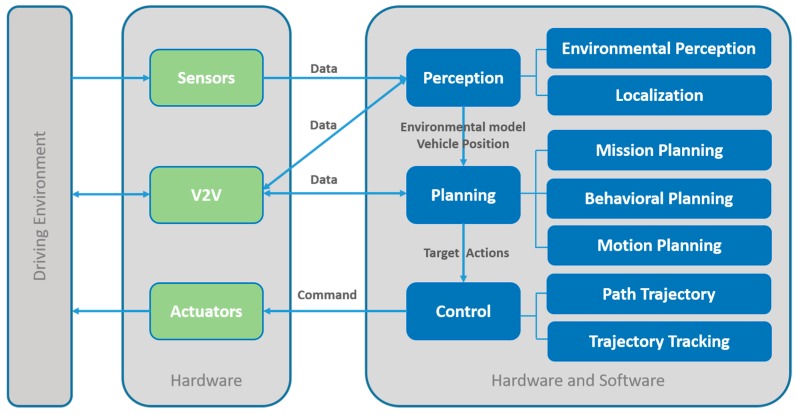
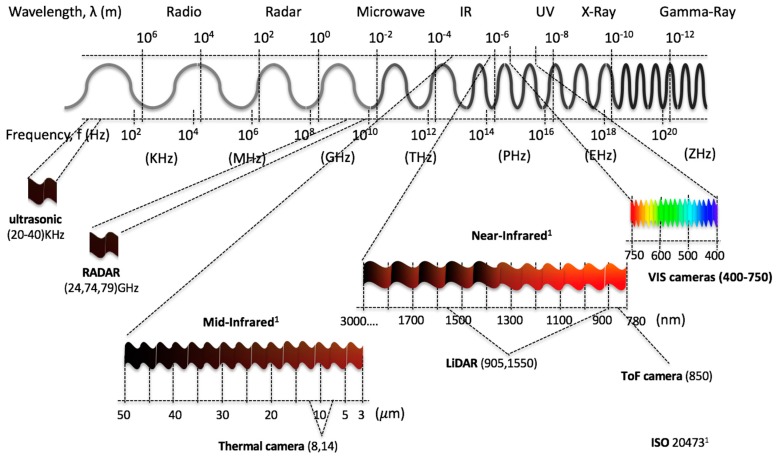
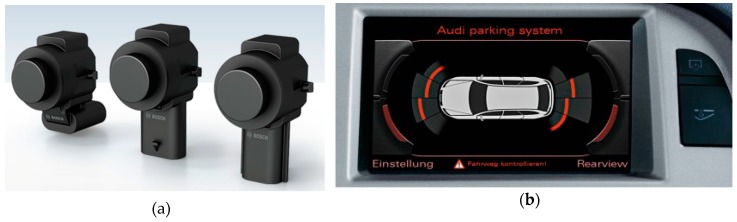
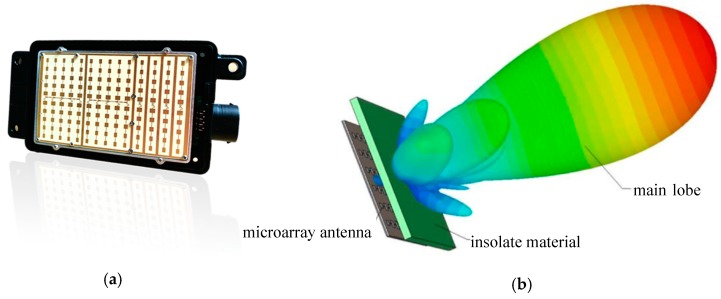
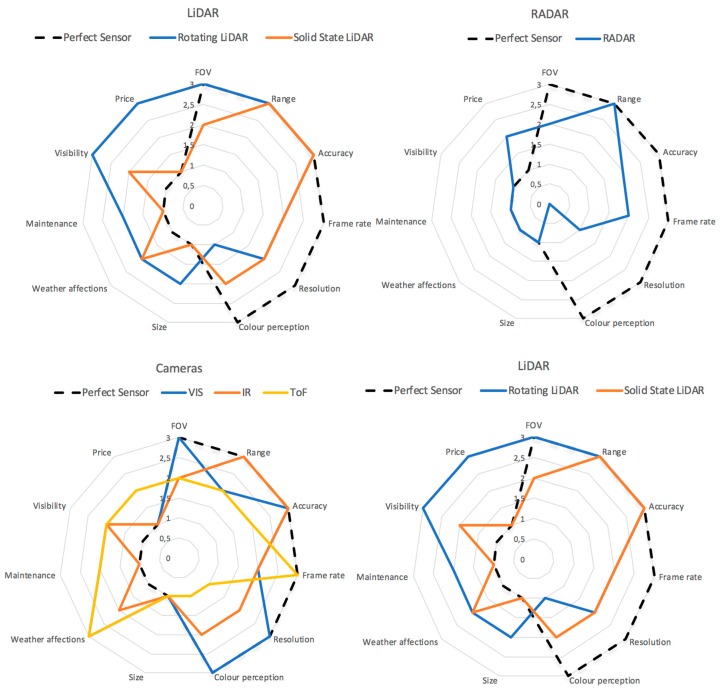
This paper presents a systematic review of the perception systems and simulators for autonomous vehicles (AV). This work has been divided into three parts. In the first part, perception systems are categorized as environment perception systems and positioning estimation systems. The paper presents the physical fundamentals, principle functioning, and electromagnetic spectrum used to operate the most common sensors used in perception systems (ultrasonic, RADAR, LiDAR, cameras, IMU, GNSS, RTK, etc.). Furthermore, their strengths and weaknesses are shown, and the quantification of their features using spider charts will allow proper selection of different sensors depending on 11 features. In the second part, the main elements to be taken into account in the simulation of a perception system of an AV are presented. For this purpose, the paper describes simulators for model-based development, the main game engines that can be used for simulation, simulators from the robotics field, and lastly simulators used specifically for AV. Finally, the current state of regulations that are being applied in different countries around the world on issues concerning the implementation of autonomous vehicles is presented.
Overview
The claims and statistics of this paper haven’t been checked yet.
Run the check — free, no account needed. It reads the open-access text and checks the sources it cites.
Integrity signals
Registry
Cites
Statistics
Figures
Verification
Claims the paper makes
The claims and statistics of this paper haven’t been checked yet.
Run the check — free, no account needed. It reads the open-access text and checks the sources it cites.
Claims other papers make about this one
Each is checked against this paper’s own text: does it say what the citing paper says it does?
The source backs part of the claim, not all of it — or backs it for a different population, condition or comparison.
In the citing paper
“The Global Positioning System (GPS) is the most common GNSS system freely available to be used in any part of the world [111].”
From Sensor-Based Prognostic Health Management of Advanced Driver Assistance System for Autonomous Vehicles: A Recent Survey (2022) · cites this paper as [111]
Experimental — accuracy not yet measuredThe source backs part of the claim, not all of it — or backs it for a different population, condition or comparison.
In the citing paper
“It is mentioned that a pure vision-based system has advantages like affordability and simplicity of implementation.”
From Object Detection in Autonomous Vehicles under Adverse Weather: A Review of Traditional and Deep Learning Approaches (2024) · cites this paper as [48]
Experimental — accuracy not yet measuredThe source backs part of the claim, not all of it — or backs it for a different population, condition or comparison.
In the citing paper
“Such simulation not only includes software simulation like CarSim and CARLA. but also includes hybrid realization with hardware-in-the-loop or vehicle-in-the-loop design [67].”
From Trustworthy AI: From Principles to Practices (2023) · cites this paper as [67]
Experimental — accuracy not yet measuredThe cited source says what the claim attributes to it.
In the citing paper
“Such simulation not only includes software simulation like CarSim and CARLA. but also includes hybrid realization with hardware-in-the-loop or vehicle-in-the-loop design [67].”
From Trustworthy AI: From Principles to Practices (2023) · cites this paper as [67]
Self-check
Percentages, sums and reported differences re-computed from the paper’s own numbers.
The self-check needs the paper’s full text.
Citations
Cites
Vision meets robotics: The KITTI dataset
Geiger, A., Lenz, P., Stiller, C., & Urtasun, R. (2013) · The International Journal of Robotics Research · doi:10.1177/0278364913491297 · Cited by 9,913
Kalra, N., & Paddock, S. M. (2016) · Transportation Research Part A: Policy and Practice · doi:10.1016/j.tra.2016.09.010 · Cited by 1,221
A Review of Data Fusion Techniques
Castanedo, F. (2013) · The Scientific World Journal · doi:10.1155/2013/704504 · Cited by 1,027
Thermal cameras and applications: A survey
Gade, R., & Moeslund, T. B. (2014) · Machine Vision and Applications · doi:10.1007/s00138-013-0570-5 · Cited by 780
Challenges in autonomous vehicle testing and validation
Koopman, P., & Wagner, M. (2016) · SAE International Journal of Transportation Safety · doi:10.4271/2016-01-0128 · Cited by 675
USARSim: a robot simulator for research and education
Carpin, S., Lewis, M., Wang, J., Balakirsky, S. B., & Scrapper, C. (2007) · Proceedings - IEEE International Conference on Robotics and Automation/Proceedings · doi:10.1109/robot.2007.363180 · Cited by 423
Pedestrian Detection at Day/Night Time with Visible and FIR Cameras: A Comparison
González, A., Fang, Z., Socarras, Y., Serrat, J., Vázquez, D., Xu, J., & López, A. M. (2016) · Sensors · doi:10.3390/s16060820 · Cited by 330
Bimbraw, K. (2015) · International Conference on Informatics in Control, Automation and Robotics (ICINCO) · doi:10.5220/0005540501910198 · Cited by 324
Development of Autonomous Car—Part I: Distributed System Architecture and Development Process
Jo, K., Kim, J., Kim, D., Jang, C., & Sunwoo, M. (2014) · IEEE Transactions on Industrial Electronics · doi:10.1109/tie.2014.2321342 · Cited by 277
Development of advanced driver assistance systems with vehicle hardware-in-the-loop simulations
Gietelink, O. J., Ploeg, J., Schutter, B. D., & Verhaegen, M. (2006) · Vehicle System Dynamics · doi:10.1080/00423110600563338 · Cited by 272
Research works printed but not linked: 2
- Council, N.R. (2001). Statistics, Testing, and Defense Acquisition: New Approaches and Methodological Improvements, The National Academies Press.
- Dosovitskiy, A., Ros, G., Codevilla, F., Lopez, A., and Koltun, V. (arXiv, 2017). CARLA: An Open Urban Driving Simulator, arXiv.
Cited by
Sorted by citations
Deep reinforcement learning for autonomous driving: A survey
Kiran, B. R., Sobh, I., Talpaert, V., Mannion, P., Sallab, A. A. A., Yogamani, S., & Perez, P. (2022) · IEEE Transactions on Intelligent Transportation Systems · doi:10.1109/tits.2021.3054625 · Cited by 2,342
Sensor and Sensor Fusion Technology in Autonomous Vehicles: A Review
Yeong, D. J., Velasco-Hernandez, G., Barry, J., & Walsh, J. L. (2021) · Sensors · doi:10.3390/s21062140 · Cited by 1,187
Survey of Deep Reinforcement Learning for Motion Planning of Autonomous Vehicles
Aradi, S. (2020) · IEEE Transactions on Intelligent Transportation Systems · doi:10.1109/tits.2020.3024655 · Cited by 704
Gupta, A., Anpalagan, A., Guan, L., & Khwaja, A. S. (2021) · Array · doi:10.1016/j.array.2021.100057 · Cited by 609
Trustworthy AI: From Principles to Practices
Li, B., Qi, P., Liu, B., Di, S., Liu, J., Pei, J., Yi, J., & Zhou, B. (2023) · ACM Computing Surveys · doi:10.1145/3555803 · Cited by 612
Metadata
- Authors
- Rosique, F., Navarro, P. J., Fernández, C., & Padilla, A.
- Affiliations
- Universidad Politécnica de Cartagena (ES)
- Corresponding author
- Rosique, Francisca
- Navarro, Pedro J.
- Venue
- Sensors
- Publisher
- MDPI AG
- Published
- 2019-02-05
- Volume
- 19
- Issue
- 3
- Pages
- 648
- ISSN
- 1424-8220 (ISSN-L)
- PMC
- PMC6387009
- OpenAlex
- W2912493354
- Cited by
- 469
- References
- 63
- Citations by year
- 2026: 34 · 2025: 49 · 2024: 80 · 2023: 96 · 2022: 71 · 2021: 74 · 2020: 47 · 2019: 17
- FWCI
- 5.47
- Type
- journal article
- Language
- en
- Open access
- gold
- dx.doi.org
- Licence
- Locations
- Sensors (publishedVersion, cc-by)
- Europe PMC (PubMed Central) (publishedVersion, other-oa)
- PubMed Central (publishedVersion, cc-by)
- PubMed (publishedVersion)
- DOAJ (DOAJ: Directory of Open Access Journals) (submittedVersion, cc-by-sa)
- Digital Repository (Polytechnic University of Cartagena) (submittedVersion, cc-by-nc-nd)
- Funders
- Dirección General de Tráfico (SPIP2017-02286)
- Ministerio de Economía y Competitividad (BFU2017-88300-C2-2-R)
- Fundación Séneca (19895/GERM/15)
- Topics
- Physical Sciences › Engineering › Automotive Engineering › Autonomous Vehicle Technology and Safety
- Physical Sciences › Computer Science › Computer Vision and Pattern Recognition › Robotics and Sensor-Based Localization
- Physical Sciences › Engineering › Automotive Engineering › Vehicle Dynamics and Control Systems
- Keywords
- autonomous vehicles, perception systems, vehicle simulator, sensor comparison, ultrasonic sensors, radar, LiDAR, camera, inertial measurement unit, GNSS, RTK, game engines, model-driven engineering, autonomous vehicle regulation
About these checks
Registry, retraction, Cites and statistics results are computed, not judged, with one exception: a printed reference that no index lists is read once by a model before it counts as a citation error. Claims are extracted by a model and kept only when their quote appears verbatim in the text; each cited source is then checked, with a model’s help, for whether it says what the claim relies on. Those verdicts can be wrong — read the claim’s quote and the cited source before relying on one.
Statistics and arithmetic are recomputed, not judged.
Confidence bands are shown only for fields calibrated on our annotated test set. None is calibrated yet, so no band is shown.
What counts as a claim ›How we measure confidence ›How we check this ›
Are you an author, or do you see a problem with this page? Request a review
