

The DOI matches its Crossref record; 16 of the 16 references it cites were found in a registry or an index; 9 of the 34 sources its claims cite were checked for support.
Water Pollution and the Textile Industry in Bangladesh: Flawed Corporate Practices or Restrictive Opportunities?
Open accessAbstract
The textile industry in Bangladesh has been a great engine for boosting economic growth in the country. However, with great success came environmental deterioration. Untreated effluents containing heavy metals are being released into rivers from nearby factories, affecting the health of people who live along the polluted rivers. The existing law in Bangladesh, requiring such factories to install an effluent treatment plant (ETP), has not been effective in reducing environmental noncompliance. This paper aims to investigate the reality of the situation that the textile industry faces regarding environmental compliance. It is based on primary data collected from textile factories in Dhaka through a questionnaire survey with complementary interviews. This study especially highlights the barriers and difficulties faced by factories in the installation and operation of ETPs. The results confirm previous findings: Low willingness of companies to meet environmental compliance requirements and inadequate monitoring and enforcement by government authorities. In addition, we reveal that the dominant barriers to ETP installation are at the purchase stage, rather than the construction stage: ETPs are unavailable in local markets and the import tax is high. Institutional arrangements are required to improve this situation; this could include establishing a subsidy scheme that would encourage voluntary construction of central ETPs. We suggest that external pressure is essential for Bangladesh to change and the external bodies exerting such pressure should have objective measures by which to judge compliance; the quality of river water might be the only reliable measure of environmental compliance in this situation.
Overview
AI snapshot
Written from the paper’s full text.
TL;DR
Based on a survey of 23 textile factories in Dhaka, the paper finds that environmental noncompliance reflects both low corporate willingness and institutional barriers, especially at the ETP import stage. It argues that external pressure is essential and that river water quality may be the only reliable compliance measure.
Key findings
- Among 23 surveyed textile companies with ETPs, mean employment was 1,918 workers (range 200–10,000); mean yearly ETP operation cost was 13,923,889 BDT, mean installation cost 25,185,113 BDT, mean import cost 17,243,200 BDT, and mean total import plus installation cost 63,742,566 BDT.
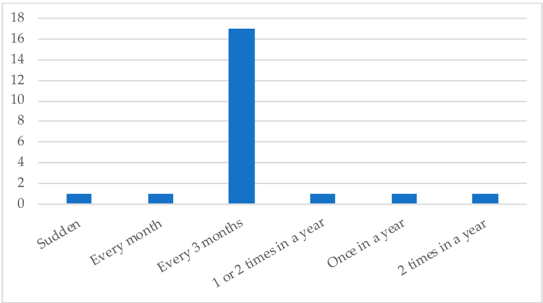
- Monitoring and enforcement were weak: 22 of 23 companies reported DoE inspection, but only 2 had ever been penalized; reported fines were 270,400 BDT and 400,000 BDT, and DoE monitoring was mostly at three-month intervals, allowing factories to prepare ETPs before visits.
- The dominant barriers to ETP installation were at the import stage rather than construction: all ETPs were imported, ETPs were unavailable locally, customs duty was 26.27% in FY2017–2018, and buyer-recommended ETPs were often more expensive than those found through companies’ own searches.
- About 70% of responding companies said ETP installation was financially manageable and about 70% did not find operation much of a financial burden; the paper contrasts Bangladesh with India, where Tamil Nadu’s first CETP operated 10 years after the 1981 Water Act, while Bangladesh had no operating CETPs 24 years after the 1995 Environmental Conservation Act.
Methods
- Questionnaire survey conducted July–October 2018 with textile factories in Dhaka, using a DoE list of 265 companies with ETPs and snowball sampling after low willingness to respond; 23 textile companies with ETPs completed the survey, supplemented by interviews.
- The questionnaire covered factory profile, ETP specifications, installation and operation costs, and barriers/difficulties; analysis included descriptive statistics and a correlation between yearly operation cost and quantity of treatment per day (0.54, p = 0.05681).
Limitations
- The paper states the data may be biased and does not depict the problem in its entirety; companies without ETPs were reluctant to participate, so the full truth is likely worse, and smaller companies that usually cannot afford ETPs were not included.
- The paper states descriptive statistics were not consistent because some companies provided only installation cost and some only total installation-plus-import cost.
- Evident from the text: the sample is small (23 companies), relies on self-reported questionnaire responses and snowball sampling, and does not directly measure river water quality.
Model-written summary. Check it against the paper before relying on it.
Integrity signals
Registry
Cites
Statistics
Figures
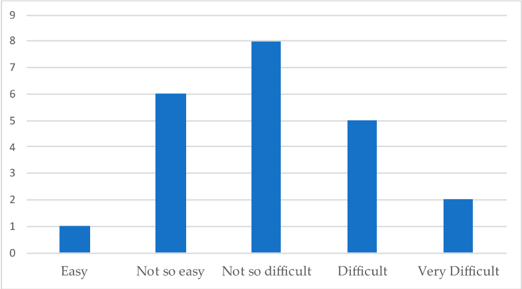
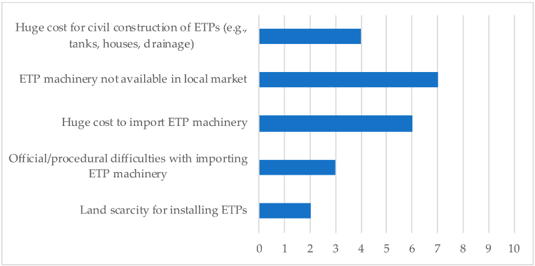
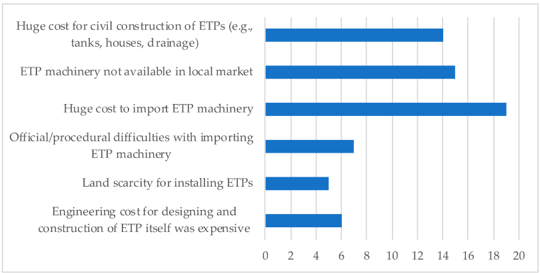
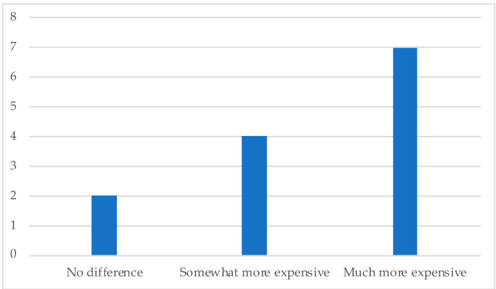
Verification
Claims the paper makes
36 Own interpretation · 32 Own result · 16 No basis given · 13 Not checked yet · 7 No full text of the sources · 4 Partly supported · 3 Supported · 3 Own method · 1 Supported so far · accuracy not yet measured
The cited sources support only part of this claim — read each source’s verdict below.
In the paper
“This is within the range of the fines reported by Haque [13].”
§ Water Pollution and the Textile Industry in Bangladesh: Flawed Corporate Practices or Restrictive Opportunities? > 3.2. Monitoring and Enforcement
What the sources say
- Partly supportedcites [13] Haque, 2017, Exploratory Analysis of Fines for Water Pollution in Bangladesh, Water Resour. Ind. sourceExperimental — accuracy not yet measured
Table 2 (shown in our copy under 5. Conclusion; page unavailable) reports fines ranging from 10,000 to 30,000,000 taka. The citing sentence does not give the amount meant by “This,” so the comparison with that range cannot be verified. (LLM, conf=0.78)
plain- Asserted: passes — The authors put it forward as true.
- Checkable: passes — It can be checked against evidence.
- Load-bearing: unclear — It is unclear whether the paper’s conclusions depend on it.
- Based: passes — The paper gives a reason why it holds.
- Partly supported
The cited sources support only part of this claim — read each source’s verdict below.
In the paper
“The mean cost of 13.9 million BDT among the participating companies is almost the same as the average annual operational cost of 13.3 million BDT previously reported for an ETP with around 50 m 3 /h capacity [13].”
§ Water Pollution and the Textile Industry in Bangladesh: Flawed Corporate Practices or Restrictive Opportunities? > 3.3. Barriers to ETP Operation
What the sources say
- Partly supportedcites [13] Haque, 2017, Exploratory Analysis of Fines for Water Pollution in Bangladesh, Water Resour. Ind. sourceExperimental — accuracy not yet measured
The Discussion reports an estimated annual wastewater-treatment cost of Tk. 1,33,50,000 (13.35 million BDT) for a small textile-dyeing factory, close to the cited 13.3 million. It does not specify an ETP capacity of around 50 m³/h, and its separately stated annual operational-cost estimate for a chemical ETP is 87.86 million Taka. The cited cost and capacity therefore are not supported together. (LLM, conf=0.86)
plain- Asserted: passes — The authors put it forward as true.
- Checkable: passes — It can be checked against evidence.
- Load-bearing: unclear — It is unclear whether the paper’s conclusions depend on it.
- Based: passes — The paper gives a reason why it holds.
- Partly supported
The cited sources support only part of this claim — read each source’s verdict below.
In the paper
“Through the food chain, this affects the health of people who live along the polluted rivers.”
§ Water Pollution and the Textile Industry in Bangladesh: Flawed Corporate Practices or Restrictive Opportunities? > 1. Introduction
What the sources say
- Partly supportedcites [7] Mohiuddin, 2019, Chemical Contaminants and Pollutants in the Measurable Life of Dhaka City, Pharma Tutor sourceExperimental — accuracy not yet measured
The Abstract (page not provided) says Dhaka’s contaminated water resources pose a major health threat. Our copy does not say that the effect occurs through the food chain or specifically affects people living along polluted rivers; searches for those terms returned no supporting passage. (LLM, conf=0.78)
- Not checked yetcites [8] Nishat, A., Ullah, M., and Haque, A.K.E. (2001). Industrial Pollution. Bangladesh Environment OutLook—2001, Centre for Sustainable Development (CSD).
plainstates a cause- Asserted: passes — The authors put it forward as true.
- Checkable: passes — It can be checked against evidence.
- Load-bearing: passes — The paper’s conclusions depend on it.
- Based: passes — The paper gives a reason why it holds.
- Partly supported
A result the paper reports from its own data — it cites no other source for it, so there is none to check. The quote shows it is in the paper.
In the paper
“In most cases, the price of a recommended ETP was higher than that found with their own search.”
§ Water Pollution and the Textile Industry in Bangladesh: Flawed Corporate Practices or Restrictive Opportunities? > 3.4. Barriers to ETP Installation
plain- Asserted: passes — The authors put it forward as true.
- Checkable: passes — It can be checked against evidence.
- Load-bearing: passes — The paper’s conclusions depend on it.
- Based: passes — The paper gives a reason why it holds.
A result the paper reports from its own data — it cites no other source for it, so there is none to check. The quote shows it is in the paper.
In the paper
“There has not been a spike in installations, even though the companies have been under high pressure from foreign buyers as well as the government.”
§ Water Pollution and the Textile Industry in Bangladesh: Flawed Corporate Practices or Restrictive Opportunities? > 3.1. Profile of Samples
plain- Asserted: passes — The authors put it forward as true.
- Checkable: passes — It can be checked against evidence.
- Load-bearing: passes — The paper’s conclusions depend on it.
- Based: passes — The paper gives a reason why it holds.
A result the paper reports from its own data — it cites no other source for it, so there is none to check. The quote shows it is in the paper.
In the paper
“The mean cost of 13.9 million BDT among the participating companies”
§ Water Pollution and the Textile Industry in Bangladesh: Flawed Corporate Practices or Restrictive Opportunities? > 3.3. Barriers to ETP Operation
plain- Asserted: passes — The authors put it forward as true.
- Checkable: passes — It can be checked against evidence.
- Load-bearing: passes — The paper’s conclusions depend on it.
- Based: passes — The paper gives a reason why it holds.
A result the paper reports from its own data — it cites no other source for it, so there is none to check. The quote shows it is in the paper.
In the paper
“In some cases, where the companies had recommendations from foreign buyers, imported ETPs from European countries were suggested.”
§ Water Pollution and the Textile Industry in Bangladesh: Flawed Corporate Practices or Restrictive Opportunities? > 3.4. Barriers to ETP Installation
plainstates an association- Asserted: passes — The authors put it forward as true.
- Checkable: passes — It can be checked against evidence.
- Load-bearing: unclear — It is unclear whether the paper’s conclusions depend on it.
- Based: passes — The paper gives a reason why it holds.
A result the paper reports from its own data — it cites no other source for it, so there is none to check. The quote shows it is in the paper.
In the paper
“ETPs are unavailable in local markets and the import tax is high.”
§ Water Pollution and the Textile Industry in Bangladesh: Flawed Corporate Practices or Restrictive Opportunities? > Abstract
plain- Asserted: passes — The authors put it forward as true.
- Checkable: passes — It can be checked against evidence.
- Load-bearing: passes — The paper’s conclusions depend on it.
- Based: passes — The paper gives a reason why it holds.
A result the paper reports from its own data — it cites no other source for it, so there is none to check. The quote shows it is in the paper.
In the paper
“ETPs are unavailable in local markets and the import tax is high.”
§ Water Pollution and the Textile Industry in Bangladesh: Flawed Corporate Practices or Restrictive Opportunities? > Abstract
plain- Asserted: passes — The authors put it forward as true.
- Checkable: passes — It can be checked against evidence.
- Load-bearing: passes — The paper’s conclusions depend on it.
- Based: passes — The paper gives a reason why it holds.
The paper states this without a source or data behind it here, so there is nothing to check it against. The quote shows it is in the paper.
In the paper
“The companies also have to find the information about purchasing ETPs for themselves.”
§ Water Pollution and the Textile Industry in Bangladesh: Flawed Corporate Practices or Restrictive Opportunities? > 3.4. Barriers to ETP Installation
plain- Asserted: passes — The authors put it forward as true.
- Checkable: passes — It can be checked against evidence.
- Load-bearing: unclear — It is unclear whether the paper’s conclusions depend on it.
- Based: passes — The paper gives a reason why it holds.
- It may state two separate claims as one. 37
- Probably not a substantial claim. 32
- The quote only partly states this claim. 2
Every source the paper cites for this claim was checked and supports it.
In the paper
“The estimated annual operating cost for textile dyeing factory is around 13,350,000 BDT [13] and is significantly higher than the average reported fine of 1,965,000 BDT.”
§ Water Pollution and the Textile Industry in Bangladesh: Flawed Corporate Practices or Restrictive Opportunities? > Figure 1.
What the sources say
- Supportedcites [13] Haque, 2017, Exploratory Analysis of Fines for Water Pollution in Bangladesh, Water Resour. Ind. source
The Discussion estimates annual wastewater-treatment costs of Tk. 1,33,50,000 (13,350,000 BDT) for a small textile dyeing factory. Table 2 gives the mean fine as 1,965,000 taka, so the stated cost is higher. The Discussion separately prints “19.6 million Taka” for the average fine, which conflicts with Table 2. (LLM, conf=0.92)
hedged- Asserted: passes — The authors put it forward as true.
- Checkable: passes — It can be checked against evidence.
- Load-bearing: passes — The paper’s conclusions depend on it.
- Based: passes — The paper gives a reason why it holds.
It may state two separate claims as one.
- Supported
Every source the paper cites for this claim was checked and supports it.
In the paper
“Moreover, the maximum fine was 3000 times the minimum fine; this suggests how randomly the fines are determined [13].”
§ Water Pollution and the Textile Industry in Bangladesh: Flawed Corporate Practices or Restrictive Opportunities? > Figure 1.
What the sources say
- Supportedcites [13] Haque, 2017, Exploratory Analysis of Fines for Water Pollution in Bangladesh, Water Resour. Ind. source
Section 3 states that the maximum fine was 3000 times the minimum and says this finding substantiates the arbitrariness of the fines. The citing sentence's reference to fines being determined randomly is a paraphrase of that assessment. (LLM, conf=0.94)
hedgedstates a cause- Asserted: passes — The authors put it forward as true.
- Checkable: passes — It can be checked against evidence.
- Load-bearing: passes — The paper’s conclusions depend on it.
- Based: passes — The paper gives a reason why it holds.
It may state two separate claims as one.
- Supported
The cited sources support only part of this claim — read each source’s verdict below.
In the paper
“The reasons for the enforcement failure are insufficient resources (knowledge, human resources, and funds) [4,12]; economic corruption [4,12]; weak political will [4,13]; and inadequate coordination among concerned agencies [14].”
§ Water Pollution and the Textile Industry in Bangladesh: Flawed Corporate Practices or Restrictive Opportunities? > Figure 1.
What the sources say
- Partly supportedcites [4] Belal, 2015, Corporate Environmental Responsibility and Accountability: What Chance in Vulnerable Bangladesh?, Crit. Perspect. Account. sourceExperimental — accuracy not yet measured
Section 3 (p. 313) links failed enforcement to corruption, weak political will, and shortages of manpower, skills, and knowledge; the enforcement discussion also identifies human resources as a constraint. The copy does not specifically identify a lack of funds as a reason for enforcement failure. The coordination clause is cited only to [14], not to this source. (LLM, conf=0.84)
- Not checked — no full text of the sourcecites [12] Belal, 2007, The Views of Corporate Managers on the Current State of, and Future Prospects for, Social Reporting in Bangladesh: An Engagement-Based Study, Account. Audit. Account. J. source
- Partly supportedcites [13] Haque, 2017, Exploratory Analysis of Fines for Water Pollution in Bangladesh, Water Resour. Ind. sourceExperimental — accuracy not yet measured
The Introduction (page unavailable) attributes weak enforcement partly to a shortage of DoE inspectors, and the Discussion (page unavailable) reports that fines were sometimes reduced or cancelled for political reasons. These passages support limited staffing and political interference, but do not establish shortages of knowledge or funds, economic corruption, or weak political will as such. The sentence cites a different source for inadequate coordination among agencies. (LLM, conf=0.83)
- Not checked — no full text of the sourcecites [14] Bhattacharjee, 2019, Groundwater Governance in Bangladesh: Established Practices and Recent Trends, Groundw. Sustain. Dev. source
plainstates a cause- Asserted: passes — The authors put it forward as true.
- Checkable: passes — It can be checked against evidence.
- Load-bearing: passes — The paper’s conclusions depend on it.
- Based: passes — The paper gives a reason why it holds.
It may state two separate claims as one.
- Partly supported
Every source the paper cites for this claim was checked and supports it.
In the paper
“Analysis of the penalties revealed that the mean fine amount was 1,965,000 Bangladesh Taka (BDT) (1 USD = 80 BDT), with a maximum of 30,000,000 BDT and a minimum of 10,000 BDT.”
§ Water Pollution and the Textile Industry in Bangladesh: Flawed Corporate Practices or Restrictive Opportunities? > Figure 1.
What the sources say
- Supportedcites [13] Haque, 2017, Exploratory Analysis of Fines for Water Pollution in Bangladesh, Water Resour. Ind. source
Table 2 (Properties of variable “fined amount,” reproduced under Conclusion) reports a mean fine of 1,965,000 taka, a maximum of 30,000,000 taka, and a minimum of 10,000 taka. Section 3 identifies these as descriptive statistics for all 290 fine records. (LLM, conf=0.95)
plain- Asserted: passes — The authors put it forward as true.
- Checkable: passes — It can be checked against evidence.
- Load-bearing: passes — The paper’s conclusions depend on it.
- Based: passes — The paper gives a reason why it holds.
It may state two separate claims as one.
- Supported
The sources with a verdict support this claim; the rest weren’t checked yet, have no full text we could read, or their verdicts aren’t rated yet.
In the paper
“In the case of Bangladesh, the DoE has not been recording inspection results in a consistent manner [12], nor sharing the existing data in a transparent way due to internal bureaucracy and pressure from industrial sectors to avoid interference in their business [13].”
§ Water Pollution and the Textile Industry in Bangladesh: Flawed Corporate Practices or Restrictive Opportunities? > Figure 1.
What the sources say
- Not checked — no full text of the sourcecites [12] Belal, 2007, The Views of Corporate Managers on the Current State of, and Future Prospects for, Social Reporting in Bangladesh: An Engagement-Based Study, Account. Audit. Account. J. source
- Supportedcites [13] Haque, 2017, Exploratory Analysis of Fines for Water Pollution in Bangladesh, Water Resour. Ind. source
The Sampling section (2.1) says the DoE does not share complete information on environmental fines because of internal bureaucracy and pressure from the business community. The Discussion section (4) also says the DoE does not maintain a proper database for recording inspections, although the citing sentence attaches a different citation to that clause. (LLM, conf=0.90)
plainstates a cause- Asserted: passes — The authors put it forward as true.
- Checkable: passes — It can be checked against evidence.
- Load-bearing: passes — The paper’s conclusions depend on it.
- Based: passes — The paper gives a reason why it holds.
It may state two separate claims as one.
The paper states this without a source or data behind it here, so there is nothing to check it against. The quote shows it is in the paper.
In the paper
“installation, engineering maintenance, and chemical refills are currently all outsourced to foreign manufacturers and, hence, the requisite human resources and chemical materials are imported from abroad.”
§ Water Pollution and the Textile Industry in Bangladesh: Flawed Corporate Practices or Restrictive Opportunities? > 4.1. Institutional Drawbacks
plainstates a cause- Asserted: passes — The authors put it forward as true.
- Checkable: passes — It can be checked against evidence.
- Load-bearing: passes — The paper’s conclusions depend on it.
- Based: passes — The paper gives a reason why it holds.
It may state two separate claims as one.
A result the paper reports from its own data — it cites no other source for it, so there is none to check. The quote shows it is in the paper.
In the paper
“The company sizes vary from a small company with 200 employees to a large one with 10,000 employees, with the mean being 1918.”
§ Water Pollution and the Textile Industry in Bangladesh: Flawed Corporate Practices or Restrictive Opportunities? > 3.1. Profile of Samples
plain- Asserted: passes — The authors put it forward as true.
- Checkable: passes — It can be checked against evidence.
- Load-bearing: unclear — It is unclear whether the paper’s conclusions depend on it.
- Based: passes — The paper gives a reason why it holds.
It may state two separate claims as one.
A result the paper reports from its own data — it cites no other source for it, so there is none to check. The quote shows it is in the paper.
In the paper
“This was a multiple-choice question, but only half the respondents selected the response”
§ Water Pollution and the Textile Industry in Bangladesh: Flawed Corporate Practices or Restrictive Opportunities? > 3.1. Profile of Samples
plain- Asserted: passes — The authors put it forward as true.
- Checkable: passes — It can be checked against evidence.
- Load-bearing: fails — The paper’s conclusions may not depend on it.
- Based: passes — The paper gives a reason why it holds.
Probably not a substantial claim. The paper’s conclusions may not depend on it.
A result the paper reports from its own data — it cites no other source for it, so there is none to check. The quote shows it is in the paper.
In the paper
“The low willingness of companies to engage in environmental protection activities and inadequate monitoring and enforcement by the government authorities induced the non-compliance of the textile companies.”
§ Water Pollution and the Textile Industry in Bangladesh: Flawed Corporate Practices or Restrictive Opportunities? > 4.1. Institutional Drawbacks
plainstates a cause- Asserted: passes — The authors put it forward as true.
- Checkable: passes — It can be checked against evidence.
- Load-bearing: passes — The paper’s conclusions depend on it.
- Based: passes — The paper gives a reason why it holds.
The quote only partly states this claim.
A result the paper reports from its own data — it cites no other source for it, so there is none to check. The quote shows it is in the paper.
In the paper
“foreign buyers tend not to believe in the quality of products (such as ETPs) made in Bangladesh and are not interested in using domestic products.”
§ Water Pollution and the Textile Industry in Bangladesh: Flawed Corporate Practices or Restrictive Opportunities? > 4.1. Institutional Drawbacks
plain- Asserted: passes — The authors put it forward as true.
- Checkable: passes — It can be checked against evidence.
- Load-bearing: passes — The paper’s conclusions depend on it.
- Based: passes — The paper gives a reason why it holds.
It may state two separate claims as one.
A result the paper reports from its own data — it cites no other source for it, so there is none to check. The quote shows it is in the paper.
In the paper
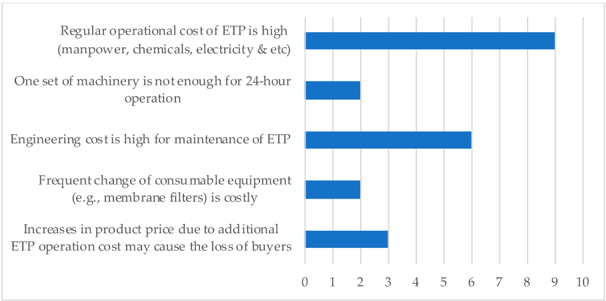
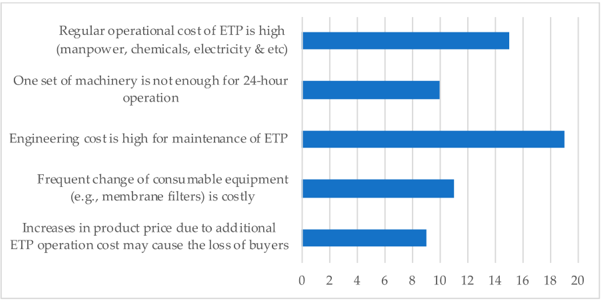
“Based on these results, the major barriers in ETP operation seem to be high running costs and high engineering costs for maintenance.”
§ Water Pollution and the Textile Industry in Bangladesh: Flawed Corporate Practices or Restrictive Opportunities? > 3.3. Barriers to ETP Operation
hedged- Asserted: passes — The authors put it forward as true.
- Checkable: passes — It can be checked against evidence.
- Load-bearing: passes — The paper’s conclusions depend on it.
- Based: passes — The paper gives a reason why it holds.
It may state two separate claims as one.
The paper states this without a source or data behind it here, so there is nothing to check it against. The quote shows it is in the paper.
In the paper
“In the case of Bangladesh, so far, no countries have had a ban on importing textile and tannery products from Bangladesh nor tried to provide the technical support as Germany did in the Indian case.”
§ Water Pollution and the Textile Industry in Bangladesh: Flawed Corporate Practices or Restrictive Opportunities? > 4.2. An Indian Comparison
plain- Asserted: passes — The authors put it forward as true.
- Checkable: passes — It can be checked against evidence.
- Load-bearing: passes — The paper’s conclusions depend on it.
- Based: fails — The paper may give no reason why it holds.
Probably not a substantial claim. The paper may give no reason why it holds. It may state two separate claims as one.
The paper states this without a source or data behind it here, so there is nothing to check it against. The quote shows it is in the paper.
In the paper
“textile companies lack a strong will to protect the environment, but this is not the only the reason for the non-compliance of the whole industry.”
§ Water Pollution and the Textile Industry in Bangladesh: Flawed Corporate Practices or Restrictive Opportunities? > 4.1. Institutional Drawbacks
plainstates a cause- Asserted: passes — The authors put it forward as true.
- Checkable: passes — It can be checked against evidence.
- Load-bearing: passes — The paper’s conclusions depend on it.
- Based: passes — The paper gives a reason why it holds.
It may state two separate claims as one.
The paper states this without a source or data behind it here, so there is nothing to check it against. The quote shows it is in the paper.
In the paper
“Foreign buyers and international society have been applying pressure, but the present situation tells us that it has not been enough.”
§ Water Pollution and the Textile Industry in Bangladesh: Flawed Corporate Practices or Restrictive Opportunities? > 5. Conclusions
plain- Asserted: passes — The authors put it forward as true.
- Checkable: fails — It may be too vague to check against evidence.
- Load-bearing: passes — The paper’s conclusions depend on it.
- Based: fails — The paper may give no reason why it holds.
Probably not a substantial claim. It may be too vague to check against evidence. The paper may give no reason why it holds. It may state two separate claims as one.
The paper states this without a source or data behind it here, so there is nothing to check it against. The quote shows it is in the paper.
In the paper
“The major textile domestic companies usually have many subcontractors, most of which are small units and cannot afford ETPs.”
§ Water Pollution and the Textile Industry in Bangladesh: Flawed Corporate Practices or Restrictive Opportunities? > 4.3. Towards Effective Environmental Compliance
plainstates a cause- Asserted: passes — The authors put it forward as true.
- Checkable: passes — It can be checked against evidence.
- Load-bearing: passes — The paper’s conclusions depend on it.
- Based: fails — The paper may give no reason why it holds.
Probably not a substantial claim. The paper may give no reason why it holds. It may state two separate claims as one.
The paper states this without a source or data behind it here, so there is nothing to check it against. The quote shows it is in the paper.
In the paper
“companies have to import machines and other resources, which require additional time and money and are viewed as barriers to installing ETPs by the textile companies.”
§ Water Pollution and the Textile Industry in Bangladesh: Flawed Corporate Practices or Restrictive Opportunities? > 5. Conclusions
plainstates a cause- Asserted: passes — The authors put it forward as true.
- Checkable: passes — It can be checked against evidence.
- Load-bearing: passes — The paper’s conclusions depend on it.
- Based: passes — The paper gives a reason why it holds.
It may state two separate claims as one.
A result the paper reports from its own data — it cites no other source for it, so there is none to check. The quote shows it is in the paper.
In the paper
“the survey results also revealed many possible drawbacks in the country's institutions that did not motivate companies to comply with the environmental regulations: The high import tax, inadequate monitoring and enforcement by the government authority, and no explicit subsidy scheme (such as the one India institutionalized).”
§ Water Pollution and the Textile Industry in Bangladesh: Flawed Corporate Practices or Restrictive Opportunities? > 5. Conclusions
hedgedstates a cause- Asserted: passes — The authors put it forward as true.
- Checkable: passes — It can be checked against evidence.
- Load-bearing: passes — The paper’s conclusions depend on it.
- Based: passes — The paper gives a reason why it holds.
It may state two separate claims as one.
The paper states this without a source or data behind it here, so there is nothing to check it against. The quote shows it is in the paper.
In the paper
“factories cheat and run ETPs just occasionally when the Department of Environment or foreign buyers visit.”
§ Water Pollution and the Textile Industry in Bangladesh: Flawed Corporate Practices or Restrictive Opportunities? > 4.3. Towards Effective Environmental Compliance
plainstates a possible cause- Asserted: passes — The authors put it forward as true.
- Checkable: passes — It can be checked against evidence.
- Load-bearing: passes — The paper’s conclusions depend on it.
- Based: fails — The paper may give no reason why it holds.
Probably not a substantial claim. The paper may give no reason why it holds.
In the paper
“Such lack of enforcement is common in developing countries [15], and Bangladesh is no exception.”
§ Water Pollution and the Textile Industry in Bangladesh: Flawed Corporate Practices or Restrictive Opportunities? > Figure 1.
What the sources say
- Not checked — no full text of the sourcecites [15] Hilson, 2012, Corporate social responsibility in the extractive industries: Experiences from developing countries, Resour. Policy source
plain- Asserted: passes — The authors put it forward as true.
- Checkable: passes — It can be checked against evidence.
- Load-bearing: fails — The paper’s conclusions may not depend on it.
- Based: passes — The paper gives a reason why it holds.
Probably not a substantial claim. The paper’s conclusions may not depend on it. It may state two separate claims as one.
A conclusion the paper draws from its own results — it cites no other source for it, so there is none to check. The quote shows it is in the paper.
In the paper
“The full truth is likely worse than depicted because companies with an ETP must be well-off enough to afford ETP installation.”
§ Water Pollution and the Textile Industry in Bangladesh: Flawed Corporate Practices or Restrictive Opportunities? > 3.1. Profile of Samples
hedgedstates a cause- Asserted: passes — The authors put it forward as true.
- Checkable: passes — It can be checked against evidence.
- Load-bearing: passes — The paper’s conclusions depend on it.
- Based: passes — The paper gives a reason why it holds.
It may state two separate claims as one.
In the paper
“As such, the penalty for non-compliance is quite inexpensive [20] or even non-existent”
§ Water Pollution and the Textile Industry in Bangladesh: Flawed Corporate Practices or Restrictive Opportunities? > Figure 1.
What the sources say
- Not checked — no full text of the sourcecites [20] World Bank (2014). The Bangladesh Responsible Sourcing Initiative: A New Model for Green Growth, World Bank. source
plain- Asserted: passes — The authors put it forward as true.
- Checkable: passes — It can be checked against evidence.
- Load-bearing: passes — The paper’s conclusions depend on it.
- Based: passes — The paper gives a reason why it holds.
It may state two separate claims as one.
A conclusion the paper draws from its own results — it cites no other source for it, so there is none to check. The quote shows it is in the paper.
In the paper
“These companies are relatively big, so this tendency may not apply to small companies.”
§ Water Pollution and the Textile Industry in Bangladesh: Flawed Corporate Practices or Restrictive Opportunities? > 3.3. Barriers to ETP Operation
hedgedstates a possible cause- Asserted: passes — The authors put it forward as true.
- Checkable: passes — It can be checked against evidence.
- Load-bearing: fails — The paper’s conclusions may not depend on it.
- Based: fails — The paper may give no reason why it holds.
Probably not a substantial claim. The paper’s conclusions may not depend on it. The paper may give no reason why it holds.
In the paper
“Therefore, the theory concludes that state penalties or subsidies are essential to manage environmental and resource problems.”
§ Water Pollution and the Textile Industry in Bangladesh: Flawed Corporate Practices or Restrictive Opportunities? > 4.1. Institutional Drawbacks
What the sources say
- Not checked — no full text of the sourcecites [24] Hanley, N., Shogren, J.F., and White, B. (1997). Environmental Economics: In Theory and Practice, Oxford University Press. source
boostedstates a cause- Asserted: passes — The authors put it forward as true.
- Checkable: passes — It can be checked against evidence.
- Load-bearing: passes — The paper’s conclusions depend on it.
- Based: passes — The paper gives a reason why it holds.
Probably not a substantial claim.
- The authors state this as an assumption: Individuals act to pursue only their own short-term economic benefits.
What the paper did — it cites no source for this, so there is none to check. The quote shows it is in the paper.
In the paper
“Those without ETPs were reluctant to participate in the survey and we were not able to collect information from them.So, we note that our data may be biased and does not depict the problem in its entirety.”
§ Water Pollution and the Textile Industry in Bangladesh: Flawed Corporate Practices or Restrictive Opportunities? > 3.1. Profile of Samples
hedgedstates a possible cause- Asserted: passes — The authors put it forward as true.
- Checkable: passes — It can be checked against evidence.
- Load-bearing: passes — The paper’s conclusions depend on it.
- Based: passes — The paper gives a reason why it holds.
It may state two separate claims as one.
In the paper
“Enforcement of the environmental legislation is the responsibility of the Department of the Environment (DoE), but it has failed to govern the situation although it is fully aware of the non-operation of installed ETPs [11].”
§ Water Pollution and the Textile Industry in Bangladesh: Flawed Corporate Practices or Restrictive Opportunities? > Figure 1.
What the sources say
- Not checked yetcites [11] Moazzem, K.G., and Chowdhury, M.I. (2016). Green Growth in Bangladesh–Improving Regulations, Monitoring and Enforcement in the Textile Sector. (Policy Brief Number 96-16), South Asian Network for Development and Environmental Economics (SANDEE). Available online: http://www.sandeeonline.org/uploads/documents/publication/1080_PUB_Policy_Brief_96_Mehruna.pdf.
plainstates a cause- Asserted: passes — The authors put it forward as true.
- Checkable: passes — It can be checked against evidence.
- Load-bearing: passes — The paper’s conclusions depend on it.
- Based: passes — The paper gives a reason why it holds.
It may state two separate claims as one.
What the paper did — it cites no source for this, so there is none to check. The quote shows it is in the paper.
In the paper
“We collected answers from 23 textile companies.All these companies are furnished with effluent treatment plants (ETPs).”
§ Water Pollution and the Textile Industry in Bangladesh: Flawed Corporate Practices or Restrictive Opportunities? > 3.1. Profile of Samples
plain- Asserted: passes — The authors put it forward as true.
- Checkable: passes — It can be checked against evidence.
- Load-bearing: passes — The paper’s conclusions depend on it.
- Based: passes — The paper gives a reason why it holds.
It may state two separate claims as one. The quote only partly states this claim.
A conclusion the paper draws from its own results — it cites no other source for it, so there is none to check. The quote shows it is in the paper.
In the paper
“Along with the unavailability of ETPs locally, the results suggest that the companies had to choose their ETPs from among limited options and the additional cost due to import fees tends to cause more financial burdens for the companies.”
§ Water Pollution and the Textile Industry in Bangladesh: Flawed Corporate Practices or Restrictive Opportunities? > 3.4. Barriers to ETP Installation
hedgedstates a possible cause- Asserted: passes — The authors put it forward as true.
- Checkable: passes — It can be checked against evidence.
- Load-bearing: passes — The paper’s conclusions depend on it.
- Based: passes — The paper gives a reason why it holds.
It may state two separate claims as one.
A conclusion the paper draws from its own results — it cites no other source for it, so there is none to check. The quote shows it is in the paper.
In the paper
“This, combined with the fact that ETPs were not available in the local market, resulted in textile companies importing ETPs from abroad.”
§ Water Pollution and the Textile Industry in Bangladesh: Flawed Corporate Practices or Restrictive Opportunities? > 4.1. Institutional Drawbacks
plainstates a cause- Asserted: passes — The authors put it forward as true.
- Checkable: passes — It can be checked against evidence.
- Load-bearing: passes — The paper’s conclusions depend on it.
- Based: passes — The paper gives a reason why it holds.
It may state two separate claims as one.
A conclusion the paper draws from its own results — it cites no other source for it, so there is none to check. The quote shows it is in the paper.
In the paper
“There is no doubt that such additional costs are a big barrier which would not exist if ETPs were produced in the country.”
§ Water Pollution and the Textile Industry in Bangladesh: Flawed Corporate Practices or Restrictive Opportunities? > 4.1. Institutional Drawbacks
boostedstates a cause- Asserted: passes — The authors put it forward as true.
- Checkable: passes — It can be checked against evidence.
- Load-bearing: passes — The paper’s conclusions depend on it.
- Based: passes — The paper gives a reason why it holds.
It may state two separate claims as one.
A conclusion the paper draws from its own results — it cites no other source for it, so there is none to check. The quote shows it is in the paper.
In the paper
“Thus, the minimum number of employees of any company in our sample, 200, was relatively large compared to what is generally considered a small company size.”
§ Water Pollution and the Textile Industry in Bangladesh: Flawed Corporate Practices or Restrictive Opportunities? > 3.1. Profile of Samples
plain- Asserted: passes — The authors put it forward as true.
- Checkable: passes — It can be checked against evidence.
- Load-bearing: fails — The paper’s conclusions may not depend on it.
- Based: passes — The paper gives a reason why it holds.
Probably not a substantial claim. The paper’s conclusions may not depend on it.
In the paper
“In environment-economic theory, pro-environmental behaviour is not considered rational as it is assumed that individuals act to pursue only their own short-term economic benefits [24].”
§ Water Pollution and the Textile Industry in Bangladesh: Flawed Corporate Practices or Restrictive Opportunities? > 4.1. Institutional Drawbacks
What the sources say
- Not checked — no full text of the sourcecites [24] Hanley, N., Shogren, J.F., and White, B. (1997). Environmental Economics: In Theory and Practice, Oxford University Press. source
plainstates a cause- Asserted: passes — The authors put it forward as true.
- Checkable: passes — It can be checked against evidence.
- Load-bearing: passes — The paper’s conclusions depend on it.
- Based: passes — The paper gives a reason why it holds.
Probably not a substantial claim.
- The authors state this as an assumption: Individuals act to pursue only their own short-term economic benefits.
In the paper
“These figures are close to those in Haque [19], where the minimum number of employees was 55, the maximum was 8300, and the mean was 1559.Therefore, our data is not too biased in terms of the company size”
§ Water Pollution and the Textile Industry in Bangladesh: Flawed Corporate Practices or Restrictive Opportunities? > 3.1. Profile of Samples
What the sources say
- Not checked — no full text of the sourcecites [19] Haque, 2018, Revisiting Penalty Functions for Environmental Violations: Evidence from a Developing Country, Water Environ. J. source
plain- Asserted: passes — The authors put it forward as true.
- Checkable: passes — It can be checked against evidence.
- Load-bearing: unclear — It is unclear whether the paper’s conclusions depend on it.
- Based: passes — The paper gives a reason why it holds.
It may state two separate claims as one.
In the paper
“more than 150 CETPs were established all over India by 2015 under the subsidy scheme [32].”
§ Water Pollution and the Textile Industry in Bangladesh: Flawed Corporate Practices or Restrictive Opportunities? > 4.2. An Indian Comparison
What the sources say
- Not checked yetcites [32] Central Pollution Control Board (2015). Global Good Practices in Industrial Wastewater Treatment and Disposal/Reuse, with Special Reference to Common Effluent Treatment Plants.
plain- Asserted: passes — The authors put it forward as true.
- Checkable: passes — It can be checked against evidence.
- Load-bearing: fails — The paper’s conclusions may not depend on it.
- Based: passes — The paper gives a reason why it holds.
Probably not a substantial claim. The paper’s conclusions may not depend on it.
The paper states this without a source or data behind it here, so there is nothing to check it against. The quote shows it is in the paper.
In the paper
“It took 10 years after the Water Act was adopted in Tamil Nadu in 1981 until the first CETP began operating-and one to two years after Germany implemented the first ban in 1989-1990.”
§ Water Pollution and the Textile Industry in Bangladesh: Flawed Corporate Practices or Restrictive Opportunities? > 4.2. An Indian Comparison
plain- Asserted: passes — The authors put it forward as true.
- Checkable: passes — It can be checked against evidence.
- Load-bearing: passes — The paper’s conclusions depend on it.
- Based: fails — The paper may give no reason why it holds.
Probably not a substantial claim. The paper may give no reason why it holds. It may state two separate claims as one.
A conclusion the paper draws from its own results — it cites no other source for it, so there is none to check. The quote shows it is in the paper.
In the paper
“The Indian farmers who made complaints against the tannery industry must have had more political power than the extreme victims in Bangladesh who live in slums along the rivers in Dhaka.”
§ Water Pollution and the Textile Industry in Bangladesh: Flawed Corporate Practices or Restrictive Opportunities? > 4.2. An Indian Comparison
hedgedstates an association- Asserted: passes — The authors put it forward as true.
- Checkable: fails — It may be too vague to check against evidence.
- Load-bearing: fails — The paper’s conclusions may not depend on it.
- Based: fails — The paper may give no reason why it holds.
Probably not a substantial claim. It may be too vague to check against evidence. The paper’s conclusions may not depend on it. The paper may give no reason why it holds.
A conclusion the paper draws from its own results — it cites no other source for it, so there is none to check. The quote shows it is in the paper.
In the paper
“But it would not take as long a time as the country has already spent, once the concerned bodies treat the issue seriously.”
§ Water Pollution and the Textile Industry in Bangladesh: Flawed Corporate Practices or Restrictive Opportunities? > 5. Conclusions
hedgedstates a cause- Asserted: passes — The authors put it forward as true.
- Checkable: fails — It may be too vague to check against evidence.
- Load-bearing: fails — The paper’s conclusions may not depend on it.
- Based: fails — The paper may give no reason why it holds.
Probably not a substantial claim. It may be too vague to check against evidence. The paper’s conclusions may not depend on it. The paper may give no reason why it holds.
A conclusion the paper draws from its own results — it cites no other source for it, so there is none to check. The quote shows it is in the paper.
In the paper
“even though foreign buyers are serious about environmental compliance, those small units may escape their watch.”
§ Water Pollution and the Textile Industry in Bangladesh: Flawed Corporate Practices or Restrictive Opportunities? > 4.3. Towards Effective Environmental Compliance
hedgedstates a possible cause- Asserted: passes — The authors put it forward as true.
- Checkable: passes — It can be checked against evidence.
- Load-bearing: passes — The paper’s conclusions depend on it.
- Based: passes — The paper gives a reason why it holds.
It may state two separate claims as one.
A conclusion the paper draws from its own results — it cites no other source for it, so there is none to check. The quote shows it is in the paper.
In the paper
“If the government had sought the technology transfer from abroad or any developed countries had offered technical support around the time when the High Court made its first judicial decision in 2001, then at least Savar would not be like it is today.”
§ Water Pollution and the Textile Industry in Bangladesh: Flawed Corporate Practices or Restrictive Opportunities? > 5. Conclusions
hedgedstates a possible cause- Asserted: passes — The authors put it forward as true.
- Checkable: fails — It may be too vague to check against evidence.
- Load-bearing: passes — The paper’s conclusions depend on it.
- Based: fails — The paper may give no reason why it holds.
Probably not a substantial claim. It may be too vague to check against evidence. The paper may give no reason why it holds.
A conclusion the paper draws from its own results — it cites no other source for it, so there is none to check. The quote shows it is in the paper.
In the paper
“Because having clean rivers is the accumulated consequence of pro-environmental behavior, it requires the collective action of the whole industry.”
§ Water Pollution and the Textile Industry in Bangladesh: Flawed Corporate Practices or Restrictive Opportunities? > 4.3. Towards Effective Environmental Compliance
plainstates a cause- Asserted: passes — The authors put it forward as true.
- Checkable: fails — It may be too vague to check against evidence.
- Load-bearing: passes — The paper’s conclusions depend on it.
- Based: fails — The paper may give no reason why it holds.
Probably not a substantial claim. It may be too vague to check against evidence. The paper may give no reason why it holds. It may state two separate claims as one.
A conclusion the paper draws from its own results — it cites no other source for it, so there is none to check. The quote shows it is in the paper.
In the paper
“the government has been taking so long on non-essential remedies that it can be regarded as stalling on the issue.”
§ Water Pollution and the Textile Industry in Bangladesh: Flawed Corporate Practices or Restrictive Opportunities? > 4.3. Towards Effective Environmental Compliance
plainstates a cause- Asserted: passes — The authors put it forward as true.
- Checkable: fails — It may be too vague to check against evidence.
- Load-bearing: fails — The paper’s conclusions may not depend on it.
- Based: fails — The paper may give no reason why it holds.
Probably not a substantial claim. It may be too vague to check against evidence. The paper’s conclusions may not depend on it. The paper may give no reason why it holds.
A conclusion the paper draws from its own results — it cites no other source for it, so there is none to check. The quote shows it is in the paper.
In the paper
“There are fundamental problems in government institutions stemming from their myopic view: The high import tax, infrequent monitoring and enforcement, and no institutionalized subsidy scheme that encourages voluntary central effluent treatment plant construction.”
§ Water Pollution and the Textile Industry in Bangladesh: Flawed Corporate Practices or Restrictive Opportunities? > 4.1. Institutional Drawbacks
plainstates a cause- Asserted: passes — The authors put it forward as true.
- Checkable: passes — It can be checked against evidence.
- Load-bearing: passes — The paper’s conclusions depend on it.
- Based: passes — The paper gives a reason why it holds.
It may state two separate claims as one.
A conclusion the paper draws from its own results — it cites no other source for it, so there is none to check. The quote shows it is in the paper.
In the paper
“many small companies will be shut down and many workers will lose their jobs at these factories if the government only strengthens the regulations and does not provide any support to the small companies.”
§ Water Pollution and the Textile Industry in Bangladesh: Flawed Corporate Practices or Restrictive Opportunities? > 4.1. Institutional Drawbacks
plainstates a cause- Asserted: passes — The authors put it forward as true.
- Checkable: passes — It can be checked against evidence.
- Load-bearing: passes — The paper’s conclusions depend on it.
- Based: passes — The paper gives a reason why it holds.
It may state two separate claims as one.
In the paper
“the subsidy scheme initiated by the Ministry of Environment and Forests in 1991 for CETPs was a great support: 25% of the cost was contributed by each of the central government and state government, 20% came from beneficiaries, and the rest was covered by bank loans [32].”
§ Water Pollution and the Textile Industry in Bangladesh: Flawed Corporate Practices or Restrictive Opportunities? > 4.2. An Indian Comparison
What the sources say
- Not checked yetcites [32] Central Pollution Control Board (2015). Global Good Practices in Industrial Wastewater Treatment and Disposal/Reuse, with Special Reference to Common Effluent Treatment Plants.
plainstates a cause- Asserted: passes — The authors put it forward as true.
- Checkable: passes — It can be checked against evidence.
- Load-bearing: fails — The paper’s conclusions may not depend on it.
- Based: passes — The paper gives a reason why it holds.
Probably not a substantial claim. The paper’s conclusions may not depend on it.
The paper states this without a source or data behind it here, so there is nothing to check it against. The quote shows it is in the paper.
In the paper
“in the 1990s, India experienced a similar issue to that which Bangladesh is currently facing.”
§ Water Pollution and the Textile Industry in Bangladesh: Flawed Corporate Practices or Restrictive Opportunities? > 4.2. An Indian Comparison
plain- Asserted: passes — The authors put it forward as true.
- Checkable: passes — It can be checked against evidence.
- Load-bearing: fails — The paper’s conclusions may not depend on it.
- Based: passes — The paper gives a reason why it holds.
Probably not a substantial claim. The paper’s conclusions may not depend on it.
A conclusion the paper draws from its own results — it cites no other source for it, so there is none to check. The quote shows it is in the paper.
In the paper
“In the Indian case, the penalty, subsidy, and technological transfer worked harmoniously in a short period.”
§ Water Pollution and the Textile Industry in Bangladesh: Flawed Corporate Practices or Restrictive Opportunities? > 4.2. An Indian Comparison
plainstates a cause- Asserted: passes — The authors put it forward as true.
- Checkable: passes — It can be checked against evidence.
- Load-bearing: fails — The paper’s conclusions may not depend on it.
- Based: fails — The paper may give no reason why it holds.
Probably not a substantial claim. The paper’s conclusions may not depend on it. The paper may give no reason why it holds.
A conclusion the paper draws from its own results — it cites no other source for it, so there is none to check. The quote shows it is in the paper.
In the paper
“India constituted the financial scheme at about the same time that it faced a critical situation, although it took effect 14 years after the Water Act was adopted in the case of Tamil Nadu.”
§ Water Pollution and the Textile Industry in Bangladesh: Flawed Corporate Practices or Restrictive Opportunities? > 4.2. An Indian Comparison
plainstates an association- Asserted: passes — The authors put it forward as true.
- Checkable: passes — It can be checked against evidence.
- Load-bearing: fails — The paper’s conclusions may not depend on it.
- Based: passes — The paper gives a reason why it holds.
Probably not a substantial claim. The paper’s conclusions may not depend on it. It may state two separate claims as one.
A conclusion the paper draws from its own results — it cites no other source for it, so there is none to check. The quote shows it is in the paper.
In the paper
“Improving the quality of the river water is not easy and will take time because it requires the collective action of the whole industry.”
§ Water Pollution and the Textile Industry in Bangladesh: Flawed Corporate Practices or Restrictive Opportunities? > 5. Conclusions
plainstates a cause- Asserted: passes — The authors put it forward as true.
- Checkable: fails — It may be too vague to check against evidence.
- Load-bearing: passes — The paper’s conclusions depend on it.
- Based: fails — The paper may give no reason why it holds.
Probably not a substantial claim. It may be too vague to check against evidence. The paper may give no reason why it holds. It may state two separate claims as one.
A conclusion the paper draws from its own results — it cites no other source for it, so there is none to check. The quote shows it is in the paper.
In the paper
“All are due to the myopic view of the government in problem solving.”
§ Water Pollution and the Textile Industry in Bangladesh: Flawed Corporate Practices or Restrictive Opportunities? > 5. Conclusions
plainstates a cause- Asserted: passes — The authors put it forward as true.
- Checkable: fails — It may be too vague to check against evidence.
- Load-bearing: passes — The paper’s conclusions depend on it.
- Based: fails — The paper may give no reason why it holds.
Probably not a substantial claim. It may be too vague to check against evidence. The paper may give no reason why it holds.
In the paper
“the relocated tannery factories started operation before the completion of the CETP construction, and it was reported that factories were releasing chemicals into the Daleshwari River and dumping toxic waste in open fields [28].”
§ Water Pollution and the Textile Industry in Bangladesh: Flawed Corporate Practices or Restrictive Opportunities? > 4.1. Institutional Drawbacks
What the sources say
- Not checked yetcites [28] Alam, J., and Mendoza, M. (The Associated Press, 2018). Toxic tanneries forced to move pollute new Bangladesh site, The Associated Press.
plain- Asserted: passes — The authors put it forward as true.
- Checkable: passes — It can be checked against evidence.
- Load-bearing: passes — The paper’s conclusions depend on it.
- Based: passes — The paper gives a reason why it holds.
It may state two separate claims as one.
A conclusion the paper draws from its own results — it cites no other source for it, so there is none to check. The quote shows it is in the paper.
In the paper
“The complete information about their contribution to the industry may be hard to obtain.”
§ Water Pollution and the Textile Industry in Bangladesh: Flawed Corporate Practices or Restrictive Opportunities? > 5. Conclusions
hedged- Asserted: passes — The authors put it forward as true.
- Checkable: fails — It may be too vague to check against evidence.
- Load-bearing: passes — The paper’s conclusions depend on it.
- Based: fails — The paper may give no reason why it holds.
Probably not a substantial claim. It may be too vague to check against evidence. The paper may give no reason why it holds.
A conclusion the paper draws from its own results — it cites no other source for it, so there is none to check. The quote shows it is in the paper.
In the paper
“Such an attitude might have hindered the domestic engineering sector from being capable of producing effluent treatment plants (ETPs) on their own.”
§ Water Pollution and the Textile Industry in Bangladesh: Flawed Corporate Practices or Restrictive Opportunities? > 5. Conclusions
hedgedstates a possible cause- Asserted: passes — The authors put it forward as true.
- Checkable: passes — It can be checked against evidence.
- Load-bearing: passes — The paper’s conclusions depend on it.
- Based: fails — The paper may give no reason why it holds.
Probably not a substantial claim. The paper may give no reason why it holds.
A conclusion the paper draws from its own results — it cites no other source for it, so there is none to check. The quote shows it is in the paper.
In the paper
“it was a series of incidents (rather than just one) which provided external and internal pressure to trigger the movement toward environmental compliance.”
§ Water Pollution and the Textile Industry in Bangladesh: Flawed Corporate Practices or Restrictive Opportunities? > 4.2. An Indian Comparison
plainstates a cause- Asserted: passes — The authors put it forward as true.
- Checkable: passes — It can be checked against evidence.
- Load-bearing: fails — The paper’s conclusions may not depend on it.
- Based: passes — The paper gives a reason why it holds.
Probably not a substantial claim. The paper’s conclusions may not depend on it.
A conclusion the paper draws from its own results — it cites no other source for it, so there is none to check. The quote shows it is in the paper.
In the paper
“Therefore, external pressure is essential for change.”
- Also stated in: § 5. Conclusions · plain
“We conclude that external pressure is essential for Bangladesh to change.”
§ Water Pollution and the Textile Industry in Bangladesh: Flawed Corporate Practices or Restrictive Opportunities? > 4.2. An Indian Comparison
plainstates a cause- Asserted: passes — The authors put it forward as true.
- Checkable: fails — It may be too vague to check against evidence.
- Load-bearing: passes — The paper’s conclusions depend on it.
- Based: passes — The paper gives a reason why it holds.
Probably not a substantial claim. It may be too vague to check against evidence.
- Also stated in: § 5. Conclusions · plain
A conclusion the paper draws from its own results — it cites no other source for it, so there is none to check. The quote shows it is in the paper.
In the paper
“In such a situation, the institutionalized monitoring itself would be difficult.”
§ Water Pollution and the Textile Industry in Bangladesh: Flawed Corporate Practices or Restrictive Opportunities? > 5. Conclusions
hedgedstates a possible cause- Asserted: passes — The authors put it forward as true.
- Checkable: fails — It may be too vague to check against evidence.
- Load-bearing: passes — The paper’s conclusions depend on it.
- Based: passes — The paper gives a reason why it holds.
Probably not a substantial claim. It may be too vague to check against evidence.
A conclusion the paper draws from its own results — it cites no other source for it, so there is none to check. The quote shows it is in the paper.
In the paper
“Such a myopic perspective also might have interfered with strengthening the engineering sector for enhancing domestic ETP provision and inducing technology transfer from abroad.”
§ Water Pollution and the Textile Industry in Bangladesh: Flawed Corporate Practices or Restrictive Opportunities? > 4.1. Institutional Drawbacks
hedgedstates a possible cause- Asserted: passes — The authors put it forward as true.
- Checkable: fails — It may be too vague to check against evidence.
- Load-bearing: fails — The paper’s conclusions may not depend on it.
- Based: passes — The paper gives a reason why it holds.
Probably not a substantial claim. It may be too vague to check against evidence. The paper’s conclusions may not depend on it.
In the paper
“internal pressure may be unlikely due to the weak political power of the victim citizens and the highly corrupted ecology of the country, ranked 13th lowest on Transparency International's Corruption Perceptions Index, and which has been more or less the same for the last five years [34].”
§ Water Pollution and the Textile Industry in Bangladesh: Flawed Corporate Practices or Restrictive Opportunities? > 4.2. An Indian Comparison
What the sources say
- Not checked yetcites [34] The Daily Star (2019, February 13). TI Corruption Index 2018: Bangladesh slips six notches. Available online: https://www.thedailystar.net/country/bangladesh-ranked-149-in-corruption-index-2018-1694437.
hedgedstates a possible cause- Asserted: passes — The authors put it forward as true.
- Checkable: passes — It can be checked against evidence.
- Load-bearing: passes — The paper’s conclusions depend on it.
- Based: passes — The paper gives a reason why it holds.
It may state two separate claims as one.
The paper states this without a source or data behind it here, so there is nothing to check it against. The quote shows it is in the paper.
In the paper
“India would be a good reference because it is adjacent to Bangladesh and has similar resources and socio-economic climate.”
§ Water Pollution and the Textile Industry in Bangladesh: Flawed Corporate Practices or Restrictive Opportunities? > 4.2. An Indian Comparison
hedged- Asserted: passes — The authors put it forward as true.
- Checkable: fails — It may be too vague to check against evidence.
- Load-bearing: fails — The paper’s conclusions may not depend on it.
- Based: fails — The paper may give no reason why it holds.
Probably not a substantial claim. It may be too vague to check against evidence. The paper’s conclusions may not depend on it. The paper may give no reason why it holds.
In the paper
“Following the directives of the court, the government published a plan to create a new tannery industrial complex, Savar, and to shift tannery factories there by December 2005 [25].”
§ Water Pollution and the Textile Industry in Bangladesh: Flawed Corporate Practices or Restrictive Opportunities? > 4.1. Institutional Drawbacks
What the sources say
- Not checked yetcites [25] Human Rights Watch (2012). Toxic Tanneries: The Health Repercussions of Bangladesh’s Hazaribagh Leather, Human Rights Watch. Available online: https://www.hrw.org/sites/default/files/reports/bangladesh1012webwcover.pdf.
plainstates a cause- Asserted: passes — The authors put it forward as true.
- Checkable: passes — It can be checked against evidence.
- Load-bearing: unclear — It is unclear whether the paper’s conclusions depend on it.
- Based: passes — The paper gives a reason why it holds.
It may state two separate claims as one.
None of the sources cited for this claim have been checked yet.
In the paper
“The design for the tannery site in Savar was not approved until April 2013 [26] and in 2017, the government finally began to relocate the tanneries [27].”
§ Water Pollution and the Textile Industry in Bangladesh: Flawed Corporate Practices or Restrictive Opportunities? > 4.1. Institutional Drawbacks
What the sources say
- Not checked yetcites [26] Roy, P. (2019, February 13). How Long Will It Take?. Available online: https://www.thedailystar.net/frontpage/how-long-will-it-take-209572.
- Not checked yetcites [27] Human Rights Watch (2017). Bangladesh Events for 2017, Human Rights Watch. Available online: https://www.hrw.org/world-report/2018/country-chapters/bangladesh.
plain- Asserted: passes — The authors put it forward as true.
- Checkable: passes — It can be checked against evidence.
- Load-bearing: passes — The paper’s conclusions depend on it.
- Based: passes — The paper gives a reason why it holds.
It may state two separate claims as one.
In the paper
“a number of CETPs started functioning in tannery clusters in Tamil Nadu: One in 1991, six in 1995, one in 1996, and four in 1997 [31].”
§ Water Pollution and the Textile Industry in Bangladesh: Flawed Corporate Practices or Restrictive Opportunities? > 4.2. An Indian Comparison
What the sources say
- Not checked yetcites [31] Sankar, U. (2001). Economic Analysis of Environmental Problems in Tanneries and Textile Bleaching and Dyeing Units and Suggestions for Policy Action, Allied Publishers Pvt. Ltd.
plain- Asserted: passes — The authors put it forward as true.
- Checkable: passes — It can be checked against evidence.
- Load-bearing: unclear — It is unclear whether the paper’s conclusions depend on it.
- Based: passes — The paper gives a reason why it holds.
It may state two separate claims as one.
A conclusion the paper draws from its own results — it cites no other source for it, so there is none to check. The quote shows it is in the paper.
In the paper
“even if the companies bear the cost for environmental protection, they will lose competitive power in the global market due to the price increase that will result from incurring the cost.”
§ Water Pollution and the Textile Industry in Bangladesh: Flawed Corporate Practices or Restrictive Opportunities? > 4.1. Institutional Drawbacks
plainstates a cause- Asserted: passes — The authors put it forward as true.
- Checkable: passes — It can be checked against evidence.
- Load-bearing: fails — The paper’s conclusions may not depend on it.
- Based: fails — The paper may give no reason why it holds.
Probably not a substantial claim. The paper’s conclusions may not depend on it. The paper may give no reason why it holds.
A conclusion the paper draws from its own results — it cites no other source for it, so there is none to check. The quote shows it is in the paper.
In the paper
“it is quite impossible to check the effluent status constantly during factory operation.”
§ Water Pollution and the Textile Industry in Bangladesh: Flawed Corporate Practices or Restrictive Opportunities? > 4.3. Towards Effective Environmental Compliance
plain- Asserted: passes — The authors put it forward as true.
- Checkable: fails — It may be too vague to check against evidence.
- Load-bearing: passes — The paper’s conclusions depend on it.
- Based: fails — The paper may give no reason why it holds.
Probably not a substantial claim. It may be too vague to check against evidence. The paper may give no reason why it holds.
The authors state this as an assumption.
Individuals act to pursue only their own short-term economic benefits.
“it is assumed that individuals act to pursue only their own short-term economic benefits [24]”
Self-check
Percentages, sums and reported differences re-computed from the paper’s own numbers.
Each contradiction between two passages listed here was confirmed by an independent check.
Rated minor: it would not touch a result — a value no result rests on, a p-value that stays on the same side of the significance level, or a conflict that is clerical, resolved elsewhere in the paper, or outside its own findings.
In the paper
§ Water Pollution and the Textile Industry in Bangladesh: Flawed Corporate Practices or Restrictive Opportunities? > 5. Conclusions
“| Quantity of treatment (m 3 /day) | 18 | 747 | 1088 | 4320 | 1200 |”
§ Water Pollution and the Textile Industry in Bangladesh: Flawed Corporate Practices or Restrictive Opportunities? > 5. Conclusions
“| Question | Valid Sample Size | Mean | Standard Deviation | Max | Min |”
Citations
Cites
Corporate social responsibility in the extractive industries: Experiences from developing countries
Hilson, G. (2012) · Resources Policy · doi:10.1016/j.resourpol.2012.01.002 · Cited by 361
Rahman Belal, A., & Owen, D. L. (2007) · Accounting, Auditing & Accountability Journal · doi:10.1108/09513570710748599 · Cited by 320
Evaluation of present and future wastewater impacts of textile dyeing industries in Bangladesh
Hossain, L., Sarker, S. K., & Khan, M. S. (2018) · Environmental Development · doi:10.1016/j.envdev.2018.03.005 · Cited by 317
Environmental Economics in Theory and Practice
Hanley, N., Shogren, J. F., & White, B. (1997) · doi:10.1007/978-1-349-24851-3 · Cited by 219
Inspections, pollution prices, and environmental performance: evidence from China
Dasgupta, S., Laplante, B., Mamingi, N., & Wang, H. (2001) · Ecological Economics · doi:10.1016/s0921-8009(00)00249-4 · Cited by 201
Corporate Environmental Responsibility and Accountability: What Chance in Vulnerable Bangladesh?
Belal, A. R., Cooper, S. M., & Khan, N. A. (2015) · Critical Perspectives on Accounting · doi:10.1016/j.cpa.2015.01.005 · Cited by 127
Stakeholders’ Perceptions of Corporate Social Reporting in Bangladesh
Belal, A. R., & Roberts, R. W. (2010) · Journal of Business Ethics · doi:10.1007/s10551-010-0511-4 · Cited by 115
Groundwater Governance in Bangladesh: Established Practices and Recent Trends
Bhattacharjee, S., Saha, B., Saha, B., Uddin, M. S., Panna, C. H., Bhattacharya, P., & Saha, R. (2019) · Groundwater for Sustainable Development · doi:10.1016/j.gsd.2018.02.006 · Cited by 52
Hoque, A., Mohiuddin, M., & Su, Z. (2018) · Sustainability · doi:10.3390/su10113948 · Cited by 49
Exploratory Analysis of Fines for Water Pollution in Bangladesh
Haque, N. (2017) · Water Resources and Industry · doi:10.1016/j.wri.2017.05.001 · Cited by 29
Research works printed but not linked: 2
- Alam, J., and Mendoza, M. (The Associated Press, 2018). Toxic tanneries forced to move pollute new Bangladesh site, The Associated Press.
- Pavel, 2007, Environmental Regulations and Indian Leather Industry, Econ. Polit. Wkly., 42, 1669
Cited by
Sorted by citations
Items 101–172 of 172
Munasinghe, P. D. (2024) · SDGs and textiles · doi:10.1007/978-981-97-0569-6_7 · Cited by 3
Role of natural dyes in making sustainable textiles
Vankar, P. S., & Shukla, D. (2023) · Elsevier eBooks · doi:10.1016/b978-0-323-85257-9.00002-5 · Cited by 2
Elucidating Dual Pathways for Light‐Driven Degradation Using Intrinsic Azo Dye Photochemistry
Fertal, D. R., Oldacre, A. N., & Young, E. R. (2025) · ChemPhotoChem · doi:10.1002/cptc.202500141 · Cited by 2
Emam, M. A., Zhixin, Z., Elahi, E., Leibrecht, M., & Chen, Z. (2025) · Journal of Agriculture and Food Research · doi:10.1016/j.jafr.2025.102312 · Cited by 2
Zubir, A., Normaya, E., Goh, P. S., Bijarimi, M., Danial, W. H., Isahak, W. N. R. W., Ismail, A. F., & Ahmad, M. N. (2026) · Environmental Science and Pollution Research · doi:10.1007/s11356-026-37871-0 · Cited by 2
Akhmatova, D.-M., & Сафидиевна, А. М.-С. (2022) · AIP conference proceedings · doi:10.1063/5.0099756 · Cited by 2
Hammedi, K., Dkhili, M., Khalifa, M., Alvarez-Galván, M. C., Ouertani, R., Aouida, S., & Ezzaouia, H. (2021) · ChemistrySelect · doi:10.1002/slct.202100215 · Cited by 1
Liow, F. E. R. I., Susilowati, I., Arifin, M., Guilin, X., & Utomo, B. (2024) · Rechtsnormen Journal of Law · doi:10.55849/rjl.v2i2.979 · Cited by 1
Sustainable Tourism: A Pathway To Responsible Travel and Environmental Conservation
Azamovna, B. F. (2024) · Journal of Ecotourism and Rural Planning · doi:10.47134/jerp.v1i3.443 · Cited by 1
Enzyme-Based Textile Finishing: Leveraging Biological Catalysts in Textile Industry
Kasana, A., Babu, P., & Verma, V. (2025) · Springer eBooks · doi:10.1007/978-981-96-6385-9_10 · Cited by 1
Fertal, D. R., Young, E. R., & Oldacre, A. N. (2025) · ACS Omega · doi:10.1021/acsomega.5c01532 · Cited by 1
Billah, M. M., Ali, M. I., Syed, S. A., & Deli, M. M. (2026) · Journal of responsible production and consumption. · doi:10.1108/jrpc-05-2025-0011 · Cited by 1
Sharafat, M. K., Amin, R., Rashid, M. H. A., Rahman, M. M., Rahman, M. M., Ahmad, H., Rahman, A., Hoque, S. M., & Shyed, A. (2026) · RSC Advances · doi:10.1039/d6ra03945f · Cited by 1
Islam, F. A. S. (2026) · Cleaner Water · doi:10.1016/j.clwat.2026.100309 · Cited by 1
Riding on a Pegasus: Is ‘Sustainability’ Still a Myth in Bangladesh's RMG Sector?
Roy, T. K., Islam, M. S., Gong, Y., & Islam, M. M. (2026) · Business Strategy and the Environment · doi:10.1002/bse.71604 · Cited by 1
DEVELOPMENT OF LIGHT INDUSTRY ENTERPRISES THROUGH THE PRISM OF INTEGRATION
Boichenko, K. (2020) · Herald UNU International Economic Relations And World Economy · doi:10.32782/2413-9971/2020-31-1 · Cited by 1
Acetogenic Pretreatment as an Energy Efficient Method for Treatment of Textile Processing Wastewater
Khandaker, N. R., Rahman, M. M., & Diba, D. S. (2021) · IntechOpen eBooks · doi:10.5772/intechopen.99107 · Cited by 1
Textile Industry and Health Hazards: Impact of Climate Change Issues and Fertility Potential
Naha, N., & Manickavachagam, G. (2021) · Advances in medical diagnosis, treatment, and care (AMDTC) book series · doi:10.4018/978-1-7998-4480-8.ch003 · Cited by 1
Application of Hybrid Polymeric Materials as Photocatalyst in Textile Wastewater
Rafaie, H. A., Shohaimi, N. A. M., Ramli, N. I. T., Ishak, Z. I., Rosmi, M. S., Mohamed, M. A., & Hir, Z. A. M. (2022) · Sustainable textiles · doi:10.1007/978-981-19-1516-1_5 · Cited by 1
Applications of Chitosan- and Chitin-Based Biomaterials in Cationic Dye Removal
Cooray, A. T., Weerasinghe, K., & Ranaweera, S. A. (2022) · Sustainable textiles · doi:10.1007/978-981-19-2832-1_2 · Cited by 1
Impact of Climate Change on Water Status: Challenges and Emerging Solutions
Slimani, A., Akensous, F.-Z., Oufdou, K., & Meddich, A. (2023) · Advances in Science, Technology & Innovation/Advances in science, technology & innovation · doi:10.1007/978-3-031-18165-8_1 · Cited by 1
Application of Anaerobic Process and Energy, Materials Recovery for Textile Processing Wastewater
Rafiq, M. S., Apurba, M. S. H., Rahman, M. M., Mirdha, Z., & Khandaker, N. R. (2024) · Earth and environmental sciences library · doi:10.1007/978-3-031-74515-7_13 · Cited by 1
Lifecycle Assessment: Measuring Sustainability in Textiles and Fashion Production
Tawiah, B., Ofori, E. A., Seidu, R. K., & Fei, B. (2025) · SDGs and textiles · doi:10.1007/978-981-95-0469-5_12 · Cited by 1
Hasanat, A. (2021) · Queensland University of Technology · doi:10.5204/thesis.eprints.212809 · Cited by 1
Textile Industry and Health Hazards: Impact of Climate Change Issues and Fertility Potential
Naha, N., & Manickavachagam, G. (2022) · IGI Global eBooks · doi:10.4018/978-1-6684-6299-7.ch033
Absurdity of the Climate Transition That Never Happened
Bal, P. M., Brookes, A., Hack‐Polay, D., Kordowicz, M., & Mendy, J. (2022) · Springer eBooks · doi:10.1007/978-3-031-17887-0_8
Prodhan, S., Nasreen, M., & IMRAN, R. (2022) · Pollution Research · doi:10.53550/pr.2022.v41i04.004
Automatic Refinery System Framework for Industries; Power Generation System Perspective
Hossain, M. T., Rifa, M., Shaon, F. H., & Islam, M. M. (2023) · International Conference on Inventive Computation Technologies (ICICT) · doi:10.1109/icict57646.2023.10134136
Nanofinishing and Circular Economy
Fahim, M. R., Islam, M.-U., Saha, D., Himu, H. A., Smriti, S. A., & Fatema, U. K. (2024) · Materials horizons · doi:10.1007/978-981-97-2696-7_18
Driving Sustainable Transformation: Insights from Bangladesh's Apparel Industry
Islam, F., & Das, D. (2025) · doi:10.31274/itaa.18910
China’s Quest for Energy Security and Environmental Sustainability: Lessons for Bangladesh
Islam, A. K. M. K. (2024) · Springer eBooks · doi:10.1007/978-981-97-4848-8_10
Review of Company Compliance with Occupational Safety and Health Standards
Utomo, B. (2025) · International Journal of Integrative Sciences · doi:10.55927/ijis.v4i1.13483
Andarini, C., Rahmadini, L., Qatrunnada, A. T., Tarita, E. P., & Aprilianty, M. B. (2023) · FisiPublik Jurnal Ilmu Sosial dan Politik · doi:10.24903/fpb.v8i1.1872
Adsorptive Removal of Reactive Dye From Dyed Effluent With Modified Natural Absorbents
Khan, O., Das, S. C., Uddin, M. A., & Bedoura, S. (2023) · Chemical Engineering Research Bulletin · doi:10.3329/cerb.v23i10.78499
(2025) · Duke University Press eBooks · doi:10.1215/9781478061199-005
(2025) · Duke University Press eBooks · doi:10.1215/9781478061199-007
5 “The Industrious Way of Doing Things”
Linton, C. (2025) · Duke University Press eBooks · doi:10.1515/9781478061199-006
Linton, C. (2025) · Duke University Press eBooks · doi:10.1515/9781478061199-004
2 The Alchemy of Producing Color
Linton, C. (2025) · Duke University Press eBooks · doi:10.1515/9781478061199-003
1 The Mud Dyers of Amami Ōshima
Linton, C. (2025) · Duke University Press eBooks · doi:10.1515/9781478061199-002
(2025) · Duke University Press eBooks · doi:10.1215/9781478061199-012
(2025) · Duke University Press eBooks · doi:10.1215/9781478061199-011
(2025) · Duke University Press eBooks · doi:10.1215/9781478061199-008
(2025) · Duke University Press eBooks · doi:10.1215/9781478061199-001
Guzzo, J. P. M., Santos, G. C., Costa, T. D. A., & Macedo, H. C. (2025) · Revista Catarinense da Ciência Contábil · doi:10.16930/2237-7662202536301
Wahlgren, J., & Md Hossain, A. (2023) · Diva portal (Dalarna University Library)
Tubic, B., & Von Jutrzenka, S. (2024) · KTH Publication Database DiVA (KTH Royal Institute of Technology)
Isolation and characterization of high stress tolerance yeast from various sources in Bangladesh
Noor, M. A. (2021) · BRAC University Institutional Repository (BRAC University)
Gomes, K. (2024) · Qucosa (Saxon State and University Library Dresden)
Islam, S. (2025) · ePrints Soton (University of Southampton)
The Role of Project Management for Improving Sustainability in the Textile Industry of Bangladesh
Islam, M. A. (2025) · Theseus (Ammattikorkeakoulujen)
Integrating AI and Sustainable Practices in the Supply Chain of the Garment Industry in Bangladesh
Sohag, K. (2025) · Osuva (University of Vaasa)
Vliv CSR na zákazníky vybraných společností působících v módním průmyslu
Klikarová, N. (2023) · Digital library - University of Pardubice (University of Pardubice)
Legal Framework and Industrial Insight for Treatment of Waste
Simon, S., Suresh, B. K., Anusree, P. C., Singh, A., Varghese, G. K., & Nidheesh, P. V. (2025) · Wiley eBooks · doi:10.1002/9781394274314.ch08
Adsorptive removal of reactive dye from dyed effluent with modified natural absorbents
Khan, O., Das, S. C., Uddin, M. A., & Bedoura, S. (2026) · Chemical Engineering Research Bulletin · doi:10.3329/cerb.v24i1.78499
ZIF-8@KGCN as peroxymonosulfate activator for degradation of Rose Bengal dye
Biswas, S., Sutradhar, S., Kurmi, P., Sarkar, P., Dhar, S. S., & Ghosh, B. N. (2026) · International Journal of Environmental & Analytical Chemistry · doi:10.1080/03067319.2026.2615140
Nashib, M. N. A. (2026) · Research Square · doi:10.21203/rs.3.rs-8915118/v1
Bharadwaj, B., Mathews, R. E., & Barrie, J. (2026) · doi:10.55317/9781784136765
Corporate Accounting and Accountability for Water in a Chinese Context
Zhu, H. (2025) · Tuwhera (Auckland University of Technology)
The Role of Law in Encouraging Community Compliance to Pay Mall Zakat and Taxes
Sihombing, M. S., Asmuni, & Harahap, I. (2024) · Pena Justisia Media Komunikasi dan Kajian Hukum · doi:10.31941/pj.v23i2.6206
Emo, S. Z., Islam, M. M., & Ullah, A. (2026) · Critical Criminology · doi:10.1007/s10612-026-09882-3
Climate Justice and Textile Industry in the Global South
Pallavi, P., & Kumar, A. (2026) · IGI Global eBooks · doi:10.4018/979-8-3373-6635-7.ch003
Mia, M. M., Kabir, M. R., Zakaria, N. B., Islam, M. M., Sobhani, F. A., & Nesa, Z. (2026) · Sustainability · doi:10.3390/su18115737
Sarmin, N. S., & Ahmed, F. (2026) · Urban Water Journal · doi:10.1080/1573062x.2026.2681864
Uddin, R., Ahad, A., Islam, S., Yeasin, M., Islam, M. M., Sayedi, T. A., Moral, A., & Dhrubo, A. A. K. (2026) · Water Science & Technology · doi:10.2166/wst.2026.320
Kuok, K. K., Mersal, M. E., Rahman, M. R., Namakka, M., Chan, C. P., Aljabri, M. D., Alblawi, K. S., Madkhali, O., & Rahman, M. M. (2026) · BioResources · doi:10.15376/biores.21.4.10149-10165
Belkebla, M., Belmedani, M., Mekatel, E., Bentaieb, N., Khimeche, K., Baghdadi, Y., Trari, M., & Lebouachera, S. E. I. (2026) · The European Physical Journal Plus · doi:10.1140/epjp/s13360-026-08289-x
Jui, M. J. F., Haque, M. M., Hossain, M. L., Billah, M., Ahmed, M. F., Hasan, S. M. M., & Rahman, A. K. M. L. (2026) · Applied Geochemistry · doi:10.1016/j.apgeochem.2026.107094
Hamza, M., Kanwal, Q., Akram, W., Yasir, M., Ahmed, A., Ahmed, M., & Irfan, M. (2026) · doi:10.1021/bk-2026-1536.ch010
Environmental Impacts of Denim Washing Industries in Bangladesh: Challenges and Sustainable Solution
Chanda, M. C., Bhowmik, T., & Hasan, M. (2026) · American Journal of Science Engineering and Technology · doi:10.11648/j.ajset.20261104.38
Metadata
- Authors
- Sakamoto, M., Ahmed, T., Begum, S., & Huq, H.
- Affiliations
- The University of Tokyo (JP)
- JADE Bangladesh, House # 66, Road # 08, Niketon, Gulkshan-1, Dhaka 1212, Bangladesh
- United International University (BD)
- Corresponding author
- Sakamoto, Maiko
- Venue
- Sustainability
- Publisher
- MDPI AG
- Published
- 2019-04-02
- Volume
- 11
- Issue
- 7
- Pages
- 1951
- ISSN
- 2071-1050 (ISSN-L)
- OpenAlex
- W2931958322
- Semantic Scholar
- ec2561b5a702db1a6a38e2dc78eed9788525366b
- Cited by
- 172
- References
- 13
- Citations by year
- 2026: 23 · 2025: 37 · 2024: 27 · 2023: 26 · 2022: 27 · 2021: 23 · 2020: 7 · 2019: 2
- FWCI
- 22.23
- Type
- journal article
- Language
- en
- Open access
- gold
- dx.doi.org
- Licence
- Locations
- Sustainability (publishedVersion, cc-by)
- RePEc: Research Papers in Economics (submittedVersion)
- DOAJ (DOAJ: Directory of Open Access Journals) (submittedVersion, cc-by-sa)
- Funders
- SATREPS (Japan Science and Technology agency & JICA) (N.A.)
- Topics
- Social Sciences › Public Administration › Regulation and Compliance Studies
- Physical Sciences › Environmental Science › Pollution › Environmental Policies and Emissions
- Social Sciences › Business, Management and Accounting › Marketing › Environmental Sustainability in Business
- Keywords
- textile industry, water pollution, effluent treatment plant, environmental compliance, river pollution, environmental law enforcement, tariffs, subsidy programs, institutional arrangements, corporate environmental practices, Bangladesh
About these checks
Registry, retraction, Cites and statistics results are computed, not judged, with one exception: a printed reference that no index lists is read once by a model before it counts as a citation error. Claims are extracted by a model and kept only when their quote appears verbatim in the text; each cited source is then checked, with a model’s help, for whether it says what the claim relies on. Those verdicts can be wrong — read the claim’s quote and the cited source before relying on one.
A language model drew the claims from the paper on 2026-11-08, under version 3 of the claim definition (model deepseek-v4.1-flash, prompt extract-v3).
A second model labelled each claim on 2026-11-08 (model jev-1.13-20260917, definition revision gold-guideline-v0.2).
Cited sources are checked with a language model’s help (gpt-6-sol).
Statistics and arithmetic are recomputed, not judged.
Confidence bands are shown only for fields calibrated on our annotated test set. None is calibrated yet, so no band is shown.
What counts as a claim ›How we measure confidence ›How we check this ›
Are you an author, or do you see a problem with this page? Request a review
