

From Transition to Domains of Transformation: Getting to Sustainable and Just Food Systems through Agroecology
Open accessThe DOI matches its Crossref record; 126 of the 126 references it cites were found in a registry or an index.
Abstract
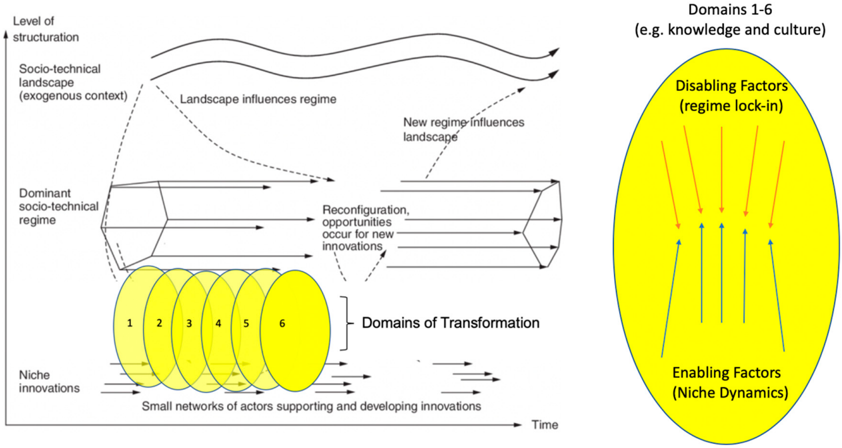
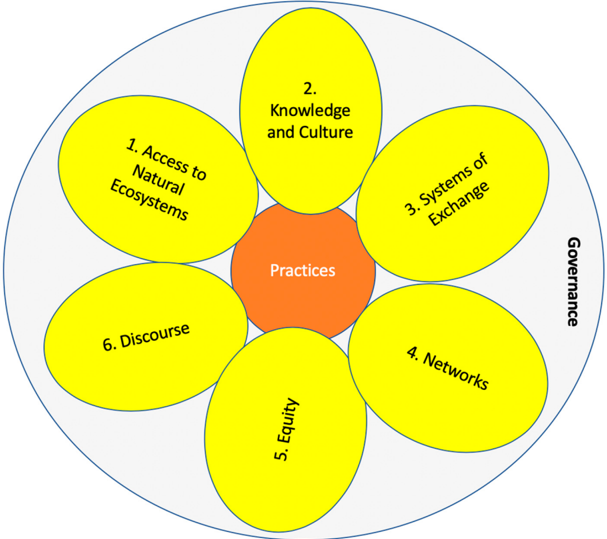
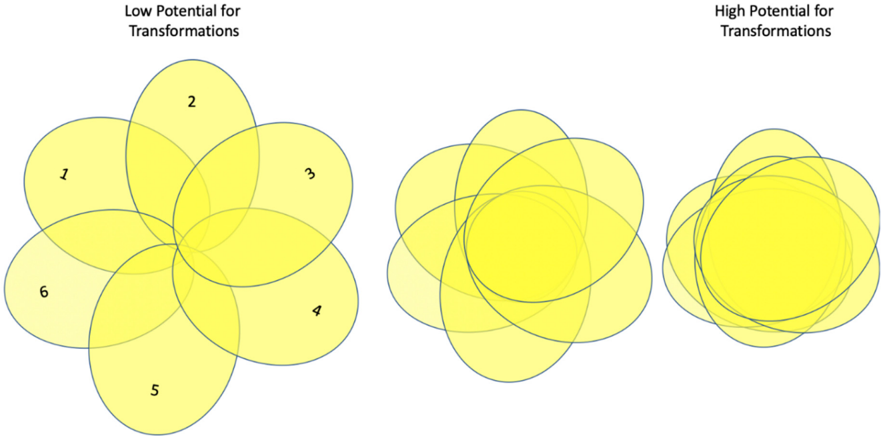
The acceleration of ecological crises has driven a growing body of thinking on sustainability transitions. Agroecology is being promoted as an approach that can address multiple crises in the food system while addressing climate change and contributing to the Sustainable Development Goals. Beyond the more technical definition as, “the ecology of food systems”, agroecology has a fundamentally political dimension. It is based on an aspiration towards autonomy or the agency of networks of producers and citizens to self-organize for sustainability and social justice. In this article, we use the multi-level perspective (MLP) to examine agroecology transformations. Although the MLP has been helpful in conceptualizing historic transitions, there is a need to better understand: (a) the role of and potential to self-organize in the context of power in the dominant regime, and (b) how to shift to bottom-up forms of governance—a weak point in the literature. Our review analyzes the enabling and disabling conditions that shape agroecology transformations and the ability of communities to self-organize. We develop the notion of ‘domains of transformation’ as overlapping and interconnected interfaces between agroecology and the incumbent dominant regime. We present six critical domains that are important in agroecological transformations: access to natural ecosystems; knowledge and culture; systems of exchange; networks; discourse; and gender and equity. The article focuses on the dynamics of power and governance, arguing that a shift from top down technocratic approaches to bottom up forms of governance based on community-self organization across these domains has the most potential for enabling transformation for sustainability and social justice.
Overview
The claims and statistics of this paper haven’t been checked yet.
Free: it reads the open-access text and checks the first 5 claims that cite a source we can check. Create a free account to check every claim.
Integrity signals
Registry
Cites
Statistics
Figures
Verification
Claims the paper makes
The claims and statistics of this paper haven’t been checked yet.
Free: it reads the open-access text and checks the first 5 claims that cite a source we can check. Create a free account to check every claim.
Claims other papers make about this one
Each is checked against this paper’s own text: does it say what the citing paper says it does?
The source backs part of the claim, not all of it — or backs it for a different population, condition or comparison.
In the citing paper
“Engaging in on-farm experiments, however, challenges current scientific approaches such as dealing with variability of farmer management, requiring more frequent communication between researchers and farmers, and maybe also different cross-disciplinary analytical tools (González-Sánchez et al. 2012, Anderson et al. 2019a).”
From A heuristic framework to portray agroecological transition initiatives in reflexive arrangements, illustrated with a conservation agriculture network in Denmark (2025) · cites this paper as Anderson et al. 2019a
Experimental — accuracy not yet measuredThe cited source says what the claim attributes to it.
In the citing paper
“Social networks mediate agroecological transitions by acting as conduits of information, collaboration, and material resources (see review in Anderson et al. 2019a).”
From A heuristic framework to portray agroecological transition initiatives in reflexive arrangements, illustrated with a conservation agriculture network in Denmark (2025) · cites this paper as Anderson et al. 2019a
The cited source says what the claim attributes to it.
In the citing paper
“This focus on horizontal knowledge structures through a facilitative and participatory advisory approach was distinct from the dominant centralized knowledge production and top-down knowledge diffusion (Anderson et al. 2019a).”
From A heuristic framework to portray agroecological transition initiatives in reflexive arrangements, illustrated with a conservation agriculture network in Denmark (2025) · cites this paper as Anderson et al. 2019a
The cited source says what the claim attributes to it.
In the citing paper
“Such an advisory approach strengthens horizontal knowledge structures (Anderson et al. 2019a, Bourne et al. 2021) and enhances the development of farmer skills to solve complex problems arising in their specific context (Cristofari et al. 2017, Charatsari et al. 2019, Bourne et al. 2021, Krafft et al. 2022), which makes it more effective (Ataei et al. 2019, Anderson et al. 2019a).”
From A heuristic framework to portray agroecological transition initiatives in reflexive arrangements, illustrated with a conservation agriculture network in Denmark (2025) · cites this paper as Anderson et al. 2019a
The cited source says what the claim attributes to it.
In the citing paper
“This is not surprising since, according to Anderson et al. (2019), access to natural resources is one of the main lock-ins to the wide-scale use of agroecological practices.”
From Scenarios for an agroecological transition of smallholder family farmers: a case study in Guadeloupe (2022) · cites this paper as Anderson et al. (2019)
2 more claims about this paper
Create a free account to see every claim other papers make about this one.
Self-check
Percentages, sums and reported differences re-computed from the paper’s own numbers.
The self-check needs the paper’s full text.
Citations
Cites
Governing the Commons: The Evolution of Institutions for Collective Action
Ostrom, E. (1990) · doi:10.1017/cbo9780511807763 · Cited by 20,653
Governing the Commons: The Evolution of Institutions for Collective Action
Field, B. C., & Ostrom, E. (1992) · Land Economics · doi:10.2307/3146384 · Cited by 18,859
(1976) · Cited by 10,813
Framing Processes and Social Movements: An Overview and Assessment
Benford, R. D., & Snow, D. A. (2000) · Annual Review of Sociology · doi:10.1146/annurev.soc.26.1.611 · Cited by 9,953 · cited 5×
“Given the dynamic and contested framing of agroecology, discourse on agroecology is in constant flux, and these fluid framing processes influence the direction of the agroecological transition, and the capacity of communities to self-organize and shape agroecological transformations [136,137].”
BackgroundInfluentialTypology of sociotechnical transition pathways
Geels, F. W., & Schot, J. (2007) · Research Policy · doi:10.1016/j.respol.2007.01.003 · Cited by 5,245 · cited 4×
“We then introduce the multi-level perspective—an influential framework for analyzing sustainability transitions [17,18].”
BackgroundInfluentialSustainability transitions: An emerging field of research and its prospects
Markard, J., Raven, R., & Truffer, B. (2012) · Research Policy · doi:10.1016/j.respol.2012.02.013 · Cited by 3,763 · cited 2×
“The regime level involves, “established practices and associated rules that stabilize existing systems” [17,26] where alignments and interdependencies across regime dimensions generate processes of path-dependency or ‘lock-in’ that enable stability and preserve the status quo.”
BackgroundThe multi-level perspective on sustainability transitions: responses to seven criticisms
Geels, F. W. (2011) · Environmental Innovation and Societal Transitions · doi:10.1016/j.eist.2011.02.002 · Cited by 3,092 · cited 3×
“We then introduce the multi-level perspective—an influential framework for analyzing sustainability transitions [17,18].”
BackgroundThe Politics of the Earth: Environmental Discourses
Dryzek, J. S. (1997) · Cited by 3,013
An agenda for sustainability transitions research: State of the art and future directions
Köhler, J., Geels, F. W., Kern, F., Markard, J., Onsongo, E., Wieczorek, A., Alkemade, F., Avelino, F., Bergek, A., Boons, F., et al. (2019) · Environmental Innovation and Societal Transitions · doi:10.1016/j.eist.2019.01.004 · Cited by 2,800 · cited 1×
“Whereas power and governance are not typically the central focus in the sustainability transitions literature [27], our approach is based on the assumption that any transformative system’s change will require an analysis of power and governance.”
BackgroundThe number, size, and distribution of farms, smallholder farms, and family farms worldwide
Lowder, S. K., Skoet, J., & Raney, T. (2016) · World Development · doi:10.1016/j.worlddev.2015.10.041 · Cited by 2,012 · cited 1×
“In addition, processes of land fragmentation and declining average farm size in most of the world’s less industrialized countries over the past several decades are undermining agroecology [56].”
Background
Research works printed but not linked: 6
- 76. Petersen, P.F. Arreglos Institucionales Para la Intensificación Agroecológica. Una Mirada al Caso Brasileño Desde la Agroecología Política. Ph.D. Thesis, Universidad de Pablo de Olavide, Sevilla, Spain, 2017.
- 87. Rivera Ferre, M.; Álvare, I. From a Market Approach to the Centrality of Life: An Urgent Change for Women; Right to Food and Nutrition Watch; Global Network for the Right to Food and Nutrition: Vienna, Austria, 2017; pp. 36-41.
- Campeau, 2018, Equity, equality and non-discrimination to guide food-system reform, UNSCN-News, 45, 7
- Mora, 2018, Inequality and malnutrition, UNSCN-News, 45, 15
- 2014, There will be no agroecology without feminism. The Brazilian case, Sustentabilidade em Debate, 5, 76
- Loconto, 2019, Defining agroecology, Int. J. Sociol. Agric. Food, 25, 116
Cited by
Items 101–200 of 374
Passaro, A., & Randelli, F. (2022) · Agroecology and Sustainable Food Systems · doi:10.1080/21683565.2022.2104421 · Cited by 31
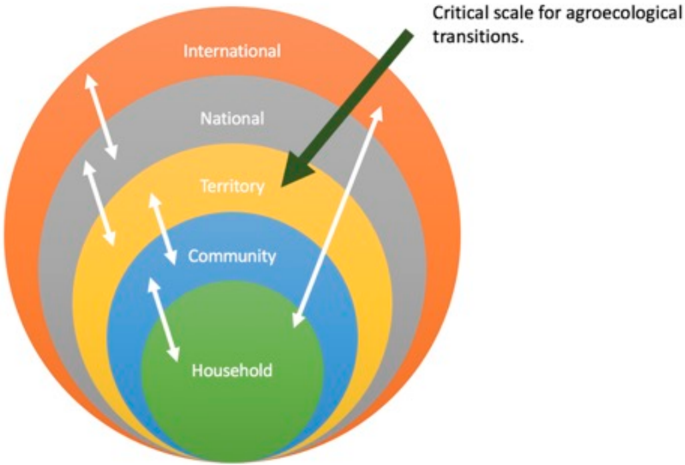
“Furthermore, being the territorial level increasingly seen as the decisive level for fostering agroecological transformations (Anderson et al. 2019), since it is the level where actors, new practices, and political agency come together and where food producers’ strategies and consumers’ practices…”
BackgroundOrozco-Meléndez, J. F., & Paneque‐Gálvez, J. (2022) · Ecological Economics · doi:10.1016/j.ecolecon.2022.107582 · Cited by 34
Chavez-Miguel, G., Hämmerle, J., González, A., Canetti, C., Gleich, P., Halfast, R. L., Feuchter, M., Buszydlo, D., Schwarz, L., Scheepstra, I., et al. (2024) · Agroecology and Sustainable Food Systems · doi:10.1080/21683565.2024.2341987 · Cited by 24
“This worldwide scattering of agroecology experiences represent niches of socio-ecological innovation helping advance local food system resilience (Anderson et al. 2019; Zurek et al. 2022).”
BackgroundDumont, B., Barlagne, C., Cassart, P., Duval, J. E., Fanchone, A., Gourdine, J.-L., Huguenin‐Elie, O., Kazakova-Mateva, Y., Klötzli, J., LÜSCHER, A., et al. (2024) · animal · doi:10.1016/j.animal.2024.101367 · Cited by 30
Who Gets to Adopt? Contested Values Constrain Just Transitions to Agroforestry
Hastings, Z., Wong, M., & Ticktin, T. (2021) · Frontiers in Sustainable Food Systems · doi:10.3389/fsufs.2021.727579 · Cited by 24
“Some of the most significant obstacles to agroecological transitions include difficulty accessing land, labor, and start-up capital (Anderson et al., 2019).”
BackgroundInfluentialJuri, S., Norberg, M. B., Clark, L. B., Riani, M. C., Jobbagy, E. G., Marcone, J., Mazzeo, N., Meerhoff, M., Trimble, M., Zurbriggen, C., et al. (2022) · Frontiers in Sustainable Food Systems · doi:10.3389/fsufs.2022.887034 · Cited by 28
“Tackling this complexity requires systemsbased approaches that can consider and integrate marginal actors and embrace both local and global dynamics, while at the same time having the ability to focus on concrete and contextual circumstances (Eakin et al., 2017; Caron et al., 2018; Anderson et al., 2019; Dengerink et…”
BackgroundCortés, J., Vieli, L., & Ibarra, J. T. (2023) · Ecological Indicators · doi:10.1016/j.ecolind.2023.110640 · Cited by 25
Scenarios for an agroecological transition of smallholder family farmers: a case study in Guadeloupe
Andrieu, N., Blundo-Canto, G., Chia, E., Diman, J. L., Dugué, P., Fanchone, A., Howland, F., Ott, S., & Poulayer, C. (2022) · Agronomy for Sustainable Development · doi:10.1007/s13593-022-00828-x · Cited by 18
“This is not surprising since, according to Anderson et al. (2019), access to natural resources is one of the main lock-ins to the wide-scale use of agroecological practices.”
BackgroundWhite, A., Faulkner, J. W., Niles, M. T., Conner, D., & Méndez, V. E. (2023) · Elementa Science of the Anthropocene · doi:10.1525/elementa.2022.00039 · Cited by 30
New Possibilities for Women’s Empowerment through Agroecology in Himachal Pradesh, India
Behl, P., Osbahr, H., & Cardey, S. P. (2023) · Sustainability · doi:10.3390/su16010140 · Cited by 26
The evolution of agroecology in Mexico, 1920–2023
Toledo, V. M., & Argueta, Q. (2024) · Elementa Science of the Anthropocene · doi:10.1525/elementa.2023.00092 · Cited by 22
Maughan, C., Anderson, C., & Kneafsey, M. (2020) · Journal of Agriculture Food Systems and Community Development · doi:10.5304/jafscd.2020.093.024 · Cited by 30
Self-citationPacker, G., & Zanasi, C. (2023) · Frontiers in Sustainable Food Systems · doi:10.3389/fsufs.2023.1229505 · Cited by 26
Time to transform? Sustainability narratives for European food systems
Guerrieri, V., Borchardt, S., Listorti, G., Marelli, L., & Vittuari, M. (2025) · Global Food Security · doi:10.1016/j.gfs.2025.100831 · Cited by 22
“Biesbroek et al.,2023; Fanzo et al., 2020 Anderson et al., 2019; B ´ en ´ e et al., 2019a; De Schutter et al., 2020; Díaz-M ´ endez and Lozano-Cabedo, 2020; F. Galli et al., 2020; Weituschat et al., 2022; Zawali ´ nska et al., 2022 Infrastructural Lack/inadequacy of risk management tools;…”
InfluentialControversial topics in agroecology: A European perspective
Migliorini, P., Bàrberi, P., Bellon, S., Gaifami, T., Gkisakis, V. D., Peeters, A., & Wezel, A. (2020) · International Journal of Agriculture and Natural Resources · doi:10.7764/ijanr.v47i3.2265 · Cited by 16
“…that is centered on the synergistic relationships between, on the one hand, people and nature and, on the other hand, knowledge and the rights of food, in addition to the decentering of profit, market, technology transfer and similar elements of “mainstream development” (Anderson et al., 2019).”
BackgroundA polycentric food sovereignty approach to climate resilience in the Philippines
Heckelman, A., Chappell, M. J., & Wittman, H. K. (2022) · Elementa Science of the Anthropocene · doi:10.1525/elementa.2020.00033 · Cited by 27
Self-citationOrtiz-Valverde, R., & Peris, J. (2022) · Sustainability · doi:10.3390/su14052695 · Cited by 26
Tschersich, J., Sievers-Glotzbach, S., Gmeiner, N., & Kliem, L. (2022) · Journal of Rural Studies · doi:10.1016/j.jrurstud.2022.12.005 · Cited by 22
García, D. L., Calvo, L. B., Tormo, V. C., Carucci, P., Torrijos, I. D., Garcés, A. H., Nicolás, M. L., Sánchez, J. M. P., & Vicente-Amazán, L. (2021) · Boletín de la Asociación de Geógrafos Españoles · doi:10.21138/bage.2968 · Cited by 29
“En estos grupos se trató de incluir perfiles diversos por cuestiones de género, clase social y raza, aspectos clave en el enfoque agroecológico de las transiciones (Anderson et al., 2019).”
BackgroundCrop diversification in Idaho’s Magic Valley: the present and the imaginary
Spangler, K., Burchfield, E., Radel, C., Jackson‐Smith, D. B., & Johnson, R. (2022) · Agronomy for Sustainable Development · doi:10.1007/s13593-022-00833-0 · Cited by 19
“For agroecology to be most transformative, it must be centered on the synergies between and agency of people and nature and decentered away from the sole focus on profit and “the market” (Anderson et al. 2019).”
BackgroundLamine, C., Dodet, F., Demené, C., Rotival, D., Latré, L., Sabot, N., Chenot, L., Hilaire, M.-P., Audibert, O., Waldschmidt, P., et al. (2022) · Géocarrefour · doi:10.4000/geocarrefour.20864 · Cited by 32
Stone, T. F., Alami, S., Bach, J. L., Bindelle, J., Busse, M., Ciaccia, C., Rivera‐Ferre, M. G., García, D. L., Kozar, R., Plaas, E., et al. (2025) · Agroecology and Sustainable Food Systems · doi:10.1080/21683565.2025.2560915 · Cited by 24
“Anderson et al. (2019) focus on the conditions at the interface between agroecology and the dominant agro-industrial model at the regime level and emphasize that community self-organization is best placed to manage the intersections in these domains for successful transitions.”
Ruggieri, F., Coulon‐Leroy, C., & Mazé, A. (2023) · Sustainability · doi:10.3390/su15129371 · Cited by 22
Trends in agroforestry research over 4 decades
Hastings, Z., Ocloo, X. S., Chapman, M., Hunt, L. G., & Stenger, K. (2023) · Elementa Science of the Anthropocene · doi:10.1525/elementa.2022.00151 · Cited by 17
Agroecology and the social sciences: A half-century systematic review
Galt, R. E., Pinzón, N., Robinson, N. I., & Coronil, M. B. B. (2024) · Agricultural Systems · doi:10.1016/j.agsy.2024.103881 · Cited by 29
Heindorf, C., Reyes‐Agüero, J. A., & Hooft, A. V. ‘. (2021) · Frontiers in Sustainable Food Systems · doi:10.3389/fsufs.2021.597822 · Cited by 23
“Next to conditions such as access to agroecological knowledge, access to land, governmental support, and solidarity markets (FAO, 2018b; Anderson et al., 2019), agroecological transformation and scaling depend on native or local seeds as a non-replaceable good linked to multiple dimensions of the agroecosystem (Chable…”
BackgroundBacon, C. M., Gómez, M. E. F., Shin, V., Ballardo, G., Kriese, S., McCurry, E., Martinez, E., & Rivas, M. (2023) · Agroecology and Sustainable Food Systems · doi:10.1080/21683565.2023.2171172 · Cited by 22
“The IPES Report contributed to a rapidly expanding body of literature on agroecological transitions and agri-food system transformations (Anderson et al. 2019; DeLonge, Miles, and Carlisle 2016; Gliessman and Ferguson 2020; Chappel 2018).”
BackgroundMore than food production: Assemblages of values underpinning women‐led agroecological initiatives
Vizuete, B., Groß, M., García‐Llorente, M., Oteros‐Rozas, E., & Martín‐López, B. (2025) · People and Nature · doi:10.1002/pan3.70006 · Cited by 18
Just wheat transitions?: working toward constructive structural changes in wheat production
Hale, J. W., Schipanski, M., & Carolan, M. (2020) · Local Environment : the International Journal of Justice and Sustainability · doi:10.1080/13549839.2020.1861591 · Cited by 13
“In this way, there are power imbalances and democratic deficits in shaping how to improve the food system, which often neglect community-led governance (Anderson et al. 2019) and opportunities in aiming to garner support for incorporating farmer’s knowledge into the production of producer led and controlled initiative…”
BackgroundInfluentialPolita, F., & Madureira, L. (2021) · Land · doi:10.3390/land10030322 · Cited by 20
“[36] Looks into studies using MLP in order to have a better understanding of communities’ participatory self-organisation regarding agroecology.”
MethodFraming Political Issues in Food System Transformative Changes
Sodano, V., & Gorgitano, M. T. (2022) · Social Sciences · doi:10.3390/socsci11100459 · Cited by 18
“…group of economic and agricultural development thinkers, food security scholars, donor agencies, and private foundations who have shaped food system policymaking in governmental and intergovernmental spaces in adherence to a predominately ‘productionist’ perspective” (M. Anderson et al. 2019).”
BackgroundPalestina-González, M. I., Carranza-Cerda, I., López-Reyes, L., Torres, E., & Gómez, S. E. S. (2021) · Environments · doi:10.3390/environments8050040 · Cited by 19
Einbinder, N., Morales, H., Cacho, M. M. Y. T. G., Ferguson, B. G., Maya, E. M. A., & Nigh, R. B. (2022) · Agriculture and Human Values · doi:10.1007/s10460-022-10299-1 · Cited by 16
Mockshell, J., Omulo, G., Hidalgo, F., Quintero, M., Ritter, T. N., Ramirez, G. A. O., & Place, F. (2025) · Agroecology and Sustainable Food Systems · doi:10.1080/21683565.2025.2524730 · Cited by 18
“As a framework centered on synergistic socio-ecological relationships and profound democratization of agrifood systems, agroecology departs from current dominant agrifood systems (Anderson et al. 2019).”
Paganini, N., & Stöber, S. (2021) · The Journal of Agricultural Education and Extension · doi:10.1080/1389224x.2021.1873157 · Cited by 18
“It is also imperative for communities to understand agencies and power within their local context to gain the ability to self-organise (Anderson et al. 2019).”
BackgroundUsing the Sustainable Development Capacity of Key Counties to Guide Rural Revitalization in China
Chen, J., Zeng, H., & Gao, Q. (2023) · International Journal of Environmental Research and Public Health · doi:10.3390/ijerph20054076 · Cited by 13
“Therefore, based on different perspectives, such as sustainability theory [37,38], self-development capacity theory [39,40], poverty theory [41,42], and human–land relationship theory [43,44], there have been numerous empirical studies on the sustainability of different research regions [45,46].”
BackgroundRivera, I., de León, D. D., & Pérez-Salazar, M. D. R. (2024) · Frontiers in Sustainable Food Systems · doi:10.3389/fsufs.2024.1450321 · Cited by 20
Carlile, R., & Garnett, T. (2021) · doi:10.56661/96cf1b98 · Cited by 22
Vizuete, B., García‐Llorente, M., Pérez‐Ramírez, I., & Oteros‐Rozas, E. (2024) · People and Nature · doi:10.1002/pan3.10761 · Cited by 19
Conceptualizing the governance challenges for food system transformation
Vignola, R., & Oosterveer, P. J. M. (2025) · Frontiers in Sustainable Food Systems · doi:10.3389/fsufs.2025.1397574 · Cited by 20
Freed, S., Voss, R. C., Falk, T., Rietveld, A. M., Alary, V., Chimonyo, V. G. P., Frija, A., Djurfeldt, N. G., Lestrelin, G., Singh, S., et al. (2025) · Agricultural Systems · doi:10.1016/j.agsy.2025.104399 · Cited by 14
Learning, playing, and experimenting with critical food futures
McGreevy, S. R., Rupprecht, C. D. D., Tamura, N., Ota, K., Kobayashi, M., & Spiegelberg, M. (2022) · Frontiers in Sustainable Food Systems · doi:10.3389/fsufs.2022.909259 · Cited by 14
“Yet even transdisciplinary work struggles to open up complex and highly segregated food policy governance for co-production (Barling et al., 2002; Anderson et al., 2019).”
BackgroundSahelian smallholders’ varietal mixtures reconcile yield and agrobiodiversity conservation
Cissé, A., Clermont‐Dauphin, C., Sall, S. N., Sakmi, G. I. E., Groupement, M. P., Ndiaye, A., Diouf, M., Traore, B., Ndir, K. N., Kane, N. A., et al. (2022) · Basic and Applied Ecology · doi:10.1016/j.baae.2022.12.006 · Cited by 13
Jiménez‐Soto, E., Fairbairn, M., Muramoto, J., & Shennan, C. (2024) · Agroecology and Sustainable Food Systems · doi:10.1080/21683565.2024.2303454 · Cited by 17
“Agroecological practices are developed through robust social networks, and the degree of social organization for knowledge exchange can determine the scalability of agroecology (Anderson et al. 2019, 2020; Mier y Terán Giménez Cacho et al. 2018; Pimbert 2017).”
BackgroundMethodInfluentialCan gender transformative agroecological interventions improve women’s autonomy?
Kansanga, M. M., Kerr, R. B., Lupafya, E., Dakishoni, L., & Luginaah, I. (2024) · Agriculture and Human Values · doi:10.1007/s10460-024-10544-9 · Cited by 22
“…in food systems and creating opportunities to renegotiate unequal social norms in ways that enhance agency for both men and women working interactively, across key spheres, including decision making, leadership, control of income and time (Anderson et al. 2019; Bezner Kerr et al. 2022).”
Ouko, K. O., Yugi, C. L., Oketch, M. O., Mboya, J. B., Ogola, R. J. O., Muthoka, M., & Midamba, D. C. (2024) · Cogent Social Sciences · doi:10.1080/23311886.2024.2363491 · Cited by 19
“…to sustainable food systems highlight the potential of agroecology to support small farmers in managing challenging environments sustainably (Anderson et al., 2019; wezel et al., 2020). this approach aims to meet subsistence needs without relying on mech-anization, chemical fertilizers,…”
Johansson, E., Martin, R., & Mapunda, K. M. (2024) · Frontiers in Sustainable Food Systems · doi:10.3389/fsufs.2024.1423861 · Cited by 20
Constructing the Transitions and Co-Existence of Rural Development Models
Sili, M., Haag, M. I., & Nieto, M. B. (2022) · Sustainability · doi:10.3390/su14084625 · Cited by 13
Ponomarova, M., Євсюков, О. Ф., Shovkun-Zablotska, L., Zolotarоva, S., & Kramarenko, I. (2022) · Financial and credit activity problems of theory and practice · doi:10.55643/fcaptp.4.45.2022.3825 · Cited by 13
“The problems of forming and managing the development of agricultural production and processing of agricultural products, and preserving the value of food technologies were studied by foreign scientists: Cláudia et al [11], Nicholson et al [12], Abrhám et al [13], Anderson et al [14], Pigforda et al [15], Golian et al…”
BackgroundKozar, R., Djalante, R., Leimona, B., Subramanian, S. M., & Saitô, O. (2023) · Earth System Governance · doi:10.1016/j.esg.2023.100164 · Cited by 18
Kapgen, D., & Roudart, L. (2020) · Agroecology and Sustainable Food Systems · doi:10.1080/21683565.2020.1724582 · Cited by 17
“…social change, initiated at the grassroots level by self-organized communities – of food producers, food eaters and otherwise concerned citizens –, based on their own analysis of their situation, without outside intervention by so-called “experts” or other external actors (Anderson et al. 2019).”
BackgroundKatre, A., Bertossi, T., Clarke-Sather, A., & Parsatoon, M. (2022) · Sustainability · doi:10.3390/su14063160 · Cited by 12
Soft adaptation: The role of social capital in building resilient agricultural landscapes
Grandpré, A. D., Elton, C., Senese, D. M., & Mullinix, K. (2022) · Frontiers in Agronomy · doi:10.3389/fagro.2022.980888 · Cited by 11
“Most recently, political instability, an accelerated competition for land and water resources brought on by increasing urbanization, and a series of global human health crises, have intensified long standing issues such as succession planning and supply chain disruptions (Howden et al., 2007; Young et al., 2010; Jamir…”
BackgroundTarsiguel, L., Dorey, E., Dorel, M., & Andrieu, N. (2023) · Agricultural Systems · doi:10.1016/j.agsy.2023.103710 · Cited by 17
Agroforestry policy development in England: a question of knowledge transference
Venn, R., & Burbi, S. (2023) · Land Use Policy · doi:10.1016/j.landusepol.2023.106936 · Cited by 11
Penvern, S., Lamine, C., Derbez, F., Ollivier, G., Rénier, L., Roche, R., & Tuscano, M. (2023) · Agroecology and Sustainable Food Systems · doi:10.1080/21683565.2023.2246395 · Cited by 13
“2016), and reductionist versus systemic (Anderson et al. 2019).”
Aassouli, D., Akande, A., & Jureidini, R. (2023) · Sustainability · doi:10.3390/su152215789 · Cited by 23
Wordofa, M. G., Aweke, C. S., Endris, G. S., Tolesa, G. N., Lemma, T., Hassen, J. Y., Lucantoni, D., & Mottet, A. (2024) · Agroecology and Sustainable Food Systems · doi:10.1080/21683565.2024.2370316 · Cited by 13
“Agricultural development and food system transformation have been facing enormous challenges globally (Mottet et al., 2020), especially in rural areas (HLPE 2019) and production systems based on conventional agricultural practices (Anderson et al. 2019).”
Ameur, F., & Léauthaud, C. (2024) · Agroecology and Sustainable Food Systems · doi:10.1080/21683565.2024.2417266 · Cited by 14
“It is showcased as an approach that could support the food system transition, safeguard resources and improve human wellbeing (Anderson et al. 2019; Wezel et al. 2020).”
Power dynamics shape sustainability transitions in a modeled food system
Williams, T. G., Brown, C., Diogo, V., Magliocca, N. R., Molla, N., Rounsevell, M., Zagaria, C., & Verburg, P. H. (2024) · One Earth · doi:10.1016/j.oneear.2024.11.012 · Cited by 13
Soil governance in Tunisia: analyzing the potentials for agroecology transformations
Schütze, N., Thiel, A., Buhrow, A., Fouzai, A., & Götz, A. (2025) · Agroecology and Sustainable Food Systems · doi:10.1080/21683565.2025.2456912 · Cited by 15
“These domains are i) rights to nature (i.e., to land, water, seeds and biodiversity), ii) knowledge and culture, iii) systems of economic exchange, iv) networks, v) equity, and vi) discourse (Anderson et al. 2019, 2021).”
InfluentialGonzález-Rosado, M., Parras‐Alcántara, L., Aguilera-Huertas, J., & Lozano‐García, B. (2021) · Agriculture · doi:10.3390/agriculture11101024 · Cited by 12
“In agroecological processes, direct, clear and flexible marketing chains are essential, where trust and recognition of those involved play a decisive role [39].”
BackgroundJekums, A. J., Ahmed, F., Baker, L. B., Fernandez, M. F., & Brock, S. (2021) · Issue Lab (Candid) · doi:10.15868/socialsector.39486 · Cited by 39
Food systems and access to healthy food in an Amazonian context
Maluf, R. S., Burlandy, L., Cintrão, R. P., Tribaldos, T., & Jomalinis, E. (2024) · Sustainability · doi:10.3390/su16072652 · Cited by 9
Hunt, L. G., Thompson, J. J., & Niles, M. T. (2025) · Agronomy for Sustainable Development · doi:10.1007/s13593-024-01004-z · Cited by 14
“These social networks provide research farmers with opportunities for learning and innovation, as well as with resources and technical assistance that support successful implementation (Lubell et al. 2014; Dolinska and d’Aquino 2016; Anderson et al. 2019).”
Sapiains, R., Azócar, G., Sariego, P. M., Valenzuela, C., V, Aldunce, P., Martínez, C. A. C., Rojas, M., Martínez, A. P., Medina, L., & Bozkurt, D. (2022) · Sustainability · doi:10.3390/su141912034 · Cited by 12
Moraes, A., Farinaci, J. S., Prado, D. S., Araujo, L., Dias, A. C. M. I., Ummus, R. E., & Seixas, C. S. (2023) · Ecology and Society · doi:10.5751/es-13773-280107 · Cited by 19
Nature-positive futures : Food systems as a catalyser for change
Mommer, L., Nel, J. L., van Apeldoorn, D. F., van Hattum, T., Jones-Walters, L., Polman, N. B. P., Richter, A. P., Westerink, J., Alpízar, F., Candel, J., et al. (2022) · doi:10.18174/574286 · Cited by 13
Optimizing Agricultural Landscapes: Measures Towards Prosperity and Sustainability
Mueller, L., Eulenstein, F., Mirschel, W., Schindler, U. G., Sychev, V. G., Rukhovich, O. V., Хазретович, Ш. А., Романенков, В. А., Lukin, S. M., McKenzie, B. M., et al. (2021) · Innovations in landscape research · doi:10.1007/978-3-030-67448-9_3 · Cited by 10
Miranda, S. P., Wegner, R. C., & Dias, A. (2024) · Revista de Economia e Sociologia Rural · doi:10.1590/1806-9479.2023.270700pt · Cited by 8
García, D. L., García-García, J., García, V. G., Sereno, O. R., & Vázquez-Macías, G. (2025) · Agroecology and Sustainable Food Systems · doi:10.1080/21683565.2025.2456946 · Cited by 15
“…is the main tool that makes participatory processes become transformative of the unbalanced power relations in the food system (Mendez et al. 2017; Anderson et al. 2019; Busse et al. 2023; González de Molina and Guzmán 2017; Sachet et al. 2021; Val et al. 2019), which are at the basis of its…”
Feminist Agroecology: Towards Gender-Equal and Sustainable Food Systems in Sub-Saharan Africa
Sibanda, M. (2025) · Agricultural & Rural Studies · doi:10.59978/ar03010001 · Cited by 21
“Similarly, Anderson et al. (2019) emphasize that agroecological practices often require a labor-intensive approach, leading to changes in gender roles and responsibilities, with women taking on greater responsibilities through their work both on farms and in households.”
An assessment of carbon taxation policies: The case of Denmark
Thomsen, S. F., Raza, H., & Byrialsen, M. R. (2025) · Ecological Economics · doi:10.1016/j.ecolecon.2025.108741 · Cited by 9
Orozco-Meléndez, J. F., & Paneque‐Gálvez, J. (2023) · Environment Development and Sustainability · doi:10.1007/s10668-023-03377-9 · Cited by 13
“Yet, co-producing UTAK on such a relevant matter for the future of climate, biodiversity and society is essential if humans are to design and build transitions to just sustainabilities (Anderson et al., 2019).”
Anderson, C., Bruil, J., Chappell, M. J., Kiss, C., & Pimbert, M. P. (2020) · Springer eBooks · doi:10.1007/978-3-030-61315-0_3 · Cited by 16
Self-citationWigboldus, S., van Eldik, Z. C. S., & Vernooij, D. M. (2021) · doi:10.18174/559148 · Cited by 8
“…Contributing to food system transitions/transformations to sustainability through the (widespread) application of agroecological approaches (e.g. Anderson et al. 2019) • Agricultural intensification oriented pathways: • GMO/biotechnology oriented pathways: Contributing to food…”
BackgroundTransformational Agroecology: The Making and Unmaking of Zero Budget Natural Farming in India
Pandey, P., & Cabral, L. (2025) · Science Technology and Society · doi:10.1177/09717218251326835 · Cited by 9
Elsner, F., Herzig, C., Pugliese, P., Bilali, H. E., Matthiessen, L. E., Góralska-Walczak, R., Aboussaleh, Y., Zanasi, C., & Strassner, C. (2025) · Agriculture and Human Values · doi:10.1007/s10460-025-10742-z · Cited by 10
“Thereby, multi-actor networks with actors from different domains (e.g., politics, research, private realm) but also between different niche actors played a major role (Anderson et al. 2019; Belda-Miquel et al. 2020; Gugerell and Penker 2020; Özatağan and Karakaya Ayalp 2021; Salavisa et al. 2021).”
Bonatti, M., Reynaldo, R. G., Martín‐López, B., Bolívar, S., Cordero-Fernández, M., Chavez-Miguel, G., Martin, A., Hämmerle, J., Schröter, B., Erismann, C., et al. (2025) · Global Environmental Change · doi:10.1016/j.gloenvcha.2025.103042 · Cited by 15
Villán, A., Villamayor‐Tomás, S., & Corbera, E. (2025) · Journal of Rural Studies · doi:10.1016/j.jrurstud.2025.103815 · Cited by 11
Sato, F., Calvet‐Mir, L., & Villamayor‐Tomás, S. (2023) · Local Environment · doi:10.1080/13549839.2023.2279553 · Cited by 9
“As pointed by some authors, these socially embedding practices have tended to be ignored by students of the agroecology movement (Anderson et al. 2019).”
BackgroundOrigins, Benefits and the Political Basis of Agroecology
Anderson, C., Bruil, J., Chappell, M. J., Kiss, C., & Pimbert, M. P. (2020) · Springer eBooks · doi:10.1007/978-3-030-61315-0_2 · Cited by 10
Self-citationAlyokhin, A., & Kryukov, V. Y. (2022) · Elsevier eBooks · doi:10.1016/b978-0-12-821237-0.00003-2 · Cited by 9
Hett, C., Aye, Z. C., Gironde, C., Beban, A., Castella, J., Bernhard, R., & Ehrensperger, A. (2023) · Journal of Land Use Science · doi:10.1080/1747423x.2023.2248980 · Cited by 8
“Women are key stakeholders in rural family farming (Anderson et al., 2019) and their empowerment is shown to have a direct impact on agricultural productivity and household food security (Sraboni et al., 2014).”
BackgroundDuPre, M. E., Weaver, D. K., Seipel, T. F., & Menalled, F. D. (2021) · Journal of Insect Science · doi:10.1093/jisesa/ieab008 · Cited by 9
PRECISION AGRICULTURE THROUGH AGROECOLOGICAL APPROACH AND MATHEMATICAL MODELING
Sadovski, A. (2020) · Ecological Engineering and Environment Protection · doi:10.32006/eeep.2020.2.6369 · Cited by 11
Fighting rural poverty in Colombia: circular agriculture by using insects as feed in aquaculture
Barragán–Fonseca, K. B., Ramírez, A. P. M., Cune, N. M., Pineda, J., Dicke, M., & Cortés, J. (2022) · doi:10.18174/561878 · Cited by 18
Das, A., Córdoba, D., Velardi, S., Wonneberger, A., & Selfa, T. L. (2025) · Agriculture and Human Values · doi:10.1007/s10460-025-10734-z · Cited by 8
“In particular, activists tend to emphasize the importance of protecting agrobiodiversity, elevating traditional knowledge, and investing in community-based breeding programs, all of which have been widely recognized as key elements of sustainable agrifood transitions (Anderson et al. 2019).”
How crop models and government visions foreclose imaginaries of agroecological futures
Johansson, E., & van Beek, L. (2025) · Futures · doi:10.1016/j.futures.2025.103701 · Cited by 7
Agroecological transitions to sustainability and biosphere reserves
de Lucio, J. V., & Seijo, F. (2023) · Agroecology and Sustainable Food Systems · doi:10.1080/21683565.2023.2231370 · Cited by 8
““The multi-level perspective (MLP) (Geels 2011) has been proposed as an useful heuristic framework for the analysis of Sustainable transitions in agroecology (Anderson et al. 2019).”
BackgroundMethodInfluentialEvaluating Sustainable Food System Innovations: A Global Toolkit for Cities
Valette, É., Blay‐Palmer, A., Intoppa, B., Battista, A. D., Roudelle, O., & Chaboud, G. (2023) · Routledge eBooks · doi:10.4324/9781003285441 · Cited by 10
Against the grain: a commons approach to the governance of ‘Alternative Grain Networks’
Maughan, C., Belletti, G., Marescotti, A., Balázs, B., Lazányi, O., & Mengoni, M. (2025) · Agricultural and Food Economics · doi:10.1186/s40100-025-00352-y · Cited by 6
“…often depend on new social relations, in particular how collaborations are arranged, and economic benefits are distributed (Balázs and Aistara 2018; Anderson et al. 2019); however, we still know very little about what economic and governance systems are being used and developed by such initiatives.”
Bio-Control Agents: A Sustainable Approach for Enhancing Soil Nutrients Use Efficiency in Farming
Karuppiah, P., Thayalan, K. J., Gopukumar, S. T., & Uma, E. (2025) · Springer eBooks · doi:10.1007/978-981-96-3232-9_10 · Cited by 11
Garrido-Garza, F., Loconto, A. M., & Robinson, D. K. R. (2025) · Entrepreneurship and Regional Development · doi:10.1080/08985626.2025.2530563 · Cited by 12
“Agroecological transitions around the world have received increased attention in the scientific literature, where scholars are exploring how they occur and how the direction of their change might be influenced (Anderson et al. 2019; Gliessman 2016, 2007; Wezel et al., 2020, 2009).”
Cortegano, M., Dias, R. C., Vidal, D. G., & Seixas, P. C. (2021) · International Journal of Sustainable Development & World Ecology · doi:10.1080/13504509.2021.1920059 · Cited by 11
“This methodology presents a multilevel perspective to develop a framework for conceptualising agroecology transformations from a governance perspective (Anderson et al. 2019).”
BackgroundMethodInfluentialCarlón, A. D., & Bottazzi, P. (2025) · Agroecology and Sustainable Food Systems · doi:10.1080/21683565.2025.2466425 · Cited by 6
“In this context, feminist agroecology should prioritize highlighting the dynamics and values contributed by diverse women in their territories, learning from their collective endeavors, and advancing toward a genuinely transformative and just agroecology transition (Anderson et al. 2019).”
Baur, P., Petersen-Rockney, M., Bowles, T. M., & Ahmed, S. (2025) · Nature Food · doi:10.1038/s43016-025-01185-0 · Cited by 6
“…regimes within exogenous contexts 14 , these five root systems describe actionable regimes ingrained within a broader socio-cultural and ecological substrate, or context, from which novel organizations and innovations can emerge by opening space for new niches in any given root system 15,16 .”
The role of intermediaries in transitions to agroecology in the Upper Midwest
Conway, T. M. (2025) · Agriculture and Human Values · doi:10.1007/s10460-025-10762-9 · Cited by 5
“However, the MLP has been criticized by agri-food sys-tem scholars for neglecting power asymmetries (Anderson et al. 2019; Jiménez-Soto et al. 2024 ) and agency (El Bilali 2020; Isgren and Ness 2017; Stahlbrand 2016; Vivero-Pol 2017), decentering the role of governance, rarely addressing the actual…”
InfluentialGaitán‐Cremaschi, D., & Klerkx, L. (2026) · Environmental Innovation and Societal Transitions · doi:10.1016/j.eist.2026.101140 · Cited by 6
Metadata
- Authors
- Anderson, C. R., Bruil, J., Chappell, M. J., Kiss, C., & Pimbert, M. P.
- Affiliations
- Coventry University (GB)
- Cultivate !, Schuurhoven 29, 6721SM Bennekom, The Netherlands
- Corresponding author
- Anderson, Colin Ray
- Venue
- Sustainability
- Publisher
- MDPI AG
- Published
- 2019-09-25
- Volume
- 11
- Issue
- 19
- Pages
- 5272
- ISSN
- 2071-1050 (ISSN-L)
- OpenAlex
- W2975637527
- Cited by
- 375
- References
- 126
- Citations by year
- 2026: 65 · 2025: 63 · 2024: 57 · 2023: 65 · 2022: 49 · 2021: 47 · 2020: 28 · 2019: 1
- FWCI
- 64.81
- Type
- journal article
- Language
- en
- Open access
- gold
- dx.doi.org
- Licence
- Locations
- Sustainability (publishedVersion, cc-by)
- Pure (Coventry University) (submittedVersion, cc-by)
- RePEc: Research Papers in Economics (submittedVersion)
- DOAJ (DOAJ: Directory of Open Access Journals) (submittedVersion)
- Topics
- Social Sciences › Development › Agriculture, Land Use, Rural Development
- Physical Sciences › Environmental Science › Global and Planetary Change › Sustainability and Climate Change Governance
- Life Sciences › Agricultural and Biological Sciences › Ecology, Evolution, Behavior and Systematics › Agriculture and Rural Development Research
- Keywords
- agroecology, sustainability transitions, food systems, social justice, multi-level perspective, self-organization, bottom-up governance, power relations, community networks, knowledge and culture, discourse, Sustainable Development Goals, climate change
About these checks
Registry, retraction, Cites and statistics results are computed, not judged, with one exception: a printed reference that no index lists is read once by a model before it counts as a citation error. Claims are extracted by a model and kept only when their quote appears verbatim in the text; each cited source is then checked, with a model’s help, for whether it says what the claim relies on. Those verdicts can be wrong — read the claim’s quote and the cited source before relying on one.
Statistics and arithmetic are recomputed, not judged.
Confidence bands are shown only for fields calibrated on our annotated test set. None is calibrated yet, so no band is shown.
What counts as a claim ›How we measure confidence ›How we check this ›
Are you an author, or do you see a problem with this page? Request a review
Data sources
Bibliographic data: Semantic Scholar, OpenAlex, Crossref.
Contains information from the Semantic Scholar Academic Graph Datasets, made available under the ODC Attribution License (ODC-BY 1.0).
Semantic Scholar’s data is described in: Kinney, R., et al. (2023). The Semantic Scholar Open Data Platform. arXiv:2301.10140.
