

Review and Meta-Analysis of EVs: Embodied Emissions and Environmental Breakeven
Open accessThe DOI matches its Crossref record; 53 of the 53 references it cites were found in a registry or an index.
Abstract
Electric vehicles (EVs) are often considered a potential solution to mitigate greenhouse gas (GHG) emissions originating from personal transport vehicles, but this has also been questioned due to their high production emissions. In this study, we performed an extensive literature review of existing EV life-cycle assessments (LCAs) and a meta-analysis of the studies in the review, extracting life-cycle GHG emission data combined with a standardized methodology for estimating GHG electrical grid intensities across the European Economic Area (EEA), which were used to estimate a set of environmental breakeven points for each EEA country. A Monte Carlo simulation was performed to provide sensitivity analysis. The results of the review suggest a need for greater methodological and data transparency within EV LCA research. The meta-analysis found a subset of countries across the EEA where there is a potential that EVs could lead to greater life-cycle GHG emissions than a comparable diesel counterpart. A policy discussion highlights how EV policies in countries with contrasting GHG electric grid intensities may not reflect the current techno-environmental reality. This paper emphasizes the importance for researchers to accurately depict life-cycle vehicle emissions and the need for EEA countries to enact policies corresponding to their respective contextual conditions to avoid potentially enacting policies that could lead to greater GHG emissions.
Overview
The claims and statistics of this paper haven’t been checked yet.
Free: it reads the open-access text and checks the first 5 claims that cite a source we can check. Create a free account to check every claim.
Integrity signals
Registry
Cites
Statistics
Figures
Verification
Claims the paper makes
The claims and statistics of this paper haven’t been checked yet.
Free: it reads the open-access text and checks the first 5 claims that cite a source we can check. Create a free account to check every claim.
Claims other papers make about this one
Each is checked against this paper’s own text: does it say what the citing paper says it does?
The source backs part of the claim, not all of it — or backs it for a different population, condition or comparison.
In the citing paper
“illustrating how the many studies (e.g., [34,35,39,43] which discuss national results only provide a general depiction of average performance and that regional results are needed for more targeted interventions.”
From A National and Regional Greenhouse Gas Breakeven Assessment of EVs across North America (2023) · cites this paper as [39]
Experimental — accuracy not yet measuredThe source backs part of the claim, not all of it — or backs it for a different population, condition or comparison.
In the citing paper
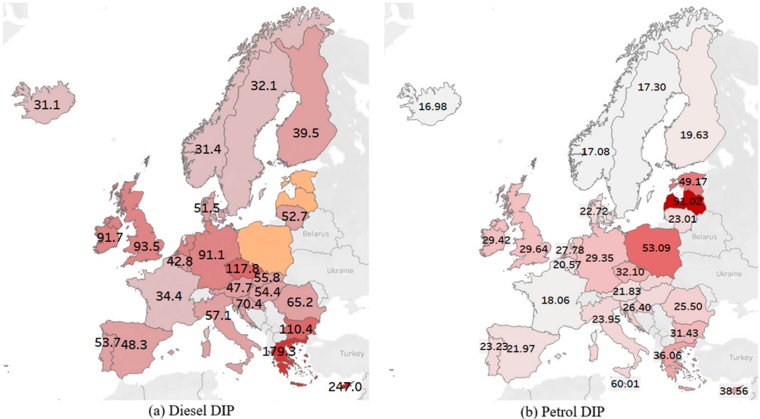
“in many locations the distance intersection point (DIP), the point at which an EV with typically higher production phase emissions becomes a lower emission alternative to an ICEV, is passed only late in the lifetime of a vehicle [36,39].”
From A National and Regional Greenhouse Gas Breakeven Assessment of EVs across North America (2023) · cites this paper as [39]
Experimental — accuracy not yet measuredThe cited source says what the claim attributes to it.
In the citing paper
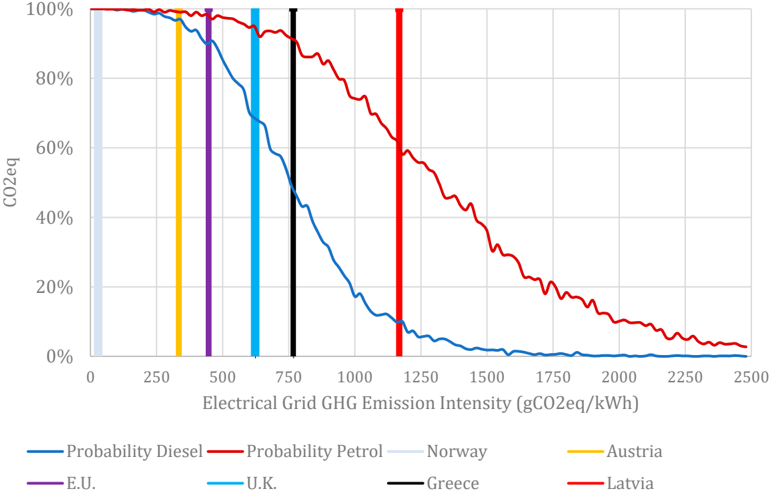
“in highly GHG intensive grid conditions this is not necessarily always the case [39].”
From A National and Regional Greenhouse Gas Breakeven Assessment of EVs across North America (2023) · cites this paper as [39]
The cited source says what the claim attributes to it.
In the citing paper
“However, this research has indicated, alongside other studies [39,41,89,91], that EVs are only able to provide limited decarbonization potential in regions with high grid carbon intensities.”
From A National and Regional Greenhouse Gas Breakeven Assessment of EVs across North America (2023) · cites this paper as [39]
The cited source says what the claim attributes to it.
In the citing paper
“This matches results from several previous studies [38,39,41], all of which found GHG emissions from EVs to be lower in areas with strong renewable energy infrastructure”
From A National and Regional Greenhouse Gas Breakeven Assessment of EVs across North America (2023) · cites this paper as [39]
Self-check
Percentages, sums and reported differences re-computed from the paper’s own numbers.
The self-check needs the paper’s full text.
Citations
Cites
Preferred Reporting Items for Systematic Reviews and Meta-Analyses: the PRISMA statement
Moher, D., Liberati, A., Tetzlaff, J., Altman, D. G., & for the PRISMA Group (2009) · BMJ · doi:10.1136/bmj.b2535 · Cited by 83,823
Preferred Reporting Items for Systematic Reviews and Meta-Analyses: The PRISMA Statement
Moher, D., Liberati, A., Tetzlaff, J., Altman, D. G., & The PRISMA Group (2009) · PLoS Medicine · doi:10.1371/journal.pmed.1000097 · Cited by 64,042 · cited 1×
“The well-established Preferred Reporting Items guided the formulation of this STARR-LCA checklist, or Systematic Reviews and Meta-Analyses (PRISMA) statement [15], from the field of medicine.”
Comparative Environmental Life Cycle Assessment of Conventional and Electric Vehicles
Hawkins, T. R., Singh, B., Majeau‐Bettez, G., & Strømman, A. H. (2013) · Journal of Industrial Ecology · doi:10.1111/j.1530-9290.2012.00532.x · Cited by 1,670 · cited 8×
“(2013) [16] Process x x x x x x 150,000 Sharma et al.”
BackgroundMethodInfluentialTowards demand-side solutions for mitigating climate change
Creutzig, F., Roy, J., Lamb, W. F., Azevedo, I. M. L., Bruine de Bruin, W., Dalkmann, H., Edelenbosch, O. Y., Geels, F. W., Grubler, A., Hepburn, C., et al. (2018) · Nature Climate Change · doi:10.1038/s41558-018-0121-1 · Cited by 854 · cited 1×
“However, lacking in such a discussion regarding GHGs and personal transport, outside of the transition to e-mobility, are the concepts and roles of travel demand and vehicle ownership [54,55].”
BackgroundErrors in Conventional and Input‐Output—based Life—Cycle Inventories
Lenzen, M. (2000) · Journal of Industrial Ecology · doi:10.1162/10881980052541981 · Cited by 757 · cited 1×
“Examples from other sectors show that IO LCAs typically produce higher emission estimates because of eliminating this truncation error and the inclusion of capital goods and overheads [36,37].”
BackgroundEnvironmental impacts of hybrid and electric vehicles—a review
Hawkins, T. R., Gausen, O. M., & Strømman, A. H. (2012) · The International Journal of Life Cycle Assessment · doi:10.1007/s11367-012-0440-9 · Cited by 601 · cited 3×
“[8] emphasized the lack of data within different life-cycle phases.”
BackgroundResultNordelöf, A., Messagie, M., Tillman, A.-M., Ljunggren Söderman, M., & Van Mierlo, J. (2014) · The International Journal of Life Cycle Assessment · doi:10.1007/s11367-014-0788-0 · Cited by 543
Moro, A., & Lonza, L. (2018) · Transportation Research Part D: Transport and Environment · doi:10.1016/j.trd.2017.07.012 · Cited by 492 · cited 8×
“RQ2 was formulated as: “How do the GHG intensities of the electrical grids across Europe affect EVs’ environmental effectiveness?” Due to the contextual importance of the assumed electricity source within LCA studies, our use of meta-data for all life-cycle phases of EVs except the energy use phase aimed to reduce thi…”
MethodInfluentialBauer, C., Hofer, J., Althaus, H.-J., Del Duce, A., & Simons, A. (2015) · Applied Energy · doi:10.1016/j.apenergy.2015.01.019 · Cited by 430 · cited 6×
“It follows from the previous subsection, where even if battery replacement was stated as being included, aggregating battery replacement into production or maintenance emissions—as in [17,24]—makes the impacts associated with the inclusion of battery production unclear.”
BackgroundMethodInfluentialA Review of the Environmental Impacts of Biobased Materials
Weiss, M., Haufe, J., Carus, M., Brandão, M., Bringezu, S., Hermann, B., & Patel, M. K. (2012) · Journal of Industrial Ecology · doi:10.1111/j.1530-9290.2012.00468.x · Cited by 392
Research works printed but not linked: 6
- Dillman, K.J.; Árnadóttir, Á.; Heinonen, J.; Czepkiewicz, M.; Davíðsdóttir, B. Review and Meta-Analysis of EVs: Embodied Emissions and Environmental Breakeven. Sustainability 2020, 12, 9390, doi:10.3390/su12229390. References
- IPCC. Transport. In Climate Change: Mitigation of Climate Change: Contribution of Working Group III to the Fifth Assessment Report of the IPCC; Intergovernmental Panel on Climate Change, Cambridge University Press: Cambridge, UK, 2014.
- Egede, P.; Dettmer, T.; Herrmann, C.; Kara, S. Life Cycle Assessment of Electric Vehicles-A Framework to Consider Influencing Factors. Procedia CIRP 2015, 29, 233-238.
- Nordelöf, A.; Messagie, M.; Tillman, A.M.; Söderman, M.L.; Van Mierlo, J. Environmental impacts of hybrid, plug-in hybrid, and battery. Int. J. Life Cycle Assess. 2014, 19, 1866-1890.
- IPCC. Transport. In Climate Change: Mitigation of Climate Change: Contribution of Working Group III to the Fifth Assessment Report of the IPCC; Intergovernmental Panel on Climate Change, Cambridge University Press: Cambridge, UK, 2014.
- Woo, J.; Choi, H.; Ahn, J. Well-to-wheel analysis of greenhouse gas emissions for electric vehicles based on electricity generation mix: A global perspective. Transp. Res. Part D Transp. Environ. 2017, 51, 340-350.
Cited by
Low-carbon technologies and just energy transition: Prospects for electric vehicles
Dall-Orsoletta, A., Ferreira, P., & Gilson Dranka, G. (2022) · Energy Conversion and Management: X · doi:10.1016/j.ecmx.2022.100271 · Cited by 119
Picatoste, A., Justel, D., & Mendoza, J. M. F. (2022) · Renewable and Sustainable Energy Reviews · doi:10.1016/j.rser.2022.112941 · Cited by 139
Zahoor, A., Mehr, F., Mao, G., Yu, Y., & Sápi, A. (2023) · Journal of Energy Storage · doi:10.1016/j.est.2023.106696 · Cited by 109
Vega-Perkins, J., Newell, J. P., & Keoleian, G. A. (2023) · Environmental Research Letters · doi:10.1088/1748-9326/aca4e6 · Cited by 90
Re-thinking procurement incentives for electric vehicles to achieve net-zero emissions
Nunes, A., Woodley, L., & Rossetti, P. (2022) · Nature Sustainability · doi:10.1038/s41893-022-00862-3 · Cited by 80
A Review on Environmental Efficiency Evaluation of New Energy Vehicles Using Life Cycle Analysis
Wang, N., & Tang, G. (2022) · Sustainability · doi:10.3390/su14063371 · Cited by 79
Onat, N. C., Abdella, G. M., Küçükvar, M., KUTTY, A. A. K. A., Al-Nuaimi, M. H. B., Kumbaroğlu, G., & Bulu, M. (2021) · Sustainable Development · doi:10.1002/sd.2186 · Cited by 70
Review of life cycle assessment for automobiles: A meta-analysis-based approach
Oda, H., Noguchi, H., & Fuse, M. (2022) · Renewable and Sustainable Energy Reviews · doi:10.1016/j.rser.2022.112214 · Cited by 61
The Economic Effects of Electromobility in Sustainable Urban Public Transport
Pietrzak, O., & Pietrzak, K. (2021) · Energies · doi:10.3390/en14040878 · Cited by 60
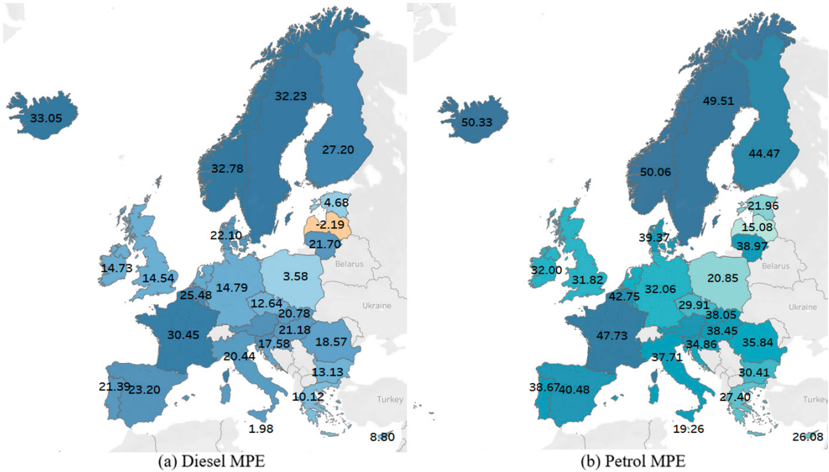
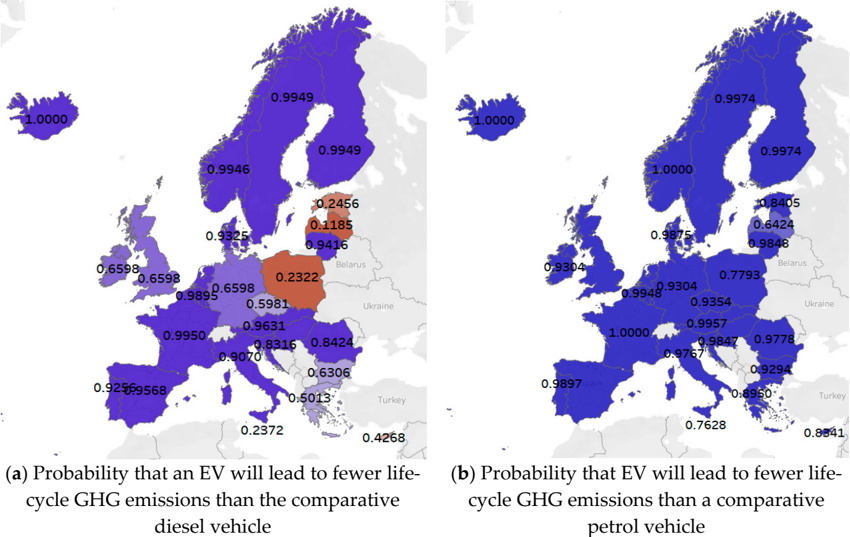
“[140], where it was shown that the probability that EVs will lead to lower life-cycle GHG emissions compared to a diesel vehicle is much lower in Poland than in most other European countries.”
BackgroundDillman, K., Czepkiewicz, M., Heinonen, J., Fazeli, R., Árnadóttir, Á., Davíðsdóttir, B., & Shafiei, E. (2021) · Sustainable Cities and Society · doi:10.1016/j.scs.2020.102614 · Cited by 57
Self-citationAccurate energy consumption for comparison of climate change impact of thermal and electric vehicles
Desreveaux, A., Bouscayrol, A., Trigui, R., Hittinger, E., Castex, E., & Sirbu, G. M. (2023) · Energy · doi:10.1016/j.energy.2023.126637 · Cited by 57
Winquist, E., Van Galen, M., Zielonka, S., Rikkonen, P., Oudendag, D., Zhou, L., & Greijdanus, A. (2021) · Sustainability · doi:10.3390/su13031148 · Cited by 50
“However, there are several countries in the European Economic Area (EEA), such as Poland, Latvia, and Estonia, where the emissions from EVs most probably exceed those from diesel vehicles [47].”
BackgroundDillman, K. J., Czepkiewicz, M., Heinonen, J. T., & Davíðsdóttir, B. (2021) · Global Sustainability · doi:10.1017/sus.2021.28 · Cited by 58
Self-citationThe Role of Pickup Truck Electrification in the Decarbonization of Light-Duty Vehicles
Woody, M., Vaishnav, P., Keoleian, G. A., De Kleine, R., Kim, H. C., Anderson, J. E., & Wallington, T. J. (2022) · Environmental Research Letters · doi:10.1088/1748-9326/ac5142 · Cited by 46
da Costa, V. B. F., Bitencourt, L., Dias, B. H., Soares, T., de Andrade, J. V. B., & Bonatto, B. D. (2025) · Renewable and Sustainable Energy Reviews · doi:10.1016/j.rser.2024.114988 · Cited by 43
Eltohamy, H., van Oers, L. F. C. M., Lindholm, J., Raugei, M., Lokesh, K., Baars, J., Husmann, J., Hill, N., Istrate, I.-R., Jose, D., et al. (2024) · Sustainable Production and Consumption · doi:10.1016/j.spc.2024.10.026 · Cited by 44
“The most commonly used LCI databases by academia and industry to conduct LCA of EVs are ecoinvent, MLC databases, and the Greenhouse Gases, Regulated Emissions, and Energy Use in Transportation Model (GREET) (Dillman et al., 2020; Ricardo et al., 2020; Tolomeo et al., 2020).”
InfluentialImpacts of electric vehicle policy on the New Zealand energy system: A retro-analysis
Williams, B., Gallardo, P., Bishop, D., & Chase, J. G. (2023) · Energy Reports · doi:10.1016/j.egyr.2023.02.080 · Cited by 40
Status of electric vehicles in South Africa and their carbon mitigation potential
Tongwane, M. I., & Moeletsi, M. E. (2021) · Scientific African · doi:10.1016/j.sciaf.2021.e00999 · Cited by 44
Dillman, K. J., Heinonen, J. T., & Davíðsdóttir, B. (2023) · Environmental and Sustainability Indicators · doi:10.1016/j.indic.2023.100240 · Cited by 32
Self-citationZeilerbauer, L., Fischer, J., Fazeni‐Fraisl, K., Mager, M., Lindorfer, J., & Paulik, C. (2024) · Resources Conservation and Recycling · doi:10.1016/j.resconrec.2024.107807 · Cited by 31
Zahoor, A., Zhang, J., Wu, D., Chen, J. L., Benani, N., Sen, T., Yu, Y., Mao, G., & Yang, P. (2024) · Energy Conversion and Management · doi:10.1016/j.enconman.2024.118996 · Cited by 30
Wewer, A., Bilge, P., & Dietrich, F. (2021) · Sustainability · doi:10.3390/su13105726 · Cited by 25
Wang, S. (2022) · Sustainability · doi:10.3390/su141710796 · Cited by 25
“From the perspective of the effect of environmental protection and new energy technology [26], new energy vehicles are close to zero-emissions vehicles, which are of great significance to achieve the coordinated development of environmental, social, and health goals [27].”
BackgroundLiu, F., Shafique, M., & Luo, X. (2024) · Sustainable Production and Consumption · doi:10.1016/j.spc.2024.06.001 · Cited by 23
Targeted electric vehicle procurement incentives facilitate efficient abatement cost outcomes
Woodley, L., Rossetti, P., & Nunes, A. (2023) · Sustainable Cities and Society · doi:10.1016/j.scs.2023.104627 · Cited by 24
Oluwalana, O. J., & Grzesik, K. (2025) · Energies · doi:10.3390/en18225867 · Cited by 24
“However, multiple life cycle assessments have demonstrated that this initial production impact is ultimately offset by the high operational efficiency of the vehicle, provided that the electricity used for charging is derived from low-carbon sources [25,76].”
A National and Regional Greenhouse Gas Breakeven Assessment of EVs across North America
Rasbash, D., Dillman, K. J., Heinonen, J., & Ásgeirsson, E. I. (2023) · Sustainability · doi:10.3390/su15032181 · Cited by 17
“The USA is one of the largest EV markets, along with China and Europe; together, they account for over 93% of sales [18].”
BackgroundMethodInfluentialSelf-citationKochanek, A., Zacłona, T., Pietrucha, I., Petryk, A., Ziemiańczyk, U., Basak, Z., Guzdek, P., Akbulut, L., Atılgan, A., & Woźniak, A. D. (2025) · Energies · doi:10.3390/en18246610 · Cited by 22
Electric Vehicles, Tax Incentives and Emissions: Evidence from NorwayPreprint
Misch, F., Camara, Y., & Holtsmark, B. J. (2021) · SSRN Electronic Journal · doi:10.2139/ssrn.4026339 · Cited by 18
Tomaschko, F., Reichelt, L., & Krommes, S. (2024) · Sustainability · doi:10.3390/su16156275 · Cited by 21
The impact of low-carbon consumption options on carbon footprints in the Nordic region
Olson, S., Heinonen, J. T., Ottelin, J., Czepkiewicz, M., & Árnadóttir, Á. (2024) · Consumption and Society · doi:10.1332/27528499y2024d000000013 · Cited by 17
Self-citationLife Cycle Assessment of an emerging overhead line hybrid truck in short-haul pilot operation
Hanesch, S., Schöpp, F., Göllner-Völker, L., & Schebek, L. (2022) · Journal of Cleaner Production · doi:10.1016/j.jclepro.2022.130600 · Cited by 18
Ecological intensity of social provisioning in mobility systems: A global analysis
Dillman, K. J., Czepkiewicz, M., Heinonen, J. T., & Davíðsdóttir, B. (2023) · Energy Research & Social Science · doi:10.1016/j.erss.2023.103242 · Cited by 16
Self-citationElectric Vehicles, Tax incentives and Emissions: Evidence from Norway
Camara, Y., Holtsmark, B. J., & Misch, F. (2021) · IMF Working Paper · doi:10.5089/9781513582818.001 · Cited by 27
“…emissions (mainly NOx and PM), emissions during the production of EVs, which are substantial and sometimes found to be higher than those of ICEVs (Dillman et al. 2020, Hao et al. 2017), and relatively high non-exhaust particle emissions during operation, including from wearing down of tires over…”
BackgroundAssessing the Carbon Intensity of e-fuels Production in European Countries: A Temporal Analysis
Besseau, R., Scarlat, N., Hurtig, O., Bouter, A., & Motola, V. (2024) · Applied Sciences · doi:10.3390/app142210299 · Cited by 14
Davies, B., Llamas-Orozco, J. A., Meng, F., Posen, I. D., MacLean, H. L., Abdul-Manan, A. F. N., & McKechnie, J. (2024) · RSC Sustainability · doi:10.1039/d4su00112e · Cited by 15
“21 24 Vehicle battery technologies are undergoing similarly rigorous life cycle assessment.”
Ramshankar, A. T., Desai, A. G., Villarmois, J. A. D. L., & Bozeman, J. F. (2023) · Environmental Research Infrastructure and Sustainability · doi:10.1088/2634-4505/acc273 · Cited by 15
Moriarty, P. (2022) · AIMS energy · doi:10.3934/energy.2022008 · Cited by 11
Dillman, K. J., Heinonen, J. T., & Davíðsdóttir, B. (2023) · Environmental Innovation and Societal Transitions · doi:10.1016/j.eist.2023.100755 · Cited by 14
Self-citationThe elasticity and efficiency of carbon reduction strategies in transportation
Bencekri, M., Ku, D., Lee, D., Fan, Y. V., Klemeš, J. J., Varbanov, P. S., & Lee, S. (2023) · Energy Sources Part A Recovery Utilization and Environmental Effects · doi:10.1080/15567036.2023.2276380 · Cited by 13
“These results align with previous studies that advocated the superiority of electric vehicles compared to hydrogen ones in terms of carbon neutrality (Dillman et al. 2020).”
ResultZheng, C., Khamarudin, M., & Ahmad, A. (2024) · Journal of Infrastructure Policy and Development · doi:10.24294/jipd.v8i10.6056 · Cited by 11
“…electric vehicles (EVs) are globally recognized as a key solution for reducing emissions and advancing sustainable transportation, offering a transformative approach to address environmental and economic challenges posed by traditional gasoline vehicles (Boudet, 2019; Dillman et al., 2020).”
BackgroundConsumption-Based Energy Footprints in Iceland: High and Equally Distributed
Einarsdóttir, A. K., Pesch, G. T., Dillman, K. J., Karlsdóttir, M. R., & Heinonen, J. T. (2024) · Energies · doi:10.3390/en17102375 · Cited by 11
Self-citationAn integrated transportation-power system model for a decarbonizing world
Dean, M. D., Gurumurthy, K. M., Zhou, Z., Verbas, Ö., Cokyasar, T., & Kockelman, K. M. (2024) · Transportation Planning and Technology · doi:10.1080/03081060.2024.2348721 · Cited by 9
“Dillman et al. (2020) found that an average BEV produces 10.8 tons of CO 2 equivalent (CO 2e ) during the production phase, while an average gasoline-fueled vehicle produces 6.6 tons of CO 2e .”
InfluentialOpia, A. C., Kadirgama, K., Mamah, S. C., Ghazali, M. F., Harun, W. S. W., Adeboye, O. J., Agi, A., & Sylvanus, A. (2025) · Lubricants · doi:10.3390/lubricants13110474 · Cited by 9
Montoya-Torres, J., Dillman, K. J., & Heinonen, J. T. (2025) · Circular Economy and Sustainability · doi:10.1007/s43615-025-00612-5 · Cited by 8
“…Life Cycle Assessments (LCA) have studied the influence of the inten - sity of electricity grids in the final outcomes of GHG impacts associated with Electric Vehi - cles (EVs) [18, 39], and vehicle LCAs in locations such as the US [52, 63], the EU [50], and China [51] under various conditions.”
Self-citationStriepe, M. C., Milovanoff, A., Abdul-Manan, A. F. N., McKechnie, J., Posen, I. D., & MacLean, H. L. (2024) · Environmental Research Infrastructure and Sustainability · doi:10.1088/2634-4505/ad397e · Cited by 9
Beylot, A., Raugei, M., Eltohamy, H., Hill, N., Ménégazzi, P., Muller, S. M., Lokesh, K., Baars, J., Bartaune, D., Lindholm, J., et al. (2025) · The International Journal of Life Cycle Assessment · doi:10.1007/s11367-025-02532-w · Cited by 7
“…and inconsistent methodological choices across studies, with respect to hybrid and electric vehicles (Hawkins et al. 2012; Nordelöf et al. 2014; Dillman et al. 2020) and EV lithium-ion batteries (Ellingsen et al. 2017; Peters et al. 2017; Arshad et al. 2022), in some case with focus on the…”
Piotrowska, K., Piasecka, I., & Opielak, M. (2025) · Sustainability · doi:10.3390/su172310788 · Cited by 4
Benabbou, L., Benali, M., Moufdi, G., & Sadok, H. (2024) · Procedia Computer Science · doi:10.1016/j.procs.2024.05.060 · Cited by 4
State-level emission trends from battery electric vehicle adoption in the U.S.
Haroon, S. M., Ahmed, M., Mahmud, P., Ryan, A., Jin, H., & Head, L. (2025) · Environment Development and Sustainability · doi:10.1007/s10668-025-06500-0 · Cited by 5
New Perspectives on Electric Vehicles
Găiceanu, M. (2021) · IntechOpen eBooks · doi:10.5772/intechopen.95662 · Cited by 8
Pan, M., Chen, W., Wang, S., & Wu, X. (2022) · Energies · doi:10.3390/en15186849 · Cited by 4
The Preferability Framework - Enabling life cycle sustainability assessment meta studies
Huber, J., & Fröhling, M. (2024) · Sustainable Production and Consumption · doi:10.1016/j.spc.2024.02.021 · Cited by 3
Olson, S., Szafraniec, M., Heinonen, J. T., & Árnadóttir, Á. (2024) · Sustainability · doi:10.3390/su16166755 · Cited by 5
“The emissions from the production and maintenance of each vehicle were calculated using the average values from [62], which were divided by the assumed vehicle lifetime (184,000 km) [62] and then multiplied by the reported distance driven by each vehicle.”
MethodSelf-citationGüreli, N., Meyer, J., & Walther, G. (2025) · Sustainable Production and Consumption · doi:10.1016/j.spc.2025.08.015 · Cited by 4
Dillman, K. J., Árnadóttir, Á., Heinonen, J. T., Czepkiewicz, M., & Davíðsdóttir, B. (2021) · Sustainability · doi:10.3390/su13095195 · Cited by 3
“The authors would like to make the following corrections about the published paper [1].”
BackgroundSelf-citationJebabalan, S. K., & Dennison, M. S. (2026) · Discover Sustainability · doi:10.1007/s43621-026-03203-y · Cited by 2
Chen, W., Wang, S., & Wu, X. (2022) · Sustainability · doi:10.3390/su142416497 · Cited by 1
Comparing Charging Management Strategies for a Charging Station in a Parking Area in North Italy
Andrenacci, N., Caputo, G., & Balog, I. (2023) · Future Transportation · doi:10.3390/futuretransp3020040 · Cited by 1
“Its sustainability becomes even more evident when we consider the benefits of the lower greenhouse gas emissions that electric vehicles (EVs) have the potential to offer [2], which are linked to the carbon footprint of the electricity production used to charge EVs.”
BackgroundEinarsdóttir, A. K., Árnadóttir, Á., & Heinonen, J. T. (2025) · Journal of Housing and the Built Environment · doi:10.1007/s10901-025-10237-7 · Cited by 1
“…have an efficiency of 0.0125 MWh/100 km. Emission estimates for vehicle production and maintenance were drawn from Chester and Horvath ( 2009 ), and the allocation of these emissions was based on the reported distance travelled, and the average lifetime assumption based on Dillman et al. ( 2020 ).”
InfluentialSelf-citationGesù, A. D., Gastaldi, C., & Delprete, C. (2025) · Transportation Engineering · doi:10.1016/j.treng.2025.100401 · Cited by 1
“Depending on the size of the vehicle and on its usage, the break-even point, i.e. where an EV becomes more environmentally friendly than its ICE counterpart, may never be attained [11].”
The Impact of Land-Use Planning on Lifestyle Carbon Footprints
Jama, T., Heinonen, J. T., & Tenkanen, H. (2026) · Environments · doi:10.3390/environments13030173 · Cited by 1
“A share of these was allocated to the survey year based on the reported mileage, and 184,000 km was the lifetime assumption taken from the review of Dillman et al. [48].”
Self-citationExploring electric vehicle adoption and future research directions through a bibliometric review
Kaur, S., & Kumar, A. (2026) · Discover Sustainability · doi:10.1007/s43621-026-03254-1 · Cited by 1
“Given that vehicular emissions are a major contributor to air pollution, the demand for innovative, sustainable and environment friendly alternatives, particularly in the automobile sector, has increased [16, 24, 64, 92].”
Strategies for Electric Vehicle Infrastructure of Cities: Benefits and Challenges
Furat, M., Karabiber, İ., & Kocaoğlu, S. (2021) · IntechOpen eBooks · doi:10.5772/intechopen.98862 · Cited by 1
Everyday Discourses of Climate Delay in Opposition to Low Traffic Neighbourhoods
Larrington‐Spencer, H., Verlinghieri, E., Aldred, R., Lawlor, E. R., & Fevyer, D. (2025) · Active Travel Studies · doi:10.16997/ats.1811 · Cited by 1
Okoma, M. (2023) · Preprints.org · doi:10.20944/preprints202310.1841.v3 · Cited by 2
Green and Sustainable Batteries
Ajdari, F. B., Shahrak, M. N., Ghasemi, F., Kowsari, E., & Ramakrishna, S. (2022) · Encyclopedia of Green Materials · doi:10.1007/978-981-16-4921-9_210-1
The Yellow Brick Road to a Decarbonized World Economy
Davíðsdóttir, B. (2023) · Springer eBooks · doi:10.1007/978-3-031-26482-5_19
Self-citationOkoma, M. (2023) · Preprints.org · doi:10.20944/preprints202310.1841.v2
Rüdele, K., Wolf, M., Ivantsits, B., & Ramsauer, C. (2024) · Procedia CIRP · doi:10.1016/j.procir.2024.01.010
Aerodynamics’ Influence on Performance in Human-Powered Vehicles for Sustainable Transportation
Gesù, A. D., Gastaldi, C., & Delprete, C. (2024) · SAE International Journal of Advances and Current Practices in Mobility · doi:10.4271/2024-37-0028
Green and Sustainable Batteries
Ajdari, F. B., Shahrak, M. N., Ghasemi, F., Kowsari, E., & Ramakrishna, S. (2024) · Encyclopedia of Green Materials · doi:10.1007/978-981-97-4618-7_210
Shiba, M. S., Abouel-Seoud, S. A., Aboelsoud, W. A., & Abdallah, A. S. (2025) · SAE International Journal of Engines · doi:10.4271/03-18-02-0016
THE FUTURE OF CO2 EMISSIONS IN SPRAWLED URBAN AREAS
Tikoudis, I., & Oueslati, W. (2025) · Climate Change Economics · doi:10.1142/s2010007825400019
Climate literacy: A Critical Factor in Promoting Pro-Climate Behavior.
Borgþórsdóttir, E. (2023) · Skemman
Second life versus recycling of lithium-ion batteries
Pajtlar, M. L., & Söderlund, E. (2023) · KTH Publication Database DiVA (KTH Royal Institute of Technology)
Emilsdóttir, B. (2023) · Skemman · Cited by 1
Emission-free Construction Sites : Knowledge Gaps and Research Needs
Ólafsson, A., & Steingrímsdóttir, Á. (2024) · KTH Publication Database DiVA (KTH Royal Institute of Technology)
Circularity of Rare Earth Elements for Sustainable Mobility
Rahimpour, S., Bandpey, A. F., Fuentes, M., & Krasławski, A. (2026) · Lecture notes in networks and systems · doi:10.1007/978-3-032-22232-9_17
Kowalska, A., & Bråthen, S. (2026) · Journal of Transport and Sustainability · doi:10.1108/jtas-08-2025-0050
Teimoori, Z., & Latta, I. (2026) · Energies · doi:10.3390/en19102405 · Cited by 1
Lan, K.-M. (2026) · Mineral Economics · doi:10.1007/s13563-026-00660-9
My house, my car, my footprint: A sustainable consumption corridor analysis of Nordic households
Dillman, K. J., Heinonen, J. T., & Davíðsdóttir, B. (2026) · Energy Research & Social Science · doi:10.1016/j.erss.2026.105025
Self-citation
Metadata
- Authors
- Dillman, K. J., Árnadóttir, Á., Heinonen, J., Czepkiewicz, M., & Davíðsdóttir, B.
- Affiliations
- University of Iceland (IS)
- Corresponding author
- Dillman, Kevin Joseph
- ORCID
- Venue
- Sustainability
- Publisher
- MDPI AG
- Published
- 2020-11-11
- Volume
- 12
- Issue
- 22
- Pages
- 9390
- ISSN
- 2071-1050 (ISSN-L)
- OpenAlex
- W3104542765
- Cited by
- 77
- References
- 53
- Citations by year
- 2026: 7 · 2025: 13 · 2024: 18 · 2023: 15 · 2022: 12 · 2021: 11 · 2020: 1
- FWCI
- 0.48
- Type
- journal article
- Language
- en
- Update notices
- correction (2020-11-11)
- Open access
- gold
- doi.org
- Licence
- Locations
- Sustainability (publishedVersion, cc-by)
- Opin vísindi (Opin vísindi) (submittedVersion, cc-by-nc-sa)
- RePEc: Research Papers in Economics (submittedVersion)
- Aaltodoc (Aalto University) (submittedVersion, cc-by)
- DOAJ (DOAJ: Directory of Open Access Journals) (submittedVersion, cc-by-sa)
- Opin vísindi (Opin vísindi) (submittedVersion, other-oa)
- Funders
- Icelandic Centre for Research (185497-051)
- Topics
- Physical Sciences › Engineering › Electrical and Electronic Engineering › Electric Vehicles and Infrastructure
- Physical Sciences › Environmental Science › Environmental Engineering › Environmental Impact and Sustainability
- Physical Sciences › Engineering › Automotive Engineering › Vehicle emissions and performance
- Keywords
- electric vehicles, embodied emissions, life cycle greenhouse gas emissions, European Economic Area, diesel vehicles, vehicle policy, Monte Carlo simulation
About these checks
Registry, retraction, Cites and statistics results are computed, not judged, with one exception: a printed reference that no index lists is read once by a model before it counts as a citation error. Claims are extracted by a model and kept only when their quote appears verbatim in the text; each cited source is then checked, with a model’s help, for whether it says what the claim relies on. Those verdicts can be wrong — read the claim’s quote and the cited source before relying on one.
Statistics and arithmetic are recomputed, not judged.
Confidence bands are shown only for fields calibrated on our annotated test set. None is calibrated yet, so no band is shown.
What counts as a claim ›How we measure confidence ›How we check this ›
Are you an author, or do you see a problem with this page? Request a review
Data sources
Bibliographic data: Semantic Scholar, OpenAlex, Crossref.
Contains information from the Semantic Scholar Academic Graph Datasets, made available under the ODC Attribution License (ODC-BY 1.0).
Semantic Scholar’s data is described in: Kinney, R., et al. (2023). The Semantic Scholar Open Data Platform. arXiv:2301.10140.
