

Facial Expression Recognition: A Survey
Open accessThe DOI matches its Crossref record; 130 of the 131 references it cites were found in a registry or an index.
Abstract
Facial Expression Recognition (FER), as the primary processing method for non-verbal intentions, is an important and promising field of computer vision and artificial intelligence, and one of the subject areas of symmetry. This survey is a comprehensive and structured overview of recent advances in FER. We first categorise the existing FER methods into two main groups, i.e., conventional approaches and deep learning-based approaches. Methodologically, to highlight the differences and similarities, we propose a general framework of a conventional FER approach and review the possible technologies that can be employed in each component. As for deep learning-based methods, four kinds of neural network-based state-of-the-art FER approaches are presented and analysed. Besides, we introduce seventeen commonly used FER datasets and summarise four FER-related elements of datasets that may influence the choosing and processing of FER approaches. Evaluation methods and metrics are given in the later part to show how to assess FER algorithms, along with subsequent performance comparisons of different FER approaches on the benchmark datasets. At the end of the survey, we present some challenges and opportunities that need to be addressed in future.
Overview
The claims and statistics of this paper haven’t been checked yet.
Free: it reads the open-access text and checks the first 5 claims that cite a source we can check. Create a free account to check every claim.
Integrity signals
Registry
Cites
Statistics
Figures


Verification
Claims the paper makes
The claims and statistics of this paper haven’t been checked yet.
Free: it reads the open-access text and checks the first 5 claims that cite a source we can check. Create a free account to check every claim.
Self-check
Percentages, sums and reported differences re-computed from the paper’s own numbers.
The self-check needs the paper’s full text.
Citations
Cites
1 retracted
RETRACTED CHAPTER: Real-Life Facial Expression Recognition Systems: A Review
Goyal, S. J., Upadhyay, A. K., Jadon, R. S., & Goyal, R. (2017) · Smart innovation, systems and technologies · doi:10.1007/978-981-10-5544-7_31 · Cited by 22
RetractedGAN(Generative Adversarial Nets)
(2017) · Journal of Japan Society for Fuzzy Theory and Intelligent Informatics · doi:10.3156/jsoft.29.5_177_2 · Cited by 19,270
Rapid object detection using a boosted cascade of simple features
Viola, P., & Jones, M. (2005) · Proceedings of the 2001 IEEE Computer Society Conference on Computer Vision and Pattern Recognition. CVPR 2001 · doi:10.1109/cvpr.2001.990517 · Cited by 18,300
A fast learning algorithm for deep belief nets
Hinton, G. E., Osindero, S., & Teh, Y.-W. (2006) · Neural Computation · doi:10.1162/neco.2006.18.7.1527 · Cited by 16,336
Russell, J. A. (1980) · Journal of Personality and Social Psychology · doi:10.1037/h0077714 · Cited by 16,334 · cited 1×
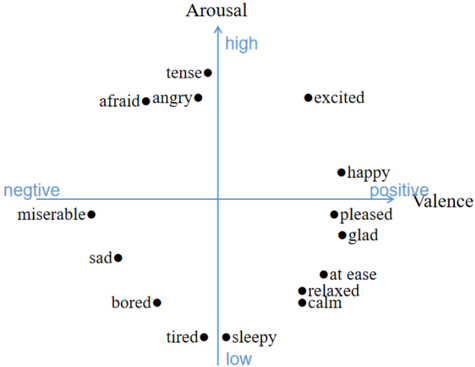
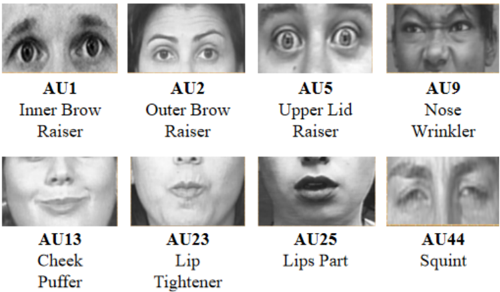
“In the decades of studying FER, Action Units (AUs) [11] and the Valence–Arousal space (V–A space) [12] are two popular models.”
BackgroundRobust Real-Time Face Detection
Viola, P., & Jones, M. J. (2004) · International Journal of Computer Vision · doi:10.1023/b:visi.0000013087.49260.fb · Cited by 14,097
Horn, B. K. P., & Schunck, B. G. (1981) · Artificial Intelligence · doi:10.1016/0004-3702(81)90024-2 · Cited by 10,312
An argument for basic emotions
Ekman, P. (1992) · Cognition and Emotion · doi:10.1080/02699939208411068 · Cited by 9,646 · cited 1×
“, happiness, surprise, sadness, anger, disgust, and fear, are proposed in [20].”
(1974) · Medical Entomology and Zoology · Cited by 7,295
Active Shape Models-Their Training and Application
Cootes, T. F., Taylor, C. J., Cooper, D. H., & Graham, J. (1995) · Computer Vision and Image Understanding · doi:10.1006/cviu.1995.1004 · Cited by 7,190
Research works printed but not linked: 3
- Walecki, 2017, Deep structured learning for facial expression intensity estimation, Image Vis. Comput, 259, 143
- Goodfellow, I., Pouget-Abadie, J., Mirza, M., Xu, B., Warde-Farley, D., Ozair, S., Courville, A., and Bengio, Y. (2014, January 8–13). Generative adversarial nets. Proceedings of the Conference on Neural Information Processing Systems (NIPS), Montreal, QC, Canad.
- Lundqvist, 1998, The Karolinska directed emotional faces (KDEF), CD ROM Dep. Clin. Neurosci. Psychol. Sect. Karolinska Inst., 91, 630
Cited by
Human Emotion Recognition: Review of Sensors and Methods
Dzedzickis, A., Kaklauskas, A., & Bucinskas, V. (2020) · Sensors · doi:10.3390/s20030592 · Cited by 582
A survey on facial emotion recognition techniques: A state-of-the-art literature review
Canal, F. Z., Müller, T. R., Matias, J. C., Scotton, G. G., de Sa Junior, A. R., Pozzebon, E., & Sobieranski, A. C. (2022) · Information Sciences · doi:10.1016/j.ins.2021.10.005 · Cited by 349
Facial Emotion Recognition Using Transfer Learning in the Deep CNN
Akhand, M. A. H., Roy, S., Siddique, N., Kamal, M. A. S., & Shimamura, T. (2021) · Electronics · doi:10.3390/electronics10091036 · Cited by 333
Karnati, M., Seal, A., Bhattacharjee, D., Yazidi, A., & Krejcar, O. (2023) · IEEE Transactions on Instrumentation and Measurement · doi:10.1109/tim.2023.3243661 · Cited by 161
Dalvi, C., Rathod, M., Patil, S., Gite, S., & Kotecha, K. V. (2021) · IEEE Access · doi:10.1109/access.2021.3131733 · Cited by 150
Metadata
- Authors
- Huang, Y., Chen, F., Lv, S., & Wang, X.
- Affiliations
- National University of Defense Technology (CN)
- Corresponding author
- Wang, Xiaodong
- Venue
- Symmetry
- Publisher
- MDPI AG
- Published
- 2019-09-20
- Volume
- 11
- Issue
- 10
- Pages
- 1189
- ISSN
- 2073-8994 (ISSN-L)
- OpenAlex
- W2974043081
- Cited by
- 195
- References
- 131
- Citations by year
- 2026: 18 · 2025: 14 · 2024: 30 · 2023: 33 · 2022: 41 · 2021: 39 · 2020: 18 · 2019: 1
- FWCI
- 29.14
- Type
- journal article
- Language
- en
- Open access
- gold
- dx.doi.org
- Licence
- Locations
- Symmetry (publishedVersion, cc-by)
- DOAJ (DOAJ: Directory of Open Access Journals) (submittedVersion, cc-by-sa)
- Funders
- National Natural Science Foundation of China (61572513)
- Topics
- Physical Sciences › Computer Science › Artificial Intelligence › Emotion and Mood Recognition
- Physical Sciences › Computer Science › Computer Vision and Pattern Recognition › Face recognition and analysis
- Physical Sciences › Computer Science › Computer Vision and Pattern Recognition › Face and Expression Recognition
- Keywords
- facial expression recognition, nonverbal communication, neural network architecture, facial expression datasets, evaluation metrics, benchmark dataset, performance comparison
About these checks
Registry, retraction, Cites and statistics results are computed, not judged, with one exception: a printed reference that no index lists is read once by a model before it counts as a citation error. Claims are extracted by a model and kept only when their quote appears verbatim in the text; each cited source is then checked, with a model’s help, for whether it says what the claim relies on. Those verdicts can be wrong — read the claim’s quote and the cited source before relying on one.
Statistics and arithmetic are recomputed, not judged.
Confidence bands are shown only for fields calibrated on our annotated test set. None is calibrated yet, so no band is shown.
What counts as a claim ›How we measure confidence ›How we check this ›
Are you an author, or do you see a problem with this page? Request a review
How to cite
Cite CoChat for the checks on this page, and the paper for its own findings.
- This page
- CoChat. (2026). Citation check: Facial Expression Recognition: A Survey. https://app.cochat.ai/papers/10.3390/sym11101189
- The paper
- Huang, Y., Chen, F., Lv, S., & Wang, X. (2019). Facial Expression Recognition: A Survey. Symmetry. https://doi.org/10.3390/sym11101189
Data sources
Bibliographic data: Semantic Scholar, OpenAlex, Crossref.
Contains information from the Semantic Scholar Academic Graph Datasets, made available under the ODC Attribution License (ODC-BY 1.0).
Semantic Scholar’s data is described in: Kinney, R., et al. (2023). The Semantic Scholar Open Data Platform. arXiv:2301.10140.
