

Facial Expression Recognition: A Survey
Open accessThe DOI matches its Crossref record; 130 of the 131 references it cites were found in a registry or an index.
Abstract
Facial Expression Recognition (FER), as the primary processing method for non-verbal intentions, is an important and promising field of computer vision and artificial intelligence, and one of the subject areas of symmetry. This survey is a comprehensive and structured overview of recent advances in FER. We first categorise the existing FER methods into two main groups, i.e., conventional approaches and deep learning-based approaches. Methodologically, to highlight the differences and similarities, we propose a general framework of a conventional FER approach and review the possible technologies that can be employed in each component. As for deep learning-based methods, four kinds of neural network-based state-of-the-art FER approaches are presented and analysed. Besides, we introduce seventeen commonly used FER datasets and summarise four FER-related elements of datasets that may influence the choosing and processing of FER approaches. Evaluation methods and metrics are given in the later part to show how to assess FER algorithms, along with subsequent performance comparisons of different FER approaches on the benchmark datasets. At the end of the survey, we present some challenges and opportunities that need to be addressed in future.
Overview
The claims and statistics of this paper haven’t been checked yet.
Free: it reads the open-access text and checks the first 5 claims that cite a source we can check. Create a free account to check every claim.
Integrity signals
Registry
Cites
Statistics
Figures


Verification
Claims the paper makes
The claims and statistics of this paper haven’t been checked yet.
Free: it reads the open-access text and checks the first 5 claims that cite a source we can check. Create a free account to check every claim.
Self-check
Percentages, sums and reported differences re-computed from the paper’s own numbers.
The self-check needs the paper’s full text.
Citations
Cites
1 retracted
RETRACTED CHAPTER: Real-Life Facial Expression Recognition Systems: A Review
Goyal, S. J., Upadhyay, A. K., Jadon, R. S., & Goyal, R. (2017) · Smart innovation, systems and technologies · doi:10.1007/978-981-10-5544-7_31 · Cited by 22 · cited 1×
“Some real-life challenges of FER systems are proposed in [32,33].”
BackgroundRetractedGAN(Generative Adversarial Nets)
(2017) · Journal of Japan Society for Fuzzy Theory and Intelligent Informatics · doi:10.3156/jsoft.29.5_177_2 · Cited by 19,270
Rapid object detection using a boosted cascade of simple features
Viola, P., & Jones, M. (2005) · Proceedings of the 2001 IEEE Computer Society Conference on Computer Vision and Pattern Recognition. CVPR 2001 · doi:10.1109/cvpr.2001.990517 · Cited by 18,300 · cited 1×
“The Haar-like feature template [57] is the combination of edge, linear, centre and diagonal features.”
A fast learning algorithm for deep belief nets
Hinton, G. E., Osindero, S., & Teh, Y.-W. (2006) · Neural Computation · doi:10.1162/neco.2006.18.7.1527 · Cited by 16,336 · cited 13×
“In [94], the robust LDPP-PCA-GDA (Local Directional Position Pattern, Principal Component Analysis, Generalised Discriminant Analysis) features are combined with DBN for modelling the expressions as well as recognition.”
MethodInfluentialRussell, J. A. (1980) · Journal of Personality and Social Psychology · doi:10.1037/h0077714 · Cited by 16,334 · cited 1×
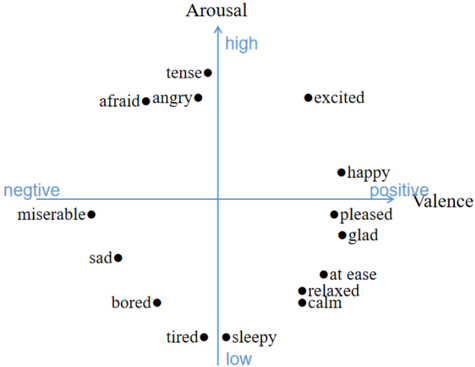
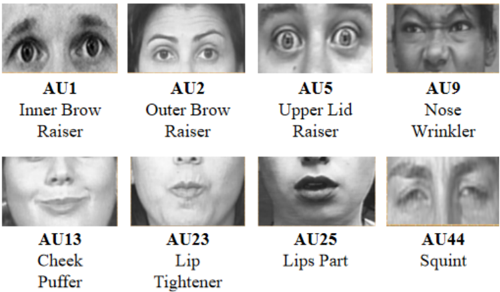
“In the decades of studying FER, Action Units (AUs) [11] and the Valence–Arousal space (V–A space) [12] are two popular models.”
BackgroundRobust Real-Time Face Detection
Viola, P., & Jones, M. J. (2004) · International Journal of Computer Vision · doi:10.1023/b:visi.0000013087.49260.fb · Cited by 14,097
Horn, B. K. P., & Schunck, B. G. (1981) · Artificial Intelligence · doi:10.1016/0004-3702(81)90024-2 · Cited by 10,312
An argument for basic emotions
Ekman, P. (1992) · Cognition and Emotion · doi:10.1080/02699939208411068 · Cited by 9,646 · cited 1×
“, happiness, surprise, sadness, anger, disgust, and fear, are proposed in [20].”
(1974) · Medical Entomology and Zoology · Cited by 7,295
Active Shape Models-Their Training and Application
Cootes, T. F., Taylor, C. J., Cooper, D. H., & Graham, J. (1995) · Computer Vision and Image Understanding · doi:10.1006/cviu.1995.1004 · Cited by 7,190 · cited 1×
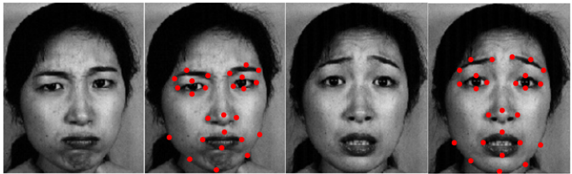
“The Active Shape Model (ASM) proposed in [49] is based on statistical models and is generally used to extract feature points on expression contours.”
Method
Research works printed but not linked: 2
- 83. Walecki, R.; Rudovic, O.; Pavlovic, V.; Schuller, B.; Pantic, M. Deep structured learning for facial expression intensity estimation. Image Vis. Comput 2017, 259, 143-154.
- 98. Goodfellow, I.; Pouget-Abadie, J.; Mirza, M.; Xu, B.; Warde-Farley, D.; Ozair, S.; Courville, A.; Bengio, Y. Generative adversarial nets. In Proceedings of the Conference on Neural Information Processing Systems (NIPS), Montreal, QC, Canad, 8-13 December 2014; pp. 2672-2680.
Cited by
Human Emotion Recognition: Review of Sensors and Methods
Dzedzickis, A., Kaklauskas, A., & Bucinskas, V. (2020) · Sensors · doi:10.3390/s20030592 · Cited by 582
“Relations between emotions and facial expressions [145,146].”
A survey on facial emotion recognition techniques: A state-of-the-art literature review
Canal, F. Z., Müller, T. R., Matias, J. C., Scotton, G. G., de Sa Junior, A. R., Pozzebon, E., & Sobieranski, A. C. (2022) · Information Sciences · doi:10.1016/j.ins.2021.10.005 · Cited by 349
Facial Emotion Recognition Using Transfer Learning in the Deep CNN
Akhand, M. A. H., Roy, S., Siddique, N., Kamal, M. A. S., & Shimamura, T. (2021) · Electronics · doi:10.3390/electronics10091036 · Cited by 333
“A number of studies reviewed and compared the existing FER methods [17,18,41,42], and the recent ones among them [41,42] included the deep learningbased methods.”
ResultKarnati, M., Seal, A., Bhattacharjee, D., Yazidi, A., & Krejcar, O. (2023) · IEEE Transactions on Instrumentation and Measurement · doi:10.1109/tim.2023.3243661 · Cited by 161
Dalvi, C., Rathod, M., Patil, S., Gite, S., & Kotecha, K. V. (2021) · IEEE Access · doi:10.1109/access.2021.3131733 · Cited by 150
ViTFER: Facial Emotion Recognition with Vision Transformers
Chaudhari, A., Bhatt, C., Krishna, A., & Mazzeo, P. L. (2022) · Applied System Innovation · doi:10.3390/asi5040080 · Cited by 146
“Several papers have examined and compared existing FER approaches [9–12] with the most recent [11,12] deep learning-based methods.”
Facial emotion recognition using modified HOG and LBP features with deep stacked autoencoders
Lakshmi, D., & Ponnusamy, R. (2021) · Microprocessors and Microsystems · doi:10.1016/j.micpro.2021.103834 · Cited by 104
Responsible AI: Gender bias assessment in emotion recognitionPreprint
Domnich, A., & Anbarjafari, G. (2021) · arXiv (Cornell University) · doi:10.48550/arxiv.2103.11436 · Cited by 102
Facial expression recognition using bidirectional LSTM - CNN
Febrian, R., Halim, B. M., Christina, M., Ramdhan, D., & Chowanda, A. (2023) · Procedia Computer Science · doi:10.1016/j.procs.2022.12.109 · Cited by 91
eXnet: An Efficient Approach for Emotion Recognition in the Wild
Riaz, M. N., Shen, Y., Sohail, M., & Guo, M. (2020) · Sensors · doi:10.3390/s20041087 · Cited by 80
“Recently, Huang et al. [32] published a survey paper on emotion classification that gave the state-of-the-act results of more than eight famous facial expression datasets till 2019.”
BackgroundAbdulrazzaq, M. B., Mahmood, M. R., Zeebaree, S. R. M., Abdulwahab, M. H., Zebari, R. R., & Sallow, A. B. (2021) · Journal of Physics Conference Series · doi:10.1088/1742-6596/1804/1/012055 · Cited by 69
“Introduction As a promising field in data science and computer vision, Facial Expression Recognition has achieved special attention universally during the last decade [1].”
BackgroundArtificial Emotional Intelligence: Conventional and deep learning approach
Kumar, H., & Martín, A. (2022) · Expert Systems with Applications · doi:10.1016/j.eswa.2022.118651 · Cited by 65
3D-CNN for Facial Emotion Recognition in Videos
Haddad, J. E., Lézoray, O., & Hamel, P. (2020) · Lecture notes in computer science · doi:10.1007/978-3-030-64559-5_23 · Cited by 62
“Many approaches have been proposed for automatic facial expression recognition [2].”
BackgroundMethodDetection of Genuine and Posed Facial Expressions of Emotion: Databases and Methods
Jia, S., Wang, S., Hu, C., Webster, P. J., & Li, X. (2021) · Frontiers in Psychology · doi:10.3389/fpsyg.2020.580287 · Cited by 62
“These kinds of data are of great variability to reflect the real-world situations (please refer to recent surveys [Huang et al., 2019; Saxena et al., 2020] for more details about these facial expression databases).”
BackgroundFacial expression recognition: a review
Guo, X., Zhang, Y., Lu, S., & Lu, Z. (2023) · Multimedia Tools and Applications · doi:10.1007/s11042-023-15982-x · Cited by 55
Kim, J., Kang, J.-K., & Kim, Y. (2021) · IEEE Access · doi:10.1109/access.2021.3099075 · Cited by 50
Facial Emotion Recognition with Inter-Modality-Attention-Transformer-Based Self-Supervised Learning
Chaudhari, A., Bhatt, C., Krishna, A., & Travieso, C. M. (2023) · Electronics · doi:10.3390/electronics12020288 · Cited by 50
Leave No Stone Unturned: Mine Extra Knowledge for Imbalanced Facial Expression Recognition
Zhang, Y., Li, Y., Qin, L., Liu, X., & Deng, W. (2023) · neural information processing systems · doi:10.52202/075280-0634 · Cited by 49
Academic Emotion Classification Using FER: A Systematic Review
Lek, J. X.-Y., & Teo, J. (2023) · Human Behavior and Emerging Technologies · doi:10.1155/2023/9790005 · Cited by 47
“A deep learning approach reduces the dependency on image preprocessing and feature extraction in terms of FER [107].”
MethodFacial expression recognition (FER) survey: a vision, architectural elements, and future directions
Ullah, S., Ou, J., Xie, Y., & Tian, W. (2024) · PeerJ Computer Science · doi:10.7717/peerj-cs.2024 · Cited by 46
“In the future, researchers are working to develop new models to overcome the challenges of pose variation and occlusion and apply them practically in a complex real-world environment ( Huang et al., 2019 ).”
BackgroundAccurate computing of facial expression recognition using a hybrid feature extraction technique
Jenni, K., Mandala, S., Sunar, M. S., & Chakravarthy, P. M. (2020) · The Journal of Supercomputing · doi:10.1007/s11227-020-03468-8 · Cited by 46
“…to use high-speed computing, parallel processing, object identification, distance measures between objects, similarity measures, and feature extraction in a stipulated amount of time due to multiple facial expression such as fear, happiness, sadness, surprise, anger, neutral, and disgust [1].”
BackgroundMethodInfluentialTransfer Learning for Facial Expression Recognition
Kumar, R., Corvisieri, G., Fici, T. F., Hussain, S. I., Tegolo, D., & Valenti, C. F. (2025) · Information · doi:10.3390/info16040320 · Cited by 45
Classification of facial paralysis based on machine learning techniques
Gaber, A. M., Taher, M. F., Wahed, M. A., Shalaby, N., & Gaber, S. (2022) · BioMedical Engineering OnLine · doi:10.1186/s12938-022-01036-0 · Cited by 45
“Classifying approaches based on AdaBoost algorithm suffer from large sensitivity to noisy data [18].”
MethodDriver’s facial expression recognition: A comprehensive survey
Saadi, I., Cunningham, D. W., Ahmed, A. T., Hadid, A., & Hillali, Y. E. (2023) · Expert Systems with Applications · doi:10.1016/j.eswa.2023.122784 · Cited by 44
Mohana, M., & Subashini, P. (2024) · SN Computer Science · doi:10.1007/s42979-024-02792-7 · Cited by 44
“Huang et al. [61] compared ML techniques and focused little on DL techniques in FER.”
Emotion Detection using Deep Facial Features
Kondaveeti, H. K., & Goud, M. V. (2020) · IEEE International Conference on Advent Trends in Multidisciplinary Research and Innovation (ICATMRI) · doi:10.1109/icatmri51801.2020.9398439 · Cited by 40
STT-Net: Simplified Temporal Transformer for Emotion Recognition
Khan, M., Saddik, A. E., Deriche, M. A., & Gueaieb, W. (2024) · IEEE Access · doi:10.1109/access.2024.3413136 · Cited by 38
Tawsif, K., Aziz, N. A. A., Raja, J. E., Hossen, M. J., & Jesmeen, M. Z. H. (2022) · Emerging Science Journal · doi:10.28991/esj-2022-06-05-017 · Cited by 37
A Survey of Micro-expression Recognition Methods Based on LBP, Optical Flow and Deep Learning
Zeng, X., Zhao, X., Zhong, X., & Liu, G. (2023) · Neural Processing Letters · doi:10.1007/s11063-022-11123-x · Cited by 36
“With the development of deep learning and its successful application on facial expression recognition [22] and target detection [23], researchers have started to utilize micro-expression recognition research based on deep learning.”
BackgroundK-nearest neighbor based facial emotion recognition using effective features
Subudhiray, S., Palo, H. K., & Das, N. (2022) · IAES International Journal of Artificial Intelligence · doi:10.11591/ijai.v12.i1.pp57-65 · Cited by 29
Emotion Recognition With Knowledge Graph Based on Electrodermal Activity
Fordson, H. P., Xing, X., Guo, K., & Xu, X. (2022) · Frontiers in Neuroscience · doi:10.3389/fnins.2022.911767 · Cited by 28
Feature Selection on 2D and 3D Geometric Features to Improve Facial Expression Recognition
Perez-Gomez, V., Ríos-Figueroa, H. V., Rechy-Ramirez, E. J., Mezura‐Montes, E., & Marín-Hernández, A. (2020) · Sensors · doi:10.3390/s20174847 · Cited by 27
“5, k-NN (k-Nearest Neighbors), AdaBoost, SVM, and more recently Deep Learning (DL), which has a different approach [4,7].”
MethodInfluentialShehu, H. A., Browne, W. N., & Eisenbarth, H. (2025) · Neurocomputing · doi:10.1016/j.neucom.2025.129367 · Cited by 25
Facial Expression Modeling and Synthesis for Patient Simulator Systems: Past, Present, and Future
Pourebadi, M., & Riek, L. D. (2022) · ACM Transactions on Computing for Healthcare · doi:10.1145/3483598 · Cited by 25
“High-dimensional vectors may cause two problems for classifiers: one, data may become sparser in high-dimensional space, and, two, too many extracted features may cause overfitting [102].”
BackgroundClassification of User Satisfaction Using Facial Expression Recognition and Machine Learning
Koonsanit, K., & Nishiuchi, N. (2020) · IEEE Region 10 Conference (TENCON) · doi:10.1109/tencon50793.2020.9293912 · Cited by 24
Transfer Learning Technique with EfficientNet for Facial Expression Recognition System
Alam, I. N., Kartowisastro, I. H., & Wicaksono, P. (2022) · Revue d intelligence artificielle · doi:10.18280/ria.360405 · Cited by 23
An Improved Micro-Expression Recognition Method Based on Necessary Morphological Patches
Zhao, Y., & Xu, J. (2019) · Symmetry · doi:10.3390/sym11040497 · Cited by 22
Facial Expression Recognition: A Survey and its Applications
Dang, V.-T., Do, H.-Q., Vu, V.-V., & Yoon, B.-N. (2021) · International Conference on Advanced Communication Technology · doi:10.23919/icact51234.2021.9370369 · Cited by 22
Maier, M., Blume, F., Bideau, P., Hellwich, O., & Rahman, R. A. (2022) · Consciousness and Cognition · doi:10.1016/j.concog.2022.103301 · Cited by 22
Comprehensive assessment of facial paralysis based on facial animation units
Gaber, A. M., Taher, M. F., Wahed, M. A., Shalaby, N., & Gaber, S. (2022) · PLoS ONE · doi:10.1371/journal.pone.0277297 · Cited by 21
Intensity enhancement via GAN for multimodal face expression recognition
Yang, H., Zhu, K., Huang, D., Li, H., Wang, Y., & Chen, L. (2021) · Neurocomputing · doi:10.1016/j.neucom.2021.05.022 · Cited by 20
Joloudari, J. H., Maftoun, M., Nakisa, B., Alizadehsani, R., Yadollahzadeh‐Tabari, M., & Gaftandzhieva, S. N. (2026) · Frontiers in Psychology · doi:10.3389/fpsyg.2026.1682883 · Cited by 19
“Research indicates that facial expressions convey as much as 55% of emotional information, compared to 7% from verbal content and 40% from paralinguistic cues (Soleymani et al., 2015; Huang et al., 2019).”
Facial Expression Recognition and Recommendations Using Deep Neural Network with Transfer Learning
Darapaneni, N., Choubey, R., Salvi, P., Pathak, A., Suryavanshi, S., & Paduri, A. R. (2020) · IEEE Annual Ubiquitous Computing, Electronics & Mobile Communication Conference (UEMCON) · doi:10.1109/uemcon51285.2020.9298082 · Cited by 19
Visual attention based composite dense neural network for facial expression recognition
Shaik, N. S., & Cherukuri, T. K. (2022) · Journal of Ambient Intelligence and Humanized Computing · doi:10.1007/s12652-022-03843-8 · Cited by 19
“Unlike these techniques (Huang et al. 2019), we apply proposed visual attention on facial parts (eye-pair, mouth region) and normalized face region to get local and global attention descriptors.”
Boughanem, H., Ghazouani, H., & Barhoumi, W. (2022) · The Visual Computer · doi:10.1007/s00371-022-02690-0 · Cited by 17
“In this dataset, the same expression of one person may differ greatly in different samples anddistinct expressions maynot beverydistinguish-able [70].”
BackgroundEnhanced hybrid facial emotion detection & classification
Ajlouni, N., Özyavaş, A., Ajlouni, F., Takaoğlu, F., & Takaoğlu, M. (2024) · Franklin Open · doi:10.1016/j.fraope.2024.100200 · Cited by 17
Chatterjee, S., Saha, D., Sen, S., Oliva, D. A., & Sarkar, R. (2023) · Multimedia Tools and Applications · doi:10.1007/s11042-023-15861-5 · Cited by 16
On Facial Expression Recognition Benchmarks
Owusu, E., Kumi, J. A., & Appati, J. K. (2021) · Applied Computational Intelligence and Soft Computing · doi:10.1155/2021/9917246 · Cited by 16
Real-Time Facial Emotion Recognition
Shah, D., Chavan, K., Shah, S. B., & Kanani, P. (2021) · IEEE Global Conference for Advancement in Technology (GCAT) · doi:10.1109/gcat52182.2021.9587707 · Cited by 16
The Hybrid Face: Paradoxes of the Visage in the Digital Era
Leone, M. (2023) · Routledge eBooks · doi:10.4324/9781003380047 · Cited by 16
Zhang, F., Li, H., Qian, S., Wang, X., Lian, Z., Wu, H., Zhu, Z., Gao, Y., Li, Q., Zheng, Y., et al. (2026) · IEEE Transactions on Multimedia · doi:10.48550/arxiv.2511.00389 · Cited by 16
Self-citationFacial Feature Extraction Using a Symmetric Inline Matrix-LBP Variant for Emotion Recognition
Babu, E. K., Mistry, K., Anwar, M. N., & Zhang, L. (2022) · Sensors · doi:10.3390/s22228635 · Cited by 14
Manual and non-manual sign language recognition framework using hybrid deep learning techniques
Javaid, S., & Rizvi, S. (2023) · Journal of Intelligent & Fuzzy Systems · doi:10.3233/jifs-230560 · Cited by 14
“Affective computing plays an important role in intelligent systems, online educational platforms, stress analysis, sentiment analysis, etc. another important domain of affective facial expression recognition is Sign Language (SL), which is formally known as non-manual sign language recognition [12].”
Facial Expression Recognition Based on Convolutional Neural Network
Lu, R., Li, Y., Pan, Y., & Zhang, W. (2021) · Journal of Physics Conference Series · doi:10.1088/1742-6596/1757/1/012100 · Cited by 14
Hybrid Deep Neural Network for Facial Expressions Recognition
Abdulhussien, W. R., Abbadi, N. K. E., & Gaber, A. M. (2021) · Indonesian Journal of Electrical Engineering and Informatics (IJEEI) · doi:10.52549/ijeei.v9i4.3425 · Cited by 14
Zhou, X., Li, J., Lan, G., Ni, R., Cangelosi, A., Wang, J., & Liu, X. (2024) · Information Fusion · doi:10.1016/j.inffus.2024.102261 · Cited by 13
Facial expressions analysis under occlusions based on specificities of facial motion propagation
Poux, D., Allaert, B., Mennesson, J., Ihaddadene, N., Bilasco, I. M., & Djéraba, C. (2020) · Multimedia Tools and Applications · doi:10.1007/s11042-020-08993-5 · Cited by 13
“Traditionally, KNN and SVM algorithms are used for this classification step [11].”
Peng, C., Li, B., Zou, K., Zhang, B., Dai, G., & Tsoi, A. C. (2024) · Sensors · doi:10.3390/s24227404 · Cited by 12
Adaptive weight based on overlapping blocks network for facial expression recognition
Tong, X., Sun, S., & Fu, M. (2022) · Image and Vision Computing · doi:10.1016/j.imavis.2022.104399 · Cited by 12
Emotion Recognition Using Deep Learning in Pandemic with Real-time Email Alert
Dey, A., & Dasgupta, K. (2022) · Lecture notes in electrical engineering · doi:10.1007/978-981-16-8862-1_13 · Cited by 12
Hartmann, T. J., Hartmann, J., Friebe-Hoffmann, U., Lato, C., Janni, W. J., & Látó, K. (2022) · Geburtshilfe und Frauenheilkunde · doi:10.1055/a-1866-2943 · Cited by 12
“The angle between the”
Facial Expression Recognition: Deep Survey, Progression and Future Perspective
Grover, R., & Bansal, S. R. (2023) · International Conference on Advancement in Computation & Computer Technologies (InCACCT) · doi:10.1109/incacct57535.2023.10141843 · Cited by 12
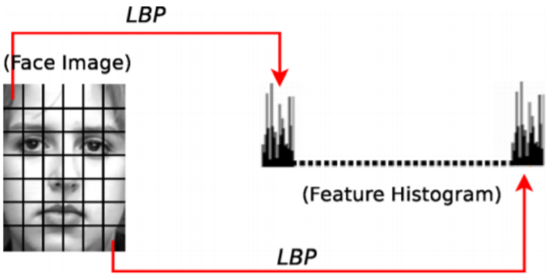
“[29]. pixel of an image with the 3*3 square neighboring pixels .”
BackgroundAn empirical study on learners’ learning emotion and learning effect in offline learning environment
Mou, X., Xin, Y., Song, Y., Xiang, J., & Tang, Y. (2023) · PLoS ONE · doi:10.1371/journal.pone.0294407 · Cited by 13
Attention-Based Methods for Emotion Categorization From Partially Covered Faces
Shehu, H. A., Browne, W. N., & Eisenbarth, H. (2023) · IEEE Transactions on Emerging Topics in Computational Intelligence · doi:10.1109/tetci.2023.3332891 · Cited by 11
Medjden, S. M., Ahmed, N., & Lataifeh, M. (2020) · Procedia Computer Science · doi:10.1016/j.procs.2020.03.011 · Cited by 11
Facial Expression: Psychophysiological Study
Lyakso, E., Frolova, O. V., & Matveev, Y. N. (2020) · Advances in computational intelligence and robotics book series · doi:10.4018/978-1-7998-6690-9.ch014 · Cited by 11
Human Facial Expression Based Video Retrieval with Query Video Using EBCOT and MLP
Jeyalaksshmi, S., Akila, D., Padmapriya, D., Suseendran, G., & Pal, S. (2021) · Advances in intelligent systems and computing · doi:10.1007/978-981-33-4389-4_16 · Cited by 11
Engagement and Discrete Emotions in Game Scenario: Is There a Relation Among Them?
Aranha, R. V., Cordeiro, L. N., Sales, L. M., & Nunes, F. L. S. (2021) · Lecture notes in computer science · doi:10.1007/978-3-030-85613-7_3 · Cited by 11
Gambo, F. L., Wajiga, G. M., Shuib, L. M., Garba, E. J., Abdullahi, A. A., & Bisandu, D. B. (2018) · ICST Transactions on Scalable Information Systems · doi:10.4108/eai.20-10-2021.171549 · Cited by 11
Emotion Recognition from Facial Images using Hybrid Deep Learning Models
Yaseen, A. F., Shaukat, A., & Alam, M. (2022) · International Conference on Digital Futures and Transformative Technologies (ICoDT2) · doi:10.1109/icodt255437.2022.9787474 · Cited by 11
CNN-BiLSTM based Facial Emotion Recognition
Lamichhane, A., & Karn, G. (2024) · International Journal on Engineering Technology · doi:10.3126/injet.v2i1.72579 · Cited by 10
Across the Universe: Biasing Facial Representations Toward Non-Universal Emotions With the Face-STN
Barros, P. V. A., & Sciutti, A. (2022) · IEEE Access · doi:10.1109/access.2022.3210183 · Cited by 10
Wafi, M., Bachtiar, F. A., & Utaminingrum, F. (2022) · International Journal of Power Electronics and Drive Systems/International Journal of Electrical and Computer Engineering · doi:10.11591/ijece.v13i1.pp1113-1122 · Cited by 10
Facial Expression Recognition Based on Deep Learning: An Overview
Al-Atroshi, S. J. A., & Ali, A. M. (2023) · Iraqi Journal of Science · doi:10.24996/ijs.2023.64.3.32 · Cited by 10
ElDahshan, K. A., Elsayed, E. K., Aboshosha, A. M., & Ebeid, E. A. (2020) · International journal of intelligent engineering and systems · doi:10.22266/ijies2020.0831.09 · Cited by 10
SVM classification of facial functions based on facial landmarks and animation Units
Gaber, A. M., Taher, M. F., Wahed, M. A., & Shalaby, N. (2021) · Biomedical Physics & Engineering Express · doi:10.1088/2057-1976/ac107c · Cited by 10
Jäntschi, L. (2022) · Symmetry · doi:10.3390/sym14081674 · Cited by 10
Rashad, M., Alebiary, D. M., Aldawsari, M. F., El-Sawy, A., & El-Atta, A. H. A. (2024) · PeerJ Computer Science · doi:10.7717/peerj-cs.2272 · Cited by 9
Stretch Sensor-Based Facial Expression Recognition and Classification Using Machine Learning
Refat, C. M. M., & Azlan, N. Z. (2021) · International Journal of Computational Intelligence and Applications · doi:10.1142/s1469026821500103 · Cited by 9
Action Unit Analysis for Monitoring Drivers’ Emotional States
Nabipour, M., & Nikan, S. (2024) · IEEE Sensors Journal · doi:10.1109/jsen.2024.3413601 · Cited by 9
Hsu, C.-F., Mudiyanselage, S. P. K., Agustina, R., & Lin, M. (2025) · Applied Soft Computing · doi:10.1016/j.asoc.2025.112867 · Cited by 9
Lu, T., Yeh, S., Wang, C.-H., & Wei, M.-R. (2021) · Multimedia Tools and Applications · doi:10.1007/s11042-021-10673-x · Cited by 9
Students Attention Monitoring and Alert System for Online Classes using Face Landmarks
Roy, M. L., Malathi, D., & Jayaseeli, J. D. D. (2021) · IEEE International Conference on Computing, Power and Communication Technologies (IC2PCT) · doi:10.1109/gucon50781.2021.9573793 · Cited by 9
Kim, N., Cho, S., & Bae, B. (2022) · Sensors · doi:10.3390/s22155753 · Cited by 9
“Therefore, the CNN– RNN architecture [39], which employs a combination of CNN and RNN, was used in many of the previous studies.”
Long, D. T., Tung, T. T., & Dũng, T. T. (2022) · International Journal of Modern Education and Computer Science · doi:10.5815/ijmecs.2022.06.05 · Cited by 9
Analysis of Facial Occlusion Challenge in Thermal Images for Human Affective State Recognition
Qudah, M. M. A., Mohamed, A. S. A., & Lutfi, S. L. (2023) · Sensors · doi:10.3390/s23073513 · Cited by 9
“More importantly, previous studies have mentioned that emotional messages are conveyed through facial expressions 55% of the time and through spoken words 7% of the time, while the remaining message is expressed by the manner in which words are spoken, known as paralanguage [9].”
BackgroundFarokhah, L. (2020) · Jurnal RESTI (Rekayasa Sistem dan Teknologi Informasi) · doi:10.29207/resti.v4i6.2644 · Cited by 9
Facial Expression Recognition Using YOLO
Tejaswi, K., Mokshith, D., Sai Pradeep, E., Kumar, C. M., & Manoj Kumar, K. (2023) · International Conference on Research Methodologies in Knowledge Management, Artificial Intelligence and Telecommunication Engineering (RMKMATE) · doi:10.1109/rmkmate59243.2023.10369028 · Cited by 8
(2024) · International journal of intelligent engineering and systems · doi:10.22266/ijies2024.0630.14 · Cited by 8
Compound facial expressions recognition approach using DCGAN and CNN
Ullah, S., Ou, J., Xie, Y., & Tian, W. (2024) · Multimedia Tools and Applications · doi:10.1007/s11042-024-20138-6 · Cited by 8
“Other factors contributing to low recognition accuracy include low-resolution [73], complex features [74, 75].”
SCL-FExR: supervised contrastive learning approach for facial expression Recognition
Vasudeva, K., Dubey, A., & Chandran, S. (2023) · Multimedia Tools and Applications · doi:10.1007/s11042-023-14803-5 · Cited by 8
“The methods developed to date for Facial expression recognition can be broadly put into two categories: Conventional approaches and Deep Learning methods [20].”
MethodAdvances in Facial Emotion Recognition: Deep Learning Approaches and Future Prospects
Deshmukh, S. M., Chaudhary, S., Gayakwad, M., Kadam, K., More, N. S., & Bhosale, A. (2024) · MIT Art, Design and Technology School of Computing International Conference (MITADTSoCiCon) · doi:10.1109/mitadtsocicon60330.2024.10574908 · Cited by 8
Mutanu, L. M., Gohil, J., & Gupta, K. (2023) · Software · doi:10.3390/software2020009 · Cited by 8
“A popular algorithm, according to recent FER reviews [15,16], is the convolutional neural network (CNN), which achieves better accuracy with big data [38].”
BackgroundMethodYAPAY ZEKÂ/AKILLI ÖĞRENME TEKNOLOJİLERİYLE AKADEMİK METİN YAZMA: CHATGPT ÖRNEĞİ
ALTINTOP, M. (2023) · Süleyman Demirel Üniversitesi Sosyal Bilimler Enstitüsü Dergisi · Cited by 7
CNN-based Human Emotion Recognition from Facial Images in Controlled-Uncontrolled Environment
Grover, R., & Bansal, S. R. (2023) · International Conference on Informatics (ICI) · doi:10.1109/ici60088.2023.10421613 · Cited by 7
Sima, Y., Yi, J., Chen, A., & Jin, Z. (2021) · Applied Soft Computing · doi:10.1016/j.asoc.2021.108029 · Cited by 7
Facial Expression Recognition Using Hyper-Complex Wavelet Scattering and Machine Learning Techniques
Vaijayanthi, S., & Arunnehru, J. (2022) · Lecture notes in networks and systems · doi:10.1007/978-981-19-2225-1_37 · Cited by 7
Wang, Y., Fang, R., Huang, X., Han, Z., Lin, X., Shan, Y., & Chen, T. (2025) · ACM International Conference on Multimedia (ACM MM) · doi:10.1145/3746027.3762066 · Cited by 6
“Due to their involuntary nature, MEs are considered critical cues for emotion recognition, psychological assessment, and deception detection, playing an important role in human affect modeling [2][3][4].”
Reading Smiles: Proxy Bias in Foundation Models for Facial Emotion Recognition
Tsangko, I., Triantafyllopoulos, A., Mallol-Ragolta, A., & Schuller, B. W. (2025) · IEEE Access · doi:10.1109/access.2025.3636968 · Cited by 6
Imamura, M., Tashiro, A., Kumano, S., & Otsuka, K. (2024) · IEEE Transactions on Affective Computing · doi:10.1109/taffc.2024.3491097 · Cited by 6
Metadata
- Authors
- Huang, Y., Chen, F., Lv, S., & Wang, X.
- Affiliations
- National University of Defense Technology (CN)
- Corresponding author
- Wang, Xiaodong
- Venue
- Symmetry
- Publisher
- MDPI AG
- Published
- 2019-09-20
- Volume
- 11
- Issue
- 10
- Pages
- 1189
- ISSN
- 2073-8994 (ISSN-L)
- OpenAlex
- W2974043081
- Cited by
- 195
- References
- 131
- Citations by year
- 2026: 18 · 2025: 14 · 2024: 30 · 2023: 33 · 2022: 41 · 2021: 39 · 2020: 18 · 2019: 1
- FWCI
- 29.14
- Type
- journal article
- Language
- en
- Open access
- gold
- dx.doi.org
- Licence
- Locations
- Symmetry (publishedVersion, cc-by)
- DOAJ (DOAJ: Directory of Open Access Journals) (submittedVersion, cc-by-sa)
- Funders
- National Natural Science Foundation of China (61572513)
- Topics
- Physical Sciences › Computer Science › Artificial Intelligence › Emotion and Mood Recognition
- Physical Sciences › Computer Science › Computer Vision and Pattern Recognition › Face recognition and analysis
- Physical Sciences › Computer Science › Computer Vision and Pattern Recognition › Face and Expression Recognition
- Keywords
- facial expression recognition, nonverbal communication, neural network architecture, facial expression datasets, evaluation metrics, benchmark dataset, performance comparison
About these checks
Registry, retraction, Cites and statistics results are computed, not judged, with one exception: a printed reference that no index lists is read once by a model before it counts as a citation error. Claims are extracted by a model and kept only when their quote appears verbatim in the text; each cited source is then checked, with a model’s help, for whether it says what the claim relies on. Those verdicts can be wrong — read the claim’s quote and the cited source before relying on one.
Statistics and arithmetic are recomputed, not judged.
Confidence bands are shown only for fields calibrated on our annotated test set. None is calibrated yet, so no band is shown.
What counts as a claim ›How we measure confidence ›How we check this ›
Are you an author, or do you see a problem with this page? Request a review
Data sources
Bibliographic data: Semantic Scholar, OpenAlex, Crossref.
Contains information from the Semantic Scholar Academic Graph Datasets, made available under the ODC Attribution License (ODC-BY 1.0).
Semantic Scholar’s data is described in: Kinney, R., et al. (2023). The Semantic Scholar Open Data Platform. arXiv:2301.10140.
