

Facial Expression Recognition: A Survey
Open accessThe DOI matches its Crossref record; 130 of the 131 references it cites were found in a registry or an index.
Abstract
Facial Expression Recognition (FER), as the primary processing method for non-verbal intentions, is an important and promising field of computer vision and artificial intelligence, and one of the subject areas of symmetry. This survey is a comprehensive and structured overview of recent advances in FER. We first categorise the existing FER methods into two main groups, i.e., conventional approaches and deep learning-based approaches. Methodologically, to highlight the differences and similarities, we propose a general framework of a conventional FER approach and review the possible technologies that can be employed in each component. As for deep learning-based methods, four kinds of neural network-based state-of-the-art FER approaches are presented and analysed. Besides, we introduce seventeen commonly used FER datasets and summarise four FER-related elements of datasets that may influence the choosing and processing of FER approaches. Evaluation methods and metrics are given in the later part to show how to assess FER algorithms, along with subsequent performance comparisons of different FER approaches on the benchmark datasets. At the end of the survey, we present some challenges and opportunities that need to be addressed in future.
Overview
The claims and statistics of this paper haven’t been checked yet.
Free: it reads the open-access text and checks the first 5 claims that cite a source we can check. Create a free account to check every claim.
Integrity signals
Registry
Cites
Statistics
Figures


Verification
Claims the paper makes
The claims and statistics of this paper haven’t been checked yet.
Free: it reads the open-access text and checks the first 5 claims that cite a source we can check. Create a free account to check every claim.
Self-check
Percentages, sums and reported differences re-computed from the paper’s own numbers.
The self-check needs the paper’s full text.
Citations
Cites
1 retracted
RETRACTED CHAPTER: Real-Life Facial Expression Recognition Systems: A Review
Goyal, S. J., Upadhyay, A. K., Jadon, R. S., & Goyal, R. (2017) · Smart innovation, systems and technologies · doi:10.1007/978-981-10-5544-7_31 · Cited by 22 · cited 1×
“Some real-life challenges of FER systems are proposed in [32,33].”
BackgroundRetractedGAN(Generative Adversarial Nets)
(2017) · Journal of Japan Society for Fuzzy Theory and Intelligent Informatics · doi:10.3156/jsoft.29.5_177_2 · Cited by 19,270
Rapid object detection using a boosted cascade of simple features
Viola, P., & Jones, M. (2005) · Proceedings of the 2001 IEEE Computer Society Conference on Computer Vision and Pattern Recognition. CVPR 2001 · doi:10.1109/cvpr.2001.990517 · Cited by 18,300 · cited 1×
“The Haar-like feature template [57] is the combination of edge, linear, centre and diagonal features.”
A fast learning algorithm for deep belief nets
Hinton, G. E., Osindero, S., & Teh, Y.-W. (2006) · Neural Computation · doi:10.1162/neco.2006.18.7.1527 · Cited by 16,336 · cited 13×
“In [94], the robust LDPP-PCA-GDA (Local Directional Position Pattern, Principal Component Analysis, Generalised Discriminant Analysis) features are combined with DBN for modelling the expressions as well as recognition.”
MethodInfluentialRussell, J. A. (1980) · Journal of Personality and Social Psychology · doi:10.1037/h0077714 · Cited by 16,334 · cited 1×
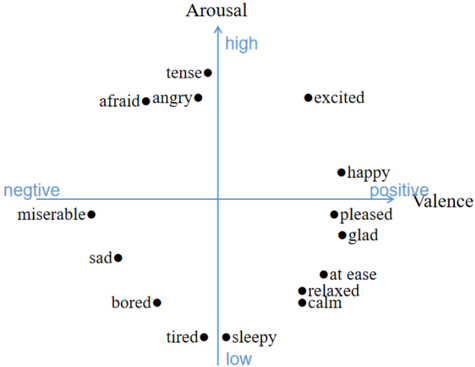
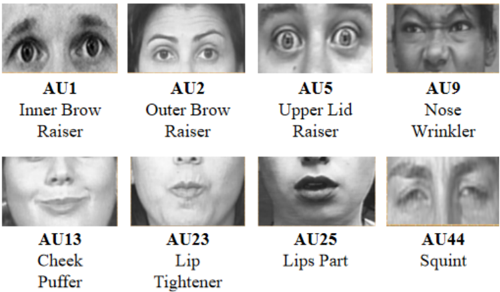
“In the decades of studying FER, Action Units (AUs) [11] and the Valence–Arousal space (V–A space) [12] are two popular models.”
BackgroundRobust Real-Time Face Detection
Viola, P., & Jones, M. J. (2004) · International Journal of Computer Vision · doi:10.1023/b:visi.0000013087.49260.fb · Cited by 14,097
Horn, B. K. P., & Schunck, B. G. (1981) · Artificial Intelligence · doi:10.1016/0004-3702(81)90024-2 · Cited by 10,312
An argument for basic emotions
Ekman, P. (1992) · Cognition and Emotion · doi:10.1080/02699939208411068 · Cited by 9,646 · cited 1×
“, happiness, surprise, sadness, anger, disgust, and fear, are proposed in [20].”
(1974) · Medical Entomology and Zoology · Cited by 7,295
Active Shape Models-Their Training and Application
Cootes, T. F., Taylor, C. J., Cooper, D. H., & Graham, J. (1995) · Computer Vision and Image Understanding · doi:10.1006/cviu.1995.1004 · Cited by 7,190 · cited 1×
“The Active Shape Model (ASM) proposed in [49] is based on statistical models and is generally used to extract feature points on expression contours.”
MethodEkman, P., & Friesen, W. V. (2019) · PsycTESTS Dataset · doi:10.1037/t27734-000 · Cited by 6,019
Cootes, T. F., Edwards, G. J., & Taylor, C. J. (2001) · IEEE Transactions on Pattern Analysis and Machine Intelligence · doi:10.1109/34.927467 · Cited by 5,409
Lucey, P., Cohn, J. F., Kanade, T., Saragih, J., Ambadar, Z., & Matthews, I. (2010) · 2010 IEEE Computer Society Conference on Computer Vision and Pattern Recognition - Workshops · doi:10.1109/cvprw.2010.5543262 · Cited by 4,303 · cited 10×
“CK+ [15] [42] Gabor (Gabor-mean-DWT) 92.”
BackgroundMethodInfluentialA Review on Evaluation Metrics for Data Classification Evaluations
M, H., & M.N, S. (2015) · International Journal of Data Mining & Knowledge Management Process · doi:10.5121/ijdkp.2015.5201 · Cited by 2,693 · cited 1×
“Some metrics for binary classification can be extended for multi-class classification evaluations [123] (e.”
BackgroundEmotion recognition in human-computer interaction
Cowie, R., Douglas-Cowie, E., Tsapatsoulis, N., Votsis, G., Kollias, S., Fellenz, W., & Taylor, J. G. (2001) · IEEE Signal Processing Magazine · doi:10.1109/79.911197 · Cited by 2,603
Face Recognition with Local Binary Patterns
Ahonen, T., Hadid, A., & Pietikäinen, M. (2004) · Lecture Notes in Computer Science · doi:10.1007/978-3-540-24670-1_36 · Cited by 2,462
AffectNet: A Database for Facial Expression, Valence, and Arousal Computing in the Wild
Mollahosseini, A., Hasani, B., & Mahoor, M. H. (2019) · IEEE Transactions on Affective Computing · doi:10.1109/taffc.2017.2740923 · Cited by 2,338 · cited 1×
“Some significant achievements have been attained in datasets EmotioNet [19], AffectNet [126] and RAF-DB/RAF-ML [118–120].”
BackgroundCoding facial expressions with Gabor wavelets
Lyons, M., Akamatsu, S., Kamachi, M., & Gyoba, J. (2002) · Proceedings Third IEEE International Conference on Automatic Face and Gesture Recognition · doi:10.1109/afgr.1998.670949 · Cited by 2,210 · cited 10×
“JAFFE dataset [14] contains 213 images of seven facial emotion (six basic emotions and one neutral) posed by ten Japanese females.”
BackgroundMethodInfluentialA Completed Modeling of Local Binary Pattern Operator for Texture Classification
Guo, Z., Zhang, L., & Zhang, D. (2010) · IEEE Transactions on Image Processing · doi:10.1109/tip.2010.2044957 · Cited by 2,115 · cited 1×
“, Complete Local Binary Pattern (CLBP), is proposed in [45], which has better performance than original LBP algorithm, but it also causes dimensionality disaster.”
BackgroundFace detection in color images
Hsu, R.-L., Abdel-Mottaleb, M., & Jain, A. K. (2002) · IEEE Transactions on Pattern Analysis and Machine Intelligence · doi:10.1109/34.1000242 · Cited by 1,843
Automatic facial expression analysis: a survey
Fasel, B., & Luettin, J. (2003) · Pattern Recognition · doi:10.1016/s0031-3203(02)00052-3 · Cited by 1,810
Recognizing action units for facial expression analysis
Tian, Y.-I., Kanade, T., & Cohn, J. F. (2001) · IEEE Transactions on Pattern Analysis and Machine Intelligence · doi:10.1109/34.908962 · Cited by 1,745 · cited 2×
“The 46 facial action units encode the basic movements of individual or groups of muscles that are typically observed when a facial expression produces a particular emotion [11].”
BackgroundGross, R., Matthews, I., Cohn, J., Kanade, T., & Baker, S. (2010) · Image and Vision Computing · doi:10.1016/j.imavis.2009.08.002 · Cited by 1,621
Reliable Crowdsourcing and Deep Locality-Preserving Learning for Expression Recognition in the Wild
Li, S., Deng, W., & Du, J. (2017) · 2017 IEEE Conference on Computer Vision and Pattern Recognition (CVPR) · doi:10.1109/cvpr.2017.277 · Cited by 1,470 · cited 5×
“, AFEW [116] extracted from movies and RAF-DB [118,119] downloaded form the Internet.”
BackgroundMethodInfluentialFacial Landmark Detection by Deep Multi-task Learning
Zhang, Z., Luo, P., Loy, C. C., & Tang, X. (2014) · Lecture Notes in Computer Science · doi:10.1007/978-3-319-10599-4_7 · Cited by 1,365 · cited 1×
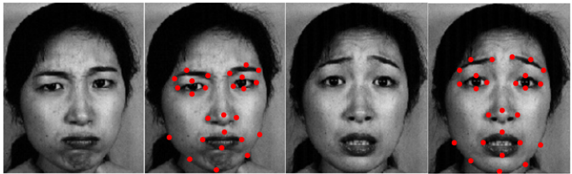
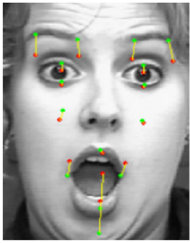
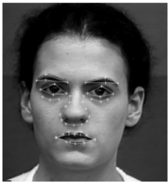
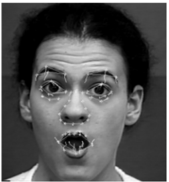
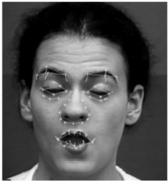
“Facial landmarks [16,17] are visually highlights in facial area, such as the alae of the nose, the end of the eyebrow, and the mouth corner, as shown in Figure 2.”
BackgroundFacial Expression Analysis under Partial Occlusion: A Survey
Zhang, L., Verma, B., Tjondronegoro, D., & Chandran, V. (2019) · ACM Computing Surveys · doi:10.1145/3158369 · Cited by 1,258
A 3D Facial Expression Database For Facial Behavior Research
Yin, L., Wei, X., Sun, Y., Wang, J., & Rosato, M. J. (2006) · 7th International Conference on Automatic Face and Gesture Recognition (FGR06) · doi:10.1109/fgr.2006.6 · Cited by 1,171 · cited 5×
“eu/ & 2900 video sequence BU-3DFE [109] 100 2500 still images 1040 × 1329 complex posed 6 BEs, 83 FLs http://www.”
BackgroundMethodInfluentialGoing deeper in facial expression recognition using deep neural networks
Mollahosseini, A., Chan, D., & Mahoor, M. H. (2016) · 2016 IEEE Winter Conference on Applications of Computer Vision (WACV) · doi:10.1109/wacv.2016.7477450 · Cited by 1,086 · cited 1×
“The proposed network in [87] employs two convolutional layers and four inception layers to extend both the depth and width of the network and keep the computational budget constant as well.”
BackgroundWeb-Based Database for Facial Expression Analysis
Pantic, M., Valstar, M., Rademaker, R., & Maat, L. (2005) · 2005 IEEE International Conference on Multimedia and Expo · doi:10.1109/icme.2005.1521424 · Cited by 1,039 · cited 8×
“htm 66 FLs MMI [105] 75 740 still images 720 × 576 complex posed 6 BEs & neutral, AUs http://mmifacedb.”
BackgroundInfluentialLearning and relearning in Boltzmann machines
Hinton, G. E., & Sejnowski, T. J. (2001) · Graphical Models · doi:10.7551/mitpress/3349.003.0005 · Cited by 1,037 · cited 1×
“The DBN [89] is based on Restricted Boltzmann Machine (RBM) [90] and its feature extraction of input signal is unsupervised and abstract.”
MethodOcclusion Aware Facial Expression Recognition Using CNN With Attention Mechanism
Li, Y., Zeng, J., Shan, S., & Chen, X. (2019) · IEEE Transactions on Image Processing · doi:10.1109/tip.2018.2886767 · Cited by 916 · cited 3×
“notice this issue, and introduce two versions of ACNN to replace the occluded patches with other related but non-occluded ones in [88].”
BackgroundInfluentialAutomatic recognition and analysis of human faces and facial expressions: a survey
Samal, A., & Iyengar, P. A. (1992) · Pattern Recognition · doi:10.1016/0031-3203(92)90007-6 · Cited by 910
Local Binary Patterns and Its Application to Facial Image Analysis: A Survey
Huang, D., Shan, C., Ardabilian, M., Wang, Y., & Chen, L. (2011) · IEEE Transactions on Systems, Man, and Cybernetics, Part C (Applications and Reviews) · doi:10.1109/tsmcc.2011.2118750 · Cited by 905 · cited 1×
“The work in [29] is about face detection and recognition, and facial expression analysis based on Local Binary Patterns (LBP).”
MethodCompound facial expressions of emotion
Du, S., Tao, Y., & Martinez, A. M. (2014) · Proceedings of the National Academy of Sciences · doi:10.1073/pnas.1322355111 · Cited by 806 · cited 4×
“CE [21] consists of 22 categories of emotions of 230 subjects with facial occlusion minimised.”
BackgroundMethodInfluentialDISFA: A Spontaneous Facial Action Intensity Database
Mavadati, S. M., Mahoor, M. H., Bartlett, K., Trinh, P., & Cohn, J. F. (2013) · IEEE Transactions on Affective Computing · doi:10.1109/t-affc.2013.4 · Cited by 793 · cited 4×
“Denver Intensity of Spontaneous Facial Action Dataset (DISFA) DISFA dataset [108] contains 130,000 stereo videos of 27 subjects with different gender and ethnicities.”
BackgroundMethodInfluentialJoint Fine-Tuning in Deep Neural Networks for Facial Expression Recognition
Jung, H., Lee, S., Yim, J., Park, S., & Kim, J. (2015) · 2015 IEEE International Conference on Computer Vision (ICCV) · doi:10.1109/iccv.2015.341 · Cited by 781 · cited 1×
“In order to take advantage of temporal features for recognising facial expression, a new integration method named Deep Temporal Appearance-Geometry Network (DTAGN) is proposed in [86].”
MethodFacial expression recognition from near-infrared videos
Zhao, G., Huang, X., Taini, M., Li, S. Z., & Pietikäinen, M. (2011) · Image and Vision Computing · doi:10.1016/j.imavis.2011.07.002 · Cited by 778 · cited 7×
“• Significant progress on BU-3DFE [109], Multi-PIE [112] and Oulu-CASIA [113] is made by using GAN-based FER aproaches.”
BackgroundMethodInfluentialBP4D-Spontaneous: a high-resolution spontaneous 3D dynamic facial expression database
Zhang, X., Yin, L., Cohn, J. F., Canavan, S., Reale, M., Horowitz, A., Liu, P., & Girard, J. M. (2014) · Image and Vision Computing · doi:10.1016/j.imavis.2014.06.002 · Cited by 745 · cited 4×
“Binghamton-Pittsburgh 3D Dynamic Spontaneous (BP4D-Spontaneous) BP4D-spontaneous [110] is structured by 41 participants (23 females and 18 males, from 18 to 29 years old).”
BackgroundInfluentialCollecting Large, Richly Annotated Facial-Expression Databases from Movies
Dhall, A., Goecke, R., Lucey, S., & Gedeon, T. (2012) · IEEE MultiMedia · doi:10.1109/mmul.2012.26 · Cited by 663 · cited 7×
“Acted Facial Expressions in the Wild Dataset (AFEW) AFEW [116] is a dynamic temporal facial expressions data corpus with spontaneous expressions, various head poses, occlusions and illuminations, which is close to real world environment.”
BackgroundMethodInfluentialLi, S., & Deng, W. (2019) · IEEE Transactions on Image Processing · doi:10.1109/tip.2018.2868382 · Cited by 660 · cited 5×
“, AFEW [116] extracted from movies and RAF-DB [118,119] downloaded form the Internet.”
BackgroundMethodInfluentialFacial Expression Recognition via a Boosted Deep Belief Network
Liu, P., Han, S., Meng, Z., & Tong, Y. (2014) · 2014 IEEE Conference on Computer Vision and Pattern Recognition · doi:10.1109/cvpr.2014.233 · Cited by 650 · cited 2×
“A novel Boosted Deep Belief Network (BDBN) [91] is presented to combine feature learning/strengthen, feature selection, and classifier construction in a unified framework by performing three training stages iteratively.”
MethodDarwin, Deception, and Facial Expression
EKMAN, P. (2003) · Annals of the New York Academy of Sciences · doi:10.1196/annals.1280.010 · Cited by 624 · cited 1×
“Micro expressions [22] represent more spontaneous and subtle facial movements that occur involuntarily.”
BackgroundPreserving privacy by de-identifying face images
Newton, E. M., Sweeney, L., & Malin, B. (2005) · IEEE Transactions on Knowledge and Data Engineering · doi:10.1109/tkde.2005.32 · Cited by 615 · cited 1×
“Even if a few attempts have been made in [102,132,133], a wide variety proposed FER method generally depend on high-resolution images, but with little or no attention to”
MethodMoghaddam, B., Jebara, T., & Pentland, A. (2000) · Pattern Recognition · doi:10.1016/s0031-3203(99)00179-x · Cited by 612
Benitez-Quiroz, C. F., Srinivasan, R., & Martinez, A. M. (2016) · 2016 IEEE Conference on Computer Vision and Pattern Recognition (CVPR) · doi:10.1109/cvpr.2016.600 · Cited by 607 · cited 2×
“Some significant achievements have been attained in datasets EmotioNet [19], AffectNet [126] and RAF-DB/RAF-ML [118–120].”
BackgroundPainful data: The UNBC-McMaster shoulder pain expression archive database
Lucey, P., Cohn, J. F., Prkachin, K. M., Solomon, P. E., & Matthews, I. (2011) · Face and Gesture 2011 · doi:10.1109/fg.2011.5771462 · Cited by 599 · cited 4×
“This dataset [107] is available to accelerate research into pain and augment current datasets.”
MethodInfluentialAutomatic prediction of frustration
Kapoor, A., Burleson, W., & Picard, R. W. (2007) · International Journal of Human-Computer Studies · doi:10.1016/j.ijhcs.2007.02.003 · Cited by 592 · cited 1×
“FER has broad applications in multiple domains, including human–computer interaction [2,3], virtual reality [4], augmented reality [5], advanced driver assistance systems [6,7], education [8], and entertainment [9].”
BackgroundBartlett, M. S., Littlewort, G., Fasel, I., & Movellan, J. R. (2003) · 2003 Conference on Computer Vision and Pattern Recognition Workshop · doi:10.1109/cvprw.2003.10057 · Cited by 573 · cited 1×
“FER has broad applications in multiple domains, including human–computer interaction [2,3], virtual reality [4], augmented reality [5], advanced driver assistance systems [6,7], education [8], and entertainment [9].”
BackgroundChen, W., Er, M. J., & Wu, S. (2006) · IEEE Transactions on Systems, Man and Cybernetics, Part B (Cybernetics) · doi:10.1109/tsmcb.2005.857353 · Cited by 560
Static facial expression analysis in tough conditions: Data, evaluation protocol and benchmark
Dhall, A., Goecke, R., Lucey, S., & Gedeon, T. (2011) · 2011 IEEE International Conference on Computer Vision Workshops (ICCV Workshops) · doi:10.1109/iccvw.2011.6130508 · Cited by 541 · cited 3×
“Static Facial Expressions in the Wild Dataset (SFEW) [117] is developed by selecting frames from AFEW, has been divided into three sets: Train (958 samples), Val (436 samples) and Test (372 samples).”
BackgroundMethodRecognizing human facial expressions from long image sequences using optical flow
Yacoob, Y., & Davis, L. S. (1996) · IEEE Transactions on Pattern Analysis and Machine Intelligence · doi:10.1109/34.506414 · Cited by 458 · cited 1×
“An approach for analysing and representing facial dynamics is presented in [54].”
MethodFacial Expression Recognition by De-expression Residue Learning
Yang, H., Ciftci, U., & Yin, L. (2018) · 2018 IEEE/CVF Conference on Computer Vision and Pattern Recognition · doi:10.1109/cvpr.2018.00231 · Cited by 439 · cited 1×
“A DeRL (De-expression Residue Learning) procedure is proposed in [103] to extract information of the expressive component.”
MethodFacial Landmark Detection: A Literature Survey
Wu, Y., & Ji, Q. (2019) · International Journal of Computer Vision · doi:10.1007/s11263-018-1097-z · Cited by 404 · cited 1×
“Facial landmarks [16,17] are visually highlights in facial area, such as the alae of the nose, the end of the eyebrow, and the mouth corner, as shown in Figure 2.”
BackgroundWang, S., Liu, Z., Lv, S., Lv, Y., Wu, G., Peng, P., Chen, F., & Wang, X. (2010) · IEEE Transactions on Multimedia · doi:10.1109/tmm.2010.2060716 · Cited by 397 · cited 2×
“NVIE Dataset NVIE [111] is a natural visible and infrared facial expression dataset, which contains both spontaneous and posed expressions of more than 100 subjects, with illumination provided from three different directions.”
BackgroundSelf-citationIllumination normalization for robust face recognition against varying lighting conditions
Shan, S., Gao, W., Cao, B., & Zhao, D. (2003) · 2003 IEEE International SOI Conference. Proceedings (Cat. No.03CH37443) · doi:10.1109/amfg.2003.1240838 · Cited by 358
Static and dynamic 3D facial expression recognition: A comprehensive survey
Sandbach, G., Zafeiriou, S., Pantic, M., & Yin, L. (2012) · Image and Vision Computing · doi:10.1016/j.imavis.2012.06.005 · Cited by 357 · cited 1×
“The work in [25,26] concentrate on 3D FER.”
BackgroundRobust Facial Expression Recognition Based on Local Directional Pattern
Jabid, T. (2010) · ETRI Journal · doi:10.4218/etrij.10.1510.0132 · Cited by 356 · cited 1×
“Jabid and Chae [46] introduce LBP-based Local Directional Pattern (LDP) algorithm, which is robust to illumination and has relatively low computational complexity.”
BackgroundPhysiological signals based human emotion Recognition: a review
Jerritta, S., Murugappan, M., Nagarajan, R., & Wan, K. (2011) · 2011 IEEE 7th International Colloquium on Signal Processing and its Applications · doi:10.1109/cspa.2011.5759912 · Cited by 341 · cited 1×
“Besides the facial image taken by camera, physiological signals [10], e.”
BackgroundDeeply Learning Deformable Facial Action Parts Model for Dynamic Expression Analysis
Liu, M., Li, S., Shan, S., Wang, R., & Chen, X. (2015) · Lecture Notes in Computer Science · doi:10.1007/978-3-319-16817-3_10 · Cited by 329 · cited 1×
“[85] proposed a deformable facial action parts model for dynamic expression analysis.”
BackgroundReal time facial expression recognition in video using support vector machines
Michel, P., & El Kaliouby, R. (2003) · Proceedings of the 5th international conference on Multimodal interfaces · doi:10.1145/958432.958479 · Cited by 308
Toward Practical Smile Detection
Whitehill, J., Littlewort, G., Fasel, I., Bartlett, M., & Movellan, J. (2009) · IEEE Transactions on Pattern Analysis and Machine Intelligence · doi:10.1109/tpami.2009.42 · Cited by 308 · cited 6×
“The MPLab GENKI dataset [121] is an extended dataset of images containing faces spanning a wide range of illumination conditions, geographical locations, personal identity, and ethnicity.”
BackgroundInfluentialMeta-Analysis of the First Facial Expression Recognition Challenge
Valstar, M. F., Mehu, M., Jiang, B., Pantic, M., & Scherer, K. (2012) · IEEE Transactions on Systems, Man, and Cybernetics, Part B (Cybernetics) · doi:10.1109/tsmcb.2012.2200675 · Cited by 297 · cited 3×
“The GEneva Multimodal Emotion Portrayals (GEMEP) [115] is a collection of audio and video recordings featuring ten actors portraying 18 emotional states, with different verbal contents and different modes of expression.”
BackgroundLSTM-Modeling of continuous emotions in an audiovisual affect recognition framework
Wöllmer, M., Kaiser, M., Eyben, F., Schuller, B., & Rigoll, G. (2013) · Image and Vision Computing · doi:10.1016/j.imavis.2012.03.001 · Cited by 288 · cited 1×
“An LSTM-based system is built in [95] to assess dimensional representation of emotions in audiovisual scenarios.”
Facial Expression Recognition Using Enhanced Deep 3D Convolutional Neural Networks
Hasani, B., & Mahoor, M. H. (2017) · 2017 IEEE Conference on Computer Vision and Pattern Recognition Workshops (CVPRW) · doi:10.1109/cvprw.2017.282 · Cited by 287 · cited 1×
“The 3D Convolutional Neural Network (3DCNN) architecture in [97], combined the 3D Inception-ResNet (3DIR) layers with an LSTM unit.”
MethodKim, D. H., Baddar, W. J., Jang, J., & Ro, Y. M. (2019) · IEEE Transactions on Affective Computing · doi:10.1109/taffc.2017.2695999 · Cited by 257 · cited 1×
“[96] take advantage of CNN to learn spatial features of representative state frames, and then the LSTM of a facial expression is employed to learn the temporal features of the spatial feature representation.”
MethodJoint Pose and Expression Modeling for Facial Expression Recognition
Zhang, F., Zhang, T., Mao, Q., & Xu, C. (2018) · 2018 IEEE/CVF Conference on Computer Vision and Pattern Recognition · doi:10.1109/cvpr.2018.00354 · Cited by 256 · cited 1×
“An end-to-end GAN-based model is presented in [100].”
MethodChen, C.-H., Lee, I.-J., & Lin, L.-Y. (2015) · Research in Developmental Disabilities · doi:10.1016/j.ridd.2014.10.015 · Cited by 229 · cited 1×
“FER has broad applications in multiple domains, including human–computer interaction [2,3], virtual reality [4], augmented reality [5], advanced driver assistance systems [6,7], education [8], and entertainment [9].”
BackgroundFacial Expression Recognition: A Survey
Kumari, J., Rajesh, R., & Pooja, K. M. (2015) · Procedia Computer Science · doi:10.1016/j.procs.2015.08.011 · Cited by 216 · cited 1×
“Geometry-based and a appearance-based automatic FER systems are utilised in [28].”
MethodA Multi-Stage Approach to Facial Feature Detection
Cristinacce, D., Cootes, T., & Scott, I. (2004) · Procedings of the British Machine Vision Conference 2004 · doi:10.5244/c.18.30 · Cited by 210 · cited 1×
“Cristinacce [51] fuses PRFR (Pairwise Reinforcement of Feature Responses) with AAM to detect feature points of local edges such as facial organs.”
BackgroundSpeech emotion recognition approaches in human computer interaction
Ramakrishnan, S., & El Emary, I. M. M. (2013) · Telecommunication Systems · doi:10.1007/s11235-011-9624-z · Cited by 187 · cited 1×
“Take, for instance, audio-based effect recognition proposed in [127], which can provide paralinguistic affective information in speech.”
BackgroundKaulard, K., Cunningham, D. W., Bülthoff, H. H., & Wallraven, C. (2012) · PLoS ONE · doi:10.1371/journal.pone.0032321 · Cited by 184 · cited 5×
“The MPI Facial Expression Database [106] is a validated database of emotional and conversational facial expressions.”
BackgroundInfluentialFeature-point tracking by optical flow discriminates subtle differences in facial expression
Cohn, J. F., Zlochower, A. J., Lien, J. J., & Kanade, T. (2002) · Proceedings Third IEEE International Conference on Automatic Face and Gesture Recognition · doi:10.1109/afgr.1998.670981 · Cited by 181 · cited 1×
“In [55], an optical flow-based approach is developed and implemented to capture emotional expression by automatically recognising subtle changes in facial expressions.”
MethodWavelet-based illumination normalization for face recognition
Du, S., & Ward, R. (2005) · IEEE International Conference on Image Processing 2005 · doi:10.1109/icip.2005.1530215 · Cited by 177
Facial Expression Recognition via Deep Learning
Zhao, X., Shi, X., & Zhang, S. (2015) · IETE Technical Review · doi:10.1080/02564602.2015.1017542 · Cited by 167 · cited 1×
“[92] propose a new method of FER is proposed (denoted by DBNs + MLP) by integrating the DBN as the unsupervised feature learning module with the MLP (Multi-Layer Perceptron) as the classification module.”
MethodLi, S., & Deng, W. (2018) · International Journal of Computer Vision · doi:10.1007/s11263-018-1131-1 · Cited by 163 · cited 3×
“html & spontaneous 12 CEs, 42 FLs RAF-ML [120] N/A 4908 still images N/A wild posed 6 BEs distribution http://www.”
BackgroundInfluentialReal time facial expression recognition with AdaBoost
Wang, Y., Ai, H., Wu, B., & Huang, C. (2004) · Proceedings - International Conference on Pattern Recognition/Proceedings/International Conference on Pattern Recognition · doi:10.1109/icpr.2004.1334680 · Cited by 158
Driver drowsiness detection using face expression recognition
Assari, M. A., & Rahmati, M. (2011) · IEEE International Conference on Signal and Image Processing Applications (ICSIPA) · doi:10.1109/icsipa.2011.6144162 · Cited by 150 · cited 1×
“FER has broad applications in multiple domains, including human–computer interaction [2,3], virtual reality [4], augmented reality [5], advanced driver assistance systems [6,7], education [8], and entertainment [9].”
BackgroundHe, L., Jiang, D., Yang, L., Pei, E., Wu, P., & Sahli, H. (2015) · Proceedings of the 5th International Workshop on Audio/Visual Emotion Challenge · doi:10.1145/2808196.2811641 · Cited by 147
Bekele, E., Zheng, Z., Swanson, A., Crittendon, J., Warren, Z., & Sarkar, N. (2013) · IEEE Transactions on Visualization and Computer Graphics · doi:10.1109/tvcg.2013.42 · Cited by 144 · cited 1×
“FER has broad applications in multiple domains, including human–computer interaction [2,3], virtual reality [4], augmented reality [5], advanced driver assistance systems [6,7], education [8], and entertainment [9].”
BackgroundA Deeper Look at Facial Expression Dataset Bias
Li, S., & Deng, W. (2022) · IEEE Transactions on Affective Computing · doi:10.1109/taffc.2020.2973158 · Cited by 139
A survey: facial micro-expression recognition
Takalkar, M. A., Xu, M. G., Wu, Q., & Chaczko, Z. (2017) · Multimedia Tools and Applications · doi:10.1007/s11042-017-5317-2 · Cited by 133 · cited 1×
“[27] targets facial micro-expression recognition.”
Uddin, M. Z., Hassan, M. M., Almogren, A., Alamri, A. M., Alrubaian, M., & Fortino, G. (2017) · IEEE Access · doi:10.1109/access.2017.2676238 · Cited by 132 · cited 1×
“In [94], the robust LDPP-PCA-GDA (Local Directional Position Pattern, Principal Component Analysis, Generalised Discriminant Analysis) features are combined with DBN for modelling the expressions as well as recognition.”
MethodYang, H., Zhang, Z., & Yin, L. (2018) · International Conference on Automatic Face and Gesture Recognition · doi:10.1109/fg.2018.00050 · Cited by 124 · cited 1×
“In [101], GANs are employed to train the generator to generate six basic expressions from a face image while CNN is fine-tuned for each single identity sub-space expression classification.”
MethodChao, W., Ding, J., & Liu, J.-Z. (2015) · Signal Processing · doi:10.1016/j.sigpro.2015.04.007 · Cited by 121 · cited 1×
“In [48], the improved es-LBP (expression-specific LBP) feature is proposed to extract the spatial information, the cr-LPP (class-regularised Locality Preserving Projection) method is proposed to simultaneously maximise the class independence and preserve the local feature similarity.”
MethodVGAN-Based Image Representation Learning for Privacy-Preserving Facial Expression Recognition
Chen, J., Konrad, J., & Ishwar, P. (2018) · 2018 IEEE/CVF Conference on Computer Vision and Pattern Recognition Workshops (CVPRW) · doi:10.1109/cvprw.2018.00207 · Cited by 121
Cascaded Classification of Gender and Facial Expression using Active Appearance Models
Saatci, Y., & Town, C. (2006) · 7th International Conference on Automatic Face and Gesture Recognition (FGR06) · doi:10.1109/fgr.2006.29 · Cited by 120 · cited 1×
“Saatci [52] subtly cascades AAM with the SVM classifier to improve the recognition rates.”
Lai, Y.-H., & Lai, S. (2018) · International Conference on Automatic Face and Gesture Recognition · doi:10.1109/fg.2018.00046 · Cited by 113 · cited 2×
“propose a multi-task GAN-based learning approach [99], where the generator frontalises a frontal face image based on the input non-frontal image while retaining the identity and expression information, and the discriminator is trained to distinguish and recognise.”
BackgroundMethodTsai, H.-H., & Chang, Y. (2017) · Soft Computing · doi:10.1007/s00500-017-2634-3 · Cited by 111
Multi-modal Dimensional Emotion Recognition using Recurrent Neural Networks
Chen, S., & Jin, Q. (2015) · Proceedings of the 5th International Workshop on Audio/Visual Emotion Challenge · doi:10.1145/2808196.2811638 · Cited by 108
Learning representations of emotional speech with deep convolutional generative adversarial networks
Chang, J., & Scherer, S. (2017) · 2017 IEEE International Conference on Acoustics, Speech and Signal Processing (ICASSP) · doi:10.1109/icassp.2017.7952656 · Cited by 108
Facial expression recognition based on local binary patterns
Feng, X., Pietikäinen, M., & Hadid, A. (2007) · Pattern Recognition and Image Analysis · doi:10.1134/s1054661807040190 · Cited by 101 · cited 1×
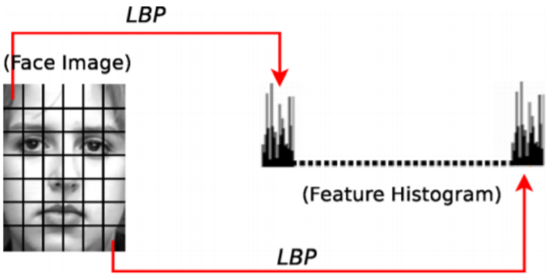
“[44] establish local LBP histograms and connect them to FER.”
BackgroundBoosting encoded dynamic features for facial expression recognition
Yang, P., Liu, Q., & Metaxas, D. (2008) · Pattern Recognition Letters · doi:10.1016/j.patrec.2008.03.014 · Cited by 100 · cited 1×
“In [58], in order to represent the temporal variations in appearance of human face, dynamic Haar-like features are defined and encoded into binary pattern features.”
BackgroundEvolutionary feature synthesis for facial expression recognition
Yu, J., & Bhanu, B. (2006) · Pattern Recognition Letters · doi:10.1016/j.patrec.2005.07.026 · Cited by 95 · cited 1×
“[41] use linear and nonlinear synthesis of new algorithms on the basis of Gabor feature.”
MethodA Deep Learning Perspective on the Origin of Facial Expressions
Breuer, R., & Kimmel, R. (2017) · arXiv · doi:10.48550/arxiv.1705.01842 · Cited by 92 · cited 1×
“The CNN-based FER method proposed in [84] employs Facial Action Coding System (FACS) feature representation, which shows a generalisation capability of networks both cross-data and cross-task related to FER.”
MethodFacial expression analysis for predicting unsafe driving behavior
Jabon, M. E., Bailenson, J. N., Pontikakis, E., Takayama, L., & Nass, C. (2011) · IEEE Pervasive Computing · doi:10.1109/mprv.2010.46 · Cited by 90 · cited 1×
“FER has broad applications in multiple domains, including human–computer interaction [2,3], virtual reality [4], augmented reality [5], advanced driver assistance systems [6,7], education [8], and entertainment [9].”
BackgroundRamakrishnan, S. (2008) · Cited by 88
Facial expressions classification and false label reduction using LDA and threefold SVM
Shah, J. H., Sharif, M., Yasmin, M., & Fernandes, S. L. (2020) · Pattern Recognition Letters · doi:10.1016/j.patrec.2017.06.021 · Cited by 88
Kusy, M., & Zajdel, R. (2014) · IEEE Transactions on Neural Networks and Learning Systems · doi:10.1109/tnnls.2014.2376703 · Cited by 86
Chang, W.-Y., Hsu, S.-H., & Chien, J.-H. (2017) · IEEE/CVF Conference on Computer Vision and Pattern Recognition Workshops (CVPRW) · doi:10.1109/cvprw.2017.246 · Cited by 86 · cited 2×
“In [13], a framework is proposed to apply AUs to estimate the V–A intensity.”
BackgroundMethodFacial Expression Recognition Based on Local Phase Quantization and Sparse Representation
Wang, Z., & Ying, Z. (2012) · International Conference on Natural Computation (ICNC) · doi:10.1109/icnc.2012.6234551 · Cited by 78 · cited 4×
“However, when handling data having the same direction distribution, SRC may not classify the data, since the sample vectors of different classes are distributed on the same vector direction.”
MethodInfluentialHierarchical Bayesian Theme Models for Multipose Facial Expression Recognition
Mao, Q., Rao, Q., Yu, Y., & Dong, M. (2016) · IEEE Transactions on Multimedia · doi:10.1109/tmm.2016.2629282 · Cited by 76 · cited 1×
“[75] propose a hierarchical bayesian model for multi-pose FER.”
BackgroundA new method for facial expression recognition based on sparse representation plus LBP
Huang, M., Wang, Z., & Ying, Z. (2010) · International Congress on Image and Signal Processing (CISP) · doi:10.1109/cisp.2010.5647898 · Cited by 74 · cited 3×
“However, when handling data having the same direction distribution, SRC may not classify the data, since the sample vectors of different classes are distributed on the same vector direction.”
MethodDifferential optical flow applied to automatic facial expression recognition
Sánchez, Á., Ruiz, J. V., Moreno, A. B., Montemayor, A. S., Hernández, J., & Pantrigo, J. J. (2010) · Neurocomputing · doi:10.1016/j.neucom.2010.07.017 · Cited by 71 · cited 2×
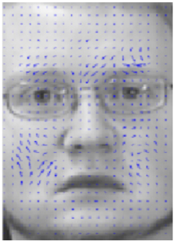
“Applications of optical flow-based methods on facial images in [56].”
MethodDeep Emotion Transfer Network for Cross-database Facial Expression Recognition
Li, S., & Deng, W. (2018) · Proceedings - International Conference on Pattern Recognition/Proceedings/International Conference on Pattern Recognition · doi:10.1109/icpr.2018.8545284 · Cited by 69 · cited 1×
“In-depth research and discussion on dataset bias and imbalanced distribution in expression recognition are conducted in [124,125].”
BackgroundEmotion recognition in the wild using deep neural networks and Bayesian classifiers
Surace, L., Patacchiola, M., Sönmez, E. B., Spataro, W., & Cangelosi, A. (2017) · INTERNATIONAL CONFERENCE ON MULTIMODAL INTERACTION · doi:10.1145/3136755.3143015 · Cited by 65
A Deformable 3-D Facial Expression Model for Dynamic Human Emotional State Recognition
Tie, Y., & Guan, L. (2012) · IEEE Transactions on Circuits and Systems for Video Technology · doi:10.1109/tcsvt.2012.2203210 · Cited by 63 · cited 1×
“[59] extract over 20 points from the video stream as the feature points of the face model, then a variable 3D expression recognition model is constructed by tracking these feature points with particle filters.”
MethodSurvey on real‐time facial expression recognition techniques
Deshmukh, S., Patwardhan, M. S., & Mahajan, A. (2016) · IET Biometrics · doi:10.1049/iet-bmt.2014.0104 · Cited by 62 · cited 1×
“[31] summarise the latest advances in the algorithms and techniques used in distinct phases of real-time FER.”
MethodImage enhancement using background brightness preserving histogram equalisation
Tan, T. L., Sim, K. S., & Tso, C. P. (2012) · Electronics Letters · doi:10.1049/el.2011.3421 · Cited by 61 · cited 1×
“• Histogram equalisation is applied to enhance the image effect [39].”
BackgroundClassification of Facial Expressions Using K-Nearest Neighbor Classifier
Sohail, A. S. M., & Bhattacharya, P. (2007) · Springer eBooks · doi:10.1007/978-3-540-71457-6_51 · Cited by 59
Effective semantic features for facial expressions recognition using SVM
Hsieh, C.-C., Hsih, M.-H., Jiang, M.-K., Cheng, Y.-M., & Liang, E.-H. (2015) · Multimedia Tools and Applications · doi:10.1007/s11042-015-2598-1 · Cited by 56
A Real-time Facial Expression Recognizer using Deep Neural Network
Jeon, J., Park, J.-C., Jo, Y., Nam, C.-M., Bae, K., Hwang, Y., & Kim, D. (2016) · International Conference on Ubiquitous Information Management and Communication (IMCOM) · doi:10.1145/2857546.2857642 · Cited by 56 · cited 1×
“[122] apply data augmentation both on training phase and testing phase.”
MethodFacial Expression Recognition and Analysis: A Comparison Study of Feature Descriptors
Liew, C. F., & Yairi, T. (2015) · IPSJ Transactions on Computer Vision and Applications · doi:10.2197/ipsjtcva.7.104 · Cited by 54
New facial expression recognition based on FSVM and KNN
Wang, X., Liu, A., & Zhang, S. (2015) · Optik · doi:10.1016/j.ijleo.2015.07.073 · Cited by 46
Self-citationFacial expression recognition on real world face images using intelligent techniques: A survey
Khan, S. A., Hussain, A., & Usman, M. (2016) · Optik · doi:10.1016/j.ijleo.2016.04.015 · Cited by 46 · cited 1×
“Some real-life challenges of FER systems are proposed in [32,33].”
BackgroundFacial expressions as game input with different emotional feedback conditions
Lankes, M., Riegler, S., Weiss, A., Mirlacher, T., Pirker, M. M., & Tscheligi, M. (2008) · International Conference on Advances in Computer Entertainment Technology (ACE) · doi:10.1145/1501750.1501809 · Cited by 45 · cited 1×
“FER has broad applications in multiple domains, including human–computer interaction [2,3], virtual reality [4], augmented reality [5], advanced driver assistance systems [6,7], education [8], and entertainment [9].”
BackgroundEfficient Privacy-Preserving Facial Expression Classification
Rahulamathavan, Y., & Rajarajan, M. (2015) · IEEE Transactions on Dependable and Secure Computing · doi:10.1109/tdsc.2015.2453963 · Cited by 44 · cited 1×
“Even if a few attempts have been made in [102,132,133], a wide variety proposed FER method generally depend on high-resolution images, but with little or no attention to”
MethodA survey on facial expression recognition in 3D video sequences
Danelakis, A., Theoharis, T., & Pratikakis, I. (2014) · Multimedia Tools and Applications · doi:10.1007/s11042-014-1869-6 · Cited by 40 · cited 1×
“The work in [25,26] concentrate on 3D FER.”
BackgroundMulti-scale Temporal Modeling for Dimensional Emotion Recognition in Video
Chao, L., Tao, J., Yang, M., Li, Y., & Wen, Z. (2014) · Proceedings of the 4th International Workshop on Audio/Visual Emotion Challenge · doi:10.1145/2661806.2661811 · Cited by 39
Facial expression recognition based on Gabor wavelets and sparse representation
Zhang, S., Li, L., & Zhao, Z. (2012) · International Conference on Signal Processing · doi:10.1109/icosp.2012.6491706 · Cited by 37 · cited 4×
“However, when handling data having the same direction distribution, SRC may not classify the data, since the sample vectors of different classes are distributed on the same vector direction.”
MethodInfluentialFacial action unit recognition using temporal templates
Valstar, M., Patras, I., & Pantić, M. (2005) · IEEE RO-MAN · doi:10.1109/roman.2004.1374768 · Cited by 34
Facial Expression Recognition Using Sparse Representation
Zhang, S., Zhao, X., & Lei, B. (2012) · Cited by 28
Xu, H., Wang, Y., Cheng, L., Wang, Y., & Ma, X. (2018) · ACM International Conference on Information and Knowledge Management (CIKM) · doi:10.1145/3269206.3271721 · Cited by 26 · cited 1×
“Feature value selection designed for outlier detection or object recognition is proposed in [61], which can be employed in the data with binary or nominal features.”
BackgroundEfficient facial expression recognition using adaboost and haar cascade classifiers
Gudipati, V. K., Barman, O. R., Gaffoor, M., Harshagandha, & Abuzneid, A. (2016) · Annual Connecticut Conference on Industrial Electronics, Technology & Automation (CT-IETA) · doi:10.1109/ct-ieta.2016.7868250 · Cited by 25
Empirical Evaluation of SVM for Facial Expression Recognition
Saeed, S., Baber, J., Bakhtyar, M., Ullah, I., Sheikh, N., Dad, I., & Ali, A. (2018) · International Journal of Advanced Computer Science and Applications · doi:10.14569/ijacsa.2018.091195 · Cited by 24 · cited 1×
“80 FER2013 [114] [68] Cubic SVM+HoG 57.”
Application of Improved AAM and Probabilistic Neural network to Facial Expression Recognition
Neggaz, N., Besnassi, M., & Benyettou, A. (2010) · Journal of Applied Sciences · doi:10.3923/jas.2010.1572.1579 · Cited by 19
Facial Expression Recognition Using Gabor-Mean-DWT Feature Extraction Technique
Mattela, G., & Gupta, S. K. (2018) · International Conference on Signal Processing and Integrated Networks (SPIN) · doi:10.1109/spin.2018.8474206 · Cited by 19 · cited 2×
“CK+ [15] [42] Gabor (Gabor-mean-DWT) 92.”
BackgroundHigh- performance facial expression recognition using Gabor filter and Probabilistic Neural Network
Fazli, S., Afrouzian, R., & Seyedarabi, H. (2009) · IEEE International Conference on Intelligent Computing and Intelligent Systems (ICIS) · doi:10.1109/icicisys.2009.5357716 · Cited by 17
A Study on Emotion Recognition Based on Hierarchical Adaboost Multi-class Algorithm
Zhang, S., Hu, B., Li, T., & Zheng, X. (2018) · Lecture notes in computer science · doi:10.1007/978-3-030-05054-2_8 · Cited by 13
Peng, L. (2011) · Journal of Astronautics · Cited by 12
VGAN-Based Image Representation Learning for Privacy-Preserving Facial Expression RecognitionPreprint
Chen, J., Konrad, J., & Ishwar, P. (2018) · arXiv (Cornell University) · doi:10.48550/arxiv.1803.07100 · Cited by 12 · cited 2×
“Even if a few attempts have been made in [102,132,133], a wide variety proposed FER method generally depend on high-resolution images, but with little or no attention to”
Method
Research works printed but not linked: 3
- Walecki, 2017, Deep structured learning for facial expression intensity estimation, Image Vis. Comput, 259, 143
- Goodfellow, I., Pouget-Abadie, J., Mirza, M., Xu, B., Warde-Farley, D., Ozair, S., Courville, A., and Bengio, Y. (2014, January 8–13). Generative adversarial nets. Proceedings of the Conference on Neural Information Processing Systems (NIPS), Montreal, QC, Canad.
- Lundqvist, 1998, The Karolinska directed emotional faces (KDEF), CD ROM Dep. Clin. Neurosci. Psychol. Sect. Karolinska Inst., 91, 630
Cited by
Human Emotion Recognition: Review of Sensors and Methods
Dzedzickis, A., Kaklauskas, A., & Bucinskas, V. (2020) · Sensors · doi:10.3390/s20030592 · Cited by 582
“Relations between emotions and facial expressions [145,146].”
A survey on facial emotion recognition techniques: A state-of-the-art literature review
Canal, F. Z., Müller, T. R., Matias, J. C., Scotton, G. G., de Sa Junior, A. R., Pozzebon, E., & Sobieranski, A. C. (2022) · Information Sciences · doi:10.1016/j.ins.2021.10.005 · Cited by 349
Facial Emotion Recognition Using Transfer Learning in the Deep CNN
Akhand, M. A. H., Roy, S., Siddique, N., Kamal, M. A. S., & Shimamura, T. (2021) · Electronics · doi:10.3390/electronics10091036 · Cited by 333
“A number of studies reviewed and compared the existing FER methods [17,18,41,42], and the recent ones among them [41,42] included the deep learningbased methods.”
ResultKarnati, M., Seal, A., Bhattacharjee, D., Yazidi, A., & Krejcar, O. (2023) · IEEE Transactions on Instrumentation and Measurement · doi:10.1109/tim.2023.3243661 · Cited by 161
Dalvi, C., Rathod, M., Patil, S., Gite, S., & Kotecha, K. V. (2021) · IEEE Access · doi:10.1109/access.2021.3131733 · Cited by 150
Metadata
- Authors
- Huang, Y., Chen, F., Lv, S., & Wang, X.
- Affiliations
- National University of Defense Technology (CN)
- Corresponding author
- Wang, Xiaodong
- Venue
- Symmetry
- Publisher
- MDPI AG
- Published
- 2019-09-20
- Volume
- 11
- Issue
- 10
- Pages
- 1189
- ISSN
- 2073-8994 (ISSN-L)
- OpenAlex
- W2974043081
- Cited by
- 195
- References
- 131
- Citations by year
- 2026: 18 · 2025: 14 · 2024: 30 · 2023: 33 · 2022: 41 · 2021: 39 · 2020: 18 · 2019: 1
- FWCI
- 29.14
- Type
- journal article
- Language
- en
- Open access
- gold
- dx.doi.org
- Licence
- Locations
- Symmetry (publishedVersion, cc-by)
- DOAJ (DOAJ: Directory of Open Access Journals) (submittedVersion, cc-by-sa)
- Funders
- National Natural Science Foundation of China (61572513)
- Topics
- Physical Sciences › Computer Science › Artificial Intelligence › Emotion and Mood Recognition
- Physical Sciences › Computer Science › Computer Vision and Pattern Recognition › Face recognition and analysis
- Physical Sciences › Computer Science › Computer Vision and Pattern Recognition › Face and Expression Recognition
- Keywords
- facial expression recognition, nonverbal communication, neural network architecture, facial expression datasets, evaluation metrics, benchmark dataset, performance comparison
About these checks
Registry, retraction, Cites and statistics results are computed, not judged, with one exception: a printed reference that no index lists is read once by a model before it counts as a citation error. Claims are extracted by a model and kept only when their quote appears verbatim in the text; each cited source is then checked, with a model’s help, for whether it says what the claim relies on. Those verdicts can be wrong — read the claim’s quote and the cited source before relying on one.
Statistics and arithmetic are recomputed, not judged.
Confidence bands are shown only for fields calibrated on our annotated test set. None is calibrated yet, so no band is shown.
What counts as a claim ›How we measure confidence ›How we check this ›
Are you an author, or do you see a problem with this page? Request a review
Data sources
Bibliographic data: Semantic Scholar, OpenAlex, Crossref.
Contains information from the Semantic Scholar Academic Graph Datasets, made available under the ODC Attribution License (ODC-BY 1.0).
Semantic Scholar’s data is described in: Kinney, R., et al. (2023). The Semantic Scholar Open Data Platform. arXiv:2301.10140.
