

The DOI matches its Crossref record; 144 of the 144 references it cites were found in a registry or an index.
Fueling the caries process: carbohydrate metabolism and gene regulation by Streptococcus mutans
Open accessAbstract
The nature of the oral cavity and host behaviors has mandated that the oral microbiota evolve mechanisms for coping with environmental fluctuations, especially changes in the type and availability of carbohydrates. In the case of human dental caries, the presence of excess carbohydrates is often responsible for altering the local environment to be more favorable for species associated with the initiation and progression of disease, including Streptococcus mutans. Some of the earliest endeavors to understand how cariogenic species respond to environmental perturbations were carried out using chemostat cultivation, which provides fine control over culture conditions and bacterial behaviors. The development of genome-scale methodologies has allowed for the combination of sophisticated cultivation technologies with genome-level analysis to more thoroughly probe how bacterial pathogens respond to environmental stimuli. Recent investigations in S. mutans and other closely related streptococci have begun to reveal that carbohydrate metabolism can drastically impact pathogenic potential and highlight the important influence that nutrient acquisition has on the success of pathogens; inside and outside of the oral cavity. Collectively, research into pathogenic streptococci, which have evolved in close association with the human host, has begun to unveil the essential nature of careful orchestration of carbohydrate acquisition and catabolism to allow the organisms to persist and, when conditions allow, initiate or worsen disease.
Overview
The claims and statistics of this paper haven’t been checked yet.
Run the check — free, no account needed. It reads the open-access text and checks the sources it cites.
Integrity signals
Registry
Cites
Statistics
Figures
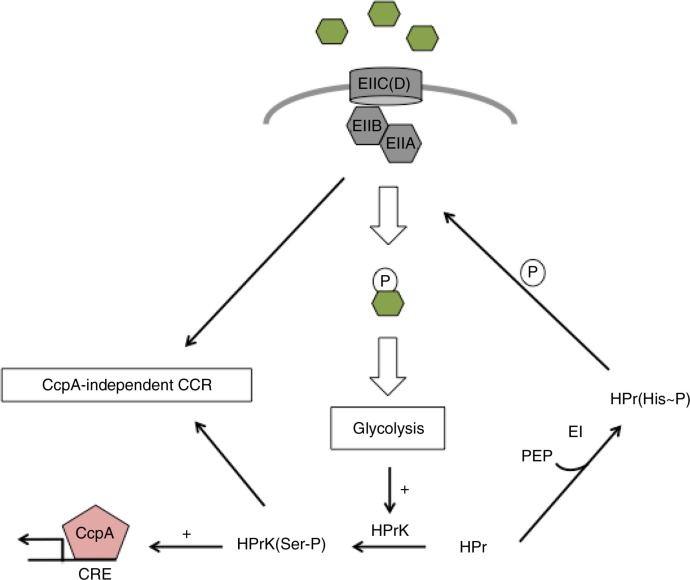
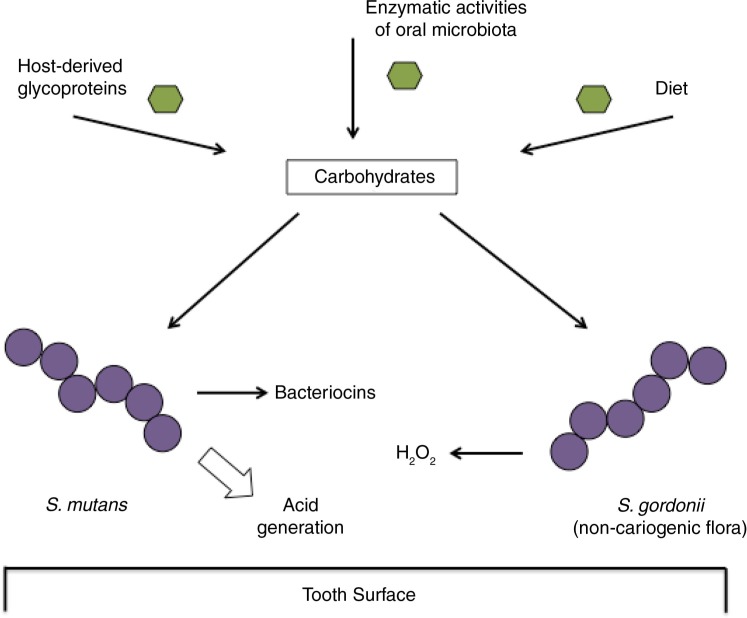
Verification
Claims the paper makes
The claims and statistics of this paper haven’t been checked yet.
Run the check — free, no account needed. It reads the open-access text and checks the sources it cites.
Claims other papers make about this one
Each is checked against this paper’s own text: does it say what the citing paper says it does?
In the citing paper
“The saccharolytic bacteria include Streptococcus, Actinomyces, and Veillonella, which have the unique ability to degrade carbohydrates via the Embden−Meyerhof−Pernas pathway, producing acidic by-products including lactate, acetate, ethanol, and formate [1,82].”
From A Cross-Talk between Diet and the Oral Microbiome: Balance of Nutrition on Inflammation and Immune System’s Response during Periodontitis (2022) · cites this paper as [1]
In the citing paper
“While diet influences the oral microbiome,22, 24, 26 recent data indicate that the oral microbiome influences the dietary preferences of its host.”
From The oral microbiome: Role of key organisms and complex networks in oral health and disease (2021) · cites this paper as [22]
In the citing paper
“Diet provides nutritional resources for the oral microbiota and also serves as a selective pressure by enriching for organisms best adapted to utilize specific host‐derived dietary resources.22”
From The oral microbiome: Role of key organisms and complex networks in oral health and disease (2021) · cites this paper as [22]
In the citing paper
“Such changes in diet were paralleled by pathologic changes to the oral microbiota, including greater representation of acid‐producing and acid‐tolerant organisms and periodontal pathogens.17, 22, 24, 25”
From The oral microbiome: Role of key organisms and complex networks in oral health and disease (2021) · cites this paper as [22]
In the citing paper
“Carbohydrate use by S mutans is a well‐recognized feature in the pathogenicity of dental caries.”
From The oral microbiome: Role of key organisms and complex networks in oral health and disease (2021) · cites this paper as [22]
In the citing paper
“Saccharolytic bacteria, including Streptococcus, Actinomyces, and Veillonella species, degrade carbohydrates via the Embden‐Meyerhof‐Parnas pathways to produce acidic by‐products, including lactate, acetate, ethanol, and formate, which cause demineralization of dental enamel and the development of carious lesions.”
From The oral microbiome: Role of key organisms and complex networks in oral health and disease (2021) · cites this paper as [22]
Self-check
Percentages, sums and reported differences re-computed from the paper’s own numbers.
The self-check needs the paper’s full text.
Citations
Cites
Role of Streptococcus mutans in human dental decay
Loesche, W. J. (1986) · Microbiological Reviews · doi:10.1128/mr.50.4.353-380.1986 · Cited by 3,360
Dewhirst, F. E., Chen, T., Izard, J., Paster, B. J., Tanner, A. C. R., Yu, W.-H., Lakshmanan, A., & Wade, W. G. (2010) · Journal of Bacteriology · doi:10.1128/jb.00542-10 · Cited by 3,352
A review of saliva: normal composition, flow, and function.
Humphrey, S. P., & Williamson, R. (2001) · The Journal of prosthetic dentistry (Print) · doi:10.1067/mpr.2001.113778 · Cited by 2,276 · cited 1×
“Human saliva serves a primary role in maintaining the health of oral sites, and the unique proteins and finely tuned buffering capacity of these fluids greatly impact the composition of the oral microbiota, in many cases preferentially selecting for the survival of non-cariogenic organisms (73).”
BackgroundPhosphoenolpyruvate:carbohydrate phosphotransferase systems of bacteria
Postma, P. W., Lengeler, J. W., & Jacobson, G. R. (1993) · Microbiological Reviews · doi:10.1128/mr.57.3.543-594.1993 · Cited by 1,802
Evolution, consequences and future of plant and animal domestication
Diamond, J. M. (2002) · Nature · doi:10.1038/nature01019 · Cited by 1,772
Deutscher, J., Francke, C., & Postma, P. W. (2006) · Microbiology and Molecular Biology Reviews · doi:10.1128/mmbr.00024-06 · Cited by 1,411 · cited 14×
“However, inactivation of the ccpA gene in S. mutans almost never results in alleviation of CCR.”
BackgroundInfluentialAre dental diseases examples of ecological catastrophes?
Marsh, P. D. (2003) · Microbiology · doi:10.1099/mic.0.26082-0 · Cited by 1,256 · cited 2×
“Further studies of the physiology and cariogenic potential of oral microbial pathogens have altered our understanding of how carious lesions originate and modified the strategy for preventing carious lesions from directly eliminating carious bacteria from the oral cavity to reestablishing a balance in the ecology betw…”
BackgroundBowen, W. H., & Koo, H. (2011) · Caries Research · doi:10.1159/000324598 · Cited by 1,085 · cited 1×
“mutans on the smooth surfaces of the tooth (86).”
BackgroundGenome sequence of Streptococcus mutans UA159, a cariogenic dental pathogen
Ajdić, D., McShan, W. M., McLaughlin, R. E., Savić, G., Chang, J. S., Carson, M. B., Primeaux, C., Tian, R., Kenton, S., Jia, H., et al. (2002) · Proceedings of the National Academy of Sciences · doi:10.1073/pnas.172501299 · Cited by 1,013
Control of gene expression by a natural metabolite-responsive ribozyme
Winkler, W. C., Nahvi, A., Roth, A., Collins, J. A., & Breaker, R. R. (2004) · Nature · doi:10.1038/nature02362 · Cited by 976 · cited 1×
“coli and other members of Enterobacteriaceae (103, 104), or by a metabolitebinding ribozyme in many Gram-positive organisms (105, 106).”
Background
Research works printed but not linked: 3
- Loesche WJ. Role ofStreptococcus mutansin human dental decay. Microbiol Rev. 1986; 50: 353–80. [PubMed Abstract] [PubMed CentralFull Text]. · DOI · Paper page
- Monod J, 1950, Ann Inst Pasteur (Paris), 79, 390
- Walker G, 1983, Glucosyltransferases, glucans, sucrose and dental caries (Sp. Suppl. Chemical Senses), 179
Cited by
Sorted by citations
Oral Biofilms: Pathogens, Matrix, and Polymicrobial Interactions in Microenvironments
Bowen, W. H., Burne, R. A., Wu, H., & Koo, H. (2018) · Trends in Microbiology · doi:10.1016/j.tim.2017.09.008 · Cited by 1,059
“In low-carbohydrate conditions, a pyruvate-formate lyase funnels the pyruvate to acetate and formate, gaining an additional ATP, compared to the lactate pathway [73].”
BackgroundFan, X., Alekseyenko, A. V., Wu, J., Peters, B. A., Jacobs, E. J., Gapstur, S. M., Purdue, M. P., Abnet, C. C., Stolzenberg-Solomon, R., Miller, G., et al. (2018) · Gut · doi:10.1136/gutjnl-2016-312580 · Cited by 702
The oral microbiome: Role of key organisms and complex networks in oral health and disease
Sedghi, L., DiMassa, V., Harrington, A., Lynch, S. V., & Kapila, Y. L. (2021) · Periodontology 2000 · doi:10.1111/prd.12393 · Cited by 755
Dental biofilm: ecological interactions in health and disease
Marsh, P., & Zaura, E. (2017) · Journal Of Clinical Periodontology · doi:10.1111/jcpe.12679 · Cited by 569
Periodontal Disease: The Good, The Bad, and The Unknown
Sedghi, L. M., Bacino, M. S., & Kapila, Y. L. (2021) · Frontiers in Cellular and Infection Microbiology · doi:10.3389/fcimb.2021.766944 · Cited by 409
Oral microbiome: a review of its impact on oral and systemic health
Rajasekaran, J. J., Krishnamurthy, H. K., Bosco, J., Jayaraman, V., Krishna, K., Wang, T., & Bei, K. (2024) · Microorganisms · doi:10.3390/microorganisms12091797 · Cited by 272
“These microbes drive the development of dental caries-generating acids that erode tooth enamel and initiate cavities [41].”
BackgroundThe Evolving Microbiome of Dental Caries
Spatafora, G. A., Li, Y., He, X., Cowan, A. N., & Tanner, A. C. R. (2024) · Microorganisms · doi:10.3390/microorganisms12010121 · Cited by 341
Fan, X., Peters, B. A., Jacobs, E. J., Gapstur, S. M., Purdue, M. P., Freedman, N. D., Alekseyenko, A. V., Wu, J., Yang, L., Pei, Z., et al. (2018) · Microbiome · doi:10.1186/s40168-018-0448-x · Cited by 240
Breast tissue, oral and urinary microbiomes in breast cancer
Wang, H., Altemus, J. B., Niazi, F., Green, H., Calhoun, B. C., Sturgis, C. D., Grobmyer, S. R., & Eng, C. (2017) · Oncotarget · doi:10.18632/oncotarget.21490 · Cited by 199
“The relative increase in Streptococcus may be due to the ingestion of carbohydrates [35].”
BackgroundVelsko, I. M., Fellows Yates, J. A., Aron, F., Hagan, R. W., Frantz, L. A. F., Loe, L., Martinez, J. B. R., Chaves, E., Gosden, C., Larson, G., et al. (2019) · Microbiome · doi:10.1186/s40168-019-0717-3 · Cited by 170
“Although this species grows prolifically in a laboratory setting and can thrive under a range of environmental conditions [40], it is less common in biofilms from early compared to advanced caries lesions [37–39].”
BackgroundSantonocito, S., Giudice, A., Polizzi, A., Troiano, G., Merlo, E. M., Sclafani, R., Grosso, G., & Isola, G. (2022) · Nutrients · doi:10.3390/nu14122426 · Cited by 144
Bacterial Metabolism Shapes the Host–Pathogen Interface
Passalacqua, K. D., Charbonneau, M., & O’Riordan, M. X. (2016) · Microbiology Spectrum · doi:10.1128/microbiolspec.vmbf-0027-2015 · Cited by 149
“mutans in that it has more levels of carbohydrate catabolite repression flexibility than other Gram-positive bacteria (5, 6).”
BackgroundOrganic Nanomaterials and Their Applications in the Treatment of Oral Diseases
Vîrlan, M. J. R., Miricescu, D., Rădulescu, R., Sabliov, C. M., Totan, A., Calenic, B., & Greabu, M. (2016) · Molecules · doi:10.3390/molecules21020207 · Cited by 114
“Because Streptococcus mutans is one of the most intensively studied cariogenic microorganisms associated with caries progression in humans [51,52], killing this bacterium could be an effective form of preventive dentistry.”
BackgroundOral Microbiota Composition Predicts Early Childhood Caries Onset
Grier, A., Myers, J. A., O’Connor, T. G., Quivey, R. G., Gill, S. R., & Kopycka‐Kędzierawski, D. T. (2020) · Journal of Dental Research · doi:10.1177/0022034520979926 · Cited by 104
“which rely on this carbohydrate for their carbon requirements and ability to extract energy from metabolism of sugars (Moye et al. 2014; Baker et al. 2017).”
BackgroundHe, J., Kim, D., Zhou, X., Ahn, S., Burne, R. A., Richards, V. P., & Koo, H. (2017) · Frontiers in Microbiology · doi:10.3389/fmicb.2017.01036 · Cited by 100
“The Frontiers in Microbiology | www.frontiersin.org 8 June 2017 | Volume 8 | Article 1036 galactose moiety of lactose, and possibly galactose alone, can be transported and phosphorylated by a lactose-specific (LacEF) PTS.”
BackgroundInfluentialTherapeutic Strategies Targeting Cariogenic Biofilm Microenvironment
Liu, Y., Ren, Z. F., Hwang, G., & Koo, H. (2018) · Advances in Dental Research · doi:10.1177/0022034517736497 · Cited by 93
Effect of anti-biofilm glass–ionomer cement on Streptococcus mutans biofilms
Wang, S.-P., Ge, Y., Zhou, X.-D., Xu, H. H., Weir, M. D., Zhang, K.-K., Wang, H.-H., Hannig, M., Rupf, S., Li, Q., et al. (2016) · International Journal of Oral Science · doi:10.1038/ijos.2015.55 · Cited by 80
Oral microbiome and obesity in a large study of low-income and African-American populations
Yang, Y., Cai, Q., Zheng, W., Steinwandel, M. D., Blot, W. J., Shu, X., & Long, J. (2019) · Journal of Oral Microbiology · doi:10.1080/20002297.2019.1650597 · Cited by 70
“maintaining oral and systemic health through colonization resistance [10], nutrient digestion [11] and immunity response [12].”
BackgroundMetabolites of the oral microbiome: important mediators of multikingdom interactions
Barbour, A., Elebyary, O., Fine, N. A., Oveisi, M., & Glogauer, M. (2021) · FEMS Microbiology Reviews · doi:10.1093/femsre/fuab039 · Cited by 73
Metabolomic profiling of bacterial biofilm: trends, challenges, and an emerging antibiofilm target
Malviya, J., Alameri, A. A., Al-Janabi, S. S., Fawzi, O. F., Azzawi, A. L., Obaid, R. F., Alsudani, A. A., Alkhayyat, A. S., Gupta, J., Mustafa, Y. F., et al. (2023) · World Journal of Microbiology and Biotechnology · doi:10.1007/s11274-023-03651-y · Cited by 70
Cariogenic Biofilms: Development, Properties, and Biomimetic Preventive Agents
Meyer, F., Enax, J., Epple, M., Amaechi, B. T., & Simader, B. (2021) · Dentistry Journal · doi:10.3390/dj9080088 · Cited by 71
“Glycolysis leads to the metabolism of glucose to adenosine triphosphate (ATP), which is the energy source for the bacteria cell growth and metabolism [63].”
BackgroundInfluentialGuo, Y., Li, Z., Chen, F., & Chai, Y. (2023) · Nutrients · doi:10.3390/nu15204384 · Cited by 62
Fluorescent nanosensors reveal dynamic pH gradients during biofilm formation
Hollmann, B., Perkins, M. C., Chauhan, V. M., Aylott, J. W., & Hardie, K. R. (2021) · npj Biofilms and Microbiomes · doi:10.1038/s41522-021-00221-8 · Cited by 60
Genomic and phenotypic diversity of Streptococcus mutans
Bedoya‐Correa, C. M., Rincón‐Rodríguez, R. J., & Parada-Sánchez, M. T. (2018) · Journal of Oral Biosciences · doi:10.1016/j.job.2018.11.001 · Cited by 55
Zeng, L., & Burne, R. A. (2015) · Applied and Environmental Microbiology · doi:10.1128/aem.02681-15 · Cited by 50
“Studies by our group have also highlighted the critical role that HPr has on gene regulation, often in cooperation with EIIAB (44).”
BackgroundInfluentialAssociation between Tooth Loss and Gastric Cancer: A Meta-Analysis of Observational Studies
Yin, X., Wang, Y., Luo, H. L., Zhao, K., Huang, G., Luo, S., Peng, J., & Song, J. (2016) · PLoS ONE · doi:10.1371/journal.pone.0149653 · Cited by 50
Li, Z., Xiang, Z., Zeng, J., Li, Y., & Li, J. (2019) · Frontiers in Microbiology · doi:10.3389/fmicb.2018.03224 · Cited by 49
Salivary microbiome and metabolome analysis of severe early childhood caries
Li, K., Wang, J., Du, N., Sun, Y., Sun, Q., Yin, W., Li, H., Meng, L., & Liu, X. (2023) · BMC Oral Health · doi:10.1186/s12903-023-02722-8 · Cited by 48
“During caries development, excess carbohydrate levels can alter the local microenvironment and contribute to caries induction by related bacteria such as Streptococcus mutans [63].”
BackgroundWen, Z. T., Liao, S., Bitoun, J. P., De, A., Jorgensen, A. N., Feng, S., Xu, X., Chain, P., Caufield, P. W., Koo, H., et al. (2017) · Frontiers in Cellular and Infection Microbiology · doi:10.3389/fcimb.2017.00524 · Cited by 49
Association of the Microbiota and Pancreatic Cancer: Opportunities and Limitations
Chen, Z., Zhang, S., Dong, S., Xu, H. M., & Zhou, W. (2022) · Frontiers in Immunology · doi:10.3389/fimmu.2022.844401 · Cited by 45
Zeng, L., Chakraborty, B., Farivar, T., & Burne, R. A. (2017) · Applied and Environmental Microbiology · doi:10.1128/aem.01403-17 · Cited by 31
“mutans are often capable of transporting multiple substrates with various degrees of specificity (3).”
BackgroundMillen, A. E., Dahhan, R., Freudenheim, J. L., Hovey, K. M., Li, L., McSkimming, D. I., Andrews, C., Buck, M. J., LaMonte, M. J., Kirkwood, K. L., et al. (2022) · Scientific Reports · doi:10.1038/s41598-022-06421-2 · Cited by 42
Meta‐analysis of caries microbiome studies can improve upon disease prediction outcomes
Butcher, M. C., Short, B., Veena, C. L. R., Bradshaw, D., Pratten, J. R., McLean, W., Shaban, S. M. A., Ramage, G., & Delaney, C. (2022) · Apmis · doi:10.1111/apm.13272 · Cited by 41
“04), both key processes in fuelling carbohydrate metabolism (33,34).”
BackgroundNagakubo, D., & Kaibori, Y. (2023) · Microorganisms · doi:10.3390/microorganisms11092307 · Cited by 70
“Meals serve as a source of nutrition for oral bacteria, and the nutrients consumed can influence the selection of bacteria that can survive in the oral cavity [86].”
BackgroundLiu, Y., Daniel, S. G., Kim, H., Koo, H., Korostoff, J. M., Teles, F., Bittinger, K. L., & Hwang, G. (2023) · Microbiome · doi:10.1186/s40168-023-01561-7 · Cited by 41
Manipulating the diseased oral microbiome: the power of probiotics and prebiotics
Yu, X., DeVine, D., & Vernon, J. J. (2024) · Journal of Oral Microbiology · doi:10.1080/20002297.2024.2307416 · Cited by 40
“Cariogenic bacteria in dental plaque, such as Streptococcus mutans , metabolise fer-mentable dietary carbohydrates producing acid, which decreases pH and causes enamel demineralization over time [72,73].”
BackgroundChen, C., Lu, Y., Wang, L., Yu, H., & Tian, H. (2018) · Frontiers in Microbiology · doi:10.3389/fmicb.2018.01114 · Cited by 38
“During these regulatory processes, CcpA plays a central role that inactivation the ccpA gene leads to partial or complete relief of CCR (Moye et al., 2014; Zeng et al., 2017).”
BackgroundYu, L. X., Tao, Y., Qiu, R. M., Zhou, Y. N., Zhi, Q. H., & Lin, H. (2015) · BMC Oral Health · doi:10.1186/s12903-015-0039-1 · Cited by 37
“mutans to produce the plaque dextrans essential for acid production [27].”
BackgroundEffects of Carbohydrate Source on Genetic Competence in Streptococcus mutans
Moye, Z. D., Son, M., Rosa-Alberty, A. E., Zeng, L., Ahn, S., Hagen, S. J., & Burne, R. A. (2016) · Applied and Environmental Microbiology · doi:10.1128/aem.01205-16 · Cited by 36
“mutans (37), loss of CcpA did have a significant 473 impact on the response of this organism to CSP in the sugars tested.”
BackgroundWei, L., Yang, J., Ahmed, W., Xiong, X., Liu, Q., Huang, Q., & Ji, G. (2021) · Agronomy · doi:10.3390/agronomy11122424 · Cited by 33
Dental caries: Genetic and protein interactions
Cavallari, T., Arima, L. Y., Ferrasa, A., Moysés, S. J., Moysés, S. T., Herai, R. H., & Werneck, R. I. (2019) · Archives of Oral Biology · doi:10.1016/j.archoralbio.2019.104522 · Cited by 32
EpsR Negatively Regulates Streptococcus mutans Exopolysaccharide Synthesis
Chen, J., Zhang, A., Xiang, Z., Lu, M., Huang, P., Gong, T., Pan, Y., Lin, Y., Zhou, X., & Li, Y. (2021) · Journal of Dental Research · doi:10.1177/00220345211000668 · Cited by 32
“PTS system sugar transporters can monitor the type and levels of carbohydrates present in the oral cavity (Moye et al. 2014).”
BackgroundTang, Z., Xu, W., Zhou, Z., Qiao, Y., Zheng, S., & Rong, W. (2022) · PeerJ · doi:10.7717/peerj.13529 · Cited by 31
Dietary Nitrite Drives Disease Outcomes in Oral Polymicrobial Infections
Scoffield, J. A., Michalek, S. M., Harber, G. J., Eipers, P. G., Morrow, C. D., & Wu, H. (2019) · Journal of Dental Research · doi:10.1177/0022034519855348 · Cited by 31
Woelber, J. P., Al‐Ahmad, A., & Alt, K. W. (2022) · Nutrients · doi:10.3390/nu14102174 · Cited by 35
“, respiration and fermentation) [34] depending on the environmental factors so that nutrition, oxygen, and pH-value increases the adaptation capacity of oral biofilm.”
BackgroundCcpA and CodY Coordinate Acetate Metabolism in Streptococcus mutans
Kim, J. N., & Burne, R. A. (2017) · Applied and Environmental Microbiology · doi:10.1128/aem.03274-16 · Cited by 31
“mutans alleviates catabolite repression (17).”
Modification of the Streptococcus mutans transcriptome by LrgAB and environmental stressors
Rice, K. C., Turner, M. E., Carney, O. O., Gu, T., & Ahn, S. (2016) · Microbial Genomics · doi:10.1099/mgen.0.000104 · Cited by 30
“These include competition for nutrients and physical real estate within dental plaque biofilm, as well as adaptation to fluxes in environmental pH, temperature and oxidative stress (reviewed in [2, 3]).”
Stamos, A., Mills, S., Malliaropoulos, N., Cantamessa, S., Dartevelle, J., Gündüz, E., Laubmeier, J., Hoy, J., Kakavas, G., Garrec, S. L., et al. (2020) · Dental Traumatology · doi:10.1111/edt.12593 · Cited by 44
Ioannou, P., Katsoulieris, E. N., & Afratis, N. A. (2025) · International Journal of Molecular Sciences · doi:10.3390/ijms26083621 · Cited by 34
Effect of divalent ions on cariogenic biofilm formation
Steiger, E., Muelli, J., Braissant, O., Waltimo, T. M. T., & Astasov‐Frauenhoffer, M. (2020) · BMC Microbiology · doi:10.1186/s12866-020-01973-7 · Cited by 29
“high numbers of Streptococcus mutans [14, 15].”
Freire, A. L., Zapata, S., Mosquera, J. D., Mejía, L., & Trueba, G. A. (2016) · PeerJ · doi:10.7717/peerj.1962 · Cited by 28
Elgamily, H. M., Ghallab, O. H., El-Sayed, H. S., & Nasr, M. (2018) · Journal of Clinical and Experimental Dentistry · doi:10.4317/jced.54606 · Cited by 28
“mutans is a solitary bacterial biofilm and has been utilized as a part of a few past investigations of antibacterial dental materials as a result of its involvement with dental caries (33-36).”
BackgroundZeng, L., & Burne, R. A. (2020) · Molecular Microbiology · doi:10.1111/mmi.14597 · Cited by 27
“In vitro phosphorylation of glucose via glucokinase (Sato et al., 2015) or the PTS (Moye et al., 2014a) was performed according to established protocols.”
BackgroundMethodBelstrøm, D., Constancias, F., Markvart, M., Sikora, M., Sørensen, C. E., & Givskov, M. (2021) · Frontiers in Cellular and Infection Microbiology · doi:10.3389/fcimb.2021.752664 · Cited by 27
Salli, K. M., Söderling, E. M., Hirvonen, J., Gürsoy, U. K., & Ouwehand, A. C. (2020) · British Journal Of Nutrition · doi:10.1017/s0007114520001956 · Cited by 25
“mutans is well adapted to thrive in the oral cavity and canmetabolise many carbon sources(11,23,31,32).”
BackgroundSangha, J. S., Barrett, P., Curtis, T. P., Métris, A., Jakubovics, N. S., & Ofiţeru, I. D. (2024) · Microbiology Spectrum · doi:10.1128/spectrum.03713-23 · Cited by 24
“…growth experiments, the AFMC medium was supplemented with 20 g L −1 glucose as the preferred primary carbon source for S. gordonii , S. mutans , A. oris , and N. subflava (24, 25) and 12.1 g L −1 lactic acid, as the primary carbon source for V. parvula , which cannot metabolize glucose (26).”
MethodInfluentialMediterranean diet: a potential player in the link between oral microbiome and oral diseases
Augimeri, G., Caparello, G., Caputo, I., Reda, R., Testarelli, L., & Bonofiglio, D. (2024) · Journal of Oral Microbiology · doi:10.1080/20002297.2024.2329474 · Cited by 25
Heterogeneous lineage-specific arginine deiminase expression within dental microbiome species
Mann, A. E., Chakraborty, B., O’Connell, L. M., Nascimento, M. M., Burne, R. A., & Richards, V. P. (2024) · Microbiology Spectrum · doi:10.1128/spectrum.01445-23 · Cited by 22
“We also find multiple Streptococcus mutans genes upregulated in the disease, which are key factors in carbohydrate metabolism, including ccp A, cod Y, pac L, gtf A, gtf C, lev D, and fru A (47, 48).”
BackgroundHuang, Y., Thompson, T., Wang, Y., Yu, Q., Zhu, L. D., Xu, X., Wen, Z. T., & Townsend, J. A. (2019) · Archives of Oral Biology · doi:10.1016/j.archoralbio.2019.05.033 · Cited by 22
Bacterial Metabolism Shapes the Host-Pathogen Interface
Passalacqua, K. D., Charbonneau, M., & O’Riordan, M. X. (2016) · ASM Press eBooks · doi:10.1128/9781555819286.ch2 · Cited by 21
Avilés-Reyes, A., Freires, I. A., Besingi, R. N., Purushotham, S., Deivanayagam, C. C. S., Brady, L. J., Abranches, J., & Lemos, J. A. C. (2018) · Scientific Reports · doi:10.1038/s41598-018-23170-3 · Cited by 20
Zeng, L., Walker, A. R., Burne, R. A., & Taylor, Z. A. (2022) · Journal of Bacteriology · doi:10.1128/jb.00352-22 · Cited by 20
Altered salivary microbiota associated with high-sugar beverage consumption
Fan, X., Monson, K. R., Peters, B. A., Harris, J. W., Um, C. Y., Oberstein, P. E., McCullough, M. L., Freedman, N. D., Huang, W., Ahn, J., et al. (2024) · Scientific Reports · doi:10.1038/s41598-024-64324-w · Cited by 23
Al-Badr, A. H., AlJameel, A. H., Halawany, H. S., AlJazairy, Y. H., Alhadlaq, M. K., Al-Maflehi, N. S., Al-Sharif, J. A., Jacob, V., & Abraham, N. B. (2020) · The Saudi Dental Journal · doi:10.1016/j.sdentj.2020.03.005 · Cited by 20
“Although the disease is associated with specific bacteria (Streptococcus mutans and Lactobacillus) that exist as part of the normal flora of the oral cavity, the increased consumption of carbohydrates may have been a significant force behind its wide-reaching global spread (Moye et al., 2014).”
Amino Sugars Reshape Interactions between Streptococcus mutans and Streptococcus gordonii
Chen, L., Walker, A. R., Burne, R. A., & Zeng, L. (2020) · Applied and Environmental Microbiology · doi:10.1128/aem.01459-20 · Cited by 19
Atanasov, N., Evstatieva, Y., & Nikolova, D. (2023) · Microorganisms · doi:10.3390/microorganisms11061604 · Cited by 21
“The human oral cavity is the second most microbiome diverse after the gastrointestinal tract [1,2].”
BackgroundOral Microbiome of Children Living in an Isolated Area in Myanmar
Nomura, Y., Otsuka, R., Hasegawa, R., & Hanada, N. (2020) · International Journal of Environmental Research and Public Health · doi:10.3390/ijerph17114033 · Cited by 19
Sadler, M. (2016) · International Journal of Food Science and Nutrition · doi:10.1080/09637486.2016.1207061 · Cited by 15
“…have broadened understanding of the diversity of bacteria present in the oral cavity, with estimates ranging from 600 to >1200 different microbial taxa (Moye et al. 2014) and the balance between the health- and caries-associated flora may also play a role in the severity of dental caries.”
BackgroundLactobacillus rhamnosus GG in Experimental Oral Biofilms Exposed to Different Carbohydrate Sources
Jiang, Q., Kainulainen, V., Stamatova, I., Korpela, R., & Meurman, J. H. (2018) · Caries Research · doi:10.1159/000479380 · Cited by 18
Functional signatures of ex-vivo dental caries onset
Moussa, D. G., Sharma, A. K., Mansour, T. A., Witthuhn, B. A., Perdigão, J., Rudney, J. D., Aparicio, C., & Gomez, A. M. (2022) · Journal of Oral Microbiology · doi:10.1080/20002297.2022.2123624 · Cited by 17
A Membrane-Targeted Peptide Inhibiting PtxA of Phosphotransferase System Blocks Streptococcus mutans
Xiang, S.-W., Shao, J., He, J. G., Wu, X., Xu, X., & Zhao, W. (2018) · Caries Research · doi:10.1159/000489607 · Cited by 17
“mutans encodes as many as 15 different EII permeases, composed of A, B, C, and occasionally D, domains [Moye et al., 2014].”
BackgroundChronic fatigue syndrome patients have alterations in their oral microbiome composition and function
Wang, T., Yu, L., Xu, C., Pan, K., Mo, M., Mingxiang, D., Zhang, Y., & Xiong, H. (2018) · PLoS ONE · doi:10.1371/journal.pone.0203503 · Cited by 17
Park, A. H., Kulchar, R. J., Susarla, S. M., Turton, B. J., & Sokal‐Gutierrez, K. (2023) · International Journal of Environmental Research and Public Health · doi:10.3390/ijerph20032195 · Cited by 16
Adhesion of Biofilms on Titanium Measured by Laser-Induced Spallation
Boyd, J. D., Korotkova, N., & Grady, M. E. (2018) · Experimental Mechanics · doi:10.1007/s11340-018-00458-z · Cited by 16
“These enzymes catalyze synthesis of glucans from sucrose [42].”
BackgroundLuo, J., Feng, Z., Lyu, X., & Zhang, L. (2023) · Antibiotics · doi:10.3390/antibiotics12030563 · Cited by 14
“mutans carbohydrate metabolism that generates acidic by-products [23].”
BackgroundVelsko, I. M., Gallois, S., Stahl, R., Henry, A. G., & Warinner, C. (2023) · Molecular Ecology · doi:10.1111/mec.16988 · Cited by 13
“Dental plaque microbiomes of USE populations are notably different between healthy teeth and those experiencing dental disease, particularly dental caries or periodontal disease (Nascimento et al., 2017 ; Socransky & Haffajee, 2005).”
Cato, L. E., McKay, A. K. A., L’Heureux, J. E., Vanhatalo, A., JONES, A. M., Askew, C. D., Slater, G., & Burke, L. M. (2023) · Nutrients · doi:10.3390/nu15245123 · Cited by 14
“A higher intake of dietary carbohydrate favours key carbohydrate metabolising bacterial species, including Streptococcus mutans [50].”
BackgroundSchoenenberger, B., Kind, S., Meier, R., Eggert, T., Obkircher, M., & Wohlgemuth, R. (2019) · Biocatalysis and Biotransformation · doi:10.1080/10242422.2019.1634694 · Cited by 13
“…as metabolite standard in metabolomics, but also in the investigation of critically important roles of tagatose pathways in pathogenic bacteria, e.g. in lactose and galactose utilization by the cariogenic oral bacterium S. mutans (Hamilton and Lebtag 1979; Abranches et al. 2004; Moye et al. 2014).”
BackgroundCollares, F. M., García, I. M., Bohns, F. R., da Motta, A. D. S., Melo, M. A. S., & Leitune, V. C. B. (2020) · European Polymer Journal · doi:10.1016/j.eurpolymj.2020.109746 · Cited by 13
The Impact of Diet and Nutrition on the Oral Microbiome
Santonocito, S., Polizzi, A., & Isola, G. (2025) · Advances in experimental medicine and biology · doi:10.1007/978-3-031-79146-8_4 · Cited by 14
Shi, W., Tian, J., Xu, H., Wang, G., Zhou, Q., & Qin, M. (2020) · Journal of Oral Microbiology · doi:10.1080/20002297.2020.1782696 · Cited by 12
“mutans had evolved elegant strategies to cope with the different carbohydrates present within the oral cavity [10].”
BackgroundJiao, X., & Li, Z. (2023) · Frontiers in Cellular and Infection Microbiology · doi:10.3389/fcimb.2023.1244454 · Cited by 11
“This dynamic property allows the microbiota to adapt to environmental changes and anticipate fl uctuating physiological demands of the host (Moye et al., 2014; Jehrke et al., 2018; Gomez-Alvarez et al., 2021).”
BackgroundGanci, M., Suleyman, E., Butt, H., & Ball, M. (2022) · BMC Psychiatry · doi:10.1186/s12888-022-03947-7 · Cited by 13
Rather, S. A., Sharma, S. C., & Mahmood, A. (2020) · Applied Microbiology and Biotechnology · doi:10.1007/s00253-019-10327-x · Cited by 11
Ealla, K. K. R., Kumari, N., Chintalapani, S., Uppu, S., Sahu, V., Veeraraghavan, V. P., Ramani, P., & Govindool, S. R. (2024) · Archives of Microbiology · doi:10.1007/s00203-024-03856-1 · Cited by 10
“Several studies have shown the role of different sugars, such as sucrose, glucose, galactose, erythritol, xylitol, and D -tagatose in dental caries and periodontal disease (Jin et al. 2004; Moye et al. 2014; Jakubovics 2015; Martinon et al. 2021).”
InfluentialEngineering D-glucose utilization in Azospirillum brasilense Sp7 promotes rice root colonization
Singh, V. S., Dubey, B. K., Rai, S., Singh, S. P., & Tripathi, A. K. (2022) · Applied Microbiology and Biotechnology · doi:10.1007/s00253-022-12250-0 · Cited by 10
“Usually, NAG is transported via a NagE transporter, phosphorylated, and then deacetylated by N-acetylglucosamine-6-phosphate deacetylase (NagA) to produce glucosamine-6-phosphate, which is then converted into fructose-6-phosphate by glucosamine-6-phosphate deaminase (NagB) or glucosaminefructose-6-phosphate aminotrans…”
BackgroundInfluentialPuccio, T., An, S., Schultz, A. C., Lizarraga, C. A., Bryant, A. S., Culp, D. J., Burne, R. A., & Kitten, T. O. (2021) · Molecular Microbiology · doi:10.1111/mmi.14854 · Cited by 10
Lee, C. G., & Park, J. K. (2015) · Applied Microbiology and Biotechnology · doi:10.1007/s00253-015-6693-z · Cited by 10
“Chitosan”
BackgroundChakraborty, B., Zeng, L., & Burne, R. A. (2022) · Microbiology Spectrum · doi:10.1128/spectrum.00522-22 · Cited by 9
Rincón‐Rodríguez, R. J., Parada-Sánchez, M. T., Bedoya‐Correa, C. M., & Toro, D. A. (2019) · Archives of Oral Biology · doi:10.1016/j.archoralbio.2019.02.003 · Cited by 9
The Plaque Microbiota Community of Giant Panda (Ailuropoda melanoleuca) Cubs With Dental Caries
Ma, R., Hou, R., Guo, J.-L., Zhang, X., Cao, S., Huang, X.-B., Wu, R. T., Wen, Y., Zhao, Q., Du, S., et al. (2022) · Frontiers in Cellular and Infection Microbiology · doi:10.3389/fcimb.2022.866410 · Cited by 9
“As with most previously reported findings, enhanced metabolic pathways are positively associated with the development of caries, especially carbohydrate metabolism (Moye et al., 2014; Strużycka, 2014; Wang et al., 2019).”
BackgroundInsight into the Effect of Small RNA srn225147 on Mutacin IV in Streptococcus mutans
Liu, S., Li, H., Guo, Z., Guan, J.-C., Sun, Y., & Zhang, K. (2019) · Indian Journal of Microbiology · doi:10.1007/s12088-019-00820-2 · Cited by 9
Dental Calculus Formation Rate: The Role of Salivary Proteome and Metaproteome
Cai, W., Dubreuil, N., Abu Nada, L., Zhou, W. B. S., Basiri, T., Hadad, A., Charde, P., Ducret, M., & Tamimi, F. (2025) · Journal of Clinical Periodontology · doi:10.1111/jcpe.14142 · Cited by 9
“Surplus carbohydrates in the oral environment foster conditions favourable to pathogenic bacteria associated with oral diseases (Moye et al. 2014).”
Lü, C., Zhang, Y. Y., Peng, S., Gu, M., & Wong, H. M. (2024) · Journal of Dentistry · doi:10.1016/j.jdent.2024.105319 · Cited by 7
Samson, R. S., Thomas, A. R., Parveen, Z., Samrot, A. V., Moovendhan, M., Rajalakshmi, D., & Varadharajan, R. K. (2025) · Apmis · doi:10.1111/apm.70093 · Cited by 9
Adaptive metabolic strategies of intracellular bacterial pathogens
Nair, T., Rosenn, E. H., Singha, B., Shukla, S., Vashisht, S., Upadhyay, A., Padmanarayana, M., & Soni, V. (2026) · Frontiers in Microbiology · doi:10.3389/fmicb.2026.1783835 · Cited by 9
“Metabolic flexibility has significantly influenced the evolutionary dynamics between pathogens and their human hosts (Moye et al., 2014).”
Guzmán‐Flores, J. M., Pérez-Reyes, Á., Vázquez‐Jiménez, S. I., Isiordia‐Espinoza, M. A., & Martínez–Esquivias, F. (2024) · Dentistry Journal · doi:10.3390/dj12060153 · Cited by 7
Effect of Different Glucose Concentrations on Small RNA Levels and Adherence of Streptococcus mutans
Liu, S., Zhou, Y. N., Tao, Y., Zhuang, P., Pang, L., Zhi, Q., & Lin, H. (2019) · Current Microbiology · doi:10.1007/s00284-019-01745-1 · Cited by 7
Deng, Z., Guo, K., Cao, F., Fan, T., Liu, B., Shi, M., Liu, Y., & Ma, Z. (2022) · Frontiers in Immunology · doi:10.3389/fimmu.2022.999879 · Cited by 7
Regulation of S treptococcus mutans PTSBio by the transcriptional repressor NigR
Vujanac, M., Iyer, V. S., Sengupta, M., & Ajdić, D. (2015) · Molecular Oral Microbiology · doi:10.1111/omi.12093 · Cited by 6
“…repression mediated by catabolite control protein A (Titgemeyer & Hillen, 2002; Abranches et al., 2008; Tong et al., 2011; Zeng et al., 2013; Moye et al., 2014a,b), anti-terminators and direct protein–protein interactions between various regulatory elements and different PTS components…”
Background
Metadata
- Authors
- Moye, Z. D., Zeng, L., & Burne, R. A.
- Affiliations
- University of Florida (US)
- Corresponding author
- Burne, Robert A.
- Venue
- Journal of Oral Microbiology
- Publisher
- Informa UK Limited
- Published
- 2014-01-01
- Volume
- 6
- Issue
- 1
- Pages
- 24878
- ISSN
- 2000-2297 (ISSN-L)
- PMC
- PMC4157138
- OpenAlex
- W2100691159
- Cited by
- 164
- References
- 142
- Citations by year
- 2026: 13 · 2025: 17 · 2024: 17 · 2023: 17 · 2022: 19 · 2021: 13 · 2020: 15 · 2019: 10 · 2018: 12 · 2017: 10 · 2016: 15 · 2015: 5 · 2014: 1
- FWCI
- 1.74
- Type
- journal article
- Language
- en
- Open access
- gold
- doi.org
- Licence
- cc-by-nc-nd
- Locations
- Journal of Oral Microbiology (publishedVersion, cc-by-nc-nd)
- PubMed Central (publishedVersion, cc-by-nc-nd)
- PubMed (publishedVersion)
- DOAJ (DOAJ: Directory of Open Access Journals) (submittedVersion)
- Funders
- National Institute of Allergy and Infectious Diseases (T32AI007110)
- National Institute of Dental and Craniofacial Research (DE12236, R01DE019783, T90DE021990, R01DE012236)
- Topics
- Health Sciences › Dentistry › Periodontics › Oral microbiology and periodontitis research
- Life Sciences › Biochemistry, Genetics and Molecular Biology › Genetics › Bacterial Genetics and Biotechnology
- Health Sciences › Dentistry › General Dentistry › Dental Health and Care Utilization
- Keywords
- Streptococcus mutans, dental caries, carbohydrate metabolism, gene expression regulation, oral microbiota, chemostat cultivation, nutrient acquisition, bacterial pathogenicity, host-pathogen interaction, carbohydrate catabolism
About these checks
Registry, retraction, Cites and statistics results are computed, not judged, with one exception: a printed reference that no index lists is read once by a model before it counts as a citation error. Claims are extracted by a model and kept only when their quote appears verbatim in the text; each cited source is then checked, with a model’s help, for whether it says what the claim relies on. Those verdicts can be wrong — read the claim’s quote and the cited source before relying on one.
Statistics and arithmetic are recomputed, not judged.
Confidence bands are shown only for fields calibrated on our annotated test set. None is calibrated yet, so no band is shown.
What counts as a claim ›How we measure confidence ›How we check this ›
Are you an author, or do you see a problem with this page? Request a review
