

The DOI matches its Crossref record; 144 of the 144 references it cites were found in a registry or an index.
Fueling the caries process: carbohydrate metabolism and gene regulation by Streptococcus mutans
Open accessAbstract
The nature of the oral cavity and host behaviors has mandated that the oral microbiota evolve mechanisms for coping with environmental fluctuations, especially changes in the type and availability of carbohydrates. In the case of human dental caries, the presence of excess carbohydrates is often responsible for altering the local environment to be more favorable for species associated with the initiation and progression of disease, including Streptococcus mutans. Some of the earliest endeavors to understand how cariogenic species respond to environmental perturbations were carried out using chemostat cultivation, which provides fine control over culture conditions and bacterial behaviors. The development of genome-scale methodologies has allowed for the combination of sophisticated cultivation technologies with genome-level analysis to more thoroughly probe how bacterial pathogens respond to environmental stimuli. Recent investigations in S. mutans and other closely related streptococci have begun to reveal that carbohydrate metabolism can drastically impact pathogenic potential and highlight the important influence that nutrient acquisition has on the success of pathogens; inside and outside of the oral cavity. Collectively, research into pathogenic streptococci, which have evolved in close association with the human host, has begun to unveil the essential nature of careful orchestration of carbohydrate acquisition and catabolism to allow the organisms to persist and, when conditions allow, initiate or worsen disease.
Overview
The claims and statistics of this paper haven’t been checked yet.
Run the check — free, no account needed. It reads the open-access text and checks the sources it cites.
Integrity signals
Registry
Cites
Statistics
Figures
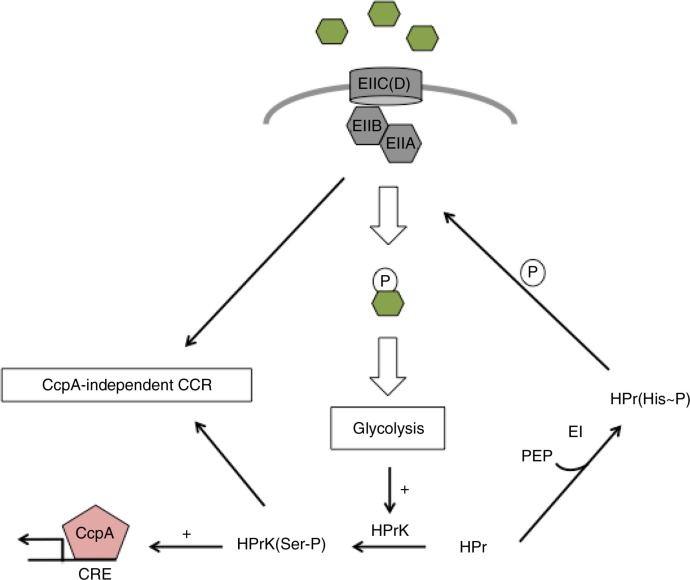
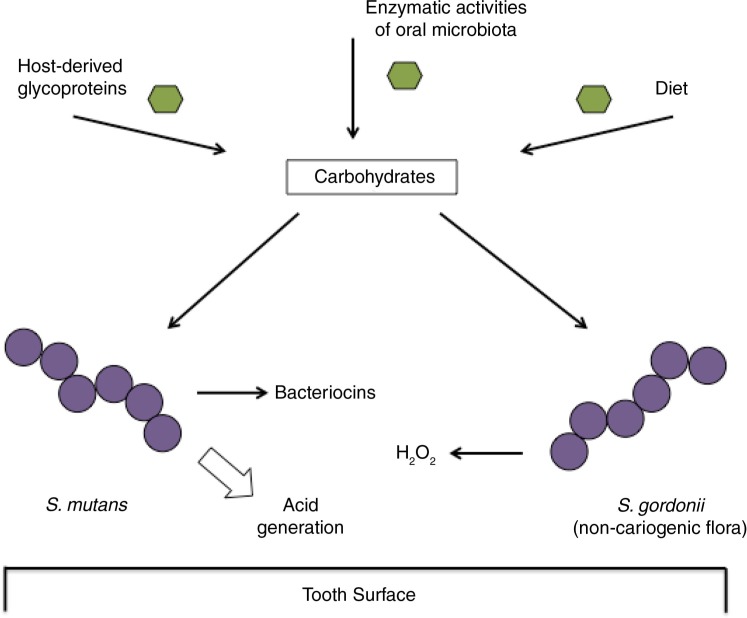
Verification
Claims the paper makes
The claims and statistics of this paper haven’t been checked yet.
Run the check — free, no account needed. It reads the open-access text and checks the sources it cites.
Claims other papers make about this one
Each is checked against this paper’s own text: does it say what the citing paper says it does?
In the citing paper
“The saccharolytic bacteria include Streptococcus, Actinomyces, and Veillonella, which have the unique ability to degrade carbohydrates via the Embden−Meyerhof−Pernas pathway, producing acidic by-products including lactate, acetate, ethanol, and formate [1,82].”
From A Cross-Talk between Diet and the Oral Microbiome: Balance of Nutrition on Inflammation and Immune System’s Response during Periodontitis (2022) · cites this paper as [1]
In the citing paper
“While diet influences the oral microbiome,22, 24, 26 recent data indicate that the oral microbiome influences the dietary preferences of its host.”
From The oral microbiome: Role of key organisms and complex networks in oral health and disease (2021) · cites this paper as [22]
In the citing paper
“Diet provides nutritional resources for the oral microbiota and also serves as a selective pressure by enriching for organisms best adapted to utilize specific host‐derived dietary resources.22”
From The oral microbiome: Role of key organisms and complex networks in oral health and disease (2021) · cites this paper as [22]
In the citing paper
“Such changes in diet were paralleled by pathologic changes to the oral microbiota, including greater representation of acid‐producing and acid‐tolerant organisms and periodontal pathogens.17, 22, 24, 25”
From The oral microbiome: Role of key organisms and complex networks in oral health and disease (2021) · cites this paper as [22]
In the citing paper
“Carbohydrate use by S mutans is a well‐recognized feature in the pathogenicity of dental caries.”
From The oral microbiome: Role of key organisms and complex networks in oral health and disease (2021) · cites this paper as [22]
In the citing paper
“Saccharolytic bacteria, including Streptococcus, Actinomyces, and Veillonella species, degrade carbohydrates via the Embden‐Meyerhof‐Parnas pathways to produce acidic by‐products, including lactate, acetate, ethanol, and formate, which cause demineralization of dental enamel and the development of carious lesions.”
From The oral microbiome: Role of key organisms and complex networks in oral health and disease (2021) · cites this paper as [22]
Self-check
Percentages, sums and reported differences re-computed from the paper’s own numbers.
The self-check needs the paper’s full text.
Citations
Cites
Role of Streptococcus mutans in human dental decay
Loesche, W. J. (1986) · Microbiological Reviews · doi:10.1128/mr.50.4.353-380.1986 · Cited by 3,360
Dewhirst, F. E., Chen, T., Izard, J., Paster, B. J., Tanner, A. C. R., Yu, W.-H., Lakshmanan, A., & Wade, W. G. (2010) · Journal of Bacteriology · doi:10.1128/jb.00542-10 · Cited by 3,352
A review of saliva: normal composition, flow, and function.
Humphrey, S. P., & Williamson, R. (2001) · The Journal of prosthetic dentistry (Print) · doi:10.1067/mpr.2001.113778 · Cited by 2,276 · cited 1×
“Human saliva serves a primary role in maintaining the health of oral sites, and the unique proteins and finely tuned buffering capacity of these fluids greatly impact the composition of the oral microbiota, in many cases preferentially selecting for the survival of non-cariogenic organisms (73).”
BackgroundPhosphoenolpyruvate:carbohydrate phosphotransferase systems of bacteria
Postma, P. W., Lengeler, J. W., & Jacobson, G. R. (1993) · Microbiological Reviews · doi:10.1128/mr.57.3.543-594.1993 · Cited by 1,802
Evolution, consequences and future of plant and animal domestication
Diamond, J. M. (2002) · Nature · doi:10.1038/nature01019 · Cited by 1,772
Deutscher, J., Francke, C., & Postma, P. W. (2006) · Microbiology and Molecular Biology Reviews · doi:10.1128/mmbr.00024-06 · Cited by 1,411 · cited 14×
“However, inactivation of the ccpA gene in S. mutans almost never results in alleviation of CCR.”
BackgroundInfluentialAre dental diseases examples of ecological catastrophes?
Marsh, P. D. (2003) · Microbiology · doi:10.1099/mic.0.26082-0 · Cited by 1,256 · cited 2×
“Further studies of the physiology and cariogenic potential of oral microbial pathogens have altered our understanding of how carious lesions originate and modified the strategy for preventing carious lesions from directly eliminating carious bacteria from the oral cavity to reestablishing a balance in the ecology betw…”
BackgroundBowen, W. H., & Koo, H. (2011) · Caries Research · doi:10.1159/000324598 · Cited by 1,085 · cited 1×
“mutans on the smooth surfaces of the tooth (86).”
BackgroundGenome sequence of Streptococcus mutans UA159, a cariogenic dental pathogen
Ajdić, D., McShan, W. M., McLaughlin, R. E., Savić, G., Chang, J. S., Carson, M. B., Primeaux, C., Tian, R., Kenton, S., Jia, H., et al. (2002) · Proceedings of the National Academy of Sciences · doi:10.1073/pnas.172501299 · Cited by 1,013
Control of gene expression by a natural metabolite-responsive ribozyme
Winkler, W. C., Nahvi, A., Roth, A., Collins, J. A., & Breaker, R. R. (2004) · Nature · doi:10.1038/nature02362 · Cited by 976 · cited 1×
“coli and other members of Enterobacteriaceae (103, 104), or by a metabolitebinding ribozyme in many Gram-positive organisms (105, 106).”
Background
Research works printed but not linked: 3
- Loesche WJ. Role ofStreptococcus mutansin human dental decay. Microbiol Rev. 1986; 50: 353–80. [PubMed Abstract] [PubMed CentralFull Text]. · DOI · Paper page
- Monod J, 1950, Ann Inst Pasteur (Paris), 79, 390
- Walker G, 1983, Glucosyltransferases, glucans, sucrose and dental caries (Sp. Suppl. Chemical Senses), 179
Cited by
Sorted by citations
Items 101–165 of 165
Kishimoto, N., Stegaroiu, R., Shibata, S., Ito, K., Inoue, M., & Ohuchi, A. (2016) · The Open Dentistry Journal · doi:10.2174/1874210601610010079 · Cited by 7
Chen, C., Wang, L., Yu, H., & Tian, H. (2020) · Microbial Cell Factories · doi:10.1186/s12934-020-01403-3 · Cited by 6
Associations Between Dietary Habits, Oral Microbiota, and Dental Caries in Adolescents
Yue, H., Shen, P., Huang, Q., Lin, S., Shen, J., Wang, Y., Sun, Z., Qi, X., Jiang, Y., Yuan, C., et al. (2025) · Phenomics · doi:10.1007/s43657-024-00208-3 · Cited by 5
“Dental caries have been linked to carbohydrate metabolism by oral microorganisms (Li et al. 2023), and excessive carbohydrate levels may create a conducive environment for caries-inducing bacteria (Moye et al. 2014).”
A Streptococcus mutans retrospective: from oral pathogen to bacterial paradigm
Zeng, L., Abranches, J., & Lemos, J. A. C. (2026) · Journal of Bacteriology · doi:10.1128/jb.00555-25 · Cited by 6
Recent perspectives on precision-targeting therapy against oral biofilm
Wu, L., Tu, Y., Xiao, S., Zeng, J., Sun, G., & Li, Y. (2026) · Journal of Oral Microbiology · doi:10.1080/20002297.2026.2662093 · Cited by 5
“For instance, excessive intake of dietary carbohydrates may enhance the production of EPS and acidic metabolites, leading to the accumulation of acidogenic and aciduric microorganisms [7].”
Reed, K. B., Pruitt, E., Raj, K. C. H., Sharma, A. R., Medina-Bolívar, F., & Shields, R. C. (2024) · Natural Product Research · doi:10.1080/14786419.2024.2302316 · Cited by 5
“Another critical virulence trait is acid production, which S. mutans produces during fermentation of metabolisable carbohydrates (Moye et al. 2014).”
Gambaran Bakteri Kontaminan pada Sikat Gigi
Nursidika, P., Naully, P. G., & Lestari, L. A. (2018) · THE JOURNAL OF MUHAMMADIYAH MEDICAL LABORATORY TECHNOLOGIST · doi:10.30651/jmlt.v2i1.1804 · Cited by 5
Integrated metagenomics and metabolomics analyses revealed biomarkers in β-casein A2A2-type cows
Zhao, J., Wang, C., Hu, J., Ma, R., Yu, B., Zhao, W., Wang, H., Gu, Y., & Zhang, J. (2024) · Frontiers in Veterinary Science · doi:10.3389/fvets.2024.1438717 · Cited by 4
Taylor, Z. A., Pham, D. N., & Zeng, L. (2024) · Applied and Environmental Microbiology · doi:10.1128/aem.01935-24 · Cited by 4
Wang, K., Hao, Y., Li, M., Fan, C., Liu, X., Meng, X., & Liu, Y. (2025) · Colloids and Surfaces B Biointerfaces · doi:10.1016/j.colsurfb.2025.115073 · Cited by 4
Transcriptome analysis of calcium hydroxide tolerance in Enterococcus faecalis
Xu, Z., Ma, H., Jiang, X., Baima, Q., Zhen, Y., Yang, S., & Meng, X. (2025) · Frontiers in Microbiology · doi:10.3389/fmicb.2025.1551824 · Cited by 4
Hemida, M. B. M., Holm, S., Eklundh, M., & Hielm-Björkman, A. K. (2025) · BMC Veterinary Research · doi:10.1186/s12917-025-04885-8 · Cited by 5
“Diet provides essential nutrients for oral microbes [75], while high-glycaemic diets promote pathogenic bacteria and suppress beneficial ones [76].”
Zhang, K., Zhang, X., Qi, X., Duan, S., Feng, Z. G., Gong, P., Wu, Z., Li, B., & Liu, F. (2025) · Carbohydrate Polymers · doi:10.1016/j.carbpol.2025.124170 · Cited by 4
Kalesinskas, P., Kačergius, T., Ambrozaitis, A., Jimbo, R., & Ericson, D. (2015) · Acta medica Lituanica · doi:10.6001/actamedica.v22i2.3123 · Cited by 4
The Dentin Microbiome: A Metatranscriptomic Evaluation of Caries-Associated Bacteria
de Oliveira, S. G., Jardim, R., Kotowski, N., Dávila, A. M. R., Filho, H. R. S., Ruiz, K. G. S., & Aguiar, F. H. B. (2025) · Biomedicines · doi:10.3390/biomedicines13030583 · Cited by 3
Zhang, J., Singh, P., Chen, X., Shi, L., Cao, Z., Rahimi, S., Pandit, S., & Mijakovic̀, I. (2026) · Materials Today Bio · doi:10.1016/j.mtbio.2026.102983 · Cited by 3
“Thriving in the oral cavity, S. mutans adheres to tooth surfaces, forms biofilms, and metabolizes dietary sugars into acids that demineralize enamel [2,3].”
Subpopulation behaviors in lactose metabolism by Streptococcus mutans
Zeng, L., & Burne, R. A. (2020) · Molecular Microbiology · doi:10.1111/mmi.14596 · Cited by 3
“Facing substantial competition for nutrients in the oral cavity, along with rapid changes in the source and availability of energy sources, S. mutans has evolved sophisticated strategies to prioritize and optimize carbohydrate catabolism (Moye et al., 2014).”
BackgroundMolecular and cellular biology of bacterial lactate metabolism
McEwan, A. G., Hosmer, J., & Kappler, U. (2025) · Advances in microbial physiology/Advances in Microbial Physiology · doi:10.1016/bs.ampbs.2025.07.001 · Cited by 2
Mediated electron transfer in five prevalent human oral microbial species
Hernández-Villamor, D., Jeaidi, A., Boydens, R., Rabaey, K., de Wiele, T. V., & Prévoteau, A. (2025) · Bioelectrochemistry · doi:10.1016/j.bioelechem.2025.109149 · Cited by 2
Zaidi, S., Aswal, M., Kumar, M., Rashid, F., & Khan, A. U. (2022) · Journal of Medical Microbiology · doi:10.1099/jmm.0.001572 · Cited by 2
Qin, W., Zeng, Y., Hung, W., Sun, J., Xia, Y., Xiong, Z., Song, X., Ai, L., & Wang, G. (2024) · Food Frontiers · doi:10.1002/fft2.378 · Cited by 2
Mancini, A., Vitucci, D., Lasorsa, V. A., Lupo, C., Brustio, P. R., Capasso, M., Orrù, S., Rainoldi, A., Schena, F. F., & Buono, P. (2024) · Frontiers in Nutrition · doi:10.3389/fnut.2024.1465707 · Cited by 2
Fraga, E. G. D. S., Neto, E. M. R., Campos, F. M. T., Cavalcante, M. P. D. S., Amorim, F. A., Martins, L. F. B., Sousa, A. K. M., Fiallos, A. C. D. M., & Mimiça, M. J. (2023) · Journal of Young Pharmacists · doi:10.5530/097515050561 · Cited by 2
Puccio, T., Schultz, A. C., Lizarraga, C. A., Bryant, A. S., Culp, D. J., Burne, R. A., & Kitten, T. O. (2021) · bioRxiv (Cold Spring Harbor Laboratory) · doi:10.1101/2021.05.28.446192 · Cited by 2
Functional Biomarkers of Ex-vivo Dental Caries OnsetPreprint
Moussa, D. G., Sharma, A. K., Mansour, T. A., Witthuhn, B. A., Perdigão, J., Rudney, J. D., Aparicio, C., & Gomez, A. M. (2022) · bioRxiv (Cold Spring Harbor Laboratory) · doi:10.1101/2022.04.01.486588 · Cited by 2
“produced by dietary carbohydrate metabolism and the pathogenicity of dental caries (63-65) (Supplemental Table 2).”
BackgroundEvaluating the erosive effect of sour candy on human
Naidoo, L., Stanley, C. O., Murugan, N., Karin, P., & Shenuka, S. (2020) · Journal of Dentistry and Oral Hygiene · doi:10.5897/jdoh2019.0243 · Cited by 1
“While the impact of refined sugars in the bacteria-chemical caries process are well documented (Moye et al., 2014; Moynihan, 2005), the recent proliferation of multiple food acids use as flavour agents, including the advent and populism of sour candy has added another startling dimension to the…”
BackgroundAfzal, M., Carda‐Diéguez, M., Bloch, S., Thies, L. G. S., Mira, Á., & Schäffer, C. (2025) · Frontiers in Oral Health · doi:10.3389/froh.2025.1535034 · Cited by 1
The impact of Caralluma munbyana extracts on Streptococcus mutans biofilm formation
Alshehri, T., Alkhalifah, I., Alotaibi, A., Alsulaiman, A. F., Madani, A. A., Almutairi, B., & Balhaddad, A. A. (2025) · Frontiers in Dental Medicine · doi:10.3389/fdmed.2025.1575161 · Cited by 2
Le, H. T., Vo, T.-H., Nguyen, P.-V., Vu, G. P., & Nguyen, B. V. G. (2026) · JADA Foundational Science · doi:10.1016/j.jfscie.2025.100066 · Cited by 1
Effect of Nonthermal Atmospheric Plasma on S. mutans Biofilms
Silva, H. S. F., Lima, A. S. G. D. H., Rodrigues, L. K. A., Duarte, S., & Zanin, I. C. J. (2024) · Archives of Current Research International · doi:10.9734/acri/2024/v24i6790 · Cited by 1
Effects of bittern water on cariogenic bacteria and saliva secretion
Ohtsu, M., Tamura, M., SASAKI, H., Sato, S., & Asano, M. (2017) · Journal of Oral Science · doi:10.2334/josnusd.16-0795 · Cited by 1
“The most important pathogenic bacteria involved in dental caries is Streptococcus mutans, which decalcifies hard tooth tissue with metabolically produced organic acid (8).”
BackgroundActividad antibacteriana in vitro de Croton lechleri sobre Streptococcus mutans
Hidalgo, I. A. A., Vidale, M. A. D., Abad, C. A. C., & Quisiguiña-Salem, C. M. (2018) · Odontología Sanmarquina · doi:10.15381/os.v21i3.15128 · Cited by 1
Impact of Oral Ingestion on Oral Health Condition in Dysphagic Inpatients
Tejima, Y., Ito, K., Magara, J., Tsujimura, T., & Inoue, M. (2017) · Oral Health and Dental Management · Cited by 1
Polysaccharides in Bacterial Biofilm
Oliveira, B. E. C., Ré, A. C. D. S., Aires, C. P., & Ricomini-Filho, A. P. (2021) · Springer eBooks · doi:10.1007/978-3-030-35734-4_35-1 · Cited by 1
[Regulatory role of small RNA srn821978 in mutacin IV expression in Streptococcus mutans].
Xu, L., Liu, S., Wang, M., Liu, F., Zhang, R., & Zhang, K. (2021) · PubMed Central · doi:10.12122/j.issn.1673-4254.2021.11.19 · Cited by 1
Zeng, L., Walker, A. R., Burne, R. A., & Taylor, Z. A. (2022) · bioRxiv (Cold Spring Harbor Laboratory) · doi:10.1101/2022.09.21.508965 · Cited by 1
“Together these findings demonstrate that the ManLMNO permease in S. sanguinis plays a dominant role in governing central metabolism and metabolism of many secondary carbohydrates, and that part of the effects on gene expression occur indirectly through CcpA.”
BackgroundInfluentialHu, T., Zheng, W., Li, S.-H., Dong, J., Wang, X., Wang, C., Shao, N., & Chu, B. (2017) · Europe PMC (PubMed Central) · doi:10.3969/j.issn.1673-4254.2017.06.15
Sporcularda Kronik Dental Lezyonların Kas Kuvvetine Etkisi
Kocahan, T., HAMAMCILAR, O., Balci, A., Akınoğlu, B., Aydoğan, N. H., & Hasanoğlu, A. (2021) · Muğla Sıtkı Koçman Üniversitesi Tıp Dergisi · doi:10.47572/muskutd.883088
Polysaccharides in Bacterial Biofilm
Oliveira, B. E. C., Ré, A. C. D. S., Aires, C. P., & Ricomini-Filho, A. P. (2022) · Springer eBooks · doi:10.1007/978-3-030-42215-8_35
COVID-19 PANDEMİSİ SÜRECİNDE SPORCU SAĞLIĞI ve SPOR DİŞ HEKİMLİĞİ YAKLAŞIMI
Gürbüz, S., HAMAMCILAR, O., HALLAÇ, B. İ., & Bodur, A. (2022) · Sağlık Bilimleri Dergisi · doi:10.34108/eujhs.1018625
Liu, Y., Daniel, S. G., Kim, H., Koo, H., Korostoff, J. M., Teles, F., Bittinger, K. L., & Hwang, G. (2023) · Figshare · doi:10.6084/m9.figshare.23281143
Changes in Salivary pH After Consuming Sorghum-Based Non-Cariogenic Biscuits
Subekti, A., Wiradona, I., Utami, W. J. D., Rinawati, L., & Wahyuningtyas, M. G. (2024) · Jurnal Kesehatan Gigi · doi:10.31983/jkg.v11i1.10647
Krom, B. P., & Hoogenkamp, M. A. (2025) · Springer series on biofilms · doi:10.1007/978-3-031-82202-5_8
MICROBES IN YOUR MOUTH: THE HIDDEN PLAYERS IN HEALTH, SICKNESS, AND TOMORROW'S CURES
Łocik, G., Kośka, J., Bonarska, M., Adasik, D., Herjan, K., Moliszewska, K., Mazurek, J., Załęcka, J., Dywan, K., Musiorska, M., et al. (2025) · International Journal of Innovative Technologies in Social Science · doi:10.31435/ijitss.3(47).2025.3545
Lemos, J. A. C., & Abranches, J. (2025) · doi:10.64628/aai.6vwqhpugx
Additional file 3 of Salivary microbiome and metabolome analysis of severe early childhood caries
Li, K., Wang, J., Du, N., Sun, Y., Sun, Q., Yin, W., Li, H., Meng, L., & Liu, X. (2023) · Figshare · doi:10.6084/m9.figshare.22602053
Chen, C., Wang, L., Yu, H., & Tian, H. (2020) · Figshare · doi:10.6084/m9.figshare.12788865
Ganci, M., Suleyman, E., Butt, H., & Ball, M. (2022) · Figshare · doi:10.6084/m9.figshare.19696022
Additional file 2 of Salivary microbiome and metabolome analysis of severe early childhood caries
Li, K., Wang, J., Du, N., Sun, Y., Sun, Q., Yin, W., Li, H., Meng, L., & Liu, X. (2023) · Figshare · doi:10.6084/m9.figshare.22602050
Additional file 1 of Salivary microbiome and metabolome analysis of severe early childhood caries
Li, K., Wang, J., Du, N., Sun, Y., Sun, Q., Yin, W., Li, H., Meng, L., & Liu, X. (2023) · Figshare · doi:10.6084/m9.figshare.22602047
Additional file 5 of Salivary microbiome and metabolome analysis of severe early childhood caries
Li, K., Wang, J., Du, N., Sun, Y., Sun, Q., Yin, W., Li, H., Meng, L., & Liu, X. (2023) · Figshare · doi:10.6084/m9.figshare.22602059
Additional file 4 of Salivary microbiome and metabolome analysis of severe early childhood caries
Li, K., Wang, J., Du, N., Sun, Y., Sun, Q., Yin, W., Li, H., Meng, L., & Liu, X. (2023) · Figshare · doi:10.6084/m9.figshare.22602056
Zeng, L. (2026) · Journal of Oral Microbiology · doi:10.1080/20002297.2026.2630497
“Consistent with the significant role of carbohydrates in streptococcal gene regulation [41,42], these data painted two very different pictures regarding the influence of carbohydrates on arginine metabolism in these competing streptococci of the oral microbiome.”
O’Brien, K., Miller, J. J., Johnson, R. J., Hoops, G. C., & John, A. R. O. (2026) · bioRxiv (Cold Spring Harbor Laboratory) · doi:10.64898/2026.03.26.714663
Fauszt, P., Szilágyi, E., Mikolás, M., Szilágyi-Tolnai, E., David, P., Kovács-Forgács, I. N., Csernus, B., Gal, F., Stündl, L., Bíró, S., et al. (2026) · Animal Microbiome · doi:10.1186/s42523-026-00575-4
“This finding is biologically plausible given the well-established saccharolytic capacity of many Streptococcus spp. and their potential role in shaping downstream cross-feeding interactions within the gut ecosystem [66, 67].”
Sweet Saliva Trial: Exploratory Evaluation of Salivary Microbiome Responses to Three Thai Desserts
Senaprom, S., Namjud, N., Ondee, T., Bumrungpert, A., & Pongpirul, K. (2026) · Life · doi:10.3390/life16060972
“Carbohydrate excess promotes the growth of saccharolytic and acidogenic bacteria such as Streptococcus , Actinomyces , and Veillonella , and has been associated with enamel dem-ineralization and caries formation in the prior literature [14,44–46].”
Oral Microbiota, the Oral–Brain Axis, and Neurodegeneration: Mechanisms and Dietary Modulation
Godos, J., Caruso, G., Mainas, G., Micek, A., Mauro, A. D., Buccarello, L., López, N. M. M., Frías-Toral, E., Giampieri, F., Lehoczki, A., et al. (2026) · Antioxidants · doi:10.3390/antiox15080925
“Simple sugars serve as substrates for acidogenic and aciduric microorganisms such as Streptococcus mutans, leading to acid production, enamel demineralization, and subsequent development of dental caries [68].”
Engineering a multifunctional dental adhesive via direct incorporation of a catechol-based monomer
Sun, Y., Chen, M., Jiang, H., Chan, R. S. M., Chen, D., Chen, W., Tsoi, J. K. H., Yiu, C. K. Y., & Li, K. (2026) · Dental Materials · doi:10.1016/j.dental.2026.10.008
Core Metabolic Pathways and Their Metabolomic Signature in Pathogens
Doltrário, A. B., Rosenn, E. H., Li, S., Sunchu, B., Padmanarayana, M., Kumari, J., & Soni, V. (2026) · Springer eBooks · doi:10.1007/978-3-032-30306-6_2
Biosynthesis and prebiotic potential of dextran from Leuconostoc mesenteroides RSG7
Wu, B., Hao, L., Yao, H., Liu, X., Liu, W., Pan, L., & Wang, B. (2026) · LWT · doi:10.1016/j.lwt.2026.120175
Metadata
- Authors
- Moye, Z. D., Zeng, L., & Burne, R. A.
- Affiliations
- University of Florida (US)
- Corresponding author
- Burne, Robert A.
- Venue
- Journal of Oral Microbiology
- Publisher
- Informa UK Limited
- Published
- 2014-01-01
- Volume
- 6
- Issue
- 1
- Pages
- 24878
- ISSN
- 2000-2297 (ISSN-L)
- PMC
- PMC4157138
- OpenAlex
- W2100691159
- Cited by
- 164
- References
- 142
- Citations by year
- 2026: 13 · 2025: 17 · 2024: 17 · 2023: 17 · 2022: 19 · 2021: 13 · 2020: 15 · 2019: 10 · 2018: 12 · 2017: 10 · 2016: 15 · 2015: 5 · 2014: 1
- FWCI
- 1.74
- Type
- journal article
- Language
- en
- Open access
- gold
- doi.org
- Licence
- cc-by-nc-nd
- Locations
- Journal of Oral Microbiology (publishedVersion, cc-by-nc-nd)
- PubMed Central (publishedVersion, cc-by-nc-nd)
- PubMed (publishedVersion)
- DOAJ (DOAJ: Directory of Open Access Journals) (submittedVersion)
- Funders
- National Institute of Allergy and Infectious Diseases (T32AI007110)
- National Institute of Dental and Craniofacial Research (DE12236, R01DE019783, T90DE021990, R01DE012236)
- Topics
- Health Sciences › Dentistry › Periodontics › Oral microbiology and periodontitis research
- Life Sciences › Biochemistry, Genetics and Molecular Biology › Genetics › Bacterial Genetics and Biotechnology
- Health Sciences › Dentistry › General Dentistry › Dental Health and Care Utilization
- Keywords
- Streptococcus mutans, dental caries, carbohydrate metabolism, gene expression regulation, oral microbiota, chemostat cultivation, nutrient acquisition, bacterial pathogenicity, host-pathogen interaction, carbohydrate catabolism
About these checks
Registry, retraction, Cites and statistics results are computed, not judged, with one exception: a printed reference that no index lists is read once by a model before it counts as a citation error. Claims are extracted by a model and kept only when their quote appears verbatim in the text; each cited source is then checked, with a model’s help, for whether it says what the claim relies on. Those verdicts can be wrong — read the claim’s quote and the cited source before relying on one.
Statistics and arithmetic are recomputed, not judged.
Confidence bands are shown only for fields calibrated on our annotated test set. None is calibrated yet, so no band is shown.
What counts as a claim ›How we measure confidence ›How we check this ›
Are you an author, or do you see a problem with this page? Request a review
