

The DOI matches its Crossref record; 144 of the 144 references it cites were found in a registry or an index.
Fueling the caries process: carbohydrate metabolism and gene regulation by Streptococcus mutans
Open accessAbstract
The nature of the oral cavity and host behaviors has mandated that the oral microbiota evolve mechanisms for coping with environmental fluctuations, especially changes in the type and availability of carbohydrates. In the case of human dental caries, the presence of excess carbohydrates is often responsible for altering the local environment to be more favorable for species associated with the initiation and progression of disease, including Streptococcus mutans. Some of the earliest endeavors to understand how cariogenic species respond to environmental perturbations were carried out using chemostat cultivation, which provides fine control over culture conditions and bacterial behaviors. The development of genome-scale methodologies has allowed for the combination of sophisticated cultivation technologies with genome-level analysis to more thoroughly probe how bacterial pathogens respond to environmental stimuli. Recent investigations in S. mutans and other closely related streptococci have begun to reveal that carbohydrate metabolism can drastically impact pathogenic potential and highlight the important influence that nutrient acquisition has on the success of pathogens; inside and outside of the oral cavity. Collectively, research into pathogenic streptococci, which have evolved in close association with the human host, has begun to unveil the essential nature of careful orchestration of carbohydrate acquisition and catabolism to allow the organisms to persist and, when conditions allow, initiate or worsen disease.
Overview
The claims and statistics of this paper haven’t been checked yet.
Run the check — free, no account needed. It reads the open-access text and checks the sources it cites.
Integrity signals
Registry
Cites
Statistics
Figures
Verification
Claims the paper makes
The claims and statistics of this paper haven’t been checked yet.
Run the check — free, no account needed. It reads the open-access text and checks the sources it cites.
Claims other papers make about this one
Each is checked against this paper’s own text: does it say what the citing paper says it does?
In the citing paper
“The saccharolytic bacteria include Streptococcus, Actinomyces, and Veillonella, which have the unique ability to degrade carbohydrates via the Embden−Meyerhof−Pernas pathway, producing acidic by-products including lactate, acetate, ethanol, and formate [1,82].”
From A Cross-Talk between Diet and the Oral Microbiome: Balance of Nutrition on Inflammation and Immune System’s Response during Periodontitis (2022) · cites this paper as [1]
In the citing paper
“While diet influences the oral microbiome,22, 24, 26 recent data indicate that the oral microbiome influences the dietary preferences of its host.”
From The oral microbiome: Role of key organisms and complex networks in oral health and disease (2021) · cites this paper as [22]
In the citing paper
“Diet provides nutritional resources for the oral microbiota and also serves as a selective pressure by enriching for organisms best adapted to utilize specific host‐derived dietary resources.22”
From The oral microbiome: Role of key organisms and complex networks in oral health and disease (2021) · cites this paper as [22]
In the citing paper
“Such changes in diet were paralleled by pathologic changes to the oral microbiota, including greater representation of acid‐producing and acid‐tolerant organisms and periodontal pathogens.17, 22, 24, 25”
From The oral microbiome: Role of key organisms and complex networks in oral health and disease (2021) · cites this paper as [22]
In the citing paper
“Carbohydrate use by S mutans is a well‐recognized feature in the pathogenicity of dental caries.”
From The oral microbiome: Role of key organisms and complex networks in oral health and disease (2021) · cites this paper as [22]
In the citing paper
“Saccharolytic bacteria, including Streptococcus, Actinomyces, and Veillonella species, degrade carbohydrates via the Embden‐Meyerhof‐Parnas pathways to produce acidic by‐products, including lactate, acetate, ethanol, and formate, which cause demineralization of dental enamel and the development of carious lesions.”
From The oral microbiome: Role of key organisms and complex networks in oral health and disease (2021) · cites this paper as [22]
Self-check
Percentages, sums and reported differences re-computed from the paper’s own numbers.
The self-check needs the paper’s full text.
Citations
Cites
Role of Streptococcus mutans in human dental decay
Loesche, W. J. (1986) · Microbiological Reviews · doi:10.1128/mr.50.4.353-380.1986 · Cited by 3,360
Dewhirst, F. E., Chen, T., Izard, J., Paster, B. J., Tanner, A. C. R., Yu, W.-H., Lakshmanan, A., & Wade, W. G. (2010) · Journal of Bacteriology · doi:10.1128/jb.00542-10 · Cited by 3,352
A review of saliva: normal composition, flow, and function.
Humphrey, S. P., & Williamson, R. (2001) · The Journal of prosthetic dentistry (Print) · doi:10.1067/mpr.2001.113778 · Cited by 2,276 · cited 1×
“Human saliva serves a primary role in maintaining the health of oral sites, and the unique proteins and finely tuned buffering capacity of these fluids greatly impact the composition of the oral microbiota, in many cases preferentially selecting for the survival of non-cariogenic organisms (73).”
BackgroundPhosphoenolpyruvate:carbohydrate phosphotransferase systems of bacteria
Postma, P. W., Lengeler, J. W., & Jacobson, G. R. (1993) · Microbiological Reviews · doi:10.1128/mr.57.3.543-594.1993 · Cited by 1,802
Evolution, consequences and future of plant and animal domestication
Diamond, J. M. (2002) · Nature · doi:10.1038/nature01019 · Cited by 1,772
Deutscher, J., Francke, C., & Postma, P. W. (2006) · Microbiology and Molecular Biology Reviews · doi:10.1128/mmbr.00024-06 · Cited by 1,411 · cited 14×
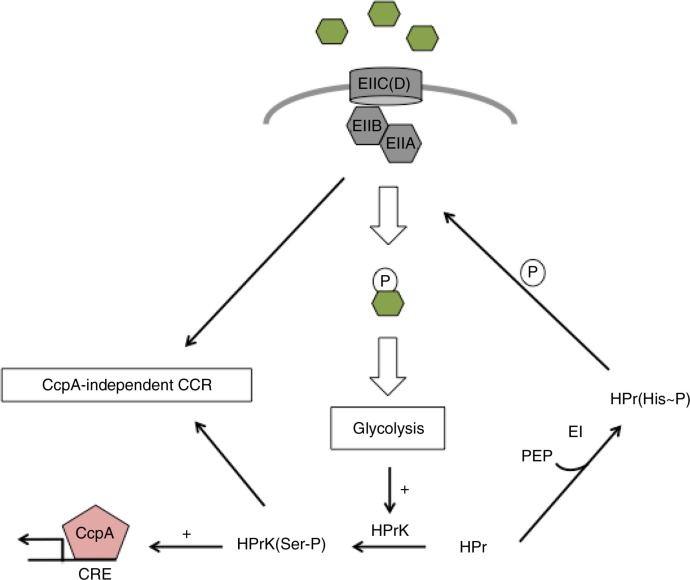
“However, inactivation of the ccpA gene in S. mutans almost never results in alleviation of CCR.”
BackgroundInfluentialAre dental diseases examples of ecological catastrophes?
Marsh, P. D. (2003) · Microbiology · doi:10.1099/mic.0.26082-0 · Cited by 1,256 · cited 2×
“Further studies of the physiology and cariogenic potential of oral microbial pathogens have altered our understanding of how carious lesions originate and modified the strategy for preventing carious lesions from directly eliminating carious bacteria from the oral cavity to reestablishing a balance in the ecology betw…”
BackgroundBowen, W. H., & Koo, H. (2011) · Caries Research · doi:10.1159/000324598 · Cited by 1,085 · cited 1×
“mutans on the smooth surfaces of the tooth (86).”
BackgroundGenome sequence of Streptococcus mutans UA159, a cariogenic dental pathogen
Ajdić, D., McShan, W. M., McLaughlin, R. E., Savić, G., Chang, J. S., Carson, M. B., Primeaux, C., Tian, R., Kenton, S., Jia, H., et al. (2002) · Proceedings of the National Academy of Sciences · doi:10.1073/pnas.172501299 · Cited by 1,013
Control of gene expression by a natural metabolite-responsive ribozyme
Winkler, W. C., Nahvi, A., Roth, A., Collins, J. A., & Breaker, R. R. (2004) · Nature · doi:10.1038/nature02362 · Cited by 976 · cited 1×
“coli and other members of Enterobacteriaceae (103, 104), or by a metabolitebinding ribozyme in many Gram-positive organisms (105, 106).”
Backgroundvan Opijnen, T., Bodi, K. L., & Camilli, A. (2009) · Nature Methods · doi:10.1038/nmeth.1377 · Cited by 926 · cited 1×
“cated CcpA in 64 genetic interactions (137), and another”
BackgroundNovick, A., & Szilard, L. (1950) · Science · doi:10.1126/science.112.2920.715 · Cited by 766 · cited 1×
“Continuous culture as a valuable tool for analyzing bacterial physiology Since its development (32, 33), chemostat cultivation has aided in the discovery and characterization of many processes related to microbial physiology, and additional opportunities for this technology remain in the ‘postgenomic’ era (34).”
MethodThe mechanisms of carbon catabolite repression in bacteria
Deutscher, J. (2008) · Current Opinion in Microbiology · doi:10.1016/j.mib.2008.02.007 · Cited by 676 · cited 13×
“However, inactivation of the ccpA gene in S. mutans almost never results in alleviation of CCR.”
BackgroundInfluentialLa technique de culture continue. Theorie et applications
Monod, J. (1950) · Medical Entomology and Zoology · Cited by 645
Adler, C. J., Dobney, K., Weyrich, L. S., Kaidonis, J., Walker, A. W., Haak, W., Bradshaw, C. J. A., Townsend, G., Sołtysiak, A., Alt, K. W., et al. (2013) · Nature Genetics · doi:10.1038/ng.2536 · Cited by 621
Phosphoenolpyruvate:carbohydrate phosphotransferase systems of bacteria.
Postma, P. W., Lengeler, J. W., & Jacobson, G. R. (1993) · Microbiological Reviews · doi:10.1128/mmbr.57.3.543-594.1993 · Cited by 511
Kreth, J., Zhang, Y., & Herzberg, M. C. (2008) · Journal of Bacteriology · doi:10.1128/jb.00276-08 · Cited by 450 · cited 1×
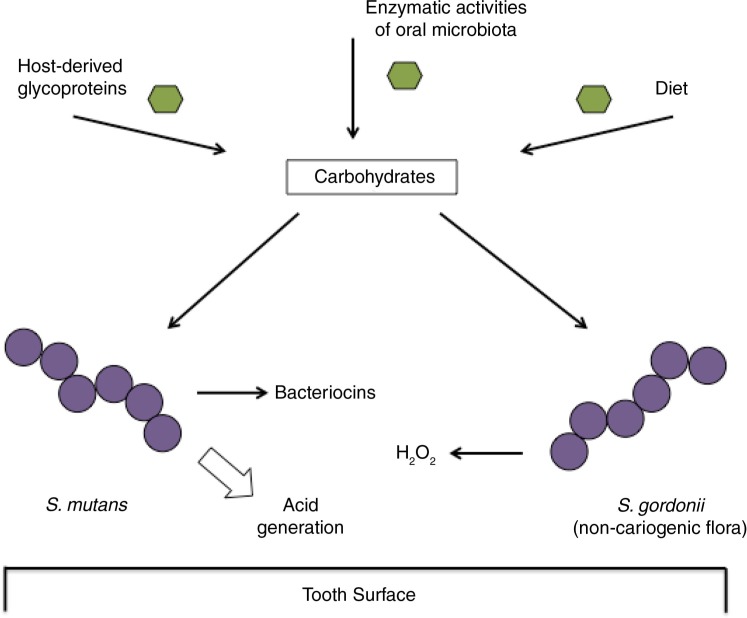
“Further, carbohydrate sources have been demonstrated to impact the ability of the pathogen to antagonize commensals via the production of bacteriocins (139) and conversely, the capacity of commensals to respond through the production of defensive compounds, such as hydrogen peroxide (140, 141).”
BackgroundAdaptation of Streptococcus mutans and Enterococcus hirae to acid stress in continuous culture
Belli, W. A., & Marquis, R. E. (1991) · Applied and Environmental Microbiology · doi:10.1128/aem.57.4.1134-1138.1991 · Cited by 312 · cited 1×
“In addition to the findings mentioned above, the chemostat model has been instrumental in shaping our understanding of the impact of various environmental stimuli and growth rate on fermentation end products (54), acidurance (55, 56), membrane fatty acid content (57) and the effects of trace metals on growth (58 60),…”
BackgroundCloning of a Streptococcus mutans glucosyltransferase gene coding for insoluble glucan synthesis
Aoki, H., Shiroza, T., Hayakawa, M., Sato, S., & Kuramitsu, H. K. (1986) · Infection and Immunity · doi:10.1128/iai.53.3.587-594.1986 · Cited by 273
Phosphoenolpyruvate:carbohydrate phosphotransferase system of bacteria
Postma, P. W., & Lengeler, J. W. (1985) · Microbiological Reviews · doi:10.1128/mr.49.3.232-269.1985 · Cited by 268
Oral Streptococci... Products of Their Environment
Burne, R. A. (1998) · Journal of Dental Research · doi:10.1177/00220345980770030301 · Cited by 267
Continuous culture – making a comeback?
Hoskisson, P. A., & Hobbs, G. (2005) · Microbiology · doi:10.1099/mic.0.27924-0 · Cited by 262
Global control of sugar metabolism: a Gram-positive solution
Titgemeyer, F., & Hillen, W. (2002) · Antonie van Leeuwenhoek · doi:10.1023/a:1020628909429 · Cited by 238 · cited 13×
“However, inactivation of the ccpA gene in S. mutans almost never results in alleviation of CCR.”
BackgroundInfluentialLukacs, J. R. (1992) · American Journal of Physical Anthropology · doi:10.1002/ajpa.1330870202 · Cited by 237
Russell, R. R. B., Aduse‐Opoku, J., Sutcliffe, I. C., Tao, L., & Ferretti, J. J. (1992) · Journal of Biological Chemistry · doi:10.1016/s0021-9258(18)42880-3 · Cited by 234
Stülke, J., Arnaud, M., Rapoport, G., & Martin‐Verstraete, I. (1998) · Molecular Microbiology · doi:10.1046/j.1365-2958.1998.00839.x · Cited by 231 · cited 8×
“In a recent study of the homologous PRDcontaining regulator MtlR of Bacillus subtilis (118), it was reported that membrane sequestration of MtlR by a dephosphorylated EIIBMtl is essential for full functionality of MtlR and the subsequent activation of downstream catabolic genes.”
BackgroundInfluentialHanada, N., & Kuramitsu, H. K. (1989) · Infection and Immunity · doi:10.1128/iai.57.7.2079-2085.1989 · Cited by 228
Hanada, N., & Kuramitsu, H. K. (1988) · Infection and Immunity · doi:10.1128/iai.56.8.1999-2005.1988 · Cited by 225
Streptococcus mutans: a new Gram-positive paradigm?
Lemos, J. A. C., Quivey, R. G., Koo, H., & Abranches, J. (2013) · Microbiology · doi:10.1099/mic.0.066134-0 · Cited by 223
Rigali, S., Nothaft, H., Noens, E. E. E., Schlicht, M., Colson, S., Muller, M. C., Joris, B., Koerten, H. K., Hopwood, D. A., Titgemeyer, F., et al. (2006) · Molecular Microbiology · doi:10.1111/j.1365-2958.2006.05319.x · Cited by 209
Identification of Essential Genes in Streptococcus pneumoniae by Allelic Replacement Mutagenesis
Song, J.-H., Ko, K. S., Lee, J., Baek, J. Y., Oh, W. S., Yoon, H. S., Jeong, J., & Chun, J. (2005) · Molecules and Cells · doi:10.1016/s1016-8478(23)13181-5 · Cited by 201
Evolutionary and Population Genomics of the Cavity Causing Bacteria Streptococcus mutans
Cornejo, O. E., Lefébure, T., Pavinski Bitar, P. D., Lang, P., Richards, V. P., Eilertson, K., Do, T., Beighton, D., Zeng, L., Ahn, S.-J., et al. (2013) · Molecular Biology and Evolution · doi:10.1093/molbev/mss278 · Cited by 198 · cited 1×
“mutans from around the world (3) revealed that a predicted galactose-specific PTS system is present in the genomes of 35 of the 57 isolates (21).”
BackgroundAdaptation by Streptococcus mutans to acid tolerance
Hamilton, I. R., & Buckley, N. D. (1991) · Oral Microbiology and Immunology · doi:10.1111/j.1399-302x.1991.tb00453.x · Cited by 197 · cited 1×
“In addition to the findings mentioned above, the chemostat model has been instrumental in shaping our understanding of the impact of various environmental stimuli and growth rate on fermentation end products (54), acidurance (55, 56), membrane fatty acid content (57) and the effects of trace metals on growth (58 60),…”
BackgroundShelburne, S. A., Keith, D. B., Horstmann, N., Sumby, P., Davenport, M. T., Graviss, E. A., Brennan, R. G., & Musser, J. M. (2008) · Proceedings of the National Academy of Sciences · doi:10.1073/pnas.0711767105 · Cited by 194 · cited 1×
“Firstly, CcpA plays an important role in coordinating virulence gene expression, and deletion of ccpA has in some cases been linked to a loss of virulence in murine models of infection (121, 122).”
BackgroundThe mutacins of Streptococcus mutans : regulation and ecology
Merritt, J. L., & Qi, F. (2011) · Molecular Oral Microbiology · doi:10.1111/j.2041-1014.2011.00634.x · Cited by 189 · cited 1×
“Further, carbohydrate sources have been demonstrated to impact the ability of the pathogen to antagonize commensals via the production of bacteriocins (139) and conversely, the capacity of commensals to respond through the production of defensive compounds, such as hydrogen peroxide (140, 141).”
BackgroundIyer, R., Baliga, N. S., & Camilli, A. (2005) · Journal of Bacteriology · doi:10.1128/jb.187.24.8340-8349.2005 · Cited by 186 · cited 17×
“In order to determine the contribution of ManL, certain other PTS components and CcpA to cellobiose utilization, a study characterizing the genetic regulation of the cel operon was initiated (24).”
BackgroundInfluentialZero, D. T. (2004) · Caries Research · doi:10.1159/000077767 · Cited by 185 · cited 2×
“Similarly, though sucrose does hold a strong causal link to caries, research conducted on the association of other carbohydrates sources with caries formation continues to broaden our view (81).”
BackgroundJenkinson, H. F. (2011) · Environmental Microbiology · doi:10.1111/j.1462-2920.2011.02573.x · Cited by 179 · cited 1×
“this environment ranging from 600 to over 1,200 (5, 6).”
BackgroundBidossi, A., Mulas, L., Decorosi, F., Colomba, L., Ricci, S., Pozzi, G., Deutscher, J., Viti, C., & Oggioni, M. (2012) · PLoS ONE · doi:10.1371/journal.pone.0033320 · Cited by 179 · cited 14×
“Researchers in the field of oral biology have long known that S. mutans is capable of utilizing both GlcN and GlcNAc, and GlcNAc has classically been utilized as a method for distinguishing S. mutans from the related cariogenic species Streptococcus sobrinus (94, 95).”
BackgroundInfluentialPhosphoenolpyruvate:carbohydrate phosphotransferase system of bacteria.
Postma, P. W., & Lengeler, J. W. (1985) · Microbiological Reviews · doi:10.1128/mmbr.49.3.232-269.1985 · Cited by 168
Abranches, J., Candella, M. M., Wen, Z. T., Baker, H. V., & Burne, R. A. (2006) · Journal of Bacteriology · doi:10.1128/jb.00169-06 · Cited by 151
CcpA Regulates Central Metabolism and Virulence Gene Expression in Streptococcus mutans
Abranches, J., Nascimento, M. M., Zeng, L., Browngardt, C. M., Wen, Z. T., Rivera, M. F., & Burne, R. A. (2008) · Journal of Bacteriology · doi:10.1128/jb.01237-07 · Cited by 147 · cited 2×
“mutans clearly show a critical role for this regulator in direct and indirect control of transcription of genes that encode products involved in carbon flow, energy metabolism, and the fate of pyruvate (29).”
BackgroundResultde Stoppelaar, J. D., van Houte, J., & Dirks, O. B. (2009) · Caries Research · doi:10.1159/000259633 · Cited by 146 · cited 1×
“mutans has been observed when carbohydrates were removed from the diet with a reemergence of the organism when the consumption of carbohydrates was resumed (77).”
BackgroundVadeboncoeur, C., & Pelletier, M. (1997) · FEMS Microbiology Reviews · doi:10.1111/j.1574-6976.1997.tb00297.x · Cited by 145
CcpA Ensures Optimal Metabolic Fitness of Streptococcus pneumoniae
Carvalho, S. M., Kloosterman, T. G., Kuipers, O. P., & Neves, A. R. (2011) · PLoS ONE · doi:10.1371/journal.pone.0026707 · Cited by 142
Global Transcriptional Analysis of Streptococcus mutans Sugar Transporters Using Microarrays
Ajdic, D., & Pham, V. (2007) · Journal of Bacteriology · doi:10.1128/jb.00338-07 · Cited by 139 · cited 3×
“mutans was growing in sucrose as compared to glucose (82).”
BackgroundInfluentialProteome analysis of Streptococcus mutans metabolic phenotype during acid tolerance
Len, A. C. L., Harty, D. W. S., & Jacques, N. A. (2004) · Microbiology · doi:10.1099/mic.0.26888-0 · Cited by 138 · cited 1×
“mutans in response to selected growth conditions, including an acidic environment (61, 62), of the GlnR-mediated response to low pH (63) and of the contribution of NADH oxidase to acid and oxidative stress (64).”
BackgroundKlein, M. I., DeBaz, L., Agidi, S., Lee, H., Xie, G., Lin, A. H.-M., Hamaker, B. R., Lemos, J. A., & Koo, H. (2010) · PLoS ONE · doi:10.1371/journal.pone.0013478 · Cited by 136 · cited 3×
“mutans could benefit from the slow release of nutrients from starch (70).”
BackgroundInfluentialNewby, E. E., Martinez-Mier, E. A., Zero, D. T., Kelly, S., Fleming, N., North, M., & Bosma, M. L. (2013) · International Dental Journal · doi:10.1111/idj.12082 · Cited by 136 · cited 2×
“Additional evidence suggests that other dietary carbohydrates, including particularly high concentrations of starch, can also result in caries due notably to the retention of these foodstuffs in the oral cavity (79).”
BackgroundResultExpression, purification, and characterization of an exo-beta-D-fructosidase of Streptococcus mutans
Burne, R. A., Schilling, K., Bowen, W. H., & Yasbin, R. E. (1987) · Journal of Bacteriology · doi:10.1128/jb.169.10.4507-4517.1987 · Cited by 131 · cited 1×
“mutans produces a secreted exob-D-fructosidase, FruA, that releases fructose from b2, 6 and b2,1-linked fructan polymers (88, 89).”
BackgroundShifts in membrane fatty acid profiles associated with acid adaptation of Streptococcus mutans
Quivey, R. G., Faustoferri, R. C., Monahan, K., & Marquis, R. E. (2000) · FEMS Microbiology Letters · doi:10.1111/j.1574-6968.2000.tb09211.x · Cited by 129 · cited 1×
“In addition to the findings mentioned above, the chemostat model has been instrumental in shaping our understanding of the impact of various environmental stimuli and growth rate on fermentation end products (54), acidurance (55, 56), membrane fatty acid content (57) and the effects of trace metals on growth (58 60),…”
BackgroundSequence analysis of the Streptococcus mutans fructosyltransferase gene and flanking regions
Shiroza, T., & Kuramitsu, H. K. (1988) · Journal of Bacteriology · doi:10.1128/jb.170.2.810-816.1988 · Cited by 120 · cited 1×
“mutans-derived glucans, fructans serve mainly as an extracellular storage polymer (87).”
BackgroundHamilton, I. R., & Ellwood, D. C. (1978) · Infection and Immunity · doi:10.1128/iai.19.2.434-442.1978 · Cited by 116
Robillard, G. T., & Broos, J. (1999) · Biochimica et Biophysica Acta (BBA) - Reviews on Biomembranes · doi:10.1016/s0304-4157(99)00002-7 · Cited by 113
Giammarinaro, P., & Paton, J. C. (2002) · Infection and Immunity · doi:10.1128/iai.70.10.5454-5461.2002 · Cited by 112 · cited 17×
“In order to determine the contribution of ManL, certain other PTS components and CcpA to cellobiose utilization, a study characterizing the genetic regulation of the cel operon was initiated (24).”
BackgroundInfluentialZeng, L., Das, S., & Burne, R. A. (2010) · Journal of Bacteriology · doi:10.1128/jb.01624-09 · Cited by 110 · cited 1×
“mutans strain UA159 is conducted primarily through low-affinity transport via the activity of the glucose/mannose (EII) and lactose PTS permeases (107).”
BackgroundŚwiątek, M., Tenconi, E., Rigali, S., & van Wezel, G. P. (2011) · Journal of Bacteriology · doi:10.1128/jb.06370-11 · Cited by 108
Carlsson, J., & Griffith, C. (1974) · Archives of Oral Biology · doi:10.1016/0003-9969(74)90238-6 · Cited by 104 · cited 1×
“In addition to the findings mentioned above, the chemostat model has been instrumental in shaping our understanding of the impact of various environmental stimuli and growth rate on fermentation end products (54), acidurance (55, 56), membrane fatty acid content (57) and the effects of trace metals on growth (58 60),…”
BackgroundSugar, fluoride, pH and microbial homeostasis in dental plaque.
Marsh, P. (1991) · PubMed · Cited by 103
Noncoding RNA control of the making and breaking of sugarsPreprint
Görke, B., & Vogel, J. (2008) · Genes & Development · doi:10.1101/gad.1717808 · Cited by 103 · cited 2×
“coli and other members of Enterobacteriaceae (103, 104), or by a metabolitebinding ribozyme in many Gram-positive organisms (105, 106).”
BackgroundEnhanced Growth of Complex Communities of Dental Plaque Bacteria in Mucin-Limited Continuous Culture
Glenister, D. A., Salamon, K., Smith, K., Beighton, D., & Keevil, C. W. (1988) · Microbial Ecology in Health and Disease · doi:10.3109/08910608809140176 · Cited by 96
Beighton, D., Russell, R. R. B., & Whiley, R. A. (2009) · Caries Research · doi:10.1159/000261363 · Cited by 95 · cited 1×
“mutans from the related cariogenic species Streptococcus sobrinus (94, 95).”
BackgroundProgress Dissecting the Oral Microbiome in Caries and Health
Burne, R. A., Zeng, L., Ahn, S., Palmer, S. R., Liu, Y., Tristan, L., Stanhope, M. J., & Nascimento, M. M. (2012) · Advances in Dental Research · doi:10.1177/0022034512449462 · Cited by 93 · cited 1×
“diseases, including dental caries (1).”
Abranches, J., Chen, Y. M., & Burne, R. A. (2003) · Applied and Environmental Microbiology · doi:10.1128/aem.69.8.4760-4769.2003 · Cited by 92
A novel adaptation of aldolase regulates virulence in Streptococcus pyogenes
Loughman, J. A., & Caparon, M. G. (2006) · The EMBO Journal · doi:10.1038/sj.emboj.7601393 · Cited by 90 · cited 2×
“1 is primarily believed to serve as a metabolite-sensing co-regulator of enzymes including the DNA-binding regulator Rgg (also called RopB) (124, 125).”
BackgroundA synthetic saliva for cultural studies of dental plaque
Shellis, R. P. (1978) · Archives of Oral Biology · doi:10.1016/0003-9969(78)90081-x · Cited by 88 · cited 1×
“In some instances, these challenges have been overcome by the creation of artificial saliva, and though not as complex as saliva obtained from human subjects, the results obtained with this medium are in some cases comparable to those of human saliva (74, 75).”
ResultVogler, A. P., & Lengeler, J. W. (1989) · Molecular and General Genetics MGG · doi:10.1007/bf00261163 · Cited by 86
Rosey, E. L., & Stewart, G. C. (1992) · Journal of Bacteriology · doi:10.1128/jb.174.19.6159-6170.1992 · Cited by 85
Ellwood, D. C., Phipps, P. J., & Hamilton, I. R. (1979) · Infection and Immunity · doi:10.1128/iai.23.2.224-231.1979 · Cited by 85
Almengor, A. C., Kinkel, T. L., Day, S. J., & McIver, K. S. (2007) · Journal of Bacteriology · doi:10.1128/jb.01038-07 · Cited by 85 · cited 1×
“pyogenes possesses a CcpAbinding site upstream of the promoter for mga (130, 131).”
BackgroundWebb, A., Homer, K. A., & Hosie, A. H. F. (2007) · Journal of Bacteriology · doi:10.1128/jb.01509-07 · Cited by 84
Wexler, D. L., Hudson, M. C., & Burne, R. A. (1993) · Infection and Immunity · doi:10.1128/iai.61.4.1259-1267.1993 · Cited by 82
CcpA-Mediated Repression of Streptolysin S Expression and Virulence in the Group A Streptococcus
Kinkel, T. L., & McIver, K. S. (2008) · Infection and Immunity · doi:10.1128/iai.00343-08 · Cited by 81 · cited 1×
“Other researchers have observed an enhancement of virulence in the ccpA deletion strain similarly to that exhibited by the ptsI mutant though less severe (123).”
BackgroundZeng, L., Wen, Z. T., & Burne, R. A. (2006) · Molecular Microbiology · doi:10.1111/j.1365-2958.2006.05359.x · Cited by 79 · cited 1×
“The LevQRST fourcomponent system activates fruA and levDEFG expression in response to extracellular signals, including the presence of fructose and mannose, and is sensitive to CcpAindependent catabolite repression (31, 92).”
BackgroundRodent model in caries research
Bowen, W. H. (2012) · Odontology · doi:10.1007/s10266-012-0091-0 · Cited by 78 · cited 3×
“In addition, studies using rats have illustrated that it is not as much the consumption of particular sugars but the frequency of consumption that strongly contributes to caries, and further, many anti-caries treatments succeed mostly due to their impact on the frequency of meals (78).”
BackgroundInfluentialPneumococcal carbohydrate transport: food for thought
Buckwalter, C. M., & King, S. J. (2012) · Trends in Microbiology · doi:10.1016/j.tim.2012.08.008 · Cited by 76 · cited 1×
“pneumoniae moves away from the oral cavity and ventures into the airways, it is likely that this pathogen must liberate and metabolize nutrients from host glycoconjugates, including host defense molecules (132).”
BackgroundCharacterization of the Streptococcus mutans GS-5 fruA gene encoding exo-beta-D-fructosidase
Burne, R. A., & Penders, J. E. C. (1992) · Infection and Immunity · doi:10.1128/iai.60.11.4621-4632.1992 · Cited by 75 · cited 1×
“mutans produces a secreted exob-D-fructosidase, FruA, that releases fructose from b2, 6 and b2,1-linked fructan polymers (88, 89).”
BackgroundUptake and Metabolism of N -Acetylglucosamine and Glucosamine by Streptococcus mutans
Moye, Z. D., Burne, R. A., & Zeng, L. (2014) · Applied and Environmental Microbiology · doi:10.1128/aem.00820-14 · Cited by 74 · cited 17×
“Researchers in the field of oral biology have long known that S. mutans is capable of utilizing both GlcN and GlcNAc, and GlcNAc has classically been utilized as a method for distinguishing S. mutans from the related cariogenic species Streptococcus sobrinus (94, 95).”
BackgroundInfluentialEnvironmental Influences on Competitive Hydrogen Peroxide Production in Streptococcus gordonii
Zheng, L., Itzek, A., Chen, Z., & Kreth, J. (2011) · Applied and Environmental Microbiology · doi:10.1128/aem.00309-11 · Cited by 73 · cited 1×
“Further, carbohydrate sources have been demonstrated to impact the ability of the pathogen to antagonize commensals via the production of bacteriocins (139) and conversely, the capacity of commensals to respond through the production of defensive compounds, such as hydrogen peroxide (140, 141).”
BackgroundCcpA and LacD.1 Affect Temporal Regulation ofStreptococcus pyogenesVirulence Genes
Kietzman, C. C., & Caparon, M. G. (2009) · Infection and Immunity · doi:10.1128/iai.00746-09 · Cited by 73 · cited 1×
“Firstly, CcpA plays an important role in coordinating virulence gene expression, and deletion of ccpA has in some cases been linked to a loss of virulence in murine models of infection (121, 122).”
BackgroundPTS phosphorylation of Mga modulates regulon expression and virulence in the group A streptococcus
Hondorp, E. R., Hou, S. C., Hause, L. L., Gera, K., Lee, C., & McIver, K. S. (2013) · Molecular Microbiology · doi:10.1111/mmi.12250 · Cited by 72 · cited 2×
“pyogenes possesses a CcpAbinding site upstream of the promoter for mga (130, 131).”
BackgroundTranscriptional Regulation of the Cellobiose Operon of Streptococcus mutans
Zeng, L., & Burne, R. A. (2009) · Journal of Bacteriology · doi:10.1128/jb.01641-08 · Cited by 72 · cited 5×
“Likewise, deletion of EIIB was thought to cause constitutive phosphorylation of EIIA, leading to inactivation of CelR (24).”
BackgroundInfluentialDifferential response of Streptococcus mutans towards friend and foe in mixed-species cultures
Liu, J., Wu, C., Huang, I., Merritt, J. L., & Qi, F. (2011) · Microbiology · doi:10.1099/mic.0.048314-0 · Cited by 71 · cited 1×
“mutans due to the presence of a highaffinity galactose PTS, a trait that may help to promote dental health (108, 109).”
BackgroundTransport of Sugars, Including Sucrose, by the msm Transport System of Streptococcus mutans
Tao, L., Sutcliffe, I. C., Russell, R. R. B., & Ferretti, J. J. (1993) · Journal of Dental Research · doi:10.1177/00220345930720100701 · Cited by 69 · cited 1×
“It was demonstrated that the primary PTS permease (EII) for trehalose (a-D-glucopyranosyl1,1-a-D-glucopyranoside) and the msm ABC transporter contributed modestly to growth on sucrose, so these systems appear to function in lower-affinity sucrose uptake, as suggested previously (14, 91).”
BackgroundGene Regulation by CcpA and Catabolite Repression Explored by RNA-Seq in Streptococcus mutans
Zeng, L., Choi, S. C., Danko, C. G., Siepel, A. C., Stanhope, M. J., & Burne, R. A. (2013) · PLoS ONE · doi:10.1371/journal.pone.0060465 · Cited by 69 · cited 1×
“Also of note, a ccpA mutant did not display a similar upregulation of the cel operon when assayed by microarray (29), though a subsequent RNA-Seq study did show modest elevation in cel operon expression upon deletion of ccpA (117).”
ResultZeng, L., & Burne, R. A. (2010) · Molecular Microbiology · doi:10.1111/j.1365-2958.2009.07029.x · Cited by 67 · cited 1×
“mutans, serinephosphorylated HPr (HPr(Ser-P)) plays a major role in the repression of genes for the uptake and metabolism of non-preferred carbohydrate sources (28).”
BackgroundUtilization of mucin by oral Streptococcus species
van der Hoeven, J. S., van den Kieboom, C. W. A., & Camp, P. J. M. (1990) · Antonie van Leeuwenhoek · doi:10.1007/bf00403951 · Cited by 63 · cited 3×
“mutans may exploit mucin as a supplementary nutrient source during fasting periods by the host, though not as the sole carbon and energy source (71).”
BackgroundZeng, L., & Burne, R. A. (2012) · Journal of Bacteriology · doi:10.1128/jb.02042-12 · Cited by 63 · cited 4×
“mutans, particularly when cells are grown in the presence of the sugar(s) that are internalized by these permeases (21, 30, 31).”
BackgroundInfluentialJacques, N. A., HARDY, L. N., Knox, K. W., & Wicken, A. J. (1979) · Infection and Immunity · doi:10.1128/iai.25.1.75-84.1979 · Cited by 63
Regulon of the N -Acetylglucosamine Utilization Regulator NagR in Bacillus subtilis
Bertram, R., Rigali, S., Wood, N., Lulko, A. T., Kuipers, O. P., & Titgemeyer, F. (2011) · Journal of Bacteriology · doi:10.1128/jb.00264-11 · Cited by 62
Cvitkovitch, D. G., Boyd, D. A., Thevenot, T., & Hamilton, I. R. (1995) · Journal of Bacteriology · doi:10.1128/jb.177.9.2251-2258.1995 · Cited by 59 · cited 1×
“which is active in PTS-deficient cells (66), it is likely that”
BackgroundDerr, A. M., Faustoferri, R. C., Betzenhauser, M. J., Gonzalez, K., Marquis, R. E., & Quivey, R. G. (2011) · Applied and Environmental Microbiology · doi:10.1128/aem.06890-11 · Cited by 58 · cited 1×
“mutans in response to selected growth conditions, including an acidic environment (61, 62), of the GlnR-mediated response to low pH (63) and of the contribution of NADH oxidase to acid and oxidative stress (64).”
BackgroundMcKessar, S. J., & Hakenbeck, R. (2007) · Journal of Bacteriology · doi:10.1128/jb.01170-06 · Cited by 58 · cited 1×
“mutans and Streptococcus pneumoniae is necessary for the efficient internalization of cellobiose (23, 24).”
BackgroundAn expanded collection and refined consensus model of glmS ribozymes
McCown, P. J., Roth, A., & Breaker, R. R. (2011) · RNA · doi:10.1261/rna.2590811 · Cited by 58 · cited 2×
“coli and other members of Enterobacteriaceae (103, 104), or by a metabolitebinding ribozyme in many Gram-positive organisms (105, 106).”
BackgroundGöpel, Y., Lüttmann, D., Heroven, A. K., Reichenbach, B., Dersch, P., & Görke, B. (2010) · Nucleic Acids Research · doi:10.1093/nar/gkq986 · Cited by 58 · cited 2×
“coli and other members of Enterobacteriaceae (103, 104), or by a metabolitebinding ribozyme in many Gram-positive organisms (105, 106).”
BackgroundHamilton, I. R., Phipps, P. J., & Ellwood, D. C. (1979) · Infection and Immunity · doi:10.1128/iai.26.3.861-869.1979 · Cited by 57 · cited 1×
“stores (65), closely resembling previous results (46).”
HARDY, L. N., Jacques, N. A., Forester, H., Campbell, L. K., Knox, K. W., & Wicken, A. J. (1981) · Infection and Immunity · doi:10.1128/iai.31.1.78-87.1981 · Cited by 56
Henstra, S. A., Duurkens, R. H., & Robillard, G. T. (2000) · Journal of Biological Chemistry · doi:10.1074/jbc.275.10.7037 · Cited by 55
Oxygen toxicity in Streptococcus mutans: manganese, iron, and superoxide dismutase
Martin, M. E., Strachan, R. C., Aranha, H., Evans, S. L., Salin, M. L., Welch, B. G., Arceneaux, J. E. L., & Byers, B. R. (1984) · Journal of Bacteriology · doi:10.1128/jb.159.2.745-749.1984 · Cited by 54
Sucrose metabolism by Streptococcus mutans, SL-I
Tanzer, J. M., Chassy, B. M., & Krichevsky, M. I. (1972) · Biochimica et Biophysica Acta (BBA) - General Subjects · doi:10.1016/0304-4165(72)90062-1 · Cited by 53 · cited 1×
“mutans is internalized and metabolized to produce organic acids, with a relatively minor portion being converted to extracellular polymers (90), at least in in vitro studies.”
BackgroundVadeboncoeur, C., Brochu, D., & Reizer, J. (1991) · Analytical Biochemistry · doi:10.1016/0003-2697(91)90112-7 · Cited by 53 · cited 1×
“been noted with batch-grown cells (68).”
Hamilton, I. R., & Bowden, G. H. W. (1982) · Infection and Immunity · doi:10.1128/iai.36.1.255-262.1982 · Cited by 53
Comparative functional analysis of the lac operons in Streptococcus pyogenes
Loughman, J. A., & Caparon, M. G. (2007) · Molecular Microbiology · doi:10.1111/j.1365-2958.2007.05663.x · Cited by 52 · cited 2×
“1 is primarily believed to serve as a metabolite-sensing co-regulator of enzymes including the DNA-binding regulator Rgg (also called RopB) (124, 125).”
BackgroundThe Bacillus stearothermophilus Mannitol Regulator, MtlR, of the Phosphotransferase System
Henstra, S. A., Tuinhof, M., Duurkens, R. H., & Robillard, G. T. (1999) · Journal of Biological Chemistry · doi:10.1074/jbc.274.8.4754 · Cited by 51
Zeng, L., & Burne, R. A. (2008) · Molecular Microbiology · doi:10.1111/j.1365-2958.2008.06403.x · Cited by 51 · cited 3×
“In particular, CcpA has the ability to indirectly influence non-preferred sugar uptake by regulating the expression of multiple EII permeases (31).”
BackgroundCellular and extracellular proteome analysis of Streptococcus mutans grown in a chemostat
Len, A. C. L., Cordwell, S. J., Harty, D. W. S., & Jacques, N. A. (2003) · PROTEOMICS · doi:10.1002/pmic.200300391 · Cited by 50 · cited 1×
“mutans in response to selected growth conditions, including an acidic environment (61, 62), of the GlnR-mediated response to low pH (63) and of the contribution of NADH oxidase to acid and oxidative stress (64).”
BackgroundMoye, Z. D., Zeng, L., & Burne, R. A. (2013) · Applied and Environmental Microbiology · doi:10.1128/aem.03579-13 · Cited by 50 · cited 6×
“and excess carbohydrate conditions (65), and these”
BackgroundMethodInfluentialEffect of trace metals on growth of Streptococcus mutans in a teflon chemostat
Aranha, H., Strachan, R. C., Arceneaux, J. E. L., & Byers, B. R. (1982) · Infection and Immunity · doi:10.1128/iai.35.2.456-460.1982 · Cited by 46
Homer, K. A., Patel, R., & Beighton, D. (1993) · Infection and Immunity · doi:10.1128/iai.61.1.295-302.1993 · Cited by 46
Kawada‐Matsuo, M., Mazda, Y., Oogai, Y., Kajiya, M., Kawai, T., Yamada, S., Miyawaki, S., Oho, T., & Komatsuzawa, H. (2012) · PLoS ONE · doi:10.1371/journal.pone.0033382 · Cited by 45 · cited 3×
“Analysis of the genomes of multiple Grampositive species has revealed that the canonical residues for the formation of the ribozyme structure are notably absent in species of streptococci and most species in the genus Lactobacillus (98, 105).”
BackgroundJacques, N. A., HARDY, L. N., Campbell, L. K., Knox, K. W., Evans, J. D., & Wicken, A. J. (1979) · Infection and Immunity · doi:10.1128/iai.26.3.1079-1087.1979 · Cited by 44
Thevenot, T., Brochu, D., Vadeboncoeur, C., & Hamilton, I. R. (1995) · Journal of Bacteriology · doi:10.1128/jb.177.10.2751-2759.1995 · Cited by 44
Persistence of Streptococcus mutans in Stationary-Phase Batch Cultures and Biofilms
Renye, J. A., Piggot, P. J., Daneo-moore, L., & Buttaro, B. A. (2004) · Applied and Environmental Microbiology · doi:10.1128/aem.70.10.6181-6187.2004 · Cited by 38 · cited 1×
“mutans cannot grow well with mucin as a sole carbon and energy source (71), when mucin was added to sucrose-starved biofilms, the bacteria displayed enhanced survival (72).”
BackgroundWENHAM, D. G., Hennessey, T. D., & Cole, J. A. (1979) · Journal of General Microbiology · doi:10.1099/00221287-114-1-117 · Cited by 37
Henstra, S. A., Tolner, B., Duurkens, R. H., Konings, W. N., & Robillard, G. T. (1996) · Journal of Bacteriology · doi:10.1128/jb.178.19.5586-5591.1996 · Cited by 36
Two Gene Clusters Coordinate Galactose and Lactose Metabolism in Streptococcus gordonii
Zeng, L., Martino, N., & Burne, R. A. (2012) · Applied and Environmental Microbiology · doi:10.1128/aem.01393-12 · Cited by 36 · cited 1×
“mutans due to the presence of a highaffinity galactose PTS, a trait that may help to promote dental health (108, 109).”
BackgroundVadeboncoeur, C., Thibault, L., Néron, S., Halvorson, H. O., & Hamilton, I. R. (1987) · Journal of Bacteriology · doi:10.1128/jb.169.12.5686-5691.1987 · Cited by 34
Chen, P., Chen, Y. M., Yu, S., Singh, S., Lai, C.-H., & Chia, J. (2010) · Applied and Environmental Microbiology · doi:10.1128/aem.02622-09 · Cited by 34 · cited 1×
“mutans in response to selected growth conditions, including an acidic environment (61, 62), of the GlnR-mediated response to low pH (63) and of the contribution of NADH oxidase to acid and oxidative stress (64).”
BackgroundSucrose, the arch criminal of dental caries.
Newbrun, E. (1969) · PubMed · Cited by 33
Improved Artificial Saliva for Studying the Cariogenic Effect of Carbohydrates
Björklund, M., Ouwehand, A. C., & Forssten, S. D. (2011) · Current Microbiology · doi:10.1007/s00284-011-9937-x · Cited by 31 · cited 2×
“mutans cannot survive with mucin as a sole source of carbohydrates (71) and fares much better in artificial and human saliva supplemented with carbohydrates (75).”
BackgroundResultEllwood, D. C., & Hamilton, I. R. (1982) · Infection and Immunity · doi:10.1128/iai.36.2.576-581.1982 · Cited by 30
Streptococcus mutans serotype c tagatose 6-phosphate pathway gene cluster
Jagusztyn-Krynicka, E. K., Hansen, J. B., Crow, V. L., Thomas, T. D., Honeyman, A. L., & Curtiss, R. (1992) · Journal of Bacteriology · doi:10.1128/jb.174.19.6152-6158.1992 · Cited by 29
Bouraoui, H., Ventroux, M., Noirot‐Gros, M., Deutscher, J., & Joyet, P. (2012) · Molecular Microbiology · doi:10.1111/mmi.12131 · Cited by 29 · cited 1×
“In a recent study of the homologous PRDcontaining regulator MtlR of Bacillus subtilis (118), it was reported that membrane sequestration of MtlR by a dephosphorylated EIIB is essential for full functionality of MtlR and the subsequent activation of downstream catabolic genes.”
BackgroundKietzman, C. C., & Caparon, M. G. (2010) · Infection and Immunity · doi:10.1128/iai.01026-10 · Cited by 29 · cited 1×
“These differences were perhaps mediated by the regulators sensing and responding to different environmental signals, such as glucose, during the course of infection, and may also be influenced by the site of infection (129).”
BackgroundPoy, F., & Jacobson, G. R. (1990) · Infection and Immunity · doi:10.1128/iai.58.5.1479-1480.1990 · Cited by 28 · cited 1×
“It was demonstrated that the primary PTS permease (EII) for trehalose (a-D-glucopyranosyl1,1-a-D-glucopyranoside) and the msm ABC transporter contributed modestly to growth on sucrose, so these systems appear to function in lower-affinity sucrose uptake, as suggested previously (14, 91).”
BackgroundGera, K., Le, T., Jamin, R., Eichenbaum, Z., & McIver, K. S. (2013) · Infection and Immunity · doi:10.1128/iai.01271-13 · Cited by 28 · cited 1×
“pyogenes has implicated EI (ptsI) in the regulation of the sag operon, which produces the streptolysin S (SLS) toxin (119), while HPr is considered absolutely required for growth; as has been demonstrated in S.”
MethodBiochemical Differentiation of Certain Oral Streptococci
Kral, T. A., & Daneo-Moore, L. (1981) · Journal of Dental Research · doi:10.1177/00220345810600091301 · Cited by 26 · cited 1×
“mutans from the related cariogenic species Streptococcus sobrinus (94, 95).”
BackgroundAjdić, D., & Chen, Z. (2012) · Molecular Oral Microbiology · doi:10.1111/omi.12009 · Cited by 26 · cited 4×
“Thus, PTSBio appears to transport oligosaccharides that could arise from the action of the GTFs (93), while other genes in the cluster are required for catabolism of the sugars.”
BackgroundInfluentialRodrigue, L., Lacoste, L., Trahan, L., & Vadeboncoeur, C. (1988) · Infection and Immunity · doi:10.1128/iai.56.2.518-522.1988 · Cited by 25
Mucin can enhance growth, biofilm formation, and survival ofStreptococcus mutans
Mothey, D., Buttaro, B. A., & Piggot, P. J. (2013) · FEMS Microbiology Letters · doi:10.1111/1574-6968.12336 · Cited by 25 · cited 1×
“mutans, and this benefit required the presence of an intact tagatose pathway (110), which is a primary route for galactose catabolism in S.”
BackgroundActivity of Streptococcus mutans a-D-Glucosyltransferases Released Under Various Growth Conditions
Walker, G. J., BROWN, R. A., & Taylor, C. A. (1984) · Journal of Dental Research · doi:10.1177/00220345840630030801 · Cited by 25
Old, L. A., Lowes, S., & Russell, R. R. B. (2006) · Oral Microbiology and Immunology · doi:10.1111/j.1399-302x.2005.00246.x · Cited by 22 · cited 2×
“Genetic analysis of the cel operon has revealed that cellobiose is internalized by the EIIC permease (celD) and phosphorylated by the activity of EIIA (celC) and EIIB (celB) (111).”
BackgroundZeng, L., Xue, P., Stanhope, M. J., & Burne, R. A. (2013) · Molecular Oral Microbiology · doi:10.1111/omi.12025 · Cited by 20 · cited 3×
“mutans, particularly when cells are grown in the presence of the sugar(s) that are internalized by these permeases (21, 30, 31).”
BackgroundThibault, L., & Vadeboncoeur, C. (1985) · Infection and Immunity · doi:10.1128/iai.50.3.817-825.1985 · Cited by 20 · cited 1×
“with batch-grown cells (67) and with chemostat cultivated”
Knox, K. W., Jacques, N. A., Campbell, L. K., Wicken, A. J., Hurst, S. F., & Bleiweis, A. S. (1979) · Infection and Immunity · doi:10.1128/iai.26.3.1071-1078.1979 · Cited by 20
Hamilton, I. R., Gauthier, L., Desjardins, B., & Vadeboncoeur, C. (1989) · Journal of Bacteriology · doi:10.1128/jb.171.6.2942-2948.1989 · Cited by 19
Clustered Genes for Galactose Metabolism from Streptococcus mutans Cloned in Escherichia coli
Smorawinska, M., Hsu, J. C., Hansen, J. B., Jagusztyn-Krynicka, E. K., Abiko, Y., & Curtiss, R. (1983) · Journal of Bacteriology · doi:10.1128/jb.153.2.1095-1097.1983 · Cited by 18
Global control of sugar metabolism: a Gram-positive solution
Titgemeyer, F., & Hillen, W. (2002) · Lactic Acid Bacteria: Genetics, Metabolism and Applications · doi:10.1007/978-94-017-2029-8_4 · Cited by 17
Jacobson, G. R., Poy, F., & Lengeler, J. W. (1990) · Infection and Immunity · doi:10.1128/iai.58.2.543-549.1990 · Cited by 16 · cited 1×
“mutans through a relatively high-affinity porter as well as through a lower-affinity permease (96), though the identity of these systems was not determined.”
BackgroundBurne, R. A., & Chen, Y. M. (1998) · Methods in Cell Science · doi:10.1023/a:1009707508738 · Cited by 15
Teflon chemostat for studies of trace metal metabolism in Streptococcus mutans and other bacteria
Strachan, R. C., Aranha, H., Lodge, J., Arceneaux, J. E. L., & Byers, B. R. (1982) · Applied and Environmental Microbiology · doi:10.1128/aem.43.1.257-260.1982 · Cited by 13
Burne, R. A., & Chen, Y. M. (1998) · Springer eBooks · doi:10.1007/978-94-017-2258-2_20 · Cited by 10 · cited 1×
“Information on specific aspects of theory and design of continuous culture can be found elsewhere (34, 35).”
BackgroundGrossi, S. M., Prakobphol, A., Linzer, R., Campbell, L. K., & Knox, K. W. (1983) · Infection and Immunity · doi:10.1128/iai.39.3.1473-1476.1983 · Cited by 7
Linzer, R., Campbell, L. K., & Knox, K. W. (1984) · Infection and Immunity · doi:10.1128/iai.44.1.76-81.1984 · Cited by 5
Research works printed but not linked: 3
- Loesche WJ. Role ofStreptococcus mutansin human dental decay. Microbiol Rev. 1986; 50: 353–80. [PubMed Abstract] [PubMed CentralFull Text]. · DOI · Paper page
- Monod J, 1950, Ann Inst Pasteur (Paris), 79, 390
- Walker G, 1983, Glucosyltransferases, glucans, sucrose and dental caries (Sp. Suppl. Chemical Senses), 179
Cited by
Sorted by citations
Oral Biofilms: Pathogens, Matrix, and Polymicrobial Interactions in Microenvironments
Bowen, W. H., Burne, R. A., Wu, H., & Koo, H. (2018) · Trends in Microbiology · doi:10.1016/j.tim.2017.09.008 · Cited by 1,059
“In low-carbohydrate conditions, a pyruvate-formate lyase funnels the pyruvate to acetate and formate, gaining an additional ATP, compared to the lactate pathway [73].”
BackgroundFan, X., Alekseyenko, A. V., Wu, J., Peters, B. A., Jacobs, E. J., Gapstur, S. M., Purdue, M. P., Abnet, C. C., Stolzenberg-Solomon, R., Miller, G., et al. (2018) · Gut · doi:10.1136/gutjnl-2016-312580 · Cited by 702
The oral microbiome: Role of key organisms and complex networks in oral health and disease
Sedghi, L., DiMassa, V., Harrington, A., Lynch, S. V., & Kapila, Y. L. (2021) · Periodontology 2000 · doi:10.1111/prd.12393 · Cited by 755
Dental biofilm: ecological interactions in health and disease
Marsh, P., & Zaura, E. (2017) · Journal Of Clinical Periodontology · doi:10.1111/jcpe.12679 · Cited by 569
Periodontal Disease: The Good, The Bad, and The Unknown
Sedghi, L. M., Bacino, M. S., & Kapila, Y. L. (2021) · Frontiers in Cellular and Infection Microbiology · doi:10.3389/fcimb.2021.766944 · Cited by 409
Metadata
- Authors
- Moye, Z. D., Zeng, L., & Burne, R. A.
- Affiliations
- University of Florida (US)
- Corresponding author
- Burne, Robert A.
- Venue
- Journal of Oral Microbiology
- Publisher
- Informa UK Limited
- Published
- 2014-01-01
- Volume
- 6
- Issue
- 1
- Pages
- 24878
- ISSN
- 2000-2297 (ISSN-L)
- PMC
- PMC4157138
- OpenAlex
- W2100691159
- Cited by
- 164
- References
- 142
- Citations by year
- 2026: 13 · 2025: 17 · 2024: 17 · 2023: 17 · 2022: 19 · 2021: 13 · 2020: 15 · 2019: 10 · 2018: 12 · 2017: 10 · 2016: 15 · 2015: 5 · 2014: 1
- FWCI
- 1.74
- Type
- journal article
- Language
- en
- Open access
- gold
- doi.org
- Licence
- cc-by-nc-nd
- Locations
- Journal of Oral Microbiology (publishedVersion, cc-by-nc-nd)
- PubMed Central (publishedVersion, cc-by-nc-nd)
- PubMed (publishedVersion)
- DOAJ (DOAJ: Directory of Open Access Journals) (submittedVersion)
- Funders
- National Institute of Allergy and Infectious Diseases (T32AI007110)
- National Institute of Dental and Craniofacial Research (DE12236, R01DE019783, T90DE021990, R01DE012236)
- Topics
- Health Sciences › Dentistry › Periodontics › Oral microbiology and periodontitis research
- Life Sciences › Biochemistry, Genetics and Molecular Biology › Genetics › Bacterial Genetics and Biotechnology
- Health Sciences › Dentistry › General Dentistry › Dental Health and Care Utilization
- Keywords
- Streptococcus mutans, dental caries, carbohydrate metabolism, gene expression regulation, oral microbiota, chemostat cultivation, nutrient acquisition, bacterial pathogenicity, host-pathogen interaction, carbohydrate catabolism
About these checks
Registry, retraction, Cites and statistics results are computed, not judged, with one exception: a printed reference that no index lists is read once by a model before it counts as a citation error. Claims are extracted by a model and kept only when their quote appears verbatim in the text; each cited source is then checked, with a model’s help, for whether it says what the claim relies on. Those verdicts can be wrong — read the claim’s quote and the cited source before relying on one.
Statistics and arithmetic are recomputed, not judged.
Confidence bands are shown only for fields calibrated on our annotated test set. None is calibrated yet, so no band is shown.
What counts as a claim ›How we measure confidence ›How we check this ›
Are you an author, or do you see a problem with this page? Request a review
