

Emphasizing publishers does not effectively reduce susceptibility to misinformation on social media
Open accessPublished version of a preprint
The DOI matches its Crossref record; 25 of the 25 references it cites were found in a registry or an index.
Abstract
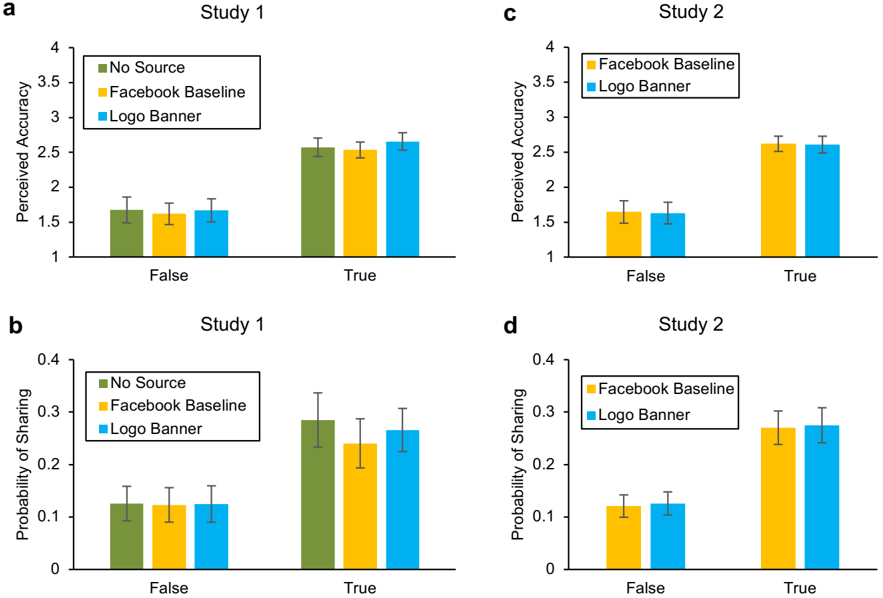
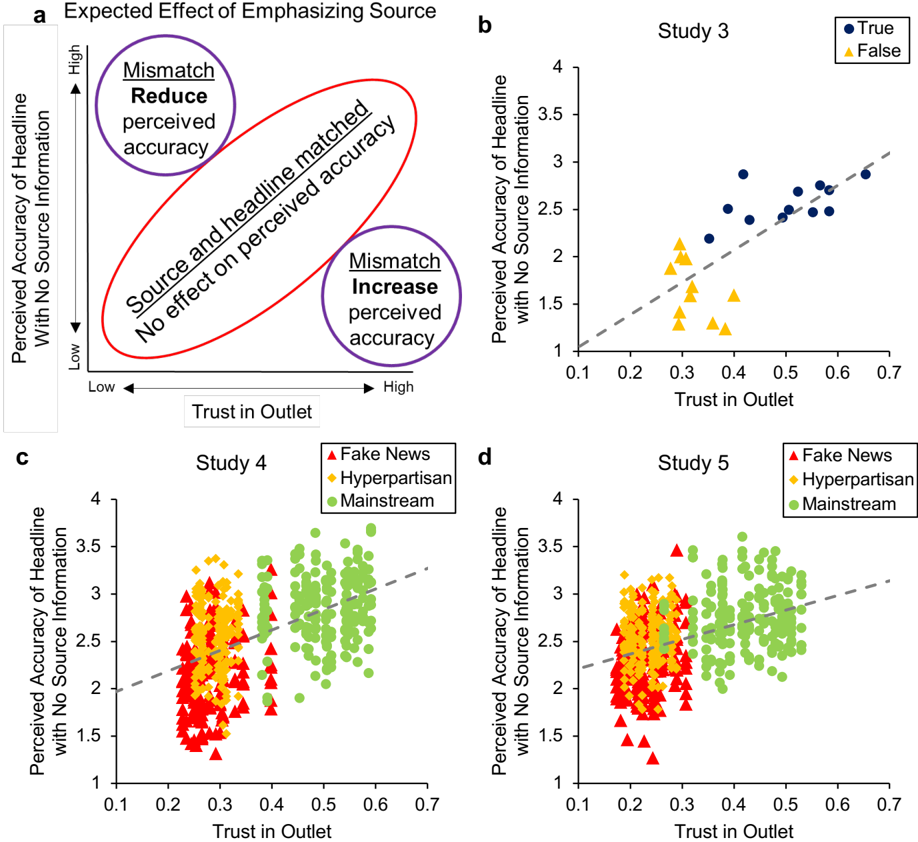
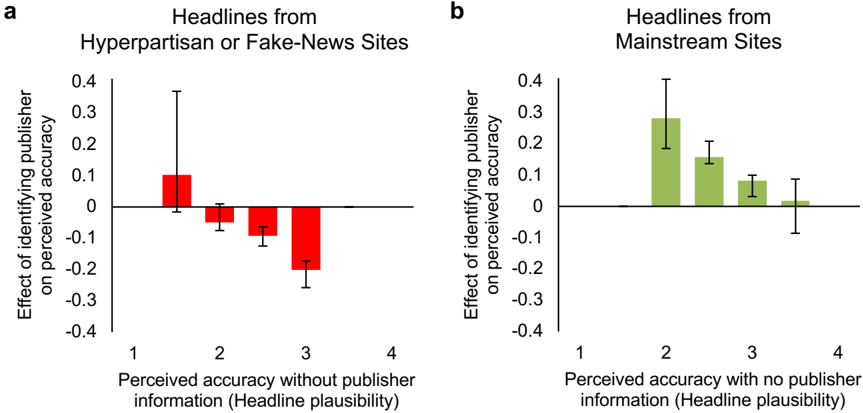
Survey experiments with nearly 7,000 Americans suggest that increasing the visibility of publishers is an ineffective, and perhaps even counterproductive, way to address misinformation on social media. Our findings underscore the importance of social media platforms and civil society organizations evaluating interventions experimentally rather than implementing them based on intuitive appeal. Research Question Platforms are making
Overview
The claims and statistics of this paper haven’t been checked yet.
Free: it reads the open-access text and checks the first 5 claims that cite a source we can check. Create a free account to check every claim.
Integrity signals
Registry
Cites
Statistics
Figures

Verification
Claims the paper makes
The claims and statistics of this paper haven’t been checked yet.
Free: it reads the open-access text and checks the first 5 claims that cite a source we can check. Create a free account to check every claim.
Claims other papers make about this one
Each is checked against this paper’s own text: does it say what the citing paper says it does?
The source backs part of the claim, not all of it — or backs it for a different population, condition or comparison.
In the citing paper
“The crowdsourced accuracy ratings generated by this process may also be useful for identifying misinformation, as has been found for crowd ratings of source trustworthiness 138,139 .”
From Using social and behavioural science to support COVID-19 pandemic response (2020) · cites this paper as [138]
Experimental — accuracy not yet measuredThe cited source says what the claim attributes to it.
In the citing paper
“the salience of source information does not appear to change how accurately people identify fabricated news stories55, manipulated images56, or false news headlines57,58”
From Human detection of political speech deepfakes across transcripts, audio, and video (2024) · cites this paper as [57]
Self-check
Percentages, sums and reported differences re-computed from the paper’s own numbers.
The self-check needs the paper’s full text.
Citations
Cites
(2023) · doi:10.1126/science · Cited by 6,063
Lazer, D. M. J., Baum, M. A., Benkler, Y., Berinsky, A. J., Greenhill, K. M., Menczer, F., Metzger, M. J., Nyhan, B., Pennycook, G., Rothschild, D., et al. (2018) · Science · doi:10.1126/science.aao2998 · Cited by 4,160 · cited 1×
“Scholars are increasingly concerned about the impact of misinformation and hyperpartisan content on platforms such as Facebook and Twitter (Lazer et al., 2018).”
BackgroundSelf-citationThe Persuasiveness of Source Credibility: A Critical Review of Five Decades' Evidence
Pornpitakpan, C. (2004) · Journal of Applied Social Psychology · doi:10.1111/j.1559-1816.2004.tb02547.x · Cited by 2,205 · cited 1×
“Many studies have shown that readers are more likely to believe messages from high-credibility sources relative to identical messages from lowcredibility sources (Pornpitakpan, 2004).”
BackgroundPennycook, G., & Rand, D. G. (2019) · Cognition · doi:10.1016/j.cognition.2018.06.011 · Cited by 2,022 · cited 5×
“Yet, others (Austin & Dong, 1994, Pennycook & Rand, 2019b, Jakesch et al., 2018) have failed to demonstrate that assessments of news stories are changed by source information.”
BackgroundMethodResultInfluentialSelf-citationThe Online Laboratory: Conducting Experiments in a Real Labor Market∗Preprint
Zeckhauser, R. J. (2016) · Cited by 1,531
Judd, C. M., Westfall, J., & Kenny, D. A. (2012) · Journal of Personality and Social Psychology · doi:10.1037/a0028347 · Cited by 1,236
The Generalizability of Survey Experiments
Mullinix, K. J., Leeper, T. J., Druckman, J. N., & Freese, J. (2015) · Journal of Experimental Political Science · doi:10.1017/xps.2015.19 · Cited by 1,228
Coppock, A., & McClellan, O. A. (2019) · Research & Politics · doi:10.1177/2053168018822174 · Cited by 987 · cited 4×
“We then assigned participants from MTurk and the sampling company Lucid (Coppock & McClellan, 2019) to either rate the trustworthiness of a random subset of the 60 sources (N=251 from MTurk in Study 4, N=253 from Lucid in Study 5) or rate the accuracy of a random subset of the 600 headlines…”
MethodInfluentialFighting misinformation on social media using crowdsourced judgments of news source quality
Pennycook, G., & Rand, D. G. (2019) · Proceedings of the National Academy of Sciences · doi:10.1073/pnas.1806781116 · Cited by 947 · cited 5×
“Yet, others (Austin & Dong, 1994, Pennycook & Rand, 2019b, Jakesch et al., 2018) have failed to demonstrate that assessments of news stories are changed by source information.”
BackgroundMethodResultInfluentialSelf-citationPennycook, G., & Rand, D. G. (2020) · Journal of Personality · doi:10.1111/jopy.12476 · Cited by 879
Self-citation
Research works printed but not linked: 1
- Pennycook, G., Bear, A., Collins, E., & Rand, D. G. (In press). The Implied Truth Effect: Attaching Warnings to a Subset of Fake News Stories Increases Perceived Accuracy of Stories Without Warnings. Management Science.
Cited by
Using social and behavioural science to support COVID-19 pandemic response
Bavel, J. J. V., Baicker, K., Boggio, P. S., Capraro, V., Cichocka, A., Cikara, M., Crockett, M. J., Crum, A. J., Douglas, K. M., Druckman, J. N., et al. (2020) · Nature Human Behaviour · doi:10.1038/s41562-020-0884-z · Cited by 4,964
Self-citationThe psychological drivers of misinformation belief and its resistance to correction
Ecker, U. K. H., Lewandowsky, S., Cook, J., Schmid, P., Fazio, L. K., Brashier, N., Kendeou, P., Vraga, E. K., & Amazeen, M. A. (2022) · Nature Reviews Psychology · doi:10.1038/s44159-021-00006-y · Cited by 1,372
Pennycook, G., & Rand, D. G. (2021) · Trends in Cognitive Sciences · doi:10.1016/j.tics.2021.02.007 · Cited by 1,360
“study 4 of [93] in which US participants (n = 1008) from Amazon Mechanical Turk (MTurk) provided accuracy ratings for the”
BackgroundSelf-citationFake news, disinformation and misinformation in social media: a review
Aïmeur, E., Amri, S., & Brassard, G. (2023) · Social Network Analysis and Mining · doi:10.1007/s13278-023-01028-5 · Cited by 772
“…studies , which investigate why and who falls for fake news (Altay et al. 2022; Batailler et al. 2022; Sterret et al. 2018; Badawy et al. 2019; Pennycook and Rand 2020; Weiss et al. 2020; Guadagno and Guttieri 2021), whom to trust and how perceptions of misinformation and disinformation…”
BackgroundCitizens Versus the Internet: Confronting Digital Challenges With Cognitive Tools
Kozyreva, A., Lewandowsky, S., & Hertwig, R. (2020) · Psychological Science in the Public Interest · doi:10.1177/1529100620946707 · Cited by 479
How behavioural sciences can promote truth, autonomy and democratic discourse online
Lorenz-Spreen, P., Lewandowsky, S., Sunstein, C. R., & Hertwig, R. (2020) · Nature Human Behaviour · doi:10.1038/s41562-020-0889-7 · Cited by 223
Scaling up fact-checking using the wisdom of crowds
Allen, J., Arechar, A. A., Pennycook, G., & Rand, D. G. (2021) · Science Advances · doi:10.1126/sciadv.abf4393 · Cited by 234
Self-citationEcker, U. K. H., & Antonio, L. M. (2021) · Memory & Cognition · doi:10.3758/s13421-020-01129-y · Cited by 114
News from Generative Artificial Intelligence Is Believed Less
Longoni, C., Fradkin, A., Cian, L., & Pennycook, G. (2022) · 2022 ACM Conference on Fairness Accountability and Transparency · doi:10.1145/3531146.3533077 · Cited by 120
“We omitted information about the outlet given research indicating that publisher information has no effect on accuracy perceptions [12].”
MethodSelf-citationBeyond “fake news”: Analytic thinking and the detection of false and hyperpartisan news headlines
Ross, R. M., Rand, D. G., & Pennycook, G. (2021) · Judgment and Decision Making · doi:10.1017/s1930297500008640 · Cited by 124
“…in order to examine responses independently of familiarity with different news sources (we note, however, that manipulating the salience of the source appears to have little influence on whether people judge headlines to be true or false; Dias, Pennycook & Rand, 2020; Pennycook & Rand, 2020).”
Self-citationAllen, J. N. L., Martel, C., & Rand, D. G. (2022) · CHI Conference on Human Factors in Computing Systems · doi:10.1145/3491102.3502040 · Cited by 185
Self-citationJahanbakhsh, F., Zhang, A. X., Berinsky, A. J., Pennycook, G., Rand, D. G., & Karger, D. R. (2021) · Proceedings of the ACM on Human-Computer Interaction · doi:10.1145/3449092 · Cited by 112
Self-citationThe Emerging Science of Content Labeling: Contextualizing Social Media Content Moderation
Morrow, G., Swire‐Thompson, B., Polny, J. M., Kopec, M., & Wihbey, J. (2020) · Journal of the Association for Information Science and Technology · doi:10.1002/asi.24637 · Cited by 164
Aslett, K., Guess, A. M., Bonneau, R., Nagler, J., & Tucker, J. A. (2022) · Science Advances · doi:10.1126/sciadv.abl3844 · Cited by 102
“Although experimental demonstrations of source label effects on selective exposure are well known (25), studies have failed to convincingly show that these cues affect susceptibility to misinformation (26, 27).”
BackgroundAltay, S., Kleis Nielsen, R., & Fletcher, R. (2022) · Journal of Quantitative Description: Digital Media · doi:10.51685/jqd.2022.020 · Cited by 88
“NewsGuard ratings have been used in numerous scientific articles (Aslett et al., 2022; Dias et al., 2020; Edelson et al., 2021; Guess et al., 2021; Singh et al., 2020), and are similar to the ratings of national fact-checkers such as ‘Les Décodeurs’ from Le Monde in France or ‘Media Bias Fact Check’ in the US (Edelson…”
MethodSultan, M., Tump, A. N., Ehmann, N., Lorenz-Spreen, P., Hertwig, R., Gollwitzer, A., & Kurvers, R. H. J. M. (2024) · Proceedings of the National Academy of Sciences · doi:10.1073/pnas.2409329121 · Cited by 181
Crowds Can Effectively Identify Misinformation at Scale
Martel, C., Allen, J., Pennycook, G., & Rand, D. G. (2024) · Perspectives on Psychological Science · doi:10.1177/17456916231190388 · Cited by 84
“Although warning labels from professional fact-checkers are generally effective (Mena, 2020; Pennycook et al., 2020; Porter & Wood, 2022), professional fact-checking has significant limitations.”
BackgroundMethodInfluentialSelf-citationGoverning Online Speech: From 'Posts-As-Trumps' to Proportionality and Probability
Douek, E. (2020) · SSRN Electronic Journal · doi:10.2139/ssrn.3679607 · Cited by 80
Using Social and Behavioural Science to Support COVID-19 Pandemic ResponsePreprint
Bavel, J. J. V., D, K. B. A., Boggio, P. S., Capraro, V., Cichocka, A. K., Cikara, M., Crockett, M. J., Crum, A. J., Douglas, K. M., Druckman, J. N., et al. (2022) · SSRN Electronic Journal · doi:10.2139/ssrn.4178356 · Cited by 92
Self-citationHuman detection of political speech deepfakes across transcripts, audio, and video
Groh, M., Sankaranarayanan, A., Singh, N., Kim, D. Y., Lippman, A., & Picard, R. (2024) · Nature Communications · doi:10.1038/s41467-024-51998-z · Cited by 89
How Can Psychological Science Help Counter the Spread of Fake News?
van der Linden, S., Roozenbeek, J., Maertens, R., Basol, M., Kácha, O., Rathje, S., & Traberg, C. S. (2021) · The Spanish Journal of Psychology · doi:10.1017/sjp.2021.23 · Cited by 71
The cognitive science of fake news
Levy, N. L., & Ross, R. M. (2021) · Routledge eBooks · doi:10.4324/9780429326769-23 · Cited by 83
A framework for understanding reasoning errors: From fake news to climate change and beyond
Pennycook, G. (2022) · Advances in experimental social psychology · doi:10.1016/bs.aesp.2022.11.003 · Cited by 132
Pehlivanoglu, D., Lin, T., Deceus, F. G., Heemskerk, A., Ebner, N. C., & Cahill, B. S. (2021) · Cognitive Research Principles and Implications · doi:10.1186/s41235-021-00292-3 · Cited by 94
“…between analytical reasoning and susceptibility to fake news, regardless of whether a news source was present or absent, suggesting no moderating effect of source credibility on the relationship between analytical reasoning and fake news detection (also see Dias et al., 2020 for similar results).”
BackgroundResultThe Interaction between Political Typology and Filter Bubbles in News Recommendation Algorithms
Liu, P., Shivaram, K., Culotta, A., Shapiro, M. A., & Bilgic, M. (2021) · International World Wide Web Conference (WWW) · doi:10.1145/3442381.3450113 · Cited by 99
Social and Cognitive Aspects of the Vulnerability to Political Misinformation
Pantazi, M., Hale, S. A., & Klein, O. (2021) · Political Psychology · doi:10.1111/pops.12797 · Cited by 96
Social Debunking of Misinformation on WhatsApp: The Case for Strong and In-group Ties
Pasquetto, I. V., Jahani, E., Atreja, S., & Baum, M. (2022) · Proceedings of the ACM on Human-Computer Interaction · doi:10.1145/3512964 · Cited by 86
“We agree with others that it is crucial to understand what constitutes effective fact-checking before designing policies aimed at combating mis- and disinformation [26, 29, 68].”
BackgroundBroniatowski, D. A., Simons, J. R., Gu, J., Jamison, A. M., & Abroms, L. C. (2023) · Science Advances · doi:10.1126/sciadv.adh2132 · Cited by 62
Make Reddit Great Again: Assessing Community Effects of Moderation Interventions on r/The_Donald
Trujillo, A., & Cresci, S. (2022) · Proceedings of the ACM on Human-Computer Interaction · doi:10.1145/3555639 · Cited by 55
The relationship between political affiliation and beliefs about sources of “fake news”
Michael, R. B., & Breaux, B. O. (2021) · Cognitive Research Principles and Implications · doi:10.1186/s41235-021-00278-1 · Cited by 70
Displaying News Source Trustworthiness Ratings Reduces Sharing Intentions for False News Posts
Celadin, T., Capraro, V., Pennycook, G., & Rand, D. G. (2023) · Journal of Online Trust and Safety · doi:10.54501/jots.v1i5.100 · Cited by 50
Self-citationSpotting false news and doubting true news: a systematic review and meta-analysis of news judgements
Pfänder, J., & Altay, S. (2025) · Nature Human Behaviour · doi:10.1038/s41562-024-02086-1 · Cited by 41
Toolbox of Interventions Against Online MisinformationPreprint
Kozyreva, A., Lorenz-Spreen, P., Herzog, S. M., Ecker, U. K. H., Lewandowsky, S., Hertwig, R., Ali, A., Bak-Coleman, J. B., Barzilai, S., Basol, M., et al. (2022) · doi:10.31234/osf.io/x8ejt · Cited by 50
Self-citationReview of social science research on the impact of countermeasures against influence operations
Courchesne, L., Ilhardt, J. G., & Shapiro, J. N. (2021) · Harvard Kennedy School Misinformation Review · doi:10.37016/mr-2020-79 · Cited by 65
“In some cases, emphasizing publisher information had little to no effect on accuracy ratings (Dias et al., 2020; Wintersieck et al., 2018). One outlier is A. Kim et al. (2019), which found that source ratings impacted believability and even made participants skeptical of unrated sources. J. W. Kim (2019) also found a…”
BackgroundInfluentialAghajari, Z., Baumer, E. P. S., & DiFranzo, D. J. (2023) · Proceedings of the ACM on Human-Computer Interaction · doi:10.1145/3579520 · Cited by 75
Jia, C., Boltz, A., Zhang, A., Chen, A., & Lee, M. K. (2022) · Proceedings of the ACM on Human-Computer Interaction · doi:10.1145/3555096 · Cited by 46
Prike, T., Butler, L. H., & Ecker, U. K. H. (2024) · Scientific Reports · doi:10.1038/s41598-024-57560-7 · Cited by 74
Lateral reading and monetary incentives to spot disinformation about science
Panizza, F., Ronzani, P., Martini, C., Mattavelli, S., Morisseau, T., & Motterlini, M. (2022) · Scientific Reports · doi:10.1038/s41598-022-09168-y · Cited by 46
Peifer, J. T., & Meisinger, J. (2021) · Journalism & Mass Communication Quarterly · doi:10.1177/10776990211012953 · Cited by 56
The (Mis)Information Game: A social media simulator
Butler, L. H., Lamont, P. X., Wan, D. L. Y., Prike, T., Nasim, M., Walker, B., Fay, N., & Ecker, U. K. H. (2023) · Behavior Research Methods · doi:10.3758/s13428-023-02153-x · Cited by 57
“Past misinformation research has provided evidence for the role of source credibility when evaluating information veracity (e.g., Ecker & Antonio, 2021; Kim et al., 2019; Nadarevic et al., 2020; Walter & Tukachinsky, 2020; but also see Dias et al., 2020; Wintersieck et al., 2021).”
BackgroundPsychological Underpinnings of Misinformation Countermeasures: A Systematic Scoping Review
Ziemer, C., & Rothmund, T. (2024) · Journal of Media Psychology Theories Methods and Applications · doi:10.1027/1864-1105/a000407 · Cited by 68
Fakey: A Game Intervention to Improve News Literacy on Social Media
Micallef, N., Avram, M., Menczer, F., & Patil, S. (2021) · Proceedings of the ACM on Human-Computer Interaction · doi:10.1145/3449080 · Cited by 64
The Influence of Unknown Media on Public Opinion: Evidence from Local and Foreign News Sources
Peterson, E., & Allamong, M. B. (2021) · American Political Science Review · doi:10.1017/s0003055421001234 · Cited by 51
“Although coverage from these sources is typically evaluated as less credible than coverage from real sources (but see Dias, Pennycook, and Rand 2020), news from fictional outlets with innocuous names (e.g., “DailyNewsReview.com”) is still typically rated as relatively trustworthy (Bauer and von…”
BackgroundExamining the impact of provenance-enabled media on trust and accuracy perceptions
Feng, K. J. K., Ritchie, N., Blumenthal, P., Parsons, A., & Zhang, A. X. (2023) · Proceedings of the ACM on Human-Computer Interaction · doi:10.1145/3610061 · Cited by 39
Source memory for advertisements: The role of advertising message credibility
Bell, R., Mieth, L., & Buchner, A. (2020) · Memory & Cognition · doi:10.3758/s13421-020-01075-9 · Cited by 28
A framework for understanding reasoning errors: From fake news to climate change and beyondPreprint
Pennycook, G. (2022) · doi:10.31234/osf.io/j3w7d · Cited by 27
Self-citationA Comparative Evaluation of Interventions Against Misinformation: Augmenting the WHO Checklist
Heuer, H., & Glassman, E. L. (2022) · CHI Conference on Human Factors in Computing Systems · doi:10.1145/3491102.3517717 · Cited by 35
“also found that showing the source of a news article does not afect whether users perceive a headline as accurate or whether they would consider sharing a headline [23].”
BackgroundMethodPersonalized Interventions for Online Moderation
Cresci, S., Trujillo, A., & Fagni, T. (2022) · ACM Conference on Hypertext and Social Media (HT) · doi:10.1145/3511095.3536369 · Cited by 41
“Recent studies measured limited or no effects at all [3, 11, 24], and showed that some interventions even exacerbated the very issues they aimed to solve [1, 6, 21, 29].”
BackgroundDigital Civic Participation and Misinformation during the 2020 Taiwanese Presidential Election
Chang, H.-C. H., Haider, S., & Ferrara, E. (2021) · Media and Communication · doi:10.17645/mac.v9i1.3405 · Cited by 40
Baum, J., & Rahman, R. A. (2021) · NeuroImage · doi:10.1016/j.neuroimage.2021.118572 · Cited by 46
The Great Ban: Efficacy and Unintended Consequences of a Massive Deplatforming Operation on Reddit
Cima, L., Trujillo, A., Avvenuti, M., & Cresci, S. (2024) · ACM Web Science Conference (WebSci) · doi:10.1145/3630744.3663608 · Cited by 47
“Out of all the possible interventions, the removal (i.e., banning) of users, communities, and content —a moderation practice called deplatforming — is by far the most frequently adopted [13].”
BackgroundCombining refutations and social norms increases belief change
Ecker, U. K. H., Sanderson, J. A., McIlhiney, P., Rowsell, J., Quekett, H., Brown, G. D. A., & Lewandowsky, S. (2022) · Quarterly Journal of Experimental Psychology · doi:10.1177/17470218221111750 · Cited by 40
Chen, Z. F., & Cheng, Y. (2023) · Internet Research · doi:10.1108/intr-07-2022-0571 · Cited by 28
Luo, Y., & Cheng, Y. (2021) · International Journal of Environmental Research and Public Health · doi:10.3390/ijerph18115505 · Cited by 24
“This online panel has been frequently adopted by past researchers [56] and contains several procedures, such as blocking bots, screening participants via attention checkers and open-ended questions, and setting up quality programs and fraud prevention services to ensure high-quality research data [57].”
MethodDesigning Media Provenance Indicators to Combat Fake Media
Sherman, I. N., Stokes, J. W., & Redmiles, E. M. (2021) · International Symposium on Research in Attacks, Intrusions and Defenses (RAID) · doi:10.1145/3471621.3471860 · Cited by 30
Domenico, G. D., & Ding, Y. (2023) · Current Opinion in Psychology · doi:10.1016/j.copsyc.2023.101716 · Cited by 19
“Though trust in media publishers does not affect truth discernment or sharing behavior [42], when misinformation comes from trusted peer sources, it is more likely to be propagated further [15].”
BackgroundPatterns of belief and trust in climate change information
Johnson, V., Butterfuss, R., Harsch, R. M., & Kendeou, P. (2024) · Journal of Research in Science Teaching · doi:10.1002/tea.21967 · Cited by 23
“In addition, perception of accuracy in news headlines has been found to be unaffected by pub-lisher information or political ideology (Dias et al., 2020; Pennycook & Rand, 2021).”
Don’t believe them! Reducing misinformation influence through source discreditation
Ecker, U. K. H., Prike, T., Paver, A. B., Scott, R. J., & Swire‐Thompson, B. (2024) · Cognitive Research Principles and Implications · doi:10.1186/s41235-024-00581-7 · Cited by 31
“Dias et al. (2020) suggested that such incongruence may interfere with a person’s ability to assess information veracity.”
BackgroundInoculation and accuracy prompting increase accuracy discernment in combination but not alone
Pennycook, G., Berinsky, A. J., Bhargava, P., Lin, H., Cole, R., Goldberg, B., Lewandowsky, S., & Rand, D. G. (2024) · Nature Human Behaviour · doi:10.1038/s41562-024-02023-2 · Cited by 48
“In any case, past work has shown that hiding versus revealing publisher information on headlines has little effect on judgements of accuracy 31 .”
Self-citationPeer-supplied credibility labels as an online misinformation intervention
Pareek, S., & Gonçalves, J. (2024) · International Journal of Human-Computer Studies · doi:10.1016/j.ijhcs.2024.103276 · Cited by 25
Belief updating in the face of misinformation: The role of source reliability
Sanna, G. A., & Lagnado, D. A. (2025) · Cognition · doi:10.1016/j.cognition.2025.106090 · Cited by 24
“Dias et al. (2020) found that increasing the visibility of sources on social media and emphasising the reliability of sources — whether participants had previously rated them as reliable or unreliable — does not reduce susceptibility to misinfor-mation.”
Real, Forged or Deep Fake? Enabling the Ground Truth on the Internet
Hoque, M. A., Ferdous, M. S., Khan, M., & Tarkoma, S. (2021) · IEEE Access · doi:10.1109/access.2021.3131517 · Cited by 21
Character deprecation in fake news: Is it in supply or demand?
McPhetres, J., Rand, D. G., & Pennycook, G. (2021) · Group Processes & Intergroup Relations · doi:10.1177/1368430220965709 · Cited by 16
“While information about the publisher is not enough on its own to reduce the sharing of fake news (Dias et al., 2020), providing crowd-sourced ratings of the trustworthiness of news sites was effective in reducing the self-reported sharing of fake news (Pennycook & Rand, 2019a).”
BackgroundSelf-citationA practical guide to doing behavioural research on fake news and misinformationPreprint
Pennycook, G., Binnendyk, J., Newton, C., & Rand, D. G. (2020) · PsyArXiv (OSF Preprints) · doi:10.31234/osf.io/g69ha · Cited by 18
“The source has changed, but people are not familiar with these sources and, anyway, sources have very little impact on judgments for headlines of this sort (Dias et al., 2020).”
BackgroundSelf-citationOrchinik, R., Martel, C., Rand, D. G., & Bhui, R. (2023) · PsyArXiv (OSF Preprints) · doi:10.31234/osf.io/q7r58 · Cited by 15
Self-citationCarnahan, D., Ulusoy, E., Barry, R. C., McGraw, J., Virtue, I., & Bergan, D. E. (2022) · Journal of Communication · doi:10.1093/joc/jqac023 · Cited by 16
Viblio: Introducing Credibility Signals and Citations to Video-Sharing Platforms
Hughes, E. M., Wang, R., Juneja, P., Li, T. W., Mitra, T., & Zhang, A. X. (2024) · CHI Conference on Human Factors in Computing Systems · doi:10.1145/3613904.3642490 · Cited by 20
“Recognizing that the source of information plays a pivotal role in shaping individuals’ credibility assessments, several design interventions seek to redirect attention towards source information and the authoritativeness of the source itself [15, 40, 90, 97].”
Background(2021) · doi:10.31234/osf.io/ar96c · Cited by 12
Self-citationPsychological Underpinnings of Disinformation Countermeasures: A Systematic Scoping ReviewPreprint
Ziemer, C., & Rothmund, T. (2022) · doi:10.31234/osf.io/scq5v · Cited by 12
Pennycook, G., Berinsky, A. J., Bhargava, P., Lin, H., Cole, R., Goldberg, B., Lewandowsky, S., & Rand, D. G. (2023) · doi:10.31234/osf.io/5a9xq · Cited by 12
Self-citationMedia Platforming and the Normalisation of Extreme Right Views
Bolet, D., & Foos, F. (2025) · British Journal of Political Science · doi:10.1017/s0007123425000195 · Cited by 18
“…Druckman 2007; Miller and Krosnick 2000), our findings are consistent with other studies that find that content far outweighs the importance of source cues when it comes to people ’ s perceptions of information quality or accuracy (Clayton et al. 2019; Dias, Pennycook and Rand 2020; Berinsky 2017).”
Pehlivanoglu, D., Lin, T., Deceus, F. G., Heemskerk, A., Ebner, N. C., & Cahill, B. S. (2020) · PsyArXiv (OSF Preprints) · doi:10.31234/osf.io/98zwc · Cited by 12
Designing and Evaluating Presentation Strategies for Fact-Checked Content
Hettiachchi, D., Ji, K., Kennedy, J., McCosker, A., Salim, F. D., Sanderson, M., Scholer, F., & Spina, D. (2023) · ACM International Conference on Information and Knowledge Management (CIKM) · doi:10.1145/3583780.3614841 · Cited by 12
“For instance, including a log banner that highlights the publisher does not lead to a reduction in the susceptibility to misinformation [7].”
BackgroundTweet Trajectory and AMPS-based Contextual Cues can Help Users Identify Misinformation
Zade, H., Woodruff, M., Johnson, E., Stanley, M., Zhou, Z., Huynh, M. T., Acheson, A. E., Hsieh, G., & Starbird, K. (2023) · Proceedings of the ACM on Human-Computer Interaction · doi:10.1145/3579536 · Cited by 17
Expert endorsement and the legitimacy of public policy. Evidence from Covid19 mitigation strategies
Bogliacino, F., Charris, R., Gómez, C. E., Montealegre, F., & Codagnone, C. (2021) · Journal of Risk Research · doi:10.1080/13669877.2021.1881990 · Cited by 12
“As a result, the current paper seems to conflict with Dias, Pennycook, and Rand (2020), where the source does not affect susceptibility to (mis)information.”
BackgroundLook Who’s Watching: Platform Labels and User Engagement on State-Backed Media Outlets
Bradshaw, S., Elswah, M., & Perini, A. (2023) · American Behavioral Scientist · doi:10.1177/00027642231175639 · Cited by 15
“And emphasizing pub-lisher information can increase the chance that users will view truthful claims as false (Dias et al., 2020).”
InfluentialProbabilistic social learning improves the public’s judgments of news veracity
Guilbeault, D., Woolley, S., & Becker, J. A. (2021) · PLoS ONE · doi:10.1371/journal.pone.0247487 · Cited by 16
Spotting False News and Doubting True News: A Meta-Analysis of News JudgmentsPreprint
Pfänder, J., & Altay, S. (2023) · doi:10.31219/osf.io/n9h4y · Cited by 9
WITHDRAWNPreprint
Sultan, M., Tump, A. N., Ehmann, N., Lorenz-Spreen, P., Hertwig, R., Gollwitzer, A., & Kurvers, R. H. J. M. (2024) · doi:10.31234/osf.io/7u4fg · Cited by 9
Barclay, E. G. (2022) · The Open Review · doi:10.47967/tor2022col/vol8.02 · Cited by 8
Testing the Effect of Information on Discerning the Veracity of News in Real Time
Aslett, K., Sanderson, Z., Godel, W., Persily, N., Nagler, J., Bonneau, R., & Tucker, J. A. (2023) · Journal of Experimental Political Science · doi:10.1017/xps.2023.20 · Cited by 11
“…(Fogg et al. 2001; Flanagin and Metzger 2007).10 Results from the literature are mixed as Sundar and Nass (2001) have found source information helps, while Dias, Pennycook, and Rand (2020) have recently shown that emphasizing source information doers not aid the discernment of the veracity of news.”
BackgroundDeclining information quality under new platform governance
Ozturan, B., Quintana, A., Grinberg, N., Ognyanova, K., & Lazer, D. M. J. (2025) · Harvard Kennedy School Misinformation Review · doi:10.37016/mr-2020-176 · Cited by 11
Mechanisms of mistrust: A Bayesian account of misinformation learning
Schulz, L., Streicher, Y., Schulz, E., Bhui, R., & Dayan, P. (2025) · PLoS Computational Biology · doi:10.1371/journal.pcbi.1012814 · Cited by 11
“Whether we solve this dual learning problem appropriately is crucial in many walks of life: For example, when we trust the wrong news sources online, we risk being led astray and falling for misinformation [13,14].”
Unbundling Digital Media Literacy Tips: Results from Two Experiments
Guess, A. M., McGregor, S. C., Pennycook, G., & Rand, D. G. (2026) · Political Behavior · doi:10.1007/s11109-026-10165-4 · Cited by 7
Self-citationInterventions for combating COVID-19 misinformation: A systematic realist review
Dickinson, R., Makowski, D., van Marwijk, H., & Ford, E. M. (2025) · PLoS ONE · doi:10.1371/journal.pone.0321818 · Cited by 7
“Amin et al. [39] found impact on decision behaviour and tendency to share misinformation with their study, but the rest of the studies in this intervention group found either minimal impact [42], only impact on certain groups [40], or no impact [41] who even noted potential counterproductivity.”
İşler, O., Flew, T., Erol, I., & Dulleck, U. (2021) · Journal of Behavioral and Experimental Finance · doi:10.1016/j.jbef.2021.100550 · Cited by 9
Panizza, F., Ronzani, P., Mattavelli, S., Morisseau, T., Martini, C., & Motterlini, M. (2021) · Research Square · doi:10.21203/rs.3.rs-952649/v1 · Cited by 5
Sentiment Impact on Fake News Detection: A Preliminary Study
Lomasto, L., Aurucci, R., Brandi, Y., Gajewski, L., Lettieri, N., Malandrino, D., & Zaccagnino, R. (2025) · Lecture notes in networks and systems · doi:10.1007/978-3-031-73997-2_11 · Cited by 4
News from Artificial Intelligence is Believed LessPreprint
Longoni, C., Fradkin, A., Cian, L., & Pennycook, G. (2021) · SSRN Electronic Journal · doi:10.2139/ssrn.3787064 · Cited by 6
Self-citationBlatantly false news increases belief in news that is merely implausiblePreprint
Levari, D. E., Martel, C., Orchinik, R., Bhui, R., Seli, P., Pennycook, G., & Rand, D. G. (2024) · PsyArXiv (OSF Preprints) · doi:10.31234/osf.io/cz7vy · Cited by 6
Self-citationPartisan Source Cues and Trust in Global NewsPreprint
Blum, A., Berinsky, A. J., & Rand, D. G. (2024) · SSRN Electronic Journal · doi:10.2139/ssrn.4692096 · Cited by 4
Self-citationUnveiling Emotional Signature in Conspiracy Topics on Social Media Through Vector Analysis
Lomasto, L., Lettieri, N., Malandrino, D., Mosca, V., & Zaccagnino, R. (2025) · Lecture notes in computer science · doi:10.1007/978-3-031-97144-0_8 · Cited by 3
Cima, L., Tessa, B., Trujillo, A., Cresci, S., & Avvenuti, M. (2025) · Online Social Networks and Media · doi:10.1016/j.osnem.2025.100320 · Cited by 21
“Themostpopular and widely used type of intervention is deplatforming , which involves the removal of content, users, or even entire communities [30].”
Unpacking credibility evaluation on digital media: a case for interpretive qualitative approaches
Malhotra, P., Hall, N.-A., Xia, Y., Stahl, L., Chadwick, A., Vaccari, C., & Lawson, B. T. (2025) · Annals of the International Communication Association · doi:10.1093/anncom/wlaf008 · Cited by 8
Citizens’ Networks of Digital and Data Literacy
Yates, S. J., & Carmi, E. (2022) · Springer eBooks · doi:10.1007/978-3-031-11976-7_13 · Cited by 9
Sude, D. J., Sharon, G., & Dvir-Gvirsman, S. (2023) · Frontiers in Psychology · doi:10.3389/fpsyg.2023.1242865 · Cited by 20
Chen, X. (2021) · Internet Reference Services Quarterly · doi:10.1080/10875301.2021.1948764 · Cited by 2
Procesamiento cognitivo de fake news políticas. Revisión de estudios experimentales
García, A. P. P., Danieli, N. E., & Freire, I. E. M. (2023) · Dixit · doi:10.22235/d.v37i1.3112 · Cited by 4
Designing Indicators to Combat Fake MediaPreprint
Sherman, I. N., Redmiles, E. M., & Stokes, J. W. (2020) · arXiv (Cornell University) · doi:10.48550/arxiv.2010.00544 · Cited by 9
“…in HCI and the social sciences has focused on methods for: actively dissuading end-users from engaging with misinformation typically using warnings [40]–[47] but occasionally also via games and other educational methods [48]; identifying which content should be fact-checked [42], [49]– [52]; and…”
Debunking Misinformation about Consumer Products: Effects on Beliefs and Purchase BehaviorPreprint
Fong, J., Guo, T., & Rao, A. (2021) · SSRN Electronic Journal · doi:10.2139/ssrn.3875665 · Cited by 3
“6See Flynn et al. 2017; Lazer et al. 2018; Vosoughi et al. 2018; Guess et al. 2019; Pennycook and Rand 2019b; Bago et al. 2020; Dias et al. 2020; Guess et al. 2020; Linvill and Warren 2020; Pennycook et al. 2020; Walter et al. 2020; Martel et al. 2020; Simonov et al. 2020; Bursztyn et al. 2020;…”
Background
Metadata
- Authors
- Dias, N., Pennycook, G., & Rand, D. G.
- Affiliations
- University of Regina (CA)
- Massachusetts Institute of Technology (US)
- Venue
- Harvard Kennedy School Misinformation Review
- Published
- 2020-01-14
- ISSN
- 2766-1652 (ISSN-L)
- OpenAlex
- W2998076808
- Cited by
- 145
- References
- 24
- Citations by year
- 2026: 8 · 2025: 18 · 2024: 20 · 2023: 32 · 2022: 24 · 2021: 33 · 2020: 10
- FWCI
- 33.44
- Type
- journal article
- Language
- en
- Open access
- diamond
- doi.org
- Locations
- Harvard Kennedy School Misinformation Review (publishedVersion, cc-by)
- DSpace@MIT (Massachusetts Institute of Technology) (submittedVersion, cc-by)
- DOAJ (DOAJ: Directory of Open Access Journals) (submittedVersion, cc-by-sa)
- OSF Preprints (OSF Preprints) (submittedVersion)
- PsyArXiv (OSF Preprints) (submittedVersion, cc-by)
- PsyArXiv (OSF Preprints) (submittedVersion)
- Funders
- John Templeton Foundation
- William and Flora Hewlett Foundation
- Miami Foundation
- Social Sciences and Humanities Research Council of Canada
- Topics
- Social Sciences › Sociology and Political Science › Misinformation and Its Impacts
- Social Sciences › Communication › Social Media and Politics
- Social Sciences › Library and Information Sciences › Academic Publishing and Open Access
- Keywords
- misinformation, social media, misinformation interventions, platform accountability, civil society organizations, survey experiment
About these checks
Registry, retraction, Cites and statistics results are computed, not judged, with one exception: a printed reference that no index lists is read once by a model before it counts as a citation error. Claims are extracted by a model and kept only when their quote appears verbatim in the text; each cited source is then checked, with a model’s help, for whether it says what the claim relies on. Those verdicts can be wrong — read the claim’s quote and the cited source before relying on one.
Statistics and arithmetic are recomputed, not judged.
Confidence bands are shown only for fields calibrated on our annotated test set. None is calibrated yet, so no band is shown.
What counts as a claim ›How we measure confidence ›How we check this ›
Are you an author, or do you see a problem with this page? Request a review
Data sources
Bibliographic data: Semantic Scholar, OpenAlex, Crossref.
Contains information from the Semantic Scholar Academic Graph Datasets, made available under the ODC Attribution License (ODC-BY 1.0).
Semantic Scholar’s data is described in: Kinney, R., et al. (2023). The Semantic Scholar Open Data Platform. arXiv:2301.10140.
