

Outsourcing Memory to External Tools: A Review of ‘Intention Offloading’
Open accessThe DOI matches its Crossref record; 142 of the 142 references it cites were found in a registry or an index.
Abstract
How do we remember delayed intentions? Three decades of research into prospective memory have provided insight into the cognitive and neural mechanisms involved in this form of memory. However, we depend on more than just our brains to remember intentions. We also use external props and tools such as calendars and diaries, strategically placed objects, and technologies such as smartphone alerts. This is known as ‘intention offloading’. Despite the progress in our understanding of brain-based prospective memory, we know much less about the role of intention offloading in individuals’ ability to fulfil delayed intentions. Here, we review recent research into intention offloading, with a particular focus on how individuals decide between storing intentions in internal memory versus external reminders. We also review studies investigating how intention offloading changes across the lifespan and how it relates to underlying brain mechanisms. We conclude that intention offloading is highly effective, experimentally tractable, and guided by metacognitive processes. Individuals have systematic biases in their offloading strategies that are stable over time. Evidence also suggests that individual differences and developmental changes in offloading strategies are driven at least in part by metacognitive processes. Therefore, metacognitive interventions could play an important role in promoting individuals’ adaptive use of cognitive tools.
Overview
The claims and statistics of this paper haven’t been checked yet.
Free: it reads the open-access text and checks the first 5 claims that cite a source we can check. Create a free account to check every claim.
Integrity signals
Registry
Cites
Statistics
Figures
Verification
Claims the paper makes
The claims and statistics of this paper haven’t been checked yet.
Free: it reads the open-access text and checks the first 5 claims that cite a source we can check. Create a free account to check every claim.
Self-check
Percentages, sums and reported differences re-computed from the paper’s own numbers.
The self-check needs the paper’s full text.
Citations
Cites
The magical number seven, plus or minus two: Some limits on our capacity for processing information.
Miller, G. A. (1956) · Psychological Review · doi:10.1037/h0043158 · Cited by 17,812
The magical number seven, plus or minus two: Some limits on our capacity for processing information.
Miller, G. A. (1994) · Psychological Review · doi:10.1037/0033-295x.101.2.343 · Cited by 17,161
(2010) · Intellectum (Universidad de La Sabana) · doi:10.1111/j.1467- · Cited by 16,131
Metacognition and cognitive monitoring: A new area of cognitive–developmental inquiry
Flavell, J. H. (1979) · American Psychologist · doi:10.1037/0003-066x.34.10.906 · Cited by 11,282 · cited 2×
“This could be explained by an influence of metacognition, our ability to monitor and control our own cognitive processes and abilities (Dunlosky & Metcalfe, 2008; Flavell, 1979; Fleming et al., 2012; Koriat, 2007; Metcalfe, 1996; Nelson & Narens, 1990).”
Hutchins, E. (1995) · doi:10.7551/mitpress/1881.001.0001 · Cited by 10,801 · cited 1×
“On a theoretical level, the phenomenon of intention offloading is an example of ‘extended’ or ‘scaffolded’ cognition (Clark & Chalmers, 1998; Heersmink & Sutton, 2020; Hutchins, 1995; Kirsh, 1996).”
Clark, A., & Chalmers, D. (1998) · Analysis · doi:10.1093/analys/58.1.7 · Cited by 6,333 · cited 1×
“On a theoretical level, the phenomenon of intention offloading is an example of ‘extended’ or ‘scaffolded’ cognition (Clark & Chalmers, 1998; Heersmink & Sutton, 2020; Hutchins, 1995; Kirsh, 1996).”
Cognitive Reflection and Decision Making
Frederick, S. (2005) · Journal of Economic Perspectives · doi:10.1257/089533005775196732 · Cited by 5,256
Intentionality: An Essay in the Philosophy of Mind
Searle, J. R. (1983) · doi:10.1017/cbo9781139173452 · Cited by 4,575
The Strength Model of Self-Control
Baumeister, R. F., Vohs, K. D., & Tice, D. M. (2007) · Current Directions in Psychological Science · doi:10.1111/j.1467-8721.2007.00534.x · Cited by 3,567 · cited 1×
“Some theoretical accounts have proposed that cognitive effort is a limited, depletable resource that individuals strive to conserve (Baumeister et al., 2007).”
BackgroundMetamemory: A Theoretical Framework and New Findings
Nelson, T. O. (1990) · Psychology of Learning and Motivation · doi:10.1016/s0079-7421(08)60053-5 · Cited by 2,583 · cited 1×
“This could be explained by an influence of metacognition, our ability to monitor and control our own cognitive processes and abilities (Dunlosky & Metcalfe, 2008; Flavell, 1979; Fleming et al., 2012; Koriat, 2007; Metcalfe, 1996; Nelson & Narens, 1990).”
Background
Research works printed but not linked: 3
- Cohen, A.-L., & Hicks, J. L. (2017). Prospective memory: Remembering to remember, remembering to forget ((1st ed. 2017 edition). ed.). Springer.
- Dunlosky, J., & Metcalfe, J. (2008). Metacognition SAGE.
- Risko, E. F., Kelly, M. O., Lu, X., & Pereira, A. (in press). Varieties of offloading memory: A framework. In Q. Wang & a. Hoskins, the remaking of memory in the age of social media and the internet. Oxford University press.
Cited by
The Metacognitive Demands and Opportunities of Generative AI
Tankelevitch, L., Kewenig, V., Simkute, A., Scott, A. E., Sarkar, A., Sellen, A., & Rintel, S. (2024) · Proceedings of the CHI Conference on Human Factors in Computing Systems · doi:10.1145/3613904.3642902 · Cited by 493
“…prompting), task contexts (e.g., creating a novel output vs. editing an existing artifact), and domains (e.g., writing vs. programming). require step-wise prompting, which can work sequentially to produce the desired output, or, in some cases, may require manual reassembly of multiple outputs.”
BackgroundHuman and AI collaboration in the higher education environment: opportunities and concerns
Atchley, P., Pannell, H., Wofford, K., Hopkins, M., & Atchley, R. A. (2024) · Cognitive Research Principles and Implications · doi:10.1186/s41235-024-00547-9 · Cited by 268
“It has been suggested that a choice to offload may be a strategic one, guided by a person’s metacognitive beliefs (Gilbert et al., 2023; Risko & Gilbert, 2016).”
BackgroundExtending Minds with Generative AI
Clark, A. (2025) · Nature Communications · doi:10.1038/s41467-025-59906-9 · Cited by 174
Badre, D. (2024) · Annual Review of Psychology · doi:10.1146/annurev-psych-022024-103901 · Cited by 126
Lodge, J. M., Yang, S., Furze, L., & Dawson, P. (2023) · Learning: Research and Practice · doi:10.1080/23735082.2023.2261106 · Cited by 90
“Gilbert et al. (2022) reviewed the research on intentionally off-loading mental tasks to external tools pointing to both benefits and detriments.”
BackgroundGilbert, S. J. (2024) · Cognition · doi:10.1016/j.cognition.2024.105783 · Cited by 54
“For example, older adults – especially those volunteering for psychology experiments – might be me more inclined to test their internal memory abilities even if an offloading strategy is more optimal according to the reward structure of the task (see Scarampi and Gilbert, 2021; Tsai, Scarampi, Kliegel, and Gilbert, 20…”
BackgroundMethodResultInfluentialSelf-citationInvestigating novice translation students’ AI literacy in translation education
Zhang, J., & Doherty, S. (2025) · The Interpreter and Translator Trainer · doi:10.1080/1750399x.2025.2541478 · Cited by 64
“In a review conducted by Gilbert et al. (2023), cognitive offloading was found to be both beneficial and detrimental.”
Gilbert, S. (2023) · doi:10.31234/osf.io/5e8mg · Cited by 58
Self-citationPartially Overlapping Neural Correlates of Metacognitive Monitoring and Metacognitive Control
Boldt, A., & Gilbert, S. J. (2022) · Journal of Neuroscience · doi:10.1523/jneurosci.1326-21.2022 · Cited by 53
Self-citationStudy effort and the memory cost of external store availability
Kelly, M. O., & Risko, E. F. (2022) · Cognition · doi:10.1016/j.cognition.2022.105228 · Cited by 42
The nature and development of cognitive offloading in children
Armitage, K. L., & Gilbert, S. J. (2025) · Child Development Perspectives · doi:10.1111/cdep.12532 · Cited by 39
Self-citationWang, S., & Zhang, H. (2026) · International Journal of Educational Technology in Higher Education · doi:10.1186/s41239-026-00585-x · Cited by 38
Breitwieser, J., Nobbe, L., Biedermann, D., & Brod, G. (2023) · Computers & Education · doi:10.1016/j.compedu.2023.104879 · Cited by 36
Value-based routing of delayed intentions into brain-based versus external memory stores.
Dupont, D., Zhu, Q., & Gilbert, S. J. (2023) · Journal of Experimental Psychology General · doi:10.1037/xge0001261 · Cited by 36
Self-citationThe benefits and potential costs of cognitive offloading for retrospective information
Richmond, L. L., & Taylor, R. G. (2025) · Nature Reviews Psychology · doi:10.1038/s44159-025-00432-2 · Cited by 33
Optimal cognitive offloading: Increased reminder usage but reduced proreminder bias in older adults.
Tsai, P., Scarampi, C., Kliegel, M., & Gilbert, S. J. (2023) · Psychology and Aging · doi:10.1037/pag0000751 · Cited by 22
Self-citationFinley, J. R., & Naaz, F. (2023) · Memory · doi:10.1080/09658211.2022.2126858 · Cited by 21
“That said, much of the work by Gilbert et al. (2020, 2022) has focused on intention o ffl oading, which we can consider prospective memory, though typically using a short timeframe on the order of seconds or minutes (but see also Gilbert, 2015, which included a naturalistic component using a…”
ResultExtended plant cognition: a critical consideration of the concept
Parise, A. G., & Marder, M. (2023) · Theoretical and Experimental Plant Physiology · doi:10.1007/s40626-023-00281-5 · Cited by 21
AI-Powered Reminders for Collaborative Tasks: Experiences and Futures
Morrison, K., Iqbal, S. T., & Horvitz, E. (2024) · Proceedings of the ACM on Human-Computer Interaction · doi:10.1145/3653701 · Cited by 18
“The To-Do Drawer allows users to drag and drop emails into the “drawer” to create tasks associated with the email conversation.”
BackgroundGuo, Y., & Ye, Q. (2026) · Humanities and Social Sciences Communications · doi:10.1057/s41599-026-06621-5 · Cited by 19
Offloading to Digital Minds: How Generative AI Can Help to Craft Jobs
Ritz, E., Freise, L. R., & Li, M. M. (2025) · Lecture notes in information systems and organisation · doi:10.1007/978-3-031-71385-9_2 · Cited by 17
Influence of the physical effort of reminder-setting on strategic offloading of delayed intentions
Chiu, G., & Gilbert, S. J. (2023) · Quarterly Journal of Experimental Psychology · doi:10.1177/17470218231199977 · Cited by 16
Self-citationSpillover effects of reminder nudges in complex environments
Koch, A. K., Mønster, D., & Nafziger, J. (2024) · Proceedings of the National Academy of Sciences · doi:10.1073/pnas.2322549121 · Cited by 14
Scarampi, C., Cauvin, S., Moulin, C. J. A., Souchay, C., Schnitzspahn, K. M., Ballhausen, N., & Kliegel, M. (2024) · Cortex · doi:10.1016/j.cortex.2024.09.014 · Cited by 14
Self-citationQing, T., Strauch, C., van Maanen, L., & der Stigchel, S. V. (2024) · Psychonomic Bulletin & Review · doi:10.3758/s13423-024-02623-z · Cited by 13
“The behavior in these classic effort-minimization tasks and copy tasks are not generally linked (Gilbert et al., 2023; Meyerhoff et al., 2021), which is in line with a non-exclusive optimization for effort in our data.”
Perseveration on cognitive strategies
Weis, P. P., & Kunde, W. (2023) · Memory & Cognition · doi:10.3758/s13421-023-01475-7 · Cited by 13
Reminders eliminate age-related declines in prospective memory.
Ball, B. H., Peper, P., & Robison, M. K. (2025) · Psychology and Aging · doi:10.1037/pag0000844 · Cited by 11
“…that individuals that are more undercon fi dent in the internal memory abilities (i.e., without reminders) choose to use reminders more frequently when given the option, suggesting that they strategically compensate for their poorer perceived memory ability (for a review, see Gilbert et al., 2023).”
Children's emerging ability to balance internal and external cognitive resources
Dicken, L., Suddendorf, T., Bulley, A., Irish, M., & Redshaw, J. (2025) · Child Development · doi:10.1111/cdev.14205 · Cited by 11
Metacognition guides intention offloading and fulfillment of real-world plans.
Scott, A. E., & Gilbert, S. J. (2024) · Journal of Experimental Psychology: Applied · doi:10.1037/xap0000515 · Cited by 10
Self-citationBurnett, L. K., & Richmond, L. L. (2025) · Memory & Cognition · doi:10.3758/s13421-025-01743-8 · Cited by 10
“1 Since that time, several reviews of the cognitive offloading literature have been published (see Gilbert et al., 2023; Gilbert, 2024; Risko & Kelly, 2024).”
Boldt, A., Fox, C. A., Gillan, C. M., & Gilbert, S. J. (2025) · eLife · doi:10.7554/elife.98114.4 · Cited by 12
Self-citationMetacognitive training facilitates optimal cognitive offloading
Ngai, C., & Gilbert, S. J. (2026) · Cognitive Research Principles and Implications · doi:10.1186/s41235-026-00714-0 · Cited by 10
Self-citationIndividual differences in prospective and retrospective memory offloading
Richmond, L. L., Burnett, L. K., Kearley, J., Gilbert, S. J., Morrison, A. B., & Ball, B. H. (2025) · Journal of Memory and Language · doi:10.1016/j.jml.2025.104617 · Cited by 9
“Participants perform better when they have the opportunity to (Boldt & Gilbert, 2019; Chiu & Gilbert, 2023; Gilbert, 2015b, 2015a) or are forced to (Ball, Peper, et al., 2022; Engeler & Gilbert, 2020; Gilbert et al., 2020; Sachdeva & Gilbert, 2020; Scarampi & Gilbert, 2020) engage in cognitive…”
InfluentialSelf-citationRemembering future intentions: Recent advancements in event- and time-based prospective memory
Zuber, S., Scarampi, C., Laera, G., & Kliegel, M. (2024) · Elsevier eBooks · doi:10.1016/b978-0-443-15754-7.00023-7 · Cited by 8
Self-citationAn investigation of the saving‐enhanced memory effect: The role of test order and list saving
Tsai, P., Sachdeva, C., Gilbert, S. J., & Scarampi, C. (2023) · Applied Cognitive Psychology · doi:10.1002/acp.4067 · Cited by 8
“Furthermore, this finding also aligns with previous research showing that accuracy is better when participants offload information (see Gilbert et al., 2022, for a review).”
BackgroundResultSelf-citationAugmentation or Erosion? Regulating Cognitive Offloading in Generative AI-Supported STEM Learning
Nakamura, D. (2026) · Educational Psychology Review · doi:10.1007/s10648-026-10224-6 · Cited by 8
“…performance is lower, and offloading choices track the perceived costs and benefits of internal versus external action (Dunn & Risko, 2016 ; Gilbert et al., 2023 ), and can be modeled as a value-based computation trading the opportunity costs of internal storage against the action costs of…”
The role of offloading intentions on future-oriented thinking
Dupre, C., Peper, P., & Ball, B. H. (2023) · Psychonomic Bulletin & Review · doi:10.3758/s13423-023-02423-x · Cited by 7
“That said, reminders consistently produced better PM performance in block 2, suggesting that offloading is an effective means for ensuring intention fulfillment (Gilbert et al., 2023).”
Photo age: Temporal preferences for external memory across the lifespan
Soares, J. S., Finley, J. R., & Roberts‐Miller, P. (2023) · Memory Mind & Media · doi:10.1017/mem.2023.8 · Cited by 7
To Do or Not To Do? Managing Intentions with Technology
Scott, A. E. (2023) · CHI Conference Extended Abstracts on Human Factors in Computing Systems (CHI EA) · doi:10.1145/3544549.3577046 · Cited by 6
Mark it out! Spontaneous cognitive offloading in route planning
Florean, I., Stragà, M., Mäntylä, T., & Missier, F. D. (2024) · Thinking & Reasoning · doi:10.1080/13546783.2024.2413151 · Cited by 6
“…we modify some aspects of the world to support the accomplishment of cognitive tasks, such as setting external reminders for later retrieval of intentions (Gilbert et al., 2023) and storing information on external memories like notes (e.g., Eskritt & Ma, 2014) and devices (Sparrow et al., 2011).”
InfluentialMemory Augmentation, Cognitive Offloading, and Digital Technology
Gilbert, S. J. (2024) · Psychological Inquiry · doi:10.1080/1047840x.2024.2384129 · Cited by 6
“…distinction, as noted by Hutmacher et al. (this issue), is between cognitive offloading (which may degrade brain-based storage of relecant content; Gilbert et al., 2023; Risko & Gilbert, 2016) and memory augmentation (which may not; see also Risko et al., in press, for relevant discussion).”
Self-citationDong, X., Wang, J., Xing, Q., & Sun, J. (2025) · Psychological Research · doi:10.1007/s00426-025-02100-9 · Cited by 5
“Research on cognitive offloading has examined factors influencing decision-making processes, particularly item value and difficulty (Dong et al., 2022; Gilbert et al., 2023; Hu et al., 2019; Risko & Dunn, 2015).”
Zheng, Y., Bo, B., Wang, D., Liu, Y., Shi, L., Gilbert, S. J., Li, Y., & Kwok, S. C. (2025) · Scientific Reports · doi:10.1038/s41598-025-18631-5 · Cited by 5
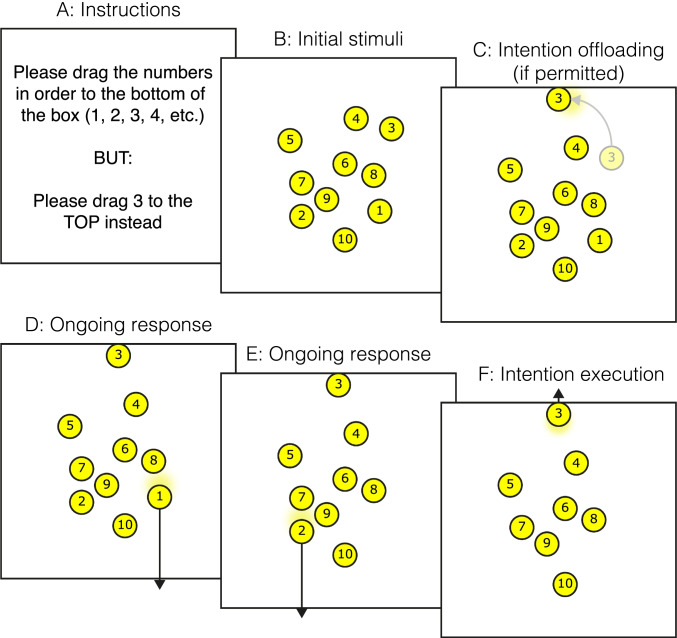
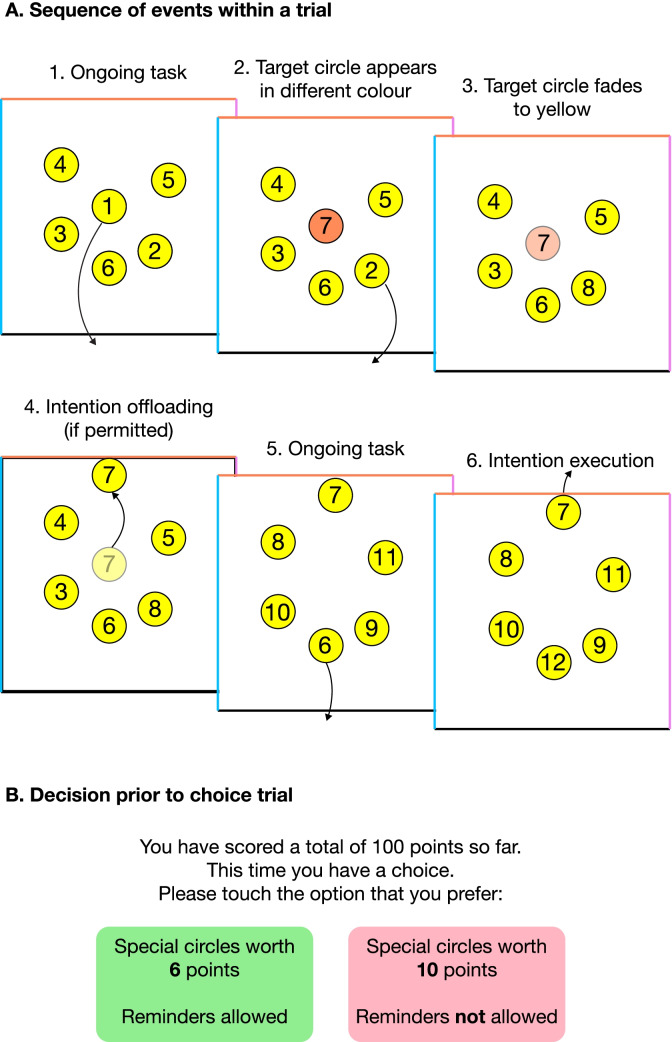
“We adapted a cognitive offloading task from Sachdeva and Gilbert 11 , measuring aspects of prospective memory in a way that requires remembering and acting delayed intentions (Fig.”
Self-citationAyasrah, M. N., Gharaibeh, M., Khatib, A. J. A., Khasawneh, M. A. S., & Aboutaleb, A. H. (2026) · Current Psychology · doi:10.1007/s12144-026-09404-y · Cited by 6
“Gilbert et al. ‘s study found that continuous use of AI to solve learning problems and tasks reduces analytical ability and cognitive engagement, thereby decreasing learners’ participation in independent thinking and logical reasoning (Gilbert et al., 2023 ).”
InfluentialUnderstanding Older Adults' Experience of Prospective Memory Errors and Strategy Use
Nygaard, M. A., Rubínová, E., Allan, J., & Phillips, L. H. (2025) · Applied Cognitive Psychology · doi:10.1002/acp.70066 · Cited by 4
“I had to open my eyes”—A narrative approach to studying the process of adult belief change
van den Haak, M., & Grusauskaite, K. (2025) · Political Psychology · doi:10.1111/pops.70090 · Cited by 4
“…become increasingly pertinent in light of a growing body of research—in-cluding from psychology and sociology—that foregrounds the role of emotion (Gilbert et al., 2023), cultural and historical contexts (Huff et al., 2021), and contextual and individual (self-) perceptions (Smith, 2001) in…”
Ma, Y., & Fujinami, T. (2024) · Discover Psychology · doi:10.1007/s44202-024-00258-8 · Cited by 4
“Within cognitive science, the past decade has seen an increasingly popular focus on the determinants for employing cognitive offloading as a learning strategy, as highlighted in [2, 5].”
Cost avoidance underlies decisions to use prospective memory reminders
Ball, B. H., & Peper, P. (2025) · Memory & Cognition · doi:10.3758/s13421-025-01683-3 · Cited by 4
“…participants choose to offload more frequently with increased task demands, and participants are underconfident in their internal ability (Boldt & Gilbert, 2019, 2022; Gilbert, 2015; Gilbert et al., 2023; Landsiedel & Gilbert, 2015; Sachdeva & Gilbert, 2020; Scarampi & Gilbert, 2020, 2021).”
Weis, P. P., & Kunde, W. (2023) · Cognitive Research Principles and Implications · doi:10.1186/s41235-023-00526-6 · Cited by 4
“We would respond that human performers are known to exhibit quite adaptive strategy choices already without strategy advice (for reviews, see, e.g., Anderson, 1990; Gray et al., 2006; Gilbert et al., 2022), which sets the bar for improvement at substantial height.”
BackgroundBoldt, A., Fox, C. A., Gillan, C. M., & Gilbert, S. J. (2024) · eLife · doi:10.7554/elife.98114.1 · Cited by 4
Self-citationRisko, E. F., & Kelly, M. O. (2024) · Elsevier eBooks · doi:10.1016/b978-0-443-15754-7.00014-6 · Cited by 3
Böing, S., Brink, A. F. T., Ruis, C., Schielen, Z. A., van den Berg, E., Biesbroek, J. M., Nijboer, T. C. W., & der Stigchel, S. V. (2024) · Journal of Clinical and Experimental Neuropsychology · doi:10.1080/13803395.2024.2447263 · Cited by 3
“…et al., 2024; Sahakian et al., 2023; Somai et al., 2020; Van der Stigchel, 2020) to more conscious and deliberate cognitive offloading (e.g., writing things down to aid memory, placing a cue for oneself to remember intentions; see Gilbert et al. (2023) and Risko and Gilbert (2016) for a review).”
Tsai, P., & Gilbert, S. J. (2025) · Memory & Cognition · doi:10.3758/s13421-025-01708-x · Cited by 3
“While research into PM has traditionally focused on brain-based mechanisms for remembering intentions (e.g., McDaniel et al., 2015), recent studies have also investigated the ways in which people use their bodies and the wider physical environment (reviewed by Gilbert et al., 2023).”
Self-citationIs precrastination related to updating and inhibition aspects of executive function?
Masih, S. N., Liew, R. J. S., & McBride, D. M. (2024) · Memory · doi:10.1080/09658211.2024.2384948 · Cited by 2
Carol, N. (2025) · Lifespan development and mental health. · doi:10.70322/ldmh.2025.10018 · Cited by 2
Liu, P., Jiang, Q., Xiong, W., & Zhao, W. (2026) · The International Review of Research in Open and Distributed Learning · doi:10.19173/irrodl.v27i1.8648 · Cited by 2
The Relationship Between Cognitive Offloading and the Transient Information Effect
Chen, O., Allen, R. J., Waterman, A., & Sweller, J. (2026) · Educational Psychology Review · doi:10.1007/s10648-026-10132-9 · Cited by 2
Crozatier, N. (2026) · Memory Mind & Media · doi:10.1017/mem.2026.10034 · Cited by 2
Maturo, F., Micozzi, A., & Porreca, A. (2026) · SN Social Sciences · doi:10.1007/s43545-026-01683-3 · Cited by 2
Mühlhoff, R. (2026) · AI & Society · doi:10.1007/s00146-026-03281-6 · Cited by 4
Smit, R. (2025) · Oxford University Press eBooks · doi:10.1093/oso/9780197661260.003.0013 · Cited by 2
Self-reported strategy use and prospective memory: The roles of cue focality and task importance
Harrington, E. E., Reese‐Melancon, C., & Turner, R. L. (2024) · Memory & Cognition · doi:10.3758/s13421-024-01600-0 · Cited by 2
“…including implementation intentions (McDaniel & Scullin, 2010; Meeks & Marsh, 2010; Smith et al., 2014), offloading intentions onto external sources (Gilbert et al., 2023; Peper et al., 2023), or delaying responding to provide additional time for decision making (Heathcote et al., 2015).”
Brain Rot in the Digital Era: Reflecting on Religious Moderation in Combating Radicalism
Fian, K., Roqib, M., Nawawi, S., Alfi, I., & Rifani, E. (2025) · Advances in Social Science, Education and Humanities Research/Advances in social science, education and humanities research · doi:10.2991/978-2-38476-464-8_12 · Cited by 2
Boldt, A., Fox, C. A., Gillan, C. M., & Gilbert, S. J. (2025) · eLife · doi:10.7554/elife.98114.2 · Cited by 2
Self-citationZhang, J. (2025) · UNSWorks (University of New South Wales, Sydney, Australia) · doi:10.26190/unsworks/31232 · Cited by 2
Causes and consequences of cognitive offloading
Sachdeva, C. (2023) · UCL Discovery (University College London) · Cited by 3
Self-citationThe Transparency Paradox in Explainable AI: A Theory of Autonomy Depletion Through Cognitive LoadPreprint
Margondai, A., & Mouloua, M. (2026) · arXiv (Cornell University) · doi:10.48550/arxiv.2601.13973 · Cited by 3
“Individual differences in capacity mean optimal information levels vary systematically (Gilbert, Boldt, Sachdeva, Scarampi, & Tsai, 2023; Navarro, Macnamara, Glucksberg, & Conway, 2020).”
Designing Against Deskilling: Metacognitive Feedback Reduces Cognitive Offloading to LLM AssistantsPreprint
Maier, S., Schwabe, K., Schneider, M., & Feuerriegel, S. (2026) · arXiv (Cornell University) · doi:10.48550/arxiv.2609.20143 · Cited by 2
“Building on this approach, future work could test whether factors examined in intention offloading research, such as offloading costs, financial incentives, objective ability, and performance goals [27, 91], similarly shape offloading with LLM assistants.”
Metacognitive phenomena during human–Internet interactions
Sidiropoulou, E., & Metallidou, P. (2023) · Psychology the Journal of the Hellenic Psychological Society · doi:10.12681/psy_hps.36228 · Cited by 1
The Vibration Mode Is Disruptive: The Effect of Other‐Owned Smartphone Vibrations on Memory
Henao, L. F., Luna, K., & Cadavid, S. E. (2025) · Applied Cognitive Psychology · doi:10.1002/acp.70052 · Cited by 1
A Bayesian Exploration on the Motivational and Behavioral Impacts of Chatbots in Language Learning
Carlon, M. K. J., Matthews, J., & Kuniyoshi, Y. (2025) · CHI Conference Extended Abstracts on Human Factors in Computing Systems (CHI EA) · doi:10.1145/3706599.3720088 · Cited by 1
“Additionally, excessive reliance on these tools may lead to reduced critical thinking and skill degradation, as noted in studies on cognitive offloading [11, 14, 15].”
Chiappe, D. L., Vu, K. L., & Tornquist, M. (2025) · Frontiers in Cognition · doi:10.3389/fcogn.2025.1595956 · Cited by 1
Peng, N., Tao, Y., Du, X., & Xue, C. (2025) · Interacting with Computers · doi:10.1093/iwc/iwaf053 · Cited by 1
Exploring the influence of strategy choice involving cognitive offloading on metacognitive judgments
Ma, Y., & Fujinami, T. (2026) · Discover Psychology · doi:10.1007/s44202-025-00539-w · Cited by 1
“Prior research has focused on how meta-cognition guides the selection of cognitive offloading [2, 7, 9, 12, 14, 23, 25, 28] and has shown that confidence typically increases with cognitive offloading [2, 25], often without distinguishing FOJs from SOJs.”
Nudging Attention to Workplace Meeting Goals: A Large-Scale, Preregistered Field Experiment
Tankelevitch, L., Scott, A. E., Challakere, N., Panda, P., & Rintel, S. (2026) · CHI Conference on Human Factors in Computing Systems · doi:10.1145/3772318.3791199 · Cited by 1
Intention, control, and the feeling of commitment
Shepherd, J., & Rivadulla-Duró, A. (2026) · New Ideas in Psychology · doi:10.1016/j.newideapsych.2026.101252 · Cited by 1
Multifaceted Declines in Everyday Decision-Making in Older Adults: A Think-Aloud Study
Perry, S. J., Roberts, K. L., Atkin, C., Badham, S. P., & Al‐Janabi, H. (2026) · Journal of Applied Gerontology · doi:10.1177/07334648261440714 · Cited by 1
Artificial Intelligence in Applied Cognitive Psychology: A Commentary
Sharpe, B. T., Rod, M., & Horne, G. (2026) · International Journal of Cognitive Research in Science Engineering and Education · doi:10.23947/2334-8496-2026-14-1-115-124 · Cited by 1
ТЕОРЕТИКО-МЕТОДОЛОГІЧНИЙ АНАЛІЗ ВПЛИВУ ЦИФРОВИХ ІННОВАЦІЙ НА ПСИХІКУ ЛЮДИНИ
Миколюк, О., & Волженцева, І. (2026) · Наукові перспективи (Naukovì perspektivi) · doi:10.52058/2708-7530-2026-4(70)-2150-2170 · Cited by 1
Silva, J., Albuquerque, P. B., Oliveira, I. B., & Rodrigues, P. F. S. (2026) · Behavioral Sciences · doi:10.3390/bs16060872 · Cited by 1
“…had higher levels of confidence in sending the email on time or that the email would be sent (scheduled email condition) when compared to the no-reminder condition, which supports the idea that external aids might increase confidence in prospective memory performance (Gilbert et al., 2023).”
InfluentialThe pursuit of cyberism: ontology, epistemology, and ethics in the digital age
Ning, H., Han, C., & Ding, J. (2026) · AI & Society · doi:10.1007/s00146-026-03142-2 · Cited by 2
Lan, Z., & Niu, C. (2026) · Frontiers in Psychology · doi:10.3389/fpsyg.2026.1866062 · Cited by 1
“Research on cognitive offloading shows that external tools can extend cognition while changing what is stored, monitored, and retrieved internally (Gilbert et al., 2023; Iqbal et al., 2025; Richmond and Taylor, 2025).”
Huang, Z., Guo, Y., Wang, C., Cai, Z., Ying, X., He, Y., Xiao, Y., Guo, K., Zhang, Q., Jin, Z., et al. (2026) · Proceedings of the ACM on Interactive Mobile Wearable and Ubiquitous Technologies · doi:10.1145/3831997 · Cited by 1
Does Fluency Mediate the Relationship Between Working Memory and Math Achievement?
Miller‐Cotto, D., Devlin, B. L., Gesuelli, K.-A., & Jordan, N. C. (2026) · Applied Cognitive Psychology · doi:10.1002/acp.70303 · Cited by 1
Fornix and Uncinate Fasciculus Support Metacognition-Driven Cognitive OffloadingPreprint
Zheng, Y., Gilbert, S. J., Li, Y., & Kwok, S. C. (2024) · Qeios · doi:10.32388/m01fud · Cited by 1
Self-citationMobile Information Literacy among Higher Education Students
El-Zalabany, H. (2024) · edoc Publication server (Humboldt University of Berlin) · doi:10.18452/29178 · Cited by 1
Alghamdi, S. S., Bull, C., & Kharrufa, A. (2025) · arXiv (Cornell University) · doi:10.48550/arxiv.2507.22671 · Cited by 1
Relational Reasoning and Visuospatial Tools: Unlocking STEM Learning and Reasoning
Leib, E. R. (2024) · eScholarship (California Digital Library) · Cited by 1
Brain-based versus external memory stores: influencing factors and underlying neural correlates
Tsai, P. (2023) · UCL Discovery (University College London) · Cited by 1
Self-citationEffects of Partial vs. Full Cognitive Offloading with Generative AI on Learning Retention
Alamri, J. M., & Alhalafawy, W. S. (2026) · International Journal of Technology in Education · doi:10.46328/ijte.8779
Nudging in complex environments
Nafziger, J., & Koch, A. K. (2021) · AEA Randomized Controlled Trials · doi:10.1257/rct.7932
Soares, J. S. (2024) · Psychological Inquiry · doi:10.1080/1047840x.2024.2384139
Décombe, A., Scarampi, C., Malleville, E., Capdevielle, D., Gilbert, S. J., & Raffard, S. (2024) · Journal of Neuropsychology · doi:10.1111/jnp.12399
Self-citationBoldt, A., Fox, C. A., Gillan, C. M., & Gilbert, S. J. (2025) · eLife · doi:10.7554/elife.98114.2.sa0
Self-citationBoldt, A., Fox, C. A., Gillan, C. M., & Gilbert, S. J. (2025) · eLife · doi:10.7554/elife.98114.3
Self-citationGiardino, V. (2025) · doi:10.21428/e2759450.5e3d3713
Boldt, A., Fox, C. A., Gillan, C. M., & Gilbert, S. J. (2025) · PsyArXiv (OSF Preprints) · doi:10.31234/osf.io/gf7mr_v3
Self-citation二重レベルのメタ認知と学習戦略選択のメカニズム:認知的オフローディングの事例
馬, 遠. (2025) · Institutional Repositories DataBase (IRDB)
Effects of Ego Depletion on Prospective Memory and Its Components
Jia, R., Wu, M., Gan, J., & Guo, Y. (2026) · Applied Cognitive Psychology · doi:10.1002/acp.70173
Metadata
- Authors
- Gilbert, S. J., Boldt, A., Sachdeva, C., Scarampi, C., & Tsai, P.-C.
- Corresponding author
- Gilbert, Sam J.
- Venue
- Psychonomic Bulletin & Review
- Published
- 2022-07-05
- Volume
- 30
- Issue
- 1
- Pages
- 60-76
- ISSN
- 1069-9384 (ISSN-L)
- 1531-5320
- PMC
- PMC9971128
- OpenAlex
- W4283838073
- Semantic Scholar
- ee50e19dd68ccecd5394887ddff5cb246c09f7f3
- Cited by
- 100
- References
- 142
- Citations by year
- 2026: 38 · 2025: 20 · 2024: 25 · 2023: 14 · 2022: 2
- FWCI
- 2.22
- Type
- journal article
- Language
- en
- Open access
- hybrid
- doi.org
- Licence
- cc-by
- creativecommons.org/licenses/by/4.0 (tdm)
- creativecommons.org/licenses/by/4.0 (vor)
- Locations
- Psychonomic Bulletin & Review (publishedVersion, cc-by)
- PubMed Central (publishedVersion, cc-by)
- PubMed (publishedVersion)
- UCL Discovery (University College London) (submittedVersion)
- PsyArXiv (OSF Preprints) (submittedVersion, cc-by)
- PsyArXiv (OSF Preprints) (submittedVersion)
- Funders
- Economic and Social Research Council (ES/N018621/1)
- Topics
- Social Sciences › Psychology › Experimental and Cognitive Psychology › Cognitive Functions and Memory
- Life Sciences › Neuroscience › Cognitive Neuroscience › Memory Processes and Influences
- Social Sciences › Decision Sciences › Information Systems and Management › Personal Information Management and User Behavior
- Keywords
- prospective memory, delayed intentions, external memory aids, metacognition, metacognitive bias, metacognitive intervention, lifespan development, individual differences, cognitive tools, smartphone alerts
- MeSH terms
- Metacognition, Brain, Humans, Mental Recall, Outsourced Services, Intention, Memory, Episodic
About these checks
Registry, retraction, Cites and statistics results are computed, not judged, with one exception: a printed reference that no index lists is read once by a model before it counts as a citation error. Claims are extracted by a model and kept only when their quote appears verbatim in the text; each cited source is then checked, with a model’s help, for whether it says what the claim relies on. Those verdicts can be wrong — read the claim’s quote and the cited source before relying on one.
Statistics and arithmetic are recomputed, not judged.
Confidence bands are shown only for fields calibrated on our annotated test set. None is calibrated yet, so no band is shown.
What counts as a claim ›How we measure confidence ›How we check this ›
Are you an author, or do you see a problem with this page? Request a review
Data sources
Bibliographic data: Semantic Scholar, OpenAlex, Crossref.
Contains information from the Semantic Scholar Academic Graph Datasets, made available under the ODC Attribution License (ODC-BY 1.0).
Semantic Scholar’s data is described in: Kinney, R., et al. (2023). The Semantic Scholar Open Data Platform. arXiv:2301.10140.
