

Outsourcing Memory to External Tools: A Review of ‘Intention Offloading’
Open accessThe DOI matches its Crossref record; 142 of the 142 references it cites were found in a registry or an index.
Abstract
How do we remember delayed intentions? Three decades of research into prospective memory have provided insight into the cognitive and neural mechanisms involved in this form of memory. However, we depend on more than just our brains to remember intentions. We also use external props and tools such as calendars and diaries, strategically placed objects, and technologies such as smartphone alerts. This is known as ‘intention offloading’. Despite the progress in our understanding of brain-based prospective memory, we know much less about the role of intention offloading in individuals’ ability to fulfil delayed intentions. Here, we review recent research into intention offloading, with a particular focus on how individuals decide between storing intentions in internal memory versus external reminders. We also review studies investigating how intention offloading changes across the lifespan and how it relates to underlying brain mechanisms. We conclude that intention offloading is highly effective, experimentally tractable, and guided by metacognitive processes. Individuals have systematic biases in their offloading strategies that are stable over time. Evidence also suggests that individual differences and developmental changes in offloading strategies are driven at least in part by metacognitive processes. Therefore, metacognitive interventions could play an important role in promoting individuals’ adaptive use of cognitive tools.
Overview
The claims and statistics of this paper haven’t been checked yet.
Free: it reads the open-access text and checks the first 5 claims that cite a source we can check. Create a free account to check every claim.
Integrity signals
Registry
Cites
Statistics
Figures
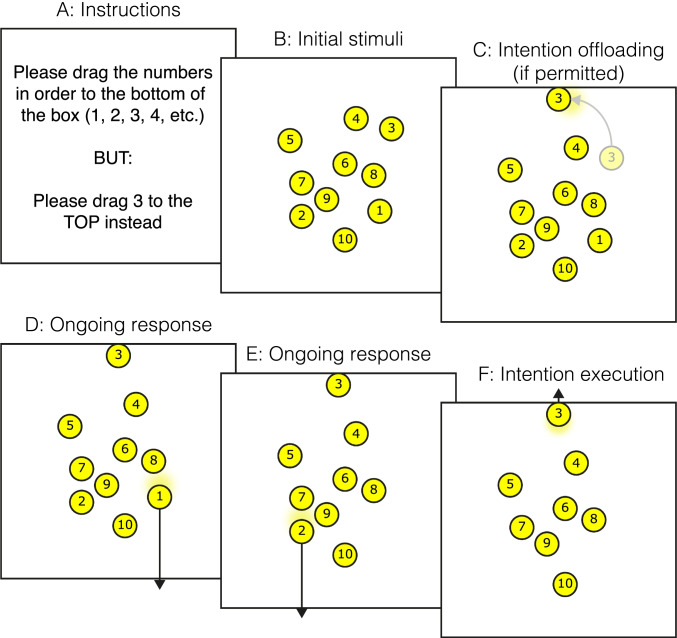
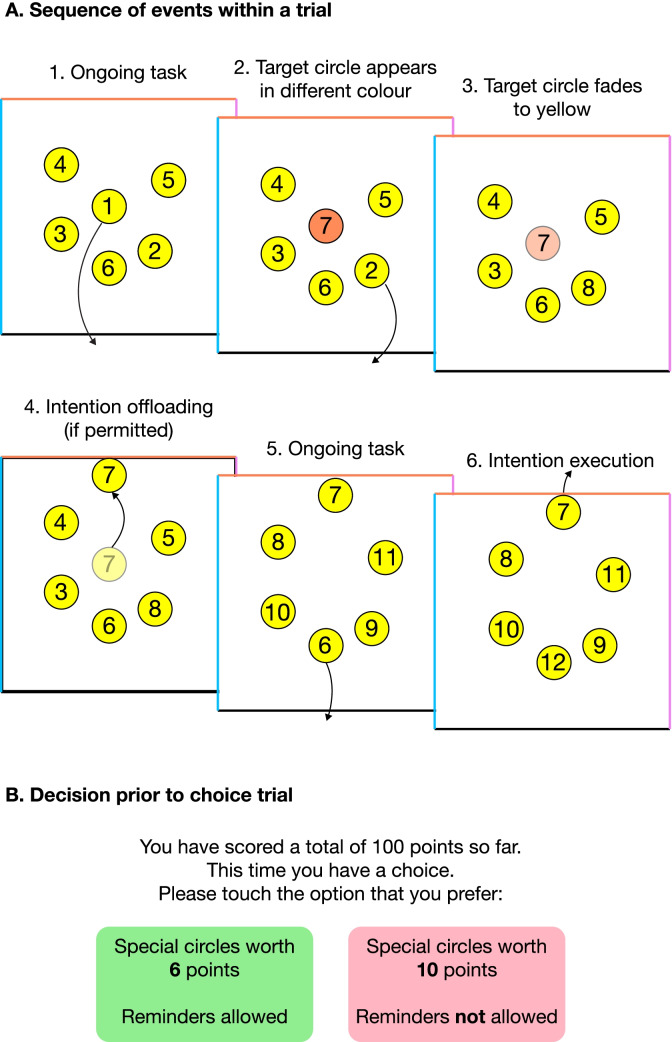
Verification
Claims the paper makes
The claims and statistics of this paper haven’t been checked yet.
Free: it reads the open-access text and checks the first 5 claims that cite a source we can check. Create a free account to check every claim.
Self-check
Percentages, sums and reported differences re-computed from the paper’s own numbers.
The self-check needs the paper’s full text.
Citations
Cites
The magical number seven, plus or minus two: Some limits on our capacity for processing information.
Miller, G. A. (1956) · Psychological Review · doi:10.1037/h0043158 · Cited by 17,812
The magical number seven, plus or minus two: Some limits on our capacity for processing information.
Miller, G. A. (1994) · Psychological Review · doi:10.1037/0033-295x.101.2.343 · Cited by 17,161
(2010) · Intellectum (Universidad de La Sabana) · doi:10.1111/j.1467- · Cited by 16,131
Metacognition and cognitive monitoring: A new area of cognitive–developmental inquiry
Flavell, J. H. (1979) · American Psychologist · doi:10.1037/0003-066x.34.10.906 · Cited by 11,282 · cited 2×
“This could be explained by an influence of metacognition, our ability to monitor and control our own cognitive processes and abilities (Dunlosky & Metcalfe, 2008; Flavell, 1979; Fleming et al., 2012; Koriat, 2007; Metcalfe, 1996; Nelson & Narens, 1990).”
Hutchins, E. (1995) · doi:10.7551/mitpress/1881.001.0001 · Cited by 10,801 · cited 1×
“On a theoretical level, the phenomenon of intention offloading is an example of ‘extended’ or ‘scaffolded’ cognition (Clark & Chalmers, 1998; Heersmink & Sutton, 2020; Hutchins, 1995; Kirsh, 1996).”
Clark, A., & Chalmers, D. (1998) · Analysis · doi:10.1093/analys/58.1.7 · Cited by 6,333 · cited 1×
“On a theoretical level, the phenomenon of intention offloading is an example of ‘extended’ or ‘scaffolded’ cognition (Clark & Chalmers, 1998; Heersmink & Sutton, 2020; Hutchins, 1995; Kirsh, 1996).”
Cognitive Reflection and Decision Making
Frederick, S. (2005) · Journal of Economic Perspectives · doi:10.1257/089533005775196732 · Cited by 5,256
Intentionality: An Essay in the Philosophy of Mind
Searle, J. R. (1983) · doi:10.1017/cbo9781139173452 · Cited by 4,575
The Strength Model of Self-Control
Baumeister, R. F., Vohs, K. D., & Tice, D. M. (2007) · Current Directions in Psychological Science · doi:10.1111/j.1467-8721.2007.00534.x · Cited by 3,567 · cited 1×
“Some theoretical accounts have proposed that cognitive effort is a limited, depletable resource that individuals strive to conserve (Baumeister et al., 2007).”
BackgroundMetamemory: A Theoretical Framework and New Findings
Nelson, T. O. (1990) · Psychology of Learning and Motivation · doi:10.1016/s0079-7421(08)60053-5 · Cited by 2,583 · cited 1×
“This could be explained by an influence of metacognition, our ability to monitor and control our own cognitive processes and abilities (Dunlosky & Metcalfe, 2008; Flavell, 1979; Fleming et al., 2012; Koriat, 2007; Metcalfe, 1996; Nelson & Narens, 1990).”
BackgroundIntention, Plans, and Practical Reason.
Velleman, J. D., & Bratman, M. E. (1991) · The Philosophical Review · doi:10.2307/2185304 · Cited by 2,384
DEFICITS IN STRATEGY APPLICATION FOLLOWING FRONTAL LOBE DAMAGE IN MAN
SHALLICE, T., & BURGESS, P. W. (1991) · Brain · doi:10.1093/brain/114.2.727 · Cited by 2,017 · cited 1×
“…1990), the ‘virtual week’ paradigm (Rendell & Craik, 2000), neuropsychological instruments such as the multiple errands test and six element test (Shallice & Burgess, 1991), the hotel test (Manly et al., 2002), the breakfast task (Craik & Bialystok, 2006) and clinical tools such as CAMPROMPT…”
MethodDecoding mental states from brain activity in humans
Haynes, J.-D., & Rees, G. (2006) · Nature Reviews Neuroscience · doi:10.1038/nrn1931 · Cited by 1,817 · cited 1×
“Using multivariate pattern analysis (Haynes & Rees, 2006; Weaverdyck et al., 2020), we first showed that we could ‘decode’ metacognitive monitoring and, separately, metacognitive control.”
Journal of Educational Research
&NA; (1953) · Nursing Research · doi:10.1097/00006199-195302000-00028 · Cited by 1,660
Risko, E. F., & Gilbert, S. J. (2016) · Trends in Cognitive Sciences · doi:10.1016/j.tics.2016.07.002 · Cited by 1,502 · cited 2×
“This is an example of the broader phenomenon of cognitive offloading, which has been defined as the use of physical action to alter the information processing requirements of a task so as to reduce cognitive demand (Risko & Gilbert, 2016).”
Self-citationDaselaar, S. M. (2009) · Frontiers in Human Neuroscience · doi:10.3389/neuro.09.013.2009 · Cited by 1,501
Normal aging and prospective memory.
Einstein, G. O., & McDaniel, M. A. (1990) · Journal of Experimental Psychology: Learning, Memory, and Cognition · doi:10.1037//0278-7393.16.4.717 · Cited by 1,391 · cited 3×
“…while also * Sam J. Gilbert sam.gilbert@ucl.ac.uk 1 Institute of Cognitive Neuroscience, 17 Queen Square, London WC1N 3AZ, UK 1 3 Psychonomic Bulletin & Review (2023) 30:60–76 remembering a prior intention to press a third button when a predefined target word appears (Einstein & McDaniel, 1990).”
An opportunity cost model of subjective effort and task performance
Kurzban, R., Duckworth, A., Kable, J. W., & Myers, J. (2013) · Behavioral and Brain Sciences · doi:10.1017/s0140525x12003196 · Cited by 1,381 · cited 1×
“Contemporary theories of cognitive effort have focused on an alternative approach, arguing that the feeling of cognitive effort arises from the engagement of relatively domaingeneral processes that can only be deployed for a limited number of simultaneous tasks (Kurzban et al., 2013).”
BackgroundA Multilab Preregistered Replication of the Ego-Depletion Effect
Hagger, M. S., Chatzisarantis, N. L. D., Alberts, H., Anggono, C. O., Batailler, C., Birt, A. R., Brand, R., Brandt, M. J., Brewer, G., Bruyneel, S., et al. (2016) · Perspectives on Psychological Science · doi:10.1177/1745691616652873 · Cited by 1,310
Decision making and the avoidance of cognitive demand
Kool, W., McGuire, J. T., Rosen, Z. B., & Botvinick, M. M. (2010) · Journal of Experimental Psychology: General · doi:10.1037/a0020198 · Cited by 1,141
Dynamic Shifts of Limited Working Memory Resources in Human Vision
Bays, P. M., & Husain, M. (2008) · Science · doi:10.1126/science.1158023 · Cited by 1,117 · cited 1×
“There are well-known limits to the quantity of information that can be actively maintained in short-term or working memory (Bays & Husain, 2008; Miller, 1956).”
Toward a rational and mechanistic account of mental effort
Shenhav, A., Musslick, S., Lieder, F., Kool, W., Griffiths, T. L., Cohen, J. D., & Botvinick, M. M. (2017) · Annual Review of Neuroscience · doi:10.1146/annurev-neuro-072116-031526 · Cited by 1,077
Prospective memory: Theory and applications
Mayes, A. (1997) · Neuropsychologia · doi:10.1016/s0028-3932(97)80257-6 · Cited by 911
Prospective Memory: An Overview and Synthesis of an Emerging Field
McDaniel, M., & Einstein, G. (2007) · Sage eBooks · doi:10.4135/9781452225913 · Cited by 717 · cited 1×
“…correlates, and the way that they change across the lifespan, in neurodevelopmental conditions, and in cases of brain damage or disease (for reviews, see Brandimonte et al., 1996; Cohen & Hicks, 2017; Kliegel et al., 2008b; McDaniel & Einstein, 2007; Rummel & McDaniel, 2019; Scullin et al., 2015).”
BackgroundProspective Memory : Cognitive, Neuroscience, Developmental, and Applied Perspectives
Kliegel, M., McDaniel, M. A., & Einstein, G. O. (2007) · Cited by 627
Metacognition and consciousness
Koriat, A. (2007) · The Cambridge Handbook of Consciousness · doi:10.1017/cbo9780511816789.012 · Cited by 554 · cited 2×
“This could be explained by an influence of metacognition, our ability to monitor and control our own cognitive processes and abilities (Dunlosky & Metcalfe, 2008; Flavell, 1979; Fleming et al., 2012; Koriat, 2007; Metcalfe, 1996; Nelson & Narens, 1990).”
Springs Of Action: Understanding Intentional Behavior
Mele, A. R. (1992) · doi:10.1093/oso/9780195071146.001.0001 · Cited by 465
Cohen, A.-L., & Gollwitzer, P. (2007) · Psychology Press eBooks · doi:10.4324/9780203809945 · Cited by 406
Reward Reduces Conflict by Enhancing Attentional Control and Biasing Visual Cortical Processing
Padmala, S., & Pessoa, L. (2011) · Journal of Cognitive Neuroscience · doi:10.1162/jocn_a_00011 · Cited by 362 · cited 1×
“Seeing as individuals are more likely to exert cognitive effort when they have a financial incentive to do so (Aarts et al., 2010; Padmala & Pessoa, 2011), we would predict that performance-based rewards would at least partially overcome the preference to avoid cognitive effort, and therefore the…”
Virtual week and actual week: Age‐related differences in prospective memory
Rendell, P. G., & Craik, F. I. M. (2000) · Applied Cognitive Psychology · doi:10.1002/acp.770 · Cited by 360 · cited 1×
“Prominent approaches include the ‘Einstein-McDaniel’ procedure (Einstein & McDaniel, 1990), the ‘virtual week’ paradigm (Rendell & Craik, 2000), neuropsychological instruments such as the multiple errands test and six element test (Shallice & Burgess, 1991), the hotel test (Manly et al., 2002), the…”
MethodMetacognition: computation, biology and function
Fleming, S. M., Dolan, R. J., & Frith, C. D. (2012) · Philosophical Transactions of the Royal Society B: Biological Sciences · doi:10.1098/rstb.2012.0021 · Cited by 344 · cited 1×
“This could be explained by an influence of metacognition, our ability to monitor and control our own cognitive processes and abilities (Dunlosky & Metcalfe, 2008; Flavell, 1979; Fleming et al., 2012; Koriat, 2007; Metcalfe, 1996; Nelson & Narens, 1990).”
Manly, T., Hawkins, K., Evans, J., Woldt, K., & Robertson, I. H. (2002) · Neuropsychologia · doi:10.1016/s0028-3932(01)00094-x · Cited by 330
Searching for explanations: How the Internet inflates estimates of internal knowledge.
Fisher, M., Goddu, M. K., & Keil, F. C. (2015) · Journal of Experimental Psychology: General · doi:10.1037/xge0000070 · Cited by 330
Point-and-Shoot Memories: The Influence of Taking Photos on Memory for a Museum Tour
Henkel, L. A. (2014) · Psychological Science · doi:10.1177/0956797613504438 · Cited by 278
Springs of action: understanding intentional behavior
(1992) · Choice Reviews Online · doi:10.5860/choice.30-1451 · Cited by 250
Maylor, E. A. (1990) · The Quarterly Journal of Experimental Psychology Section A · doi:10.1080/14640749008401233 · Cited by 228 · cited 2×
“the strategy that participants choose (for two exceptions, see Einstein & McDaniel, 1990; Maylor, 1990).”
BackgroundAdapting the Environment Instead of Oneself
Kirsh, D. (1996) · Adaptive Behavior · doi:10.1177/105971239600400307 · Cited by 226 · cited 1×
“On a theoretical level, the phenomenon of intention offloading is an example of ‘extended’ or ‘scaffolded’ cognition (Clark & Chalmers, 1998; Heersmink & Sutton, 2020; Hutchins, 1995; Kirsh, 1996).”
Kliegel, M., Jäger, T., & Phillips, L. H. (2008) · Psychology and Aging · doi:10.1037/0882-7974.23.1.203 · Cited by 224
Kurzban, R. (2016) · Current Opinion in Psychology · doi:10.1016/j.copsyc.2015.08.003 · Cited by 215 · cited 2×
“Nevertheless, it is widely argued that cognitive effort is typically aversive (Dreisbach & Fischer, 2015; Kurzban, 2016; Saunders et al., 2017) and individuals generally tend to avoid”
Conflicts as Aversive Signals for Control Adaptation
Dreisbach, G., & Fischer, R. (2015) · Current Directions in Psychological Science · doi:10.1177/0963721415569569 · Cited by 196 · cited 1×
“Nevertheless, it is widely argued that cognitive effort is typically aversive (Dreisbach & Fischer, 2015; Kurzban, 2016; Saunders et al., 2017) and individuals generally tend to avoid effortful tasks (Frederick, 2005; Kool et al., 2010).”
Storing information in-the-world: Metacognition and cognitive offloading in a short-term memory task
Risko, E. F., & Dunn, T. L. (2015) · Consciousness and Cognition · doi:10.1016/j.concog.2015.05.014 · Cited by 193 · cited 1×
“…internal memory to guide navigation (Brügger et al., 2019); storing to-beremembered information in written form (Kelly & Risko, 2019; Lu et al., 2020; Risko & Dunn, 2015), on computers (Morrison & Richmond, 2020; Storm & Stone, 2014) or via photography (Barasch et al., 2017; Henkel, 2014; Soares…”
Saving-Enhanced Memory: The Benefits of Saving on the Learning and Remembering of New Information
Storm, B. C., & Stone, S. M. (2015) · Psychological Science · doi:10.1177/0956797614559285 · Cited by 192
Prospective Memory: A New Focus for Research
Graf, P., & Uttl, B. (2001) · Consciousness and Cognition · doi:10.1006/ccog.2001.0504 · Cited by 186 · cited 1×
“According to this account, the term ‘prospective memory’ should be reserved for tasks involving a longer retention interval so that participants cannot continuously rehearse their intended action, but instead need to bring it back to mind after a delay (Graf & Uttl, 2001).”
The digital expansion of the mind: Implications of internet usage for memory and cognition.
Marsh, E. J., & Rajaram, S. (2019) · Journal of Applied Research in Memory and Cognition · doi:10.1016/j.jarmac.2018.11.001 · Cited by 186 · cited 2×
“Everyday examples of cognitive offloading include diverse phenomena such as external normalization (tilting one’s head in order to perceive a rotated image, reducing the need for mental rotation; Risko et al., 2014); using a GPS device instead of internal memory to guide navigation (Brügger et al., 2019); storing to-b…”
Touron, D. R., & Hertzog, C. (2004) · Psychology and Aging · doi:10.1037/0882-7974.19.3.452 · Cited by 174 · cited 1×
“First, some studies of metamemory and ageing suggest that older adults may have particularly low confidence in their memory abilities (Dobbs & Rule, 1987; Touron, 2015; Touron & Hertzog, 2004).”
Domain-general enhancements of metacognitive ability through adaptive training.
Carpenter, J., Sherman, M. T., Kievit, R. A., Seth, A. K., Lau, H., & Fleming, S. M. (2019) · Journal of Experimental Psychology: General · doi:10.1037/xge0000505 · Cited by 174 · cited 1×
“We make this claim because (a) training interventions may have a strong impact on both task-specific (Engeler & Gilbert, 2020) and domain-general metacognition (Carpenter et al., 2019), and (b) metacognitive interventions have been shown to influence intention offloading strategies that are themselves highly effective…”
Gilbert, S. J. (2015) · Consciousness and Cognition · doi:10.1016/j.concog.2015.01.006 · Cited by 169 · cited 21×
“Perceptual confidence Lower confidence in perceptual judgements is associated with increased offloading in a separate memory task Gilbert (2015b) Metacognitive interventions: advice Metacognitive advice reduces bias in reminder-setting Gilbert et al.”
InfluentialSelf-citationProspective memory: When reminders fail
Guynn, M. J., Mcdaniel, M. A., & Einstein, G. O. (1998) · Memory & Cognition · doi:10.3758/bf03201140 · Cited by 168
Prospective memory and self-reports of memory abilities in older adults.
Dobbs, A. R., & Rule, B. G. (1987) · Canadian Journal of Psychology / Revue canadienne de psychologie · doi:10.1037/h0084152 · Cited by 167 · cited 1×
“First, some studies of metamemory and ageing suggest that older adults may have particularly low confidence in their memory abilities (Dobbs & Rule, 1987; Touron, 2015; Touron & Hertzog, 2004).”
Strategic offloading of delayed intentions into the external environment
Gilbert, S. J. (2015) · Quarterly Journal of Experimental Psychology · doi:10.1080/17470218.2014.972963 · Cited by 164 · cited 21×
“Perceptual confidence Lower confidence in perceptual judgements is associated with increased offloading in a separate memory task Gilbert (2015b) Metacognitive interventions: advice Metacognitive advice reduces bias in reminder-setting Gilbert et al.”
InfluentialSelf-citationPlanning and task management in older adults: Cooking breakfast
Craik, F. I. M., & Bialystok, E. (2006) · Memory & Cognition · doi:10.3758/bf03193268 · Cited by 161 · cited 1×
“…week’ paradigm (Rendell & Craik, 2000), neuropsychological instruments such as the multiple errands test and six element test (Shallice & Burgess, 1991), the hotel test (Manly et al., 2002), the breakfast task (Craik & Bialystok, 2006) and clinical tools such as CAMPROMPT (Wilson et al., 2005).”
MethodChildren's spontaneous allocation of study time: Differential and sufficient aspects
Dufresne, A., & Kobasigawa, A. (1989) · Journal of Experimental Child Psychology · doi:10.1016/0022-0965(89)90033-7 · Cited by 161 · cited 1×
“…prior evidence from the metamemory literature – for example, younger children can distinguish between easy and difficult items for a memory test, but only older children allocate more study time to the more difficult items (Dufresne & Kobasigawa, 1989; Lockl & Schneider, 2004; Masur et al., 1973).”
An investigation of everyday prospective memory
Marsh, R. L., Hicks, J. L., & Landau, J. D. (1998) · Memory & Cognition · doi:10.3758/bf03211383 · Cited by 159
Aarts, E., Roelofs, A., Franke, B., Rijpkema, M., Fernández, G., Helmich, R. C., & Cools, R. (2010) · Neuropsychopharmacology · doi:10.1038/npp.2010.68 · Cited by 157 · cited 2×
“Seeing as individuals are more likely to exert cognitive effort when they have a financial incentive to do so (Aarts et al., 2010; Padmala & Pessoa, 2011), we would predict that performance-based rewards would at least partially overcome the preference to avoid cognitive effort, and therefore the reminder bias would b…”
Weaverdyck, M. E., Lieberman, M. D., & Parkinson, C. M. (2020) · Social Cognitive and Affective Neuroscience · doi:10.1093/scan/nsaa057 · Cited by 157 · cited 1×
“Using multivariate pattern analysis (Haynes & Rees, 2006; Weaverdyck et al., 2020), we first showed that we could ‘decode’ metacognitive monitoring and, separately, metacognitive control.”
Measurements of everyday memory: Toward the prevention of forgetting
Crovitz, H. F., & Daniel, W. F. (1984) · Bulletin of the Psychonomic Society · doi:10.3758/bf03333861 · Cited by 152 · cited 1×
“Indeed, diary studies suggest that 50–70% of everyday memory failures reflect a failure to remember delayed intentions, rather than other forms of memory such as remembering facts or names (Crovitz & Daniel, 1984; Terry, 1988).”
Metacognition knowing about knowing
Metcalfe, J. (1996) · Cited by 151
Optimal use of reminders: Metacognition, effort, and cognitive offloading.
Gilbert, S. J., Bird, A., Carpenter, J. M., Fleming, S. M., Sachdeva, C., & Tsai, P.-C. (2020) · Journal of Experimental Psychology: General · doi:10.1037/xge0000652 · Cited by 150
Self-citationDo preschoolers remember what to do? Incentive and external cues in prospective memory
Guajardo, N. R., & Best, D. L. (2000) · Cognitive Development · doi:10.1016/s0885-2014(00)00016-2 · Cited by 147 · cited 1×
“…experimental studies have manipulated whether reminders are provided or not, as a means of measuring how much, if at all, they improve performance (Guajardo & Best, 2000; Guynn et al., 1998; Henry et al., 2012; Kliegel & Jäger, 2007; Lourenço & Maylor, 2015; Mahy et al., 2018; Meacham & Colombo,…”
BackgroundKliegel, M., & Jäger, T. (2006) · Cognitive Development · doi:10.1016/j.cogdev.2006.08.003 · Cited by 145 · cited 1×
“…reminders are provided or not, as a means of measuring how much, if at all, they improve performance (Guajardo & Best, 2000; Guynn et al., 1998; Henry et al., 2012; Kliegel & Jäger, 2007; Lourenço & Maylor, 2015; Mahy et al., 2018; Meacham & Colombo, 1980; Ryder et al., 2022; Vortac et al., 1995).”
Transparent Meta-Analysis of Prospective Memory and Aging
Uttl, B. (2008) · PLoS ONE · doi:10.1371/journal.pone.0001568 · Cited by 135 · cited 2×
“This is particularly relevant because experimental studies have found evidence for a significant decline in older adults’ prospective memory performance compared with younger adults (Ihle et al., 2013; Kliegel et al., 2008a; Uttl, 2008).”
Everyday Forgetting: Data from a Diary Study
Terry, W. S. (1988) · Psychological Reports · doi:10.2466/pr0.1988.62.1.299 · Cited by 135 · cited 2×
“Indeed, diary studies suggest that 50–70% of everyday memory failures reflect a failure to remember delayed intentions, rather than other forms of memory such as remembering facts or names (Crovitz & Daniel, 1984; Terry, 1988).”
BackgroundMemory performance awareness in younger and older adults.
Devolder, P. A., Brigham, M. C., & Pressley, M. G. (1990) · Psychology and Aging · doi:10.1037//0882-7974.5.2.291 · Cited by 133 · cited 1×
“This may be particularly relevant to understanding the effect of ageing on memory, where findings have been inconsistent between laboratory and naturalistic settings (Cauvin et al., 2018; Devolder et al., 1990; Phillips et al., 2008; Schnitzspahn, Ihle, et al., 2011).”
BackgroundHuman anterior prefrontal cortex encodes the ‘what’ and ‘when’ of future intentions
Momennejad, I., & Haynes, J. (2012) · NeuroImage · doi:10.1016/j.neuroimage.2012.02.079 · Cited by 129 · cited 1×
“Despite the net reduction in overall activation, this region has previously been shown to contain information corresponding to the precise content of intentions (Gilbert, 2011; Momennejad & Haynes, 2012, 2013).”
The age-prospective memory-paradox: an exploration of possible mechanisms
Schnitzspahn, K. M., Ihle, A., Henry, J. D., Rendell, P. G., & Kliegel, M. (2011) · International Psychogeriatrics · doi:10.1017/s1041610210001651 · Cited by 129
Toward a Metacognitive Account of Cognitive Offloading
Dunn, T. L., & Risko, E. F. (2016) · Cognitive Science · doi:10.1111/cogs.12273 · Cited by 122 · cited 1×
“Such evidence was found by Gilbert (Gilbert, 2015b; see also Dunn & Risko, 2016, for a conceptually related effect in a different domain of cognitive offloading).”
(2008) · Zurich Open Repository and Archive (University of Zurich) · Cited by 122
Crawford, J. R., Henry, J. D., Ward, A. L., & Blake, J. (2006) · British Journal of Clinical Psychology · doi:10.1348/014466505x28748 · Cited by 117
Developmental changes in apportionment of study time among items in a multitrial free recall task
Masur, E. F., McIntyre, C. W., & Flavell, J. H. (1973) · Journal of Experimental Child Psychology · doi:10.1016/0022-0965(73)90145-8 · Cited by 113 · cited 1×
“This distinction between metacognitive knowledge and control is consistent with prior evidence from the metamemory literature – for example, younger children can distinguish between easy and difficult items for a memory test, but only older children allocate more study time to the more difficult items (Dufresne & Koba…”
Confidence guides spontaneous cognitive offloading
Boldt, A., & Gilbert, S. J. (2019) · Cognitive Research: Principles and Implications · doi:10.1186/s41235-019-0195-y · Cited by 105 · cited 6×
“…offloading (less effort avoidance) Sachdeva and Gilbert (2020) Task instructions Explicit instructions increase uptake of offloading strategy Boldt and Gilbert (2019) Strategy perseveration Prior use of offloading strategy predicts its continuation Scarampi and Gilbert (2020) Child…”
BackgroundInfluentialSelf-citationJones, W. E., Benge, J. F., & Scullin, M. K. (2021) · Neuropsychology · doi:10.1037/neu0000704 · Cited by 104
Self-report measures of prospective memory are reliable but not valid.
Uttl, B., & Kibreab, M. (2011) · Canadian Journal of Experimental Psychology / Revue canadienne de psychologie expérimentale · doi:10.1037/a0022843 · Cited by 103
Rotating With Rotated Text: A Natural Behavior Approach to Investigating Cognitive Offloading
Risko, E. F., Medimorec, S., Chisholm, J., & Kingstone, A. (2014) · Cognitive Science · doi:10.1111/cogs.12087 · Cited by 103 · cited 1×
“Everyday examples of cognitive offloading include diverse phenomena such as external normalization (tilting one’s head in order to perceive a rotated image, reducing the need for mental rotation; Risko et al., 2014); using a GPS device instead of internal memory to guide navigation (Brügger et al.”
How does navigation system behavior influence human behavior?
Brügger, A., Richter, K.-F., & Fabrikant, S. I. (2019) · Cognitive Research: Principles and Implications · doi:10.1186/s41235-019-0156-5 · Cited by 101
A role for metamemory in cognitive offloading
Hu, X., Luo, L., & Fleming, S. M. (2019) · Cognition · doi:10.1016/j.cognition.2019.104012 · Cited by 97
Memory performance awareness in younger and older adults.
Devolder, P. A., Brigham, M. C., & Pressley, M. G. (1990) · Psychology and Aging · doi:10.1037/0882-7974.5.2.291 · Cited by 97
Decoding the Content of Delayed Intentions
Gilbert, S. J. (2011) · The Journal of Neuroscience · doi:10.1523/jneurosci.5336-10.2011 · Cited by 95 · cited 13×
“Sachdeva and Gilbert (2020) provided evidence that one such factor is a preference to avoid cognitive effort.”
InfluentialSelf-citationForget in a flash: A further investigation of the photo-taking-impairment effect.
Soares, J. S., & Storm, B. C. (2018) · Journal of Applied Research in Memory and Cognition · doi:10.1016/j.jarmac.2017.10.004 · Cited by 93 · cited 1×
“…et al., 2020; Risko & Dunn, 2015), on computers (Morrison & Richmond, 2020; Storm & Stone, 2014) or via photography (Barasch et al., 2017; Henkel, 2014; Soares & Storm, 2018); or searching for information on the internet via a search engine, rather than in internal memory (Ferguson et al., 2015;…”
Lurquin, J. H., & Miyake, A. (2017) · Frontiers in Psychology · doi:10.3389/fpsyg.2017.00568 · Cited by 92 · cited 1×
“Although this viewpoint can potentially explain why individuals would avoid effortful tasks, it has encountered serious conceptual and empirical challenges (Hagger et al., 2016; Lurquin & Miyake, 2017).”
Barasch, A., Diehl, K., Silverman, J., & Zauberman, G. (2017) · Psychological Science · doi:10.1177/0956797617694868 · Cited by 88
Metacognitive awareness of event-based prospective memory
Meeks, J. T., Hicks, J. L., & Marsh, R. L. (2006) · Consciousness and Cognition · doi:10.1016/j.concog.2006.09.005 · Cited by 87 · cited 2×
“Results suggest that individuals do have some metacognitive awareness of their prospective memory abilities (Meeks et al., 2007), but they are often unduly pessimistic, that is, they predict that they will perform worse than they actually do (see Kuhlmann, 2019, for a review).”
Ihle, A., Hering, A., Mahy, C. E. V., Bisiacchi, P. S., & Kliegel, M. (2013) · Psychology and Aging · doi:10.1037/a0033653 · Cited by 87
Morrison, A. B., & Richmond, L. L. (2020) · Cognitive Research: Principles and Implications · doi:10.1186/s41235-019-0201-4 · Cited by 87 · cited 1×
“…(Brügger et al., 2019); storing to-beremembered information in written form (Kelly & Risko, 2019; Lu et al., 2020; Risko & Dunn, 2015), on computers (Morrison & Richmond, 2020; Storm & Stone, 2014) or via photography (Barasch et al., 2017; Henkel, 2014; Soares & Storm, 2018); or searching for…”
Answers at your fingertips: Access to the Internet influences willingness to answer questions
Ferguson, A. M., McLean, D., & Risko, E. F. (2015) · Consciousness and Cognition · doi:10.1016/j.concog.2015.08.008 · Cited by 82
Encoding of Prospective Tasks in the Human Prefrontal Cortex under Varying Task Loads
Momennejad, I., & Haynes, J.-D. (2013) · The Journal of Neuroscience · doi:10.1523/jneurosci.0492-13.2013 · Cited by 82
Excessive use of reminders: Metacognition and effort-minimisation in cognitive offloading
Sachdeva, C., & Gilbert, S. J. (2020) · Consciousness and Cognition · doi:10.1016/j.concog.2020.103024 · Cited by 72 · cited 5×
“Sachdeva and Gilbert (2020) provided evidence that one such factor is a preference to avoid cognitive effort.”
BackgroundResultInfluentialSelf-citationScaffolded Memory and Metacognitive Feelings
Arango-Muñoz, S. (2013) · Review of Philosophy and Psychology · doi:10.1007/s13164-012-0124-1 · Cited by 69 · cited 1×
“…that individuals set more reminders in situations where their own memory processes tend to be inadequate, this suggests that they rely on a metacognitive evaluation of their own memory abilities to trigger intention offloading when it is necessary (see also Arango-Muñoz, 2013; Weis & Wiese, 2020).”
The Cambridge Prospective Memory Test (CAMPROMPT)
Thöne-Otto, A. I. T., & Streubel, B. (2006) · Zeitschrift für Neuropsychologie · doi:10.1024/1016-264x.17.3.201 · Cited by 68 · cited 2×
“Prominent approaches include the ‘Einstein-McDaniel’ procedure (Einstein & McDaniel, 1990), the ‘virtual week’ paradigm (Rendell & Craik, 2000), neuropsychological instruments such as the multiple errands test and six element test (Shallice & Burgess, 1991), the hotel test (Manly et al., 2002), the breakfast task (Cra…”
Pacherie, É., & Haggard, P. (2010) · Oxford University Press eBooks · doi:10.1093/acprof:oso/9780195381641.003.0008 · Cited by 67
Offloading memory: Serial position effects
Kelly, M. O., & Risko, E. F. (2019) · Psychonomic Bulletin & Review · doi:10.3758/s13423-019-01615-8 · Cited by 66 · cited 1×
“…2014); using a GPS device instead of internal memory to guide navigation (Brügger et al., 2019); storing to-beremembered information in written form (Kelly & Risko, 2019; Lu et al., 2020; Risko & Dunn, 2015), on computers (Morrison & Richmond, 2020; Storm & Stone, 2014) or via photography…”
MethodThe effects of incentives and instructions on children's allocation of study time
Lockl, K., & Schneider, W. (2004) · European Journal of Developmental Psychology · doi:10.1080/17405620444000085 · Cited by 63 · cited 1×
“…prior evidence from the metamemory literature – for example, younger children can distinguish between easy and difficult items for a memory test, but only older children allocate more study time to the more difficult items (Dufresne & Kobasigawa, 1989; Lockl & Schneider, 2004; Masur et al., 1973).”
BackgroundCognition and the Web: Extended, Transactive, or Scaffolded?
Heersmink, R., & Sutton, J. (2018) · Erkenntnis · doi:10.1007/s10670-018-0022-8 · Cited by 61 · cited 1×
“On a theoretical level, the phenomenon of intention offloading is an example of ‘extended’ or ‘scaffolded’ cognition (Clark & Chalmers, 1998; Heersmink & Sutton, 2020; Hutchins, 1995; Kirsh, 1996).”
The emotive nature of conflict monitoring in the medial prefrontal cortex
Saunders, B., Lin, H., Milyavskaya, M., & Inzlicht, M. (2017) · International Journal of Psychophysiology · doi:10.1016/j.ijpsycho.2017.01.004 · Cited by 60
Development of Children's Use of External Reminders for Hard-to-Remember Intentions
Redshaw, J., Vandersee, J., Bulley, A., & Gilbert, S. J. (2018) · Child Development · doi:10.1111/cdev.13040 · Cited by 60
Self-citationMetacognition: Knowing about knowing
(1996) · Computers & Mathematics with Applications · doi:10.1016/s0898-1221(96)90008-5 · Cited by 60
Metacognition in prospective memory: Are performance predictions accurate?
Schnitzspahn, K. M., Zeintl, M., Jäger, T., & Kliegel, M. (2011) · Canadian Journal of Experimental Psychology/Revue canadienne de psychologie expérimentale · doi:10.1037/a0022842 · Cited by 59
Prospective memory reminders: A laboratory investigation of initiation source and age effects
Henry, J. D., Rendell, P. G., Phillips, L. H., Dunlop, L., & Kliegel, M. (2012) · Quarterly Journal of Experimental Psychology · doi:10.1080/17470218.2011.651091 · Cited by 56
Children Devise and Selectively Use Tools to Offload Cognition
Bulley, A., McCarthy, T., Gilbert, S. J., Suddendorf, T., & Redshaw, J. (2020) · Current Biology · doi:10.1016/j.cub.2020.06.035 · Cited by 54 · cited 1×
“Bulley et al. (2020) investigated a short-term retrospective memory task, finding that once the offloading strategy was instructed, even children as young as 4 years selectively set reminders at a higher memory load.”
Self-citationFunctions of External Cues in Prospective Memory
Vortac, O. U., Edwards, M. B., & Manning, C. A. (1995) · Memory · doi:10.1080/09658219508258966 · Cited by 53
Partially Overlapping Neural Correlates of Metacognitive Monitoring and Metacognitive Control
Boldt, A., & Gilbert, S. J. (2022) · Journal of Neuroscience · doi:10.1523/jneurosci.1326-21.2022 · Cited by 53 · cited 1×
“Boldt and Gilbert (2022) developed a new paradigm to investigate the first question using functional magnetic resonance imaging (fMRI).”
Self-citationBlurring boundaries: Effects of device features on metacognitive evaluations
Hamilton, K. A., & Yao, M. Z. (2018) · Computers in Human Behavior · doi:10.1016/j.chb.2018.07.044 · Cited by 52 · cited 1×
“…2020; Storm & Stone, 2014) or via photography (Barasch et al., 2017; Henkel, 2014; Soares & Storm, 2018); or searching for information on the internet via a search engine, rather than in internal memory (Ferguson et al., 2015; Fisher et al., 2015; Hamilton & Yao, 2018; Marsh & Rajaram, 2019).”
The effect of metacognitive training on confidence and strategic reminder setting
Engeler, N. C., & Gilbert, S. J. (2020) · PLOS ONE · doi:10.1371/journal.pone.0240858 · Cited by 52 · cited 8×
“We make this claim because (a) training interventions may have a strong impact on both task-specific (Engeler & Gilbert, 2020) and domain-general metacognition (Carpenter et al., 2019), and (b) metacognitive interventions have been shown to influence intention offloading strategies that are…”
InfluentialSelf-citationDevelopmental origins of cognitive offloading
Armitage, K. L., Bulley, A., & Redshaw, J. (2020) · Proceedings of the Royal Society B: Biological Sciences · doi:10.1098/rspb.2019.2927 · Cited by 51
Using tools to help us think: actual but also believed reliability modulates cognitive offloading
Weis, P. P., & Wiese, E. (2019) · Human Factors: The Journal of the Human Factors and Ergonomics Society · doi:10.1177/0018720818797553 · Cited by 49 · cited 1×
“…review have paid little attention to the factors that vary between different types of reminder, such as how effortful they are to set up, what demands are offloaded (e.g., attentional vs. memory demands), and how effective they are (or how effective they are believed to be; Weis & Wiese, 2019).”
Scarampi, C., & Gilbert, S. J. (2020) · Memory · doi:10.1080/09658211.2020.1764974 · Cited by 49 · cited 3×
“In addition, the strategy perseveration effect reported by Scarampi and Gilbert (2020) suggests that an earlier decision to forgo reminders can influence future strategy as well.”
Self-citationAge differences in strategic reminder setting and the compensatory role of metacognition.
Scarampi, C., & Gilbert, S. J. (2021) · Psychology and Aging · doi:10.1037/pag0000590 · Cited by 49
Self-citationTechnology may change cognition without necessarily harming it
Cecutti, L., Chemero, A. P., & Lee, S. W. S. (2021) · Nature Human Behaviour · doi:10.1038/s41562-021-01162-0 · Cited by 49
Memory Avoidance by Older Adults: When “Old Dogs” Won’t Perform Their “New Tricks”
Touron, D. R. (2015) · Current Directions in Psychological Science · doi:10.1177/0963721414563730 · Cited by 47 · cited 1×
“First, some studies of metamemory and ageing suggest that older adults may have particularly low confidence in their memory abilities (Dobbs & Rule, 1987; Touron, 2015; Touron & Hertzog, 2004).”
Ball, H., Peper, P., Alakbarova, D., Brewer, G. A., & Gilbert, S. J. (2021) · Memory · doi:10.1080/09658211.2021.1991380 · Cited by 47
Self-citationBallhausen, N., Schnitzspahn, K. M., Horn, S. S., & Kliegel, M. (2017) · Memory & Cognition · doi:10.3758/s13421-017-0720-5 · Cited by 46 · cited 3×
“Experimental results are mixed, however, with various factors influencing age-related effects including the memory load (Ballhausen et al., 2017) and the importance of the prospective memory task (Hering et al.”
InfluentialImportance Effects on Age Differences in Performance in Event-Based Prospective Memory
Hering, A., Phillips, L. H., & Kliegel, M. (2013) · Gerontology · doi:10.1159/000355057 · Cited by 43
Offloading information to an external store increases false recall
Lu, X., Kelly, M. O., & Risko, E. F. (2020) · Cognition · doi:10.1016/j.cognition.2020.104428 · Cited by 42
Performance predictions affect attentional processes of event-based prospective memory
Rummel, J., Kuhlmann, B. G., & Touron, D. R. (2013) · Consciousness and Cognition · doi:10.1016/j.concog.2013.04.012 · Cited by 40 · cited 1×
“Previous studies have investigated metacognition of prospective memory with a variety of approaches, including asking participants to make quantitative assessments of their performance (e.g., Cauvin et al., 2018; Meeks et al., 2007; Rummel et al., 2013; Schnitzspahn, Zeintl, et al., 2011) or via questionnaires (Crawfo…”
As Time Goes By: How Goal and Implementation Intentions Influence Enactment of Short‐Fuse Behaviors1
Dholakia, U. M., & Pbagozzi, R. (2003) · Journal of Applied Social Psychology · doi:10.1111/j.1559-1816.2003.tb01930.x · Cited by 39 · cited 1×
“This can be for many reasons, such as a lack of opportunity (Dholakia & Pbagozzi, 2003), motivation (Cook et al., 2015), or reprioritisation (Marsh et al., 1998).”
BackgroundA Large-Scale, Cross-Sectional Investigation Into the Efficacy of Brain Training
Hampshire, A., Sandrone, S., & Hellyer, P. J. (2019) · Frontiers in Human Neuroscience · doi:10.3389/fnhum.2019.00221 · Cited by 39
Cook, G. I., Rummel, J., & Dummel, S. (2015) · Frontiers in Human Neuroscience · doi:10.3389/fnhum.2015.00278 · Cited by 38 · cited 1×
“This can be for many reasons, such as a lack of opportunity (Dholakia & Pbagozzi, 2003), motivation (Cook et al., 2015), or reprioritisation (Marsh et al.”
Cherkaoui, M., & Gilbert, S. J. (2017) · Neuropsychologia · doi:10.1016/j.neuropsychologia.2017.02.008 · Cited by 37 · cited 2×
“However, there are undoubtedly additional factors that have not yet been investigated fully, for example individual differences in personality or cognitive style (see Kirk et al., 2021), the influence of neurodevelopmental conditions (see Cherkaoui & Gilbert, 2017), and sociocultural effects.”
BackgroundResultSelf-citationRunge, Y., Frings, C., & Tempel, T. (2019) · Memory · doi:10.1080/09658211.2019.1654520 · Cited by 37 · cited 2×
“For example, saving one list of to-be-remembered words to an external store can improve memory for a subsequently presented list (Storm & Stone, 2014) or even performance of an unrelated task (Runge et al., 2019).”
Meyerhoff, H. S., Grinschgl, S., Papenmeier, F., & Gilbert, S. J. (2021) · Cognitive Research: Principles and Implications · doi:10.1186/s41235-021-00298-x · Cited by 37
Self-citationValue-based routing of delayed intentions into brain-based versus external memory stores.
Dupont, D., Zhu, Q., & Gilbert, S. J. (2023) · Journal of Experimental Psychology General · doi:10.1037/xge0001261 · Cited by 36
Self-citationLandsiedel, J., & Gilbert, S. J. (2015) · NeuroImage · doi:10.1016/j.neuroimage.2014.10.021 · Cited by 35 · cited 2×
“This question was addressed by Landsiedel and Gilbert (2015), who asked participants to perform a version of the intention offloading task (Gilbert, 2015a) whilst undergoing fMRI scanning.”
Self-citationChildren boost their cognitive performance with a novel offloading technique
Armitage, K. L., & Redshaw, J. (2021) · Child Development · doi:10.1111/cdev.13664 · Cited by 35 · cited 1×
“These findings show that under the right circumstances, selective offloading strategies may be observed in very young children (see also Armitage et al., 2020; Armitage & Redshaw, 2021).”
Rummel, J., Danner, D., & Kuhlmann, B. G. (2019) · Measurement Instruments for the Social Sciences · doi:10.1186/s42409-019-0008-6 · Cited by 34
Mahy, C. E. V., Mazachowsky, T. R., & Pagobo, J. R. (2018) · Cognitive Development · doi:10.1016/j.cogdev.2018.06.004 · Cited by 31 · cited 1×
“Previous experimental studies have manipulated whether reminders are provided or not, as a means of measuring how much, if at all, they improve performance (Guajardo & Best, 2000; Guynn et al., 1998; Henry et al., 2012; Kliegel & Jäger, 2007; Lourenço & Maylor, 2015; Mahy et al., 2018; Meacham & Colombo, 1980; Ryder e…”
Metacognition of prospective memory
Kuhlmann, B. G. (2019) · Routledge eBooks · doi:10.4324/9781351000154-5 · Cited by 31
Kirk, P. A., Robinson, O. J., & Gilbert, S. J. (2020) · Quarterly Journal of Experimental Psychology · doi:10.1177/1747021820970156 · Cited by 31
Self-citationKnow Your Cognitive Environment! Mental Models as Crucial Determinant of Offloading Preferences
Weis, P. P., & Wiese, E. (2022) · Human Factors: The Journal of the Human Factors and Ergonomics Society · doi:10.1177/0018720820956861 · Cited by 29
Grinschgl, S., Meyerhoff, H. S., Schwan, S., & Papenmeier, F. (2021) · Psychological Research · doi:10.1007/s00426-020-01435-9 · Cited by 29
Cauvin, S., Moulin, C. J. A., Souchay, C., Schnitzspahn, K. M., & Kliegel, M. (2018) · Memory · doi:10.1080/09658211.2018.1540703 · Cited by 28
Letter to the Editor: Digital Dementia-Is Smart Technology Making Us Dumb?
Moledina, S., & Khoja, A. A. (2018) · PubMed · Cited by 25
Is Remembering to do a Special Kind of Memory?
Grünbaum, T., & Kyllingsbæk, S. (2020) · Review of Philosophy and Psychology · doi:10.1007/s13164-020-00479-5 · Cited by 25 · cited 1×
“Intentions are mental representations of future goals and actions, which form part of the causal mechanism by which those goals and actions are eventually fulfilled or executed (Bratman, 1987; Grünbaum & Kyllingsbæk, 2020; Mele, 1992; Pacherie & Haggard, 2010; Searle, 1983).”
Framing cognitive offloading in terms of gains or losses: achieving a more optimal use of reminders
Fröscher, L., Friedrich, A.-K., Berentelg, M., Widmer, C. K., Gilbert, S. J., & Papenmeier, F. (2022) · Cognitive Research Principles and Implications · doi:10.1186/s41235-022-00416-3 · Cited by 23 · cited 2×
“Sachdeva and Gilbert (2020) argued that manipulating performance-based financial rewards allows a test of whether effort-avoidance influences intention offloading.”
Self-citationOptimal cognitive offloading: Increased reminder usage but reduced proreminder bias in older adults.
Tsai, P., Scarampi, C., Kliegel, M., & Gilbert, S. J. (2023) · Psychology and Aging · doi:10.1037/pag0000751 · Cited by 22 · cited 1×
“Older age: bias towards reminders Older age predicts reduced bias towards reminders, relative to objective need Tsai et al. (2022) 71”
BackgroundSelf-citationRummel, J., & Kvavilashvili, L. (2019) · Routledge eBooks · doi:10.4324/9781351000154-10 · Cited by 15
Effects of incidental reminders on prospective memory in children.
Ryder, N., Kvavilashvili, L., & Ford, R. M. (2022) · Developmental Psychology · doi:10.1037/dev0001035 · Cited by 15
Scullin, M. K., Mullet, H. G., Einstein, G. O., & McDaniel, M. A. (2015) · Elsevier eBooks · doi:10.1016/b978-0-08-097086-8.51055-1 · Cited by 13
Take the field! Investigating prospective memory in naturalistic and real-life settings
Rummel, J., & Kvavilashvili, L. (2019) · University of Hertfordshire Research Archive (University of Hertfordshire) · Cited by 13
When Distraction Holds Relevance: A Prospective Memory Benefit for Older Adults
Lourenço, J., & Maylor, E. A. (2015) · International Journal of Environmental Research and Public Health · doi:10.3390/ijerph120606523 · Cited by 12 · cited 1×
“…reminders are provided or not, as a means of measuring how much, if at all, they improve performance (Guajardo & Best, 2000; Guynn et al., 1998; Henry et al., 2012; Kliegel & Jäger, 2007; Lourenço & Maylor, 2015; Mahy et al., 2018; Meacham & Colombo, 1980; Ryder et al., 2022; Vortac et al., 1995).”
THE SPEAKERLY TEACHER: SOCRATES AND WRITING
Kallick, D. D. (1989) · Metaphilosophy · doi:10.1111/j.1467-9973.1989.tb00433.x · Cited by 7 · cited 1×
“It has been argued at least since the time of Socrates that relying on external tools rather than brain-based processes might lead to a harmful decline in cognitive ability (Kallick, 1989).”
Optimal cognitive offloading: Increased reminder usage but reduced pro-reminder bias in older adultsPreprint
Tsai, P., Scarampi, C., Kliegel, M., et al. (2022) · doi:10.31234/osf.io/2cghy · Cited by 6
Self-citationRummel, J., & McDaniel, M. A. (2019) · Routledge eBooks · doi:10.4324/9781351000154-1 · Cited by 5
Value-based routing of delayed intentions into brain-based vs external memory storesPreprint
Dupont, D., Zhu, Q., & Gilbert, S. J. (2021) · doi:10.31234/osf.io/wq7rs · Cited by 2
Self-citation
Research works printed but not linked: 3
- Cohen, A.-L., & Hicks, J. L. (2017). Prospective memory: Remembering to remember, remembering to forget ((1st ed. 2017 edition). ed.). Springer.
- Dunlosky, J., & Metcalfe, J. (2008). Metacognition SAGE.
- Risko, E. F., Kelly, M. O., Lu, X., & Pereira, A. (in press). Varieties of offloading memory: A framework. In Q. Wang & a. Hoskins, the remaking of memory in the age of social media and the internet. Oxford University press.
Cited by
The Metacognitive Demands and Opportunities of Generative AI
Tankelevitch, L., Kewenig, V., Simkute, A., Scott, A. E., Sarkar, A., Sellen, A., & Rintel, S. (2024) · Proceedings of the CHI Conference on Human Factors in Computing Systems · doi:10.1145/3613904.3642902 · Cited by 493
“…prompting), task contexts (e.g., creating a novel output vs. editing an existing artifact), and domains (e.g., writing vs. programming). require step-wise prompting, which can work sequentially to produce the desired output, or, in some cases, may require manual reassembly of multiple outputs.”
BackgroundHuman and AI collaboration in the higher education environment: opportunities and concerns
Atchley, P., Pannell, H., Wofford, K., Hopkins, M., & Atchley, R. A. (2024) · Cognitive Research Principles and Implications · doi:10.1186/s41235-024-00547-9 · Cited by 268
“It has been suggested that a choice to offload may be a strategic one, guided by a person’s metacognitive beliefs (Gilbert et al., 2023; Risko & Gilbert, 2016).”
BackgroundExtending Minds with Generative AI
Clark, A. (2025) · Nature Communications · doi:10.1038/s41467-025-59906-9 · Cited by 174
Badre, D. (2024) · Annual Review of Psychology · doi:10.1146/annurev-psych-022024-103901 · Cited by 126
Lodge, J. M., Yang, S., Furze, L., & Dawson, P. (2023) · Learning: Research and Practice · doi:10.1080/23735082.2023.2261106 · Cited by 90
“Gilbert et al. (2022) reviewed the research on intentionally off-loading mental tasks to external tools pointing to both benefits and detriments.”
Background
Metadata
- Authors
- Gilbert, S. J., Boldt, A., Sachdeva, C., Scarampi, C., & Tsai, P.-C.
- Corresponding author
- Gilbert, Sam J.
- Venue
- Psychonomic Bulletin & Review
- Published
- 2022-07-05
- Volume
- 30
- Issue
- 1
- Pages
- 60-76
- ISSN
- 1069-9384 (ISSN-L)
- 1531-5320
- PMC
- PMC9971128
- OpenAlex
- W4283838073
- Cited by
- 100
- References
- 142
- Citations by year
- 2026: 38 · 2025: 20 · 2024: 25 · 2023: 14 · 2022: 2
- FWCI
- 2.22
- Type
- journal article
- Language
- en
- Open access
- hybrid
- doi.org
- Licence
- cc-by
- creativecommons.org/licenses/by/4.0 (tdm)
- creativecommons.org/licenses/by/4.0 (vor)
- Locations
- Psychonomic Bulletin & Review (publishedVersion, cc-by)
- PubMed Central (publishedVersion, cc-by)
- PubMed (publishedVersion)
- UCL Discovery (University College London) (submittedVersion)
- PsyArXiv (OSF Preprints) (submittedVersion, cc-by)
- PsyArXiv (OSF Preprints) (submittedVersion)
- Funders
- Economic and Social Research Council (ES/N018621/1)
- Topics
- Social Sciences › Psychology › Experimental and Cognitive Psychology › Cognitive Functions and Memory
- Life Sciences › Neuroscience › Cognitive Neuroscience › Memory Processes and Influences
- Social Sciences › Decision Sciences › Information Systems and Management › Personal Information Management and User Behavior
- Keywords
- prospective memory, delayed intentions, external memory aids, metacognition, metacognitive bias, metacognitive intervention, lifespan development, individual differences, cognitive tools, smartphone alerts
- MeSH terms
- Metacognition, Brain, Humans, Mental Recall, Outsourced Services, Intention, Memory, Episodic
About these checks
Registry, retraction, Cites and statistics results are computed, not judged, with one exception: a printed reference that no index lists is read once by a model before it counts as a citation error. Claims are extracted by a model and kept only when their quote appears verbatim in the text; each cited source is then checked, with a model’s help, for whether it says what the claim relies on. Those verdicts can be wrong — read the claim’s quote and the cited source before relying on one.
Statistics and arithmetic are recomputed, not judged.
Confidence bands are shown only for fields calibrated on our annotated test set. None is calibrated yet, so no band is shown.
What counts as a claim ›How we measure confidence ›How we check this ›
Are you an author, or do you see a problem with this page? Request a review
Data sources
Bibliographic data: Semantic Scholar, OpenAlex, Crossref.
Contains information from the Semantic Scholar Academic Graph Datasets, made available under the ODC Attribution License (ODC-BY 1.0).
Semantic Scholar’s data is described in: Kinney, R., et al. (2023). The Semantic Scholar Open Data Platform. arXiv:2301.10140.
