

The Prevalence of Polycystic Ovary Syndrome: A Brief Systematic Review
Open accessThe DOI matches its Crossref record; 68 of the 70 references it cites were found in a registry or an index.
Abstract
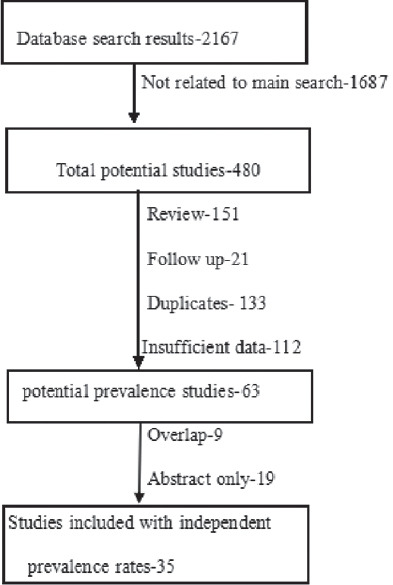
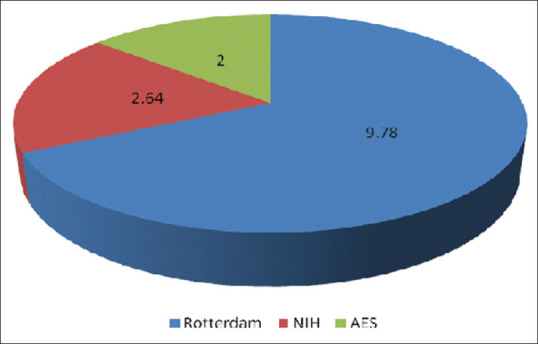
BACKGROUND: Polycystic ovary syndrome (PCOS), the major endocrinopathy among reproductive-aged women, is not yet perceived as an important health problem in the world. It affects 4%-20% of women of reproductive age worldwide. The prevalence, diagnosis, etiology, management, clinical practices, psychological issues, and prevention are some of the most confusing aspects associated with PCOS. AIM: The exact prevalence figures regarding PCOS are limited and unclear. The aim of this review is to summarize comprehensively the current knowledge on the prevalence of PCOS. MATERIALS AND METHODS: Literature search was performed through PubMed, ScienceDirect, Cochrane Library, and Google Scholar (up to December 2019). All relevant articles published in English language were identified following the Preferred Reporting Items for Systematic Reviews and Meta-Analyses guidelines. RESULTS: Our analysis yielded 27 surveys with a pooled mean prevalence of 21.27% using different diagnostic criteria. The proportion of women with PCOS also increased in the last decade. CONCLUSION: The current review summarizes and interprets the results of all published prevalence studies and highlights the burden of the syndrome, thereby supporting early identification and prevention of PCOS in order to reverse the persistent upward trend of prevalence.
Overview
The claims and statistics of this paper haven’t been checked yet.
Free: it reads the open-access text and checks the first 5 claims that cite a source we can check. Create a free account to check every claim.
Integrity signals
Registry
Cites
Statistics
Figures
Verification
Claims the paper makes
The claims and statistics of this paper haven’t been checked yet.
Free: it reads the open-access text and checks the first 5 claims that cite a source we can check. Create a free account to check every claim.
Claims other papers make about this one
Each is checked against this paper’s own text: does it say what the citing paper says it does?
The source backs part of the claim, not all of it — or backs it for a different population, condition or comparison.
In the citing paper
“Polycystic Ovary Syndrome (PCOS) is the most common endocrine-metabolic disorder affecting 6%–20% of populations [1–4].”
From Challenges in diagnosis and health care in polycystic ovary syndrome in Canada: a patient view to improve health care (2023) · cites this paper as [4]
Experimental — accuracy not yet measured
Self-check
Percentages, sums and reported differences re-computed from the paper’s own numbers.
The self-check needs the paper’s full text.
Citations
Cites
Preferred Reporting Items for Systematic Reviews and Meta-Analyses: the PRISMA statement
Moher, D., Liberati, A., Tetzlaff, J., Altman, D. G., & for the PRISMA Group (2009) · BMJ · doi:10.1136/bmj.b2535 · Cited by 83,823
Preferred reporting items for systematic reviews and meta-analyses: the PRISMA Statement.
(2009) · PubMed Central · Cited by 44,859
QUADAS-2: a revised tool for the quality assessment of diagnostic accuracy studies
Whiting, P. F., Rutjes, A. W. S., Westwood, M. E., Mallett, S., Deeks, J. J., Reitsma, J. B., Leeflang, M. M. G., Sterne, J. A. C., Bossuyt, P. M. M., & the QUADAS-2 Group* (2011) · Annals of Internal Medicine · doi:10.7326/0003-4819-155-8-201110180-00009 · Cited by 14,199
(2004) · Fertility and Sterility · doi:10.1016/j.fertnstert.2003.10.004 · Cited by 9,050
The Prevalence and Features of the Polycystic Ovary Syndrome in an Unselected Population
Azziz, R., Woods, K. S., Reyna, R., Key, T. J., Knochenhauer, E. S., & Yildiz, B. O. (2004) · The Journal of Clinical Endocrinology & Metabolism · doi:10.1210/jc.2003-032046 · Cited by 2,712 · cited 1×
“The prevalence of PCOS is frequently quoted between 2% and 26%.[27] The differences in diagnostic criteria, sample heterogeneity, socioeconomic level, medical care access, prevalence of influential risk factors, health and education/awareness were among the possible causes of substantial geographic disparities in the…”
BackgroundAzziz, R., Carmina, E., Dewailly, D., Diamanti-Kandarakis, E., Escobar-Morreale, H. F., Futterweit, W., Janssen, O. E., Legro, R. S., Norman, R. J., Taylor, A. E., et al. (2006) · The Journal of Clinical Endocrinology & Metabolism · doi:10.1210/jc.2006-0178 · Cited by 2,143 · cited 2×
“The AES requires the specific presence of clinical/ biochemical hyperandrogenism in combination with either oligoanovulation or polycystic ovaries.[12,13] The process of standardization of diagnosis confronts certain obstacles.”
BackgroundMethodAzziz, R., Carmina, E., Dewailly, D., Diamanti-Kandarakis, E., Escobar-Morreale, H. F., Futterweit, W., Janssen, O. E., Legro, R. S., Norman, R. J., Taylor, A. E., et al. (2009) · Fertility and Sterility · doi:10.1016/j.fertnstert.2008.06.035 · Cited by 2,132
Amenorrhea associated with bilateral polycystic ovaries
Stein, I. F., & Leventhal, M. L. (1935) · American Journal of Obstetrics and Gynecology · doi:10.1016/s0002-9378(15)30642-6 · Cited by 2,121 · cited 1×
“[14] Second, transvaginal ultrasonography is not routinely performed in adolescents, which restricts ovary visualization and therefore excludes any invasive Introduction S tein and Leventhal were the first to describe polycystic ovary syndrome (PCOS) more comprehensively in 1935.[1] With varied clinical manifestations…”
BackgroundMarch, W. A., Moore, V. M., Willson, K. J., Phillips, D. I. W., Norman, R. J., & Davies, M. J. (2010) · Human Reproduction · doi:10.1093/humrep/dep399 · Cited by 1,799
Bozdag, G., Mumusoglu, S., Zengin, D., Karabulut, E., & Yildiz, B. O. (2016) · Human Reproduction · doi:10.1093/humrep/dew218 · Cited by 1,526 · cited 1×
“[27] The differences in diagnostic criteria, sample heterogeneity, socioeconomic level, medical care access, prevalence of influential risk factors, health and education/awareness were among the possible causes of substantial geographic disparities in the prevalence rate.[28] Based on ancestral or geographical segrega…”
Background
Research works printed but not linked: 3
- Deswal, 2014, Prevalence of poly cystic ovary syndrome (PCOS) in North Indian women.Indian, J Health Well Being, 742
- Vijayan, 2013, Prevalence of polycystic ovary syndrome among students of a teaching collegiate hospital, Health Sci, 2319
- Schötz SN. Die Häufigkeit des Syndroms der Polycystischen Ovarienbei Frau – zu – Mann – Transsexuellen. Dissertation, Universität Erlangen; 2009.
Cited by
Items 501–600 of 655
SHODHANA IN PCOS-RELATED INFERTILITY
Anagha, B. R., Madhushree, H. S., & Puttur, G. (2024) · International Ayurvedic Medical Journal · doi:10.46607/iamj21120120
Wenang, S. (2023) · Proceeding International Conference of Technology on Community and Environmental Development · doi:10.18196/ictced.v1i1.42
Features of the Gut Microbiota in Patients with Polycystic Ovary Syndrome
Дмитриевна, К. Е., Muravieva, V. V., Леонидовна, И. Е., Skorobogatiy, A. V., Zhigalova, K. N., Kozlova, A. A., Priputnevich, T. V., & Евгеньевна, Ч. Г. (2023) · Annals of the Russian academy of medical sciences · doi:10.15690/vramn6442 · Cited by 1
The CYP17A1 single-nucleotide polymorphism rs743572 in Iraqi polycystic ovary syndrome patientsPreprint
Al-Bedairy, I., Aljawad, M. F., AL-Shammari, J. M., & Alshareefi, A. F. (2024) · Research Square · doi:10.21203/rs.3.rs-3925107/v1 · Cited by 1
Jadhav, R., More, A., Vaidya, S. V., Choudhary, N., Dutta, S., Kadu, K. S., & Gajabe, G. (2024) · Cureus · doi:10.7759/cureus.54342
“Therefore, this report is an exploratory study to encourage further research and dialogue on integrative approaches to managing PCOS and related endocrine disorders [6].”
BackgroundGhosh, T., Pal, B., Maji, S., & Goswami, M. (2024) · International Journal of Science and Research Archive · doi:10.30574/ijsra.2024.11.2.0480 · Cited by 1
THE EGYPTIAN JOURNAL OF FERTILITY AND STERILITY (Volume 27 - Number 3 - May 2023)
Nashar, A. E. (2023) · The Egyptian Journal of Fertility of Sterility · doi:10.21608/egyfs.2023.346213
Lifestyle and risk of type 2 diabetes in the opinion of physically active academic youth
Huk-Wieliczuk, H.-W. (2024) · Rozprawy Społeczne · doi:10.29316/rs/184281
Managing Acne in Individuals with Polycystic Ovarian Syndrome
y Cajal, I. D. S. R., Carrillo, D. G., & Barajas, J. E. G. (2024) · International Journal of Medical Science and Clinical Research Studies · doi:10.47191/ijmscrs/v4-i04-22
Rana, B., D'Costa, M., & Singh, A. R. (2024) · Journal of Natural Remedies · doi:10.18311/jnr/2024/36383 · Cited by 1
Khmil, S. V., Досвальд, А. С. Х., Khmil, M. S., Маланчук, Л. М., Маланчин, І., Франчук, О. А., & Романчук, Л. І. (2024) · Вісник соціальної гігієни та організації охорони здоров я України · doi:10.11603/1681-2786.2024.1.14623
Os efeitos da curcumina e seu potencial como tratamento na Síndrome dos Ovários Policísticos
Sousa, C. G. D. A., Pereira, C. N. P., Pires, B. I., Saggioro, V. M., de Freitas, F. L., & Santana, J. A. P. D. C. (2024) · Contribuciones a las Ciencias Sociales · doi:10.55905/revconv.17n.6-031 · Cited by 1
Halder, D. D., Alam, D. M. I., Ferdous, Z., & Akhter, A. (2024) · International Journal of Clinical Obstetrics and Gynaecology · doi:10.33545/gynae.2024.v8.i3b.1463
The Role of Pharmacists in the Intersection of Women’s Health and Mental Health
Ott, C. A., & Wartman, C. C. (2024) · Springer eBooks · doi:10.1007/978-3-031-58293-6_12 · Cited by 1
Prevalence and Risk Factors of Metabolic Syndrome in Women with Polycystic Ovarian Syndrome
Waseem, Z., Riaz, T., Shafique, S., Shahid, G., Huma, I. B., & Shehzadi (2024) · Journal of Liaquat University of Medical & Health Sciences · doi:10.22442/jlumhs.2024.01059
Miranda, L. L., Borges, L. B. B., Matos, L. G. M., dos Santos, L. M., & Resende, B. F. L. (2024) · Brazilian Journal of Health Review · doi:10.34119/bjhrv7n4-033 · Cited by 3
Polycystic Ovarian Syndrome (PCOS): Exploring Its Impact on Obstetrical Outcomes
Vasa, R., Venkataraman, G., Gorman, K., Francis, R., Zwicklbauer, E., Fisher, J., Safovich, P., Dalloul, M., & Muneyyirci‐Delale, O. (2024) · Open Journal of Obstetrics and Gynecology · doi:10.4236/ojog.2024.148090
Khmil, S. V., & Калник, А. А. (2024) · Актуальні питання педіатрії акушерства та гінекології · doi:10.11603/24116-4944.2024.1.14741
Khmil, S. V., & Правак, Ю. Б. (2024) · Актуальні питання педіатрії акушерства та гінекології · doi:10.11603/24116-4944.2024.1.14751
Saleem, M. U., Farman, M. T., Nisar, K. S., Raza, N., Hınçal, E., Batool, M., & Ullah, M. A. (2024) · Advances in Complex Systems · doi:10.1142/s1793962325500126
Llamas-Clark, E. F., Medina, J. R. C., Villanueva-Uy, M. E. T., Heralde, F. M., Cagayan, M. S. F. S., Rosell-Ubial, P. J. B., & Velarde, M. C. (2024) · Philippine Journal of Obstetrics and Gynecology · doi:10.4103/pjog.pjog_50_24 · Cited by 1
Binobead, M. A., Abualamah, S. M., Alshuniaber, M. A., AlSedairy, S. A., Alhussain, M. H., Albadr, N. A., & Arzoo, S. (2024) · American Journal of Health Behavior · doi:10.5993/ajhb.48.4.22
Research Progress on Luteinizing Hormone and Polycystic Ovary Syndrome
Li, J., Wang, W., Zhang, D., Zhou, L., Cui, R., Zhang, P., & Li, Y. (2024) · Journal of Contemporary Medical Practice · doi:10.53469/jcmp.2024.06(10).23
Mobaraki, A., & Legro, R. S. (2024) · Elsevier eBooks · doi:10.1016/b978-0-443-21477-6.00253-4
Hassan, A. A., Alotaibi, A. F., Almatar, F. A., Albassam, N. A., Alquaiz, A. M., & Kazi, A. (2024) · The Journal of Obstetrics and Gynecology of India · doi:10.1007/s13224-024-02071-8 · Cited by 2
“This divergence, influenced by different diagnostic criteria and regional factors, is set against a global average of 21.27%, as highlighted in a recent systematic review [3].”
InfluentialNigam, N. (2024) · African Journal of Biomedical Research · doi:10.53555/ajbr.v27i4s.4862
“Studies have shown that lifestyle factors such as diet and physical activity, alongside socio-economic disparities, influence the clinical manifestation of PCOS (7,8).”
Acne Vulgaris with Polycystic Ovarian Syndrome: A Case Report
Sikder, R., Khan, M. A., Salam, S. S., & Islam, S. (2024) · Eastern Medical College Journal · doi:10.3329/emcj.v9i2.77092
Saragein, R. H., Eghtesadi, S., & Hoveyda, A. (2024) · Journal of Health and Care · doi:10.61186/jhc.26.3.308
Shrestha, R., & Kapali, G. D. (2024) · Journal of Karnali Academy of Health Sciences · doi:10.61814/jkahs.v7i3.938
“Currently, 1 in 10 women worldwide is diagnosed with PCOS [5].”
Exploring the Contributing Factors of Polycystic Ovary Syndrome (PCOS)
Hussain, M., Shaikh, F., Jamil, L., Shaheen, A., Afaq, M. H., Hasni, A. A., Waseem, M. W., & Khalid, M. (2024) · Indus journal of bioscience research. · doi:10.70749/ijbr.v3i1.555 · Cited by 1
Zhang, Y., Chen, Y., Liu, F., Fu, J., Liu, X., Tan, J., Huang, O., & Zou, Y. (2025) · Gynecological Endocrinology · doi:10.1080/09513590.2025.2463545
“The prevalence of PCOS rated from 6% to 46.8% around the world and it is 2.2% in China [1].”
InfluentialMacronutrients and Disease: Polycystic Ovary Syndrome
Tehrani, F. R., & Naz, M. S. G. (2025) · Springer eBooks · doi:10.1007/978-3-031-32047-7_28-1
Gul, I., Ghaffar, S. A., Amin, A., Zafar, A., Siddique, N., Akhter, N., & Kanwal, S. (2025) · Pakistan Journal of Health Sciences · doi:10.54393/pjhs.v6i2.2658
Varghese, V., Ayyappan, J. P., & Vankudre, G. S. (2025) · Springer eBooks · doi:10.1007/978-981-96-2120-0_2 · Cited by 1
Different Approaches of the Management of PCOS
Devi, S. D., & Sethi, D. (2025) · Journal of Datta Meghe Institute of Medical Sciences University · doi:10.4103/jdmimsu.jdmimsu_290_23
Xu, Y., Jia, Y., Li, Q., Jiang, H., Liang, W., Liu, X., Huang, Y., Xiong, Y., Zou, K., Sun, X., et al. (2025) · SSRN Electronic Journal · doi:10.2139/ssrn.5205127
Polycystic Ovary Syndrome and Labor Market Attachment: Sequence Analysis
Boldis, B. V., Grünberger, I., Helgertz, J., & Cederström, A. (2025) · International Journal of Public Health · doi:10.3389/ijph.2025.1607889 · Cited by 1
“PCOS is a common endocrine disorder that affects 5% – 20% of women in their reproductive ages [5 – 7].”
A novel link between KCNQ1 genetic variants and polycystic ovary syndrome susceptibility
Salem, A. B., Ezzidi, I., Abdennebi, H. B., Mtiraoui, N., & Sarray, S. (2025) · Biomedical Reports · doi:10.3892/br.2025.1982
“Polycystic ovary syndrome (PCOS) is the most prevalent hormonal and metabolic disorder that significantly impacts women during their reproductive years (1), with a global prevalence estimated to range from 4‑20% (2).”
Jhansi Rani., R., & Joseph, I. (2025) · A and V Pub International Journal of Nursing and Medical Research · doi:10.52711/ijnmr.2025.09
Fatma, B., Nomani, A. N., Mustafa, S., & Zeenat, F. (2025) · International Journal of Unani and Integrative Medicine · doi:10.33545/2616454x.2025.v9.i1b.327
Heidari, R., Eftekhari, F., & Jahromi, M. K. (2025) · BMJ Open · doi:10.1136/bmjopen-2025-099260 · Cited by 1
von Damm, I., Hernández-Ortega, M., Sarfati, C. D., & von Son, F. W. (2025) · medRxiv · doi:10.1101/2025.05.21.25327203
“Polycystic ovary syndrome (PCOS) is one of the most common endocrinopathies during reproductive age, affecting up to 26% of women worldwide [1,2] .”
Antibiotic Resistance of Acinetobacter baumannii in Women with Polycystic Ovary Syndrome
Yazea, N. B., Abbas, D. M., & Talib, R. M. (2025) · doi:10.38124/ijisrt/25may343
Soni, A., Parikh, M., & Gandhi, T. R. (2025) · Elsevier eBooks · doi:10.1016/b978-0-443-22300-6.00013-9
Akhter, N., Sana, S., Anjum, F., Tariq, M., Afzaal, M., Siddique, Z., & Sana, A. (2025) · Obstetrics and gynecology. · doi:10.5772/intechopen.1011282
Gravandi, M. M., Karsalari, P. D., Shirooie, S., Tahvilian, M., & Farzaei, M. H. (2025) · Jundishapur Journal of Natural Pharmaceutical Products · doi:10.5812/jjnpp-161729 · Cited by 1
Altaf, K., & Rizwan, M. (2025) · ACADEMIA International Journal for Social Sciences · doi:10.63056/acad.004.03.0517
Polycystic ovary syndrome: new trends in diagnosis and treatment
Абусуевна, А. З., Лукмановна, С. К., Efendieva, R. M., Амлетовна, С. Н., & Ibragimov, B. (2025) · Translational Medicine · doi:10.18705/2311-4495-2025-12-2-161-170
Migacz, M., Pluta, D., Barański, K., Kujszczyk, A., Kochanowicz, M., & Holecki, M. T. (2025) · Biomedicines · doi:10.3390/biomedicines13081878
“Polycystic ovarian syndrome (PCOS) is the most common endocrine pathology in females of reproductive age worldwide and can affect up to 21% of women [1].”
Ghahfarokhi, H. J., Sharifi, F., Hoseinpour, M., Barjui, S. P., Heybati, F., Sedehi, M., & Shabanian, S. (2025) · Zahedan Journal of Research in Medical Sciences · doi:10.5812/zjrms-162240
Zahn, L. A., Budine, T. D., Shirey-Rice, J. K., Joly, M. M., Wallis, R. S., Bernard, G. R., Holroyd, K. J., Pulley, J. M., & Jerome, R. N. (2025) · Frontiers in Pharmacology · doi:10.3389/fphar.2025.1562587
Gewichtsveränderungen bei PCOS – medikamentös beeinflussbar?
Arjune, S., Kretschmer, A. C., & Hanßen, R. (2025) · Journal für Gynäkologische Endokrinologie/Schweiz · doi:10.1007/s41975-025-00404-y
“Das polyzystische Ovarialsyndrom (PCOS) manifestiert sich mit einer geschätzten Prävalenz von bis zu 21% weltweit als eine der am häufigsten auftretenden en-dokrinen Dysfunktionen im gebärfähigen Alter [1].”
Rashid, S. A., Prasad, M., Maideen, N. M. P., & Balasubramanian, R. (2025) · Current Women s Health Reviews · doi:10.2174/0115734048400507250805221048
Hirsutism in Women: Hairy Harini
Bhat, S. (2025) · Springer eBooks · doi:10.1007/978-981-95-0636-1_22
Salehpour, S., Hosseini, S., & Zarisfi, Z. (2025) · Obstetrics and gynecology. · doi:10.5772/intechopen.1011168
Avuk, H. S., & Baş, M. (2025) · Nutrición Hospitalaria · doi:10.20960/nh.05901 · Cited by 2
“Obesity is strongly linked to PCOS pathogenesis, exacerbating insulin resistance, which is present in 65 to 70 percent of cases, and androgen imbalances (3,4).”
Pala, G. C., & Bilgin, G. D. (2025) · Turkish Journal of Diabetes and Obesity · doi:10.25048/tudod.1682642
Ali, F. K., Abdelfattah, A. M. S., Haddad, R. H., El-Hamid, S. M. A., & Abuejheisheh, A. J. (2025) · Nursing Forum · doi:10.1155/nuf/8855489
“Worldwide, it impacts approximately 6%–20% of women in their reproductive years [1].”
Rismanchian, F., Jebali, A., & Tahernejad, M. (2025) · SSRN Electronic Journal · doi:10.2139/ssrn.5639550
Hussain, A., Saleem, A., & Akhtar, M. F. (2026) · Pakistan Journal of Pharmaceutical Sciences · doi:10.21203/rs.3.rs-7807066/v1
Polycystic ovary syndrome diagnosis does not predict increased hidradenitis suppurativa severity
Romanelli, S., Islam, Z., Torpey, M. E., Parvathaneni, A., Hill, K. T., Tai, H., Ch’en, P. Y., Nosrati, A., Toker, M., Hosgood, H. D., et al. (2025) · Archives of Dermatological Research · doi:10.1007/s00403-025-04425-2
Deniz, Ö. G., Kirici, P., Annaç, E. E., & Kaplan, S. (2026) · The European Research Journal · doi:10.18621/eurj.1752916
Singh, S., Arya, V., Mishra, R. K., Rajput, S. K., Mishra, S., & Rana, M. (2025) · Journal of Ayurvedic and Herbal Medicine · doi:10.4103/jahm.jahm_55_25
Salem, J. N., Vettese, R., Yamamoto, J. M., Koshy, S., Harrison, T. G., Stephenson, N., Ronksley, P. E., Metcalfe, A., Brennand, E. A., & Benham, J. L. (2025) · BMJ Open · doi:10.1136/bmjopen-2024-097971 · Cited by 1
Golestan, S., Morshed-Behbahani, B., & Keshavarz, M. (2025) · Payesh (Health Monitor) Journal · doi:10.61882/payesh.24.5.697
El-Atfy, A. M., Mohamed, M. F., Abdelmoaty, M. A., & Soliman, A. (2025) · SN Comprehensive Clinical Medicine · doi:10.1007/s42399-025-02116-7
“Epidemiological studies from Egypt report particularly high prevalence rates (14–37.5%), with notable differences between fertile and infertile subgroups [3, 4].”
InfluentialMondéjar, M. D. M., López-Ruiz, I., Quiles, J., Suárez, L. S., Sanz, O. R., Pravio, J. R., Bernabéu, R. Á., Brik, M., Brejano, M. G., Elvar, J. R. H., et al. (2025) · REC CardioClinics · doi:10.1016/j.rccl.2025.10.005 · Cited by 1
The Pelvic Pain Bias Assessment: a new assessment of interpretation bias specific to pelvic pain
Pickup, B., Sharpe, L., Menzies, R. E., & Todd, J. (2025) · Pain · doi:10.1097/j.pain.0000000000003873 · Cited by 1
Introduction and Historical Aspects of PCOS
Halder, A. (2025) · BENTHAM SCIENCE PUBLISHERS eBooks · doi:10.2174/9798898810931125010005
Surgical Interventions for PCOS Management
Singla, V., Aggarwal, S., Sharma, A. B., & Mehrotra, R. (2025) · BENTHAM SCIENCE PUBLISHERS eBooks · doi:10.2174/9798898810962125010012
Bigambo, F. M., Wang, D., Zhang, Y., Mzava, S. M., Dai, R., & Wang, X. (2022) · Figshare · doi:10.6084/m9.figshare.20227028
Additional file 1 of Comorbidities in women with polycystic ovary syndrome: a sibling study
Boldis, B. V., Grünberger, I., Cederström, A., Björk, J., Nilsson, A., & Helgertz, J. (2024) · Figshare · doi:10.6084/m9.figshare.26702497
Gollapalli, P., Kumari, N. S., Shetty, P., & Gnanasekaran, T. S. (2022) · Figshare · doi:10.6084/m9.figshare.19174147
Sydora, B. C., Wilke, M. S., McPherson, M., Chambers, S. A., Ghosh, M., & Vine, D. F. (2024) · Figshare · doi:10.6084/m9.figshare.26635785
Zaitoun, B., Kubaisi, A. A., AlQattan, N., Alassouli, Y. M., Mohammad, A., Alameeri, H., & Mohammed, G. (2023) · Figshare · doi:10.6084/m9.figshare.22649344
Ayala‐Ramirez, M., Grewe, M., Kaiser, J., Kennedy, E. J., Winn, M., & Urrutia, R. P. (2024) · Figshare · doi:10.6084/m9.figshare.26588256
Ayala‐Ramirez, M., Grewe, M., Kaiser, J., Kennedy, E. J., Winn, M., & Urrutia, R. P. (2024) · Figshare · doi:10.6084/m9.figshare.26588253
Cardiovascular and Metabolic Risk Profiles Across Different Phenotypes of Polycystic Ovary Syndrome
Aksu, E., & Gül, A. (2025) · Journal of Contemporary Medicine · doi:10.16899/jcm.1794476
Mustari, M., Kamrul-Hasan, A. B. M., Tanni, A. Z., Ahammed, A., Raunak, A. I. B., Afsana, F., Pathan, M. F., Saifuddin, M., Rahman, M. M., Akter, N., et al. (2025) · Bangladesh Journal of Endocrinology and Metabolism · doi:10.4103/bjem.bjem_38_25
Xu, Y., Jia, Y., Li, Q., Jiang, H., Xiong, Y., Liang, W., Liu, X., Huang, Y., Zou, K., Sun, X., et al. (2025) · Journal of Evidence-Based Medicine · doi:10.1111/jebm.70100 · Cited by 3
“This aligns with previous studies [ 37, 38 ], highlighting the need for improved prevention and management among WCBA.”
Sahoo, L., Mishra, A., & Bhaskar, L. (2025) · Middle East Fertility Society Journal · doi:10.1186/s43043-025-00294-x
“PCOS affects about 4–20% of women in their reproductive years worldwide [5].”
Nikbakht, R., Alidousti, K., & Salajegheh, Z. (2026) · Iranian Journal of Nursing and Midwifery Research · doi:10.4103/ijnmr.ijnmr_107_24 · Cited by 11
Xu, J., Xie, J., Zhang, M., & Lin, J. (2026) · All Life · doi:10.1080/26895293.2025.2612407 · Cited by 1
Holmskov, M., Christensen, J., Larsen, M. F., Christiansen, A.-E., & Nielsen, R. E. (2026) · International Journal of Bipolar Disorders · doi:10.1186/s40345-026-00411-3
“Polycystic ovary syndrome (PCOS) is one of the most common endocrine disorders in women of reproductive age, with a prevalence of 4–20% (Deswal et al. 2020).”
Taj, N., Mukhtar, B., Sharif, A., Fatima, S., Sajjad, F., & Bajwa, H. R. (2025) · Journal of Rawalpindi Medical College · doi:10.37939/jrmc.v29i4.2986
TRANSDERMAL SOLID LIPID NANOPARTICLES OF CLOMIPHENE CITRATE FOR ENHANCED PCOS TREATMENT
BHATT, F., & Patel, D. H. (2026) · International Journal of Applied Pharmaceutics · doi:10.22159/ijap.2026v18i1.55917 · Cited by 2
Herbert, S., Squires, A. P., Gilligan, C., & Woolf, K. (2026) · Women s Health · doi:10.1177/17455057251414294 · Cited by 1
Shirani, M., Bagherniya, M., Sadeghi, O., Tehrani, H. G., Eskandari, M. H., Sharma, M., & Askari, G. (2026) · International Journal of Reproductive BioMedicine (IJRM) · doi:10.18502/ijrm.v23i11.20547
“It affects roughly 10% of women of reproductive age and is frequently associated with obesity (30–60%), insulin resistance, and elevated insulin levels (1).”
Rashid, S., Khan, W. Y., Jabeen, F., Hafiz, S., Khursheed, N., Ganie, S. A., & Amin, S. (2026) · Endocrine and Metabolic Science · doi:10.1016/j.endmts.2026.100292
Douglas, C. C., Hashmi, A., Mclain, A., & Arentson‐Lantz, E. J. (2026) · Therapeutic Advances in Reproductive Health · doi:10.1177/26334941261426089 · Cited by 2
Junaidi, F. J., Sriwijaya, S., Amiruddin, R. P., Hamid, F., Sunarno, I., & Bahar, I. (2026) · Gazzetta Medica Italiana Archivio per le Scienze Mediche · doi:10.23736/s0393-3660.24.05854-6
Houston, E. J., Jewett, E., Athar, F., & Templeman, N. M. (2026) · bioRxiv (Cold Spring Harbor Laboratory) · doi:10.64898/2026.02.26.708393 · Cited by 1
“Polycystic ovary syndrome (PCOS) is a heterogeneous reproductive endocrinopathy that affects up to 20% of reproductive-age women [1].”
The Plasma Glycome Differences Between Women with PCOS and Healthy Controls
Holman, M., Li, S. J., Ahern, M. M., Ruhaak, L. R., Karakas, S., & Krishnan, S. (2026) · International Journal of Molecular Sciences · doi:10.3390/ijms27052350 · Cited by 1
Diagnóstico y manejo del síndrome de ovario poliquístico: Una revisión de la literatura
Laborde, L. I. R., Gómez, J. S. V., & Manchola, D. F. O. (2025) · Sapiens International Multidisciplinary Journal · doi:10.71068/fzc70v33
Ghafoor, U., Khalid, M., Saleem, H., Huda, N. U., Butt, A. Q., Tariq, A., Eman, N. U., & Rafiq, S. (2025) · doi:10.61748/apit.2025/17
Singnale, P., Sasmal, D., Chukkala, S. S., Chilumula, M., Raghavendra, P., Singh, S. P., Mummadi, M. K., & Gondru, R. (2026) · Cureus · doi:10.7759/cureus.106497
“Globally, the condition affects roughly 4-20% of women, underscoring its significance as a public-health concern [1,2].”
A Comprehensive Review of Management of Patients with Infertility having Polycystic Ovarian Syndrome
Sharma, S., Pahwa, S., Kumar, R., Singh, N., Singh, J., & Bhandari, V. (2026) · AMEI's Current Trends in Diagnosis & Treatment · doi:10.5005/jp-journals-10055-0187
Kabir, M., Akter, M., Sultana, N., Tasnim, M., Ara, R., Kabir, R., Ashraf, M. F., & Shahid, S. (2025) · TAJ Journal of Teachers Association · doi:10.70818/taj.v38i4.0685
Bradbury, K. E., McClung, H. L., Ranadive, S. M., Oppenheimer, A. V., Goldenstein, S. J., Stachenfeld, N. S., Charkoudian, N., & Giersch, G. E. W. (2026) · Journal of Applied Physiology · doi:10.1152/japplphysiol.01189.2025 · Cited by 1
Bowring, E., Hill, J., Hassan, A., Cushion, E. J., Tallent, J., Pedlar, C. R., & Bruinvels, G. (2026) · Journal of Physical Activity and Health · doi:10.1123/jpah.2025-0746
Metadata
- Authors
- Pundir, C., Deswal, R., Narwal, V., & Dang, A.
- Affiliations
- Maharshi Dayanand University (IN)
- Corresponding author
- Pundir, ChandraS
- Venue
- Journal of Human Reproductive Sciences
- Published
- 2020
- Volume
- 13
- Issue
- 4
- Pages
- 261
- ISSN
- 0974-1208 (ISSN-L)
- PMC
- PMC7879843
- OpenAlex
- W3113549027
- Cited by
- 657
- References
- 70
- Citations by year
- 2026: 93 · 2025: 148 · 2024: 170 · 2023: 147 · 2022: 86 · 2021: 13
- FWCI
- 9.06
- Type
- journal article
- Language
- en
- Open access
- diamond
- doi.org
- Licence
- cc-by-nc-sa
- Locations
- Journal of Human Reproductive Sciences (publishedVersion, cc-by-nc-sa)
- PubMed Central (publishedVersion, cc-by-nc-sa)
- PubMed (publishedVersion)
- DOAJ (DOAJ: Directory of Open Access Journals) (submittedVersion, cc-by-sa)
- Topics
- Health Sciences › Medicine › Reproductive Medicine › Ovarian function and disorders
- Health Sciences › Medicine › Reproductive Medicine › Endometriosis Research and Treatment
- Life Sciences › Biochemistry, Genetics and Molecular Biology › Genetics › Genetic and Kidney Cyst Diseases
- Keywords
- polycystic ovary syndrome, prevalence, women of reproductive age, diagnostic criteria, prevalence trends, early detection, prevention
About these checks
Registry, retraction, Cites and statistics results are computed, not judged, with one exception: a printed reference that no index lists is read once by a model before it counts as a citation error. Claims are extracted by a model and kept only when their quote appears verbatim in the text; each cited source is then checked, with a model’s help, for whether it says what the claim relies on. Those verdicts can be wrong — read the claim’s quote and the cited source before relying on one.
Statistics and arithmetic are recomputed, not judged.
Confidence bands are shown only for fields calibrated on our annotated test set. None is calibrated yet, so no band is shown.
What counts as a claim ›How we measure confidence ›How we check this ›
Are you an author, or do you see a problem with this page? Request a review
Data sources
Bibliographic data: Semantic Scholar, OpenAlex, Crossref.
Contains information from the Semantic Scholar Academic Graph Datasets, made available under the ODC Attribution License (ODC-BY 1.0).
Semantic Scholar’s data is described in: Kinney, R., et al. (2023). The Semantic Scholar Open Data Platform. arXiv:2301.10140.
