

The Prevalence of Polycystic Ovary Syndrome: A Brief Systematic Review
Open accessThe DOI matches its Crossref record; 68 of the 70 references it cites were found in a registry or an index.
Abstract
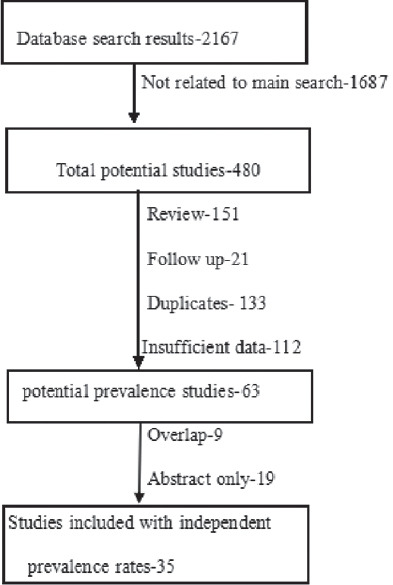
BACKGROUND: Polycystic ovary syndrome (PCOS), the major endocrinopathy among reproductive-aged women, is not yet perceived as an important health problem in the world. It affects 4%-20% of women of reproductive age worldwide. The prevalence, diagnosis, etiology, management, clinical practices, psychological issues, and prevention are some of the most confusing aspects associated with PCOS. AIM: The exact prevalence figures regarding PCOS are limited and unclear. The aim of this review is to summarize comprehensively the current knowledge on the prevalence of PCOS. MATERIALS AND METHODS: Literature search was performed through PubMed, ScienceDirect, Cochrane Library, and Google Scholar (up to December 2019). All relevant articles published in English language were identified following the Preferred Reporting Items for Systematic Reviews and Meta-Analyses guidelines. RESULTS: Our analysis yielded 27 surveys with a pooled mean prevalence of 21.27% using different diagnostic criteria. The proportion of women with PCOS also increased in the last decade. CONCLUSION: The current review summarizes and interprets the results of all published prevalence studies and highlights the burden of the syndrome, thereby supporting early identification and prevention of PCOS in order to reverse the persistent upward trend of prevalence.
Overview
The claims and statistics of this paper haven’t been checked yet.
Free: it reads the open-access text and checks the first 5 claims that cite a source we can check. Create a free account to check every claim.
Integrity signals
Registry
Cites
Statistics
Figures
Verification
Claims the paper makes
The claims and statistics of this paper haven’t been checked yet.
Free: it reads the open-access text and checks the first 5 claims that cite a source we can check. Create a free account to check every claim.
Claims other papers make about this one
Each is checked against this paper’s own text: does it say what the citing paper says it does?
The source backs part of the claim, not all of it — or backs it for a different population, condition or comparison.
In the citing paper
“Polycystic Ovary Syndrome (PCOS) is the most common endocrine-metabolic disorder affecting 6%–20% of populations [1–4].”
From Challenges in diagnosis and health care in polycystic ovary syndrome in Canada: a patient view to improve health care (2023) · cites this paper as [4]
Experimental — accuracy not yet measured
Self-check
Percentages, sums and reported differences re-computed from the paper’s own numbers.
The self-check needs the paper’s full text.
Citations
Cites
Preferred Reporting Items for Systematic Reviews and Meta-Analyses: the PRISMA statement
Moher, D., Liberati, A., Tetzlaff, J., Altman, D. G., & for the PRISMA Group (2009) · BMJ · doi:10.1136/bmj.b2535 · Cited by 83,823
Preferred reporting items for systematic reviews and meta-analyses: the PRISMA Statement.
(2009) · PubMed Central · Cited by 44,859
QUADAS-2: a revised tool for the quality assessment of diagnostic accuracy studies
Whiting, P. F., Rutjes, A. W. S., Westwood, M. E., Mallett, S., Deeks, J. J., Reitsma, J. B., Leeflang, M. M. G., Sterne, J. A. C., Bossuyt, P. M. M., & the QUADAS-2 Group* (2011) · Annals of Internal Medicine · doi:10.7326/0003-4819-155-8-201110180-00009 · Cited by 14,199
(2004) · Fertility and Sterility · doi:10.1016/j.fertnstert.2003.10.004 · Cited by 9,050
The Prevalence and Features of the Polycystic Ovary Syndrome in an Unselected Population
Azziz, R., Woods, K. S., Reyna, R., Key, T. J., Knochenhauer, E. S., & Yildiz, B. O. (2004) · The Journal of Clinical Endocrinology & Metabolism · doi:10.1210/jc.2003-032046 · Cited by 2,712 · cited 1×
“The prevalence of PCOS is frequently quoted between 2% and 26%.[27] The differences in diagnostic criteria, sample heterogeneity, socioeconomic level, medical care access, prevalence of influential risk factors, health and education/awareness were among the possible causes of substantial geographic disparities in the…”
BackgroundAzziz, R., Carmina, E., Dewailly, D., Diamanti-Kandarakis, E., Escobar-Morreale, H. F., Futterweit, W., Janssen, O. E., Legro, R. S., Norman, R. J., Taylor, A. E., et al. (2006) · The Journal of Clinical Endocrinology & Metabolism · doi:10.1210/jc.2006-0178 · Cited by 2,143 · cited 2×
“The AES requires the specific presence of clinical/ biochemical hyperandrogenism in combination with either oligoanovulation or polycystic ovaries.[12,13] The process of standardization of diagnosis confronts certain obstacles.”
BackgroundMethodAzziz, R., Carmina, E., Dewailly, D., Diamanti-Kandarakis, E., Escobar-Morreale, H. F., Futterweit, W., Janssen, O. E., Legro, R. S., Norman, R. J., Taylor, A. E., et al. (2009) · Fertility and Sterility · doi:10.1016/j.fertnstert.2008.06.035 · Cited by 2,132
Amenorrhea associated with bilateral polycystic ovaries
Stein, I. F., & Leventhal, M. L. (1935) · American Journal of Obstetrics and Gynecology · doi:10.1016/s0002-9378(15)30642-6 · Cited by 2,121 · cited 1×
“[14] Second, transvaginal ultrasonography is not routinely performed in adolescents, which restricts ovary visualization and therefore excludes any invasive Introduction S tein and Leventhal were the first to describe polycystic ovary syndrome (PCOS) more comprehensively in 1935.[1] With varied clinical manifestations…”
BackgroundMarch, W. A., Moore, V. M., Willson, K. J., Phillips, D. I. W., Norman, R. J., & Davies, M. J. (2010) · Human Reproduction · doi:10.1093/humrep/dep399 · Cited by 1,799
Bozdag, G., Mumusoglu, S., Zengin, D., Karabulut, E., & Yildiz, B. O. (2016) · Human Reproduction · doi:10.1093/humrep/dew218 · Cited by 1,526 · cited 1×
“[27] The differences in diagnostic criteria, sample heterogeneity, socioeconomic level, medical care access, prevalence of influential risk factors, health and education/awareness were among the possible causes of substantial geographic disparities in the prevalence rate.[28] Based on ancestral or geographical segrega…”
BackgroundKnochenhauer, E. S., Key, T. J., Kahsar-Miller, M., Waggoner, W., Boots, L. R., & Azziz, R. (1998) · The Journal of Clinical Endocrinology & Metabolism · doi:10.1210/jcem.83.9.5090 · Cited by 1,516
Asunción, M., Calvo, R. M., San Millán, J. L., Sancho, J., Avila, S., & Escobar-Morreale, H. F. (2000) · The Journal of Clinical Endocrinology & Metabolism · doi:10.1210/jcem.85.7.6682 · Cited by 1,318
Knochenhauer, E. S. (1998) · Journal of Clinical Endocrinology & Metabolism · doi:10.1210/jc.83.9.3078 · Cited by 1,127
Diamanti‐Kandarakis, E., Kouli, C., Bergiele, A. T., Filandra, F. A., Tsianateli, T. C., Spina, G., Zapanti, E. D., & Bartzis, M. I. (1999) · The Journal of Clinical Endocrinology & Metabolism · doi:10.1210/jc.84.11.4006 · Cited by 1,110
Kiddy, D. S., Hamilton‐Fairley, D., Bush, A., Short, F., Anyaoku, V., Reed, M. J., & Franks, S. (1992) · Clinical Endocrinology · doi:10.1111/j.1365-2265.1992.tb02909.x · Cited by 921
Chen, Z.-J., Zhao, H., He, L., Shi, Y., Qin, Y., Shi, Y., Li, Z., You, L., Zhao, J., Liu, J., et al. (2011) · Nature Genetics · doi:10.1038/ng.732 · Cited by 782
Yildiz, B. O., Bozdag, G., Yapici, Z., Esinler, I., & Yarali, H. (2012) · Human Reproduction · doi:10.1093/humrep/des232 · Cited by 704
Genome-wide association study identifies eight new risk loci for polycystic ovary syndrome
Shi, Y., Zhao, H., Shi, Y., Cao, Y., Yang, D., Li, Z., Zhang, B., Liang, X., Li, T., Chen, J., et al. (2012) · Nature Genetics · doi:10.1038/ng.2384 · Cited by 678
Increased risk of depressive disorders in women with polycystic ovary syndrome
Hollinrake, E., Abreu, A., Maifeld, M., Van Voorhis, B. J., & Dokras, A. (2007) · Fertility and Sterility · doi:10.1016/j.fertnstert.2006.11.039 · Cited by 631
Effects of Lifestyle Activity vs Structured Aerobic Exercise in Obese Women: A Randomized Trial
Andersen, R. E., Wadden, T. A., Bartlett, S. J., Zemel, B., Verde, T. J., & Franckowiak, S. C. (1999) · JAMA · doi:10.1001/jama.281.4.335 · Cited by 623
Hayes, M. G., Urbanek, M., Ehrmann, D. A., Armstrong, L. L., Lee, J. Y., Sisk, R., Karaderi, T., Barber, T. M., McCarthy, M. I., Franks, S., et al. (2015) · Nature Communications · doi:10.1038/ncomms8502 · Cited by 478
Day, F. R., Hinds, D. A., Tung, J. Y., Stolk, L., Styrkarsdottir, U., Saxena, R., Bjonnes, A., Broer, L., Dunger, D. B., Halldorsson, B. V., et al. (2015) · Nature Communications · doi:10.1038/ncomms9464 · Cited by 459
Broekmans, F., Knauff, E., Valkenburg, O., Laven, J., Eijkemans, M., & Fauser, B. (2006) · BJOG: An International Journal of Obstetrics & Gynaecology · doi:10.1111/j.1471-0528.2006.01008.x · Cited by 442
Epidemiology of infertility and polycystic ovarian disease: endocrinological and demographic studies
Hull, M. G. R. (1987) · Gynecological Endocrinology · doi:10.3109/09513598709023610 · Cited by 427
Prevalence of polycystic ovary syndrome in women in China: a large community-based study
Li, R., Zhang, Q., Yang, D., Li, S., Lu, S., Wu, X., Wei, Z., Song, X., Wang, X., Fu, S., et al. (2013) · Human Reproduction · doi:10.1093/humrep/det262 · Cited by 419
Geographical Prevalence of Polycystic Ovary Syndrome as Determined by Region and Race/Ethnicity
Wolf, W. M., Wattick, R. A., Kinkade, O. N., & Olfert, M. D. (2018) · International Journal of Environmental Research and Public Health · doi:10.3390/ijerph15112589 · Cited by 413 · cited 1×
“reported the prevalence of PCOS in Mexico also.[66] In 2019, Ganie et al.”
BackgroundMisra, A., & Vikram, N. K. (2004) · Nutrition · doi:10.1016/j.nut.2004.01.020 · Cited by 392
McKeigue, P. M., Ferrie, J. E., Pierpoint, T., & Marmot, M. G. (1993) · Circulation · doi:10.1161/01.cir.87.1.152 · Cited by 361
Ding, T., Hardiman, P. J., Petersen, I., Wang, F.-F., Qu, F., & Baio, G. (2017) · Oncotarget · doi:10.18632/oncotarget.19180 · Cited by 336 · cited 1×
“, in 2017, reviewed the prevalence of PCOS across different ethnic groups and concluded that Caucasian females are less likely to develop PCOS compared with middle east and non white female populations.[65] Accordingly, the prevalence of PCOS varies among different countries worldwide.”
BackgroundLauritsen, M. P., Bentzen, J. G., Pinborg, A., Loft, A., Forman, J. L., Thuesen, L. L., Cohen, A., Hougaard, D. M., & Nyboe Andersen, A. (2014) · Human Reproduction · doi:10.1093/humrep/det469 · Cited by 334
Endometrium in PCOS: Implantation and predisposition to endocrine CA
Giudice, L. C. (2006) · Best Practice & Research Clinical Endocrinology & Metabolism · doi:10.1016/j.beem.2006.03.005 · Cited by 328
Prevalence of Polycystic Ovarian Syndrome in Indian Adolescents
Nidhi, R., Padmalatha, V., Nagarathna, R., & Amritanshu, R. (2011) · Journal of Pediatric and Adolescent Gynecology · doi:10.1016/j.jpag.2011.03.002 · Cited by 319 · cited 1×
“13%.[54] A 2017 study conducted by Gupta et al.”
Tehrani, F., Simbar, M., Tohidi, M., Hosseinpanah, F., & Azizi, F. (2011) · Reproductive Biology and Endocrinology · doi:10.1186/1477-7827-9-39 · Cited by 290
Clinical and Biochemical Features of Polycystic Ovarian Disease
Goldzieher, J. W., & Axelrod, L. R. (1963) · Fertility and Sterility · doi:10.1016/s0015-0282(16)35047-6 · Cited by 283
Diagnosis of Polycystic Ovarian Syndrome: In Defense of the Rotterdam Criteria
Franks, S. (2006) · The Journal of Clinical Endocrinology & Metabolism · doi:10.1210/jc.2005-2501 · Cited by 277 · cited 2×
“The AES requires the specific presence of clinical/ biochemical hyperandrogenism in combination with either oligoanovulation or polycystic ovaries.[12,13] The process of standardization of diagnosis confronts certain obstacles.”
BackgroundOverexpression of a DENND1A isoform produces a polycystic ovary syndrome theca phenotype
McAllister, J. M., Modi, B., Miller, B. A., Biegler, J., Bruggeman, R., Legro, R. S., & Strauss, J. F. (2014) · Proceedings of the National Academy of Sciences · doi:10.1073/pnas.1400574111 · Cited by 250
Epidemiology, pathogenesis, genetics & management of polycystic ovary syndrome in India
Ganie, M. A., Vasudevan, V., Wani, I. A., Baba, M. S., Arif, T., & Rashid, A. (2019) · Indian Journal of Medical Research · doi:10.4103/ijmr.ijmr_1937_17 · Cited by 232 · cited 1×
“5% depending on the population studied and criteria used for diagnosis.[67] A report from this laboratory showed that overall 71% of the women with PCOS resided in urban regions, while 29% in rural regions in the Haryana state of India.”
BackgroundNonalcoholic fatty liver disease in women with polycystic ovary syndrome
Paschou, S. A., Polyzos, S. A., Anagnostis, P., Goulis, D. G., Kanaka-Gantenbein, C., Lambrinoudaki, I., Georgopoulos, N. A., & Vryonidou, A. (2020) · Endocrine · doi:10.1007/s12020-019-02085-7 · Cited by 231
Joshi, B., Mukherjee, S., Patil, A., Purandare, A., Chauhan, S., & Vaidya, R. (2014) · Indian Journal of Endocrinology and Metabolism · doi:10.4103/2230-8210.131162 · Cited by 228 · cited 1×
“5%.[40] A meta‐analysis conducted by Ding et al.”
MethodMoghetti, P., Tosi, F., Tosti, A., Negri, C., Misciali, C., Perrone, F., Caputo, M., Muggeo, M., & Castello, R. (2000) · The Journal of Clinical Endocrinology & Metabolism · doi:10.1210/jcem.85.1.6245 · Cited by 201
The Diagnosis of Polycystic Ovary Syndrome in Adolescents
Rosenfield, R. L. (2015) · Pediatrics · doi:10.1542/peds.2015-1430 · Cited by 195
Nonalcoholic fatty liver disease in women with polycystic ovary syndrome
Cerda, C., Pérez-Ayuso, R. M., Riquelme, A., Soza, A., Villaseca, P., Sir-Petermann, T., Espinoza, M., Pizarro, M., Solis, N., Miquel, J. F., et al. (2007) · Journal of Hepatology · doi:10.1016/j.jhep.2007.04.012 · Cited by 187
Huang, A., Brennan, K., & Azziz, R. (2010) · Fertility and Sterility · doi:10.1016/j.fertnstert.2008.12.138 · Cited by 175
Prevalence of polycystic ovary syndrome in unselected women from southern China
Chen, X., Yang, D., Mo, Y., Li, L., Chen, Y., & Huang, Y. (2008) · European Journal of Obstetrics & Gynecology and Reproductive Biology · doi:10.1016/j.ejogrb.2007.12.018 · Cited by 171
Kumarapeli, V., Seneviratne, R. D. A., Wijeyaratne, C. N., Yapa, R. M. S. C., & Dodampahala, S. H. (2008) · American Journal of Epidemiology · doi:10.1093/aje/kwn137 · Cited by 170
Moghetti, P. (2000) · Journal of Clinical Endocrinology & Metabolism · doi:10.1210/jc.85.1.89 · Cited by 168
Prevalence of polycystic ovary syndrome in a sample of Indigenous women in Darwin, Australia
Boyle, J. A., Cunningham, J., OˈDea, K., Dunbar, T., & Norman, R. J. (2012) · Medical Journal of Australia · doi:10.5694/mja11.10553 · Cited by 160
New insights into the genetics of polycystic ovary syndrome
Azziz, R. (2016) · Nature Reviews Endocrinology · doi:10.1038/nrendo.2015.230 · Cited by 147
Racial and ethnic differences in the polycystic ovary syndrome metabolic phenotype
Engmann, L., Jin, S., Sun, F., Legro, R. S., Polotsky, A. J., Hansen, K. R., Coutifaris, C., Diamond, M. P., Eisenberg, E., Zhang, H., et al. (2017) · American Journal of Obstetrics and Gynecology · doi:10.1016/j.ajog.2017.01.003 · Cited by 144 · cited 1×
“As reported in 2017, it was found that Hispanic PCOS women presented a higher degree of hyperandrogenism and metabolic aberrations as compared to non‐Hispanic women.[29]”
Relationships between Sleep Disordered Breathing and Glucose Metabolism in Polycystic Ovary Syndrome
Tasali, E., Van Cauter, E., & Ehrmann, D. A. (2006) · The Journal of Clinical Endocrinology & Metabolism · doi:10.1210/jc.2005-1084 · Cited by 133
Clark, N. M., Podolski, A. J., Brooks, E. D., Chizen, D. R., Pierson, R. A., Lehotay, D. C., & Lujan, M. E. (2014) · Reproductive Sciences · doi:10.1177/1933719114522525 · Cited by 126
Prevalence of polycystic ovary syndrome in young women from North India: A Community-based study
Dabadghao, P., Gill, H., & Tiwari, P. (2012) · Indian Journal of Endocrinology and Metabolism · doi:10.4103/2230-8210.104104 · Cited by 105
A cross sectional study of polycystic ovarian syndrome among young women in Bhopal, Central India
Gupta, M., Singh, D., Toppo, M., Priya, A., Sethia, S., & Gupta, P. (2017) · International Journal of Community Medicine and Public Health · doi:10.18203/2394-6040.ijcmph20175603 · Cited by 101 · cited 1×
“2%.[37] Later, during 2017, Choudhary A et al.”
BackgroundGenome-wide association study identified new susceptibility loci for polycystic ovary syndrome
Lee, H., Oh, J.-Y., Sung, Y.-A., Chung, H., Kim, H.-L., Kim, G. S., Cho, Y. S., & Kim, J. T. (2015) · Human Reproduction · doi:10.1093/humrep/deu352 · Cited by 97
Clinical expression of polycystic ovary syndrome in adolescent girls
Sultan, C., & Paris, F. (2006) · Fertility and Sterility · doi:10.1016/j.fertnstert.2006.04.015 · Cited by 92
Ganie, M. A., Marwaha, R. K., Aggarwal, R., & Singh, S. (2010) · European Journal of Endocrinology · doi:10.1530/eje-09-1012 · Cited by 84 · cited 4×
“Ganie et al. published the first Indian case–control study using Rotterdam criteria in 2010, which reported a high prevalence rate of 46.8% as Table 3: Contd... (b) Prospective, observational, and case-control prevalence studies of polycystic ovary syndrome Place Population Participant selection Age Criteria Prevalenc…”
BackgroundResultInfluentialUse of cyproterone acetate, finasteride, and spironolactone to treat idiopathic hirsutism
Lumachi, F., & Rondinone, R. (2003) · Fertility and Sterility · doi:10.1016/s0015-0282(02)04927-0 · Cited by 76
Polycystic ovary syndrome in Salvador, Brazil: a prevalence study in primary healthcare
Gabrielli, L., & Aquino, E. M. (2012) · Reproductive Biology and Endocrinology · doi:10.1186/1477-7827-10-96 · Cited by 63
Prevalence of Polycystic Ovary Syndrome in Girls Aged 14–18 Years in Isfahan, Iran
Hashemipour, M., Faghihimani, S., Zolfaghary, B., Hovsepian, S., Ahmadi, F., & Haghighi, S. (2004) · Hormone Research in Paediatrics · doi:10.1159/000081842 · Cited by 58
Joseph, N., Reddy, A. G. R., Joy, D., Patel, V., Santhosh, P., Das, S., & Reddy, S. K. (2016) · Journal of Natural Science Biology and Medicine · doi:10.4103/0976-9668.184704 · Cited by 54
Musmar, S., Afaneh, A., & Mo'alla, H. (2013) · Reproductive Biology and Endocrinology · doi:10.1186/1477-7827-11-47 · Cited by 48
Cross‐sectional study of the prevalence of polycystic ovary syndrome in rural and urban populations
Deswal, R., Nanda, S., Ghalaut, V. S., Roy, P. S., & Dang, A. S. (2019) · International Journal of Gynecology & Obstetrics · doi:10.1002/ijgo.12893 · Cited by 47 · cited 3×
“Access this article online Quick Response Code: Website: www.jhrsonline.org DOI: 10.4103/jhrs.JHRS_95_18 Address for correspondence: Prof. Chandra S. Pundir, Department of Biochemistry, Faculty of Life Sciences, MD University, Rohtak, Haryana, India.”
BackgroundInfluentialSelf-citationPrevalence of and Etiological Factors in Polycystic Ovarian Syndrome
Franks, S., & White, D. M. (1993) · Annals of the New York Academy of Sciences · doi:10.1111/j.1749-6632.1993.tb43859.x · Cited by 41
Pathway Analysis Based on a Genome-Wide Association Study of Polycystic Ovary Syndrome
Shim, U., Kim, H.-N., Lee, H., Oh, J.-Y., Sung, Y.-A., & Kim, H.-L. (2015) · PLOS ONE · doi:10.1371/journal.pone.0136609 · Cited by 39 · cited 2×
“[15‑19] Shim et al., 2015, conducted pathway‑based GWAS to elucidate significant biological pathways and candidate genes involved in pathogenesis of PCOS.”
BackgroundMethodThe Prevalence of Polycystic Ovary Syndrome in Women with Idiopathic Intracranial Hypertension
Avisar, I., Gaton, D. D., Dania, H., & Stiebel-Kalish, H. (2012) · Scientifica · doi:10.6064/2012/708042 · Cited by 37
Polycystic Ovary Syndrome in Adolescents
Khan, U. I. (2007) · Journal of Pediatric and Adolescent Gynecology · doi:10.1016/j.jpag.2007.01.001 · Cited by 34
Pembe, A. B., & Abeid, M. S. (2010) · Tanzania journal of health research/Tanzania Journal of Health Research · doi:10.4314/thrb.v11i4.50172 · Cited by 24
Prevalence of polycystic ovary syndrome in women with acne: hormone profiles and clinical findings
Zandi, S., Farajzadeh, S., & Safari, H. (2016) · Journal of Pakistan Association of Dermatologists · doi:10.66344/jpad.v20i4.376 · Cited by 21
Research works printed but not linked: 3
- Deswal, 2014, Prevalence of poly cystic ovary syndrome (PCOS) in North Indian women.Indian, J Health Well Being, 742
- Vijayan, 2013, Prevalence of polycystic ovary syndrome among students of a teaching collegiate hospital, Health Sci, 2319
- Schötz SN. Die Häufigkeit des Syndroms der Polycystischen Ovarienbei Frau – zu – Mann – Transsexuellen. Dissertation, Universität Erlangen; 2009.
Cited by
Current Guidelines for Diagnosing PCOS
Christ, J. P., & Cedars, M. I. (2023) · Diagnostics · doi:10.3390/diagnostics13061113 · Cited by 340
“In doing so, the prevalence of PCOS, in some studies, increased as much as three times compared to diagnosis using the 1990 NIH criteria [20].”
ResultTan, W., Dai, F., Yang, D., Deng, Z., Gu, R., Zhao, X., & Cheng, Y. (2022) · Frontiers in Immunology · doi:10.3389/fimmu.2022.967151 · Cited by 163
Obesity and Dyslipidemia: A Review of Current Evidence
Vekić, J., Stefanović, A., & Zeljković, A. (2023) · Current Obesity Reports · doi:10.1007/s13679-023-00518-z · Cited by 194
Bednarz, K., Kowalczyk, K., Cwynar, M., Czapla, D., Czarkowski, W., Kmita, D., Nowak, A., & Madej, P. (2022) · International Journal of Molecular Sciences · doi:10.3390/ijms23084334 · Cited by 148
“It is a common condition [1], but its precise worldwide presence is very difficult to evaluate due to the lack of a universal definition for this disease, diversity of its phenotypes, the possible influence of age, ethnicity [2], and different diagnostic criteria usage [3,4].”
BackgroundHeidarzadehpilehrood, R., Pirhoushiaran, M., Abdollahzadeh, R., Osman, M. B., Sakinah, M., Nordin, N., & Hamid, H. A. (2022) · Genes · doi:10.3390/genes13020302 · Cited by 163
“The prevalence of PCOS varies, ranging from 4–20 percent depending on various subpopulations that are influenced by the environmental conditions and genetic variations [9].”
Background
Metadata
- Authors
- Pundir, C., Deswal, R., Narwal, V., & Dang, A.
- Affiliations
- Maharshi Dayanand University (IN)
- Corresponding author
- Pundir, ChandraS
- Venue
- Journal of Human Reproductive Sciences
- Published
- 2020
- Volume
- 13
- Issue
- 4
- Pages
- 261
- ISSN
- 0974-1208 (ISSN-L)
- PMC
- PMC7879843
- OpenAlex
- W3113549027
- Cited by
- 657
- References
- 70
- Citations by year
- 2026: 93 · 2025: 148 · 2024: 170 · 2023: 147 · 2022: 86 · 2021: 13
- FWCI
- 9.06
- Type
- journal article
- Language
- en
- Open access
- diamond
- doi.org
- Licence
- cc-by-nc-sa
- Locations
- Journal of Human Reproductive Sciences (publishedVersion, cc-by-nc-sa)
- PubMed Central (publishedVersion, cc-by-nc-sa)
- PubMed (publishedVersion)
- DOAJ (DOAJ: Directory of Open Access Journals) (submittedVersion, cc-by-sa)
- Topics
- Health Sciences › Medicine › Reproductive Medicine › Ovarian function and disorders
- Health Sciences › Medicine › Reproductive Medicine › Endometriosis Research and Treatment
- Life Sciences › Biochemistry, Genetics and Molecular Biology › Genetics › Genetic and Kidney Cyst Diseases
- Keywords
- polycystic ovary syndrome, prevalence, women of reproductive age, diagnostic criteria, prevalence trends, early detection, prevention
About these checks
Registry, retraction, Cites and statistics results are computed, not judged, with one exception: a printed reference that no index lists is read once by a model before it counts as a citation error. Claims are extracted by a model and kept only when their quote appears verbatim in the text; each cited source is then checked, with a model’s help, for whether it says what the claim relies on. Those verdicts can be wrong — read the claim’s quote and the cited source before relying on one.
Statistics and arithmetic are recomputed, not judged.
Confidence bands are shown only for fields calibrated on our annotated test set. None is calibrated yet, so no band is shown.
What counts as a claim ›How we measure confidence ›How we check this ›
Are you an author, or do you see a problem with this page? Request a review
Data sources
Bibliographic data: Semantic Scholar, OpenAlex, Crossref.
Contains information from the Semantic Scholar Academic Graph Datasets, made available under the ODC Attribution License (ODC-BY 1.0).
Semantic Scholar’s data is described in: Kinney, R., et al. (2023). The Semantic Scholar Open Data Platform. arXiv:2301.10140.
