

The Prevalence of Polycystic Ovary Syndrome: A Brief Systematic Review
Open accessThe DOI matches its Crossref record; 68 of the 70 references it cites were found in a registry or an index.
Abstract
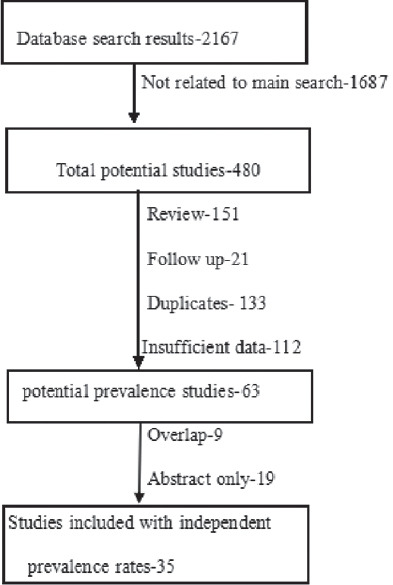
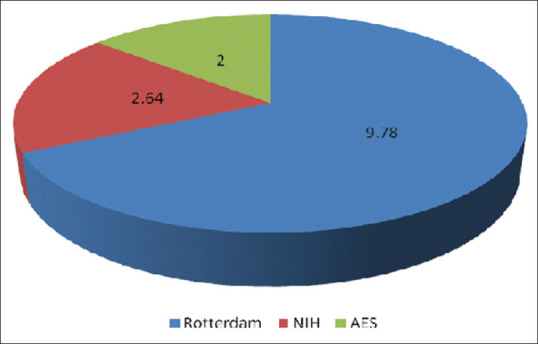
BACKGROUND: Polycystic ovary syndrome (PCOS), the major endocrinopathy among reproductive-aged women, is not yet perceived as an important health problem in the world. It affects 4%-20% of women of reproductive age worldwide. The prevalence, diagnosis, etiology, management, clinical practices, psychological issues, and prevention are some of the most confusing aspects associated with PCOS. AIM: The exact prevalence figures regarding PCOS are limited and unclear. The aim of this review is to summarize comprehensively the current knowledge on the prevalence of PCOS. MATERIALS AND METHODS: Literature search was performed through PubMed, ScienceDirect, Cochrane Library, and Google Scholar (up to December 2019). All relevant articles published in English language were identified following the Preferred Reporting Items for Systematic Reviews and Meta-Analyses guidelines. RESULTS: Our analysis yielded 27 surveys with a pooled mean prevalence of 21.27% using different diagnostic criteria. The proportion of women with PCOS also increased in the last decade. CONCLUSION: The current review summarizes and interprets the results of all published prevalence studies and highlights the burden of the syndrome, thereby supporting early identification and prevention of PCOS in order to reverse the persistent upward trend of prevalence.
Overview
The claims and statistics of this paper haven’t been checked yet.
Free: it reads the open-access text and checks the first 5 claims that cite a source we can check. Create a free account to check every claim.
Integrity signals
Registry
Cites
Statistics
Figures
Verification
Claims the paper makes
The claims and statistics of this paper haven’t been checked yet.
Free: it reads the open-access text and checks the first 5 claims that cite a source we can check. Create a free account to check every claim.
Claims other papers make about this one
Each is checked against this paper’s own text: does it say what the citing paper says it does?
The source backs part of the claim, not all of it — or backs it for a different population, condition or comparison.
In the citing paper
“Polycystic Ovary Syndrome (PCOS) is the most common endocrine-metabolic disorder affecting 6%–20% of populations [1–4].”
From Challenges in diagnosis and health care in polycystic ovary syndrome in Canada: a patient view to improve health care (2023) · cites this paper as [4]
Experimental — accuracy not yet measured
Self-check
Percentages, sums and reported differences re-computed from the paper’s own numbers.
The self-check needs the paper’s full text.
Citations
Cites
Preferred Reporting Items for Systematic Reviews and Meta-Analyses: the PRISMA statement
Moher, D., Liberati, A., Tetzlaff, J., Altman, D. G., & for the PRISMA Group (2009) · BMJ · doi:10.1136/bmj.b2535 · Cited by 83,823
Preferred reporting items for systematic reviews and meta-analyses: the PRISMA Statement.
(2009) · PubMed Central · Cited by 44,859
QUADAS-2: a revised tool for the quality assessment of diagnostic accuracy studies
Whiting, P. F., Rutjes, A. W. S., Westwood, M. E., Mallett, S., Deeks, J. J., Reitsma, J. B., Leeflang, M. M. G., Sterne, J. A. C., Bossuyt, P. M. M., & the QUADAS-2 Group* (2011) · Annals of Internal Medicine · doi:10.7326/0003-4819-155-8-201110180-00009 · Cited by 14,199
(2004) · Fertility and Sterility · doi:10.1016/j.fertnstert.2003.10.004 · Cited by 9,050
The Prevalence and Features of the Polycystic Ovary Syndrome in an Unselected Population
Azziz, R., Woods, K. S., Reyna, R., Key, T. J., Knochenhauer, E. S., & Yildiz, B. O. (2004) · The Journal of Clinical Endocrinology & Metabolism · doi:10.1210/jc.2003-032046 · Cited by 2,712 · cited 1×
“The prevalence of PCOS is frequently quoted between 2% and 26%.[27] The differences in diagnostic criteria, sample heterogeneity, socioeconomic level, medical care access, prevalence of influential risk factors, health and education/awareness were among the possible causes of substantial geographic disparities in the…”
BackgroundAzziz, R., Carmina, E., Dewailly, D., Diamanti-Kandarakis, E., Escobar-Morreale, H. F., Futterweit, W., Janssen, O. E., Legro, R. S., Norman, R. J., Taylor, A. E., et al. (2006) · The Journal of Clinical Endocrinology & Metabolism · doi:10.1210/jc.2006-0178 · Cited by 2,143 · cited 2×
“The AES requires the specific presence of clinical/ biochemical hyperandrogenism in combination with either oligoanovulation or polycystic ovaries.[12,13] The process of standardization of diagnosis confronts certain obstacles.”
BackgroundMethodAzziz, R., Carmina, E., Dewailly, D., Diamanti-Kandarakis, E., Escobar-Morreale, H. F., Futterweit, W., Janssen, O. E., Legro, R. S., Norman, R. J., Taylor, A. E., et al. (2009) · Fertility and Sterility · doi:10.1016/j.fertnstert.2008.06.035 · Cited by 2,132
Amenorrhea associated with bilateral polycystic ovaries
Stein, I. F., & Leventhal, M. L. (1935) · American Journal of Obstetrics and Gynecology · doi:10.1016/s0002-9378(15)30642-6 · Cited by 2,121 · cited 1×
“[14] Second, transvaginal ultrasonography is not routinely performed in adolescents, which restricts ovary visualization and therefore excludes any invasive Introduction S tein and Leventhal were the first to describe polycystic ovary syndrome (PCOS) more comprehensively in 1935.[1] With varied clinical manifestations…”
BackgroundMarch, W. A., Moore, V. M., Willson, K. J., Phillips, D. I. W., Norman, R. J., & Davies, M. J. (2010) · Human Reproduction · doi:10.1093/humrep/dep399 · Cited by 1,799
Bozdag, G., Mumusoglu, S., Zengin, D., Karabulut, E., & Yildiz, B. O. (2016) · Human Reproduction · doi:10.1093/humrep/dew218 · Cited by 1,526 · cited 1×
“[27] The differences in diagnostic criteria, sample heterogeneity, socioeconomic level, medical care access, prevalence of influential risk factors, health and education/awareness were among the possible causes of substantial geographic disparities in the prevalence rate.[28] Based on ancestral or geographical segrega…”
Background
Research works printed but not linked: 3
- Deswal, 2014, Prevalence of poly cystic ovary syndrome (PCOS) in North Indian women.Indian, J Health Well Being, 742
- Vijayan, 2013, Prevalence of polycystic ovary syndrome among students of a teaching collegiate hospital, Health Sci, 2319
- Schötz SN. Die Häufigkeit des Syndroms der Polycystischen Ovarienbei Frau – zu – Mann – Transsexuellen. Dissertation, Universität Erlangen; 2009.
Cited by
Items 601–655 of 655
Effectiveness of Ullilehyam in the Management of Artavakshaya: A Clinical Case Report
Sowmya, K., Sanadi*, S. M., & Shruti, R. (2026) · Journal of Ayurveda and Integrated Medical Sciences · doi:10.21760/jaims.11.4.76
Chouhan, P., Gehlot, M., Rajpurohit, M. S., Choudhary, S., Bindiya, B., & Monika, M. (2026) · International Journal of Advances in Nursing Management · doi:10.52711/2454-2652.2026.00022
Association of Anogenital Distance with Polycystic Ovarian Syndrome
Ravi, M., Puleria, R., Singh, S., Batra, A., & Lachyan, A. (2026) · The Journal of Obstetrics and Gynecology of India · doi:10.1007/s13224-026-02408-5
Eze, E., Ntakirutimana, L., Onaadepo, O., TerKimbi, S., Umar, A. H., Ani, E., & Abdulazeez, J. (2026) · International Journal of Women s Health · doi:10.2147/ijwh.s601229 · Cited by 2
“13,66 These findings imply the importance of individualized contraceptive counseling in metabolically vulnerable populations.”
Verbel, D. M., Almeida, E. C., Padilla, A. M., & Lázaro, J. P. M. (2026) · Revista Brasileira Ginecologia e Obstetrícia · doi:10.61622/rbgo/2026rbgo19
Farman, M. T. (2026) · Journal of Applied Mathematics and Computing · doi:10.1007/s12190-026-02838-4
“It has become more and more clear over the last ten years that patients with PCOS need the best possible clinical trials and medical attention [ 10 ].”
Ahmad, A., & Saleem, A. (2026) · Naunyn-Schmiedeberg s Archives of Pharmacology · doi:10.1007/s00210-026-05514-3
“The prevalence of PCOS varies from 2.2 to 26% (Deswal et al. 2020).”
InfluentialOch, P., Bornstein, S., & Steenblock, C. (2026) · International Medical Case Reports Journal · doi:10.2147/imcrj.s614140
Nayeem, J., Islam, M. M. T., Deeba, F., Rinki, S. S., Selim, S., Kazal, R. K., Kabir, Y., & Ali, L. (2026) · Gynecology and Obstetrics Clinical Medicine · doi:10.1136/gocm-2025-000287
Rajpoot, Z., Naveed, M., Mahmood, S., Azeem, A., Rehman, S. U., Khan, A. A., Al-Hoshani, N., Fakiha, K. G., Sagini, H. A., Mansouri, O. A., et al. (2026) · Open Chemistry · doi:10.1515/chem-2025-0238
“Variations in PCOS diagnosis rates exist across populations and diagnostic criteria, with estimates ranging between 4 % and 20 % [3].”
Liu, Y., Hu, S., Liang, X., Zhang, J., Qin, Y., Geng, C., & Zhang, Y. (2026) · Phenomics · doi:10.1007/s43657-026-00328-y
Samlal, K. C., Sanguinette, A., Hypolite, A., Cadoo, A., Henry, A., Ramsaran, A., Ganness, A., James, A., Rampersadsingh, P., Moore, A., et al. (2026) · Women & Health · doi:10.1080/03630242.2026.2687471 · Cited by 1
“Polyendocrine Metabolic Ovarian Syndrome (PMOS), previously known as Polycystic Ovarian Syndrome (PCOS), is a widely recognized endocrine disorder in reproductive-aged women (Teede et al. 2026) with a global prevalence estimated at 4–20 percent 1 (Deswal et al. 2020).”
Grzelak, M., & Kulikowska, E. (2026) · International Journal of Innovative Technologies in Social Science · doi:10.31435/ijitss.2(50).2026.5970
Knowledge Of PCOS Among Medical And Nursing Students Of Wah Medical College, Wah Cantt
Nadeem, S., Nadeem, M., Aslam, M., Saleem, S., Khan, K. W., & Imran, S. S. (2026) · HITEC medical and dental journal. · doi:10.69884/hmdj.5.2.3457
Liu, C., Luo, Y., Chen, T., You, J., & Wang, J. (2026) · Frontiers in Public Health · doi:10.3389/fpubh.2026.1854215
“Timely intervention has been demonstrated in numerous studies to significantly improve patient outcomes, prevent disease progression, and reduce associated complications (3).”
Sambasivan, J. V., Singhal, D. K., Singla, N., Pradeep, J., & Abdulhameed, A. (2026) · International Journal of Dentistry · doi:10.1155/ijod/9379119
“A subgroup multiple linear regression within the PCOS group ( n = 36), with PSS-4, HPI-8, and BMI as independent variables in the model for OHIP-14 total score, was statistically signi fi cant ( F [3,32] = 3.587, p ¼ 0 : 024; adjusted R 2 = 0.182).”
InfluentialToll-like receptor 4 knockout mice are protected against PMOS-like pathogenesis
Wiggins, K. D., Mundo, Z. D. D., Angulo, J. A. A., Naidu, N., Saba, A., Zhou, L., Garcia, C., Nguyen, C. M., Ujagar, N. S., Torre, J.-J. D. L., et al. (2026) · Reproduction · doi:10.1093/reprod/xaag081
BMI-dependent methylation and clinical signatures in North Indian women with PCOS
Rawat, K., Sandhu, A., Kumar, A., Saha, L., Walia, R., Saha, P. K., & Bhatia, A. (2026) · The Indian Journal of Medical Research · doi:10.25259/ijmr_2980_2025
Exosomal lncRNA-miRNA-mRNA regulatory axis may drive inflammation in polycystic ovary syndrome
Adhami, K., Karimian, M., & Karimian, Z. (2026) · Scientific Reports · doi:10.1038/s41598-026-61588-2
Quan, X., Xue, X., Ma, H., Yang, L., Chen, C., Liu, Y., Yao, K., Yang, H., Wang, R., Shi, L., et al. (2026) · Cells · doi:10.3390/cells15131220 · Cited by 1
“Polycystic ovary syndrome (PCOS) represents a common endocrine–gynecological condition that impacts 5–18% of women of childbearing age and constitutes a leading cause of female infertility globally [1,2].”
Verde, M. L., Marrapodi, M. M., Corte, L. D., Petillo, A., Fordellone, M., Uzunçıbuk, H., Piccolo, S., Nicoletti, G., & Minervini, G. (2026) · British Journal of Hospital Medicine · doi:10.31083/bjhm55373
Sisser, P., Sheppard, C., Sevchik, A., Barnes, S., Rao, M., Gilmore, N., Reddy, P., Kudeviz, S., Knecht, M., Sacca, L., et al. (2026) · Current Obstetrics and Gynecology Reports · doi:10.1007/s13669-026-00479-9
“It is characterized by multiple clinical phenotypes with varied presentations predominantly displaying signs of anovulation, hyperandrogenism, and polycystic ovaries visible on ultrasound [2, 3].”
Tasnim, M., Das, S., Tonoy, S. S., & Sazzad, T. M. S. (2026) · Health Information Science and Systems · doi:10.1007/s13755-026-00472-9 · Cited by 1
Chen, Z., Hao, S., Deng, J.-J., Wu, Y.-X., Liu, T.-J., Xia, M., Lin, A.-L., Chen, C., Feng, J.-Y., & Yang, H. W. (2026) · Research Square · doi:10.21203/rs.3.rs-10280475/v1
Zadeh, Z. A., Roshan, V. D., & Mirzaei, M. (2026) · Journal of Exercise Science & Fitness · doi:10.1016/j.jesf.2026.200499
Rakhi, R., Gupta, M., & Singh, A. K. (2026) · Proceedings of the Indian National Science Academy · doi:10.1007/s43538-026-00835-6
Akinola, L. A., Inyangudo, G. N., & Iduh, P. A. (2026) · Cureus · doi:10.7759/cureus.113121
Kaya, E., & Mamur, M. N. (2026) · Revista Científica de la Facultad de Ciencias Veterinarias · doi:10.52973/rcfcv-e363967
Pegg, A. G., Gruhn, J. R., Schütz, D., Franks, S., & Hoffmann, E. R. (2026) · F&S Reviews · doi:10.1016/j.xfnr.2026.100115
The lived experiences of reproductive-aged women with polycystic ovary syndrome: a qualitative study
Ward, K. J., Benzley, A. K., Stone, K. L. K., Wardell, E. S., Hughes, J. A., & Magnusson, B. M. (2026) · BMC Women s Health · doi:10.1186/s12905-026-04681-y
“PCOS affects up to 20% of women of reproductive age worldwide, including approximately 5 million women in the United States [2–4].”
Monsir, A. O., Lawlor, D. A., Gaunt, T. R., & Millard, L. A. C. (2026) · medRxiv · doi:10.64898/2026.07.23.26358666
Masyagutov, T. A., Gutov, M. R., Galamay, V. V., Mindiyarova, D. S., Gainullin, U. R., Khasherova, D. R., Sirazetdinova, A. V., Kuchaeva, D. E., Kuchaeva, D. E., Edrenkina, A. D., et al. (2026) · Obstetrics Gynecology and Reproduction · doi:10.17749/2313-7347/ob.gyn.rep.2026.768
Role of Ovarian Development Genes in the Pathogenesis of Polycystic Ovary Syndrome
Karahanoğlu, A., Özer, C., Terzi, Y. K., & ÇELİK, Z. (2026) · Medical Science and Discovery · doi:10.36472/msd.v13i7.1373 · Cited by 1
An Intelligent System for PCOS Prediction Using Machine Learning Techniques
Kashyap, D., & Thakur, B. (2026) · Lecture notes in networks and systems · doi:10.1007/978-3-032-27163-1_39
Albalawi, Y. A., & Mirghani, H. O. (2026) · Frontiers in Endocrinology · doi:10.3389/fendo.2026.1809000
Herbert, S., Squires, A. P., Gilligan, C., & Woolf, K. (2026) · Journal of the Academy of Nutrition and Dietetics · doi:10.1016/j.jand.2026.156433
Li, H., Chen, M., Deng, S., Shi, J., Shi, Y., Wan, Z., Zhang, C., Wu, Q., Qu, J., Ruan, J., et al. (2026) · Journal of Ethnopharmacology · doi:10.1016/j.jep.2026.122268 · Cited by 1
Badalyan, M., & Rosenbaum, D. L. (2026) · Women s Health · doi:10.1177/17455057261479600
Incidence of PCOS (polycystic ovary syndrome) among college students: A cross-sectional study
Varotariya, A., Patel, P., Patadia, H., & Priyadarshini, A. (2026) · BIO Web of Conferences · doi:10.1051/bioconf/202624900014
“The prevalence found here is lower than that reported by Deswal et al., which was a systematic review, whereas the present study was questionnaire-based [16].”
Setti, V., Battipaglia, C., Santini, E. M., Rusce, M. L., Mondini, A., Chedraui, P., & Genazzani, A. D. (2026) · European Gynecology & Obstetrics · doi:10.11138/ego.5
Lange, J., Scannell, N., Mantzioris, E., Moran, L., & Villani, A. M. (2026) · Nutrients · doi:10.3390/nu18183010
“Globally, the prevalence of PMOS affects approximately 12% of women, depending on the population studied and the criteria employed [4,5].”
Sharma, K. (2026) · International Journal of Scientific Research in Science and Technology · doi:10.32628/ijsrst2613503
Celani, K., Ramos, J. S., Hayles, C., Girard, D., & Prichard, I. J. (2026) · Research Quarterly for Exercise and Sport · doi:10.1080/02701367.2026.2728656
Gut Health and Hormones: Role of Probiotics as an Adjunct Therapy for PCOS
Khanam, D., Kumari, A., & Anjum, S. (2026) · Fertility & Reproduction · doi:10.1142/s266131822650009x
The involvement of polymorphisms in the MALAT1 and NEAT1 lncRNA genes in PCOS etiology
Lomteva, S. V., Sagamonova, K. Y., Ali, R., Ammar, M. N. A., Yachneva, S., & Александрова, А. А. (2026) · Egyptian Journal of Medical Human Genetics · doi:10.1186/s43042-026-00913-w
Duval, A., Berbrier, D. E., Crestol, A., Schwende, B. K., Ditto, B., & Usselman, C. W. (2026) · Journal of Health Psychology · doi:10.1177/13591053261489860
Sajjad, K., Maqsood, H., Aslam, A. H., & Shabana, N. A. (2026) · Gene Reports · doi:10.1016/j.genrep.2026.102666
Liponiosomal delivery of Trigonella foenum-graecum extract: Dual modulation of PCOS
Raju, M. G., Reddy, N. V. L. S., Malkapuram, M., Rout, R. R., Archana, B., & Madhavi, L. U. (2026) · Pharmacological Research - Natural Products · doi:10.1016/j.prenap.2026.100897
Mohamed, H. M., Khamis, M. A., Ahmed, G. H., Ibrahim, M., Abdelkawi, A. F., & Helm, A. A. B. (2026) · Research Square · doi:10.21203/rs.3.rs-10711922/v1
Sustained induction of PMOS ‐like phenotype in mice exposed to letrozole in drinking water
Stevenson, K. A., Kerbus, R. I., Anderson, G. M., & Decourt, C. (2026) · Journal of Neuroendocrinology · doi:10.1111/jne.70294
Ruetten, H. M., Ferrara, K., Haraki, A. S. E., Evans, R. J., Badlani, G. H., & Walker, S. J. (2026) · medRxiv · doi:10.64898/2026.10.20.26366044
Mango, A. (2026) · Springer eBooks · doi:10.1007/978-3-032-24372-0_3
Bagheri, R. B., Quchani, S. S. H., & Fathkouhi, M. R. (2025) · Crescent Journal of Medical and Biological Sciences · doi:10.34172/cjmb.2025.5040
Safari, N., Shafti, V., & Azarboo, A. (2025) · Sarem Journal of Medical Research · doi:10.66224/sjrm.10.2.4
Andonotopo, W., Setiawan, A., Bachnas, M. A., Pramono, M. B. A., Dewantiningrum, J., Lukas, E., Sanjaya, I. N. H., Wiradnyana, A. A. G. P., Kusuma, A. A. N. J., Gumilar, K. E., et al. (2026) · Bangladesh Journal of Endocrinology and Metabolism · doi:10.4103/bjem.bjem_45_26
Metadata
- Authors
- Pundir, C., Deswal, R., Narwal, V., & Dang, A.
- Affiliations
- Maharshi Dayanand University (IN)
- Corresponding author
- Pundir, ChandraS
- Venue
- Journal of Human Reproductive Sciences
- Published
- 2020
- Volume
- 13
- Issue
- 4
- Pages
- 261
- ISSN
- 0974-1208 (ISSN-L)
- PMC
- PMC7879843
- OpenAlex
- W3113549027
- Cited by
- 657
- References
- 70
- Citations by year
- 2026: 93 · 2025: 148 · 2024: 170 · 2023: 147 · 2022: 86 · 2021: 13
- FWCI
- 9.06
- Type
- journal article
- Language
- en
- Open access
- diamond
- doi.org
- Licence
- cc-by-nc-sa
- Locations
- Journal of Human Reproductive Sciences (publishedVersion, cc-by-nc-sa)
- PubMed Central (publishedVersion, cc-by-nc-sa)
- PubMed (publishedVersion)
- DOAJ (DOAJ: Directory of Open Access Journals) (submittedVersion, cc-by-sa)
- Topics
- Health Sciences › Medicine › Reproductive Medicine › Ovarian function and disorders
- Health Sciences › Medicine › Reproductive Medicine › Endometriosis Research and Treatment
- Life Sciences › Biochemistry, Genetics and Molecular Biology › Genetics › Genetic and Kidney Cyst Diseases
- Keywords
- polycystic ovary syndrome, prevalence, women of reproductive age, diagnostic criteria, prevalence trends, early detection, prevention
About these checks
Registry, retraction, Cites and statistics results are computed, not judged, with one exception: a printed reference that no index lists is read once by a model before it counts as a citation error. Claims are extracted by a model and kept only when their quote appears verbatim in the text; each cited source is then checked, with a model’s help, for whether it says what the claim relies on. Those verdicts can be wrong — read the claim’s quote and the cited source before relying on one.
Statistics and arithmetic are recomputed, not judged.
Confidence bands are shown only for fields calibrated on our annotated test set. None is calibrated yet, so no band is shown.
What counts as a claim ›How we measure confidence ›How we check this ›
Are you an author, or do you see a problem with this page? Request a review
Data sources
Bibliographic data: Semantic Scholar, OpenAlex, Crossref.
Contains information from the Semantic Scholar Academic Graph Datasets, made available under the ODC Attribution License (ODC-BY 1.0).
Semantic Scholar’s data is described in: Kinney, R., et al. (2023). The Semantic Scholar Open Data Platform. arXiv:2301.10140.
