

A fully coupled solid-particle microphysics scheme for stratospheric aerosol injections within the aerosol–chemistry–climate model SOCOL-AERv2
Open accessPublished version of a preprint
The DOI matches its Crossref record; 121 of the 122 references it cites were found in a registry or an index, and 1 are not checked yet.
Abstract
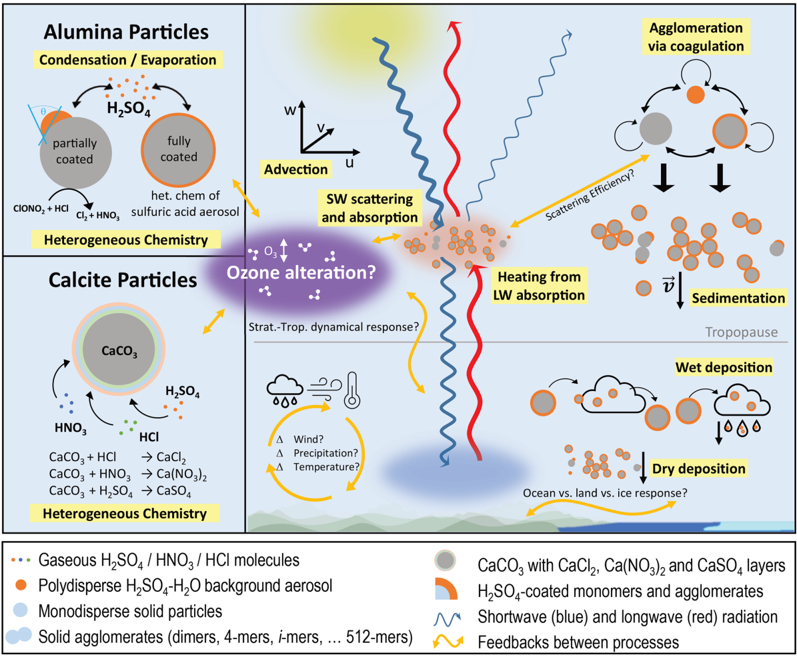
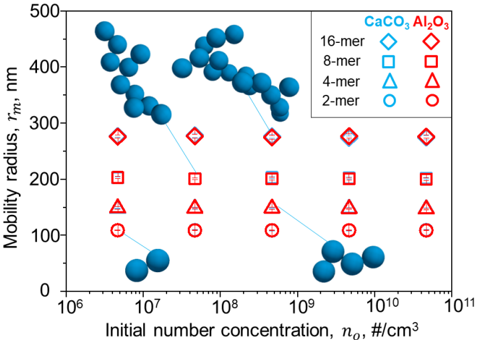
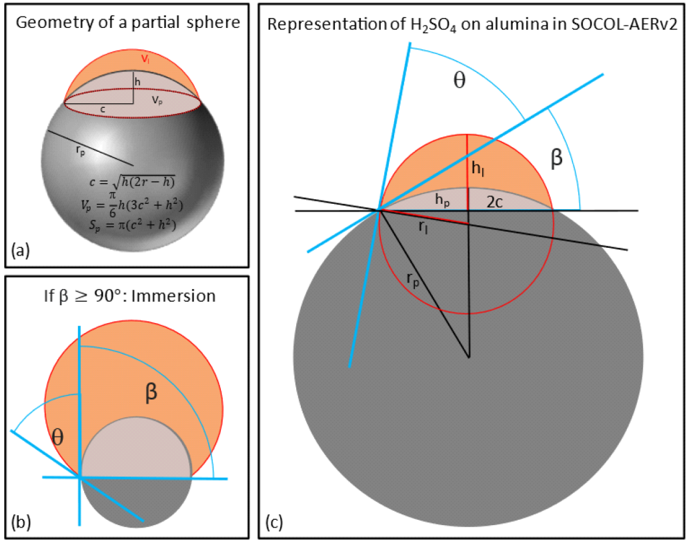
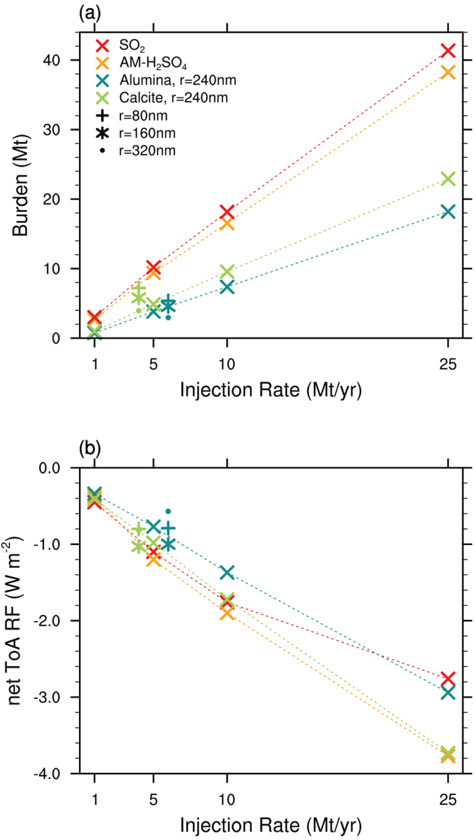
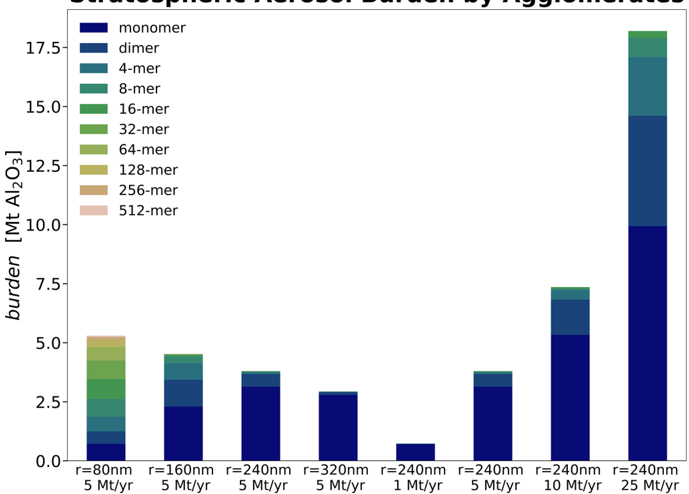
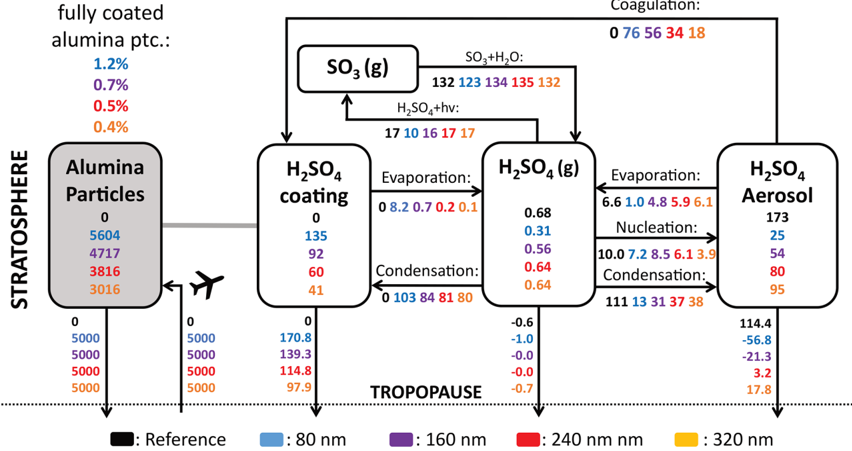
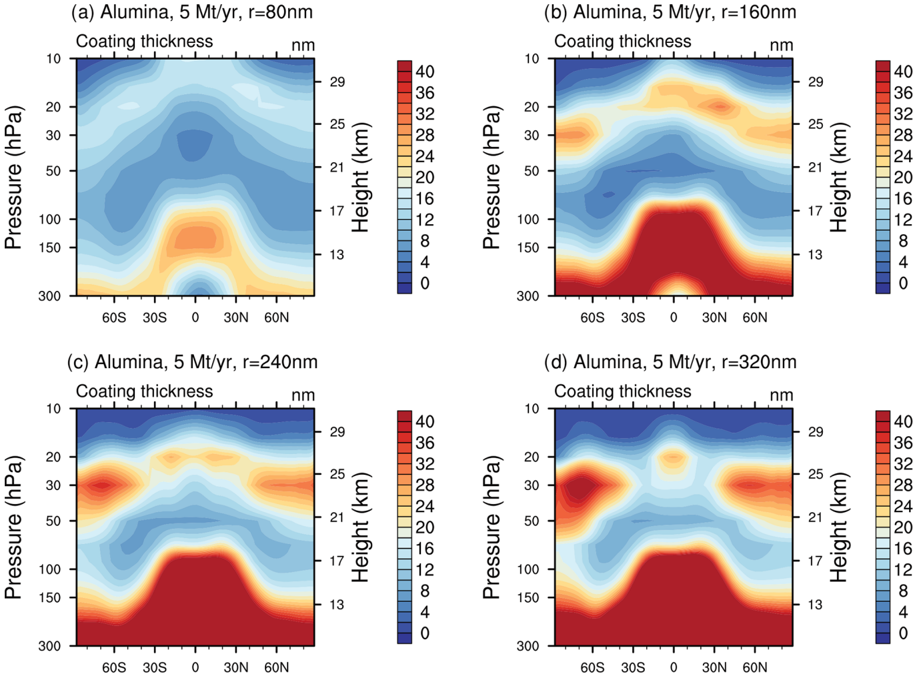
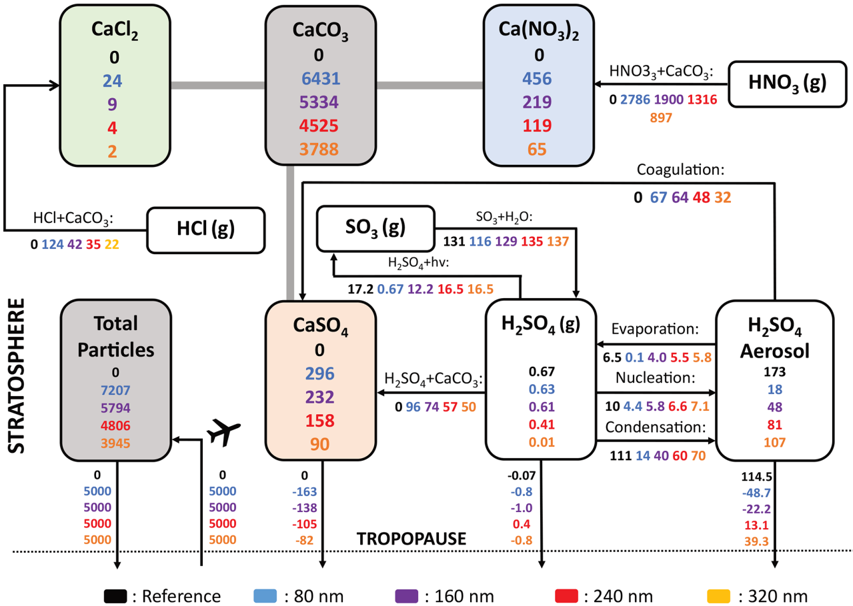
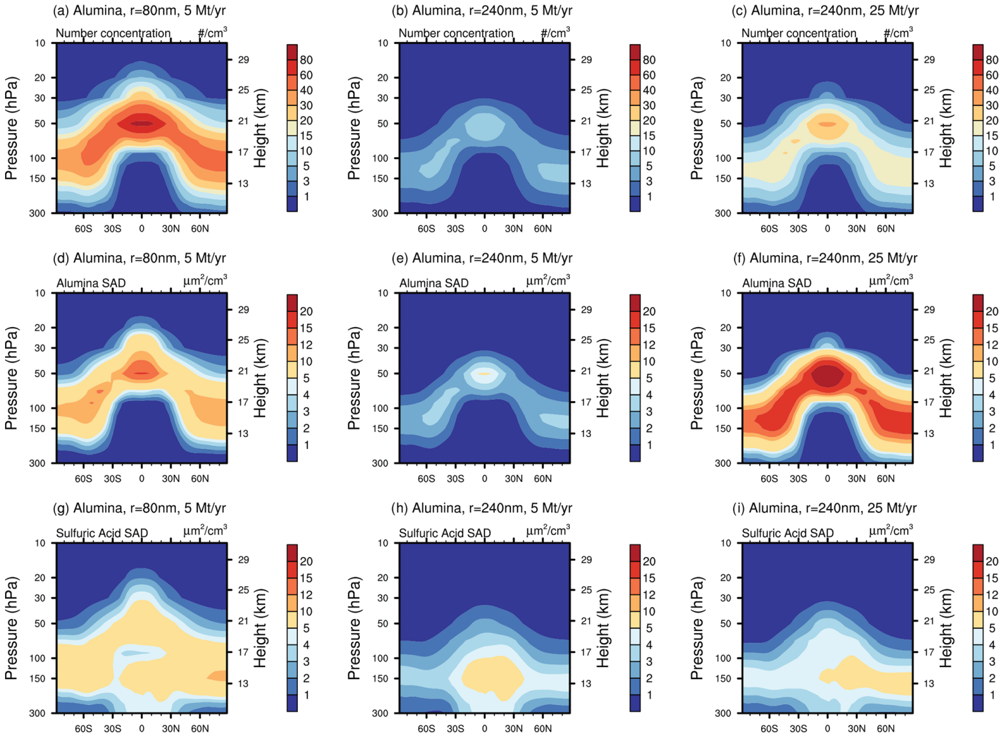
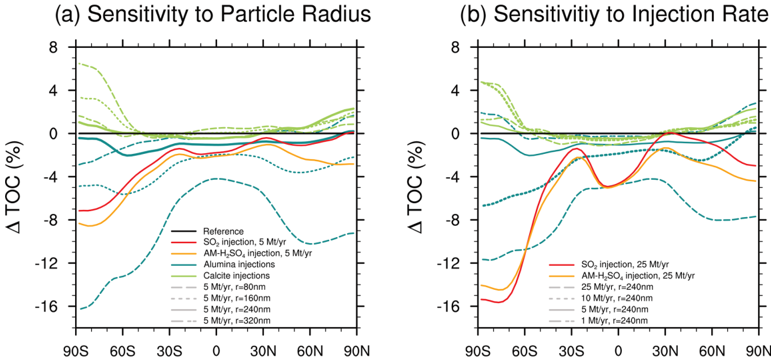
Recent studies have suggested that injection of solid particles such as alumina and calcite particles for stratospheric aerosol injection (SAI) instead of sulfur-based injections could reduce some of the adverse side effects of SAI such as ozone depletion and stratospheric heating. Here, we present a version of the global aerosol–chemistry–climate model SOCOL-AERv2 and the Earth system model (ESM) SOCOLv4 which incorporate a solid-particle microphysics scheme for assessment of SAI of solid particles. Microphysical interactions of the solid particle with the stratospheric sulfur cycle were interactively coupled to the heterogeneous chemistry scheme and the radiative transfer code (RTC) for the first time within an ESM. Therefore, the model allows simulation of heterogeneous chemistry at the particle surface as well as feedbacks between microphysics, chemistry, radiation and climate. We show that sulfur-based SAI results in a doubling of the stratospheric aerosol burden compared to the same mass injection rate of calcite and alumina particles with a radius of 240 nm. Most of the sulfuric acid aerosol mass resulting from SO 2 injection does not need to be lifted to the stratosphere but is formed after in situ oxidation and subsequent water uptake in the stratosphere. Therefore, to achieve the same radiative forcing, larger injection rates are needed for calcite and alumina particle injection than for sulfur-based SAI. The stratospheric sulfur cycle would be significantly perturbed, with a reduction in stratospheric sulfuric acid burden by 53 %, when injecting 5 Mt yr −1 (megatons per year) of alumina or calcite particles of 240 nm radius. We show that alumina particles will acquire a sulfuric acid coating equivalent to about 10 nm thickness if the sulfuric acid is equally distributed over the whole available particle surface area in the lower stratosphere. However, due to the steep contact angle of sulfuric acid on alumina particles, the sulfuric acid coating would likely not cover the entire alumina surface, which would result in available surface for heterogeneous reactions other than the ones on sulfuric acid. When applying realistic uptake coefficients of 1.0, 10 −5 and 10 −4 for H 2 SO 4 , HCl and HNO 3 , respectively, the same scenario with injections of calcite particles results in 94 % of the particle mass remaining in the form of CaCO 3 . This likely keeps the optical properties of the calcite particles intact but could significantly alter the heterogeneous reactions occurring on the particle surfaces. The major process uncertainties of solid-particle SAI are (1) the solid-particle microphysics in the injection plume and degree of agglomeration of solid particles on the sub-ESM grid scale, (2) the scattering properties of the resulting agglomerates, (3) heterogeneous chemistry on the particle surface, and (4) aerosol–cloud interactions. These uncertainties can only be addressed with extensive, coordinated experimental and modelling research efforts. The model presented in this work offers a useful tool for sensitivity studies and incorporating new experimental results on SAI of solid particles.
Overview
The claims and statistics of this paper haven’t been checked yet.
Free: it reads the open-access text and checks the first 5 claims that cite a source we can check. Create a free account to check every claim.
Integrity signals
Registry
Cites
Statistics
Figures
Verification
Claims the paper makes
The claims and statistics of this paper haven’t been checked yet.
Free: it reads the open-access text and checks the first 5 claims that cite a source we can check. Create a free account to check every claim.
Claims other papers make about this one
Each is checked against this paper’s own text: does it say what the citing paper says it does?
The source backs part of the claim, not all of it — or backs it for a different population, condition or comparison.
In the citing paper
“However, the use of these minerals has primarily been modeled with the assumption that they could be dispersed on a grid box scale with a single, optimal sub-micron particle size11,12.”
From Engineering and logistical concerns add practical limitations to stratospheric aerosol injection strategies (2025) · cites this paper as [11]
Experimental — accuracy not yet measuredThe source backs part of the claim, not all of it — or backs it for a different population, condition or comparison.
In the citing paper
“Vattioni (2024) and Weisenstein (2015) find that for continuous monomer injections over a large spread (S - N), coagulation increases with increases injection rate and decreasing monomer size, potentially favoring smaller local fluxes of monomers11,12.”
From Engineering and logistical concerns add practical limitations to stratospheric aerosol injection strategies (2025) · cites this paper as [11]
Experimental — accuracy not yet measuredThe cited source says what the claim attributes to it.
In the citing paper
“The impact of fractal aggregate formation on solid forcing efficiency has only been modeled as a result of coagulation during the lifetime of optimally dispersed monomers11.”
From Engineering and logistical concerns add practical limitations to stratospheric aerosol injection strategies (2025) · cites this paper as [11]
Self-check
Percentages, sums and reported differences re-computed from the paper’s own numbers.
The self-check needs the paper’s full text.
Citations
Cites
Mlawer, E. J., Taubman, S. J., Brown, P. D., Iacono, M. J., & Clough, S. A. (1997) · Journal of Geophysical Research: Atmospheres · doi:10.1029/97jd00237 · Cited by 8,419 · cited 2×
“…(2015), we accounted for condensation of H 2 SO 4 , not only on fully coated but also on partially coated solid particles The H 2 SO 4 condensation rates on solid particles are calculated as a function of the SAD of solid particles, their number density, the molecular diffusion coefficient of H 2…”
Calvin, K., Dasgupta, D., Krinner, G., Mukherji, A., Thorne, P. W., Trisos, C., Romero, J., Aldunce, P., Barrett, K., Blanco, G., et al. (2023) · doi:10.59327/ipcc/ar6-9789291691647 · Cited by 6,896
O’Neill, B. C., Kriegler, E., Ebi, K. L., Kemp-Benedict, E., Riahi, K., Rothman, D. S., van Ruijven, B. J., van Vuuren, D. P., Birkmann, J., Kok, K., et al. (2017) · Global Environmental Change · doi:10.1016/j.gloenvcha.2015.01.004 · Cited by 3,359
Parameterization of surface resistances to gaseous dry deposition in regional-scale numerical models
Wesely, M. L. (1989) · Atmospheric Environment (1967) · doi:10.1016/0004-6981(89)90153-4 · Cited by 2,304
Albedo enhancement by stratospheric sulfur injections: a contribution to resolve a policy dilemma?
Crutzen, P. J. (2006) · Climatic Change · doi:10.1007/s10584-006-9101-y · Cited by 1,541 · cited 1×
“…such as the Mt. Pinatubo eruption 1991 (e.g. Arfeuille et al., 2013; Thomason et al., 2018; Baran and Foot, 1994; Kovilakam et al., 2020) allow for model evaluation of the chemical and radiative impacts of large stratospheric sulfur emissions (e.g. Deshler et al., 2019; Quaglia et al., 2023).”
Mauritsen, T., Bader, J., Becker, T., Behrens, J., Bittner, M., Brokopf, R., Brovkin, V., Claussen, M., Crueger, T., Esch, M., et al. (2019) · Journal of Advances in Modeling Earth Systems · doi:10.1029/2018ms001400 · Cited by 1,520
Predicting global atmospheric ice nuclei distributions and their impacts on climate
DeMott, P. J., Prenni, A. J., Liu, X., Kreidenweis, S. M., Petters, M. D., Twohy, C. H., Richardson, M. S., Eidhammer, T., & Rogers, D. C. (2010) · Proceedings of the National Academy of Sciences · doi:10.1073/pnas.0910818107 · Cited by 1,453
Atmospheric component of the MPI‐M Earth System Model: ECHAM6
Stevens, B., Giorgetta, M., Esch, M., Mauritsen, T., Crueger, T., Rast, S., Salzmann, M., Schmidt, H., Bader, J., Block, K., et al. (2013) · Journal of Advances in Modeling Earth Systems · doi:10.1002/jame.20015 · Cited by 1,379 · cited 1×
“3) of a falling particle are in equilibrium (i.e F G F D ). i air p m ,i i 0 t ,i”
Ghosh, G. (1999) · Optics Communications · doi:10.1016/s0030-4018(99)00091-7 · Cited by 1,226
Roeckner, E., Brokopf, R., Esch, M., Giorgetta, M., Hagemann, S., Kornblueh, L., Manzini, E., Schlese, U., & Schulzweida, U. (2006) · Journal of Climate · doi:10.1175/jcli3824.1 · Cited by 1,183
Jungclaus, J. H., Fischer, N., Haak, H., Lohmann, K., Marotzke, J., Matei, D., Mikolajewicz, U., Notz, D., & von Storch, J. S. (2013) · Journal of Advances in Modeling Earth Systems · doi:10.1002/jame.20023 · Cited by 790
Vehkamäki, H., Kulmala, M., Napari, I., Lehtinen, K. E. J., Timmreck, C., Noppel, M., & Laaksonen, A. (2002) · Journal of Geophysical Research: Atmospheres · doi:10.1029/2002jd002184 · Cited by 663 · cited 1×
“3) of a falling particle are in equilibrium (i.e F G F D ). i air p m ,i i 0 t ,i”
G EOENGINEERING THE C LIMATE: History and Prospect
Keith, D. W. (2000) · Annual Review of Energy and the Environment · doi:10.1146/annurev.energy.25.1.245 · Cited by 567 · cited 1×
“…the stratospheric sulfur cycle is relatively well known and interactively simulated in many chemistry–climate models (e.g. Thomason and Peter, 2006; Deshler, 2008; Feinberg et al., 2019; Brodowsky et al., 2024), which makes it easier for modellers to investigate sulfur-based SAI scenarios.”
(2023) · Climate Change 2021 – The Physical Science Basis · doi:10.1017/9781009157896.002 · Cited by 474
20 reasons why geoengineering may be a bad idea
Robock, A., Jerch, K., & Bunzl, M. (2008) · Bulletin of the Atomic Scientists · doi:10.1080/00963402.2008.11461140 · Cited by 448 · cited 2×
“…et al., 2019; Brodowsky et al., 2021; Quaglia et al., 2023; Brodowsky et al., 2024) as well as to evaluate impacts of sulfur-based SAI scenarios (Heckendorn et al., 2009; Vattioni et al., 2019; Weisenstein et al., 2022; Wunderlin et al., 2024), which makes them the tools of choice to…”
Direct radiative effects of airborne microplastics
Revell, L. E., Kuma, P., Le Ru, E. C., Somerville, W. R. C., & Gaw, S. (2021) · Nature · doi:10.1038/s41586-021-03864-x · Cited by 372
Lesins, G., Chylek, P., & Lohmann, U. (2002) · Journal of Geophysical Research: Atmospheres · doi:10.1029/2001jd000973 · Cited by 341 · cited 1×
“…solid particles, their number density, the molecular diffusion coefficient of H 2 SO 4 , the difference be-tween the H 2 SO 4 partial pressure and the H 2 SO 4 , equilibrium vapour pressure, and the primary particle radius of every agglomerate to account for the Kelvin effect Evaporation 2 4 2 4 2 4”
Handbook of Mathematics for Engineers and Scientists
Polyanin, A. D., & Manzhirov, A. V. (2006) · Chapman & Hall/CRC eBooks · doi:10.1201/9781420010510 · Cited by 335 · cited 1×
“The baseline scenarios injected alumina and calcite particles at particle radii of 240 nm at a rate of 5 Mtyr − 1 (megatons per year).”
A global space-based stratospheric aerosol climatology: 1979–2016
Thomason, L. W., Ernest, N., Millán, L., Rieger, L., Bourassa, A., Vernier, J.-P., Manney, G., Luo, B., Arfeuille, F., & Peter, T. (2018) · Earth System Science Data · doi:10.5194/essd-10-469-2018 · Cited by 315 · cited 1×
“In addition, observations after large explosive volcanic eruptions such as the Mt. Pinatubo eruption 1991 (e.g. Arfeuille et al., 2013; Thomason et al., 2018; Baran and Foot, 1994; Kovilakam et al., 2020) allow for model evaluation of the chemical and radiative impacts of large stratospheric sulfur…”
Self-citationThe Sensitivity of Polar Ozone Depletion to Proposed Geoengineering Schemes
Tilmes, S., Müller, R., & Salawitch, R. (2008) · Science · doi:10.1126/science.1153966 · Cited by 298 · cited 2×
“…radiation with either too many large or too many small particles (Vattioni et al., 2019); (2) ozone depletion due to chlorine activation on aerosols (Tilmes et al., 2008; Weisenstein et al., 2022); and (3) absorption of mainly outgoing terrestrial radiation reducing the net radiative forcing and…”
Kennedy, J. J., Rayner, N. A., Atkinson, C. P., & Killick, R. E. (2019) · Journal of Geophysical Research: Atmospheres · doi:10.1029/2018jd029867 · Cited by 298
Technical note: A new comprehensive SCAVenging submodel for global atmospheric chemistry modelling
Tost, H., Jöckel, P., Kerkweg, A., Sander, R., & Lelieveld, J. (2006) · Atmospheric Chemistry and Physics · doi:10.5194/acp-6-565-2006 · Cited by 276
The Mobility and Structure of Aerosol Agglomerates
Rogak, S. N., Flagan, R. C., & Nguyen, H. V. (1993) · Aerosol Science and Technology · doi:10.1080/02786829308959582 · Cited by 269 · cited 1×
“(7) to (10) are then fed to the RTC of SOCOL-AERv2, where the absorption and the scattering due to solid particles are calculated for each spectral band”
On the vapor pressure of sulfuric acid
Ayers, G. P., Gillett, R. W., & Gras, J. L. (1980) · Geophysical Research Letters · doi:10.1029/gl007i006p00433 · Cited by 258 · cited 1×
“3) of a falling particle are in equilibrium (i.e F G F D ). i air p m ,i i 0 t ,i”
Falling Speed of Aerosol Particles
Kasten, F. (1968) · Journal of Applied Meteorology · doi:10.1175/1520-0450(1968)007<0944:fsoap>2.0.co;2 · Cited by 257 · cited 2×
“radius for solid-particle agglomerates (see previous subsub-section “Mobility radius”) and the spherical radius for liquid sulfuric acid aerosols for every possible combination of collisions, i.e. self-coagulation between aerosol mass bins of every category (40 liquid sulfuric acid mass bins and 10…”
The impact of geoengineering aerosols on stratospheric temperature and ozone
Heckendorn, P., Weisenstein, D., Fueglistaler, S., Luo, B. P., Rozanov, E., Schraner, M., Thomason, L. W., & Peter, T. (2009) · Environmental Research Letters · doi:10.1088/1748-9326/4/4/045108 · Cited by 254 · cited 1×
“…et al., 2019; Brodowsky et al., 2021; Quaglia et al., 2023; Brodowsky et al., 2024) as well as to evaluate impacts of sulfur-based SAI scenarios (Heckendorn et al., 2009; Vattioni et al., 2019; Weisenstein et al., 2022; Wunderlin et al., 2024), which makes them the tools of choice to evaluate…”
Self-citationKulmala, M., & Laaksonen, A. (1990) · The Journal of Chemical Physics · doi:10.1063/1.459519 · Cited by 232
Kerkweg, A., Buchholz, J., Ganzeveld, L., Pozzer, A., Tost, H., & Jöckel, P. (2006) · Atmospheric Chemistry and Physics · doi:10.5194/acp-6-4617-2006 · Cited by 222
Deshler, T. (2008) · Atmospheric Research · doi:10.1016/j.atmosres.2008.03.016 · Cited by 215 · cited 2×
“…the stratospheric sulfur cycle is relatively well known and interactively simulated in many chemistry–climate models (e.g. Thomason and Peter, 2006; Deshler, 2008; Feinberg et al., 2019; Brodowsky et al., 2024), which makes it easier for modellers to investigate sulfur-based SAI scenarios.”
Walcek, C. J. (2000) · Journal of Geophysical Research: Atmospheres · doi:10.1029/1999jd901142 · Cited by 206 · cited 2×
“…agglomerates (see previous subsub-section “Mobility radius”) and the spherical radius for liquid sulfuric acid aerosols for every possible combination of collisions, i.e. self-coagulation between aerosol mass bins of every category (40 liquid sulfuric acid mass bins and 10 partially…”
Ammann, M., Cox, R. A., Crowley, J. N., Jenkin, M. E., Mellouki, A., Rossi, M. J., Troe, J., & Wallington, T. J. (2013) · Atmospheric Chemistry and Physics · doi:10.5194/acp-13-8045-2013 · Cited by 204 · cited 2×
“Furthermore, heterogeneous chemistry and optical properties of sulfuric acid aerosols in the stratosphere are also relatively well known from experimental studies (e.g. Burkholder et al., 2020; Ammann et al., 2013).”
A two‐dimensional model of sulfur species and aerosols
Weisenstein, D. K., Yue, G. K., Ko, M. K. W., Sze, N., Rodriguez, J. M., & Scott, C. J. (1997) · Journal of Geophysical Research: Atmospheres · doi:10.1029/97jd00901 · Cited by 203 · cited 2×
“…(R1), their data are not representative of low strato-spheric HCl partial pressures To extrapolate the experimental data of Molina et al. (1997) to typical stratospheric values, we applied a Langmuir–Hinshelwood representation of adsorption and reaction as detailed in Vattioni et al. (2023b).”
Reflecting Sunlight: Recommendations for Solar Geoengineering Research and Research Governance
Committee on Developing a Research Agenda and Research Governance Approaches for Climate Intervention Strategies that Reflect Sunlight to Cool Earth, Board on Atmospheric Sciences and Climate, Committee on Science, T., Studies, D. O. E. A. L., Affairs, P. A. G., & National Academies of Sciences, E. (2021) · doi:10.17226/25762 · Cited by 189
Flame synthesis of functional nanostructured materials and devices: Surface growth and aggregation
Kelesidis, G. A., Goudeli, E., & Pratsinis, S. E. (2017) · Proceedings of the Combustion Institute · doi:10.1016/j.proci.2016.08.078 · Cited by 178 · cited 1×
“Summing up over all mass bins yields the total scattering and absorption coefficient ( (cid:15) sca and (cid:15) abs ) for each spectral SW band The extinction coefficient ( (cid:15) ext ) and the single scattering albedo ( ω ssa ) are given by Eqs.”
Self-citationStratospheric solar geoengineering without ozone loss
Keith, D. W., Weisenstein, D. K., Dykema, J. A., & Keutsch, F. N. (2016) · Proceedings of the National Academy of Sciences · doi:10.1073/pnas.1615572113 · Cited by 176
Self-citationEvolution of nanoparticle size and mixing state near the point of emission
Jacobson, M. (2004) · Atmospheric Environment · doi:10.1016/j.atmosenv.2004.01.014 · Cited by 172 · cited 1×
“3) of a falling particle are in equilibrium (i.e F G F D ). i air p m ,i i 0 t ,i”
Sheng, J., Weisenstein, D. K., Luo, B., Rozanov, E., Stenke, A., Anet, J., Bingemer, H., & Peter, T. (2015) · Journal of Geophysical Research: Atmospheres · doi:10.1002/2014jd021985 · Cited by 169 · cited 7×
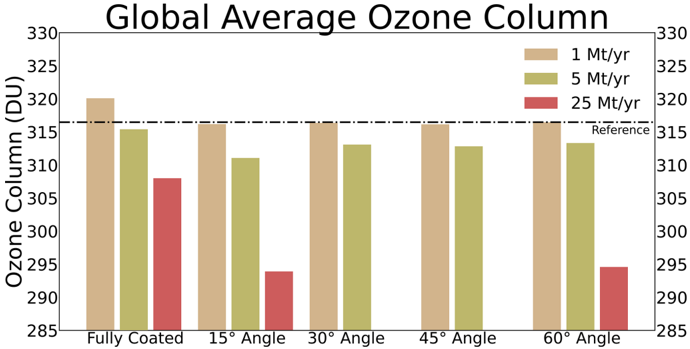
“Impacts on stratospheric ozone from SAI of solid particles were 2 2 indicated reduced impacts on modelled stratospheric ozone”
InfluentialSelf-citationSensitivity of Aerosol Distribution and Climate Response to Stratospheric SO2 Injection Locations
Tilmes, S., Richter, J. H., Mills, M. J., Kravitz, B., MacMartin, D. G., Vitt, F., Tribbia, J. J., & Lamarque, J. (2017) · Journal of Geophysical Research: Atmospheres · doi:10.1002/2017jd026888 · Cited by 164
Reflecting Sunlight: Recommendations for Solar Geoengineering Research and Research Governance
Field, C., Cheung, W., Dilling, L., Frumhoff, P., Greely, H., Hordequin, M., Hurrell, J., Light, A., Lin, A., MacMartin, D., et al. (2021) · doi:10.2172/1781700 · Cited by 163 · cited 1×
“Shepherd, 2012; Schäfer et al., 2015; National Research Council, 2015; Field et al., 2021) of sulfuric acid aerosol precursor species such as SO . has a number of reasons: due to the natural occurrence of sulfuric acid aerosols in the atmosphere, the stratospheric sulfur cycle is relatively well…”
Stenke, A., Schraner, M., Rozanov, E., Egorova, T., Luo, B., & Peter, T. (2013) · Geoscientific Model Development · doi:10.5194/gmd-6-1407-2013 · Cited by 162 · cited 1×
“Despite the lack of in situ solid-particle measurements in the stratosphere to evaluate the solid-particle module presented here, the SOCOL models have been extensively”
Self-citationA temporary, moderate and responsive scenario for solar geoengineering
Keith, D. W., & MacMartin, D. G. (2015) · Nature Climate Change · doi:10.1038/nclimate2493 · Cited by 148 · cited 1×
“Furthermore, heterogeneous chemistry and optical properties of sulfuric acid aerosols in the stratosphere are also relatively well known from experimental studies (e.g. Burkholder et al., 2020; Ammann et al., 2013).”
Pierce, J. R., Weisenstein, D. K., Heckendorn, P., Peter, T., & Keith, D. W. (2010) · Geophysical Research Letters · doi:10.1029/2010gl043975 · Cited by 146 · cited 1×
“The latter scenario assumes that an aerosol size distribution with a mean radius of 0.095 µm can be produced by injecting gaseous H 2 SO 4 into an aircraft plume (Pierce et al., 2010; Benduhn et al., 2016; Vattioni et al., 2019; Weisenstein et al., 2022).”
InfluentialSelf-citationVisioni, D., MacMartin, D. G., Kravitz, B., Boucher, O., Jones, A., Lurton, T., Martine, M., Mills, M. J., Nabat, P., Niemeier, U., et al. (2021) · Atmospheric Chemistry and Physics · doi:10.5194/acp-21-10039-2021 · Cited by 145 · cited 2×
“…(3) absorption of mainly outgoing terrestrial radiation reducing the net radiative forcing and resulting in stratospheric warming, which changes the large-scale atmospheric circulation and global and regional precipitation patterns (Aquila et al., 2014; Tilmes et al., 2017; Visioni et al., 2021;…”
Chlorine activation and enhanced ozone depletion induced by wildfire aerosol
Solomon, S., Stone, K., Yu, P., Murphy, D. M., Kinnison, D., Ravishankara, A. R., & Wang, P. (2023) · Nature · doi:10.1038/s41586-022-05683-0 · Cited by 141
National Research Council (2015) · National Academies Press eBooks · doi:10.17226/18988 · Cited by 136
Solar geoengineering using solid aerosol in the stratosphere
Weisenstein, D. K., Keith, D. W., & Dykema, J. A. (2015) · Atmospheric Chemistry and Physics · doi:10.5194/acp-15-11835-2015 · Cited by 132 · cited 3×
“Grav-itational and convective coagulation are not considered as they are of minor importance for submicrometre particles (Weisenstein et al., 2015”
InfluentialSelf-citationScenarios for modeling solar radiation modification
MacMartin, D. G., Visioni, D., Kravitz, B., Richter, J. H., Felgenhauer, T., Lee, W. R., Morrow, D. R., Parson, E. A., & Sugiyama, M. (2022) · Proceedings of the National Academy of Sciences · doi:10.1073/pnas.2202230119 · Cited by 125
A new parameterization of H2SO4/H2O aerosol composition: Atmospheric implications
Tabazadeh, A., Toon, O. B., Clegg, S. L., & Hamill, P. (1997) · Geophysical Research Letters · doi:10.1029/97gl01879 · Cited by 123 · cited 1×
“3) of a falling particle are in equilibrium (i.e F G F D ). i air p m ,i i 0 t ,i”
Improved aerosol radiative properties as a foundation for solar geoengineering risk assessment
Dykema, J. A., Keith, D. W., & Keutsch, F. N. (2016) · Geophysical Research Letters · doi:10.1002/2016gl069258 · Cited by 123 · cited 2×
“…solid particles, their number density, the molecular diffusion coefficient of H 2 SO 4 , the difference be-tween the H 2 SO 4 partial pressure and the H 2 SO 4 , equilibrium vapour pressure, and the primary particle radius of every agglomerate to account for the Kelvin effect Evaporation 2 4 2 4 2 4”
Self-citationAquila, V., Garfinkel, C. I., Newman, P. A., Oman, L. D., & Waugh, D. W. (2014) · Geophysical Research Letters · doi:10.1002/2013gl058818 · Cited by 122 · cited 3×
“At the same time Ferraro et al. (2011) and Ferraro et al. (2015) used a radiative transfer code (RTC) and a general circulation model, respectively, to quantify stratospheric heating resulting from some materials as well as the dynamical stratospheric feedbacks, while prescribing the stratospheric…”
Climate Engineering Responses to Climate EmergenciesPreprint
Blackstock, J. J., Battisti, D. S., Caldeira, K., Eardley, D. M., Katz, J. I., Keith, D. W., Patrinos, A. A. N., Schrag, D. P., Socolow, R. H., & Koonin, S. E. (2009) · arXiv (Cornell University) · doi:10.48550/arxiv.0907.5140 · Cited by 114
The Global Space-based Stratospheric Aerosol Climatology (version 2.0): 1979–2018
Kovilakam, M., Thomason, L. W., Ernest, N., Rieger, L., Bourassa, A., & Millán, L. (2020) · Earth System Science Data · doi:10.5194/essd-12-2607-2020 · Cited by 113 · cited 2×
“…large explosive volcanic eruptions such as the Mt. Pinatubo eruption 1991 (e.g. Arfeuille et al., 2013; Thomason et al., 2018; Baran and Foot, 1994; Kovilakam et al., 2020) allow for model evaluation of the chemical and radiative impacts of large stratospheric sulfur emissions (e.g. Deshler et…”
Coagulation–Agglomeration of Fractal-like Particles: Structure and Self-Preserving Size Distribution
Goudeli, E., Eggersdorfer, M. L., & Pratsinis, S. E. (2015) · Langmuir · doi:10.1021/la504296z · Cited by 111 · cited 1×
“(cid:15) ext = (cid:15) sca + (cid:15) (8) Additionally, the bulk asymmetry factor ( g asy ) for the solid aerosol size distribution is calculated by the sum of each mass bin’s asymmetry factor ( g asy ,i ) weighted by the corresponding scattering coefficient Parameters derived from Eqs.”
Stratospheric aerosol particles and solar-radiation management
Pope, F. D., Braesicke, P., Grainger, R. G., Kalberer, M., Watson, I. M., Davidson, P. J., & Cox, R. A. (2012) · Nature Climate Change · doi:10.1038/nclimate1528 · Cited by 109 · cited 2×
“…subject to large uncertainties Nevertheless, there have been several studies that investigated SAI scenarios using solid particles Fujii (2011) and Pope et al. (2012) were among the first conceptual studies which pointed at potential benefits, such as better scattering properties, from SAI of…”
Long, L. L., Querry, M. R., Bell, R. J., & Alexander, R. W. (1993) · Infrared Physics · doi:10.1016/0020-0891(93)90008-u · Cited by 103 · cited 1×
“…solid particles, their number density, the molecular diffusion coefficient of H 2 SO 4 , the difference be-tween the H 2 SO 4 partial pressure and the H 2 SO 4 , equilibrium vapour pressure, and the primary particle radius of every agglomerate to account for the Kelvin effect Evaporation 2 4 2 4 2 4”
The cost of stratospheric aerosol injection through 2100
Smith, W. (2020) · Environmental Research Letters · doi:10.1088/1748-9326/aba7e7 · Cited by 102 · cited 2×
“SAI would be feasible at relatively low cost (Smith, 2020, i.e. about USD 18 billion per year), but it also entails considerable risks such as adverse environmental side effects and challenges such as governance of ethical considerations on global and inter-generational equity and the power of…”
Rozanov, E., Zubov, V. A., Schlesinger, M. E., Yang, F., & Andronova, N. G. (1999) · Journal of Geophysical Research Atmospheres · doi:10.1029/1999jd900138 · Cited by 101 · cited 1×
“Following Spyrogianni et al. (2018) we used the mobility radius for calculation of the terminal velocity The terminal velocity of a falling particle in a fluid can be described with Stokes’ law, when the Reynolds number is significantly smaller than 1 (Seinfeld and Pandis, 1997) This applies to…”
Enhanced Light Absorption and Radiative Forcing by Black Carbon Agglomerates
Kelesidis, G. A., Neubauer, D., Fan, L., Lohmann, U., & Pratsinis, S. E. (2022) · Environmental Science & Technology · doi:10.1021/acs.est.2c00428 · Cited by 98 · cited 1×
“(cid:15) ext = (cid:15) sca + (cid:15) (8) Additionally, the bulk asymmetry factor ( g asy ) for the solid aerosol size distribution is calculated by the sum of each mass bin’s asymmetry factor ( g asy ,i ) weighted by the corresponding scattering coefficient Parameters derived from Eqs.”
Self-citationDeshler, T., Luo, B., Kovilakam, M., Peter, T., & Kalnajs, L. E. (2019) · Journal of Geophysical Research: Atmospheres · doi:10.1029/2018jd029558 · Cited by 96 · cited 2×
“…such as the Mt. Pinatubo eruption 1991 (e.g. Arfeuille et al., 2013; Thomason et al., 2018; Baran and Foot, 1994; Kovilakam et al., 2020) allow for model evaluation of the chemical and radiative impacts of large stratospheric sulfur emissions (e.g. Deshler et al., 2019; Quaglia et al., 2023).”
Self-citationMorphology and mobility diameter of carbonaceous aerosols during agglomeration and surface growth
Kelesidis, G. A., Goudeli, E., & Pratsinis, S. E. (2017) · Carbon · doi:10.1016/j.carbon.2017.06.004 · Cited by 95
Self-citationa serious look at geoengineering
Keith, D. W., & Dowlatabadi, H. (1992) · Eos, Transactions American Geophysical Union · doi:10.1029/91eo00231 · Cited by 94 · cited 1×
“…the stratospheric sulfur cycle is relatively well known and interactively simulated in many chemistry–climate models (e.g. Thomason and Peter, 2006; Deshler, 2008; Feinberg et al., 2019; Brodowsky et al., 2024), which makes it easier for modellers to investigate sulfur-based SAI scenarios.”
Dykema, J. A., Keith, D. W., Anderson, J. G., & Weisenstein, D. (2014) · Philosophical Transactions of the Royal Society A: Mathematical, Physical and Engineering Sciences · doi:10.1098/rsta.2014.0059 · Cited by 92
Self-citationClyne, M., Lamarque, J.-F., Mills, M. J., Khodri, M., Ball, W., Bekki, S., Dhomse, S. S., Lebas, N., Mann, G., Marshall, L., et al. (2021) · Atmospheric Chemistry and Physics · doi:10.5194/acp-21-3317-2021 · Cited by 91
Self-citationTost, H., Jöckel, P., Kerkweg, A., Pozzer, A., Sander, R., & Lelieveld, J. (2007) · Atmospheric Chemistry and Physics · doi:10.5194/acp-7-2733-2007 · Cited by 89
(1994) · Journal of Geophysical Research: Atmospheres · doi:10.1029/94jd02044 · Cited by 88 · cited 2×
“…observations after large explosive volcanic eruptions such as the Mt. Pinatubo eruption 1991 (e.g. Arfeuille et al., 2013; Thomason et al., 2018; Baran and Foot, 1994; Kovilakam et al., 2020) allow for model evaluation of the chemical and radiative impacts of large stratospheric sulfur…”
The reaction of ClONO2 with HCl on aluminum oxide
Molina, M. J., Molina, L. T., Zhang, R., Meads, R. F., & Spencer, D. D. (1997) · Geophysical Research Letters · doi:10.1029/97gl01560 · Cited by 88 · cited 5×
“(R3 Though Molina et al. (1997) measured uptake coefficients for Reaction (R1), their data are not representative of low strato-spheric HCl partial pressures To extrapolate the experimental data of Molina et al. (1997) to typical stratospheric values, we applied a Langmuir–Hinshelwood representation…”
InfluentialArfeuille, F., Luo, B. P., Heckendorn, P., Weisenstein, D., Sheng, J. X., Rozanov, E., Schraner, M., Brönnimann, S., Thomason, L. W., & Peter, T. (2013) · Atmospheric Chemistry and Physics · doi:10.5194/acp-13-11221-2013 · Cited by 88 · cited 2×
“In addition, observations after large explosive volcanic eruptions such as the Mt. Pinatubo eruption 1991 (e.g. Arfeuille et al., 2013; Thomason et al., 2018; Baran and Foot, 1994; Kovilakam et al., 2020) allow for model evaluation of the chemical and radiative impacts of large stratospheric sulfur…”
Self-citationSolar geoengineering to limit the rate of temperature change
MacMartin, D. G., Caldeira, K., & Keith, D. W. (2014) · Philosophical Transactions of the Royal Society A: Mathematical, Physical and Engineering Sciences · doi:10.1098/rsta.2014.0134 · Cited by 86 · cited 1×
“Furthermore, heterogeneous chemistry and optical properties of sulfuric acid aerosols in the stratosphere are also relatively well known from experimental studies (e.g. Burkholder et al., 2020; Ammann et al., 2013).”
Stratospheric heating by potential geoengineering aerosols: HEATING BY GEOENGINEERING AEROSOLS
Ferraro, A. J., Highwood, E. J., & Charlton-Perez, A. J. (2011) · Geophysical Research Letters · doi:10.1029/2011gl049761 · Cited by 84 · cited 2×
“At the same time Ferraro et al. (2011) and Ferraro et al. (2015) used a radiative transfer code (RTC) and a general circulation model, respectively, to quantify stratospheric heating resulting from some materials as well as the dynamical stratospheric feedbacks, while prescribing the stratospheric…”
Yue, G. K., Poole, L. R., Wang, P. ‐., & Chiou, E. W. (1994) · Journal of Geophysical Research: Atmospheres · doi:10.1029/93jd02989 · Cited by 84 · cited 1×
“3) of a falling particle are in equilibrium (i.e F G F D ). i air p m ,i i 0 t ,i”
Feinberg, A., Sukhodolov, T., Luo, B.-P., Rozanov, E., Winkel, L. H. E., Peter, T., & Stenke, A. (2019) · Geoscientific Model Development · doi:10.5194/gmd-12-3863-2019 · Cited by 84 · cited 14×
“(7) to (10) are then fed to the RTC of SOCOL-AERv2, where the absorption and the scattering due to solid particles are calculated for each spectral band”
InfluentialSelf-citationVisioni, D., Robock, A. D., Haywood, J., Henry, M., Tilmes, S., MacMartin, D. G., Kravitz, B., Doherty, S. J., Moore, J. C., Lennard, C., et al. (2024) · Geoscientific model development · doi:10.5194/gmd-17-2583-2024 · Cited by 79
Global 2-D intercomparison of sectional and modal aerosol modules
Weisenstein, D. K., Penner, J. E., Herzog, M., & Liu, X. (2007) · Atmospheric Chemistry and Physics · doi:10.5194/acp-7-2339-2007 · Cited by 77
Springtime arctic ozone depletion forces northern hemisphere climate anomalies
Friedel, M., Chiodo, G., Stenke, A., Domeisen, D. I. V., Fueglistaler, S., Anet, J. G., & Peter, T. (2022) · Nature Geoscience · doi:10.1038/s41561-022-00974-7 · Cited by 77
Self-citationRadiative forcing caused by rocket engine emissions
Ross, M. N., & Sheaffer, P. M. (2014) · Earth's Future · doi:10.1002/2013ef000160 · Cited by 72 · cited 2×
“…flow-tube experiments (Molina et al., 1997), 2D chemistry transport modelling (Jackman et al., 1998; Danilin et al., 2001) and conceptual methods (Ross and Sheaffer, 2014) However, the rocket exhaust investigated in these studies also contains other species such as water, HCl and black carbon,…”
Semi-empirical model of absorption and scattering by isotropic fractal aggregates of spheres
Rannou, P., McKay, C. P., Botet, R. S., & Cabane, M. (1999) · Planetary and Space Science · doi:10.1016/s0032-0633(99)00007-0 · Cited by 70 · cited 1×
“…solid particles, their number density, the molecular diffusion coefficient of H 2 SO 4 , the difference be-tween the H 2 SO 4 partial pressure and the H 2 SO 4 , equilibrium vapour pressure, and the primary particle radius of every agglomerate to account for the Kelvin effect Evaporation 2 4 2 4 2 4”
Geoengineering the climate: an overview and update
Shepherd, J. G. (2012) · Philosophical Transactions of the Royal Society A: Mathematical, Physical and Engineering Sciences · doi:10.1098/rsta.2012.0186 · Cited by 69 · cited 2×
“Shepherd, 2012; Schäfer et al., 2015; National Research Council, 2015; Field et al., 2021) of sulfuric acid aerosol precursor species such as SO . has a number of reasons: due to the natural occurrence of sulfuric acid aerosols in the atmosphere, the stratospheric sulfur cycle is relatively well…”
Quaglia, I., Timmreck, C., Niemeier, U., Visioni, D., Pitari, G., Brodowsky, C., Brühl, C., Dhomse, S. S., Franke, H., Laakso, A., et al. (2023) · Atmospheric Chemistry and Physics · doi:10.5194/acp-23-921-2023 · Cited by 69 · cited 2×
“…such as the Mt. Pinatubo eruption 1991 (e.g. Arfeuille et al., 2013; Thomason et al., 2018; Baran and Foot, 1994; Kovilakam et al., 2020) allow for model evaluation of the chemical and radiative impacts of large stratospheric sulfur emissions (e.g. Deshler et al., 2019; Quaglia et al., 2023).”
Self-citationSoot light absorption and refractive index during agglomeration and surface growth
Kelesidis, G. A., & Pratsinis, S. E. (2018) · Proceedings of the Combustion Institute · doi:10.1016/j.proci.2018.08.025 · Cited by 68 · cited 1×
“Summing up over all mass bins yields the total scattering and absorption coefficient ( (cid:15) sca and (cid:15) abs ) for each spectral SW band The extinction coefficient ( (cid:15) ext ) and the single scattering albedo ( ω ssa ) are given by Eqs.”
Self-citationClimatic impacts of stratospheric geoengineering with sulfate, black carbon and titania injection
Jones, A. C., Haywood, J. M., & Jones, A. (2016) · Atmospheric Chemistry and Physics · doi:10.5194/acp-16-2843-2016 · Cited by 67 · cited 2×
“Later, Jones et al. (2016) was the first study that compared tropospheric climate impacts from SAI of sulfuric acid aerosols with injections of TiO 2 and BC using a global circulation model with an interactive ocean module, while simulating injection and transport of solid particles with prescribed…”
Ferraro, A. J., Charlton‐Perez, A. J., & Highwood, E. J. (2015) · Journal of Geophysical Research: Atmospheres · doi:10.1002/2014jd022734 · Cited by 65 · cited 2×
“At the same time Ferraro et al. (2011) and Ferraro et al. (2015) used a radiative transfer code (RTC) and a general circulation model, respectively, to quantify stratospheric heating resulting from some materials as well as the dynamical stratospheric feedbacks, while prescribing the stratospheric…”
The unsuitability of meteoritic and other nuclei for polar stratospheric cloud freezing
Biermann, U. M., Presper, T., Koop, T., Mößinger, J., Crutzen, P. J., & Peter, T. (1996) · Geophysical Research Letters · doi:10.1029/96gl01577 · Cited by 64
Self-citationJones, A., Haywood, J. M., Scaife, A. A., Boucher, O., Henry, M., Kravitz, B., Lurton, T., Nabat, P., Niemeier, U., Séférian, R., et al. (2022) · Atmospheric Chemistry and Physics · doi:10.5194/acp-22-2999-2022 · Cited by 61
A global modeling study of solid rocket aluminum oxide emission effects on stratospheric ozone
Jackman, C. H., Considine, D. B., & Fleming, E. L. (1998) · Geophysical Research Letters · doi:10.1029/98gl00403 · Cited by 55
Weisenstein, D. K., Visioni, D., Franke, H., Niemeier, U., Vattioni, S., Chiodo, G., Peter, T., & Keith, D. W. (2022) · Atmospheric Chemistry and Physics · doi:10.5194/acp-22-2955-2022 · Cited by 53 · cited 5×
“…burden (i.e . gigagrams of sulfur, Gg S), fluxes and injection rates (i.e GgSyr − 1 ) in both SAI and non-SAI studies (e. Feinberg et al., 2019; Weisenstein et al., 2022; Brodowsky et al., 2024) This allows easy comparison of burden and fluxes of different sulfur species However, when…”
InfluentialSelf-citationSampling and dilution of nanoparticles at high temperature
Goudeli, E., Gröhn, A. J., & Pratsinis, S. E. (2016) · Aerosol Science and Technology · doi:10.1080/02786826.2016.1168922 · Cited by 52
Revell, L. E., Stenke, A., Tummon, F., Feinberg, A., Rozanov, E., Peter, T., Abraham, N. L., Akiyoshi, H., Archibald, A. T., Butchart, N., et al. (2018) · Atmospheric Chemistry and Physics · doi:10.5194/acp-18-16155-2018 · Cited by 51 · cited 1×
“3) of a falling particle are in equilibrium (i.e F G F D ). i air p m ,i i 0 t ,i”
Self-citationSukhodolov, T., Sheng, J.-X., Feinberg, A., Luo, B.-P., Peter, T., Revell, L., Stenke, A., Weisenstein, D. K., & Rozanov, E. (2018) · Geoscientific Model Development · doi:10.5194/gmd-11-2633-2018 · Cited by 51 · cited 2×
“…in a fluid can be described with Stokes’ law, when the Reynolds number is significantly smaller than 1 (Seinfeld and Pandis, 1997) This applies to falling submicrometre particles in the atmosphere Assuming buoyancy is negligible, the terminal velocity is reached when the drag force ( F D , Eq.”
Self-citationAtmosphere–ocean–aerosol–chemistry–climate model SOCOLv4.0: description and evaluation
Sukhodolov, T., Egorova, T., Stenke, A., Ball, W. T., Brodowsky, C., Chiodo, G., Feinberg, A., Friedel, M., Karagodin-Doyennel, A., Peter, T., et al. (2021) · Geoscientific Model Development · doi:10.5194/gmd-14-5525-2021 · Cited by 50 · cited 1×
“The interactive coupling of aerosol microphysics with heterogeneous chemistry and radiation makes the SOCOL models (Feinberg et al., 2019; Sukhodolov et al., 2021) suitable to explore feedbacks between microphysics, stratospheric chemistry, radiation, and tropospheric and stratospheric climate .”
Self-citationKravitz, B., Robock, A., Shindell, D. T., & Miller, M. A. (2012) · Journal of Geophysical Research: Atmospheres · doi:10.1029/2011jd017341 · Cited by 48 · cited 2×
“…remain subject to large uncertainties Nevertheless, there have been several studies that investigated SAI scenarios using solid particles Fujii (2011) and Pope et al. (2012) were among the first conceptual studies which pointed at potential benefits, such as better scattering properties, from…”
Vattioni, S., Weisenstein, D., Keith, D., Feinberg, A., Peter, T., & Stenke, A. (2019) · Atmospheric Chemistry and Physics · doi:10.5194/acp-19-4877-2019 · Cited by 48 · cited 5×
“However, the underlying assumptions are subject to large uncertainty (Vattioni et al., 2019).”
InfluentialSelf-citationLight scattering from nanoparticle agglomerates
Kelesidis, G. A., Kholghy, M. R., Zuercher, J., Robertz, J., Allemann, M., Đurić, A., & Pratsinis, S. E. (2019) · Powder Technology · doi:10.1016/j.powtec.2019.02.003 · Cited by 48 · cited 1×
“(8) and (9), respectively.”
Self-citationTang, M. J., Telford, P. J., Pope, F. D., Rkiouak, L., Abraham, N. L., Archibald, A. T., Braesicke, P., Pyle, J. A., McGregor, J., Watson, I. M., et al. (2014) · Atmospheric Chemistry and Physics · doi:10.5194/acp-14-6035-2014 · Cited by 43
Aluminum Oxide (Al2O3) Revisited
Tropf, W. J., & Thomas, M. E. (1997) · Elsevier eBooks · doi:10.1016/b978-012544415-6.50124-2 · Cited by 40
Analysis of the global atmospheric background sulfur budget in a multi-model framework
Brodowsky, C., Sukhodolov, T., Chiodo, G., Aquila, V., Bekki, S., Dhomse, S. S., Höpfner, M., Laakso, A., Mann, G. W., Niemeier, U., et al. (2024) · Atmospheric chemistry and physics · doi:10.5194/acp-24-5513-2024 · Cited by 36 · cited 6×
“…of sulfur, Gg S), fluxes and injection rates (i.e GgSyr − 1 ) in both SAI and non-SAI studies (e. Feinberg et al., 2019; Weisenstein et al., 2022; Brodowsky et al., 2024) This allows easy comparison of burden and fluxes of different sulfur species However, when comparing SAI scenarios with…”
InfluentialSelf-citationGlobal stratospheric effects of the alumina emissions by solid‐fueled rocket motors
Danilin, M. Y., Shia, R. ‐., Ko, M. K. W., Weisenstein, D. K., Sze, N. D., Lamb, J. J., Smith, T. W., Lohn, P. D., & Prather, M. J. (2001) · Journal of Geophysical Research: Atmospheres · doi:10.1029/2001jd900022 · Cited by 35
Benduhn, F., Schallock, J., & Lawrence, M. G. (2016) · Geophysical Research Letters · doi:10.1002/2016gl070701 · Cited by 33 · cited 1×
“The latter scenario assumes that an aerosol size distribution with a mean radius of 0.095 µm can be produced by injecting gaseous H 2 SO 4 into an aircraft plume (Pierce et al., 2010; Benduhn et al., 2016; Vattioni et al., 2019; Weisenstein et al., 2022).”
InfluentialProcess design for carbon black size and morphology
Kelesidis, G. A., Benz, S., & Pratsinis, S. E. (2023) · Carbon · doi:10.1016/j.carbon.2023.118255 · Cited by 31
Self-citationSide Effects of Sulfur‐Based Geoengineering Due To Absorptivity of Sulfate Aerosols
Wunderlin, E., Chiodo, G., Sukhodolov, T., Vattioni, S., Visioni, D., & Tilmes, S. (2024) · Geophysical Research Letters · doi:10.1029/2023gl107285 · Cited by 29 · cited 2×
“…and Ferraro et al. (2015) used a radiative transfer code (RTC) and a general circulation model, respectively, to quantify stratospheric heating resulting from some materials as well as the dynamical stratospheric feedbacks, while prescribing the stratospheric solid-particle number densities .”
Self-citationMorgenstern, O., Kinnison, D. E., Mills, M. J., Michou, M., Horowitz, L. W., Lin, P., Deushi, M., Yoshida, K., O’Connor, F. M., Tang, Y., et al. (2022) · Journal of Geophysical Research Atmospheres · doi:10.1029/2022jd037123 · Cited by 29 · cited 1×
“Despite the lack of in situ solid-particle measurements in the stratosphere to evaluate the solid-particle module presented here, the SOCOL models have been extensively”
Self-citationDai, Z., Weisenstein, D. K., Keutsch, F. N., & Keith, D. W. (2020) · Communications Earth & Environment · doi:10.1038/s43247-020-00058-7 · Cited by 28 · cited 3×
“Therefore, microphysical interactions of solid particles with background aerosols, as well as their impact on stratospheric chemistry and radiative forcing, remain subject to large uncertainties Nevertheless, there have been several studies that investigated SAI scenarios using solid particles…”
Self-citationVattioni, S., Luo, B., Feinberg, A., Stenke, A., Vockenhuber, C., Weber, R., Dykema, J. A., Krieger, U. K., Ammann, M., Keutsch, F., et al. (2023) · Geophysical Research Letters · doi:10.1029/2023gl105889 · Cited by 26
Self-citationKelesidis, G. A., & Goudeli, E. (2020) · Proceedings of the Combustion Institute · doi:10.1016/j.proci.2020.07.147 · Cited by 25 · cited 1×
“Summing up over all mass bins yields the total scattering and absorption coefficient ( (cid:15) sca and (cid:15) abs ) for each spectral SW band The extinction coefficient ( (cid:15) ext ) and the single scattering albedo ( ω ssa ) are given by Eqs.”
Self-citationA Monodisperse Population Balance Model for Nanoparticle Agglomeration in the Transition Regime
Kelesidis, G. A., & Kholghy, M. R. (2021) · Materials · doi:10.3390/ma14143882 · Cited by 24 · cited 1×
“(7) to (10) are then fed to the RTC of SOCOL-AERv2, where the absorption and the scattering due to solid particles are calculated for each spectral band”
Self-citationModeling the Sulfate Aerosol Evolution After Recent Moderate Volcanic Activity, 2008–2012
Brodowsky, C., Sukhodolov, T., Feinberg, A., Höpfner, M., Peter, T., Stenke, A., & Rozanov, E. (2021) · Journal of Geophysical Research: Atmospheres · doi:10.1029/2021jd035472 · Cited by 24 · cited 4×
“Pinatubo 1991) and quiescent conditions (e.g. Sheng et al., 2015; Sukhodolov et al., 2018; Feinberg et al., 2019; Brodowsky et al., 2021; Quaglia et al., 2023; Brodowsky et al., 2024) as well as to evaluate impacts of sulfur-based SAI scenarios (Heckendorn et al., 2009; Vattioni et al., 2019; Weisenstein et al., 2022;…”
InfluentialSelf-citation(1965) · Quarterly Journal of the Royal Meteorological Society · doi:10.1002/qj.49709138822 · Cited by 24
Tang, M., Keeble, J., Telford, P. J., Pope, F. D., Braesicke, P., Griffiths, P. T., Abraham, N. L., McGregor, J., Watson, I. M., Cox, R. A., et al. (2016) · Atmospheric Chemistry and Physics · doi:10.5194/acp-16-15397-2016 · Cited by 22
Tang, M. J., Keeble, J., Telford, P. J., Pope, F. D., Braesicke, P., Griffiths, P. T., Abraham, N. L., McGregor, J., Watson, I. M., Cox, R. A., et al. (2016) · doi:10.5194/acp-2016-756 · Cited by 22
Moon, D. R., Taverna, G. S., Anduix‐Canto, C., Ingham, T., Chipperfield, M. P., Seakins, P. W., Baeza-Romero, M.-T., & Heard, D. E. (2018) · Atmospheric chemistry and physics · doi:10.5194/acp-18-327-2018 · Cited by 21
Laakso, A., Visioni, D., Niemeier, U., Tilmes, S., & Kokkola, H. (2024) · Earth System Dynamics · doi:10.5194/esd-15-405-2024 · Cited by 21 · cited 1×
“…the net radiative forcing and resulting in stratospheric warming, which changes the large-scale atmospheric circulation and global and regional precipitation patterns (Aquila et al., 2014; Tilmes et al., 2017; Visioni et al., 2021; Jones et al., 2022; Wunderlin et al., 2024; Laakso et al., 2024).”
Cziczo, D. J., Wolf, M. J., Gasparini, B., Münch, S., & Lohmann, U. (2019) · Scientific Reports · doi:10.1038/s41598-019-53595-3 · Cited by 19
Heterogeneous Chemistry of CaCO3 Aerosols with HNO3 and HCl
Huynh, H. N., & McNeill, V. F. (2020) · The Journal of Physical Chemistry A · doi:10.1021/acs.jpca.9b11691 · Cited by 18 · cited 2×
“S9 in the Supplement”
Mobility and settling rate of agglomerates of polydisperse nanoparticles
Spyrogianni, A., Karadima, K. S., Goudeli, E., Mavrantzas, V. G., & Pratsinis, S. E. (2018) · The Journal of Chemical Physics · doi:10.1063/1.5012037 · Cited by 17 · cited 2×
“…(see previous subsub-section “Mobility radius”) and the spherical radius for liquid sulfuric acid aerosols for every possible combination of collisions, i.e. self-coagulation between aerosol mass bins of every category (40 liquid sulfuric acid mass bins and 10 partially coated and 10 fully…”
Vattioni, S., Stenke, A., Luo, B., Chiodo, G., Sukhodolov, T., Wunderlin, E., & Peter, T. (2024) · Geoscientific model development · doi:10.5194/gmd-17-4181-2024 · Cited by 17
Self-citationFujii, Y. (2011) · Journal of Atmospheric and Solar-Terrestrial Physics · doi:10.1016/j.jastp.2011.01.005 · Cited by 15 · cited 2×
“…forcing, remain subject to large uncertainties Nevertheless, there have been several studies that investigated SAI scenarios using solid particles Fujii (2011) and Pope et al. (2012) were among the first conceptual studies which pointed at potential benefits, such as better scattering properties,…”
Heterogeneous Reactivity of HCl on CaCO3 Aerosols at Stratospheric Temperature
Huynh, H. N., & McNeill, V. F. (2021) · ACS Earth and Space Chemistry · doi:10.1021/acsearthspacechem.1c00151 · Cited by 14 · cited 1×
“Impacts on stratospheric ozone from SAI of solid particles were 2 2 indicated reduced impacts on modelled stratospheric ozone”
Aluminum Oxide (Al2O3) Revisited
TROPF, W., & THOMAS, M. (1997) · Elsevier eBooks · doi:10.1016/b978-012544415-6/50124-2 · Cited by 13
Kerkweg, A., Buchholz, J., Ganzeveld, L., Pozzer, A., Tost, H., & Jöckel, P. (2009) · Atmospheric chemistry and physics · doi:10.5194/acp-9-9569-2009 · Cited by 8
Vattioni (2023) · Zenodo (CERN European Organization for Nuclear Research) · doi:10.5281/zenodo.8398627 · Cited by 5
V. (2023) · Zenodo (CERN European Organization for Nuclear Research) · doi:10.5281/zenodo.8398626 · Cited by 5
Vattioni, S., Weber, R., Feinberg, A. I., et al. (2024) · doi:10.5194/egusphere-2024-444 · Cited by 4
Self-citationMorgenstern, O., Kinnison, D. E., Mills, M. J., Michou, M., Horowitz, L. W., Lin, P., Deushi, M., Yoshida, K., O’Connor, F. M., Tang, Y., et al. (2022) · doi:10.1002/essoar.10511391.1 · Cited by 3
Self-citation
Research works printed but not linked: 4
- Bohren, C. F. and Huffman, D. R.: Absorption and scat- tering of light by small particles, John Wiley & Sons, https://doi.org/0.1002/9783527618156, 2008.
- Burns, W. C.: Climate geoengineering: solar radiation management and its implications for intergenerational equity, Stanford Journal of Law, Science & Policy, 4, 39-55, 2011.
- Seinfeld, J. H. and Pandis, S. N.: Atmospheric Chemistry and Physics: From Air Pollution to Climate Change, John Wiley & Sons Inc., ISBN 978-1-118-94740-1, 1997.
- Teller, E., Wood, L., and Hyde, R.: Global warming and ice ages: I. Prospects for physics-based modulation of global change, Tech. rep., Lawrence Livermore National Lab., https://www.osti.gov/ servlets/purl/611779 (last access: 4 November 2024), 1996.
Cited by
Maloney, C., Portmann, R. W., Ross, M. N., & Rosenlof, K. H. (2025) · Journal of Geophysical Research Atmospheres · doi:10.1029/2024jd042442 · Cited by 36
“Recent work by Vattioni et al. (2024) showed that sulfate may not coat solid aluminum aerosols uniformly, which adds further uncertainty about the composition of these aerosols in the stratosphere.”
Vattioni, S., Käslin, S. K., Dykema, J. A., Luo, B., Sukhodolov, T., Sedláčék, J., Keutsch, F. N., Peter, T., & Chiodo, G. (2024) · Geophysical Research Letters · doi:10.1029/2024gl110575 · Cited by 21
“In this study, we do not consider heterogeneous chem-137 istry at the solid particle surface nor the interaction with sulfuric acid aerosols via co-138 agulation and condensation, since these effects are subject to large uncertainty (Vattioni et al., 2023; Vattioni, Weber, et al., 2024).”
BackgroundMethodInfluentialSelf-citationRecent Advances in Radiative Cooling: From Fundamentals to Commercial Applications
Keawmuang, H., Park, J., Lee, H., Choi, S., So, S., Lim, C., Badloe, T., Hyeon, C., Jeong, M., Lee, D., et al. (2026) · ACS Applied Materials & Interfaces · doi:10.1021/acsami.6c00074 · Cited by 15
Vattioni, S., Peter, T., Weber, R., Dykema, J. A., Luo, B., Stenke, A., Feinberg, A., Sukhodolov, T., Keutsch, F. N., Ammann, M., et al. (2025) · Communications Earth & Environment · doi:10.1038/s43247-025-02038-1 · Cited by 13
“However, using smaller particles would alsoleadtomoreef fi cientagglomerationthroughcoagulation,whichinturn reduces the backward to forward scattering ratio of visible light 22,34 .”
InfluentialSelf-citationNear-future rocket launches could slow ozone recovery
Revell, L. E., Bannister, M. T., Brown, T. F. M., Sukhodolov, T., Vattioni, S., Dykema, J. A., Frame, D. J., Cater, J. E., Chiodo, G., & Rozanov, E. (2025) · npj Climate and Atmospheric Science · doi:10.1038/s41612-025-01098-6 · Cited by 21
“SOCOLv4 was recently updated with a solid particle microphysics 67 .”
InfluentialSelf-citation
Metadata
- Authors
- Vattioni, S., Weber, R., Feinberg, A., Stenke, A., Dykema, J. A., Luo, B., Kelesidis, G. A., Bruun, C. A., Sukhodolov, T., Keutsch, F. N., Peter, T., & Chiodo, G.
- Affiliations
- Harvard University (US)
- Consejo Superior de Investigaciones Científicas (ES)
- ETH Zurich (CH)
- Rutgers, The State University of New Jersey (US)
- Physikalisch-Meteorologisches Observatorium Davos (CH)
- Corresponding author
- Vattioni, Sandro
- ORCID
- Venue
- Geoscientific Model Development
- Publisher
- Copernicus GmbH
- Published
- 2024-11-06
- Volume
- 17
- Issue
- 21
- Pages
- 7767-7793
- ISSN
- 1991-959X (ISSN-L)
- 1991-9603
- OpenAlex
- W4404114873
- Cited by
- 17
- References
- 117
- Citations by year
- 2026: 7 · 2025: 7 · 2024: 3
- FWCI
- 3.00
- Type
- journal article
- Language
- en
- Open access
- gold
- doi.org
- Licence
- Locations
- Geoscientific model development (publishedVersion, cc-by)
- DORA Eawag (Swiss Federal Institute of Aquatic Science and Technology (Eawag)) (submittedVersion, cc-by)
- DIGITAL.CSIC (Spanish National Research Council (CSIC)) (submittedVersion, cc-by)
- DOAJ (DOAJ: Directory of Open Access Journals) (submittedVersion)
- Repository for Publications and Research Data (ETH Zurich) (submittedVersion, cc-by)
- ETH Zürich Research Collection
- Funders
- Eidgenössische Technische Hochschule Zürich (ETH-1719-2)
- Simons Foundation (SFIMPS-SRM-00005217, SFI-MPS-SRM-00005223, SFI-MPS-SRM-00005208)
- Topics
- Physical Sciences › Environmental Science › Global and Planetary Change › Climate Change and Geoengineering
- Physical Sciences › Environmental Science › Global and Planetary Change › Atmospheric aerosols and clouds
- Physical Sciences › Earth and Planetary Sciences › Atmospheric Science › Atmospheric chemistry and aerosols
- Keywords
- stratospheric aerosol injection, calcite particles, alumina particles, heterogeneous chemistry, aerosol-cloud interactions, radiative forcing, aerosol-cloud feedback, water absorption, contact angle, uptake coefficient, ozone depletion
About these checks
Registry, retraction, Cites and statistics results are computed, not judged, with one exception: a printed reference that no index lists is read once by a model before it counts as a citation error. Claims are extracted by a model and kept only when their quote appears verbatim in the text; each cited source is then checked, with a model’s help, for whether it says what the claim relies on. Those verdicts can be wrong — read the claim’s quote and the cited source before relying on one.
Statistics and arithmetic are recomputed, not judged.
Confidence bands are shown only for fields calibrated on our annotated test set. None is calibrated yet, so no band is shown.
What counts as a claim ›How we measure confidence ›How we check this ›
Are you an author, or do you see a problem with this page? Request a review
Data sources
Bibliographic data: Semantic Scholar, OpenAlex, Crossref.
Contains information from the Semantic Scholar Academic Graph Datasets, made available under the ODC Attribution License (ODC-BY 1.0).
Semantic Scholar’s data is described in: Kinney, R., et al. (2023). The Semantic Scholar Open Data Platform. arXiv:2301.10140.
