

The DOI matches its Crossref record; 67 of the 67 references it cites were found in a registry or an index.
Genome-wide dynamics of Pol II elongation and its interplay with promoter proximal pausing, chromatin, and exons
Open accessAbstract
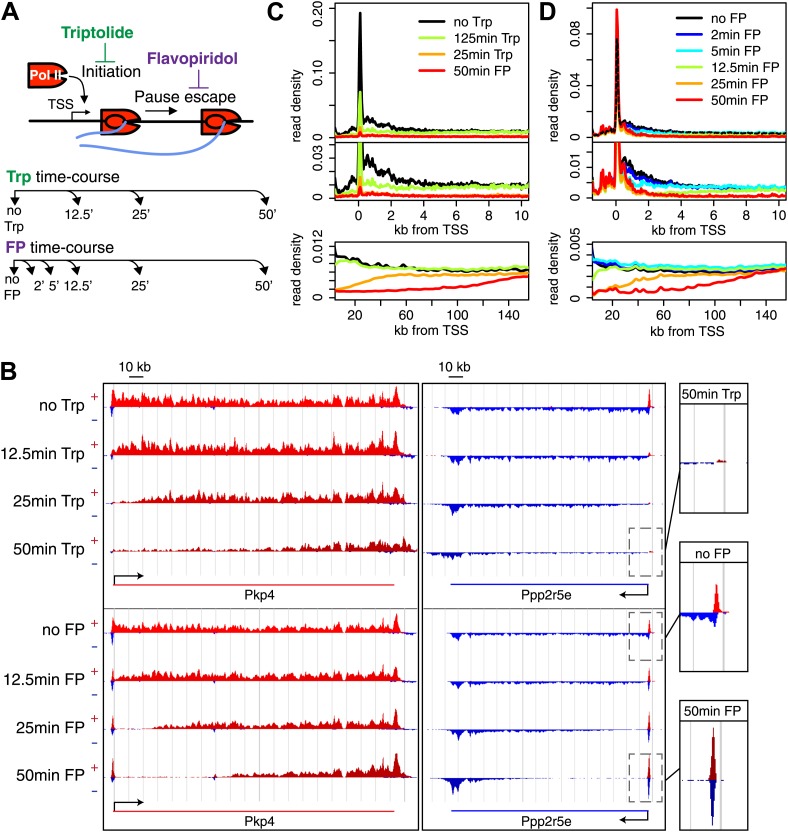
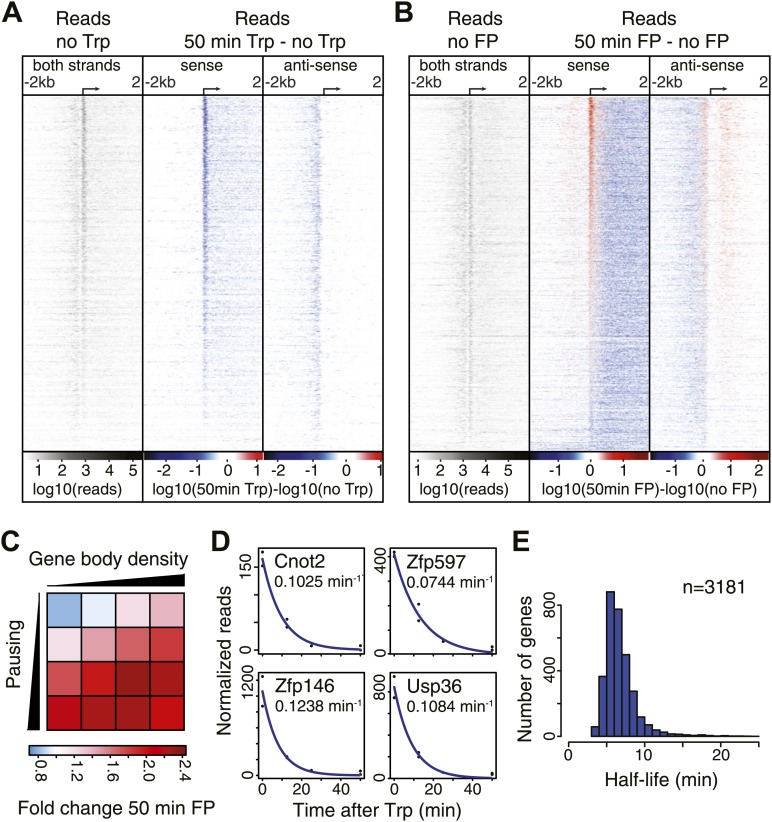
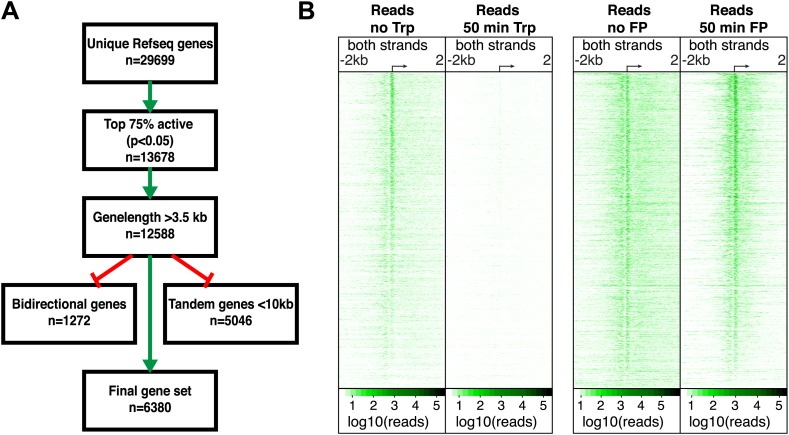
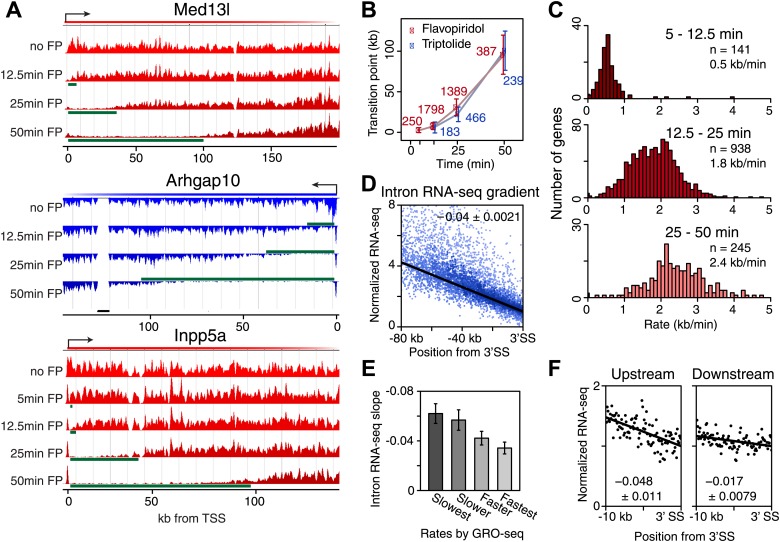
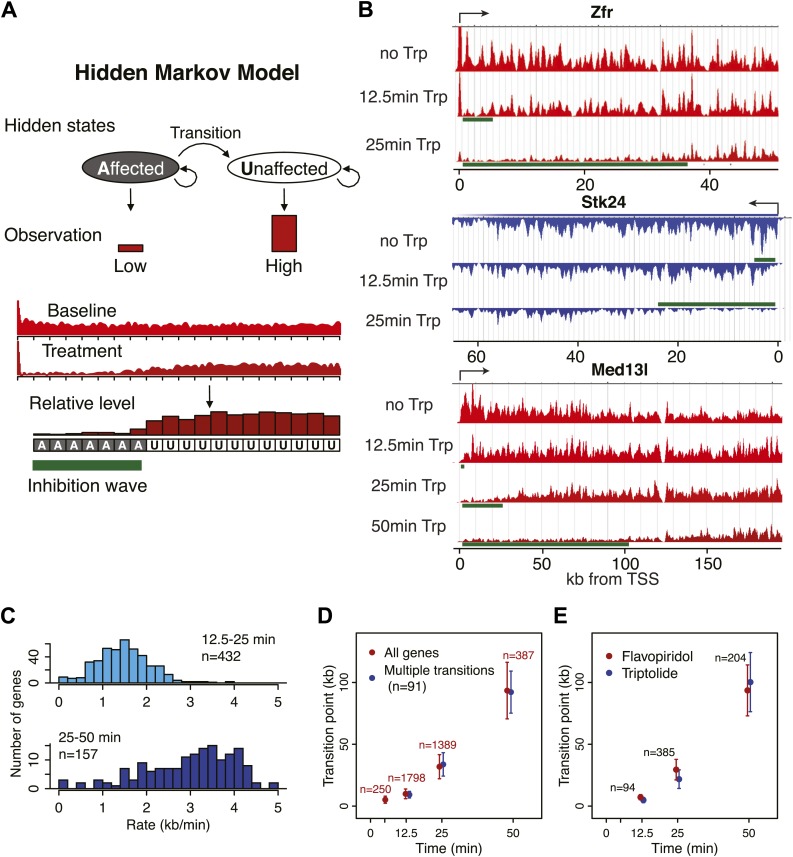
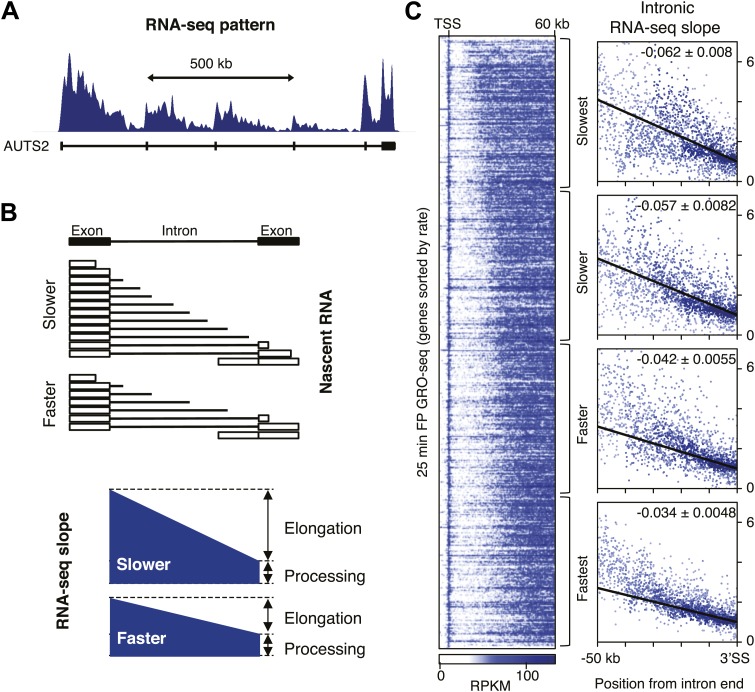
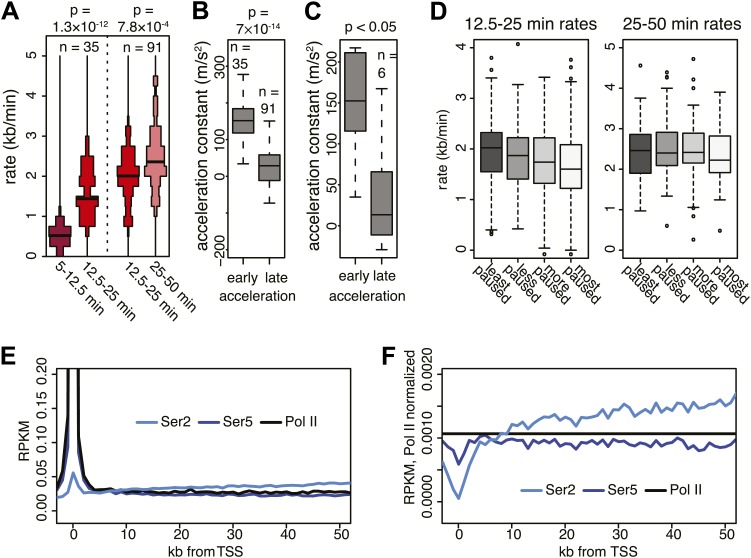
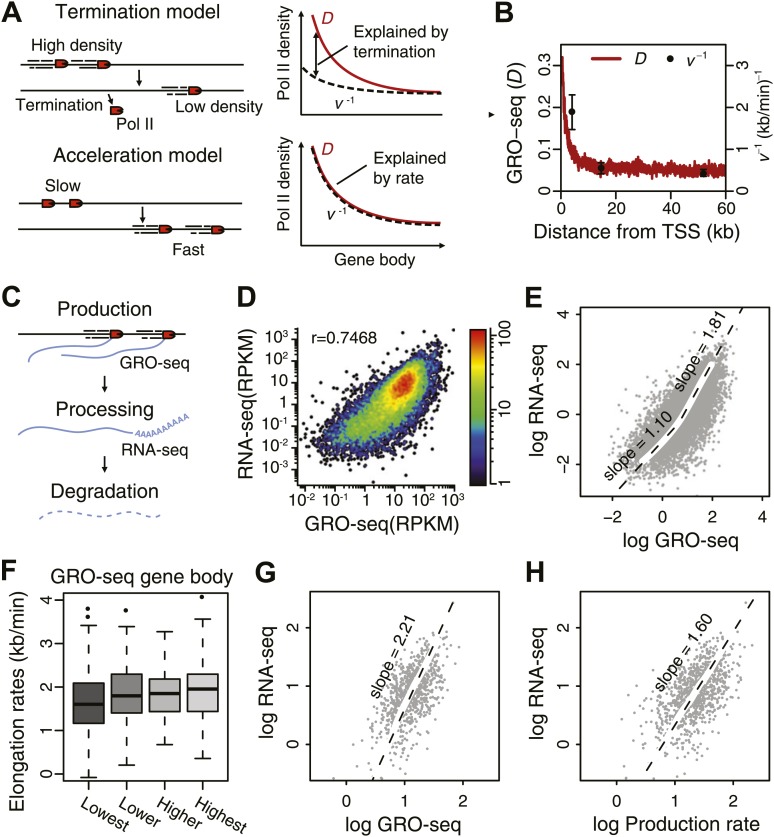
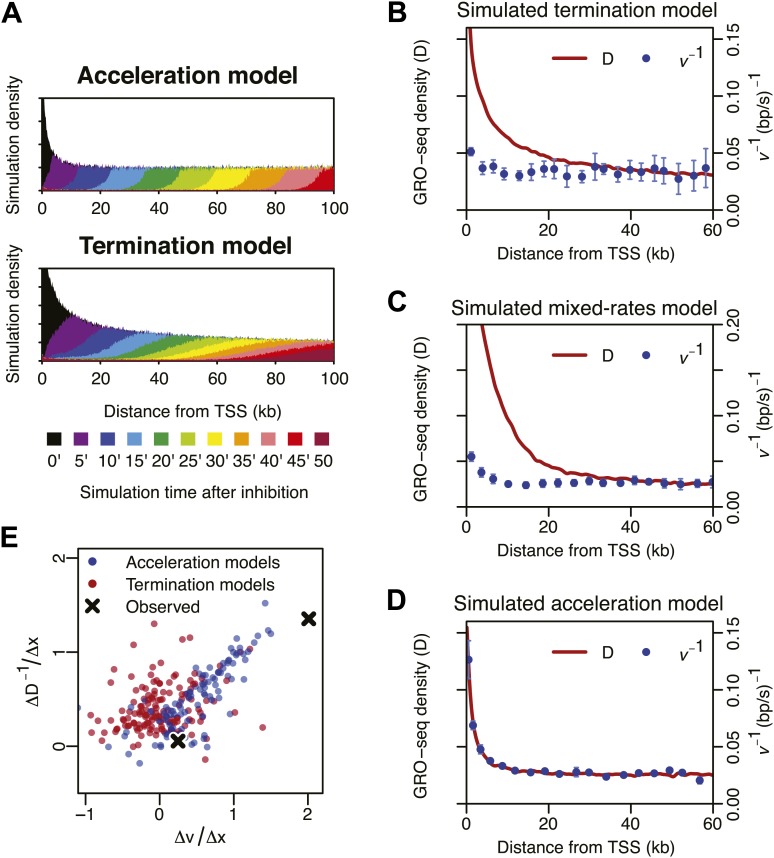
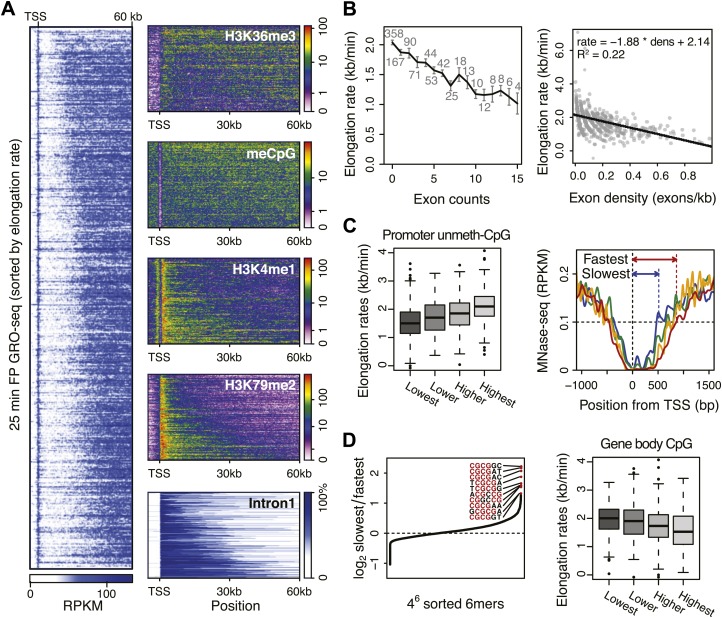
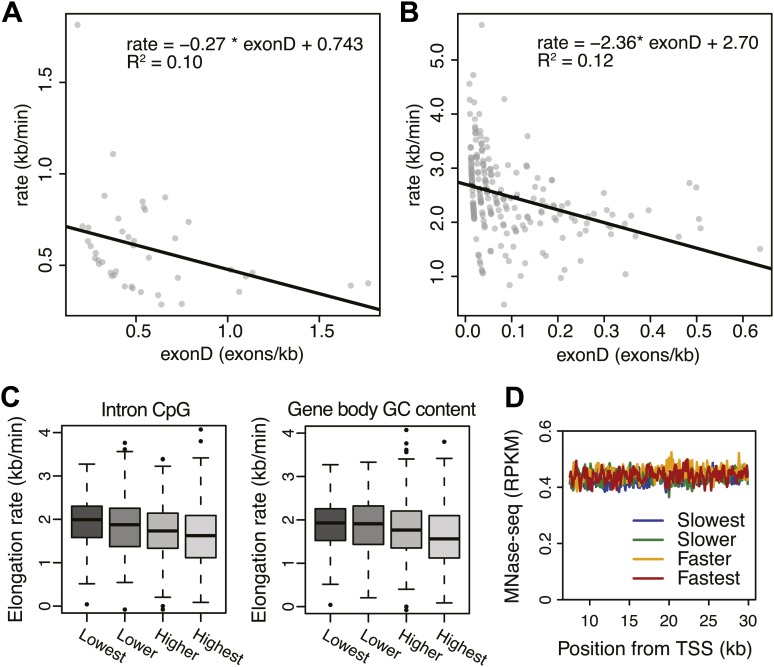
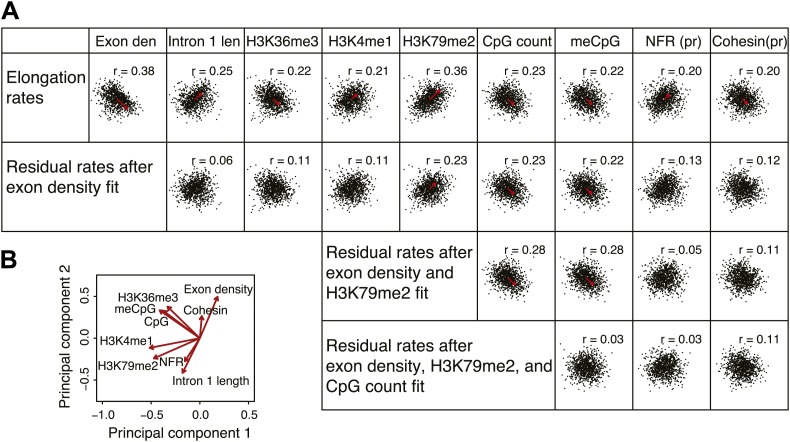
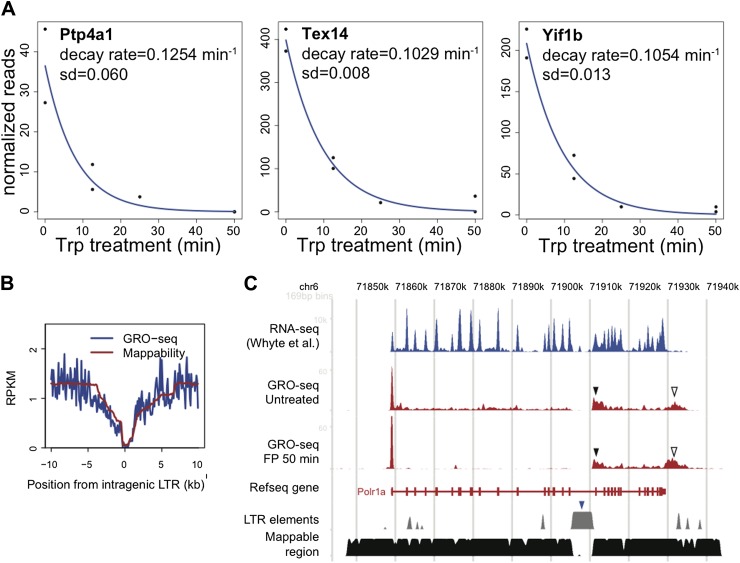
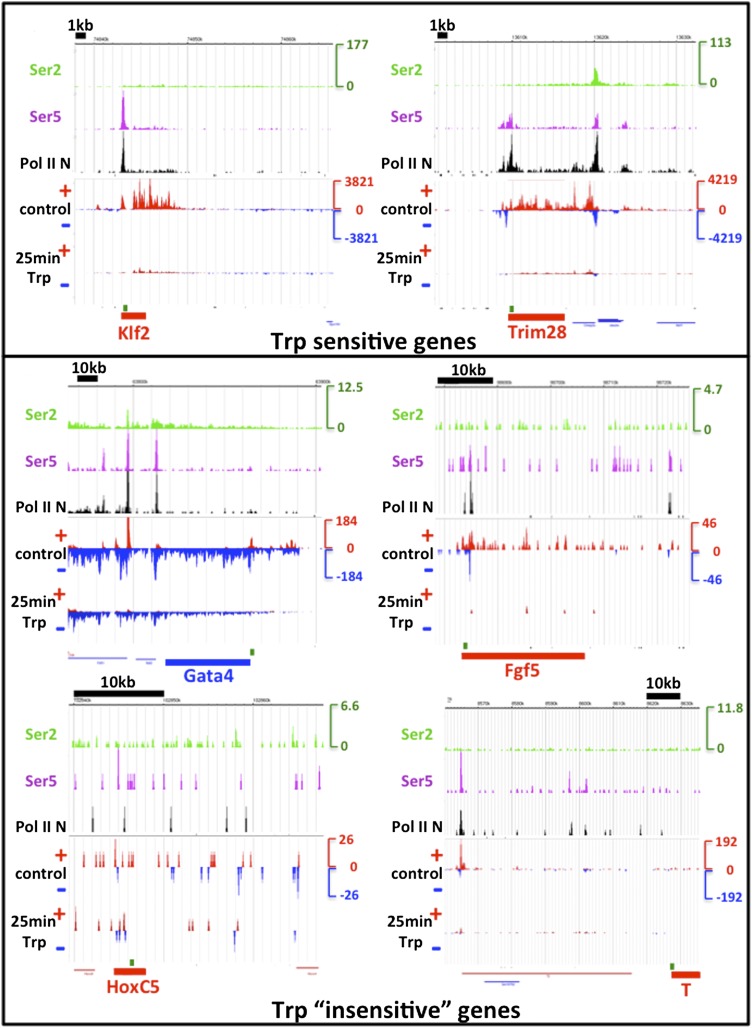
Production of mRNA depends critically on the rate of RNA polymerase II (Pol II) elongation. To dissect Pol II dynamics in mouse ES cells, we inhibited Pol II transcription at either initiation or promoter-proximal pause escape with Triptolide or Flavopiridol, and tracked Pol II kinetically using GRO-seq. Both inhibitors block transcription of more than 95% of genes, showing that pause escape, like initiation, is a ubiquitous and crucial step within the transcription cycle. Moreover, paused Pol II is relatively stable, as evidenced from half-life measurements at ∼3200 genes. Finally, tracking the progression of Pol II after drug treatment establishes Pol II elongation rates at over 1000 genes. Notably, Pol II accelerates dramatically while transcribing through genes, but slows at exons. Furthermore, intergenic variance in elongation rates is substantial, and is influenced by a positive effect of H3K79me2 and negative effects of exon density and CG content within genes.
Overview
The claims and statistics of this paper haven’t been checked yet.
Run the check — free, no account needed. It reads the open-access text and checks the sources it cites.
Integrity signals
Registry
Cites
Statistics
Figures
Verification
Claims the paper makes
The claims and statistics of this paper haven’t been checked yet.
Run the check — free, no account needed. It reads the open-access text and checks the sources it cites.
Claims other papers make about this one
Each is checked against this paper’s own text: does it say what the citing paper says it does?
The source backs part of the claim, not all of it — or backs it for a different population, condition or comparison.
In the citing paper
“Inhibition of P‐TEFb and thus repression of the release of RNA Pol II from promoter‐proximal pausing has been shown to block transcription of almost all genes (Henriques et al, 2013; Jonkers et al, 2014).”
From RNA polymerase II speed: a key player in controlling and adapting transcriptome composition (2021) · cites this paper as Jonkers et al, 2014
Experimental — accuracy not yet measuredThe source backs part of the claim, not all of it — or backs it for a different population, condition or comparison.
In the citing paper
“RNA Pol II speed was furthermore also shown to be highly variable within individual genes, as RNA Pol II accelerates while traveling throughout the gene body, starting at 0.5 kb/min in the first 10–15 kb and accelerating up to 2–4 kb/min downstream (Danko et al, 2013; Fuchs et al, 2014b; Jonkers et al, 2014; Saponaro et al, 2014).”
From RNA polymerase II speed: a key player in controlling and adapting transcriptome composition (2021) · cites this paper as Jonkers et al, 2014
Experimental — accuracy not yet measuredThe source backs part of the claim, not all of it — or backs it for a different population, condition or comparison.
In the citing paper
“In mammals and many other metazoans, promoter‐proximal pausing occurs 25–50 base pairs downstream from the TSS and is a major rate‐limiting step of the transcription cycle (Jonkers et al, 2014; Mayer et al, 2015).”
From RNA polymerase II speed: a key player in controlling and adapting transcriptome composition (2021) · cites this paper as Jonkers et al, 2014
Experimental — accuracy not yet measuredThe source backs part of the claim, not all of it — or backs it for a different population, condition or comparison.
In the citing paper
“All these techniques showed in various human cell lines that the average RNA Pol II speed ranges between 1.25 kb/min and 3.5 kb/min (Danko et al, 2013; Fuchs et al, 2014b; Jonkers et al, 2014; Saponaro et al, 2014; Veloso et al, 2014; Liang et al, 2018; Baluapuri et al, 2019; Gregersen et al, 2020).”
From RNA polymerase II speed: a key player in controlling and adapting transcriptome composition (2021) · cites this paper as Jonkers et al, 2014
Experimental — accuracy not yet measuredThe source backs part of the claim, not all of it — or backs it for a different population, condition or comparison.
In the citing paper
“Although no general correlation has been found between nucleosome occupancy and RNA Pol II speed (Jonkers et al, 2014), nucleosomes bound within exons could nonetheless slow down RNA Pol II transcription.”
From RNA polymerase II speed: a key player in controlling and adapting transcriptome composition (2021) · cites this paper as Jonkers et al, 2014
Experimental — accuracy not yet measured
The source backs part of the claim, not all of it — or backs it for a different population, condition or comparison.
In the citing paper
“Moreover, the GC content within gene bodies has been shown to correlate negatively with RNA Pol II speed (Jonkers et al, 2014; Veloso et al, 2014).”
From RNA polymerase II speed: a key player in controlling and adapting transcriptome composition (2021) · cites this paper as Jonkers et al, 2014
Experimental — accuracy not yet measuredThe source backs part of the claim, not all of it — or backs it for a different population, condition or comparison.
In the citing paper
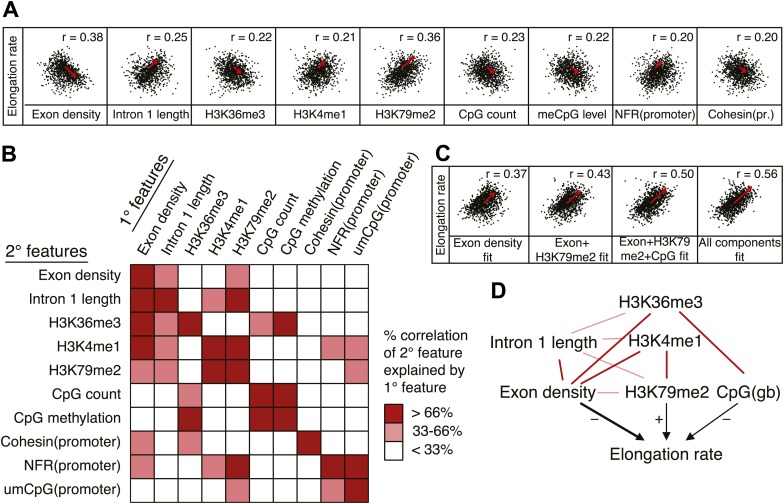
“Genome‐wide studies have shown that H3K79me2, H2B mono‐ubiquitylation, and H4K20me1 positively correlate with RNA Pol II speed in the gene body (Fuchs et al, 2014a; Jonkers et al, 2014; Veloso et al, 2014).”
From RNA polymerase II speed: a key player in controlling and adapting transcriptome composition (2021) · cites this paper as Jonkers et al, 2014
Experimental — accuracy not yet measuredThe cited source says what the claim attributes to it.
In the citing paper
“Indeed, fast transcription correlates with distal localization of H3K36me3 (Jonkers et al, 2014).”
From RNA polymerase II speed: a key player in controlling and adapting transcriptome composition (2021) · cites this paper as Jonkers et al, 2014
The cited source says what the claim attributes to it.
In the citing paper
“Indeed, genes with the highest measured RNA Pol II velocity have been shown to generate more mRNAs (Danko et al, 2013; Jonkers et al, 2014; Cohen et al, 2018).”
From RNA polymerase II speed: a key player in controlling and adapting transcriptome composition (2021) · cites this paper as Jonkers et al, 2014
The cited source says what the claim attributes to it.
In the citing paper
“Indeed, a positive correlation has been identified between intron 1 size and RNA Pol II speed (Jonkers et al, 2014)”
From RNA polymerase II speed: a key player in controlling and adapting transcriptome composition (2021) · cites this paper as Jonkers et al, 2014
The cited source says what the claim attributes to it.
In the citing paper
“Conversely, exon density correlates negatively with RNA Pol II velocity (Jonkers et al, 2014; Veloso et al, 2014)”
From RNA polymerase II speed: a key player in controlling and adapting transcriptome composition (2021) · cites this paper as Jonkers et al, 2014
Self-check
Percentages, sums and reported differences re-computed from the paper’s own numbers.
The self-check needs the paper’s full text.
Citations
Cites
1 retracted
Genomic organization of human transcription initiation complexes
Venters, B. J., & Pugh, B. F. (2013) · Nature · doi:10.1038/nature12535 · Cited by 79
RetractedLandscape of transcription in human cells
Djebali, S., Davis, C. A., Merkel, A., Dobin, A., Lassmann, T., Mortazavi, A., Tanzer, A., Lagarde, J., Lin, W., Schlesinger, F., et al. (2012) · Nature · doi:10.1038/nature11233 · Cited by 5,187
Nascent RNA Sequencing Reveals Widespread Pausing and Divergent Initiation at Human Promoters
Core, L. J., Waterfall, J. J., & Lis, J. T. (2008) · Science · doi:10.1126/science.1162228 · Cited by 1,986
Self-citationDNA-binding factors shape the mouse methylome at distal regulatory regions
Stadler, M. B., Murr, R., Burger, L., Ivanek, R., Lienert, F., Schöler, A., Nimwegen, E. V., Wirbelauer, C., Oakeley, E. J., Gaidatzis, D., et al. (2011) · Nature · doi:10.1038/nature10716 · Cited by 1,383
c-Myc Regulates Transcriptional Pause Release
Rahl, P. B., Lin, C. Y., Seila, A. C., Flynn, R. A., McCuine, S., Burge, C. B., Sharp, P. A., & Young, R. A. (2010) · Cell · doi:10.1016/j.cell.2010.03.030 · Cited by 1,279
Promoter-proximal pausing of RNA polymerase II: emerging roles in metazoans
Adelman, K., & Lis, J. T. (2012) · Nature Reviews Genetics · doi:10.1038/nrg3293 · Cited by 1,221
Self-citationControlling the elongation phase of transcription with P-TEFb
Peterlin, B. M., & Price, D. H. (2006) · Molecular Cell · doi:10.1016/j.molcel.2006.06.014 · Cited by 1,144
CTCF-promoted RNA polymerase II pausing links DNA methylation to splicing
Shukla, S., Kavak, E., Gregory, M., Imashimizu, M., Shutinoski, B., Kashlev, M., Oberdoerffer, P., Sandberg, R., & Oberdoerffer, S. (2011) · Nature · doi:10.1038/nature10442 · Cited by 973
Precise Maps of RNA Polymerase Reveal How Promoters Direct Initiation and Pausing
Kwak, H., Fuda, N. J., Core, L. J., & Lis, J. T. (2013) · Science · doi:10.1126/science.1229386 · Cited by 849
Self-citationYamaguchi, Y., Takagi, T., Wada, T., Yano, K., Furuya, A., Sugimoto, S., Hasegawa, J., & Handa, H. (1999) · Cell · doi:10.1016/s0092-8674(00)80713-8 · Cited by 841
Cited by
Sorted by citations
Items 301–400 of 585
Capturing the dynamic nascent transcriptome during acute cellular responses: The serum response
Kirkconnell, K. S., Paulsen, M. T., Magnuson, B., Bedi, K., & Ljungman, M. E. (2016) · Biology Open · doi:10.1242/bio.019323 · Cited by 19
Delaney, E., & Luse, D. S. (2016) · PLoS ONE · doi:10.1371/journal.pone.0163649 · Cited by 19
A Transcription Factor Pulse Can Prime Chromatin for Heritable Transcriptional Memory
Badeaux, A. I., Collombet, S., Laurent, B., van Oevelen, C. J. C., Chin, K., Thieffry, D., Graf, T., & Shi, Y. (2016) · Molecular and Cellular Biology · doi:10.1128/mcb.00372-16 · Cited by 20
Nonsequential Splicing Events Alter Antisense-Mediated Exon Skipping Outcome in COL7A1
Ham, K. A., Aung-Htut, M. T., Fletcher, S., & Wilton, S. D. (2020) · International Journal of Molecular Sciences · doi:10.3390/ijms21207705 · Cited by 19
Classification of Transcription Boundary-Associated RNAs (TBARs) in Animals and Plants
Yu, D., Ma, X., Zuo, Z., Wang, H., & Meng, Y. (2018) · Frontiers in Genetics · doi:10.3389/fgene.2018.00168 · Cited by 21
Sun, R., & Fisher, R. P. (2025) · Molecular Cell · doi:10.1016/j.molcel.2025.03.021 · Cited by 18
Marsh, A. J., Пирогов, С. А., Kaur, Y., Ruffridge, A. J., Sajwan, S., Gibson, T. J., Hunt, G., Harrison, M. M., & Mannervik, M. (2024) · Molecular Cell · doi:10.1016/j.molcel.2025.05.009 · Cited by 22
Krasnopolsky, S., Marom, L., Victor, R. A., Kuzmina, A., Schwartz, J. C., Fujinaga, K., & Taube, R. (2019) · Retrovirology · doi:10.1186/s12977-019-0478-x · Cited by 18
Co-transcriptional splicing efficiency is a gene-specific feature that can be regulated by TGFβ
Sánchez-Escabias, E., Guerrero-Martinez, J. A., & Reyes, J. C. (2022) · Communications Biology · doi:10.1038/s42003-022-03224-z · Cited by 17
Integrating transcription and splicing into cell fate: Transcription factors on the block
Boumpas, P., Merabet, S., & Carnesecchi, J. (2022) · Wiley Interdisciplinary Reviews - RNA · doi:10.1002/wrna.1752 · Cited by 23
New Roles for Canonical Transcription Factors in Repeat Expansion Diseases
Goodman, L. D., & Bonini, N. M. (2019) · Trends in Genetics · doi:10.1016/j.tig.2019.11.003 · Cited by 18
Signaling‐to‐chromatin pathways in the immune system
de Paz, A. M., & Josefowicz, S. Z. (2021) · Immunological Reviews · doi:10.1111/imr.12955 · Cited by 18
Transcription and splicing dynamics during early Drosophila development
Prudêncio, P., Savisaar, R., Rebelo, K., Martinho, R. G., & Carmo‐Fonseca, M. (2021) · RNA · doi:10.1261/rna.078933.121 · Cited by 19
He, A. Y., & Danko, C. G. (2024) · bioRxiv (Cold Spring Harbor Laboratory) · doi:10.1101/2024.03.13.583868 · Cited by 24
PRO‐seq: Precise Mapping of Engaged RNA Pol II at Single‐Nucleotide Resolution
Mimoso, C. A., & Goldman, S. R. (2023) · Current Protocols · doi:10.1002/cpz1.961 · Cited by 17
Transcription-coupled AID deamination damage depends on ELOF1-associated RNA polymerase II
Dai, P., Tan, Y., Luo, Y., Liu, T., Huang, Y., Shang, Y., Huang, M. E., Liu, X., Zhang, S., Wang, Y., et al. (2025) · Molecular Cell · doi:10.1016/j.molcel.2025.02.006 · Cited by 17
Wu, W., Zhang, J., Sun, H., Wu, X., Wang, H., Cui, B., Zhao, S., Wu, K., Pan, Y., Fan, R., et al. (2025) · Genomics Proteomics & Bioinformatics · doi:10.1093/gpbjnl/qzaf029 · Cited by 17
DOT1L is a barrier to histone acetylation during reprogramming to pluripotency
Wille, C. K., Zhang, X., Haws, S. A., Denu, J. M., & Sridharan, R. (2023) · Science Advances · doi:10.1126/sciadv.adf3980 · Cited by 17
Pinto, D., Pagé, V., Fisher, R. P., & Tanny, J. C. (2021) · Current Genetics · doi:10.1007/s00294-021-01196-x · Cited by 16
Transcription recycling assays identify PAF1 as a driver for RNA Pol II recycling
Chen, Z., Hankey, W., Zhao, Y., Groth, J., Huang, F., Wang, H., Campos, A. R., Huang, J., Roeder, R. G., & Wang, Q. (2021) · Nature Communications · doi:10.1038/s41467-021-26604-1 · Cited by 17
Elongin A regulates transcription in vivo through enhanced RNA polymerase processivity
Wang, Y., Hou, L., Ardehali, M. B., Kingston, R. E., & Dynlacht, B. D. (2020) · Journal of Biological Chemistry · doi:10.1074/jbc.ra120.015876 · Cited by 17
Strikoudis, A., Lazaris, C., Ntziachristos, P., Tsirigos, A., & Aifantis, I. (2017) · Cell Cycle · doi:10.1080/15384101.2017.1295194 · Cited by 17
Genetic dissection of the RNA polymerase II transcription cycle
Chou, S., Alexander, A. K., Rice, E. J., Choate, L. A., Cohen, P. E., & Danko, C. G. (2022) · eLife · doi:10.7554/elife.78458 · Cited by 14
Effects of Histone H2B Ubiquitylations and H3K79me3 on Transcription Elongation
Huynh, M., Sengupta, B., Krajewski, W. A., & Lee, T.-H. (2023) · ACS Chemical Biology · doi:10.1021/acschembio.2c00887 · Cited by 16
NELF focuses sites of initiation and maintains promoter architecture
Santana, J. F., Spector, B. M., Suarez, G. A., Luse, D. S., & Price, D. H. (2024) · Nucleic Acids Research · doi:10.1093/nar/gkad1253 · Cited by 19
A Revision of Herpes Simplex Virus Type 1 Transcription: First, Repress; Then, Express
Dunn, L. E. M., Birkenheuer, C. H., & Baines, J. D. (2024) · Microorganisms · doi:10.3390/microorganisms12020262 · Cited by 17
Timing is everything: advances in quantifying splicing kinetics
Merens, H. E., Choquet, K., Baxter‐Koenigs, A. R., & Churchman, L. S. (2024) · Trends in Cell Biology · doi:10.1016/j.tcb.2024.03.007 · Cited by 16
Chromatin structure and pre-mRNA processing work together
Jimeno-González, S., & Reyes, J. C. (2016) · Transcription · doi:10.1080/21541264.2016.1168507 · Cited by 15
RNAPII driven post-translational modifications of nucleosomal histones
Chan, W. S., Kumar, A., & Kono, H. (2022) · Trends in Genetics · doi:10.1016/j.tig.2022.04.010 · Cited by 16
Silencing by the HUSH Epigenetic Transcriptional Repressor Complex
Lehner, P. J. (2025) · Annual Review of Biochemistry · doi:10.1146/annurev-biochem-020425-045352 · Cited by 20
Nucleosome Dynamics during Transcription Elongation
Huynh, M., Yadav, S. P., Reese, J. C., & Lee, T.-H. (2020) · ACS Chemical Biology · doi:10.1021/acschembio.0c00617 · Cited by 15
Connecting the DOTs on Cell Identity
Wille, C. K., & Sridharan, R. (2022) · Frontiers in Cell and Developmental Biology · doi:10.3389/fcell.2022.906713 · Cited by 19
Lyu, Y., Yang, Y., Talwar, V., Lu, H., Chen, C. O., Salman, S., Wicks, E. E., Huang, T. Y.-T., Drehmer, D., Wang, Y., et al. (2024) · Cell Reports · doi:10.1016/j.celrep.2024.113972 · Cited by 17
RNA Polymerase II Activity Control of Gene Expression and Involvement in Disease
Kuldell, J. C., & Kaplan, C. D. (2024) · Journal of Molecular Biology · doi:10.1016/j.jmb.2024.168770 · Cited by 16
Cornejo, K. G., Venegas, A., Sono, M. H., Door, M., Gutierrez-Ruiz, B., Karabedian, L. B., Nandi, S. G., Hadisurya, M., Tao, W. A., Dykhuizen, E. C., et al. (2024) · Cell Reports · doi:10.1016/j.celrep.2024.114877 · Cited by 19
Topalović, V., Krstić, A., Schwirtlich, M., Dolfini, D., Mantovani, R., Stevanović, M. J., & Mojsin, M. M. (2017) · PLoS ONE · doi:10.1371/journal.pone.0184099 · Cited by 14
Vulnerability of drug‐resistant EML4‐ALK rearranged lung cancer to transcriptional inhibition
Paliouras, A. R., Buzzetti, M., Shi, L., Donaldson, I. J., Magee, P., Sahoo, S., Leong, H. S., Fassan, M., Carter, M. J., Leva, G. D., et al. (2020) · EMBO Molecular Medicine · doi:10.15252/emmm.201911099 · Cited by 15
Szavits-Nossan, J., & Grima, R. (2023) · Physical review. E · doi:10.1103/physreve.108.034405 · Cited by 15
Genome stability versus transcript diversity
Magnuson, B., Bedi, K., & Ljungman, M. E. (2016) · DNA repair · doi:10.1016/j.dnarep.2016.05.010 · Cited by 16
Bedi, K., Paulsen, M. T., Wilson, T. E., & Ljungman, M. E. (2019) · NAR Genomics and Bioinformatics · doi:10.1093/nargab/lqz014 · Cited by 17
Malla, A. B., Rainsford, S. R., Smith, Z. D., & Lesch, B. J. (2023) · Development · doi:10.1242/dev.201497 · Cited by 15
Segev, A., Heady, L., Crewe, M., & Madabhushi, R. (2024) · Cell Reports · doi:10.1016/j.celrep.2024.113809 · Cited by 14
Pause Patrol: Negative Elongation Factor’s Role in Promoter-Proximal Pausing and Beyond
Diao, A. J., Su, B. G., & Vos, S. M. (2024) · Journal of Molecular Biology · doi:10.1016/j.jmb.2024.168779 · Cited by 14
Zhang, L.-Q., Li, Q., Jin, W. Y., Zuo, Y., & Guo, S. (2018) · Biosystems · doi:10.1016/j.biosystems.2018.07.004 · Cited by 14
Wang, J., Bando, M., Shirahige, K., & Nakato, R. (2022) · Nature Communications · doi:10.1038/s41467-022-30792-9 · Cited by 15
Transcription Blockage Leads to New Beginnings
de Andrade-Lima, L. C., Veloso, A., & Ljungman, M. E. (2015) · Biomolecules · doi:10.3390/biom5031600 · Cited by 15
Hajiabadi, H., Mamontova, I., Prizak, R., Pancholi, A., Koziolek, A., & Hilbert, L. (2022) · PNAS Nexus · doi:10.1093/pnasnexus/pgac065 · Cited by 15
Promoters and introns as key drivers for enhanced gene expression in Saccharomyces cerevisiae
Myburgh, M. W., Schwerdtfeger, K. S., Cripwell, R. A., van Zyl, W. H., & Viljoen‐Bloom, M. (2023) · Advances in applied microbiology · doi:10.1016/bs.aambs.2023.07.002 · Cited by 13
Rojas, P., Wang, J., Guglielmi, G., Sadurnì, M. M., Pavlou, L., Leung, G. H. D., Rajagopal, V., Spill, F., & Saponaro, M. (2024) · Genome biology · doi:10.1186/s13059-024-03278-8 · Cited by 13
TFIIH kinase CDK7 drives cell proliferation through a common core transcription factor network
Jones, T., Feng, J., Luyties, O., Cozzolino, K., Sanford, L., Rimel, J. K., Ebmeier, C. C., Shelby, G. S., Watts, L. P., Rodino, J., et al. (2025) · Science Advances · doi:10.1126/sciadv.adr9660 · Cited by 13
Názer, E., Dale, R., Palmer, C. D., & Lei, E. P. (2018) · Scientific Reports · doi:10.1038/s41598-018-34115-1 · Cited by 13
DNA Damage-Induced RNAPII Degradation and Its Consequences in Gene Expression
Muñoz, J. C., Beckerman, I., Choudhary, R., Bouvier, L. A., & Muñoz, M. J. (2022) · Genes · doi:10.3390/genes13111951 · Cited by 13
Ma, X., Han, N., Shao, C., & Meng, Y. (2017) · PLoS ONE · doi:10.1371/journal.pone.0169212 · Cited by 13
Gnan, S., Matelot, M., Weiman, M., Arnaiz, O., Guèrin, F., Sperling, L., Bétermier, M., Thermes, C., Chen, C.-L., & Duharcourt, S. (2022) · Genome Research · doi:10.1101/gr.276125.121 · Cited by 12
Single-cell nascent transcription reveals sparse genome usage and plasticity
Ma, S., Hong, Y., Chen, J., Xu, J., & Shen, X. (2025) · Cell · doi:10.1016/j.cell.2025.09.003 · Cited by 12
Chromatin regulates alternative polyadenylation via the RNA polymerase II elongation rate
Geisberg, J. V., Moqtaderi, Z., & Struhl, K. (2024) · Proceedings of the National Academy of Sciences · doi:10.1073/pnas.2405827121 · Cited by 12
Versluis, P. P., Graham, T. G. W., Eng, V. F., Ebenezer, J., Darzacq, X., Zipfel, W. R., & Lis, J. T. (2024) · Molecular Cell · doi:10.1016/j.molcel.2024.07.009 · Cited by 12
Self-citationZhang, L., Gordiyenko, Y., Morgan, T., Franco, C., Tufegdžić Vidaković, A., & Zhang, S. (2025) · Nature Structural & Molecular Biology · doi:10.1038/s41594-025-01586-6 · Cited by 12
Becirovic, L., & Brown, I. R. (2016) · Neurochemical Research · doi:10.1007/s11064-016-2084-9 · Cited by 14
Yamazaki, T., Liu, L., & Manley, J. L. (2021) · Transcription · doi:10.1080/21541264.2021.2009421 · Cited by 12
Mines, R. C., Lipniacki, T., & Shen, X. (2022) · PLoS Computational Biology · doi:10.1371/journal.pcbi.1009811 · Cited by 12
Zhao, Y., Liu, L., Hassett, R., & Siepel, A. C. (2023) · Nucleic Acids Research · doi:10.1093/nar/gkad843 · Cited by 13
Determinant of m6A regional preference by transcriptional dynamics
Wang, Y., Wang, S., Meng, Z., Liu, X., & Mao, Y. (2024) · Nucleic Acids Research · doi:10.1093/nar/gkae169 · Cited by 15
P-TEFb Regulates Transcriptional Activation in Non-coding RNA Genes
Bunch, H., Choe, H., Kim, J., Jo, D. S., Jeon, S., Lee, S.-H., Cho, D., & Kang, K. (2019) · Frontiers in Genetics · doi:10.3389/fgene.2019.00342 · Cited by 11
Global control of RNA polymerase II
Gillis, A., & Berry, S. M. (2024) · Biochimica et Biophysica Acta (BBA) - Gene Regulatory Mechanisms · doi:10.1016/j.bbagrm.2024.195024 · Cited by 10
Zhao, Y., Dukler, N., Barshad, G., Toneyan, S., Danko, C. G., & Siepel, A. C. (2021) · Bioinformatics · doi:10.1093/bioinformatics/btab582 · Cited by 11
Hunter, S., Sigauke, R. F., Stanley, J. T., Allen, M. A., & Dowell, R. D. (2022) · BMC Genomics · doi:10.1186/s12864-022-08352-8 · Cited by 11
Behle, A., Dietsch, M., Goldschmidt, L., Murugathas, W., Berwanger, L. L., Burmester, J., Yao, L., Brandt, D., Busche, T., Kalinowski, J., et al. (2022) · Nucleic Acids Research · doi:10.1093/nar/gkac1132 · Cited by 11
Wang, Z., Himanen, S. V., Haikala, H. M., Friedel, C. C., Vihervaara, A., & Barborič, M. (2023) · Nucleic Acids Research · doi:10.1093/nar/gkad792 · Cited by 14
Transcription Pause and Escape in Neurodevelopmental Disorders
Eigenhuis, K. N., Somsen, H. B., & van den Berg, D. L. C. (2022) · Frontiers in Neuroscience · doi:10.3389/fnins.2022.846272 · Cited by 8
HSV-1 Infection Induces a Downstream Shift of Promoter-Proximal Pausing for Host Genes
Weiß, E., Hennig, T., Grassl, P., Djaković, L., Whisnant, A. W., Jürges, C., Koller, F., Kluge, M., Erhard, F., Dölken, L., et al. (2023) · Journal of Virology · doi:10.1128/jvi.00381-23 · Cited by 10
Factors affecting the persistence of drug-induced reprogramming of the cancer methylome
Bell, J. S. K., Kagey, J. D., Barwick, B. G., Dwivedi, B., McCabe, M. T., Kowalski, J., & Vertino, P. M. (2016) · Epigenetics · doi:10.1080/15592294.2016.1158364 · Cited by 11
RNA Pol II transcription model and interpretation of GRO-seq data
Lladser, M. E., Azofeifa, J. G., Allen, M. A., & Dowell, R. D. (2016) · Journal of Mathematical Biology · doi:10.1007/s00285-016-1014-4 · Cited by 9
Hepatic gene body hypermethylation is a shared epigenetic signature of murine longevity
Hahn, O., Stubbs, T. M., Reik, W., Grönke, S., Beyer, A., & Partridge, L. (2018) · PLoS Genetics · doi:10.1371/journal.pgen.1007766 · Cited by 10
Papadopoulou, T., & Richly, H. (2016) · BioEssays · doi:10.1002/bies.201600094 · Cited by 10
VEGFA’s distal enhancer regulates its alternative splicing in CML
Dahan, S., Sharma, A., Cohen, K., Baker, M., Taqatqa, N., Bentata, M., Engal, E., Siam, A., Kay, G., Drier, Y., et al. (2021) · NAR Cancer · doi:10.1093/narcan/zcab029 · Cited by 9
Regulation of the dynamic RNA Pol II elongation rate in Drosophila embryos
Keller, S. H., Deng, H., & Lim, B. (2023) · Cell Reports · doi:10.1016/j.celrep.2023.113225 · Cited by 9
Model-based genome-wide determination of RNA chain elongation rates in Escherichia coli
Großmann, P., Lück, A., & Kaleta, C. (2017) · Scientific Reports · doi:10.1038/s41598-017-17408-9 · Cited by 10
The transcriptional stress response and its implications in cancer treatment
Cruz-Ruiz, S., Urióstegui-Arcos, M., & Zurita, M. (2021) · Biochimica et Biophysica Acta (BBA) - Reviews on Cancer · doi:10.1016/j.bbcan.2021.188620 · Cited by 9
Transcription–Replication Coordination
Saponaro, M. (2022) · Life · doi:10.3390/life12010108 · Cited by 9
Bullock, M. E., Moreno-Martinez, N., & Miller‐Jensen, K. (2022) · PLoS Computational Biology · doi:10.1371/journal.pcbi.1010152 · Cited by 9
Optimization of ribosome utilization in Saccharomyces cerevisiae.
Mahima, M., & Sharma, A. K. (2023) · PubMed Central · doi:10.1093/pnasnexus/pgad074 · Cited by 9
Boija, A., & Mannervik, M. (2015) · Molecular Reproduction and Development · doi:10.1002/mrd.22517 · Cited by 9
Wille, C. K., Neumann, E. N., Deshpande, A. J., & Sridharan, R. (2023) · Stem Cell Reports · doi:10.1016/j.stemcr.2023.10.017 · Cited by 10
The Importance of Controlling Transcription Elongation at Coding and Noncoding RNA LociPreprint
Scruggs, B. S., & Adelman, K. (2015) · Cold Spring Harbor Symposia on Quantitative Biology · doi:10.1101/sqb.2015.80.027235 · Cited by 9
Siepel, A. C. (2021) · bioRxiv (Cold Spring Harbor Laboratory) · doi:10.1101/2021.01.12.426408 · Cited by 7
Restrictor slows RNAPII elongation to promote termination at noncoding RNA lociPreprint
Mimoso, C. A., Vlaming, H., Wagenaar, N. P. V.-D., Siegenfeld, A. P., & Adelman, K. (2025) · Genes & Development · doi:10.1101/gad.352654.125 · Cited by 9
Isogenic comparison of Airn and Xist reveals core principles of Polycomb recruitment by lncRNAs
Trotman, J. B., Abrash, E. W., Murvin, M. M., Braceros, A. K., Li, S., Boyson, S. P., Salcido, R. T., Cherney, R. E., Bischoff, S. R., Kaufmann, K., et al. (2025) · Molecular Cell · doi:10.1016/j.molcel.2025.02.014 · Cited by 7
Transcription‐coupled repair: tangled up in convoluted repair
Schiffmacher, D. A. L., Pai, Y. J., Pines, A., & Vermeulen, W. (2025) · FEBS Journal · doi:10.1111/febs.70104 · Cited by 10
Transcription elongation of the plant RNA polymerase IV is prone to backtracking
Fang, C., Huang, K., Wu, X., Zhang, H., Gu, Z., Wang, J., & Zhang, Y. (2024) · Science Advances · doi:10.1126/sciadv.adq3087 · Cited by 8
Cooke, M. B., Herman, C., & Sivaramakrishnan, P. (2024) · FEBS Letters · doi:10.1002/1873-3468.15063 · Cited by 8
The point of no return: The poly(A)-associated elongation checkpoint
Tellier, M., Vicens, I. F., & Murphy, S. (2016) · RNA Biology · doi:10.1080/15476286.2016.1142037 · Cited by 7
Oqani, R. K., Lin, T., Lee, J. E., Choi, K., Shin, H. Y., & Jin, D. I. (2016) · PLoS ONE · doi:10.1371/journal.pone.0152254 · Cited by 8
Localization of RNAPII and 3′ end formation factor CstF subunits on C. elegans genes and operons
Garrido‐Lecca, A., Saldi, T. K., & Blumenthal, T. (2016) · Transcription · doi:10.1080/21541264.2016.1168509 · Cited by 8
Oqani, R. K., Lin, T., Lee, J. E., Kim, S. Y., Sa, S. J., Woo, J. S., & Jin, D. I. (2016) · genesis · doi:10.1002/dvg.22961 · Cited by 8
Imaging Transcriptional Regulation of Eukaryotic mRNA Genes: Advances and Outlook
Yao, J. (2016) · Journal of Molecular Biology · doi:10.1016/j.jmb.2016.11.007 · Cited by 8
Urióstegui-Arcos, M., Aguayo‐Ortiz, R., Valencia-Morales, M. D. P., Melchy-Pérez, E., Rosenstein, Y., Domı́nguez, L., & Zurita, M. (2020) · Open Biology · doi:10.1098/rsob.200050 · Cited by 8
Smirnov, E., Hornáček, M., Vacı́k, T., Cmarko, D., & Raška, I. (2017) · Nucleus · doi:10.1080/19491034.2017.1419112 · Cited by 8
Transcription-coupled RNA surveillance in human genetic diseases caused by splice site mutations
Vaz‐Drago, R., Pinheiro, M. T., Martins, S., Enguita, F. J., Carmo‐Fonseca, M., & Custódio, N. (2015) · Human Molecular Genetics · doi:10.1093/hmg/ddv039 · Cited by 8
Metadata
- Authors
- Jonkers, I., Kwak, H., & Lis, J. T.
- Affiliations
- Cornell University (US)
- Howard Hughes Medical Institute (US)
- Corresponding author
- Jonkers, Iris
- Lis, John T
- Venue
- eLife
- Publisher
- eLife Sciences Publications, Ltd
- Published
- 2014-04-29
- Volume
- 3
- Pages
- e02407-e02407
- ISSN
- 2050-084X (ISSN-L)
- PMC
- PMC4001325
- OpenAlex
- W2038894647
- Cited by
- 581
- References
- 67
- Citations by year
- 2026: 26 · 2025: 40 · 2024: 52 · 2023: 48 · 2022: 46 · 2021: 74 · 2020: 40 · 2019: 57 · 2018: 53 · 2017: 53 · 2016: 49 · 2015: 35 · 2014: 8
- FWCI
- 19.80
- Type
- journal article
- Language
- en
- Open access
- gold
- doi.org
- Licence
- Locations
- eLife (publishedVersion, cc-by)
- Europe PMC (PubMed Central) (publishedVersion, cc-by)
- PubMed Central (publishedVersion, cc-by)
- PubMed (publishedVersion)
- DOAJ (DOAJ: Directory of Open Access Journals) (submittedVersion, cc-by-sa)
- University of Groningen research database (University of Groningen / Centre for Information Technology) (submittedVersion, cc-by)
- Funders
- National Institutes of Health (GM25232)
- Helen Hay Whitney Foundation
- Howard Hughes Medical Institute
- Topics
- Life Sciences › Biochemistry, Genetics and Molecular Biology › Molecular Biology › Genomics and Chromatin Dynamics
- Life Sciences › Biochemistry, Genetics and Molecular Biology › Molecular Biology › RNA Research and Splicing
- Life Sciences › Biochemistry, Genetics and Molecular Biology › Molecular Biology › Epigenetics and DNA Methylation
- Keywords
- RNA polymerase II elongation, promoter-proximal pausing, transcription kinetics, mouse embryonic stem cells, triptolide, flavopiridol, GRO-seq, H3K79me2, chromatin
- MeSH terms
- Animals, Cells, Cultured, Chromatin, Diterpenes, Epoxy Compounds, Exons, Flavonoids, Humans, Phenanthrenes, Piperidines, Promoter Regions, Genetic, RNA Polymerase II, RNA, Messenger, Transcription, Genetic, Genetic Variation, Gene Library, Sequence Alignment, Sequence Analysis, DNA, Chromatin Immunoprecipitation, Mice, Embryonic Stem Cells, Genetic Association Studies
About these checks
Registry, retraction, Cites and statistics results are computed, not judged, with one exception: a printed reference that no index lists is read once by a model before it counts as a citation error. Claims are extracted by a model and kept only when their quote appears verbatim in the text; each cited source is then checked, with a model’s help, for whether it says what the claim relies on. Those verdicts can be wrong — read the claim’s quote and the cited source before relying on one.
Statistics and arithmetic are recomputed, not judged.
Confidence bands are shown only for fields calibrated on our annotated test set. None is calibrated yet, so no band is shown.
What counts as a claim ›How we measure confidence ›How we check this ›
Are you an author, or do you see a problem with this page? Request a review
