

The DOI matches its Crossref record; 79 of the 80 references it cites were found in a registry or an index.
Large-scale determination of previously unsolved protein structures using evolutionary information
Open accessAbstract
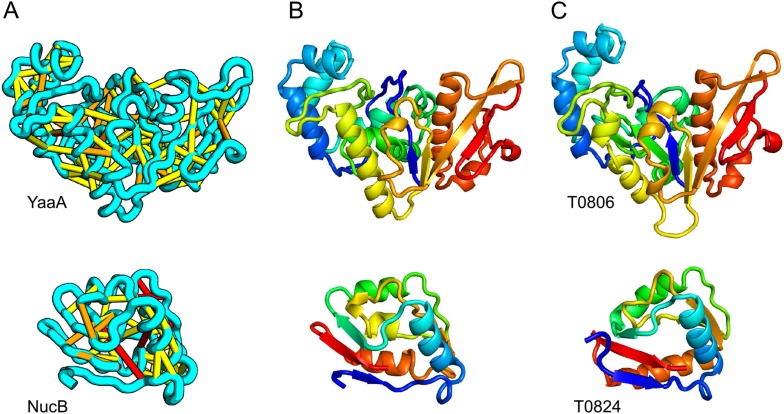
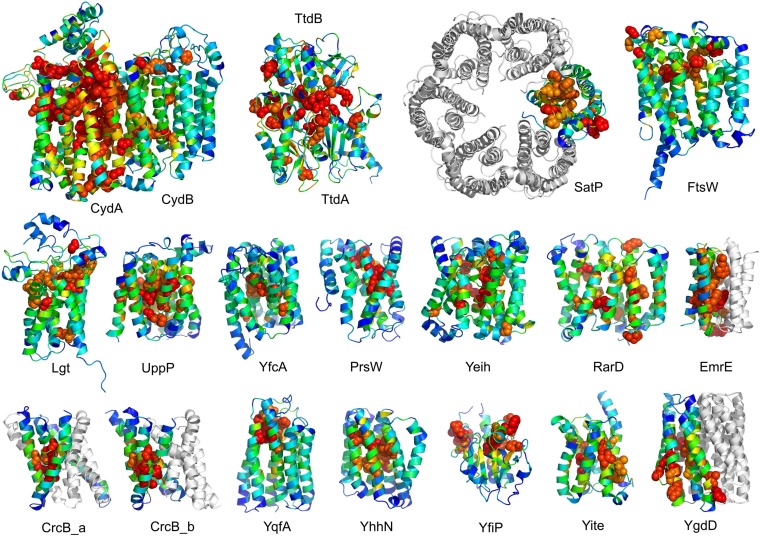
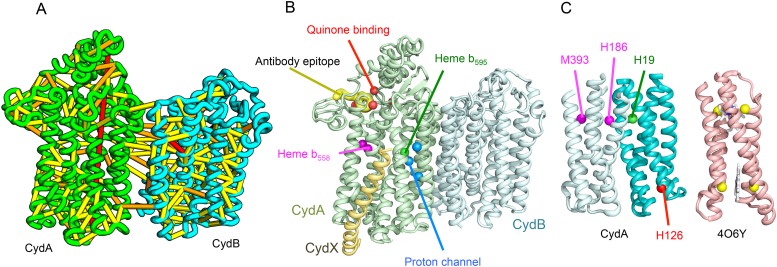
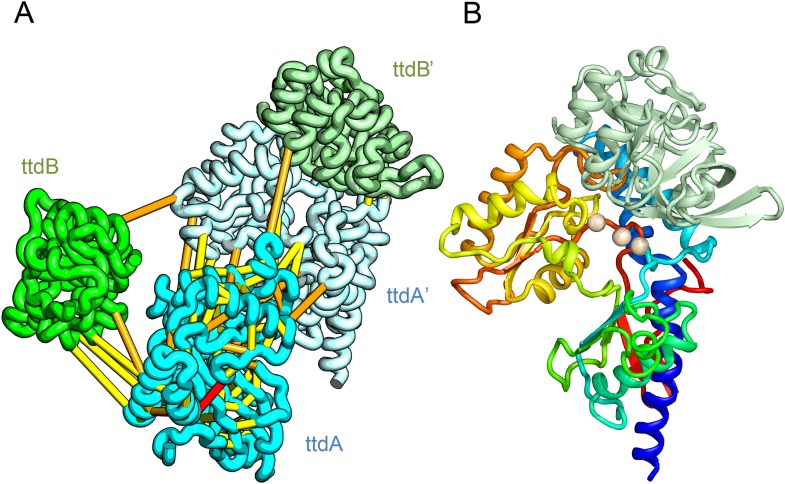
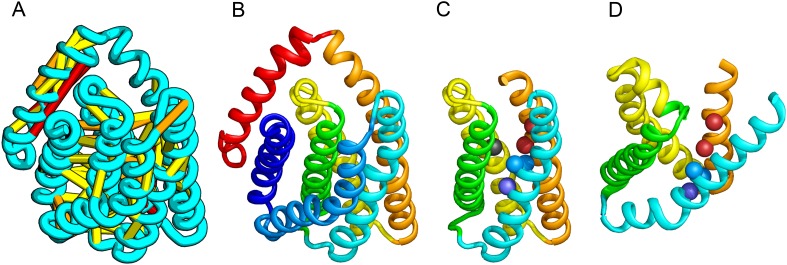
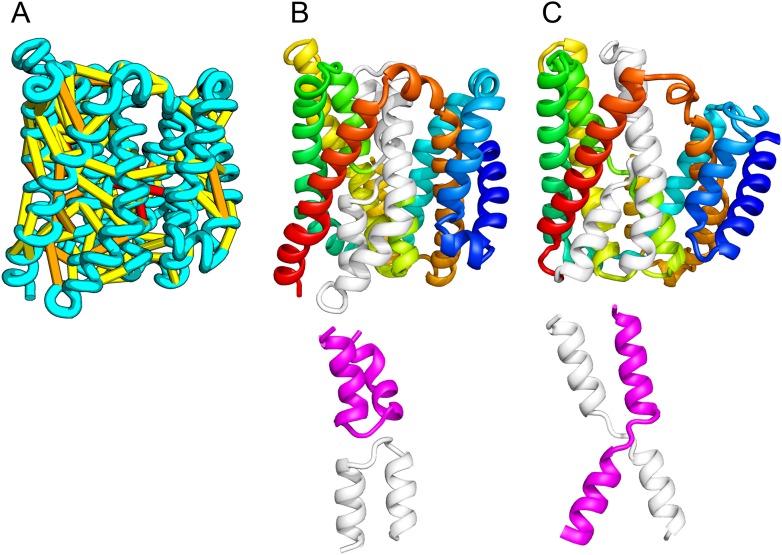
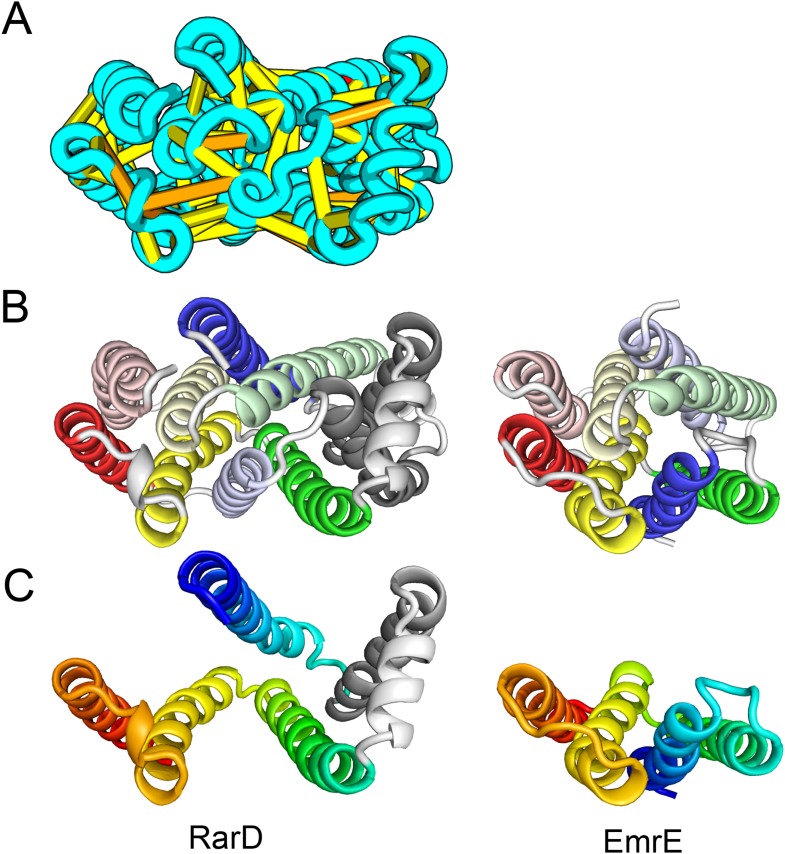
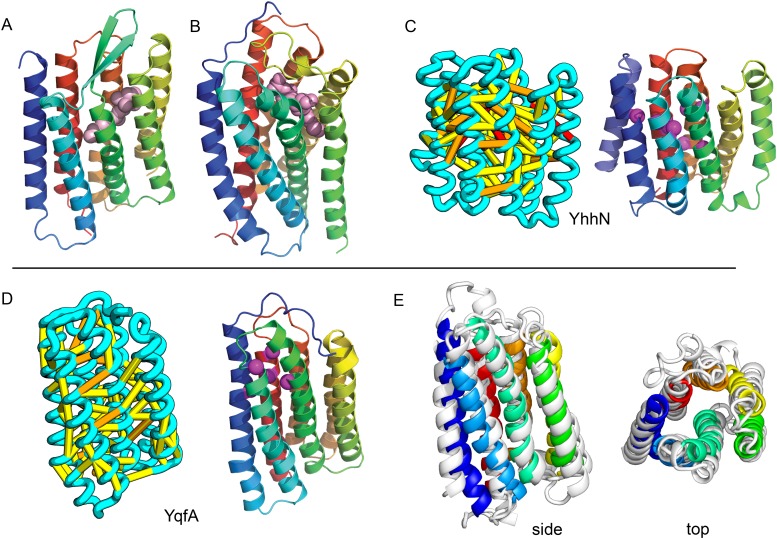
The prediction of the structures of proteins without detectable sequence similarity to any protein of known structure remains an outstanding scientific challenge. Here we report significant progress in this area. We first describe de novo blind structure predictions of unprecendented accuracy we made for two proteins in large families in the recent CASP11 blind test of protein structure prediction methods by incorporating residue-residue co-evolution information in the Rosetta structure prediction program. We then describe the use of this method to generate structure models for 58 of the 121 large protein families in prokaryotes for which three-dimensional structures are not available. These models, which are posted online for public access, provide structural information for the over 400,000 proteins belonging to the 58 families and suggest hypotheses about mechanism for the subset for which the function is known, and hypotheses about function for the remainder.
Overview
The claims and statistics of this paper haven’t been checked yet.
Run the check — free, no account needed. It reads the open-access text and checks the sources it cites.
Integrity signals
Registry
Cites
Statistics
Figures
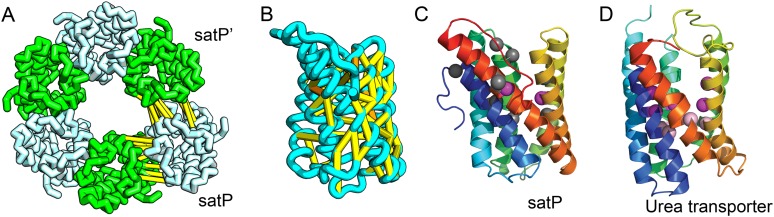
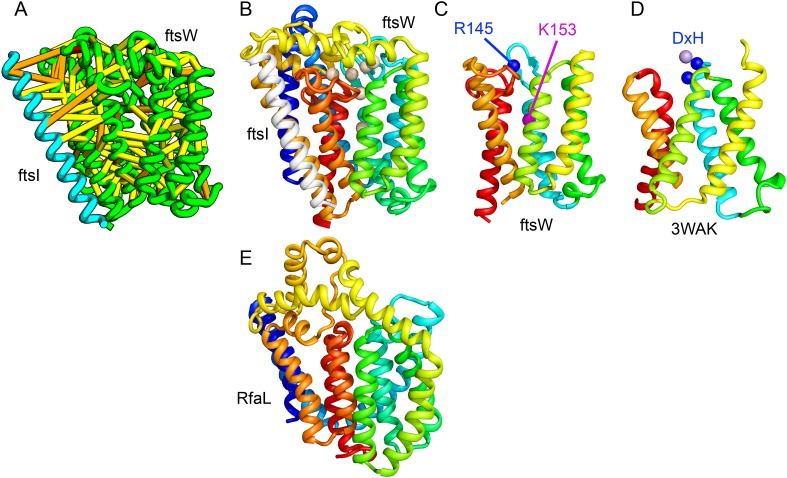
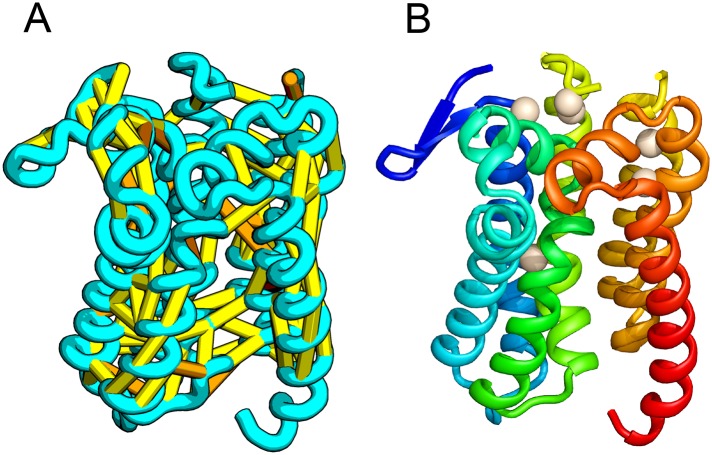
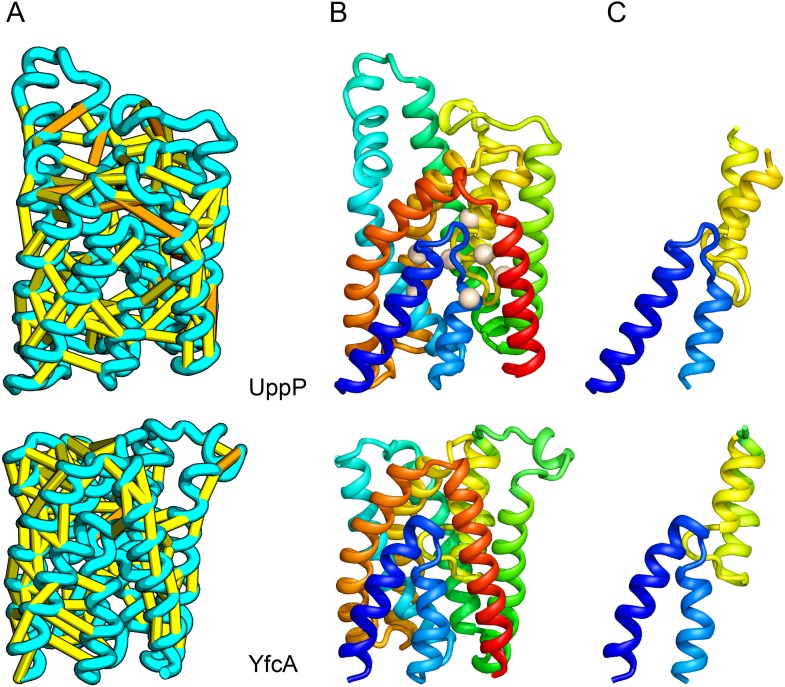
Verification
Claims the paper makes
The claims and statistics of this paper haven’t been checked yet.
Run the check — free, no account needed. It reads the open-access text and checks the sources it cites.
Claims other papers make about this one
Each is checked against this paper’s own text: does it say what the citing paper says it does?
In the citing paper
“Traditional computational prediction pipelines reliant on inter-residue distance restraints calculated from deep multiple sequence alignments (MSAs) have historically struggled to accurately predict the structures of these proteins and their movements.”
From Sampling alternative conformational states of transporters and receptors with AlphaFold2 (2022) · cites this paper as Ovchinnikov et al., 2015
Self-check
Percentages, sums and reported differences re-computed from the paper’s own numbers.
The self-check needs the paper’s full text.
Citations
Cites
TM-align: a protein structure alignment algorithm based on the TM-score
Zhang, Y. (2005) · Nucleic Acids Research · doi:10.1093/nar/gki524 · Cited by 3,774
Structure and function of the global ocean microbiome
Sunagawa, S., Coelho, L. P., Chaffron, S., Kultima, J. R., Labadie, K., Salazar, G., Djahanschiri, B., Zeller, G., Mende, D. R., Alberti, A., et al. (2015) · Science · doi:10.1126/science.1261359 · Cited by 2,978
Protein homology detection by HMM–HMM comparison
Söding, J. (2004) · Bioinformatics · doi:10.1093/bioinformatics/bti125 · Cited by 2,459
Scoring function for automated assessment of protein structure template quality
Zhang, Y., & Skolnick, J. (2004) · Proteins: Structure, Function, and Bioinformatics · doi:10.1002/prot.20264 · Cited by 2,392
HHblits: lightning-fast iterative protein sequence searching by HMM-HMM alignment
Remmert, M., Biegert, A., Hauser, A., & Söding, J. (2012) · Nature Methods · doi:10.1038/nmeth.1818 · Cited by 2,288
Protein Structure Prediction Using Rosetta
Rohl, C. A., Strauss, C. E. M., Misura, K. M. S., & Baker, D. A. (2004) · Methods in enzymology on CD-ROM/Methods in enzymology · doi:10.1016/s0076-6879(04)83004-0 · Cited by 1,754
Activities at the Universal Protein Resource (UniProt)
The UniProt Consortium (2013) · Nucleic Acids Research · doi:10.1093/nar/gkt1140 · Cited by 1,736
PISCES: a protein sequence culling server
Wang, G., & Dunbrack, R. L. (2003) · Bioinformatics · doi:10.1093/bioinformatics/btg224 · Cited by 1,664
UniRef: comprehensive and non-redundant UniProt reference clusters
Suzek, B. E., Huang, H., McGarvey, P., Mazumder, R., & Wu, C. H. (2007) · Bioinformatics · doi:10.1093/bioinformatics/btm098 · Cited by 1,613
Expanded microbial genome coverage and improved protein family annotation in the COG database
Galperin, M. Y., Makarova, K. S., Wolf, Y. I., & Koonin, E. V. (2014) · Nucleic Acids Research · doi:10.1093/nar/gku1223 · Cited by 1,547
X-ray structure of a ClC chloride channel at 3.0 Å reveals the molecular basis of anion selectivity
Dutzler, R., Campbell, E. B., Cadene, M., Chait, B. T., & MacKinnon, R. (2002) · Nature · doi:10.1038/415287a · Cited by 1,446
Morcos, F., Pagnani, A., Lunt, B., Bertolino, A., Marks, D. S., Sander, C., Zecchina, R., Onuchic, J. N., Hwa, T., & Weigt, M. (2011) · Proceedings of the National Academy of Sciences · doi:10.1073/pnas.1111471108 · Cited by 1,434
Molecules as documents of evolutionary history
Zuckerkandl, E., & Pauling, L. C. (1965) · Journal of Theoretical Biology · doi:10.1016/0022-5193(65)90083-4 · Cited by 1,359
A NEW GENERATION OF HOMOLOGY SEARCH TOOLS BASED ON PROBABILISTIC INFERENCE
Eddy, S. R. (2009) · International Conference on Genome Informatics (GIW) · doi:10.1142/9781848165632_0019 · Cited by 1,275
Protein 3D Structure Computed from Evolutionary Sequence Variation
Marks, D. S., Colwell, L. J., Sheridan, R., Hopf, T. A., Pagnani, A., Zecchina, R., & Sander, C. (2011) · PLoS ONE · doi:10.1371/journal.pone.0028766 · Cited by 1,144
High-Resolution Comparative Modeling with RosettaCM
Song, Y., DiMaio, F., Wang, R. Y., Kim, D. E., Miles, C., Brunette, T., Thompson, J., & Baker, D. A. (2013) · Structure · doi:10.1016/j.str.2013.08.005 · Cited by 1,102
Macromolecular Modeling with Rosetta
Das, R., & Baker, D. A. (2008) · Annual Review of Biochemistry · doi:10.1146/annurev.biochem.77.062906.171838 · Cited by 995
Jones, D. T., Buchan, D. W. A., Cozzetto, D., & Pontil, M. (2011) · Bioinformatics · doi:10.1093/bioinformatics/btr638 · Cited by 787
Structure of a glutamate transporter homologue from Pyrococcus horikoshii
Yernool, D., Boudker, O., Jin, Y., & Gouaux, E. (2004) · Nature · doi:10.1038/nature03018 · Cited by 784
Kamisetty, H., Ovchinnikov, S., & Baker, D. A. (2013) · Proceedings of the National Academy of Sciences · doi:10.1073/pnas.1314045110 · Cited by 672
Lipid–protein interactions in double-layered two-dimensional AQP0 crystals
Gonen, T., Cheng, Y., Piotr Sliz, A., Hiroaki, Y., Fujiyoshi, Y., Harrison, S. C., & Walz, T. (2005) · Nature · doi:10.1038/nature04321 · Cited by 668
Improved contact prediction in proteins: using pseudolikelihoods to infer Potts models
Ekeberg, M., Lövkvist, C., Lan, Y., Weigt, M., & Aurell, E. (2013) · Physical Review E · doi:10.1103/physreve.87.012707 · Cited by 661
Ovchinnikov, S., Kamisetty, H., & Baker, D. (2014) · eLife · doi:10.7554/elife.02030 · Cited by 629
Protein structure prediction from sequence variation
Marks, D. S., Hopf, T. A., & Sander, C. (2012) · Nature Biotechnology · doi:10.1038/nbt.2419 · Cited by 622
AL2CO: calculation of positional conservation in a protein sequence alignment
Pei, J.-M., & Grishin, N. (2001) · Bioinform. · doi:10.1093/bioinformatics/17.8.700 · Cited by 518
Sequence co-evolution gives 3D contacts and structures of protein complexes
Hopf, T. A., Schärfe, C. P. I., Rodrigues, J. P. G. L. M., Green, A. G., Kohlbacher, O., Sander, C., Bonvin, A. M. J. J., & Marks, D. S. (2014) · eLife · doi:10.7554/elife.03430 · Cited by 515
Structure prediction for CASP8 with all‐atom refinement using Rosetta
Raman, S., Vernon, R. M., Thompson, J., Tyka, M. D., Sadreyev, R. I., Pei, J., Kim, D. E., Kellogg, E. H., DiMaio, F., Lange, O. F., et al. (2009) · Proteins Structure Function and Bioinformatics · doi:10.1002/prot.22540 · Cited by 511
Three-Dimensional Structures of Membrane Proteins from Genomic Sequencing
Hopf, T. A., Colwell, L. J., Sheridan, R., Rost, B., Sander, C., & Marks, D. S. (2012) · Cell · doi:10.1016/j.cell.2012.04.012 · Cited by 509
The cytochrome bd respiratory oxygen reductases
Borisov, V. B., Gennis, R. B., Hemp, J., & Verkhovsky, M. I. (2011) · Biochimica et Biophysica Acta (BBA) - Bioenergetics · doi:10.1016/j.bbabio.2011.06.016 · Cited by 508
Simons, K. T., Ruczinski, I., Kooperberg, C. L., Fox, B. A., Bystroff, C., & Baker, D. A. (1999) · Proteins Structure Function and Bioinformatics · doi:10.1002/(sici)1097-0134(19990101)34:1 · Cited by 443
CCMpred—fast and precise prediction of protein residue–residue contacts from correlated mutations
Seemayer, S., Gruber, M., & Söding, J. (2014) · Bioinformatics · doi:10.1093/bioinformatics/btu500 · Cited by 416
Jakobsson, P., Morgenstern, R., Mancini, J. A., Ford‐Hutchinson, A. W., & Persson, B. (1999) · Protein Science · doi:10.1110/ps.8.3.689 · Cited by 366
Yang, Y., Faraggi, E., Zhao, H., & Zhou, Y. (2011) · Bioinformatics · doi:10.1093/bioinformatics/btr350 · Cited by 331
Learning generative models for protein fold families
Balakrishnan, S., Kamisetty, H., Carbonell, J. G., Lee, S., & Langmead, C. J. (2011) · Proteins: Structure, Function, and Bioinformatics · doi:10.1002/prot.22934 · Cited by 316
Self-citationBenchmarking and Analysis of Protein Docking Performance in Rosetta v3.2
Chaudhury, S., Berrondo, M., Weitzner, B. D., Muthu, P., Bergman, H., & Gray, J. J. (2011) · PLoS ONE · doi:10.1371/journal.pone.0022477 · Cited by 306
A two-domain elevator mechanism for sodium/proton antiport
Lee, C., Kang, H. J., von Ballmoos, C., Newstead, S. L., Uzdavinys, P., Dotson, D., Iwata, S., Beckstein, O., Cameron, A. D., & Drew, D. (2013) · Nature · doi:10.1038/nature12484 · Cited by 253
Improved molecular replacement by density- and energy-guided protein structure optimization
DiMaio, F., Terwilliger, T. C., Read, R. J., Wlodawer, A., Oberdorfer, G., Wagner, U. G., Valkov, E., Alon, A., Fass, D., Axelrod, H. L., et al. (2011) · Nature · doi:10.1038/nature09964 · Cited by 246
Genomics-aided structure prediction
Sulkowska, J. I., Morcos, F., Weigt, M., Terence Hwa, B., & Onuchic, J. N. (2012) · Proceedings of the National Academy of Sciences · doi:10.1073/pnas.1207864109 · Cited by 226
Tara Oceans studies plankton at planetary scale
Bork, P., Bowler, C., de Vargas, C., Gorsky, G., Karsenti, E., & Wincker, P. (2015) · Science · doi:10.1126/science.aac5605 · Cited by 217
Antiparallel EmrE exports drugs by exchanging between asymmetric structures
Morrison, E. A., DeKoster, G. T., Dutta, S., Vafabakhsh, R., Clarkson, M. W., Bahl, A., Kern, D., Ha, T., & Henzler-Wildman, K. A. (2012) · Nature · doi:10.1038/nature10703 · Cited by 215
Lange, O. F., Rossi, P., Sgourakis, N. G., Song, Y., Lee, H., Aramini, J. M., Ertekin, A., Xiao, R., Acton, T., Montelione, G. T., et al. (2012) · Proceedings of the National Academy of Sciences · doi:10.1073/pnas.1203013109 · Cited by 211
Identification and evolution of dual-topology membrane proteins
Rapp, M., Granseth, E., Seppälä, S., & von HEIJNE, G. (2006) · Nature Structural & Molecular Biology · doi:10.1038/nsmb1057 · Cited by 204
THESEUS: maximum likelihood superpositioning and analysis of macromolecular structures
Theobald, D. L., & Wuttke, D. S. (2006) · Bioinformatics · doi:10.1093/bioinformatics/btl332 · Cited by 194
GadE (YhiE): a novel activator involved in the response to acid environment in Escherichia coli
Hommais, F., Krin, E., Coppée, J., Lacroix, C., Yeramian, E., Danchin, A., & Bertin, P. (2003) · Microbiology · doi:10.1099/mic.0.26659-0 · Cited by 182
Nugent, T., & Jones, D. T. (2012) · Proceedings of the National Academy of Sciences · doi:10.1073/pnas.1120036109 · Cited by 177
Mechanism of farnesylated CAAX protein processing by the intramembrane protease Rce1
Manolaridis, I., Kulkarni, K. A., Dodd, R. B., Ogasawara, S., Zhang, Z., Bineva‐Todd, G., O’Reilly, N., Hanrahan, S. J., Thompson, A., Cronin, N., et al. (2013) · Nature · doi:10.1038/nature12754 · Cited by 174
Ghachi, M. E., Derbise, A., Bouhss, A., & Mengin‐Lecreulx, D. (2005) · Journal of Biological Chemistry · doi:10.1074/jbc.m412277200 · Cited by 173
Anantharaman, V., Koonin, E. V., & Aravind, L. (2002) · PubMed · Cited by 146
Discontinuous membrane helices in transport proteins and their correlation with function
Screpanti, E., & Hunte, C. (2007) · Journal of Structural Biology · doi:10.1016/j.jsb.2007.01.011 · Cited by 139
Fleishman, S. J., Harrington, S. E., Enosh, A., Halperin, D., Tate, C. G., & Ben‐Tal, N. (2006) · Journal of Molecular Biology · doi:10.1016/j.jmb.2006.08.072 · Cited by 127
Ellermeier, C. D., & Losick, R. M. (2006) · Genes & Development · doi:10.1101/gad.1440606 · Cited by 125
Hopf, T. A., Morinaga, S., Ihara, S., Touhara, K., Marks, D. S., & Benton, R. (2015) · Nature Communications · doi:10.1038/ncomms7077 · Cited by 118
Fraipont, C., Alexeeva, S., Wolf, B., van der Ploeg, R., Schloesser, M., den Blaauwen, T., & Nguyen‐Distèche, M. (2010) · Microbiology · doi:10.1099/mic.0.040071-0 · Cited by 116
Matsumoto, S., Shimada, A., Nyirenda, J., Igura, M., Kawano, Y., & Kohda, D. (2013) · Proceedings of the National Academy of Sciences · doi:10.1073/pnas.1309777110 · Cited by 105
Structure of a Functional Amyloid Protein Subunit Computed Using Sequence Variation
Tian, P., Boomsma, W., Wang, Y., Otzen, D. E., Jensen, M. H., & Lindorff‐Larsen, K. (2014) · Journal of the American Chemical Society · doi:10.1021/ja5093634 · Cited by 105
Crystal Structures of Aconitase with Trans-aconitate and Nitrocitrate Bound
Lauble, H., Kennedy, M. C., Beinert, H., & Stout, C. D. (1994) · Journal of Molecular Biology · doi:10.1006/jmbi.1994.1246 · Cited by 93
A structural model of the active ribosome-bound membrane protein insertase YidC
Wickles, S., Singharoy, A., Andréani, J., Seemayer, S., Bischoff, L., Berninghausen, O., Söding, J., Schulten, K. J., van der Sluis, E. O., & Beckmann, R. (2014) · eLife · doi:10.7554/elife.03035 · Cited by 90
Kim, D. E., DiMaio, F., Wang, R. Y., Song, Y., & Baker, D. A. (2013) · Proteins Structure Function and Bioinformatics · doi:10.1002/prot.24374 · Cited by 88
CREST - a large and diverse superfamily of putative transmembrane hydrolases
Pei, J., Millay, D. P., Olson, E. N., & Grishin, N. V. (2011) · Biology Direct · doi:10.1186/1745-6150-6-37 · Cited by 84
Amino acid preferences at protein binding sites
Villar, H. O., & Kauvar, L. M. (1994) · FEBS Letters · doi:10.1016/0014-5793(94)00648-2 · Cited by 83
SATP (YaaH), a succinate–acetate transporter protein in Escherichia coli
Sá‐Pessoa, J., Paiva, S., Ribas, D. M. N., Silva, I. J., Viegas, S. C., Arraiano, C. M., & Casal, M. (2013) · Biochemical Journal · doi:10.1042/bj20130412 · Cited by 80
Expansion of Type II CAAX Proteases Reveals Evolutionary Origin of γ-Secretase Subunit APH-1
Pei, J., Mitchell, D. A., Dixon, J. E., & Grishin, N. V. (2011) · Journal of Molecular Biology · doi:10.1016/j.jmb.2011.04.066 · Cited by 69
Contributions to the NIH-NIGMS Protein Structure Initiative from the PSI Production Centers
Burley, S. K., Joachimiak, A., Montelione, G. T., & Wilson, I. A. (2008) · Structure · doi:10.1016/j.str.2007.12.002 · Cited by 67
Computation and Functional Studies Provide a Model for the Structure of the Zinc Transporter hZIP4
Antala, S., Ovchinnikov, S., Kamisetty, H., Baker, D. A., & Dempski, R. E. (2015) · Journal of Biological Chemistry · doi:10.1074/jbc.m114.617613 · Cited by 64
Xu, Q., & Dunbrack, R. L. (2012) · Bioinformatics · doi:10.1093/bioinformatics/bts533 · Cited by 64
All-atom 3D structure prediction of transmembrane β-barrel proteins from sequences
Hayat, S., Sander, C., Marks, D. S., & Elofsson, A. (2015) · Proceedings of the National Academy of Sciences · doi:10.1073/pnas.1419956112 · Cited by 51
Pailler, J., Aucher, W., Pires, M., & Buddelmeijer, N. (2012) · Journal of Bacteriology · doi:10.1128/jb.06641-11 · Cited by 50
Edman, M., Jarhede, T., Sj�str�m, M., & Wieslander, �. (1999) · Proteins Structure Function and Bioinformatics · doi:10.1002/(sici)1097-0134(19990501)35:2 · Cited by 49
INVERTED TOPOLOGIES IN MEMBRANE PROTEINS: A MINI-REVIEW
Duran, A. M., & Meiler, J. (2013) · Computational and Structural Biotechnology Journal · doi:10.5936/csbj.201308004 · Cited by 43
Proposed Carrier Lipid-binding Site of Undecaprenyl Pyrophosphate Phosphatase from Escherichia coli
Chang, H. Y., Chou, C., Hsu, M.-F., & Wang, A. H. ‐. (2014) · Journal of Biological Chemistry · doi:10.1074/jbc.m114.575076 · Cited by 42
Reaney, S. K., Begg, C. B., Bungard, S. J., & Guest, J. R. (1993) · Journal of General Microbiology · doi:10.1099/00221287-139-7-1523 · Cited by 40
Hebert, H., & Jegerschöld, C. (2007) · Current Opinion in Structural Biology · doi:10.1016/j.sbi.2007.07.008 · Cited by 31
HAMES, B. D., & Perry, R. P. (1977) · Journal of Molecular Biology · doi:10.1016/s0022-2836(77)80022-3 · Cited by 31
Burroughs, A. M., & Aravind, L. (2014) · Frontiers in Genetics · doi:10.3389/fgene.2014.00424 · Cited by 27
Muth, T., García-Martín, J. A., Rausell, A., Juan, D., Valencia, A., & Pazos, F. (2011) · Bioinformatics · doi:10.1093/bioinformatics/btr688 · Cited by 23
Pei, J., Li, W., Kinch, L. N., & Grishin, N. V. (2014) · Protein Science · doi:10.1002/pro.2503 · Cited by 11
Abriata, L. A. (2015) · bioRxiv (Cold Spring Harbor Laboratory) · doi:10.1101/013581 · Cited by 9
Jones, N. (2013) · Nature · doi:10.1038/501300a · Cited by 6
Ovchinnikov, S., Kinch, L. N., Park, H., Liao, Y., Pei, J., Kim, D. E., Kamisetty, H., Grishin, N. V., & Baker, D. A. (2015) · Data Archiving and Networked Services (DANS) · doi:10.5061/dryad.987j0 · Cited by 1
Research works printed but not linked: 1
- Hayat, 2014, Accurate prediction of transmembrane β-barrel proteins from sequences, 10.1101/006577 · DOI
Cited by
Sorted by citations
Highly accurate protein structure prediction for the human proteome
Tunyasuvunakool, K., Adler, J., Wu, Z., Green, T., Zielinski, M., Žídek, A., Bridgland, A., Cowie, A., Meyer, C., Laydon, A., et al. (2021) · Nature · doi:10.1038/s41586-021-03828-1 · Cited by 3,025
The coming of age of de novo protein design
Huang, P.-S., Boyken, S. E., & Baker, D. (2016) · Nature · doi:10.1038/nature19946 · Cited by 1,478
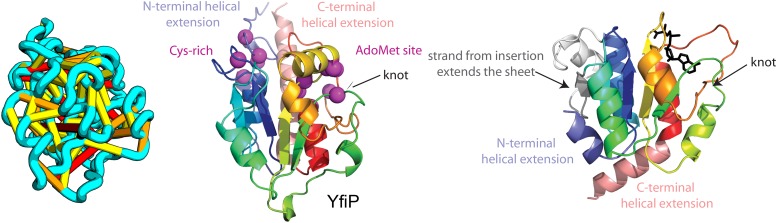
“…are selected for experimental characterization. d , Blind, de novo structure prediction (left) for the critical assessment of protein structure prediction (CASP)11 target T0806, which has no sequence similarity to any protein of known structure, using coevolution-derived contact constraints 27 .”
BackgroundSelf-citationUnified rational protein engineering with sequence-based deep representation learning
Alley, E. C., Khimulya, G., Biswas, S., AlQuraishi, M., & Church, G. M. (2019) · Nature Methods · doi:10.1038/s41592-019-0598-1 · Cited by 1,131
Advances in protein structure prediction and design
Kuhlman, B., & Bradley, P. (2019) · Nature Reviews Molecular Cell Biology · doi:10.1038/s41580-019-0163-x · Cited by 806
Mutation effects predicted from sequence co-variation
Hopf, T. A., Ingraham, J. B., Poelwijk, F. J., Schärfe, C. P. I., Springer, M., Sander, C., & Marks, D. S. (2017) · Nature Biotechnology · doi:10.1038/nbt.3769 · Cited by 775
Metadata
- Authors
- Ovchinnikov, S., Kinch, L., Park, H., Liao, Y., Pei, J., Kim, D. E., Kamisetty, H., Grishin, N. V., & Baker, D.
- Affiliations
- University of Washington (US)
- Howard Hughes Medical Institute (US)
- The University of Texas Southwestern Medical Center (US)
- Meta (United States) (US)
- Corresponding author
- Baker, David
- ORCID
- Venue
- eLife
- Publisher
- eLife Sciences Publications, Ltd
- Published
- 2015-09-03
- Volume
- 4
- Pages
- e09248-e09248
- ISSN
- 2050-084X (ISSN-L)
- PMC
- PMC4602095
- OpenAlex
- W1895528264
- Cited by
- 222
- References
- 80
- Citations by year
- 2026: 3 · 2025: 4 · 2024: 2 · 2023: 12 · 2022: 17 · 2021: 20 · 2020: 25 · 2019: 42 · 2018: 30 · 2017: 39 · 2016: 24 · 2015: 4
- FWCI
- 14.18
- Type
- journal article
- Language
- en
- Open access
- gold
- doi.org
- Licence
- Locations
- eLife (publishedVersion, cc-by)
- Europe PMC (PubMed Central) (publishedVersion, cc-by)
- PubMed Central (publishedVersion, cc-by)
- PubMed (publishedVersion)
- DOAJ (DOAJ: Directory of Open Access Journals) (submittedVersion, cc-by-sa)
- Funders
- National Institutes of Health (NIH) (R01GM092802, GM094575)
- Welch Foundation (Robert A. Welch Foundation) (I-1505)
- Topics
- Life Sciences › Biochemistry, Genetics and Molecular Biology › Molecular Biology › Protein Structure and Dynamics
- Life Sciences › Biochemistry, Genetics and Molecular Biology › Structural Biology › Enzyme Structure and Function
- Life Sciences › Biochemistry, Genetics and Molecular Biology › Molecular Biology › RNA and protein synthesis mechanisms
- Keywords
- protein structure prediction, de novo structure prediction, Rosetta, prokaryotic proteins, structural model, protein function prediction, evolutionary information
- MeSH terms
- Bacterial Proteins, Models, Molecular, Protein Conformation, Evolution, Molecular, Computational Biology
About these checks
Registry, retraction, Cites and statistics results are computed, not judged, with one exception: a printed reference that no index lists is read once by a model before it counts as a citation error. Claims are extracted by a model and kept only when their quote appears verbatim in the text; each cited source is then checked, with a model’s help, for whether it says what the claim relies on. Those verdicts can be wrong — read the claim’s quote and the cited source before relying on one.
Statistics and arithmetic are recomputed, not judged.
Confidence bands are shown only for fields calibrated on our annotated test set. None is calibrated yet, so no band is shown.
What counts as a claim ›How we measure confidence ›How we check this ›
Are you an author, or do you see a problem with this page? Request a review
