

The DOI matches its Crossref record; 151 of the 152 references it cites were found in a registry or an index.
A connectome of a learning and memory center in the adult Drosophila brain
Open accessAbstract
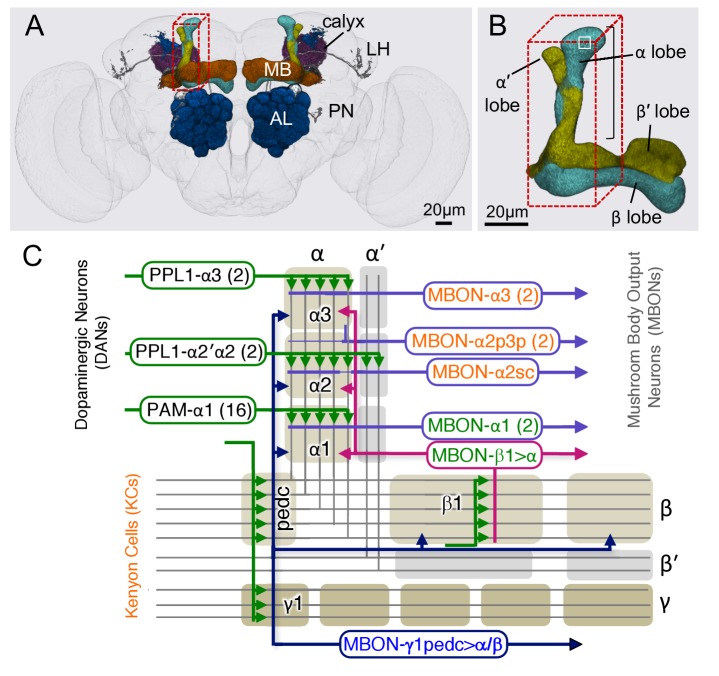
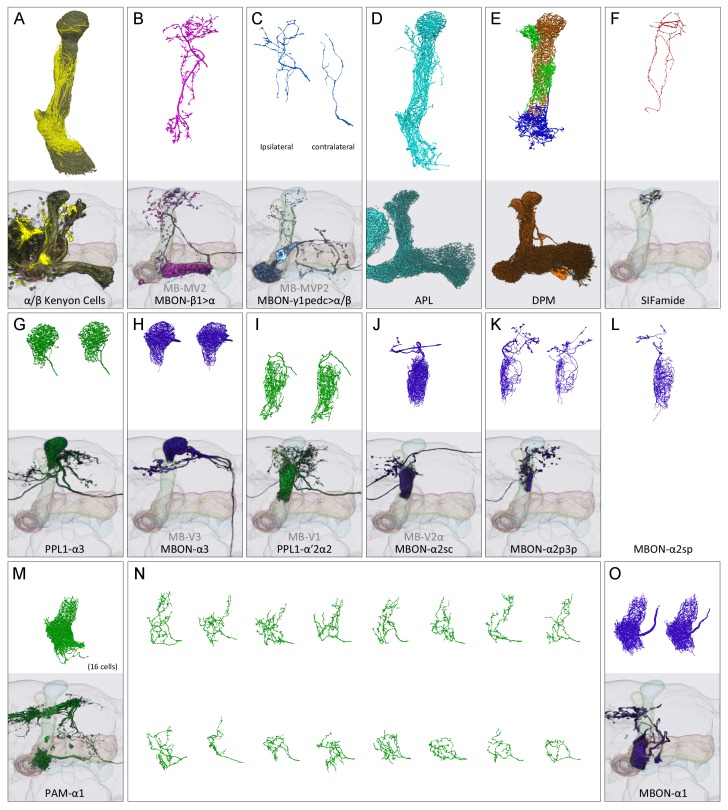
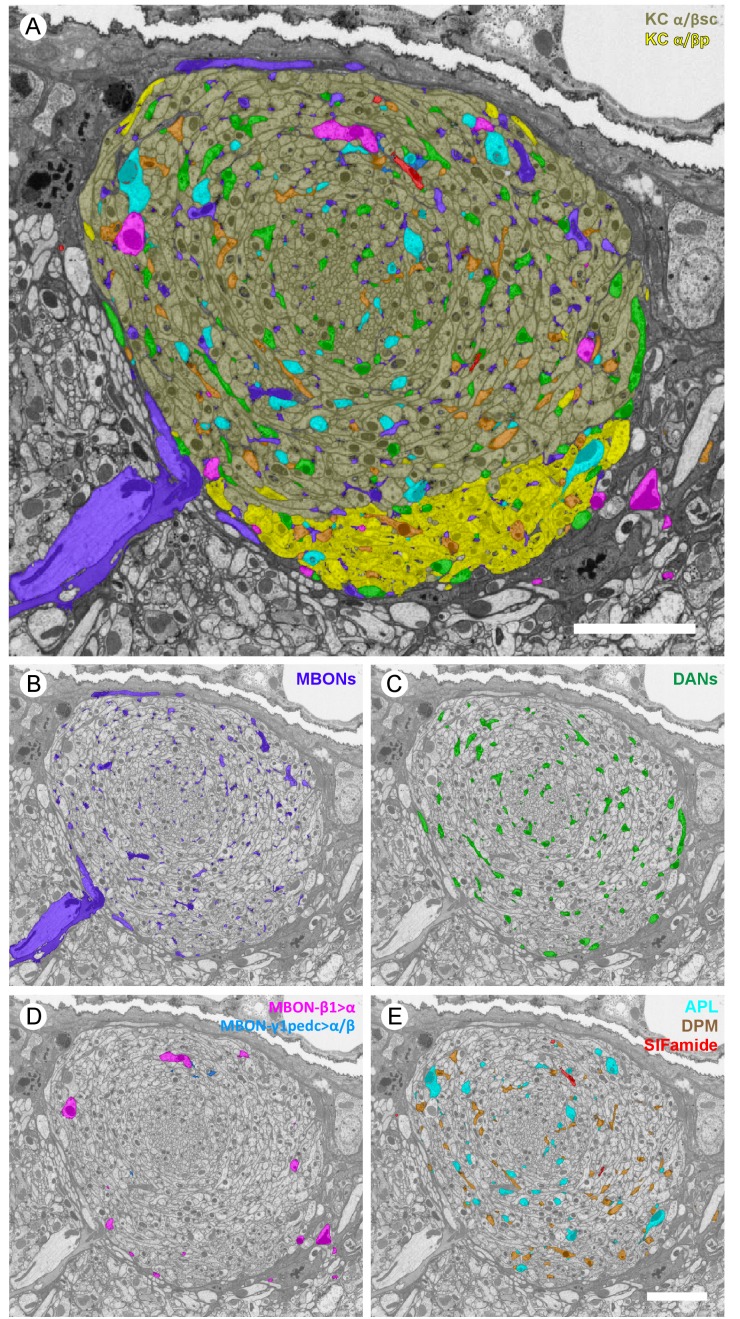
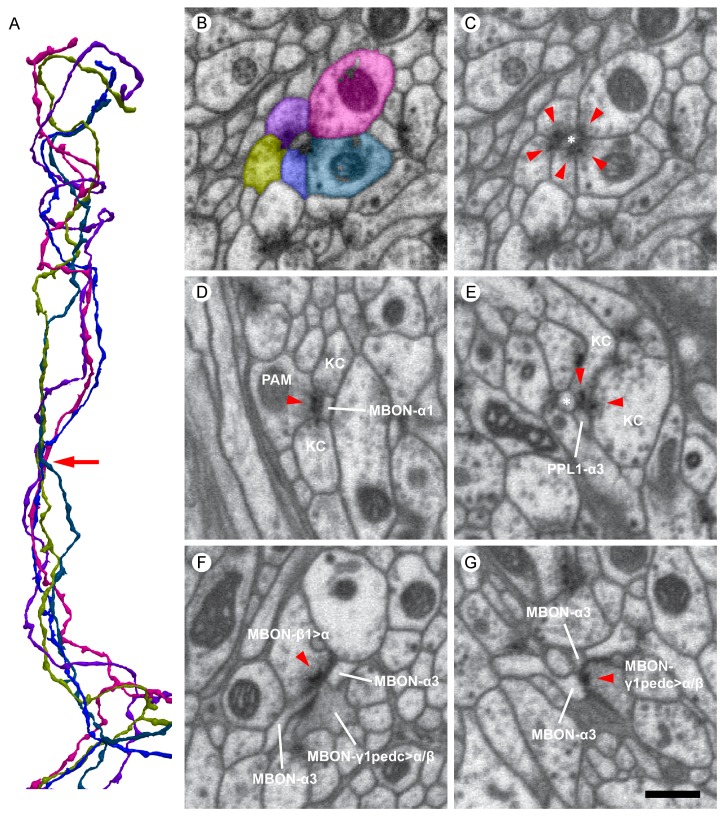
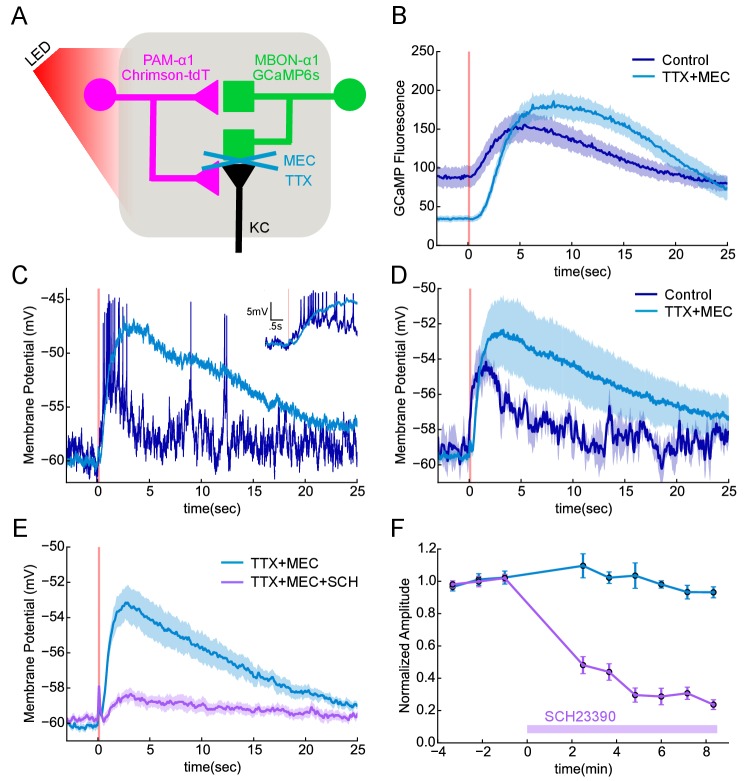
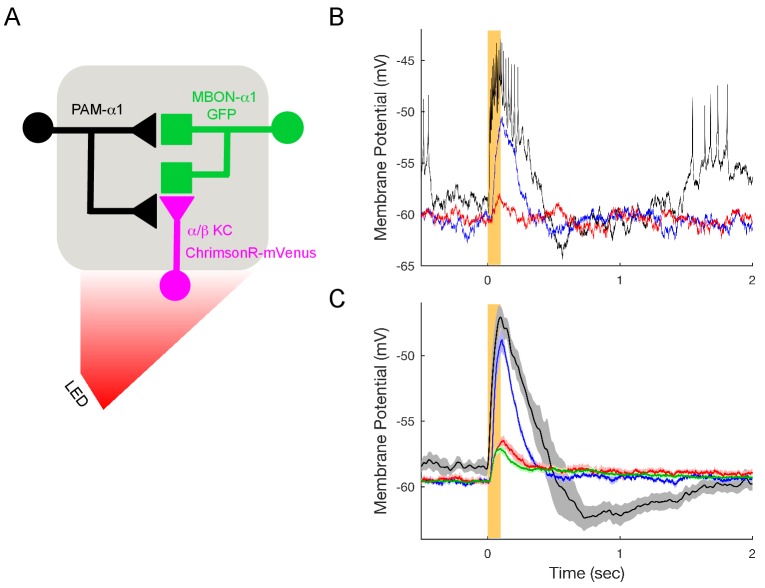
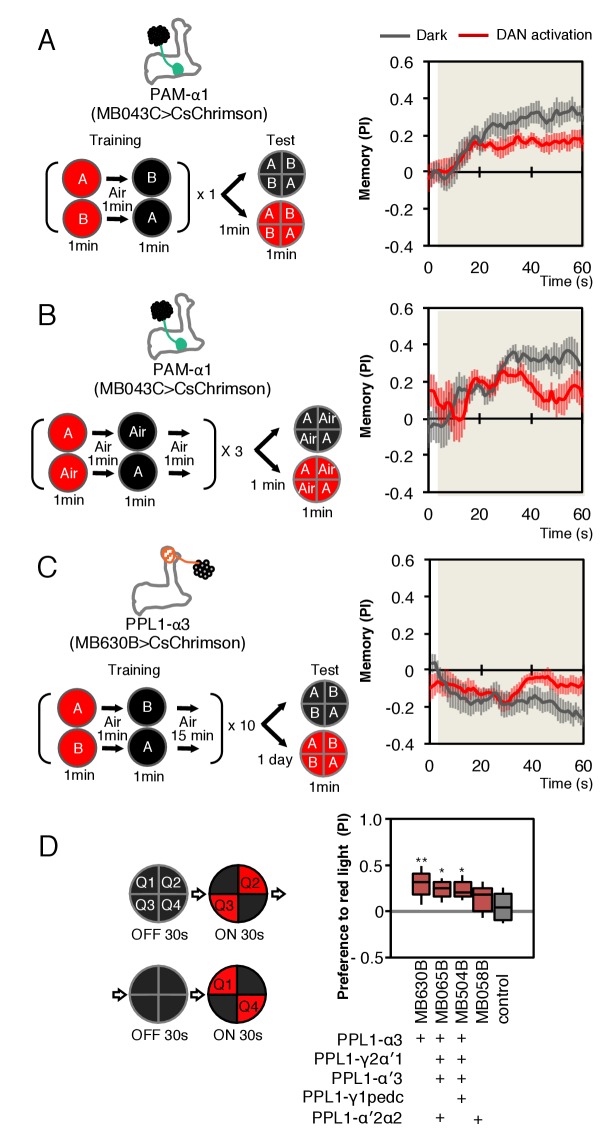
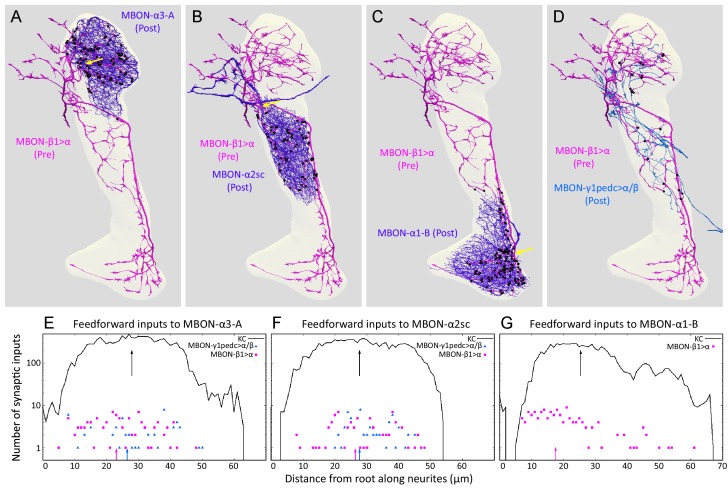
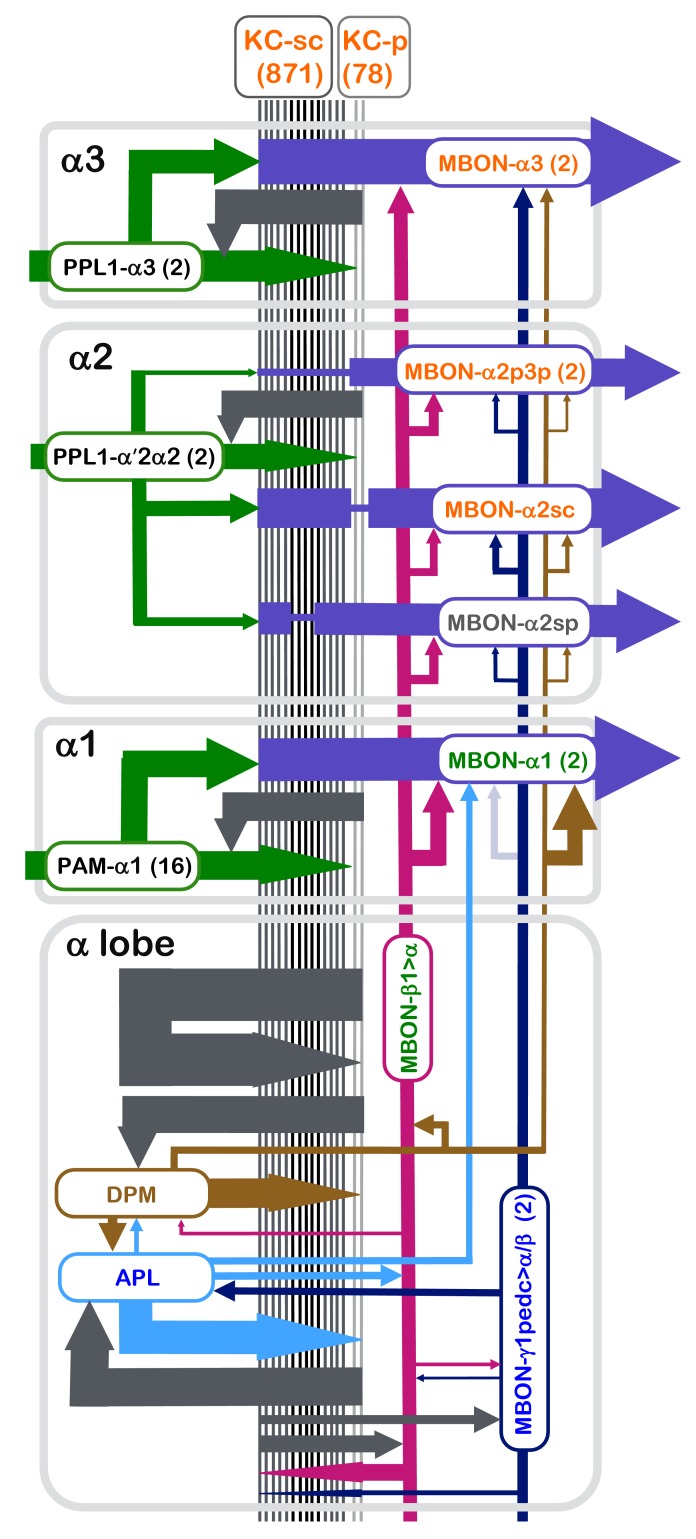
Understanding memory formation, storage and retrieval requires knowledge of the underlying neuronal circuits. In Drosophila, the mushroom body (MB) is the major site of associative learning. We reconstructed the morphologies and synaptic connections of all 983 neurons within the three functional units, or compartments, that compose the adult MB’s α lobe, using a dataset of isotropic 8 nm voxels collected by focused ion-beam milling scanning electron microscopy. We found that Kenyon cells (KCs), whose sparse activity encodes sensory information, each make multiple en passant synapses to MB output neurons (MBONs) in each compartment. Some MBONs have inputs from all KCs, while others differentially sample sensory modalities. Only 6% of KC>MBON synapses receive a direct synapse from a dopaminergic neuron (DAN). We identified two unanticipated classes of synapses, KC>DAN and DAN>MBON. DAN activation produces a slow depolarization of the MBON in these DAN>MBON synapses and can weaken memory recall.
Overview
The claims and statistics of this paper haven’t been checked yet.
Run the check — free, no account needed. It reads the open-access text and checks the sources it cites.
Integrity signals
Registry
Cites
Statistics
Figures
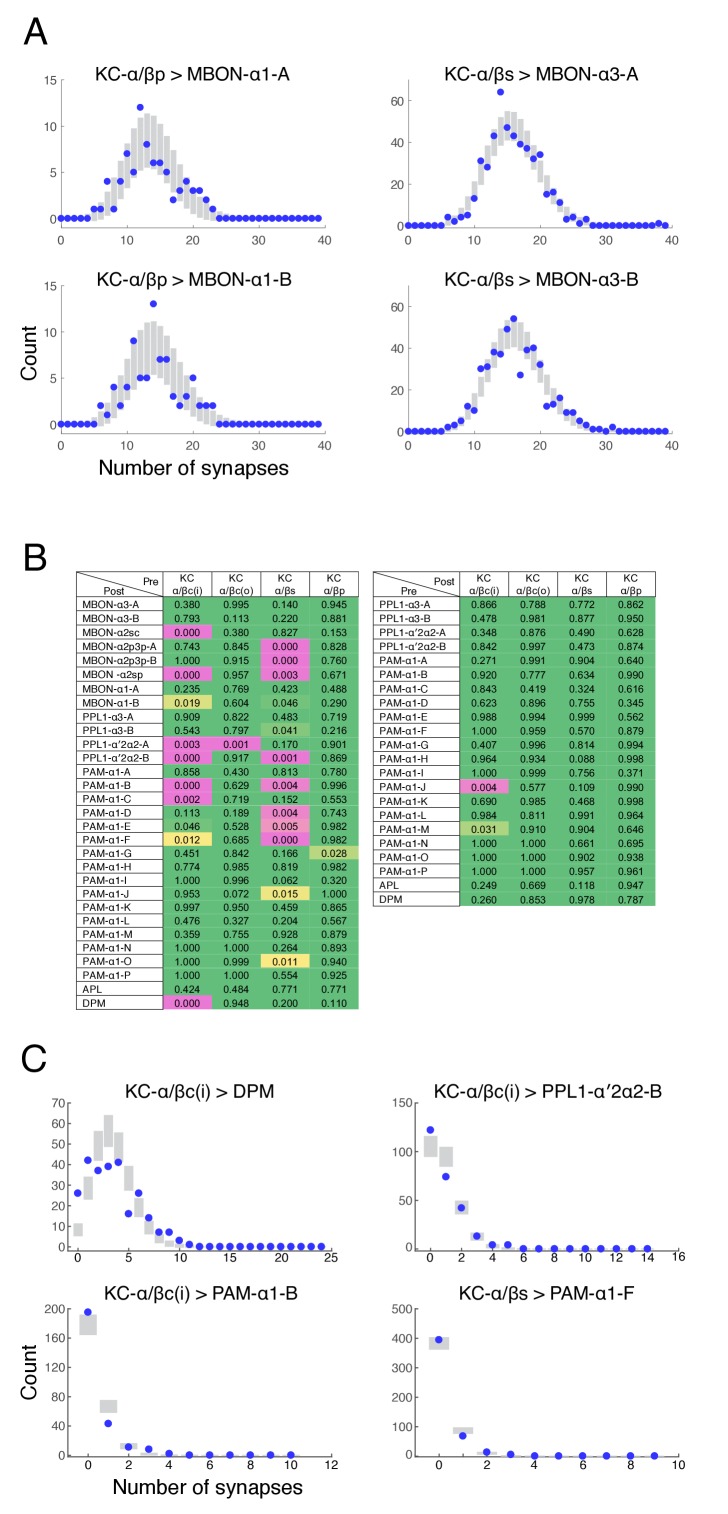
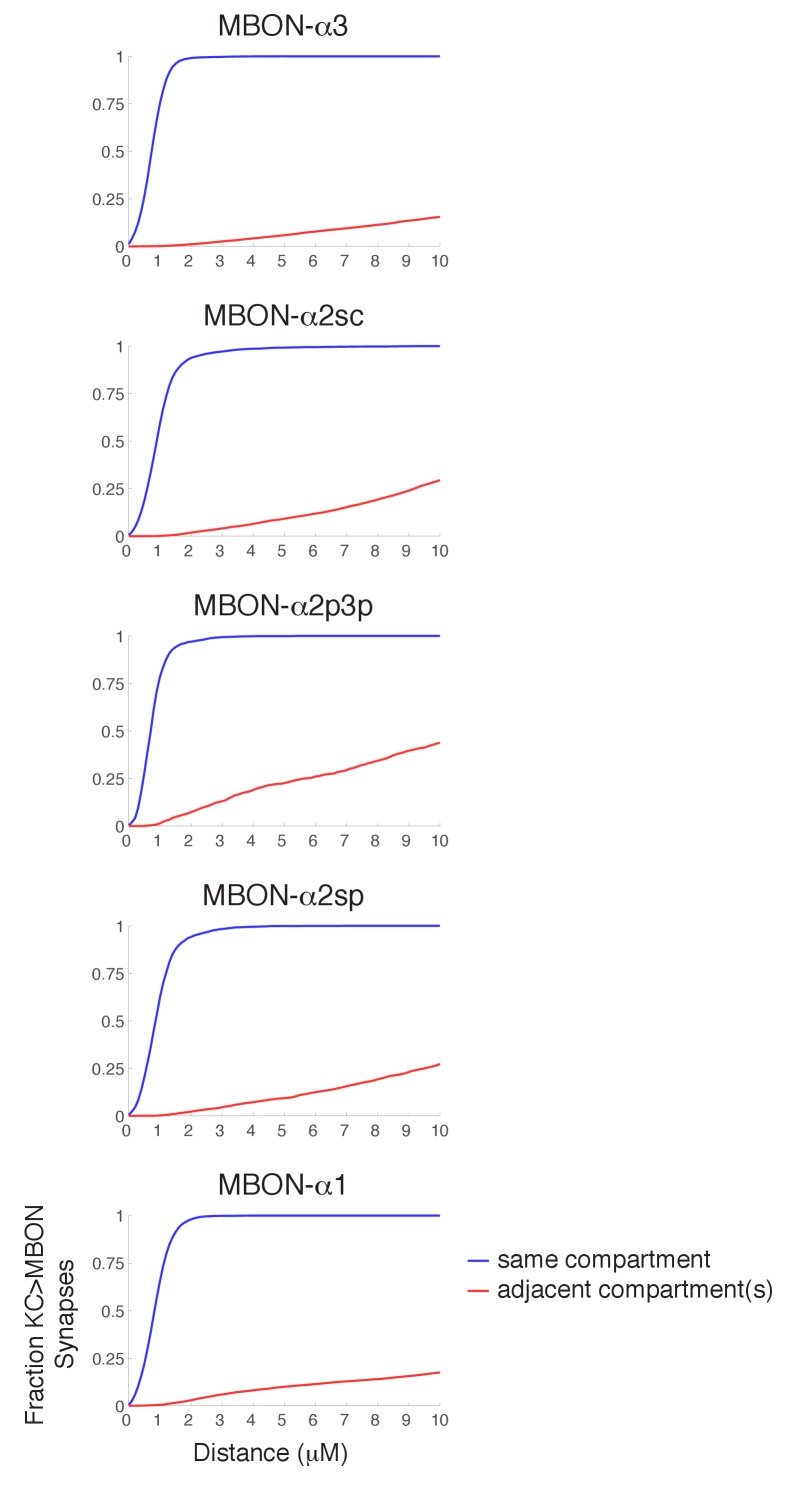
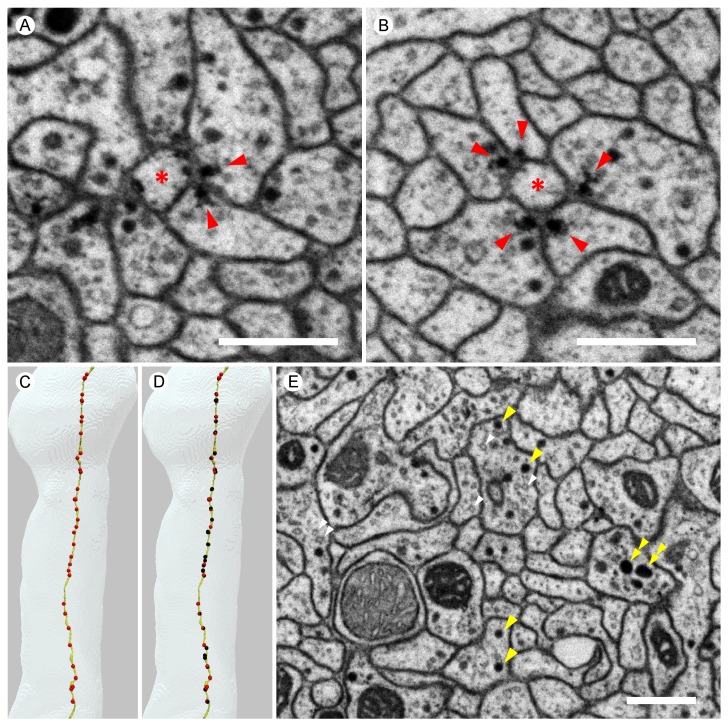
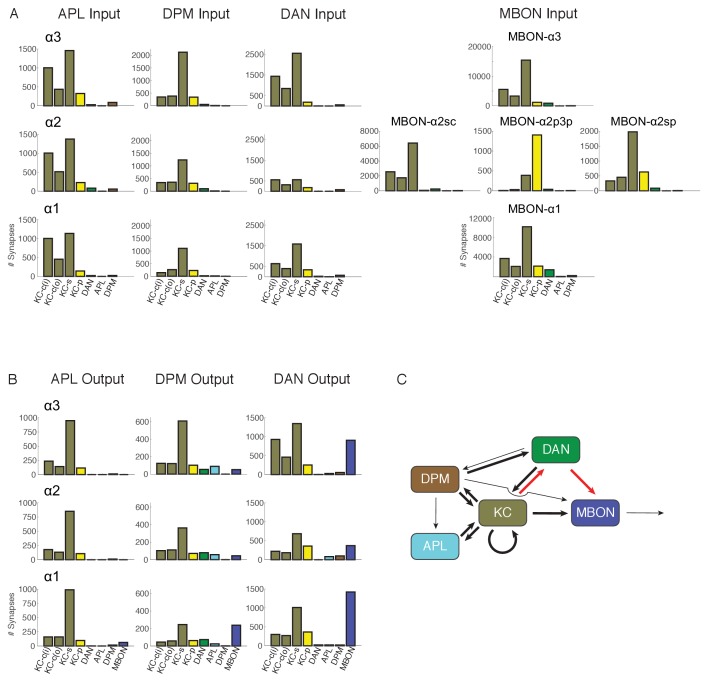
Verification
Claims the paper makes
The claims and statistics of this paper haven’t been checked yet.
Run the check — free, no account needed. It reads the open-access text and checks the sources it cites.
Claims other papers make about this one
Each is checked against this paper’s own text: does it say what the citing paper says it does?
The cited source says what the claim attributes to it.
In the citing paper
“For example, the MBs are known to be a centre for learning and memory in the fly brain32.”
From Network statistics of the whole-brain connectome of Drosophila (2024) · cites this paper as [32]
The cited source says what the claim attributes to it.
In the citing paper
“This appears to be explained by certain connections (especially KC to KC connections, which are predominantly arranged with an unusual rosette configuration along axons and of which the functional significance is poorly understood121) being much more prevalent in the hemibrain than in FlyWire (Extended Data Fig. 7d).”
From Whole-brain annotation and multi-connectome cell typing of Drosophila (2024) · cites this paper as [121]
The cited source says what the claim attributes to it.
In the citing paper
“Previous dense reconstructions have demonstrated that existing catalogs of cell types are incomplete, even in well-covered regions (Takemura et al., 2017).”
From A connectome and analysis of the adult Drosophila central brain (2020) · cites this paper as Takemura et al., 2017
The cited source says what the claim attributes to it.
In the citing paper
“Previous reconstructions were either dense in much smaller EM volumes (such as Meinertzhagen and O'Neil, 1991; Helmstaedter et al., 2013; Takemura et al., 2017) or sparse in larger volumes (such as Eichler et al., 2017 or Zheng et al., 2018).”
From A connectome and analysis of the adult Drosophila central brain (2020) · cites this paper as Takemura et al., 2017
The cited source says what the claim attributes to it.
In the citing paper
“Two previous connectomics efforts are available as well (a seven-column optic lobe reconstruction [Takemura et al., 2015] and the alpha lobe of the mushroom body [Takemura et al., 2017]).”
From A connectome and analysis of the adult Drosophila central brain (2020) · cites this paper as Takemura et al., 2017
The cited source says what the claim attributes to it.
In the citing paper
“The least tightly bound large motif is a cell that connects either to or from (but not both) all cells of a given type, as shown in Figure 22(c). Examples include the mushroom body output neurons (Takemura et al., 2017). This is a very common motif, found in many regions. We find more than 500 examples of this in the fly’s brain.”
From A connectome and analysis of the adult Drosophila central brain (2020) · cites this paper as Takemura et al., 2017
The check wasn’t confident either way, so it gives no verdict — never disputed.
In the citing paper
“Broadcasters include a large number of Mi1 and Tm3 neurons—excitatory cells in the ME known to have key roles in the motion detection circuit32,40.”
From Network statistics of the whole-brain connectome of Drosophila (2024) · cites this paper as [32]
Experimental — accuracy not yet measured
Self-check
Percentages, sums and reported differences re-computed from the paper’s own numbers.
The self-check needs the paper’s full text.
Citations
Cites
Fiji: an open-source platform for biological-image analysis
Schindelin, J., Arganda-Carreras, I., Frise, E., Kaynig, V., Longair, M., Pietzsch, T., Preibisch, S., Rueden, C., Saalfeld, S., Schmid, B., et al. (2012) · Nature Methods · doi:10.1038/nmeth.2019 · Cited by 66,890
Lecture Notes in Computer Science 1205
(1999) · Industrial Robot the international journal of robotics research and application · doi:10.1108/ir.1999.04926fae.001 · Cited by 39,228
Rescorla, R. A. (1972) · Medical Entomology and Zoology · Cited by 7,268
Predictive reward signal of dopamine neurons
Schultz, W. (1998) · Journal of Neurophysiology · doi:10.1152/jn.1998.80.1.1 · Cited by 4,564
Independent optical excitation of distinct neural populations
Klapoetke, N. C., Murata, Y., Kim, S. S., Pulver, S. R., Birdsey-Benson, A., Cho, Y. K., Morimoto, T. K., Chuong, A. S., Carpenter, E. J., Tian, Z., et al. (2014) · Nature Methods · doi:10.1038/nmeth.2836 · Cited by 2,344
Neuronal circuits for fear and anxiety
Tovote, P., Fadok, J. P., & Lüthi, A. (2015) · Nature Reviews Neuroscience · doi:10.1038/nrn3945 · Cited by 1,786
Molecular Biology of Learning: Modulation of Transmitter Release
Kandel, E. R., & Schwartz, J. H. (1982) · Science · doi:10.1126/science.6289442 · Cited by 1,551
Spatiotemporal Rescue of Memory Dysfunction in Drosophila
McGuire, S. E., Le, P. T., Osborn, A. J., Matsumoto, K., & Davis, R. L. (2003) · Science · doi:10.1126/science.1089035 · Cited by 1,318
Mushroom body memoir: from maps to models
Heisenberg, M. (2003) · Nature Reviews Neuroscience · doi:10.1038/nrn1074 · Cited by 1,286
Strausfeld, N. J. (1976) · Springer eBooks · doi:10.1007/978-3-642-66179-2 · Cited by 1,277
Research works printed but not linked: 5
- Eichler, 2017, The complete wiring diagram of the larval Drosophila mushroom body, Nature
- Qin, 2012, Gamma neurons mediate dopaminergic input during aversive olfactory memory formation in Drosophila, Current Biology, 22, 608, 10.1016/j.cub.2012.02.014 · DOI
- Rescorla, 1972, Classical Conditioning II, 64
- Schürmann, 1974, [On the functional anatomy of the corpora pedunculata in insects (author's transl)], Experimental Brain Research, 19, 406
- Yu, 2005, Drosophila DPM neurons form a delayed and branch-specific memory trace after olfactory classical conditioning, Cell, 123, 945, 10.1016/j.cell.2005.09.037 · DOI
Cited by
Sorted by citations
A connectome and analysis of the adult Drosophila central brain
Scheffer, L. K., Xu, C. S., Januszewski, M., Lu, Z., Takemura, S.-Y., Hayworth, K. J., Huang, G. B., Shinomiya, K., Maitlin-Shepard, J., Berg, S., et al. (2020) · eLife · doi:10.7554/elife.57443 · Cited by 1,128
“Previous reconstructions were either dense in much smaller EM volumes (such as Meinertzhagen and O’Neil, 1991; Helmstaedter et al., 2013; Takemura et al., 2017) or sparse in larger volumes (such as Eichler et al.”
BackgroundInfluentialSelf-citationA Complete Electron Microscopy Volume of the Brain of Adult Drosophila melanogaster
Zheng, Z., Lauritzen, J. S., Perlman, E., Robinson, C. G., Nichols, M., Milkie, D., Torrens, O., Price, J., Fisher, C. B., Sharifi, N., et al. (2018) · Cell · doi:10.1016/j.cell.2018.06.019 · Cited by 1,050
The complete connectome of a learning and memory centre in an insect brain
Eichler, K., Li, F., Litwin-Kumar, A., Park, Y., Andrade, I. V., Schneider-Mizell, C. M., Saumweber, T., Huser, A., Eschbach, C., Gerber, B., et al. (2017) · Nature · doi:10.1038/nature23455 · Cited by 483
The connectome of an insect brain
Winding, M., Pedigo, B. D., Barnes, C. L., Patsolic, H. G., Park, Y., Kazimiers, T., Fushiki, A., Andrade, I. V., Khandelwal, A., Valdes-Aleman, J., et al. (2023) · Science · doi:10.1126/science.add9330 · Cited by 435
Whole-brain annotation and multi-connectome cell typing of Drosophila
Schlegel, P., Yin, Y., Bates, A. S., Dorkenwald, S., Eichler, K., Brooks, P., Han, D. S., Gkantia, M., dos Santos, M., Munnelly, E. J., et al. (2024) · Nature · doi:10.1038/s41586-024-07686-5 · Cited by 413
Metadata
- Authors
- Takemura, S.-Y., Aso, Y., Hige, T., Wong, A., Lu, Z., Xu, C. S., Rivlin, P. K., Hess, H., Zhao, T., Parag, T., Berg, S., Huang, G., Katz, W., Olbris, D. J., Plaza, S., Umayam, L., Aniceto, R., Chang, L.-A., Lauchie, S., Ogundeyi, O., Ordish, C., Shinomiya, A., Sigmund, C., Takemura, S., Tran, J., Turner, G. C., Rubin, G. M., & Scheffer, L. K.
- Affiliations
- Howard Hughes Medical Institute (US)
- Corresponding author
- Takemura, Shin-ya
- Scheffer, Louis K
- ORCID
- Takemura, Shin-ya
- Aso, Yoshinori
- Hige, Toshihide
- Wong, Allan
- Lu, Zhiyuan
- Xu, C Shan
- Rivlin, Patricia K
- Hess, Harald
- Zhao, Ting
- Berg, Stuart
- Huang, Gary
- Katz, William
- Olbris, Donald J
- Plaza, Stephen
- Umayam, Lowell
- Aniceto, Roxanne
- Lauchie, Shirley
- Ogundeyi, Omotara
- Ordish, Christopher
- Shinomiya, Aya
- Takemura, Satoko
- Tran, Julie
- Turner, Glenn C
- Rubin, Gerald M
- Scheffer, Louis K
- Venue
- eLife
- Publisher
- eLife Sciences Publications, Ltd
- Published
- 2017-07-18
- Volume
- 6
- ISSN
- 2050-084X (ISSN-L)
- PMC
- PMC5550281
- OpenAlex
- W2737808707
- Cited by
- 367
- References
- 152
- Citations by year
- 2026: 16 · 2025: 18 · 2024: 44 · 2023: 32 · 2022: 35 · 2021: 47 · 2020: 59 · 2019: 54 · 2018: 53 · 2017: 8
- FWCI
- 23.30
- Type
- journal article
- Language
- en
- Open access
- gold
- doi.org
- Licence
- Locations
- eLife (publishedVersion, cc-by)
- PubMed Central (publishedVersion, cc-by)
- PubMed (publishedVersion)
- DOAJ (DOAJ: Directory of Open Access Journals) (submittedVersion, cc-by-sa)
- Funders
- Howard Hughes Medical Institute
- Topics
- Life Sciences › Neuroscience › Cellular and Molecular Neuroscience › Neurobiology and Insect Physiology Research
- Life Sciences › Neuroscience › Cellular and Molecular Neuroscience › Neuroscience and Neuropharmacology Research
- Life Sciences › Neuroscience › Cognitive Neuroscience › Memory and Neural Mechanisms
- Keywords
- mushroom body, Kenyon cells, dopaminergic neurons, synaptic connectivity, memory retrieval, associative learning, Drosophila, connectome, neuronal morphology, sensory modality specificity
- MeSH terms
- Animals, Drosophila, Learning, Memory, Mushroom Bodies, Connectome
About these checks
Registry, retraction, Cites and statistics results are computed, not judged, with one exception: a printed reference that no index lists is read once by a model before it counts as a citation error. Claims are extracted by a model and kept only when their quote appears verbatim in the text; each cited source is then checked, with a model’s help, for whether it says what the claim relies on. Those verdicts can be wrong — read the claim’s quote and the cited source before relying on one.
Statistics and arithmetic are recomputed, not judged.
Confidence bands are shown only for fields calibrated on our annotated test set. None is calibrated yet, so no band is shown.
What counts as a claim ›How we measure confidence ›How we check this ›
Are you an author, or do you see a problem with this page? Request a review
