

The DOI matches its Crossref record; 151 of the 152 references it cites were found in a registry or an index.
A connectome of a learning and memory center in the adult Drosophila brain
Open accessAbstract
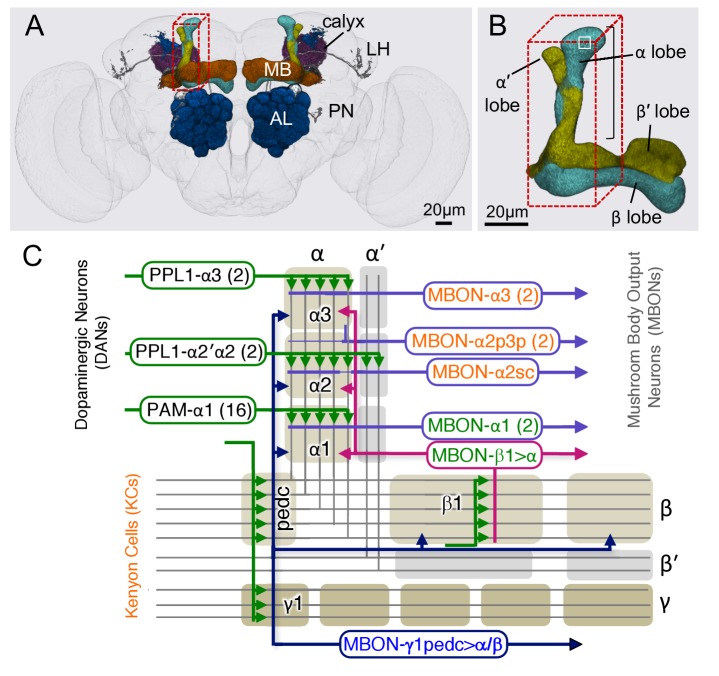
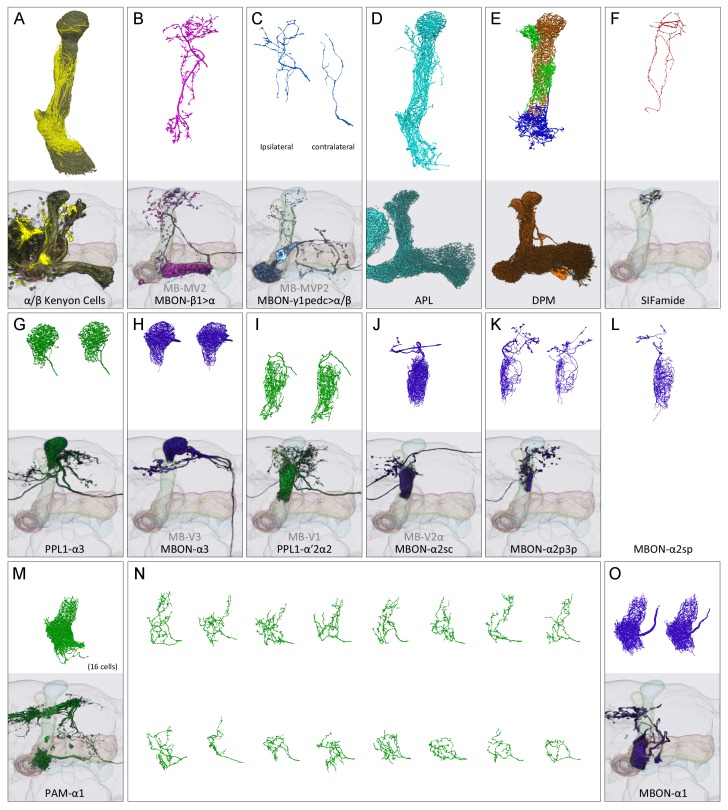
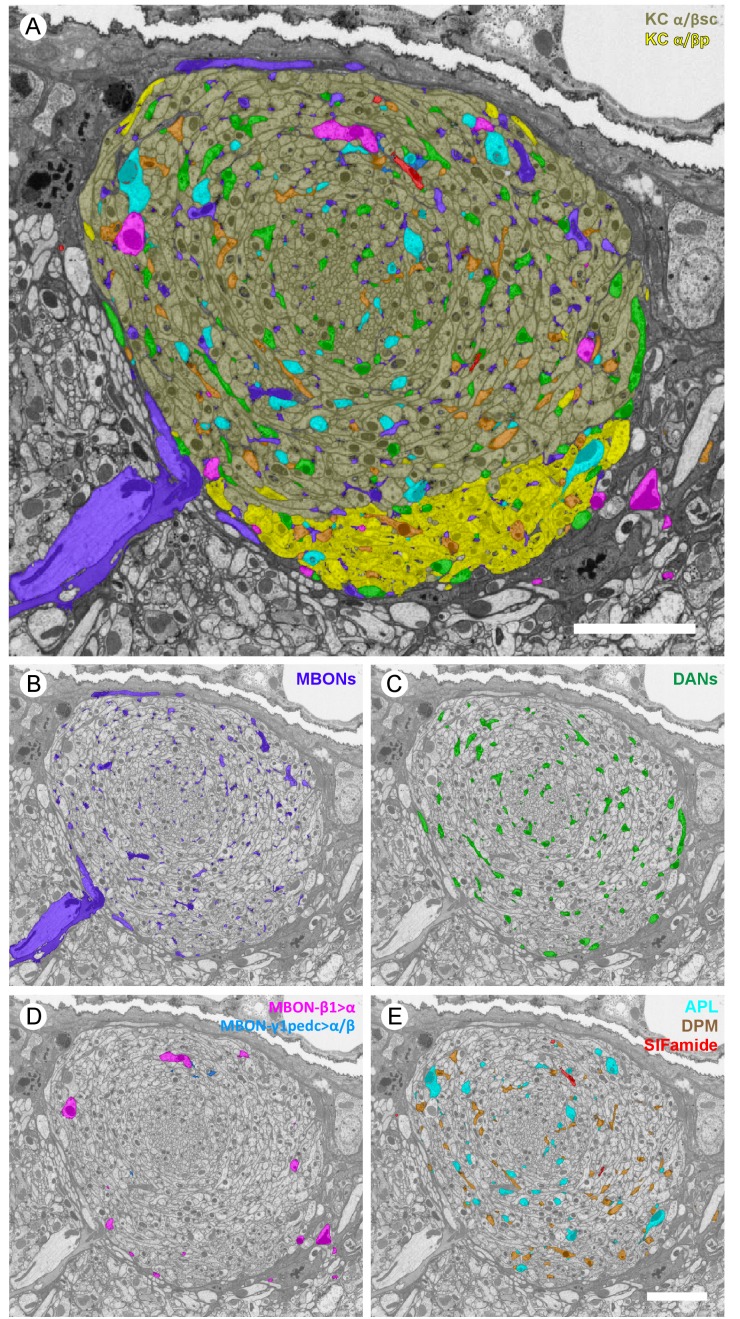
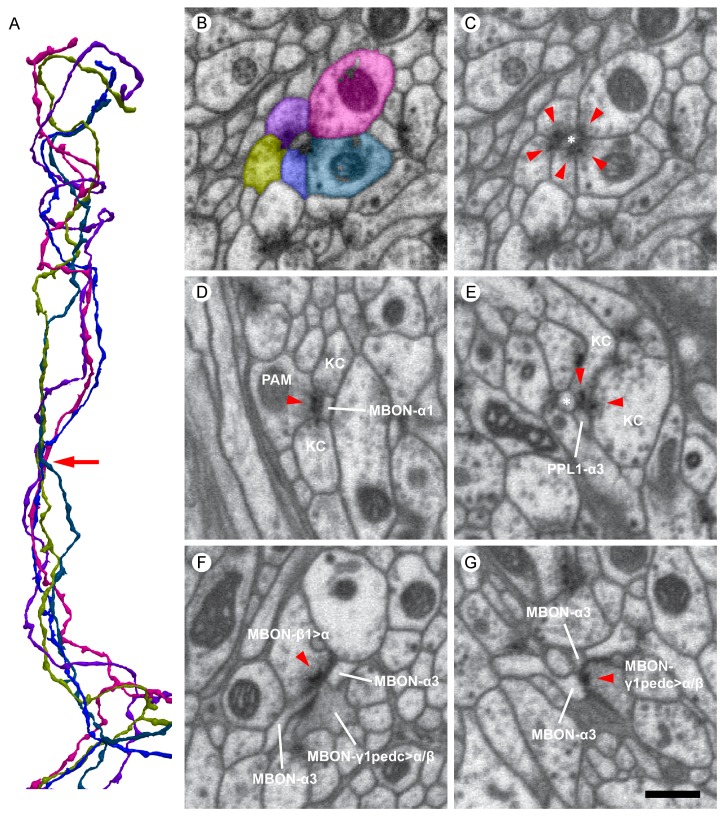
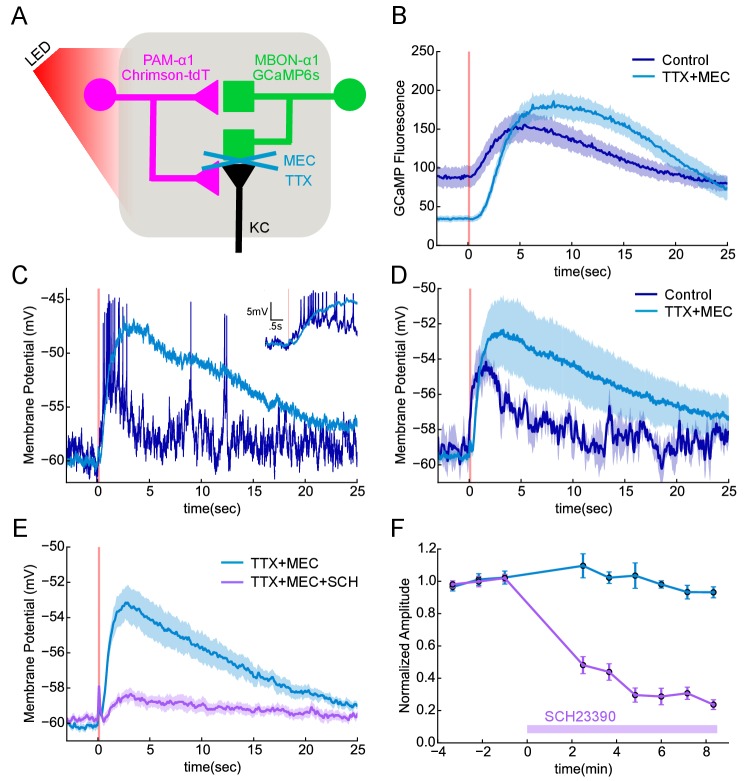
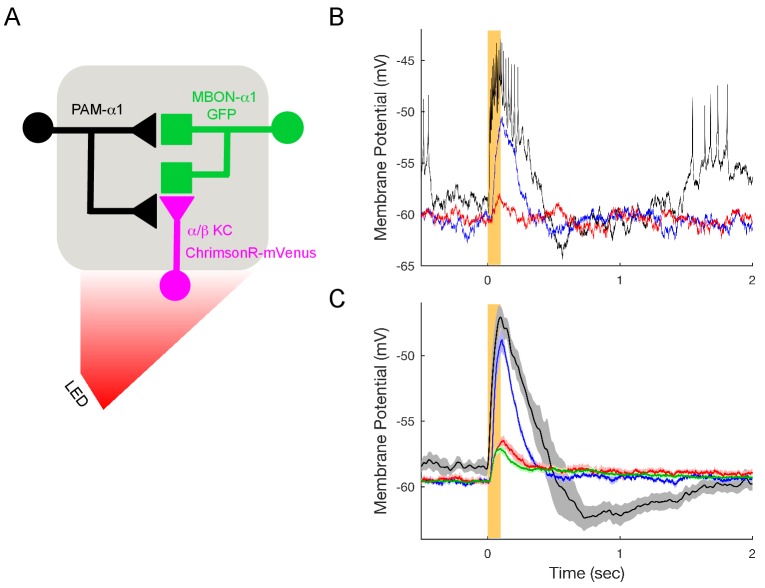
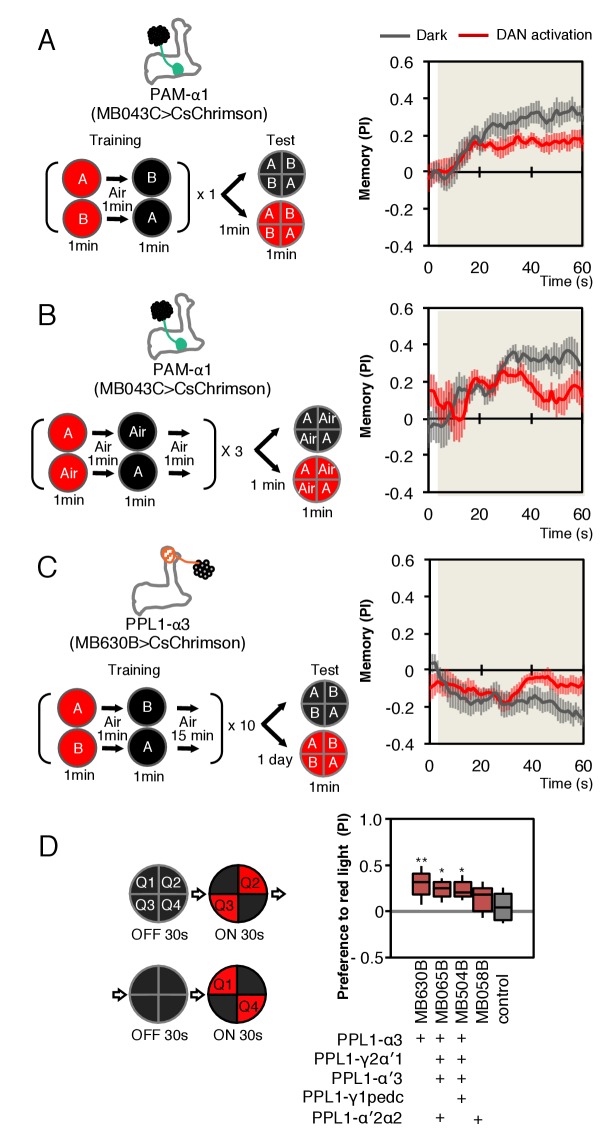
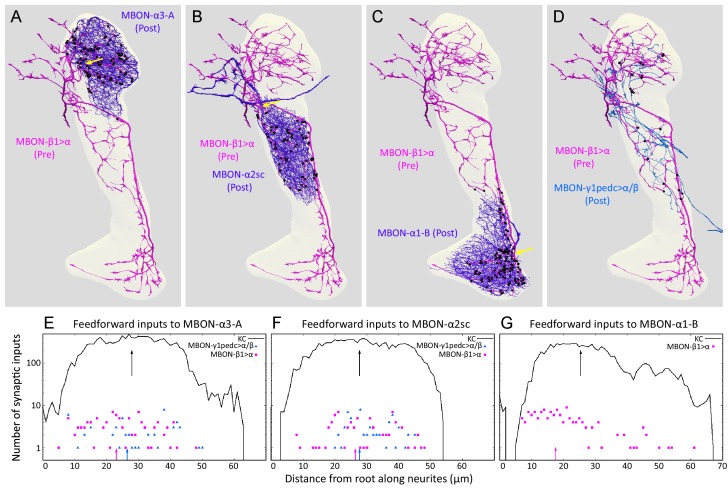
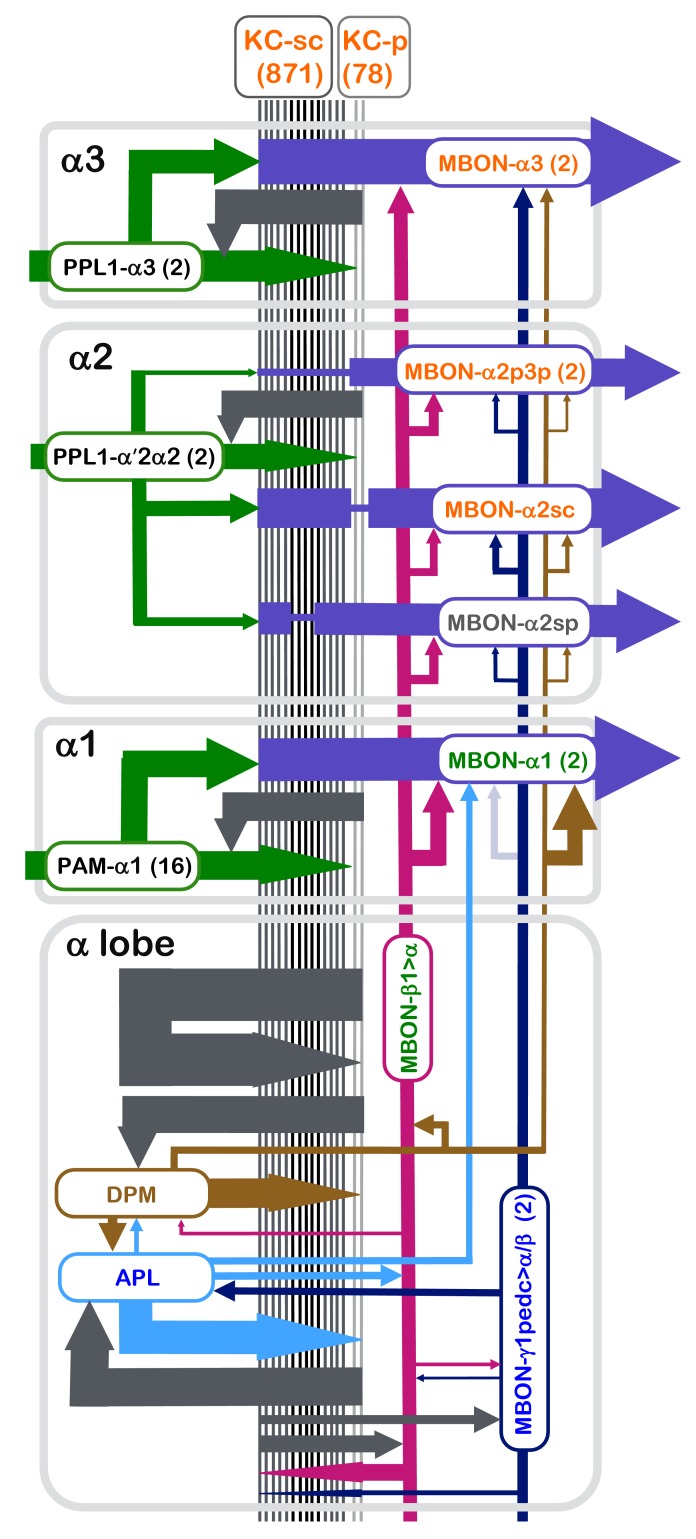
Understanding memory formation, storage and retrieval requires knowledge of the underlying neuronal circuits. In Drosophila, the mushroom body (MB) is the major site of associative learning. We reconstructed the morphologies and synaptic connections of all 983 neurons within the three functional units, or compartments, that compose the adult MB’s α lobe, using a dataset of isotropic 8 nm voxels collected by focused ion-beam milling scanning electron microscopy. We found that Kenyon cells (KCs), whose sparse activity encodes sensory information, each make multiple en passant synapses to MB output neurons (MBONs) in each compartment. Some MBONs have inputs from all KCs, while others differentially sample sensory modalities. Only 6% of KC>MBON synapses receive a direct synapse from a dopaminergic neuron (DAN). We identified two unanticipated classes of synapses, KC>DAN and DAN>MBON. DAN activation produces a slow depolarization of the MBON in these DAN>MBON synapses and can weaken memory recall.
Overview
The claims and statistics of this paper haven’t been checked yet.
Run the check — free, no account needed. It reads the open-access text and checks the sources it cites.
Integrity signals
Registry
Cites
Statistics
Figures
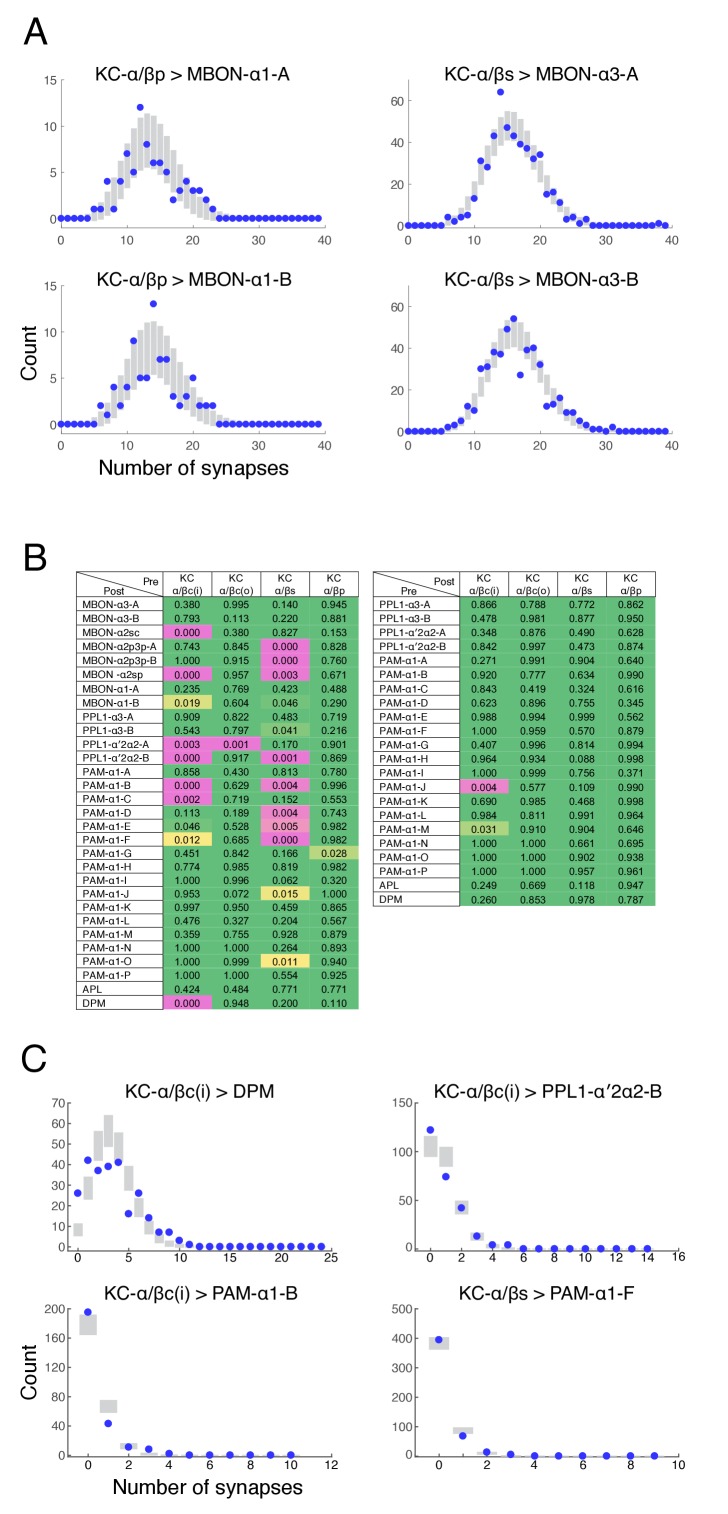
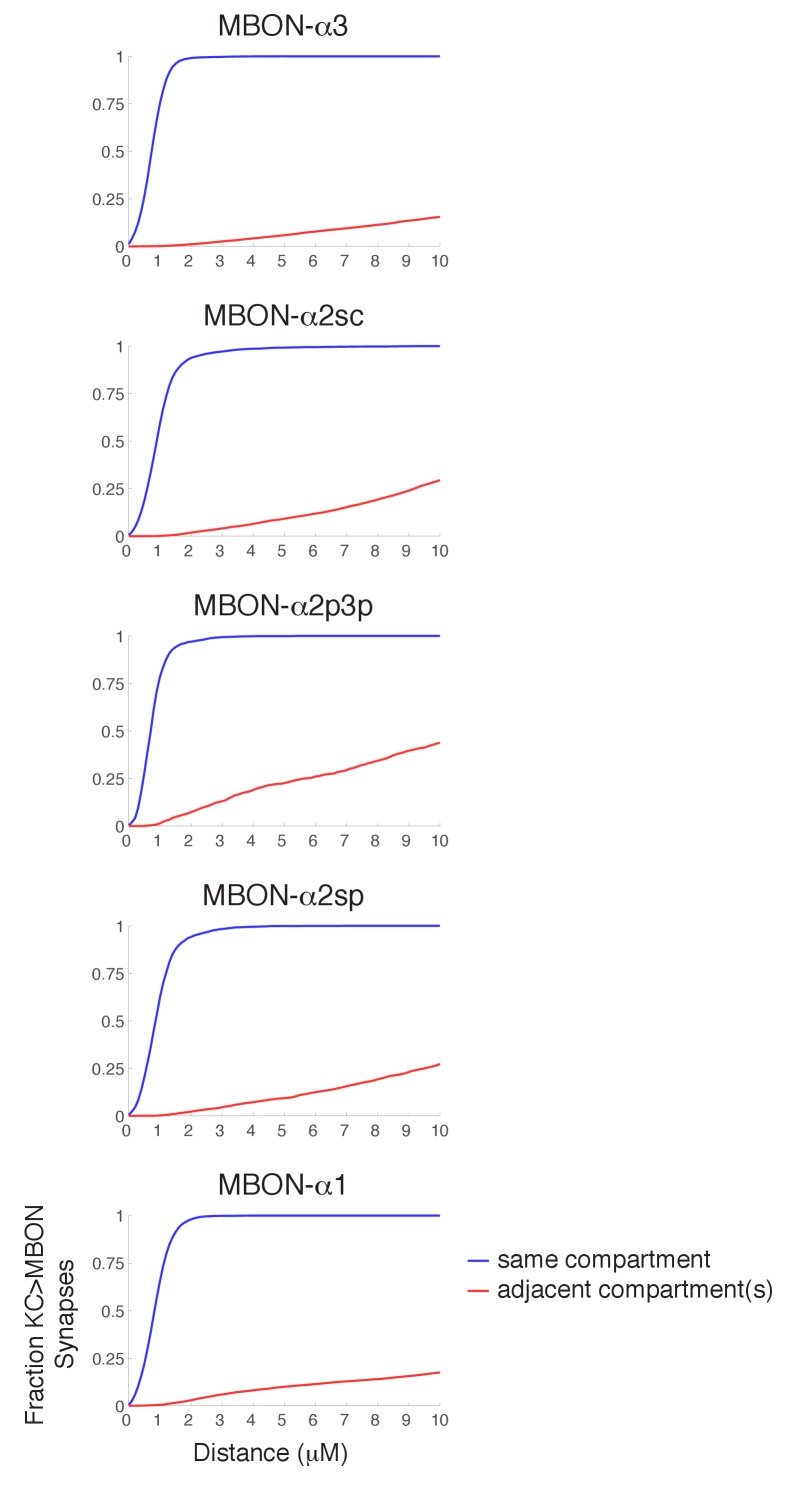
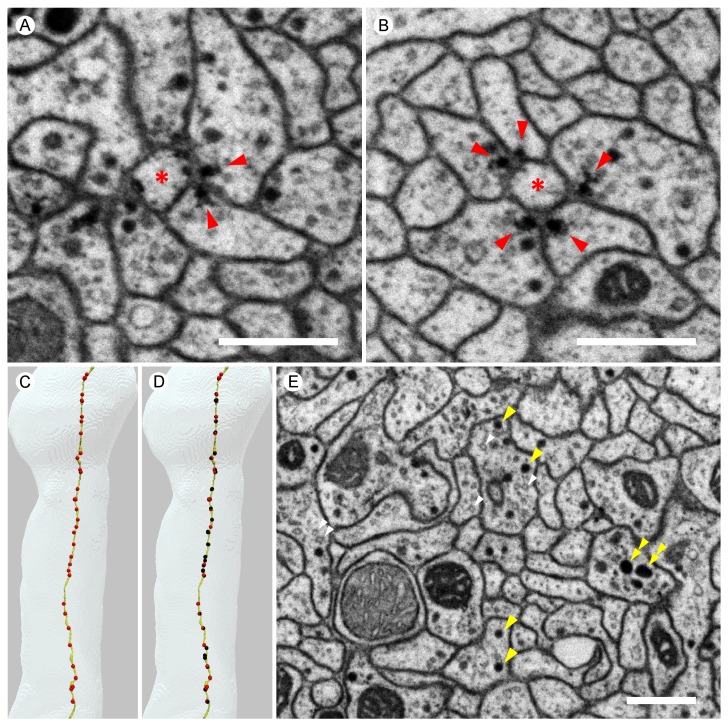
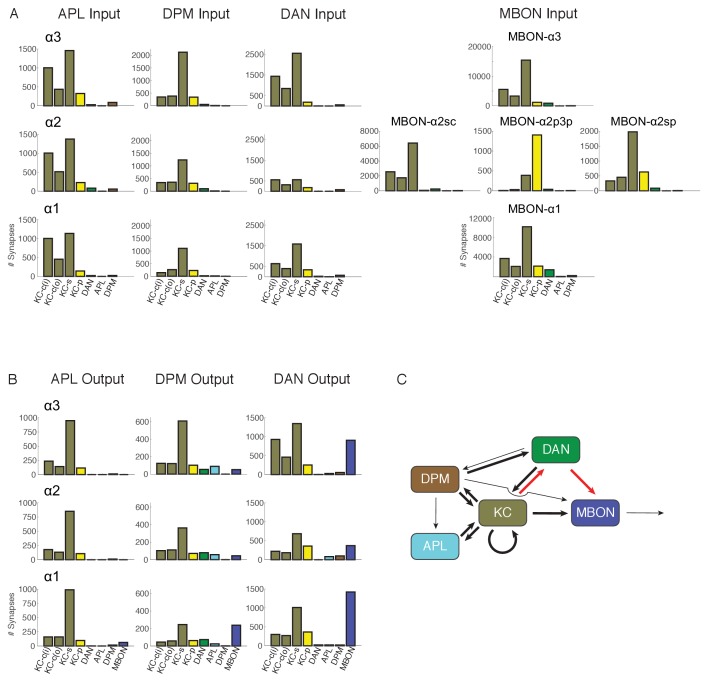
Verification
Claims the paper makes
The claims and statistics of this paper haven’t been checked yet.
Run the check — free, no account needed. It reads the open-access text and checks the sources it cites.
Claims other papers make about this one
Each is checked against this paper’s own text: does it say what the citing paper says it does?
The cited source says what the claim attributes to it.
In the citing paper
“For example, the MBs are known to be a centre for learning and memory in the fly brain32.”
From Network statistics of the whole-brain connectome of Drosophila (2024) · cites this paper as [32]
The cited source says what the claim attributes to it.
In the citing paper
“This appears to be explained by certain connections (especially KC to KC connections, which are predominantly arranged with an unusual rosette configuration along axons and of which the functional significance is poorly understood121) being much more prevalent in the hemibrain than in FlyWire (Extended Data Fig. 7d).”
From Whole-brain annotation and multi-connectome cell typing of Drosophila (2024) · cites this paper as [121]
The cited source says what the claim attributes to it.
In the citing paper
“Previous dense reconstructions have demonstrated that existing catalogs of cell types are incomplete, even in well-covered regions (Takemura et al., 2017).”
From A connectome and analysis of the adult Drosophila central brain (2020) · cites this paper as Takemura et al., 2017
The cited source says what the claim attributes to it.
In the citing paper
“Previous reconstructions were either dense in much smaller EM volumes (such as Meinertzhagen and O'Neil, 1991; Helmstaedter et al., 2013; Takemura et al., 2017) or sparse in larger volumes (such as Eichler et al., 2017 or Zheng et al., 2018).”
From A connectome and analysis of the adult Drosophila central brain (2020) · cites this paper as Takemura et al., 2017
The cited source says what the claim attributes to it.
In the citing paper
“Two previous connectomics efforts are available as well (a seven-column optic lobe reconstruction [Takemura et al., 2015] and the alpha lobe of the mushroom body [Takemura et al., 2017]).”
From A connectome and analysis of the adult Drosophila central brain (2020) · cites this paper as Takemura et al., 2017
The cited source says what the claim attributes to it.
In the citing paper
“The least tightly bound large motif is a cell that connects either to or from (but not both) all cells of a given type, as shown in Figure 22(c). Examples include the mushroom body output neurons (Takemura et al., 2017). This is a very common motif, found in many regions. We find more than 500 examples of this in the fly’s brain.”
From A connectome and analysis of the adult Drosophila central brain (2020) · cites this paper as Takemura et al., 2017
The check wasn’t confident either way, so it gives no verdict — never disputed.
In the citing paper
“Broadcasters include a large number of Mi1 and Tm3 neurons—excitatory cells in the ME known to have key roles in the motion detection circuit32,40.”
From Network statistics of the whole-brain connectome of Drosophila (2024) · cites this paper as [32]
Experimental — accuracy not yet measured
Self-check
Percentages, sums and reported differences re-computed from the paper’s own numbers.
The self-check needs the paper’s full text.
Citations
Cites
Fiji: an open-source platform for biological-image analysis
Schindelin, J., Arganda-Carreras, I., Frise, E., Kaynig, V., Longair, M., Pietzsch, T., Preibisch, S., Rueden, C., Saalfeld, S., Schmid, B., et al. (2012) · Nature Methods · doi:10.1038/nmeth.2019 · Cited by 66,890
Lecture Notes in Computer Science 1205
(1999) · Industrial Robot the international journal of robotics research and application · doi:10.1108/ir.1999.04926fae.001 · Cited by 39,228
Rescorla, R. A. (1972) · Medical Entomology and Zoology · Cited by 7,268
Predictive reward signal of dopamine neurons
Schultz, W. (1998) · Journal of Neurophysiology · doi:10.1152/jn.1998.80.1.1 · Cited by 4,564
Independent optical excitation of distinct neural populations
Klapoetke, N. C., Murata, Y., Kim, S. S., Pulver, S. R., Birdsey-Benson, A., Cho, Y. K., Morimoto, T. K., Chuong, A. S., Carpenter, E. J., Tian, Z., et al. (2014) · Nature Methods · doi:10.1038/nmeth.2836 · Cited by 2,344
Neuronal circuits for fear and anxiety
Tovote, P., Fadok, J. P., & Lüthi, A. (2015) · Nature Reviews Neuroscience · doi:10.1038/nrn3945 · Cited by 1,786
Molecular Biology of Learning: Modulation of Transmitter Release
Kandel, E. R., & Schwartz, J. H. (1982) · Science · doi:10.1126/science.6289442 · Cited by 1,551
Spatiotemporal Rescue of Memory Dysfunction in Drosophila
McGuire, S. E., Le, P. T., Osborn, A. J., Matsumoto, K., & Davis, R. L. (2003) · Science · doi:10.1126/science.1089035 · Cited by 1,318
Mushroom body memoir: from maps to models
Heisenberg, M. (2003) · Nature Reviews Neuroscience · doi:10.1038/nrn1074 · Cited by 1,286
Strausfeld, N. J. (1976) · Springer eBooks · doi:10.1007/978-3-642-66179-2 · Cited by 1,277
Classical conditioning and retention in normal and mutantDrosophila melanogaster
Tully, T., & Quinn, W. G. (1985) · Journal of Comparative Physiology A · doi:10.1007/bf01350033 · Cited by 1,189
The neuronal architecture of the mushroom body provides a logic for associative learning
Aso, Y., Hattori, D., Yu, Y., Johnston, R. M., Iyer, N. A., Ngo, T.-T., Dionne, H., Abbott, L., Axel, R., Tanimoto, H., et al. (2014) · eLife · doi:10.7554/elife.04577 · Cited by 1,051
Self-citationStrausfeld, N. J. (1976) · Medical Entomology and Zoology · Cited by 967
Schwaerzel, M., Monastirioti, M., Scholz, H., Friggi-Grelin, F., Birman, S., & Heisenberg, M. (2003) · The Journal of Neuroscience · doi:10.1523/jneurosci.23-33-10495.2003 · Cited by 871
Associative Odor Learning in Drosophila Abolished by Chemical Ablation of Mushroom Bodies
de Belle, J. S., & Heisenberg, M. (1994) · Science · doi:10.1126/science.8303280 · Cited by 797
Oscillations and Sparsening of Odor Representations in the Mushroom Body
Pérez-Orive, J., Mazor, O., Turner, G. C., Cassenaer, S., Wilson, R. I., & Laurent, G. (2002) · Science · doi:10.1126/science.1070502 · Cited by 792
Self-citationIto, K., Awano, W., Suzuki, K., Hiromi, Y., & Yamamoto, D. (1997) · Development · doi:10.1242/dev.124.4.761 · Cited by 761
Mushroom body output neurons encode valence and guide memory-based action selection in Drosophila
Aso, Y., Sitaraman, D., Ichinose, T., Kaun, K. R., Vogt, K., Belliart-Guérin, G., Plaçais, P.-Y., Robie, A. A., Yamagata, N., Schnaitmann, C., et al. (2014) · eLife · doi:10.7554/elife.04580 · Cited by 707
Self-citationDrosophila Mushroom Body Mutants are Deficient in Olfactory Learning
Heisenberg, M., Borst, A., Wagner, S., & Byers, D. (1985) · Journal of Neurogenetics · doi:10.3109/01677068509100140 · Cited by 697
A visual motion detection circuit suggested by Drosophila connectomics
Takemura, S.-Y., Bharioke, A., Lu, Z., Nern, A., Vitaladevuni, S., Rivlin, P. K., Katz, W. T., Olbris, D. J., Plaza, S. M., Winston, P., et al. (2013) · Nature · doi:10.1038/nature12450 · Cited by 686
Self-citationA subset of dopamine neurons signals reward for odour memory in Drosophila
Liu, C., Plaçais, P.-Y., Yamagata, N., Pfeiffer, B. D., Aso, Y., Friedrich, A. B., Siwanowicz, I., Rubin, G. M., Préat, T., & Tanimoto, H. (2012) · Nature · doi:10.1038/nature11304 · Cited by 623
Self-citationLayered reward signalling through octopamine and dopamine in Drosophila
Burke, C. J., Huetteroth, W., Owald, D., Perisse, E., Krashes, M. J., Das, G., Gohl, D., Silies, M., Certel, S., & Waddell, S. (2012) · Nature · doi:10.1038/nature11614 · Cited by 614
Localization of a Short-Term Memory in Drosophila
Zars, T. D., Fischer, M., Schulz, R. A., & Heisenberg, M. (2000) · Science · doi:10.1126/science.288.5466.672 · Cited by 605
A Neural Circuit Mechanism Integrating Motivational State with Memory Expression in Drosophila
Krashes, M. J., DasGupta, S., Vreede, A., White, B., Armstrong, J. D., & Waddell, S. (2009) · Cell · doi:10.1016/j.cell.2009.08.035 · Cited by 598
A mathematical model for simple learning.
Bush, R. R., & Mosteller, F. C. (1951) · Psychological Review · doi:10.1037/h0054388 · Cited by 590
Schroll, C., Riemensperger, T. D., Bucher, D. B., Ehmer, J., Völler, T., Erbguth, K., Gerber, B., Hendel, T., Nagel, G., Buchner, E., et al. (2006) · Current Biology · doi:10.1016/j.cub.2006.07.023 · Cited by 587
Livingstone, M. S., Sziber, P. P., & Quinn, W. G. (1984) · Cell · doi:10.1016/0092-8674(84)90316-7 · Cited by 587
Spatial Representation of the Glomerular Map in the Drosophila Protocerebrum
Wong, A. M., Wang, J. W., & Axel, R. (2002) · Cell · doi:10.1016/s0092-8674(02)00707-9 · Cited by 560
Self-citationCardin, J. A., Carlén, M., Meletis, K., Knoblich, U., Zhang, F., Deisseroth, K. A., Tsai, L., & Moore, C. I. (2010) · Nature Protocols · doi:10.1038/nprot.2009.228 · Cited by 559
Mao, Z. (2009) · Frontiers in Neural Circuits · doi:10.3389/neuro.04.005.2009 · Cited by 532
Dopaminergic terminals in the nucleus accumbens but not the dorsal striatum corelease glutamate
Stuber, G. D., Hnasko, T. S., Britt, J. P., Edwards, R. H., & Bonci, A. (2010) · Journal of Neuroscience · doi:10.1523/jneurosci.1754-10.2010 · Cited by 529
The Drosophila learning and memory gene rutabaga encodes a - adenylyl cyclase
Levin, L. R., Han, P.-L., Hwang, P. M., Feinstein, P. G., Davis, R. L., & Reed, R. R. (1992) · Cell · doi:10.1016/0092-8674(92)90185-f · Cited by 517
Writing Memories with Light-Addressable Reinforcement Circuitry
Claridge-Chang, A., Roorda, R. D., Vrontou, E., Sjulson, L., Li, H., Hirsh, J., & Miesenböck, G. (2009) · Cell · doi:10.1016/j.cell.2009.08.034 · Cited by 484
Efflux of dopamine from the synaptic cleft in the nucleus accumbens of the rat brain
Garris, P. A., Ciolkowski, E. L., Pastore, P., & Wightman, R. M. (1994) · Journal of Neuroscience · doi:10.1523/jneurosci.14-10-06084.1994 · Cited by 475
Neuronal assemblies of the Drosophila mushroom body
Tanaka, N. K., Tanimoto, H., & Ito, K. (2008) · Journal of Comparative Neurology · doi:10.1002/cne.21692 · Cited by 470
Neuronal architecture of the antennal lobe in Drosophila melanogaster
Stocker, R. F., Lienhard, M. C., Borst, A., & Fischbach, K. F. (1990) · Cell and Tissue Research · doi:10.1007/bf00327741 · Cited by 461
The Role of Drosophila Mushroom Body Signaling in Olfactory Memory
McGuire, S. E., Le, P. T., & Davis, R. L. (2001) · Science · doi:10.1126/science.1062622 · Cited by 457
Schmitz, D., Schuchmann, S., Fisahn, A., Draguhn, A., Buhl, E. H., Petrasch‐Parwez, E., Dermietzel, R., Heinemann, U., & Traub, R. D. (2001) · Neuron · doi:10.1016/s0896-6273(01)00410-x · Cited by 456
Dubnau, J., Grady, L., Kitamoto, T., & Tully, T. (2001) · Nature · doi:10.1038/35078077 · Cited by 455
Tripartite Mushroom Body Architecture Revealed by Antigenic MarkersPreprint
Crittenden, J. R., Skoulakis, E. M. C., Han, K., Kalderon, D., & Davis, R. L. (1998) · Learning & Memory · doi:10.1101/lm.5.1.38 · Cited by 446
Coordinated and compartmentalized neuromodulation shapes sensory processing in Drosophila
Cohn, R., Morantte, I., & Ruta, V. (2015) · Cell · doi:10.1016/j.cell.2015.11.019 · Cited by 430
Olfactory Representations by Drosophila Mushroom Body Neurons
Turner, G. C., Bazhenov, M., & Laurent, G. (2007) · Journal of Neurophysiology · doi:10.1152/jn.01283.2007 · Cited by 427
Self-citationLocalization of short‐term memory in the brain of the bee, Apis mellifera
Erber, J., Masuhr, T., & Menzel, R. (1980) · Physiological Entomology · doi:10.1111/j.1365-3032.1980.tb00244.x · Cited by 412
Enhanced FIB-SEM systems for large-volume 3D imaging
Xu, C. S., Hayworth, K. J., Lu, Z., Grob, P., Hassan, A. M., García-Cerdán, J. G., Niyogi, K. K., Nogales, E., Weinberg, R. J., & Hess, H. F. (2017) · eLife · doi:10.7554/elife.25916 · Cited by 411
Self-citationRandom convergence of olfactory inputs in the Drosophila mushroom body
Caron, S. J. C., Ruta, V., Abbott, L. F., & Axel, R. (2013) · Nature · doi:10.1038/nature12063 · Cited by 409 · cited 1×
“…projection neurons of olfactory and other modalities including visual, gustatory and thermal (Vogt et al., 2016; Kirkhart and Scott, 2015; Yagi et al., 2016; Caron et al., 2013; Stocker et al., 1990; Wong et al., 2002; Strausfeld, 1976; Tanaka et al., 2004; Liu et al., 2015; Frank et al., 2015).”
BackgroundThe cerebellar microcircuit as an adaptive filter: experimental and computational evidence
Dean, P., Porrill, J., Ekerot, C. ‐., & Jörntell, H. (2009) · Nature reviews. Neuroscience · doi:10.1038/nrn2756 · Cited by 406
Activity of Defined Mushroom Body Output Neurons Underlies Learned Olfactory Behavior in Drosophila
Owald, D., Felsenberg, J., Talbot, C. B., Das, G., Perisse, E., Huetteroth, W., & Waddell, S. (2015) · Neuron · doi:10.1016/j.neuron.2015.03.025 · Cited by 401
The Mushroom Body of Adult Drosophila Characterized by GAL4 Drivers
Aso, Y., Grübel, K., Busch, S., Friedrich, A. B., Siwanowicz, I., & Tanimoto, H. (2009) · Journal of Neurogenetics · doi:10.1080/01677060802471718 · Cited by 381
Self-citationLocalization of Long-Term Memory Within the Drosophila Mushroom Body
Pascual, A., & Préat, T. (2001) · Science · doi:10.1126/science.1064200 · Cited by 368
Kim, Y.-C., Lee, H.-G., & Han, K. (2007) · Journal of Neuroscience · doi:10.1523/jneurosci.1167-07.2007 · Cited by 365
Heterosynaptic plasticity underlies aversive olfactory learning in Drosophila
Hige, T., Aso, Y., Modi, M. N., Rubin, G. M., & Turner, G. C. (2015) · Neuron · doi:10.1016/j.neuron.2015.11.003 · Cited by 354
Punishment Prediction by Dopaminergic Neurons in Drosophila
Riemensperger, T. D., Völler, T., Stock, P., Buchner, E., & Fiala, A. (2005) · Current Biology · doi:10.1016/j.cub.2005.09.042 · Cited by 350
Ito, K., Suzuki, K., Estes, P. S., Ramaswami, M., Yamamoto, D., & Strausfeld, N. J. (1998) · Learning & Memory · doi:10.1101/lm.5.1.52 · Cited by 337
Waddell, S., Armstrong, J. D., Kitamoto, T., Kaiser, K., & Quinn, W. G. (2000) · Cell · doi:10.1016/s0092-8674(00)00183-5 · Cited by 332
Specific Dopaminergic Neurons for the Formation of Labile Aversive Memory
Aso, Y., Siwanowicz, I., Bräcker, L. B., Ito, K., Kitamoto, T., & Tanimoto, H. (2010) · Current Biology · doi:10.1016/j.cub.2010.06.048 · Cited by 324
Self-citationAn elegant mind: Learning and memory in Caenorhabditis elegans
Ardiel, E. L., & Rankin, C. H. (2010) · Learning & Memory · doi:10.1101/lm.960510 · Cited by 323
Three Dopamine Pathways Induce Aversive Odor Memories with Different Stability
Aso, Y., Herb, A., Ogueta, M., Siwanowicz, I., Templier, T., Friedrich, A. B., Ito, K., Scholz, H., & Tanimoto, H. (2012) · PLoS Genetics · doi:10.1371/journal.pgen.1002768 · Cited by 320
Self-citationSparse, decorrelated odor coding in the mushroom body enhances learned odor discrimination
Lin, A. C., Bygrave, A. M., de Calignon, A., Lee, T., & Miesenböck, G. (2014) · Nature Neuroscience · doi:10.1038/nn.3660 · Cited by 317
Dopamine Is Required for Learning and Forgetting in Drosophila
Berry, J. A., Cervantes-Sandoval, I., Nicholas, E. P., & Davis, R. L. (2012) · Neuron · doi:10.1016/j.neuron.2012.04.007 · Cited by 311
The glia of the adult D rosophila nervous system
Kremer, M. C., Jung, C., Batelli, S., Rubin, G. M., & Gaul, U. (2017) · Glia · doi:10.1002/glia.23115 · Cited by 311
Self-citationDopaminergic neurons write and update memories with cell-type-specific rules
Aso, Y., & Rubin, G. M. (2016) · eLife · doi:10.7554/elife.16135 · Cited by 306
Self-citationGonon, F. (1997) · Journal of Neuroscience · doi:10.1523/jneurosci.17-15-05972.1997 · Cited by 301
A Neural Computational Model of Incentive Salience
Zhang, J., Berridge, K. C., Tindell, A. J., Smith, K. S., & Aldridge, J. W. (2009) · PLoS Computational Biology · doi:10.1371/journal.pcbi.1000437 · Cited by 299 · cited 2×
“A second possibility, suggested from the framework of reinforcement learning established in vertebrates (Zhang et al., 2009), is related to motivation and the comparison of expected versus actual reward.”
BackgroundReinforcement signalling in Drosophila; dopamine does it all after all
Waddell, S. (2013) · Current Opinion in Neurobiology · doi:10.1016/j.conb.2013.01.005 · Cited by 298
Krashes, M. J., & Waddell, S. (2008) · Journal of Neuroscience · doi:10.1523/jneurosci.5333-07.2008 · Cited by 297
DAMB, a Novel Dopamine Receptor Expressed Specifically in Drosophila Mushroom Bodies
Han, K., Millar, N. S., Grotewiel, M. S., & Davis, R. L. (1996) · Neuron · doi:10.1016/s0896-6273(00)80139-7 · Cited by 290
Mushroom bodies of the cockroach: Their participation in place memory
Mizunami, M., Weibrecht, J. M., & Strausfeld, N. J. (1998) · The Journal of Comparative Neurology · doi:10.1002/(sici)1096-9861(19981228)402:4 · Cited by 289
Distinct dopamine neurons mediate reward signals for short- and long-term memories
Yamagata, N., Ichinose, T., Aso, Y., Plaçais, P.-Y., Friedrich, A. B., Sima, R., Préat, T., Rubin, G. M., & Tanimoto, H. (2014) · Proceedings of the National Academy of Sciences · doi:10.1073/pnas.1421930112 · Cited by 288
Self-citationIntegration of Chemosensory Pathways in the Drosophila Second-Order Olfactory Centers
Tanaka, N. K., Awasaki, T., Shimada, T., & Ito, K. (2004) · Current Biology · doi:10.1016/j.cub.2004.03.006 · Cited by 280
Technau, G. M. (1984) · Journal of Neurogenetics · doi:10.3109/01677068409107077 · Cited by 279
Parallels between cerebellum- and amygdala-dependent conditioning
Medina, J. F., Repa, J. C., Mauk, M. D., & LeDoux, J. E. (2002) · Nature reviews. Neuroscience · doi:10.1038/nrn728 · Cited by 274
Yu, D., Akalal, D.-B. G., & Davis, R. L. (2006) · Neuron · doi:10.1016/j.neuron.2006.10.030 · Cited by 266
Sweet Taste and Nutrient Value Subdivide Rewarding Dopaminergic Neurons in Drosophila
Huetteroth, W., Perisse, E., Lin, S., Klappenbach, M., Burke, C., & Waddell, S. (2015) · Current Biology · doi:10.1016/j.cub.2015.01.036 · Cited by 265
Mushroom body efferent neurons responsible for aversive olfactory memory retrieval in Drosophila
Séjourné, J., Plaçais, P.-Y., Aso, Y., Siwanowicz, I., Trannoy, S., Thoma, V., Tedjakumala, S. R., Rubin, G. M., Tchénio, P., Ito, K., et al. (2011) · Nature Neuroscience · doi:10.1038/nn.2846 · Cited by 265
Self-citationSynaptic circuits and their variations within different columns in the visual system of Drosophila
Takemura, S.-Y., Xu, C. S., Lu, Z., Rivlin, P. K., Parag, T., Olbris, D. J., Plaza, S., Zhao, T., Katz, W. T., Umayam, L., et al. (2015) · Proceedings of the National Academy of Sciences · doi:10.1073/pnas.1509820112 · Cited by 264
Self-citationGervasi, N., Tchénio, P., & Préat, T. (2010) · Neuron · doi:10.1016/j.neuron.2010.01.014 · Cited by 254
Cellular-Resolution Population Imaging Reveals Robust Sparse Coding in the Drosophila Mushroom Body
Honegger, K. S., Campbell, R. A. A., & Turner, G. C. (2011) · Journal of Neuroscience · doi:10.1523/jneurosci.1099-11.2011 · Cited by 250
Self-citationThe GABAergic anterior paired lateral neuron suppresses and is suppressed by olfactory learning
Liu, X., & Davis, R. L. (2009) · Nature Neuroscience · doi:10.1038/nn.2235 · Cited by 250
Sleep Facilitates Memory by Blocking Dopamine Neuron-Mediated Forgetting
Berry, J. A., Cervantes-Sandoval, I., Chakraborty, M., & Davis, R. L. (2015) · Cell · doi:10.1016/j.cell.2015.05.027 · Cited by 247
A Drosophila model for alcohol reward
Kaun, K. R., Azanchi, R., Maung, Z., Hirsh, J., & Heberlein, U. (2011) · Nature Neuroscience · doi:10.1038/nn.2805 · Cited by 234
Perisse, E., Owald, D., Barnstedt, O., Talbot, C. B., Huetteroth, W., & Waddell, S. (2016) · Neuron · doi:10.1016/j.neuron.2016.04.034 · Cited by 227
A Map of Olfactory Representation in the Drosophila Mushroom Body
Lin, H., Lai, J. S.-Y., Chin, A., Chen, Y., & Chiang, A. (2007) · Cell · doi:10.1016/j.cell.2007.03.006 · Cited by 224
Thirty years of olfactory learning and memory research in Drosophila melanogaster
McGuire, S. E., Deshazer, M., & Davis, R. L. (2005) · Progress in Neurobiology · doi:10.1016/j.pneurobio.2005.09.003 · Cited by 220
Neural correlates of water reward in thirsty Drosophila
Lin, S., Owald, D., Chandra, V., Talbot, C. B., Huetteroth, W., & Waddell, S. (2014) · Nature Neuroscience · doi:10.1038/nn.3827 · Cited by 218
Tomchik, S. M., & Davis, R. L. (2009) · Neuron · doi:10.1016/j.neuron.2009.09.029 · Cited by 217
Conditional modulation of spike-timing-dependent plasticity for olfactory learning
Cassenaer, S., & Laurent, G. (2012) · Nature · doi:10.1038/nature10776 · Cited by 215
Normalization for Sparse Encoding of Odors by a Wide-Field Interneuron
Papadopoulou, M., Cassenaer, S., Nowotny, T., & Laurent, G. (2011) · Science · doi:10.1126/science.1201835 · Cited by 214
Gamma Neurons Mediate Dopaminergic Input during Aversive Olfactory Memory Formation in Drosophila
Qin, H., Cressy, M., Li, W., Coravos, J. S., Izzi, S. A., & Dubnau, J. (2012) · Current Biology · doi:10.1016/j.cub.2012.02.014 · Cited by 205
Short- and Long-Term Memory in Drosophila Require cAMP Signaling in Distinct Neuron Types
Blum, A. L., Li, W., Cressy, M., & Dubnau, J. (2009) · Current Biology · doi:10.1016/j.cub.2009.07.016 · Cited by 200
Synaptic circuits of the Drosophila optic lobe: The input terminals to the medulla
Takemura, S., Lu, Z., & Meinertzhagen, I. A. (2008) · Journal of Comparative Neurology · doi:10.1002/cne.21757 · Cited by 199
Self-citationMemory-Relevant Mushroom Body Output Synapses Are Cholinergic
Barnstedt, O., Owald, D., Felsenberg, J., Brain, R., Moszynski, J.-P., Talbot, C. B., Perrat, P. N., & Waddell, S. (2016) · Neuron · doi:10.1016/j.neuron.2016.02.015 · Cited by 197
Temperature representation in the Drosophila brain
Frank, D. D., Jouandet, G. C., Kearney, P. J., Macpherson, L. J., & Gallio, M. (2015) · Nature · doi:10.1038/nature14284 · Cited by 190
A single pair of neurons links sleep to memory consolidation in Drosophila melanogaster
Haynes, P. R., Christmann, B. L., & Griffith, L. C. (2015) · eLife · doi:10.7554/elife.03868 · Cited by 186
Bouzaiane, E., Trannoy, S., Scheunemann, L., Plaçais, P.-Y., & Préat, T. (2015) · Cell Reports · doi:10.1016/j.celrep.2015.04.044 · Cited by 175
Yu, D., Keene, A. C., Srivatsan, A., Waddell, S., & Davis, R. L. (2005) · Cell · doi:10.1016/j.cell.2005.09.037 · Cited by 167
Testing Odor Response Stereotypy in the Drosophila Mushroom Body
Murthy, M., Fiete, I., & Laurent, G. (2008) · Neuron · doi:10.1016/j.neuron.2008.07.040 · Cited by 163
Reward signal in a recurrent circuit drives appetitive long-term memory formation
Ichinose, T., Aso, Y., Yamagata, N., Abe, A., Rubin, G. M., & Tanimoto, H. (2015) · eLife · doi:10.7554/elife.10719 · Cited by 162
Self-citationA Higher Brain Circuit for Immediate Integration of Conflicting Sensory Information in Drosophila
Lewis, L., Siju, K. P., Aso, Y., Friedrich, A. B., Bulteel, A. J. B., Rubin, G. M., & Kadow, I. C. G. (2015) · Current Biology · doi:10.1016/j.cub.2015.07.015 · Cited by 161
Self-citationPlasticity-driven individualization of olfactory coding in mushroom body output neurons
Hige, T., Aso, Y., Rubin, G. M., & Turner, G. C. (2015) · Nature · doi:10.1038/nature15396 · Cited by 160
Self-citationTraub, R. D., Pais, I. P., Bibbig, A., LeBeau, F. E. N., Buhl, E. H., Hormuzdi, S. G., Monyer, H., & Whittington, M. A. (2003) · Proceedings of the National Academy of Sciences · doi:10.1073/pnas.0337529100 · Cited by 159
Dopamine neurons encoding long-term memory of object value for habitual behavior
Kim, H. F., Ghazizadeh, A., & Hikosaka, O. (2015) · Cell · doi:10.1016/j.cell.2015.10.063 · Cited by 157
Strausfeld, N. J., Sinakevitch, I. G., & Vilinsky, I. (2003) · Microscopy Research and Technique · doi:10.1002/jemt.10368 · Cited by 155
Gustatory Learning and Processing in the Drosophila Mushroom Bodies
Kirkhart, C., & Scott, K. (2015) · Journal of Neuroscience · doi:10.1523/jneurosci.3930-14.2015 · Cited by 155
Direct neural pathways convey distinct visual information to Drosophila mushroom bodies
Vogt, K., Aso, Y., Hige, T., Knapek, S., Ichinose, T., Friedrich, A. B., Turner, G. C., Rubin, G. M., & Tanimoto, H. (2016) · eLife · doi:10.7554/elife.14009 · Cited by 155
Self-citationIntegration of the olfactory code across dendritic claws of single mushroom body neurons
Gruntman, E., & Turner, G. C. (2013) · Nature Neuroscience · doi:10.1038/nn.3547 · Cited by 151
Self-citationDopamine D1-Like Receptor Activation Excites Rat Striatal Large Aspiny NeuronsIn Vitro
Aosaki, T., Kiuchi, K., & Kawaguchi, Y. (1998) · Journal of Neuroscience · doi:10.1523/jneurosci.18-14-05180.1998 · Cited by 149
Diverse Odor-Conditioned Memories Require Uniquely Timed Dorsal Paired Medial Neuron Output
Keene, A. C., Stratmann, M., Keller, A., Perrat, P. N., Vosshall, L. B., & Waddell, S. (2004) · Neuron · doi:10.1016/j.neuron.2004.10.006 · Cited by 149
Lee, P.-T., Lin, H.-W., Chang, Y. A., Fu, T., Dubnau, J., Hirsh, J., Lee, T., & Chiang, A. (2011) · Proceedings of the National Academy of Sciences · doi:10.1073/pnas.1019483108 · Cited by 147
Parallel Processing of Appetitive Short- and Long-Term Memories In Drosophila
Trannoy, S., Redt‐Clouet, C., Dura, J., & Préat, T. (2011) · Current Biology · doi:10.1016/j.cub.2011.08.032 · Cited by 147
A Pair of Inhibitory Neurons Are Required to Sustain Labile Memory in the Drosophila Mushroom Body
Pitman, J. L., Huetteroth, W., Burke, C. J., Krashes, M. J., Lai, S.-L., Lee, T., & Waddell, S. (2011) · Current Biology · doi:10.1016/j.cub.2011.03.069 · Cited by 137
Drosophila Dorsal Paired Medial Neurons Provide a General Mechanism for Memory Consolidation
Keene, A. C., Krashes, M. J., Leung, B., Bernard, J. A., & Waddell, S. (2006) · Current Biology · doi:10.1016/j.cub.2006.06.022 · Cited by 137
Imaging a Population Code for Odor Identity in the Drosophila Mushroom Body
Campbell, R. A. A., Honegger, K. S., Qin, H., Li, W., Demir, E., & Turner, G. C. (2013) · Journal of Neuroscience · doi:10.1523/jneurosci.0682-12.2013 · Cited by 129
Self-citationDifferent Kenyon Cell Populations Drive Learned Approach and Avoidance in Drosophila
Perisse, E., Yin, Y., Lin, A. C., Lin, S., Huetteroth, W., & Waddell, S. (2013) · Neuron · doi:10.1016/j.neuron.2013.07.045 · Cited by 127
Kim, Y.-C., Lee, H.-G., Seong, C.-S., & Han, K. (2003) · Gene Expression Patterns · doi:10.1016/s1567-133x(02)00098-4 · Cited by 125
Pai, T.-P., Chen, C.-C., Lin, H., Chin, A., Lai, J. S.-Y., Lee, P.-T., Tully, T., & Chiang, A. (2013) · Proceedings of the National Academy of Sciences · doi:10.1073/pnas.1216336110 · Cited by 122
Four Individually Identified Paired Dopamine Neurons Signal Reward in Larval Drosophila
Rohwedder, A., Wenz, N. L., Stehle, B., Huser, A., Yamagata, N., Zlatic, M., Truman, J. W., Tanimoto, H., Saumweber, T., Gerber, B., et al. (2016) · Current Biology · doi:10.1016/j.cub.2016.01.012 · Cited by 117
Bemerkungen zur funktion der corpora pedunculata im gehirn der insekten aus morphologischer sicht
Sch�rmann, F. W. (1974) · Experimental Brain Research · doi:10.1007/bf00234464 · Cited by 114
An Ultra-Short Dopamine Pathway Regulates Basal Ganglia Output
Zhou, F., Jin, Y. H., Matta, S. G., Xu, M., & Zhou, F.-M. (2009) · Journal of Neuroscience · doi:10.1523/jneurosci.4402-08.2009 · Cited by 114
Heterotypic Gap Junctions between Two Neurons in the Drosophila Brain Are Critical for Memory
Wu, C., Shih, M.-F. M., Lai, J. S.-Y., Yang, H.-T., Turner, G. C., Chen, L., & Chiang, A. (2011) · Current Biology · doi:10.1016/j.cub.2011.02.041 · Cited by 112
Self-citationControl of Sleep by Dopaminergic Inputs to the Drosophila Mushroom Body
Sitaraman, D., Aso, Y., Rubin, G. M., & Nitabach, M. N. (2015) · Frontiers in Neural Circuits · doi:10.3389/fncir.2015.00073 · Cited by 110
Self-citationCrocker, A., Guan, X.-J., Murphy, C. T., & Murthy, M. (2016) · Cell Reports · doi:10.1016/j.celrep.2016.04.046 · Cited by 108
Boto, T., Louis, T., Jindachomthong, K., Jalink, K., & Tomchik, S. M. (2014) · Current Biology · doi:10.1016/j.cub.2014.03.021 · Cited by 107
SIFamide is a highly conserved neuropeptide: a comparative study in different insect species
Verleyen, P., Huybrechts, J., Baggerman, G., Lommel, A. V., LOOF, A. D., & Schoofs, L. (2004) · Biochemical and Biophysical Research Communications · doi:10.1016/j.bbrc.2004.05.173 · Cited by 103
Drosophila Learn Opposing Components of a Compound Food Stimulus
Das, G., Klappenbach, M., Vrontou, E., Perisse, E., Clark, C. M., Burke, C. J., & Waddell, S. (2014) · Current Biology · doi:10.1016/j.cub.2014.05.078 · Cited by 102
Thermosensory processing in the Drosophila brain
Liu, W. W., Mazor, O., & Wilson, R. I. (2015) · Nature · doi:10.1038/nature14170 · Cited by 102
Cervantes-Sandoval, I., Phan, A., Chakraborty, M., & Davis, R. L. (2017) · eLife · doi:10.7554/elife.23789 · Cited by 101
Delayed Dopamine Signaling of Energy Level Builds Appetitive Long-Term Memory in Drosophila
Musso, P., Tchénio, P., & Préat, T. (2015) · Cell Reports · doi:10.1016/j.celrep.2015.01.036 · Cited by 92
SIFamide and SIFamide Receptor Define a Novel Neuropeptide Signaling to Promote Sleep in Drosophila
Park, S., Sonn, J. Y., Oh, Y., Lim, C., & Choe, J. (2014) · Molecules and Cells · doi:10.14348/molcells.2014.2371 · Cited by 90
Evolutionary progression at synaptic connections made by identified homologous neurones.
Shaw, S. R., & Meinertzhagen, I. A. (1986) · Proceedings of the National Academy of Sciences · doi:10.1073/pnas.83.20.7961 · Cited by 85
Convergence of multimodal sensory pathways to the mushroom body calyx in Drosophila melanogaster
Yagi, R., Mabuchi, Y., Mizunami, M., & Tanaka, N. K. (2016) · Scientific Reports · doi:10.1038/srep29481 · Cited by 83
Schleyer, M. H., Saumweber, T., Nahrendorf, W., Fischer, B., von Alpen, D. C., Pauls, D., Thum, A. S., & Gerber, B. (2011) · Learning & Memory · doi:10.1101/lm.2163411 · Cited by 81
Pech, U., Pooryasin, A., Birman, S., & Fiala, A. (2013) · The Journal of Comparative Neurology · doi:10.1002/cne.23388 · Cited by 79
Toward large-scale connectome reconstructions
Plaza, S. M., Scheffer, L. K., & Chklovskii, D. B. (2014) · Current Opinion in Neurobiology · doi:10.1016/j.conb.2014.01.019 · Cited by 78
Self-citationLearning the specific quality of taste reinforcement in larval Drosophila
Schleyer, M. H., Miura, D., Tanimura, T., & Gerber, B. (2015) · eLife · doi:10.7554/elife.04711 · Cited by 74
Marder, E., Gutierrez, G. J., & Nusbaum, M. P. (2017) · Developmental Neurobiology · doi:10.1002/dneu.22410 · Cited by 73
Gap junction networks in mushroom bodies participate in visual learning and memory in Drosophila
Liu, Q., Yang, X., Tian, J., Gao, Z., Wang, M., Li, Y., & Guo, A. (2016) · eLife · doi:10.7554/elife.13238 · Cited by 60
Akalal, D.-B. G., Yu, D., & Davis, R. L. (2011) · Journal of Neuroscience · doi:10.1523/jneurosci.3190-10.2011 · Cited by 59
Distinct Traces for Appetitive versus Aversive Olfactory Memories in DPM Neurons of Drosophila
Cervantes-Sandoval, I., & Davis, R. L. (2012) · Current Biology · doi:10.1016/j.cub.2012.05.009 · Cited by 50
A Subset of Cholinergic Mushroom Body Neurons Requires Go Signaling to Regulate Sleep in Drosophila
Yi, W., Zhang, Y., Tian, Y., Guo, J., Li, Y., & Guo, A. (2013) · SLEEP · doi:10.5665/sleep.3206 · Cited by 48
Mancini, G., & Frontali, N. (1970) · Cell and Tissue Research · doi:10.1007/bf00335278 · Cited by 47
Deep and Wide Multiscale Recursive Networks for Robust Image LabelingPreprint
Huang, G. B., & Jain, V. (2013) · International Conference on Learning Representations · doi:10.48550/arxiv.1310.0354 · Cited by 45
Self-citationFine structure of the mushroom body neuropile of the brain of the roach, Periplaneta americana
Mancini, G., & Frontali, N. (1967) · Cell and Tissue Research · doi:10.1007/bf00336862 · Cited by 41
Fine structure of synaptic sites and circuits in mushroom bodies of insect brains
Schürmann, F. (2016) · Arthropod Structure & Development · doi:10.1016/j.asd.2016.08.005 · Cited by 37
A Context-Aware Delayed Agglomeration Framework for Electron Microscopy Segmentation
Parag, T., Chakraborty, A., Plaza, S. M., & Scheffer, L. K. (2015) · PLoS ONE · doi:10.1371/journal.pone.0125825 · Cited by 34
Self-citationEmbryonic development of the enteric nervous system of the grasshopperSchistocerca americana
Ganfornina, M. D., S�nchez, D., & Bastiani, M. J. (1996) · The Journal of Comparative Neurology · doi:10.1002/(sici)1096-9861(19960902)372:4 · Cited by 28
Matsumoto, M. Y., Sasaki, K., Sato, M., Shozushima, M., & Takashima, K. (1988) · The Journal of Physiology · doi:10.1113/jphysiol.1988.sp017410 · Cited by 28
Small Sample Learning of Superpixel Classifiers for EM Segmentation
Parag, T., Plaza, S. M., & Scheffer, L. K. (2014) · Lecture notes in computer science · doi:10.1007/978-3-319-10404-1_49 · Cited by 17
Self-citationIdentifying Synapses Using Deep and Wide Multiscale Recursive NetworksPreprint
Huang, G. B., & Plaza, S. M. (2014) · arXiv (Cornell University) · doi:10.48550/arxiv.1409.1789 · Cited by 12
Self-citationLarge-Scale Electron Microscopy Image Segmentation in SparkPreprint
Plaza, S. M., & Berg, S. (2016) · arXiv (Cornell University) · doi:10.48550/arxiv.1604.00385 · Cited by 10
Self-citationWu, C., Shih, M.-F. M., Lai, J. S.-Y., Yang, H.-T., Turner, G. C., Chen, L., & Chiang, A. (2010) · F1000Research · doi:10.7490/f1000research.657.1 · Cited by 1
Self-citationGenes involved in sex pheromones discrimination and their context-dependent effect
Houot, B., Greenspan, R. J., & Ferveur, J. (2010) · HAL · Cited by 1
Research works printed but not linked: 5
- Eichler, 2017, The complete wiring diagram of the larval Drosophila mushroom body, Nature
- Qin, 2012, Gamma neurons mediate dopaminergic input during aversive olfactory memory formation in Drosophila, Current Biology, 22, 608, 10.1016/j.cub.2012.02.014 · DOI
- Rescorla, 1972, Classical Conditioning II, 64
- Schürmann, 1974, [On the functional anatomy of the corpora pedunculata in insects (author's transl)], Experimental Brain Research, 19, 406
- Yu, 2005, Drosophila DPM neurons form a delayed and branch-specific memory trace after olfactory classical conditioning, Cell, 123, 945, 10.1016/j.cell.2005.09.037 · DOI
Cited by
Sorted by citations
A connectome and analysis of the adult Drosophila central brain
Scheffer, L. K., Xu, C. S., Januszewski, M., Lu, Z., Takemura, S.-Y., Hayworth, K. J., Huang, G. B., Shinomiya, K., Maitlin-Shepard, J., Berg, S., et al. (2020) · eLife · doi:10.7554/elife.57443 · Cited by 1,128
“Previous reconstructions were either dense in much smaller EM volumes (such as Meinertzhagen and O’Neil, 1991; Helmstaedter et al., 2013; Takemura et al., 2017) or sparse in larger volumes (such as Eichler et al.”
BackgroundInfluentialSelf-citationA Complete Electron Microscopy Volume of the Brain of Adult Drosophila melanogaster
Zheng, Z., Lauritzen, J. S., Perlman, E., Robinson, C. G., Nichols, M., Milkie, D., Torrens, O., Price, J., Fisher, C. B., Sharifi, N., et al. (2018) · Cell · doi:10.1016/j.cell.2018.06.019 · Cited by 1,050
The complete connectome of a learning and memory centre in an insect brain
Eichler, K., Li, F., Litwin-Kumar, A., Park, Y., Andrade, I. V., Schneider-Mizell, C. M., Saumweber, T., Huser, A., Eschbach, C., Gerber, B., et al. (2017) · Nature · doi:10.1038/nature23455 · Cited by 483
The connectome of an insect brain
Winding, M., Pedigo, B. D., Barnes, C. L., Patsolic, H. G., Park, Y., Kazimiers, T., Fushiki, A., Andrade, I. V., Khandelwal, A., Valdes-Aleman, J., et al. (2023) · Science · doi:10.1126/science.add9330 · Cited by 435
Whole-brain annotation and multi-connectome cell typing of Drosophila
Schlegel, P., Yin, Y., Bates, A. S., Dorkenwald, S., Eichler, K., Brooks, P., Han, D. S., Gkantia, M., dos Santos, M., Munnelly, E. J., et al. (2024) · Nature · doi:10.1038/s41586-024-07686-5 · Cited by 413
Metadata
- Authors
- Takemura, S.-Y., Aso, Y., Hige, T., Wong, A., Lu, Z., Xu, C. S., Rivlin, P. K., Hess, H., Zhao, T., Parag, T., Berg, S., Huang, G., Katz, W., Olbris, D. J., Plaza, S., Umayam, L., Aniceto, R., Chang, L.-A., Lauchie, S., Ogundeyi, O., Ordish, C., Shinomiya, A., Sigmund, C., Takemura, S., Tran, J., Turner, G. C., Rubin, G. M., & Scheffer, L. K.
- Affiliations
- Howard Hughes Medical Institute (US)
- Corresponding author
- Takemura, Shin-ya
- Scheffer, Louis K
- ORCID
- Takemura, Shin-ya
- Aso, Yoshinori
- Hige, Toshihide
- Wong, Allan
- Lu, Zhiyuan
- Xu, C Shan
- Rivlin, Patricia K
- Hess, Harald
- Zhao, Ting
- Berg, Stuart
- Huang, Gary
- Katz, William
- Olbris, Donald J
- Plaza, Stephen
- Umayam, Lowell
- Aniceto, Roxanne
- Lauchie, Shirley
- Ogundeyi, Omotara
- Ordish, Christopher
- Shinomiya, Aya
- Takemura, Satoko
- Tran, Julie
- Turner, Glenn C
- Rubin, Gerald M
- Scheffer, Louis K
- Venue
- eLife
- Publisher
- eLife Sciences Publications, Ltd
- Published
- 2017-07-18
- Volume
- 6
- ISSN
- 2050-084X (ISSN-L)
- PMC
- PMC5550281
- OpenAlex
- W2737808707
- Cited by
- 367
- References
- 152
- Citations by year
- 2026: 16 · 2025: 18 · 2024: 44 · 2023: 32 · 2022: 35 · 2021: 47 · 2020: 59 · 2019: 54 · 2018: 53 · 2017: 8
- FWCI
- 23.30
- Type
- journal article
- Language
- en
- Open access
- gold
- doi.org
- Licence
- Locations
- eLife (publishedVersion, cc-by)
- PubMed Central (publishedVersion, cc-by)
- PubMed (publishedVersion)
- DOAJ (DOAJ: Directory of Open Access Journals) (submittedVersion, cc-by-sa)
- Funders
- Howard Hughes Medical Institute
- Topics
- Life Sciences › Neuroscience › Cellular and Molecular Neuroscience › Neurobiology and Insect Physiology Research
- Life Sciences › Neuroscience › Cellular and Molecular Neuroscience › Neuroscience and Neuropharmacology Research
- Life Sciences › Neuroscience › Cognitive Neuroscience › Memory and Neural Mechanisms
- Keywords
- mushroom body, Kenyon cells, dopaminergic neurons, synaptic connectivity, memory retrieval, associative learning, Drosophila, connectome, neuronal morphology, sensory modality specificity
- MeSH terms
- Animals, Drosophila, Learning, Memory, Mushroom Bodies, Connectome
About these checks
Registry, retraction, Cites and statistics results are computed, not judged, with one exception: a printed reference that no index lists is read once by a model before it counts as a citation error. Claims are extracted by a model and kept only when their quote appears verbatim in the text; each cited source is then checked, with a model’s help, for whether it says what the claim relies on. Those verdicts can be wrong — read the claim’s quote and the cited source before relying on one.
Statistics and arithmetic are recomputed, not judged.
Confidence bands are shown only for fields calibrated on our annotated test set. None is calibrated yet, so no band is shown.
What counts as a claim ›How we measure confidence ›How we check this ›
Are you an author, or do you see a problem with this page? Request a review
