

The DOI matches its Crossref record; 108 of the 108 references it cites were found in a registry or an index.
Transcriptomic analyses reveal rhythmic and CLOCK-driven pathways in human skeletal muscle
Open accessAbstract
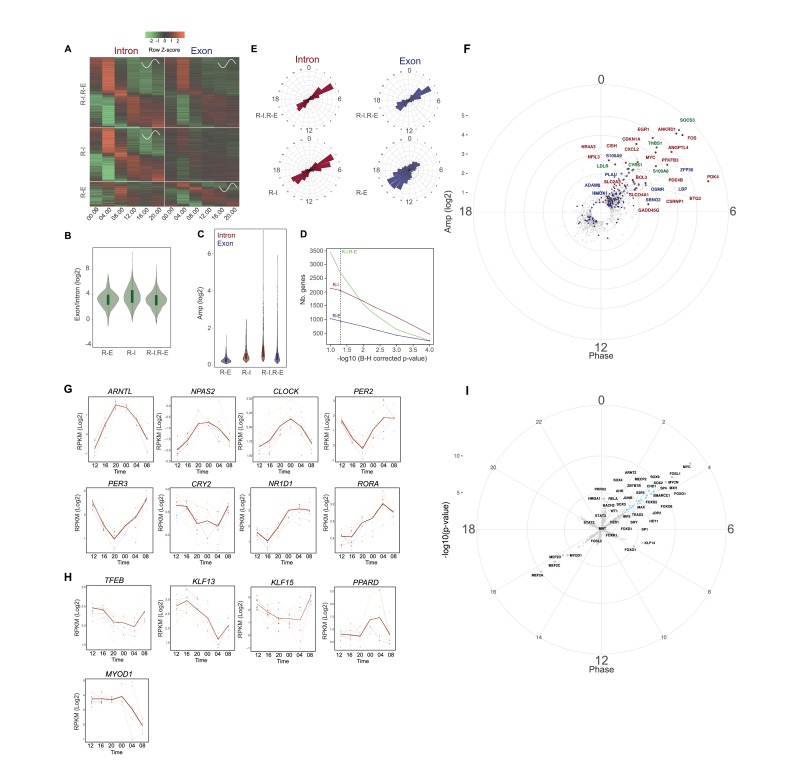
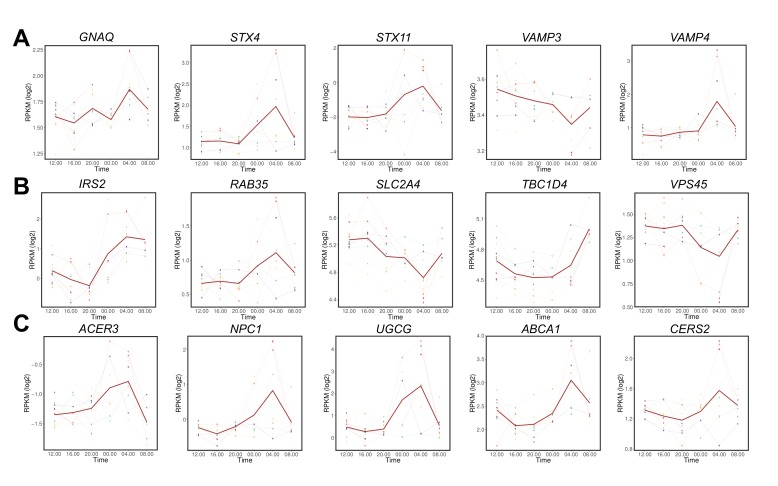
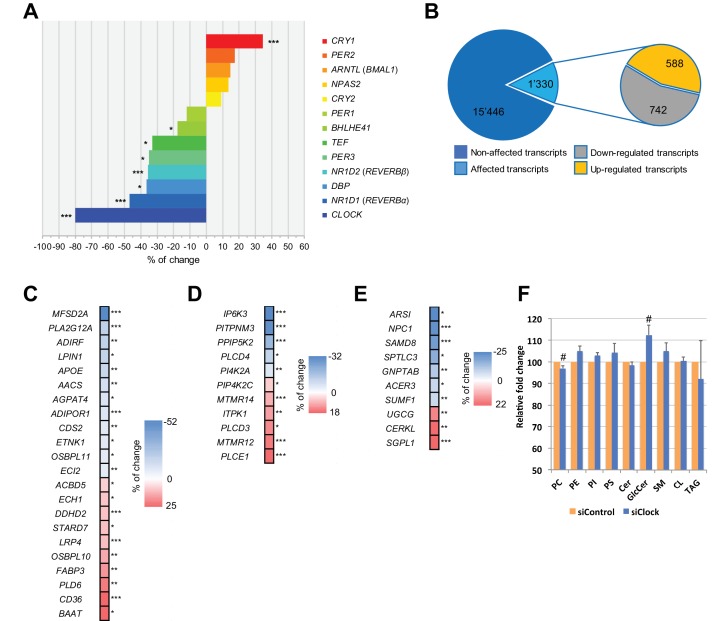
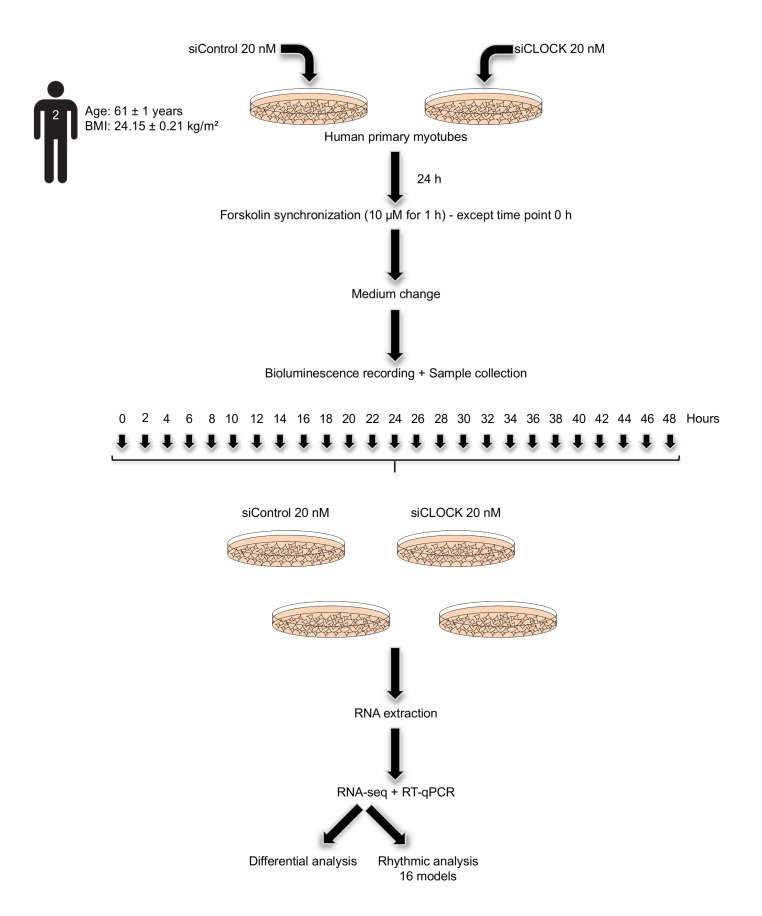
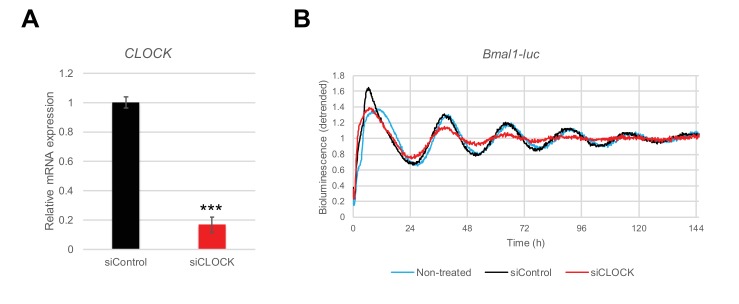
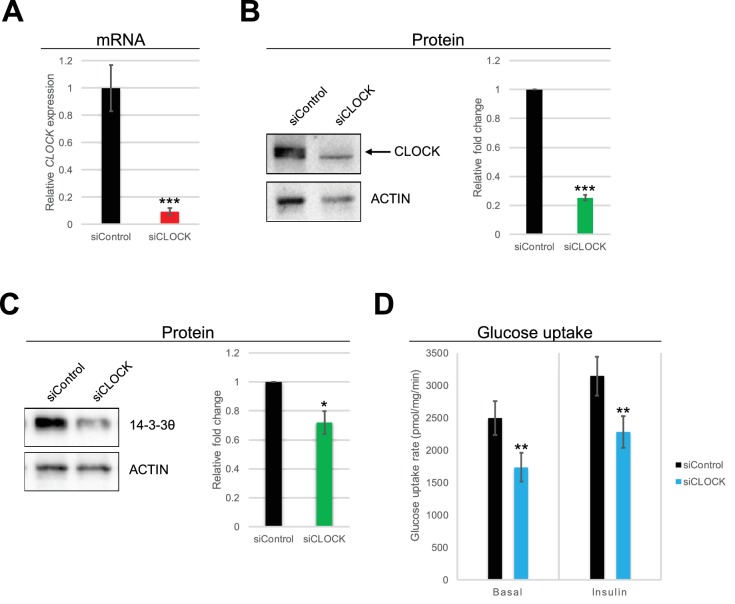
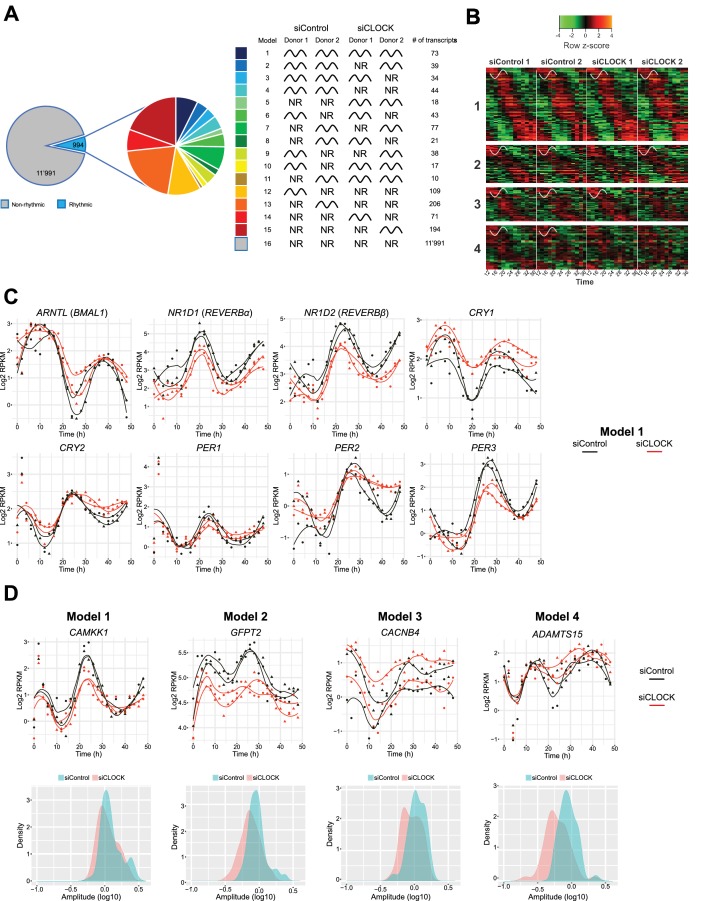
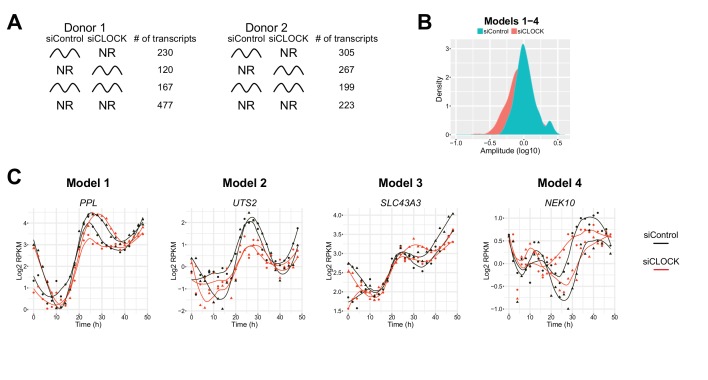
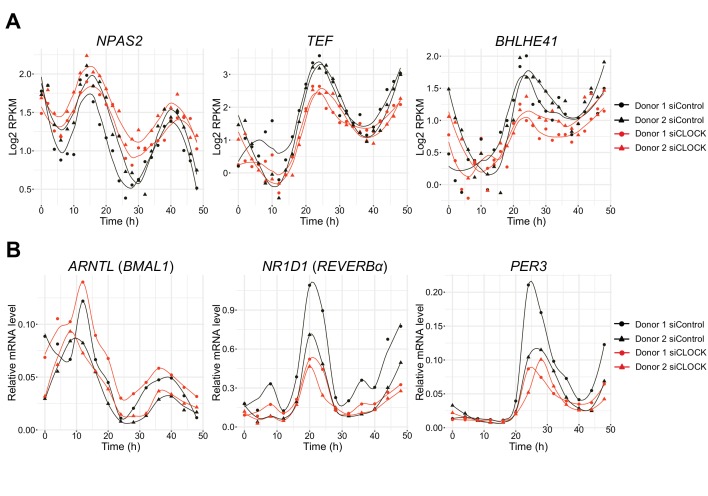
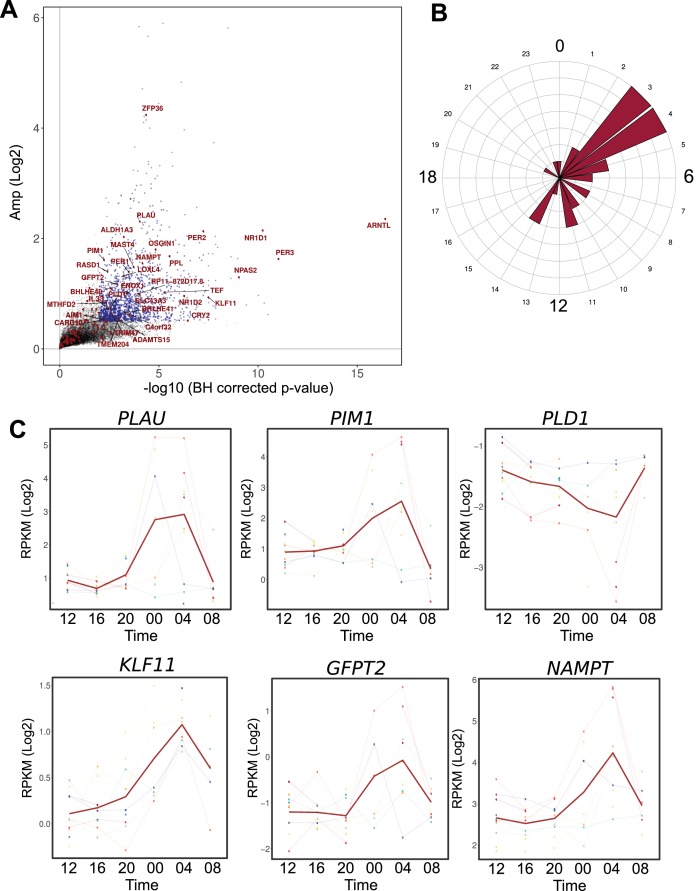
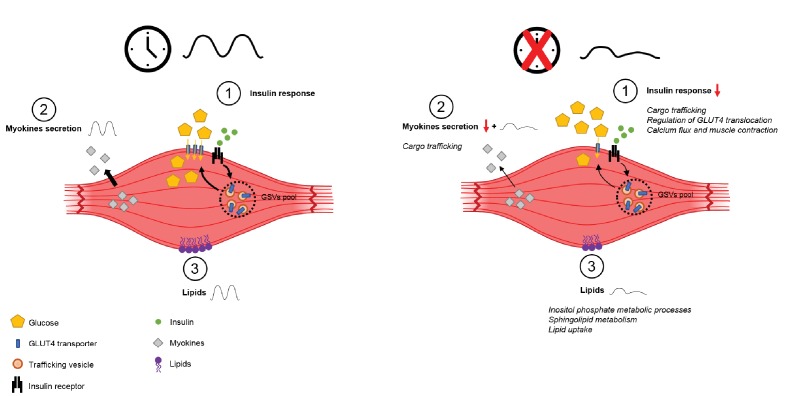
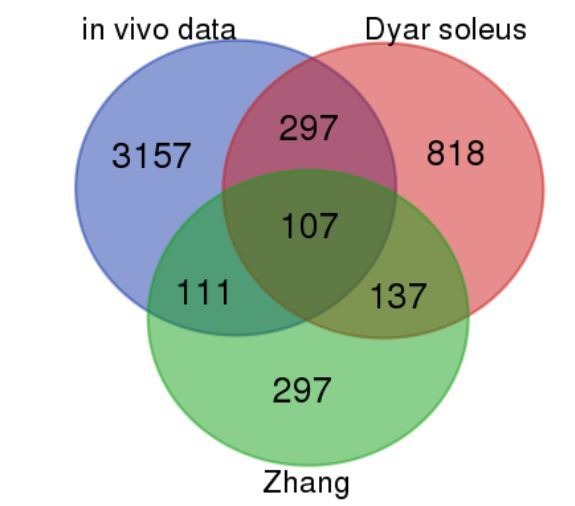
Circadian regulation of transcriptional processes has a broad impact on cell metabolism. Here, we compared the diurnal transcriptome of human skeletal muscle conducted on serial muscle biopsies in vivo with profiles of human skeletal myotubes synchronized in vitro. More extensive rhythmic transcription was observed in human skeletal muscle compared to in vitro cell culture as a large part of the in vivo mRNA rhythmicity was lost in vitro. siRNA-mediated clock disruption in primary myotubes significantly affected the expression of ~8% of all genes, with impact on glucose homeostasis and lipid metabolism. Genes involved in GLUT4 expression, translocation and recycling were negatively affected, whereas lipid metabolic genes were altered to promote activation of lipid utilization. Moreover, basal and insulin-stimulated glucose uptake were significantly reduced upon CLOCK depletion. Our findings suggest an essential role for the circadian coordination of skeletal muscle glucose homeostasis and lipid metabolism in humans.
Overview
The claims and statistics of this paper haven’t been checked yet.
Run the check — free, no account needed. It reads the open-access text and checks the sources it cites.
Integrity signals
Registry
Cites
Statistics
Figures
Verification
Claims the paper makes
The claims and statistics of this paper haven’t been checked yet.
Run the check — free, no account needed. It reads the open-access text and checks the sources it cites.
Claims other papers make about this one
Each is checked against this paper’s own text: does it say what the citing paper says it does?
The cited source says what the claim attributes to it.
In the citing paper
“These results are consistent with the human data reported from two timepoints by Zambon et al. (2003) and demonstrate that the molecular clock is functional within human muscles (Perrin et al., 2018).”
From Myosteatosis in the Context of Skeletal Muscle Function Deficit: An Interdisciplinary Workshop at the National Institute on Aging (2020) · cites this paper as Perrin et al., 2018
In the citing paper
“Similarly, in human studies, muscle biopsies over 24 h, find clock gene expression in the vastus lateralis muscle with a pattern similar to the mouse model when considering the active vs. inactive times of the day.”
From Myosteatosis in the Context of Skeletal Muscle Function Deficit: An Interdisciplinary Workshop at the National Institute on Aging (2020) · cites this paper as Perrin et al., 2018
Self-check
Percentages, sums and reported differences re-computed from the paper’s own numbers.
The self-check needs the paper’s full text.
Citations
Cites
Fitting Linear Mixed-Effects Models Using lme4
Bates, D., Mächler, M., Bolker, B., & Walker, S. (2015) · Journal of Statistical Software · doi:10.18637/jss.v067.i01 · Cited by 86,835
STAR: ultrafast universal RNA-seq aligner
Dobin, A., Davis, C. A., Schlesinger, F., Drenkow, J., Zaleski, C., Jha, S., Batut, P., Chaisson, M., & Gingeras, T. R. (2013) · Bioinformatics · doi:10.1093/bioinformatics/bts635 · Cited by 51,709
Robinson, M. D., McCarthy, D. J., & Smyth, G. K. (2010) · Bioinformatics · doi:10.1093/bioinformatics/btp616 · Cited by 41,364
BEDTools: a flexible suite of utilities for comparing genomic features
Quinlan, A. R., & Hall, I. M. (2010) · Bioinformatics · doi:10.1093/bioinformatics/btq033 · Cited by 27,437
A scaling normalization method for differential expression analysis of RNA-seq data
Robinson, M. D., & Oshlack, A. (2010) · Genome Biology · doi:10.1186/gb-2010-11-3-r25 · Cited by 7,876
Lipid extraction by methyl-tert-butyl ether for high-throughput lipidomics
Matyash, V., Liebisch, G., Kurzchalia, T. V., Shevchenko, A., & Schwudke, D. (2008) · Journal of Lipid Research · doi:10.1194/jlr.d700041-jlr200 · Cited by 2,633
A circadian gene expression atlas in mammals: Implications for biology and medicine
Zhang, R., Lahens, N. F., Ballance, H. I., Hughes, M. E., & Hogenesch, J. B. (2014) · Proceedings of the National Academy of Sciences · doi:10.1073/pnas.1408886111 · Cited by 2,304
Skeletal Muscle Insulin Resistance Is the Primary Defect in Type 2 Diabetes
DeFronzo, R. A., & Tripathy, D. (2009) · Diabetes Care · doi:10.2337/dc09-s302 · Cited by 2,102 · cited 1×
“Muscle clock alteration impairs glucose uptake in response to insulin Skeletal muscle is responsible for 70–80% of insulin-stimulated glucose uptake (DeFronzo and Tripathy, 2009).”
BackgroundMi, H., Huang, X., Muruganujan, A., Tang, H., Mills, C., Kang, D. S., & Thomas, P. D. (2016) · Nucleic Acids Research · doi:10.1093/nar/gkw1138 · Cited by 1,985
DeFronzo, R. A., Jacot, E., Jequier, E., Maeder, E., Wahren, J., & Felber, J. P. (1981) · Diabetes · doi:10.2337/diab.30.12.1000 · Cited by 1,770
Research works printed but not linked: 1
- Bergstrom, 1962, Muscle Electrolytes in Man - Determined by Neutron Activation Analysis on Needle Biopsy Specimens - Study on Normal Subjects, Kidney Patients, and Patients with Chronic Diarrhoea, Scandinavian Journal of Clinical and Laboratory Investigation, 14
Cited by
Sorted by citations
Correa-de-Araujo, R., Addison, O., Miljkovic, I., Goodpaster, B. H., Bergman, B. C., Clark, R. V., Elena, J. W., Esser, K. A., Ferrucci, L., Harris-Love, M. O., et al. (2020) · Frontiers in Physiology · doi:10.3389/fphys.2020.00963 · Cited by 468
Circadian rhythms and exercise — re-setting the clock in metabolic disease
Gabriel, B. M., & Zierath, J. R. (2019) · Nature Reviews Endocrinology · doi:10.1038/s41574-018-0150-x · Cited by 382
Time of exercise specifies the impact on muscle metabolic pathways and systemic energy homeostasis
Sato, S., Basse, A. L., Schönke, M., Chen, S., Samad, M., Altıntaş, A., Laker, R. C., Dalbram, E., Barrès, R., Baldi, P., et al. (2019) · Cell Metabolism · doi:10.1016/j.cmet.2019.03.013 · Cited by 298
Flanagan, A., Bechtold, D. A., Pot, G. K., & Johnston, J. D. (2020) · Journal of Neurochemistry · doi:10.1111/jnc.15246 · Cited by 258
Roberts, M. D., McCarthy, J. J., Hornberger, T. A., Phillips, S. M., Mackey, A. L., Nader, G. A., Boppart, M. D., Kavazis, A. N., Reidy, P. T., Ogasawara, R., et al. (2023) · Physiological Reviews · doi:10.1152/physrev.00039.2022 · Cited by 214
Metadata
- Authors
- Perrin, L., Loizides-Mangold, U., Chanon, S., Gobet, C., Hulo, N., Isenegger, L., Weger, B. D., Migliavacca, E., Charpagne, A., Betts, J. A., Walhin, J.-P., Templeman, I., Stokes, K., Thompson, D., Tsintzas, K., Robert, M., Howald, C., Riezman, H., Feige, J. N., Karagounis, L. G., Johnston, J. D., Dermitzakis, E. T., Gachon, F., Lefai, E., & Dibner, C.
- Affiliations
- University of Geneva (CH)
- Division of Endocrinology, Diabetes, Hypertension and Nutrition, Department of Internal Medicine Specialties, University Hospital of Geneva, Geneva, Switzerland
- Inserm (FR)
- École Polytechnique Fédérale de Lausanne (CH)
- Nestlé Institute of Health Sciences, Lausanne, Switzerland
- University of Bath (GB)
- University of Nottingham (GB)
- Hôpital Edouard Herriot (FR)
- Institute of Genetics and Genomics of Geneva, Geneva, Switzerland
- Nestlé (Switzerland) (CH)
- University of Surrey (GB)
- CarMeN Laboratory, INSERM U1060, Oullins, France
- Corresponding author
- Dibner, Charna
- ORCID
- Loizides-Mangold, Ursula
- Chanon, Stéphanie
- Gobet, Cédric
- Hulo, Nicolas
- Weger, Benjamin D
- Migliavacca, Eugenia
- Charpagne, Aline
- Betts, James A
- Walhin, Jean-Philippe
- Templeman, Iain
- Stokes, Keith
- Thompson, Dylan
- Tsintzas, Kostas
- Robert, Maud
- Riezman, Howard
- Karagounis, Leonidas G
- Johnston, Jonathan D
- Dermitzakis, Emmanouil T
- Gachon, Frédéric
- Dibner, Charna
- Venue
- eLife
- Publisher
- eLife Sciences Publications, Ltd
- Published
- 2018-04-16
- Volume
- 7
- Pages
- 30
- ISSN
- 2050-084X (ISSN-L)
- PMC
- PMC5902165
- OpenAlex
- W2797820730
- Cited by
- 139
- References
- 108
- Citations by year
- 2026: 12 · 2025: 14 · 2024: 24 · 2023: 15 · 2022: 17 · 2021: 16 · 2020: 24 · 2019: 12 · 2018: 5
- FWCI
- 8.71
- Type
- journal article
- Language
- en
- Open access
- gold
- doi.org
- Licence
- Locations
- eLife (publishedVersion, cc-by)
- Europe PMC (PubMed Central) (publishedVersion, cc-by)
- PubMed Central (publishedVersion, cc-by)
- PubMed (publishedVersion)
- Repository@Nottingham (University of Nottingham) (publishedVersion, other-oa)
- Archive ouverte UNIGE (University of Geneva) (publishedVersion, other-oa)
- Surrey Research Insight Open Access (The University of Surrey) (submittedVersion)
- HAL (submittedVersion)
- DOAJ (DOAJ: Directory of Open Access Journals) (submittedVersion, cc-by-sa)
- Infoscience (Ecole Polytechnique Fédérale de Lausanne) (submittedVersion, cc-by-nc-nd)
- Archive ouverte UNIGE (University of Geneva) (submittedVersion, cc-by)
- Funders
- Schweizerischer Nationalfonds zur Förderung der Wissenschaftlichen Forschung (Sinergia Grant No. CRSII3-154405, 31003A-166700)
- Fondation Privée HUG
- Fondation Ernst et Lucie Schmidheiny
- Société Académique de Genève
- Biotechnology and Biological Sciences Research Council
- Topics
- Life Sciences › Neuroscience › Endocrine and Autonomic Systems › Circadian rhythm and melatonin
- Life Sciences › Biochemistry, Genetics and Molecular Biology › Molecular Biology › Metabolism, Diabetes, and Cancer
- Health Sciences › Medicine › Physiology (medical) › Adipose Tissue and Metabolism
- Keywords
- circadian rhythm, circadian clock, skeletal muscle, rhythmic gene expression, myotubes, in vitro culture, GLUT4, glucose uptake, insulin signaling, lipid metabolism, glucose homeostasis
- MeSH terms
- Glucose, Humans, Muscle, Skeletal, Gene Expression Profiling, Lipid Metabolism, Metabolic Networks and Pathways, CLOCK Proteins, Circadian Clocks
About these checks
Registry, retraction, Cites and statistics results are computed, not judged, with one exception: a printed reference that no index lists is read once by a model before it counts as a citation error. Claims are extracted by a model and kept only when their quote appears verbatim in the text; each cited source is then checked, with a model’s help, for whether it says what the claim relies on. Those verdicts can be wrong — read the claim’s quote and the cited source before relying on one.
Statistics and arithmetic are recomputed, not judged.
Confidence bands are shown only for fields calibrated on our annotated test set. None is calibrated yet, so no band is shown.
What counts as a claim ›How we measure confidence ›How we check this ›
Are you an author, or do you see a problem with this page? Request a review
