

The DOI matches its Crossref record; 86 of the 86 references it cites were found in a registry or an index.
Navigating the garden of forking paths for data exclusions in fear conditioning research
Open accessPublished version of a preprint
Abstract
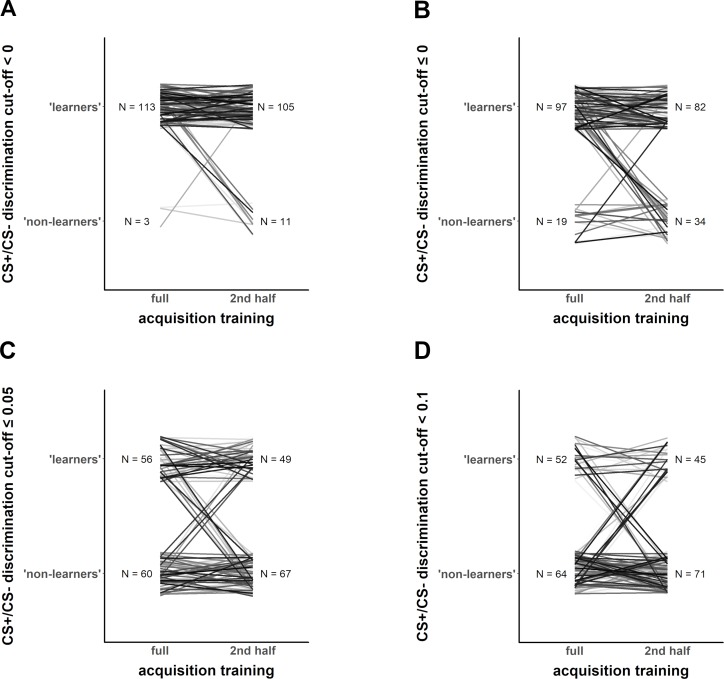
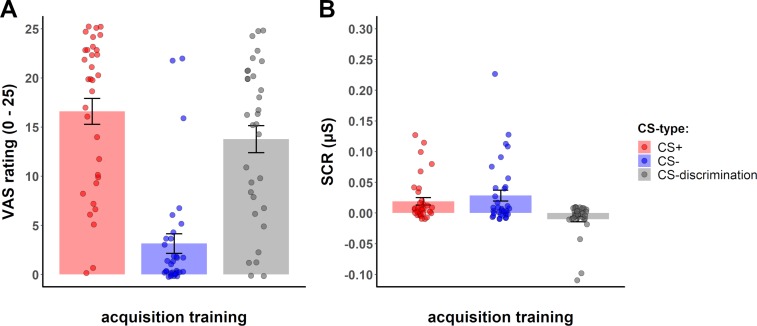
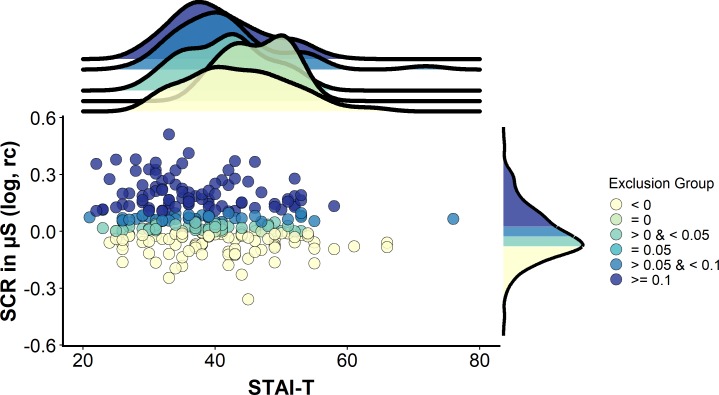
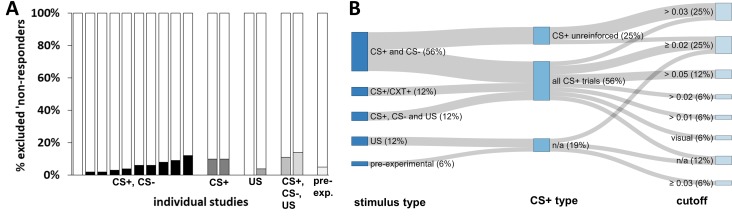
In this report, we illustrate the considerable impact of researcher degrees of freedom with respect to exclusion of participants in paradigms with a learning element. We illustrate this empirically through case examples from human fear conditioning research, in which the exclusion of 'non-learners' and 'non-responders' is common - despite a lack of consensus on how to define these groups. We illustrate the substantial heterogeneity in exclusion criteria identified in a systematic literature search and highlight the potential problems and pitfalls of different definitions through case examples based on re-analyses of existing data sets. On the basis of these studies, we propose a consensus on evidence-based rather than idiosyncratic criteria, including clear guidelines on reporting details. Taken together, we illustrate how flexibility in data collection and analysis can be avoided, which will benefit the robustness and replicability of research findings and can be expected to be applicable to other fields of research that involve a learning element.
Overview
The claims and statistics of this paper haven’t been checked yet.
Run the check — free, no account needed. It reads the open-access text and checks the sources it cites.
Integrity signals
Registry
Cites
Statistics
Figures
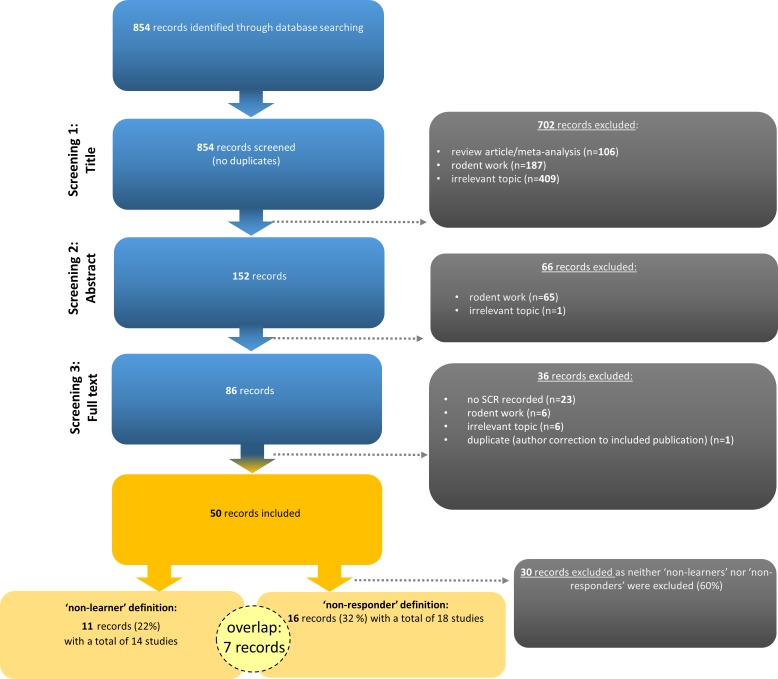
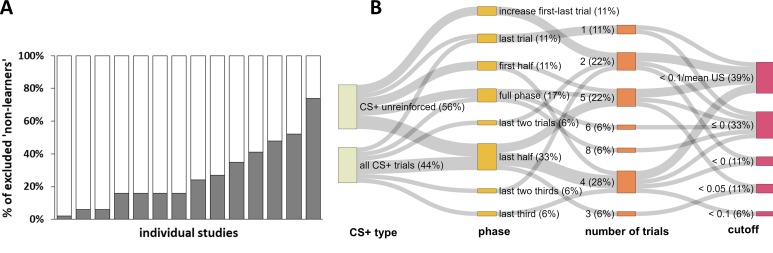
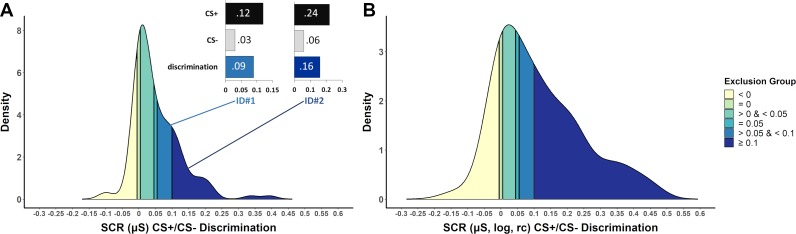
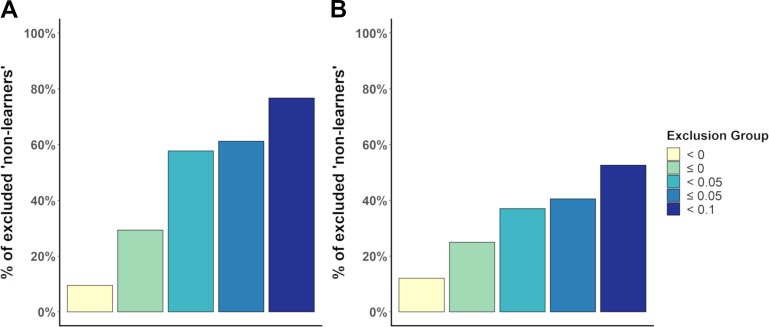
Verification
Claims the paper makes
The claims and statistics of this paper haven’t been checked yet.
Run the check — free, no account needed. It reads the open-access text and checks the sources it cites.
Claims other papers make about this one
Each is checked against this paper’s own text: does it say what the citing paper says it does?
The cited source says what the claim attributes to it.
In the citing paper
“While there is substantial heterogeneity in the exclusion criteria used for SCR nonresponse and nonlearning in the field (74), for the current meta-analysis, SCR exclusion criteria were relatively similar across studies.”
From I Doubt It Is Safe: A Meta-analysis of Self-reported Intolerance of Uncertainty and Threat Extinction Training (2021) · cites this paper as [74]
Self-check
Percentages, sums and reported differences re-computed from the paper’s own numbers.
The self-check needs the paper’s full text.
Citations
Cites
Preferred Reporting Items for Systematic Reviews and Meta-Analyses: the PRISMA statement
Moher, D., Liberati, A., Tetzlaff, J., Altman, D. G., & for the PRISMA Group (2009) · BMJ · doi:10.1136/bmj.b2535 · Cited by 83,823
Preferred Reporting Items for Systematic Reviews and Meta-Analyses: The PRISMA Statement
Moher, D., Liberati, A., Tetzlaff, J., Altman, D. G., & The PRISMA Group (2009) · PLoS Medicine · doi:10.1371/journal.pmed.1000097 · Cited by 64,042
(1970) · Cited by 24,983
Wang, G., Ma, R., Qiao, G., Wada, K., Aizawa, Y., & Satoh, T. (2015) · Integrative Medicine International · doi:10.1159/000368408 · Cited by 18,762
ggplot2: Elegant Graphics for Data Analysis
Wickham, H. (2009) · doi:10.1007/978-0-387-98141-3 · Cited by 14,447
Simmons, J. P., Nelson, L. D., & Simonsohn, U. (2011) · Psychological Science · doi:10.1177/0956797611417632 · Cited by 6,567
A manifesto for reproducible science
Munafò, M. R., Nosek, B. A., Bishop, D. V. M., Button, K. S., Chambers, C. D., Percie du Sert, N., Simonsohn, U., Wagenmakers, E.-J., Ware, J. J., & Ioannidis, J. P. A. (2017) · Nature Human Behaviour · doi:10.1038/s41562-016-0021 · Cited by 3,397
Promoting an open research culture
Nosek, B. A., Alter, G., Banks, G. C., Borsboom, D., Bowman, S. D., Breckler, S. J., Buck, S., Chambers, C. D., Chin, G., Christensen, G., et al. (2015) · Science · doi:10.1126/science.aab2374 · Cited by 2,708
Measuring the Prevalence of Questionable Research Practices With Incentives for Truth Telling
John, L. K., Loewenstein, G., & Prelec, D. (2012) · Psychological Science · doi:10.1177/0956797611430953 · Cited by 2,239
Effects of an expanding-spaced vs massed exposure schedule on fear reduction and return of fear
Rowe, M. K., & Craske, M. G. (1998) · Behaviour Research and Therapy · doi:10.1016/s0005-7967(97)10016-x · Cited by 1,782
Publication Recommendations for Electrodermal Measurements
Fowles, D. C., Christie, M. J., Edelberg, R., Grings, W. W., Lykken, D. T., & Venables, P. H. (1981) · Psychophysiology · doi:10.1111/j.1469-8986.1981.tb03024.x · Cited by 1,700
Optimizing inhibitory learning during exposure therapy
Craske, M. G., Kircanski, K., Zelikowsky, M., Mystkowski, J., Chowdhury, N., & Baker, A. (2008) · Behaviour Research and Therapy · doi:10.1016/j.brat.2007.10.003 · Cited by 1,607
Rethinking the Emotional Brain
LeDoux, J. (2012) · Neuron · doi:10.1016/j.neuron.2012.02.004 · Cited by 1,594 · cited 1×
“Relatedly, the fact that physiological proxies of ‘fear’ do not map onto ‘fear’ itself has been discussed extensively (LeDoux, 2012; LeDoux, 2014).”
BackgroundIncreasing Transparency Through a Multiverse Analysis
Steegen, S., Tuerlinckx, F., Gelman, A., & Vanpaemel, W. (2016) · Perspectives on Psychological Science · doi:10.1177/1745691616658637 · Cited by 1,512
The Extent and Consequences of P-Hacking in Science
Head, M. L., Holman, L., Lanfear, R., Kahn, A. T., & Jennions, M. D. (2015) · PLOS Biology · doi:10.1371/journal.pbio.1002106 · Cited by 1,388 · cited 2×
“favorable results (e.g., ‘p-hacking’; Head et al., 2015): the decision to follow a certain path may be based on unawareness of alternative paths (due to lack of specific background knowledge) or the researcher following the most obvious path from an individual perspective.”
BackgroundInfluentialPublication recommendations for electrodermal measurements
Society for Psychophysiological Research Ad Hoc Committee on Electrodermal Measures (2012) · Psychophysiology · doi:10.1111/j.1469-8986.2012.01384.x · Cited by 1,288
Preventing the return of fear in humans using reconsolidation update mechanisms
Schiller, D., Monfils, M.-H., Raio, C. M., Johnson, D. C., LeDoux, J. E., & Phelps, E. A. (2010) · Nature · doi:10.1038/nature08637 · Cited by 1,248
Raincloud plots: a multi-platform tool for robust data visualization
Allen, M., Poggiali, D., Whitaker, K. J., Marshall, T. R., & Kievit, R. (2019) · Wellcome Open Research · doi:10.12688/wellcomeopenres.15191.1 · Cited by 1,125
Measurement Schmeasurement: Questionable Measurement Practices and How to Avoid Them
Flake, J. K., & Fried, E. I. (2020) · Advances in Methods and Practices in Psychological Science · doi:10.1177/2515245920952393 · Cited by 969
Harmancı, A. S., Youngblood, M. W., Clark, V. E., Coşkun, S., Henegariu, O., Durán, D., Erson-Omay, Z., Kaulen, L. D., Lee, T. I., Abraham, B. J., et al. (2018) · Nature Communications · doi:10.1038/ncomms16215 · Cited by 907
LeDoux, J. E. (2014) · Proceedings of the National Academy of Sciences · doi:10.1073/pnas.1400335111 · Cited by 891
Lonsdorf, T. B., Menz, M. M., Andreatta, M., Fullana, M. A., Golkar, A., Haaker, J., Heitland, I., Hermann, A., Kuhn, M., Kruse, O., et al. (2017) · Neuroscience & Biobehavioral Reviews · doi:10.1016/j.neubiorev.2017.02.026 · Cited by 837
Self-citationMany Analysts, One Data Set: Making Transparent How Variations in Analytic Choices Affect Results
Silberzahn, R., Uhlmann, E. L., Martin, D. P., Anselmi, P., Aust, F., Awtrey, E. C., Bahník, Š., Bai, F., Bannard, C., Bonnier, E., et al. (2018) · Advances in Methods and Practices in Psychological Science · doi:10.1177/2515245917747646 · Cited by 773
How to Make More Published Research True
Ioannidis, J. P. A. (2014) · PLoS Medicine · doi:10.1371/journal.pmed.1001747 · Cited by 760
Beyond Bar and Line Graphs: Time for a New Data Presentation Paradigm
Weissgerber, T. L., Milic, N. M., Winham, S. J., & Garovic, V. D. (2015) · PLoS Biology · doi:10.1371/journal.pbio.1002128 · Cited by 752
Duits, P., Cath, D. C., Lissek, S., Hox, J. J., Hamm, A. O., Engelhard, I. M., van den Hout, M. A., & Baas, J. M. P. (2015) · Depression and Anxiety · doi:10.1002/da.22353 · Cited by 726
Fear Extinction and Relapse: State of the Art
Vervliet, B., Craske, M. G., & Hermans, D. (2013) · Annual Review of Clinical Psychology · doi:10.1146/annurev-clinpsy-050212-185542 · Cited by 671 · cited 1×
“Fear conditioning is a typical paradigm employed to study (emotional) learning and memory processes with a particularly strong translational perspective (Lonsdorf et al., 2017; Vervliet et al., 2013).”
BackgroundThe neuropsychology of fear learning and fear regulation
Hamm, A. O., & Weike, A. I. (2005) · International Journal of Psychophysiology · doi:10.1016/j.ijpsycho.2005.01.006 · Cited by 308
Lonsdorf, T. B., & Merz, C. J. (2017) · Neuroscience & Biobehavioral Reviews · doi:10.1016/j.neubiorev.2017.07.007 · Cited by 253
Measurement Schmeasurement: Questionable Measurement Practices and How to Avoid ThemPreprint
Flake, J. K., & Fried, E. I. (2019) · doi:10.31234/osf.io/hs7wm · Cited by 218
Emotional learning, hedonic change, and the startle probe.
Hamm, A. O., Greenwald, M. K., Bradley, M. M., & Lang, P. J. (1993) · Journal of Abnormal Psychology · doi:10.1037//0021-843x.102.3.453 · Cited by 195
Emotional learning, hedonic change, and the startle probe.
Hamm, A. O., Greenwald, M. K., Bradley, M. M., et al. (1993) · Journal of Abnormal Psychology · doi:10.1037/0021-843x.102.3.453 · Cited by 166
Human fear conditioning is related to dopaminergic and serotonergic biological markers.
Garpenstrand, H., Annas, P., Ekblom, J., Oreland, L., & Fredrikson, M. G. (2001) · Behavioral Neuroscience · doi:10.1037//0735-7044.115.2.358 · Cited by 163
Dissociation of within- and between-Session Extinction of Conditioned Fear
Plendl, W., & Wotjak, C. T. (2010) · Journal of Neuroscience · doi:10.1523/jneurosci.6038-09.2010 · Cited by 162
Mapping the universe of registered reports
Hardwicke, T. E., & Ioannidis, J. P. A. (2018) · Nature Human Behaviour · doi:10.1038/s41562-018-0444-y · Cited by 155
Oyarzún, J. P., Lopez-Barroso, D., Fuentemilla, L., Cucurell, D., Pedraza, C., Rodriguez-Fornells, A., & de Diego-Balaguer, R. (2012) · PLoS ONE · doi:10.1371/journal.pone.0038849 · Cited by 125
How to make more published research true
Ioannidis, J. P. A. (2015) · Acimed · Cited by 115
Tabbert, K., Merz, C. J., Klucken, T., Schweckendiek, J., Vaitl, D., Wolf, O. T., & Stark, R. M. (2010) · Social Cognitive and Affective Neuroscience · doi:10.1093/scan/nsq070 · Cited by 112
Attenuating Neural Threat Expression with Imagination
Reddan, M. C., Wager, T. D., & Schiller, D. (2018) · Neuron · doi:10.1016/j.neuron.2018.10.047 · Cited by 110
Dopamine-dependent prefrontal reactivations explain long-term benefit of fear extinction
Gerlicher, A. M. V., Tüscher, O., & Kalisch, R. (2018) · Nature Communications · doi:10.1038/s41467-018-06785-y · Cited by 103
Individual differences in electrodermal activity as a function of subjects' anxiety
Naveteur, J., & Baqué, E. F. I. (1987) · Personality and Individual Differences · doi:10.1016/0191-8869(87)90059-6 · Cited by 92
Neural Underpinnings of Cortisol Effects on Fear Extinction
Merz, C. J., Hamacher‐Dang, T. C., Stark, R. M., Wolf, O. T., & Hermann, A. (2017) · Neuropsychopharmacology · doi:10.1038/npp.2017.227 · Cited by 87
Fear Extinction Retention: Is It What We Think It Is?
Lonsdorf, T. B., Merz, C. J., & Fullana, M. A. (2019) · Biological Psychiatry · doi:10.1016/j.biopsych.2019.02.011 · Cited by 83
Sjouwerman, R., Scharfenort, R., & Lonsdorf, T. B. (2020) · Scientific Reports · doi:10.1038/s41598-020-72007-5 · Cited by 82
Hermann, A., Stark, R. M., Milad, M. R., & Merz, C. J. (2016) · Social Cognitive and Affective Neuroscience · doi:10.1093/scan/nsw047 · Cited by 81
Assessment of social transmission of threats in humans using observational fear conditioning
Haaker, J., Golkar, A., Selbing, I., & Olsson, A. (2017) · Nature Protocols · doi:10.1038/nprot.2017.027 · Cited by 80
Leuchs, L., Schneider, M., & Spoormaker, V. I. (2018) · Psychophysiology · doi:10.1111/psyp.13283 · Cited by 79
Effects of Cortisol on Reconsolidation of Reactivated Fear Memories
Drexler, S. M., Merz, C. J., Hamacher‐Dang, T. C., Tegenthoff, M., & Wolf, O. T. (2015) · Neuropsychopharmacology · doi:10.1038/npp.2015.160 · Cited by 75
Let's talk about sex … differences in human fear conditioning
Merz, C. J., Jentsch, V. L., & Wolf, O. T. (2018) · Current Opinion in Behavioral Sciences · doi:10.1016/j.cobeha.2018.01.021 · Cited by 71
Sjouwerman, R., Niehaus, J., Kuhn, M., & Lonsdorf, T. B. (2016) · Psychophysiology · doi:10.1111/psyp.12761 · Cited by 67
Kredlow, M. A., Pineles, S. L., Inslicht, S. S., Marin, M., Milad, M. R., Otto, M. W., & Orr, S. P. (2017) · Psychophysiology · doi:10.1111/psyp.12909 · Cited by 66
Latency of skin conductance responses across stimulus modalities
Sjouwerman, R., & Lonsdorf, T. B. (2018) · Psychophysiology · doi:10.1111/psyp.13307 · Cited by 62
Raincloud plots: a multi-platform tool for robust data visualizationPreprint
Allen, M., Poggiali, D., Whitaker, K. J., Marshall, T. R., & Kievit, R. (2018) · doi:10.7287/peerj.preprints.27137v1 · Cited by 60
Reminder duration determines threat memory modification in humans
Hu, J., Wang, W., Homan, P., Wang, P., Zheng, X., & Schiller, D. (2018) · Scientific Reports · doi:10.1038/s41598-018-27252-0 · Cited by 50
Human fear conditioning and extinction: Timing is everything…or is it?
Prenoveau, J. M., Craske, M. G., Liao, B., & Ornitz, E. M. (2012) · Biological Psychology · doi:10.1016/j.biopsycho.2012.02.005 · Cited by 48
Bradford, D. E., Starr, M. J., Shackman, A. J., & Curtin, J. J. (2015) · Psychophysiology · doi:10.1111/psyp.12545 · Cited by 47
Exposure to stress attenuates fear retrieval in healthy men
Merz, C. J., Hamacher‐Dang, T. C., & Wolf, O. T. (2013) · Psychoneuroendocrinology · doi:10.1016/j.psyneuen.2013.12.009 · Cited by 47
Morriss, J., & van Reekum, C. M. (2019) · Behaviour Research and Therapy · doi:10.1016/j.brat.2019.03.004 · Cited by 46
Absence of conditioned responding in humans: A bad measure or individual differences?
Marin, M., Barbey, F. M., Rosenbaum, B. L., Hammoud, M. Z., Orr, S. P., & Milad, M. R. (2019) · Psychophysiology · doi:10.1111/psyp.13350 · Cited by 41
L-DOPA improves extinction memory retrieval after successful fear extinction
Gerlicher, A. M. V., Tüscher, O., & Kalisch, R. (2019) · Psychopharmacology · doi:10.1007/s00213-019-05301-4 · Cited by 39
Cortisol effects on fear memory reconsolidation in women
Drexler, S. M., Merz, C. J., Hamacher‐Dang, T. C., & Wolf, O. T. (2016) · Psychopharmacology · doi:10.1007/s00213-016-4314-x · Cited by 38
Preextinction Stress Prevents Context-Related Renewal of Fear
Drexler, S. M., Merz, C. J., & Wolf, O. T. (2018) · Behavior Therapy · doi:10.1016/j.beth.2018.03.001 · Cited by 35
Grégoire, L., & Greening, S. G. (2018) · Cognition · doi:10.1016/j.cognition.2018.12.001 · Cited by 35
Jentsch, V. L., Wolf, O. T., & Merz, C. J. (2019) · International Journal of Psychophysiology · doi:10.1016/j.ijpsycho.2019.11.006 · Cited by 35
Genetic influences on the acquisition and inhibition of fear
Wendt, J., Neubert, J., Lindner, K., Ernst, F. D., Homuth, G., Weike, A. I., & Hamm, A. O. (2014) · International Journal of Psychophysiology · doi:10.1016/j.ijpsycho.2014.10.007 · Cited by 34
The relationship of perceptual discrimination to neural mechanisms of fear generalization
Tuominen, L. J., Boeke, E. A., DeCross, S. N., Wolthusen, R. P. F., Nasr, S., Milad, M. R., Vangel, M. G., Tootell, R. B. H., & Holt, D. J. (2018) · NeuroImage · doi:10.1016/j.neuroimage.2018.12.034 · Cited by 34
Morriss, J., Chapman, C., Tomlinson, S., & van Reekum, C. M. (2018) · Biological Psychology · doi:10.1016/j.biopsycho.2018.08.017 · Cited by 32
C., G., & J., B. (2002) · Psychopharmacology · doi:10.1007/s00213-002-1164-5 · Cited by 27
Stress following extinction learning leads to a context‐dependent return of fear
Hamacher‐Dang, T. C., Merz, C. J., & Wolf, O. T. (2014) · Psychophysiology · doi:10.1111/psyp.12384 · Cited by 27
Stress disrupts the reconsolidation of fear memories in men
Drexler, S. M., & Wolf, O. T. (2016) · Psychoneuroendocrinology · doi:10.1016/j.psyneuen.2016.11.027 · Cited by 25
Rule-based processes in generalisation and peak shift in human fear conditioning
Ahmed, O. M. A., & Lovibond, P. F. (2018) · Quarterly Journal of Experimental Psychology · doi:10.1177/1747021818766461 · Cited by 24
Contingency awareness as a prerequisite for differential contextual fear conditioning
Baeuchl, C., Hoppstädter, M., Meyer, P., & Flor, H. (2018) · Cognitive Affective & Behavioral Neuroscience · doi:10.3758/s13415-018-00666-z · Cited by 20
Post-retrieval oxytocin facilitates next day extinction of threat memory in humans
Hu, J., Wang, Z., Feng, X., Long, C., & Schiller, D. (2018) · Psychopharmacology · doi:10.1007/s00213-018-5074-6 · Cited by 18
The conditioning and extinction of fear in youths: What's sex got to do with it?
Chauret, M., Buissonnière-Ariza, V. L., Lamoureux-Tremblay, V., Suffren, S., Servonnet, A., Pine, D. S., & Maheu, F. S. (2014) · Biological Psychology · doi:10.1016/j.biopsycho.2014.06.001 · Cited by 17
Gruss, L. F., & Keil, A. (2018) · Biological Psychology · doi:10.1016/j.biopsycho.2018.11.009 · Cited by 16
Tani, H., Tada, M., Maeda, T., Konishi, M., Umeda, S., Terasawa, Y., Mimura, M., Takahashi, T., & Uchida, H. (2018) · Psychiatry and Clinical Neurosciences · doi:10.1111/pcn.12805 · Cited by 16
Reduced fear-conditioned pain modulation in experienced meditators: a preliminary study
Taylor, V. A., Roy, M., Chang, L., Gill, L.-N., Mueller, C., & Rainville, P. (2018) · Psychosomatic Medicine · doi:10.1097/psy.0000000000000634 · Cited by 15
Wendt, J., Hufenbach, M. C., König, J., & Hamm, A. O. (2020) · Scientific Reports · doi:10.1038/s41598-020-57934-7 · Cited by 14
Addendum: Preventing the return of fear in humans using reconsolidation update mechanisms
Schiller, D., Monfils, M., Raio, C. M., Johnson, D. C., LeDoux, J. E., & Phelps, E. A. (2018) · Nature · doi:10.1038/s41586-018-0405-7 · Cited by 13
Oyarzún, J. P., Càmara, E., Kouider, S., Fuentemilla, L., & de Diego‐Balaguer, R. (2018) · Brain and Behavior · doi:10.1002/brb3.1157 · Cited by 13
Cortico-limbic connectivity changes following fear extinction and relationships with trait anxiety
Belleau, E. L., Pedersen, W. S., Miskovich, T. A., Helmstetter, F. J., & Larson, C. L. (2018) · Social Cognitive and Affective Neuroscience · doi:10.1093/scan/nsy073 · Cited by 11
Avoidance Behavior Prevents Modification of Fear Memory During Reconsolidation
Nitta, Y., Takahashi, T., Haitani, T., Sugimori, E., & Kumano, H. (2018) · Psychological Reports · doi:10.1177/0033294118811116 · Cited by 10
Reactivation of the Unconditioned Stimulus Inhibits the Return of Fear Independent of Cortisol
Drexler, S. M., Merz, C. J., Lissek, S., Tegenthoff, M., & Wolf, O. T. (2019) · Frontiers in Behavioral Neuroscience · doi:10.3389/fnbeh.2019.00254 · Cited by 10
Hartley, C. A., Coelho, C. A. O., Boeke, E. A., Ramirez, F., & Phelps, E. A. (2018) · Psychopharmacology · doi:10.1007/s00213-018-5082-6 · Cited by 9
Hardwicke, T. E., & Shanks, D. R. (2016) · Proceedings of the National Academy of Sciences · doi:10.1073/pnas.1608235113 · Cited by 8
Mertens, G., Leer, A., van Dis, E. A. M., Vermeer, L., Steenhuizen, A., van der Veen, L., & Engelhard, I. M. (2018) · Journal of Behavior Therapy and Experimental Psychiatry · doi:10.1016/j.jbtep.2018.09.007 · Cited by 8
Research works printed but not linked: 2
- Pavlov, 1927, Conditioned Reflexes
- Sjouwerman, 2018, Individual differences in fear learning: specificity to trait-anxiety beyond other measures of negative affect and mediation via amygdala activation, 10.1101/233528 · DOI
Cited by
Sorted by citations
Battaglia, S., Harrison, B. J., & Fullana, M. A. (2021) · Molecular Psychiatry · doi:10.1038/s41380-021-01326-4 · Cited by 154
Understanding clinical fear and anxiety through the lens of human fear conditioning
Beckers, T., Hermans, D., Lange, I., Luyten, L., Scheveneels, S., & Vervliet, B. (2023) · Nature Reviews Psychology · doi:10.1038/s44159-023-00156-1 · Cited by 178
Preregistration of secondary data analysis: A template and tutorial
van den Akker, O. R., Weston, S. J., Campbell, L., Chopik, B., Damian, R. I., Davis-Kean, P. E., Hall, A., Kosie, J. E., Kruse, E. T., Olsen, J., et al. (2021) · Meta-Psychology · doi:10.15626/mp.2020.2625 · Cited by 137
Addressing racial and phenotypic bias in human neuroscience methods
Webb, E. K., Etter, J. A., & Kwasa, J. A. C. (2022) · Nature Neuroscience · doi:10.1038/s41593-022-01046-0 · Cited by 122
Sjouwerman, R., Scharfenort, R., & Lonsdorf, T. B. (2020) · Scientific Reports · doi:10.1038/s41598-020-72007-5 · Cited by 82
Metadata
- Authors
- Lonsdorf, T. B., Klingelhöfer-Jens, M., Andreatta, M., Beckers, T., Chalkia, A., Gerlicher, A., Jentsch, V. L., Meir Drexler, S., Mertens, G., Richter, J., Sjouwerman, R., Wendt, J., & Merz, C. J.
- Affiliations
- University Medical Center Hamburg-Eppendorf (DE)
- University of Würzburg (DE)
- KU Leuven (BE)
- University of Amsterdam (NL)
- Ruhr University Bochum (DE)
- Institute of Cognitive Neuroscience, Department of Cognitive Psychology, Ruhr University Bochum, Bochum, Germany
- Department of Psychology, Utrecht University, Utrecht, Netherlands
- Universität Greifswald (DE)
- University of Potsdam (DE)
- ORCID
- Venue
- eLife
- Publisher
- eLife Sciences Publications, Ltd
- Published
- 2019-12-16
- Volume
- 8
- ISSN
- 2050-084X (ISSN-L)
- PMC
- PMC6989118
- OpenAlex
- W2995231114
- Cited by
- 164
- References
- 85
- Citations by year
- 2026: 16 · 2025: 23 · 2024: 15 · 2023: 27 · 2022: 26 · 2021: 33 · 2020: 21 · 2019: 1
- FWCI
- 2.56
- Type
- journal article
- Language
- en
- Open access
- gold
- doi.org
- Licence
- Locations
- eLife (publishedVersion, cc-by)
- PubMed Central (publishedVersion, cc-by)
- PubMed (publishedVersion)
- UvA-DARE (University of Amsterdam) (submittedVersion, cc-by)
- Lirias (submittedVersion, other-oa)
- RePub (Erasmus University Rotterdam) (submittedVersion, other-oa)
- DOAJ (DOAJ: Directory of Open Access Journals) (submittedVersion, cc-by-sa)
- Utrecht University Repository (Utrecht University) (submittedVersion, other-oa)
- publish.UP (University of Potsdam) (submittedVersion)
- PUB – Publications at Bielefeld University (Bielefeld University) (submittedVersion)
- PsyArXiv (OSF Preprints) (submittedVersion, cc-by)
- PsyArXiv (OSF Preprints) (submittedVersion)
- Data Archiving and Networked Services (DANS) (submittedVersion, other-oa)
- Funders
- Deutsche Forschungsgemeinschaft (LO 1980/2-1, LO 1980/1-1, Project B07 44541416, 316803389 - SFB1280, WE 5873/1-1, WE 5873/5-1)
- Topics
- Life Sciences › Neuroscience › Cognitive Neuroscience › Memory and Neural Mechanisms
- Life Sciences › Neuroscience › Cognitive Neuroscience › Memory Processes and Influences
- Social Sciences › Decision Sciences › Statistics, Probability and Uncertainty › Meta-analysis and systematic reviews
- Keywords
- researcher degrees of freedom, data exclusion, fear conditioning, non-responders, exclusion criteria, learning paradigms, reporting guidelines, replicability, robustness of results
- MeSH terms
- Adult, Conditioning, Psychological, Fear, Female, Humans, Male
About these checks
Registry, retraction, Cites and statistics results are computed, not judged, with one exception: a printed reference that no index lists is read once by a model before it counts as a citation error. Claims are extracted by a model and kept only when their quote appears verbatim in the text; each cited source is then checked, with a model’s help, for whether it says what the claim relies on. Those verdicts can be wrong — read the claim’s quote and the cited source before relying on one.
Statistics and arithmetic are recomputed, not judged.
Confidence bands are shown only for fields calibrated on our annotated test set. None is calibrated yet, so no band is shown.
What counts as a claim ›How we measure confidence ›How we check this ›
Are you an author, or do you see a problem with this page? Request a review
