

The DOI matches its Crossref record; 74 of the 75 references it cites were found in a registry or an index.
Microbiota-derived short chain fatty acids modulate microglia and promote Aβ plaque deposition
Open accessPublished version of a preprint
Abstract
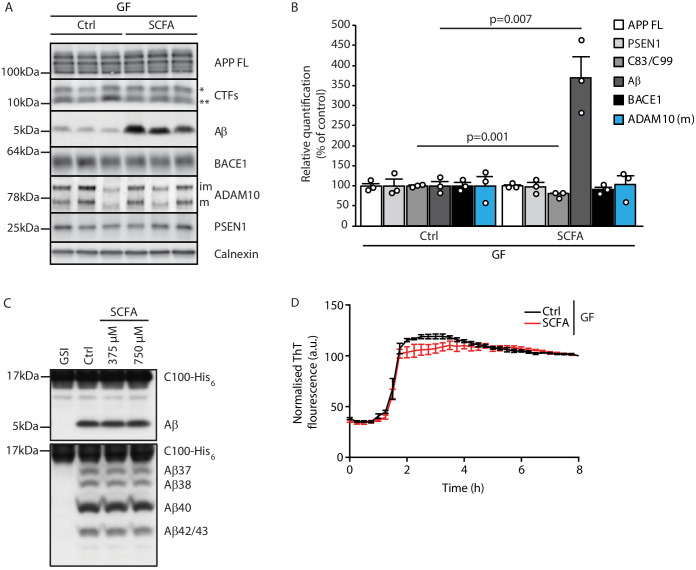
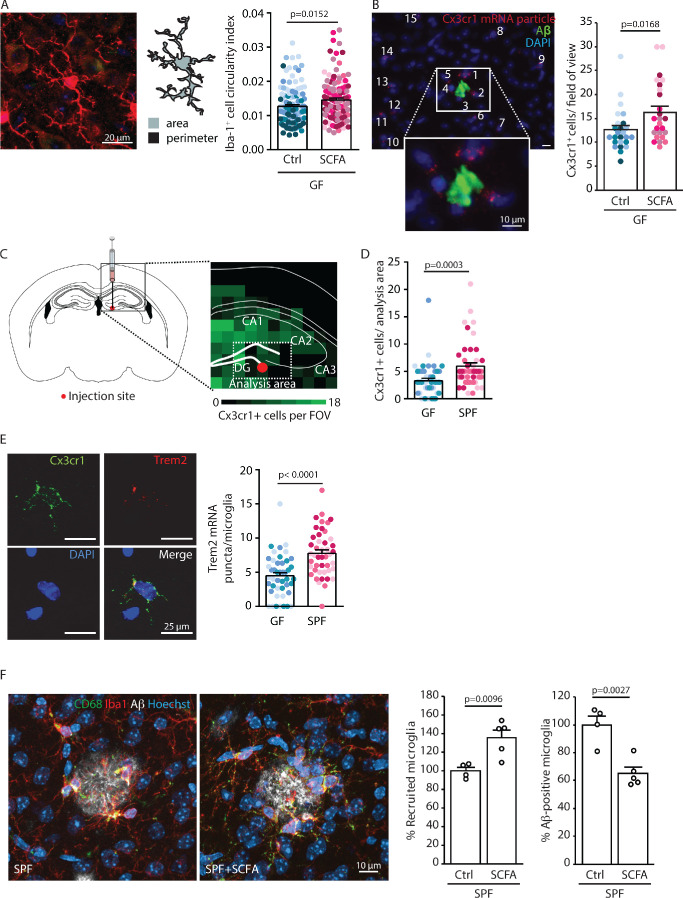
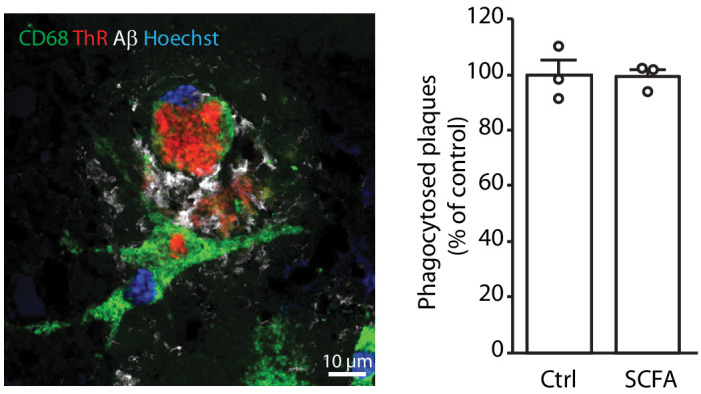
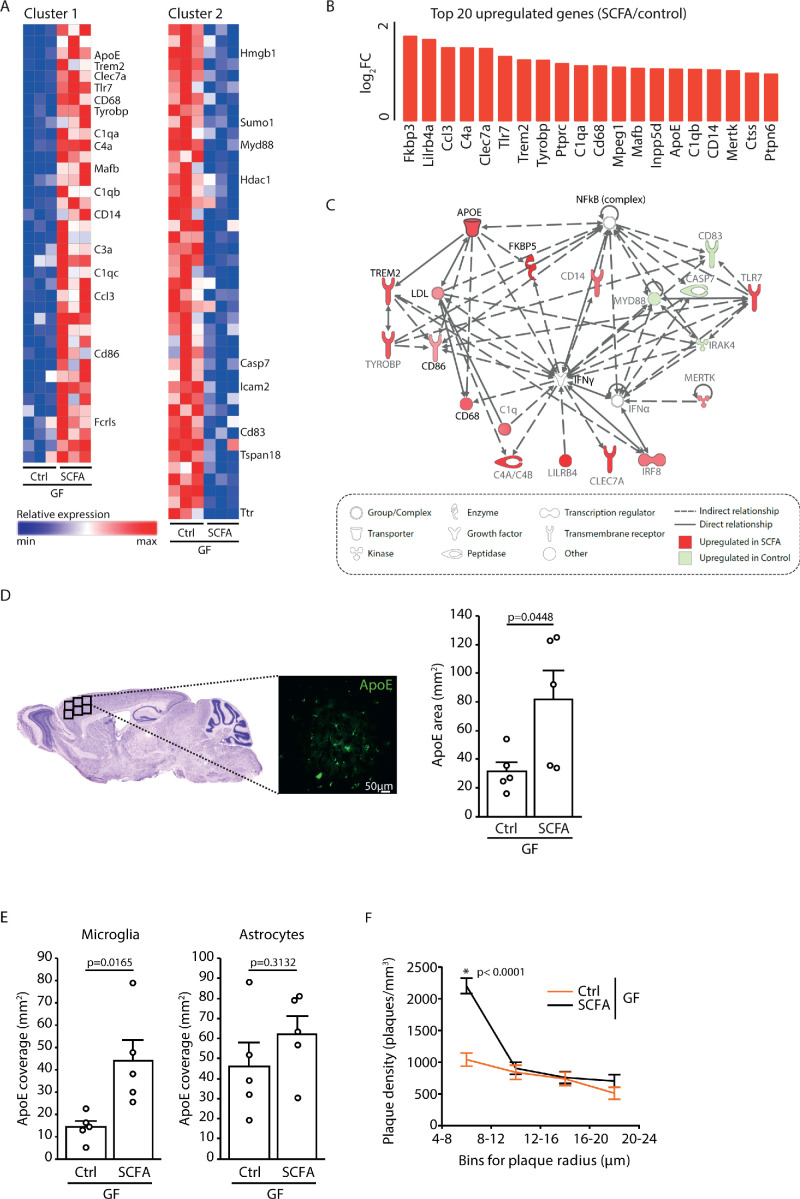
Previous studies have identified a crucial role of the gut microbiome in modifying Alzheimer’s disease (AD) progression. However, the mechanisms of microbiome–brain interaction in AD were so far unknown. Here, we identify microbiota-derived short chain fatty acids (SCFA) as microbial metabolites which promote Aβ deposition. Germ-free (GF) AD mice exhibit a substantially reduced Aβ plaque load and markedly reduced SCFA plasma concentrations; conversely, SCFA supplementation to GF AD mice increased the Aβ plaque load to levels of conventionally colonized (specific pathogen-free [SPF]) animals and SCFA supplementation to SPF mice even further exacerbated plaque load. This was accompanied by the pronounced alterations in microglial transcriptomic profile, including upregulation of ApoE. Despite increased microglial recruitment to Aβ plaques upon SCFA supplementation, microglia contained less intracellular Aβ. Taken together, our results demonstrate that microbiota-derived SCFA are critical mediators along the gut-brain axis which promote Aβ deposition likely via modulation of the microglial phenotype.
Overview
The claims and statistics of this paper haven’t been checked yet.
Run the check — free, no account needed. It reads the open-access text and checks the sources it cites.
Integrity signals
Registry
Cites
Statistics
Figures
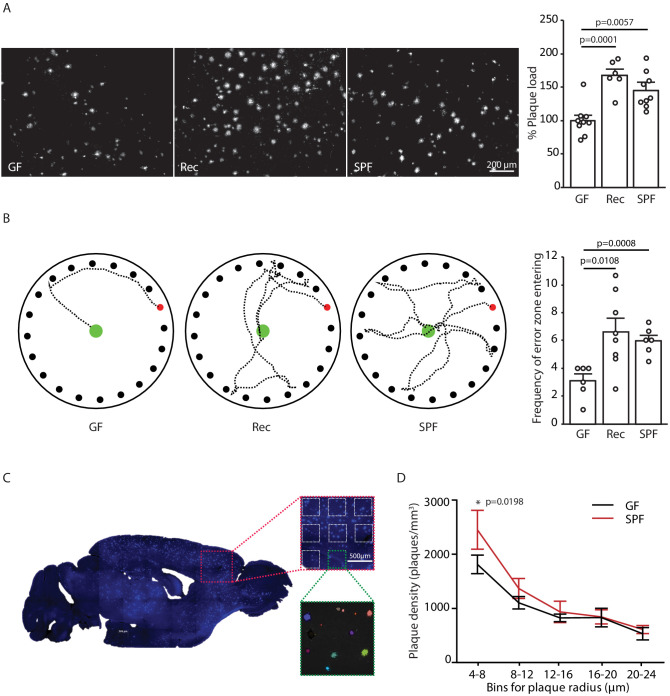
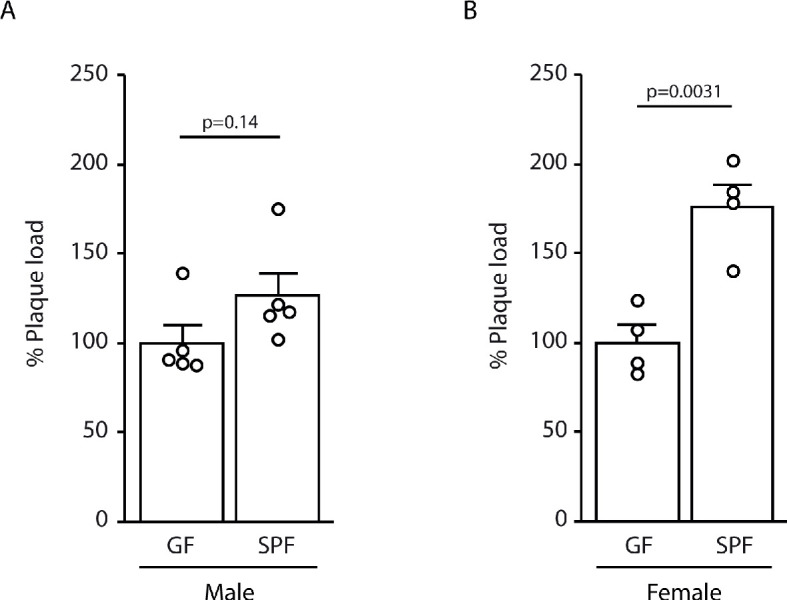
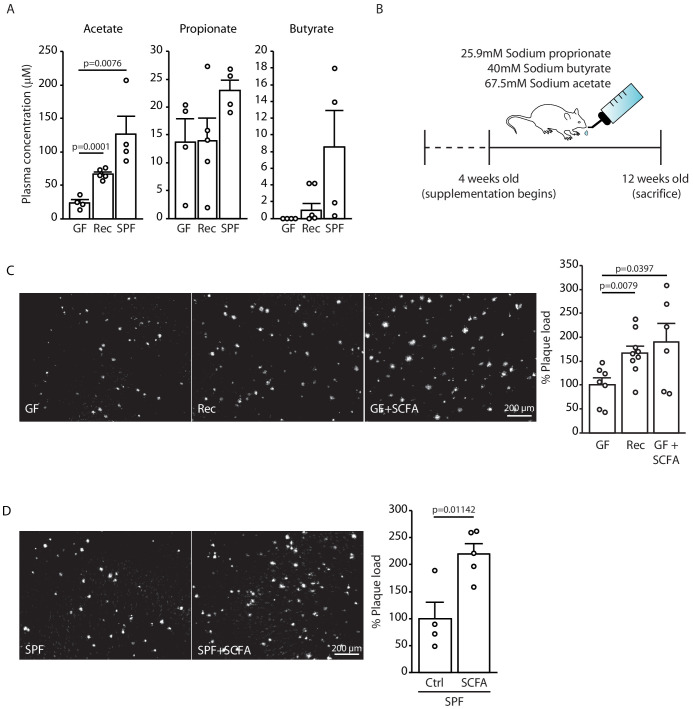
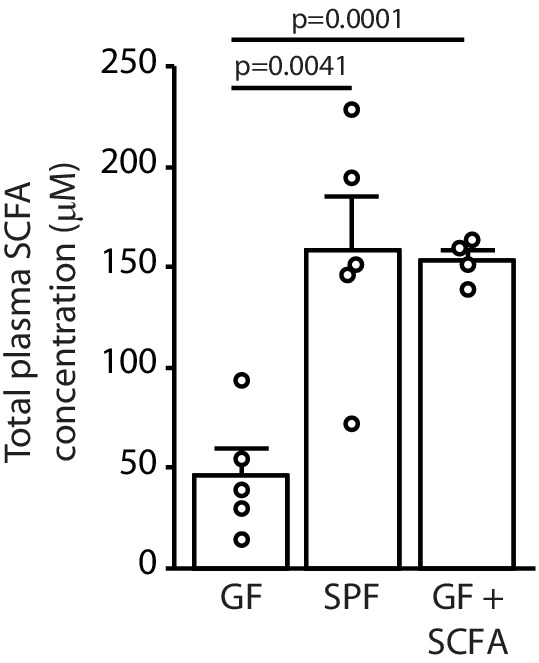
Verification
Claims the paper makes
The claims and statistics of this paper haven’t been checked yet.
Run the check — free, no account needed. It reads the open-access text and checks the sources it cites.
Claims other papers make about this one
Each is checked against this paper’s own text: does it say what the citing paper says it does?
The source backs part of the claim, not all of it — or backs it for a different population, condition or comparison.
In the citing paper
“Gut microbiota imbalance induces intestinal inflammation and further leads to systemic inflammation through the release of immune-stimulating substances and metabolites into blood circulation.103”
From Role of neuroinflammation in neurodegeneration development (2023) · cites this paper as [103]
Experimental — accuracy not yet measuredIn the citing paper
“Interestingly, it has been demonstrated that SCFAs induce microglial activation and worsen Aβ pathology in both SPF and GF APP/PS1 mice.199”
From Microbiota–gut–brain axis and its therapeutic applications in neurodegenerative diseases (2024) · cites this paper as [199]
In the citing paper
“However, individual SCFA failed to achieve comparable effects as the combined SCFA treatment.199”
From Microbiota–gut–brain axis and its therapeutic applications in neurodegenerative diseases (2024) · cites this paper as [199]
In the citing paper
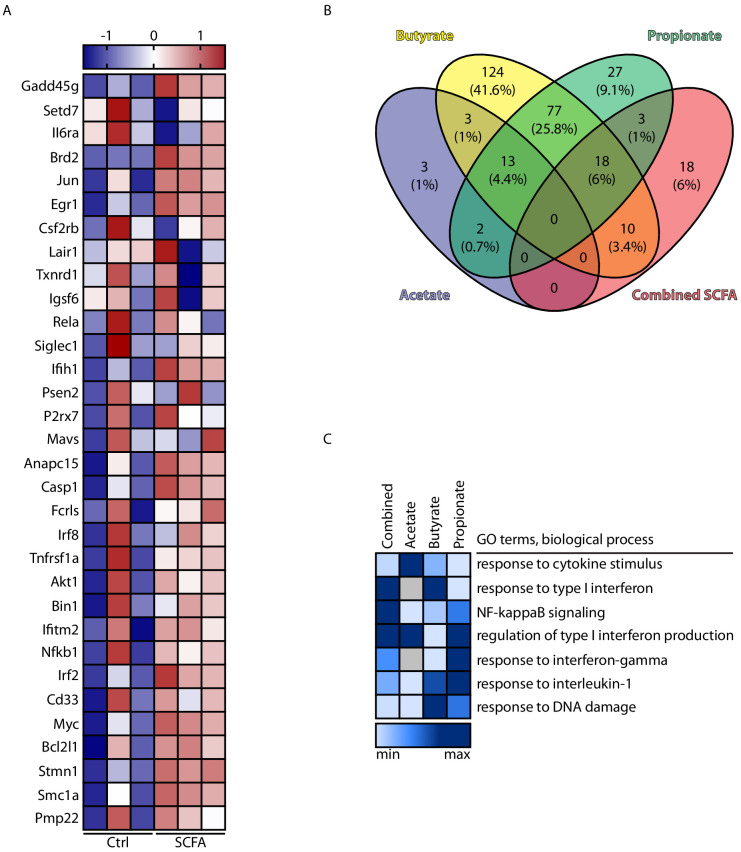
“On the other hand, a comparison between acetate, propionate, and butyrate in primary microglia has reported an abundant overlap between butyrate and propionate in microglial transcriptomic profile.”
From Microbiota–gut–brain axis and its therapeutic applications in neurodegenerative diseases (2024) · cites this paper as [199]
Self-check
Percentages, sums and reported differences re-computed from the paper’s own numbers.
The self-check needs the paper’s full text.
Citations
Cites
The gut microbiota as an environmental factor that regulates fat storage
Bäckhed, F., Ding, H., Wang, T., Hooper, L. V., Koh, G. Y., Nagy, A., Semenkovich, C. F., & Gordon, J. I. (2004) · Proceedings of the National Academy of Sciences · doi:10.1073/pnas.0407076101 · Cited by 6,245
The Microbial Metabolites, Short-Chain Fatty Acids, Regulate Colonic T reg Cell Homeostasis
Smith, P. M., Howitt, M. R., Panikov, N., Michaud, M., Gallini, C. A., Bohlooly-Y, M., Glickman, J. N., & Garrett, W. S. (2013) · Science · doi:10.1126/science.1241165 · Cited by 5,413
Cryan, J. F., O'Riordan, K. J., Cowan, C. S. M., Sandhu, K. V., Bastiaanssen, T. F. S., Boehme, M., Codagnone, M. G., Cussotto, S., Fulling, C., Golubeva, A. V., et al. (2019) · Physiological Reviews · doi:10.1152/physrev.00018.2018 · Cited by 5,286 · cited 2×
“Moreover, SCFA have been implicated in a wide range of brain disorders or physiological functions under cerebral control such as mood disorders, autism spectrum disease, or energy metabolism (Cryan et al., 2019; Li et al., 2018; van de Wouw et al., 2018).”
BackgroundFormation of short chain fatty acids by the gut microbiota and their impact on human metabolism
Morrison, D. J., & Preston, T. (2016) · Gut Microbes · doi:10.1080/19490976.2015.1134082 · Cited by 3,781
Metsalu, T., & Vilo, J. (2015) · Nucleic Acids Research · doi:10.1093/nar/gkv468 · Cited by 3,770
Gut microbiota regulate motor deficits and neuroinflammation in a model of Parkinson's disease
Sampson, T. R., Debelius, J. W., Thron, T., Janssen, S., Shastri, G. G., Ilhan, Z. E., Challis, C., Schretter, C. E., Rocha, S., Gradinaru, V., et al. (2016) · Cell · doi:10.1016/j.cell.2016.11.018 · Cited by 3,622
Host microbiota constantly control maturation and function of microglia in the CNS
Erny, D., Hrabě de Angelis, A. L., Jaitin, D., Wieghofer, P., Staszewski, O., David, E., Keren-Shaul, H., Mahlakoiv, T., Jakobshagen, K., Buch, T., et al. (2015) · Nature Neuroscience · doi:10.1038/nn.4030 · Cited by 3,569
The role of short-chain fatty acids in microbiota–gut–brain communication
Dalile, B., Van Oudenhove, L., Vervliet, B., & Verbeke, K. (2019) · Nature Reviews Gastroenterology & Hepatology · doi:10.1038/s41575-019-0157-3 · Cited by 3,357
Complement and microglia mediate early synapse loss in Alzheimer mouse models
Hong, S., Beja-Glasser, V. F., Nfonoyim, B. M., Frouin, A., Li, S., Ramakrishnan, S., Merry, K. M., Shi, Q., Rosenthal, A., Barres, B. A., et al. (2016) · Science · doi:10.1126/science.aad8373 · Cited by 3,343
Alzheimer Disease: An Update on Pathobiology and Treatment Strategies
Long, J. M., & Holtzman, D. M. (2019) · Cell · doi:10.1016/j.cell.2019.09.001 · Cited by 3,204
Cited by
Sorted by citations
Role of neuroinflammation in neurodegeneration development
Zhang, W., Xiao, D., Mao, Q., & Xia, H. (2023) · Signal Transduction and Targeted Therapy · doi:10.1038/s41392-023-01486-5 · Cited by 1,668
“Gut microbiota imbalance induces intestinal inflammation and further leads to systemic inflammation through the release of immune-stimulating substances and metabolites into blood circulation.(103) Moreover, gut bacteria can also affect CNS inflammation by binding to specific receptors, such as the proinflammatory tac…”
BackgroundMicrobiota–gut–brain axis and its therapeutic applications in neurodegenerative diseases
Loh, J. S., Mak, W. Q., Tan, L. K. S., Ng, C. X., Chan, H. H., Yeow, S. H., Foo, J. B., Ong, Y. S., How, C. W., & Khaw, K. Y. (2024) · Signal Transduction and Targeted Therapy · doi:10.1038/s41392-024-01743-1 · Cited by 1,193
Short chain fatty acids: Microbial metabolites for gut-brain axis signalling
O’Riordan, K. J., Collins, M., Moloney, G. M., Knox, E. G., Aburto, M. R., Fülling, C., Morley, S. J., Clarke, G. A., Schellekens, H., & Cryan, J. F. (2022) · Molecular and Cellular Endocrinology · doi:10.1016/j.mce.2022.111572 · Cited by 788
The Microbiota–Gut–Brain Axis in Psychiatric Disorders
Góralczyk-Bińkowska, A., Szmajda‐Krygier, D., & Kozłowska, E. (2022) · International Journal of Molecular Sciences · doi:10.3390/ijms231911245 · Cited by 569
Microbiota-derived metabolites as drivers of gut–brain communication
Ahmed, H., Leyrolle, Q., Koistinen, V., Kärkkäinen, O., Layé, S., Delzenne, N., & Hanhineva, K. (2022) · Gut Microbes · doi:10.1080/19490976.2022.2102878 · Cited by 462
Metadata
- Authors
- Colombo, A. V., Sadler, R. K., Llovera, G., Singh, V., Roth, S., Heindl, S., Sebastian Monasor, L., Verhoeven, A., Peters, F., Parhizkar, S., Kamp, F., Gomez de Aguero, M., MacPherson, A. J., Winkler, E., Herms, J., Benakis, C., Dichgans, M., Steiner, H., Giera, M., Haass, C., Tahirovic, S., & Liesz, A.
- Affiliations
- German Center for Neurodegenerative Diseases (DE)
- Institut für Schlaganfall- und Demenzforschung (DE)
- German Center for Neurodegenerative Diseases (DZNE), Munich, Germany
- Leiden University Medical Center (NL)
- Ludwig-Maximilians-Universität München (DE)
- Maurice Müller Laboratories (DKF), Universitätsklinik für Viszerale Chirurgie und Medizin Inselspital, Bern, Switzerland
- University Hospital of Bern (CH)
- Munich Cluster for Systems Neurology (DE)
- Corresponding author
- Liesz, Arthur
- ORCID
- Colombo, Alessio Vittorio
- Sadler, Rebecca Katie
- Llovera, Gemma
- Singh, Vikramjeet
- Roth, Stefan
- Heindl, Steffanie
- Sebastian Monasor, Laura
- Verhoeven, Aswin
- Peters, Finn
- Parhizkar, Samira
- Kamp, Frits
- Gomez de Aguero, Mercedes
- MacPherson, Andrew J
- Herms, Jochen
- Benakis, Corinne
- Dichgans, Martin
- Steiner, Harald
- Giera, Martin
- Haass, Christian
- Tahirovic, Sabina
- Liesz, Arthur
- Venue
- eLife
- Publisher
- eLife Sciences Publications, Ltd
- Published
- 2021-04-13
- Volume
- 10
- ISSN
- 2050-084X (ISSN-L)
- PMC
- PMC8043748
- OpenAlex
- W3153691725
- Cited by
- 354
- References
- 75
- Citations by year
- 2026: 58 · 2025: 82 · 2024: 73 · 2023: 61 · 2022: 61 · 2021: 18
- FWCI
- 33.41
- Type
- journal article
- Language
- en
- Open access
- gold
- doi.org
- Licence
- Locations
- eLife (publishedVersion, cc-by)
- bioRxiv (Cold Spring Harbor Laboratory) (acceptedVersion)
- PubMed Central (publishedVersion, cc-by)
- PubMed (publishedVersion)
- Leiden Repository (Leiden University) (submittedVersion, cc-by)
- Data Archiving and Networked Services (DANS) (submittedVersion, other-oa)
- Bern Open Repository and Information System (University of Bern) (submittedVersion, cc-by)
- DOAJ (DOAJ: Directory of Open Access Journals) (submittedVersion, cc-by-sa)
- Open access LMU (Ludwid Maxmilian's Universitat Munchen) (submittedVersion, cc-by)
- DZNE Pub (submittedVersion, other-oa)
- Open Access CRIS of the University of Bern
- Funders
- Vascular Dementia Research Foundation
- Deutsche Forschungsgemeinschaft (STE847/6-1, HA1737/16-1, EXC 2145 SyNergy - ID 390857198, LI-2534/7-1)
- H2020 European Research Council (ERC-StG 802305, NMP-2015-686271)
- Helmholtz Association (Zukunftsthema "Immunology and Inflammation"))
- NCL Foundation
- Alzheimer Forschung Initiative (18014)
- Alzheimer's Association (ADSF-21-831226-C)
- Topics
- Life Sciences › Neuroscience › Cellular and Molecular Neuroscience › Alzheimer's disease research and treatments
- Life Sciences › Biochemistry, Genetics and Molecular Biology › Molecular Biology › Gut microbiota and health
- Life Sciences › Neuroscience › Neurology › Neuroinflammation and Neurodegeneration Mechanisms
- Keywords
- short-chain fatty acids, gut microbiota, Alzheimer's disease, amyloid plaques, microglia, gut-brain axis, germ-free mice, microbial metabolites, apolipoprotein E, microglial phenotype
- MeSH terms
- Gastrointestinal Microbiome, Alzheimer Disease, Animals, Fatty Acids, Volatile, Female, Male, Specific Pathogen-Free Organisms, Microglia, Mice, Plaque, Amyloid
About these checks
Registry, retraction, Cites and statistics results are computed, not judged, with one exception: a printed reference that no index lists is read once by a model before it counts as a citation error. Claims are extracted by a model and kept only when their quote appears verbatim in the text; each cited source is then checked, with a model’s help, for whether it says what the claim relies on. Those verdicts can be wrong — read the claim’s quote and the cited source before relying on one.
Statistics and arithmetic are recomputed, not judged.
Confidence bands are shown only for fields calibrated on our annotated test set. None is calibrated yet, so no band is shown.
What counts as a claim ›How we measure confidence ›How we check this ›
Are you an author, or do you see a problem with this page? Request a review
