

The DOI matches its Crossref record; 5 of the 5 references it cites were found in a registry or an index.
Reduction of elevated proton leak rejuvenates mitochondria in the aged cardiomyocyte
Abstract
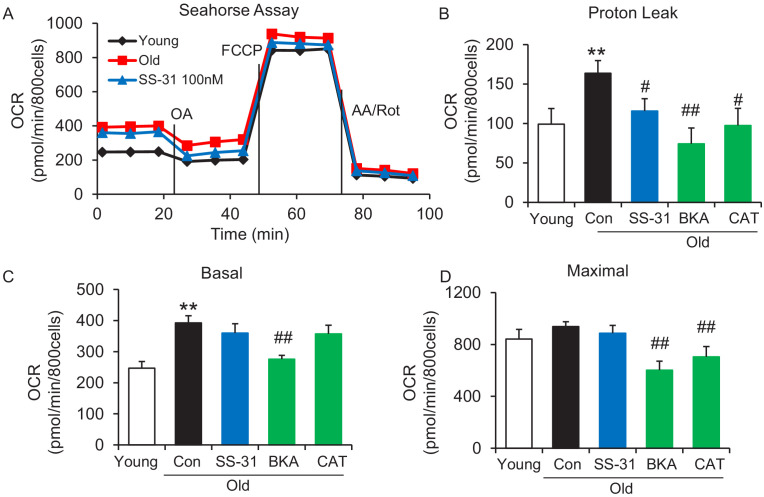
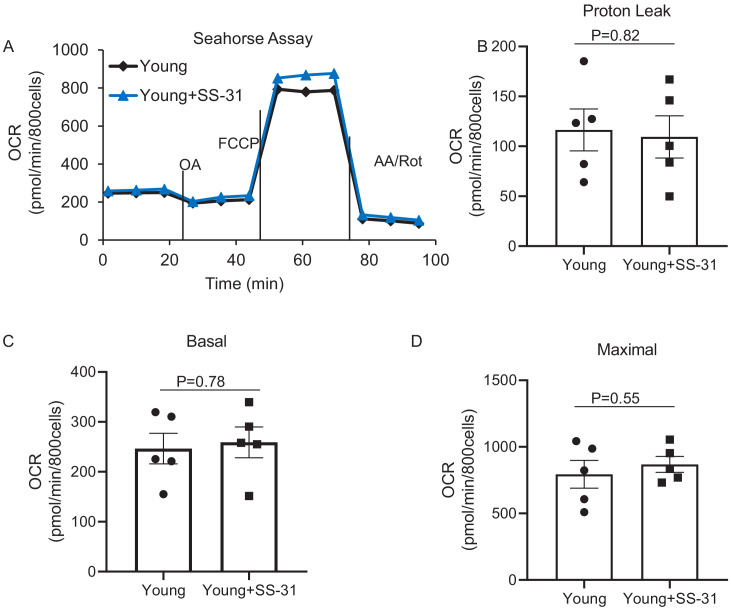
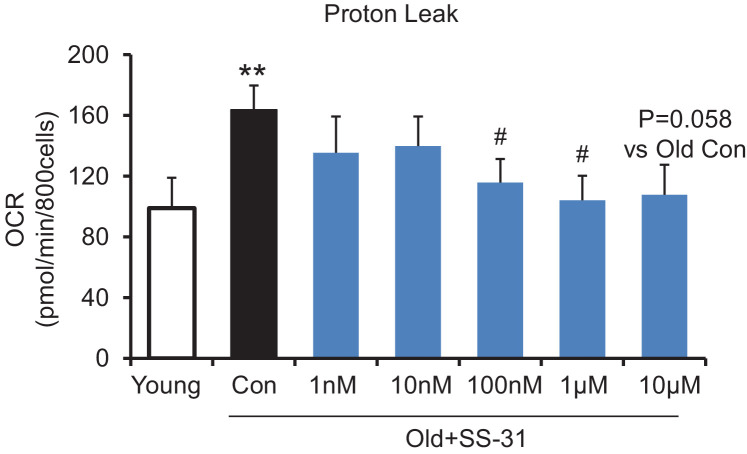
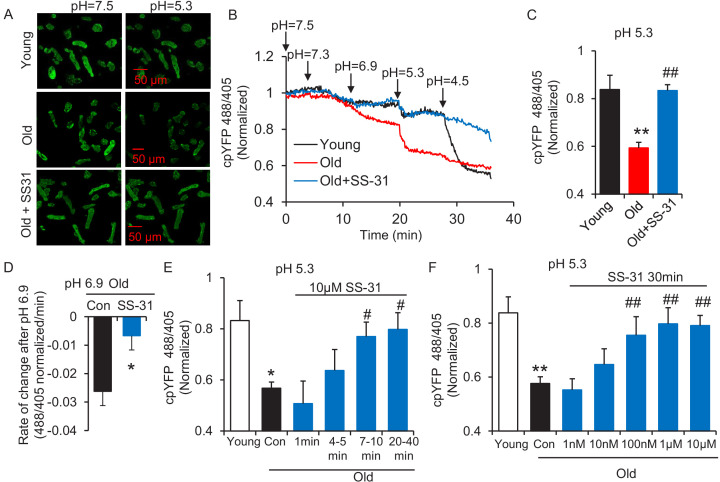
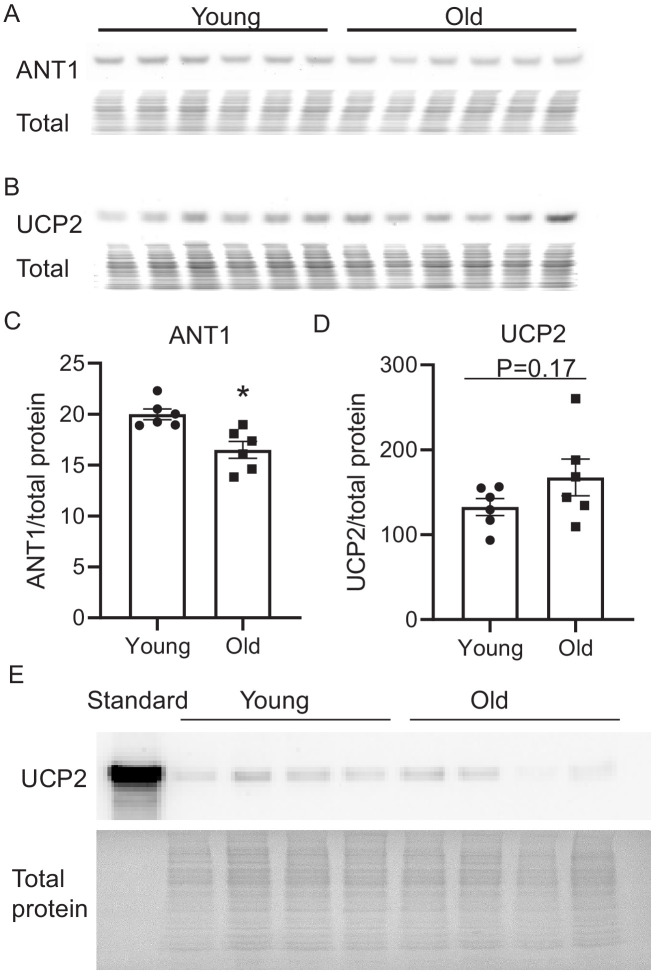
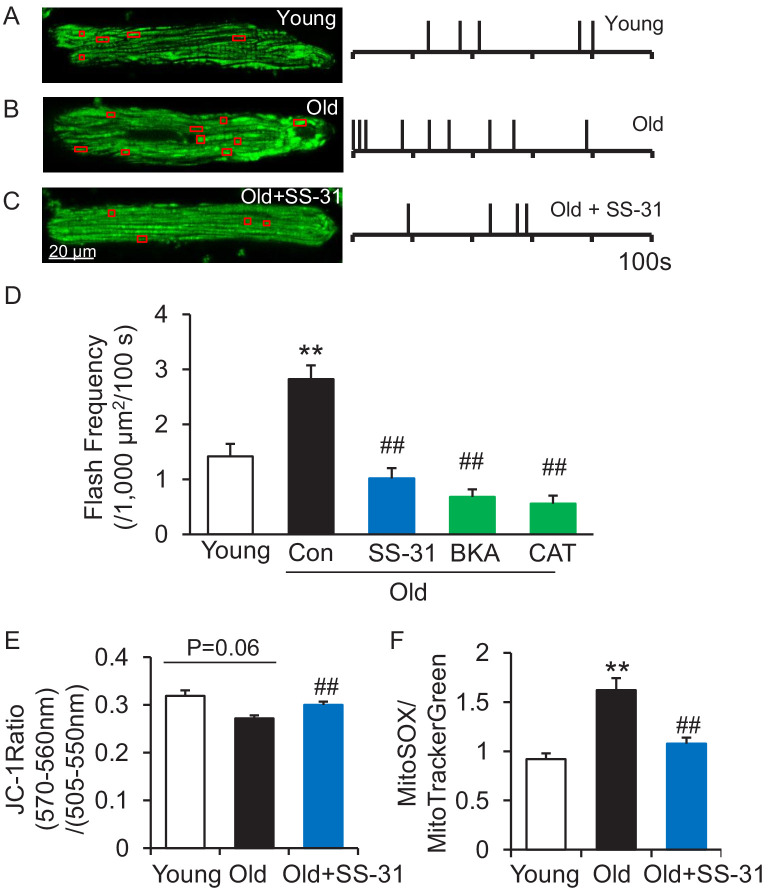
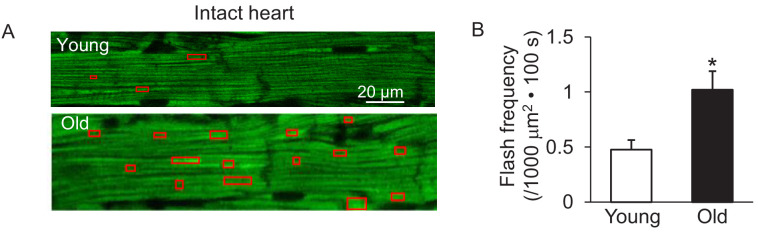
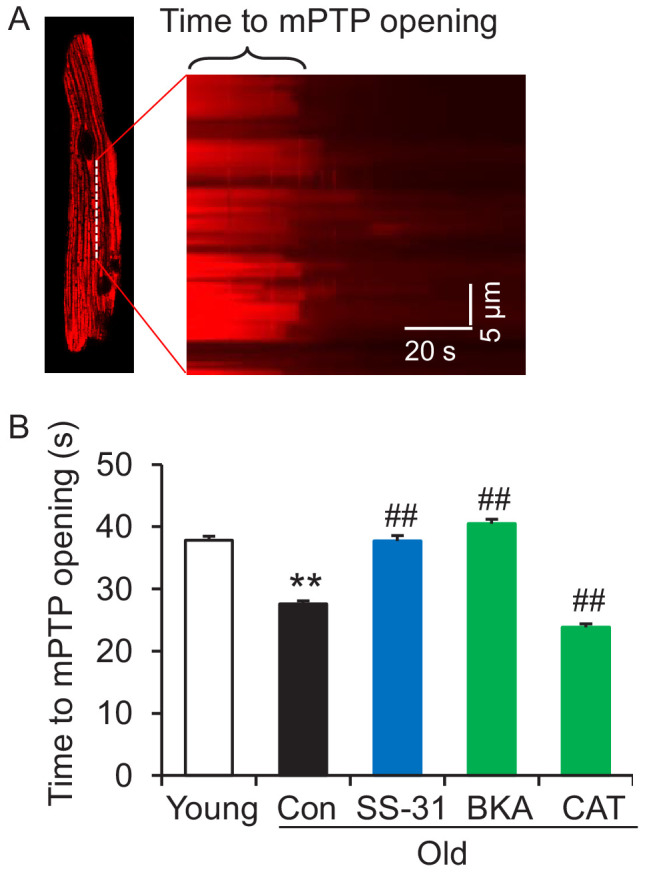
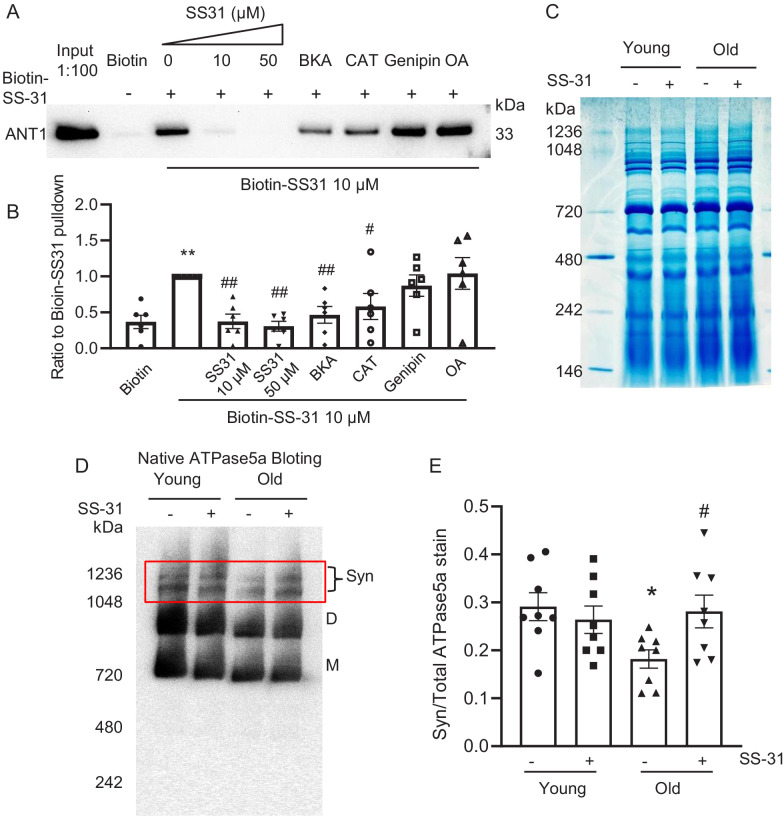
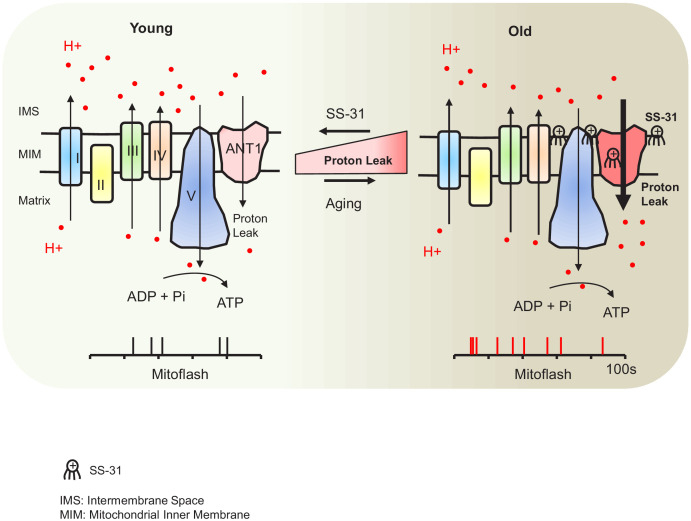
Aging-associated diseases, including cardiac dysfunction, are increasingly common in the population. However, the mechanisms of physiologic aging in general, and cardiac aging in particular, remain poorly understood. Age-related heart impairment is lacking a clinically effective treatment. Using the model of naturally aging mice and rats, we show direct evidence of increased proton leak in the aged heart mitochondria. Moreover, our data suggested ANT1 as the most likely site of mediating increased mitochondrial proton permeability in old cardiomyocytes. Most importantly, the tetra-peptide SS-31 prevents age-related excess proton entry, decreases the mitochondrial flash activity and mitochondrial permeability transition pore opening, rejuvenates mitochondrial function by direct association with ANT1 and the mitochondrial ATP synthasome, and leads to substantial reversal of diastolic dysfunction. Our results uncover the excessive proton leak as a novel mechanism of age-related cardiac dysfunction and elucidate how SS-31 can reverse this clinically important complication of cardiac aging.
Overview
The claims and statistics of this paper haven’t been checked yet.
Run the check — free, no account needed. It reads the open-access text and checks the sources it cites.
Integrity signals
Registry
Cites
Statistics
Figures
Verification
Claims the paper makes
The claims and statistics of this paper haven’t been checked yet.
Run the check — free, no account needed. It reads the open-access text and checks the sources it cites.
Claims other papers make about this one
Each is checked against this paper’s own text: does it say what the citing paper says it does?
The source backs part of the claim, not all of it — or backs it for a different population, condition or comparison.
In the citing paper
“A modified tetrapeptide, elamipretide, has been developed to target cardiolipin in the inner mitochondrial membrane (IMM), and then turned out to bind to the IMM protein adenine-nucleotide translocator-1 to inhibit the mitochondria permeability transition, which is one particular mechanism leading to MMP 172 .”
From Hallmarks of aging: An expanding universe (2023) · cites this paper as [172]
Experimental — accuracy not yet measuredThe source backs part of the claim, not all of it — or backs it for a different population, condition or comparison.
In the citing paper
“| | Mouse | Elamipretide to inhibit mitochondrial permeability transition | Improved mitochondrial function and avoidance of diastolic heart dysfunction, especially if combined with NMN | 172 |”
From Hallmarks of aging: An expanding universe (2023) · cites this paper as [172]
Experimental — accuracy not yet measured
Self-check
Percentages, sums and reported differences re-computed from the paper’s own numbers.
The self-check needs the paper’s full text.
Citations
Cites
Anderson, E. J., Lustig, M. E., Boyle, K. E., Woodlief, T. L., Kane, D. A., Lin, C.-T., Price, J. W., Kang, L., Rabinovitch, P. S., Szeto, H. H., et al. (2009) · Journal of Clinical Investigation · doi:10.1172/jci37048 · Cited by 1,253
Self-citationThe basal proton conductance of mitochondria depends on adenine nucleotide translocase content
Brand, M. D., Pakay, J. L., Ocloo, A., Kokoszka, J., Wallace, D. C., Brookes, P. S., & Cornwall, E. J. (2005) · Biochemical Journal · doi:10.1042/bj20050890 · Cited by 410
The efficiency and plasticity of mitochondrial energy transduction.
Brand, M. D. (2005) · Biochemical Society Transactions · doi:10.1042/bst0330897 · Cited by 406
Inhibition of mitochondrial permeability transition by deletion of the ANT family and CypD
Karch, J., Bround, M. J., Khalil, H., Sargent, M. A., Latchman, N., Terada, N., Peixoto, P. M., & Molkentin, J. D. (2019) · Science Advances · doi:10.1126/sciadv.aaw4597 · Cited by 250
Potent mitochondria-targeted peptides reduce myocardial infarction in rats
Cho, J., Won, K., Wu, D., Soong, Y., Liu, S., Szeto, H. H., & Hong, M. K. (2007) · Coronary Artery Disease · doi:10.1097/01.mca.0000236285.71683.b6 · Cited by 144
Self-citation
Research works printed but not linked: 52
- Adams, 2000, Cardiomyocyte apoptosis induced by Galphaq signaling is mediated by permeability transition pore formation and activation of the mitochondrial death pathway, Circulation Research, 87, 1180, 10.1161/01.RES.87.12.1180 · DOI
- Bertholet, 2019, H+ transport is an integral function of the mitochondrial ADP/ATP carrier, Nature, 571, 515, 10.1038/s41586-019-1400-3 · DOI
- Birk, 2013, The mitochondrial-targeted compound SS-31 re-energizes ischemic mitochondria by interacting with cardiolipin, Journal of the American Society of Nephrology, 24, 1250, 10.1681/ASN.2012121216 · DOI · Paper page
- Brand, 2000, Uncoupling to survive? the role of mitochondrial inefficiency in ageing, Experimental Gerontology, 35, 811, 10.1016/S0531-5565(00)00135-2 · DOI · Paper page
- Chavez, 2020, Mitochondrial protein interaction landscape of SS-31, PNAS, 31, 10.1101/739128 · DOI
- Chiao, 2016, Rapamycin transiently induces mitochondrial remodeling to reprogram energy metabolism in old hearts, Aging, 8, 314, 10.18632/aging.100881 · DOI · Paper page
- Chiao, 2020, Late-life restoration of mitochondrial function reverses cardiac dysfunction in old mice, 10.1101/2020.01.02.893008 · DOI
- Dai, 2013, Global proteomics and pathway analysis of pressure-overload-induced heart failure and its attenuation by mitochondrial-targeted peptides, Circulation: Heart Failure, 6, 1067, 10.1161/CIRCHEARTFAILURE.113.000406 · DOI
- Dai, 2014, Mitochondrial oxidative stress in aging and healthspan, Longevity & Healthspan, 3, 10.1186/2046-2395-3-6 · DOI
- Demaurex, 2016, Mitochondrial flashes: dump superoxide and dance with protons now, Antioxidants & Redox Signaling, 25, 550, 10.1089/ars.2016.6819 · DOI
- Divakaruni, 2011, The regulation and physiology of mitochondrial proton leak, Physiology, 26, 192, 10.1152/physiol.00046.2010 · DOI
- Feng, 2017, Handbook of Experimental Pharmacology, 403, 10.1007/164_2016_129 · DOI
- Hafner, 2010, Regulation of the mPTP by SIRT3-mediated deacetylation of CypD at lysine 166 suppresses age-related cardiac hypertrophy, Aging, 2, 914, 10.18632/aging.100252 · DOI
- Halestrap, 1997, Oxidative stress, thiol reagents, and membrane potential modulate the mitochondrial permeability transition by affecting nucleotide binding to the Adenine nucleotide translocase, Journal of Biological Chemistry, 272, 3346, 10.1074/jbc.272.6.3346 · DOI
- Hao, 2017, SS31 ameliorates age-related activation of NF-κB signaling in senile mice model, SAMP8, Oncotarget, 8, 1983, 10.18632/oncotarget.14077 · DOI
- Harper, 1998, Age-related increase in mitochondrial proton leak and decrease in ATP turnover reactions in mouse hepatocytes, American Journal of Physiology-Endocrinology and Metabolism, 275, E197, 10.1152/ajpendo.1998.275.2.E197 · DOI
- Hou, 2014, Mitochondrial flashes: new insights into mitochondrial ROS signalling and beyond, The Journal of Physiology, 592, 3703, 10.1113/jphysiol.2014.275735 · DOI
- Johnson, 2013, mTOR inhibition alleviates mitochondrial disease in a mouse model of leigh syndrome, Science, 342, 1524, 10.1126/science.1244360 · DOI · Paper page
- Karaa, 2018, Randomized dose-escalation trial of elamipretide in adults with primary mitochondrial myopathy, Neurology, 90, e1212, 10.1212/WNL.0000000000005255 · DOI
- Ko, 2003, Mitochondrial ATP synthasome. Cristae-enriched membranes and a multiwell detergent screening assay yield dispersed single complexes containing the ATP synthase and carriers for pi and ADP/ATP, The Journal of Biological Chemistry, 278, 12305, 10.1074/jbc.C200703200 · DOI
- Lesnefsky, 2016, Mitochondrial metabolism in aging heart, Circulation Research, 118, 1593, 10.1161/CIRCRESAHA.116.307505 · DOI
- Liu, 2013, Adenine nucleotide translocase, mitochondrial stress, and degenerative cell death, Oxidative Medicine and Cellular Longevity, 2013, 1, 10.1155/2013/146860 · DOI
- Lukyanenko, 1999, Ca2+ sparks and Ca2+ waves in saponin-permeabilized rat ventricular myocytes, The Journal of Physiology, 521 Pt 3, 575, 10.1111/j.1469-7793.1999.00575.x · DOI
- Marcu, 2012, Multi-parameter measurement of the permeability transition pore opening in isolated mouse heart mitochondria, Journal of Visualized Experiments, 1, 10.3791/4131 · DOI
- Mitchell, 2019, Molecular mechanism of action of mitochondrial therapeutic SS-31 (Elamipretide): Membrane interactions and effects on surface electrostatics, 10.1101/735001 · DOI
- Olgar, 2019, Mitochondria-Targeting antioxidant provides cardioprotection through regulation of cytosolic and mitochondrial Zn2+levels with Re-Distribution of Zn2+-Transporters in aged rat cardiomyocytes, International Journal of Molecular Sciences, 20, 10.3390/ijms20153783 · DOI
- Pebay-Peyroula, 2003, Structure of mitochondrial ADP/ATP carrier in complex with carboxyatractyloside, Nature, 426, 39, 10.1038/nature02056 · DOI
- Pérez, 2009, Is the oxidative stress theory of aging dead?, Biochimica et Biophysica Acta (BBA) - General Subjects, 1790, 1005, 10.1016/j.bbagen.2009.06.003 · DOI · Paper page
- Rolfe, 1996, Contribution of mitochondrial proton leak to skeletal muscle respiration and to standard metabolic rate, American Journal of Physiology-Cell Physiology, 271, C1380, 10.1152/ajpcell.1996.271.4.C1380 · DOI
- Ruprecht, 2019, The molecular mechanism of transport by the mitochondrial ADP/ATP carrier, Cell, 176, 435, 10.1016/j.cell.2018.11.025 · DOI
- Schwarzländer, 2012, Mitochondrial ‘flashes’: a radical concept repHined, Trends in Cell Biology, 22, 503, 10.1016/j.tcb.2012.07.007 · DOI
- Serviddio, 2007, Bioenergetics in aging: mitochondrial proton leak in aging rat liver, kidney and heart, Redox Report, 12, 91, 10.1179/135100007X162112 · DOI
- Shen, 2014, Mitoflash frequency in early adulthood predicts lifespan in Caenorhabditis elegans, Nature, 508, 128, 10.1038/nature13012 · DOI
- Siegel, 2013, Mitochondrial-targeted peptide rapidly improves mitochondrial energetics and skeletal muscle performance in aged mice, Aging Cell, 12, 763, 10.1111/acel.12102 · DOI
- Sweetwyne, 2017, The mitochondrial-targeted peptide, SS-31, improves glomerular architecture in mice of advanced age, Kidney International, 91, 1126, 10.1016/j.kint.2016.10.036 · DOI
- Szeto, 2008, Mitochondria-Targeted Cytoprotective Peptides for Ischemia–Reperfusion Injury, Antioxidants & Redox Signaling, 10, 601, 10.1089/ars.2007.1892 · DOI
- Szeto, 2014, First-in-class cardiolipin-protective compound as a therapeutic agent to restore mitochondrial bioenergetics, British Journal of Pharmacology, 171, 2029, 10.1111/bph.12461 · DOI
- Szeto, 2014, Serendipity and the Discovery of Novel Compounds That Restore Mitochondrial Plasticity, Clinical Pharmacology & Therapeutics, 96, 672, 10.1038/clpt.2014.174 · DOI
- Vignais, 1976, Binding of radioactively labeled carboxyatractyloside, atractyloside and bongkrekic acid to the ADP translocator of potato mitochondria, Biochimica et Biophysica Acta (BBA) - Bioenergetics, 440, 688, 10.1016/0005-2728(76)90051-7 · DOI
- Wang, 2008, Superoxide Flashes in Single Mitochondria, Cell, 134, 279, 10.1016/j.cell.2008.06.017 · DOI · Paper page
- Wang, 2016, Mitochondrial Flash: Integrative Reactive Oxygen Species and pH Signals in Cell and Organelle Biology, Antioxidants & Redox Signaling, 25, 534, 10.1089/ars.2016.6739 · DOI
- Wang, 2016, Mitochondrial flashes: From indicator characterization to in vivo imaging, Methods, 109, 12, 10.1016/j.ymeth.2016.06.004 · DOI
- Wang, 2016, Protons Trigger Mitochondrial Flashes, Biophysical Journal, 111, 386, 10.1016/j.bpj.2016.05.052 · DOI
- Wang, 2017, Mitochondrial flashes regulate ATP homeostasis in the heart, eLife, 6, 10.7554/eLife.23908 · DOI
- Wei-LaPierre, 2013, Respective Contribution of Mitochondrial Superoxide and pH to Mitochondria-targeted Circularly Permuted Yellow Fluorescent Protein (mt-cpYFP) Flash Activity, Journal of Biological Chemistry, 288, 10567, 10.1074/jbc.M113.455709 · DOI
- Winter, 2016, Adenine nucleotide translocase 1 overexpression protects cardiomyocytes against hypoxia via increased ERK1/2 and AKT activation, Cellular Signalling, 28, 152, 10.1016/j.cellsig.2015.11.002 · DOI
- Yang, 2009, Mitochondria targeted peptides protect against 1-methyl-4-phenyl-1,2,3,6-tetrahydropyridine neurotoxicity, Antioxidants & Redox Signaling, 11, 2095, 10.1089/ars.2009.2445 · DOI
- Zhang, 2013, Β-adrenergic-stimulated L-type channel Ca²+ entry mediates hypoxic Ca²+ overload in intact heart, Journal of Molecular and Cellular Cardiology, 65, 51, 10.1016/j.yjmcc.2013.09.002 · DOI
- Zhang, 2015, Remodeling of mitochondrial flashes in muscular development and dystrophy in zebrafish, PLOS ONE, 10, 10.1371/journal.pone.0132567 · DOI
- Zhang, 2017, A novel fission-independent role of dynamin-related protein 1 in cardiac mitochondrial respiration, Cardiovascular Research, 113, 160, 10.1093/cvr/cvw212 · DOI
- Zhang, 2018, Heart specific knockout of Ndufs4 ameliorates ischemia reperfusion injury, Journal of Molecular and Cellular Cardiology, 123, 38, 10.1016/j.yjmcc.2018.08.022 · DOI
- Zorov, 2000, Reactive oxygen species (ROS)-induced ROS release: a new phenomenon accompanying induction of the mitochondrial permeability transition in cardiac myocytes, The Journal of Experimental Medicine, 192, 1001, 10.1084/jem.192.7.1001 · DOI · Paper page
Cited by
Sorted by citations
Hallmarks of aging: An expanding universe
López-Otín, C., Blasco, M. A., Partridge, L., Serrano, M., & Kroemer, G. (2023) · Cell · doi:10.1016/j.cell.2022.11.001 · Cited by 6,549
Sanchez-Contreras, M., Sweetwyne, M. T., Tsantilas, K. A., Whitson, J. A., Campbell, M. D., Kohrn, B. F., Kim, H. J., Hipp, M. J., Fredrickson, J., Nguyen, M. M., et al. (2023) · eLife · doi:10.7554/elife.83395 · Cited by 71
Self-citation
Metadata
- Authors
- Zhang, H., Alder, N. N., Wang, W., Szeto, H., Marcinek, D. J., & Rabinovitch, P. S.
- Affiliations
- Department of Laboratory Medicine and Pathology, University of Washington, Seattle, United States
- Department of Molecular and Cell Biology, University of Connecticut, Storrs, United States
- Social Profit Network Research Lab, Alexandria LaunchLabs, New York, United States
- Department of Radiology, University of Washington, Seattle, United States
- Venue
- eLife
- Publisher
- eLife Sciences Publications, Ltd
- Published
- 2020-12-15
- Volume
- 9
- ISSN
- 2050-084X
- PMC
- PMC7738186
- Cited by
- 101
- References
- 5
- Language
- en
- Licence
- Funders
- NIA (P01AG001751, R56AG055114)
- NHLBI (HL114760, HL137266)
- AHA (18EIA33900041, 19CDA34660311)
- Glenn/AFAR Foundation (Medical Research Postdoctoral Fellowship)
About these checks
Registry, retraction, Cites and statistics results are computed, not judged, with one exception: a printed reference that no index lists is read once by a model before it counts as a citation error. Claims are extracted by a model and kept only when their quote appears verbatim in the text; each cited source is then checked, with a model’s help, for whether it says what the claim relies on. Those verdicts can be wrong — read the claim’s quote and the cited source before relying on one.
Statistics and arithmetic are recomputed, not judged.
Confidence bands are shown only for fields calibrated on our annotated test set. None is calibrated yet, so no band is shown.
What counts as a claim ›How we measure confidence ›How we check this ›
Are you an author, or do you see a problem with this page? Request a review
