

The DOI matches its Crossref record; 75 of the 82 references it cites were found in a registry or an index, and 2 are not checked yet.
Effect of Pain Reprocessing Therapy vs Placebo and Usual Care for Patients With Chronic Back Pain: A Randomized Clinical Trial
Open accessAbstract
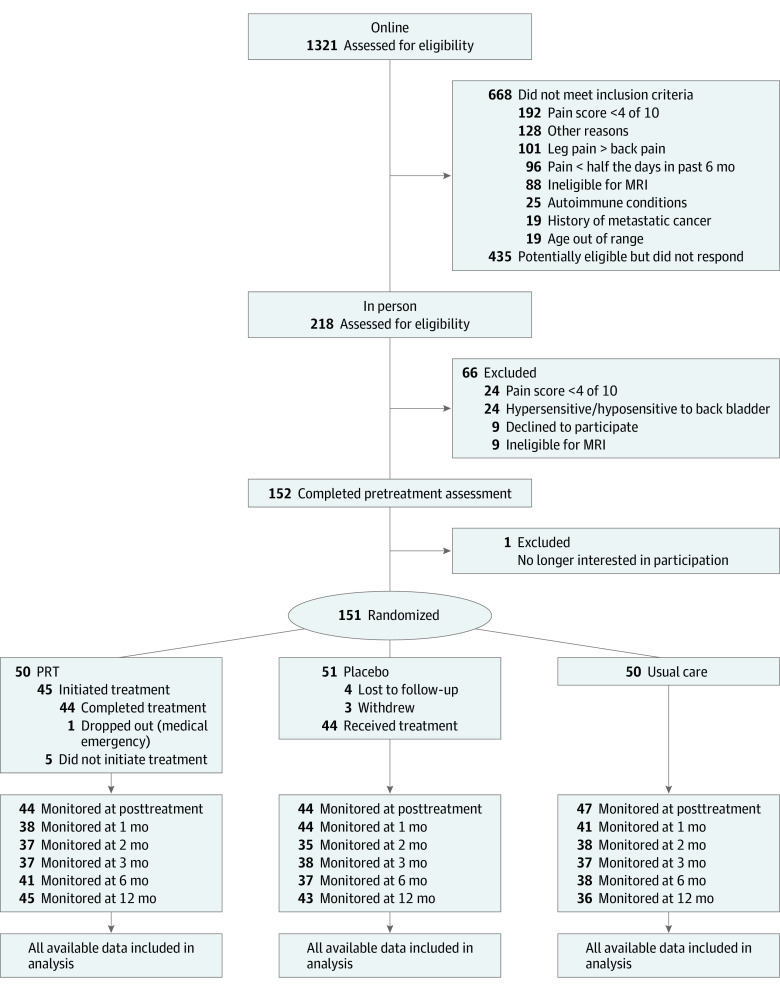
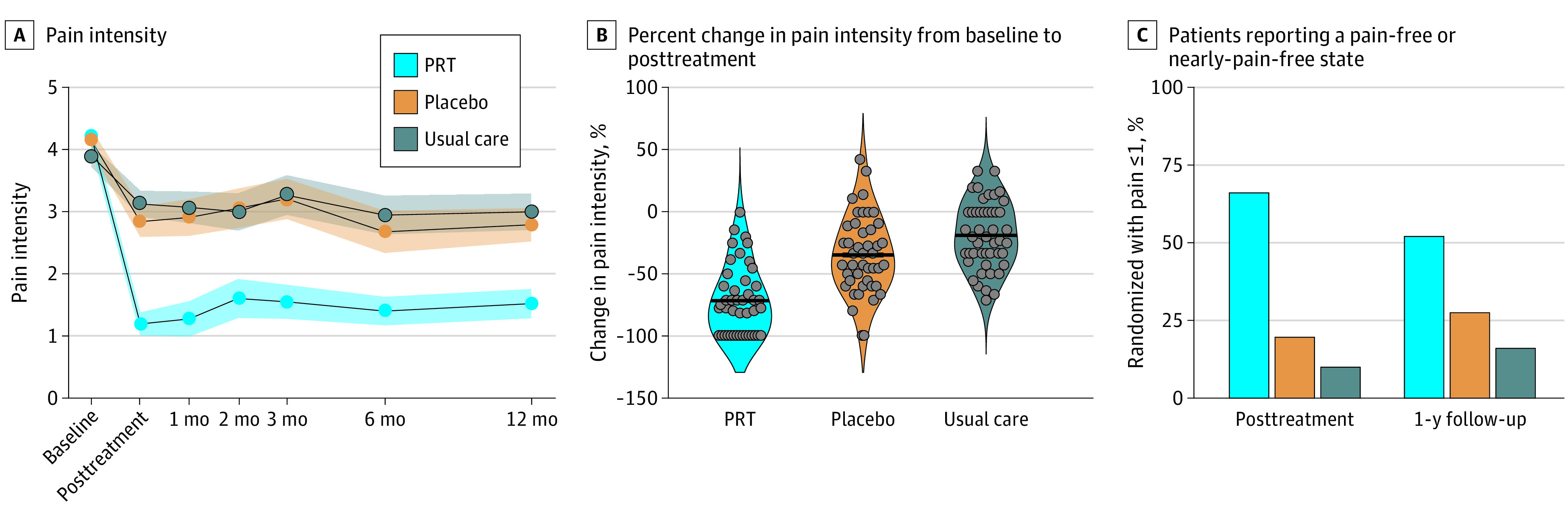
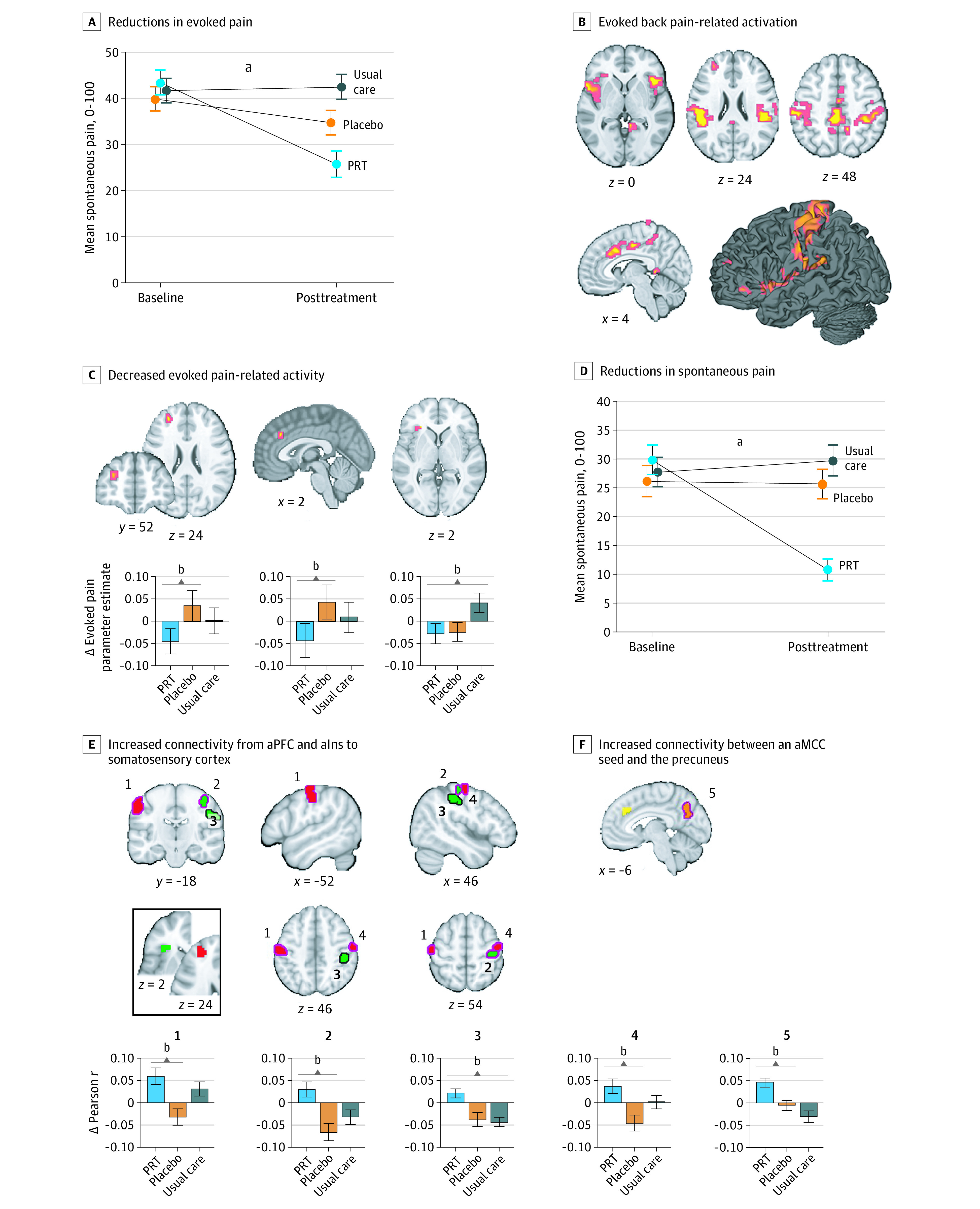
Importance: Chronic back pain (CBP) is a leading cause of disability, and treatment is often ineffective. Approximately 85% of cases are primary CBP, for which peripheral etiology cannot be identified, and maintenance factors include fear, avoidance, and beliefs that pain indicates injury. Objective: To test whether a psychological treatment (pain reprocessing therapy [PRT]) aiming to shift patients' beliefs about the causes and threat value of pain provides substantial and durable pain relief from primary CBP and to investigate treatment mechanisms. Design, Setting, and Participants: This randomized clinical trial with longitudinal functional magnetic resonance imaging (fMRI) and 1-year follow-up assessment was conducted in a university research setting from November 2017 to August 2018, with 1-year follow-up completed by November 2019. Clinical and fMRI data were analyzed from January 2019 to August 2020. The study compared PRT with an open-label placebo treatment and with usual care in a community sample. Interventions: Participants randomized to PRT participated in 1 telehealth session with a physician and 8 psychological treatment sessions over 4 weeks. Treatment aimed to help patients reconceptualize their pain as due to nondangerous brain activity rather than peripheral tissue injury, using a combination of cognitive, somatic, and exposure-based techniques. Participants randomized to placebo received an open-label subcutaneous saline injection in the back; participants randomized to usual care continued their routine, ongoing care. Main Outcomes and Measures: One-week mean back pain intensity score (0 to 10) at posttreatment, pain beliefs, and fMRI measures of evoked pain and resting connectivity. Results: At baseline, 151 adults (54% female; mean [SD] age, 41.1 [15.6] years) reported mean (SD) pain of low to moderate severity (mean [SD] pain intensity, 4.10 [1.26] of 10; mean [SD] disability, 23.34 [10.12] of 100) and mean (SD) pain duration of 10.0 (8.9) years. Large group differences in pain were observed at posttreatment, with a mean (SD) pain score of 1.18 (1.24) in the PRT group, 2.84 (1.64) in the placebo group, and 3.13 (1.45) in the usual care group. Hedges g was -1.14 for PRT vs placebo and -1.74 for PRT vs usual care (P < .001). Of 151 total participants, 33 of 50 participants (66%) randomized to PRT were pain-free or nearly pain-free at posttreatment (reporting a pain intensity score of 0 or 1 of 10), compared with 10 of 51 participants (20%) randomized to placebo and 5 of 50 participants (10%) randomized to usual care. Treatment effects were maintained at 1-year follow-up, with a mean (SD) pain score of 1.51 (1.59) in the PRT group, 2.79 (1.78) in the placebo group, and 3.00 (1.77) in the usual care group. Hedges g was -0.70 for PRT vs placebo (P = .001) and -1.05 for PRT vs usual care (P < .001) at 1-year follow-up. Longitudinal fMRI showed (1) reduced responses to evoked back pain in the anterior midcingulate and the anterior prefrontal cortex for PRT vs placebo; (2) reduced responses in the anterior insula for PRT vs usual care; (3) increased resting connectivity from the anterior prefrontal cortex and the anterior insula to the primary somatosensory cortex for PRT vs both control groups; and (4) increased connectivity from the anterior midcingulate to the precuneus for PRT vs usual care. Conclusions and Relevance: Psychological treatment centered on changing patients' beliefs about the causes and threat value of pain may provide substantial and durable pain relief for people with CBP. Trial Registration: ClinicalTrials.gov Identifier: NCT03294148.
Overview
The claims and statistics of this paper haven’t been checked yet.
Run the check — free, no account needed. It reads the open-access text and checks the sources it cites.
Integrity signals
Registry
Cites
Statistics
Figures
Verification
Claims the paper makes
The claims and statistics of this paper haven’t been checked yet.
Run the check — free, no account needed. It reads the open-access text and checks the sources it cites.
Claims other papers make about this one
Each is checked against this paper’s own text: does it say what the citing paper says it does?
The cited source says what the claim attributes to it.
In the citing paper
“In a study on patients with chronic lower back pain, it produced significant pain relief relative to placebo and usual care, mediated by decreased fear and threat beliefs (Ashar et al., 2022).”
From Listen to your inner body: embodied emotions in predictive neuroscience and traditional East Asian medicine (2026) · cites this paper as Ashar et al., 2022
The cited source says what the claim attributes to it.
In the citing paper
“There are highly successful therapeutic approaches, notably to chronic back pain, that proceed from this insight, engage with catastrophic thinking and give it a positive twist [22].”
From Endometriosis: patient–doctor communication and psychological counselling (2023) · cites this paper as [22]
Self-check
Percentages, sums and reported differences re-computed from the paper’s own numbers.
The self-check needs the paper’s full text.
Citations
Cites
How do you feel — now? The anterior insula and human awareness
(Bud) Craig, A. D. (2009) · Nature Reviews Neuroscience · doi:10.1038/nrn2555 · Cited by 6,657
Adler, N. E., Epel, E. S., Castellazzo, G., & Ickovics, J. R. (2000) · Health Psychology · doi:10.1037/0278-6133.19.6.586 · Cited by 5,080
Central sensitization: implications for the diagnosis and treatment of pain
Woolf, C. J. (2011) · Pain · doi:10.1016/j.pain.2010.09.030 · Cited by 4,771
What low back pain is and why we need to pay attention
Hartvigsen, J., Hancock, M. J., Kongsted, A., Louw, Q., Ferreira, M. L., Genevay, S., Hoy, D., Karppinen, J., Pransky, G., Sieper, J., et al. (2018) · The Lancet · doi:10.1016/s0140-6736(18)30480-x · Cited by 4,652
Prevalence of Chronic Pain and High-Impact Chronic Pain Among Adults — United States, 2016
Dahlhamer, J., Lucas, J., Zelaya, Nahin, R., Mackey, S., DeBar, L., Kerns, R., Von Korff, M., Porter, L., & Helmick, C. (2018) · MMWR. Morbidity and Mortality Weekly Report · doi:10.15585/mmwr.mm6736a2 · Cited by 2,598
Maher, C., Underwood, M., & Buchbinder, R. (2017) · The Lancet · doi:10.1016/s0140-6736(16)30970-9 · Cited by 2,535 · cited 5×
“Techniques included (1) providing personalized evidence for centralized pain; (2) guided reappraisal of pain sensations while seated and while engaging in feared postures or movements; (3) techniques addressing psychosocial threats (eg, difficult emotions) potentially amplifying pain; and (4) techniques to increase po…”
BackgroundMethodInfluentialThe brain basis of emotion: a meta-analytic review
Lindquist, K. A., Wager, T. D., Kober, H., Bliss-Moreau, E., & Barrett, L. F. (2012) · Behavioral and Brain Sciences · doi:10.1017/s0140525x11000446 · Cited by 2,320
Self-citationRELIEVING PAIN IN AMERICA: A BLUEPRINT FOR TRANSFORMING PREVENTION, CARE, EDUCATION, AND RESEARCH
Simon, L. S. (2012) · Journal of Pain & Palliative Care Pharmacotherapy · doi:10.3109/15360288.2012.678473 · Cited by 2,200
Cognitive and emotional control of pain and its disruption in chronic pain
Bushnell, M. C., Čeko, M., & Low, L. A. (2013) · Nature Reviews Neuroscience · doi:10.1038/nrn3516 · Cited by 2,076 · cited 1×
“Full-time (>30 h/wk) 33 (66) 26 (51) 28 (56)”
Interoceptive predictions in the brain
Barrett, L. F., & Simmons, W. K. (2015) · Nature Reviews Neuroscience · doi:10.1038/nrn3950 · Cited by 1,766 · cited 1×
“Part-time (5-30 h/wk) 10 (20) 12 (24) 13 (26)”
The clinical use of mindfulness meditation for the self-regulation of chronic pain
Kabat-Zinn, J., Lipworth, L., & Burney, R. (1985) · Journal of Behavioral Medicine · doi:10.1007/bf00845519 · Cited by 1,745
Deyo, R. A., & Weinstein, J. N. (2001) · New England Journal of Medicine · doi:10.1056/nejm200102013440508 · Cited by 1,675
Psychological therapies for the management of chronic pain (excluding headache) in adults
Williams, A. C. D. C., Eccleston, C., & Morley, S. (2012) · Cochrane Database of Systematic Reviews · doi:10.1002/14651858.cd007407.pub3 · Cited by 1,634
Optimizing inhibitory learning during exposure therapy
Craske, M. G., Kircanski, K., Zelikowsky, M., Mystkowski, J., Chowdhury, N., & Baker, A. (2008) · Behaviour Research and Therapy · doi:10.1016/j.brat.2007.10.003 · Cited by 1,607
The theory of constructed emotion: an active inference account of interoception and categorization
Barrett, L. F. (2016) · Social Cognitive and Affective Neuroscience · doi:10.1093/scan/nsw154 · Cited by 1,426
The IASP classification of chronic pain for ICD-11: chronic primary pain
Nicholas, M., Vlaeyen, J. W. S., Rief, W., Barke, A., Aziz, Q., Benoliel, R., Cohen, M., Evers, S., Giamberardino, M. A., Goebel, A., et al. (2019) · Pain · doi:10.1097/j.pain.0000000000001390 · Cited by 1,424
Systematic Literature Review of Imaging Features of Spinal Degeneration in Asymptomatic Populations
Brinjikji, W., Luetmer, P. H., Comstock, B. A., Bresnahan, B. W., Chen, L. E., Deyo, R. A., Halabi, S. S., Turner, J. A., Avins, A. L., James, K., et al. (2014) · American Journal of Neuroradiology · doi:10.3174/ajnr.a4173 · Cited by 1,258
Allostasis: A model of predictive regulation
Sterling, P. (2012) · Physiology & Behavior · doi:10.1016/j.physbeh.2011.06.004 · Cited by 1,073
The theory of constructed emotion: an active inference account of interoception and categorization
Barrett, L. F. (2017) · Social Cognitive and Affective Neuroscience · doi:10.1093/scan/nsx060 · Cited by 1,009
Placebos without Deception: A Randomized Controlled Trial in Irritable Bowel Syndrome
Kaptchuk, T. J., Friedlander, E., Kelley, J. M., Sanchez, M. N., Kokkotou, E., Singer, J. P., Kowalczykowski, M., Miller, F. G., Kirsch, I., & Lembo, A. J. (2010) · PLoS ONE · doi:10.1371/journal.pone.0015591 · Cited by 900
Chou, R., Deyo, R. A., Friedly, J. L., Skelly, A. C., Weimer, M. B., Fu, R., Dana, T., Kraegel, P., Griffin, J. C., & Grusing, S. (2017) · Annals of Internal Medicine · doi:10.7326/m16-2458 · Cited by 893
Fifteen Years of Explaining Pain: The Past, Present, and Future
Moseley, G. L., & Butler, D. S. (2015) · The Journal of Pain · doi:10.1016/j.jpain.2015.05.005 · Cited by 856
Chou, R., Deyo, R., Friedly, J., Skelly, A., Hashimoto, R., Weimer, M., Fu, R., Dana, T., Kraegel, P., Griffin, J., et al. (2017) · Annals of Internal Medicine · doi:10.7326/m16-2459 · Cited by 855
Hashmi, J. A., Baliki, M. N., Huang, L., Baria, A. T., Torbey, S., Hermann, K. M., Schnitzer, T. J., & Apkarian, A. V. (2013) · Brain · doi:10.1093/brain/awt211 · Cited by 762 · cited 1×
“A moderate amount 11 (22) 15 (29) 16 (32)”
Nociception, pain, negative moods, and behavior selection
Baliki, M. N., & Apkarian, A. V. (2015) · Neuron · doi:10.1016/j.neuron.2015.06.005 · Cited by 731
Cherkin, D. C., Sherman, K. J., Balderson, B. H., Cook, A. J., Anderson, M. L., Hawkes, R. J., Hansen, K. E., & Turner, J. A. (2016) · JAMA · doi:10.1001/jama.2016.2323 · Cited by 729
Structural plasticity and reorganisation in chronic pain
Kuner, R., & Flor, H. (2016) · Nature reviews. Neuroscience · doi:10.1038/nrn.2016.162 · Cited by 700 · cited 1×
“Unemployed/lightly employed (<5 h/wk) 7 (14) 13 (25) 9 (18) Subjective socioeconomic status, mean (SD), 1-1060 6.”
Evidence for a large-scale brain system supporting allostasis and interoception in humans
Kleckner, I. R., Zhang, J., Touroutoglou, A., Chanes, L., Xia, C., Simmons, W. K., Quigley, K. S., Dickerson, B. C., & Feldman Barrett, L. (2017) · Nature Human Behaviour · doi:10.1038/s41562-017-0069 · Cited by 641 · cited 1×
“Unemployed/lightly employed (<5 h/wk) 7 (14) 13 (25) 9 (18) Subjective socioeconomic status, mean (SD), 1-1060 6.”
Behavioral treatment of panic disorder
Barlow, D. H., Craske, M. G., Cerny, J. A., & Klosko, J. S. (1989) · Behavior Therapy · doi:10.1016/s0005-7894(89)80073-5 · Cited by 627 · cited 1×
“Full-time (>30 h/wk) 33 (66) 26 (51) 28 (56)”
Acceptance and commitment therapy and mindfulness for chronic pain: Model, process, and progress.
McCracken, L. M., & Vowles, K. E. (2014) · American Psychologist · doi:10.1037/a0035623 · Cited by 627
Psychological therapies for the management of chronic pain (excluding headache) in adults
Williams, A. C. D. C., Fisher, E., Hearn, L., & Eccleston, C. (2020) · Cochrane Database of Systematic Reviews · doi:10.1002/14651858.cd007407.pub4 · Cited by 605
Getting the pain you expect: mechanisms of placebo, nocebo and reappraisal effects in humans
Tracey, I. (2010) · Nature Medicine · doi:10.1038/nm.2229 · Cited by 553 · cited 1×
“Unemployed/lightly employed (<5 h/wk) 7 (14) 13 (25) 9 (18) Subjective socioeconomic status, mean (SD), 1-1060 6.”
Placebo Analgesia: A Predictive Coding Perspective
Büchel, C., Geuter, S., Sprenger, C., & Eippert, F. (2014) · Neuron · doi:10.1016/j.neuron.2014.02.042 · Cited by 505 · cited 1×
“Part-time (5-30 h/wk) 10 (20) 12 (24) 13 (26)”
Self-citationThe dorsolateral prefrontal cortex in acute and chronic pain
Seminowicz, D. A., & Moayedi, M. (2017) · The Journal of Pain · doi:10.1016/j.jpain.2017.03.008 · Cited by 502
Vlaeyen, J. W. S., Maher, C. G., Wiech, K., Van Zundert, J., Meloto, C. B., Diatchenko, L., Battié, M. C., Goossens, M., Koes, B., & Linton, S. J. (2018) · Nature Reviews Disease Primers · doi:10.1038/s41572-018-0052-1 · Cited by 497
Henschke, N., Maher, C. G., Refshauge, K. M., Herbert, R., Cumming, R. G., Bleasel, J. F., York, J. R., Das, A., & McAuley, J. H. (2009) · Arthritis & Rheumatism · doi:10.1002/art.24853 · Cited by 477 · cited 1×
“A lot 5 (10) 3 (6) 2 (4) a Race and ethnicity were collected in accord with National Institutes of Health guidelines by multiple choice self-report.”
MethodGarland, E. L., Manusov, E. G., Froeliger, B., Kelly, A., Williams, J. M., & Howard, M. O. (2014) · Journal of Consulting and Clinical Psychology · doi:10.1037/a0035798 · Cited by 431
An amygdalar neural ensemble that encodes the unpleasantness of pain
Corder, G. F., Ahanonu, B., Grewe, B. F., Wang, D., Schnitzer, M. J., & Scherrer, G. (2019) · Science · doi:10.1126/science.aap8586 · Cited by 418
Sherry, D. D., Wallace, C. A., Kelley, C. A., Kidder, M., & Sapp, L. R. (1999) · Clinical Journal of Pain · doi:10.1097/00002508-199909000-00009 · Cited by 345
Pain coping skills training in the management of osteoarthritic knee pain: A comparative study
Keefe, F. J., Caldwell, D. S., Williams, D. A., Gil, K. M., Mitchell, D., Robertson, C. L., Martinez, S., Nunley, J., Beckham, J. C., Crisson, J. E., et al. (1990) · Behavior Therapy · doi:10.1016/s0005-7894(05)80188-1 · Cited by 326
Napadow, V., Kim, J., Clauw, D. J., & Harris, R. E. (2012) · Arthritis & Rheumatism · doi:10.1002/art.34412 · Cited by 276
Distinct Brain Systems Mediate the Effects of Nociceptive Input and Self-Regulation on Pain
Woo, C.-W., Roy, M., Buhle, J. T., & Wager, T. D. (2015) · PLoS Biology · doi:10.1371/journal.pbio.1002036 · Cited by 263
Self-citationRepresentation of aversive prediction errors in the human periaqueductal gray
Roy, M., Shohamy, D., Daw, N., Jepma, M., Wimmer, G. E., & Wager, T. D. (2014) · Nature Neuroscience · doi:10.1038/nn.3832 · Cited by 246
Self-citationLumley, M. A., Schubiner, H., Lockhart, N. A., Kidwell, K. M., Harte, S. E., Clauw, D. J., & Williams, D. A. (2017) · Pain · doi:10.1097/j.pain.0000000000001036 · Cited by 242
Self-citationLutz, A., McFarlin, D. R., Perlman, D. M., Salomons, T. V., & Davidson, R. J. (2013) · NeuroImage · doi:10.1016/j.neuroimage.2012.09.030 · Cited by 233
Placebos in chronic pain: evidence, theory, ethics, and use in clinical practice
Kaptchuk, T. J., Hemond, C. C., & Miller, F. G. (2020) · BMJ · doi:10.1136/bmj.m1668 · Cited by 224 · cited 1×
“Part-time (5-30 h/wk) 10 (20) 12 (24) 13 (26)”
Garland, E. L., Gaylord, S. A., Palsson, O., Faurot, K., Douglas Mann, J., & Whitehead, W. E. (2012) · Journal of Behavioral Medicine · doi:10.1007/s10865-011-9391-z · Cited by 210 · cited 1×
“College graduate 39 (78) 36 (71) 35 (70)”
Brain Mechanisms of the Placebo Effect: An Affective Appraisal Account
Ashar, Y. K., Chang, L. J., & Wager, T. D. (2017) · Annual Review of Clinical Psychology · doi:10.1146/annurev-clinpsy-021815-093015 · Cited by 201
Self-citationFear in the context of pain: Lessons learned from 100 years of fear conditioning research
Meulders, A. (2020) · Behaviour Research and Therapy · doi:10.1016/j.brat.2020.103635 · Cited by 191
Locher, C., Nascimento, A. F., Kirsch, I., Kossowsky, J., Meyer, A. H., & Gaab, J. (2017) · Pain · doi:10.1097/j.pain.0000000000001012 · Cited by 190
Institute of Medicine (2011) · National Academies Press eBooks · doi:10.17226/13172 · Cited by 188
Functional dissociation of stimulus intensity encoding and predictive coding of pain in the insula
Geuter, S., Boll, S., Eippert, F., & Büchel, C. (2017) · eLife · doi:10.7554/elife.24770 · Cited by 184 · cited 1×
“College graduate 39 (78) 36 (71) 35 (70)”
Self-citationPetzschner, F. H., Weber, L. A. E., Gard, T., & Stephan, K. E. (2017) · Biological Psychiatry · doi:10.1016/j.biopsych.2017.05.012 · Cited by 181
Pain: A Precision Signal for Reinforcement Learning and Control
Seymour, B. (2019) · Neuron · doi:10.1016/j.neuron.2019.01.055 · Cited by 175
Čeko, M., Shir, Y., Ouellet, J. A., Ware, M. A., Stone, L. S., & Seminowicz, D. A. (2015) · Human Brain Mapping · doi:10.1002/hbm.22757 · Cited by 171
Diagnosing and treating chronic musculoskeletal pain based on the underlying mechanism(s)
Clauw, D. J. (2015) · Best Practice & Research Clinical Rheumatology · doi:10.1016/j.berh.2015.04.024 · Cited by 169 · cited 2×
“A lot 5 (10) 3 (6) 2 (4) a Race and ethnicity were collected in accord with National Institutes of Health guidelines by multiple choice self-report.”
MethodFunctionalism cannot save the classical view of emotion
Barrett, L. F. (2016) · Social Cognitive and Affective Neuroscience · doi:10.1093/scan/nsw156 · Cited by 168
Kim, J., Loggia, M. L., Cahalan, C. M., Harris, R. E., Beissner, F., Garcia, R. G., Kim, H., Barbieri, R., Wasan, A. D., Edwards, R. R., et al. (2015) · Arthritis & Rheumatology · doi:10.1002/art.39043 · Cited by 161
Behavioral Conceptualization and Treatment of Chronic Pain
Vlaeyen, J. W. S., & Crombez, G. (2019) · Annual Review of Clinical Psychology · doi:10.1146/annurev-clinpsy-050718-095744 · Cited by 158
Behavioural and neural evidence for self-reinforcing expectancy effects on pain
Jepma, M., Koban, L., van Doorn, J., Jones, M., & Wager, T. D. (2018) · Nature Human Behaviour · doi:10.1038/s41562-018-0455-8 · Cited by 155 · cited 1×
“A moderate amount 11 (22) 15 (29) 16 (32)”
Self-citationLogan, D. E., Carpino, E. A., Chiang, G., Condon, M., Firn, E., Gaughan, V. J., Hogan, M., Leslie, D. S., Olson, K., Sager, S., et al. (2012) · The Clinical Journal of Pain · doi:10.1097/ajp.0b013e3182457619 · Cited by 152
General anesthetics activate a potent central pain-suppression circuit in the amygdala
Hua, T., Chen, B., Lu, D., Sakurai, K., Zhao, S., Han, B.-X., Kim, J., Yin, L., Chen, Y., Lu, J., et al. (2020) · Nature Neuroscience · doi:10.1038/s41593-020-0632-8 · Cited by 151
S1 is Associated with Chronic Low Back Pain: A Functional and Structural MRI Study
Kong, J., Spaeth, B., Wey, H., Cheetham, A., Cook, A. H., Jensen, K. B., Tan, Y. H. V., Liu, H., Wang, D., Loggia, M. L., et al. (2013) · Molecular Pain · doi:10.1186/1744-8069-9-43 · Cited by 145
Lazaridou, A., Kim, J., Cahalan, C. M., Loggia, M. L., Franceschelli, O., Berna, C., Schur, P. H., Napadow, V., & Edwards, R. R. (2016) · Clinical Journal of Pain · doi:10.1097/ajp.0000000000000422 · Cited by 136
Let it be: mindful acceptance down-regulates pain and negative emotion
Hedy Kober, A., Buhle, J. T., Weber, J., Ochsner, K. N., & Wager, T. D. (2019) · Social Cognitive and Affective Neuroscience · doi:10.1093/scan/nsz104 · Cited by 127
Self-citationKleine‐Borgmann, J., Schmidt, K., Hellmann, A., & Bingel, U. (2019) · Pain · doi:10.1097/j.pain.0000000000001683 · Cited by 121
Kim, J., Mawla, I., Kong, J., Lee, J., Gerber, J. A., Ortiz, A., Kim, H., Chan, S., Loggia, M. L., Wasan, A. D., et al. (2019) · Pain · doi:10.1097/j.pain.0000000000001541 · Cited by 120
Mawla, I., Ichesco, E., Zöllner, H. J., Edden, R. A. E., Chenevert, T. L., Buchtel, H. A., Bretz, M. D., Sloan, H., Kaplan, C. M., Harte, S. E., et al. (2020) · Arthritis & Rheumatology · doi:10.1002/art.41620 · Cited by 102
Open-label placebo vs double-blind placebo for irritable bowel syndrome: a randomized clinical trial
Lembo, A. J., Kelley, J. M., Nee, J. W., Ballou, S., Iturrino, J., Cheng, V., Rangan, V., Katon, J. M., Hirsch, W., Kirsch, I., et al. (2021) · Pain · doi:10.1097/j.pain.0000000000002234 · Cited by 101
Pain-Related Fear: Exposure-Based Treatment of Chronic Pain
Davis, R. B. M. P. (2013) · Journal of Palliative Medicine · doi:10.1089/jpm.2013.9480 · Cited by 97
Why sickness hurts: A central mechanism for pain induced by peripheral inflammation.
Karshikoff, B., Jensen, K., Kosek, E., Kalpouzos, G., Soop, A., Ingvar, M., Höglund, C. O., Lekander, M., & Axelsson, J. (2016) · Brain, behavior, and immunity · doi:10.1016/j.bbi.2016.04.001 · Cited by 93
Napadow, V., & Harris, R. E. (2014) · Arthritis Research & Therapy · doi:10.1186/s13075-014-0425-0 · Cited by 92
Pain-Related Fear: Exposure-Based Treatment for Chronic Pain
Vlaeyen, J. W. S., Morley, S., Linton, S. J., Boersma, K., & de Jong, J. R. (2012) · Research Publications (Maastricht University) · Cited by 91
Scaling Up Cortical Control Inhibits Pain
Dale, J., Zhou, H., Zhang, Q., Martinez, E., Hu, S., Liu, K., Urien, L., Chen, Z. S., & Wang, J. (2018) · Cell Reports · doi:10.1016/j.celrep.2018.03.139 · Cited by 87 · cited 2×
“We considered 3 measures of pain beliefs as potential mediators: (1) the Tampa Scale of Kinesiophobia (TSK-11), assessing belief that pain indicates injury and fear of movement; (2) the Pain Catastrophizing Scale (PCS); and (3) the Survey of Pain Attitudes Emotion subscale (SOPA-Emotion), assessing beliefs that stress…”
BackgroundThorn, B. E., Eyer, J. C., Dyke, B. P. V., Torres, C. A., Burns, J. W., Kim, M., Newman, A. K., Campbell, L. C., Anderson, B., Block, P. R., et al. (2018) · Annals of Internal Medicine · doi:10.7326/m17-0972 · Cited by 78
The posterior medial cortex in urologic chronic pelvic pain syndrome
Martucci, K. T., Shirer, W. R., Bagarinao, E., Johnson, K. A., Farmer, M. A., Labus, J. S., Apkarian, A. V., DEUTSCH, G., Harris, R. E., Mayer, E. A., et al. (2015) · Pain · doi:10.1097/j.pain.0000000000000238 · Cited by 73
Algorithm for balancing both continuous and categorical covariates in randomized controlled trials
Xiao, L., Yank, V. A., & Ma, J. (2012) · Computer Methods and Programs in Biomedicine · doi:10.1016/j.cmpb.2012.06.001 · Cited by 9 · cited 4×
“We considered 3 measures of pain beliefs as potential mediators: (1) the Tampa Scale of Kinesiophobia (TSK-11), assessing belief that pain indicates injury and fear of movement; (2) the Pain Catastrophizing Scale (PCS); and (3) the Survey of Pain Attitudes Emotion subscale (SOPA-Emotion), assessing beliefs that stress…”
BackgroundInfluential
Research works printed but not linked: 1
- Schubiner, 2010, Unlearn Your Pain
Cited by
Sorted by citations
Landmark, L., Sunde, H. F., Fors, E. A., Kennair, L. E. O., Sayadian, A., Backelin, C., & Rème, S. E. (2024) · Scientific Reports · doi:10.1038/s41598-024-64059-8 · Cited by 99
Sherriff, B., Clark, C., Killingback, C., & Newell, D. (2022) · Chiropractic & Manual Therapies · doi:10.1186/s12998-022-00430-8 · Cited by 82
An update on non-pharmacological interventions for pain relief
Wang, Y., Aaron, R. V., Attal, N., & Colloca, L. (2025) · Cell Reports Medicine · doi:10.1016/j.xcrm.2025.101940 · Cited by 109
Clauw, D. J. (2024) · Annals of the Rheumatic Diseases · doi:10.1136/ard-2023-225327 · Cited by 80
“64 Interest-ingly, in one study of EAET, the individuals who responded best to this approach had relatively normal QST profiles 63 suggesting that there are likely many endophenotypes of nociplastic pain.”
BackgroundIntersectionality as a theoretical framework for researching health inequities in chronic pain
Macgregor, C., Walumbe, J., Tulle, E., Seenan, C., & Blane, D. (2023) · British Journal of Pain · doi:10.1177/20494637231188583 · Cited by 73
Metadata
- Authors
- Ashar, Y. K., Gordon, A., Schubiner, H., Uipi, C., Knight, K., Anderson, Z., Carlisle, J., Polisky, L., Geuter, S., Flood, T. F., Kragel, P. A., Dimidjian, S., Lumley, M. A., & Wager, T. D.
- Affiliations
- University of Colorado Boulder (US)
- Pain Psychology Center, Los Angeles, California
- Ascension Providence Hospital (US)
- Panorama Orthopedics and Spine Center, Golden, Colorado
- Northwestern University (US)
- Johns Hopkins University (US)
- Brigham and Women's Hospital (US)
- Emory University (US)
- Wayne State University (US)
- Dartmouth College (US)
- Corresponding author
- Ashar, Yoni K.
- Wager, Tor D.
- ORCID
- Venue
- JAMA Psychiatry
- Publisher
- American Medical Association (AMA)
- Published
- 2022-01-01
- Volume
- 79
- Issue
- 1
- Pages
- 13
- ISSN
- 2168-622X (ISSN-L)
- PMC
- PMC8482298
- OpenAlex
- W3204387157
- Cited by
- 331
- References
- 82
- Citations by year
- 2026: 87 · 2025: 80 · 2024: 85 · 2023: 45 · 2022: 32
- FWCI
- 23.94
- Type
- journal article
- Language
- en
- Open access
- hybrid
- doi.org
- Licence
- cc-by
- Locations
- JAMA Psychiatry (publishedVersion, cc-by)
- PubMed Central (publishedVersion, cc-by)
- PubMed (publishedVersion)
- Funders
- Deutsche Forschungsgemeinschaft
- National Institutes of Health (TL1TR002386)
- National Institute of Mental Health (R01MH076136)
- National Institute on Drug Abuse (R01DA035484)
- National Center for Advancing Translational Sciences
- Topics
- Health Sciences › Health Professions › Physical Therapy, Sports Therapy and Rehabilitation › Musculoskeletal pain and rehabilitation
- Health Sciences › Medicine › Anesthesiology and Pain Medicine › Pain Management and Treatment
- Life Sciences › Neuroscience › Cognitive Neuroscience › Pain Management and Placebo Effect
- Keywords
- chronic back pain, pain beliefs, fear avoidance, placebo effect, psychological intervention, telemedicine, evoked pain, resting-state functional connectivity, therapeutic mechanisms, pain intensity, disability, treatment durability, fear-avoidance beliefs, pain catastrophizing, pain-related guilt, pain-related shame, pain-related hopelessness
- MeSH terms
- Adult, Back Pain, Disability Evaluation, Female, Humans, Male, Middle Aged, Pain, Treatment Outcome, Pain Management
About these checks
Registry, retraction, Cites and statistics results are computed, not judged, with one exception: a printed reference that no index lists is read once by a model before it counts as a citation error. Claims are extracted by a model and kept only when their quote appears verbatim in the text; each cited source is then checked, with a model’s help, for whether it says what the claim relies on. Those verdicts can be wrong — read the claim’s quote and the cited source before relying on one.
Statistics and arithmetic are recomputed, not judged.
Confidence bands are shown only for fields calibrated on our annotated test set. None is calibrated yet, so no band is shown.
What counts as a claim ›How we measure confidence ›How we check this ›
Are you an author, or do you see a problem with this page? Request a review
