

The DOI matches its Crossref record; 75 of the 82 references it cites were found in a registry or an index, and 2 are not checked yet.
Effect of Pain Reprocessing Therapy vs Placebo and Usual Care for Patients With Chronic Back Pain: A Randomized Clinical Trial
Open accessAbstract
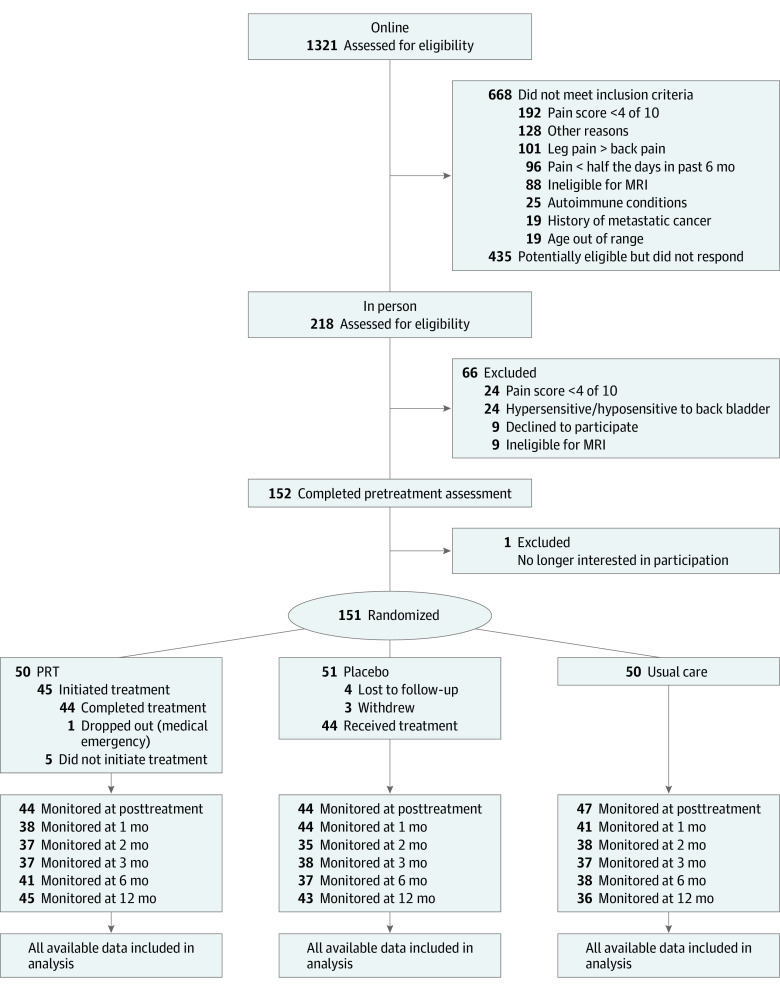
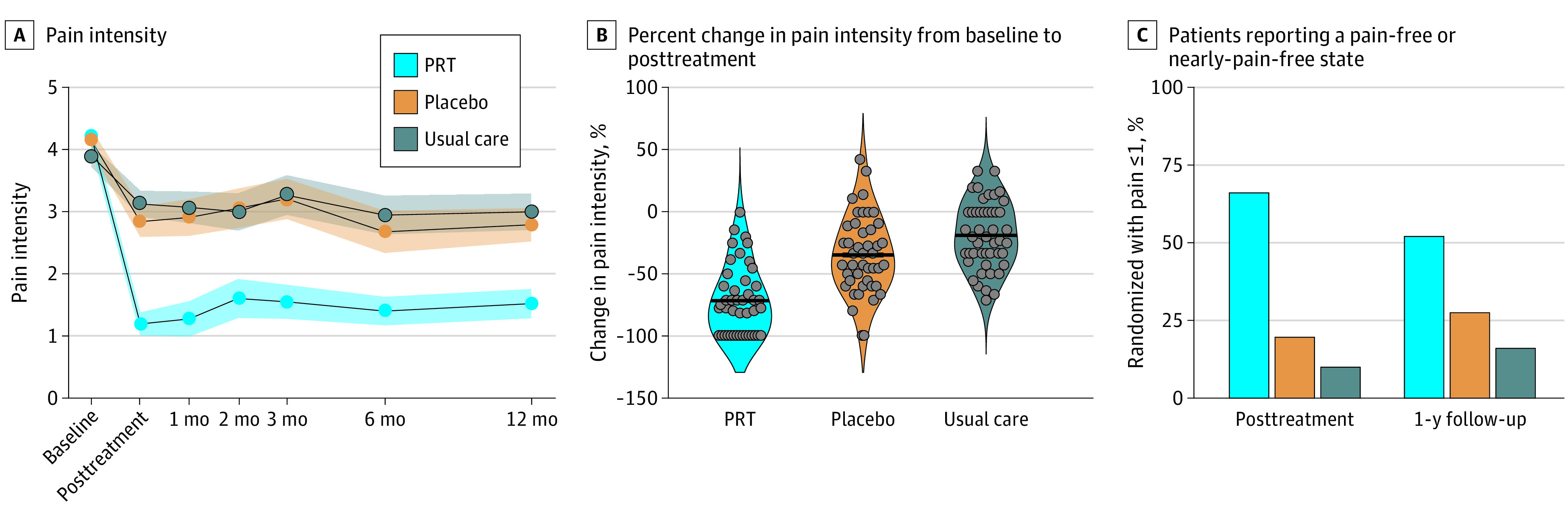
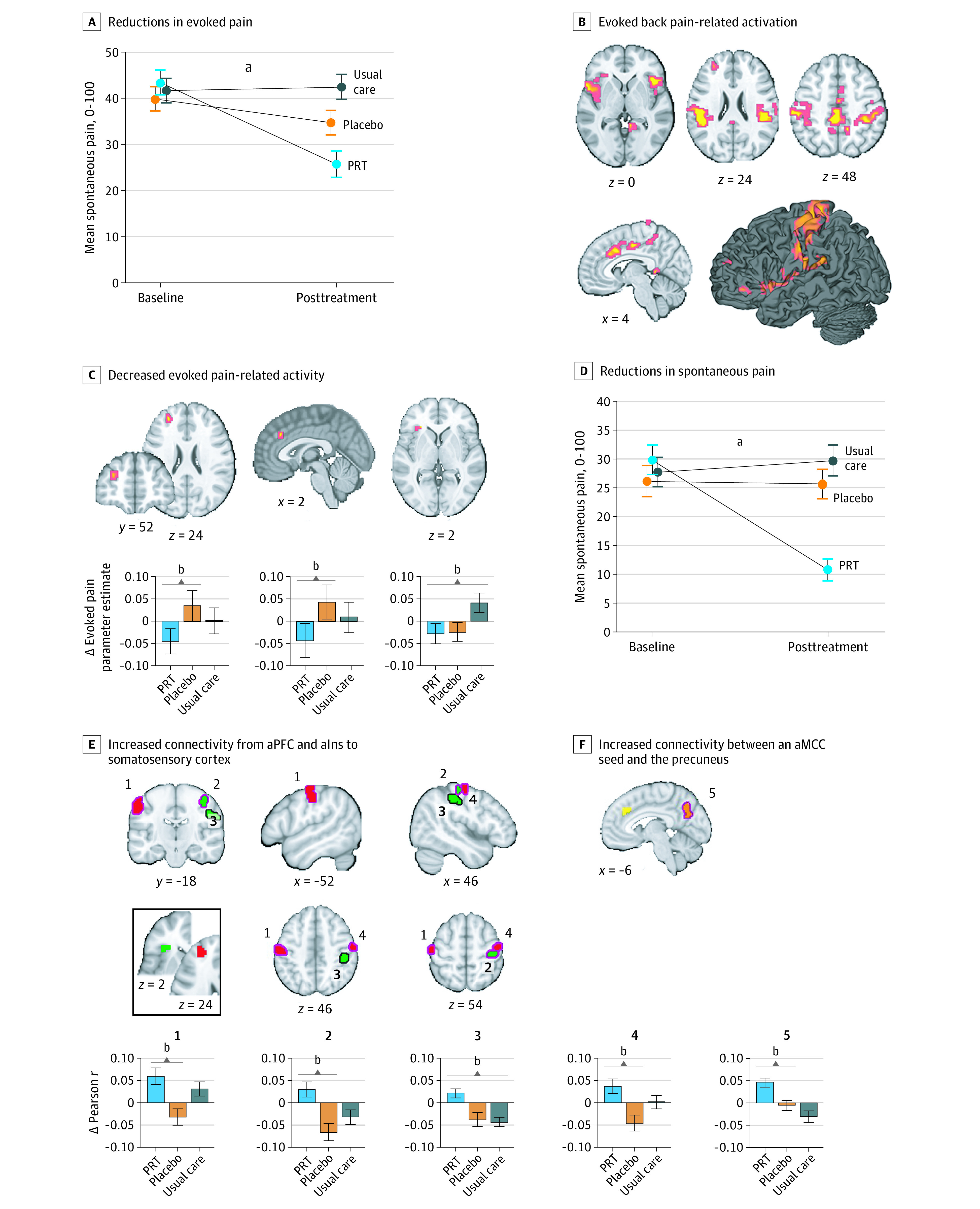
Importance: Chronic back pain (CBP) is a leading cause of disability, and treatment is often ineffective. Approximately 85% of cases are primary CBP, for which peripheral etiology cannot be identified, and maintenance factors include fear, avoidance, and beliefs that pain indicates injury. Objective: To test whether a psychological treatment (pain reprocessing therapy [PRT]) aiming to shift patients' beliefs about the causes and threat value of pain provides substantial and durable pain relief from primary CBP and to investigate treatment mechanisms. Design, Setting, and Participants: This randomized clinical trial with longitudinal functional magnetic resonance imaging (fMRI) and 1-year follow-up assessment was conducted in a university research setting from November 2017 to August 2018, with 1-year follow-up completed by November 2019. Clinical and fMRI data were analyzed from January 2019 to August 2020. The study compared PRT with an open-label placebo treatment and with usual care in a community sample. Interventions: Participants randomized to PRT participated in 1 telehealth session with a physician and 8 psychological treatment sessions over 4 weeks. Treatment aimed to help patients reconceptualize their pain as due to nondangerous brain activity rather than peripheral tissue injury, using a combination of cognitive, somatic, and exposure-based techniques. Participants randomized to placebo received an open-label subcutaneous saline injection in the back; participants randomized to usual care continued their routine, ongoing care. Main Outcomes and Measures: One-week mean back pain intensity score (0 to 10) at posttreatment, pain beliefs, and fMRI measures of evoked pain and resting connectivity. Results: At baseline, 151 adults (54% female; mean [SD] age, 41.1 [15.6] years) reported mean (SD) pain of low to moderate severity (mean [SD] pain intensity, 4.10 [1.26] of 10; mean [SD] disability, 23.34 [10.12] of 100) and mean (SD) pain duration of 10.0 (8.9) years. Large group differences in pain were observed at posttreatment, with a mean (SD) pain score of 1.18 (1.24) in the PRT group, 2.84 (1.64) in the placebo group, and 3.13 (1.45) in the usual care group. Hedges g was -1.14 for PRT vs placebo and -1.74 for PRT vs usual care (P < .001). Of 151 total participants, 33 of 50 participants (66%) randomized to PRT were pain-free or nearly pain-free at posttreatment (reporting a pain intensity score of 0 or 1 of 10), compared with 10 of 51 participants (20%) randomized to placebo and 5 of 50 participants (10%) randomized to usual care. Treatment effects were maintained at 1-year follow-up, with a mean (SD) pain score of 1.51 (1.59) in the PRT group, 2.79 (1.78) in the placebo group, and 3.00 (1.77) in the usual care group. Hedges g was -0.70 for PRT vs placebo (P = .001) and -1.05 for PRT vs usual care (P < .001) at 1-year follow-up. Longitudinal fMRI showed (1) reduced responses to evoked back pain in the anterior midcingulate and the anterior prefrontal cortex for PRT vs placebo; (2) reduced responses in the anterior insula for PRT vs usual care; (3) increased resting connectivity from the anterior prefrontal cortex and the anterior insula to the primary somatosensory cortex for PRT vs both control groups; and (4) increased connectivity from the anterior midcingulate to the precuneus for PRT vs usual care. Conclusions and Relevance: Psychological treatment centered on changing patients' beliefs about the causes and threat value of pain may provide substantial and durable pain relief for people with CBP. Trial Registration: ClinicalTrials.gov Identifier: NCT03294148.
Overview
The claims and statistics of this paper haven’t been checked yet.
Run the check — free, no account needed. It reads the open-access text and checks the sources it cites.
Integrity signals
Registry
Cites
Statistics
Figures
Verification
Claims the paper makes
The claims and statistics of this paper haven’t been checked yet.
Run the check — free, no account needed. It reads the open-access text and checks the sources it cites.
Claims other papers make about this one
Each is checked against this paper’s own text: does it say what the citing paper says it does?
The cited source says what the claim attributes to it.
In the citing paper
“In a study on patients with chronic lower back pain, it produced significant pain relief relative to placebo and usual care, mediated by decreased fear and threat beliefs (Ashar et al., 2022).”
From Listen to your inner body: embodied emotions in predictive neuroscience and traditional East Asian medicine (2026) · cites this paper as Ashar et al., 2022
The cited source says what the claim attributes to it.
In the citing paper
“There are highly successful therapeutic approaches, notably to chronic back pain, that proceed from this insight, engage with catastrophic thinking and give it a positive twist [22].”
From Endometriosis: patient–doctor communication and psychological counselling (2023) · cites this paper as [22]
Self-check
Percentages, sums and reported differences re-computed from the paper’s own numbers.
The self-check needs the paper’s full text.
Citations
Cites
How do you feel — now? The anterior insula and human awareness
(Bud) Craig, A. D. (2009) · Nature Reviews Neuroscience · doi:10.1038/nrn2555 · Cited by 6,657
Adler, N. E., Epel, E. S., Castellazzo, G., & Ickovics, J. R. (2000) · Health Psychology · doi:10.1037/0278-6133.19.6.586 · Cited by 5,080
Central sensitization: implications for the diagnosis and treatment of pain
Woolf, C. J. (2011) · Pain · doi:10.1016/j.pain.2010.09.030 · Cited by 4,771
What low back pain is and why we need to pay attention
Hartvigsen, J., Hancock, M. J., Kongsted, A., Louw, Q., Ferreira, M. L., Genevay, S., Hoy, D., Karppinen, J., Pransky, G., Sieper, J., et al. (2018) · The Lancet · doi:10.1016/s0140-6736(18)30480-x · Cited by 4,652
Prevalence of Chronic Pain and High-Impact Chronic Pain Among Adults — United States, 2016
Dahlhamer, J., Lucas, J., Zelaya, Nahin, R., Mackey, S., DeBar, L., Kerns, R., Von Korff, M., Porter, L., & Helmick, C. (2018) · MMWR. Morbidity and Mortality Weekly Report · doi:10.15585/mmwr.mm6736a2 · Cited by 2,598
Maher, C., Underwood, M., & Buchbinder, R. (2017) · The Lancet · doi:10.1016/s0140-6736(16)30970-9 · Cited by 2,535 · cited 5×
“Techniques included (1) providing personalized evidence for centralized pain; (2) guided reappraisal of pain sensations while seated and while engaging in feared postures or movements; (3) techniques addressing psychosocial threats (eg, difficult emotions) potentially amplifying pain; and (4) techniques to increase po…”
BackgroundMethodInfluentialThe brain basis of emotion: a meta-analytic review
Lindquist, K. A., Wager, T. D., Kober, H., Bliss-Moreau, E., & Barrett, L. F. (2012) · Behavioral and Brain Sciences · doi:10.1017/s0140525x11000446 · Cited by 2,320
Self-citationRELIEVING PAIN IN AMERICA: A BLUEPRINT FOR TRANSFORMING PREVENTION, CARE, EDUCATION, AND RESEARCH
Simon, L. S. (2012) · Journal of Pain & Palliative Care Pharmacotherapy · doi:10.3109/15360288.2012.678473 · Cited by 2,200
Cognitive and emotional control of pain and its disruption in chronic pain
Bushnell, M. C., Čeko, M., & Low, L. A. (2013) · Nature Reviews Neuroscience · doi:10.1038/nrn3516 · Cited by 2,076 · cited 1×
“Full-time (>30 h/wk) 33 (66) 26 (51) 28 (56)”
Interoceptive predictions in the brain
Barrett, L. F., & Simmons, W. K. (2015) · Nature Reviews Neuroscience · doi:10.1038/nrn3950 · Cited by 1,766 · cited 1×
“Part-time (5-30 h/wk) 10 (20) 12 (24) 13 (26)”
Research works printed but not linked: 1
- Schubiner, 2010, Unlearn Your Pain
Cited by
Sorted by citations
Landmark, L., Sunde, H. F., Fors, E. A., Kennair, L. E. O., Sayadian, A., Backelin, C., & Rème, S. E. (2024) · Scientific Reports · doi:10.1038/s41598-024-64059-8 · Cited by 99
Sherriff, B., Clark, C., Killingback, C., & Newell, D. (2022) · Chiropractic & Manual Therapies · doi:10.1186/s12998-022-00430-8 · Cited by 82
An update on non-pharmacological interventions for pain relief
Wang, Y., Aaron, R. V., Attal, N., & Colloca, L. (2025) · Cell Reports Medicine · doi:10.1016/j.xcrm.2025.101940 · Cited by 109
Clauw, D. J. (2024) · Annals of the Rheumatic Diseases · doi:10.1136/ard-2023-225327 · Cited by 80
“64 Interest-ingly, in one study of EAET, the individuals who responded best to this approach had relatively normal QST profiles 63 suggesting that there are likely many endophenotypes of nociplastic pain.”
BackgroundIntersectionality as a theoretical framework for researching health inequities in chronic pain
Macgregor, C., Walumbe, J., Tulle, E., Seenan, C., & Blane, D. (2023) · British Journal of Pain · doi:10.1177/20494637231188583 · Cited by 73
Effect sizes and test-retest reliability of the fMRI-based neurologic pain signature
Han, X., Ashar, Y. K., Kragel, P. A., Petre, B., Schelkun, V., Atlas, L. Y., Chang, L. J., Jepma, M., Koban, L., Losin, E. A. R., et al. (2021) · NeuroImage · doi:10.1016/j.neuroimage.2021.118844 · Cited by 63
Self-citationThe Relationship Between Pain and Interoception: A Systematic Review and Meta-Analysis
Horsburgh, A., Summers, S. J., Lewis, A., Keegan, R. J., & Flood, A. P. (2024) · Journal of Pain · doi:10.1016/j.jpain.2024.01.341 · Cited by 72
Yarns, B. C., JACKSON, N. J., Alas, A., Melrose, R. J., Lumley, M. A., & Sultzer, D. L. (2024) · JAMA Network Open · doi:10.1001/jamanetworkopen.2024.15842 · Cited by 60
Self-citationClinical pain management: Current practice and recent innovations in research
Wang, J., & Doan, L. (2024) · Cell Reports Medicine · doi:10.1016/j.xcrm.2024.101786 · Cited by 74
Diagnosis of autism spectrum disorder based on functional brain networks and machine learning
Alves, C. L., Toutain, T. G. L. D. O., Aguiar, P. D. C., Pineda, A. M., Roster, K. I. O., Thielemann, C., Porto, J. A. M., & Rodrigues, F. A. (2023) · Scientific Reports · doi:10.1038/s41598-023-34650-6 · Cited by 65
Botvinik‐Nezer, R., Petre, B., Čeko, M., Lindquist, M. A., Friedman, N. P., & Wager, T. D. (2024) · Nature Communications · doi:10.1038/s41467-024-50103-8 · Cited by 50
Self-citationLöffler, M., Levine, S. M., Usai, K., Desch, S., Mišić, M., Nees, F., & Flor, H. (2022) · Cell Reports Medicine · doi:10.1016/j.xcrm.2022.100677 · Cited by 45
“Increasing the variability of behavioral responses and fostering explorative behavior may be a valuable treatment target in patients with chronic pain.45 Behavioral treatments targeting operant-learning mechanisms are available,46,47 and Ashar et al.48 showed that brain connectivity patterns may predict successful cog…”
BackgroundHohenschurz‐Schmidt, D., Draper‐Rodi, J., Vase, L., Scott, W., McGregor, A. H., Soliman, N., MacMillan, A., Olivier, A., Cherian, C. A., Corcoran, D., et al. (2022) · Pain · doi:10.1097/j.pain.0000000000002723 · Cited by 50
Busse, J. W., Genevay, S., Agarwal, A., Standaert, C. J., Carneiro, K. A., Friedrich, J. M., Ferreira, M. M., Verbeke, H., Brox, J. I., Xiao, H., et al. (2025) · BMJ · doi:10.1136/bmj-2024-079970 · Cited by 44
Castro, J., Correia, L. C. L., Donato, B. D. S., Arruda, B., Agulhari, F., Pellegrini, M. J., Belache, F. T. C., de Souza, C. P., Fernandez, J., Nogueira, L. A. C., et al. (2022) · Pain · doi:10.1097/j.pain.0000000000002644 · Cited by 46
Maroti, D., Lumley, M. A., Schubiner, H., Lilliengren, P., Bileviciute-Ljungar, I., Ljótsson, B., & Johansson, R. (2022) · Journal of Psychosomatic Research · doi:10.1016/j.jpsychores.2022.111068 · Cited by 40
Self-citationCashin, A. G., Lee, H., Wand, B. M., Bagg, M. K., O’Hagan, E. T., Rizzo, R. R. N., Stanton, T. R., Moseley, G. L., & McAuley, J. H. (2023) · Pain · doi:10.1097/j.pain.0000000000002978 · Cited by 41
Nociplastic Pain: A Critical Paradigm for Multidisciplinary Recognition and Management
Ablin, J. N. (2024) · Journal of Clinical Medicine · doi:10.3390/jcm13195741 · Cited by 45
“PRT, which focuses on retraining the brain to reinterpret pain signals, has shown promise in reducing the severity of nociplastic pain [56].”
BackgroundManagement of Psychological Complications Following Mild Traumatic Brain Injury
Silverberg, N. D., & Mikolić, A. (2023) · Current Neurology and Neuroscience Reports · doi:10.1007/s11910-023-01251-9 · Cited by 39
Rizzo, R. R. N., Cashin, A. G., Wand, B. M., Ferraro, M. C., Sharma, S., Lee, H., O’Hagan, E. T., Maher, C. G., Furlan, A. D., van Tulder, M. W., et al. (2025) · Cochrane Database of Systematic Reviews · doi:10.1002/14651858.cd014691.pub2 · Cited by 54
Sullivan, M. D., Sturgeon, J. A., Lumley, M. A., & Ballantyne, J. C. (2022) · Pain · doi:10.1097/j.pain.0000000000002748 · Cited by 37
Self-citationRyan, C. G., Karran, E. L., Wallwork, S. B., Pate, J. W., O’Keeffe, M., Fullen, B. M., Livadas, N., Jones, N., Toumbourou, J. W., Gilchrist, P. N., et al. (2023) · Journal of Pain · doi:10.1016/j.jpain.2023.10.024 · Cited by 39
Vase, L., Wager, T. D., & Eccleston, C. (2025) · The Lancet · doi:10.1016/s0140-6736(25)00404-0 · Cited by 42
Self-citationJenkins, H. J., Corrêa, L. A., Brown, B. T., Ferreira, G. E., Nim, C. G., Aspinall, S. L., Wareham, D. M., Choi, J., Maher, C. G., & Hancock, M. J. (2025) · The Lancet Rheumatology · doi:10.1016/s2665-9913(25)00064-5 · Cited by 38
Zhang, W., Singh, S. P., Clement, A., Calfee, R. P., Bijsterbosch, J. D., & Cheng, A. L. (2023) · JAMA Network Open · doi:10.1001/jamanetworkopen.2023.20520 · Cited by 31
Schmidt, H., Drusko, A., Renz, M. P., Schlömp, L., Tost, H., Schuh‐Hofer, S., Tesarz, J., Meyer‐Lindenberg, A., & Treede, R. (2024) · Pain · doi:10.1097/j.pain.0000000000003355 · Cited by 40
“5,6,31,62,71 Future studies should distinguish between signs of top–down (cortical or brainstem) and bottom–up (spinal) types of central sensitization 58 and should not be restricted to chronic primary pain.”
Complex Persistent Opioid Dependence—an Opioid-induced Chronic Pain Syndrome
Manhapra, A. (2022) · Current Treatment Options in Oncology · doi:10.1007/s11864-022-00985-x · Cited by 31
Open-Label Placebo Injection for Chronic Back Pain With Functional Neuroimaging
Ashar, Y. K., Sun, M. M. C., Knight, K., Flood, T. F., Anderson, Z. G., Kaptchuk, T. J., & Wager, T. D. (2024) · JAMA Network Open · doi:10.1001/jamanetworkopen.2024.32427 · Cited by 33
Self-citationHohenschurz‐Schmidt, D., Phalip, J., Chan, J., Gauhe, G., Soliman, N., Vollert, J., Lunde, S. J., & Vase, L. (2023) · European Journal of Pain · doi:10.1002/ejp.2205 · Cited by 32
“…immediately or within 4 weeks after the end of the treatment period (‘short term’), only seven sampled follow-up data 4–12 weeks later (‘medium term’) (Ashar et al., 2022; Chaibi et al., 2017; Ince et al., 2023; Loose et al., 2021; Moraska et al., 2017; Ozgul et al., 2023; Schmidt et al., 2011),…”
BackgroundMethodInfluentialReattribution to Mind-Brain Processes and Recovery From Chronic Back Pain
Ashar, Y. K., Lumley, M. A., Perlis, R. H., Liston, C. M., Gunning, F. M., & Wager, T. D. (2023) · JAMA Network Open · doi:10.1001/jamanetworkopen.2023.33846 · Cited by 32
Self-citationČeko, M., Baeuerle, T., Webster, L. R., Wager, T. D., & Lumley, M. A. (2024) · Pain · doi:10.1097/j.pain.0000000000003198 · Cited by 28
“4,51,97 Consistent with these newer models, VRNT explicitly teaches participants about the reversibility of the central neuroplastic changes associated with pain chronifica-tion.”
InfluentialSelf-citationExercise for rotator cuff tendinopathy: Proposed mechanisms of recovery
Vila-Dieguez, O., Heindel, M. D., Awokuse, D., Kulig, K., & Michener, L. A. (2023) · Shoulder & Elbow · doi:10.1177/17585732231172166 · Cited by 29
Schubiner, H. H., Jackson, B. M., Molina, K. M., Sturgeon, J. A., Sealy-Jefferson, S. M., Lumley, M. A., Jolly, J., & Trost, Z. (2023) · Journal of General Internal Medicine · doi:10.1007/s11606-022-08015-0 · Cited by 31
“However, more innovative psychological approaches, 32,59,60 such as emotional awareness and expression therapy 32,60 and pain reprocessing therapy, 61 specifically target psychosocial trauma or factors that activate the pain danger alarm, and show promise for greater pain reduction.”
Self-citationBallantyne, J. C., & Sullivan, M. D. (2022) · Journal of Pain · doi:10.1016/j.jpain.2022.05.001 · Cited by 25
Tankha, H., Lumley, M. A., Gordon, A., Schubiner, H. H., Uipi, C., Harris, J., Wager, T. D., & Ashar, Y. K. (2023) · Journal of Pain · doi:10.1016/j.jpain.2023.04.006 · Cited by 25
Self-citationPedersen, J. R., Strijkers, R., Gerger, H., Koes, B. W., & Chiarotto, A. (2024) · Pain · doi:10.1097/j.pain.0000000000003151 · Cited by 24
Rehabilitation of Neuropsychiatric Symptoms in Patients With Long COVID: Position Statement
Sacks-Zimmerman, A. L., Bergquist, T. F., Farr, E. M., Cornwell, M. A., & Kanellopoulos, D. (2022) · Archives of Physical Medicine and Rehabilitation · doi:10.1016/j.apmr.2022.10.001 · Cited by 24
“participants assigned to pain reprocessing therapy (a form of CBT) had significantly improved sleep, as well as reduced disability, pain, depression, and anger, in comparison with matched controls assigned to a placebo condition.(41) Further, pain reprocessing therapy−related symptom improvements were associated with…”
BackgroundResultRizzo, R. R. N., Wand, B. M., Leake, H. B., O’Hagan, E. T., Bagg, M. K., Bunzli, S., Traeger, A. C., Gustin, S. M., Moseley, G. L., Sharma, S., et al. (2022) · Journal of Pain · doi:10.1016/j.jpain.2022.12.009 · Cited by 32
Bonnheim, N. B., Lazar, A. A., Kumar, A., Akkaya, Z., Zhou, J., Guo, X., O’Neill, C. N., Link, T. M., Lotz, J. C., Krug, R., et al. (2023) · European Spine Journal · doi:10.1007/s00586-023-07542-6 · Cited by 24
Cognitive Behavioral Therapy for Insomnia in Pain Management for Nonspecific Chronic Spinal Pain
Malfliet, A., Baets, L. D., Bilterys, T., Looveren, E. V., Maîresse, O., Cagnie, B. J., Meeus, M., Moens, M., Goubert, D., Munneke, W., et al. (2024) · JAMA Network Open · doi:10.1001/jamanetworkopen.2024.25856 · Cited by 26
Díez, G. G., Anitua, E., Castellanos, N. P., Vázquez, C., Galindo‐Villardón, P., & Alkhraisat, M. H. (2022) · PLoS ONE · doi:10.1371/journal.pone.0276734 · Cited by 27
Adjunctive use of hypnosis for clinical pain: a systematic review and meta-analysis
Jones, H. G., Rizzo, R. R. N., Pulling, B. W., Braithwaite, F. A., Grant, A. R., McAuley, J. H., Jensen, M. P., Moseley, G. L., Rees, A., & Stanton, T. R. (2024) · PAIN Reports · doi:10.1097/pr9.0000000000001185 · Cited by 21
Fendel, J. C., Tiersch, C., Sölder, P., Gaab, J., & Schmidt, S. (2025) · Scientific Reports · doi:10.1038/s41598-025-14895-z · Cited by 21
“Clinical trials investigated OLP effects on allergic rhinitis 39,41,47,57,84 , chronic low-back pain 27,33,81,85 , and major depressive disorder 48,87,99 .”
Schubiner, H. H., Lowry, W. J., Heule, M., Ashar, Y. K., Lim, M., Mekaru, S., Kitts, T., & Lumley, M. A. (2023) · Journal of Pain · doi:10.1016/j.jpain.2023.09.019 · Cited by 21
Self-citationExploring electroencephalographic chronic pain biomarkers: a mega-analysis
Bott, F. S., Zebhauser, P. T., Hohn, V. D., Turgut, Ö., May, E. S., Tiemann, L., Ávila, C. G., Heitmann, H., Nickel, M. M., Day, M. A., et al. (2025) · EBioMedicine · doi:10.1016/j.ebiom.2025.105955 · Cited by 29
Self-citationPain Reprocessing Therapy vs Placebo and Usual Care for Patients With Chronic Back Pain
Ashar, Y. K., Low, E. L., Knight, K., Schubiner, H. H., Gordon, A., Leroux, A., Lumley, M. A., & Wager, T. D. (2025) · JAMA Psychiatry · doi:10.1001/jamapsychiatry.2025.1844 · Cited by 18
Self-citationA Systematic Review of Pain Catastrophizing and Chronic Musculoskeletal Pain
Shimada, S., Doorenbos, A. Z., Goldstein, E., & Wi, D. (2025) · Pain Management Nursing · doi:10.1016/j.pmn.2025.07.014 · Cited by 18
“Finally, four studies (Ashar et al., 2022; Čeko et al., 2024; Day et al., 2020; Kong et al., 2020) evaluated the correlation between pain intensity and pain catastrophizing, but none reported significant correlations.”
Nelson, S., Agoston, M., Kovar-Gough, I., & Cunningham, N. R. (2021) · Journal of Pediatric Psychology · doi:10.1093/jpepsy/jsab127 · Cited by 18
Parolini, F. C. S., Goethel, M. F., Becker, K. M., Fernandes, C., Fernandes, R. J., Ervilha, U. F., Santos, R. S., & Vilas‐Boas, J. P. (2023) · Biomedicines · doi:10.3390/biomedicines11072042 · Cited by 19
“Conversely, chronic pain can also have a profound impact on mental well-being, leading to increased levels of psychological distress and impairment [6].”
BackgroundLim, T. H., Mak, H. Y., Ngai, S. M. M., Man, Y. T., Tang, C. H., Wong, A. Y. L., Bussières, A., & Zoubi, F. A. (2024) · Journal of Orthopaedic and Sports Physical Therapy · doi:10.2519/jospt.2024.12729 · Cited by 19
Leake, H. B., Moseley, G. L., Murphy, L. K., Murray, C. B., Palermo, T. M., & Heathcote, L. C. (2022) · European Journal of Pain · doi:10.1002/ejp.2069 · Cited by 16
“Children (8– 12 years) with chronic pain describe pain not only in terms of injuries (Pate et al., 2019), but they also acknowledge that pain can be felt even after an injury heals (Ashar et al., 2021; Pate et al., 2020), although it is unclear if they apply that logic to their own pain condition.”
BackgroundMardon, A. K., Chalmers, J., Heathcote, L. C., Curtis, L.-A., Freedman, L., Malani, R., Parker, R., Neumann, P., Moseley, G. L., & Leake, H. B. (2024) · Pain · doi:10.1097/j.pain.0000000000003205 · Cited by 20
Spinoni, M., Porpora, M. G., Muzii, L., & Grano, C. (2024) · Journal of Pain · doi:10.1016/j.jpain.2024.104640 · Cited by 19
García‐Domínguez, M. (2024) · Frontiers in Aging · doi:10.3389/fragi.2024.1477017 · Cited by 18
Enhancement of glymphatic function and cognition in chronic insomnia using low-frequency rTMS
Zhang, C., Zheng, Y., Jiang, G., Luo, J., Su, L., Ai, Y., Feng, C., Li, C., Li, S., & Hu, X. (2025) · SLEEP · doi:10.1093/sleep/zsaf083 · Cited by 15
Moseley, G. L., Mardon, A. K., Watson, J., BRAITHWAITE, F., Wilson, M. V., Barker, T., Lawrence, J., Sheppard, D. M., Reneman, M. F., Stinson, J., et al. (2025) · Frontiers in Pain Research · doi:10.3389/fpain.2025.1536112 · Cited by 19
Xia, Y., Sun, R., Li, R., Ren, L., Wang, Y., & Fang, J. (2022) · Journal of Pain Research · doi:10.2147/jpr.s374564 · Cited by 16
Flor, H., Noguchi, K., Treede, R., & Turk, D. C. (2023) · Pain · doi:10.1097/j.pain.0000000000003063 · Cited by 16
Practical approaches for clinicians in chronic pain management: Strategies and solutions
Sturgeon, J. A., Cooley, C., & Minhas, D. (2024) · Best Practice & Research Clinical Rheumatology · doi:10.1016/j.berh.2024.101934 · Cited by 21
Kovacs, F. M., Burgos‐Alonso, N., Nogueras, A. M. M., & Seco‐Calvo, J. (2022) · International Journal of Environmental Research and Public Health · doi:10.3390/ijerph19020825 · Cited by 18
“These results are generally consistent with those from studies conducted in other cultural settings [56,57].”
ResultRam, A., Booth, J., Thom, J. M., Gibbs, M. T., & Jones, M. D. (2022) · Clinical Journal of Pain · doi:10.1097/ajp.0000000000001086 · Cited by 16
Expectancies and avoidance: Towards an integrated model of chronic somatic symptoms
Nadinda, P. G., van Laarhoven, A. I. M., Van den Bergh, O., Vlaeyen, J. W. S., Peters, M. L., & Evers, A. W. M. (2024) · Neuroscience & Biobehavioral Reviews · doi:10.1016/j.neubiorev.2024.105808 · Cited by 15
Yang, C., Yu, Z., Li, G., Li, C., & Li, C. (2024) · World Neurosurgery · doi:10.1016/j.wneu.2024.01.138 · Cited by 16
Phenotyping Pain in Patients With Fibrous Dysplasia/McCune-Albright Syndrome
Golden, E., van der Heijden, H. C., Ren, B., Randall, E. T., Drubach, L. A., Shah, N. A., Cay, M., Ebb, D. H., Kaban, L. B., Peacock, Z. S., et al. (2023) · The Journal of Clinical Endocrinology & Metabolism · doi:10.1210/clinem/dgad589 · Cited by 14
Dynamic processes of mindfulness-based alterations in pain perception
Chen, L., Moliadze, V., & Nees, F. (2023) · Frontiers in Neuroscience · doi:10.3389/fnins.2023.1253559 · Cited by 13
Jurewicz, A., Gąsiorowska, A., Leźnicka, K., Pawlak, M., Sochacka, M., Machoy‐Mokrzyńska, A., Bohatyrewicz, A., Maciejewska, A., & Pawlus, G. (2024) · Life · doi:10.3390/life14020211 · Cited by 14
“Psychological treatment aimed at changing patients’ beliefs about the causes and threat value of pain can lead to significant and lasting pain relief in people with chronic low back pain [57].”
BackgroundAn overview of the non‐procedural treatment options for peripheral neuropathic pain
Zeldin, E. R., Goddard, A. R., Boyle, M. S., Madathil, R. L., Rosenvall, E., Majithia, K. A., & Morrison, E. (2024) · Muscle & Nerve · doi:10.1002/mus.28286 · Cited by 14
“93 Of note, PRT has been studied primarily in the treatment of back pain, though initial findings are promising.”
An exploration of knowledge‐organizing technologies to advance transdisciplinary back pain research
Lotz, J. C., Ropella, G. E. P., Anderson, P., Yang, Q., Hedderich, M. A., Bailey, J. F., & Hunt, C. A. (2023) · JOR Spine · doi:10.1002/jsp2.1300 · Cited by 13
Thomson, C. J., Pahl, H., & Giles, L. V. (2024) · Canadian Journal of Pain · doi:10.1080/24740527.2024.2352399 · Cited by 13
“Though not preplanned, we carried out exploratory correlation and mediation analyses to determine whether changes in pain catastrophizing contribute to any observed changes in pain severity and interference (informed by findings from Ashar et al. 13 )”
BackgroundMethodResultInfluentialZhang, C., Zhang, Z., Li, Y., Yi, Y. I. N., Feng, C., Wenfeng, Z. H. A. N., Fu, R., Yu, Q., Jiang, G., & Wang, C. (2024) · European Journal of Physical and Rehabilitation Medicine · doi:10.23736/s1973-9087.24.08087-0 · Cited by 14
“24, 27 for the primary clinical outcome, the percentage of participants with a pain-free or nearly pain-free state (VAS score ≤1) 24 was also calculated post-intervention and at the 6-month follow-up. the difference in percentage between groups was analyzed using the Chi-square or Fisher’s Exact…”
Psychophysiologic Symptom Relief Therapy for Post-Acute Sequelae of Coronavirus Disease 2019
Donnino, M. W., Howard, P., Mehta, S. M., Silverman, J. M., Cabrera, M. J., Yamin, J. B., Balaji, L., Berg, K. M., Heydrick, S. J., Edwards, R. R., et al. (2023) · Mayo Clinic Proceedings Innovations Quality & Outcomes · doi:10.1016/j.mayocpiqo.2023.05.002 · Cited by 12
Sean, M., Coulombe-Lévêque, A., Nadeau, W., Charest, A.-C., Martel, M., Léonard, G., & Tétreault, P. (2024) · PAIN Reports · doi:10.1097/pr9.0000000000001157 · Cited by 11
“2,7,25 It is therefore possible that two questionnaires will show different RTM for the same subject over the same time period.”
BackgroundEndometriosis: patient–doctor communication and psychological counselling
Wischmann, T., & Ditzen, B. (2023) · Archives of Gynecology and Obstetrics · doi:10.1007/s00404-023-07292-2 · Cited by 11
Murillo, C., López‐Solà, M., Cagnie, B. J., Suñol, M., Smeets, R., Coppieters, I., Cnockaert, E., Meeus, M., & Timmers, I. (2024) · Journal of Pain · doi:10.1016/j.jpain.2024.01.336 · Cited by 12
Poublan‐Couzardot, A., & Talmi, D. (2024) · Annals of the New York Academy of Sciences · doi:10.1111/nyas.15141 · Cited by 14
Russo, M. A., Nevitt, S. J., Santarelli, D. M., Eldabe, S. S., & Duarte, R. V. (2025) · Pain Medicine · doi:10.1093/pm/pnaf004 · Cited by 12
Mind-body approaches for reducing the need for post-operative opioids: Evidence and opportunities
Pester, B., Edwards, R. R., Martel, M. O., Gilligan, C. J., & Meints, S. M. (2023) · Journal of Clinical Anesthesia and Intensive Care · doi:10.46439/anesthesia.3.016 · Cited by 9
“Recently published trials of mind-body treatments often utilize interventions that blend components from multiple therapeutic orientations, including CBT, ACT, Pain Neuroscience Education, and Emotional Awareness and Expression Therapy (for example, see [57]).”
BackgroundMoffat, A. K., Apajee, J., Blanc, V. T. L., Westaway, K., Andrade, A. Q. D., Ramsay, E. N., Blacker, N., Pratt, N. L., & Roughead, E. E. (2023) · BMJ Quality & Safety · doi:10.1136/bmjqs-2022-015716 · Cited by 10
Cognitive, behavioral, and psychological phenotypes in small fiber neuropathy: A case–control study
Telesca, A., Soldini, E., Devigili, G., Cazzato, D., Bella, E. D., Grazzi, L., Usai, S., Lauria, G., & Consonni, M. (2024) · Cortex · doi:10.1016/j.cortex.2024.01.012 · Cited by 10
Interstitial cystitis—an imbalance of risk and protective factors?
Westropp, J. L., Stella, J. L., & Buffington, C. A. T. (2024) · Frontiers in Pain Research · doi:10.3389/fpain.2024.1405488 · Cited by 11
Merino, M., del Barrio, J., Nuño-Solínis, R., & Rodríguez, M. E. (2024) · Digital Health · doi:10.1177/20552076241277438 · Cited by 16
Anselmo, A., Pagano, M. C., Cappadona, I., Cardile, D., Calabrò, R. S., & Corallo, F. (2025) · Current Pain and Headache Reports · doi:10.1007/s11916-024-01340-5 · Cited by 12
Joyce, C. T., Kelly, K. C., Gurnani, S. D., Sherman, K. J., Roseen, E. J., & Saper, R. B. (2022) · Journal of Integrative and Complementary Medicine · doi:10.1089/jicm.2022.0557 · Cited by 12
Localizing somatic symptoms associated with childhood maltreatment
Dutcher, E. G., Verosky, S. C., Mendes, W. B., & Mayer, S. E. (2024) · Proceedings of the National Academy of Sciences · doi:10.1073/pnas.2318128121 · Cited by 9
“For example, psychotherapeutic approaches such as pain reprocessing therapy, which emphasizes reappraisal of primary chronic back pain as due to benign central nervous processes, may be useful (57).”
BackgroundChronic Pain in Older Adults: A Neuroscience-Based Psychological Assessment and Treatment Approach
Yarns, B. C., Zhu, T. A., & Jazi, A. N. (2022) · American Journal of Geriatric Psychiatry · doi:10.1016/j.jagp.2022.07.009 · Cited by 9
McGirt, M. J., Holland, C. M., Farber, S. H., Zuckerman, S. L., Spertus, M. S., Theodore, N., Pfortmiller, D. T., & Stanley, G. (2023) · North American Spine Society Journal (NASSJ) · doi:10.1016/j.xnsj.2023.100287 · Cited by 12
Ballejos, K. G., Calvetti, P. Ü., Schaab, B. L., & Reppold, C. T. (2023) · Frontiers in Psychology · doi:10.3389/fpsyg.2023.1270287 · Cited by 9
“Previous studies suggested that self-compassion may contribute to the reduction of anger, helplessness, catastrophizing, anxiety, fear, increased acceptance, and changes pain beliefs in individuals with low back pain (Sirois et al., 2015; Torrijos-Zarcero et al., 2021; Ashar et al., 2022).”
BackgroundMind over chronic pain: A meta-analysis of cognitive restructuring in chronically ill adults
Pintea, S., & Maier, P. (2024) · Journal of Psychosomatic Research · doi:10.1016/j.jpsychores.2024.111837 · Cited by 8
Clark, A. (2024) · Entropy · doi:10.3390/e26080677 · Cited by 10
“There is some solid emerging evidence (in the form of randomized clinical trials) for the efficacy of PRT [60,61].”
BackgroundRamne, M., & Sensinger, J. W. (2024) · PLoS Computational Biology · doi:10.1371/journal.pcbi.1012097 · Cited by 7
Yin, X., Zeng, X., Lin, J., Xu, W., Cui, K.-Y., Guo, X., Li, W., & Xu, S. (2025) · Journal of Chinese Integrative Medicine · doi:10.1016/j.joim.2025.01.006 · Cited by 8
Key aspects concerning the role of emotion in the chronic pain experience
Boersma, K., & Flink, I. K. (2025) · Current Opinion in Psychology · doi:10.1016/j.copsyc.2025.102000 · Cited by 11
Dhanaraj, V., Rolfe, N. W., Dadario, N. B., Dhaliwal, J. K., Samuel, N., Hormovas, J., Young, I. M., Odonkor, C. A., Yeung, J. T., Teo, C., et al. (2025) · Brain Communications · doi:10.1093/braincomms/fcaf343 · Cited by 9
Yarns, B. C., Molaie, A. M., Lumley, M. A., Zhu, T. A., Jazi, A. N., Ganz, D. A., & Melrose, R. J. (2022) · Clinical Gerontologist · doi:10.1080/07317115.2022.2159909 · Cited by 8
Self-citationNoziplastischer Schmerz in Forschung und Praxis
Schmidt, H., & Blechschmidt, V. (2023) · Der Schmerz · doi:10.1007/s00482-023-00734-5 · Cited by 9
Group eye movement desensitization and reprocessing (EMDR) in chronic pain patients
Vock, S., Delker, A., Rinderknecht, J., Engel, F., Wieland, S., Beiner, E., Friederich, H., Jarero, I., Seidler, G. H., & Tesarz, J. (2024) · Frontiers in Psychology · doi:10.3389/fpsyg.2024.1264807 · Cited by 8
A systematic review and meta analysis of open label placebo effects in chronic musculoskeletal pain
Borg, F., Gedin, F., Franzén, E., & Grooten, W. J. A. (2025) · Scientific Reports · doi:10.1038/s41598-025-09415-y · Cited by 7
Sturgeon, J. A., Trost, Z., Ashar, Y. K., Lumley, M. A., Schubiner, H. H., Clauw, D. J., & Hassett, A. L. (2025) · Regional Anesthesia & Pain Medicine · doi:10.1136/rapm-2025-107076 · Cited by 7
Self-citationDynamic segmental kinematics of the lumbar spine during diagnostic movements
McMullin, P., Emmett, D., Gibbons, A., Clingo, K. A., Higbee, P., Sykes, A., Fullwood, D. T., Mitchell, U. H., & Bowden, A. E. (2023) · Frontiers in Bioengineering and Biotechnology · doi:10.3389/fbioe.2023.1209472 · Cited by 7
“The widespread adoption of the biopsychosocial model of cLBP has supported nonmechanical diagnostic and treatment advancements, but even the best results of psychotherapies show effectiveness in only up to 50% of subjects with nonspecific cLBP (Ashar et al., 2022).”
BackgroundStrigo, I. A., Guerra, S. G., Torrisi, S., Murphy, E., Toor, T., Goldman, V. M., Alter, B. J., Vu, A. T., Hecht, R., Lotz, J. C., et al. (2024) · Frontiers in Pain Research · doi:10.3389/fpain.2024.1408027 · Cited by 7
Metadata
- Authors
- Ashar, Y. K., Gordon, A., Schubiner, H., Uipi, C., Knight, K., Anderson, Z., Carlisle, J., Polisky, L., Geuter, S., Flood, T. F., Kragel, P. A., Dimidjian, S., Lumley, M. A., & Wager, T. D.
- Affiliations
- University of Colorado Boulder (US)
- Pain Psychology Center, Los Angeles, California
- Ascension Providence Hospital (US)
- Panorama Orthopedics and Spine Center, Golden, Colorado
- Northwestern University (US)
- Johns Hopkins University (US)
- Brigham and Women's Hospital (US)
- Emory University (US)
- Wayne State University (US)
- Dartmouth College (US)
- Corresponding author
- Ashar, Yoni K.
- Wager, Tor D.
- ORCID
- Venue
- JAMA Psychiatry
- Publisher
- American Medical Association (AMA)
- Published
- 2022-01-01
- Volume
- 79
- Issue
- 1
- Pages
- 13
- ISSN
- 2168-622X (ISSN-L)
- PMC
- PMC8482298
- OpenAlex
- W3204387157
- Cited by
- 331
- References
- 82
- Citations by year
- 2026: 87 · 2025: 80 · 2024: 85 · 2023: 45 · 2022: 32
- FWCI
- 23.94
- Type
- journal article
- Language
- en
- Open access
- hybrid
- doi.org
- Licence
- cc-by
- Locations
- JAMA Psychiatry (publishedVersion, cc-by)
- PubMed Central (publishedVersion, cc-by)
- PubMed (publishedVersion)
- Funders
- Deutsche Forschungsgemeinschaft
- National Institutes of Health (TL1TR002386)
- National Institute of Mental Health (R01MH076136)
- National Institute on Drug Abuse (R01DA035484)
- National Center for Advancing Translational Sciences
- Topics
- Health Sciences › Health Professions › Physical Therapy, Sports Therapy and Rehabilitation › Musculoskeletal pain and rehabilitation
- Health Sciences › Medicine › Anesthesiology and Pain Medicine › Pain Management and Treatment
- Life Sciences › Neuroscience › Cognitive Neuroscience › Pain Management and Placebo Effect
- Keywords
- chronic back pain, pain beliefs, fear avoidance, placebo effect, psychological intervention, telemedicine, evoked pain, resting-state functional connectivity, therapeutic mechanisms, pain intensity, disability, treatment durability, fear-avoidance beliefs, pain catastrophizing, pain-related guilt, pain-related shame, pain-related hopelessness
- MeSH terms
- Adult, Back Pain, Disability Evaluation, Female, Humans, Male, Middle Aged, Pain, Treatment Outcome, Pain Management
About these checks
Registry, retraction, Cites and statistics results are computed, not judged, with one exception: a printed reference that no index lists is read once by a model before it counts as a citation error. Claims are extracted by a model and kept only when their quote appears verbatim in the text; each cited source is then checked, with a model’s help, for whether it says what the claim relies on. Those verdicts can be wrong — read the claim’s quote and the cited source before relying on one.
Statistics and arithmetic are recomputed, not judged.
Confidence bands are shown only for fields calibrated on our annotated test set. None is calibrated yet, so no band is shown.
What counts as a claim ›How we measure confidence ›How we check this ›
Are you an author, or do you see a problem with this page? Request a review
