

The DOI matches its Crossref record; 91 of the 91 references it cites were found in a registry or an index.
Computational approaches for interpreting sc RNA‐seq data
Open accessAbstract
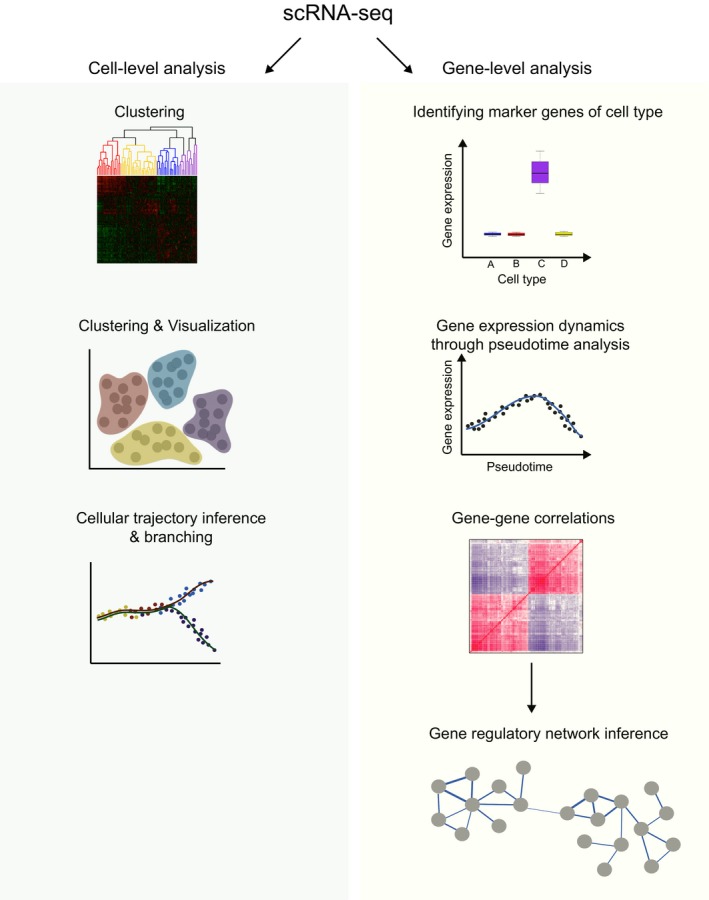
The recent developments in high‐throughput single‐cell RNA sequencing technology (sc RNA‐seq) have enabled the generation of vast amounts of transcriptomic data at cellular resolution. With these advances come new modes of data analysis, building on high‐dimensional data mining techniques. Here, we consider biological questions for which sc RNA‐seq data is used, both at a cell and gene level, and describe tools available for these types of analyses. This is an exciting and rapidly evolving field, where clustering, pseudotime inference, branching inference and gene‐level analyses are particularly informative areas of computational analysis.
Overview
The claims and statistics of this paper haven’t been checked yet.
Run the check — free, no account needed. It reads the open-access text and checks the sources it cites.
Integrity signals
Registry
Cites
Statistics
Figures
Verification
Claims the paper makes
The claims and statistics of this paper haven’t been checked yet.
Run the check — free, no account needed. It reads the open-access text and checks the sources it cites.
Claims other papers make about this one
Each is checked against this paper’s own text: does it say what the citing paper says it does?
In the citing paper
“Recently developed single-cell RNA-sequencing technology enabled the generation of vast amounts of the transcriptomic data at cellular resolution19.”
From High expression of ACE2 receptor of 2019-nCoV on the epithelial cells of oral mucosa (2020) · cites this paper as [19]
Self-check
Percentages, sums and reported differences re-computed from the paper’s own numbers.
The self-check needs the paper’s full text.
Citations
Cites
Moderated estimation of fold change and dispersion for RNA-seq data with DESeq2
Love, M. I., Huber, W., & Anders, S. (2014) · Genome Biology · doi:10.1186/s13059-014-0550-8 · Cited by 95,106
Robinson, M. D., McCarthy, D. J., & Smyth, G. K. (2010) · Bioinformatics · doi:10.1093/bioinformatics/btp616 · Cited by 41,364
(2008) · Journal of Machine Learning Research · Cited by 33,051
WGCNA: an R package for weighted correlation network analysis
Langfelder, P., & Horvath, S. (2008) · BMC Bioinformatics · doi:10.1186/1471-2105-9-559 · Cited by 27,252
Hierarchical Grouping to Optimize an Objective Function
Ward, J. H. (1963) · Journal of the American Statistical Association · doi:10.1080/01621459.1963.10500845 · Cited by 21,341
LIII. On lines and planes of closest fit to systems of points in space
Pearson, K. (1901) · The London Edinburgh and Dublin Philosophical Magazine and Journal of Science · doi:10.1080/14786440109462720 · Cited by 12,864
Adjusting batch effects in microarray expression data using empirical Bayes methods
Johnson, W. E., Li, C., & Rabinovic, A. (2007) · Biostatistics · doi:10.1093/biostatistics/kxj037 · Cited by 8,658
Trapnell, C., Cacchiarelli, D., Grimsby, J., Pokharel, P., Li, S., Morse, M., Lennon, N. J., Livak, K. J., Mikkelsen, T. S., & Rinn, J. L. (2014) · Nature Biotechnology · doi:10.1038/nbt.2859 · Cited by 7,314
Highly parallel genome-wide expression profiling of individual cells using nanoliter droplets.
Macosko, E. Z., Basu, A., Satija, R., Nemesh, J., Shekhar, K., Goldman, M., Tirosh, I., Bialas, A. R., Kamitaki, N., Martersteck, E. M., et al. (2015) · Cell · doi:10.1016/j.cell.2015.05.002 · Cited by 7,110
Leek, J. T., Johnson, W. E., Parker, H. S., Jaffe, A. E., & Storey, J. D. (2012) · Bioinformatics · doi:10.1093/bioinformatics/bts034 · Cited by 6,231
Reversed graph embedding resolves complex single-cell trajectories
Qiu, X., Mao, Q., Tang, Y., Wang, L., Chawla, R., Pliner, H. A., & Trapnell, C. (2017) · Nature Methods · doi:10.1038/nmeth.4402 · Cited by 5,070
Differential analysis of gene regulation at transcript resolution with RNA-seq
Trapnell, C., Hendrickson, D. G., Sauvageau, M., Goff, L., Rinn, J. L., & Pachter, L. (2013) · Nature Biotechnology · doi:10.1038/nbt.2450 · Cited by 3,492
Droplet barcoding for single-cell transcriptomics applied to embryonic stem cells
Klein, A. M., Mazutis, L., Akartuna, I., Tallapragada, N., Veres, A., Li, V., Peshkin, L., Weitz, D. A., & Kirschner, M. W. (2015) · Cell · doi:10.1016/j.cell.2015.04.044 · Cited by 3,356
Finak, G., McDavid, A., Yajima, M., Deng, J., Gersuk, V., Shalek, A. K., Slichter, C. K., Miller, H. W., McElrath, M. J., Prlic, M., et al. (2015) · Genome Biology · doi:10.1186/s13059-015-0844-5 · Cited by 3,159
Cell types in the mouse cortex and hippocampus revealed by single-cell RNA-seq
Zeisel, A., Muñoz-Manchado, A. B., Codeluppi, S., Lönnerberg, P., La Manno, G., Juréus, A., Marques, S., Munguba, H., He, L., Betsholtz, C., et al. (2015) · Science · doi:10.1126/science.aaa1934 · Cited by 3,124
Single-cell chromatin accessibility reveals principles of regulatory variation
Buenrostro, J. D., Wu, B., Litzenburger, U. M., Ruff, D., Gonzales, M. L., Snyder, M. P., Chang, H. Y., & Greenleaf, W. J. (2015) · Nature · doi:10.1038/nature14590 · Cited by 2,308
The interpretation of interaction in contingency tables
Simpson, E. H. (1951) · Journal of the Royal Statistical Society Series B: Statistical Methodology · doi:10.1111/j.2517-6161.1951.tb00088.x · Cited by 2,301 · cited 1×
“For statistical analysis and inference, if the samples are spread over multiple batches, this information can directly be accounted for [52,53].”
BackgroundNormalization of RNA-seq data using factor analysis of control genes or samples
Risso, D., Ngai, J., Speed, T. P., & Dudoit, S. (2014) · Nature Biotechnology · doi:10.1038/nbt.2931 · Cited by 2,052
Imaging individual mRNA molecules using multiple singly labeled probes
Raj, A., van den Bogaard, P., Rifkin, S. A., van Oudenaarden, A., & Tyagi, S. (2008) · Nature Methods · doi:10.1038/nmeth.1253 · Cited by 2,028
Single-cell mRNA quantification and differential analysis with Census
Qiu, X., Hill, A. J., Packer, J. S., Lin, D., Ma, Y.-A., & Trapnell, C. (2017) · Nature Methods · doi:10.1038/nmeth.4150 · Cited by 1,904
McCarthy, D. J., Campbell, K. R., Lun, A. T. L., & Wills, Q. F. (2017) · Bioinformatics · doi:10.1093/bioinformatics/btw777 · Cited by 1,852
SC3: consensus clustering of single-cell RNA-seq data
Kiselev, V. Y., Kirschner, K., Schaub, M. T., Andrews, T., Yiu, A., Chandra, T., Natarajan, K. N., Reik, W., Barahona, M., Green, A. R., et al. (2017) · Nature Methods · doi:10.1038/nmeth.4236 · Cited by 1,500
Comparative Analysis of Single-Cell RNA Sequencing Methods
Ziegenhain, C., Vieth, B., Parekh, S., Reinius, B., Guillaumet-Adkins, A., Smets, M., Leonhardt, H., Heyn, H., Hellmann, I., & Enard, W. (2017) · Molecular Cell · doi:10.1016/j.molcel.2017.01.023 · Cited by 1,494
Diffusion pseudotime robustly reconstructs lineage branching
Haghverdi, L., Büttner, M., Wolf, F. A., Buettner, F., & Theis, F. J. (2016) · Nature Methods · doi:10.1038/nmeth.3971 · Cited by 1,385
SC3 - consensus clustering of single-cell RNA-Seq dataPreprint
Kiselev, V., Kirschner, K., Schaub, M. T., et al. (2016) · Nature Methods · doi:10.1101/036558 · Cited by 1,357
Bayesian approach to single-cell differential expression analysis
Kharchenko, P. V., Silberstein, L., & Scadden, D. T. (2014) · Nature Methods · doi:10.1038/nmeth.2967 · Cited by 1,348
Single-Cell RNA-Seq Reveals Dynamic, Random Monoallelic Gene Expression in Mammalian Cells
Deng, Q., Ramsköld, D., Reinius, B., & Sandberg, R. (2014) · Science · doi:10.1126/science.1245316 · Cited by 1,345
Single-cell messenger RNA sequencing reveals rare intestinal cell types
Grün, D., Lyubimova, A., Kester, L., Wiebrands, K., Basak, O., Sasaki, N., Clevers, H., & van Oudenaarden, A. (2015) · Nature · doi:10.1038/nature14966 · Cited by 1,234
Single-cell transcriptomics reveals bimodality in expression and splicing in immune cells
Shalek, A. K., Satija, R., Adiconis, X., Gertner, R. S., Gaublomme, J. T., Raychowdhury, R., Schwartz, S., Yosef, N., Malboeuf, C., Lu, D., et al. (2013) · Nature · doi:10.1038/nature12172 · Cited by 1,190
Quantitative single-cell RNA-seq with unique molecular identifiers
Islam, S., Zeisel, A., Joost, S., La Manno, G., Zajac, P., Kasper, M., Lönnerberg, P., & Linnarsson, S. (2014) · Nature Methods · doi:10.1038/nmeth.2772 · Cited by 1,183
Computational and analytical challenges in single-cell transcriptomics
Stegle, O., Teichmann, S. A., & Marioni, J. C. (2015) · Nature Reviews Genetics · doi:10.1038/nrg3833 · Cited by 1,170
Self-citationBuettner, F., Natarajan, K. N., Casale, F. P., Proserpio, V., Scialdone, A., Theis, F. J., Teichmann, S. A., Marioni, J. C., & Stegle, O. (2015) · Nature Biotechnology · doi:10.1038/nbt.3102 · Cited by 1,136
Self-citation(2000) · Applied Physics Letters · doi:10.1162/153244303321897735 · Cited by 1,133
Single-cell genome-wide bisulfite sequencing for assessing epigenetic heterogeneity
Smallwood, S. A., Lee, H. J., Angermueller, C., Krueger, F., Saadeh, H., Peat, J., Andrews, S. R., Stegle, O., Reik, W., & Kelsey, G. (2014) · Nature Methods · doi:10.1038/nmeth.3035 · Cited by 1,125
Stegle, O., Parts, L., Piipari, M., Winn, J., & Durbin, R. (2012) · Nature Protocols · doi:10.1038/nprot.2011.457 · Cited by 1,049
Accounting for technical noise in single-cell RNA-seq experiments
Brennecke, P., Anders, S., Kim, J. K., Kołodziejczyk, A. A., Zhang, X., Proserpio, V., Baying, B., Benes, V., Teichmann, S. A., Marioni, J. C., et al. (2013) · Nature Methods · doi:10.1038/nmeth.2645 · Cited by 979
Self-citationGenetic programs in human and mouse early embryos revealed by single-cell RNA sequencing
Xue, Z., Huang, K., Cai, C., Cai, L., Jiang, C.-Y., Feng, Y., Liu, Z., Zeng, Q., Cheng, L., Sun, Y. E., et al. (2013) · Nature · doi:10.1038/nature12364 · Cited by 963
Comparative Analysis of Single-Cell RNA Sequencing MethodsPreprint
Ziegenhain, C., Vieth, B., Parekh, S., et al. (2016) · bioRxiv · doi:10.1101/035758 · Cited by 951
Bendall, S. C., Davis, K. L., Amir, E.-A. D., Tadmor, M. D., Simonds, E. F., Chen, T. J., Shenfeld, D. K., Nolan, G. P., & Pe’er, D. (2014) · Cell · doi:10.1016/j.cell.2014.04.005 · Cited by 906
G&T-seq: parallel sequencing of single-cell genomes and transcriptomes
Macaulay, I. C., Haerty, W., Kumar, P., Li, Y. I., Hu, T. X., Teng, M. J., Goolam, M., Saurat, N., Coupland, P., Shirley, L. M., et al. (2015) · Nature Methods · doi:10.1038/nmeth.3370 · Cited by 750
Validation of noise models for single-cell transcriptomics
Grün, D., Kester, L., & van Oudenaarden, A. (2014) · Nature Methods · doi:10.1038/nmeth.2930 · Cited by 721
Parallel single-cell sequencing links transcriptional and epigenetic heterogeneity
Angermueller, C., Clark, S. J., Lee, H. J., Macaulay, I. C., Teng, M. J., Hu, T. X., Krueger, F., Smallwood, S. A., Ponting, C. P., Voet, T., et al. (2016) · Nature Methods · doi:10.1038/nmeth.3728 · Cited by 717
Visualization and analysis of single-cell RNA-seq data by kernel-based similarity learning
Wang, B., Zhu, J., Pierson, E., Ramazzotti, D., & Batzoglou, S. (2017) · Nature Methods · doi:10.1038/nmeth.4207 · Cited by 699
Classification of low quality cells from single-cell RNA-seq data
Ilicic, T., Kim, J. K., Kolodziejczyk, A. A., Bagger, F. O., McCarthy, D. J., Marioni, J. C., & Teichmann, S. A. (2016) · Genome Biology · doi:10.1186/s13059-016-0888-1 · Cited by 693
Self-citationdestiny : diffusion maps for large-scale single-cell data in R
Angerer, P., Haghverdi, L., Büttner, M., Theis, F. J., Marr, C., & Buettner, F. (2016) · Bioinformatics · doi:10.1093/bioinformatics/btv715 · Cited by 640
Lafon, S., & Lee, A. B. (2006) · IEEE Transactions on Pattern Analysis and Machine Intelligence · doi:10.1109/tpami.2006.184 · Cited by 620
ZIFA: Dimensionality reduction for zero-inflated single-cell gene expression analysis
Pierson, E., & Yau, C. (2015) · Genome Biology · doi:10.1186/s13059-015-0805-z · Cited by 577
Power analysis of single-cell RNA-sequencing experiments
Svensson, V., Natarajan, K. N., Ly, L.-H., Miragaia, R. J., Labalette, C., Macaulay, I. C., Cvejic, A., & Teichmann, S. A. (2017) · Nature Methods · doi:10.1038/nmeth.4220 · Cited by 568
Self-citationIdentification of cell types from single-cell transcriptomes using a novel clustering method
Xu, C., & Su, Z. (2015) · Bioinformatics · doi:10.1093/bioinformatics/btv088 · Cited by 559
Wishbone identifies bifurcating developmental trajectories from single-cell data
Setty, M., Tadmor, M. D., Reich-Zeliger, S., Angel, O., Salame, T. M., Kathail, P., Choi, K., Bendall, S., Friedman, N., & Pe'er, D. (2016) · Nature Biotechnology · doi:10.1038/nbt.3569 · Cited by 558
svaseq: removing batch effects and other unwanted noise from sequencing data
Leek, J. T. (2014) · Nucleic Acids Research · doi:10.1093/nar/gku864 · Cited by 551
Design and Analysis of Single-Cell Sequencing Experiments
Grün, D., & van Oudenaarden, A. (2015) · Cell · doi:10.1016/j.cell.2015.10.039 · Cited by 536
Tang, F., Bárbácioru, C., Bao, S., Lee, C. G. L., Nordman, E., Wang, X., Lao, K., & Surani, M. A. (2010) · Cell stem cell · doi:10.1016/j.stem.2010.03.015 · Cited by 515
Integrated genome and transcriptome sequencing of the same cell
Dey, S. S., Kester, L., Spanjaard, B., Bienko, M., & van Oudenaarden, A. (2015) · Nature Biotechnology · doi:10.1038/nbt.3129 · Cited by 502
From single-cell to cell-pool transcriptomes: Stochasticity in gene expression and RNA splicing
Marinov, G. K., Williams, B. A., McCue, K., Schroth, G. P., Gertz, J., Myers, R. M., & Wold, B. J. (2014) · Genome Research · doi:10.1101/gr.161034.113 · Cited by 468
NOTES ON THE THEORY OF ASSOCIATION OF ATTRIBUTES IN STATISTICS
Yule, G. U. (1903) · Biometrika · doi:10.1093/biomet/2.2.121 · Cited by 466
Adjustment of systematic microarray data biases
Benito, M., Parker, J., Du, Q., Wu, J., Xiang, D., Perou, C. M., & Marron, J. S. (2004) · Bioinformatics · doi:10.1093/bioinformatics/btg385 · Cited by 426
Kraken: A set of tools for quality control and analysis of high-throughput sequence data
Davis, M. P. A., van Dongen, S., Abreu‐Goodger, C., Bartoniček, N., & Enright, A. J. (2013) · Methods · doi:10.1016/j.ymeth.2013.06.027 · Cited by 418
Moignard, V., Woodhouse, S., Haghverdi, L., Lilly, A. J., Tanaka, Y., Wilkinson, A. C., Buettner, F., Macaulay, I. C., Jawaid, W., Diamanti, E., et al. (2015) · Nature Biotechnology · doi:10.1038/nbt.3154 · Cited by 380
The first five years of single-cell cancer genomics and beyondPreprint
Navin, N. E. (2015) · Genome Research · doi:10.1101/gr.191098.115 · Cited by 377
SINCERA: A Pipeline for Single-Cell RNA-Seq Profiling Analysis
Guo, M., Wang, H., Potter, S. S., Whitsett, J. A., & Xu, Y. J. (2015) · PLoS Computational Biology · doi:10.1371/journal.pcbi.1004575 · Cited by 357
BASiCS: Bayesian Analysis of Single-Cell Sequencing Data
Vallejos, C. A., Marioni, J. C., & Richardson, S. (2015) · PLOS Computational Biology · doi:10.1371/journal.pcbi.1004333 · Cited by 302
A statistical approach for identifying differential distributions in single-cell RNA-seq experiments
Korthauer, K. D., Chu, L.-F., Newton, M. A., Li, Y., Thomson, J., Stewart, R., & Kendziorski, C. (2016) · Genome Biology · doi:10.1186/s13059-016-1077-y · Cited by 273
Bifurcation analysis of single-cell gene expression data reveals epigenetic landscape
Marco, E., Karp, R. L., Guo, G., Robson, P., Hart, A. H., Trippa, L., & Yuan, G.-C. (2014) · Proceedings of the National Academy of Sciences · doi:10.1073/pnas.1408993111 · Cited by 268
Lönnberg, T., Svensson, V., James, K. R., Fernandez‐Ruiz, D., Sebina, I., Montandon, R., Soon, M. S. F., Fogg, L. G., Nair, A. S., Liligeto, U. N., et al. (2017) · Science Immunology · doi:10.1126/sciimmunol.aal2192 · Cited by 260
Self-citationKim, J. K., Kolodziejczyk, A. A., Ilicic, T., Teichmann, S. A., & Marioni, J. C. (2015) · Nature Communications · doi:10.1038/ncomms9687 · Cited by 251
Self-citationInferring the kinetics of stochastic gene expression from single-cell RNA-sequencing data
Kim, J. K., & Marioni, J. C. (2013) · Genome biology · doi:10.1186/gb-2013-14-1-r7 · Cited by 216
Mahata, B., Zhang, X., Kolodziejczyk, A. A., Proserpio, V., Haim-Vilmovsky, L., TAYLOR, A. E. R., Hebenstreit, D., Dingler, F. A., Moignard, V., Göttgens, B., et al. (2014) · Cell Reports · doi:10.1016/j.celrep.2014.04.011 · Cited by 214
Self-citationSingle-Cell RNA-Sequencing Reveals a Continuous Spectrum of Differentiation in Hematopoietic Cells
Macaulay, I. C., Svensson, V., Labalette, C., Ferreira, L., Hamey, F., Voet, T., Teichmann, S. A., & Cvejic, A. (2016) · Cell Reports · doi:10.1016/j.celrep.2015.12.082 · Cited by 191
Self-citationDi↵erential analysis of count data - the DESeq2 package
Love, M. I., Anders, S., & Huber, W. (2014) · Cited by 187
Love, M. I., Hogenesch, J. B., & Irizarry, R. A. (2016) · Nature Biotechnology · doi:10.1038/nbt.3682 · Cited by 186
Analysis of allelic expression patterns in clonal somatic cells by single-cell RNA–seq
Reinius, B., Mold, J. E., Ramsköld, D., Deng, Q., Johnsson, P., Michaëlsson, J., Frisén, J., & Sandberg, R. (2016) · Nature Genetics · doi:10.1038/ng.3678 · Cited by 149
Reconstructing the temporal ordering of biological samples using microarray data
Magwene, P. M., Lizardi, P. M., & Kim, J. (2003) · Bioinformatics · doi:10.1093/bioinformatics/btg081 · Cited by 108
Dimensionality Reduction Via Graph Structure Learning
Mao, Q., Wang, L., Goodison, S., & Sun, Y. (2015) · ACM SIGKDD Conference on Knowledge Discovery and Data Mining (KDD) · doi:10.1145/2783258.2783309 · Cited by 105
Kalaitzis, A. A., & Lawrence, N. D. (2011) · BMC Bioinformatics · doi:10.1186/1471-2105-12-180 · Cited by 91
Reversed graph embedding resolves complex single-cell developmental trajectoriesPreprint
Qiu, X., Mao, Q., Tang, Y., et al. (2017) · bioRxiv (Cold Spring Harbor Laboratory) · doi:10.1101/110668 · Cited by 90
Kar, G., Kim, J. K., Kolodziejczyk, A. A., Natarajan, K. N., Triglia, E. T., Mifsud, B., Elderkin, S., Marioni, J. C., Pombo, A., & Teichmann, S. A. (2017) · Nature Communications · doi:10.1038/s41467-017-00052-2 · Cited by 79
Self-citationChen, J., Schlitzer, A., Chakarov, S., Ginhoux, F., & Poidinger, M. (2016) · Nature Communications · doi:10.1038/ncomms11988 · Cited by 72
Campbell, K. R., & Yau, C. (2016) · PLoS Computational Biology · doi:10.1371/journal.pcbi.1005212 · Cited by 66
Single‐cell technologies to study the immune system
Proserpio, V., & Mahata, B. (2015) · Immunology · doi:10.1111/imm.12553 · Cited by 65
Robust detection of alternative splicing in a population of single cells
Welch, J. D., Hu, Y., & Prins, J. F. (2016) · Nucleic Acids Research · doi:10.1093/nar/gkv1525 · Cited by 58
McCarthy, D. J., Campbell, K. R., Lun, A. T. L., et al. (2016) · bioRxiv (Cold Spring Harbor Laboratory) · doi:10.1101/069633 · Cited by 46
Single-Neuron Transcriptome and Methylome Sequencing for Epigenomic Analysis of Aging
Moroz, L. L., & Kohn, A. B. (2013) · Methods in Molecular Biology · doi:10.1007/978-1-62703-556-9_21 · Cited by 42
switchde: inference of switch-like differential expression along single-cell trajectories
Campbell, K. R., & Yau, C. (2016) · Bioinformatics · doi:10.1093/bioinformatics/btw798 · Cited by 36
ImpulseDE: detection of differentially expressed genes in time series data using impulse models
Sander, J., Schultze, J. L., & Yosef, N. (2016) · Bioinformatics · doi:10.1093/bioinformatics/btw665 · Cited by 35
Genetics and immunity in the era of single-cell genomics
Braga, F. A. V., Teichmann, S. A., & Chen, X. X. (2016) · Human Molecular Genetics · doi:10.1093/hmg/ddw192 · Cited by 20
Self-citationOEFinder: a user interface to identify and visualize ordering effects in single-cell RNA-seq data
Leng, N., Choi, J., Chu, L., Thomson, J. A., Kendziorski, C. M., & Stewart, R. M. (2016) · Bioinformatics · doi:10.1093/bioinformatics/btw004 · Cited by 15
A descriptive marker gene approach to single-cell pseudotime inferencePreprint
Campbell, K. R., & Yau, C. (2016) · bioRxiv (Cold Spring Harbor Laboratory) · doi:10.1101/060442 · Cited by 15
Isolator: accurate and stable analysis of isoform-level expression in RNA-Seq experimentsPreprint
Jones, D. C., Kuppusamy, K. T., Palpant, N. J., Peng, X., Murry, C. E., Ruohola‐Baker, H., & Ruzzo, W. L. (2016) · bioRxiv (Cold Spring Harbor Laboratory) · doi:10.1101/088765 · Cited by 9
Single-cell RNA-seq to decipher tumour architecture
Cloney, R. (2016) · Nature Reviews Genetics · doi:10.1038/nrg.2016.151 · Cited by 9
Kar, G., Kim, J. K., Kolodziejczyk, A. A., et al. (2017) · bioRxiv (Cold Spring Harbor Laboratory) · doi:10.1101/117267 · Cited by 5
Self-citation
Research works printed but not linked: 3
- 10.1126/sciimmunol.aal2192 · DOI
- Campbell K, 2016, Ouija: Incorporating prior knowledge in single‐cell trajectory learning using Bayesian nonlinear factor analysis, bioRxiv
- Andrews TS, 2016, Modelling dropouts allows for unbiased identification of marker genes in scRNASeq experiments, bioRxiv
Cited by
Sorted by citations
High expression of ACE2 receptor of 2019-nCoV on the epithelial cells of oral mucosa
Xu, H., Zhong, L., Deng, J., Peng, J., Dan, H., Zeng, X., Li, T., & Chen, Q. (2020) · International Journal of Oral Science · doi:10.1038/s41368-020-0074-x · Cited by 2,838
Current best practices in single-cell RNA-seq analysis: a tutorial
Luecken, M. D., & Theis, F. J. (2019) · Molecular Systems Biology · doi:10.15252/msb.20188746 · Cited by 2,231
A practical guide to single-cell RNA-sequencing for biomedical research and clinical applications
Haque, A., Engel, J., Teichmann, S. A., & Lönnberg, T. (2017) · Genome Medicine · doi:10.1186/s13073-017-0467-4 · Cited by 1,071
Self-citationSingle-cell transcriptomics to explore the immune system in health and disease
Stubbington, M. J. T., Rozenblatt–Rosen, O., Regev, A., & Teichmann, S. A. (2017) · Science · doi:10.1126/science.aan6828 · Cited by 586
Self-citationExploring the single-cell RNA-seq analysis landscape with the scRNA-tools database
Zappia, L., Phipson, B., & Oshlack, A. (2018) · PLoS Computational Biology · doi:10.1371/journal.pcbi.1006245 · Cited by 319
Metadata
- Authors
- Rostom, R., Svensson, V., Teichmann, S. A., & Kar, G.
- Affiliations
- Wellcome Sanger Institute (GB)
- European Bioinformatics Institute (GB)
- Corresponding author
- Kar, Gozde
- Venue
- FEBS Letters
- Publisher
- Wiley
- Published
- 2017-06-12
- Volume
- 591
- Issue
- 15
- Pages
- 2213-2225
- ISSN
- 0014-5793 (ISSN-L)
- 1873-3468
- PMC
- PMC5575496
- OpenAlex
- W2615816755
- Cited by
- 107
- References
- 89
- Citations by year
- 2026: 2 · 2025: 3 · 2024: 5 · 2023: 6 · 2022: 18 · 2021: 14 · 2020: 19 · 2019: 20 · 2018: 9 · 2017: 11
- FWCI
- 1.51
- Type
- journal article
- Language
- en
- Open access
- hybrid
- doi.org
- Licence
- Locations
- FEBS Letters (publishedVersion, cc-by)
- Europe PMC (PubMed Central) (publishedVersion, cc-by)
- PubMed Central (publishedVersion, cc-by)
- PubMed (publishedVersion)
- Apollo (University of Cambridge) (submittedVersion, cc-by)
- Apollo (cc-by)
- Topics
- Life Sciences › Biochemistry, Genetics and Molecular Biology › Molecular Biology › Single-cell and spatial transcriptomics
- Life Sciences › Biochemistry, Genetics and Molecular Biology › Molecular Biology › Gene expression and cancer classification
- Life Sciences › Biochemistry, Genetics and Molecular Biology › Molecular Biology › Genomics and Phylogenetic Studies
- Keywords
- single-cell RNA sequencing, scRNA-seq data analysis, cell clustering, gene expression analysis, high-dimensional data mining
- MeSH terms
- Animals, Humans, Gene Expression, Cluster Analysis, Sequence Analysis, RNA, Computational Biology, Single-Cell Analysis
About these checks
Registry, retraction, Cites and statistics results are computed, not judged, with one exception: a printed reference that no index lists is read once by a model before it counts as a citation error. Claims are extracted by a model and kept only when their quote appears verbatim in the text; each cited source is then checked, with a model’s help, for whether it says what the claim relies on. Those verdicts can be wrong — read the claim’s quote and the cited source before relying on one.
Statistics and arithmetic are recomputed, not judged.
Confidence bands are shown only for fields calibrated on our annotated test set. None is calibrated yet, so no band is shown.
What counts as a claim ›How we measure confidence ›How we check this ›
Are you an author, or do you see a problem with this page? Request a review
