

The DOI matches its Crossref record; 100 of the 101 references it cites were found in a registry or an index, and 1 are not checked yet.
Fermentation and germination improve nutritional value of cereals and legumes through activation of endogenous enzymes
Open accessAbstract
Cereals and legumes are outstanding sources of macronutrients, micronutrients, phytochemicals, as well as antinutritional factors. These components present a complex system enabling interactions with different components within food matrices. The interactions result in insoluble complexes with reduced bioaccessibility of nutrients through binding and entrapment thereby limiting their release from food matrices. The interactions of nutrients with antinutritional factors are the main factor hindering nutrients release. Trypsin inhibitors and phytates inherent in cereals and legumes reduce protein digestibility and mineral release, respectively. Interaction of phytates and phenolic compounds with minerals is significant in cereals and legumes. Fermentation and germination are commonly used to disrupt these interactions and make nutrients and phytochemicals free and accessible to digestive enzymes. This paper presents a review on traditional fermentation and germination processes as a means to address myriad interactions through activation of endogenous enzymes such as α-amylase, pullulanase, phytase, and other glucosidases. These enzymes degrade antinutritional factors and break down complex macronutrients to their simple and more digestible forms.
Overview
The claims and statistics of this paper haven’t been checked yet.
Run the check — free, no account needed. It reads the open-access text and checks the sources it cites.
Integrity signals
Registry
Cites
Statistics
Figures
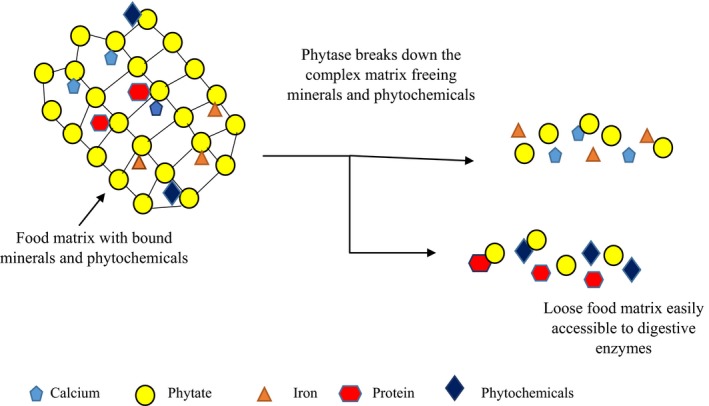
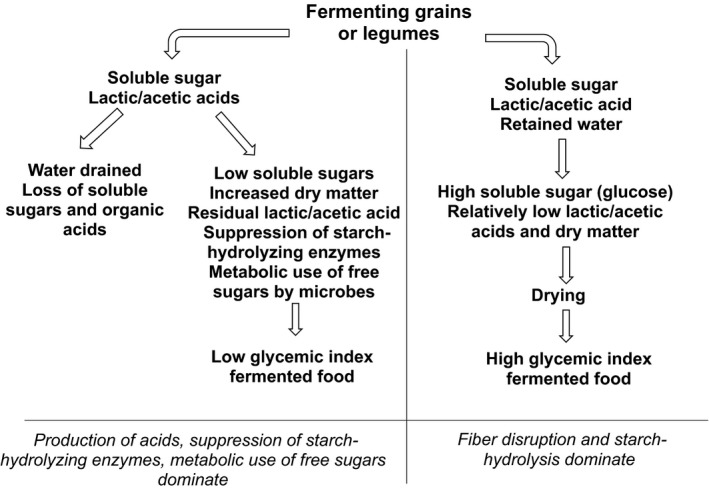
Verification
Claims the paper makes
The claims and statistics of this paper haven’t been checked yet.
Run the check — free, no account needed. It reads the open-access text and checks the sources it cites.
Claims other papers make about this one
Each is checked against this paper’s own text: does it say what the citing paper says it does?
The source backs part of the claim, not all of it — or backs it for a different population, condition or comparison.
In the citing paper
“Additionally, fermentation further promotes the microbial degradation of antinutritional compounds by producing phytases and proteolytic enzymes, while also increasing the release of bioactive compounds and antioxidant activity [34].”
From Valorization of Microalgae as Multifunctional Protein Sources in Plant-Based Systems: Structural, Functional, and Processing Challenges (2026) · cites this paper as [34]
Experimental — accuracy not yet measuredThe source backs part of the claim, not all of it — or backs it for a different population, condition or comparison.
In the citing paper
“Germination activates endogenous enzymes, including phytases, proteases, and α-galactosidases, which degrade phytic acid, protease inhibitors, and raffinose-family oligosaccharides, thereby enhancing mineral bioavailability and protein digestibility [34,35].”
From Valorization of Microalgae as Multifunctional Protein Sources in Plant-Based Systems: Structural, Functional, and Processing Challenges (2026) · cites this paper as [34]
Experimental — accuracy not yet measured
Self-check
Percentages, sums and reported differences re-computed from the paper’s own numbers.
The self-check needs the paper’s full text.
Citations
Cites
Polyphenols: Food sources and bioavailability
Manach, C., Scalbert, A., Morand, C., Rémésy, C., & Jiménez, L. (2004) · The American Journal of Clinical Nutrition · doi:10.1093/ajcn/79.5.727 · Cited by 8,175
Short-chain fatty acids in control of body weight and insulin sensitivity
Canfora, E. E., Jocken, J. W., & Blaak, E. E. (2015) · Nature Reviews Endocrinology · doi:10.1038/nrendo.2015.128 · Cited by 2,298
The biosynthetic pathway of vitamin C in higher plants
Wheeler, G. L., Jones, M. A., & Smirnoff, N. (1998) · Nature · doi:10.1038/30728 · Cited by 1,143
Integrated food science and technology for the tropics.
Ihekoronye, A. I., & Ngoddy, P. O. (1985) · Cited by 1,061
Dietary roles of phytate and phytase in human nutrition: A review
Kumar, V., Sinha, A., Makkar, H., & Becker, K. (2010) · Food Chemistry · doi:10.1016/j.foodchem.2009.11.052 · Cited by 932
Factors affecting sorghum protein digestibility
Duodu, K. G., Taylor, J. R. N., Belton, P. S., & Hamaker, B. R. (2003) · Journal of Cereal Science · doi:10.1016/s0733-5210(03)00016-x · Cited by 782
The role of short chain fatty acids in appetite regulation and energy homeostasis
Byrne, C. S., Chambers, E. S., Morrison, D. J., & Frost, G. (2015) · International Journal of Obesity · doi:10.1038/ijo.2015.84 · Cited by 707
Hotz, C. S., & Gibson, R. S. (2007) · Journal of Nutrition · doi:10.1093/jn/137.4.1097 · Cited by 552
McNabney, S. M., & Henagan, T. M. (2017) · Nutrients · doi:10.3390/nu9121348 · Cited by 529
Mechanisms Underlying the Cholesterol-Lowering Properties of Soluble Dietary Fibre Polysaccharides
Gunness, P., & Gidley, M. J. (2010) · Food & Function · doi:10.1039/c0fo00080a · Cited by 527 · cited 1×
“…health by virtue of their antioxidant properties (Zhang et al., 2015), cholesterol- lowering effect (Golzarand, Mirmiran, Bahadoran, Alamdari, & Azizi, 2014; Gunness & Gidley, 2010), and reduction in the production of pro- inflammatory cytokines and immunosuppressive cells (Lesinski et al., 2015).”
BackgroundGhavidel, R. A., & Prakash, J. (2007) · LWT - Food Science and Technology · doi:10.1016/j.lwt.2006.08.002 · Cited by 469 · cited 3×
“Another study on in vitro digestibility of green gram, cowpea, lentil, and chickpea reported increased digestibility of starch by 53%–82% after germination for 24 hr (Ghavidel & Prakash, 2007).”
BackgroundEffect of fermentation on antioxidant properties of some cereals and pseudo cereals
Đorđević, T., Šiler-Marinković, S. S., & Dimitrijević‐Branković, S. (2009) · Food Chemistry · doi:10.1016/j.foodchem.2009.07.049 · Cited by 451
Journal of the Science of Food and Agriculture
Peressini, D., Braunstein, D., Page, J. H., Strybulevych, A., Lagazio, C., & Scanlon, M. G. (2006) · Journal of the Science of Food and Agriculture · doi:10.1002/(issn)1097-0010 · Cited by 444
Comparison of chemical compositions and bioactive compounds of germinated rough rice and brown rice
Moongngarm, A., & Saetung, N. (2010) · Food Chemistry · doi:10.1016/j.foodchem.2010.03.053 · Cited by 345 · cited 5×
“Losses of thiamine (Vitamin B1) were due to leaching in germinated brown rice (Moongngarm & Saetung, 2010).”
BackgroundInfluentialNutritional improvement of cereals by fermentation
Chavan, J. K., Kadam, S. S., & Beuchat, L. R. (1989) · Critical Reviews in Food Science and Nutrition · doi:10.1080/10408398909527507 · Cited by 342
Effects of dietary fiber and phytic acid on mineral availability
Torre, M., Rodriguez, A. R., & Saura-Calixto, F. D. (1991) · Critical Reviews in Food Science and Nutrition · doi:10.1080/10408399109527539 · Cited by 330
Oghbaei, M., & Prakash, J. (2016) · Cogent Food & Agriculture · doi:10.1080/23311932.2015.1136015 · Cited by 297
Liljeberg, H., & Björck, I. (1998) · European Journal of Clinical Nutrition · doi:10.1038/sj.ejcn.1600572 · Cited by 282
Egli, I. M., Davidsson, L., Juillerat, M. A., Barclay, D., & Hurrell, R. F. (2002) · Journal of Food Science · doi:10.1111/j.1365-2621.2002.tb09609.x · Cited by 280
Inconsistency between glycemic and insulinemic responses to regular and fermented milk products
Östman, E. M., Liljeberg Elmståhl, H. G., & Björck, I. M. (2001) · The American Journal of Clinical Nutrition · doi:10.1093/ajcn/74.1.96 · Cited by 270
The role of protein digestibility and antacids on food allergy outcomes
Untersmayr, E., & Jensen‐Jarolim, E. (2008) · Journal of Allergy and Clinical Immunology · doi:10.1016/j.jaci.2008.04.025 · Cited by 270
Östman, E., Granfeldt, Y., Persson, L., & Björck, I. (2005) · European Journal of Clinical Nutrition · doi:10.1038/sj.ejcn.1602197 · Cited by 256
Sripriya, G., Antony, U., & Chandra, T. S. (1997) · Food Chemistry · doi:10.1016/s0308-8146(96)00206-3 · Cited by 248 · cited 4×
“…in trypsin inhibitors Increased protein digestibility El- Hag et al. (2002) Finger millet Increased bioavailability of calcium, phosphorus, and iron Sripriya et al. (1997) High- carotenoid biofortified maize Loss of carotenoids with modest losses after 24 and 72 hr but bigger losses after…”
BackgroundInfluentialGuo, X., Li, T., Tang, K., & Liu, R. H. (2012) · Journal of Agricultural and Food Chemistry · doi:10.1021/jf304443u · Cited by 245
Zhang, G., Xu, Z., Gao, Y., Huang, X., Zou, Y., & Yang, T. (2015) · Journal of Food Science · doi:10.1111/1750-3841.12830 · Cited by 242
Liang, J. B., Han, B., Nout, M. J. R., & Hamer, R. J. (2008) · Food Chemistry · doi:10.1016/j.foodchem.2008.02.064 · Cited by 225
Osman, M. A. (2011) · Journal of the Saudi Society of Agricultural Sciences · doi:10.1016/j.jssas.2010.06.001 · Cited by 221 · cited 16×
“…contents Albertini et al. (2015) Pearl millet (4 hr) Increase in glucose Decrease in total carbohydrates Decrease in AIA No change in fructose Osman (2011) Pearl millet (24 hr) Increase in total protein Decrease in specific amino acids such as lysine, glycine, and arginine Osman…”
BackgroundInfluentialPranoto, Y., Anggrahini, S., & Efendi, Z. (2013) · Food Bioscience · doi:10.1016/j.fbio.2013.04.001 · Cited by 212 · cited 8×
“Fermentation increased magnesium, iron, calcium, and zinc content in some fermented foods that are commonly consumed in India and associated with the decrease in the amount of phytates (Pranoto et al., 2013).”
BackgroundMethodInfluentialNutrient and Antinutrient Changes in Finger Millet (Eleusine coracan) During Sprouting
Mbithi-Mwikya, S., Camp, J. V., Yiru, Y., & Huyghebaert, A. D. (2000) · LWT · doi:10.1006/fstl.1999.0605 · Cited by 197
Physicochemical changes of oat seeds during germination
Tian, B., Xie, B., Shi, J., Wu, J., Cai, Y., Xu, T., Xue, S. J., & Deng, Q. (2009) · Food Chemistry · doi:10.1016/j.foodchem.2009.08.035 · Cited by 197
Dueñas, M., FERNANDEZ, D. G. D., Hernández, T., Estrella, I., & Múñoz, R. (2004) · Journal of the Science of Food and Agriculture · doi:10.1002/jsfa.1924 · Cited by 196
Lorenzen, J. K., Nielsen, S., Holst, J. J., Tetens, I., Rehfeld, J. F., & Astrup, A. V. (2007) · American Journal of Clinical Nutrition · doi:10.1093/ajcn/85.3.678 · Cited by 193
Leenhardt, F., Levrat-Verny, M.-A., Chanliaud, E., & Rémésy, C. (2004) · Journal of Agricultural and Food Chemistry · doi:10.1021/jf049193q · Cited by 188
Effects of Dietary Fiber and Carbohydrate on Glucose and Lipoprotein Metabolism in Diabetic Patients
Riccardi, G., & Rivellese, A. A. (1991) · Diabetes Care · doi:10.2337/diacare.14.12.1115 · Cited by 185
Hag, M. E. E., Tinay, A. H. E., & Yousif, N. E. (2002) · Food Chemistry · doi:10.1016/s0308-8146(01)00336-3 · Cited by 181 · cited 7×
“Fermentation increases the digestibility of plant proteins (Ali, El- Tinay, & Abdalla, 2003; Alka, Neelam, & Shruti, 2012; El- Hag et al., 2002; Pranoto et al., 2013).”
BackgroundInfluentialSorghum kafirin interaction with various phenolic compounds
Emmambux, M. N., & TAYLOR, J. R. N. (2003) · Journal of the Science of Food and Agriculture · doi:10.1002/jsfa.1379 · Cited by 181
Nutritional significance of fermented foods
Steinkraus, K. H. (1994) · Food Research International · doi:10.1016/0963-9969(94)90094-9 · Cited by 179 · cited 2×
“…is used to enhance the bioaccessibility and bioavailability of nutrients from different crops including maize (Hotz & Gibson, 2007) and improves organoleptic properties as well as extending the shelf life (ChavesLopez et al., 2014; Li, Tayie, Young, Rocheford, & White, 2007; Steinkraus, 1994).”
BackgroundThe Importance of Lactic Acid Bacteria for Phytate Degradation during Cereal Dough Fermentation
Reale, A., Konietzny, U., Coppola, R., Sorrentino, E., & Greiner, R. (2007) · Journal of Agricultural and Food Chemistry · doi:10.1021/jf063507n · Cited by 173
EVALUATION OF THE PROTEIN QUALITY AND AVAILABLE LYSINE OF GERMINATED AND FERMENTED CEREALS
HAMAD, A. M., & FIELDS, M. L. (1979) · Journal of Food Science · doi:10.1111/j.1365-2621.1979.tb03811.x · Cited by 170 · cited 3×
“While increase in protein may partly be attributed to loss of dry matter during fermentation, bacterial fermentation is known to increase lysine content in fermented grains (Hamad & Fields, 1979).”
BackgroundInfluentialYu, K., Ke, M., Li, W.-H., Zhang, S.-Q., & Fang, X.-C. (2014) · Asia Pacific Journal of Clinical Nutrition · doi:10.6133/apjcn.2014.23.2.01 · Cited by 166
Osman, M. A. (2004) · Food Chemistry · doi:10.1016/j.foodchem.2003.12.038 · Cited by 160 · cited 1×
“For example, fermentation followed by cooking was effective in increasing the digestibility of grain protein, bringing it nearly to the same level as meat(Khetarpaul & Chauhan, 1990; Osman, 2004; Yousif & El Tinayi, 2001, 2003) likely due to not only destruction of protease (trypsin) inhibitors (Khetarpaul & Chauhan,…”
BackgroundInfluence of germination and fermentation on bioaccessibility of zinc and iron from food grains
Hemalatha, S., Platel, K., & Srinivasan, K. (2006) · European Journal of Clinical Nutrition · doi:10.1038/sj.ejcn.1602524 · Cited by 157
Chaves‐López, C., Serio, A., Grande‐Tovar, C. D., Cuervo‐Mulet, R., Delgado‐Ospina, J., & Paparella, A. (2014) · Comprehensive Reviews in Food Science and Food Safety · doi:10.1111/1541-4337.12098 · Cited by 156
Towo, E., Matuschek, E., & Svanberg, U. (2005) · Food Chemistry · doi:10.1016/j.foodchem.2004.11.027 · Cited by 155
Kim, H. Y., Hwang, I. G., Kim, T. M., Woo, K. S., Park, D. S., Kim, J. H., Kim, D. J., Lee, J., Lee, Y. R., & Jeong, H. S. (2012) · Food Chemistry · doi:10.1016/j.foodchem.2012.02.138 · Cited by 154
Traoré, T., Mouquet‐Rivier, C., Icard‐Vernière, C., Traore, A. S., & Trèche, S. (2004) · Food Chemistry · doi:10.1016/j.foodchem.2004.01.032 · Cited by 149 · cited 3×
“…TIA, oxalates, tannins, and phytates Increased minerals, vitamin content, and fiber Ogbonna et al. (2012), Ojha et al. (2018), Onyango et al. (2013), Traore et al. (2004) Ragi Foxtail millet, wheat, and chickpea Increased protein, carbohydrate, crude fiber, vitamin C, and iron Decreased fat Desai…”
InfluentialEffects of fermentation on the phytochemical composition and antioxidant properties of soy germ
Hubert, J., Berger, M., Nepveu, F., Paul, F., & Daydé, J. (2008) · Food Chemistry · doi:10.1016/j.foodchem.2007.12.081 · Cited by 140
Jan, R., Saxena, D. C., & Singh, S. (2016) · LWT · doi:10.1016/j.lwt.2016.04.001 · Cited by 139
Sourdough bread: Starch digestibility and postprandial glycemic response
Scazzina, F., Rio, D. D., Pellegrini, N., & Brighenti, F. (2009) · Journal of Cereal Science · doi:10.1016/j.jcs.2008.12.008 · Cited by 134
Release of Phosphorus from Phytate by Natural Lactic Acid Fermentation
López, Y., Gordon, D. T., & FIELDS, M. L. (1983) · Journal of Food Science · doi:10.1111/j.1365-2621.1983.tb14938.x · Cited by 130 · cited 1×
“Firstly, fermentation reduces phytic acid that binds minerals making them free and more available (Lopez et al., 1983).”
BackgroundEffect of fermentation on the in vitro protein digestibility of pearl millet
Ali, M. A. M., Tinay, A. H. E., & Abdalla, A. H. (2002) · Food Chemistry · doi:10.1016/s0308-8146(02)00234-0 · Cited by 127
Effect of Processing on Anti-nutritional Factors of Red Kidney Bean (Phaseolus vulgaris) Grains
Yasmin, A., Zeb, A., Khalil, A. W., Paracha, G. M.-U.-D., & Khattak, A. B. (2008) · Food and Bioprocess Technology · doi:10.1007/s11947-008-0125-3 · Cited by 125
Östman, E. M., Nilsson, M., Elmståhl, H. L., Molin, G., & Björck, I. (2002) · Journal of Cereal Science · doi:10.1006/jcrs.2002.0469 · Cited by 121
Chinma, C. E., Adewuyi, O., & Abu, J. O. (2009) · Food Research International · doi:10.1016/j.foodres.2009.04.024 · Cited by 116 · cited 1×
“…studies have reported that germination reduces fat content (Jan et al., 2017; Wanasundara, Wanasundara, & Shahidi, 1999) due to hydrolysis and utilization of fats as an energy source for biochemical reactions during germination (Chinma et al., 2009; Jan et al., 2017; Moongngarm & Saetung, 2010).”
BackgroundCHAVAN, U. D., CHAVAN, J. K., & KADAM, S. S. (1988) · Journal of Food Science · doi:10.1111/j.1365-2621.1988.tb09329.x · Cited by 116
Chinma, C. E., Anuonye, J. C., Simon, O. C., Ohiare, R. O., & Danbaba, N. (2015) · Food Chemistry · doi:10.1016/j.foodchem.2015.04.010 · Cited by 116
Developments in sorghum food technologies
TAYLOR, J. R. N., & Dewar, J. (2001) · Advances in food and nutrition research · doi:10.1016/s1043-4526(01)43006-3 · Cited by 110
Antioxidant properties of certain cereals as affected by food-grade bacteria fermentation
Wang, C., Wu, S., & Shyu, Y. (2013) · Journal of Bioscience and Bioengineering · doi:10.1016/j.jbiosc.2013.10.002 · Cited by 109
Fermentation of cereals for specific purpose
Kohajdová, Z. (2007) · Cited by 108
Hydrolysis of black soybean isoflavone glycosides by Bacillus subtilis natto
Kuo, L.-C., Cheng, W., Wu, R.-Y., Huang, C., & Lee, K. (2006) · Applied Microbiology and Biotechnology · doi:10.1007/s00253-006-0474-7 · Cited by 106
Nirmala, M., Rao, M. V. S. S. T. S., & Muralikrishna, G. (2000) · Food Chemistry · doi:10.1016/s0308-8146(99)00250-2 · Cited by 106 · cited 3×
“The maximum hydrolysis of starch is between 48 and 72 hr when amylase activity is at maximum (Nirmala et al., 2000; Tian et al., 2010).”
Martin-Cabrejas, M. A., Ariza, N., Esteban, R. M., Mollá, E., Waldron, K. W., & López‐Andréu, F. J. (2003) · Journal of Agricultural and Food Chemistry · doi:10.1021/jf0207631 · Cited by 97
Li, S., Tayie, F., Young, M. F., Rocheford, T., & White, W. S. (2007) · Journal of Agricultural and Food Chemistry · doi:10.1021/jf071815v · Cited by 97 · cited 1×
“It makes food safe by not only inhibiting growth of pathogenic bacteria due to antimicrobial activity of lactic acid (Li et al., 2007; Sahlin, 1999), but also detoxifies aflatoxin (ChavesLopez et al.”
BackgroundButyrate and other short-chain fatty acids increase the rate of lipolysis in 3T3-L1 adipocytes
Rumberger, J. M., Arch, J. R. S., & Green, A. (2014) · PeerJ · doi:10.7717/peerj.611 · Cited by 95
Effect of Fermentation and Drying on Cocoa Polyphenols
Albertini, B., Schoubben, A., Guarnaccia, D., Pinelli, F., Vecchia, M. D., Ricci, M., Renzo, G. C. D., & Blasi, P. (2015) · Journal of Agricultural and Food Chemistry · doi:10.1021/acs.jafc.5b01062 · Cited by 94
Luo, Y., Xie, W., Jin, X.-X., Wang, Q., & He, Y.-J. (2013) · CyTA - Journal of Food · doi:10.1080/19476337.2013.782071 · Cited by 89
Ojha, P., Adhikari, R., Karki, R., Mishra, A., Subedi, U., & Karki, T. B. (2017) · Food Science & Nutrition · doi:10.1002/fsn3.525 · Cited by 89 · cited 2×
“…and α- amylase activity Decreased sucrose, TIA, oxalates, tannins, and phytates Increased minerals, vitamin content, and fiber Ogbonna et al. (2012), Ojha et al. (2018), Onyango et al. (2013), Traore et al. (2004) Ragi Foxtail millet, wheat, and chickpea Increased protein, carbohydrate, crude…”
BackgroundFermentation and nutrient availability
Svanberg, U., & Lorri, W. (1997) · Food Control · doi:10.1016/s0956-7135(97)00018-2 · Cited by 88
Lesinski, G. B., Reville, P. K., Mace, T. A., Young, G. S., Ahn‐Jarvis, J. H., Thomas‐Ahner, J. M., Vodovotz, Y., Ameen, Z., Grainger, E. M., Riedl, K. M., et al. (2015) · Cancer Prevention Research · doi:10.1158/1940-6207.capr-14-0464 · Cited by 88
Obizoba, I. C., & Atii, J. V. (1991) · Plant Foods for Human Nutrition · doi:10.1007/bf02196388 · Cited by 86 · cited 1×
“Germinating white sorghum for 24 and 36 hr resulted into a decrease in carbohydrates and increase in simple sugars (Obizoba & Atii, 1991).”
BackgroundOnyango, C. A., Ochanda, S. O., Mwasaru, M. A., Ochieng, J. K., Mathooko, F. M., & Kinyuru, J. N. (2013) · Journal of Food Research · doi:10.5539/jfr.v2n1p41 · Cited by 86
Sindhu, S. C., & Khetarpaul, N. (2001) · Journal of Food Composition and Analysis · doi:10.1006/jfca.2001.1022 · Cited by 81 · cited 1×
“There is also reduction in tannins, oxalate, phytic acid, and carbohydrates which can complex with proteins and hence limiting accessibility by digestive enzymes (El- Hag et al., 2002; Hassan, Yusuf, Adebolu, & Onifade, 2015; Osman, 2011; Sindhu & Khetarpaul, 2001).”
BackgroundDay, C. N., & Morawicki, R. O. (2018) · Journal of Food Quality · doi:10.1155/2018/3964392 · Cited by 81
Effect of germination on the thiamine, riboflavin and niacin contents in legumes
Pródanov, M., Sierra, I., & Vidal‐Valverde, C. (1997) · Zeitschrift für Lebensmittel-Untersuchung und -Forschung. B, Referate und Lebensmittelrecht · doi:10.1007/s002170050122 · Cited by 72 · cited 1×
“…et al. (2010), Laxmi et al. (2015) Lentils and faba beans (6 days, 20 Oc) Reduced thiamine amounts Increased riboflavin and niacin Wang et al. (2014), Prodanov et al. (1997) Rice (24 hr, 28–30°C) Germination increased crude proteins, niacin, free amino acids, and α- tocopherol Ash, crude fat, and…”
BackgroundChanges in flax (Linum usitatissimum L.) seed lipids during germination
Wanasundara, P. K. J. P. D., Wanasundara, U. N., & Shahidi, F. (1999) · Journal of the American Oil Chemists Society · doi:10.1007/s11746-999-0045-z · Cited by 70
The Impact of Malting on Nutritional Composition of Foxtail Millet, Wheat and Chickpea
N, L. G. C. (2015) · Journal of Nutrition & Food Sciences · doi:10.4172/2155-9600.1000407 · Cited by 69
Egli, I. M., Davidsson, L., Juillerat, M. A., Barclay, D., & Hurrell, R. F. (2003) · Journal of Food Science · doi:10.1111/j.1365-2621.2003.tb12342.x · Cited by 68 · cited 1×
“This is because grinding increases grain surface area and breaks up cellular structure, thereby releasing phytase that degrades phytate (Egli et al., 2003; Hemalatha, Platel, & Srinivasan, 2007; Leenhardt, LevratVerny, Chanlia, & Eameasy, 2005; Reale, Konietzny, Coppola, Sorrentino, & Greiner, 2007).”
BackgroundRumiyati, R., James, A. P., & Jayasena, V. (2012) · Food and Nutrition Sciences · doi:10.4236/fns.2012.35085 · Cited by 63
Effect of fermentation on sorghum protein fractions and in vitro protein digestibility
Yousif, N. E., & Tinay, A. H. E. (2001) · Plant Foods for Human Nutrition · doi:10.1023/a:1011140602122 · Cited by 61 · cited 2×
“…in vitro protein digestibility Osman (2004) Sorghum (36 hr) Increased titratable acidity, crude protein, protein digestibility, and total solids Yousif and El Tinayi (2001) Cocoa (6 days) Reduced antioxidant capacity and polyphenols contents Albertini et al. (2015) Pearl millet (4 hr)…”
Effect of Germination and Fermentation on in vitro Starch and Protein Digestibility of Pearl Millet
Khetarpaul, N., & Chauhan, B. M. (1990) · Journal of Food Science · doi:10.1111/j.1365-2621.1990.tb05261.x · Cited by 54
Kruger, J., TAYLOR, J. R. N., & Oelofse, A. (2011) · Food Chemistry · doi:10.1016/j.foodchem.2011.08.063 · Cited by 53
Organic Acid, Sugar and Amino Acid Composition of Bamboo Shoots
Kozukue, E., KOZUKUE, N., & Kurosaki, T. (1983) · Journal of Food Science · doi:10.1111/j.1365-2621.1983.tb14934.x · Cited by 49
Effect of malting conditions on the nutritional and anti-nutritional factors of sorghum grist
Ogbonna, A. C., Udofia, U. S., Ide, E. O., & Abuajah, C. I. (2012) · DOAJ (DOAJ: Directory of Open Access Journals) · Cited by 41
Delayed gastric emptying rate in Type 1 diabetics with cardiac autonomic neuropathy
Darwiche, G., Almér, L., Björgell, O., Cederholm, C., & Nilsson, P. (2001) · Journal of Diabetes and its Complications · doi:10.1016/s1056-8727(00)00143-4 · Cited by 39
(2014) · Europe PMC (PubMed Central) · Cited by 36
Glycemic responses to maize flour stiff porridges prepared using local recipes in Malawi
Mlotha, V., Mwangwela, A. M., Kasapila, W., Siyame, E. W. P., & Masamba, K. G. (2015) · Food Science & Nutrition · doi:10.1002/fsn3.293 · Cited by 27
Effect of germination on total dietary fibre and total sugar in selected legumes.
Megat, R. M. R., Azlan, A., & Norhaizan, M. E. (2016) · Universiti Putra Malaysia Institutional Repository (Universiti Putra Malaysia) · Cited by 27
Ihediohanma, N. C. (2010) · Pakistan Journal of Nutrition · doi:10.3923/pjn.2011.6.9 · Cited by 23 · cited 3×
“Some studies have reported increased (Ihediohanma, 2011; Ihekoronye & Ngoody, 1985) while others have reported decreased (Mlotha, Mwangwela, Kasapila, Siyame, & Masamba, 2016; Scazzina, Del Rio, Pellegrini, & Brighenti, 2008) GI after consumption of fermented foods.”
BackgroundIdris, W. H., AbdelRahaman, S. M., ElMaki, H. B., Babiker, E. E., & Tinay, A. H. E. (2007) · International Journal of Food Science & Technology · doi:10.1111/j.1365-2621.2006.01207.x · Cited by 22 · cited 1×
“The increase could be due to leaching of the antinutritional factors that bind the minerals (Idris et al., 2007).”
BackgroundEffect of germination and fermentation on nutrients in maize flour
Ongol, M. P., Niyonzima, E., Gisanura, I., & Vasanthakaalam, H. (2013) · Cited by 22
Žilić, S., Delić, N., Basić, Z., Ignjatović‐Micić, D., Janković, M., & Vančetović, J. (2015) · RIK (Maize Research Institute Zemun Polje (Belgrade, Serbia)) · Cited by 21
Ascorbic Acid Synthesis from d-Glucose-2-C14 in the Liver of the Intact Rat
Loewus, F. A., Kelly, S. H., & Hiatt, H. H. (1960) · Journal of Biological Chemistry · doi:10.1016/s0021-9258(18)69455-4 · Cited by 20 · cited 2×
“This postulation is supported by work done by Loewus, Kelly, and Hiatt (1960) who carried out a study on rats.”
BackgroundResultThe hepatic glycogenoreticular system
Bánhegyi, G., & Mandl, J. (2001) · Pathology & Oncology Research · doi:10.1007/bf03032575 · Cited by 20
Effect of fermentation and processing on in vitro mineral estimation of selected fermented foods.
Mohite, B. V., Chaudhari, G. A., Ingale, H. S., & Mahajan, V. N. (2013) · International Food Research Journal · Cited by 18
Nutritional Changes During Biofortified Maize Fermentation (Steeping) for Ogi Production
Ortiz, D., Nkhata, S. G., Buechler, A., Rocheford, T., & Ferruzzi, M. G. (2017) · The FASEB Journal · doi:10.1096/fasebj.31.1_supplement.32.4 · Cited by 15
Self-citationEffect of sprouting days on the chemical and physicochemical properties of sorghum starch.
Ikuomola, O. L., & Oloruntoba, R. (2014) · Cited by 14
Phorbee, O., Olayiwola, I. O., & Sanni, S. A. (2013) · Food and Nutrition Sciences · doi:10.4236/fns.2013.412159 · Cited by 13 · cited 1×
“It is therefore difficult to make conclusion based on these findings because they used different models and sources of β- carotene. β- Carotene bioavailability is dependent on genotype and processing method used to develop test food (Ortiz et al., 2017; Phorbee et al., 2013).”
EIF5A1 Isoform A Can Modulate the Metabolism in HeLa Cells
Pereira, K. D., Tamborlin, L., Meneguello, L., Bomfim, L. H. M., de Proença, A. R. G., Melo, C. F. O. R., Catharino, R. R., Silveira, L. R., & Luchessi, A. D. (2017) · The FASEB Journal · doi:10.1096/fasebj.31.1_supplement.lb208 · Cited by 13
Effect of natural fermentation on protein fractions and in vitro protein digestibility of rice
Yousif, N. E., & Tinay, A. H. E. (2003) · Plant Foods for Human Nutrition · doi:10.1023/b:qual.0000040347.82831.51 · Cited by 10
EFFECT OF GERMINATION ON NUTRIENT COMPOSITION OF GLUTEN FREE QUINOA (Chenopodium quinoa)
Bhathal, S., & Kaur, N. (2015) · International journal of scientific research · Cited by 10
Nutritional Improvement of Grain Sorghum ( Sorghum bicolor (L.) Moench) by Germination
Taur, A. T., Pawar, V. D., & Ingle, U. M. (1984) · The Indian Journal of Nutrition and Dietetics · Cited by 4
Research works printed but not linked: 8
- Alka S., 2012, Effect of fermentation on physicochemical properties & in vitro starch and protein digestibility of selected cereals, International Journal of Agricultural and Food Science, 2, 66
- Hassan G. F., 2015, Effect of fermentation on mineral and anti‐nutritional composition of cocoyam (Colocasia esculenta linn), Sky Journal of Food Science, 4, 042
- Ikeda K., 1984, Effect on buckwheat protein quality of seed germination and changes in trypsin inhibitor content, Cereal Chemistry, 61, 236
- Omemu A. M., 2011, Fermentation dynamics during production of ogi, a Nigerian fermented cereal porridge, Report and Opinion, 3, 8
- Sahlin P.(1999).Fermentation as a method of food processing production of organic acids pH‐development and microbial growth in fermenting cereals. Msc Thesis Lund University Department of Applied Nutrition and Food Chemistry.
- Tang Y., 1998, The relationship between phenylalanine deaminase activities and xanthoketone contents in buckwheat, Journal of Mianyang College of Economy & Technology, 15, 9
- Taur A. T., 1984, Nutritional improvement of grain sorghum by germination, The Indian Journal of Nutrition and Dietetics, 21, 168
- Zheng Y. M., 2006, Change of anti‐nutrient and phytic acid contents in brown rice during sprouting period, Journal of the Chinese Cereals and Oils Association, 21, 1
Cited by
Sorted by citations
Plant food anti-nutritional factors and their reduction strategies: an overview
Samtiya, M., Aluko, R. E., & Dhewa, T. (2020) · Food Production Processing and Nutrition · doi:10.1186/s43014-020-0020-5 · Cited by 1,228
Microbial Fermentation and Its Role in Quality Improvement of Fermented Foods
Sharma, R., Garg, P., Kumar, P., Bhatia, S. K., & Kulshrestha, S. (2020) · Fermentation · doi:10.3390/fermentation6040106 · Cited by 824
“Natural fermentation promotes enzymatic degradation of phytates by providing optimum pH conditions present in a complex form with polyvalent cations such as zinc, iron, magnesium, and calcium [1].”
BackgroundInfluentialProtein Digestibility of Cereal Products
Joye, I. (2019) · Foods · doi:10.3390/foods8060199 · Cited by 343
Health-Promoting Components in Fermented Foods: An Up-to-Date Systematic Review
Melini, F., Melini, V., Luziatelli, F., Ficca, A. G., & Ruzzi, M. (2019) · Nutrients · doi:10.3390/nu11051189 · Cited by 438
Grains – a major source of sustainable protein for health
Poutanen, K. S., Kårlund, A., Gómez-Gallego, C., Johansson, D. P., Scheers, N., Marklinder, I., Eriksen, A. K., Silventoinen, P., Nordlund, E., Sözer, N., et al. (2021) · Nutrition Reviews · doi:10.1093/nutrit/nuab084 · Cited by 347
“Germination of oats and sorghum has also been shown to improve protein solubility,(87,88) and to improve protein digestibility, either by increasing protein solubility or by removal of antinutrients.(89) Exogenous enzymes are widely applied in food processing, eg, enzymatic crosslinking of oat proteins is used as a to…”
Metadata
- Authors
- Nkhata, S. G., Ayua, E., Kamau, E. H., & Shingiro, J.
- Affiliations
- Department of Agriculture Extension Services Lilongwe Malawi
- University of Eldoret (KE)
- Rwanda Agriculture Board (RW)
- Corresponding author
- Nkhata, Smith G.
- Venue
- Food Science & Nutrition
- Publisher
- Wiley
- Published
- 2018-10-16
- Volume
- 6
- Issue
- 8
- Pages
- 2446-2458
- ISSN
- 2048-7177 (ISSN-L)
- PMC
- PMC6261201
- OpenAlex
- W2896888197
- Cited by
- 876
- References
- 100
- Citations by year
- 2026: 124 · 2025: 143 · 2024: 159 · 2023: 154 · 2022: 129 · 2021: 103 · 2020: 57 · 2019: 7
- FWCI
- 4.25
- Type
- journal article
- Language
- en
- Open access
- hybrid
- doi.org
- Licence
- Locations
- Food Science & Nutrition (publishedVersion, cc-by)
- Europe PMC (PubMed Central) (publishedVersion, other-oa)
- PubMed Central (publishedVersion, cc-by)
- PubMed (publishedVersion)
- DOAJ (DOAJ: Directory of Open Access Journals) (submittedVersion)
- Informationszentrum Lebenswissenschaften (ZB MED) (submittedVersion, cc-by)
- Topics
- Life Sciences › Agricultural and Biological Sciences › Plant Science › Phytase and its Applications
- Health Sciences › Nursing › Nutrition and Dietetics › Food composition and properties
- Life Sciences › Agricultural and Biological Sciences › Food Science › Food Nutrient Composition and Product Development
- Keywords
- cereal fermentation, Fabaceae, antinutritional factors, phytic acid, trypsin inhibitor, phenolic compounds, mineral bioaccessibility, protein digestibility, endogenous enzymes, phytase, alpha-amylase, pullulanase, glucosidase, nutrient bioavailability, phytochemicals
About these checks
Registry, retraction, Cites and statistics results are computed, not judged, with one exception: a printed reference that no index lists is read once by a model before it counts as a citation error. Claims are extracted by a model and kept only when their quote appears verbatim in the text; each cited source is then checked, with a model’s help, for whether it says what the claim relies on. Those verdicts can be wrong — read the claim’s quote and the cited source before relying on one.
Statistics and arithmetic are recomputed, not judged.
Confidence bands are shown only for fields calibrated on our annotated test set. None is calibrated yet, so no band is shown.
What counts as a claim ›How we measure confidence ›How we check this ›
Are you an author, or do you see a problem with this page? Request a review
