

The DOI matches its Crossref record; 471 of the 473 references it cites were found in a registry or an index.
Artificial intelligence and machine learning-aided drug discovery in central nervous system diseases: State-of-the-arts and future directions
Open accessAbstract
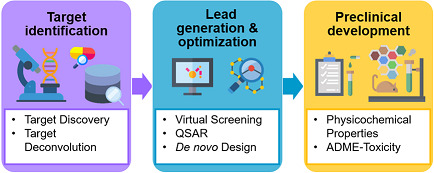
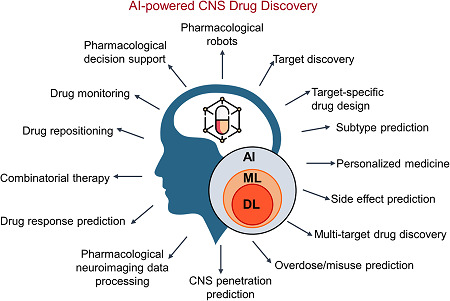
Neurological disorders significantly outnumber diseases in other therapeutic areas. However, developing drugs for central nervous system (CNS) disorders remains the most challenging area in drug discovery, accompanied with the long timelines and high attrition rates. With the rapid growth of biomedical data enabled by advanced experimental technologies, artificial intelligence (AI) and machine learning (ML) have emerged as an indispensable tool to draw meaningful insights and improve decision making in drug discovery. Thanks to the advancements in AI and ML algorithms, now the AI/ML-driven solutions have an unprecedented potential to accelerate the process of CNS drug discovery with better success rate. In this review, we comprehensively summarize AI/ML-powered pharmaceutical discovery efforts and their implementations in the CNS area. After introducing the AI/ML models as well as the conceptualization and data preparation, we outline the applications of AI/ML technologies to several key procedures in drug discovery, including target identification, compound screening, hit/lead generation and optimization, drug response and synergy prediction, de novo drug design, and drug repurposing. We review the current state-of-the-art of AI/ML-guided CNS drug discovery, focusing on blood-brain barrier permeability prediction and implementation into therapeutic discovery for neurological diseases. Finally, we discuss the major challenges and limitations of current approaches and possible future directions that may provide resolutions to these difficulties.
Overview
The claims and statistics of this paper haven’t been checked yet.
Run the check — free, no account needed. It reads the open-access text and checks the sources it cites.
Integrity signals
Registry
Cites
Statistics
Figures

Verification
Claims the paper makes
The claims and statistics of this paper haven’t been checked yet.
Run the check — free, no account needed. It reads the open-access text and checks the sources it cites.
Claims other papers make about this one
Each is checked against this paper’s own text: does it say what the citing paper says it does?
In the citing paper
“Many more examples are available [3,32,33,34,35,36,37], showing that AI-based methods can accelerate the drug discovery process and enable the development of more effective medications.”
From The role of AI in drug discovery: challenges, opportunities, and strategies (2023) · cites this paper as [32]
Self-check
Percentages, sums and reported differences re-computed from the paper’s own numbers.
The self-check needs the paper’s full text.
Citations
Cites
Bartel (2004) · doi:10.1016/s0092-8674(04)00045-5 · Cited by 34,714
Sørlie, T., Perou, C. M., Tibshirani, R. J., Aas, T., Geisler, S. B., Johnsen, H., Hastie, T. J., Eisen, M. B., van de Rijn, M., Jeffrey, S. S., et al. (2001) · Proceedings of the National Academy of Sciences · doi:10.1073/pnas.191367098 · Cited by 11,506
Molecular Mechanisms of Depression: Perspectives on New Treatment Strategies
Lang, U. E., & Borgwardt, S. (2013) · Cellular Physiology and Biochemistry · doi:10.1159/000350094 · Cited by 8,526
Can the pharmaceutical industry reduce attrition rates?
Kola, I., & Landis, J. (2004) · Nature Reviews Drug Discovery · doi:10.1038/nrd1470 · Cited by 4,167
Random Forest: A Classification and Regression Tool for Compound Classification and QSAR Modeling
Svetnik, V., Liaw, A. I., Tong, C., Culberson, J. C., Sheridan, R. P., & Feuston, B. P. (2003) · Journal of Chemical Information and Computer Sciences · doi:10.1021/ci034160g · Cited by 3,613
MoleculeNet: a benchmark for molecular machine learning
Wu, Z., Ramsundar, B., Feinberg, E. N., Gomes, J., Geniesse, C., Pappu, A. S., Leswing, K., & Pande, V. (2018) · Chemical Science · doi:10.1039/c7sc02664a · Cited by 3,107
Automatic Chemical Design Using a Data-Driven Continuous Representation of Molecules
Gómez-Bombarelli, R., Wei, J. N., Duvenaud, D., Hernández-Lobato, J. M., Sánchez-Lengeling, B., Sheberla, D., Aguilera-Iparraguirre, J., Hirzel, T. D., Adams, R. P., & Aspuru-Guzik, A. (2018) · ACS Central Science · doi:10.1021/acscentsci.7b00572 · Cited by 3,106
Mechanisms of Alternative Pre-Messenger RNA Splicing
Black, D. L. (2003) · Annual Review of Biochemistry · doi:10.1146/annurev.biochem.72.121801.161720 · Cited by 2,704
A Deep Learning Approach to Antibiotic Discovery
Stokes, J. M., Yang, K., Swanson, K., Jin, W., Cubillos-Ruiz, A., Donghia, N. M., MacNair, C. R., French, S., Carfrae, L. A., Bloom-Ackermann, Z., et al. (2020) · Cell · doi:10.1016/j.cell.2020.01.021 · Cited by 2,463
Schizophrenia: A Concise Overview of Incidence, Prevalence, and Mortality
McGrath, J., Saha, S., Chant, D., & Welham, J. (2008) · Epidemiologic Reviews · doi:10.1093/epirev/mxn001 · Cited by 2,280
Research works printed but not linked: 4
- Todeschini R, 2001, Books—handbook of molecular descriptors, Angew Chem, 40, 1977
- Matsumoto S, 2020, Extraction of protein dynamics information hidden in Cryo‐EM map using deep learning, bioRxiv
- DahlGE JaitlyN SalakhutdinovRMulti‐task neural networks for QSAR predictions.arXiv preprint arXiv:14061231.2014.
- 10.1038/s41563-019-0332-5 · DOI
Cited by
Sorted by citations
Artificial intelligence to deep learning: machine intelligence approach for drug discovery
Gupta, R., Srivastava, D., Sahu, M., Tiwari, S., Ambasta, R. K., & Kumar, P. (2021) · Molecular Diversity · doi:10.1007/s11030-021-10217-3 · Cited by 1,473
“Moreover, the number of startups in this field has also escalated and reached 230 by June 2020 [476].”
BackgroundArtificial Intelligence in Pharmaceutical Technology and Drug Delivery Design
Vora, L. K., Gholap, A. D., Jetha, K. L., Singh, T. R. R., Solanki, H. K., & Chavda, V. P. (2023) · Pharmaceutics · doi:10.3390/pharmaceutics15071916 · Cited by 1,193
The role of AI in drug discovery: challenges, opportunities, and strategies
Blanco-González, A., Cabezón, A., Seco-González, A., Conde-Torres, D., Antelo-Riveiro, P., Piñeiro, Á., & Garcia-Fandino, R. (2023) · Pharmaceuticals · doi:10.3390/ph16060891 · Cited by 690
Using artificial intelligence in academic writing and research: An essential productivity tool
Khalifa, M., & Albadawy, M. (2024) · Computer Methods and Programs in Biomedicine Update · doi:10.1016/j.cmpbup.2024.100145 · Cited by 580
AI-Driven Drug Discovery: A Comprehensive Review
Ferreira, F. J. N., & Carneiro, A. S. (2025) · ACS Omega · doi:10.1021/acsomega.5c00549 · Cited by 202
Selvaraj, C., Chandra, I., & Singh, S. K. (2021) · Molecular Diversity · doi:10.1007/s11030-021-10326-z · Cited by 220
Generative machine learning for de novo drug discovery: A systematic review
Martinelli, D. D. (2022) · Computers in Biology and Medicine · doi:10.1016/j.compbiomed.2022.105403 · Cited by 177
Tribulations and future opportunities for artificial intelligence in precision medicine
Carini, C., & Seyhan, A. A. (2024) · Journal of Translational Medicine · doi:10.1186/s12967-024-05067-0 · Cited by 221
Huanbutta, K., Burapapadh, K., Kraisit, P., Sriamornsak, P., Ganokratanaa, T., Suwanpitak, K., & Sangnim, T. (2024) · European Journal of Pharmaceutical Sciences · doi:10.1016/j.ejps.2024.106938 · Cited by 192
Evolving scenario of big data and Artificial Intelligence (AI) in drug discovery
Tripathi, M. K., Nath, A., Singh, T. P., Ethayathulla, A. S., & Kaur, P. (2021) · Molecular Diversity · doi:10.1007/s11030-021-10256-w · Cited by 151
A CRITICAL REVIEW OF AI-DRIVEN STRATEGIES FOR ENTREPRENEURIAL SUCCESS
Usman, F. O., Eyo-Udo, N. L., Etukudoh, E. A., Odonkor, B., Ibeh, C. V., & Adegbola, A. E. (2024) · International Journal of Management & Entrepreneurship Research · doi:10.51594/ijmer.v6i1.748 · Cited by 131
Parvin, N., Joo, S., Jung, J. H., & Mandal, T. K. (2025) · Nanomaterials · doi:10.3390/nano15120895 · Cited by 131
Onciul, R., Tataru, C.-I., Dumitru, A. V., Crivoi, C., Serban, M., Covache-Busuioc, R.-A., Radoi, M. P., & Toader, C. (2025) · Journal of Clinical Medicine · doi:10.3390/jcm14020550 · Cited by 113
AI empowering traditional Chinese medicine?
Song, Z., Chen, G., & Chen, C. Y. (2024) · Chemical Science · doi:10.1039/d4sc04107k · Cited by 122
Salahshoori, I., Golriz, M., Nobre, M. A. L., Mahdavi, S., Malekshah, R. E., Javdani-Mallak, A., Jorabchi, M. N., Khonakdar, H. A., Wang, Q., Mohammadi, A. H., et al. (2023) · Journal of Molecular Liquids · doi:10.1016/j.molliq.2023.123888 · Cited by 109
Udegbe, F. C., Ebulue, O. R., Ebulue, C. C., & Ekesiobi, C. S. (2024) · International Medical Science Research Journal · doi:10.51594/imsrj.v4i4.1052 · Cited by 103
Xue, W., Fu, T., Deng, S., Yang, F., Yang, H. J., & Zhu, F. (2022) · ACS Chemical Neuroscience · doi:10.1021/acschemneuro.1c00694 · Cited by 100
Wang, S., Li, W., Wang, Z., Yang, W., Li, E., Xia, X., Yan, F., & Chiu, S. (2024) · Signal Transduction and Targeted Therapy · doi:10.1038/s41392-024-01917-x · Cited by 124
Recent Scaffold Hopping Applications in Central Nervous System Drug Discovery
Callis, T. B., Garrett, T. R., Montgomery, A. P., Danon, J. J., & Kassiou, M. (2022) · Journal of Medicinal Chemistry · doi:10.1021/acs.jmedchem.2c00969 · Cited by 99
Artificial intelligence in neurology: opportunities, challenges, and policy implications
Voigtlaender, S., Pawelczyk, J., Geiger, M., Vaios, E., Karschnia, P., Cudkowicz, M., Dietrich, J., Haraldsen, I., Feigin, V. L., Owolabi, M. O., et al. (2024) · Journal of Neurology · doi:10.1007/s00415-024-12220-8 · Cited by 112
Pan, Y. F., Lei, X., & Zhang, Y. (2021) · Medicinal Research Reviews · doi:10.1002/med.21847 · Cited by 99
Hossain, M. S., & Hussain, M. H. (2025) · Pharmacology Research & Perspectives · doi:10.1002/prp2.70131 · Cited by 105
Artificial Intelligence in Genetics
Vilhekar, R. S., & Rawekar, A. (2024) · Cureus · doi:10.7759/cureus.52035 · Cited by 104
Advances of Artificial Intelligence in Anti-Cancer Drug Design: A Review of the Past Decade
Wang, L., Song, Y., Wang, H., Zhang, X., Wang, M., He, J., Li, S., Zhang, L., Li, K., & Cao, L. (2023) · Pharmaceuticals · doi:10.3390/ph16020253 · Cited by 86
Gharibshahian, M., Torkashvand, M., Bavisi, M., Aldaghi, N., & Alizadeh, A. (2024) · Skin Research and Technology · doi:10.1111/srt.70016 · Cited by 93
Wang, Y., Wu, J., Wang, J., He, L., Lai, H., Zhang, T., Wang, X., & Li, W. (2023) · Mitochondrion · doi:10.1016/j.mito.2023.01.007 · Cited by 86
Pasrija, P., Jha, P. K., Upadhyaya, P., Khan, M. S., & Chopra, M. (2022) · Current Topics in Medicinal Chemistry · doi:10.2174/1568026622666220701091339 · Cited by 92
Ansari, M. Y., Chandrasekar, V., Singh, A. V., & Dakua, S. P. (2022) · IEEE Access · doi:10.1109/access.2022.3233110 · Cited by 81
Artificial intelligence in microbial natural product drug discovery: current and emerging role
Sahayasheela, V. J., Lankadasari, M. B., Dan, V. M., Dastager, S. G., Pandian, G. N., & Sugiyama, H. (2022) · Natural Product Reports · doi:10.1039/d2np00035k · Cited by 85
Singh, A. V., Bhardwaj, P., Laux, P., Pradeep, P., Busse, M., Luch, A., Hirose, A., Osgood, C. J., & Stacey, M. W. (2024) · Frontiers in Toxicology · doi:10.3389/ftox.2024.1461587 · Cited by 84
Chakraborty, C., Bhattacharya, M., Lee, S., Wen, Z., & Lo, Y.-H. (2024) · Molecular Therapy — Nucleic Acids · doi:10.1016/j.omtn.2024.102295 · Cited by 84
The Potential Applications of Artificial Intelligence in Drug Discovery and Development
Farghali, H., Kutinová Canová, N., & Arora, M. (2021) · Physiological Research · doi:10.33549/physiolres.934765 · Cited by 72
Imran, M. M. H., Jamaludin, S., & Ayob, A. F. M. (2024) · Ocean Engineering · doi:10.1016/j.oceaneng.2024.116796 · Cited by 79
Hashemi, S., Vosough, P., Taghizadeh, S., & Savardashtaki, A. (2024) · Heliyon · doi:10.1016/j.heliyon.2024.e40265 · Cited by 73
Zafar, F., Alam, L. F., Vivas, R. R., Wang, J., Whei, S. J., Mehmood, S., Sadeghzadegan, A., Lakkimsetti, M., & Nazir, Z. (2024) · Cureus · doi:10.7759/cureus.56472 · Cited by 84
Therapeutic targeting of senescent cells in the CNS
Riessland, M., Ximerakis, M., Jarjour, A. A., Zhang, B., & Orr, M. E. (2024) · Nature Reviews Drug Discovery · doi:10.1038/s41573-024-01033-z · Cited by 77
Cheng, F., Wang, F., Tang, J., Zhou, Y., Fu, Z., Zhang, P., Haines, J. L., Leverenz, J. B., Gan, L., Hu, J., et al. (2024) · Cell Reports Medicine · doi:10.1016/j.xcrm.2023.101379 · Cited by 63
Clinlabomics: leveraging clinical laboratory data by data mining strategies
Wen, X., Leng, P., Wang, J., Yang, G., Zu, R., Jia, X., Zhang, K., Mengesha, B. A., Huang, J. H., Wang, D., et al. (2022) · BMC Bioinformatics · doi:10.1186/s12859-022-04926-1 · Cited by 63
Kant, S., Deepika, & Roy, S. (2025) · Discover Pharmaceutical Sciences · doi:10.1007/s44395-025-00007-3 · Cited by 86
Halkiopoulos, C., & Gkintoni, E. (2025) · Electronics · doi:10.3390/electronics14061110 · Cited by 68
Machine learning in TCM with natural products and molecules: current status and future perspectives
Ma, S., Liu, J., Li, W., Liu, Y., Hui, X., Qu, P., Jiang, Z., Li, J., & Wang, J. (2023) · Chinese Medicine · doi:10.1186/s13020-023-00741-9 · Cited by 64
Shiammala, P. N., Duraimutharasan, N. K. B., Vaseeharan, B., Alothaim, A. S., Al‐Malki, E. S., Snekaa, B., Safi, S. Z., Singh, S. K., Velmurugan, D., & Selvaraj, C. (2023) · Methods · doi:10.1016/j.ymeth.2023.09.010 · Cited by 57
Role of artificial intelligence in early diagnosis and treatment of infectious diseases
Srivastava, V., Kumar, R., Wani, M. Y., Robinson, K. M., & Ahmad, A. (2024) · Scandinavian Journal of Infectious Diseases · doi:10.1080/23744235.2024.2425712 · Cited by 63
AI-Validated Brain Targeted mRNA Lipid Nanoparticles with Neuronal Tropism
Sela, M., Chen, G., Kadosh, H., Kagan, T., Nicola, R., Turutov, S., Richtman, Y., Zhige, L., Albalak, M. R., Kagan, S., et al. (2025) · ACS Nano · doi:10.1021/acsnano.4c15013 · Cited by 63
Li, G., Lin, P., Wang, K., Gu, C.-C., & Kusari, S. (2021) · Trends in cancer · doi:10.1016/j.trecan.2021.10.002 · Cited by 56
Artificial intelligence (AI) in drug design and discovery: A comprehensive review
Bhat, A. R., & Ahmed, S. (2025) · In Silico Research in Biomedicine · doi:10.1016/j.insi.2025.100049 · Cited by 68
Fasihi, L., Tartibian, B., Eslami, R., & Fasihi, H. (2022) · Scientific Reports · doi:10.1038/s41598-022-23184-y · Cited by 53
Success stories of AI in drug discovery - where do things stand?
Mak, K.-K., Balijepalli, M. K., & Pichika, M. R. (2022) · Expert Opinion on Drug Discovery · doi:10.1080/17460441.2022.1985108 · Cited by 51
The Heart of Transformation: Exploring Artificial Intelligence in Cardiovascular Disease
Chowdhury, M. A., Rizk, R., Chiu, C., Zhang, J., Scholl, J. L., Bosch, T. J., Singh, A. P., Baugh, L. A., McGough, J. S., Santosh, K., et al. (2025) · Biomedicines · doi:10.3390/biomedicines13020427 · Cited by 60
Ambreen, S., Umar, M., Noor, A., Jain, H., & Ali, R. (2024) · European Journal of Medicinal Chemistry · doi:10.1016/j.ejmech.2024.117164 · Cited by 51
Artificial intelligence for small molecule anticancer drug discovery
Duo, L., Liu, Y., Ren, J., Tang, B., & Hirst, J. D. (2024) · Expert Opinion on Drug Discovery · doi:10.1080/17460441.2024.2367014 · Cited by 51
Bi, X., Wang, Y., Wang, J., & Liu, C. (2025) · Pharmaceutics · doi:10.3390/pharmaceutics17091186 · Cited by 53
Kandhare, P., Kurlekar, M., Deshpande, T., & Pawar, A. (2025) · Drugs and Drug Candidates · doi:10.3390/ddc4010009 · Cited by 58
Explicating the transformative role of artificial intelligence in designing targeted nanomedicine
Akhtar, M., Nehal, N., Gull, A., Parveen, R., Khan, S. I., Khan, S. M., & Ali, J. (2025) · Expert Opinion on Drug Delivery · doi:10.1080/17425247.2025.2502022 · Cited by 50
Rodrigues, R. O., Shin, S.-R., & Bañobre-López, M. (2024) · Journal of Nanobiotechnology · doi:10.1186/s12951-024-02720-0 · Cited by 44
Dermawan, D., & Alotaiq, N. (2025) · Pharmaceuticals · doi:10.3390/ph18070981 · Cited by 55
A Survey on Computational Methods in Drug Discovery for Neurodegenerative Diseases
Vicidomini, C., Fontanella, F., D’Alessandro, T., & Roviello, G. N. (2024) · Biomolecules · doi:10.3390/biom14101330 · Cited by 47
Impact of Artificial Intelligence on Drug Development and Delivery
Aundhia, C. J., Parmar, G. R., Talele, C., Shah, N., & Talele, D. R. (2024) · Current Topics in Medicinal Chemistry · doi:10.2174/0115680266324522240725053634 · Cited by 43
Tanaka, M. (2025) · Biomedicines · doi:10.3390/biomedicines13010167 · Cited by 53
Artificial intelligence for dementia research methods optimization
Bucholc, M., James, C. R., Khleifat, A. A., Badhwar, A., Clarke, N., Dehsarvi, A., Madan, C. R., Marzi, S. J., Shand, C., Schilder, B. M., et al. (2023) · Alzheimer s & Dementia · doi:10.1002/alz.13441 · Cited by 49
Artificial intelligence in the clinical laboratory
Hou, H., Zhang, R., & Li, J. (2024) · Clinica Chimica Acta · doi:10.1016/j.cca.2024.119724 · Cited by 51
Promises of natural products as clinical applications for cancer
Deng, R., Zong, G., Wang, X., Yue, B.-J., Cheng, P., Tao, R., Li, X., Wei, Z., & Lu, Y. (2024) · Biochimica et Biophysica Acta (BBA) - Reviews on Cancer · doi:10.1016/j.bbcan.2024.189241 · Cited by 45
Computer-Aided Drug Design towards New Psychotropic and Neurological Drugs
Dorahy, G., Chen, Z., & Balle, T. (2023) · Molecules · doi:10.3390/molecules28031324 · Cited by 44
The diagnostic, therapeutic, and ethical impact of artificial intelligence in modern medicine
Katwaroo, A. R., Adesh, V. S., Lowtan, A., & Umakanthan, S. (2023) · Postgraduate Medical Journal · doi:10.1093/postmj/qgad135 · Cited by 44
Gupta, M., Feng, J., & Bhisetti, G. (2024) · Molecules · doi:10.3390/molecules29061264 · Cited by 45
Otović, E., Njirjak, M., Kalafatović, D., & Mauša, G. (2022) · Journal of Chemical Information and Modeling · doi:10.1021/acs.jcim.2c00526 · Cited by 37
Singh, D. P., & Kaushik, B. (2022) · Chemical Biology & Drug Design · doi:10.1111/cbdd.14164 · Cited by 42
Revitalizing Cancer Treatment: Exploring the Role of Drug Repurposing
Malla, R. R., Sathiyapriya, V., Makena, S., Kapoor, S. S., Verma, D., Raju, A. A., Dunna, M., & Muniraj, N. (2024) · Cancers · doi:10.3390/cancers16081463 · Cited by 42
Artificial intelligence in small molecule drug discovery from 2018 to 2023: Does it really work?
Lv, Q., Zhou, F., Liu, X., & Zhi, L. (2023) · Bioorganic Chemistry · doi:10.1016/j.bioorg.2023.106894 · Cited by 41
Leading artificial intelligence–driven drug discovery platforms: 2025 landscape and global outlook
Dharmasivam, M., Kaya, B., Akinware, A., Azad, M. G., & Richardson, D. R. (2025) · Pharmacological Reviews · doi:10.1016/j.pharmr.2025.100102 · Cited by 45
Wang, B., Wan, Z., Li, C., Zhang, M., Shi, Y., Miao, X., Jian, Y., Luo, Y., Yao, J., & Tian, W. (2022) · Frontiers in Endocrinology · doi:10.3389/fendo.2022.1018321 · Cited by 35
QSPR Analysis of Drugs for Treatment of Schizophrenia Using Topological Indices
Zhang, X., Saif, M. J., Idrees, N., Kanwal, S., Parveen, S., & Saeed, F. (2023) · ACS Omega · doi:10.1021/acsomega.3c05000 · Cited by 35
Machine learning in Alzheimer’s disease drug discovery and target identification
Geng, C., Wang, Z., & Tang, Y. (2024) · Ageing Research Reviews · doi:10.1016/j.arr.2023.102172 · Cited by 34
Recent progress in machine learning approaches for predicting carcinogenicity in drug development
Le, N. Q. K., Tran, T.-X., Nguyen, P.-A., Ho, T.-T., & Nguyen, V. (2024) · Expert Opinion on Drug Metabolism & Toxicology · doi:10.1080/17425255.2024.2356162 · Cited by 32
Beyond Dopamine: Novel Therapeutic Pathways for Parkinson's Disease Through Receptor Signaling
Bhushan, R., Goel, F., & Singh, S. (2025) · CNS & Neurological Disorders - Drug Targets · doi:10.2174/0118715273325667241212041540 · Cited by 34
Ding, Y., Jiang, X., & Kim, Y. (2022) · Bioinformatics · doi:10.1093/bioinformatics/btac211 · Cited by 32
Piquing artificial intelligence towards drug discovery: Tools, techniques, and applications
Agu, P. C., & Obulose, C. N. (2024) · Drug Development Research · doi:10.1002/ddr.22159 · Cited by 33
Moshawih, S., Goh, H. P., Kifli, N., Idris, A. C., Yassin, H., Kotra, V., Goh, K. W., Liew, K. B., & Ming, L. C. (2022) · Chemical Biology & Drug Design · doi:10.1111/cbdd.14062 · Cited by 32
Zhang, L., Luo, B., Lü, Y., & Chen, Y. (2023) · Journal of Medicinal Chemistry · doi:10.1021/acs.jmedchem.2c01606 · Cited by 30
A Review on Deep Learning-driven Drug Discovery: Strategies, Tools and Applications
Sumathi, S., Suganya, K., Swathi, K., Sudha, B., Poornima, A., Varghese, C. A., & Aswathy, R. (2023) · Current Pharmaceutical Design · doi:10.2174/1381612829666230412084137 · Cited by 31
Maharjan, R., Lee, J., Lee, K., Han, H., Kim, K. H., & Jeong, S. H. (2023) · Journal of Pharmaceutical Investigation · doi:10.1007/s40005-023-00637-8 · Cited by 33
Rana, A., Dumka, A., Singh, R., Panda, M. K., & Priyadarshi, N. (2022) · Diagnostics · doi:10.3390/diagnostics12112708 · Cited by 32
Revolutionizing Medical Practice: The Impact of Artificial Intelligence (AI) on Healthcare
(2024) · Open Access Journal of Applied Science and Technology · doi:10.33140/oajast.02.01.07 · Cited by 31
Versatile nanomaterials for Alzheimer’s disease: Pathogenesis inspired disease-modifying therapy
Xi, Y., Chen, Y., Jin, Y., Han, G., Song, M., Song, T., Shi, Y., Tao, L., Huang, Z., Zhou, J., et al. (2022) · Journal of Controlled Release · doi:10.1016/j.jconrel.2022.02.034 · Cited by 27
Anesthetic drug discovery with computer-aided drug design and machine learning
Liu, X., Xue, Z., Luo, M., Ke, B., & Lv, J. (2024) · Anesthesiology and Perioperative Science · doi:10.1007/s44254-023-00047-x · Cited by 30
Mulat, M., Banicod, R. J. S., Tabassum, N., Javaid, A., Kim, T., Kim, Y., & Khan, F. (2025) · Journal of Microbiological Methods · doi:10.1016/j.mimet.2025.107232 · Cited by 31
In silico drug design strategies for discovering novel tuberculosis therapeutics
Canales, C. S. C., Pavan, A. R., dos Santos, J. L., & Pavan, F. R. (2024) · Expert Opinion on Drug Discovery · doi:10.1080/17460441.2024.2319042 · Cited by 28
Hoose, S., & Králiková, K. (2024) · Administrative Sciences · doi:10.3390/admsci14090227 · Cited by 37
Traumatic brain injury: Bridging pathophysiological insights and precision treatment strategies
Lu, Y., Jin, J., Zhang, H., Lu, Q., Zhang, Y., Liu, C., Liang, Y., Tian, S., Zhao, Y., & Fan, H. (2025) · Neural Regeneration Research · doi:10.4103/nrr.nrr-d-24-01398 · Cited by 27
Artificial intelligence in sickle disease
Elsabagh, A. A., Elhadary, M. R., Elsayed, B., Elshoeibi, A. M., Ferih, K., Kaddoura, R., Alkindi, S. S. A., Alshurafa, A., Al‐Rasheed, M., Alzayed, A., et al. (2023) · Blood Reviews · doi:10.1016/j.blre.2023.101102 · Cited by 26
A review on the use of machine learning techniques in monkeypox disease prediction
Rampogu, S. D. (2023) · Science in One Health · doi:10.1016/j.soh.2023.100040 · Cited by 26
Advancements in Molecular Property Prediction: A Survey of Single and Multimodal Approaches
Liyaqat, T., Ahmad, T., & Saxena, C. (2025) · Archives of Computational Methods in Engineering · doi:10.1007/s11831-025-10317-5 · Cited by 38
Artificial Intelligence in Toxicology and Pharmacology
Nasnodkar, S. P., Çınar, B., & Ness, S. (2023) · Journal of Engineering Research and Reports · doi:10.9734/jerr/2023/v25i7952 · Cited by 24
Neuroinflammation and acquired traumatic CNS injury: a mini review
Theus, M. H. (2024) · Frontiers in Neurology · doi:10.3389/fneur.2024.1334847 · Cited by 25
Angelucci, F., Ai, A. R., Piendel, L. A., Cerman, J., & Hort, J. (2024) · Current Opinion in Structural Biology · doi:10.1016/j.sbi.2024.102857 · Cited by 27
Advances in machine learning for optimizing pharmaceutical drug discovery
Ogbonna, U. E., Ofoezie, E. F., Babalola, O. O., Ottu, P. O., Ogbonna, C. A., Olisakwe, S. C., George, E. T., Babarinde, S., Omaba, O. J., Chukwuemeka, C. G., et al. (2025) · Current Proteomics · doi:10.1016/j.curpro.2025.100015 · Cited by 25
Ishfaq, M., Shah, S. Z. A., Ahmad, I., & Rahman, Z.-U. (2023) · Molecular Diversity · doi:10.1007/s11030-023-10690-y · Cited by 23
Zhu, Z., & Yin, L. (2023) · Frontiers in Human Neuroscience · doi:10.3389/fnhum.2023.1266753 · Cited by 23
Permeability Benchmarking: Guidelines for Comparing in Silico, in Vitro, and in Vivo Measurements
Jorgensen, C., Linville, R. M., Galea, I., Lambden, E., Vögele, M., Chen, C. H., Troendle, E. P., Ruggiu, F., Ulmschneider, M. B., Schiøtt, B., et al. (2025) · Journal of Chemical Information and Modeling · doi:10.1021/acs.jcim.4c01815 · Cited by 23
Song, J., Bang, S., Choi, N., & Kim, H. N. (2022) · Biomicrofluidics · doi:10.1063/5.0121476 · Cited by 25
Metadata
- Authors
- Vatansever, S., Schlessinger, A., Wacker, D., Kaniskan, H. Ü., Jin, J., Zhou, M., & Zhang, B.
- Affiliations
- Icahn School of Medicine at Mount Sinai (US)
- Department of Pharmacological Sciences Icahn School of Medicine at Mount Sinai New York New York USA
- Tisch Cancer Institute (US)
- Corresponding author
- Zhang, Bin
- Venue
- Medicinal Research Reviews
- Publisher
- Wiley
- Published
- 2020-12-09
- Volume
- 41
- Issue
- 3
- Pages
- 1427-1473
- ISSN
- 0198-6325 (ISSN-L)
- 1098-1128
- PMC
- PMC8043990
- OpenAlex
- W3112951420
- Cited by
- 429
- References
- 473
- Citations by year
- 2026: 64 · 2025: 126 · 2024: 127 · 2023: 62 · 2022: 34 · 2021: 16
- FWCI
- 2.48
- Type
- journal article
- Language
- en
- Open access
- hybrid
- doi.org
- Licence
- Locations
- Medicinal Research Reviews (publishedVersion, cc-by)
- PubMed Central (publishedVersion, cc-by)
- PubMed (publishedVersion)
- Funders
- National Institutes of Health
- National Institute on Aging (U01AG058635, R01AG057907, U01AG046170, RF1AG054014, R01AG068030, RF1AG057440, RF1AG059319, R01AG062355, U01AG052411, R01AG072562)
- National Institute of General Medical Sciences (R35GM133504)
- National Institute of Allergy and Infectious Diseases (R01AI124465)
- Topics
- Life Sciences › Pharmacology, Toxicology and Pharmaceutics › Drug Discovery › Computational Drug Discovery Methods
- Physical Sciences › Materials Science › Materials Chemistry › Machine Learning in Materials Science
- Health Sciences › Medicine › Health Informatics › Artificial Intelligence in Healthcare and Education
- Keywords
- artificial intelligence in drug discovery, machine learning, central nervous system disorders, neurological disorders, target identification, compound screening, drug synergy prediction, de novo drug design, drug repurposing, drug attrition
- MeSH terms
- Machine Learning, Algorithms, Artificial Intelligence, Central Nervous System Diseases, Humans, Drug Discovery
About these checks
Registry, retraction, Cites and statistics results are computed, not judged, with one exception: a printed reference that no index lists is read once by a model before it counts as a citation error. Claims are extracted by a model and kept only when their quote appears verbatim in the text; each cited source is then checked, with a model’s help, for whether it says what the claim relies on. Those verdicts can be wrong — read the claim’s quote and the cited source before relying on one.
Statistics and arithmetic are recomputed, not judged.
Confidence bands are shown only for fields calibrated on our annotated test set. None is calibrated yet, so no band is shown.
What counts as a claim ›How we measure confidence ›How we check this ›
Are you an author, or do you see a problem with this page? Request a review
