

Childlessness in Europe: Reconstructing Long-Term Trends Among Women Born in 1900–1972
Open accessThe DOI matches its Crossref record; 56 of the 59 references it cites were found in a registry or an index.
Abstract
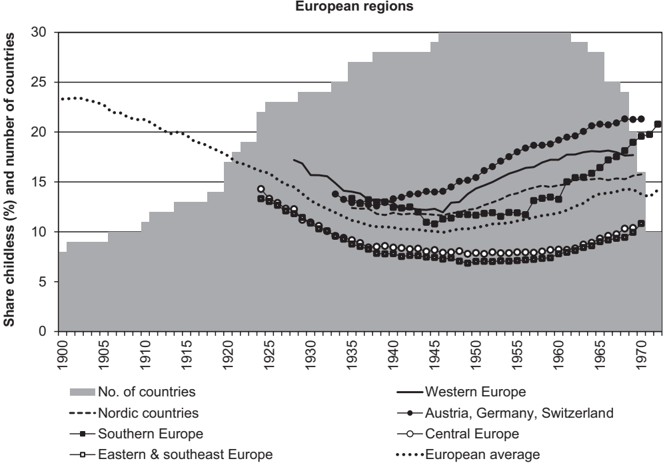
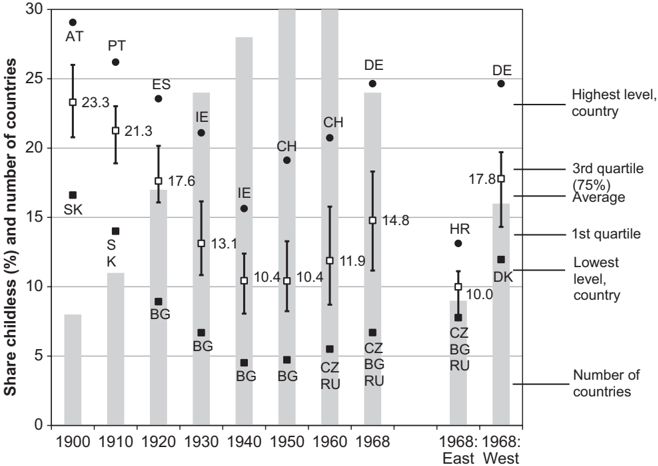
This study combines census, survey, and vital statistics data to reconstruct childlessness trends among women born between 1900 and 1972 in 30 European countries. After discussing the available sources, their strengths and weaknesses, and the selection of data used in this article, I present childlessness trends in individual countries and broader European regions, and analyse between-country variability. Europe has experienced a U-shaped pattern in permanent childlessness among women born between 1900 and 1972, with the lowest levels typically reached among the 1940s cohorts. A clear contrast exists between the generally low levels of childlessness in the former state-socialist countries of Europe and the higher levels of childlessness in other regions. However, as childlessness in central and eastern Europe has increased among women born in the late 1960s and early 1970s, this long-standing divide is now eroding. The trend towards increasing childlessness is levelling off in much of western Europe (e.g., in Switzerland and England and Wales). In conclusion, I suggest that women in southern Europe, especially in Italy and Spain, are on track to have the highest levels of childlessness in Europe. I also argue that childlessness trends might become more unstable and more difficult to predict as many women have put off parenthood until late reproductive ages, when they have relatively little time left to have a child.
Overview
The claims and statistics of this paper haven’t been checked yet.
Free: it reads the open-access text and checks the first 5 claims that cite a source we can check. Create a free account to check every claim.
Integrity signals
Registry
Cites
Statistics
Figures
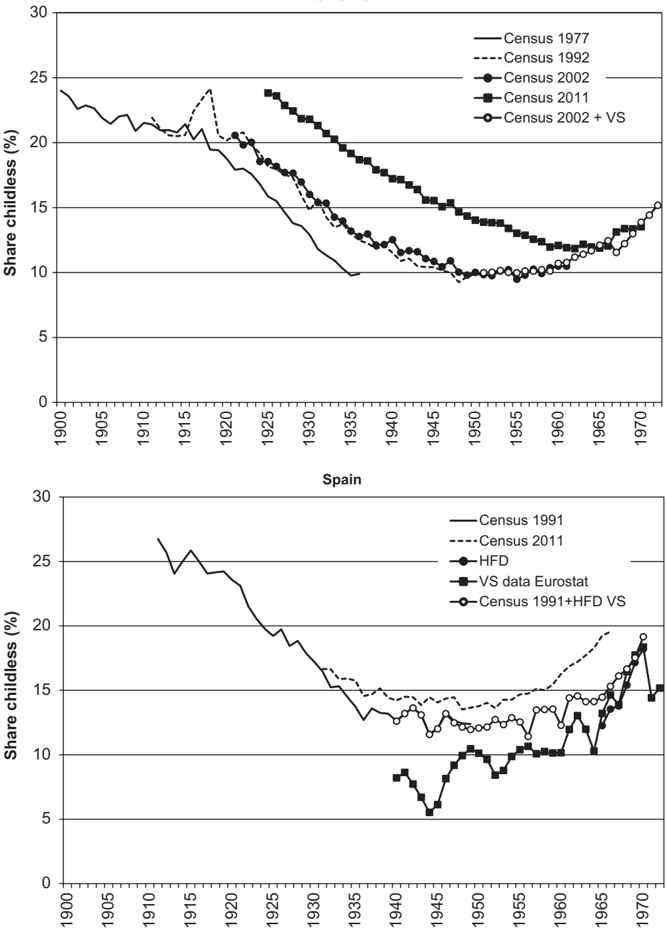
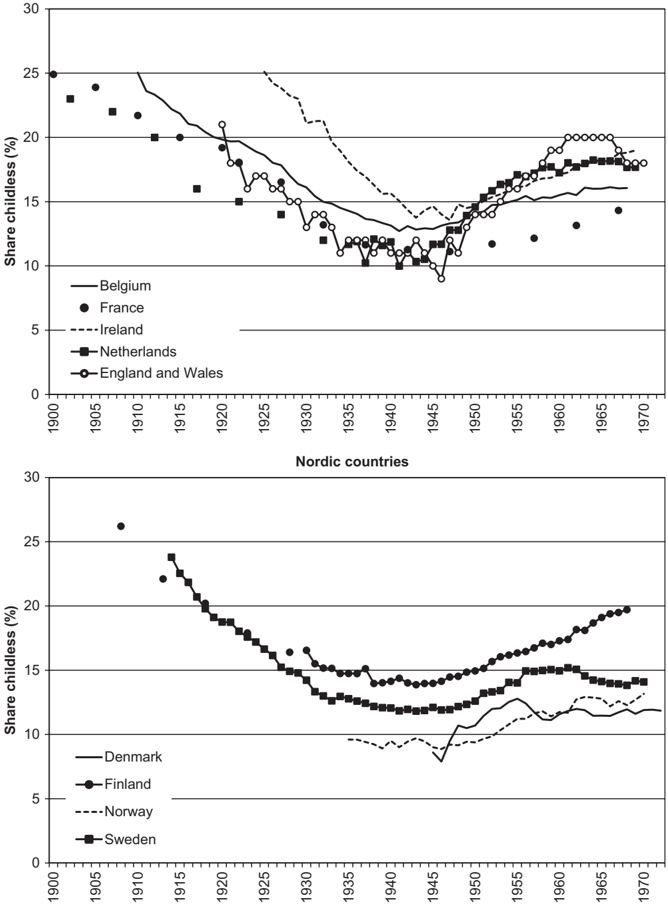
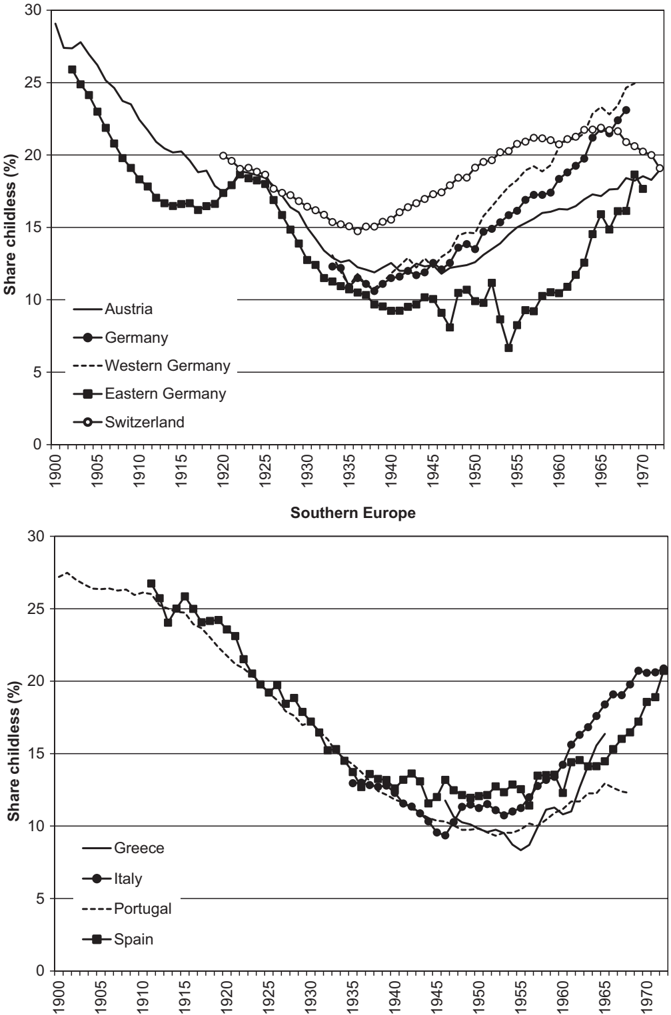
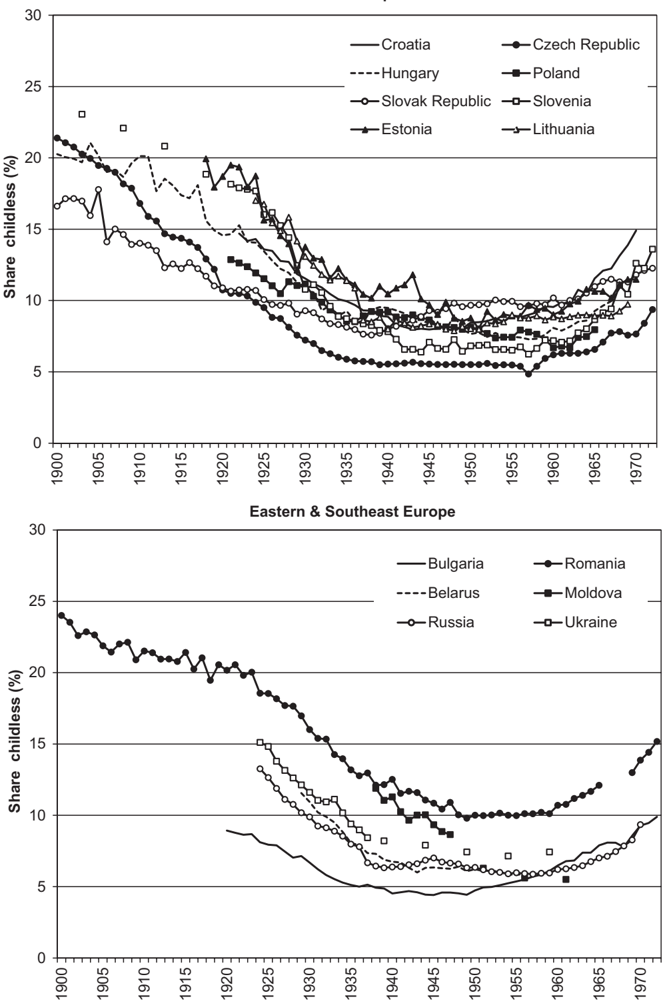
Verification
Claims the paper makes
The claims and statistics of this paper haven’t been checked yet.
Free: it reads the open-access text and checks the first 5 claims that cite a source we can check. Create a free account to check every claim.
Claims other papers make about this one
Each is checked against this paper’s own text: does it say what the citing paper says it does?
The source backs part of the claim, not all of it — or backs it for a different population, condition or comparison.
In the citing paper
“The trend reversals in later cohorts with stabilizing or slightly declining levels of childlessness in Denmark, Norway, and Sweden, are not (yet) observable in Finland, where childlessness levels in the youngest cohorts are quite substantial: 27% for men and 21% for women (see also Sobotka 2017).”
From Education, Gender, and Cohort Fertility in the Nordic Countries (2019) · cites this paper as Sobotka 2017
Experimental — accuracy not yet measuredThe cited source says what the claim attributes to it.
In the citing paper
“The trend reversals in later cohorts with stabilizing or slightly declining levels of childlessness in Denmark, Norway, and Sweden, are not (yet) observable in Finland, where childlessness levels in the youngest cohorts are quite substantial: 27% for men and 21% for women (see also Sobotka 2017).”
From Education, Gender, and Cohort Fertility in the Nordic Countries (2019) · cites this paper as Sobotka 2017
The check wasn’t confident either way, so it gives no verdict — never disputed.
In the citing paper
“However, recent studies suggest that educational expansion has had only limited effects on patterns and developments in ultimate fertility (Sobotka et al. 2017) and childlessness (Beaujouan et al. 2016) by educational level in continental European countries.”
From Education, Gender, and Cohort Fertility in the Nordic Countries (2019) · cites this paper as Sobotka et al. 2017
Experimental — accuracy not yet measuredThe check wasn’t confident either way, so it gives no verdict — never disputed.
In the citing paper
“Contrary to findings from many other European countries (Sobotka et al. 2017; Beaujouan et al. 2016), the negative educational gradients in CTF observed in older female cohorts have disappeared.”
From Education, Gender, and Cohort Fertility in the Nordic Countries (2019) · cites this paper as Sobotka et al. 2017
Experimental — accuracy not yet measured
Self-check
Percentages, sums and reported differences re-computed from the paper’s own numbers.
The self-check needs the paper’s full text.
Citations
Cites
Risk Society, Towards a New Modernity
Leiss, W., Beck, U., Ritter, M., Lash, S., & Wynne, B. (1994) · Canadian Journal of Sociology / Cahiers canadiens de sociologie · doi:10.2307/3341155 · Cited by 12,546
Risk Society: Towards a New Modernity
Boyd, W., Beck, U., & Shrader-Frechette, K. S. (1993) · Economic Geography · doi:10.2307/143601 · Cited by 9,215
The Quiet Revolution That Transformed Women's Employment, Education, and Family
Goldin, C. (2006) · American Economic Review · doi:10.1257/000282806777212350 · Cited by 1,831
The Unfolding Story of the Second Demographic Transition
Lesthaeghe, R. (2010) · Population and Development Review · doi:10.1111/j.1728-4457.2010.00328.x · Cited by 1,794
Pakulski, J., Best, H., Christmas-Best, & Horrman-Lange, U. (2012) · UTAS Research Repository · Cited by 1,785
Care in Context: Men's Unpaid Work in 20 Countries, 1965–2003
Hook, J. L. (2006) · American Sociological Review · doi:10.1177/000312240607100406 · Cited by 750
Globalization, Uncertainty and Youth in Society: The Losers in a Globalizing World
(2006) · Routledge eBooks · doi:10.4324/9780203003206 · Cited by 718
Menken, J., Trussell, J., & Larsen, U. (1986) · Science · doi:10.1126/science.3755843 · Cited by 695
Changing fertility rates in developed countries. The impact of labor market institutions
Adser�, A. (2004) · Journal of Population Economics · doi:10.1007/s00148-003-0166-x · Cited by 596
The Incomplete Revolution: Adapting to Women’s New Roles
Gornick, J. C. (2010) · Contemporary Sociology: A Journal of Reviews · doi:10.1177/0094306110386886n · Cited by 572
Research works printed but not linked: 6
- 7. Bolesławski, L. (1993). Polskie tablice dzietności kobiet 1971-1992. Polish fertility tables 1971- 1992. Warsaw: Główny urząd statystyczny.
- 53. Schwarz, K. (2003). Betrachtungen eines Demographen zu Ehe und Familie um das Jahr 2000. Zeitschrift für Bevölkerungswissenschaft, 28, 423-442.
- 58. Sobotka, T. (2016). Birth control, reproduction, and family under state socialism in Central and Eastern Europe. Forthcoming in L. Niethammer & S. Satjukow (Eds.), Gender relations and birth control in the age of the »Pill« (pp. 87-116). Göttingen: Wallstein Verlag.
- 60. Sobotka, T., & Testa, M. R. (2008). Attitudes and intentions towards childlessness in Europe. In C. Höhn, C. D. Avramov, & I. E. Kotowska (Eds.), People, population change and policies: Lessons from the population policy acceptance study (Vol. 1, pp. 177-211). Berlin: Springer. Statistics Denmark. (2014). Number of childless women by age and time. www.statbank.dk/stat- bank5a/default.asp?w=1680. Accessed 19 Mar 2014. Statistics Moldova. (2006). Moldova, Census 2004. Female population aged 15+ by age group and number of live-born children by region. www.statistica.md/pageview.php?l=ro&idc= 295&id=2234. Accessed 30 July 2015. Statistisches Bundesamt. (2015). Daten zu Geburten, Familien und Kinderlosigkeit. Ergebnisse des Mikrozensus 2012 -Tabellen mit neuer Hochrechnung anhand der Bevölkerungsfortschreibung auf Basis des Zensus 2011 -Ausgabe 2015. www.destatis.de/DE/ Publikationen/Thematisch/Bevoelkerung/HaushalteMikrozensus/Geburtentrends Tabellenband5122203159015.xlsx?__blob=publicationFile. Accessed 31 Mar 2015.
- 65. Veevers, J. E. (1980). Childless by choice. Toronto/Vancouver: Butterworth & Co.
- 67. VID. (2010). European demographic data sheet 2010. Vienna: Vienna Institute of Demography and IIASA.
Cited by
Education, Gender, and Cohort Fertility in the Nordic Countries
Jalovaara, M., Neyer, G., Andersson, G., Dahlberg, J., Dommermuth, L., Fallesen, P., & Lappegård, T. (2019) · European Journal of Population · doi:10.1007/s10680-018-9492-2 · Cited by 404
“The trend reversals in later cohorts with stabilizing or slightly declining levels of childlessness in Denmark, Norway, and Sweden, are not (yet) observable in Finland, where childlessness levels in the youngest cohorts are quite substantial: 27% for men and 21% for women (see also Sobotka 2017).”
BackgroundPopulation Research and Policy Review
(2013) · Population Research and Policy Review · doi:10.1007/11113.1573-7829 · Cited by 381
Beaujouan, E., & Berghammer, C. (2019) · Population Research and Policy Review · doi:10.1007/s11113-019-09516-3 · Cited by 317
“2007), from data by national statistical offices, or provided by Tomáš Sobotka (Sobotka 2017; Sobotka et al.”
MethodHellstrand, J., Nisén, J., & Myrskylä, M. (2022) · European Journal of Population / Revue européenne de Démographie · doi:10.1007/s10680-022-09605-8 · Cited by 163
“Compared to other high-income countries, Finland exhibits high rates of ultimate childlessness (Sobotka, 2017), and most Finns without children of their own have never lived in a stable, long-term cohabitating union (Jalovaara & Fasang, 2017; Saarela & Skirbekk, 2019).”
BackgroundNot Just Later, but Fewer: Novel Trends in Cohort Fertility in the Nordic Countries
Hellstrand, J., Nisén, J., Miranda, V., Fallesen, P., Dommermuth, L., & Myrskylä, M. (2021) · Demography · doi:10.1215/00703370-9373618 · Cited by 136
Childbearing motivation at the onset of emerging adulthood
Mynarska, M. A., & Rytel, J. (2022) · Journal of Youth Studies · doi:10.1080/13676261.2022.2080536 · Cited by 124
Future fertility trends are shaped at the intersection of gender and social stratification
Lappegård, T. (2020) · Vienna Yearbook of Population Research · doi:10.1553/populationyearbook2020.deb04 · Cited by 124
“Higher levels of childlessness among women typically predict lower overall levels of fertility (Sobotka 2017).”
BackgroundHank, K., Cavrini, G., Gessa, G. D., & Tomassini, C. (2018) · European Journal of Ageing · doi:10.1007/s10433-018-0468-1 · Cited by 104
“Allowing for respondents to self-define as grandparents, and to include in the count of grandchildren also fictive grandchildren, might be particularly important given falling fertility rates and the general rising proportion of childless older people among those born since the mid-1950s or 1960s (Sobotka 2017; Tomass…”
BackgroundHellstrand, J., Nisén, J., & Myrskylä, M. (2020) · Population Studies · doi:10.1080/00324728.2020.1750677 · Cited by 81
“Indeed, ultimate childlessness may become a strong driver of cohort fertility decline, given the increasing trends in ultimate childlessness observed in many countries among women born from the 1940s onwards (Sobotka 2017; Zeman et al. 2018).”
BackgroundFertility Desires of Childless Poles: Which Childbearing Motives Matter for Men and Women?
Mynarska, M. A., & Rytel, J. (2019) · Journal of Family Issues · doi:10.1177/0192513x19868257 · Cited by 78
“Among women born in 1960, slightly under 7% never became mothers and this share was among the lowest in Europe (Sobotka, 2017).”
BackgroundEducational Differences in Cohort Fertility Across Sub-national Regions in Europe
Nisén, J., Klüsener, S., Dahlberg, J., Dommermuth, L., Jasilioniene, A., Kreyenfeld, M. R., Lappegård, T., Li, P., Martikainen, P., Neels, K., et al. (2020) · European Journal of Population / Revue européenne de Démographie · doi:10.1007/s10680-020-09562-0 · Cited by 82
“In census-based data, women reporting unknown parity may cause errors in the parity estimates (Sobotka 2017).”
BackgroundThe effect of grandchildren on grandparental labor supply: Evidence from Europe
Backhaus, A., & Barslund, M. (2021) · European Economic Review · doi:10.1016/j.euroecorev.2021.103817 · Cited by 55
“While we do not observe a change in the share of women being grandparents (at a given age) over our sample period 2004-2017, such changes will occur for a number of European countries over the coming decade due to a sustained increase in childlessness among women since around 1950 (Sobotka, 2017).”
InfluentialRiederer, B. E., & Berghammer, C. (2019) · European Sociological Review · doi:10.1093/esr/jcz058 · Cited by 59
European countries with delayed childbearing are not those with lower fertility
Beaujouan, É., & Toulemon, L. (2021) · Genus · doi:10.1186/s41118-020-00108-0 · Cited by 45
“…a first child later gives mothers less time to have several children; however, the opposite relationship is observed when comparing countries, as many women in Central and Eastern Europe become mothers but mothers have fewer children on average (Zeman, Beaujouan, Brzozowska, & Sobotka, 2017).”
BackgroundHeffernan, V., & Wilgus, G. (2018) · Women a Cultural Review · doi:10.1080/09574042.2018.1442603 · Cited by 40
“…the current increase in childlessness evident in many western countries is more closely related to social, economic and cultural trends which have emerged over the last half-century and which, according to Tomáš Sobotka, ‘appear to steer women away from having children’ (Sobotka 2017: 17).”
BackgroundChildlessness and union histories: evidence from Finnish population register data
Saarela, J., & Skirbekk, V. (2020) · Journal of Biosocial Science · doi:10.1017/s0021932019000257 · Cited by 39
“High levels of childlessness tend to coincide with low overall fertility levels (Sobotka, 2017).”
BackgroundHadley, R. (2019) · Ageing and Society · doi:10.1017/s0144686x19000837 · Cited by 53
Brini, E. (2020) · Genus · doi:10.1186/s41118-020-00074-7 · Cited by 34
“However, counterevidence also exists, and low levels of childlessness emerge both in countries with a relatively high (i.e. Belgium, Ireland, Luxembourg) and low gender equality (i.e. Portugal) (Sobotka, 2017).”
The effect of the Great Recession on permanent childlessness in Italy
Caltabiano, M., Comolli, C. L., & Rosina, A. (2017) · Demographic Research · doi:10.4054/demres.2017.37.20 · Cited by 43
“This increase in childlessness is also predicted to continue in the future for women in the 1970s and 1980s cohorts (Sobotka 2017).”
BackgroundLiu, A., Akimova, E. T., Ding, X., Jukarainen, S., Vartiainen, P., Kiiskinen, T., Koskelainen, S., Havulinna, A. S., Gissler, M., Lombardi, S., et al. (2023) · Nature Human Behaviour · doi:10.1038/s41562-023-01763-x · Cited by 31
Demography of family change in Europe
Sobotka, T., & Berghammer, C. (2021) · Edward Elgar Publishing eBooks · doi:10.4337/9781788975544.00019 · Cited by 63
Self-citationChildlessness, geographical proximity and non-family support in 12 European countries
Fihel, A., Kalbarczyk, M., & Nicińska, A. (2022) · Ageing and Society · doi:10.1017/s0144686x21000313 · Cited by 32
“…of Europe this potentially concerns approximately 10 per cent of adults aged 50 and above who have remained childless (Deindl and Brandt, 2017; Sobotka, 2017) as well as 15 per cent of adults at the same age who live remotely, at least 25 kilometres (km), from their nearest child (Hank, 2007).”
BackgroundPesando, L. M. (2018) · Ageing and Society · doi:10.1017/s0144686x17001519 · Cited by 40
Family dynamics in China and Europe in the last half-century
Djundeva, M., Dykstra, P. A., & Emery, T. (2019) · Chinese Journal of Sociology · doi:10.1177/2057150x19836368 · Cited by 33
Delayed first births and completed fertility across the 1940–1969 birth cohorts
Beaujouan, E., Zeman, K., & Nathan, M. (2023) · Demographic Research · doi:10.4054/demres.2023.48.15 · Cited by 29
“Childlessness data for Norway (1940–1951), Sweden (1940–1954), and Switzerland (1940–1970): Sobotka (2017a).”
BackgroundInfluentialChildlessness in Twentieth-Century Spain: A Cohort Analysis for Women Born 1920–1969
Reher, D., & Requena, M. (2018) · European Journal of Population / Revue européenne de Démographie · doi:10.1007/s10680-018-9471-7 · Cited by 32
“See Sobotka (2016) for a detailed reconstruction of the childlessness shifts among women born between 1900 and 1972 in 28 European countries).”
BackgroundComolli, C. L. (2023) · European Journal of Population / Revue européenne de Démographie · doi:10.1007/s10680-023-09684-1 · Cited by 45
Parenting and Work in Poland: A Gender Studies Perspective
Suwada, K. (2021) · SpringerBriefs in sociology · doi:10.1007/978-3-030-66303-2 · Cited by 37
Piotrowski, K. (2021) · Scandinavian Journal of Psychology · doi:10.1111/sjop.12779 · Cited by 28
“Despite an increase in the rate of childlessness in the last few decades (Sobotka, 2017) and undertaking the parental role later in life in developed countries (Barclay & Myrskyl€a, 2016), still the vast majority of people become parents in their lives.”
BackgroundPopulation Ageing in High-Longevity Countries: Demographic Dynamics and Socio-economic Challenges
Bonnet, C., Cambois, E., Fontaine, R., Dutreuilh, C., & Alkema, B. V. H. (2021) · Population (English Edition) · doi:10.3917/popu.2102.0225 · Cited by 57
Tomkinson, J. (2019) · Demographic Research · doi:10.4054/demres.2019.40.27 · Cited by 40
“France has one of the lowest rates of childlessness in Western Europe (Miettinen et al. 2015; Beaujouan et al. 2017), and in the cohorts studied, the rate of childlessness is higher in England and Wales than in France (Sobotka 2017).”
BackgroundInfluentialI’ve changed my mind. The intentions to be childless, their stability and realisation
Albertini, M., & Brini, E. (2021) · European Societies · doi:10.1080/14616696.2020.1764997 · Cited by 36
Jiang, Q., Zhang, C., Zhuang, Y., Jiang, Y., & Zhang, X. (2023) · BMJ Open · doi:10.1136/bmjopen-2022-070553 · Cited by 31
Sági, J., & Lentner, C. (2018) · Sustainability · doi:10.3390/su10113976 · Cited by 33
Mynarska, M. A., & Rytel, J. (2017) · Journal of Biosocial Science · doi:10.1017/s0021932017000190 · Cited by 27
“If demographic developments of the last century are considered, in Europe as well as in the United States or Australia, the lowest levels of childlessness have been reported for women born in the 1940s, and rising again in younger cohorts (Rowland, 2007; Sobotka, 2017).”
BackgroundLate Motherhood in Low-Fertility Countries: Reproductive Intentions, Trends and Consequences
Beaujouan, É., & Sobotka, T. (2021) · doi:10.1553/0x003cd014 · Cited by 32
Self-citationDelayed Fertility as a Driver of Fertility Decline?
Beaujouan, E. (2023) · The Springer Series on Demographic Methods and Population Analysis · doi:10.1007/978-3-031-29666-6_4 · Cited by 21
Climate change worries and fertility intentions: Insights from three EU countries
Bastianelli, E. (2024) · Journal of Marriage and the Family · doi:10.1111/jomf.13048 · Cited by 35
Präg, P., Choi, S., & Monden, C. W. S. (2020) · Demographic Research · doi:10.4054/demres.2020.43.17 · Cited by 19
“Empirical research has long been occupied with studying fertility differentials between the rich and the poor (e.g., Dribe, Oris, and Pozzi 2014; Sobotka 2017).”
BackgroundPartnership dynamics and entry into parenthood: Comparison of Finnish birth cohorts 1969–2000
Rahnu, L., & Jalovaara, M. (2023) · Advances in Life Course Research · doi:10.1016/j.alcr.2023.100548 · Cited by 27
La proportion de femmes sans enfant a-t-elle atteint un pic en Europe ?
Beaujouan, É., Sobotka, T., Brzozowska, Z., & Zeman, K. (2017) · Population & Sociétés · doi:10.3917/popsoc.540.0001 · Cited by 16
“celles de l’Est sont moins fréquemment infécondes que leurs compatriotes d’Allemagne de l’Ouest (respectivement 16 % et 25 %) [3].”
BackgroundInfluentialSelf-citationAlbertini, M., & Arpino, B. (2018) · SocArXiv (OSF Preprints) · doi:10.31235/osf.io/xtfq6 · Cited by 19
“In Europe, among the different demographic shifts that contribute to a rising trend in the quota of older adults ageing alone, childlessness is one of the most prominent (Sobotka 2017).”
BackgroundPartnership dynamics and the fertility gap between Sweden and Spain
Nishikido, M., Cui, Q., & Esteve, A. (2022) · Genus · doi:10.1186/s41118-022-00170-w · Cited by 15
“For example, singlehood and childlessness has been on the rise, and the Nordic countries have experienced an unexpected decline in period fertility (Esteve et al., 2016; Hellstrand et al., 2021; Reher & Requena, 2019; Sobotka, 2017).”
BackgroundLife-Course Trajectories of Childless Women: Country-Specific or Universal?
Tocchioni, V., Rybińska, A., Mynarska, M. A., Matysiak, A., & Vignoli, D. (2022) · European Journal of Population / Revue européenne de Démographie · doi:10.1007/s10680-022-09624-5 · Cited by 19
“, 2019; Mynarska & Rytel, 2020), a handful of studies show a marked variation in childlessness trends (Sobotka, 2017) and correlate across countries (Beaujouan et al.”
BackgroundThe Part-Time Revolution: Changes in the Parenthood Effect on Women’s Employment in Austria
Berghammer, C. (2021) · doi:10.1553/0x003ccd40 · Cited by 18
Vicente, H. T., & Guadalupe, S. (2022) · Ageing and Society · doi:10.1017/s0144686x22000320 · Cited by 16
Regulatory responses to assisted reproductive technology: a comparative analysis of Spain and Israel
Alón, I., Guimón, J., & Urbanos-Garrido, R. M. (2019) · Journal of Assisted Reproduction and Genetics · doi:10.1007/s10815-019-01525-7 · Cited by 22
Beaujouan, É. (2021) · Reproductive Biomedicine & Society Online · doi:10.1016/j.rbms.2021.10.002 · Cited by 21
Trends in Assortative Mating and Offspring OutcomesPreprint
Bratsberg, B., Markussen, S., Raaum, O., Røed, K., & Røgeberg, O. J. (2018) · SSRN Electronic Journal · doi:10.2139/ssrn.3249867 · Cited by 15
Not just later, but fewer: novel trends in cohort fertility in the Nordic countries
Hellstrand, J., Nisén, J., Miranda, V., Fallesen, P., Dommermuth, L., & Myrskylä, M. (2020) · doi:10.4054/mpidr-wp-2020-007 · Cited by 28
“Childlessness lev els are gen er ally around the Euro pean aver age (Sobotka 2017a), and the twochild norm is strong in these countries (Duvander et al. 2019; Frejka 2008).”
BackgroundLate Fertility Intentions and Fertility in Austria
Beaujouan, É. (2021) · doi:10.1553/0x003ccd3c · Cited by 15
“Trends in Late Fertility Intentions and Childbearing Childlessness spread quickly across European countries in cohorts born in the second half of the 20th century (Sobotka 2017).”
BackgroundTeerawichitchainan, B., Kim, D., & Ho, C. (2024) · The Journals of Gerontology Series B · doi:10.1093/geronb/gbae055 · Cited by 20
“Presently, nearly 15% of Singaporeans aged 60+ are childless, a rate surpassing that of several western countries (Ho et al., 2023; Sobotka, 2017).”
BackgroundBitalo, D. W., Piotrowski, K., & Naudé, L. (2024) · Journal of Family Studies · doi:10.1080/13229400.2024.2398579 · Cited by 21
“The global birth rate continues to decline as individuals increasingly choose to have fewer children (Sobotka, 2017).”
Cross-Sectional Average Length of Life Childless
Mogi, R., Nisén, J., & Canudas‐Romo, V. (2021) · Demography · doi:10.1215/00703370-8937427 · Cited by 16
Haug, S., & Milewski, N. (2019) · Comparative Population Studies · doi:10.12765/cpos-2019-06 · Cited by 19
Childlessness and Assisted Reproduction in EuropePreprint
Präg, P., Sobotka, T., Lappalainen, E., Miettinen, A., Rotkirch, A., Takács, J., Donno, A., Tanturri, M. L., & Mills, M. C. (2017) · SocArXiv (OSF Preprints) · doi:10.31235/osf.io/sxgu4 · Cited by 18
Self-citationMen’s Explanations for Being Childless; a dynamic perspective
Maříková, H. (2021) · Sociological Research Online · doi:10.1177/13607804211040094 · Cited by 16
“…a drastic decline in fertility (e.g. Philipov et al., 2006; Sobotka, 2011) and a steady increase in childlessness among women, including lifetime childlessness (Sobotka, 2017), since the 1990s, when they transitioned from totalitarianism to democracy and from state socialism to a market economy.”
BackgroundResult‘No longer invincible’: the impact of involuntary childlessness on older men
Hadley, R. (2021) · Physical Therapy Reviews · doi:10.1080/10833196.2021.1884172 · Cited by 24
“almost exclusively based on the collection of a mother’s fertility history at birth registration [25].”
BackgroundДинамика вступления в материнство в современной России
Макаренцева, А. (2022) · Мир России · doi:10.17323/1811-038x-2022-31-1-162-182 · Cited by 17
Chaloupková, J. K., & Hašková, H. (2020) · Advances in Life Course Research · doi:10.1016/j.alcr.2020.100363 · Cited by 14
All-time low period fertility in Finland: drivers, tempo effects, and cohort implications
Hellstrand, J., Nisén, J., & Myrskylä, M. (2019) · doi:10.4054/mpidr-wp-2019-006 · Cited by 17
“In Eastern Europe, period fertility remained above replacement level until the postcommunist crisis of the 1990s, when it fell to very low levels; and then recovered somewhat (Sobotka 2011).”
BackgroundThe Role of Fertility in the Demography of Grandparenthood: Evidence from Italy
Gessa, G. D., Bordone, V., & Arpino, B. (2020) · Journal of Population Ageing · doi:10.1007/s12062-020-09310-6 · Cited by 11
“%) among women born 20 years later (Miettinen et al. 2015; Sobotka 2017).”
BackgroundDimitrova, E., & Kotzeva, T. (2022) · Social Inclusion · doi:10.17645/si.v10i3.5065 · Cited by 21
“The increase in childlessness in CEE countries, especially among women born in the 1970s and the 1980s, could be related also to socioeconomic and cultural transformations that changed the attitudes of young adults about family and parenthood (Sobotka, 2017).”
BackgroundGenome-Wide Heritability Estimates for Family Life Course Complexity
Winkle, Z. V., & Conley, D. (2021) · Demography · doi:10.1215/00703370-9373608 · Cited by 10
Like My Own Children: A Quantitative Study of Stepparents Claiming Adult Stepchildren
van Houdt, K. (2021) · Journal of Family Issues · doi:10.1177/0192513x21993898 · Cited by 15
“In the age and cohort of the stepparents I study (i.e., aged 60 years on average, born between the 1950s and the 1970s), childlessness is relatively uncommon: In the Netherlands, approximately 18% of the women of these cohorts remained childless (Sobotka, 2017).”
BackgroundLong-Term Trends in the Gender Income Gap within Couples: West Germany, 1978–2011
Haupt, A., & Strauß, S. (2022) · Social Politics International Studies in Gender State & Society · doi:10.1093/sp/jxac019 · Cited by 13
Sex Differences in Childlessness in Norway: Identification of Underlying Demographic Drivers
Kravdal, Ø. (2021) · European Journal of Population / Revue européenne de Démographie · doi:10.1007/s10680-021-09590-4 · Cited by 16
“…women who are childless at age 45 has increased over the last decades in most rich countries and is now typically between 10 and 20% (Frejka, 2017; Sobotka, 2017).1 This development, which has likely been driven by a number of societal changes,2 has given rise to concerns, as childlessness may…”
BackgroundCoping strategies for happy childless ageing: an explorative study in Poland
Abramowska-Kmon, A., Mynarska, M. A., & Timoszuk, S. (2023) · Genus · doi:10.1186/s41118-022-00180-8 · Cited by 13
“For example, estimations by Sobotka (2017) indicate that the share of childless Polish women among the 1935–1965 birth cohorts was very low, at between 5 and 10%.”
BackgroundMethodInfluentialBeaujouan, É., & Berghammer, C. (2021) · doi:10.1553/0x003ccff4 · Cited by 9
Tempting Luck: Temporalities and Risk Anticipation among Egg Donors in Spain
Molas, A., & Whittaker, A. M. (2023) · Science Technology & Human Values · doi:10.1177/01622439231164666 · Cited by 12
“…exponential rise in demand for IVF treatments using donated eggs is connected to a delay of motherhood in European countries where women find it hard to reconcile childbearing with societal and work demands (Alkorta-Idiakez 2010; Sobotka 2017; San Rom´an 2020; Matysiak, Sobotka, and Vignoli 2021).”
Les réformes de la politique familiale : dix ans après, quel bilan ?
Fagnani, J. (2018) · Chronique Internationale de l IRES · doi:10.3917/chii.162.0003 · Cited by 8
Alón, I., Urbanos-Garrido, R. M., & Guimón, J. (2021) · Journal of Assisted Reproduction and Genetics · doi:10.1007/s10815-020-02017-9 · Cited by 9
“These figures might be growing due to environmental hazards and unhealthy lifestyles [40, 83], as well as the rising average age of parenthood [2, 65].”
BackgroundMynarska, M. A., & Brzozowska, Z. (2022) · Social Inclusion · doi:10.17645/si.v10i3.5377 · Cited by 10
“women was still low, between 5–10% (Kotowska et al., 2008; Sobotka, 2017).”
BackgroundHellstrand, J., Nisén, J., & Myrskylä, M. (2021) · doi:10.4054/mpidr-wp-2021-008 · Cited by 13
Three Decades of Lowest-low Fertility in Spain, 1991 – 2018Preprint
Esteve, A., Lozano, M., Boertien, D., Mogi, R., & Cui, Q. (2021) · SocArXiv (OSF Preprints) · doi:10.31235/osf.io/45j23 · Cited by 15
“It also has the highest average age at first child in Europe and one of the highest levels of childless women in the world (Sobotka, 2017).”
BackgroundSubjective Well-Being of Parents and Childless People in Older Age in Germany
Tolkamp, M., & Pollmann‐Schult, M. (2024) · Applied Research in Quality of Life · doi:10.1007/s11482-024-10376-z · Cited by 9
“In most European societies, childlessness has grown substantially in recent decades, having hit a low point among the 1935–1945 birth cohort (Sobotka, 2017).”
Measuring attitudes towards voluntary childlessness: Indicators in European comparative surveys
Szalma, I., Heers, M., & Tanturri, M. L. (2025) · PLoS ONE · doi:10.1371/journal.pone.0319081 · Cited by 21
“As childlessness becomes more widespread in Western societies [7], the societal expectation to have children diminishes, reinforcing this trend [8].”
Huczewska, I., & Mynarska, M. A. (2023) · Journal of Reproductive and Infant Psychology · doi:10.1080/02646838.2023.2220356 · Cited by 12
“Like most developed countries, Poland has been experiencing low birth rates, delayed childbearing, and increasing levels of childlessness among women in recent decades (Kotowska et al., 2008; Sobotka, 2017; Tymicki et al., 2018).”
When Family Policy Doesn’t Work: Motives and Welfare Attitudes Among Childfree Persons in Poland
Szelewa, D. (2022) · Social Inclusion · doi:10.17645/si.v10i3.5504 · Cited by 11
“Policymakers and experts identify vari‐ ous processes, including delaying the first child’s birth and an increase in definite childlessness (OECD, 2011; Sobotka, 2017).”
BackgroundInfluentialMartín‐García, T., Séiz, M., & Martín, T. C. (2023) · Journal of Family Research · doi:10.20377/jfr-795 · Cited by 10
“In fact, Spain currently ranks among the European countries with highest levels of childlessness (Sobotka 2017).”
BackgroundThe association between childlessness and voting turnout in 38 countries
Mogi, R., & Arpino, B. (2022) · Demographic Research · doi:10.4054/demres.2022.47.14 · Cited by 7
“Given that the proportion of childless individuals and childbirth postponement is increasing (Mills et al. 2011; Sobotka 2017) and voting turnout is decreasing in Europe (Solijonov 2016), the gap in the voting turnout between childless individuals and parents may become more important.”
BackgroundTaxing reproduction: the full transfer cost of rearing children in Europe
Vanhuysse, P., Medgyesi, M., & Gál, R. I. (2023) · Royal Society Open Science · doi:10.1098/rsos.230759 · Cited by 13
Bevaikystė Lietuvoje: tendencijos, normos ir regioninė diferenciacija
Gedvilaitė-Kordušienė, M., Tretjakova, V., & Ubarevičienė, R. (2019) · Socialinė teorija empirija politika ir praktika · doi:10.15388/10.15388/stepp.2019.6 · Cited by 7
Nativity differentials in first births in the United States: Patterns by race and ethnicity
Torres, A. F. C., & Parrado, E. A. (2022) · Demographic Research · doi:10.4054/demres.2022.46.2 · Cited by 7
“The first is the considerable delay in the transition to parenthood, accompanied by increased fertility at older ages (Hayford, Guzzo, and Smock 2014; Martin 2000; Sobotka 2017).”
BackgroundExploring Older Men’s Pathways to Childlessness in Hungary: Did the Change of Policy Regime Matter?
Szalma, I., & Takács, J. (2022) · Social Inclusion · doi:10.17645/si.v10i3.5248 · Cited by 10
Ebimgbo, S. O., Nnama-Okechukwu, C. U., Onalu, C. E., & Agha, A. A. (2022) · Ageing International · doi:10.1007/s12126-022-09514-5 · Cited by 7
“About 10 per cent of older adults were found to be childless in European countries (Deindl & Brandt, 2017 ; Sobotka, 2017).”
Childfreeness in Poland – group description and reasons behind not wanting to have children
Ciesielski, P., & Bakiera, L. T. (2024) · Current Psychology · doi:10.1007/s12144-024-06461-z · Cited by 8
“This is important because there is no such research on Poland, while there are some such works on other countries (e.g. Sobotka, 2017).”
Navigating parenthood in a climate change era: determinants of childbearing intentions in Iran
Alipour, Z., Ghaedrahmati, M., & Taghvi, S. (2025) · Scientific Reports · doi:10.1038/s41598-025-11708-1 · Cited by 8
Leocádio, V. A., Verona, A. P., & de Miranda-Ribeiro, A. (2022) · Population Research and Policy Review · doi:10.1007/s11113-022-09725-3 · Cited by 11
“The percentage of childlessness among the 1968 birth cohort varies by 7% in Bul‑ garia and 23% in Germany (Sobotka, 2017).”
BackgroundInfluentialStructural labour market change, cognitive work, and entry to parenthood in Germany
Bogusz, H., Matysiak, A., & Kreyenfeld, M. R. (2024) · Population Studies · doi:10.1080/00324728.2024.2372018 · Cited by 14
“Cohort fertility rates used to be the lowest and childlessness among the highest of all European countries (Sobotka 2017).”
A magyar népességpolitikai intézkedések tényezői és várható hatásai
Sági, J., & Lentner, C. (2020) · Közgazdasági Szemle · doi:10.18414/ksz.2020.3.289 · Cited by 17
Liu, A., Akimova, E. T., Ding, X., Jukarainen, S., Vartiainen, P., Kiiskinen, T., Kuitunen, S., Havulinna, A. S., Gissler, M., Lombardi, S., et al. (2022) · medRxiv · doi:10.1101/2022.03.25.22272822 · Cited by 6
Social aspects of childlessness experiences in midlife and late adulthood: a scoping review
Xu, W., Zhou, J., Previtali, F., & Teerawichitchainan, B. (2025) · European Journal of Ageing · doi:10.1007/s10433-025-00877-7 · Cited by 11
“In Europe, the prevalence of permanent childlessness (i.e. having no children by age 42) among women born during 1900–1972 followed a U-shaped trend (Sobotka 2017).”
Cui, Y., & Wu, W. (2025) · Frontiers in Environmental Science · doi:10.3389/fenvs.2025.1572246 · Cited by 8
Aging in aging societies: the transformation of life courses and how we study them
Albertini, M., & Vignoli, D. (2025) · The Journals of Gerontology Series B · doi:10.1093/geronb/gbaf215 · Cited by 6
“Another important consequence is the increase in childless and kinless individuals, also among currently and future aging cohorts (Pittavino et al., 2024; Rowland, 2007; Sobotka, 2017; Valerio et al., 2021; Verdery et al., 2019).”
Social Capital, Gender Competition, and the Resurgence of Childlessness
Schoen, R., & Hargens, L. L. (2020) · The Springer series on demographic methods and population analysis · doi:10.1007/978-3-030-48519-1_2 · Cited by 6
Family Transformations and Sub-replacement Fertility in Europe
Kotowska, I. E., Mynarska, M. A., & Gauthier, A. H. (2021) · Springer eBooks · doi:10.1007/978-3-030-73306-3_8 · Cited by 7
Recent trends in Childlessness in Latin America and the Caribbean (1980-1920)
Consejo Nacional de Investigaciones Científicas y Técnicas, A., Binstock, G., Cabella, W., & Universidad de la República, U. (2021) · Población & Sociedad · doi:10.19137/pys-2021-280103 · Cited by 17
The New Have-Nots: Childlessness in the Twenty-First Century
Skirbekk, V. (2022) · Springer eBooks · doi:10.1007/978-3-030-91611-4_7 · Cited by 7
Diversité des familles et bien-être en Suisse
Rossier, C., Bernardi, L., Sauvain-Dugerdil, C., & Verlag, S. (2022) · doi:10.33058/seismo.20758 · Cited by 5
Metadata
- Authors
- Sobotka, T.
- Affiliations
- Austrian Academy of Sciences (AT)
- Corresponding author
- Sobotka, Tomáš
- ORCID
- Sobotka, Tomáš
- Venue
- Demographic Research Monographs
- Publisher
- Springer International Publishing
- Published
- 2017
- Pages
- 17-53
- ISSN
- 1613-5520 (ISSN-L)
- 2197-9286
- OpenAlex
- W2575363883
- Cited by
- 181
- References
- 59
- Citations by year
- 2026: 13 · 2025: 17 · 2024: 11 · 2023: 17 · 2022: 25 · 2021: 39 · 2020: 18 · 2019: 19 · 2018: 14 · 2017: 7
- FWCI
- 123.99
- Type
- book chapter
- Language
- en
- Open access
- hybrid
- doi.org
- Locations
- Demographic research monographs (publishedVersion, cc-by)
- Funders
- European Commission (2007–2013, FP7 2007-2013, FP7/2007)
- FP7 Ideas: European Research Council (284238)
- Topics
- Social Sciences › Demography › Family Dynamics and Relationships
- Social Sciences › Arts and Humanities › History › Historical Studies on Reproduction, Gender, Health, and Societal Changes
- Health Sciences › Medicine › Public Health, Environmental and Occupational Health › Reproductive Health and Contraception
- Keywords
- childlessness, fertility trends, female fertility, cohort comparison, Central and Eastern Europe, Southern Europe, delayed parenthood, reproductive age
About these checks
Registry, retraction, Cites and statistics results are computed, not judged, with one exception: a printed reference that no index lists is read once by a model before it counts as a citation error. Claims are extracted by a model and kept only when their quote appears verbatim in the text; each cited source is then checked, with a model’s help, for whether it says what the claim relies on. Those verdicts can be wrong — read the claim’s quote and the cited source before relying on one.
Statistics and arithmetic are recomputed, not judged.
Confidence bands are shown only for fields calibrated on our annotated test set. None is calibrated yet, so no band is shown.
What counts as a claim ›How we measure confidence ›How we check this ›
Are you an author, or do you see a problem with this page? Request a review
Data sources
Bibliographic data: Semantic Scholar, OpenAlex, Crossref.
Contains information from the Semantic Scholar Academic Graph Datasets, made available under the ODC Attribution License (ODC-BY 1.0).
Semantic Scholar’s data is described in: Kinney, R., et al. (2023). The Semantic Scholar Open Data Platform. arXiv:2301.10140.
