

Negative feedback regulation of the ERK1/2 MAPK pathway
Open accessThe DOI matches its Crossref record; 133 of the 134 references it cites were found in a registry or an index.
Abstract
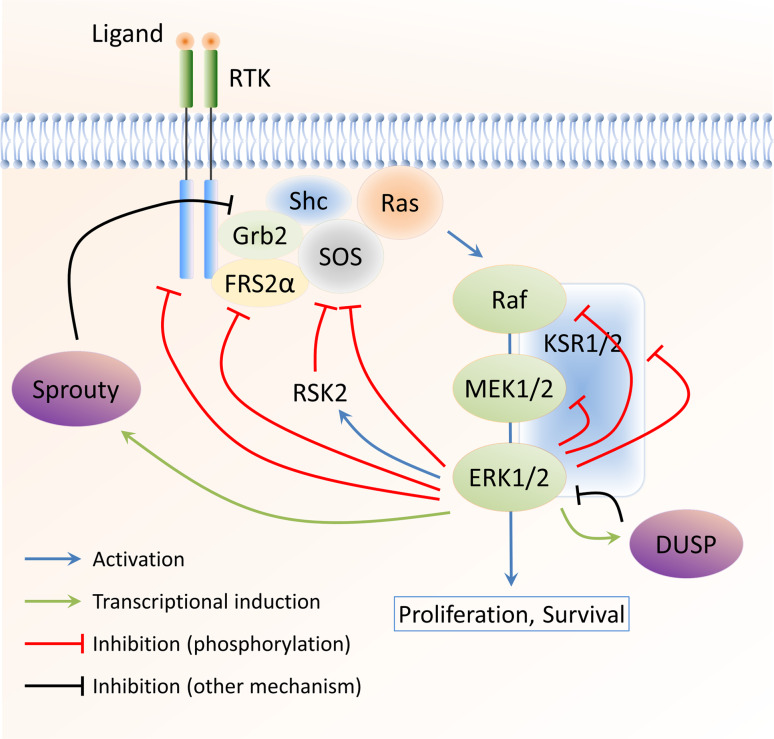
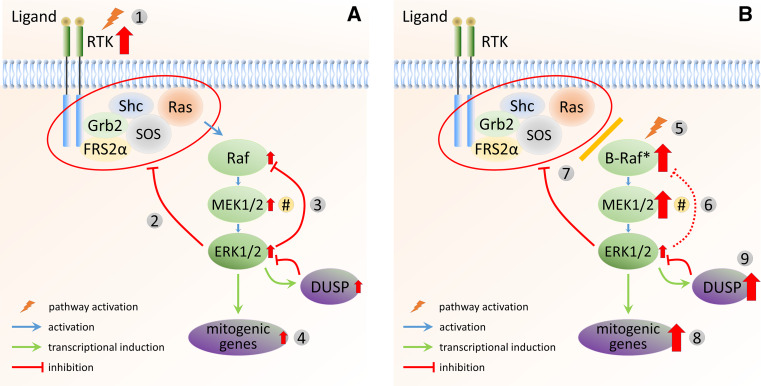
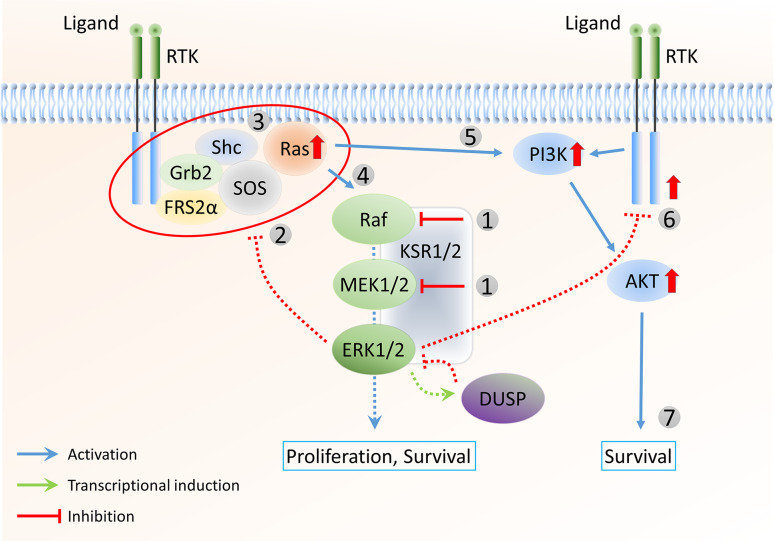
The extracellular signal-regulated kinase 1/2 (ERK1/2) mitogen-activated protein kinase (MAPK) signalling pathway regulates many cellular functions, including proliferation, differentiation, and transformation. To reliably convert external stimuli into specific cellular responses and to adapt to environmental circumstances, the pathway must be integrated into the overall signalling activity of the cell. Multiple mechanisms have evolved to perform this role. In this review, we will focus on negative feedback mechanisms and examine how they shape ERK1/2 MAPK signalling. We will first discuss the extensive number of negative feedback loops targeting the different components of the ERK1/2 MAPK cascade, specifically the direct posttranslational modification of pathway components by downstream protein kinases and the induction of de novo gene synthesis of specific pathway inhibitors. We will then evaluate how negative feedback modulates the spatiotemporal signalling dynamics of the ERK1/2 pathway regarding signalling amplitude and duration as well as subcellular localisation. Aberrant ERK1/2 activation results in deregulated proliferation and malignant transformation in model systems and is commonly observed in human tumours. Inhibition of the ERK1/2 pathway thus represents an attractive target for the treatment of malignant tumours with increased ERK1/2 activity. We will, therefore, discuss the effect of ERK1/2 MAPK feedback regulation on cancer treatment and how it contributes to reduced clinical efficacy of therapeutic agents and the development of drug resistance.
Overview
The claims and statistics of this paper haven’t been checked yet.
Free: it reads the open-access text and checks the first 5 claims that cite a source we can check. Create a free account to check every claim.
Integrity signals
Registry
Cites
Statistics
Figures
Verification
Claims the paper makes
The claims and statistics of this paper haven’t been checked yet.
Free: it reads the open-access text and checks the first 5 claims that cite a source we can check. Create a free account to check every claim.
Claims other papers make about this one
Each is checked against this paper’s own text: does it say what the citing paper says it does?
The source backs part of the claim, not all of it — or backs it for a different population, condition or comparison.
In the citing paper
“Co-inhibiting KRAS and EGFR can shut down feedback loops activated by KRAS monotherapy [96,101,124].”
From KRAS: Biology, Inhibition, and Mechanisms of Inhibitor Resistance (2024) · cites this paper as [124]
Experimental — accuracy not yet measuredThe cited source says what the claim attributes to it.
In the citing paper
“The limited ef fi cacy observed for MEK inhibitors may involve adaptive feedback mechanisms through the reactivation of MAPK signalling caused by the blockade of ERK signalling [11 -13].”
In the citing paper
“inhibitors of SOS1 reduce the activity of this key RAS-GEF and have demonstrated preclinical efficacy in combination with trametinib in KRASG12C-mutant and KRASG13D-mutant cell lines75, suggesting the potential for synergy when combined with KRAS-off inhibitors.”
From The current state of the art and future trends in RAS-targeted cancer therapies (2022) · cites this paper as [75]
In the citing paper
“SOS1 activation has been shown to be a key mechanism of adaptive resistance to MEK inhibitors; therefore, BI-3406 has been evaluated in combination with trametinib in KRASG12C-mutant and KRASG13D-mutant cell lines and found to synergistically inhibit their growth75.”
From The current state of the art and future trends in RAS-targeted cancer therapies (2022) · cites this paper as [75]
Self-check
Percentages, sums and reported differences re-computed from the paper’s own numbers.
The self-check needs the paper’s full text.
Citations
Cites
Mutations of the BRAF gene in human cancer
Davies, H., Bignell, G. R., Cox, C., Stephens, P., Edkins, S., Clegg, S., Teague, J., Woffendin, H., Garnett, M. J., Bottomley, W., et al. (2002) · Nature · doi:10.1038/nature00766 · Cited by 10,674
Pao, W., Miller, V., Zakowski, M., Doherty, J., Politi, K., Sarkaria, I., Singh, B., Heelan, R., Rusch, V., Fulton, L., et al. (2004) · Proceedings of the National Academy of Sciences · doi:10.1073/pnas.0405220101 · Cited by 4,338
Alessi, D. R., Cuenda, A., Cohen, P., Dudley, D. T., & Saltiel, A. R. (1995) · Journal of Biological Chemistry · doi:10.1074/jbc.270.46.27489 · Cited by 3,393
Inhibition of Mutated, Activated BRAF in Metastatic Melanoma
Flaherty, K. T., Puzanov, I., Kim, K. B., Ribas, A., McArthur, G. A., Sosman, J. A., O'Dwyer, P. J., Lee, R. J., Grippo, J. F., Nolop, K., et al. (2010) · New England Journal of Medicine · doi:10.1056/nejmoa1002011 · Cited by 3,103
Combined BRAF and MEK inhibition in melanoma with BRAF V600 mutations
Flaherty, K. T., Infante, J. R., Daud, A., Gonzalez, R., Kefford, R. F., Sosman, J., Hamid, O., Schuchter, L., Cebon, J., Ibrahim, N., et al. (2012) · New England Journal of Medicine · doi:10.1056/nejmoa1210093 · Cited by 2,810
Melanomas acquire resistance to B-RAF(V600E) inhibition by RTK or N-RAS upregulation
Nazarian, R., Shi, H., Wang, Q., Kong, X., Koya, R. C., Lee, H., Chen, Z., Lee, M.-K., Attar, N., Sazegar, H., et al. (2010) · Nature · doi:10.1038/nature09626 · Cited by 2,192
Unresponsiveness of colon cancer to BRAF(V600E) inhibition through feedback activation of EGFR
Prahallad, A., Sun, C., Huang, S., Di Nicolantonio, F., Salazar, R., Zecchin, D., Beijersbergen, R. L., Bardelli, A., & Bernards, R. (2012) · Nature · doi:10.1038/nature10868 · Cited by 2,051
Clinical efficacy of a RAF inhibitor needs broad target blockade in BRAF-mutant melanoma
Bollag, G., Hirth, P., Tsai, J., Zhang, J., Ibrahim, P. N., Cho, H., Spevak, W., Zhang, C., Zhang, Y., Habets, G., et al. (2010) · Nature · doi:10.1038/nature09454 · Cited by 1,831
RAF inhibitors transactivate RAF dimers and ERK signalling in cells with wild-type BRAF
Poulikakos, P. I., Zhang, C., Bollag, G., Shokat, K. M., & Rosen, N. (2010) · Nature · doi:10.1038/nature08902 · Cited by 1,811
Kinase-Dead BRAF and Oncogenic RAS Cooperate to Drive Tumor Progression through CRAF
Heidorn, S. J., Milagre, C., Whittaker, S., Nourry, A., Niculescu-Duvas, I., Dhomen, N., Hussain, J., Reis-Filho, J. S., Springer, C. J., Pritchard, C., et al. (2010) · Cell · doi:10.1016/j.cell.2009.12.040 · Cited by 1,465
MAPK cascade signalling and synaptic plasticity
Thomas, G. M., & Huganir, R. L. (2004) · Nature Reviews Neuroscience · doi:10.1038/nrn1346 · Cited by 1,454
BRAF mutation predicts sensitivity to MEK inhibition
Solit, D. B., Garraway, L. A., Pratilas, C. A., Sawai, A., Getz, G., Basso, A., Ye, Q., Lobo, J. M., She, Y., Osman, I., et al. (2006) · Nature · doi:10.1038/nature04304 · Cited by 1,328
The extracellular signal-regulated kinase: Multiple substrates regulate diverse cellular functions
Yoon, S., & Seger, R. (2006) · Growth Factors · doi:10.1080/02699050500284218 · Cited by 1,273
Villanueva, J., Vultur, A., Lee, J. T., Somasundaram, R., Fukunaga-Kalabis, M., Cipolla, A. K., Wubbenhorst, B., Xu, X., Gimotty, P. A., Kee, D., et al. (2010) · Cancer Cell · doi:10.1016/j.ccr.2010.11.023 · Cited by 1,259
Reversible and adaptive resistance to BRAF(V600E) inhibition in melanoma
Sun, C., Wang, L., Huang, S., Heynen, G. J. J. E., Prahallad, A., Robert, C., Haanen, J., Blank, C., Wesseling, J., Willems, S. M., et al. (2014) · Nature · doi:10.1038/nature13121 · Cited by 888
Traverse, S., Gomez, N., Paterson, H., Marshall, C., & Cohen, P. (1992) · Biochemical Journal · doi:10.1042/bj2880351 · Cited by 874
Kouhara, H., Hadari, Y. R., Spivak-Kroizman, T., Schilling, J., Bar-Sagi, D., Lax, I., & Schlessinger, J. (1997) · Cell · doi:10.1016/s0092-8674(00)80252-4 · Cited by 873
Senescence of human fibroblasts induced by oncogenic Raf
Zhu, J., Woods, D., McMahon, M., & Bishop, J. M. (1998) · Genes & Development · doi:10.1101/gad.12.19.2997 · Cited by 826
Protein phosphatases and the regulation of mitogen-activated protein kinase signalling
Keyse, S. M. (2000) · Current Opinion in Cell Biology · doi:10.1016/s0955-0674(99)00075-7 · Cited by 807
Endocytosis and intracellular trafficking of ErbBs
Sorkin, A., & Goh, L. K. (2009) · Experimental Cell Research · doi:10.1016/j.yexcr.2008.07.029 · Cited by 756
Hacohen, N., Kramer, S., Sutherland, D., Hiromi, Y., & Krasnow, M. A. (1998) · Cell · doi:10.1016/s0092-8674(00)80919-8 · Cited by 749
Regulation of RAF protein kinases in ERK signalling
Lavoie, H., & Therrien, M. (2015) · Nature Reviews Molecular Cell Biology · doi:10.1038/nrm3979 · Cited by 702
Phase II Pilot Study of Vemurafenib in Patients With Metastatic BRAF -Mutated Colorectal Cancer
Kopetz, S., Desai, J., Chan, E., Hecht, J. R., O'Dwyer, P. J., Maru, D., Morris, V., Janku, F., Dasari, A., Chung, W., et al. (2015) · Journal of Clinical Oncology · doi:10.1200/jco.2015.63.2497 · Cited by 697
Shi, H., Moriceau, G., Kong, X., Lee, M.-K., Lee, H., Koya, R. C., Ng, C., Chodon, T., Scolyer, R. A., Dahlman, K. B., et al. (2012) · Nature Communications · doi:10.1038/ncomms1727 · Cited by 640
Woods, D., Parry, D., Cherwinski, H., Bosch, E., Lees, E., & McMahon, M. (1997) · Molecular and Cellular Biology · doi:10.1128/mcb.17.9.5598 · Cited by 639
Regulation of Raf-1 by Direct Feedback Phosphorylation
Dougherty, M. K., Müller, J., Ritt, D. A., Zhou, M., Zhou, X. Z., Copeland, T. D., Conrads, T. P., Veenstra, T. D., Lu, K. P., & Morrison, D. K. (2005) · Molecular Cell · doi:10.1016/j.molcel.2004.11.055 · Cited by 633
Self-citationIntegrating signals from RTKs to ERK/MAPK
McKay, M. M., & Morrison, D. K. (2007) · Oncogene · doi:10.1038/sj.onc.1210394 · Cited by 621
Pratilas, C. A., Taylor, B. S., Ye, Q., Viale, A., Sander, C., Solit, D. B., & Rosen, N. (2009) · Proceedings of the National Academy of Sciences · doi:10.1073/pnas.0900780106 · Cited by 614
Growth factor-induced MAPK network topology shapes Erk response determining PC-12 cell fate
Santos, S. D. M., Verveer, P. J., & Bastiaens, P. I. H. (2007) · Nature Cell Biology · doi:10.1038/ncb1543 · Cited by 609
Tumor adaptation and resistance to RAF inhibitors
Lito, P., Rosen, N., & Solit, D. B. (2013) · Nature Medicine · doi:10.1038/nm.3392 · Cited by 585
Sprouty1 and Sprouty2 provide a control mechanism for the Ras/MAPK signalling pathway
Hanafusa, H., Torii, S., Yasunaga, T., & Nishida, E. (2002) · Nature Cell Biology · doi:10.1038/ncb867 · Cited by 566
Lito, P., Pratilas, C. A., Joseph, E. W., Tadi, M., Halilovic, E., Zubrowski, M., Huang, A., Wong, W. L., Callahan, M. K., Merghoub, T., et al. (2012) · Cancer Cell · doi:10.1016/j.ccr.2012.10.009 · Cited by 562
Yao, Z., Torres, N. M., Tao, A., Gao, Y., Luo, L., Li, Q., de Stanchina, E., Abdel-Wahab, O., Solit, D. B., Poulikakos, P. I., et al. (2015) · Cancer Cell · doi:10.1016/j.ccell.2015.08.001 · Cited by 543
Dual‐specificity MAP kinase phosphatases (MKPs): Shaping the outcome of MAP kinase signalling
Caunt, C. J., & Keyse, S. M. (2013) · The FEBS Journal · doi:10.1111/j.1742-4658.2012.08716.x · Cited by 535
Elevated CRAF as a Potential Mechanism of Acquired Resistance to BRAF Inhibition in Melanoma
Montagut, C., Sharma, S. V., Shioda, T., McDermott, U., Ulman, M., Ulkus, L. E., Dias-Santagata, D., Stubbs, H., Lee, D. Y., Singh, A., et al. (2008) · Cancer Research · doi:10.1158/0008-5472.can-07-6787 · Cited by 508
Sprouty, an intracellular inhibitor of Ras signaling
Casci, T., Vinós, J., & Freeman, M. (1999) · Cell · doi:10.1016/s0092-8674(00)80576-0 · Cited by 467
Serine and tyrosine phosphorylations cooperate in Raf-1, but not B-Raf activation
Mason, C. S. (1999) · The EMBO Journal · doi:10.1093/emboj/18.8.2137 · Cited by 457
Ascierto, P. A., Minor, D., Ribas, A., Lebbe, C., O'Hagan, A., Arya, N., Guckert, M., Schadendorf, D., Kefford, R. F., Grob, J.-J., et al. (2013) · Journal of Clinical Oncology · doi:10.1200/jco.2013.49.8691 · Cited by 432
Sprouty proteins: multifaceted negative-feedback regulators of receptor tyrosine kinase signaling
Mason, J. M., Morrison, D. J., Albert Basson, M., & Licht, J. D. (2006) · Trends in Cell Biology · doi:10.1016/j.tcb.2005.11.004 · Cited by 424
Regulation and Role of Raf-1/B-Raf Heterodimerization
Rushworth, L. K., Hindley, A. D., O'Neill, E., & Kolch, W. (2006) · Molecular and Cellular Biology · doi:10.1128/mcb.26.6.2262-2272.2006 · Cited by 418
Wild-Type and Mutant B-RAF Activate C-RAF through Distinct Mechanisms Involving Heterodimerization
Garnett, M. J., Rana, S., Paterson, H., Barford, D., & Marais, R. (2005) · Molecular Cell · doi:10.1016/j.molcel.2005.10.022 · Cited by 416
Mechanisms of regulating the Raf kinase family
Chong, H., Vikis, H. G., & Guan, K.-L. (2003) · Cellular Signalling · doi:10.1016/s0898-6568(02)00139-0 · Cited by 405
Active Ras induces heterodimerization of cRaf and BRaf.
Weber, C., Slupsky, J. R., Kalmes, H. A., & Rapp, U. R. (2001) · PubMed · Cited by 383
MEK Inhibition Leads to PI3K/AKT Activation by Relieving a Negative Feedback on ERBB Receptors
Turke, A. B., Song, Y., Costa, C., Cook, R., Arteaga, C. L., Asara, J. M., & Engelman, J. A. (2012) · Cancer Research · doi:10.1158/0008-5472.can-11-3747 · Cited by 368
A Genome-Scale RNA Interference Screen Implicates NF1 Loss in Resistance to RAF Inhibition
Whittaker, S. R., Theurillat, J.-P., Van Allen, E., Wagle, N., Hsiao, J., Cowley, G. S., Schadendorf, D., Root, D. E., & Garraway, L. A. (2013) · Cancer Discovery · doi:10.1158/2159-8290.cd-12-0470 · Cited by 359
KSR, a novel protein kinase required for RAS signal transduction
Therrien, M., Chang, H. C., Solomon, N. M., Karim, F. D., Wassarman, D. A., & Rubin, G. M. (1995) · Cell · doi:10.1016/0092-8674(95)90204-x · Cited by 339
Loss of NF1 in Cutaneous Melanoma Is Associated with RAS Activation and MEK Dependence
Nissan, M. H., Pratilas, C. A., Jones, A. M., Ramirez, R., Won, H., Liu, C., Tiwari, S., Kong, L., Hanrahan, A. J., Yao, Z., et al. (2014) · Cancer Research · doi:10.1158/0008-5472.can-13-2625 · Cited by 319
Sundaram, M., & Han, M. (1995) · Cell · doi:10.1016/0092-8674(95)90205-8 · Cited by 306
The ksr-1 gene encodes a novel protein kinase involved in Ras-mediated signaling in C. elegans
Kornfeld, K., Hom, D. B., & Horvitz, H. R. (1995) · Cell · doi:10.1016/0092-8674(95)90206-6 · Cited by 299
Peng, S.-B., Henry, J. R., Kaufman, M. D., Lu, W.-P., Smith, B. D., Vogeti, S., Rutkoski, T. J., Wise, S., Chun, L., Zhang, Y., et al. (2015) · Cancer Cell · doi:10.1016/j.ccell.2015.08.002 · Cited by 294
Mao, M., Tian, F., Mariadason, J. M., Tsao, C. C., Lemos, R., Dayyani, F., Gopal, Y. N. V., Jiang, Z.-Q., Wistuba, I. I., Tang, X. M., et al. (2013) · Clinical Cancer Research · doi:10.1158/1078-0432.ccr-11-1446 · Cited by 290
PAK1 phosphorylation of MEK1 regulates fibronectin-stimulated MAPK activation
Slack-Davis, J. K., Eblen, S. T., Zecevic, M., Boerner, S. A., Tarcsafalvi, A., Diaz, H. B., Marshall, M. S., Weber, M. J., Parsons, J. T., & Catling, A. D. (2003) · The Journal of Cell Biology · doi:10.1083/jcb.200212141 · Cited by 279
Yaeger, R., Cercek, A., O'Reilly, E. M., Reidy, D. L., Kemeny, N., Wolinsky, T., Capanu, M., Gollub, M. J., Rosen, N., Berger, M. F., et al. (2015) · Clinical Cancer Research · doi:10.1158/1078-0432.ccr-14-2779 · Cited by 276
C-TAK1 Regulates Ras Signaling by Phosphorylating the MAPK Scaffold, KSR1
Müller, J., Ory, S., Copeland, T., Piwnica-Worms, H., & Morrison, D. K. (2001) · Molecular Cell · doi:10.1016/s1097-2765(01)00383-5 · Cited by 274
Self-citationIsotype-Specific Functions of Raf Kinases
Hagemann, C., & Rapp, U. R. (1999) · Experimental Cell Research · doi:10.1006/excr.1999.4689 · Cited by 261
DUSPs, to MAP kinases and beyond
Huang, C.-Y., & Tan, T.-H. (2012) · Cell & Bioscience · doi:10.1186/2045-3701-2-24 · Cited by 260
Elucidating Distinct Roles for NF1 in Melanomagenesis
Maertens, O., Johnson, B., Hollstein, P., Frederick, D. T., Cooper, Z. A., Messiaen, L., Bronson, R. T., McMahon, M., Granter, S., Flaherty, K., et al. (2013) · Cancer Discovery · doi:10.1158/2159-8290.cd-12-0313 · Cited by 258
Genetic Predictors of MEK Dependence in Non–Small Cell Lung Cancer
Pratilas, C. A., Hanrahan, A. J., Halilovic, E., Persaud, Y., Soh, J., Chitale, D., Shigematsu, H., Yamamoto, H., Sawai, A., Janakiraman, M., et al. (2008) · Cancer Research · doi:10.1158/0008-5472.can-08-2223 · Cited by 255
Sprouty: a common antagonist of FGF and EGF signaling pathways in Drosophila
Kramer, S., Okabe, M., Hacohen, N., Krasnow, M. A., & Hiromi, Y. (1999) · Development · doi:10.1242/dev.126.11.2515 · Cited by 254
Membrane-dependent signal integration by the Ras activator Son of sevenless
Gureasko, J., Galush, W. J., Boykevisch, S., Sondermann, H., Bar-Sagi, D., Groves, J. T., & Kuriyan, J. (2008) · Nature Structural & Molecular Biology · doi:10.1038/nsmb.1418 · Cited by 252
Mammalian Sprouty4 suppresses Ras-independent ERK activation by binding to Raf1
Sasaki, A., Taketomi, T., Kato, R., Saeki, K., Nonami, A., Sasaki, M., Kuriyama, M., Saito, N., Shibuya, M., & Yoshimura, A. (2003) · Nature Cell Biology · doi:10.1038/ncb978 · Cited by 251
Brightman, F. A., & Fell, D. A. (2000) · FEBS Letters · doi:10.1016/s0014-5793(00)02037-8 · Cited by 247
The Mammalian MAPK/ERK Pathway Exhibits Properties of a Negative Feedback Amplifier
Sturm, O. E., Orton, R., Grindlay, J., Birtwistle, M., Vyshemirsky, V., Gilbert, D., Calder, M., Pitt, A., Kholodenko, B., & Kolch, W. (2010) · Science Signaling · doi:10.1126/scisignal.2001212 · Cited by 247
Impact of Feedback Phosphorylation and Raf Heterodimerization on Normal and Mutant B-Raf Signaling
Ritt, D. A., Monson, D. M., Specht, S. I., & Morrison, D. K. (2010) · Molecular and Cellular Biology · doi:10.1128/mcb.00569-09 · Cited by 238
Sprouty2 Inhibits the Ras/MAP Kinase Pathway by Inhibiting the Activation of Raf
Yusoff, P., Lao, D.-H., Ong, S. H., Wong, E. S. M., Lim, J., Lo, T. L., Leong, H. F., Fong, C. W., & Guy, G. R. (2002) · Journal of Biological Chemistry · doi:10.1074/jbc.m108368200 · Cited by 230
Reversing Melanoma Cross-Resistance to BRAF and MEK Inhibitors by Co-Targeting the AKT/mTOR Pathway
Atefi, M., von Euw, E., Attar, N., Ng, C., Chu, C., Guo, D., Nazarian, R., Chmielowski, B., Glaspy, J. A., Comin-Anduix, B., et al. (2011) · PLoS ONE · doi:10.1371/journal.pone.0028973 · Cited by 227
Protein scaffolds in MAP kinase signalling
Brown, M. D., & Sacks, D. B. (2009) · Cellular Signalling · doi:10.1016/j.cellsig.2008.11.013 · Cited by 224
Shi, H., Kong, X., Ribas, A., & Lo, R. S. (2011) · Cancer Research · doi:10.1158/0008-5472.can-11-0140 · Cited by 222
Analysis of BRAF and N-RAS mutations in metastatic melanoma tissues.
Gorden, A., Osman, I., Gai, W., He, D., Huang, W., Davidson, A., Houghton, A. N., BUSAM, K. J., & Polsky, D. (2003) · PubMed · Cited by 212
Little, A. S., Balmanno, K., Sale, M. J., Newman, S., Dry, J. R., Hampson, M., Edwards, P. A. W., Smith, P. D., & Cook, S. J. (2011) · Science Signaling · doi:10.1126/scisignal.2001752 · Cited by 210
Northwood, I. C., Gonzalez, F. A., Wartmann, M., Raden, D. L., & Davis, R. J. (1991) · Journal of Biological Chemistry · doi:10.1016/s0021-9258(18)98612-6 · Cited by 209
Cacace, A. M., Michaud, N. R., Therrien, M., Mathes, K., Copeland, T., Rubin, G. M., & Morrison, D. K. (1999) · Molecular and Cellular Biology · doi:10.1128/mcb.19.1.229 · Cited by 209
Mandl, M., Slack, D. N., & Keyse, S. M. (2005) · Molecular and Cellular Biology · doi:10.1128/mcb.25.5.1830-1845.2005 · Cited by 206
Yadav, V., Zhang, X., Liu, J., Estrem, S., Li, S., Gong, X.-Q., Buchanan, S., Henry, J. R., Starling, J. J., & Peng, S.-B. (2012) · Journal of Biological Chemistry · doi:10.1074/jbc.m112.377218 · Cited by 200
Regulation of the MAP kinase pathway by mammalian Ksr through direct interaction with MEK and ERK
Yu, W., Fantl, W. J., Harrowe, G., & Williams, L. T. (1998) · Current Biology · doi:10.1016/s0960-9822(98)70020-x · Cited by 197
Ekerot, M., Stavridis, M. P., Delavaine, L., Mitchell, M. P., Staples, C., Owens, D. M., Keenan, I. D., Dickinson, R. J., Storey, K. G., & Keyse, S. M. (2008) · Biochemical Journal · doi:10.1042/bj20071512 · Cited by 195
The HER-2/neu oncogene: prognostic factor, predictive factor and target for therapy
Ross, J. S., & Fletcher, J. A. (1999) · Seminars in Cancer Biology · doi:10.1006/scbi.1998.0083 · Cited by 194
Strong negative feedback from Erk to Raf confers robustness to MAPK signalling
Fritsche‐Guenther, R., Witzel, F., Sieber, A., Herr, R., Schmidt, N., Braun, S., Brummer, T., Sers, C., & Blüthgen, N. (2011) · Molecular Systems Biology · doi:10.1038/msb.2011.27 · Cited by 192
Langlois, W. J., Sasaoka, T., Saltiel, A. R., & Olefsky, J. M. (1995) · Journal of Biological Chemistry · doi:10.1074/jbc.270.43.25320 · Cited by 187
Zhang, Z., Kobayashi, S., Borczuk, A. C., Leidner, R. S., LaFramboise, T., Levine, A. D., & Halmos, B. (2010) · Carcinogenesis · doi:10.1093/carcin/bgq020 · Cited by 186
A Mek1–Mek2 heterodimer determines the strength and duration of the Erk signal
Catalanotti, F., Reyes, G., Jesenberger, V., Galabova-Kovacs, G., de Matos Simoes, R., Carugo, O., & Baccarini, M. (2009) · Nature Structural & Molecular Biology · doi:10.1038/nsmb.1564 · Cited by 182
Corbalan-Garcia, S., Yang, S.-S., Degenhardt, K. R., & Bar-Sagi, D. (1996) · Molecular and Cellular Biology · doi:10.1128/mcb.16.10.5674 · Cited by 178
Murine Ksr interacts with MEK and inhibits Ras-induced transformation
Denouel-Galy, A., Douville, E., Warne, P. H., Papin, C., Laugier, D., Calothy, G., Downward, J., & Eychène, A. (1998) · Current Biology · doi:10.1016/s0960-9822(98)70019-3 · Cited by 177
Lax, I., Wong, A., Lamothe, B., Lee, A., Frost, A., Hawes, J., & Schlessinger, J. (2002) · Molecular Cell · doi:10.1016/s1097-2765(02)00689-5 · Cited by 165
EGF induced SOS phosphorylation in PC12 cells involves P90 RSK-2
Douville, E., & Downward, J. (1997) · Oncogene · doi:10.1038/sj.onc.1201214 · Cited by 165
Signaling dynamics of the KSR1 scaffold complex
McKay, M. M., Ritt, D. A., & Morrison, D. K. (2009) · Proceedings of the National Academy of Sciences · doi:10.1073/pnas.0901590106 · Cited by 163
Takishima, K., Griswold-Prenner, I., Ingebritsen, T., & Rosner, M. R. (1991) · Proceedings of the National Academy of Sciences · doi:10.1073/pnas.88.6.2520 · Cited by 159
Scaffolds: interaction platforms for cellular signalling circuits
Zeke, A., Lukács, M., Lim, W. A., & Reményi, A. (2009) · Trends in Cell Biology · doi:10.1016/j.tcb.2009.05.007 · Cited by 151
The developing story of Sprouty and cancer
Masoumi-Moghaddam, S., Amini, A., & Morris, D. L. (2014) · Cancer and Metastasis Reviews · doi:10.1007/s10555-014-9497-1 · Cited by 150
Coles, L. C., & Shaw, P. E. (2002) · Oncogene · doi:10.1038/sj.onc.1205302 · Cited by 147
The Molecular Scaffold KSR1 Regulates the Proliferative and Oncogenic Potential of Cells
Kortum, R. L., & Lewis, R. E. (2004) · Molecular and Cellular Biology · doi:10.1128/mcb.24.10.4407-4416.2004 · Cited by 145
Eblen, S. T., Slack-Davis, J. K., Tarcsafalvi, A., Parsons, J. T., Weber, M. J., & Catling, A. D. (2004) · Molecular and Cellular Biology · doi:10.1128/mcb.24.6.2308-2317.2004 · Cited by 138
Identification of novel ERK-mediated feedback phosphorylation sites at the C-terminus of B-Raf
Brummer, T., Naegele, H., Reth, M. G., & Misawa, Y. (2003) · Oncogene · doi:10.1038/sj.onc.1207185 · Cited by 137
Karlsson, M., Mathers, J., Dickinson, R. J., Mandl, M., & Keyse, S. M. (2004) · Journal of Biological Chemistry · doi:10.1074/jbc.m406720200 · Cited by 132
Sprouty proteins: modified modulators, matchmakers or missing links?
Guy, G. R., Jackson, R. A., Yusoff, P., & Chow, S. Y. (2009) · Journal of Endocrinology · doi:10.1677/joe-09-0110 · Cited by 129
Leboeuf, R., Baumgartner, J. E., Benezra, M., Malaguarnera, R., Solit, D., Pratilas, C. A., Rosen, N., Knauf, J. A., & Fagin, J. A. (2008) · The Journal of Clinical Endocrinology & Metabolism · doi:10.1210/jc.2007-2825 · Cited by 126
RAF inhibition and induction of cutaneous squamous cell carcinoma
Robert, C., Arnault, J.-P., & Mateus, C. (2011) · Current Opinion in Oncology · doi:10.1097/cco.0b013e3283436e8c · Cited by 119
Resistance to MEK inhibitors: should we co-target upstream?
Poulikakos, P. I., & Solit, D. B. (2011) · Science Signaling · doi:10.1126/scisignal.2001948 · Cited by 119
ERK Pathway Positively Regulates the Expression of Sprouty Genes
Ozaki, K., Kadomoto, R., Asato, K., Tanimura, S., Itoh, N., & Kohno, M. (2001) · Biochemical and Biophysical Research Communications · doi:10.1006/bbrc.2001.5295 · Cited by 113
Casar, B., Arozarena, I., Sanz-Moreno, V., Pinto, A., Agudo-Ibáñez, L., Marais, R., Lewis, R. E., Berciano, M. T., & Crespo, P. (2009) · Molecular and Cellular Biology · doi:10.1128/mcb.01359-08 · Cited by 112
Brunet, A., Pagès, G., & Pouysségur, J. (1994) · FEBS Letters · doi:10.1016/0014-5793(94)00475-7 · Cited by 111
Li, X., Huang, Y., Jiang, J., & Frank, S. J. (2008) · Cellular Signalling · doi:10.1016/j.cellsig.2008.08.006 · Cited by 110
Porfiri, E., & McCormick, F. (1996) · Journal of Biological Chemistry · doi:10.1074/jbc.271.10.5871 · Cited by 109
Vemurafenib in Patients With BRAF V600E Mutation–Positive Advanced Melanoma
Ravnan, M. C., & Matalka, M. S. (2012) · Clinical Therapeutics · doi:10.1016/j.clinthera.2012.06.009 · Cited by 108
Rossomando, A. J., Dent, P., Sturgill, T. W., & Marshak, D. R. (1994) · Molecular and Cellular Biology · doi:10.1128/mcb.14.3.1594 · Cited by 100
Ueki, K., Matsuda, S., Tobe, K., Gotoh, Y., Tamemoto, H., Yachi, M., Akanuma, Y., Yazaki, Y., Nishida, E., & Kadowaki, T. (1994) · Journal of Biological Chemistry · doi:10.1016/s0021-9258(17)40745-9 · Cited by 96
Shalin, S. C., Hernandez, C. M., Dougherty, M. K., Morrison, D. K., & Sweatt, J. D. (2006) · Neuron · doi:10.1016/j.neuron.2006.04.029 · Cited by 96
Balan, V., Leicht, D. T., Zhu, J., Balan, K., Kaplun, A., Singh-Gupta, V., Qin, J., Ruan, H., Comb, M. J., & Tzivion, G. (2006) · Molecular Biology of the Cell · doi:10.1091/mbc.e04-12-1123 · Cited by 90
Müller, J., Cacace, A. M., Lyons, W. E., McGill, C. B., & Morrison, D. K. (2000) · Molecular and Cellular Biology · doi:10.1128/mcb.20.15.5529-5539.2000 · Cited by 89
Self-citationRSK phosphorylates SOS1 creating 14-3-3-docking sites and negatively regulating MAPK activation
Saha, M., Carriere, A., Cheerathodi, M., Zhang, X., Lavoie, G., Rush, J., Roux, P. P., & Ballif, B. A. (2012) · Biochemical Journal · doi:10.1042/bj20120938 · Cited by 86
Functional analysis of C‐TAK1 substrate binding and identification of PKP2 as a new C‐TAK1 substrate
Müller, J., Ritt, D. A., Copeland, T. D., & Morrison, D. K. (2003) · The EMBO Journal · doi:10.1093/emboj/cdg426 · Cited by 85
Self-citationNegative Modulation of Membrane Localization of the Raf-1 Protein Kinase by Hyperphosphorylation
Wartmann, M., Hofer, P., Turowski, P., Saltiel, A. R., & Hynes, N. E. (1997) · Journal of Biological Chemistry · doi:10.1074/jbc.272.7.3915 · Cited by 79
The Molecular Scaffold Kinase Suppressor of Ras 1 (KSR1) Regulates Adipogenesis
Kortum, R. L., Costanzo, D. L., Haferbier, J., Schreiner, S. J., Razidlo, G. L., Wu, M.-H., Volle, D. J., Mori, T., Sakaue, H., Chaika, N. V., et al. (2005) · Molecular and Cellular Biology · doi:10.1128/mcb.25.17.7592-7604.2005 · Cited by 79
Multiple Decisive Phosphorylation Sites for the Negative Feedback Regulation of SOS1 via ERK*
Kamioka, Y., Yasuda, S., Fujita, Y., Aoki, K., & Matsuda, M. (2010) · Journal of Biological Chemistry · doi:10.1074/jbc.m110.135517 · Cited by 74
Fattore, L., Marra, E., Pisanu, M. E., Noto, A., Vitis, C. D., Belleudi, F., Aurisicchio, L., Mancini, R., Torrisi, M. R., Ascierto, P. A., et al. (2013) · Journal of Translational Medicine · doi:10.1186/1479-5876-11-180 · Cited by 70
ERK-Mediated Phosphorylation of Fibroblast Growth Factor Receptor 1 on Ser 777 Inhibits Signaling
Zakrzewska, M., Haugsten, E. M., Nadratowska-Wesolowska, B., Oppelt, A., Hausott, B., Jin, Y., Otlewski, J., Wesche, J., & Wiedlocha, A. (2013) · Science Signaling · doi:10.1126/scisignal.2003087 · Cited by 55
Fibroblast growth factor-2 regulation of sprouty and NR4A genes in bovine ovarian granulosa cells
Jiang, Z., Ripamonte, P., Junior, J. B., Portela, V. M., & Price, C. A. (2011) · Journal of Cellular Physiology · doi:10.1002/jcp.22509 · Cited by 48
Novel C‐Raf phosphorylation sites: serine 296 and 301 participate in Raf regulation
Hekman, M., Fischer, A., Wennogle, L. P., Wang, Y. K., Campbell, S. L., & Rapp, U. R. (2004) · FEBS Letters · doi:10.1016/j.febslet.2004.11.105 · Cited by 46
EGFR and FGFR Signaling through FRS2 Is Subject to Negative Feedback Control by ERK1/2
Wu, Y., Chen, Z., & Ullrich, A. (2003) · Biological Chemistry · doi:10.1515/bc.2003.134 · Cited by 46
Negative feedback loop in T‐cell activation through MAPK‐catalyzed threonine phosphorylation of LAT
Matsuda, S., Miwa, Y., Hirata, Y., Minowa, A., Tanaka, J., Nishida, E., & Koyasu, S. (2004) · The EMBO Journal · doi:10.1038/sj.emboj.7600268 · Cited by 45
Sato, K., Shin, M., Sakimura, A., Zhou, Y., Tanaka, T., Kawanishi, M., Kawasaki, Y., Yokoyama, S., Koizumi, K., Saiki, I., et al. (2013) · Cancer Science · doi:10.1111/cas.12225 · Cited by 40
Panagiotaki, N., Dajas‐Bailador, F., Amaya, E., Papalopulu, N., & Dorey, K. (2010) · Development · doi:10.1242/dev.053173 · Cited by 40
Phosphorylation of the Kinase Suppressor of Ras by Associated Kinases
Volle, D. J., Fulton, J. A., Chaika, O. V., McDermott, K., Huang, H., Steinke, L., & Lewis, R. E. (1999) · Biochemistry · doi:10.1021/bi983050d · Cited by 38
Feedback activation of neurofibromin terminates growth factor-induced Ras activation
Hennig, A., Markwart, R., Wolff, K., Schubert, K., Cui, Y., Prior, I. A., Esparza-Franco, M. A., Ladds, G., & Rubio, I. (2016) · Cell Communication and Signaling · doi:10.1186/s12964-016-0128-z · Cited by 35
Regulation of lymphocyte development and activation by the LAT family of adapter proteins
Fuller, D. M., & Zhang, W. (2009) · Immunological Reviews · doi:10.1111/j.1600-065x.2009.00828.x · Cited by 28
Yang, X., Webster, J. B., Kovalenko, D., Nadeau, R. J., Zubanova, O., Chen, P.-Y., & Friesel, R. E. (2006) · Calcified Tissue International · doi:10.1007/s00223-005-0231-4 · Cited by 26
Weiss, R. H., Maga, E. A., & Ramirez, A. (1998) · American Journal of Physiology-Cell Physiology · doi:10.1152/ajpcell.1998.274.6.c1521 · Cited by 26
Goldinger, S. M., Zimmer, L., Schulz, C., Ugurel, S., Höeller, C., Kaehler, K. C., Schadendorf, D., Hassel, J. C., Becker, J., Hauschild, A., et al. (2013) · European Journal of Cancer · doi:10.1016/j.ejca.2013.09.014 · Cited by 25
Canal, F., Palygin, O., Pankratov, Y., Corrêa, S. A. L., & Müller, J. (2011) · The FASEB Journal · doi:10.1096/fj.10-173153 · Cited by 24
Self-citationExpression and regulation of Sprouty-2 in the granulosa-lutein cells of the corpus luteum
Haimov‐Kochman, R., Ravhon, A., Prus, D., Greenfield, C., Finci-Yeheskel, Z., Goldman‐Wohl, D., Natanson‐Yaron, S., Reich, R., Yagel, S., & Hurwitz, A. (2005) · Molecular Human Reproduction · doi:10.1093/molehr/gah203 · Cited by 22
Fgf9 signalling stimulates Spred and Sprouty expression in embryonic mouse pancreas mesenchyme
Sylvestersen, K. B., Herrera, P. L., Serup, P., & Rescan, C. (2010) · Gene Expression Patterns · doi:10.1016/j.gep.2010.10.001 · Cited by 21
Dultz, L. A., Dhar, S. I., Ogilvie, J. B., Heller, K. S., Bar‐Sagi, D., & Patel, K. N. (2013) · Surgery · doi:10.1016/j.surg.2013.06.024 · Cited by 10
Müller, J., & Morrison, D. K. (2002) · Methods in enzymology on CD-ROM/Methods in enzymology · doi:10.1016/s0076-6879(02)45040-9 · Cited by 6
Self-citation
Cited by
RAS Proteins and Their Regulators in Human Disease
Simanshu, D. K., Nissley, D. V., & McCormick, F. (2017) · Cell · doi:10.1016/j.cell.2017.06.009 · Cited by 1,943
ERK signalling: A master regulator of cell behaviour, life and fate
Lavoie, H., Gagnon, J., & Therrien, M. (2020) · Nature Reviews Molecular Cell Biology · doi:10.1038/s41580-020-0255-7 · Cited by 1,185
RAS-targeted therapies: is the undruggable drugged?
Moore, A. R., Rosenberg, S. C., McCormick, F., & Malek, S. (2020) · Nature Reviews Drug Discovery · doi:10.1038/s41573-020-0068-6 · Cited by 1,103
Targeting the RAS/RAF/MAPK pathway for cancer therapy: from mechanism to clinical studies
Bahar, M. E., Kim, H. J., & Kim, D. R. (2023) · Signal Transduction and Targeted Therapy · doi:10.1038/s41392-023-01705-z · Cited by 888
The current state of the art and future trends in RAS-targeted cancer therapies
Punekar, S. R., Velcheti, V., Neel, B. G., & Wong, K.-K. (2022) · Nature Reviews Clinical Oncology · doi:10.1038/s41571-022-00671-9 · Cited by 549
Metadata
- Authors
- Lake, D., Corrêa, S. A. L., & Müller, J.
- Affiliations
- University of Warwick (GB)
- Aston University (GB)
- Corresponding author
- Müller, Jürgen
- Venue
- Cellular and Molecular Life Sciences
- Published
- 2016-06-24
- Volume
- 73
- Issue
- 23
- Pages
- 4397-4413
- ISSN
- 1420-682X (ISSN-L)
- 1420-9071
- PMC
- PMC5075022
- OpenAlex
- W2465367340
- Cited by
- 565
- References
- 134
- Citations by year
- 2026: 48 · 2025: 45 · 2024: 63 · 2023: 74 · 2022: 73 · 2021: 84 · 2020: 63 · 2019: 50 · 2018: 43 · 2017: 21 · 2016: 1
- FWCI
- 3.46
- Type
- journal article
- Language
- en
- Open access
- hybrid
- doi.org
- Locations
- Cellular and Molecular Life Sciences (publishedVersion, cc-by)
- PubMed Central (publishedVersion, cc-by)
- PubMed (publishedVersion)
- Bradford Scholars (University of Bradford) (publishedVersion, other-oa)
- e-space (Manchester Metropolitan University) (acceptedVersion)
- Warwick Research Archive Portal (University of Warwick) (acceptedVersion)
- Aston Publications Explorer (Aston University) (submittedVersion)
- Topics
- Life Sciences › Biochemistry, Genetics and Molecular Biology › Molecular Biology › Melanoma and MAPK Pathways
- Life Sciences › Biochemistry, Genetics and Molecular Biology › Molecular Biology › Protein Kinase Regulation and GTPase Signaling
- Life Sciences › Biochemistry, Genetics and Molecular Biology › Molecular Biology › Protein Tyrosine Phosphatases
- Keywords
- ERK1/2, MAPK signaling, negative feedback regulation, post-translational modification, pathway inhibitors, subcellular localization, cancer therapy, drug resistance, malignant transformation
- MeSH terms
- Animals, Humans, Phosphorylation, Disease Progression, MAP Kinase Signaling System, Feedback, Physiological, Protein Kinase Inhibitors, Extracellular Signal-Regulated MAP Kinases
About these checks
Registry, retraction, Cites and statistics results are computed, not judged, with one exception: a printed reference that no index lists is read once by a model before it counts as a citation error. Claims are extracted by a model and kept only when their quote appears verbatim in the text; each cited source is then checked, with a model’s help, for whether it says what the claim relies on. Those verdicts can be wrong — read the claim’s quote and the cited source before relying on one.
Statistics and arithmetic are recomputed, not judged.
Confidence bands are shown only for fields calibrated on our annotated test set. None is calibrated yet, so no band is shown.
What counts as a claim ›How we measure confidence ›How we check this ›
Are you an author, or do you see a problem with this page? Request a review
Data sources
Bibliographic data: Semantic Scholar, OpenAlex, Crossref.
Contains information from the Semantic Scholar Academic Graph Datasets, made available under the ODC Attribution License (ODC-BY 1.0).
Semantic Scholar’s data is described in: Kinney, R., et al. (2023). The Semantic Scholar Open Data Platform. arXiv:2301.10140.
