

Insulin promoter DNA methylation correlates negatively with insulin gene expression and positively with HbA1c levels in human pancreatic islets
Open accessThe DOI matches its Crossref record; 20 of the 20 references it cites were found in a registry or an index.
Abstract
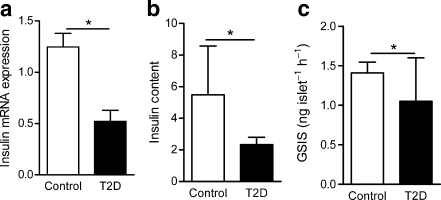
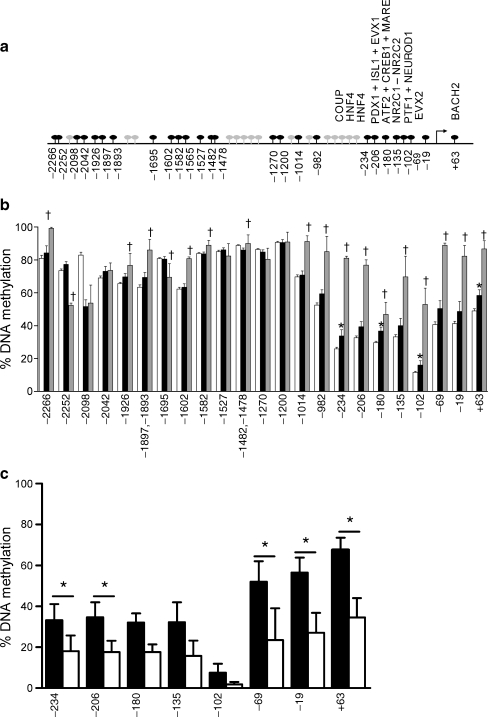
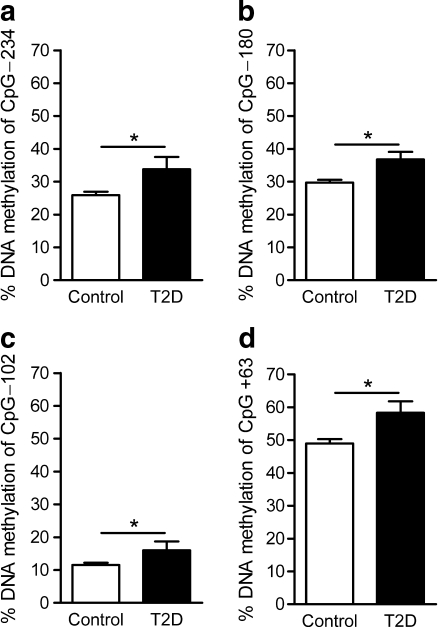
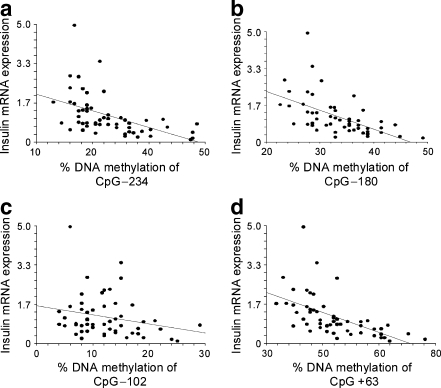
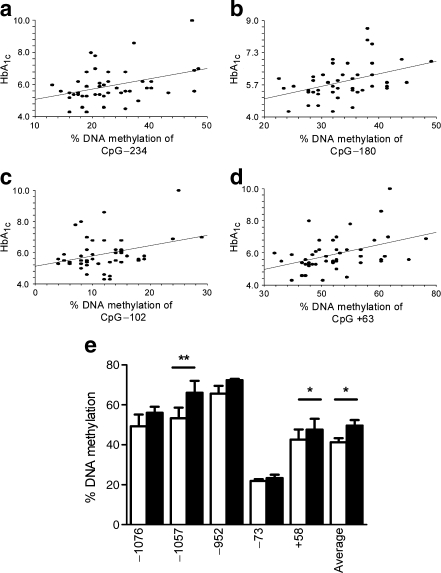
AIMS/HYPOTHESIS: Although recent studies propose that epigenetic factors influence insulin expression, the regulation of the insulin gene in type 2 diabetic islets is still not fully understood. Here, we examined DNA methylation of the insulin gene promoter in pancreatic islets from patients with type 2 diabetes and non-diabetic human donors and related it to insulin expression, HbA(1c) levels, BMI and age. METHODS: DNA methylation was analysed in 25 CpG sites of the insulin promoter and insulin mRNA expression was analysed using quantitative RT-PCR in pancreatic islets from nine donors with type 2 diabetes and 48 non-diabetic donors. RESULTS: Insulin mRNA expression (p = 0.002), insulin content (p = 0.004) and glucose-stimulated insulin secretion (p = 0.04) were reduced in pancreatic islets from patients with type 2 diabetes compared with non-diabetic donors. Moreover, four CpG sites located 234 bp, 180 and 102 bp upstream and 63 bp downstream of the transcription start site (CpG -234, -180, -102 and +63, respectively), showed increased DNA methylation in type 2 diabetic compared with non-diabetic islets (7.8%, p = 0.03; 7.1%, p = 0.02; 4.4%, p = 0.03 and 9.3%, p = 0.03, respectively). While insulin mRNA expression correlated negatively (p < 1 × 10(-6)), the level of HbA(1c) correlated positively (p ≤ 0.01) with the degree of DNA methylation for CpG -234, -180 and +63. Furthermore, DNA methylation for nine additional CpG sites correlated negatively with insulin mRNA expression (p ≤ 0.01). Also, exposure to hyperglycaemia for 72 h increased insulin promoter DNA methylation in clonal rat beta cells (p = 0.005). CONCLUSIONS/INTERPRETATIONS: This study demonstrates that DNA methylation of the insulin promoter is increased in patients with type 2 diabetes and correlates negatively with insulin gene expression in human pancreatic islets.
Overview
The claims and statistics of this paper haven’t been checked yet.
Free: it reads the open-access text and checks the first 5 claims that cite a source we can check. Create a free account to check every claim.
Integrity signals
Registry
Cites
Statistics
Figures
Verification
Claims the paper makes
The claims and statistics of this paper haven’t been checked yet.
Free: it reads the open-access text and checks the first 5 claims that cite a source we can check. Create a free account to check every claim.
Claims other papers make about this one
Each is checked against this paper’s own text: does it say what the citing paper says it does?
The cited source says what the claim attributes to it.
In the citing paper
“further suggest that hyperglycemia alters DNA methylation of PDX1 and INS ( 22 – 25 ).”
From β-Cell Failure in Type 2 Diabetes: Postulated Mechanisms and Prospects for Prevention and Treatment (2014) · cites this paper as [23]
Self-check
Percentages, sums and reported differences re-computed from the paper’s own numbers.
The self-check needs the paper’s full text.
Citations
Cites
A genome-wide association study identifies novel risk loci for type 2 diabetes
Sladek, R., Rocheleau, G., Rung, J., Dina, C., Shen, L., Serre, D., Boutin, P., Vincent, D., Belisle, A., Hadjadj, S., et al. (2007) · Nature · doi:10.1038/nature05616 · Cited by 2,993 · cited 1×
“Type 2 diabetes is a polygenic disease and it is possible that the effects of DNA methylation on type 2 diabetes are similar to those seen in genetic studies, where multiple loci with small effect sizes together contribute to an increased risk for disease [13–16].”
BackgroundGenome-wide association analysis identifies loci for type 2 diabetes and triglyceride levels
Saxena, R., Voight, B. F., Lyssenko, V., Burtt, N. P., de Bakker, P. I. W., Chen, H., Roix, J. J., Kathiresan, S., Hirschhorn, J. N., Daly, M. J., et al. (2007) · Science · doi:10.1126/science.1142358 · Cited by 2,843 · cited 1×
“Type 2 diabetes is a polygenic disease and it is possible that the effects of DNA methylation on type 2 diabetes are similar to those seen in genetic studies, where multiple loci with small effect sizes together contribute to an increased risk for disease [13–16].”
BackgroundSelf-citationA genome-wide association study of type 2 diabetes in Finns detects multiple susceptibility variants
Scott, L. J., Mohlke, K. L., Bonnycastle, L. L., Willer, C. J., Li, Y., Duren, W. L., Erdos, M. R., Stringham, H. M., Chines, P. S., Jackson, A. U., et al. (2007) · Science · doi:10.1126/science.1142382 · Cited by 2,753
Replication of Genome-Wide Association Signals in UK Samples Reveals Risk Loci for Type 2 Diabetes
Zeggini, E., Weedon, M. N., Lindgren, C. M., Frayling, T. M., Elliott, K. S., Lango, H., Timpson, N. J., Perry, J. R. B., Rayner, N. W., Freathy, R. M., et al. (2007) · Science · doi:10.1126/science.1142364 · Cited by 2,194 · cited 1×
“Type 2 diabetes is a polygenic disease and it is possible that the effects of DNA methylation on type 2 diabetes are similar to those seen in genetic studies, where multiple loci with small effect sizes together contribute to an increased risk for disease [13–16].”
BackgroundEl-Osta, A., Brasacchio, D., Yao, D., Pocai, A., Jones, P. L., Roeder, R. G., Cooper, M. E., & Brownlee, M. (2008) · The Journal of Experimental Medicine · doi:10.1084/jem.20081188 · Cited by 1,115 · cited 1×
“Recent studies have demonstrated that hyperglycaemia may induce epigenetic changes and thereby increase expression of pro-inflammatory genes in vascular cells, which subsequently may increase the risk for diabetic complications [17–20].”
BackgroundEpigenetics: a molecular link between environmental factors and type 2 diabetes
Ling, C., & Groop, L. (2009) · Diabetes · doi:10.2337/db09-1003 · Cited by 617
Self-citationNon-CpG methylation of the PGC-1α promoter through DNMT3B controls mitochondrial density.
Barrès, R., Osler, M. E., Yan, J., Rune, A., Fritz, T., Caidahl, K., Krook, A., & Zierath, J. R. (2009) · Cell Metabolism · doi:10.1016/j.cmet.2009.07.011 · Cited by 602 · cited 2×
“Recent studies suggest that epigenetic factors, including DNA methylation and histone modifications, may influence the pathogenesis of type 2 diabetes [1–4].”
BackgroundResultBrasacchio, D., Okabe, J., Tikellis, C., Balcerczyk, A., George, P., Baker, E. K., Calkin, A. C., Brownlee, M., Cooper, M. E., & El-Osta, A. (2009) · Diabetes · doi:10.2337/db08-1666 · Cited by 534 · cited 1×
“Recent studies have demonstrated that hyperglycaemia may induce epigenetic changes and thereby increase expression of pro-inflammatory genes in vascular cells, which subsequently may increase the risk for diabetic complications [17–20].”
BackgroundEpigenetic regulation of PPARGC1A in human type 2 diabetic islets and effect on insulin secretion
Ling, C., Del Guerra, S., Lupi, R., Rönn, T., Granhall, C., Luthman, H., Masiello, P., Marchetti, P., Groop, L., & Del Prato, S. (2008) · Diabetologia · doi:10.1007/s00125-007-0916-5 · Cited by 495 · cited 3×
“Our study suggests that DNA methylation can regulate gene expression in pancreatic islets from patients with type 2 diabetes and subsequently contribute to impaired insulin secretion [5].”
BackgroundResultSelf-citationMiao, F., Gonzalo, I. G., Lanting, L., & Natarajan, R. (2004) · Journal of Biological Chemistry · doi:10.1074/jbc.m311786200 · Cited by 374 · cited 1×
“Recent studies have demonstrated that hyperglycaemia may induce epigenetic changes and thereby increase expression of pro-inflammatory genes in vascular cells, which subsequently may increase the risk for diabetic complications [17–20].”
Background
Cited by
Epigenetics in Human Obesity and Type 2 Diabetes
Ling, C., & Rönn, T. (2019) · Cell Metabolism · doi:10.1016/j.cmet.2019.03.009 · Cited by 941
Self-citationRönn, T., Volkov, P., Davegårdh, C., Dayeh, T., Hall, E., Olsson, A. H., Nilsson, E., Tornberg, Å., Dekker Nitert, M., Eriksson, K.-F., et al. (2013) · PLoS Genetics · doi:10.1371/journal.pgen.1003572 · Cited by 618
“Additionally, in previous studies of DNA methylation in human pancreatic islets, the differences observed in the mixed-cell tissue were also detected in clonal beta cells exposed to hyperglycemia [20,21], suggesting that in at least some tissues, the effects are transferable from the relevant cell type to the tissue o…”
Self-citationDayeh, T., Volkov, P., Salö, S., Hall, E., Nilsson, E., Olsson, A. H., Kirkpatrick, C. L., Wollheim, C. B., Eliasson, L., Rönn, T., et al. (2014) · PLoS Genetics · doi:10.1371/journal.pgen.1004160 · Cited by 523
“Indeed, there are only a few studies to date that have used isolated human b -cells with a maximum number of 16 donors [12,13,73– 75].”
InfluentialSelf-citationEpigenetic regulation in metabolic diseases: mechanisms and advances in clinical study
Wu, Y.-L., Lin, Z.-J., Li, C.-C., Lin, X., Shan, S.-K., Guo, B., Zheng, M.-H., Li, F., Yuan, L.-Q., & Li, Z.-H. (2023) · Signal Transduction and Targeted Therapy · doi:10.1038/s41392-023-01333-7 · Cited by 476
β-Cell Failure in Type 2 Diabetes: Postulated Mechanisms and Prospects for Prevention and Treatment
Halban, P. A., Polonsky, K. S., Bowden, D. W., Hawkins, M. A., Ling, C., Mather, K. J., Powers, A. C., Rhodes, C. J., Sussel, L., & Weir, G. C. (2014) · Diabetes Care · doi:10.2337/dc14-0396 · Cited by 460
“Such studies of human pancreatic islets together with in vitro studies of clonal b-cells further suggest that hyperglycemia alters DNA methylation of PDX1 and INS (22–25).”
Self-citationNitert, M. D., Dayeh, T., Volkov, P., Elgzyri, T., Hall, E., Nilsson, E., Yang, B. T., Lang, S., Parikh, H., Wessman, Y., et al. (2012) · Diabetes · doi:10.2337/db11-1653 · Cited by 403
Self-citationNilsson, E., Jansson, P. A., Perfilyev, A., Volkov, P., Pedersen, M., Svensson, M. K., Poulsen, P., Ribel-Madsen, R., Pedersen, N. L., Almgren, P., et al. (2014) · Diabetes · doi:10.2337/db13-1459 · Cited by 391
Self-citationYang, B. T., Dayeh, T. A., Volkov, P. A., Kirkpatrick, C. L., Malmgren, S., Jing, X., Renström, E., Wollheim, C. B., Nitert, M. D., & Ling, C. (2012) · Molecular Endocrinology · doi:10.1210/me.2012-1004 · Cited by 301
“Previous studies have shown that hyperglycemia can have direct effects on the epigenetic pattern, which may result in transcriptional changes (9, 23).”
InfluentialSelf-citationEpigenomics, gestational programming and risk of metabolic syndrome
Desai, M., Jellyman, J. K., & Ross, M. G. (2015) · International Journal of Obesity · doi:10.1038/ijo.2015.13 · Cited by 278
Ronn, T., Volkov, P., Gillberg, L., Kokosar, M., Perfilyev, A., Jacobsen, A. L., Jorgensen, S. W., Brons, C., Jansson, P.-A., Eriksson, K.-F., et al. (2015) · Human Molecular Genetics · doi:10.1093/hmg/ddv124 · Cited by 270
Self-citationBacos, K., Gillberg, L., Volkov, P., Olsson, A. H., Hansen, T., Pedersen, O., Gjesing, A. P., Eiberg, H., Tuomi, T., Almgren, P., et al. (2016) · Nature Communications · doi:10.1038/ncomms11089 · Cited by 236
Self-citationAdverse pregnancy outcomes in women with diabetes
Negrato, C. A., Mattar, R., & Gomes, M. B. (2012) · Diabetology & Metabolic Syndrome · doi:10.1186/1758-5996-4-41 · Cited by 213
“Another study showed an increase of DNA methylation in insulin promoter DNA in human pancreatic islets which was negatively correlated with insulin gene expression and positively correlated with HbA1c levels [29].”
Backgroundβ-Cell Failure in Type 2 Diabetes: Postulated Mechanisms and Prospects for Prevention and Treatment
Halban, P. A., Polonsky, K. S., Bowden, D. W., Hawkins, M. A., Ling, C., Mather, K. J., Powers, A. C., Rhodes, C. J., Sussel, L., & Weir, G. C. (2014) · The Journal of Clinical Endocrinology & Metabolism · doi:10.1210/jc.2014-1425 · Cited by 222
“studies of human pancreatic islets together with in vitro studies of clonal β-cells further suggest that hyperglycemia alters DNA methylation of PDX1 and INS (22-25).”
Self-citationPaul, S., Ali, A., & Katare, R. (2020) · Journal of Diabetes and its Complications · doi:10.1016/j.jdiacomp.2020.107613 · Cited by 199
Ribel-Madsen, R., Fraga, M. F., Jacobsen, S., Bork-Jensen, J., Lara, E., Calvanese, V., Fernandez, A. F., Friedrichsen, M., Vind, B. F., Højlund, K., et al. (2012) · PLoS ONE · doi:10.1371/journal.pone.0051302 · Cited by 202
“mRNA expression of these genes was altered in T2D and in some cases correlated with DNA methylation [23,26].”
BackgroundInfluentialMetabolic memory: mechanisms and diseases
Dong, H., Sun, Y., Nie, L., Cui, A., Zhao, P., Leung, W. K., & Wang, Q. (2024) · Signal Transduction and Targeted Therapy · doi:10.1038/s41392-024-01755-x · Cited by 215
“312,313 Barres et al. observed upregulated methylation and downregulation of PPARGC1A in skeletal muscle from T2DM patiens.”
BackgroundDNA methylation in the pathogenesis of type 2 diabetes in humans
Davegårdh, C., García-Calzón, S., Bacos, K., & Ling, C. (2018) · Molecular Metabolism · doi:10.1016/j.molmet.2018.01.022 · Cited by 197
“Associations between non-genetic factors and DNA methylation in human islets DNA methylation is not only influenced by genetic factors, there are also studies showing that risk factors for T2D associate with changes to the DNA methylation pattern in human pancreatic islets (Figure 1). s is an open access article under…”
BackgroundInfluentialSelf-citationDayeh, T. A., Olsson, A. H., Volkov, P., Almgren, P., Rönn, T., & Ling, C. (2013) · Diabetologia · doi:10.1007/s00125-012-2815-7 · Cited by 199
“Recent studies from our group and others have shown that epigenetic modifications such as DNA methylation and histone modifications may affect the pathogenesis of type 2 diabetes [4–9].”
Self-citationReduced Insulin Production Relieves Endoplasmic Reticulum Stress and Induces β Cell Proliferation
Szabat, M., Page, M. M., Panzhinskiy, E., Skovsø, S., Mojibian, M., Fernandez-Tajes, J., Bruin, J. E., Bround, M. J., Lee, J. T. C., Xu, E. E., et al. (2016) · Cell Metabolism · doi:10.1016/j.cmet.2015.10.016 · Cited by 187
“These fundamental studies shed light on the molecular sequelae of reduced insulin production associated with diabetes (Yang et al., 2011a).”
Olsson, A. H., Volkov, P., Bacos, K., Dayeh, T., Hall, E., Nilsson, E. A., Ladenvall, C., Rönn, T., & Ling, C. (2014) · PLoS Genetics · doi:10.1371/journal.pgen.1004735 · Cited by 174
“Recent studies from our group show that increased DNA methylation may reduce expression of PDX1 and INS in diabetic islets and contribute to the development of the disease [40,68,91].”
Self-citationObesity and diabetes: from genetics to epigenetics
Burgio, E., Lopomo, A., & Migliore, L. (2015) · Molecular Biology Reports · doi:10.1007/s11033-014-3751-z · Cited by 168
DNA methylation directs functional maturation of pancreatic β cells
Dhawan, S., Tschen, S.-I., Zeng, C., Guo, T., Hebrok, M., Matveyenko, A., & Bhushan, A. (2015) · Journal of Clinical Investigation · doi:10.1172/jci79956 · Cited by 164
DNA Methylation Is Crucial for the Early Development in the Oyster C. gigas
Riviere, G., Wu, G.-C., Fellous, A., Goux, D., Sourdaine, P., & Favrel, P. (2013) · Marine Biotechnology · doi:10.1007/s10126-013-9523-2 · Cited by 163
“In vertebrates, the methylation of regulatory regions has been demonstrated as an important regulator of mRNA expression for many different genes (Rivière et al. 2011; Yang et al. 2011) and noticeably for homeobox genes in the context of embryonic development (Branciamore et al.”
DNA methylation and its role in the pathogenesis of diabetes
Bansal, A., & Pinney, S. E. (2017) · Pediatric Diabetes · doi:10.1111/pedi.12521 · Cited by 176
Bouret, S., Levin, B. E., & Ozanne, S. E. (2015) · Physiological Reviews · doi:10.1152/physrev.00007.2014 · Cited by 157
Tobi, E. W., Slagboom, P. E., van Dongen, J., Kremer, D., Stein, A. D., Putter, H., Heijmans, B. T., & Lumey, L. H. (2012) · PLoS ONE · doi:10.1371/journal.pone.0037933 · Cited by 149
“INS forms a fusion transcript between INS and IGF2 during early development, called INSIGF [17] and DNA methylation at this locus is correlated with INS transcription [18].”
BackgroundInfluentialHall, E., Volkov, P., Dayeh, T., Bacos, K., Rönn, T., Nitert, M. D., & Ling, C. (2014) · BMC Medicine · doi:10.1186/1741-7015-12-103 · Cited by 141
“Increased DNA methylation of beta-cell specific genes, such as PDX-1 and INS, correlates negatively with the expression of respective genes in pancreatic islets from T2D patients [4,5].”
Self-citationAgardh, E., Lundstig, A., Perfilyev, A., Volkov, P., Freiburghaus, T., Lindholm, E., Rönn, T., Agardh, C.-D., & Ling, C. (2015) · BMC Medicine · doi:10.1186/s12916-015-0421-5 · Cited by 143
“Altered epigenetic patterns may contribute to disease development and differential DNA methylation has been found in subjects with T1D and T2D compared with non-diabetic controls [6–10].”
Self-citationEpigenetics of type 2 diabetes mellitus and weight change — a tool for precision medicine?
Ling, C., Bacos, K., & Rönn, T. (2022) · Nature Reviews Endocrinology · doi:10.1038/s41574-022-00671-w · Cited by 162
Self-citationThe role of DNA methylation in the pathogenesis of type 2 diabetes mellitus
Ahmed, S. A. H., Ansari, S. A., Mensah‐Brown, E. P. K., & Emerald, B. S. (2020) · Clinical Epigenetics · doi:10.1186/s13148-020-00896-4 · Cited by 146
“Jiang MH, Fei J, Lan MS, Lu ZP, Liu M, Fan WW, et al. Hypermethylation of hepatic Gck promoter in ageing rats contributes to diabetogenic potential.”
BackgroundInfluentialVolkov, P., Olsson, A. H., Gillberg, L., Jørgensen, S. W., Brøns, C., Eriksson, K.-F., Groop, L., Jansson, P.-A., Nilsson, E., Rönn, T., et al. (2016) · PLOS ONE · doi:10.1371/journal.pone.0157776 · Cited by 123
Self-citationKeleher, M. R., Zaidi, R., Shah, S., Oakley, M. E., Pavlatos, C., El Idrissi, S., Xing, X., Li, D., Wang, T., & Cheverud, J. M. (2018) · PLOS ONE · doi:10.1371/journal.pone.0192606 · Cited by 120
Andersson, S. A., Olsson, A. H., Esguerra, J. L. S., Heimann, E., Ladenvall, C., Edlund, A., Salehi, A., Taneera, J., Degerman, E., Groop, L., et al. (2012) · Molecular and Cellular Endocrinology · doi:10.1016/j.mce.2012.08.009 · Cited by 122
Self-citationDNA methylation of the glucagon-like peptide 1 receptor (GLP1R) in human pancreatic islets
Hall, E., Dayeh, T., Kirkpatrick, C. L., Wollheim, C. B., Nitert, M. D., & Ling, C. (2013) · BMC Medical Genetics · doi:10.1186/1471-2350-14-76 · Cited by 127
“Hyperglycaemia, a high fat diet and obesity have previously been associated with differential DNA methylation in target tissues for type 2 diabetes such as pancreatic islets, skeletal muscle and liver [11,13,27-30].”
InfluentialSelf-citationEpigenetic regulation of insulin action and secretion – role in the pathogenesis of type 2 diabetes
Ling, C. (2020) · Journal of Internal Medicine · doi:10.1111/joim.13049 · Cited by 125
Self-citationDNA Methylation as a Diagnostic and Therapeutic Target in the Battle Against Type 2 Diabetes
Rönn, T., & Ling, C. (2015) · Epigenomics · doi:10.2217/epi.15.7 · Cited by 116
Self-citationFradin, D., Fur, S. L., Mille, C., Naoui, N., Groves, C., Zélénika, D., McCarthy, M. I., Lathrop, M. G., & Bougneres, P. F. (2012) · PLoS ONE · doi:10.1371/journal.pone.0036278 · Cited by 118
Hall, E., Dekker Nitert, M., Volkov, P., Malmgren, S., Mulder, H., Bacos, K., & Ling, C. (2018) · Molecular and Cellular Endocrinology · doi:10.1016/j.mce.2017.11.019 · Cited by 97
Self-citationMammalian Non-CpG Methylation: Stem Cells and Beyond
Pinney, S. (2014) · Biology · doi:10.3390/biology3040739 · Cited by 97
Jain, D., Jain, R., Eberhard, D., Eglinger, J., Bugliani, M., Piemonti, L., Marchetti, P., & Lammert, E. (2012) · Journal of Molecular Cell Biology · doi:10.1093/jmcb/mjs025 · Cited by 100
“A possible reason for a lower expression of DJ-1 during T2DM might be an epigenetic silencing, since several genes have been shown to be epigenetically downregulated in the islets from T2DM patients (Ling et al., 2008; Yang et al., 2011).”
BackgroundEpigenetic Modifications in the Pathogenesis of Diabetic Nephropathy
Reddy, M. A., Park, J. T., & Natarajan, R. D. (2013) · Seminars in Nephrology · doi:10.1016/j.semnephrol.2013.05.006 · Cited by 106
Regulation of core clock genes in human islets
Stamenkovic, J., Olsson, A. H., Nagorny, C. L. F., Malmgren, S., Nitert, M. D., Ling, C., & Mulder, H. (2012) · Metabolism · doi:10.1016/j.metabol.2011.11.013 · Cited by 103
“Insulin mRNA expression was analyzed as previously described [16].”
InfluentialSelf-citationMulti-omics profiling: the way toward precision medicine in metabolic diseases
Hu, C., & Jia, W. (2021) · Journal of Molecular Cell Biology · doi:10.1093/jmcb/mjab051 · Cited by 118
Gene-Diet Interactions in Type 2 Diabetes: The Chicken and Egg Debate
Ortega, Á., Berná, G., Rojas, A., Martín, F., & Soria, B. (2017) · International Journal of Molecular Sciences · doi:10.3390/ijms18061188 · Cited by 96
“Elevated levels of glycosylated hemoglobin indicating a chronic blood glucose elevation, have been found to correlate positively with increases in methylation of the promoter regions of the INS and PDX1 genes in human pancreatic islets [265,266].”
BackgroundEpigenetic modification and therapeutic targets of diabetes mellitus
Singh, R., Chandel, S., Dey, D., Ghosh, A., Roy, S., Ravichandiran, V., & Ghosh, D. (2020) · Bioscience Reports · doi:10.1042/bsr20202160 · Cited by 88
Rönn, T., Ofori, J. K., Perfilyev, A., Hamilton, A., Pircs, K., Eichelmann, F., García-Calzón, S., Karagiannopoulos, A., Stenlund, H. C., Wendt, A., et al. (2023) · Nature Communications · doi:10.1038/s41467-023-43719-9 · Cited by 88
“3g, Supplementary Data 9).”
InfluentialSelf-citationElevations in Circulating Methylated and Unmethylated Preproinsulin DNA in New-Onset Type 1 Diabetes
Fisher, M. M., Watkins, R. A., Blum, J., Evans-Molina, C., Chalasani, N., DiMeglio, L. A., Mather, K. J., Tersey, S. A., & Mirmira, R. G. (2015) · Diabetes · doi:10.2337/db15-0430 · Cited by 83
“It is possible that different sites exhibit different methylation patterns as disease evolves (12), making comparisons between different site-specific assays difficult.”
BackgroundMethodInfluentialOlsson, A. H., Yang, B. T., Hall, E., Taneera, J., Salehi, A., Dekker Nitert, M., & Ling, C. (2011) · European Journal of Endocrinology · doi:10.1530/eje-11-0282 · Cited by 80
Self-citationDaneshpajooh, M., Bacos, K., Bysani, M., Bagge, A., Ottosson-Laakso, E., Vikman, P. J., Eliasson, L., Mulder, H., & Ling, C. (2016) · Diabetologia · doi:10.1007/s00125-016-4113-2 · Cited by 84
Self-citationBysani, M., Agren, R., Davegårdh, C., Volkov, P., Rönn, T., Unneberg, P., Bacos, K., & Ling, C. (2019) · Scientific Reports · doi:10.1038/s41598-019-44076-8 · Cited by 80
Self-citationLi, Y., Wang, C., Huai, Q., Guo, F., Liu, L., Feng, R., & Sun, C. (2016) · Diabetes/Metabolism Research and Reviews · doi:10.1002/dmrr.2641 · Cited by 80
“Insulin secretory ability, insulin content and glucose-stimulated insulin secretion were decreased in patients with T2DM [34].”
BackgroundDNA methylation in obesity and type 2 diabetes
de Mello, V. D., Pulkkinen, L., Lalli, M., Kolehmainen, M., Pihlajamäki, J., & Uusitupa, M. I. J. (2014) · Annals of Medicine · doi:10.3109/07853890.2013.857259 · Cited by 89
“In addition, the authors cultured clonal rat β -cells in high glucose concentration medium which resulted in elevation of DNA methylation at PDX1 and INS promoter regions (15,16).”
BackgroundMethodInfluentialChitinase 3 Like-1: An Emerging Molecule Involved in Diabetes and Diabetic Complications
Di Rosa, M., & Malaguarnera, L. (2016) · Pathobiology · doi:10.1159/000444855 · Cited by 75
Wu, P., Farrell, W. E., Haworth, K. E., Emes, R. D., Kitchen, M., Glossop, J. R., Hanna, F. W., & Fryer, A. A. (2018) · Epigenetics · doi:10.1080/15592294.2016.1166321 · Cited by 82
Benedetti, R., Benincasa, G., Glass, K., Chianese, U., Vietri, M. T., Congi, R., Altucci, L., & Napoli, C. (2021) · Pharmacological Research · doi:10.1016/j.phrs.2021.106039 · Cited by 77
Understanding Dietary Intervention-Mediated Epigenetic Modifications in Metabolic Diseases
Asif, S., Morrow, N. M., Mulvihill, E. E., & Kim, K.-H. (2020) · Frontiers in Genetics · doi:10.3389/fgene.2020.590369 · Cited by 78
“Moreover, the expression of insulin promoter factor 1 (PDX1), a master transcriptional regulator of β-cell development and function, is reduced with increased methylation in pancreatic islets of T2D patients, which also corresponds to increased HbA1c levels (Yang et al., 2012).”
BackgroundMalmgren, S., Spégel, P., Danielsson, A. P. H., Nagorny, C. L., Andersson, L. E., Nitert, M. D., Ridderstråle, M., Mulder, H., & Ling, C. (2013) · Journal of Biological Chemistry · doi:10.1074/jbc.m112.422527 · Cited by 71
Self-citationRui, J., Deng, S., Lebastchi, J., Clark, P. L., Usmani‐Brown, S., & Herold, K. C. (2016) · Diabetologia · doi:10.1007/s00125-016-3897-4 · Cited by 73
“pression in human pancreatic islets [5, 26].”
Epigenetics and Cellular Metabolism
Xu, W., Wang, F., Yu, Z., & Xin, F. (2016) · Genetics & Epigenetics · doi:10.4137/geg.s32160 · Cited by 75
Balakrishnan, A., Guruprasad, K. P., Satyamoorthy, K., & Joshi, M. B. (2018) · Laboratory Investigation · doi:10.1038/s41374-018-0079-7 · Cited by 80
mCSEA: detecting subtle differentially methylated regions
Martorell‐Marugán, J., González‐Rumayor, V., & Carmona‐Sáez, P. (2019) · Bioinformatics · doi:10.1093/bioinformatics/btz096 · Cited by 70
Evaluation of mulberry leaves’ hypoglycemic properties and hypoglycemic mechanisms
Chen, S., Xi, M., Gao, F., Li, M., Dong, T., Geng, Z., Liu, C., Huang, F., Wang, J., Li, X., et al. (2023) · Frontiers in Pharmacology · doi:10.3389/fphar.2023.1045309 · Cited by 70
Progress on the role of DNA methylation in aging and longevity
Xiao, F., Kong, Q., Perry, B., & He, Y. (2016) · Briefings in Functional Genomics · doi:10.1093/bfgp/elw009 · Cited by 64
Epigenetics and Early Life Origins of Chronic Noncommunicable Diseases
Wang, G., Walker, S. O., Hong, X., Bartell, T. R., & Wang, X. (2013) · Journal of Adolescent Health · doi:10.1016/j.jadohealth.2012.04.019 · Cited by 61
“Further evidence for the link between psychosocial stress and epigenetics stems from the finding that social isolation can impair the transcription of glucocorticoid response genes, and moreover increase proinflammatory activity in humans [69].”
BackgroundFrankowski, R., Kobierecki, M., Wittczak, A., Różycka-Kosmalska, M., Pietras, T., Sipowicz, K., & Kosmalski, M. (2023) · International Journal of Molecular Sciences · doi:10.3390/ijms24119677 · Cited by 58
“[64], four CpG sites within the insulin gene promoter showed increased DNA methylation in pancreatic islets from patients with DM2, compared with non-diabetic donors [64].”
BackgroundDNA Methylation and Type 2 Diabetes: Novel Biomarkers for Risk Assessment?
Raciti, G. A., Desiderio, A., Longo, M., Leone, A., Zatterale, F., Prevenzano, I., Miele, C., Napoli, R., & Bèguinot, F. (2021) · International Journal of Molecular Sciences · doi:10.3390/ijms222111652 · Cited by 67
“(2011) [100] Candidate gene (MALDI-TOF mass spectrometry-based bisulfite sequencing) T2 diabetic (n = 9) and non-diabetic (n = 48) deceased donors Pancreatic islets Increased DNA methylation in 4 CpGs of INS gene (−234, −180, −102 and +63 bp from TSS) in T2 diabetic pancreatic islets”
BackgroundInfluentialIshikawa, K., Tsunekawa, S., Ikeniwa, M., Izumoto, T., Iida, A., Ogata, H., Uenishi, E., Seino, Y., Ozaki, N., Sugimura, Y., et al. (2015) · PLoS ONE · doi:10.1371/journal.pone.0115350 · Cited by 58
Liu, Z., Chen, L. L., Deng, X., Song, H., Liao, Y. F., Zeng, T. S., Zheng, J., & Li, H. Q. (2012) · PubMed · doi:10.3275/7981 · Cited by 57
DNA methylation landscapes in the pathogenesis of type 2 diabetes mellitus
Zhou, Z. G., Sun, B., Li, X., & Zhu, C. (2018) · Nutrition & Metabolism · doi:10.1186/s12986-018-0283-x · Cited by 71
Singh, S., Kriti, M., Anamika, K. S., Sarma, D. K., Verma, V., Nagpal, R., Mohania, D., Tiwari, R. R., & Kumar, M. (2024) · Metabolism Open · doi:10.1016/j.metop.2024.100287 · Cited by 64
Epigenetic modifications in pancreas development, diabetes, and therapeutics
Kaimala, S., Kumar, C. A., Allouh, M. Z., Ansari, S. A., & Emerald, B. S. (2022) · Medicinal Research Reviews · doi:10.1002/med.21878 · Cited by 57
Research Progress on Mitochondrial Dysfunction in Diabetic Retinopathy
Wu, Y., & Zou, H. (2022) · Antioxidants · doi:10.3390/antiox11112250 · Cited by 57
Epigenetic modifications and long noncoding RNAs influence pancreas development and function
Arnes, L., & Sussel, L. (2015) · Trends in Genetics · doi:10.1016/j.tig.2015.02.008 · Cited by 55
Sandovici, I., Hammerle, C. M., Ozanne, S. E., & Constância, M. (2013) · Cellular and Molecular Life Sciences · doi:10.1007/s00018-013-1297-1 · Cited by 57
“DNA methylation is also increased at the INS promoter and at the distal PDX1 promoter and enhancer in islets of T2D patients compared with non-diabetic controls, and is inversely correlated with mRNA levels [126, 127].”
Understanding type 2 diabetes: from genetics to epigenetics
Raciti, G. A., Longo, M., Parrillo, L., Ciccarelli, M., Mirra, P., Ungaro, P., Formisano, P., Miele, C., & Bèguinot, F. (2015) · Acta Diabetologica · doi:10.1007/s00592-015-0741-0 · Cited by 59
Ding, Q., Gao, Z., Chen, K., Zhang, Q., Hu, S., & Zhao, L. (2022) · Frontiers in Immunology · doi:10.3389/fimmu.2022.883410 · Cited by 56
“A growing body of research suggests a link between DNA methylation and diabetes (42).”
BackgroundPersonalized Medicine and Type 2 Diabetes: Lesson from Epigenetics
Raciti, G. A., Nigro, C., Longo, M., Parrillo, L., Miele, C., Formisano, P., & Bèguinot, F. (2014) · Epigenomics · doi:10.2217/epi.14.10 · Cited by 53
The BisPCR2 method for targeted bisulfite sequencing
Bernstein, D. L., Kameswaran, V., Lay, J. E. L., Sheaffer, K. L., & Kaestner, K. H. (2015) · Epigenetics & Chromatin · doi:10.1186/s13072-015-0020-x · Cited by 55
“The insulin gene has also been described as differentially methylated in type 2 diabetic human islets through a candidate gene approach [19].”
BackgroundBiomarkers of β-Cell Stress and Death in Type 1 Diabetes
Mirmira, R. G., Sims, E. K., Syed, F., & Evans‐Molina, C. (2016) · Current Diabetes Reports · doi:10.1007/s11892-016-0783-x · Cited by 52
Glucolipotoxicity Alters Insulin Secretion via Epigenetic Changes in Human Islets
Hall, E., Jönsson, J., Ofori, J. K., Volkov, P., Perfilyev, A., Nitert, M. D., Eliasson, L., Ling, C., & Bacos, K. (2019) · Diabetes · doi:10.2337/db18-0900 · Cited by 53
Self-citationZhang, H., Cai, X. D., Yi, B., Huang, J., Wang, J., & Sun, J. (2014) · Molecular Medicine Reports · doi:10.3892/mmr.2014.2067 · Cited by 51
“Methylation of the insulin promoter is involved in the regulation of insulin expression, and is associated with the levels of HbA1c expression (23).”
BackgroundEpigenetics: are there implications for personalised nutrition?
Burdge, G. C., Hoile, S. P., & Lillycrop, K. A. (2012) · Current Opinion in Clinical Nutrition & Metabolic Care · doi:10.1097/mco.0b013e3283567dd2 · Cited by 54
DNA Methylation Patterning and the Regulation of Beta Cell Homeostasis
Parveen, N., & Dhawan, S. (2021) · Frontiers in Endocrinology · doi:10.3389/fendo.2021.651258 · Cited by 50
The Potential Use of DNA Methylation Biomarkers to Identify Risk and Progression of Type 2 Diabetes
Gillberg, L., & Ling, C. (2015) · Frontiers in Endocrinology · doi:10.3389/fendo.2015.00043 · Cited by 51
Self-citationEpigenetic modifiers of islet function and mass
Jesus, D. F. D., & Kulkarni, R. (2014) · Trends in Endocrinology and Metabolism · doi:10.1016/j.tem.2014.08.006 · Cited by 51
Dietary methyl-consuming compounds and metabolic syndrome
Zhou, S., Zhou, Y., Li, D., & Lun, Y. (2011) · Hypertension Research · doi:10.1038/hr.2011.133 · Cited by 47
“2 Recently, emerging evidence suggests that DNA methylation may be involved in the regulation of insulin gene expression in T2D and the pathogenesis of insulin resistance”
BackgroundKim, K., Joyce, B. T., Zheng, Y., Schreiner, P. J., Jacobs, D. R., Catov, J. M., Shikany, J. M., Carnethon, M. R., Greenland, P., Horn, L. V., et al. (2021) · Diabetes · doi:10.2337/db20-1167 · Cited by 44
Epigenetics of the Pathogenesis and Complications of Type 2 Diabetes Mellitus
Mannar, V., Boro, H., Patel, D., Agstam, S., Dalvi, M., & Bundela, V. (2023) · touchREVIEWS in Endocrinology · doi:10.17925/ee.2023.19.1.46 · Cited by 50
Rönn, T., Perfilyev, A., Oskolkov, N., & Ling, C. (2024) · Scientific Reports · doi:10.1038/s41598-024-64846-3 · Cited by 44
“Additionally, several of our DNA methylation and RNA-seq data from the islets make sense “from a physiological point of view”, for example we identified increased DNA methylation and decreased expression of INS and PDX1 in islets from T2D cases versus controls 8,9,51,52 .”
BackgroundSelf-citationDayeh, T., & Ling, C. (2015) · Biochemistry and Cell Biology · doi:10.1139/bcb-2015-0057 · Cited by 45
“The down-regulation of genes involved in oxidative phosphorylation has been reported in islets from donors with T2D, and may contribute to decreased ATP production and impaired glucose-stimulated insulin secretion (Olsson, Yang et al. 2011).”
BackgroundSelf-citationYuan, E., Yang, Y., Cheng, L. Z., Deng, X., Chen, S., Zhou, X. H., & Liu, S. (2019) · Clinical Epigenetics · doi:10.1186/s13148-019-0660-y · Cited by 42
Hyperglycemia-induced oxidative stress and epigenetic regulation of ET-1 gene in endothelial cells
Binjawhar, D. N., Alhazmi, A. T., Jawhar, W. N. B., Mohammedsaeed, W. M., & Safi, S. Z. (2023) · Frontiers in Genetics · doi:10.3389/fgene.2023.1167773 · Cited by 42
“Several other studies have also concluded that altered DNA methylation and other epigenetic mechanisms play an important role in the pathogenesis of diabetes and other diabetic complications (Ling et al., 2008; Yang et al., 2011; Wu et al., 2016; Ahmed et al., 2020; Chen et al., 2021).”
BackgroundLarkin, B. P., Glastras, S. J., Chen, H., Pollock, C. A., & Saad, S. (2018) · The FASEB Journal · doi:10.1096/fj.201800205r · Cited by 42
“Comparing T2D patients and controls, increased methylation was detected at 4 CpG sites in the insulin gene promoter, correlating with decreased insulinmRNAexpression and increased glycated hemoglobin level (87).”
BackgroundEpigenetic control of β-cell function and failure
Bernstein, D., Golson, M. L., & Kaestner, K. H. (2016) · Diabetes Research and Clinical Practice · doi:10.1016/j.diabres.2016.11.009 · Cited by 40
“Further evidence for the contribution of epigenetic mechanisms comes from the discovery that the insulin promoter itself is hypermethylated in T2D patients [75, 76].”
Stožer, A., Markovič, R., Dolenšek, J., Perc, M., Marhl, M., Rupnik, M. S., & Gosak, M. (2019) · Frontiers in Physiology · doi:10.3389/fphys.2019.00869 · Cited by 40
“…et al., 2003; Ravier et al., 2005; Bavamian et al., 2007; Bosco et al., 2011; Benninger et al., 2014) and probably other modes of communication, such as paracrine, contact-dependent, and ciliary signaling (Squires et al., 2002; Konstantinova et al., 2007; Yang et al., 2011; Gerdes et al., 2014).”
BackgroundJazieh, C., Arabi, T. Z., Asim, Z., Sabbah, B. N., Alsaud, A. W., Alkattan, K., & Yaqinuddin, A. (2024) · Frontiers in Endocrinology · doi:10.3389/fendo.2024.1295967 · Cited by 40
“Glycated hemoglobin levels correlate both positively and inversely with methylation of several CpG sites in the same patients (44).”
BackgroundYamato, E., Tashiro, F., & Miyazaki, J. (2013) · PLoS ONE · doi:10.1371/journal.pone.0061211 · Cited by 37
“Recently, an epigenetic mechanism was reported to be involved in the dysfunction of pancreatic b cells in vivo, resulting in the development of diabetes mellitus [56–60].”
de la Garza, A. L., Etxeberría, U., Palacios-Ortega, S., Haslberger, A. G., Aumueller, E., Milagro, F. I., & Martínez, J. A. (2014) · Food & Function · doi:10.1039/c4fo00154k · Cited by 40
Epigenetic Modifications Associated with the Pathogenesis of Type 2 Diabetes Mellitus
Hossan, T., Kundu, S., Alam, S. S., & Nagarajan, S. (2019) · Endocrine Metabolic & Immune Disorders - Drug Targets · doi:10.2174/1871530319666190301145545 · Cited by 34
“Omics” and “epi-omics” underlying the β-cell adaptation to insulin resistance
Jesus, D. F. D., & Kulkarni, R. (2019) · Molecular Metabolism · doi:10.1016/j.molmet.2019.06.003 · Cited by 36
“Insulin mRNA is downregulated in T2D human islets and a possible mechanism is the increased promoter methylation [40].”
Background
Metadata
- Authors
- Yang, B. T., Dayeh, T. A., Kirkpatrick, C. L., Taneera, J., Kumar, R., Groop, L., Wollheim, C. B., Nitert, M. D., & Ling, C.
- Affiliations
- Lund University (SE)
- Corresponding author
- Ling, C.
- Venue
- Diabetologia
- Published
- 2010-11-23
- Volume
- 54
- Issue
- 2
- Pages
- 360-367
- ISSN
- 0012-186X (ISSN-L)
- 1432-0428
- PMC
- PMC3017313
- OpenAlex
- W1985935160
- Cited by
- 251
- References
- 20
- Citations by year
- 2026: 12 · 2025: 5 · 2024: 18 · 2023: 14 · 2022: 19 · 2021: 16 · 2020: 16 · 2019: 26 · 2018: 14 · 2017: 15 · 2016: 18 · 2015: 22 · 2014: 21 · 2013: 15 · 2012: 15
- FWCI
- 11.49
- Type
- journal article
- Language
- en
- Open access
- hybrid
- doi.org
- Licence
- cc-by-nc
- Locations
- Diabetologia (publishedVersion, cc-by-nc)
- PubMed Central (publishedVersion, cc-by-nc)
- PubMed (publishedVersion)
- Archive ouverte UNIGE (University of Geneva) (publishedVersion, other-oa)
- Lund University Publications (Lund University) (submittedVersion)
- Archive ouverte UNIGE (University of Geneva) (submittedVersion, cc-by)
- Funders
- National Science Foundation
- Schweizerischer Nationalfonds zur Förderung der Wissenschaftlichen Forschung
- Knut och Alice Wallenbergs Stiftelse
- Novo Nordisk
- Vetenskapsrådet
- Kungliga Fysiografiska Sällskapet i Lund
- Malmö Högskola
- Uppsala Universitet
- Università di Pisa
- Region Skåne
- Topics
- Health Sciences › Medicine › Endocrinology, Diabetes and Metabolism › Pancreatic function and diabetes
- Life Sciences › Biochemistry, Genetics and Molecular Biology › Molecular Biology › Epigenetics and DNA Methylation
- Life Sciences › Biochemistry, Genetics and Molecular Biology › Genetics › Diabetes and associated disorders
- Keywords
- insulin promoter, DNA methylation, insulin gene expression, type 2 diabetes, pancreatic islets, HbA1c, glucose-stimulated insulin secretion, epigenetics, hyperglycemia, pancreatic beta cells, CpG sites
- MeSH terms
- Animals, Cell Line, Humans, Insulin, Islets of Langerhans, Promoter Regions, Genetic, DNA Methylation, Insulin-Secreting Cells, Rats, In Vitro Techniques
About these checks
Registry, retraction, Cites and statistics results are computed, not judged, with one exception: a printed reference that no index lists is read once by a model before it counts as a citation error. Claims are extracted by a model and kept only when their quote appears verbatim in the text; each cited source is then checked, with a model’s help, for whether it says what the claim relies on. Those verdicts can be wrong — read the claim’s quote and the cited source before relying on one.
Statistics and arithmetic are recomputed, not judged.
Confidence bands are shown only for fields calibrated on our annotated test set. None is calibrated yet, so no band is shown.
What counts as a claim ›How we measure confidence ›How we check this ›
Are you an author, or do you see a problem with this page? Request a review
Data sources
Bibliographic data: Semantic Scholar, OpenAlex, Crossref.
Contains information from the Semantic Scholar Academic Graph Datasets, made available under the ODC Attribution License (ODC-BY 1.0).
Semantic Scholar’s data is described in: Kinney, R., et al. (2023). The Semantic Scholar Open Data Platform. arXiv:2301.10140.
