

Low-dose glucocorticoid treatment affects multiple aspects of intermediary metabolism in healthy humans: a randomised controlled trial
Open accessThe DOI matches its Crossref record; 50 of the 52 references it cites were found in a registry or an index; 8 of the 45 sources its claims cite were checked for support.
Abstract
AIM/HYPOTHESIS: To assess whether low-dose glucocorticoid treatment induces adverse metabolic effects, as is evident for high glucocorticoid doses. METHODS: In a randomised placebo-controlled double-blind (participants and the investigators who performed the studies and assessed the outcomes were blinded) dose-response intervention study, 32 healthy men (age 22 ± 3 years; BMI 22.4 ± 1.7 kg/m(2)) were allocated to prednisolone 7.5 mg once daily (n = 12), prednisolone 30 mg once daily (n = 12), or placebo (n = 8) for 2 weeks using block randomisation. Main outcome measures were glucose, lipid and protein metabolism, measured by stable isotopes, before and at 2 weeks of treatment, in the fasted state and during a two-step hyperinsulinaemic clamp conducted in the Clinical Research Unit of the Academic Medical Centre, Amsterdam, the Netherlands RESULTS: Prednisolone, compared with placebo, dose dependently and significantly increased fasting plasma glucose levels, whereas only prednisolone 30 mg increased fasting insulin levels (29 ± 15 pmol/l). Prednisolone 7.5 mg and prednisolone 30 mg decreased the ability of insulin to suppress endogenous glucose production (by 17 ± 6% and 46 ± 7%, respectively, vs placebo). Peripheral glucose uptake was not reduced by prednisolone 7.5 mg, but was decreased by prednisolone 30 mg by 34 ± 6% (p < 0.0001). Compared with placebo, prednisolone treatment tended to decrease lipolysis in the fasted state (p = 0.062), but both prednisolone 7.5 mg and prednisolone 30 mg decreased insulin-mediated suppression of lipolysis by 11 ± 5% and 34 ± 6%, respectively. Finally, prednisolone treatment increased whole-body proteolysis during hyperinsulinaemia, which tended to be driven by prednisolone 30 mg (5 ± 2%; p = 0.06). No side effects were reported by the study participants. All participants completed the study and were analysed. CONCLUSIONS/INTERPRETATION: Not only at high doses but also at low doses, glucocorticoid therapy impaired intermediary metabolism by interfering with the metabolic actions of insulin on liver and adipose tissue. These data indicate that even low-dose glucocorticoids may impair glucose tolerance when administered chronically. TRIAL REGISTRATION: ISRCTN83991850.
Overview
CoChat Summary
TL;DR
In healthy men, 2-week prednisolone treatment at 7.5 mg/day impaired insulin suppression of endogenous glucose production and lipolysis, while 30 mg/day additionally reduced peripheral glucose uptake and increased fasting insulin, glucagon and triglycerides. Low-dose glucocorticoids can induce hepatic and adipose tissue insulin resistance even without changes in body composition.
Key findings
- Prednisolone dose-dependently increased fasting plasma glucose; only prednisolone 30 mg increased fasting insulin levels (29 ± 15 pmol/l) and glucagon, and increased fasting triacylglycerol levels.
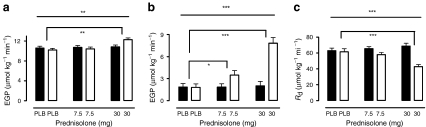
- Insulin suppression of endogenous glucose production was impaired by prednisolone 7.5 mg and 30 mg by 17 ± 6% and 46 ± 7%, respectively, vs placebo; peripheral glucose uptake was not reduced by 7.5 mg but was decreased by 30 mg by 34 ± 6% (p < 0.0001).
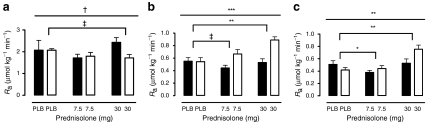
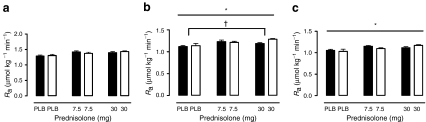
- Prednisolone tended to decrease fasting lipolysis (p = 0.062) but decreased insulin-mediated suppression of lipolysis by 11 ± 5% (7.5 mg) and 34 ± 6% (30 mg); whole-body proteolysis during hyperinsulinaemia increased overall, tending to be driven by 30 mg (5 ± 2%; p = 0.06).
- Body weight, lean body mass, total fat mass, liver fat content, and visceral/subcutaneous adipose tissue areas were unchanged; all participants completed and were analysed, with one mild gastric discomfort in the 30 mg group and otherwise no treatment-related side effects.
Methods
- Randomised double-blind placebo-controlled dose–response study: 32 healthy white men (age 22 ± 3 years; BMI 22.4 ± 1.7 kg/m²) were allocated to prednisolone 7.5 mg once daily (n = 12), prednisolone 30 mg once daily (n = 12), or placebo (n = 8) for 14 days using block randomisation.
- Glucose, lipid and protein metabolism were measured with stable isotopes ([6,6-²H₂]glucose, [1,1,2,3,3-²H₅]glycerol, L-[1-¹³C]valine) before and at 2 weeks of treatment, in the fasted state and during a two-step hyperinsulinaemic–euglycaemic clamp; body composition was assessed by DEXA, MRI and ¹H-MRS.
- Between-group changes from baseline were tested by Kruskal–Wallis; significant findings were followed by Mann–Whitney U testing with Bonferroni correction, with p < 0.05 considered significant.
Limitations
- Stated: clamp tests were performed under non-steady-state prednisolone levels because prednisolone has a t½ of 4–6 h, so the final part of the clamp may have occurred under lower prednisolone levels; plasma prednisolone may also poorly reflect genomic actions.
- Stated: participants were healthy volunteers, not patients with chronic inflammatory diseases; because systemic inflammation also impairs insulin sensitivity, the combined anti-inflammatory and metabolic effects of glucocorticoids could be more complex in clinical populations.
- Evident: the sample was small (n = 32 total; placebo n = 8), included only healthy white men aged 18–35 with BMI 20–25 kg/m², and treatment lasted only 2 weeks, limiting generalisability to women, older adults, obese or patient populations, and longer-term outcomes.
Model-written summary. Check it against the paper before relying on it.
Integrity signals
Registry
Cites
Statistics
Figures
Verification
Claims the paper makes
7 Valid · 1 Not valid · 20 Not checked · 64 Own results and interpretations
A result the paper reports from its own data — it cites no other source for it, so there is none to check. The quote shows it is in the paper.
In the paper
“Insulin-mediated suppression of lipolysis was markedly and dose dependently impaired by prednisolone during hyperinsulinaemic conditions”
§ Low-dose glucocorticoid treatment affects multiple aspects of intermediary metabolism in healthy humans: a randomised controlled trial > Results > Lipid metabolism
plainstates a cause- Asserted: passes — The authors put it forward as true.
- Checkable: passes — It can be checked against evidence.
- Load-bearing: passes — The paper’s conclusions depend on it.
- Based: passes — The paper gives a reason why it holds.
A result the paper reports from its own data — it cites no other source for it, so there is none to check. The quote shows it is in the paper.
In the paper
“prednisolone treatment increased proteolysis under hyperinsulinaemic conditions”
§ Low-dose glucocorticoid treatment affects multiple aspects of intermediary metabolism in healthy humans: a randomised controlled trial > Results > Protein metabolism
plainstates a cause- Asserted: passes — The authors put it forward as true.
- Checkable: passes — It can be checked against evidence.
- Load-bearing: passes — The paper’s conclusions depend on it.
- Based: passes — The paper gives a reason why it holds.
A result the paper reports from its own data — it cites no other source for it, so there is none to check. The quote shows it is in the paper.
In the paper
“Fasting EGP was only increased by prednisolone 30 mg (Fig. 1a)”
§ Low-dose glucocorticoid treatment affects multiple aspects of intermediary metabolism in healthy humans: a randomised controlled trial > Results > Glucose metabolism
plainstates a cause- Asserted: passes — The authors put it forward as true.
- Checkable: passes — It can be checked against evidence.
- Load-bearing: unclear — It is unclear whether the paper’s conclusions depend on it.
- Based: passes — The paper gives a reason why it holds.
A result the paper reports from its own data — it cites no other source for it, so there is none to check. The quote shows it is in the paper.
In the paper
“Prednisolone treatment did not affect proteolysis in the fasted state”
§ Low-dose glucocorticoid treatment affects multiple aspects of intermediary metabolism in healthy humans: a randomised controlled trial > Results > Protein metabolism
plain- Asserted: passes — The authors put it forward as true.
- Checkable: passes — It can be checked against evidence.
- Load-bearing: unclear — It is unclear whether the paper’s conclusions depend on it.
- Based: passes — The paper gives a reason why it holds.
A result the paper reports from its own data — it cites no other source for it, so there is none to check. The quote shows it is in the paper.
In the paper
“Prednisolone treatment did not affect the absolute levels of glucose oxidation during hyperinsulinaemia”
§ Low-dose glucocorticoid treatment affects multiple aspects of intermediary metabolism in healthy humans: a randomised controlled trial > Results > Glucose metabolism
plain- Asserted: passes — The authors put it forward as true.
- Checkable: passes — It can be checked against evidence.
- Load-bearing: unclear — It is unclear whether the paper’s conclusions depend on it.
- Based: passes — The paper gives a reason why it holds.
26 more claims
Create a free account to see all 92 claims and to verify the 2 references still open.
- Probably not a substantial claim. 28
- It may state two separate claims as one. 41
Claims other papers make about this one
Each is checked against this paper’s own text: does it say what the citing paper says it does?
The cited source says what the claim attributes to it.
In the citing paper
“due to their effect of increasing basal endogenous glucose production and lowering insulin sensitivity.7–9”
The check wasn’t confident either way, so it gives no verdict — never disputed.
In the citing paper
“It is still unclear if steroid-sparing regimens decrease the risk of PTDM with studies showing mixed results.1591–1595”
From American Association of Clinical Endocrinology Clinical Practice Guideline: Developing a Diabetes Mellitus Comprehensive Care Plan-2022 Update. (2022) · cites this paper as [1594]
Experimental — accuracy not yet measuredIn the citing paper
“Nevertheless, there is evidence of even low supraphysiological doses of GCs (e.g., prednisolone . mg once daily) impairing glucose tolerance when administered chronically ().”
From Glucose Metabolism Abnormalities in Cushing Syndrome: From Molecular Basis to Clinical Management (2017) · cites this paper as [199]
In the citing paper
“Prominent hyperglycaemia is most often observed when high dosages of GC are taken by persons with known diabetes, but may also occur at moderate and low doses in persons not previously known to be at risk.3,4”
From Twenty‐four‐hour profiles of plasma glucose, insulin, C‐peptide and free fatty acid in subjects with varying degrees of glucose tolerance following short‐term, medium‐dose prednisone (20 mg/day) treatment: evidence for differing effects on insulin secretion and action (2012) · cites this paper as [4]
Self-check
Percentages, sums and reported differences re-computed from the paper’s own numbers.
Each contradiction between two passages listed here was confirmed by an independent check.
Rated minor: it would not touch a result — a value no result rests on, a p-value that stays on the same side of the significance level, or a conflict that is clerical, resolved elsewhere in the paper, or outside its own findings.
In the paper
§ Low-dose glucocorticoid treatment affects multiple aspects of intermediary metabolism in healthy humans: a randomised controlled trial > Abstract > Results
“No side effects were reported by the study participants.”
§ Low-dose glucocorticoid treatment affects multiple aspects of intermediary metabolism in healthy humans: a randomised controlled trial > Results > Safety and tolerability
“One participant in the prednisolone 30 mg group complained of gastric discomfort which was mild of nature and did not require any intervention.”
Rated minor: it would not touch a result — a value no result rests on, a p-value that stays on the same side of the significance level, or a conflict that is clerical, resolved elsewhere in the paper, or outside its own findings.
In the paper
§ Low-dose glucocorticoid treatment affects multiple aspects of intermediary metabolism in healthy humans: a randomised controlled trial > Results > Glucose metabolism
“| Fasting NEFA (nmol/l) | Fasting NEFA (nmol/l) | Fasting NEFA (nmol/l) | Fasting NEFA (nmol/l) | Fasting NEFA (nmol/l) | Fasting NEFA (nmol/l) | | Placebo | 0.5 ± 0.2 | 0.5 ± 0.1 | 0.017 | 1.0 | 0.11 |”
§ Low-dose glucocorticoid treatment affects multiple aspects of intermediary metabolism in healthy humans: a randomised controlled trial > Methods > Glucose, lipid, and valine measurements
“Plasma NEFA concentrations were measured with an enzymatic colorimetric method (NEFA-C test kit; Wako Chemicals, Neuss, Germany) with an intra-assay variation of 1%, inter-assay variation of 4–15% and a detection limit of 0.02 mmol/l.”
Citations
Cites
Calculation of substrate oxidation rates in vivo from gaseous exchange.
Frayn, K. N. (1983) · Journal of Applied Physiology · doi:10.1152/jappl.1983.55.2.628 · Cited by 2,365 · cited 1×
“Glucose oxidation and fatty acid oxidation rates were derived from oxygen consumption and carbon oxide production as reported previously [25].”
MethodINFLUENCES OF GLUCOSE LOADING AND OF INJECTED INSULIN ON HEPATIC GLUCOSE OUTPUT*
Steele, R. (1959) · Annals of the New York Academy of Sciences · doi:10.1111/j.1749-6632.1959.tb44923.x · Cited by 1,670 · cited 1×
“Calculations Endogenous glucose production (EGP) and the peripheral uptake of glucose (rate of disappearance, Rd) were calculated using modified versions of the Steele equations for the non-steady state and were expressed as μmol kg min as described previously [23, 24].”
MethodPolymyalgia Rheumatica and Giant-Cell Arteritis
Salvarani, C., Cantini, F., Boiardi, L., & Hunder, G. G. (2002) · New England Journal of Medicine · doi:10.1056/nejmra011913 · Cited by 1,352
Polymyalgia rheumatica and giant-cell arteritis
Salvarani, C., Cantini, F., & Hunder, G. G. (2008) · The Lancet · doi:10.1016/s0140-6736(08)61077-6 · Cited by 767
Polymyalgia Rheumatica and Giant Cell Arteritis
Ettlinger, R. E., Hunder, G. G., & Ward, L. E. (1978) · Annual Review of Medicine · doi:10.1146/annurev.me.29.020178.000311 · Cited by 687
Finegood, D. T., Bergman, R. N., & Vranic, M. (1987) · Diabetes · doi:10.2337/diab.36.8.914 · Cited by 546
Buttgereit, F., Da Silva, J. A. P., Boers, M., Burmester, G.-R., Cutolo, M., Jacobs, J., Kirwan, J., Köhler, L., van Riel, P., Vischer, T., et al. (2002) · Annals of the Rheumatic Diseases · doi:10.1136/ard.61.8.718 · Cited by 544
Glucocorticoids, metabolism and metabolic diseases
Vegiopoulos, A., & Herzig, S. (2007) · Molecular and Cellular Endocrinology · doi:10.1016/j.mce.2007.05.015 · Cited by 535 · cited 1×
“As such, GCs were shown to induce phosphoenolpyruvate carboxykinase, the rate-controlling enzyme in hepatic glucose production [41].”
BackgroundMechanisms of glucocorticoid-induced myopathy
Schakman, O., Gilson, H., & Thissen, J. P. (2008) · Journal of Endocrinology · doi:10.1677/joe-07-0606 · Cited by 521 · cited 1×
“Moreover, GCs directly activated muscle ring finger-1 and atrogin-1, proteins involved in skeletal muscle proteolysis [43].”
BackgroundGlucocorticoid-induced hyperglycemia
Clore, J. N., & Thurby-Hay, L. (2009) · Endocrine Practice · doi:10.4158/ep08331.rar · Cited by 508
Cited by
Blonde, L., Umpierrez, G. E., Reddy, S. S., McGill, J. B., Berga, S. L., Bush, M., Chandrasekaran, S., DeFronzo, R. A., Einhorn, D., Galindo, R. J., et al. (2022) · Endocrine Practice · doi:10.1016/j.eprac.2022.08.002 · Cited by 507
Lee, M.-J., Pramyothin, P., Karastergiou, K., & Fried, S. K. (2014) · Biochimica et Biophysica Acta (BBA) - Molecular Basis of Disease · doi:10.1016/j.bbadis.2013.05.029 · Cited by 380
“Analysis of data from long-term (days to weeks) infusion of GCs [12,114,125,126] is complicated by compensatory hyperinsulinemia whichmay chronically promote higher FA flux via induction of insulin resistance and activation of the sympathetic nervous system.”
BackgroundTreating the Side Effects of Exogenous Glucocorticoids; Can We Separate the Good From the Bad?
Pofi, R., Caratti, G., Ray, D. W., & Tomlinson, J. W. (2023) · Endocrine Reviews · doi:10.1210/endrev/bnad016 · Cited by 209
“In a very small study, there is evidence to suggest that even low, supraphysiological doses of GCs (prednisolone 7.5 mg daily) can impair glucose tolerance with prolonged administration (57), although this has not been confirmed in larger cohorts.”
BackgroundInfluentialDiabetes in Cushing syndrome: basic and clinical aspects
Mazziotti, G., Gazzaruso, C., & Giustina, A. (2011) · Trends in Endocrinology & Metabolism · doi:10.1016/j.tem.2011.09.001 · Cited by 193
Isidori, A. M., Graziadio, C., Paragliola, R. M., Cozzolino, A., Ambrogio, A. G., Colao, A., Corsello, S. M., & Pivonello, R. (2015) · Journal of Hypertension · doi:10.1097/hjh.0000000000000415 · Cited by 185
“A randomized controlled trial in humans revealed that glucocorticoids, even at low doses, can increase fasting plasma glucose and insulin levels, and can decrease the ability of insulin to suppress endogenous glucose production and lipolysis, while increasing whole-body proteolysis [73].”
BackgroundThe Paraventricular Nucleus of the Hypothalamus: Development, Function, and Human Diseases
Qin, C., Li, J., & Tang, K. (2018) · Endocrinology · doi:10.1210/en.2018-00453 · Cited by 162
Rheumatoid arthritis, insulin resistance, and diabetes
Nicolau, J., Lequerré, T., Bacquet, H., & Vittecoq, O. (2016) · Joint Bone Spine · doi:10.1016/j.jbspin.2016.09.001 · Cited by 178
Subchronic sleep restriction causes tissue-specific insulin resistance
Rao, M. N., Neylan, T. C., Grunfeld, C., Mulligan, K., Schambelan, M., & Schwarz, J.-M. (2015) · The Journal of Clinical Endocrinology & Metabolism · doi:10.1210/jc.2014-3911 · Cited by 156
“Substantial increases in cortisol are known to decrease insulin sensitivity in both liver and peripheral tissues (26), whereas modest elevations of cortisol (because of exogenous administration) may cause hepatic insulin resistance without altering peripheral insulin sensitivity (27).”
BackgroundGlucocorticoid Signaling: An Update from a Genomic Perspective
Sacta, M. A., Chinenov, Y., & Rogatsky, I. (2016) · Annual Review of Physiology · doi:10.1146/annurev-physiol-021115-105323 · Cited by 148
Glucose Metabolism Abnormalities in Cushing Syndrome: From Molecular Basis to Clinical Management
Scaroni, C., Zilio, M., Foti, M., & Boscaro, M. (2017) · Endocrine Reviews · doi:10.1210/er.2016-1105 · Cited by 140
Metabolic control through glucocorticoid hormones: An update
Rose, A. J., & Herzig, S. (2013) · Molecular and Cellular Endocrinology · doi:10.1016/j.mce.2013.03.007 · Cited by 145
Impact of Glucocorticoid Excess on Glucose Tolerance: Clinical and Preclinical Evidence
Pasieka, A., & Rafacho, A. (2016) · Metabolites · doi:10.3390/metabo6030024 · Cited by 90
“For longer periods of GC treatment in humans, for instance, 2–4 days with DEX or 6–15 days with PRED, β-cell function adapts to compensate, at least in parts, to the peripheral IR caused by GCs [9,10,17,31,35].”
BackgroundEffects of glucocorticoids and exercise on pancreatic β‐cell function and diabetes development
Beaudry, J. L., & Riddell, M. C. (2012) · Diabetes/Metabolism Research and Reviews · doi:10.1002/dmrr.2310 · Cited by 84
“5 mg) and high doses (30mg) of prednisolone for 2 weeks, insulin action is impaired, and endogenous glucose production increases as well as whole-body lipolysis and plasma fatty acid levels [64].”
BackgroundKauh, E., Mixson, L., Malice, M.-P., Mesens, S., Ramael, S., Burke, J., Reynders, T., Van Dyck, K., Beals, C., Rosenberg, E., et al. (2012) · European Journal of Endocrinology · doi:10.1530/eje-11-0751 · Cited by 69
Kulkarni, S., Durham, H., Glover, L., Ather, O., Phillips, V., Nemes, S., Cousens, L., Blomgran, P., & Ambery, P. (2022) · BMJ Open · doi:10.1136/bmjopen-2022-061476 · Cited by 69
Glucocorticoids Fail to Cause Insulin Resistance in Human Subcutaneous Adipose Tissue In Vivo
Hazlehurst, J. M., Gathercole, L. L., Nasiri, M., Armstrong, M. J., Borrows, S., Yu, J., Wagenmakers, A. J. M., Stewart, P. M., & Tomlinson, J. W. (2013) · The Journal of Clinical Endocrinology & Metabolism · doi:10.1210/jc.2012-3523 · Cited by 66
“5 mg daily for 2 weeks had few adverse metabolic effects in contrast to 30 mg daily, which increased hepatic glucose production rate, decreased suppression of hepatic glucose production by insulin, and interestingly decreased lipolysis (34).”
BackgroundInsulin resistance in obesity can be reliably identified from fasting plasma insulin
ter Horst, K. W., Gilijamse, P. W., Koopman, K. E., de Weijer, B. A., Brands, M., Kootte, R. S., Romijn, J. A., Ackermans, M. T., Nieuwdorp, M., Soeters, M. R., et al. (2015) · International Journal of Obesity · doi:10.1038/ijo.2015.125 · Cited by 69
Self-citationGlucose metabolism in patients with subclinical Cushing’s syndrome
Giordano, R., Guaraldi, F., Berardelli, R., Karamouzis, I., D’Angelo, V., Marinazzo, E., Picu, A., Ghigo, E., & Arvat, E. (2012) · Endocrine · doi:10.1007/s12020-012-9628-9 · Cited by 72
Petersons, C. J., Mangelsdorf, B. L., Jenkins, A. B., Poljak, A., Smith, M. D., Greenfield, J. R., Thompson, C. H., & Burt, M. G. (2013) · Diabetes Care · doi:10.2337/dc12-2617 · Cited by 61
“We have demonstrated that both acute and long-term low-dose prednisolone robustly induce hepatic insulin resistance, consistent with a previous report (13).”
BackgroundResultInfluentialYuen, K. C. J., McDaniel, P. A., & Riddle, M. C. (2012) · Clinical Endocrinology · doi:10.1111/j.1365-2265.2011.04242.x · Cited by 58
“In a recent study by van Raalte et al.11 in healthy men, acute treatment with 75 mg/day of prednisolone resulted in an acute inhibitory effect of the b-cell, but longer exposure with a prednisolone dose of 30 mg/day resulted in fasting and postprandial hyperglycaemia but relative hypoinsulinemia,…”
BackgroundBurt, M. G., Willenberg, V., Petersons, C. J., Smith, M., Ahern, M. J., & Stranks, S. N. (2012) · Rheumatology · doi:10.1093/rheumatology/kes003 · Cited by 64
Godinho-Mota, J. C. M., Mota, J. F., Vaz-Gonçalves, L., Soares, L. R., Schincaglia, R. M., Prado, C. M. M., Martins, K. A., & Freitas‐Júnior, R. (2020) · Clinical Nutrition · doi:10.1016/j.clnu.2020.11.020 · Cited by 62
Radhakutty, A., & Burt, M. G. (2018) · European Journal of Endocrinology · doi:10.1530/eje-18-0315 · Cited by 50
Nijhoff, M. F., Engelse, M. A., Dubbeld, J., Braat, A. E., Ringers, J., Roelen, D. L., van Erkel, A. R., Spijker, H. S., Bouwsma, H., van der Boog, P. J. M., et al. (2015) · American Journal of Transplantation · doi:10.1111/ajt.13425 · Cited by 49
van Genugten, R. E., van Raalte, D. H., Muskiet, M. H., Heymans, M. W., Pouwels, P. J. W., Ouwens, D. M., Mari, A., & Diamant, M. (2014) · European Journal of Endocrinology · doi:10.1530/eje-13-0610 · Cited by 46
Self-citationKlaasen, R., Herenius, M. M. J., Wijbrandts, C. A., de Jager, W., van Tuyl, L. H. D., Nurmohamed, M. T., Prakken, B. J., Gerlag, D. M., & Tak, P. P. (2012) · Annals of the Rheumatic Diseases · doi:10.1136/annrheumdis-2011-200646 · Cited by 52
Insulin-resistance in paediatric age: Its magnitude and implications
Al‐Beltagi, M., Bediwy, A. S., & Saeed, N. K. (2022) · World Journal of Diabetes · doi:10.4239/wjd.v13.i4.282 · Cited by 72
Langsford, D., & Dwyer, K. (2015) · World Journal of Diabetes · doi:10.4239/wjd.v6.i10.1132 · Cited by 44
Shaharir, S. S., Gafor, A. H. A., Said, M. S. M., & Kong, N. C. T. (2014) · International Journal of Rheumatic Diseases · doi:10.1111/1756-185x.12474 · Cited by 44
Burt, M. G., Drake, S. M., Aguilar‐Loza, N. R., Esterman, A., Stranks, S. N., & Roberts, G. W. (2015) · Internal Medicine Journal · doi:10.1111/imj.12680 · Cited by 38
Lee, M.-J., & Fried, S. K. (2012) · American Journal of Physiology-Endocrinology and Metabolism · doi:10.1152/ajpendo.00228.2012 · Cited by 38
Jahagirdar, V., & McNay, E. C. (2012) · Metabolic Brain Disease · doi:10.1007/s11011-012-9291-0 · Cited by 40
van Raalte, D. H., Diamant, M., Ouwens, D. M., Ijzerman, R. G., Linssen, M. M. L., Guigas, B., Eringa, E. C., & Serné, E. H. (2013) · Diabetologia · doi:10.1007/s00125-013-3016-8 · Cited by 33
“Interestingly, GCs display extensive effects on adipose tissue: GCs increase total fat mass, induce adipose tissue insulin resistance resulting in increased lipolysis [6] and alter the secretion of a number of adipokines in vitro towards a more diabetogenic profile [3, 7].”
BackgroundInfluentialSelf-citationLai, L. Y. H., Harris, E., West, R. M., & Mackie, S. L. (2018) · RMD Open · doi:10.1136/rmdopen-2017-000521 · Cited by 35
Brodovicz, K. G., Girman, C. J., Simonis-Bik, A. M. C., Rijkelijkhuizen, J. M., Zelis, M., Bunck, M. C. M., Mari, A., Nijpels, G., Eekhoff, E. M. W., & Dekker, J. M. (2011) · Diabetes Research and Clinical Practice · doi:10.1016/j.diabres.2011.09.002 · Cited by 40
van der Valk, F., Hassing, C., Visser, M., Thakkar, P., Mohanan, A., Pathak, K., Dutt, C., Chauthaiwale, V., Ackermans, M., Nederveen, A., et al. (2014) · PLoS ONE · doi:10.1371/journal.pone.0086890 · Cited by 31
Self-citationThe impact of kidney transplantation on insulin sensitivity
Jørgensen, M. B., Hornum, M., van Hall, G., Bistrup, C., Hansen, J. M., Mathiesen, E. R., & Feldt‐Rasmussen, B. (2016) · Transplant International · doi:10.1111/tri.12907 · Cited by 28
“In experimental settings, glucocorticoids induce both peripheral and central insulin resistance [32], inhibit glucose mediated insulin secretion [33] and decrease insulin-mediated suppression of lipolysis [34].”
BackgroundTatalovic, M., Lehmann, R., Cheetham, M., Nowak, A., Battegay, E., & Rampini, S. K. (2019) · BMJ Open · doi:10.1136/bmjopen-2019-028914 · Cited by 27
Andereggen, L., Frey, J., Andres, R. H., Luedi, M. M., Gralla, J., Schubert, G. A., Beck, J., Mariani, L., & Christ, E. (2021) · Journal of Clinical & Translational Endocrinology · doi:10.1016/j.jcte.2021.100258 · Cited by 31
“Namely, while levels of HDL-C are generally increased with glucocorticoids, changes in plasma TG and LDL-C vary considerably [65,66].”
BackgroundDube, S., Slama, M. Q., Basu, A., Rizza, R. A., & Basu, R. (2015) · The Journal of Clinical Endocrinology & Metabolism · doi:10.1210/jc.2015-2673 · Cited by 28
Delai, A., Gomes, P. M., Foss‐Freitas, M. C., Elías, J., Antonini, S. R. R., de Castro, M., Moreira, A. C., & Mermejo, L. M. (2021) · The Journal of Clinical Endocrinology & Metabolism · doi:10.1210/clinem/dgab767 · Cited by 25
Sato, S., Saisho, Y., Inaishi, J., Kou, K., Murakami, R., Yamada, T., & Itoh, H. (2015) · Diabetes · doi:10.2337/db15-0151 · Cited by 24
“Lastly, we found no significant increase in %ACA in individuals who received GC therapy, whereas GC administration has been reported to increase plasma glucagon level (23,37).”
Backgroundvan Bommel, E. J. M., de Jongh, R. T., Brands, M., Heijboer, A. C., den Heijer, M., Serlie, M. J. M., & van Raalte, D. H. (2018) · Bone · doi:10.1016/j.bone.2018.04.025 · Cited by 23
Self-citationSerum metabolomics of treatment response in myasthenia gravis
Sikorski, P. M., Li, Y., Cheema, M., Wolfe, G. I., Kusner, L. L., Aban, I., & Kaminski, H. J. (2023) · PLoS ONE · doi:10.1371/journal.pone.0287654 · Cited by 24
Ellero‐Simatos, S., Szymańska, E., Rullmann, T., Dokter, W. H. A., Ramaker, R., Berger, R., van Iersel, T. M., Smilde, A. K., Hankemeier, T., & Alkema, W. B. L. (2012) · Genome Medicine · doi:10.1186/gm395 · Cited by 20
“5 mg prednisolone daily for 15 days affects multiple pathways of intermediary metabolism in healthy volunteers [20], however the observed perturbations were rather small.”
BackgroundPenesová, A., Rádiková, Ž., Vlček, M., Kerlik, J., LUKÁČ, J., Rovensky, J., & Imrich, R. (2013) · Physiological Research · doi:10.33549/physiolres.932359 · Cited by 19
“It is clear that high-dose of glucocorticoids has negative effect on many metabolic parameters (van Raalte et al. 2009, van Raalte et al. 2011a,b).”
BackgroundBouter, K. E. C., van Bommel, E. J. M., Jansen, H., van Harskamp, D., Schierbeek, H., Ackermans, M. T., Serlie, M. J. M., Schimmel, A. W. M., Nieuwdorp, M., Dallinga‐Thie, G. M., et al. (2020) · Diabetes Obesity and Metabolism · doi:10.1111/dom.13990 · Cited by 19
Self-citationCushing’s Syndrome and Other Causes of Insulin Resistance in Dogs
Fleeman, L. M., & Barrett, R. (2023) · Veterinary Clinics of North America Small Animal Practice · doi:10.1016/j.cvsm.2023.01.009 · Cited by 28
Katsuyama, H., Sako, A., Adachi, H., Hamasaki, H., & Yanai, H. (2015) · Journal of Clinical Medicine Research · doi:10.14740/jocmr2153w · Cited by 16
Glucocorticoid-induced hyperglycemia and diabetes: Practical points
Descours, M., & Rigalleau, V. (2023) · Annales d Endocrinologie · doi:10.1016/j.ando.2023.03.011 · Cited by 20
da Silva, B. R., Rufato, S., Mialich, M. S., Cruz, L. P., Gozzo, T. D. O., & Jordão, A. A. (2021) · Clinical Nutrition ESPEN · doi:10.1016/j.clnesp.2021.06.001 · Cited by 17
Jacobsson, M., van Raalte, D. H., Heijboer, A. C., den Heijer, M., & de Jongh, R. T. (2020) · JBMR Plus · doi:10.1002/jbm4.10341 · Cited by 14
“According to the original studies,((17,18)) one participant receiving prednisolone 30 mg once daily reported mild and transient sleeplessness during treatment; one other participant in the prednisolone 30 mg once daily group reported mild gastric discomfort.”
MethodSelf-citationOthonos, N., Marjot, T., Woods, C. P., Hazlehurst, J., Nikolaou, N., Pofi, R., White, S. J., Bonaventura, I., Webster, C., Duffy, J. E., et al. (2020) · The Journal of Clinical Endocrinology & Metabolism · doi:10.1210/clinem/dgaa408 · Cited by 14
Molecular mechanism of glucocorticoid-induced hyperglycemia
Sari, D. A., Samodra, G., & Kusuma, I. Y. (2021) · Pharmacy Reports · doi:10.51511/pr.1 · Cited by 19
Drug induced complications; can we do more?
Peckham, D. G., & Whitaker, P. (2013) · Journal of Cystic Fibrosis · doi:10.1016/j.jcf.2013.04.014 · Cited by 13
Aldibbiat, A. M., & Al‐Sharefi, A. (2020) · International Journal of COPD · doi:10.2147/copd.s236305 · Cited by 16
“endogenous glucose production, with a reduction in lipolysis and an increase in whole-body proteolysis.(45) The metabolic compromise induced by corticosteroids can be as serious as”
BackgroundIliou, A., Argyropoulou, O. D., Palamidas, D. A., Karagiannakou, M., Benaki, D. C., Tsezou, K., Vlachoyiannopoulos, P. G., Mikros, E., & Tzioufas, A. G. (2023) · Rheumatology · doi:10.1093/rheumatology/kead590 · Cited by 12
Mohammed, M. A., Mahmoud, M. O., Awaad, A. S., Gamal, G. M., & Abdelfatah, D. (2019) · Steroids · doi:10.1016/j.steroids.2019.01.004 · Cited by 12
Konservative Therapie der „frozen shoulder“
Franz, A. R., Klose, M., & Beitzel, K. (2019) · Der Unfallchirurg · doi:10.1007/s00113-019-00731-3 · Cited by 10
Emanuel, A. L., de Clercq, N. C., Koopen, A. M., van Poelgeest, E. M., Serlie, M. J. M., van Raalte, D. H., Kramer, M. H. H., Nieuwdorp, M., Eringa, E. C., & Serné, E. H. (2018) · Diabetes Obesity and Metabolism · doi:10.1111/dom.13410 · Cited by 11
Self-citationLyu, L., Fan, Y., Bryrup, T., Clos‐Garcia, M., Brix, S., Eiken, M., Stankevič, E., Lund, A., Knop, F. K., Jørgensen, N. R., et al. (2025) · Cell Reports Medicine · doi:10.1016/j.xcrm.2025.102426 · Cited by 14
Brands, M., van Raalte, D. H., Ferraz, M. J., Sauerwein, H. P., Verhoeven, A. J., Aerts, J. M. F. G., Diamant, M., & Serlie, M. J. M. (2013) · The Journal of Clinical Endocrinology & Metabolism · doi:10.1210/jc.2012-3266 · Cited by 8
Self-citationEffets indésirables métaboliques et cardiovasculaires des corticothérapies systémiques
Fardet, L. (2013) · La Revue de Médecine Interne · doi:10.1016/j.revmed.2012.12.005 · Cited by 13
Kim, G., Yoo, M., Hong, M. H., Lee, B., Kang, E. S., Soo, B., Kim, H. R., Lee, Y., & Cho, B. C. (2019) · Cancer Chemotherapy and Pharmacology · doi:10.1007/s00280-019-03889-0 · Cited by 8
Glucocorticoids and glucolipotoxicity alter the DNA methylome and function of human EndoC-βH1 cells
dos Santos, C., Karagiannopoulos, A., Rafacho, A., Perfilyev, A., Eliasson, L., Ling, C., & Bacos, K. (2022) · Life Sciences · doi:10.1016/j.lfs.2022.120854 · Cited by 7
Sindelar, D. K., Carson, M. W., Morin, M., Shaw, J., Barr, R. J., Need, A. B., Alexander-Chacko, J. T., Coghlan, M. J., & Gehlert, D. R. (2013) · Journal of Pharmacology and Experimental Therapeutics · doi:10.1124/jpet.113.205864 · Cited by 9
“Even low-dose glucocorticoids impair glucose tolerance when administered long-term (van Raalte et al., 2011).”
BackgroundWang, C., & Tsai, H. (2022) · World Journal of Diabetes · doi:10.4239/wjd.v13.i6.454 · Cited by 7
Hua, X., Liu, Y., & Xiao, X. (2025) · Frontiers in Nutrition · doi:10.3389/fnut.2024.1517108 · Cited by 9
Koul, A., Kaur, J., & Chugh, N. (2021) · Asian Journal of Research in Biochemistry · doi:10.9734/ajrb/2021/v8i330180 · Cited by 8
“The inhibited enzyme activities results in impaired glucose oxidation leading to hyperglycemia [62-65].”
BackgroundSteroid withdrawal after heart transplantation in adults
Heegaard, B., Nelson, L. M., & Gustafsson, F. (2021) · Transplant International · doi:10.1111/tri.14142 · Cited by 9
“Musculoskeletal Osteoporosis Inhibition of osteoblast function ? decrease in bone formation [6] Osteonecrosis Induction of osteocyte apoptosis ? affecting bone remodelling [6] Myopathy Decrease in protein synthesis and increase in protein catabolism ? muscle atrophy [6] Endocrine and metabolic Hyperglycemia, diabetes…”
BackgroundKishimoto, M., Yamaoki, K., & Adachi, M. (2019) · Case Reports in Endocrinology · doi:10.1155/2019/9415347 · Cited by 6
Steroid-induced diabetes in the paediatric population
Drucis, M., Irga‐Jaworska, N., & Myśliwiec, M. (2018) · Pediatric Endocrinology Diabetes and Metabolism · doi:10.5114/pedm.2018.80995 · Cited by 8
Hellmann, P. H., Bagger, J. I., Carlander, K. R., Hansen, K. B., Forman, J. L., Størling, J., Chabanova, E., Holst, J. J., Vilsbøll, T., & Knop, F. K. (2023) · Endocrine Connections · doi:10.1530/ec-22-0334 · Cited by 5
“Long-term use of glucocorticoid treatment is known to induce steatosis (46), but short-term use has not been found to change hepatic fat content in healthy young men (10).”
Manning, J. E., Harris, E., Mathieson, H. R., Sørensen, L., Luqmani, R. A., McGettrick, H. M., Morgan, A. W., Young, S. P., & Mackie, S. L. (2024) · Journal of Autoimmunity · doi:10.1016/j.jaut.2024.103260 · Cited by 5
Wang, C., & Liu, M.-F. (2020) · ACR Open Rheumatology · doi:10.1002/acr2.11157 · Cited by 6
“The administration of glucocorticoid can impair the metabolic actions of insulin in the liver and adipose tissues, and recent investigations have indicated that when prescribed chronically, such a medication may interfere with glucose tolerance, even at lower dosages (24).”
BackgroundPofi, R., Othonos, N., Marjot, T., Bonaventura, I., Barrett, A., White, S. J., Miller, H., Potter, T., Bailey, M., Eastell, R., et al. (2025) · Journal of Endocrinological Investigation · doi:10.1007/s40618-025-02637-x · Cited by 10
“Interestingly, another study showed decreased insulin-dependent suppression of EGP healthy in male volunteers with longer (2-week) treatment with 7.5 mg of prednisolone [41], emphasizing the role of treatment duration in GC-induced metabolic dysfunction.”
InfluentialAgarwal, S., Demidowich, A. P., Soliman, D., Umpierrez, G. E., & Galindo, R. J. (2025) · Journal of Diabetes Science and Technology · doi:10.1177/19322968251364276 · Cited by 7
Glucose can promote a glucocorticoid resistance state
Kassi, E. N., & Papavassiliou, A. G. (2012) · Journal of Cellular and Molecular Medicine · doi:10.1111/j.1582-4934.2012.01532.x · Cited by 4
“Notably, even low GC doses just above cortisol replacement levels, as well as endogenous subclinical hypercortisolism, may impair glucose tolerance by reducing hepatic and peripheral insulin sensitivity [1, 2].”
BackgroundWhyte, M., Vas, P. R. J., & Umpleby, A. M. (2021) · Frontiers in Endocrinology · doi:10.3389/fendo.2021.649405 · Cited by 4
Glikokortykosteroidy a zaburzenia metabolizmu glukozy
Pisarczyk-Wiza, D., & Zozulińska‐Ziółkiewicz, D. (2015) · Clinical Diabetology · doi:10.5603/dk.2015.0010 · Cited by 7
Pranger, I. G., van Raalte, D. H., Brands, M., Muskiet, M. H. A., Kema, I. P., Serlie, M. J. M., Diamant, M., Bakker, S. J. L., & Muskiet, F. A. J. (2018) · Prostaglandins Leukotrienes and Essential Fatty Acids · doi:10.1016/j.plefa.2018.03.009 · Cited by 3
Self-citationLobnig, B. M. (2011) · Der Diabetologe · doi:10.1007/s11428-011-0772-2 · Cited by 3
Safety of steroids in severe community-acquired pneumonia
Piedepalumbo, F. V., Motos, A., Blasi, F., & Torres, A. (2025) · European Respiratory Review · doi:10.1183/16000617.0131-2024 · Cited by 6
Clausen, C. L., Bryrup, T., Hansen, C. L., Faurholt‐Jepsen, D., Meddis, A., Almdal, T., Snorgaard, O., Jørgensen, H. L., Helleberg, M., Smitt, M., et al. (2025) · Annals of Intensive Care · doi:10.1186/s13613-025-01512-5 · Cited by 1
“Studies on healthy individuals have shown that there is a clear dose–response relationship between glucocorticoids and plasma glucose [35].”
Jędrasek, A., Lisowska, K., & Czupryniak, L. (2026) · Frontiers in Clinical Diabetes and Healthcare · doi:10.3389/fcdhc.2026.1772391 · Cited by 2
Michaela Diamant, 11 April 1962–9 April 2014
Heine, R., Yki-Järvinen, H., Kahn, S., & van Raalte, D. V. (2014) · Diabetologia · doi:10.1007/s00125-014-3254-4 · Cited by 1
Self-citationEffect of ACEA 1021 on Neurotoxicity Induced by Dexamethasone — Initial Behavioral Study
Krasuska-Grzegorczyk, B., Komsta, Ł., & Danilczuk, Z. (2024) · Acta Poloniae Pharmaceutica - Drug Research · doi:10.32383/appdr/185546 · Cited by 1
Steroiddiabetes: Risiken, Diagnostik und Handlungsstrategien
Gallwitz, B. (2025) · Info Diabetologie · doi:10.1007/s15034-025-5113-4 · Cited by 1
Diabetes Associated with Glucocorticoid Excess
Janssen, J. A. M. J. L., & Lamberts, S. W. J. (2014) · Frontiers in diabetes · doi:10.1159/000357244 · Cited by 1
Impact of Drugs on Diabetes Risk and Glycemic Control
Frontoni, S., & Picconi, F. (2019) · Endocrinology · doi:10.1007/978-3-319-27316-7_19-2 · Cited by 1
Impact of Drugs on Diabetes Risk and Glycemic Control
Frontoni, S., & Picconi, F. (2018) · Endocrinology · doi:10.1007/978-3-319-44433-8_19 · Cited by 1
The Efficacious and Safe Treatment for Steroid-Induced Hyperglycemia
Yanai, H. (2018) · Journal of Endocrinology and Metabolism · doi:10.14740/jem492w
Wenn Leber, Lunge & Co. die Zuckerwerte erhöhen
Lobnig, B. M., & Lydtin, H. (2013) · CME · doi:10.1007/s11298-013-0290-1
Polyarthrite rhumatoïde, insulino-résistance et diabète
Nicolau, J., Lequerré, T., Bacquet, H., & Vittecoq, O. (2016) · Revue du Rhumatisme · doi:10.1016/j.rhum.2016.06.004
The Effects of Obesity, Chronic Stress, and Exercise on Pancreatic Health
Tice, A. L. (2019) · The Research Repository @ WVU (West Virginia University) · doi:10.33915/etd.4034
Management and Treatment of Glucocorticoid-induced Diabetes Mellitus
Marques, B., Bastos, M., Martins, R., Rodrigues, F., & Carrilho, F. (2019) · Revista Portuguesa de Endocrinologia Diabetes e Metabolismo · doi:10.26497/ar180034 · Cited by 1
van Raalte, D. H., den Uyl, D., Nurmohamed, M. T., Diamant, M., & Lems, W. F. (2012) · Arthritis & Rheumatism · doi:10.1002/art.34640
Self-citationDefining Your Shape: The Determinants of Body Fat Distribution
Denton, N. (2021) · Oxford University Press eBooks · doi:10.1093/med/9780198865278.003.0007
The Toxicity of Corticosteroids
Smith, D., & Sen, V. (2022) · International Healthcare Research Journal · doi:10.26440/ihrj/0510.01498
Impact of Drugs on Diabetes Risk and Glycemic Control
Frontoni, S., & Picconi, F. (2018) · Endocrinology · doi:10.1007/978-3-319-27316-7_19-1
Metadata
- Authors
- van Raalte, D. H., Brands, M., van der Zijl, N. J., Muskiet, M. H., Pouwels, P. J. W., Ackermans, M. T., Sauerwein, H. P., Serlie, M. J., & Diamant, M.
- Affiliations
- Amsterdam UMC Location University of Amsterdam (NL)
- Amsterdam UMC Location Vrije Universiteit Amsterdam (NL)
- Venue
- Diabetologia
- Published
- 2011-05-12
- Volume
- 54
- Issue
- 8
- Pages
- 2103-2112
- ISSN
- 0012-186X (ISSN-L)
- 1432-0428
- PMC
- PMC3131514
- OpenAlex
- W2120890763
- Cited by
- 109
- References
- 52
- Citations by year
- 2026: 4 · 2025: 8 · 2024: 3 · 2023: 6 · 2022: 7 · 2021: 9 · 2020: 7 · 2019: 9 · 2018: 10 · 2017: 1 · 2016: 4 · 2015: 10 · 2014: 5 · 2013: 12 · 2012: 9
- FWCI
- 8.12
- Type
- journal article
- Language
- en
- Open access
- hybrid
- doi.org
- Licence
- cc-by-nc
- Locations
- Diabetologia (publishedVersion, cc-by-nc)
- PubMed Central (publishedVersion, cc-by-nc)
- PubMed (publishedVersion)
- Amsterdam UMC (VU Amsterdam) - Institutional Repository (submittedVersion, other-oa)
- Data Archiving and Networked Services (DANS) (submittedVersion)
- Research Publications (Maastricht University) (submittedVersion, cc-by-nc)
- Digital Academic REpository of VU University Amsterdam (Vrije Universiteit Amsterdam) (submittedVersion)
- Pure Amsterdam UMC (submittedVersion, other-oa)
- Research Publications (Maastricht University) (submittedVersion, other-oa)
- Data Archiving and Networked Services (DANS) (submittedVersion, other-oa)
- Funders
- Eli Lilly and Company
- Amylin Pharmaceuticals
- GlaxoSmithKline
- Sanofi
- Vrije Universiteit Amsterdam
- Novo Nordisk
- Top Institute Pharma
- Topics
- Health Sciences › Medicine › Endocrinology, Diabetes and Metabolism › Adrenal Hormones and Disorders
- Health Sciences › Medicine › Endocrinology, Diabetes and Metabolism › Diabetes, Cardiovascular Risks, and Lipoproteins
- Health Sciences › Medicine › Endocrinology, Diabetes and Metabolism › Adipokines, Inflammation, and Metabolic Diseases
- Keywords
- prednisolone, low-dose glucocorticoids, intermediary metabolism, glucose metabolism, insulin resistance, lipolysis, hyperinsulinemic-euglycemic clamp, dose-response relationship, prednisolone dose, healthy men, stable isotope tracer infusion, fasting blood glucose, peripheral glucose uptake, lipid metabolism, protein metabolism, metabolic side effects
- MeSH terms
- Adult, Biological Transport, Blood Glucose, Double-Blind Method, Glucocorticoids, Humans, Insulin, Lipolysis, Male, Prednisolone, Young Adult
About these checks
Registry, retraction, Cites and statistics results are computed, not judged, with one exception: a printed reference that no index lists is read once by a model before it counts as a citation error. Claims are extracted by a model and kept only when their quote appears verbatim in the text; each cited source is then checked, with a model’s help, for whether it says what the claim relies on. Those verdicts can be wrong — read the claim’s quote and the cited source before relying on one.
The claim verdicts this report counts are experimental: their accuracy is not yet measured.
A language model drew the claims from the paper on 2026-10-10, under version 3 of the claim definition (model deepseek-v4.1-flash, prompt extract-v3).
A second model labelled each claim on 2026-10-10 (model jev-1.13-20260917, definition revision gold-guideline-v0.2).
Statistics and arithmetic are recomputed, not judged.
Confidence bands are shown only for fields calibrated on our annotated test set. None is calibrated yet, so no band is shown.
What counts as a claim ›How we measure confidence ›How we check this ›
Are you an author, or do you see a problem with this page? Request a review
Data sources
Bibliographic data: Semantic Scholar, OpenAlex, Crossref.
Contains information from the Semantic Scholar Academic Graph Datasets, made available under the ODC Attribution License (ODC-BY 1.0).
Semantic Scholar’s data is described in: Kinney, R., et al. (2023). The Semantic Scholar Open Data Platform. arXiv:2301.10140.
