

Metformin and the gastrointestinal tract
Open accessThe DOI matches its Crossref record; 89 of the 89 references it cites were found in a registry or an index.
Abstract
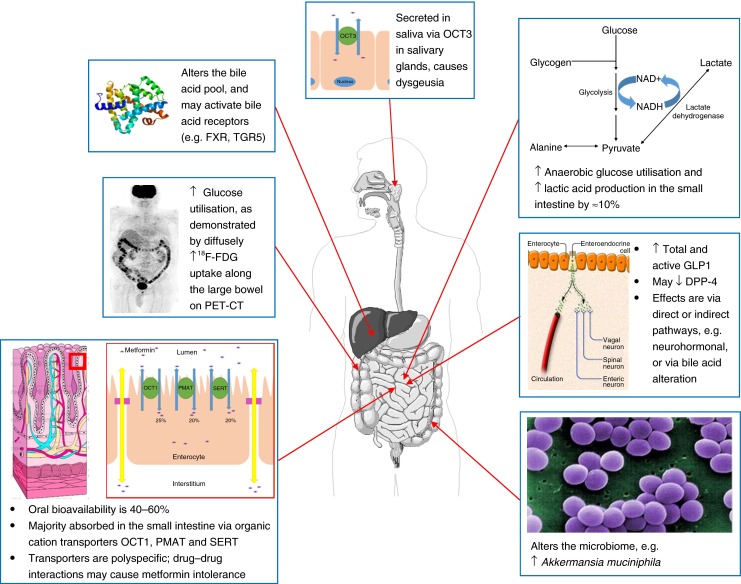
Metformin is an effective agent with a good safety profile that is widely used as a first-line treatment for type 2 diabetes, yet its mechanisms of action and variability in terms of efficacy and side effects remain poorly understood. Although the liver is recognised as a major site of metformin pharmacodynamics, recent evidence also implicates the gut as an important site of action. Metformin has a number of actions within the gut. It increases intestinal glucose uptake and lactate production, increases GLP-1 concentrations and the bile acid pool within the intestine, and alters the microbiome. A novel delayed-release preparation of metformin has recently been shown to improve glycaemic control to a similar extent to immediate-release metformin, but with less systemic exposure. We believe that metformin response and tolerance is intrinsically linked with the gut. This review examines the passage of metformin through the gut, and how this can affect the efficacy of metformin treatment in the individual, and contribute to the side effects associated with metformin intolerance.
Overview
The claims and statistics of this paper haven’t been checked yet.
Free: it reads the open-access text and checks the first 5 claims that cite a source we can check. Create a free account to check every claim.
Integrity signals
Registry
Cites
Statistics
Figures
Verification
Claims the paper makes
The claims and statistics of this paper haven’t been checked yet.
Free: it reads the open-access text and checks the first 5 claims that cite a source we can check. Create a free account to check every claim.
Claims other papers make about this one
Each is checked against this paper’s own text: does it say what the citing paper says it does?
The source backs part of the claim, not all of it — or backs it for a different population, condition or comparison.
In the citing paper
“Most of these minor side effects include gastrointestinal discomfort such as abdominal or stomach pain, early satiety, decreased appetite, and diarrhea, which usually subside after one or two weeks of use (McCreight et al. 2016).”
From Benefits of Metformin in Attenuating the Hallmarks of Aging (2020) · cites this paper as McCreight et al. 2016
Experimental — accuracy not yet measuredIn the citing paper
“As in most drugs, minor side effects occur with metformin, but it is important to understand whether they reveal anything about the mechanism of action of this drug.”
From Benefits of Metformin in Attenuating the Hallmarks of Aging (2020) · cites this paper as McCreight et al. 2016
Self-check
Percentages, sums and reported differences re-computed from the paper’s own numbers.
The self-check needs the paper’s full text.
Citations
Cites
A metagenome-wide association study of gut microbiota in type 2 diabetes
Qin, J., Li, Y., Cai, Z., Li, S., Zhu, J., Zhang, F., Liang, S., Zhang, W., Guan, Y., Shen, D., et al. (2012) · Nature · doi:10.1038/nature11450 · Cited by 6,762 · cited 2×
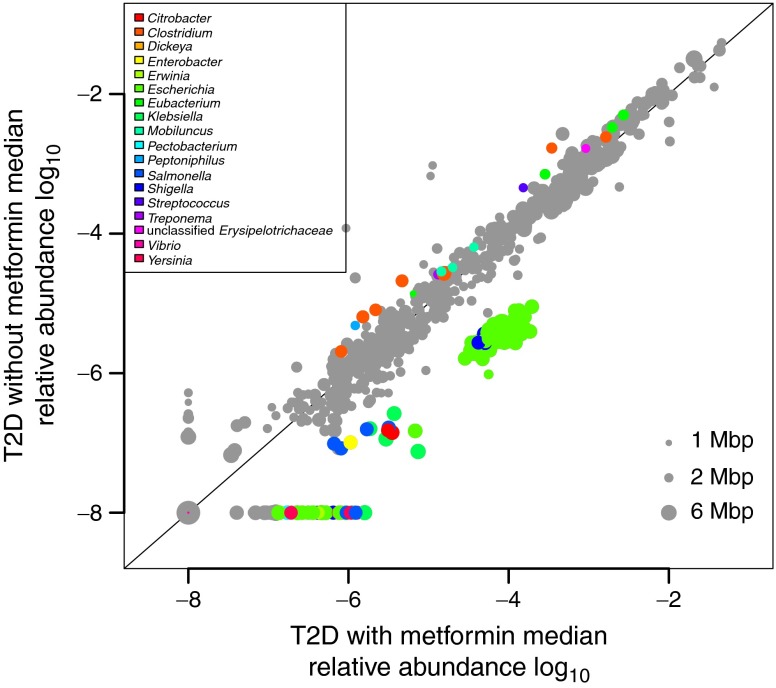
“Although these two studies differ in terms of the changes they identified, a common finding was a reduction in butyrate-producing bacteria and an increase in opportunistic pathogens [78, 81].”
BackgroundResultCross-talk between Akkermansia muciniphila and intestinal epithelium controls diet-induced obesity
Everard, A., Belzer, C., Geurts, L., Ouwerkerk, J. P., Druart, C., Bindels, L. B., Guiot, Y., Derrien, M., Muccioli, G. G., Delzenne, N. M., et al. (2013) · Proceedings of the National Academy of Sciences · doi:10.1073/pnas.1219451110 · Cited by 4,511 · cited 1×
“…(resulting in an increase in A. muciniphila ) or direct treatment with A. muciniphila has been reported to improve metabolic disorders, possibly by increasing endocannabinoids, which reduce inflammation, modify gut peptide secretion and improve the thickness of the gut mucous barrier [82].”
BackgroundGut metagenome in European women with normal, impaired and diabetic glucose control
Karlsson, F. H., Tremaroli, V., Nookaew, I., Bergström, G., Behre, C. J., Fagerberg, B., Nielsen, J., & Bäckhed, F. (2013) · Nature · doi:10.1038/nature12198 · Cited by 3,115 · cited 1×
“2) [79].”
Inzucchi, S. E., Bergenstal, R. M., Buse, J. B., Diamant, M., Ferrannini, E., Nauck, M., Peters, A. L., Tsapas, A., Wender, R., & Matthews, D. R. (2015) · Diabetes Care · doi:10.2337/dc14-2441 · Cited by 3,066
Disentangling type 2 diabetes and metformin treatment signatures in the human gut microbiota
MetaHIT consortium, Forslund, K., Hildebrand, F., Nielsen, T., Falony, G., Le Chatelier, E., Sunagawa, S., Prifti, E., Vieira-Silva, S., Gudmundsdottir, V., et al. (2015) · Nature · doi:10.1038/nature15766 · Cited by 2,116
TGR5-Mediated Bile Acid Sensing Controls Glucose Homeostasis
Thomas, C., Gioiello, A., Noriega, L., Strehle, A., Oury, J., Rizzo, G., Macchiarulo, A., Yamamoto, H., Mataki, C., Pruzanski, M., et al. (2009) · Cell Metabolism · doi:10.1016/j.cmet.2009.08.001 · Cited by 1,885 · cited 1×
“The increase in the bile acid pool may then stimulate TGR5 bile acid receptors on the L cell [62, 67], causing an increase in GLP-1 secretion via mitochondrial oxidative phosphorylation and calcium influx [67].”
BackgroundMolecular imaging of cancer with positron emission tomography
Gambhir, S. S. (2002) · Nature Reviews Cancer · doi:10.1038/nrc882 · Cited by 1,656 · cited 1×
“PET-CT is commonly used for the diagnosis, staging and monitoring of the response to treatment, of certain cancers [32].”
MethodShin, N.-R., Lee, J.-C., Lee, H.-Y., Kim, M.-S., Whon, T. W., Lee, M.-S., & Bae, J.-W. (2014) · Gut · doi:10.1136/gutjnl-2012-303839 · Cited by 1,550 · cited 2×
“Administration of A. muciniphila to mice receiving a high-fat diet improved glucose tolerance [86], suggesting that the effect of metformin on abundance of this species within in the microbiome may indirectly contribute to the glucose-lowering effect of metformin.”
Background
Cited by
Items 101–200 of 762
Dawed, A. Y., Zhou, K., van Leeuwen, N., Mahajan, A., Robertson, N., Koivula, R. W., Elders, P. J. M., Rauh, S. P., Jones, A. G., Holl, R. W., et al. (2019) · Diabetes Care · doi:10.2337/dc18-2182 · Cited by 86
Self-citationInsights into Pathogenesis, Nutritional and Drug Approach in Sarcopenia: A Systematic Review
Mellem, R. H., Girotto, O. S., Marques, E. B., Laurindo, L. F., Grippa, P. C., Mendes, C. G., Garcia, L. N. H., Bechara, M. D., Barbalho, S. M., Sinatora, R. V., et al. (2023) · Biomedicines · doi:10.3390/biomedicines11010136 · Cited by 76
“Recently, researchers highlighted the anti-cancer and anti-aging potential of metformin; therefore, much has been said about its potential against sarcopenia, but with some controversial results [140,141].”
Lin, S. H., Cheng, P. C., Tu, S., Hsu, S. R., Cheng, Y. C., & Liu, Y. H. (2018) · PeerJ · doi:10.7717/peerj.4578 · Cited by 91
Safety of dietary supplementation with arginine in adult humans
McNeal, C. J., Meininger, C. J., Wilborn, C. D., Tekwe, C. D., & Wu, G. (2018) · Amino Acids · doi:10.1007/s00726-018-2594-7 · Cited by 72
Schernthaner, G., Brand, K. M. G., & Bailey, C. J. (2022) · Metabolism · doi:10.1016/j.metabol.2022.155160 · Cited by 77
Self-citationPharmacogenomics in diabetes mellitus: insights into drug action and drug discovery
Zhou, K., Pedersen, H., Dawed, A. Y., & Pearson, E. R. (2016) · Nature Reviews Endocrinology · doi:10.1038/nrendo.2016.51 · Cited by 78
Self-citationMetformin: A Candidate Drug for Renal Diseases
Corremans, R., Vervaet, B. A., D’Haese, P. C., Neven, E., & Verhulst, A. (2018) · International Journal of Molecular Sciences · doi:10.3390/ijms20010042 · Cited by 69
“Further, an important contribution to the antihyperglycemic efficacy of metformin arises from actions within the gut, by increasing glucagon-like peptide 1 (GLP-1) secretion, and possibly altering the gut microbiome [3,4,7,8].”
BackgroundDidangelos, T., Karlafti, E., Kotzakioulafi, E., Kontoninas, Z., Margaritidis, C., Giannoulaki, P., & Kantartzis, K. (2020) · Nutrients · doi:10.3390/nu12113254 · Cited by 76
“It has also been proposed that metformin reduces the vitamin absorption by altering intestinal motility [67].”
BackgroundHealth benefits of late-onset metformin treatment every other week in mice
Alfaras, I., Mitchell, S. J., Mora, H., Lugo, D. R., Warren, A., Navas-Enamorado, I., Hoffmann, V., Hine, C., Mitchell, J. R., Le Couteur, D. G., et al. (2017) · npj Aging and Mechanisms of Disease · doi:10.1038/s41514-017-0018-7 · Cited by 68
“Taken as a whole, these findings offer a promising use of metformin in combatting ailments of aging, although gastrointestinal intolerance, lactic acidosis, and kidney failure have contributed to the adverse side-effects associated with metformin use.(56) Based on our results, it should be emphasized the importance of…”
Metformin, Cognitive Function, and Changes in the Gut Microbiome
Rosell-Díaz, M., & Fernández‐Real, J. M. (2023) · Endocrine Reviews · doi:10.1210/endrev/bnad029 · Cited by 72
Liu, H., Xing, Y., Wang, Y., Ren, X., Zhang, D., Dai, J., Xiu, Z., Yu, S., & Dong, Y. (2023) · Foods · doi:10.3390/foods12122310 · Cited by 68
Metformin inhibits inflammatory signals in the gut by controlling AMPK and p38 MAP kinase activation
Fusco, D. D., Dinallo, V., Monteleone, I., Laudisi, F., Marafini, I., Franzè, E., Grazia, A. D., Dwairi, R., Colantoni, A., Ortenzi, A., et al. (2018) · Clinical Science · doi:10.1042/cs20180167 · Cited by 71
AMPK Activity: A Primary Target for Diabetes Prevention with Therapeutic Phytochemicals
Chung, M., Choi, H., & Hwang, J. (2021) · Nutrients · doi:10.3390/nu13114050 · Cited by 69
“Although metformin acts as a first-line treatment approach against type 2 diabetes, it often causes gastrointestinal side effects, including nausea, vomiting, and diarrhea [48].”
BackgroundThe role of an anti-diabetic drug metformin in the treatment of endocrine tumors
Thakur, S., Daley, B., & Kłubo-Gwieździńska, J. (2019) · Journal of Molecular Endocrinology · doi:10.1530/jme-19-0083 · Cited by 70
Zhang, R., He, Y., Yao, L., Chen, J., Zhu, S., Rao, X., Tang, P., You, J., Hua, G., Zhang, L., et al. (2021) · Environment International · doi:10.1016/j.envint.2020.106244 · Cited by 65
Bækdal, T. A., Borregaard, J., Hansen, C. W., Thomsen, M., & Anderson, T. W. (2019) · Clinical Pharmacokinetics · doi:10.1007/s40262-019-00756-2 · Cited by 63
Metformin in Patients With COVID-19: A Systematic Review and Meta-Analysis
Li, Y., Yang, X., Yan, P., Sun, T., Zeng, Z., & Li, S. (2021) · Frontiers in Medicine · doi:10.3389/fmed.2021.704666 · Cited by 67
“Gastrointestinal adverse events are the most short-term concern for metformin affecting approximately 10% of its users (50, 53).”
BackgroundMetformin: Past, Present, and Future
Chaudhary, S., & Kulkarni, A. (2024) · Current Diabetes Reports · doi:10.1007/s11892-024-01539-1 · Cited by 68
“However, approximately 5% of patients are metformin-intolerant even at low doses where we need to stop the drug, and alternative treatment options should be considered [24].”
Rotroff, D. M., Yee, S. W., Zhou, K., Marvel, S. W., Shah, H., Jack, J. R., Havener, T. M., Hedderson, M. M., Kubo, M., Herman, M. A., et al. (2018) · Diabetes · doi:10.2337/db17-1164 · Cited by 66
Self-citationGut reaction: impact of systemic diseases on gastrointestinal physiology and drug absorption
Hatton, G. B., Madla, C. M., Rabbie, S. C., & Basit, A. W. (2018) · Drug Discovery Today · doi:10.1016/j.drudis.2018.11.009 · Cited by 65
Novel Interventions for the Prevention of Preeclampsia
Ma’ayeh, M., Rood, K. M., Kniss, D. A., & Costantine, M. M. (2020) · Current Hypertension Reports · doi:10.1007/s11906-020-1026-8 · Cited by 74
Silamiķele, L., Silamiķelis, I., Ustinova, M., Kalniņa, Z., Elbere, I., Petrovska, R., Kalniņa, I., & Kloviņš, J. (2021) · Frontiers in Endocrinology · doi:10.3389/fendo.2021.626359 · Cited by 68
“Previous studies have reported that obesity and T2D are associated with a reduction of butyrate-producing bacteria and an increase in opportunistic pathogens (7, 45).”
BackgroundCombatting type 2 diabetes by turning up the heat
Schrauwen, P., & van Marken Lichtenbelt, W. D. (2016) · Diabetologia · doi:10.1007/s00125-016-4068-3 · Cited by 58
“In fact, the most widely prescribed glucose-lowering drug, metformin, has been suggested to work via the induction of energy stress in the cell and thereby activation of AMPK [59], although the exact working mechanism is still the subject of debate [60, 61].”
BackgroundMetformin Affects Cortical Bone Mass and Marrow Adiposity in Diet-Induced Obesity in Male Mice
Bornstein, S., Moschetta, M., Kawano, Y., Sacco, A., Huynh, D., Brooks, D. J., Manier, S., Fairfield, H. E., Falank, C. R., Roccaro, A. M., et al. (2017) · Endocrinology · doi:10.1210/en.2017-00299 · Cited by 65
Metformin targets brown adipose tissue in vivo and reduces oxygen consumption in vitro
Breining, P., Jensen, J. B., Sundelin, E. I., Gormsen, L. C., Jakobsen, S., Busk, M., Rolighed, L., Bross, P., Fernandez‐Guerra, P., Markussen, L. K., et al. (2018) · Diabetes, Obesity and Metabolism · doi:10.1111/dom.13362 · Cited by 60
Morita, Y., Nogami, M., Sakaguchi, K., Okada, Y., Hirota, Y., Sugawara, K., Tamori, Y., Zeng, F., Murakami, T., & Ogawa, W. (2020) · Diabetes Care · doi:10.2337/dc20-0093 · Cited by 66
Hausner, H., Derving Karsbøl, J., Holst, A. G., Jacobsen, J. B., Wagner, F.-D., Golor, G., & Anderson, T. W. (2017) · Clinical Pharmacokinetics · doi:10.1007/s40262-017-0532-6 · Cited by 62
“It is absorbed in the small intestine and has an oral bioavailability of 50–60% [18].”
BackgroundPreiss, D., Dawed, A., Welsh, P., Heggie, A., Jones, A. G., Dekker, J., Koivula, R., Hansen, T. H., Stewart, C., Holman, R. R., et al. (2017) · Diabetes, Obesity and Metabolism · doi:10.1111/dom.12826 · Cited by 59
Self-citationRezaeinezhad, A., Eslami, P., Mirmiranpour, H., & Ghomi, H. (2019) · Scientific Reports · doi:10.1038/s41598-019-56459-y · Cited by 61
García-Calzón, S., Perfilyev, A., Martinell, M., Ustinova, M., Kalamajski, S., Franks, P. W., Bacos, K., Elbere, I., Pihlajamäki, J., Volkov, P., et al. (2020) · Science Translational Medicine · doi:10.1126/scitranslmed.aaz1803 · Cited by 65
“Functional follow-up experiments in hepatocytes cultured in vitro We asked whether genes to which the identified CpG sites associated with metformin response and intolerance (Table 1) are annotated to have a functional role in liver cells (HepG2 cells) (33, 34).”
BackgroundDíaz-Perdigones, C. M., Muñoz‐Garach, A., Alvarez-Bermudez, M. D., Moreno‐Indias, I., & Tinahones, F. J. (2021) · Biomedicine & Pharmacotherapy · doi:10.1016/j.biopha.2021.112448 · Cited by 61
Pharmacokinetics of metformin in patients with gastrointestinal intolerance
MCCREIGHT, L. J., Stage, T. B., Connelly, P. J., Lonergan, M. E., Nielsen, F., Prehn, C. P., Adamski, J., Brøsen, K., & Pearson, E. R. (2018) · Diabetes Obesity and Metabolism · doi:10.1111/dom.13264 · Cited by 62
“It is predominantly absorbed from the small intestine, with a bioavailability of ~60%(10); however, it also exerts many effects on the intestine, as previously described.(9) Multiple hypotheses for the mechanism of GI intolerance to metformin have been proposed, including abnormal uptake, increased lactate production,…”
BackgroundSelf-citationMetformin Therapy in Autosomal Dominant Polycystic Kidney Disease: A Feasibility Study
Brosnahan, G., Wang, W., Gitomer, B. Y., Struemph, T., George, D. M., You, Z., Nowak, K. L., Klawitter, J., & Chonchol, M. B. (2021) · American Journal of Kidney Diseases · doi:10.1053/j.ajkd.2021.06.026 · Cited by 64
Sardoiwala, M. N., Srivastava, A. K., Kaundal, B., Karmakar, S., & Choudhury, S. R. (2019) · Nanomedicine Nanotechnology Biology and Medicine · doi:10.1016/j.nano.2019.102088 · Cited by 64
Efficacy and Safety of Metformin Use in Rheumatoid Arthritis: A Randomized Controlled Study
Gharib, M., El-Baz, W., Darweesh, E. A. G., Sabri, N. A., & Shawki, M. A. (2021) · Frontiers in Pharmacology · doi:10.3389/fphar.2021.726490 · Cited by 60
“It has been reported that GIT effects associated with metformin use affect up to 25% of the users, and only 5% can’t tolerate these side effects at all (McCreight et al., 2016).”
BackgroundEffects of Drugs and Excipients on Hydration Status
Puga, A. M., Lopez-Oliva, S., Trives, C., Partearroyo, T., & Varela-Moreiras, G. (2019) · Nutrients · doi:10.3390/nu11030669 · Cited by 54
“For example, the structural similarities between the metformin and selective agonists of serotonin receptors trigger alterations in the transport of this neurotransmitter or a direct serotonergic-like effect, associated with nausea, vomiting, and diarrhea [42].”
BackgroundMeng, H., Zhang, A., Liang, Y., Hao, J., Zhang, X., & Lu, J. (2018) · Diabetes/Metabolism Research and Reviews · doi:10.1002/dmrr.2983 · Cited by 56
“The possible mechanisms are that metformin alters the microbiome within the intestine and increases intestinal glucose uptake and lactate production as well as alters serotonin transport.(31) Notably, very few patients discontinued treatment because of the GIAEs.”
BackgroundSmits, M. M., Tonneijck, L., Muskiet, M. H. A., Hoekstra, T., Kramer, M. H. H., Diamant, M., Nieuwdorp, M., Groen, A. K., Cahen, D. L., & van Raalte, D. H. (2016) · Diabetes, Obesity and Metabolism · doi:10.1111/dom.12748 · Cited by 56
“Metformin reduces serum bile acids and increases the intestinal bile acid pool, probably by reduction of ileal bile acid reuptake.(30) Although metformin use was stable in the current study, evenly distributed across the groups, and did not affect the effects of the GLP-”
BackgroundWang, Y., Luo, X., Mao, X., Tao, Y., Ran, X., Zhao, H.-X., Xiong, J., & Li, L. (2017) · PLoS ONE · doi:10.1371/journal.pone.0172774 · Cited by 63
Where Does Metformin Stand in Modern Day Management of Type 2 Diabetes?
Ahmad, E., Sargeant, J. A., Zaccardi, F., Khunti, K., Webb, D. R., & Davies, M. J. (2020) · Pharmaceuticals · doi:10.3390/ph13120427 · Cited by 61
“Approximately 25% of individuals experience GI side effects as a result of metformin therapy [141] particularly at the start of therapy and 5% of those discontinue metformin due to these side effects [142].”
BackgroundKuka, J., Ozola, M., Makrecka‐Kuka, M., Liepiņš, J., Grīnberga, S., Sevostjanovs, E., Vilks, K., Liepinsh, E., & Dambrova, M. (2020) · Scientific Reports · doi:10.1038/s41598-020-71470-4 · Cited by 56
Transdermal Drug Delivery Systems and Their Use in Obesity Treatment
Li, Z., Fang, X., & Yu, D. (2021) · International Journal of Molecular Sciences · doi:10.3390/ijms222312754 · Cited by 59
The Interplay between Immune System and Microbiota in Diabetes
Moffa, S., Mezza, T., CEFALO, C. M. A., Cinti, F., Impronta, F., Sorice, G. P., Santoro, A., Giuseppe, G. D., Pontecorvi, A., & Giaccari, A. (2019) · Mediators of Inflammation · doi:10.1155/2019/9367404 · Cited by 55
“Metformin, which represents the first-line therapy in T2D management, is able to positively modulate gut microbiota composition, both in humans and animals [79], contrasting the effects of a highfat diet [80].”
BackgroundSardoiwala, M. N., Kushwaha, A. C., Dev, A., Shrimali, N. M., Guchhait, P., Karmakar, S., & Choudhury, S. R. (2020) · ACS Biomaterials Science & Engineering · doi:10.1021/acsbiomaterials.9b01844 · Cited by 55
The Role of Gut–brain Axis in Regulating Glucose Metabolism After Acute Pancreatitis
Pendharkar, S. A., Asrani, V. M., Murphy, R., Cutfield, R. G., Windsor, J. A., & Petrov, M. S. (2017) · Clinical and Translational Gastroenterology · doi:10.1038/ctg.2016.63 · Cited by 56
“Therapeutic armamentarium for treating diabetes has broadened considerably in the last decade (glucagon-like peptide-1 (GLP-1) agonists, inhibitors of dipeptidyl peptidase4), driven partly by improved understanding of the role of the gut in diabetes, while metformin remains first choice oral glucose-lowering drug in t…”
BackgroundWee, J., Tan, X. R., Gunther, S. H., Ihsan, M., Leow, M. K., Tan, D. S., Eriksson, J. G., & LEE, J. K. W. (2023) · Pharmacological Reviews · doi:10.1124/pharmrev.122.000782 · Cited by 55
“Although considered highly safe (Sanchez-Ran-gel and Inzucchi, 2017), nearly 30% of people with diabetes experience some form of gastrointestinal (GI) intolerance (e.g., diarrhea, nausea, and dyspepsia) to the drug upon initiation (McCreight et al., 2016).”
Leija, R. G., Curl, C. C., Arevalo, J. A., Osmond, A. D., Duong, J. J., Huie, M. J., Masharani, U. B., & Brooks, G. A. (2024) · Nature Metabolism · doi:10.1038/s42255-024-00993-1 · Cited by 54
“…not escaped our notice that the beneficial effect of metformin on glucose levels in people with diabetes might be via its effect on the PLS. Metformin occurs at higher concentrations in enterocytes compared with the plasma, hence increasing intestinal lactate production after a glucose load 28 .”
BackgroundNutrient sensing pathways as therapeutic targets for healthy ageing
Aiello, A., Accardi, G., Candore, G., Gambino, C. M., Mirisola, M., Taormina, G., Virruso, C., & Caruso, C. (2017) · Expert Opinion on Therapeutic Targets · doi:10.1080/14728222.2017.1294684 · Cited by 52
Ojha, A., Ojha, U., Mohammed, R., Chandrashekar, A., & Ojha, H. (2019) · Clinical Pharmacology Advances and Applications · doi:10.2147/cpaa.s202614 · Cited by 75
MASS SPECTROMETRY‐BASED PERSONALIZED DRUG THERAPY
Cui, J., Wang, L., Tan, Z., Zhou, H., Zhan, X., & Yin, J. (2020) · Mass Spectrometry Reviews · doi:10.1002/mas.21620 · Cited by 52
Wakeman, M. P., & Archer, D. T. (2020) · Diabetes Metabolic Syndrome and Obesity · doi:10.2147/dmso.s237454 · Cited by 65
Yandrapalli, S., Jolly, G., Horblitt, A., Sanaani, A., & Aronow, W. S. (2017) · Postgraduate Medicine · doi:10.1080/00325481.2017.1358064 · Cited by 50
“patients unable to tolerate metformin [15].”
BackgroundBiowaiver Monographs for Immediate Release Solid Oral Dosage Forms: Metformin Hydrochloride
Metry, M., Shu, Y., Abrahamsson, B., Cristofoletti, R., Dressman, J., Groot, D. W., Parr, A. F., Langguth, P., Shah, V. P., Tajiri, T., et al. (2021) · Journal of Pharmaceutical Sciences · doi:10.1016/j.xphs.2021.01.011 · Cited by 54
Ferjan, S., Janež, A., & Jensterle, M. (2017) · Endocrine Practice · doi:10.4158/ep-2017-0027 · Cited by 55
Borg, M. J., Bound, M., Grivell, J., Sun, Z., Jones, K. L., Horowitz, M., Rayner, C. K., & Wu, T. (2019) · Diabetes, Obesity and Metabolism · doi:10.1111/dom.13567 · Cited by 49
“Although several animal studies have shown that metformin has the capacity to slow GE,(22,23) and that antagonism of GLP-1 signalling by exendin (9-39) diminishes this effect,(22) the potential for metformin to slow GE has not been reported previously in healthy individuals or T2DM patients.”
BackgroundMetformin lactic acidosis: Should we still be afraid?
Salvatore, T., Pafundi, P. C., Marfella, R., Sardu, C., Rinaldi, L., Monaco, L., Ricozzi, C., Imbriani, S., Nevola, R., Adinolfi, L. E., et al. (2019) · Diabetes Research and Clinical Practice · doi:10.1016/j.diabres.2019.107879 · Cited by 52
Hidalgo, J., Teuber, S., Morera, F. J., Ojeda, C., Flores, C. A., Hidalgo, M. A., Núñez, L., Villalobos, C., & Burgos, R. A. (2017) · International Journal of Molecular Sciences · doi:10.3390/ijms18040750 · Cited by 51
“Since metformin increases intestinal glucose uptake and also lactate production [4,5], this phenomenon can cause intolerance to the treatment [5] and contribute to the development of lactic acidosis [1].”
BackgroundTreatment of Metabolic Syndrome in Children
Fornari, E., & Maffeis, C. (2019) · Frontiers in Endocrinology · doi:10.3389/fendo.2019.00702 · Cited by 58
Lei, X., Huo, P., Wang, Y., Xie, Y., Shi, Q., Tu, H., Yao, J., Mo, Z., & Zhang, S. (2020) · Frontiers in Endocrinology · doi:10.3389/fendo.2020.00164 · Cited by 50
Metformin beyond type 2 diabetes: Emerging and potential new indications
Petrie, J. R. (2024) · Diabetes Obesity and Metabolism · doi:10.1111/dom.15756 · Cited by 61
Effect of Weight Loss Medications on Hepatic Steatosis and Steatohepatitis: A Systematic Review
Pan, C. S., & Stanley, T. L. (2020) · Frontiers in Endocrinology · doi:10.3389/fendo.2020.00070 · Cited by 46
Sardoiwala, M. N., Karmakar, S., & Choudhury, S. R. (2020) · Carbohydrate Polymers · doi:10.1016/j.carbpol.2020.117435 · Cited by 48
Effects of Oral Glucose-Lowering Agents on Gut Microbiota and Microbial Metabolites
Wang, D., Liu, J. Y., Zhou, L., Zhang, Q., Li, M., & Xiao, X. (2022) · Frontiers in Endocrinology · doi:10.3389/fendo.2022.905171 · Cited by 52
“Notably, the metformin concentration in the gastrointestinal lumen is 30–300 times higher than in the circulation (100).”
BackgroundMetformin and cardiorenal outcomes in diabetes: A reappraisal
Petrie, J. R., Rossing, P. R., & Campbell, I. W. (2020) · Diabetes Obesity and Metabolism · doi:10.1111/dom.13984 · Cited by 49
Mooranian, A., Negrulj, R., Takechi, R., Mamo, J. C. L., Al-Sallami, H. S., & Al‐Salami, H. (2018) · Drug Delivery and Translational Research · doi:10.1007/s13346-017-0473-5 · Cited by 46
Coco, C., Sgarra, L., Potenza, M. A., Nacci, C., Pasculli, B., Barbano, R., Parrella, P., & Montagnani, M. (2019) · International Journal of Molecular Sciences · doi:10.3390/ijms20122949 · Cited by 47
“A reduced tolerance to metformin (Met) has been detected in patients carrying variations in the organic cation transporter 1 (OCT1) responsible for intestinal Met absorption [186,187].”
BackgroundPleiotropic Effects of Metformin on the Antitumor Efficiency of Immune Checkpoint Inhibitors
Liu, W., Wang, Y., Luo, J., Liu, M., & Luo, Z. (2021) · Frontiers in Immunology · doi:10.3389/fimmu.2020.586760 · Cited by 51
“Metformin is usually taken orally and its oral bioavailability is between 50% and 60% (54).”
BackgroundWitham, M. D., Granic, A., Pearson, E. R., Robinson, S. M., & Sayer, A. A. (2023) · Drugs & Aging · doi:10.1007/s40266-023-01042-4 · Cited by 49
Self-citationRashid, M., Shahzad, M., Mahmood, S., & Khan, K. (2019) · Pakistan Journal of Medical Sciences · doi:10.12669/pjms.35.1.100 · Cited by 48
Nakajima, H., Takewaki, F., Hashimoto, Y., Kajiyama, S., Majima, S., Okada, H., Senmaru, T., Ushigome, E., Nakanishi, N., Hamaguchi, M., et al. (2020) · Life · doi:10.3390/life10090195 · Cited by 49
“It increases intestinal glucose uptake and lactate production, increases glucagon-like peptide 1 (GLP-1) concentrations and the bile acid pool within the intestine, and alters the microbiota [9,10].”
BackgroundNutrients in Energy and One-Carbon Metabolism: Learning from Metformin Users
Luciano‐Mateo, F., Hernández‐Aguilera, A., Cabré, N., Camps, J., Fernández‐Arroyo, S., López‐Miranda, J., Menéndez, J. A., & Joven, J. (2017) · Nutrients · doi:10.3390/nu9020121 · Cited by 44
“associated with the gut and the intake of nutrients [132].”
BackgroundSadeghi, A., Mousavi, S. M., Mokhtari, P., Parohan, M., & Milajerdi, A. (2020) · Childhood Obesity · doi:10.1089/chi.2019.0040 · Cited by 44
Metabolomic Approaches to Investigate the Effect of Metformin: An Overview
Kim, H. W. (2021) · International Journal of Molecular Sciences · doi:10.3390/ijms221910275 · Cited by 46
“Recently, the intestines are another target of metformin by increasing anaerobic glucose metabolism in enterocytes to reduce glucose absorption and increase lactate delivery to the liver [25].”
BackgroundThe Gut Microbiota-Related Antihyperglycemic Effect of Metformin
Szymczak-Pajor, I., Drzewoski, J., Kozłowska, M., Krekora, J., & Śliwińska, A. (2025) · Pharmaceuticals · doi:10.3390/ph18010055 · Cited by 46
“It has also been proposed that by affecting the composition of gut microflora, metformin exerts an antihyperglycemic effect [13].”
Scott, F. H., Malagon, S. G. G., O’Brien, B. A., Fennema, D., Veeravalli, S., Coveney, C. R., Phillips, I. R., & Shephard, E. A. (2017) · Drug Metabolism and Disposition · doi:10.1124/dmd.117.076612 · Cited by 43
“There is an increasing appreciation of the role of the gut microbiome in metformin response (McCreight et al., 2016).”
BackgroundBrønden, A., Albér, A., Rohde, U., Rehfeld, J. F., Holst, J. J., Vilsbøll, T., & Knop, F. K. (2017) · The Journal of Clinical Endocrinology & Metabolism · doi:10.1210/jc.2017-01091 · Cited by 42
Shen, L., Li, A., Xu, H., Shi, J., You, D., Yu, X., Xu, W., Sun, J., & Wang, F. (2019) · BMC Endocrine Disorders · doi:10.1186/s12902-019-0354-7 · Cited by 43
“Studies revealed that the gut microbiome composition is altered for T2DM patients treated with metformin [30], in which possibly explain the inconsistent result in serum D-lactate and endotoxin level.”
BackgroundShen, Q. “., Zhong, Y., Liu, X., Hu, J., Qi, S.-M., Li, K., Wang, Z., Zhu, H., Li, X., Wang, Y., et al. (2022) · Food & Function · doi:10.1039/d2fo03308a · Cited by 42
Anti-Obesity Drug Delivery Systems: Recent Progress and Challenges
Ashour, M. M., Mabrouk, M., Aboelnasr, M. A., Beherei, H. H., Tohamy, K. M., & Das, D. B. (2023) · Pharmaceutics · doi:10.3390/pharmaceutics15112635 · Cited by 45
“Constipation and stomach aches are among its reported side effects [45–47].”
BackgroundAdapting Medication for Type 2 Diabetes to a Low Carbohydrate Diet
Cucuzzella, M. T., Riley, K., & Isaacs, D. M. (2021) · Frontiers in Nutrition · doi:10.3389/fnut.2021.688540 · Cited by 47
Shoshan‐Barmatz, V., Anand, U., Crystal, E. N., Carlo, M. D., & Shteinfer‐Kuzmine, A. (2021) · Frontiers in Physiology · doi:10.3389/fphys.2021.730048 · Cited by 44
Diabetes: Is There a Future for Pharmacogenomics Guided Treatment?
Pearson, E. R. (2019) · Clinical Pharmacology & Therapeutics · doi:10.1002/cpt.1484 · Cited by 42
Self-citationAhmed, L. A., Salem, M. B., el-Din, S. H. S., El-Lakkany, N. M., Okasha, H., Nasr, S. M., Hammam, O. A., Botros, S. S., & Saleh, S. (2020) · European Journal of Pharmacology · doi:10.1016/j.ejphar.2020.173461 · Cited by 41
Bouriche, S., Alonso-García, A., Rodríguez, C. C., Rezgui, F., & Fernández-Varón, E. (2021) · BMC Veterinary Research · doi:10.1186/s12917-021-03016-3 · Cited by 40
“In the presence of insulin, metformin hydrochloride acts by lowering the blood glucose concentration mainly through the inhibition of gastrointestinal glucose absorption and hepatic glucose production, increasing glucose uptake and insulin sensitivity in muscle tissue [6].”
BackgroundMetformin and the Liver: Unlocking the Full Therapeutic Potential
Perazza, F., Leoni, L., Colosimo, S., Musio, A., Bocedi, G., D’Avino, M., Agnelli, G., Nicastri, A., Rossetti, C., Sacilotto, F., et al. (2024) · Metabolites · doi:10.3390/metabo14040186 · Cited by 43
“Approximately 25–30% of patients report these e ff ects, leading to treatment withdrawal in 5% of cases [28], although the modi fi ed-release formulation is more tolerable [187].”
BackgroundThe direct targets of metformin in diabetes and beyond
Yao, L., Wang, L., Zhang, R., Soukas, A. A., & Wu, L. (2024) · Trends in Endocrinology and Metabolism · doi:10.1016/j.tem.2024.07.017 · Cited by 41
Pani, A., Gironi, I., Di Vieste, G., Mion, E., Bertuzzi, F., & Pintaudi, B. (2020) · International Journal of Endocrinology · doi:10.1155/2020/6276187 · Cited by 38
“More recently, an action of metformin also in the gut has been proposed, where it has shown to increase glucose uptake and use in the enterocytes and glucagon-like peptide-1 (GLP-1) secretion [43].”
BackgroundSyafika, N., Azis, S. B. A., Enggi, C. K., Qonita, H. A., Mahmud, T. R. A., Abizart, A., Asri, R. M., & Permana, A. D. (2023) · Molecular Pharmaceutics · doi:10.1021/acs.molpharmaceut.2c00936 · Cited by 39
Metformin: From diabetes to cancer to prolongation of life
Sirtori, C. R., Castiglione, S., & Pavanello, C. (2024) · Pharmacological Research · doi:10.1016/j.phrs.2024.107367 · Cited by 41
Barik, S. K., Sengupta, S., Arya, R., Kumar, S., Kim, J.-J., & Chaurasia, R. (2024) · Advances in Nutrition · doi:10.1016/j.advnut.2024.100346 · Cited by 43
“However, research indicates that some patients are intolerant to metformin due to reduced organic cation transporter 1 transport in the intestine [16].”
Simons, F. J., & Wagner, K. G. (2019) · European Journal of Pharmaceutics and Biopharmaceutics · doi:10.1016/j.ejpb.2019.02.022 · Cited by 38
Hunt, N. J., Lockwood, G. P., Kang, S. W. S., Westwood, L. J., Limantoro, C., Chrzanowski, W., McCourt, P., Kuncic, Z., Couteur, D. G. L., & Cogger, V. C. (2021) · ACS Nano · doi:10.1021/acsnano.0c09278 · Cited by 40
Action Mechanism of Metformin and Its Application in Hematological Malignancy Treatments: A Review
Zhang, Y., Zhou, F., Guan, J., Zhou, L., & Chen, B. (2023) · Biomolecules · doi:10.3390/biom13020250 · Cited by 42
“Metformin increases the intestinal absorption and utilization of glucose in the intestinal cells, which in turn limits the entry of glucose into the bloodstream [55,56].”
Backgroundde Oliveira, C. P. M. S., Cotrim, H. P., Stefano, J. T., Siqueira, A. C., Salgado, A. L. A., & Parise, E. R. (2019) · Arquivos de Gastroenterologia · doi:10.1590/s0004-2803.201900000-36 · Cited by 38
“Both, UDCA and MTF, are known for having diarrhea as an adverse event in therapeutic doses(24,25).”
BackgroundMetformin and its gastrointestinal problems: A review
Fatima, M., Sadeeqa, S., & Nazir, S. U. R. (2018) · Biomedical Research - India · doi:10.4066/biomedicalresearch.40-18-526 · Cited by 44
“Furthermore, the alteration in the absorption of bile acid may cause an increase in the Glucagon-Like Peptide-1 (GLP-1) secretion, similarly observed with sequestrants of bile acid such as colesevelam [30].”
BackgroundMetformin as a host-directed therapeutic in tuberculosis: Is there a promise?
Yew, W. W., Chang, K. C., Chan, D. P. C., & Zhang, Y. (2019) · Tuberculosis · doi:10.1016/j.tube.2019.02.004 · Cited by 37
Duffy, S., Norton, D., Kelly, M., Chavez, A., Tun, R., Ramírez, M. N. D. G., Chen, G., Wise, P. H., & Svenson, J. (2020) · Global Health Science and Practice · doi:10.9745/ghsp-d-20-00076 · Cited by 38
“59 Thirty-six percent of glyburide-exposed patients experienced probable hypoglycemia symptoms or documented hypoglycemia, with a mean of 0.9 events per patient-year of therapy.”
BackgroundInfluentialSignificant impact of time-of-day variation on metformin pharmacokinetics
Türk, D., Scherer, N., Selzer, D., Dings, C., Hanke, N., Dallmann, R., Schwab, M. G., Timmins, P., Nock, V., & Lehr, T. (2023) · Diabetologia · doi:10.1007/s00125-023-05898-4 · Cited by 37
Mbara, K. C., Mato, P. E. M., Driver, C., Nzuza, S., Mkhombo, N. T., Gcwensa, S. K., Mcobothi, E. N., & Owira, P. M. O. (2021) · European Journal of Pharmacology · doi:10.1016/j.ejphar.2021.173934 · Cited by 36
Deng, W., Ke, H., Wang, S., Li, Z., Li, S., Lv, P., Li, F., & Chen, Y. (2022) · Behavioural Neurology · doi:10.1155/2022/6711160 · Cited by 37
“A previous report showed that metformin alters the microbiome in both mice and humans and, in contrast with the effect of a HFD, causes an overall decrease in the bacterial diversity of the mouse microbiome [40, 41].”
Background
Metadata
- Authors
- McCreight, L. J., Bailey, C. J., & Pearson, E. R.
- Affiliations
- University of Dundee (GB)
- Aston University (GB)
- Corresponding author
- Pearson, Ewan R.
- Venue
- Diabetologia
- Published
- 2016-01-16
- Volume
- 59
- Issue
- 3
- Pages
- 426-435
- ISSN
- 0012-186X (ISSN-L)
- 1432-0428
- PMC
- PMC4742508
- OpenAlex
- W2255443535
- Cited by
- 733
- References
- 89
- Citations by year
- 2026: 53 · 2025: 75 · 2024: 83 · 2023: 97 · 2022: 73 · 2021: 79 · 2020: 88 · 2019: 48 · 2018: 62 · 2017: 50 · 2016: 25
- FWCI
- 9.08
- Type
- journal article
- Language
- en
- Open access
- hybrid
- doi.org
- Locations
- Diabetologia (publishedVersion, cc-by)
- PubMed Central (publishedVersion, cc-by)
- PubMed (publishedVersion)
- Aston Publications Explorer (Aston University) (acceptedVersion)
- Discovery Research Portal (University of Dundee) (submittedVersion, cc-by)
- Funders
- Wellcome Trust (102820/Z/13/Z, 102820)
- Topics
- Health Sciences › Medicine › Endocrinology, Diabetes and Metabolism › Diabetes Treatment and Management
- Life Sciences › Biochemistry, Genetics and Molecular Biology › Molecular Biology › Metabolism, Diabetes, and Cancer
- Health Sciences › Medicine › Gastroenterology › Gastrointestinal motility and disorders
- Keywords
- metformin, gastrointestinal tract, type 2 diabetes, intestinal glucose absorption, lactic acid production, glucagon-like peptide-1, bile acids, gut microbiota, metformin intolerance, adverse drug reactions, glycemic control
- MeSH terms
- Humans, Metformin, Gastrointestinal Tract, Glucagon-Like Peptide 1, Microbiota
About these checks
Registry, retraction, Cites and statistics results are computed, not judged, with one exception: a printed reference that no index lists is read once by a model before it counts as a citation error. Claims are extracted by a model and kept only when their quote appears verbatim in the text; each cited source is then checked, with a model’s help, for whether it says what the claim relies on. Those verdicts can be wrong — read the claim’s quote and the cited source before relying on one.
Statistics and arithmetic are recomputed, not judged.
Confidence bands are shown only for fields calibrated on our annotated test set. None is calibrated yet, so no band is shown.
What counts as a claim ›How we measure confidence ›How we check this ›
Are you an author, or do you see a problem with this page? Request a review
Data sources
Bibliographic data: Semantic Scholar, OpenAlex, Crossref.
Contains information from the Semantic Scholar Academic Graph Datasets, made available under the ODC Attribution License (ODC-BY 1.0).
Semantic Scholar’s data is described in: Kinney, R., et al. (2023). The Semantic Scholar Open Data Platform. arXiv:2301.10140.
