

Metformin and the gastrointestinal tract
Open accessThe DOI matches its Crossref record; 89 of the 89 references it cites were found in a registry or an index.
Abstract
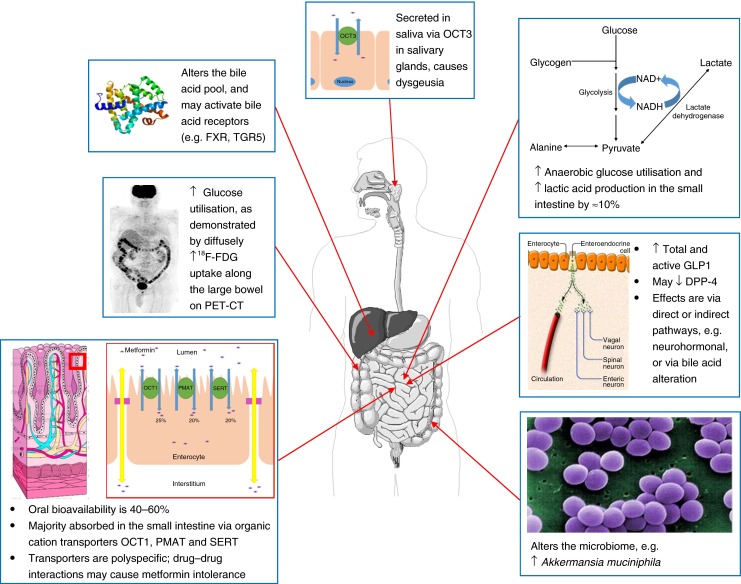
Metformin is an effective agent with a good safety profile that is widely used as a first-line treatment for type 2 diabetes, yet its mechanisms of action and variability in terms of efficacy and side effects remain poorly understood. Although the liver is recognised as a major site of metformin pharmacodynamics, recent evidence also implicates the gut as an important site of action. Metformin has a number of actions within the gut. It increases intestinal glucose uptake and lactate production, increases GLP-1 concentrations and the bile acid pool within the intestine, and alters the microbiome. A novel delayed-release preparation of metformin has recently been shown to improve glycaemic control to a similar extent to immediate-release metformin, but with less systemic exposure. We believe that metformin response and tolerance is intrinsically linked with the gut. This review examines the passage of metformin through the gut, and how this can affect the efficacy of metformin treatment in the individual, and contribute to the side effects associated with metformin intolerance.
Overview
The claims and statistics of this paper haven’t been checked yet.
Free: it reads the open-access text and checks the first 5 claims that cite a source we can check. Create a free account to check every claim.
Integrity signals
Registry
Cites
Statistics
Figures
Verification
Claims the paper makes
The claims and statistics of this paper haven’t been checked yet.
Free: it reads the open-access text and checks the first 5 claims that cite a source we can check. Create a free account to check every claim.
Claims other papers make about this one
Each is checked against this paper’s own text: does it say what the citing paper says it does?
The source backs part of the claim, not all of it — or backs it for a different population, condition or comparison.
In the citing paper
“Most of these minor side effects include gastrointestinal discomfort such as abdominal or stomach pain, early satiety, decreased appetite, and diarrhea, which usually subside after one or two weeks of use (McCreight et al. 2016).”
From Benefits of Metformin in Attenuating the Hallmarks of Aging (2020) · cites this paper as McCreight et al. 2016
Experimental — accuracy not yet measuredIn the citing paper
“As in most drugs, minor side effects occur with metformin, but it is important to understand whether they reveal anything about the mechanism of action of this drug.”
From Benefits of Metformin in Attenuating the Hallmarks of Aging (2020) · cites this paper as McCreight et al. 2016
Self-check
Percentages, sums and reported differences re-computed from the paper’s own numbers.
The self-check needs the paper’s full text.
Citations
Cites
A metagenome-wide association study of gut microbiota in type 2 diabetes
Qin, J., Li, Y., Cai, Z., Li, S., Zhu, J., Zhang, F., Liang, S., Zhang, W., Guan, Y., Shen, D., et al. (2012) · Nature · doi:10.1038/nature11450 · Cited by 6,762 · cited 2×
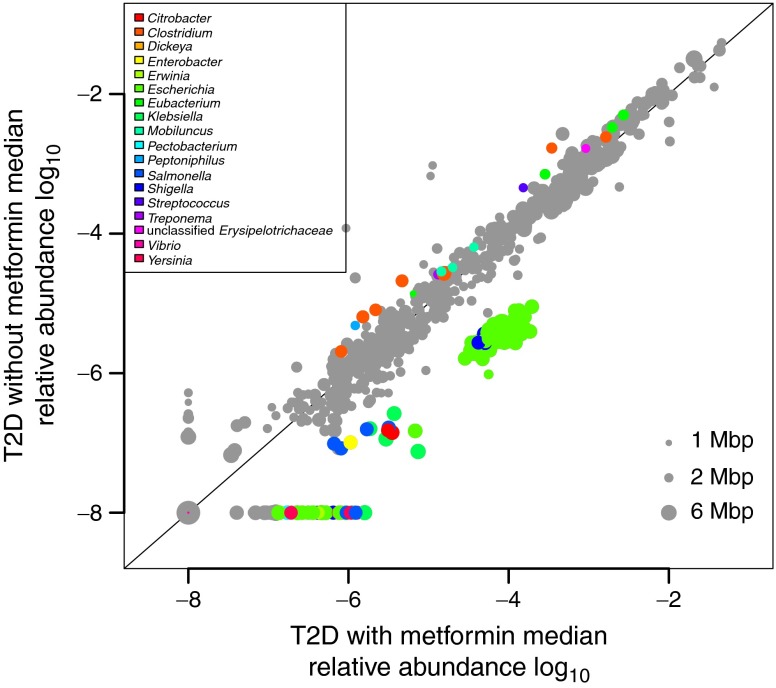
“Although these two studies differ in terms of the changes they identified, a common finding was a reduction in butyrate-producing bacteria and an increase in opportunistic pathogens [78, 81].”
BackgroundResultCross-talk between Akkermansia muciniphila and intestinal epithelium controls diet-induced obesity
Everard, A., Belzer, C., Geurts, L., Ouwerkerk, J. P., Druart, C., Bindels, L. B., Guiot, Y., Derrien, M., Muccioli, G. G., Delzenne, N. M., et al. (2013) · Proceedings of the National Academy of Sciences · doi:10.1073/pnas.1219451110 · Cited by 4,511 · cited 1×
“…(resulting in an increase in A. muciniphila ) or direct treatment with A. muciniphila has been reported to improve metabolic disorders, possibly by increasing endocannabinoids, which reduce inflammation, modify gut peptide secretion and improve the thickness of the gut mucous barrier [82].”
BackgroundGut metagenome in European women with normal, impaired and diabetic glucose control
Karlsson, F. H., Tremaroli, V., Nookaew, I., Bergström, G., Behre, C. J., Fagerberg, B., Nielsen, J., & Bäckhed, F. (2013) · Nature · doi:10.1038/nature12198 · Cited by 3,115 · cited 1×
“2) [79].”
Inzucchi, S. E., Bergenstal, R. M., Buse, J. B., Diamant, M., Ferrannini, E., Nauck, M., Peters, A. L., Tsapas, A., Wender, R., & Matthews, D. R. (2015) · Diabetes Care · doi:10.2337/dc14-2441 · Cited by 3,066
Disentangling type 2 diabetes and metformin treatment signatures in the human gut microbiota
MetaHIT consortium, Forslund, K., Hildebrand, F., Nielsen, T., Falony, G., Le Chatelier, E., Sunagawa, S., Prifti, E., Vieira-Silva, S., Gudmundsdottir, V., et al. (2015) · Nature · doi:10.1038/nature15766 · Cited by 2,116
TGR5-Mediated Bile Acid Sensing Controls Glucose Homeostasis
Thomas, C., Gioiello, A., Noriega, L., Strehle, A., Oury, J., Rizzo, G., Macchiarulo, A., Yamamoto, H., Mataki, C., Pruzanski, M., et al. (2009) · Cell Metabolism · doi:10.1016/j.cmet.2009.08.001 · Cited by 1,885 · cited 1×
“The increase in the bile acid pool may then stimulate TGR5 bile acid receptors on the L cell [62, 67], causing an increase in GLP-1 secretion via mitochondrial oxidative phosphorylation and calcium influx [67].”
BackgroundMolecular imaging of cancer with positron emission tomography
Gambhir, S. S. (2002) · Nature Reviews Cancer · doi:10.1038/nrc882 · Cited by 1,656 · cited 1×
“PET-CT is commonly used for the diagnosis, staging and monitoring of the response to treatment, of certain cancers [32].”
MethodShin, N.-R., Lee, J.-C., Lee, H.-Y., Kim, M.-S., Whon, T. W., Lee, M.-S., & Bae, J.-W. (2014) · Gut · doi:10.1136/gutjnl-2012-303839 · Cited by 1,550 · cited 2×
“Administration of A. muciniphila to mice receiving a high-fat diet improved glucose tolerance [86], suggesting that the effect of metformin on abundance of this species within in the microbiome may indirectly contribute to the glucose-lowering effect of metformin.”
Background
Cited by
Items 501–600 of 762
Rationale for the use of metformin and exercise to counteract statin‐associated side effects
Haxhi, J., & Thompson, P. D. (2020) · International Journal of Clinical Practice · doi:10.1111/ijcp.13900 · Cited by 4
Revolutionizing Brain Drug Delivery: Buccal Transferosomes on the Verge of a Breakthrough
Chandrasekhar, P., & Kaliyaperumal, R. (2024) · Recent Advances in Drug Delivery and Formulation · doi:10.2174/0126673878312336240802113811 · Cited by 4
Gastroretentive systems for prolonged release of metformin based on osmotically driven expansion
Cirilli, M., Moutaharrik, S., Palugan, L., Coldani, M. E., Buscarini, A., Bruni, G., Gazzaniga, A., Maroni, A., Foppoli, A., & Cerea, M. (2025) · International Journal of Pharmaceutics · doi:10.1016/j.ijpharm.2025.125856 · Cited by 4
Vesa, C. M., Ţiţ, D. M., Babeş, E. E., Bungau, G. S., Radu, A.-F., & Moleriu, R. D. (2025) · Nutrients · doi:10.3390/nu17152440 · Cited by 3
“However, gastrointestinal side effects can render it intolerable for some patients [4].”
Similarities and differences in the intestinal actions of metformin and imeglimin
Sugawara, K., Hozumi, K., Mizuma, H., Sasaki, D., Shinohara, M., Kondo, A., Watanabe, Y., & Ogawa, W. (2025) · Diabetes Obesity and Metabolism · doi:10.1111/dom.70075 · Cited by 3
“16,17 These findings collectively indicate that imeglimin and metformin exert both overlapping and distinct pharmacological actions.”
Metformin in the Horse: Pharmacokinetics and Detection Times Using Monte Carlo Simulations
Jacobs, M. E., Blea, J. A., Hardy, M., McKemie, D. S., Traynham, M., & Knych, H. K. D. (2025) · Drug Testing and Analysis · doi:10.1002/dta.70000 · Cited by 3
“In humans, metformin is absorbed in the small intestine primarily by active transporters [3] and is saturable [13].”
Polypharmacy with Multi-Mechanism Drugs: A Hidden Risk for Drug Interactions and Adverse Effects
Briones-Aranda, A. (2025) · Pharmaceutical science. · doi:10.5772/intechopen.1013524 · Cited by 3
Yang, W., Yin, L., Xie, Q., Tan, M., Liu, Y., Xu, J., & Wu, J. (2026) · Frontiers in Nutrition · doi:10.3389/fnut.2025.1699600 · Cited by 3
Metformin: Historical Origins, Mechanisms of Action, and Emerging Clinical Applications
Hu, Y., Zhang, X., Yang, C., Wu, X., Ye, X., Yu, J. K., & Yang, Y. (2026) · Diabetes/Metabolism Research and Reviews · doi:10.1002/dmrr.70171 · Cited by 3
Phate, S. D., Daswani, B. R., Mishra, D. N., & Joshi, K. S. (2020) · International Journal of Basic & Clinical Pharmacology · doi:10.18203/2319-2003.ijbcp20202189 · Cited by 4
“Now, it was found that PMAT located at the tips of the mucosal epithelial layer and involved in metformin uptake.(11)”
BackgroundResende, K. A., Meri, A. E., Miranda, M. I. C., Meri, A. D., Lopes, F. M., de Castro, A. P., Bittencourt, W. J. M., Sanches, C., Gomes, A. J. P. S., & de Castro, W. V. (2023) · Concilium · doi:10.53660/clm-1844-23m49 · Cited by 3
An, Q., Li, N., Zhao, Z., Wang, N., Wang, X., Yang, X., Yang, D., Zhang, L., Lü, Y., Du, G., et al. (2023) · ACS Omega · doi:10.1021/acsomega.3c06721 · Cited by 3
“5,7,8 Hence, replacing the chloride ion with other possible counterions would be a viable option in resolving the adverse effect of the existing MET solid form.”
Community-level responses and environmental fate of metformin in freshwater mesocosms
Blandford, N. C., Palace, V. P., Rodríguez‐Gil, J. L., Timlick, L., Stanley, M. J., Frank, R., Campbell, S., Rudy, M. D., Marshall, S., Wynia, A., et al. (2024) · The Science of The Total Environment · doi:10.1016/j.scitotenv.2024.177493 · Cited by 3
A new insight into cardiovascular protective potentials of hydroxylated xanthones
Fong, L. Y., Cheow, H. Y. D., Ng, C. T., Yong, Y. K., Lim, Y. M., & Mah, S. H. (2025) · European Journal of Medicinal Chemistry · doi:10.1016/j.ejmech.2025.117833 · Cited by 3
Anti-Diabetic and Antioxidant Effect Evaluation of Thai Shallot and Cha-Miang in Diabetic Rats
Laoung-on, J., Anuduang, A., Saenjum, C., Rerkasem, K., Srichairatanakool, S., Boonyapranai, K., & Ounjaijean, S. (2025) · Biology · doi:10.3390/biology14060627 · Cited by 3
“Progressively, these medications may exhibit a reduced efficacy and can lead to adverse effects such as nausea, vomiting, and diarrhea [6].”
Abo-Zaid, O. A., Moawed, F. S., Gabr, H. F. B., & Esmat, M. A. (2025) · Dose-Response · doi:10.1177/15593258251367627 · Cited by 3
“8,9 Studies indicate that the combination of metformin with adjuvant agents enhances therapeutic effectiveness in diabetic cerebral injury compared to monotherapy.”
Managing Glucose Homeostasis Through the Gut Microbiome
Weninger, S. N., Manley, A., & Duca, F. A. (2025) · Annual Review of Physiology · doi:10.1146/annurev-physiol-051524-094728 · Cited by 4
Metformin and Myo-Inositol: A Comparative Analysis
Russo, M., Oliva, M. M., Nordio, M., Porcaro, G., & Unfer, V. (2025) · Gynecologic and Obstetric Investigation · doi:10.1159/000549646 · Cited by 5
Type 2 diabetes: evidence-based medicine approach to glucose-lowering therapy
Biryukova, E. V., Morozova, I. A., & Родионова, С. В. (2021) · Meditsinskiy sovet = Medical Council · doi:10.21518/2079-701x-2020-21-160-168 · Cited by 3
Republished: Metformin-associated lactic acidosis: reinforcing learning points
Goonoo, M. S., Morris, R., Raithatha, A., & CREAGH, F. M. (2021) · Drug and Therapeutics Bulletin · doi:10.1136/dtb.2021.235608rep · Cited by 3
Metformin, Microbiota and Health
Paz, G. S., & Fernandes, J. (2022) · Journal of Exploratory Research in Pharmacology · doi:10.14218/jerp.2022.00032 · Cited by 3
Lu, W., Yu, L., Wang, L., Liu, S., Li, M., Wu, Z., Chen, S., Hu, R., & Hao, H. (2022) · AAPS PharmSciTech · doi:10.1208/s12249-022-02402-w · Cited by 3
“Its high water solubility and low permeability determine the bioavailability of common MH oral formulations (such as oral solutions or immediate-release tablets) to be about 50–60% after passing through the gastrointestinal tract [5, 6], which requires Advancements in Modified-release Oral Drug Delivery - Delivery”
BackgroundChawla, M. S., CHAWLA, P. M., Jethwani, P., Shah, K., & Reddy, S. (2023) · Clinics and Practice · doi:10.3390/clinpract13020045 · Cited by 3
“Metformin sustained-release (SR) therapy was introduced to address all of the aforementioned limitations associated with metformin IR therapy [18,19].”
BackgroundEsteves, B., Monteiro, C. S. D. J., & Duarte, A. P. (2023) · Healthcare · doi:10.3390/healthcare11152197 · Cited by 3
“In general, there has been a discontinuation of metformin use due to gastrointestinal adverse effects [24].”
BackgroundRodríguez, S. P. G., Rubio, M. D. M., & Losa, H. (2024) · Clinical and Experimental Obstetrics & Gynecology · doi:10.31083/j.ceog5102035 · Cited by 3
A Western diet-induced mouse model reveals a possible mechanism by which metformin decreases obesity
Gonzalez, F. J., & Jiang, C. (2017) · European Journal of Clinical Pharmacology · doi:10.1007/s00228-017-2322-3 · Cited by 3
Metformin use and the Risk of Gastrointestinal Malignancies in Diabetic Populations: A Meta-Analysis
Gil, H., Samara, S., Zhyvotovska, A., & McFarlane, S. (2020) · International Journal of Clinical Endocrinology and Metabolism · doi:10.17352/ijcem.000052 · Cited by 5
“000052 good safety profi le, weight neutrality or weight loss, lack of associated hypoglycemia, reduced cardiovascular mortality and low cost [5].”
BackgroundWhether 25 mM of metformin is achievable in human gut from a therapeutic dose of metformin?
Maniar, K., Moideen, A., Bhattacharyya, R., & Banerjee, D. (2017) · Medical Hypotheses · doi:10.1016/j.mehy.2017.08.002 · Cited by 3
Advances in Oral Anti‐Diabetes Drugs in Pregnancy
Mukerji, G., & Feig, D. S. (2017) · A Practical Manual of Diabetes in Pregnancy · doi:10.1002/9781119043805.ch15 · Cited by 2
Meri, A. E., Meri, A. D., Souza, M. A., Baldoni, A. O., Sanches, C., Gomes, A. J. P. S., & de Castro, W. V. (2025) · Dissolution Technologies · doi:10.14227/dt320125pgc1 · Cited by 2
“Several hypotheses are addressed in relation to the gastrointestinal adverse effects, such as the speed of drug release and its accumulation in the intestine ( 11–17 ).”
InfluentialZhu, W., Li, Q., & Kang, M. (2025) · Cell Biochemistry and Biophysics · doi:10.1007/s12013-025-01739-w · Cited by 2
Wu, J., Pan, Y., Lu, Y., Qian, J., Zhang, J., Xue, Y., Xiao, C., Qiu, Y., Xie, M., & Li, S. (2025) · Scientific Reports · doi:10.1038/s41598-025-98869-1 · Cited by 5
“Metformin and pioglitazone are commonly prescribed for insulin resistance and type 2 diabetes 58,63,64 , although it has been used clinically for decades and the gut is the site of important adverse effects during metformin therapy, which often completely limits the dose or use of metformin 65 .”
Açaí seed extract mitigates intestinal and hypothalamic alterations in obese mice
Arnoso, B. J. D. M., de Araújo, C. A., Ramundo, G. D., de Bem, G. F., Ognibene, D. T., Fontes-Dantas, F. L., Martins, B. C., Daleprane, J. B., de Souza, M. O., Resende, Â. C., et al. (2025) · Molecular and Cellular Endocrinology · doi:10.1016/j.mce.2025.112574 · Cited by 2
Mukherjee, S., Skrede, S., & Fernø, J. (2025) · Reviews in Endocrine and Metabolic Disorders · doi:10.1007/s11154-025-10009-2 · Cited by 3
Fang, Y., Cai, Y., Chen, X., & Lin, Z. (2025) · Frontiers in Nutrition · doi:10.3389/fnut.2025.1698112 · Cited by 2
“Dysbiosis of gut microbiota can induce obesity and diabetes mellitus (DM) (7), and changes in the structure and function of gut microbiota can affect pathological processes such as insulin resistance, obesity, and abnormally elevated blood glucose levels (8).”
Ge, X., Du, X.-X., Wang, Y., Yang, Y., Gao, X., Zhou, Y., Jiang, Y., Xiao, S., Chen, L., Shao, R., et al. (2026) · Foods · doi:10.3390/foods15010143 · Cited by 2
“The mechanism by which it increases SCFAs is considered indirect and may cause more host-derived carbohydrates to become substrates for fermentation by microbiota by altering intestinal transport time, bile acid metabolism, or the intravascular osmotic pressure [47,48].”
Rzeczycki, P., Pęciak, O., Plust, M., & Droździk, M. (2026) · International Journal of Molecular Sciences · doi:10.3390/ijms27052206 · Cited by 2
Pan, Y., Fan, R., Li, F., Wang, L., & Deng, Q. (2026) · Molecular Nutrition & Food Research · doi:10.1002/mnfr.70428 · Cited by 2
“The intestinal flora is a potential target for obesity related diseases (such as T2DM), and intestinal microorganisms can be used to predict the microbial characteristics of T2DM [ 53 ].”
Solier, Y. N., Cabrera, F. B., Erhardt, M. C., Inalbon, M. C., & Mocchiutti, P. (2026) · Cellulose · doi:10.1007/s10570-026-07066-4 · Cited by 2
“Particularly, McCreight et al. (2016) reported that the absorption of metformin in the stomach is negligible and is almost exclusively absorbed in the intestine.”
Metformina en enfermedad renal diabética: estado actual
Rodulfo, J. I. A., & Amair, P. (2017) · Revista Colombiana de Nefrología · doi:10.22265/acnef.4.2.255 · Cited by 3
Nobashi, T. W., Saga, T., Nakamoto, Y., Shimizu, Y., Koyasu, S., Ishimori, T., Watanabe, M., Kimura, H., & Togashi, K. (2018) · Endocrine Regulations · doi:10.2478/enr-2018-0023 · Cited by 2
“However, it is established that Met uniformly and significantly increases 18F-FDG uptake in the colon (Gontier et al. 2008; McCreight et al. 2016).”
BackgroundProfil Kerapuhan dan Masalah terkait Obat pada Kelompok Lanjut Usia di Panti Jompo Kota Surabaya
Susanto, V. E., Setiadi, A. P., Presley, B., Halim, S. V., & Setiawan, E. (2019) · JURNAL MANAJEMEN DAN PELAYANAN FARMASI (Journal of Management and Pharmacy Practice) · doi:10.22146/jmpf.38869 · Cited by 2
Probiotics, Prebiotics, and Synbiotics in Human Health
Wells, O. L., Mishra, S. P., & Yadav, H. (2022) · Royal Society of Chemistry eBooks · doi:10.1039/9781839160950-00086 · Cited by 3
Antidiabetic agents: Do they hit the right targets?
Zhao, Y., Zhang, X., Liang, H., & Wang, L. (2022) · Frigid Zone Medicine · doi:10.2478/fzm-2022-0030 · Cited by 2
Metformin – régi motoros erősebb motorral
Winkler, G. (2022) · Diabetologia Hungarica · doi:10.24121/dh.2022.24 · Cited by 2
Riós, F., Lira, A. Q., Piloni‐Martini, J., Cariño‐Cortés, R., & Reyes, A. (2023) · Archivos Latinoamericanos de Nutrición · doi:10.37527/2023.73.1.007 · Cited by 2
Chauhan, P., Paliwal, H., Chauhan, C., & Paliwal, A. (2023) · Annales Pharmaceutiques Françaises · doi:10.1016/j.pharma.2023.09.002 · Cited by 2
Bai, H., Yang, Q., Zuo, X., Yu, Q., Zhao, Q., Tian, Y., Xu, Y., Du, J., Zhao, X. J., & Feng, X. (2024) · Food Science and Human Wellness · doi:10.26599/fshw.2024.9250231 · Cited by 2
Wang, Q., Leask, M., Lee, K., Jaiswal, J. K., Kallingappa, P. K., Dissanayake, W. C., Puli'uvea, C., O’Sullivan, C., Watson, H., Wilcox, P., et al. (2024) · Diabetologia · doi:10.1007/s00125-024-06287-1 · Cited by 3
“This is because GDF-15 is known to be involved in the gastrointestinal intolerance [49, 50], and metformin is also known to induce gastric disturbance in some patients which can limit compliance [51, 52].”
Wang, W., Han, Y., Jiang, X., Shao, J., Zhang, J., Zhou, K., Yang, W., Pan, Q., Nie, Z., & Guo, L. (2024) · Diabetes Obesity and Metabolism · doi:10.1111/dom.16095 · Cited by 2
Liu, X., Li, X., An, P., Gao, Q., Zhao, Y., Shi, X., & Wu, X. (2025) · Renal Failure · doi:10.1080/0886022x.2025.2486551 · Cited by 3
Liu, D., Chen, X., Wang, Q., Pan, X., Wei, X., Wang, B., Wang, Y., Xue, X., & Lu, C. (2025) · Precision medication. · doi:10.1016/j.prmedi.2025.100035 · Cited by 3
Methnani, J., Ach, T., Hraïech, A. E., Latiri, I., Bouslama, A., Zaouali, M., Omezzine, A., & Bouhlel, E. (2025) · Biochemical Pharmacology · doi:10.1016/j.bcp.2025.117112 · Cited by 2
Wang, R., Liu, X., Yang, K., Liu, S., Yu, L., Chen, Y., Wang, N., Hu, Y., & Qin, B. (2025) · Current Issues in Molecular Biology · doi:10.3390/cimb47090779 · Cited by 2
“Antidiabetic medications available in clinics are linked to several side effects, such as gastrointestinal discomfort [6], metabolic strain on the liver [7], and an increased risk of cardiovascular diseases.”
Colonic delivery of nutrients for management of blood glucose in type 2 diabetes patients
Szewczyk, J. R., Giannone, J., Marcuard, S. P., Kindel, T. L., Tso, P., & Nolan, R. D. (2017) · Functional Foods in Health and Disease · doi:10.31989/ffhd.v7i1.283 · Cited by 2
Revealing causality between heterogeneous data sources with deep restricted Boltzmann machines
Sokolovska, N., Clément, K., & Zucker, J. (2018) · Information Fusion · doi:10.1016/j.inffus.2018.11.016 · Cited by 2
A Semi-supervised Approach to Discover Bivariate Causality in Large Biological Data
Sokolovska, N., Permiakova, O., Forslund, S. K., & Zucker, J. (2018) · Lecture notes in computer science · doi:10.1007/978-3-319-96136-1_32 · Cited by 3
Кононенко, Н. М., Чікіткіна, В. В., Sorokina, M. V., & Alkhalaf, M. (2018) · Farmatsevtychnyi zhurnal · doi:10.32352/0367-3057.1-2.18.08 · Cited by 2
Hengame, Y. (2018) · Food science and quality management · Cited by 3
Metformin as a drug modifyinggut microbiota
Tkach, S. M. (2020) · Clinical endocrinology and endocrine surgery · doi:10.30978/cees-2020-1-72 · Cited by 2
Infrasound Exposure: High-Resolution Measurements Near Wind Power Plants
Bakker, H. H. C., Alves‐Pereira, M., Mann, R., Summers, R., & Dickinson, P. (2023) · Environmental sciences · doi:10.5772/intechopen.109047 · Cited by 3
Qureshi, N., Desousa, J., Siddiqui, A. Z., Drees, B. M., Morrison, D. C., & Qureshi, A. A. (2023) · International Journal of Molecular Sciences · doi:10.3390/ijms24032732 · Cited by 2
“The first line of treatment for PwD2 is metformin, as suggested by the American Diabetes Association ADA [10,11].”
BackgroundLiu, Z., Jia, X. P., Wu, P., Wu, B., Pan, Y., Zhong, S., Xiao, L., Song, Y., Hu, J., & Zhou, K. (2023) · Pharmacogenomics · doi:10.2217/pgs-2023-0078 · Cited by 2
Metformin ameliorates insulin resistance, thyroid nodules and thyroid function.
Ji, S., Gao, R., Gao, Q., Leng, L., & Gai, N.-N. (2023) · PubMed Central · Cited by 4
Oh, T. J., & Choi, S. H. (2019) · Diabetes & Metabolism Journal · doi:10.4093/dmj.2019.0148 · Cited by 2
Hillson, R. (2018) · Practical Diabetes · doi:10.1002/pdi.2194 · Cited by 1
An insight to the diabetic ketoacidosis and lactic acidosis among the SARS-COV2 infected individuals
Al-Sa'idy, H. A. H., Al‐Snafi, A. E., & Alyousif, B. (2022) · Magna Scientia Advanced Biology and Pharmacy · doi:10.30574/msabp.2022.6.1.0071 · Cited by 1
Ramelan, R. D., Sari, D. O., Lorensia, A., Fakultas Farmasi, U. S., Rahem, A., Fakultas Farmasi, U. A., Lestiono, L., & Surabaya, R. D. R. (2023) · Jurnal Ilmiah Ibnu Sina (JIIS) Ilmu Farmasi dan Kesehatan · doi:10.36387/jiis.v8i2.1309 · Cited by 1
The effect of the intestinal microbiota on the development of diabetes mellitus
Chervinets, V. M., Chervinets, Y. V., Ganzya, D. V., Belyaev, V. S., & Zaitseva, V. S. (2023) · Экспериментальная и клиническая гастроэнтерология · doi:10.31146/1682-8658-ecg-220-12-77-85 · Cited by 1
Berberine Treats Type 2 Diabetes by Regulating Gutmicrobiota
白, 雪. (2024) · Advances in Clinical Medicine · doi:10.12677/acm.2024.1472096 · Cited by 1
Натрус, Л. В., Lisakovska, O., Smirnov, A., Osadchuk, Y., & Klys, Y. (2024) · Frontiers in Pharmacology · doi:10.3389/fphar.2024.1477793 · Cited by 1
“…shown that metformin signi fi cantly in fl uences intestinal functioning via increasing lactate production, glucagon-like-peptide-1 level, cholesterol and bile acid pool, as well as changing intestinal microbiome (Graham et al., 2011; Dujic et al., 2015; McCreight et al., 2016; Rena et al., 2017).”
BackgroundAbe, T., Takeda, Y., Sakuma, I., Okada, M., Kurigaki, A., Bessho, R., Sato, M., Kitsunai, H., Takiyama, Y., & Sakurai, M. (2024) · Metabolic Syndrome and Related Disorders · doi:10.1089/met.2024.0127 · Cited by 1
“25 Thus, combined treatment with DPP-4 inhibitors and metformin was expected to enhance glycemic control by glucose-dependent insulin secretion and suppression of glucagon secretion associated with increased GLP-1 levels.”
Chatterjee, S. S., Rani, S., Sah, R., & Thakur, A. K. (2024) · Current Psychopharmacologye · doi:10.2174/0122115560321901241210082616 · Cited by 1
Hellou, T., Dumanis, G., Portugez, S., Goncharov, A. P., Trodler, E., Stern, A., Carlebach, I., Kahlon, O., Jwella, M. A., Nimer, E., et al. (2025) · BMC Pharmacology and Toxicology · doi:10.1186/s40360-025-00882-7 · Cited by 1
“On the other hand, several studies have reported potential oncological benefits of metformin, suggesting improved survival in patients with cancers such as melanoma, through inhibiting SMAD3 acetylation and TRIB3 expression [30], as well as in colorectal [31], and endometrial cancer [32].”
Antong, R. A., Kusuma, I. Y., Manggau, M. A., & Bahar, M. A. (2025) · Pharmacia · doi:10.3897/pharmacia.72.e142999 · Cited by 1
Zhang, P., Mason, J. E., Sohn, M., Balkrishnan, R., Anderson, R. T., McCall, A. L., & Kang, H. (2025) · Journal of Racial and Ethnic Health Disparities · doi:10.1007/s40615-025-02388-8 · Cited by 1
Shatila, M., Cruz, C. C., Lu, L., Abdul-Baki, K., Baerman, E. A., Takigawa, K., Rivera, A. M., Lee, I. J.-A., Ngo, S., Sperling, G. L., et al. (2025) · European Journal of Cancer · doi:10.1016/j.ejca.2025.115405 · Cited by 1
Guía para el tratamiento de la diabetes mellitus tipo 2 en el adulto
Commendatore, V., Dios, A. D., Elbert, A. E., Faingold, M. C., Frechtel, G. D., Fuente, G. V., Lapertosa, S., Litwak, L., Musso, C., Rodríguez, M., et al. (2025) · Revista de la Sociedad Argentina de Diabetes · doi:10.47196/diab.v59i1.1167 · Cited by 5
Nawaz, M., Afzal, A., Ahmad, S., Shah, H., Nawaz, S., Müllertz, A., Sarfraz, M., & Madni, A. (2025) · International Journal of Polymer Science · doi:10.1155/ijps/6773155 · Cited by 1
“Approximately 25% of patients experience gastrointestinal side e ff ects from metformin, including nausea, diarrhea, and abdominal discomfort [13].”
Yadav, A., Kandel, S., Jha, A., Dahal, A., & Gautam, S. (2025) · Clinical Case Reports · doi:10.1002/ccr3.71607 · Cited by 2
Zhou, K., Wang, Y., Sun, W., Mao, Z., Wang, W., & Qu, Z. (2025) · Molecular Neurobiology · doi:10.1007/s12035-025-05516-x · Cited by 1
“This may be related to the fact that the gut is an important site of metformin pharmacodynamics [35].”
Jiang, F., Han, Q., Deng, H., Li, J., Alifu, A., Chen, Z., Deng, L., Cai, X., Han, Q., & Lin, Y. (2026) · Chemical Engineering Journal · doi:10.1016/j.cej.2025.172522 · Cited by 2
Sabab, M. W., Mahat, N. A., Heo, C. C., Jemon, K. B., Huri, M. A. M., & Zainal-Abidin, M. H. (2026) · Egyptian Journal of Forensic Sciences · doi:10.1186/s41935-026-00523-y · Cited by 1
“Gastroininal disturbances, particularly diarrhea, nausea, and abdominal discomfort affect more than 30% of users, though these typically resolve with gradual dose escalation or extended-release formulations (McCreight et al. 2016).”
Yang, R., Yang, Y., Zhou, Y., Shen, Y., Shi, Y., & Liu, J. (2026) · Frontiers in Microbiology · doi:10.3389/fmicb.2026.1763653 · Cited by 2
“It is worth noting, however, that gastrointestinal side effects, such as diarrhea, bloating, and nausea, occur in about one-third of the patients who take metformin (McCreight et al., 2016).”
Bocharova, E., Asteriadis, A., Argyropoulos, T., Goumas, K., Reppas, C. I., & Vertzoni, M. (2026) · European Journal of Pharmaceutical Sciences · doi:10.1016/j.ejps.2026.107489 · Cited by 1
An engineered micropatch for oral delivery of heterophyllin B in type 2 diabetes treatment
Chen, Y., Huang, Y., Huang, C., Zhang, S., Fan, M., Yuan, X., Huang, C., Zhang, M., Peng, J., 孙润彬, et al. (2026) · Journal of Controlled Release · doi:10.1016/j.jconrel.2026.114782 · Cited by 1
Qin, Y., Hu, S., Xu, Y., Lin, Z.-X., Liang, X., Liu, Y., Li, Y., Geng, C., Chen, X., Feng, X. H., et al. (2026) · Science China Life Sciences · doi:10.1007/s11427-025-3220-8 · Cited by 1
“Metformin has been associated with gastrointestinal side-effects (Aroda et al., 2016; de Jager et al., 2010; McCreight et al., 2016), alongside an approximate 5% rate of drug intolerance (Nathan and Sullivan, 2014; Nestler, 2008).”
Chen, S., Xu, B., & Lu, M. (2026) · Clinical Medicine Insights Endocrinology and Diabetes · doi:10.1177/11795514261453485 · Cited by 2
“1,3,9,10 However, a more integrated account linking these mechanistic pathways to common clinical presentations and practical management decisions remains limited.”
InfluentialSaleh, F., Hazaea, Z. A. M., Abdu, M. A., Alahmad, W., & Ashfaq, M. (2026) · Inorganic Chemistry Communications · doi:10.1016/j.inoche.2026.116931 · Cited by 1
Rossouw, M. J., Wallis, R., Kornfeld, H., Singhal, A., Maartens, G., Wiesner, L., Denti, P., & Wasmann, R. E. (2026) · Antimicrobial Agents and Chemotherapy · doi:10.1128/aac.00748-26 · Cited by 1
¿Qué aportan los nuevos antidiabéticos orales?
Pardos, C. L., & Gallego, V. P. (2016) · Atención Primaria · doi:10.1016/j.aprim.2016.04.002 · Cited by 1
Análisis sinomédico de la microbiota intestinal
González, R. G., Hernández, A. D., Portillo, J. A. S., Ma, L., & Xin, N. (2016) · Revista Internacional de Acupuntura · doi:10.1016/j.acu.2016.08.003 · Cited by 1
Diabetes Patients Perceptions on Drugs Consultation Program by Pharmacists
Indonesian Air Force Pharmaceutical Institution, B., Sumaryono, B., Moektiwardoyo, M., & Yualianto, A. (2016) · Pharmacology and Clinical Pharmacy Research · doi:10.15416/pcpr.2016.1.3.85 · Cited by 1
Urhan, E., Temizer, E., Karaca, Z., Abdülrezzak, Ü., Kara, C. Ş., Hacıoğlu, A., & Ünlühızarcı, K. (2022) · Acta Diabetologica · doi:10.1007/s00592-022-01890-3 · Cited by 1
Guo, Q., Han, C., Xu, Y., Chen, Q., Han, X., Zhao, S., Li, J., & Lu, H. (2022) · Frontiers in Endocrinology · doi:10.3389/fendo.2022.1031019 · Cited by 1
“However, patients who take these two medicines tend to experience adverse reactions such as liver and kidney toxicity, stomach pain, and diarrhea (4).”
BackgroundChoi, Y. Y., Lee, H. S., Baik, S. Y., Lim, S.-M., Jung, H. W., Kang, S. Y., & Park, Y. (2022) · Journal of Korean Medicine for Obesity Research · doi:10.15429/jkomor.2022.22.2.102 · Cited by 1
Rathod, S. P., & Sanap, A. S. (2023) · International Journal of Pharmaceutical Sciences Review and Research · doi:10.47583/ijpsrr.2023.v78i01.020 · Cited by 1
Biryukova, E. V., & Kileynikov, D. V. (2023) · Meditsinskiy sovet = Medical Council · doi:10.21518/ms2023-156 · Cited by 1
The Effect of Metformin in Treating Prediabetic Patients
Kalbani, S. A. (2022) · Interventions in Obesity & Diabetes · doi:10.31031/iod.2022.05.000622 · Cited by 1
Abou-Seido, N., Yaqub, M., & Desouza, A. (2023) · Undergraduate Research in Natural and Clinical Science and Technology (URNCST) Journal · doi:10.26685/urncst.476 · Cited by 2
Metadata
- Authors
- McCreight, L. J., Bailey, C. J., & Pearson, E. R.
- Affiliations
- University of Dundee (GB)
- Aston University (GB)
- Corresponding author
- Pearson, Ewan R.
- Venue
- Diabetologia
- Published
- 2016-01-16
- Volume
- 59
- Issue
- 3
- Pages
- 426-435
- ISSN
- 0012-186X (ISSN-L)
- 1432-0428
- PMC
- PMC4742508
- OpenAlex
- W2255443535
- Cited by
- 733
- References
- 89
- Citations by year
- 2026: 53 · 2025: 75 · 2024: 83 · 2023: 97 · 2022: 73 · 2021: 79 · 2020: 88 · 2019: 48 · 2018: 62 · 2017: 50 · 2016: 25
- FWCI
- 9.08
- Type
- journal article
- Language
- en
- Open access
- hybrid
- doi.org
- Locations
- Diabetologia (publishedVersion, cc-by)
- PubMed Central (publishedVersion, cc-by)
- PubMed (publishedVersion)
- Aston Publications Explorer (Aston University) (acceptedVersion)
- Discovery Research Portal (University of Dundee) (submittedVersion, cc-by)
- Funders
- Wellcome Trust (102820/Z/13/Z, 102820)
- Topics
- Health Sciences › Medicine › Endocrinology, Diabetes and Metabolism › Diabetes Treatment and Management
- Life Sciences › Biochemistry, Genetics and Molecular Biology › Molecular Biology › Metabolism, Diabetes, and Cancer
- Health Sciences › Medicine › Gastroenterology › Gastrointestinal motility and disorders
- Keywords
- metformin, gastrointestinal tract, type 2 diabetes, intestinal glucose absorption, lactic acid production, glucagon-like peptide-1, bile acids, gut microbiota, metformin intolerance, adverse drug reactions, glycemic control
- MeSH terms
- Humans, Metformin, Gastrointestinal Tract, Glucagon-Like Peptide 1, Microbiota
About these checks
Registry, retraction, Cites and statistics results are computed, not judged, with one exception: a printed reference that no index lists is read once by a model before it counts as a citation error. Claims are extracted by a model and kept only when their quote appears verbatim in the text; each cited source is then checked, with a model’s help, for whether it says what the claim relies on. Those verdicts can be wrong — read the claim’s quote and the cited source before relying on one.
Statistics and arithmetic are recomputed, not judged.
Confidence bands are shown only for fields calibrated on our annotated test set. None is calibrated yet, so no band is shown.
What counts as a claim ›How we measure confidence ›How we check this ›
Are you an author, or do you see a problem with this page? Request a review
Data sources
Bibliographic data: Semantic Scholar, OpenAlex, Crossref.
Contains information from the Semantic Scholar Academic Graph Datasets, made available under the ODC Attribution License (ODC-BY 1.0).
Semantic Scholar’s data is described in: Kinney, R., et al. (2023). The Semantic Scholar Open Data Platform. arXiv:2301.10140.
