

Metformin and the gastrointestinal tract
Open accessThe DOI matches its Crossref record; 89 of the 89 references it cites were found in a registry or an index.
Abstract
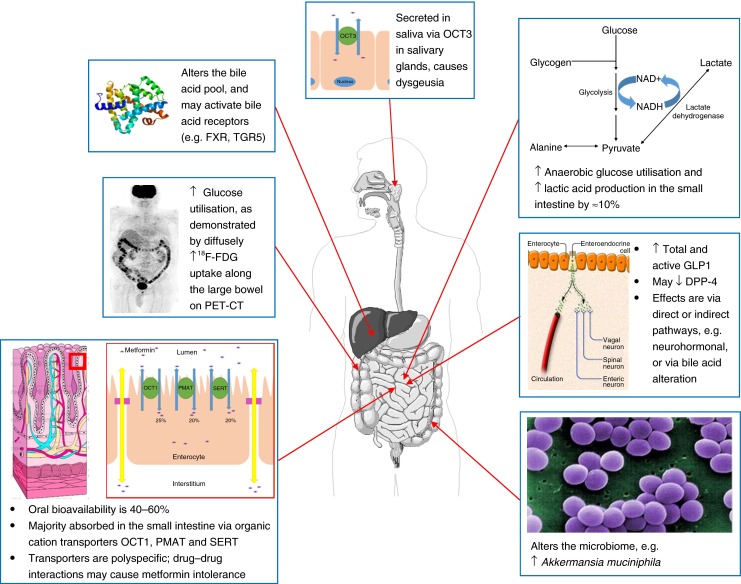
Metformin is an effective agent with a good safety profile that is widely used as a first-line treatment for type 2 diabetes, yet its mechanisms of action and variability in terms of efficacy and side effects remain poorly understood. Although the liver is recognised as a major site of metformin pharmacodynamics, recent evidence also implicates the gut as an important site of action. Metformin has a number of actions within the gut. It increases intestinal glucose uptake and lactate production, increases GLP-1 concentrations and the bile acid pool within the intestine, and alters the microbiome. A novel delayed-release preparation of metformin has recently been shown to improve glycaemic control to a similar extent to immediate-release metformin, but with less systemic exposure. We believe that metformin response and tolerance is intrinsically linked with the gut. This review examines the passage of metformin through the gut, and how this can affect the efficacy of metformin treatment in the individual, and contribute to the side effects associated with metformin intolerance.
Overview
The claims and statistics of this paper haven’t been checked yet.
Free: it reads the open-access text and checks the first 5 claims that cite a source we can check. Create a free account to check every claim.
Integrity signals
Registry
Cites
Statistics
Figures
Verification
Claims the paper makes
The claims and statistics of this paper haven’t been checked yet.
Free: it reads the open-access text and checks the first 5 claims that cite a source we can check. Create a free account to check every claim.
Claims other papers make about this one
Each is checked against this paper’s own text: does it say what the citing paper says it does?
The source backs part of the claim, not all of it — or backs it for a different population, condition or comparison.
In the citing paper
“Most of these minor side effects include gastrointestinal discomfort such as abdominal or stomach pain, early satiety, decreased appetite, and diarrhea, which usually subside after one or two weeks of use (McCreight et al. 2016).”
From Benefits of Metformin in Attenuating the Hallmarks of Aging (2020) · cites this paper as McCreight et al. 2016
Experimental — accuracy not yet measuredIn the citing paper
“As in most drugs, minor side effects occur with metformin, but it is important to understand whether they reveal anything about the mechanism of action of this drug.”
From Benefits of Metformin in Attenuating the Hallmarks of Aging (2020) · cites this paper as McCreight et al. 2016
Self-check
Percentages, sums and reported differences re-computed from the paper’s own numbers.
The self-check needs the paper’s full text.
Citations
Cites
A metagenome-wide association study of gut microbiota in type 2 diabetes
Qin, J., Li, Y., Cai, Z., Li, S., Zhu, J., Zhang, F., Liang, S., Zhang, W., Guan, Y., Shen, D., et al. (2012) · Nature · doi:10.1038/nature11450 · Cited by 6,762 · cited 2×
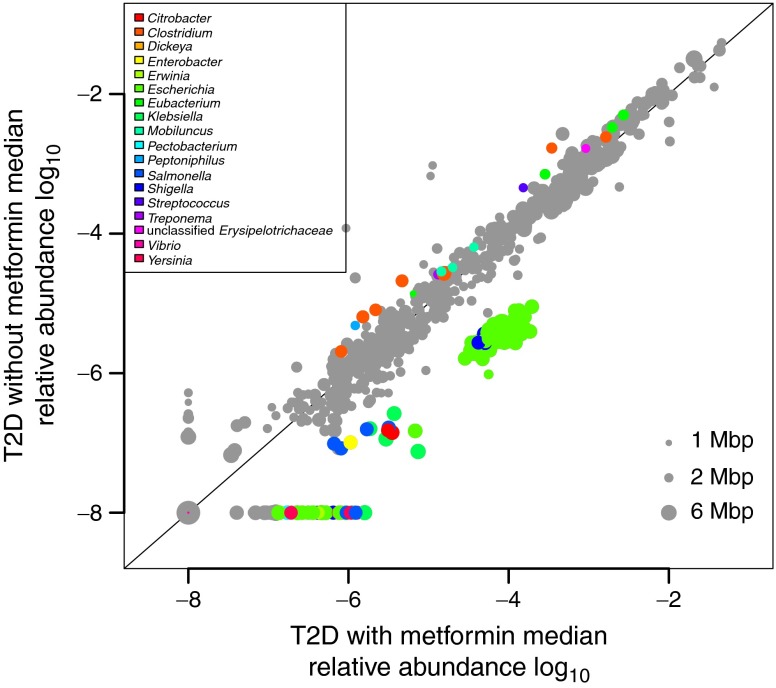
“Although these two studies differ in terms of the changes they identified, a common finding was a reduction in butyrate-producing bacteria and an increase in opportunistic pathogens [78, 81].”
BackgroundResultCross-talk between Akkermansia muciniphila and intestinal epithelium controls diet-induced obesity
Everard, A., Belzer, C., Geurts, L., Ouwerkerk, J. P., Druart, C., Bindels, L. B., Guiot, Y., Derrien, M., Muccioli, G. G., Delzenne, N. M., et al. (2013) · Proceedings of the National Academy of Sciences · doi:10.1073/pnas.1219451110 · Cited by 4,511 · cited 1×
“…(resulting in an increase in A. muciniphila ) or direct treatment with A. muciniphila has been reported to improve metabolic disorders, possibly by increasing endocannabinoids, which reduce inflammation, modify gut peptide secretion and improve the thickness of the gut mucous barrier [82].”
BackgroundGut metagenome in European women with normal, impaired and diabetic glucose control
Karlsson, F. H., Tremaroli, V., Nookaew, I., Bergström, G., Behre, C. J., Fagerberg, B., Nielsen, J., & Bäckhed, F. (2013) · Nature · doi:10.1038/nature12198 · Cited by 3,115 · cited 1×
“2) [79].”
Inzucchi, S. E., Bergenstal, R. M., Buse, J. B., Diamant, M., Ferrannini, E., Nauck, M., Peters, A. L., Tsapas, A., Wender, R., & Matthews, D. R. (2015) · Diabetes Care · doi:10.2337/dc14-2441 · Cited by 3,066
Disentangling type 2 diabetes and metformin treatment signatures in the human gut microbiota
MetaHIT consortium, Forslund, K., Hildebrand, F., Nielsen, T., Falony, G., Le Chatelier, E., Sunagawa, S., Prifti, E., Vieira-Silva, S., Gudmundsdottir, V., et al. (2015) · Nature · doi:10.1038/nature15766 · Cited by 2,116
TGR5-Mediated Bile Acid Sensing Controls Glucose Homeostasis
Thomas, C., Gioiello, A., Noriega, L., Strehle, A., Oury, J., Rizzo, G., Macchiarulo, A., Yamamoto, H., Mataki, C., Pruzanski, M., et al. (2009) · Cell Metabolism · doi:10.1016/j.cmet.2009.08.001 · Cited by 1,885 · cited 1×
“The increase in the bile acid pool may then stimulate TGR5 bile acid receptors on the L cell [62, 67], causing an increase in GLP-1 secretion via mitochondrial oxidative phosphorylation and calcium influx [67].”
BackgroundMolecular imaging of cancer with positron emission tomography
Gambhir, S. S. (2002) · Nature Reviews Cancer · doi:10.1038/nrc882 · Cited by 1,656 · cited 1×
“PET-CT is commonly used for the diagnosis, staging and monitoring of the response to treatment, of certain cancers [32].”
MethodShin, N.-R., Lee, J.-C., Lee, H.-Y., Kim, M.-S., Whon, T. W., Lee, M.-S., & Bae, J.-W. (2014) · Gut · doi:10.1136/gutjnl-2012-303839 · Cited by 1,550 · cited 2×
“Administration of A. muciniphila to mice receiving a high-fat diet improved glucose tolerance [86], suggesting that the effect of metformin on abundance of this species within in the microbiome may indirectly contribute to the glucose-lowering effect of metformin.”
Background
Cited by
Items 401–500 of 762
DESIGN, SYNTHESIS AND PRELIMINARY PHARMACOLOGICAL EVALUATION OF NEW METFORMIN DERIVATIVES
Mahdi, M. F., Arif, I. S., & Jubair, N. K. (2016) · International Journal of Pharmacy and Pharmaceutical Sciences · doi:10.22159/ijpps.2017v9i1.15250 · Cited by 10
“It accumulates in enterocytes during oral absorption [9].”
BackgroundKuhlmann, I. B., Pedersen, S. A., Esbech, P. S., Stage, T. B., Christensen, M. M. H., & Brøsen, K. (2020) · British Journal of Clinical Pharmacology · doi:10.1111/bcp.14591 · Cited by 12
Mechanisms of Action of Metformin
Mahmood, S. A. (2021) · IntechOpen eBooks · doi:10.5772/intechopen.99189 · Cited by 11
Gomez-Escudero, O. (2023) · IntechOpen eBooks · doi:10.5772/intechopen.103734 · Cited by 11
Metformin-associated lactic acidosis: reinforcing learning points
Goonoo, M. S., Morris, R., Raithatha, A., & CREAGH, F. M. (2020) · BMJ Case Reports · doi:10.1136/bcr-2020-235608 · Cited by 11
Choi, Y. S., Han, J. M., Kang, Y. J., & Jung, H. J. (2020) · Molecular Medicine Reports · doi:10.3892/mmr.2020.11727 · Cited by 10
“Besides, metformin that is widely used as the first‐line medication for the treatment of type 2 diabetes was originally found in the plant Galega officinalis, known as French lilac (15).”
BackgroundTaheri, R., Kazerouni, F., Mirfakhraei, R., Kalbasi, S., Shahrokhi, S. Z., & Rahimipour, A. (2022) · Gene · doi:10.1016/j.gene.2022.146382 · Cited by 12
Chaker, F., Kallel, A., Khessairi, N., Yazidi, M., Oueslati, I., Chatti, H. A., Feki, M., & Chihaoui, M. (2025) · Frontiers in Endocrinology · doi:10.3389/fendo.2025.1536402 · Cited by 9
Randeni, N., Luo, J., & Xu, B. (2025) · Phytotherapy Research · doi:10.1002/ptr.70030 · Cited by 9
“Furthermore, conventional treatments, such as metformin for diabetes, are associated with some adverse effects, including gastrointestinal issues (McCreight et al. 2016), liver toxicity, or cardiovascular risks (Wang et al. 2022).”
Sala, L. L., Carlini, V., Macas-Granizo, M. B., Trabucchi, E., Pontiroli, A. E., Berra, C., Naselli, A., D’Anzeo, M., Porta, A., Martín-Delgado, J., et al. (2025) · Journal of Advanced Research · doi:10.1016/j.jare.2025.09.021 · Cited by 9
“Metf also promotes an AMPK-dependent recruitment of glucose transporters such as GLUT2 in enterocytes, enhancing intestinal glucose uptake and anaerobic glucose metabolism, which leads to increased lactate production [63].”
Metformin Alters the Chemotaxis and Flagellar Motility of Escherichia coli
Ye, Y., Jiang, P., Huang, C., Li, J., Chen, J., Wang, L., Lin, Y., Wang, F., & Liu, J. (2022) · Frontiers in Microbiology · doi:10.3389/fmicb.2021.792406 · Cited by 9
Metformin acts as a dual glucose regulator in mouse brain
Jin, B.-Y., Kim, H., Oh, M.-J., Ha, N.-H., Jeong, Y. T., Choi, S.-H., Lee, J., Kim, N. H., & Kim, D.-H. (2023) · Frontiers in Pharmacology · doi:10.3389/fphar.2023.1108660 · Cited by 10
“Peripheral metformin affects intestinal glucose regulation through changes in glucose uptake, GLP-1 secretion, and gut microbiome (McCreight et al., 2016).”
BackgroundQiao, C., Gu, C., Wen, S., He, Y., Yang, S. Y., Feng, X., & Zeng, Y. (2023) · Hepatic Medicine Evidence and Research · doi:10.2147/hmer.s428161 · Cited by 10
Metformin inhibits digestive proteases and impairs protein digestion in mice
Kelly, C. J., Verdegaal, A. A., Anderson, B. W., Shaw, W. L., Bencivenga-Barry, N. A., Folta‐Stogniew, E. J., & Goodman, A. L. (2023) · Journal of Biological Chemistry · doi:10.1016/j.jbc.2023.105363 · Cited by 11
“Adverse gastrointestinal side effects attributed to metformin occur in both diabetic and nondiabetic patients and are observed in (cid:1) 25% of patients, resulting in discontinuation in (cid:1) 5% (2, 3).”
BackgroundCheng, M., Jia, X., Ren, L., Chen, S., Wang, W., Wang, J., & Cong, B. (2024) · International Journal of Molecular Sciences · doi:10.3390/ijms25137250 · Cited by 9
“Increasingly, research indicates that the intestine plays a pivotal role in mediating met-formin’s therapeutic effects [2–4].”
BackgroundNalawade, V., Dixit, V. A., Vora, A., & Zade, H. (2019) · Current Pharmaceutical Analysis · doi:10.2174/1573412915666190312161823 · Cited by 9
Solid-state landscape and biopharmaceutical implications of novel metformin-based salts
Diniz, L. F., Carvalho, P. S., Gonçalves, J. E., Diniz, R., & Fernandes, C. (2022) · New Journal of Chemistry · doi:10.1039/d2nj00453d · Cited by 9
Dzięgielewska-Gęsiak, S., Fatyga, E., Piłot, M., Wierzgoń, A., & Muc‐Wierzgoń, M. (2022) · Diabetes Metabolic Syndrome and Obesity · doi:10.2147/dmso.s377856 · Cited by 10
Wancewicz, B., Zhu, Y., Fenske, R. J., Weeks, A. M., Wenger, K., Pabich, S., Daniels, M., Punt, M., Nall, R., Peter, D. C., et al. (2023) · Journal of Pharmacology and Experimental Therapeutics · doi:10.1124/jpet.122.001493 · Cited by 10
“Although there is still some debate in the field, metformin’s primary blood glucose-lowering mechanisms are thought to be reduced glucose production and release by the liver and increased lactate production in the small intestine (Pernicova and Korbonits, 2014; McCreight et al., 2016; Song, 2016).”
BackgroundDegaga, A., Sirgu, S., Huri, H. Z., Sim, M. S., Kebede, T., Tegene, B., Loganadan, N. K., Engidawork, E., & Shibeshi, W. (2023) · Diabetes Metabolic Syndrome and Obesity · doi:10.2147/dmso.s426632 · Cited by 10
Ribeiro‐Parenti, L., Cavin, J., & Gall, M. L. (2017) · Current Opinion in Pharmacology · doi:10.1016/j.coph.2017.08.002 · Cited by 9
Intestinal glucose excretion: A potential mechanism for glycemic control
Ke, Z., Lu, Z., Li, Q., & Tong, W. (2023) · Metabolism · doi:10.1016/j.metabol.2023.155743 · Cited by 8
Anti-TB Drugs for Drug-Sensitive and Drug-Resistant Mycobacterium tuberculosis: A Review
Lukas, K., Dang, M. T., Necas, C., & Venketaraman, V. (2025) · Current Issues in Molecular Biology · doi:10.3390/cimb47090776 · Cited by 8
Hidayat, S. T., Mulyantoro, I., Damas, S., & Tjandrawinata, R. R. (2023) · International Journal of Women s Health · doi:10.2147/ijwh.s409685 · Cited by 9
Chen, Y., Xiao, Y., Lian, G., Yi, J., & Liu, X. (2023) · Expert Opinion on Drug Safety · doi:10.1080/14740338.2023.2278708 · Cited by 10
Chatatikun, M., Tedasen, A., Phinyo, P., Wongyikul, P., Klangbud, W. K., Kawakami, F., Imai, M., Chuaijit, S., Rachmuangfang, S., Phuwarinyodsakul, S., et al. (2024) · Frontiers in Pharmacology · doi:10.3389/fphar.2024.1472419 · Cited by 8
“Metformin, an oral hypoglycemic agent, remains the fi rst-line treatment for type 2 DM but is associated with adverse effects such as gastrointestinal disturbances (such as nausea, vomiting, and diarrhea) and lactic acidosis (Blough et al., 2015; McCreight et al., 2016).”
BackgroundTian, X., Wang, W., Zhang, L., Wang, L., Zhang, K., Ge, X., Luo, Z., Zhao, Y., Zhai, X., & Li, C. (2024) · Diabetes Metabolic Syndrome and Obesity · doi:10.2147/dmso.s492626 · Cited by 9
Sun, S., Hou, X., Li, K., Huang, C., Rong, Y., Bi, J., Li, X., & Wu, D. (2024) · Journal of Functional Biomaterials · doi:10.3390/jfb15120388 · Cited by 8
Liang, T., Jiang, T., Liang, Z., Li, L., Chen, Y., Chen, T., Yang, L., Zhang, N., Dong, B., Xie, X., et al. (2025) · Microbiological Research · doi:10.1016/j.micres.2025.128145 · Cited by 8
Metformin for preventing the progression of chronic kidney disease
El-Damanawi, R., Viecelli, A. K., Pascoe, E. M., Craig, J. C., Johnson, D. W., Mallett, A. J., Hawley, C. M., & Hiemstra, T. F. (2019) · Cochrane Database of Systematic Reviews · doi:10.1002/14651858.cd013414 · Cited by 8
Improving Dissolution and Cytotoxicity by Forming Multidrug Crystals
Bian, X., Jiang, L., Zhou, J., Guan, X., Wang, J., Xiang, P., Pan, J., & Hu, X. (2020) · Molecules · doi:10.3390/molecules25061343 · Cited by 8
“8) [21,22], so it was impossible to acquire any dissolution rate data, hence there are no Met results in this test and we concluded that the Met was an extremely soluble compound.”
BackgroundKuhlmann, I. B., Nyrup, A. N., Stage, T. B., Christensen, M. M. H., Bergmann, T. K., Damkier, P., Nielsen, F., Højlund, K., & Brøsen, K. (2021) · Clinical and Translational Science · doi:10.1111/cts.13107 · Cited by 10
“…concentrations did not cause a higher increase in lactate compared to oral intake of metformin seems to indirectly support the hypothesis that oral metformin mainly acts on the intestine, 30 although it is important to recognize that our study was not powered to detect pharmacodynamic changes.”
BackgroundDeciphering metformin action in obese mice: A critical re-evaluation of established protocols
Kaplanian, M., Philippe, C., Eid, S. A., Hackl, M. T., Metz, M., Beghini, M., Luca, A. C., Kautzky‐Willer, A., Scherer, T., & Fürnsinn, C. (2021) · Metabolism · doi:10.1016/j.metabol.2021.154956 · Cited by 9
Exposure to Commonly Used Drugs and the Risk of Gastric Cancer: An Umbrella Review of Meta-Analyses
Bai, X., Ding, S., Zhang, X., Han, M.-H., & Dai, D. (2023) · Cancers · doi:10.3390/cancers15020372 · Cited by 8
“Metformin is a first-line oral antidiabetic agent for the treatment of Type 2 diabetes [80].”
BackgroundHershman, D. L., Chen, B. E., Sathe, C. M., Parulekar, W. R., Lemieux, J., Ligibel, J. A., Gelmon, K. A., Whelan, T. J., & Goodwin, P. J. (2023) · Breast Cancer Research and Treatment · doi:10.1007/s10549-023-06922-2 · Cited by 8
“Metformin is well known to cause gastrointestinal side effects such as nausea, diarrhea, and abdominal discomfort in 20–30% of the general patient population, particularly during the initial dose titration phase [13].”
BackgroundYusim, D., Tiru, B., Abdullin, M., Landry, D. L., Hodgins, S., & Braden, G. L. (2023) · Journal of Medical Case Reports · doi:10.1186/s13256-023-04201-8 · Cited by 8
“The intestine and the liver are the main sources of met-formin-related lactate production [5].”
BackgroundTasnim, J., Hashim, N. M., & Han, H. C. (2024) · Cell Biochemistry and Function · doi:10.1002/cbf.3967 · Cited by 8
Metformin modifies glutamine metabolism in an in vitro and in vivo model of hepatic encephalopathy
Gil‐Gómez, A., Gómez-Sotelo, A. I., Ranchal, I., Rojas, Á., García-Valdecasas, M., Múñoz‐Hernández, R., Gallego‐Durán, R., Ampuero, J., & Romero‐Gómez, M. (2018) · Revista Española de Enfermedades Digestivas · doi:10.17235/reed.2018.5004/2017 · Cited by 9
Metformin dosage patterns in type 2 diabetes patients in a real-world setting in the United States
Mahabaleshwarkar, R., & DeSantis, A. (2020) · Diabetes Research and Clinical Practice · doi:10.1016/j.diabres.2020.108531 · Cited by 8
Aging-Related Obesity: Unveiling Mitochondrial and Metabolic Dysfunction
Qi, T., Zhang, K., Zhang, J., Ma, Y., Hou, N., Sun, X., Han, F., Sheng, S., & Kan, C. (2025) · Current Nutrition Reports · doi:10.1007/s13668-025-00685-6 · Cited by 9
de Laat, M. A., & Sillence, M. N. (2020) · Animal Production Science · doi:10.1071/an19491 · Cited by 9
Identification of Novel Intronic SNPs in Transporter Genes Associated with Metformin Side Effects
Schweighofer, N., Strasser, M., Obermayer, A. M., Trummer, O., Sourij, H., Sourij, C., & Obermayer-Pietsch, B. M. (2023) · Genes · doi:10.3390/genes14081609 · Cited by 7
“Up to 25% of metformin users suffer from these symptoms, with 5% not able to tolerate metformin at all [8,9].”
BackgroundMetformin: An Oral Anti-Hyperglycaemic Agent for the Treatment of Type 2 Diabetes
Mohajan, D., & Mohajan, H. K. (2023) · Journal of Innovations in Medical Research · doi:10.56397/jimr/2023.11.01 · Cited by 19
Molteni, L., Marelli, G., Castagna, G., Brambilla, L., Acerbis, M., Alberghina, F., Carpani, A., Chiavenna, E., Ferlini, M. G., Impellizzeri, C., et al. (2024) · Endocrine Metabolic & Immune Disorders - Drug Targets · doi:10.2174/0118715303294909240221102552 · Cited by 10
“Intestinal accumulation of the active ingredient may be one cause of the reported gastrointestinal side effects [12, 18].”
BackgroundInfluentialHatmal, M. M., Abuyaman, O., Al-Hatamleh, M. A. I., Tayyem, H., Olaimat, A. N., Mussa, A., Aolymat, I., Abu-Awad, A., Odeh, M. M., & Qawaqzeh, R. A. (2025) · Journal of Translational Medicine · doi:10.1186/s12967-025-06720-y · Cited by 10
“OCT2 facilitates the uptake of metformin into renal tubular cells, where it is subsequently transported into urine for elimination [57, 58, 76, 95].”
Could metformin be used in patients with diabetes and advanced chronic kidney disease?
Chowdhury, T. A., Srirathan, D., Abraham, G., Oei, E. L., Fan, S. L., McCafferty, K., & Yaqoob, M. (2016) · Diabetes Obesity and Metabolism · doi:10.1111/dom.12799 · Cited by 8
“As mentioned above, recently, the gastrointestinal effects of metformin have been suggested as being of importance in its glucose-lowering effect.(35) The concerns over metformin and renal impairment arise from the perceived risk of lactic acidosis in such patients.”
BackgroundUsing Unlabeled Data to Discover Bivariate Causality with Deep Restricted Boltzmann Machines
Sokolovska, N., Permiakova, O., Forslund, S. K., & Zucker, J. (2018) · IEEE Transactions on Computational Biology and Bioinformatics · doi:10.1109/tcbb.2018.2879504 · Cited by 8
“However, recently some studies [3] confirmed hypotheses that metformin also acts through pathways in the gut.”
BackgroundNingrum, V. D. A., Istikharah, R., & Firmansyah, R. (2019) · Open Access Macedonian Journal of Medical Sciences · doi:10.3889/oamjms.2019.087 · Cited by 8
Virginia, D. M., Patramurti, C., Fenty, Setiawan, C. H., Julianus, J., Hendra, P., & Susanto, N. A. P. (2022) · Therapeutics and Clinical Risk Management · doi:10.2147/tcrm.s349900 · Cited by 8
Nishibe, S., Oikawa, H., Mitsui-Saitoh, K., Sakai, J., Zhang, W., & Fujikawa, T. (2023) · Molecules · doi:10.3390/molecules28041964 · Cited by 7
“Metformin inhibits the farnesoid X receptor (FXR) via an AMP-activated protein kinase (AMPK)-mediated mechanism, which results in reduced sensing and the ileal absorption of bile acids, followed by an increase in the bile acid pool of the ileum [34].”
BackgroundAladhab, R. A., Abd, A. H., Alidrisi, H. A., & Alabbood, M. (2023) · Biomedical & Pharmacology Journal · doi:10.13005/bpj/2699 · Cited by 8
Szemerédi, N., Schelz, Z., Horvath, D. A., Rácz, B., Szatmári, A. G., Muddather, H. F., Bózsity, N., Zupkó, I., & Spengler, G. (2024) · Pharmaceutics · doi:10.3390/pharmaceutics16070877 · Cited by 9
“This drug suppresses metabolic glucose production by activating AMP-activated protein kinase in the liver [9].”
BackgroundThe effect of metformin on glucose metabolism in patients receiving glucocorticoids
Landis, D. M., Sutter, A., Fernandez, F., & NUGENT, K. M. (2022) · The American Journal of the Medical Sciences · doi:10.1016/j.amjms.2022.04.027 · Cited by 7
Metformin in pregnancy and risk of abnormal growth outcomes at birth: a register-based cohort study
Brand, K. M. G., Thorén, R., Sõnajalg, J., Boutmy, E., Foch, C., Schlachter, J., Hakkarainen, K. M., & Saarelainen, L. (2022) · BMJ Open Diabetes Research & Care · doi:10.1136/bmjdrc-2022-003056 · Cited by 10
Xiang, X., Wang, L., Zhou, L., Chen, Y., & Xia, H. (2020) · PubMed · Cited by 10
Hansen, L. S., Gasbjerg, L. S., Brønden, A., Dalsgaard, N. B., Bahne, E., Stensen, S., Hellmann, P. H., Rehfeld, J. F., Hartmann, B., Albrechtsen, N. J. W., et al. (2024) · European Journal of Endocrinology · doi:10.1093/ejendo/lvae095 · Cited by 6
Zhao, S., Hao, R. X., Zhao, J., Ma, K., Li, J., Tian, C., Guan, H., & Li, M. (2024) · Heliyon · doi:10.1016/j.heliyon.2024.e35811 · Cited by 6
“For example, gastrointestinal side effects occurring in metformin intolerance; lactobacillosis may occur in patients with renal insufficiency taking metformin; and muscular toxicity may exist in long-term use of statins [47 – 49].”
BackgroundQiu, F., Sun, Y., Li, W., & Wang, R. (2024) · Current Drug Metabolism · doi:10.2174/0113892002356402250130075811 · Cited by 7
Chen, D., Fasina, O. B., Lin, J., Zeng, J., Manzoor, M., Ohno, H., Xiang, L., & Qi, J. (2025) · International Journal of Molecular Sciences · doi:10.3390/ijms26062804 · Cited by 6
“However, Met mainly acts on the liver and intestine [30].”
Liu, W., Yao, F., Wang, J.-H., Shao, N., Cao, X., Dong, Z., Zhang, B., & Sun, X. (2025) · Biomedicines · doi:10.3390/biomedicines13061315 · Cited by 8
“However, long-term use of Met may lead to potential side effects due to its high clinical oral dose, such as gastrointestinal symptoms [20].”
The anti-aging role of metformin, clinical applications to pursue the longevity road
Pozzi, M., Susini, P., Seclì, D. D., Diluiso, G., Mendes, V. M., Grimaldi, L., & Schettino, M. (2024) · European Journal of Plastic Surgery · doi:10.1007/s00238-024-02211-3 · Cited by 6
“It is a cheap and safe drug with few known side effects [1, 2 ].”
Ma, Y., Sun, X., & Yao, X. (2024) · Mitochondrion · doi:10.1016/j.mito.2024.101929 · Cited by 6
Amerikan Diyabet Birliği (ADA) 2022 Diyabette Tıbbi Bakım Standartları
Neslişah, U. S. L. U., Avdal, E. Ü., & Tokem, Y. (2022) · Turkish Journal of Diabetes Nursing · doi:10.29228/tjdn.57859 · Cited by 8
Metformin can mitigate skeletal dysplasia caused by Pck2 deficiency
Li, Z., Yue, M., Heng, B. C., Liu, Y., Zhang, P., & Zhou, Y. (2022) · International Journal of Oral Science · doi:10.1038/s41368-022-00204-1 · Cited by 6
“For the intestine, metformin promotes glucose utilization and lactate production.(45) And then, with increased energy expenditure, lactate is used to generate glucose in hepatocytes, resulting in a futile intestinal-liver cycle,(46) which facilitates metformin’s glycemic control.”
BackgroundRobeson, M. S., Manna, K., Randolph, C., Byrum, S. D., & Hakkak, R. (2022) · Frontiers in Microbiology · doi:10.3389/fmicb.2022.834776 · Cited by 6
The influence of metformin treatment on the circulating proteome
Connolly, B. J., MCCREIGHT, L. J., Slieker, R. C., Bedair, K., Donnelly, L. A., de Klerk, J. A., Beulens, J. W. J., Elders, P. J. M., Bergström, G. M. L., Hong, M., et al. (2025) · EBioMedicine · doi:10.1016/j.ebiom.2025.105859 · Cited by 5
Self-citationCui, Y., Yang, Y., Li, Y., Zhang, Y., Niu, D., & Feng, X. (2025) · Journal of Inflammation Research · doi:10.2147/jir.s549048 · Cited by 6
“…metformin is often used as a combination therapy for RPL, and its safety for pregnant women is worthy of recognition, 88 but gastrointestinal side effects may increase with prolonged use, 89 and the long-term effects of continuous metformin use during pregnancy on offspring are still uncertain.”
Miao, Y., Cui, Q., Zhang, T., Zhang, R., Zhao, Q., Zhou, H., Zuo, Y., Wang, Q., Zhang, Y., Zheng, Z., et al. (2026) · Proceedings of the National Academy of Sciences · doi:10.1073/pnas.2521070123 · Cited by 7
Multicomponent Oxicam–Metformin Salts: Toward a Strategy for Enhancing Solubility and Stability
Muñoz-Hernández, E., Alarcón-Payer, C., Frontera, A., Rodriguez-Diéguez, A., Acebedo-Martínez, F. J., Domínguez‐Martín, A., & Choquesillo‐Lazarte, D. (2026) · Crystal Growth & Design · doi:10.1021/acs.cgd.5c01574 · Cited by 5
Precision Medicine in Diabetes
Dawed, A. Y., Haider, E., & Pearson, E. R. (2022) · Handbook of experimental pharmacology · doi:10.1007/164_2022_590 · Cited by 5
Self-citationMetformin-Induced Chronic Diarrhea Misdiagnosed as Irritable Bowel Syndrome for Years
Chaudhary, M., Midha, N. K., Sukhadiya, P., Kumar, D., & Garg, M. K. (2024) · Cureus · doi:10.7759/cureus.56828 · Cited by 8
“Metformin-induced GI intolerance is explained by exerting effects on gut microbiota, increasing intestinal glucose turnover, alteration in bile salt reabsorption, intestinal lactate production, and increasing glucagon-like peptide 1 (GLP-1) concentration [4].”
Backgrounddashtkar, A., Karajibani, M., Saravani, M., Zanganeh, R., & Fanaei, H. (2024) · Current Research in Pharmacology and Drug Discovery · doi:10.1016/j.crphar.2024.100207 · Cited by 5
Shu, Y., Li, W., Hu, Q., & Xiong, D. (2023) · Medicine · doi:10.1097/md.0000000000036478 · Cited by 7
“[63] However, some studies have indicated that changes in the intestinal flora caused by metformin may cause gastrointestinal intolerance, [38,64,65] and that metformin combined with microbiome modulators can improve gastrointestinal symptoms.”
BackgroundMetformin and the Gut Microbiome in Diabetes
Devaraj, S., Venkatachalam, A., & Chen, X. (2016) · Clinical Chemistry · doi:10.1373/clinchem.2016.256842 · Cited by 6
Abad, K., Kien, C., & Ganta, K. (2020) · Cureus · doi:10.7759/cureus.7564 · Cited by 5
Trial of restarting and tolerating metformin ( TreatMet )
Orloff, J. N., Touhamy, S., Truong, W., Casper, A., Shukla, A. P., Igel, L. I., & Flory, J. (2020) · Diabetes Obesity and Metabolism · doi:10.1111/dom.14137 · Cited by 5
“But metformin also appears to decrease reabsorption of bile acids, thereby increasing bile salt concentration within the intestinal lumen, leading to diarrhoea through an osmotic effect as an alternative proposed mechanism.(8) While evidence of metformin intolerance is abundant, such limiting side effects in chronic m…”
BackgroundWu, Y., Peng, T., Chen, Y., Huang, L., He, B., & Wei, S. (2021) · PLoS ONE · doi:10.1371/journal.pone.0255732 · Cited by 5
Wega, A. B., Wabalo, E. K., Edae, C. K., & Awgichew, G. B. (2021) · Research Reports in Clinical Cardiology · doi:10.2147/rrcc.s313432 · Cited by 6
Sivadasan, S., Subramanian, M., & Aiyalu, R. (2021) · IntechOpen eBooks · doi:10.5772/intechopen.99815 · Cited by 5
“In addition, metformin changes the microbiome, affecting the regulation of metabolism, such as glucose homeostasis, lipid metabolism, and energy metabolism [78].”
BackgroundStudy of Hypoglycemic Activity of Novel 9-N-alkyltetrahydroberberine Derivatives
Khvostov, M. V., Gladkova, E. D., Борисов, С. А., Fedotova, M. S., Zhukova, N., Marenina, M. K., Meshkova, Y. V., Luzina, O. A., Tolstikova, T. G., & Salakhutdinov, N. F. (2022) · International Journal of Molecular Sciences · doi:10.3390/ijms232214186 · Cited by 6
“However, it is poorly tolerated by many patients, in particular due to gastrointestinal adverse effects [3], which requires its replacement by other hypoglycemic agents.”
Ayu, L. A., Yusmaini, H., & Herardi, R. (2023) · Quality Jurnal Kesehatan · doi:10.36082/qjk.v17i1.327 · Cited by 5
Hu, Y., Chen, Z., Zhou, M.-H., Zhao, Z., Wang, X., Huang, J., Li, X., & Zeng, J.-N. (2024) · Frontiers in Immunology · doi:10.3389/fimmu.2024.1375915 · Cited by 4
Kobæk-Larsen, M., Maschek, S., Kolstrup, S. H., Højlund, K., Nielsen, D. S., Hansen, A. K., & Christensen, L. P. (2024) · Clinical and Translational Science · doi:10.1111/cts.70090 · Cited by 5
Metformin for the Treatment of Type 2 Diabetes in Asian Adults: A Systematic Review
Somasundaram, N., Kalra, S., Shrestha, D., Raza, S. A., Bhattacharya, S., Sahay, R. K., Afsana, F., Naseri, M. W., Dhakal, G. P., Suastika, K., et al. (2025) · Diabetes Metabolic Syndrome and Obesity · doi:10.2147/dmso.s479889 · Cited by 6
Wu, X., He, J., Wu, J., Liu, W., Xu, Y., Li, Y., Zhang, J., & Wang, Q. (2025) · Clinical Pharmacokinetics · doi:10.1007/s40262-025-01541-0 · Cited by 4
Wang, Q., Yang, M., Fang, Z., Pan, Y., Wu, Y., Yuan, Z., Xu, M., Chen, Y., & Gong, A. (2025) · Food Bioscience · doi:10.1016/j.fbio.2025.107207 · Cited by 5
Li, C., Qiao, L., & Tang, L. (2025) · BMC Endocrine Disorders · doi:10.1186/s12902-025-02043-7 · Cited by 4
“Metformin is widely recognized for frequently inducing gastrointestinal reactions, such as nausea, vomiting, diarrhea, and dyspepsia, which may be linked to altered intestinal glucose uptake, microbiota dysregulation, and increased lactate production [51, 52].”
Alshadfan, H., Mirghani, H. O., Alrasheed, T., Alanazi, M. A., Alatawi, A. M., Elodemi, M., & Somchit, M. N. (2026) · Medicine · doi:10.1097/md.0000000000046320 · Cited by 4
“[7,8] These side effects may erode patients’ quality of life (QoL) and adherence, undermining the very benefits metformin is intended to deliver.”
Li, X., Li, G., Liu, Y., Meng, F., Han, L., & Shao, Y. (2022) · Iranian Journal of Public Health · doi:10.18502/ijph.v51i1.8298 · Cited by 7
“Metformin hydrochloride is widely used, enhancing the sensitivity of patients with GDM to insulin, improving glucose metabolism in extrahepatic tissues, and controlling the speed of glucose absorption in the intestinal tract, with significant glucose control in this process (11,12).”
BackgroundSong, Z., Luo, W.-M., Huang, B., Cao, Y., & Jiang, R. (2022) · Frontiers in Endocrinology · doi:10.3389/fendo.2022.985776 · Cited by 5
Neto, X. A. D. O., Barssotti, L., Fiori-Duarte, A. T., Barbosa, H. C. L., & Kawano, D. F. (2022) · Current Medicinal Chemistry · doi:10.2174/0929867329666220820151959 · Cited by 6
Martirosyan, D. M., Santrosyan, G., McCarthy, J., & Nguyen, A. (2025) · Bioactive Compounds in Health and Disease · doi:10.31989/bchd.v8i5.1624 · Cited by 6
Nasrallah, M., Khalil, C. A., & Refaat, M. M. (2017) · BioMed Research International · doi:10.1155/2017/9257930 · Cited by 5
“In addition, more mechanisms have been described on other parts of the gastrointestinal tract such as increased intestinal glucose utilization, increased glucagonlike peptide-1 levels, altered bile acids, and altered microbiome [24].”
BackgroundA Unique Case of Metformin-Associated Lactic Acidosis
Gershkovich, B., McCudden, C. R., & Burns, K. D. (2018) · Case Reports in Nephrology · doi:10.1155/2018/4696182 · Cited by 4
Zhang, J. (2019) · Oncology Letters · doi:10.3892/ol.2019.10237 · Cited by 5
“It is widely used in clinical practice because of its low price, good safety and less adverse reactions (7).”
BackgroundDeficiencia de Vitamina B12 relacionada al Uso de Metformina
Arauz, E., Cardoze, D., Salehji, A., & Liguas, A. (2020) · Revista Médico Científica · doi:10.37416/rmc.v33i1.585 · Cited by 6
Zhang, Y., Sun, M., Jian, S., Huang, J., Xiao, C., Zhang, X., Hu, R., & Si, L. (2021) · Molecular Pharmaceutics · doi:10.1021/acs.molpharmaceut.1c00078 · Cited by 4
GASTROINTESTINAL MOTILITY IN ELDERLY PATIENTS WITH WELL-CONTROLLED TYPE 2 DIABETES MELLITUS
de Sena, E. M. A. B., SILVA, D. V. L., Américo, M. F., do Nascimento, J. W. G., Miranda, J. R. D. A., & Corá, L. A. (2022) · Arquivos de Gastroenterologia · doi:10.1590/s0004-2803.202202000-42 · Cited by 4
Liu, C., Zhang, S., Xue, J., Zhang, H., & Yin, J. (2023) · Molecular and Biochemical Parasitology · doi:10.1016/j.molbiopara.2023.111580 · Cited by 4
Fayfman, M., Gewirtz, A. T., Delaroque, C., Blanco, G., Gibanica, S., Srinivasan, S., & Chassaing, B. (2023) · Metabolism Open · doi:10.1016/j.metop.2023.100256 · Cited by 5
“Recently, there has been increasing interest in its role in the gastrointestinal tract, where it is known to promote glucose uptake by intestinal cells and increase the production of the incretin hormone GLP-1, which has a significant role in glucose metabolism [3].”
Background
Metadata
- Authors
- McCreight, L. J., Bailey, C. J., & Pearson, E. R.
- Affiliations
- University of Dundee (GB)
- Aston University (GB)
- Corresponding author
- Pearson, Ewan R.
- Venue
- Diabetologia
- Published
- 2016-01-16
- Volume
- 59
- Issue
- 3
- Pages
- 426-435
- ISSN
- 0012-186X (ISSN-L)
- 1432-0428
- PMC
- PMC4742508
- OpenAlex
- W2255443535
- Cited by
- 733
- References
- 89
- Citations by year
- 2026: 53 · 2025: 75 · 2024: 83 · 2023: 97 · 2022: 73 · 2021: 79 · 2020: 88 · 2019: 48 · 2018: 62 · 2017: 50 · 2016: 25
- FWCI
- 9.08
- Type
- journal article
- Language
- en
- Open access
- hybrid
- doi.org
- Locations
- Diabetologia (publishedVersion, cc-by)
- PubMed Central (publishedVersion, cc-by)
- PubMed (publishedVersion)
- Aston Publications Explorer (Aston University) (acceptedVersion)
- Discovery Research Portal (University of Dundee) (submittedVersion, cc-by)
- Funders
- Wellcome Trust (102820/Z/13/Z, 102820)
- Topics
- Health Sciences › Medicine › Endocrinology, Diabetes and Metabolism › Diabetes Treatment and Management
- Life Sciences › Biochemistry, Genetics and Molecular Biology › Molecular Biology › Metabolism, Diabetes, and Cancer
- Health Sciences › Medicine › Gastroenterology › Gastrointestinal motility and disorders
- Keywords
- metformin, gastrointestinal tract, type 2 diabetes, intestinal glucose absorption, lactic acid production, glucagon-like peptide-1, bile acids, gut microbiota, metformin intolerance, adverse drug reactions, glycemic control
- MeSH terms
- Humans, Metformin, Gastrointestinal Tract, Glucagon-Like Peptide 1, Microbiota
About these checks
Registry, retraction, Cites and statistics results are computed, not judged, with one exception: a printed reference that no index lists is read once by a model before it counts as a citation error. Claims are extracted by a model and kept only when their quote appears verbatim in the text; each cited source is then checked, with a model’s help, for whether it says what the claim relies on. Those verdicts can be wrong — read the claim’s quote and the cited source before relying on one.
Statistics and arithmetic are recomputed, not judged.
Confidence bands are shown only for fields calibrated on our annotated test set. None is calibrated yet, so no band is shown.
What counts as a claim ›How we measure confidence ›How we check this ›
Are you an author, or do you see a problem with this page? Request a review
Data sources
Bibliographic data: Semantic Scholar, OpenAlex, Crossref.
Contains information from the Semantic Scholar Academic Graph Datasets, made available under the ODC Attribution License (ODC-BY 1.0).
Semantic Scholar’s data is described in: Kinney, R., et al. (2023). The Semantic Scholar Open Data Platform. arXiv:2301.10140.
