

Metformin and the gastrointestinal tract
Open accessThe DOI matches its Crossref record; 89 of the 89 references it cites were found in a registry or an index.
Abstract
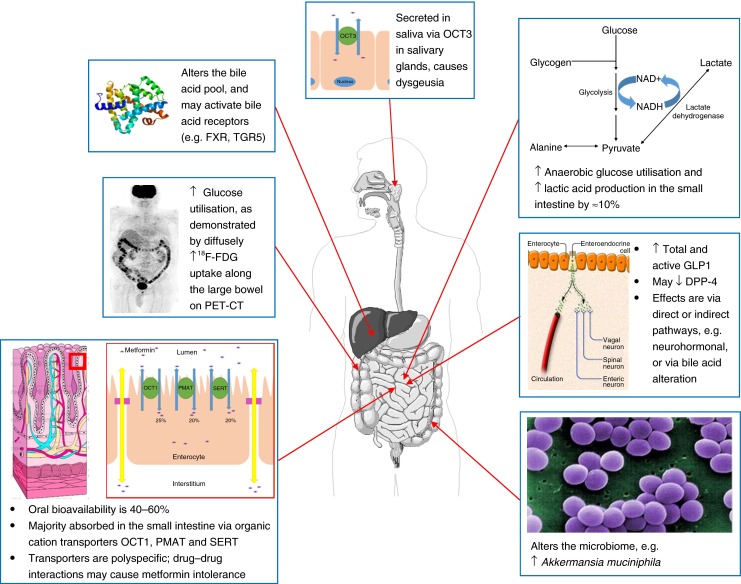
Metformin is an effective agent with a good safety profile that is widely used as a first-line treatment for type 2 diabetes, yet its mechanisms of action and variability in terms of efficacy and side effects remain poorly understood. Although the liver is recognised as a major site of metformin pharmacodynamics, recent evidence also implicates the gut as an important site of action. Metformin has a number of actions within the gut. It increases intestinal glucose uptake and lactate production, increases GLP-1 concentrations and the bile acid pool within the intestine, and alters the microbiome. A novel delayed-release preparation of metformin has recently been shown to improve glycaemic control to a similar extent to immediate-release metformin, but with less systemic exposure. We believe that metformin response and tolerance is intrinsically linked with the gut. This review examines the passage of metformin through the gut, and how this can affect the efficacy of metformin treatment in the individual, and contribute to the side effects associated with metformin intolerance.
Overview
The claims and statistics of this paper haven’t been checked yet.
Free: it reads the open-access text and checks the first 5 claims that cite a source we can check. Create a free account to check every claim.
Integrity signals
Registry
Cites
Statistics
Figures
Verification
Claims the paper makes
The claims and statistics of this paper haven’t been checked yet.
Free: it reads the open-access text and checks the first 5 claims that cite a source we can check. Create a free account to check every claim.
Claims other papers make about this one
Each is checked against this paper’s own text: does it say what the citing paper says it does?
The source backs part of the claim, not all of it — or backs it for a different population, condition or comparison.
In the citing paper
“Most of these minor side effects include gastrointestinal discomfort such as abdominal or stomach pain, early satiety, decreased appetite, and diarrhea, which usually subside after one or two weeks of use (McCreight et al. 2016).”
From Benefits of Metformin in Attenuating the Hallmarks of Aging (2020) · cites this paper as McCreight et al. 2016
Experimental — accuracy not yet measuredIn the citing paper
“As in most drugs, minor side effects occur with metformin, but it is important to understand whether they reveal anything about the mechanism of action of this drug.”
From Benefits of Metformin in Attenuating the Hallmarks of Aging (2020) · cites this paper as McCreight et al. 2016
Self-check
Percentages, sums and reported differences re-computed from the paper’s own numbers.
The self-check needs the paper’s full text.
Citations
Cites
A metagenome-wide association study of gut microbiota in type 2 diabetes
Qin, J., Li, Y., Cai, Z., Li, S., Zhu, J., Zhang, F., Liang, S., Zhang, W., Guan, Y., Shen, D., et al. (2012) · Nature · doi:10.1038/nature11450 · Cited by 6,762 · cited 2×
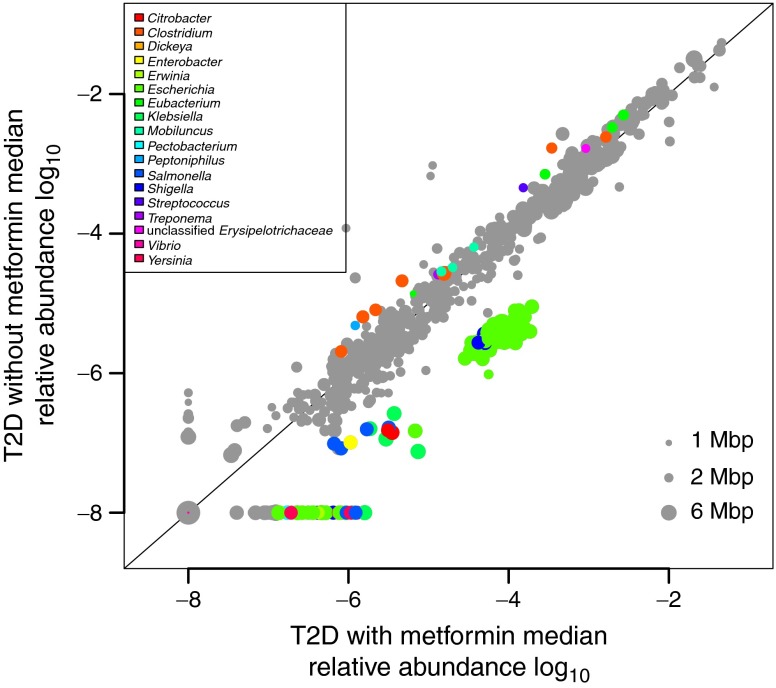
“Although these two studies differ in terms of the changes they identified, a common finding was a reduction in butyrate-producing bacteria and an increase in opportunistic pathogens [78, 81].”
BackgroundResultCross-talk between Akkermansia muciniphila and intestinal epithelium controls diet-induced obesity
Everard, A., Belzer, C., Geurts, L., Ouwerkerk, J. P., Druart, C., Bindels, L. B., Guiot, Y., Derrien, M., Muccioli, G. G., Delzenne, N. M., et al. (2013) · Proceedings of the National Academy of Sciences · doi:10.1073/pnas.1219451110 · Cited by 4,511 · cited 1×
“…(resulting in an increase in A. muciniphila ) or direct treatment with A. muciniphila has been reported to improve metabolic disorders, possibly by increasing endocannabinoids, which reduce inflammation, modify gut peptide secretion and improve the thickness of the gut mucous barrier [82].”
BackgroundGut metagenome in European women with normal, impaired and diabetic glucose control
Karlsson, F. H., Tremaroli, V., Nookaew, I., Bergström, G., Behre, C. J., Fagerberg, B., Nielsen, J., & Bäckhed, F. (2013) · Nature · doi:10.1038/nature12198 · Cited by 3,115 · cited 1×
“2) [79].”
Inzucchi, S. E., Bergenstal, R. M., Buse, J. B., Diamant, M., Ferrannini, E., Nauck, M., Peters, A. L., Tsapas, A., Wender, R., & Matthews, D. R. (2015) · Diabetes Care · doi:10.2337/dc14-2441 · Cited by 3,066
Disentangling type 2 diabetes and metformin treatment signatures in the human gut microbiota
MetaHIT consortium, Forslund, K., Hildebrand, F., Nielsen, T., Falony, G., Le Chatelier, E., Sunagawa, S., Prifti, E., Vieira-Silva, S., Gudmundsdottir, V., et al. (2015) · Nature · doi:10.1038/nature15766 · Cited by 2,116
TGR5-Mediated Bile Acid Sensing Controls Glucose Homeostasis
Thomas, C., Gioiello, A., Noriega, L., Strehle, A., Oury, J., Rizzo, G., Macchiarulo, A., Yamamoto, H., Mataki, C., Pruzanski, M., et al. (2009) · Cell Metabolism · doi:10.1016/j.cmet.2009.08.001 · Cited by 1,885 · cited 1×
“The increase in the bile acid pool may then stimulate TGR5 bile acid receptors on the L cell [62, 67], causing an increase in GLP-1 secretion via mitochondrial oxidative phosphorylation and calcium influx [67].”
BackgroundMolecular imaging of cancer with positron emission tomography
Gambhir, S. S. (2002) · Nature Reviews Cancer · doi:10.1038/nrc882 · Cited by 1,656 · cited 1×
“PET-CT is commonly used for the diagnosis, staging and monitoring of the response to treatment, of certain cancers [32].”
MethodShin, N.-R., Lee, J.-C., Lee, H.-Y., Kim, M.-S., Whon, T. W., Lee, M.-S., & Bae, J.-W. (2014) · Gut · doi:10.1136/gutjnl-2012-303839 · Cited by 1,550 · cited 2×
“Administration of A. muciniphila to mice receiving a high-fat diet improved glucose tolerance [86], suggesting that the effect of metformin on abundance of this species within in the microbiome may indirectly contribute to the glucose-lowering effect of metformin.”
Background
Cited by
The mechanisms of action of metformin
Rena, G., Hardie, D. G., & Pearson, E. R. (2017) · Diabetologia · doi:10.1007/s00125-017-4342-z · Cited by 2,287
“There are a number of putative mechanisms for how metformin could impact on glucose metabolism via actions on the intestines (reviewed in [40]).”
BackgroundSelf-citationWu, H., Esteve, E., Tremaroli, V., Khan, M. T., Caesar, R., Mannerås-Holm, L., Ståhlman, M., Olsson, L. M., Serino, M., Planas-Fèlix, M., et al. (2017) · Nature Medicine · doi:10.1038/nm.4345 · Cited by 1,632
Metformin: historical overview
Bailey, C. J. (2017) · Diabetologia · doi:10.1007/s00125-017-4318-z · Cited by 1,055
“Advances in pharmacogenomics may better inform responsiveness to metformin and effects on the gut microbiome, and animal studies have intriguingly noted anti-ageing effects of metformin [90, 91].”
BackgroundSelf-citationCellular and Molecular Mechanisms of Metformin Action
LaMoia, T. E., & Shulman, G. I. (2021) · Endocrine Reviews · doi:10.1210/endrev/bnaa023 · Cited by 791
“…intolerance in ~5% of patients (76-78) In recent years, the clinical benefits of metformin have been linked to alterations in gut microbiome composition, intestinal glucose uptake, and hormone (eg, growth differentiation factor 15 [GDF15], glucagon-like peptide-1 [GLP-1]) secretion (44, 45, 79-82).”
BackgroundMetformin: update on mechanisms of action and repurposing potential
Foretz, M., Guigas, B., & Viollet, B. (2023) · Nature Reviews Endocrinology · doi:10.1038/s41574-023-00833-4 · Cited by 699
Benefits of Metformin in Attenuating the Hallmarks of Aging
Kulkarni, A. S., Gubbi, S., & Barzilai, N. (2020) · Cell Metabolism · doi:10.1016/j.cmet.2020.04.001 · Cited by 766
“Most of these minor side effects include gastrointestinal discomfort such as abdominal or stomach pain, early satiety, decreased appetite, and diarrhea, which usually subside after one or two weeks of use (McCreight et al. 2016).”
BackgroundUnderstanding the glucoregulatory mechanisms of metformin in type 2 diabetes mellitus
Foretz, M., Guigas, B., & Viollet, B. (2019) · Nature Reviews Endocrinology · doi:10.1038/s41574-019-0242-2 · Cited by 686
Metformin: clinical use in type 2 diabetes
Sanchez-Rangel, E., & Inzucchi, S. E. (2017) · Diabetologia · doi:10.1007/s00125-017-4336-x · Cited by 595
“[metforminXR]) are associatedwith fewer GI symptoms [33].”
Metformin and Its Benefits for Various Diseases
Lv, Z., & Guo, Y. (2020) · Frontiers in Endocrinology · doi:10.3389/fendo.2020.00191 · Cited by 535
“In addition, metformin changes the microbiome, affecting the regulation of metabolism, such as glucose homeostasis, lipid metabolism, and energy metabolism (78).”
BackgroundMetformin: Mechanisms in Human Obesity and Weight Loss
Yerevanian, A., & Soukas, A. A. (2019) · Current Obesity Reports · doi:10.1007/s13679-019-00335-3 · Cited by 414
Coronavirus infections and type 2 diabetes-shared pathways with therapeutic implications
Drucker, D. J. (2020) · Endocrine Reviews · doi:10.1210/endrev/bnaa011 · Cited by 399
“As described for DPP4, the membrane-tethered ACE2 enzyme can be cleaved to yield a soluble circulating form ACE2(1-740); however, the biological importance of soluble ACE2 (sACE2) remains uncertain.”
BackgroundBettge, K., Kahle, M., Abd El Aziz, M. S., Meier, J. J., & Nauck, M. A. (2017) · Diabetes, Obesity and Metabolism · doi:10.1111/dom.12824 · Cited by 374
Impact of gastrointestinal physiology on drug absorption in special populations––An UNGAP review
Stillhart, C., Vučićević, K., Augustijns, P., Basit, A. W., Batchelor, H., Flanagan, T. R., Gesquiere, I., Greupink, R., Keszthelyi, D., Koskinen, M., et al. (2020) · European Journal of Pharmaceutical Sciences · doi:10.1016/j.ejps.2020.105280 · Cited by 320
“Metformin is widely prescribed in T2DM, and up to 25% of subjects suffer from GI side effects (McCreight et al., 2016).”
BackgroundMartín-Peláez, S., Fito, M., & Castaner, O. (2020) · Nutrients · doi:10.3390/nu12082236 · Cited by 330
Metformin: Is it a drug for all reasons and diseases?
Triggle, C. R., Mohammed, I., Bshesh, K., Marei, I., Ye, K., Ding, H., MacDonald, R., Hollenberg, M. D., & Hill, M. A. (2022) · Metabolism · doi:10.1016/j.metabol.2022.155223 · Cited by 275
Hydrogel-forming microneedles enhance transdermal delivery of metformin hydrochloride
Migdadi, E. M., Courtenay, A. J., Tekko, I. A., McCrudden, M. T. C., Kearney, M.-C., McAlister, E., McCarthy, H. O., & Donnelly, R. F. (2018) · Journal of Controlled Release · doi:10.1016/j.jconrel.2018.07.009 · Cited by 279
“Metformin intolerance may relate to different mechanisms, including altered transport of serotonin or histamine, local metformin accumulation in enterocytes, increased bile acid exposure in the colon and altered gut microbiome [18,19].”
BackgroundHerman, R., Kravos, N. A., Jensterle, M., Janež, A., & Dolžan, V. (2022) · International Journal of Molecular Sciences · doi:10.3390/ijms23031264 · Cited by 254
“It also has the ability to stimulate glucagonlike-peptide-1 release, thereby enhancing insulin secretion and lowering plasma glucose levels [46].”
BackgroundMohammed, I., Hollenberg, M. D., Ding, H., & Triggle, C. R. (2021) · Frontiers in Endocrinology · doi:10.3389/fendo.2021.718942 · Cited by 278
“The GI side effects can be linked to the accumulation of metformin in gut enterocytes and enhanced glucose utilization resulting in lactate generation, as well as metformin-induced changes in the microbiota (6, 10).”
BackgroundUnderstanding and overcoming metformin gastrointestinal intolerance
Bonnet, F., & Scheen, A. (2017) · Diabetes, Obesity and Metabolism · doi:10.1111/dom.12854 · Cited by 256
“With respect to metformin’s role in T2DM, recent emphasis has also been put on its gut-related effects.(16) This is appro-”
BackgroundVariation in the glucose transporter gene SLC2A2 is associated with glycemic response to metformin
MetGen Investigators, Zhou, K., DPP Investigators, ACCORD Investigators, Yee, S. W., Seiser, E. L., van Leeuwen, N., Tavendale, R., Bennett, A. J., Groves, C. J., et al. (2016) · Nature Genetics · doi:10.1038/ng.3632 · Cited by 234
Self-citationSanchez-Rodriguez, E., Egea-Zorrilla, A., Plaza-Díaz, J., Aragón-Vela, J., Muñoz-Quezada, S., Tercedor-Sánchez, L., & Abadia-Molina, F. (2020) · Nutrients · doi:10.3390/nu12030605 · Cited by 214
“Other examples of the relationships between microbiota and atherosclerosis are the administration of metformin and whole grains; metformin is a biguanide antidiabetic drug widely used in adults that have shown to exert positive effects to fight against CVD risk and that might be used safely in patients with heart fail…”
BackgroundGut Microbiota and Type 2 Diabetes Mellitus: Association, Mechanism, and Translational Applications
Zhang, L., Chu, J., Hao, W., Zhang, J., Li, H., Yang, C., Yang, J., Chen, X., & Wang, H. (2021) · Mediators of Inflammation · doi:10.1155/2021/5110276 · Cited by 201
Gioumouxouzis, C. I., Baklavaridis, A., Katsamenis, O. L., Markopoulou, C. K., Bouropoulos, N., Tzetzis, D., & Fatouros, D. G. (2018) · European Journal of Pharmaceutical Sciences · doi:10.1016/j.ejps.2018.04.020 · Cited by 201
Fan, W., Huang, Y., Zheng, H., Li, S., Li, Z., Yuan, L., Cheng, X., He, C., & Sun, J. (2020) · Biomedicine & Pharmacotherapy · doi:10.1016/j.biopha.2020.110915 · Cited by 198
Feng, J., Wang, X., Ye, X., Ares, I., Lopez-Torres, B., Martínez, M., Martínez-Larrañaga, M.-R., Wang, X., Anadón, A., & Martínez, M.-A. (2022) · Pharmacological Research · doi:10.1016/j.phrs.2022.106114 · Cited by 194
Ma’ayeh, M., & Costantine, M. M. (2020) · Seminars in Fetal and Neonatal Medicine · doi:10.1016/j.siny.2020.101123 · Cited by 160
Gut microbiota and diabetes: From correlation to causality and mechanism
Li, W.-Z., Stirling, K., Yang, J.-J., & Zhang, L. (2020) · World Journal of Diabetes · doi:10.4239/wjd.v11.i7.293 · Cited by 185
The effects of metformin on autophagy
Lu, G., Wu, Z., Shang, J., Xie, Z., Chen, C., & zhang, C. (2021) · Biomedicine & Pharmacotherapy · doi:10.1016/j.biopha.2021.111286 · Cited by 173
Bahne, E., Sun, E. W. L., Young, R. L., Hansen, M., Sonne, D. P., Hansen, J. S., Rohde, U., Liou, A. P., Jackson, M. L., de Fontgalland, D., et al. (2018) · JCI Insight · doi:10.1172/jci.insight.93936 · Cited by 173
The Current and Potential Therapeutic Use of Metformin—The Good Old Drug
Drzewoski, J., & Hanefeld, M. (2021) · Pharmaceuticals · doi:10.3390/ph14020122 · Cited by 195
Pharmacotherapy of type 2 diabetes: An update and future directions
DeMarsilis, A. J., Reddy, N., Boutari, C., Filippaios, A., Sternthal, E., Katsiki, N., & Mantzoros, C. S. (2022) · Metabolism · doi:10.1016/j.metabol.2022.155332 · Cited by 184
Drug interventions for the treatment of obesity in children and adolescents
Axon, E., Atkinson, G., Richter, B., Metzendorf, M.-I., Baur, L., Finer, N., Corpeleijn, E., O'Malley, C., & Ells, L. J. (2016) · Cochrane Database of Systematic Reviews · doi:10.1002/14651858.cd012436 · Cited by 159
Xia, T., Liu, C., Hu, Y., Luo, Z., Chen, F., Yuan, L., & Tan, X. (2021) · Food Research International · doi:10.1016/j.foodres.2021.110717 · Cited by 174
van Stee, M. F., de Graaf, A. A., & Groen, A. K. (2018) · Cardiovascular Diabetology · doi:10.1186/s12933-018-0738-4 · Cited by 145
Unravelling the involvement of gut microbiota in type 2 diabetes mellitus
Arora, A., Behl, T., Sehgal, A., Singh, S., Sharma, N., Bhatia, S., Sobarzo‐Sánchez, E., & BUNGAU, S. G. (2021) · Life Sciences · doi:10.1016/j.lfs.2021.119311 · Cited by 159
Roles of the gut in the metabolic syndrome: an overview
Fändriks, L. (2017) · Journal of Internal Medicine · doi:10.1111/joim.12584 · Cited by 144
Metformin‐associated lactic acidosis ( MALA ): Moving towards a new paradigm
Lalau, J., Kajbaf, F., Protti, A., Christensen, M. M., De Broe, M. E., & Wiernsperger, N. (2017) · Diabetes, Obesity and Metabolism · doi:10.1111/dom.12974 · Cited by 138
Metformin: Therapeutic profile in the treatment of type 2 diabetes
Bailey, C. J. (2024) · Diabetes Obesity and Metabolism · doi:10.1111/dom.15663 · Cited by 175
“82 Very high concentrations of TABLE 5 Effects of metformin that contribute to glucose lowering, weight stability and an improved lipid profile.”
InfluentialSelf-citation3D printing for oral drug delivery: a new tool to customize drug delivery
Pandey, M., Choudhury, H., Fern, J. L. C., Kee, A. T. K., Kou, J., Jing, J. L. J., Her, H. C., Yong, H. S., Ming, H. C., Bhattamisra, S. K., et al. (2020) · Drug Delivery and Translational Research · doi:10.1007/s13346-020-00737-0 · Cited by 152
“These results provide a platform for prediction and interrogation of the regional permeability in GIT through the different thicknesses of capsule wall and separate release profile.”
BackgroundAssociation of metformin administration with gut microbiome dysbiosis in healthy volunteers
Elbere, I., Kalnina, I., Silamikelis, I., Konrade, I., Zaharenko, L., Sekace, K., Radovica-Spalvina, I., Fridmanis, D., Gudra, D., Pirags, V., et al. (2018) · PLOS ONE · doi:10.1371/journal.pone.0204317 · Cited by 134
“Furthermore, metformin reaches a 30–300 times higher concentration in mucosa of small intestine compared to plasma, and up to 30% of the drug is eliminated through the feces [7, 8].”
60 years of metformin use: a glance at the past and a look to the future
Marshall, S. M. (2017) · Diabetologia · doi:10.1007/s00125-017-4343-y · Cited by 150
Metformin and gut microbiota: their interactions and their impact on diabetes
Vallianou, N. G., Stratigou, T., & Tsagarakis, S. (2019) · Hormones · doi:10.1007/s42000-019-00093-w · Cited by 138
Liu, Y., Lin, T., Luo, Y., Li, X., Chen, G., & Wang, Y. (2018) · Journal of Cellular Biochemistry · doi:10.1002/jcb.26822 · Cited by 139
“However, metformin has toxic side effects such as lactic acidosis and gastrointestinal side effects.(9,10) Thus, we wondered whether resveratrol can activate AMPK pathway by interfering with glucose uptake in ovarian cancer cells since both metformin and resveratrol are caloric restriction mimetics (CRMs).”
BackgroundDeFronzo, R. A., Buse, J. B., Kim, T., Burns, C., Skare, S., Baron, A., & Fineman, M. (2016) · Diabetologia · doi:10.1007/s00125-016-3992-6 · Cited by 128
Modulating the Microbiota as a Therapeutic Intervention for Type 2 Diabetes
Huda, M. N., Kim, M., & Bennett, B. J. (2021) · Frontiers in Endocrinology · doi:10.3389/fendo.2021.632335 · Cited by 142
Bi-directional drug-microbiome interactions of anti-diabetics
Whang, A., Nagpal, R., & Yadav, H. (2018) · EBioMedicine · doi:10.1016/j.ebiom.2018.11.046 · Cited by 137
“Multiple evidences suggest that metformin modulates gut microbiota [30] in humans and HFD-fed rodents and improves glycemia along with increased abundance of mucus-degrading gut bacteria, namely Akkermansia muciniphila [6].”
BackgroundPlant Extracts for Type 2 Diabetes: From Traditional Medicine to Modern Drug Discovery
Lee, J., Noh, S., Lim, S., & Kim, B. (2021) · Antioxidants · doi:10.3390/antiox10010081 · Cited by 133
“Metformin may have direct serotonergic-like effect or alter the transport of serotonin, which is associated with nausea, vomiting and diarrhea [7].”
BackgroundDeng, X., Zhang, C., Wang, P., Wei, W., Shi, X., Wang, P., Yang, J., Wang, L., Tang, S., Fang, Y., et al. (2022) · The Journal of Clinical Endocrinology & Metabolism · doi:10.1210/clinem/dgac210 · Cited by 126
Burt, H. J., Neuhoff, S., Almond, L. M., Gaohua, L., Harwood, M. D., Jamei, M., Rostami‐Hodjegan, A., Tucker, G. T., & Rowland‐Yeo, K. (2016) · European Journal of Pharmaceutical Sciences · doi:10.1016/j.ejps.2016.03.020 · Cited by 120
“This indicates the need for further elaboration of the PBPK model for metformin that accounts for pharmacodynamics changes mediated through the modification of transport affecting access of the drug to sites of action in both liver and gut (Gong et al., 2012; McCreight et al., 2016).”
Demaré, S., Kothari, A., Calcutt, N. A., & Fernyhough, P. (2020) · Expert Review of Neurotherapeutics · doi:10.1080/14737175.2021.1847645 · Cited by 126
Berberine Attenuates Intestinal Mucosal Barrier Dysfunction in Type 2 Diabetic Rats
Gong, J., Hu, M., Huang, Z., Fang, K., Wang, D., Chen, Q., Li, J., Yang, D., Zou, X., Xu, L., et al. (2017) · Frontiers in Pharmacology · doi:10.3389/fphar.2017.00042 · Cited by 115
“Previous studies also found CD4+, CD8+ and DC cells went through transformations in LP (Monteiro-Sepulveda et al., 2015), but no significant differences about aforementioned cells were discovered in the present experiment.”
ResultMetformin: old friend, new ways of action–implication of the gut microbiome?
Rodriguez, J., Hiel, S., & Delzenne, N. M. (2018) · Current Opinion in Clinical Nutrition & Metabolic Care · doi:10.1097/mco.0000000000000468 · Cited by 136
Variants in Pharmacokinetic Transporters and Glycemic Response to Metformin: A Metgen Meta‐Analysis
Dujic, T., Zhou, K., Yee, S., van Leeuwen, N., de Keyser, C., Javorský, M., Goswami, S., Zaharenko, L., Hougaard Christensen, M., Out, M., et al. (2017) · Clinical Pharmacology & Therapeutics · doi:10.1002/cpt.567 · Cited by 108
Self-citationAkkermansia muciniphila: a potential candidate for ameliorating metabolic diseases
Niu, H., Zhou, M., Zogona, D., Xing, Z., Wu, T., Chen, R., Cui, D., Liang, F., & Xu, X. (2024) · Frontiers in Immunology · doi:10.3389/fimmu.2024.1370658 · Cited by 120
“While traditionally thought to lower blood sugar levels by activating the hepatic AMPK pathway, thereby reducing hepatic glucose output (96 – 101), recent fi ndings suggest metformin may also in fl uence intestinal pathways (102, 103).”
BackgroundMetformin as a geroprotector: experimental and clinical evidence
Piskovatska, V., Stefanyshyn, N., Storey, K. B., Vaiserman, A. M., & Lushchak, O. V. (2018) · Biogerontology · doi:10.1007/s10522-018-9773-5 · Cited by 115
Prevalence of Chronic Constipation and Chronic Diarrhea in Diabetic Individuals in the United States
Sommers, T. F., Mitsuhashi, S., Singh, P., Hirsch, W., Katon, J. M., Ballou, S., Rangan, V., Cheng, V., Friedlander, D., Iturrino, J., et al. (2018) · The American Journal of Gastroenterology · doi:10.1038/s41395-018-0418-8 · Cited by 118
Onal, E. M., Afşar, B., Covic, A. C., Vaziri, N. D., & Kanbay, M. (2018) · Hypertension Research · doi:10.1038/s41440-018-0144-z · Cited by 122
A preclinical overview of metformin for the treatment of type 2 diabetes
Zhou, T., Xu, X., Du, M., Zhao, T., & Wang, J. (2018) · Biomedicine & Pharmacotherapy · doi:10.1016/j.biopha.2018.07.085 · Cited by 117
Vascular complications in diabetes: Old messages, new thoughts
Forbes, J. M., & Fotheringham, A. K. (2017) · Diabetologia · doi:10.1007/s00125-017-4360-x · Cited by 106
“The first-line hypoglycaemic agent metformin has also been reported to have pleiotropic actions; recently it was found to have the ability to increase enterocyte production of GLP-1 in both humans and experimental models [21].”
Yang, M., Darwish, T., Larraufie, P., Rimmington, D., Cimino, I., Goldspink, D. A., Jenkins, B., Koulman, A., Brighton, C. A., Ma, M. K. L., et al. (2021) · Scientific Reports · doi:10.1038/s41598-021-81349-7 · Cited by 118
A cautionary response to SMFM statement: pharmacological treatment of gestational diabetes
Barbour, L. A., Scifres, C., Valent, A. M., Friedman, J. E., Buchanan, T. A., Coustan, D., Aagaard, K., Thornburg, K. L., Catalano, P. M., Galan, H. L., et al. (2018) · American Journal of Obstetrics and Gynecology · doi:10.1016/j.ajog.2018.06.013 · Cited by 101
Nyane, N. A., Tlaila, T. B., Malefane, T. G., Ndwandwe, D. E., & Owira, P. M. O. (2017) · European Journal of Pharmacology · doi:10.1016/j.ejphar.2017.03.042 · Cited by 101
Personalized medicine in diabetes: the role of ‘omics’ and biomarkers
Pearson, E. R. (2016) · Diabetic Medicine · doi:10.1111/dme.13075 · Cited by 94
Self-citationMetabolic Effects of Metformin in the Failing Heart
Dziubak, A., Wójcicka, G., Wojtak, A., & Bełtowski, J. (2018) · International Journal of Molecular Sciences · doi:10.3390/ijms19102869 · Cited by 105
“In addition through inhibiting dipeptidyl peptidase-4 (DPP-4), an enzyme responsible for incretin degradation, metformin may prolong the duration and activity of endogenous incretins [37,41].”
BackgroundThe effects of metformin on gut microbiota and the immune system as research frontiers
Pollak, M. (2017) · Diabetologia · doi:10.1007/s00125-017-4352-x · Cited by 98
“These may include alterations in bile acid physiology, enteric hormones (reviewed in [27]), and effects on duodenal AMPK signalling that contribute to suppression of hepatic gluconeogenesis [33].”
BackgroundFermented carrot juice attenuates type 2 diabetes by mediating gut microbiota in rats
Hu, R., Zeng, F., Wu, L., Wan, X., Chen, Y., Zhang, J., & Liu, B. (2019) · Food & Function · doi:10.1039/c9fo00475k · Cited by 104
Oral delivery of metformin by chitosan nanoparticles for polycystic kidney disease
Wang, J., Chin, D. D., Poon, C. J., Mancino, V., Pham, J., Li, H., Ho, P., Hallows, K. R., & Chung, E. J. (2020) · Journal of Controlled Release · doi:10.1016/j.jconrel.2020.10.047 · Cited by 97
Ke, H., Li, F., Deng, W., Li, Z., Wang, S., Lv, P., & Chen, Y. (2021) · Frontiers in Pharmacology · doi:10.3389/fphar.2021.726707 · Cited by 101
“Metformin, with a relatively low cost and a superior safety profile, is the first-line treatment for type 2 diabetes (McCreight et al., 2016).”
BackgroundFrom role of gut microbiota to microbial-based therapies in type 2-diabetes
Ebrahimzadeh Leylabadlo, H., Sanaie, S., Sadeghpour Heravi, F., Ahmadian, Z., & Ghotaslou, R. (2020) · Infection, Genetics and Evolution · doi:10.1016/j.meegid.2020.104268 · Cited by 92
Halabi, A., Sen, J., Huynh, Q., & Marwick, T. H. (2020) · Cardiovascular Diabetology · doi:10.1186/s12933-020-01100-w · Cited by 93
Micronutrients impact the gut microbiota and blood glucose
Barra, N. G., Anhê, F. F., Cavallari, J. F., Singh, A. M., Chan, D. Y., & Schertzer, J. D. (2021) · Journal of Endocrinology · doi:10.1530/joe-21-0081 · Cited by 100
The alteration of gut microbiota in newly diagnosed type 2 diabetic patients
Chen, P., Chien, Y., & Yang, S. (2018) · Nutrition · doi:10.1016/j.nut.2018.11.019 · Cited by 98
Metformin: New Preparations and Nonglycemic Benefits
Fujita, Y., & Inagaki, N. (2017) · Current Diabetes Reports · doi:10.1007/s11892-017-0829-8 · Cited by 99
The Role of Microbiota in Retinal Disease
Rowan, S., & Taylor, A. (2018) · Advances in Experimental Medicine and Biology · doi:10.1007/978-3-319-75402-4_53 · Cited by 89
Mechanisms of action of metformin with special reference to cardiovascular protection
Zilov, A. V., Abdelaziz, S. I., Alshammary, A., Zahrani, A. A., Amir, A., Khalil, S. H. A., Brand, K. M. G., Elkafrawy, N., Hassoun, A. A. K., Jahed, S. A., et al. (2019) · Diabetes/Metabolism Research and Reviews · doi:10.1002/dmrr.3173 · Cited by 94
“Genetic variations in these proteins have been associated with altered tissue uptake of metformin, but this effect may be more important for modulating the gastrointestinal side effects of metformin than altering its effects on plasma glucose.(22,23) Metformin may also alter glucose uptake into the gut via effects on…”
BackgroundTarry‐Adkins, J. L., Grant, I. D., Ozanne, S. E., Reynolds, R. M., & Aiken, C. (2021) · Diabetes Therapy · doi:10.1007/s13300-021-01058-2 · Cited by 97
Szymczak-Pajor, I., Wenclewska, S., & Śliwińska, A. (2022) · Pharmaceuticals · doi:10.3390/ph15070810 · Cited by 101
Norouzi, S., Adulcikas, J., Sohal, S. S., & Myers, S. (2017) · Journal of Biomedical Science · doi:10.1186/s12929-017-0394-0 · Cited by 92
“Metformin (dimethylbiguanide) Gastrointestinal intolerance and side effects [76, 77].”
Pleiotropic Effects of Metformin on Cancer
Schulten, H.-J. (2018) · International Journal of Molecular Sciences · doi:10.3390/ijms19102850 · Cited by 88
“Increased glucose utilization and lactate production are associated with MTF and the intestine contributes to this effect considerably [23,42,44].”
BackgroundBiguanides: Species with versatile therapeutic applications
Kathuria, D., Raul, A. D., Wanjari, P. J., & Bharatam, P. V. (2021) · European Journal of Medicinal Chemistry · doi:10.1016/j.ejmech.2021.113378 · Cited by 96
Impacts of the Human Gut Microbiome on Therapeutics
Vázquez-Baeza, Y., Callewaert, C., Debelius, J., Hyde, E., Marotz, C., Morton, J. T., Swafford, A., Vrbanac, A., Dorrestein, P. C., & Knight, R. (2018) · Annual Review of Pharmacology and Toxicology · doi:10.1146/annurev-pharmtox-042017-031849 · Cited by 79
Adak, T., Samadi, A., Ünal, A. Z., & Sabuncuoğlu, S. (2017) · Regulatory Toxicology and Pharmacology · doi:10.1016/j.yrtph.2017.12.023 · Cited by 92
“to progress many diseases, such as T2DM, obesity and the metabolic syndrome (Lee and Ko, 2014; McCreight et al., 2016; Miele et al., 2015).”
BackgroundA review on critical appraisal and pathogenesis of polycystic ovarian syndrome
Hajam, Y. A., Rather, H. A., Neelam, Kumar, R., Basheer, M., & Reshi, M. S. (2024) · Endocrine and Metabolic Science · doi:10.1016/j.endmts.2024.100162 · Cited by 65
Tseng, C. (2020) · Journal of Crohn s and Colitis · doi:10.1093/ecco-jcc/jjaa136 · Cited by 89
Sorrenti, V., Benedetti, F., Buriani, A., Fortinguerra, S., Caudullo, G., Davinelli, S., Zella, D., & Scapagnini, G. (2022) · Pharmaceuticals · doi:10.3390/ph15080912 · Cited by 99
The right place for metformin today
Schernthaner, G., & Schernthaner, G.-H. (2019) · Diabetes Research and Clinical Practice · doi:10.1016/j.diabres.2019.107946 · Cited by 87
Metformin acts in the gut and induces gut-liver crosstalk
Tobar, N., Rocha, G. Z., Santos, A., Guadagnini, D., Assalin, H. B., de Camargo, J. A., Gonçalves, A. E. S. S., Pallis, F. R., Oliveira, A. G., Rocco, S. A., et al. (2023) · Proceedings of the National Academy of Sciences · doi:10.1073/pnas.2211933120 · Cited by 83
Siavash, M., Tabbakhian, M., Sabzghabaee, A. M., & Razavi, N. (2017) · Journal of Research in Pharmacy Practice · doi:10.4103/jrpp.jrpp_17_2 · Cited by 91
“Metformin, a biguanide antihyperglycemic medication,[5] is still considered as the best medication and the first line of treatment either as monotherapy or in combination with other drugs for Type 2 DM due to its efficacy, very low risk of hypoglycemia and weight gain, and low cost.[1,6-11] It also has very low risk f…”
BackgroundDesign and in vivo characterization of kidney-targeting multimodal micelles for renal drug delivery
Wang, J., Poon, C. J., Chin, D. D., Milkowski, S., Lu, V., Hallows, K. R., & Chung, E. J. (2018) · Nano Research · doi:10.1007/s12274-018-2100-2 · Cited by 83
Giordano, R., Saii, Z., Fredsgaard, M., Hulkko, L. S. S., Poulsen, T. B. G., Thomsen, M. E., Henneberg, N. C., Zucolotto, S. M., Arendt‐Nielsen, L., Papenbrock, J., et al. (2021) · Molecules · doi:10.3390/molecules26113140 · Cited by 85
“Metformin is an antibiotic but has been approved as a first-line treatment for type 2 diabetes [76,77].”
Metformin reduces the rate of small intestinal glucose absorption in type 2 diabetes
Wu, T., Xie, C., Wu, H., Jones, K. L., Horowitz, M., & Rayner, C. K. (2017) · Diabetes, Obesity and Metabolism · doi:10.1111/dom.12812 · Cited by 75
“nal actions of metformin, including enhancement of glucose uptake and utilization in the gut itself, inhibition of intestinal bile acid resorption, and modulation of the gut microbiota.(12) WU ET AL.”
BackgroundDonnan, K., & Segar, L. (2019) · European Journal of Pharmacology · doi:10.1016/j.ejphar.2019.01.002 · Cited by 76
“Although delayed-release metformin can enhance GLP-1 secretion/release from the intestinal L cells [cited in (McCreight et al., 2016; Henry et al., 2018)], the molecular mechanism by which it lowers blood glucose level remains unclear.”
Understanding the action mechanisms of metformin in the gastrointestinal tract
Cheng, M., Ren, L., Jia, X., Wang, J., & Cong, B. (2024) · Frontiers in Pharmacology · doi:10.3389/fphar.2024.1347047 · Cited by 85
“(2) Metformin increases the concentration of GLP-1 in the gastrointestinal tract by inhibiting the activation of dipeptidyl peptidase-4 (DPP4), which in turn reduces the degradation of GLP-1 by DPP4 in the gastrointestinal tract (McCreight et al., 2016).”
BackgroundInfluentialChen, X., Guo, H., Li, Q., Zhang, C., Deng, Q., & Leng, Q. (2020) · Frontiers in Immunology · doi:10.3389/fimmu.2020.02056 · Cited by 81
“Approximately 25% of metformin-treated patients develop GI symptoms, including nausea, vomiting, diarrhea, bloating, and abdominal pain (59, 60).”
BackgroundExamining the clinical relevance of metformin as an antioxidant intervention
Buczyńska, A., Sidorkiewicz, I., Kretowski, A. J., & Adamska, A. (2024) · Frontiers in Pharmacology · doi:10.3389/fphar.2024.1330797 · Cited by 84
“…provides hypoglycemic effect through various mechanisms, such as inhibition of gluconeogenesis in the liver, increased glucose uptake in skeletal muscle and hepatocytes, decreased glucose absorption in the gastrointestinal tract (Viollet et al., 2012; McCreight et al., 2016; Lv and Guo, 2020).”
BackgroundIntestinal AMPK modulation of microbiota mediates crosstalk with brown fat to control thermogenesis
Zhang, E., Jin, L., Wang, Y., Tu, J., Zheng, R., Ding, L., Fang, Z., Fan, M., Al-Abdullah, I., Natarajan, R., et al. (2022) · Nature Communications · doi:10.1038/s41467-022-28743-5 · Cited by 76
Cernea, S., Dima, L., Correll, C. U., & Manu, P. (2020) · Drugs · doi:10.1007/s40265-020-01393-x · Cited by 85
Maniar, K., Moideen, A., Mittal, A., Patil, A., Chakrabarti, A., & Banerjee, D. (2016) · Pharmacological Research · doi:10.1016/j.phrs.2016.12.003 · Cited by 77
“and is also shown to alter the gut microbiome[78].”
BackgroundFroldi, G. (2024) · Pharmaceuticals · doi:10.3390/ph17040478 · Cited by 83
“Moreover, the administration of controlled and gradual release formulations may be useful in reducing GI discomforts [228,229].”
BackgroundSwitching Between Glucagon-Like Peptide-1 Receptor Agonists: Rationale and Practical Guidance
Almandoz, J. P., Lingvay, I., Morales, J., & Campos, C. (2020) · Clinical Diabetes · doi:10.2337/cd19-0100 · Cited by 74
“There may be differences between GLP-1 receptor agonists in the nature, onset, and duration of GI adverse events (16), and it should also be noted that metformin can contribute to their occurrence (41).”
Background
Metadata
- Authors
- McCreight, L. J., Bailey, C. J., & Pearson, E. R.
- Affiliations
- University of Dundee (GB)
- Aston University (GB)
- Corresponding author
- Pearson, Ewan R.
- Venue
- Diabetologia
- Published
- 2016-01-16
- Volume
- 59
- Issue
- 3
- Pages
- 426-435
- ISSN
- 0012-186X (ISSN-L)
- 1432-0428
- PMC
- PMC4742508
- OpenAlex
- W2255443535
- Cited by
- 733
- References
- 89
- Citations by year
- 2026: 53 · 2025: 75 · 2024: 83 · 2023: 97 · 2022: 73 · 2021: 79 · 2020: 88 · 2019: 48 · 2018: 62 · 2017: 50 · 2016: 25
- FWCI
- 9.08
- Type
- journal article
- Language
- en
- Open access
- hybrid
- doi.org
- Locations
- Diabetologia (publishedVersion, cc-by)
- PubMed Central (publishedVersion, cc-by)
- PubMed (publishedVersion)
- Aston Publications Explorer (Aston University) (acceptedVersion)
- Discovery Research Portal (University of Dundee) (submittedVersion, cc-by)
- Funders
- Wellcome Trust (102820/Z/13/Z, 102820)
- Topics
- Health Sciences › Medicine › Endocrinology, Diabetes and Metabolism › Diabetes Treatment and Management
- Life Sciences › Biochemistry, Genetics and Molecular Biology › Molecular Biology › Metabolism, Diabetes, and Cancer
- Health Sciences › Medicine › Gastroenterology › Gastrointestinal motility and disorders
- Keywords
- metformin, gastrointestinal tract, type 2 diabetes, intestinal glucose absorption, lactic acid production, glucagon-like peptide-1, bile acids, gut microbiota, metformin intolerance, adverse drug reactions, glycemic control
- MeSH terms
- Humans, Metformin, Gastrointestinal Tract, Glucagon-Like Peptide 1, Microbiota
About these checks
Registry, retraction, Cites and statistics results are computed, not judged, with one exception: a printed reference that no index lists is read once by a model before it counts as a citation error. Claims are extracted by a model and kept only when their quote appears verbatim in the text; each cited source is then checked, with a model’s help, for whether it says what the claim relies on. Those verdicts can be wrong — read the claim’s quote and the cited source before relying on one.
Statistics and arithmetic are recomputed, not judged.
Confidence bands are shown only for fields calibrated on our annotated test set. None is calibrated yet, so no band is shown.
What counts as a claim ›How we measure confidence ›How we check this ›
Are you an author, or do you see a problem with this page? Request a review
Data sources
Bibliographic data: Semantic Scholar, OpenAlex, Crossref.
Contains information from the Semantic Scholar Academic Graph Datasets, made available under the ODC Attribution License (ODC-BY 1.0).
Semantic Scholar’s data is described in: Kinney, R., et al. (2023). The Semantic Scholar Open Data Platform. arXiv:2301.10140.
