

Years of life gained by multifactorial intervention in patients with type 2 diabetes mellitus and microalbuminuria: 21 years follow-up on the Steno-2 randomised trial
Open accessThe DOI matches its Crossref record; 31 of the 31 references it cites were found in a registry or an index.
Abstract
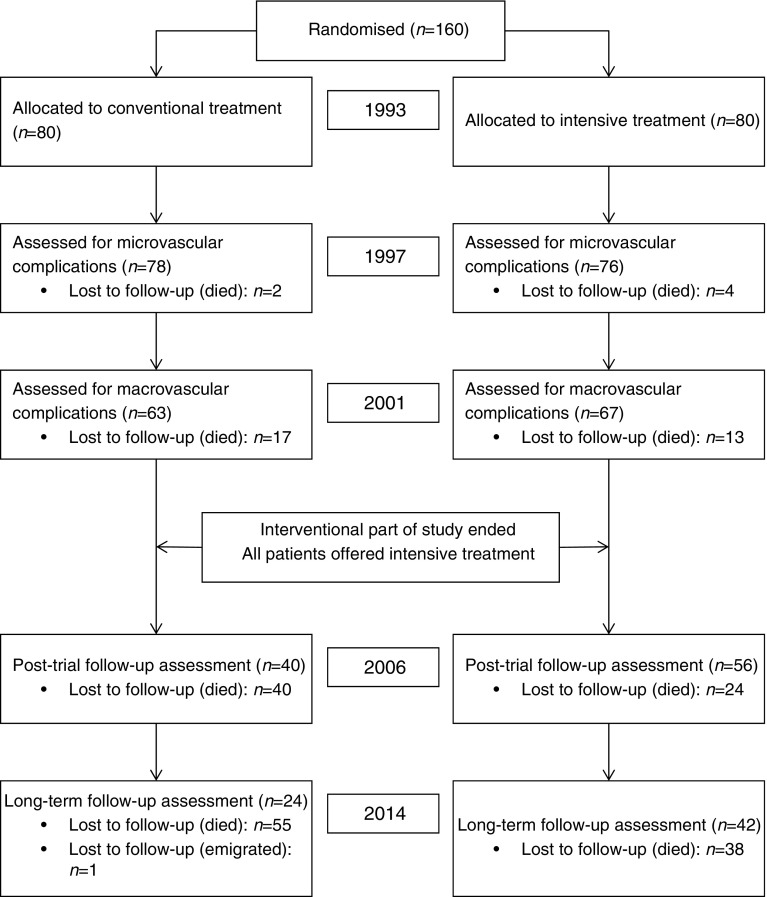
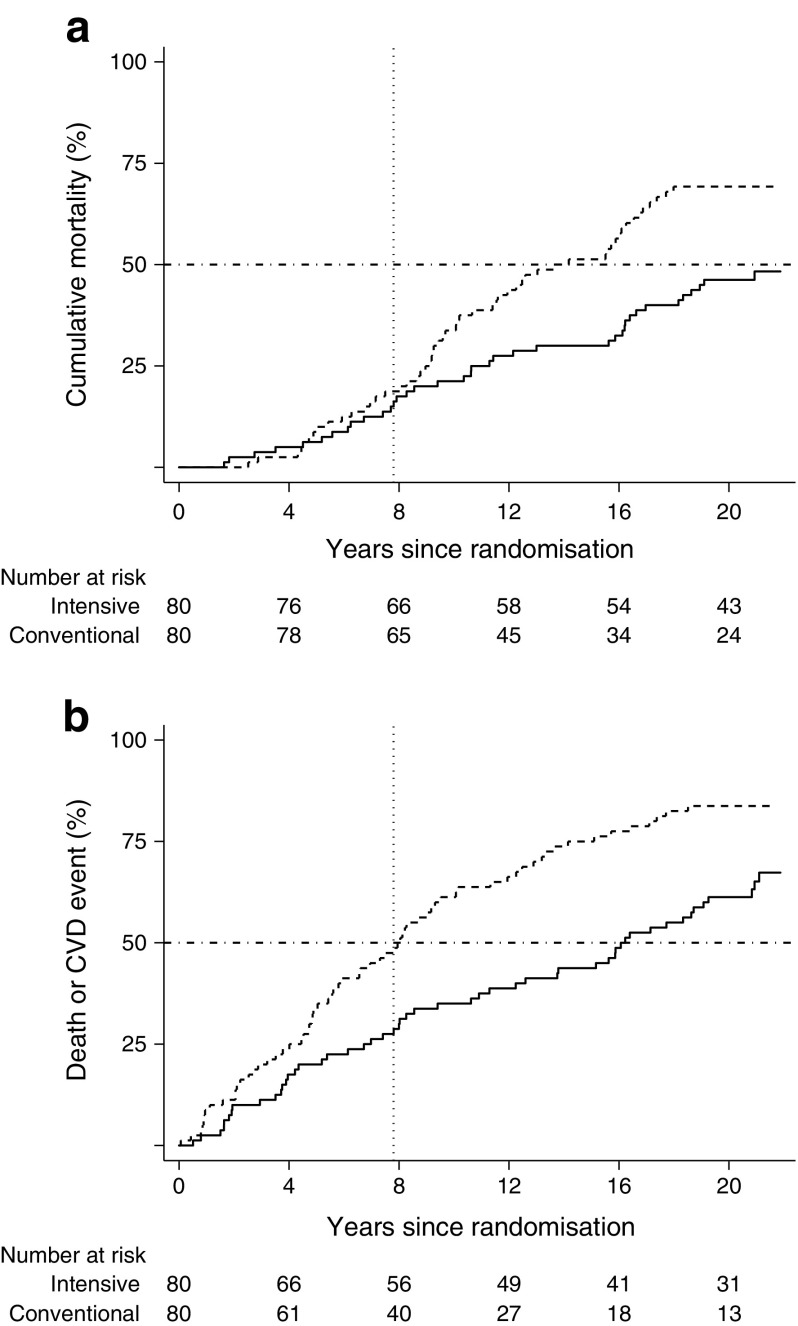
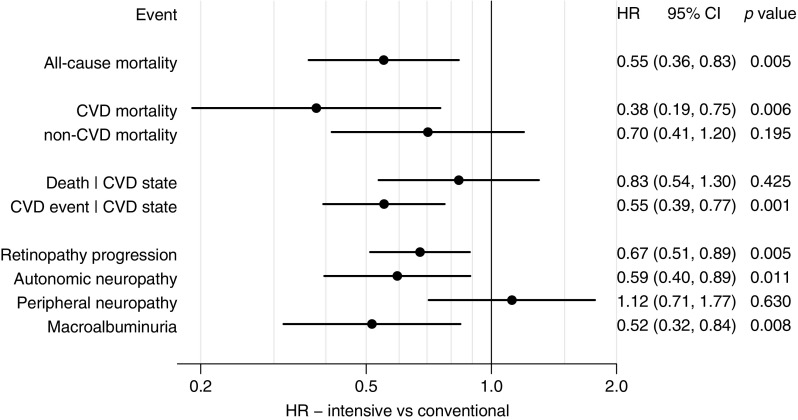
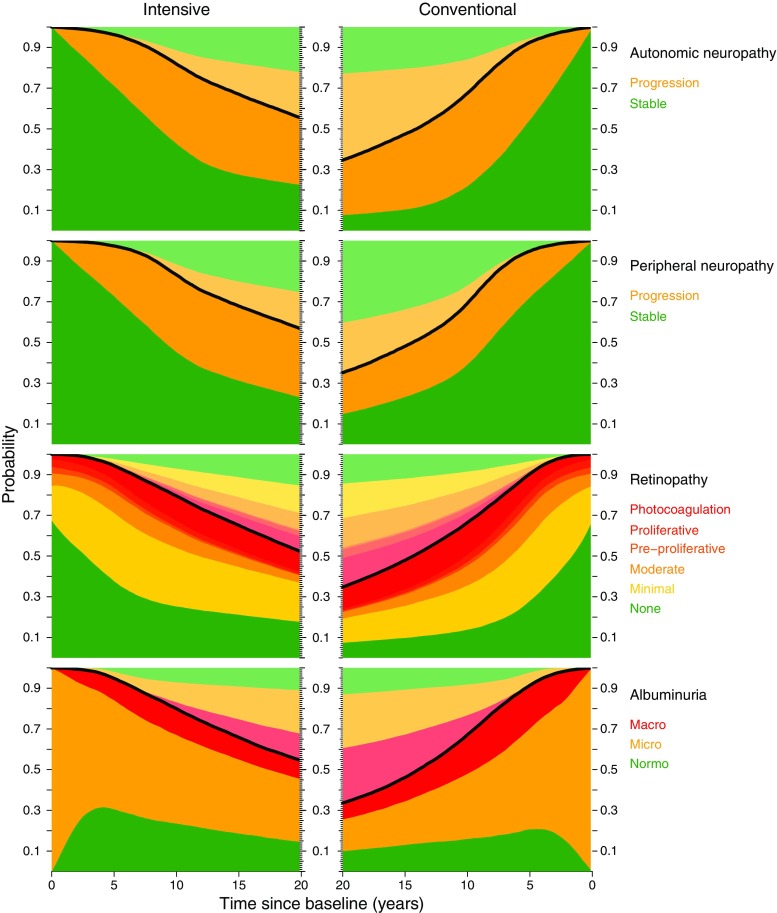
AIMS/HYPOTHESIS: The aim of this work was to study the potential long-term impact of a 7.8 years intensified, multifactorial intervention in patients with type 2 diabetes mellitus and microalbuminuria in terms of gained years of life and years free from incident cardiovascular disease. METHODS: The original intervention (mean treatment duration 7.8 years) involved 160 patients with type 2 diabetes and microalbuminuria who were randomly assigned (using sealed envelopes) to receive either conventional therapy or intensified, multifactorial treatment including both behavioural and pharmacological approaches. After 7.8 years the study continued as an observational follow-up with all patients receiving treatment as for the original intensive-therapy group. The primary endpoint of this follow-up 21.2 years after intervention start was difference in median survival time between the original treatment groups with and without incident cardiovascular disease. Non-fatal endpoints and causes of death were adjudicated by an external endpoint committee blinded for treatment allocation. RESULTS: Thirty-eight intensive-therapy patients vs 55 conventional-therapy patients died during follow-up (HR 0.55 [95% CI 0.36, 0.83], p = 0.005). The patients in the intensive-therapy group survived for a median of 7.9 years longer than the conventional-therapy group patients. Median time before first cardiovascular event after randomisation was 8.1 years longer in the intensive-therapy group (p = 0.001). The hazard for all microvascular complications was decreased in the intensive-therapy group in the range 0.52 to 0.67, except for peripheral neuropathy (HR 1.12). CONCLUSIONS/INTERPRETATION: At 21.2 years of follow-up of 7.8 years of intensified, multifactorial, target-driven treatment of type 2 diabetes with microalbuminuria, we demonstrate a median of 7.9 years of gain of life. The increase in lifespan is matched by time free from incident cardiovascular disease. TRIAL REGISTRATION: ClinicalTrials.gov registration no. NCT00320008. FUNDING: The study was funded by an unrestricted grant from Novo Nordisk A/S.
Overview
The claims and statistics of this paper haven’t been checked yet.
Free: it reads the open-access text and checks the first 5 claims that cite a source we can check. Create a free account to check every claim.
Integrity signals
Registry
Cites
Statistics
Figures
Verification
Claims the paper makes
The claims and statistics of this paper haven’t been checked yet.
Free: it reads the open-access text and checks the first 5 claims that cite a source we can check. Create a free account to check every claim.
Claims other papers make about this one
Each is checked against this paper’s own text: does it say what the citing paper says it does?
The source backs part of the claim, not all of it — or backs it for a different population, condition or comparison.
In the citing paper
“High levels, as well as variability, of both BG and BP are important risk factors for DKD. 89,184,400–403”
From American Association of Clinical Endocrinology Clinical Practice Guideline: Developing a Diabetes Mellitus Comprehensive Care Plan-2022 Update. (2022) · cites this paper as [400]
Experimental — accuracy not yet measuredThe source backs part of the claim, not all of it — or backs it for a different population, condition or comparison.
In the citing paper
“Evidence also supports the use of multifactorial risk-reduction strategies in addition to A1C control for CV prevention, including blood pressure (BP) and lipid targets; CV prevention medications; physical activity and other healthy behaviours; as well as smoking cessation (see Cardiovascular Protection in People with Diabetes chapter, p. S162).”
From Targets for Glycemic Control (2018) · cites this paper as [34]
Experimental — accuracy not yet measuredThe cited source says what the claim attributes to it.
In the citing paper
“Such multifactorial interventions have recently been suggested to lead to not only significant microvascular and CV benefits but also mortality reduction in the 21-year follow up of the Steno-2 study (34).”
From Targets for Glycemic Control (2018) · cites this paper as [34]
The cited source says what the claim attributes to it.
In the citing paper
“The salient results of this study include: increased survival for a median of 7.9 years; 8.1 years longer median time before first CV event; and reduction in all microvascular complications, except for peripheral neuropathy, for participants in the intensive-therapy group compared to the conventional therapy group.”
From Targets for Glycemic Control (2018) · cites this paper as [34]
The cited source says what the claim attributes to it.
In the citing paper
“In addition, studies in people with T2D and early CKD demonstrated the long-term bene fi t of multifactorial intervention on the development of microvascular and macrovascular complications and mortality.”
From KDIGO 2022 Clinical Practice Guideline for Diabetes Management in Chronic Kidney Disease (2022) · cites this paper as [8]
5 more claims about this paper
Create a free account to see every claim other papers make about this one.
Self-check
Percentages, sums and reported differences re-computed from the paper’s own numbers.
The self-check needs the paper’s full text.
Citations
Cites
10-year follow-up of intensive glucose control in type 2 diabetes
Holman, R. R., Paul, S. K., Bethel, M. A., Matthews, D. R., & Neil, H. A. W. (2008) · New England Journal of Medicine · doi:10.1056/nejmoa0806470 · Cited by 7,751 · cited 1×
“Long-term beneficial effects of glucose-lowering treatment in reducing microvascular complications have been demonstrated beyond the duration of a clinical trial in both type 1 and type 2 diabetes [20, 25, 26].”
BackgroundThe Danish Civil Registration System
Pedersen, C. B. (2011) · Scandinavian Journal of Public Health · doi:10.1177/1403494810387965 · Cited by 4,632 · cited 1×
“The registries have proven highly valid and complete [16, 17].”
BackgroundEzetimibe Added to Statin Therapy after Acute Coronary Syndromes
Cannon, C. P., Blazing, M. A., Giugliano, R. P., McCagg, A., White, J. A., Theroux, P., Darius, H., Lewis, B. S., Ophuis, T. O., Jukema, J. W., et al. (2015) · New England Journal of Medicine · doi:10.1056/nejmoa1410489 · Cited by 4,487
Multifactorial intervention and cardiovascular disease in patients with type 2 diabetes
Gæde, P., Vedel, P., Larsen, N., Jensen, G. V. H., Parving, H.-H., & Pedersen, O. (2003) · New England Journal of Medicine · doi:10.1056/nejmoa021778 · Cited by 4,378
Self-citationThe Danish National Patient Register
Lynge, E., Sandegaard, J. L., & Rebolj, M. (2011) · Scandinavian Journal of Public Health · doi:10.1177/1403494811401482 · Cited by 3,968 · cited 1×
“The registries have proven highly valid and complete [16, 17].”
BackgroundEffect of a multifactorial intervention on mortality in type 2 diabetes
Gæde, P., Lund-Andersen, H., Parving, H.-H., & Pedersen, O. (2008) · New England Journal of Medicine · doi:10.1056/nejmoa0706245 · Cited by 3,465 · cited 2×
“All measurement methods were in accordance with previous follow-up protocols [13].”
MethodResultSelf-citationInzucchi, S. E., Bergenstal, R. M., Buse, J. B., Diamant, M., Ferrannini, E., Nauck, M., Peters, A. L., Tsapas, A., Wender, R., & Matthews, D. R. (2015) · Diabetes Care · doi:10.2337/dc14-2441 · Cited by 3,066 · cited 1×
“Over the past two decades, a number of single-risk-factor intervention and post-trial studies have provided evidence for recommending multifactorial treatment of this common disorder (as reviewed in [1]).”
Background(2013) · European Heart Journal · doi:10.1093/eurheartj/eht108 · Cited by 1,955
Changes in diabetes-related complications in the United States, 1990-2010
Gregg, E. W., Li, Y., Wang, J., Rios Burrows, N., Ali, M. K., Rolka, D., Williams, D. E., & Geiss, L. (2014) · New England Journal of Medicine · doi:10.1056/nejmoa1310799 · Cited by 1,749 · cited 2×
“Similar findings have been reported from the ADVANCE (Action in Diabetes and Vascular Disease: Preterax and Diamicron MR Controlled Evaluation) trial examining a combined approach of intensified blood pressure lowering and intensive glucose control [23] as well as from registry-based studies [2, 10].”
BackgroundResultLong-term effects of intensive glucose lowering on cardiovascular outcomes
The ACCORD Study Group (2011) · New England Journal of Medicine · doi:10.1056/nejmoa1006524 · Cited by 1,035
Cited by
Items 301–400 of 526
Exciting breakthroughs in the management of diabetes mellitus
Scheen, A. J. (2021) · Diabetes Epidemiology and Management · doi:10.1016/j.deman.2021.100005 · Cited by 7
Arenas-León, J. L., Morales-Villegas, E., Cardona-Muñóz, E. G., Alcocer-Gamba, M. A., Ramirez-Contreras, J. P., Contreras-Sandoval, A. Y., & González-Gálvez, G. (2023) · Diabetology & Metabolic Syndrome · doi:10.1186/s13098-023-01231-6 · Cited by 4
“Thus, a multifactorial intervention on different CV risk factors among patients with T2D has been associated with a marked reduction of mortality, even after several years of follow-up [45, 46].”
BackgroundPoulsen, M. B., Julu, P. O. O., Røikjer, J., Drewes, A. M., & Brock, C. (2025) · Frontiers in Endocrinology · doi:10.3389/fendo.2025.1653881 · Cited by 4
Comprehensive risk factor control in Type 2 diabetes and incident peripheral artery disease
Yu, X., Lian, Z., Wu, J., Tang, P., & Xiong, S. (2025) · European Journal of Preventive Cardiology · doi:10.1093/eurjpc/zwaf697 · Cited by 3
Qiu, Z., Qian, F., Zhang, Y., Liu, J., Geng, T., Li, R., Yao, P., Franco, O. H., Rimm, E. B., Manson, J. E., et al. (2025) · Military Medical Research · doi:10.1186/s40779-025-00674-4 · Cited by 9
“…microalbuminuria, behavior modification (i.e., improvements in diet quality and physical activity) together with use of medications (i.e., antihypertensive drugs and aspirin) led to a significant reduction in CVD events [31] and a 7.9-year gain in life expectancy after 7.8 years of follow-up [9].”
InfluentialGao, J., Wu, Y., Huang, Z.-G., Deng, Q., Chen, Z., Gao, Q., Wu, X., Liu, Z., Wang, J., Zhang, H., et al. (2025) · Diabetes Obesity and Metabolism · doi:10.1111/dom.70403 · Cited by 3
Luk, A. O. Y., Chun Kwan, O., Fan, B., Lau, E. S. H., Fan, Y., Lim, C., Lui, J. N. M., Wong, K. T., Tsoi, S. T. F., Poon, E., et al. (2026) · Diabetes Care · doi:10.2337/dc26-0114 · Cited by 4
Molecular Mechanisms Underlying Vascular Disease in Diabetes
Touyz, R. M., Eluwole, O. A., Camargo, L. L., Rios, F. J. O., Alves-Lopes, R., Neves, K. B., Maseko, M. J., Guzik, T. J., Petrie, J. R., & Montezano, A. C. I. (2023) · Updates in hypertension and cardiovascular protection · doi:10.1007/978-3-031-13009-0_7 · Cited by 6
Alqahtani, S. A. M. (2023) · Journal of Family Medicine and Primary Care · doi:10.4103/jfmpc.jfmpc_104_23 · Cited by 4
Nasrallah, M., Khalil, C. A., & Refaat, M. M. (2017) · BioMed Research International · doi:10.1155/2017/9257930 · Cited by 5
Liu, Y., Wang, G., Yang, X., Li, P., Ling, H., & Zhu, S. (2018) · European Journal of Inflammation · doi:10.1177/2058739218762058 · Cited by 3
Wang, Y., Guan, Q., Hou, X. H., Zhang, X., Zhang, H., Xu, C., Jing, F., Ma, S., Shao, S., Zhao, M., et al. (2020) · Journal of Diabetes · doi:10.1111/1753-0407.13081 · Cited by 3
“Previous studies have demonstrated that only glycemic control was not sufficient to prevent or improve diabetic vascular complications,(4,5) while multifactorial risk-reduction strategies can reduce the risk of cardiovascular and microvascular events and extend life span.(6,7) However, in China, more than 50% of treat…”
BackgroundWesche, J., Bakken, T., Vetrhus, M., Hufthammer, K. O., Nyroenning, L. A., Fagertun, H. E., Saethre, I., Wold, B. H., Lyng, C. S., Pettersen, E. M., et al. (2024) · Cardiovascular Diabetology · doi:10.1186/s12933-024-02421-w · Cited by 4
Zreik, R., Salti, H. I., Salti, I. S., Boukhalil, R., Haddad, T., & Nasrallah, M. (2016) · Journal of Diabetes Mellitus · doi:10.4236/jdm.2016.64032 · Cited by 3
Kim, J. M., & Kim, S. S. (2019) · Journal of Korean Diabetes · doi:10.4093/jkd.2019.20.1.6 · Cited by 3
Prise en charge médicamenteuse de la néphropathie diabétique
Bauduceau, B., Bordier, L., & Monnier, L. (2023) · Médecine des Maladies Métaboliques · doi:10.1016/j.mmm.2023.10.005 · Cited by 4
Tendencias de la mortalidad por diabetes en España: por el buen camino
Cabezas-Agrícola, J. M. (2017) · Revista Española de Cardiología · doi:10.1016/j.recesp.2016.12.019 · Cited by 6
Dual RAAS Blockade with Aliskiren in Patients with Severely Impaired Chronic Kidney Disease
Rasche, F. M., Joel, C., Ebert, T., Frese, T., Barinka, F., Busch, V., Rasche, W., Lindner, T. H., Schneider, J. G., & Schiekofer, S. (2017) · Experimental and Clinical Endocrinology & Diabetes · doi:10.1055/s-0043-106440 · Cited by 4
Herranz-Antolín, S., de Frutos, V. Á., & Torralba, M. (2018) · Endocrinología Diabetes y Nutrición · doi:10.1016/j.endinu.2017.11.006 · Cited by 3
Zhao, W., Wang, Y., Cao, C., Zeng, Z., Jin, L., Liu, Z., Duan, M., Dong, Y., Zhang, J., Shuai, Y., et al. (2022) · Medicine · doi:10.1097/md.0000000000031943 · Cited by 3
“[8] In the Steno-2 study, a MFI milestone study, showed about 50% reduction in the risk of cardiovascular events.[3] But in real world, the controlling of cardiovascular risk factor targets remains suboptimal among patients with type 2 diabetes, especially in the developing countries, i.”
Backgroundde Farias, A. L., da Silva, A. S. A., Tavares, V. B., Souza, J. D. S. E., Silva, H. P., Bastos, M. D. S. C.-B. D. O., & Neto, J. S. D. M. (2023) · Healthcare · doi:10.3390/healthcare11040518 · Cited by 3
The emergence of cardiodiabetology
Rosenblit, P. D., Lepor, N. E., & Wong, N. D. (2017) · Cardiovascular Endocrinology · doi:10.1097/xce.0000000000000117 · Cited by 4
Diabetes in the third millennium: prognosis improves, but juvenile forms are more frequent
Ventura, F., & Borghi, C. (2019) · European Heart Journal Supplements · doi:10.1093/eurheartj/suz006 · Cited by 3
“This condition represents one of the main cardiovascular risk factors, along and often in association with arterial hypertension and an abnormal lipid profile, thus multiplying the probability of cardiovascular complications.(1) Treatment of T2DM includes modification of lifestyle and pharmacological therapy, which is…”
BackgroundClinical Approach to Assessment and Amelioration of Atherosclerotic Vascular Disease in Diabetes
Goldberg, R. B. (2020) · Frontiers in Cardiovascular Medicine · doi:10.3389/fcvm.2020.582826 · Cited by 3
Trends in Mortality From Diabetes in Spain: On the Right Way
Cabezas-Agrícola, J. M. (2017) · Revista Española de Cardiología (English Edition) · doi:10.1016/j.rec.2017.02.031 · Cited by 4
Diabetes Mellitus and Control of Cardiovascular Disease Risk Factors
Wilson, P. W. F., & GAGNON, D. R. (2017) · Circulation · doi:10.1161/circulationaha.117.029839 · Cited by 3
Modern Sulfonylureas Strike Back – Exploring the Freedom of Flexibility
Kalra, S., & Khandelwal, D. (2018) · touchREVIEWS in Endocrinology · doi:10.17925/ee.2018.14.2.20 · Cited by 4
Roy, M. (2021) · Preprints.org · doi:10.20944/preprints202105.0581.v1 · Cited by 3
Rossing, P. R., & Flyvbjerg, A. (2024) · Wiley eBooks · doi:10.1002/9781119697473.ch44 · Cited by 3
Self-citationBirindwa, G., Mæng, M., Thrane, P. G., Gyldenkerne, C., Thomsen, R. W., & Olesen, K. K. W. (2024) · Clinical Epidemiology · doi:10.2147/clep.s463363 · Cited by 4
Hoo, J., Yang, Y., Lau, E. S. H., Ibrahim, L., Vethakkan, S. R., Ratnasingam, J., Chan, S.-P., Paramasivam, S. S., Chia, Y. C., Tan, A. T. B., et al. (2025) · Diabetes Obesity and Metabolism · doi:10.1111/dom.70125 · Cited by 2
Poulsen, M. B., Okdahl, T., Buciek, J. H., Drewes, A. M., Karlsson, P., Ahluwalia, T. S., Brock, B., Brock, C., Rossing, P. R., & Hansen, C. S. (2025) · BMJ Open · doi:10.1136/bmjopen-2025-101074 · Cited by 2
Self-citationRamírez‐García, D., Perezalonso-Espinosa, J., Méndez-Labra, P. N., Fermín‐Martínez, C. A., Díaz-Sánchez, J. P., Paz‐Cabrera, C. D., Vargas‐Vázquez, A., López-Teros, M. T., Flood, D., Manne‐Goehler, J., et al. (2026) · Journal of the American Heart Association · doi:10.1161/jaha.125.044366 · Cited by 4
Kjellberg, J., & Tikkanen, C. K. (2021) · Expert Review of Pharmacoeconomics & Outcomes Research · doi:10.1080/14737167.2021.1908130 · Cited by 2
Cardiologist's approach to the diabetic patient: No further delay for a paradigm shift
Maranta, F., Cianfanelli, L., Gaspardone, C., Rizza, V., Grippo, R., Ambrosetti, M., & Cianflone, D. (2021) · International Journal of Cardiology · doi:10.1016/j.ijcard.2021.05.050 · Cited by 2
Yeh, Y., Lin, K., Sheu, W. H., Lo, S.-H., Yeh, Y., Huang, C., Hwu, C., & Lu, C. (2024) · BMC Nephrology · doi:10.1186/s12882-024-03567-1 · Cited by 7
“In patients with type 2 diabetes mellitus and early CKD, studies have demonstrated that multifactorial intervention has long-term benefits for complications and mortality [9, 10].”
BackgroundPollard, D. J., Keetharuth, A. D., Brennan, A., Bodicoat, D. H., Glab, A., Hadjiconstantinou, M., Mensa, J. P., Northern, A., & Davies, M. J. (2025) · BMJ Open · doi:10.1136/bmjopen-2024-093327 · Cited by 2
“22 23 ► Scenario four explored using the results of clinical primary analyses (as in Scenario 2), together with the use of literature-based estimates of SSME effectiveness (as in Scenario 3), as opposed to those directly observed in the trial.”
SGLT2-inhibitors in type-2 diabetes: The remaining questions!
Rajput, R., & Ved, J. (2017) · Diabetes & Metabolic Syndrome Clinical Research & Reviews · doi:10.1016/j.dsx.2017.03.031 · Cited by 2
Antihyperglycemic agents and cardiovascular outcomes: recent insights
BAJAJ, H. S., Zinman, B., & Verma, S. (2017) · Current Opinion in Cardiology · doi:10.1097/hco.0000000000000435 · Cited by 6
Willis, A., Crasto, W., Gray, L. J., Dallosso, H. M., Waheed, G., Gray, G., Davies, M. J., & Khunti, K. (2018) · JMIR Research Protocols · doi:10.2196/resprot.9588 · Cited by 2
Tsuchida, H., & Iwashita, K. (2018) · Vascular Failure · doi:10.30548/vascfail.2.1_45 · Cited by 2
Bordier, L., Sollier, M., Dolz, M., Garcia, C., Allain, J., & Bauduceau, B. (2019) · Médecine des Maladies Métaboliques · doi:10.1016/s1957-2557(19)30022-7 · Cited by 3
Estudio ESCRYTO. Diabetes sin enfermedad cardiovascular y grado de control
García, M. C. G., Trillo, J. M. M., Lachica, L. Á., Cos, X., Franch‐Nadal, J., & Gil, X. C. (2019) · Medicina de Familia SEMERGEN · doi:10.1016/j.semerg.2019.11.006 · Cited by 3
Cardiovascular Effects of Hypoglycemic Agents in Diabetes Mellitus
Pietraszek, A. (2020) · Current Drug Safety · doi:10.2174/1574886315666200902154736 · Cited by 2
Konstantonis, G. D., Arida, A., Aissopou, E. K., Protogerou, A. D., Tentolouris, N., Sfikakis, P. P., & Makrilakis, K. (2021) · Angiology · doi:10.1177/00033197211010622 · Cited by 2
Protein restriction for diabetic kidney disease
Jiang, S., Fang, J., & Li, W. (2021) · Cochrane Database of Systematic Reviews · doi:10.1002/14651858.cd014906 · Cited by 2
Cardiodiabetology: newer pharmacologic strategies for reducing cardiovascular disease risks
Wong, N. D. (2022) · Canadian Journal of Physiology and Pharmacology · doi:10.1139/cjpp-2022-0065 · Cited by 2
Battula, V. K., Satheesh, P., Srinivas, B., Sekhar, A. C., & Sujatha, V. A. (2020) · Lecture notes in electrical engineering · doi:10.1007/978-981-15-7961-5_138 · Cited by 4
Troncoso, I. A., Carollo-Limeres, C., Ríos-Prego, M., Guler, I., Cadarso-Suárez, C., & Mariño, A. F. (2019) · Endocrinología Diabetes y Nutrición (English ed ) · doi:10.1016/j.endien.2019.06.001 · Cited by 2
Lifestyle Interventions in Diabetes and Coronary Disease
Farkouh, M. E., & Godoy, L. C. (2019) · Journal of the American College of Cardiology · doi:10.1016/j.jacc.2018.12.091 · Cited by 2
The descriptive epidemiology of type 2 diabetes in the United Kingdom from 2004 to 2021Preprint
Currie, C. J., Currie, J. G., Holden, S. E., Morgan, C. L., Heywood, B. R., Peters, J. R., & the Livingstone Development Team (2024) · medRxiv · doi:10.1101/2024.03.04.24303693 · Cited by 3
Ramírez‐García, D., Perezalonso-Espinosa, J., Méndez-Labra, P. N., Fermín‐Martínez, C. A., Díaz-Sánchez, J. P., Paz‐Cabrera, C. D., Vargas‐Vázquez, A., López-Teros, M. T., Flood, D., Manne‐Goehler, J., et al. (2024) · medRxiv · doi:10.1101/2024.09.18.24313926 · Cited by 2
Clinical Practice Guidelines, Evidence-Based Medicine, and Diabetes
Rodríguez‐Saldaña, J. (2019) · Springer eBooks · doi:10.1007/978-3-030-11815-0_21 · Cited by 1
Stirban, O. A. (2022) · Diabetes aktuell · doi:10.1055/a-1876-1528 · Cited by 1
Diabetic neuropathy: Current issues in diagnosis and prevention
Spallone, V. (2024) · Elsevier eBooks · doi:10.1016/b978-0-323-88426-6.00016-6 · Cited by 2
Achievement of ABC Goals in Type 2 Diabetes in Real-life
Chandalia, H. B., Jain, J. D., & Chandalia, S. H. (2024) · Journal of the Association of Physicians of India · doi:10.59556/japi.72.0730 · Cited by 1
“13 As the incidence of macrovascular and microvascular complications continues to be high even if the 7% HbA1c is reached, efforts are being made to lower the HbA1c to 6.5 or 6%.”
InfluentialType 2 Diabetes Mellitus and Stroke: Understanding the Connection
Abdullah, F. (2024) · Nutritional neurosciences · doi:10.1007/978-981-97-6818-9_7 · Cited by 2
Lower extremity arterial disease perspective: IUA consensus document on "LEAD management". Part 2
Antignani, P. L., Poredoš, P., Gastaldi, G., Spirkoska, A., & Mansilha, A. (2025) · International Angiology · doi:10.23736/s0392-9590.25.05344-1 · Cited by 1
Treatment Options for Diabetic Neuropathy: Insights from the Romanian Neuropathy Guidelines
Nica, A. E., Parliteanu, O. A., Claudia, S., Dobjanschi, C. G., Rusu, E., & Radulian, G. (2025) · IntechOpen eBooks · doi:10.5772/intechopen.1009813 · Cited by 3
Lim, S. K., Nishimura, R., Kesavadev, J., Kong, A. P. S., McGill, M. J., Ou, H., Chun Kwan, O., Lee, C., Zhang, X., Ji, L., et al. (2025) · Diabetes Research and Clinical Practice · doi:10.1016/j.diabres.2025.113054 · Cited by 1
Neves, J. S., Leite, A. R., Vale, C., Marques, P., Vasques‐Nóvoa, F., Leite-Moreira, A. F., & Ferreira, J. P. (2025) · Diabetologia · doi:10.1007/s00125-025-06637-7 · Cited by 5
Schmidt, S., Busch, M., & Wolf, G. (2025) · Diabetes aktuell · doi:10.1055/a-2629-3116 · Cited by 1
Apelin-36 attenuates diabetic glomerular endothelial hyperpermeability via the KLF2/Occludin pathway
Jiang, J., Yang, L., Cheng, Y., Xiong, M., & Zhou, X. (2026) · Peptides · doi:10.1016/j.peptides.2026.171472 · Cited by 1
Bui, L., Le, T. T., Dao, N. H., Nguyen, H. T., Nguyen, T. T., Pham, V. T. T., Cao, T. T. B., Nguyen, P. T., & Dong, P. T. X. (2026) · PLoS ONE · doi:10.1371/journal.pone.0343313 · Cited by 2
Heinzl, M. W., Resl, M., Maier, J., Steinwender, C., Falkensammer, J., Fellinger, P., Steinmaurer, T., Saely, C. H., Hoppichler, F., Stingl, H., et al. (2026) · Wiener klinische Wochenschrift · doi:10.1007/s00508-025-02667-8 · Cited by 1
“Insgesamt ist zur Re-duktion kardiovaskulärer Ereignisse sowie der Morta-lität daher ein multimodaler Therapieansatz entschei-dend [1, 10, 11].”
EndoBridge 2025: pearls and highlights
Yıldız, B. O., Armenti, M., Brandi, M. L., Carey, J., Carling, T., Ciudin, A., Dhatariya, K., Fountas, A., Frühbeck, G., Goulis, D. G., et al. (2026) · HORMONES · doi:10.1007/s42000-026-00804-0 · Cited by 1
Chakravarti, R., Bankar, P. R., Chigilipalli, J., Roy, D., Bhattacharya, B., Pradhan, A. K., Singh, R., Arya, M., Kundu, A., & Ghosh, D. (2026) · Vascular Pharmacology · doi:10.1016/j.vph.2026.107685 · Cited by 1
Jermendy, G. (2018) · Orvosi Hetilap · doi:10.1556/650.2018.31041 · Cited by 1
Time to Rethink Reducing Cardiovascular Risk: Are We Ready?
CHENG, A. Y. Y., Wolever, T. M. S., & Mancini, G. B. J. (2020) · Canadian Journal of Diabetes · doi:10.1016/j.jcjd.2019.10.010 · Cited by 1
Atherosclerosis in patients with type 1 diabetes
Karásek, D. (2019) · Vnitřní lékařství · doi:10.36290/vnl.2019.135 · Cited by 1
“Hyperglykemie a další rizikové faktory související s diabetem Hyperglykemie představuje závažnější KV rizikový faktor u nemocných s DM1T než u nemocných s DM2T, u nichž se na KV riziku větší měrou podílejí další rizikové faktory jako dyslipidemie či hypertenze [2,9,41].”
Ivanov, D. D., & Ivanova, M. D. (2021) · KIDNEYS · doi:10.22141/2307-1257.9.3.2020.211461 · Cited by 2
Glycemic Control and Future Perspectives for Treatment
Miyamoto, S., & Shikata, K. (2020) · Springer eBooks · doi:10.1007/978-981-15-9301-7_6 · Cited by 1
UPDATE OF CARDIOVASCULAR AUTONOMIC NEUROPATHY IN PATIENTS WITH DIABETES
Universitatea de Medicină și Farmacie „Carol Davila“, B., Nica, A. E., Dobjansch, C., Universitatea de Medicină și Farmacie „Carol Davila“, B., Parlițeanu, O. A., Universitatea de Medicină și Farmacie „Carol Davila“, B., Rusu, E., Universitatea de Medicină și Farmacie „Carol Davila“, B., Radulian, G., & Universitatea de Medicină și Farmacie „Carol Davila“, B. (2021) · Romanian Medical Journal · doi:10.37897/rmj.2021.2.6 · Cited by 1
Brenner, S., Daikeler, R., Oberaigner, W., & Stummer, H. (2021) · Zeitschrift für Evidenz Fortbildung und Qualität im Gesundheitswesen · doi:10.1016/j.zefq.2021.09.010 · Cited by 1
Diabetische Nephropathie: Die neue Rolle der Niere
Wanner, C., & Lopau, K. (2020) · Deutsches Ärzteblatt · doi:10.3238/persdia.2020.05.15.01 · Cited by 2
FACTORS AFFECTING THE LEVEL OF GLYCATED HEMOGLOBIN IN HOSPITALIZED TYPE 2 DIABETES MELLITUS PATIENTS
Milyukova, G., Peskov, A. B., Manina, N., Khokhlov, M. P., Yudina, E. E., Golubtsova, T. S., Kerova, I. R., Pribylova, S. A., Mamedova, R., & Ismailova, A. (2022) · Ulyanovsk Medico-biological Journal · doi:10.34014/2227-1848-2022-1-18-28 · Cited by 1
Complications cardiovasculaires macro-angiopathiques et insuffisance cardiaque chez le diabétique
Cosson, E., & Valensi, P. E. (2019) · Elsevier eBooks · doi:10.1016/b978-2-294-75889-8.00016-6 · Cited by 2
Abordaje práctico de la semaglutida en el paciente con diabetes tipo 2
Escobar, C., Castro, A., Cerezo, J. F. G., Górriz, J. L., Obaya, J. C., & Villar‐Taibo, R. (2022) · Revista Española de Cardiología Suplementos · doi:10.1016/s1131-3587(22)00013-9 · Cited by 7
Tønnesen, H. (2022) · Clinical Health Promotion - Research and Best Practice for patients staff and community · doi:10.29102/clinhp.22001 · Cited by 1
Detection, management, and prevention of diabetes-related foot disease in the Australian context
McNeil, S. E., Waller, K., Lorenzo, Y. S. P., Mateevici, O. C., Telianidis, S., Qi, S. D., Churilov, I., MacIsaac, R. J., & Galligan, A. (2023) · World Journal of Diabetes · doi:10.4239/wjd.v14.i7.942 · Cited by 1
Eurich, D. T., Wozniak, L., Soprovich, A., Lee, C., Minhas‐Sandhu, J. K., Crowshoe, L. L., Johnson, J. A., & Samanani, S. (2023) · Primary care diabetes · doi:10.1016/j.pcd.2023.11.004 · Cited by 1
Sumithra, M., Andrew, D. J., & Aanandhi, M. V. (2024) · Indian Journal of Pharmaceutical Education and Research · doi:10.5530/ijper.58.1s.35 · Cited by 1
Sriskandarajah, A., Metcalfe, A., Nerenberg, K. A., & Butalia, S. (2024) · Diabetes Research and Clinical Practice · doi:10.1016/j.diabres.2024.111756 · Cited by 1
Ihana‐Sugiyama, N., Sano, K., Sugiyama, T., Goto, A., Hirata, T., Ueki, K., & Tsushita, K. (2024) · Diabetes Research and Clinical Practice · doi:10.1016/j.diabres.2024.111804 · Cited by 2
Orna, J. A. G., Martínez, A. B. M., Padial, L. R., Sánchez, M. A., Barrios, V., García, J. M., & Pérez, A. (2024) · Endocrinología Diabetes y Nutrición (English ed ) · doi:10.1016/j.endien.2024.07.001 · Cited by 1
Kardiovaskuläre Sicherheit oraler Antidiabetika
Scholze, J. (2017) · MMW - Fortschritte der Medizin · doi:10.1007/s15006-017-9162-z · Cited by 1
“Wie aktuell publizierten Ergebnisse eines 21-jährigen Follow-up der Steno2-Studie [6] zeigen, führt eine intensive, multifaktorielle Behandlungsstrategie langfristig zu einer Halbierung der kardiovaskulären Todesfälle und nahezu zu einer Verdopplung der mittleren Überlebenszeit.”
BackgroundType 2 Diabetes and the Reduction of Cardiovascular Risk: Sorting Out the Actors and the Roles
Feldman, R. D., FITCHETT, D. H., Hegele, R. A., & Poulter, N. R. (2018) · Canadian Journal of Cardiology · doi:10.1016/j.cjca.2018.01.091 · Cited by 1
Herranz-Antolín, S., de Frutos, V. Á., & Torralba, M. (2018) · Endocrinología Diabetes y Nutrición (English ed ) · doi:10.1016/j.endien.2018.04.001 · Cited by 1
Complications of Diabetes Mellitus: Prevention in Type 2 Diabetes Mellitus
Chew, D. E. K., & Quek, P. L. (2019) · The Singapore Family Physician · doi:10.33591/sfp.45.1.u3 · Cited by 1
Prediabetes after kidney transplantation—a reason to worry?
Jenssen, T. G. (2019) · Kidney International · doi:10.1016/j.kint.2019.08.008 · Cited by 1
Vascular Complications in Type 2 Diabetes
Chen-Ku, C. H. (2020) · Springer eBooks · doi:10.1007/978-3-030-53370-0_37 · Cited by 1
Masulli, M., Lucisano, G., Bonora, E., Prato, S. D., Rivellese, A. A., Signorini, S. G., Mocarelli, P., Riccardi, G., Vaccaro, O., Nicolucci, A., et al. (2020) · European Journal of Preventive Cardiology · doi:10.1093/eurjpc/zwaa002 · Cited by 1
Alphabet strategy for diabetes care: A checklist approach in the time of COVID-19 and beyond
Upreti, R., Lee, J. D., Kotecha, S., & Patel, V. (2021) · World Journal of Diabetes · doi:10.4239/wjd.v12.i4.407 · Cited by 3
More and more elderly diabetics: toward evidence-based deprescribing?
Micheli, A. D. (2018) · The Journal of AMD · doi:10.36171/jamd18.21.1.02 · Cited by 1
Kalra, S., Jagadeesha, A., Khandelwal, D., Samudra, K., GADVE, S. S., & Bhattacharyya, S. (2021) · Clinical Diabetology · doi:10.5603/dk.a2021.0042 · Cited by 1
Diabetic Kidney Disease: Identification, Prevention, and Treatment
Caramori, M. L., & Rossing, P. R. (2022) · Springer eBooks · doi:10.1007/978-3-030-98927-9_7 · Cited by 1
Self-citationA kardiometabolikus rizikó csökkentésének fontossága 2-es típusú cukorbetegségben
Kempler, P. (2022) · Diabetologia Hungarica · doi:10.24121/dh.2022.s1.3 · Cited by 1
A 2-es típusú diabétesz kezelésének hazai szemlélete és gyakorlata a Delphi-konszenzus tükrében
Várkonyi, T. T., Balogh, Z., Brasnyó, P., & Mazzag, B. (2023) · Diabetologia Hungarica · doi:10.24121/dh.2023.11
Simoneau, A., Monlun, M., Poupon, P., Baillet‐Blanco, L., Alexandre, L., Mohammedi, K., & Rigalleau, V. (2018) · Diabetes Care · doi:10.2337/dc17-2175 · Cited by 1
“thresholds (VPT) in the Steno-2 study (2) and only a small initial improvement with later seemingly inexorable progression of Michigan Neuropathy Screening Instrument (MNSI) scores in the Look AHEAD (Action for Health in Diabetes) trial (3).”
BackgroundSulfonylureas at the Glomerular Battlefield
Kalra, S., Khandelwal, D., Bajaj, S., & Das, A. K. (2018) · touchREVIEWS in Endocrinology · doi:10.17925/ee.2018.14.2.15 · Cited by 1
“Their usage is backed not only by pathophysiological justification, but also by robust evidence derived from randomised clinical trials and cardiovascular outcomes trials.(4)”
BackgroundMethod
Metadata
- Authors
- Gæde, P., Oellgaard, J., Carstensen, B., Rossing, P., Lund-Andersen, H., Parving, H.-H., & Pedersen, O.
- Affiliations
- University of Southern Denmark (DK)
- University of Copenhagen (DK)
- Corresponding author
- Pedersen, Oluf
- Venue
- Diabetologia
- Published
- 2016-08-16
- Volume
- 59
- Issue
- 11
- Pages
- 2298-2307
- ISSN
- 0012-186X (ISSN-L)
- 1432-0428
- PMC
- PMC5506099
- OpenAlex
- W2513040800
- Cited by
- 528
- References
- 31
- Citations by year
- 2026: 28 · 2025: 35 · 2024: 54 · 2023: 49 · 2022: 42 · 2021: 50 · 2020: 56 · 2019: 68 · 2018: 75 · 2017: 57 · 2016: 12
- FWCI
- 71.03
- Type
- journal article
- Language
- en
- Open access
- hybrid
- doi.org
- Locations
- Diabetologia (publishedVersion, cc-by)
- PubMed Central (publishedVersion, cc-by)
- PubMed (publishedVersion)
- Research at the University of Copenhagen (University of Copenhagen) (publishedVersion, cc-by)
- University of Southern Denmark Research Portal (University of Southern Denmark) (submittedVersion, other-oa)
- Funders
- Novo Nordisk
- Topics
- Health Sciences › Medicine › Endocrinology, Diabetes and Metabolism › Diabetes Treatment and Management
- Health Sciences › Medicine › Endocrinology, Diabetes and Metabolism › Diabetes, Cardiovascular Risks, and Lipoproteins
- Health Sciences › Medicine › Endocrinology, Diabetes and Metabolism › Diabetes Management and Research
- Keywords
- type 2 diabetes, microalbuminuria, multifactorial intervention, intensive treatment, Steno-2 trial, life-years gained, survival, cardiovascular disease, microvascular complications, peripheral neuropathy, long-term follow-up
- MeSH terms
- Adult, Aged, Aged, 80 and over, Albuminuria, Cardiovascular Diseases, Diabetes Mellitus, Type 2, Diabetic Nephropathies, Diabetic Neuropathies, Diabetic Retinopathy, Female, Follow-Up Studies, Humans, Hypoglycemic Agents, Male, Middle Aged, Time Factors, Diabetes Complications
About these checks
Registry, retraction, Cites and statistics results are computed, not judged, with one exception: a printed reference that no index lists is read once by a model before it counts as a citation error. Claims are extracted by a model and kept only when their quote appears verbatim in the text; each cited source is then checked, with a model’s help, for whether it says what the claim relies on. Those verdicts can be wrong — read the claim’s quote and the cited source before relying on one.
Statistics and arithmetic are recomputed, not judged.
Confidence bands are shown only for fields calibrated on our annotated test set. None is calibrated yet, so no band is shown.
What counts as a claim ›How we measure confidence ›How we check this ›
Are you an author, or do you see a problem with this page? Request a review
Data sources
Bibliographic data: Semantic Scholar, OpenAlex, Crossref.
Contains information from the Semantic Scholar Academic Graph Datasets, made available under the ODC Attribution License (ODC-BY 1.0).
Semantic Scholar’s data is described in: Kinney, R., et al. (2023). The Semantic Scholar Open Data Platform. arXiv:2301.10140.
