

Years of life gained by multifactorial intervention in patients with type 2 diabetes mellitus and microalbuminuria: 21 years follow-up on the Steno-2 randomised trial
Open accessThe DOI matches its Crossref record; 31 of the 31 references it cites were found in a registry or an index.
Abstract
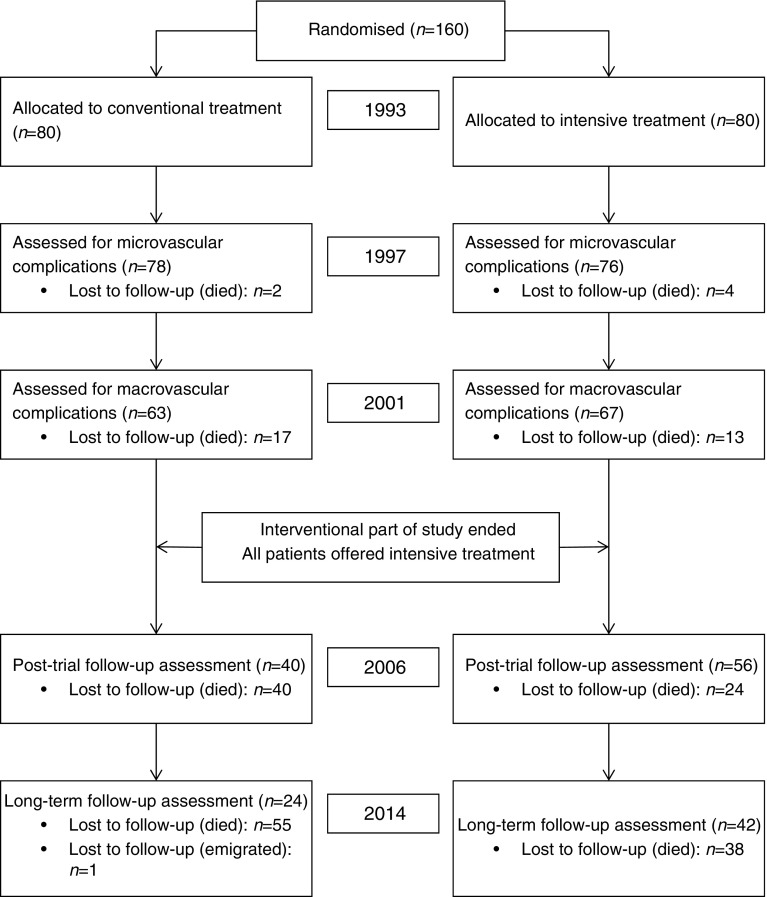
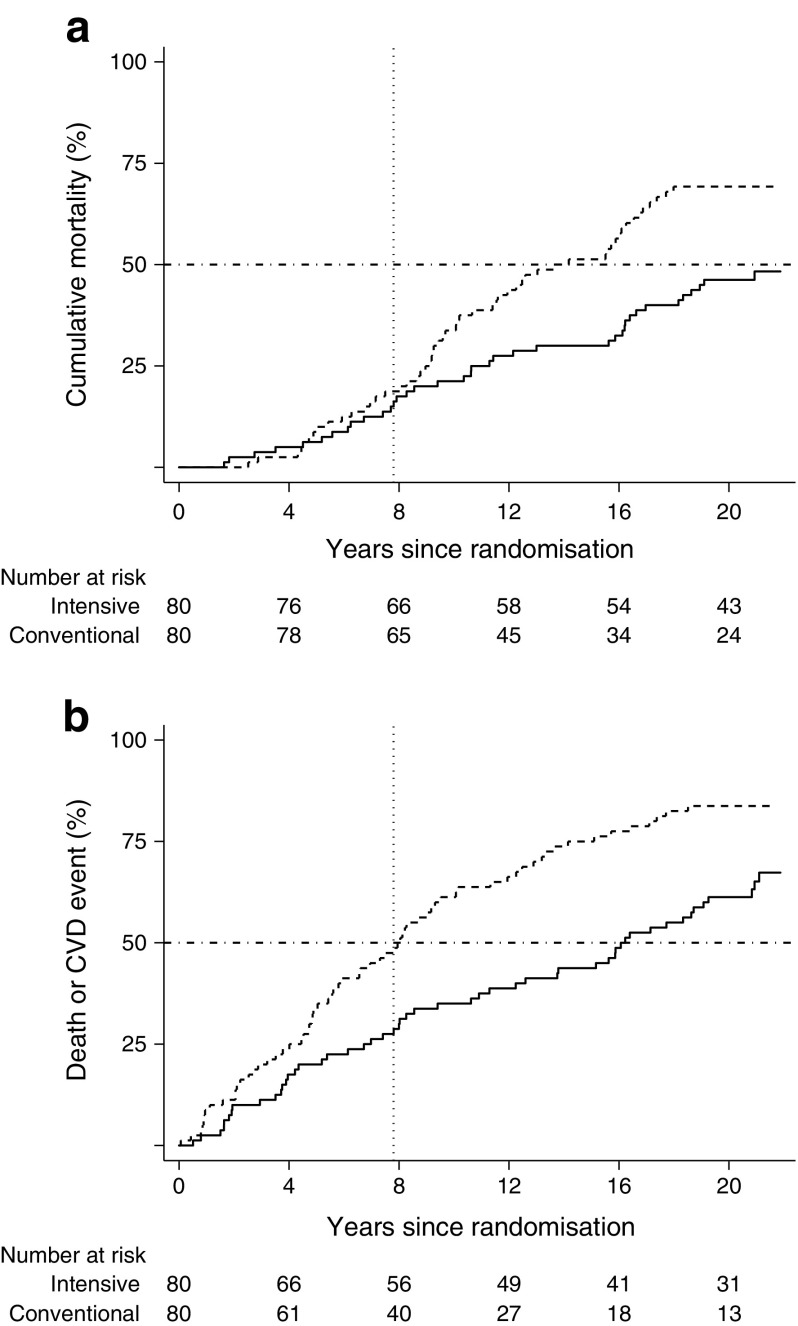
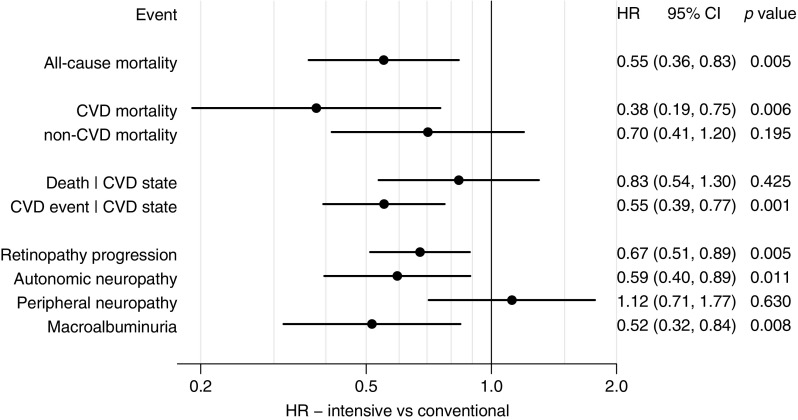
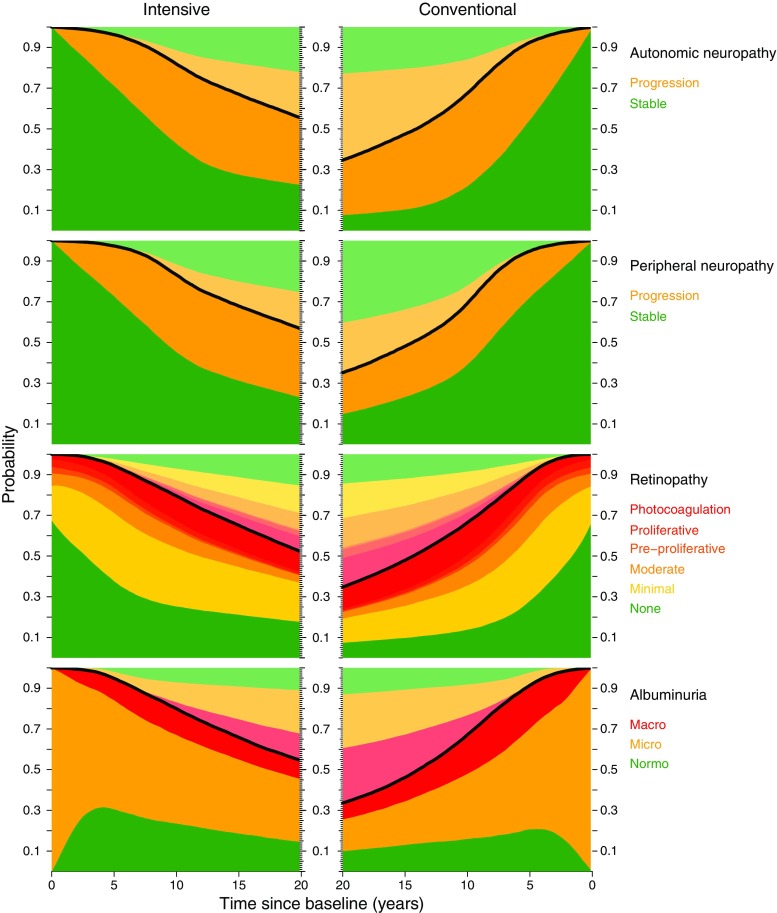
AIMS/HYPOTHESIS: The aim of this work was to study the potential long-term impact of a 7.8 years intensified, multifactorial intervention in patients with type 2 diabetes mellitus and microalbuminuria in terms of gained years of life and years free from incident cardiovascular disease. METHODS: The original intervention (mean treatment duration 7.8 years) involved 160 patients with type 2 diabetes and microalbuminuria who were randomly assigned (using sealed envelopes) to receive either conventional therapy or intensified, multifactorial treatment including both behavioural and pharmacological approaches. After 7.8 years the study continued as an observational follow-up with all patients receiving treatment as for the original intensive-therapy group. The primary endpoint of this follow-up 21.2 years after intervention start was difference in median survival time between the original treatment groups with and without incident cardiovascular disease. Non-fatal endpoints and causes of death were adjudicated by an external endpoint committee blinded for treatment allocation. RESULTS: Thirty-eight intensive-therapy patients vs 55 conventional-therapy patients died during follow-up (HR 0.55 [95% CI 0.36, 0.83], p = 0.005). The patients in the intensive-therapy group survived for a median of 7.9 years longer than the conventional-therapy group patients. Median time before first cardiovascular event after randomisation was 8.1 years longer in the intensive-therapy group (p = 0.001). The hazard for all microvascular complications was decreased in the intensive-therapy group in the range 0.52 to 0.67, except for peripheral neuropathy (HR 1.12). CONCLUSIONS/INTERPRETATION: At 21.2 years of follow-up of 7.8 years of intensified, multifactorial, target-driven treatment of type 2 diabetes with microalbuminuria, we demonstrate a median of 7.9 years of gain of life. The increase in lifespan is matched by time free from incident cardiovascular disease. TRIAL REGISTRATION: ClinicalTrials.gov registration no. NCT00320008. FUNDING: The study was funded by an unrestricted grant from Novo Nordisk A/S.
Overview
The claims and statistics of this paper haven’t been checked yet.
Free: it reads the open-access text and checks the first 5 claims that cite a source we can check. Create a free account to check every claim.
Integrity signals
Registry
Cites
Statistics
Figures
Verification
Claims the paper makes
The claims and statistics of this paper haven’t been checked yet.
Free: it reads the open-access text and checks the first 5 claims that cite a source we can check. Create a free account to check every claim.
Claims other papers make about this one
Each is checked against this paper’s own text: does it say what the citing paper says it does?
The source backs part of the claim, not all of it — or backs it for a different population, condition or comparison.
In the citing paper
“High levels, as well as variability, of both BG and BP are important risk factors for DKD. 89,184,400–403”
From American Association of Clinical Endocrinology Clinical Practice Guideline: Developing a Diabetes Mellitus Comprehensive Care Plan-2022 Update. (2022) · cites this paper as [400]
Experimental — accuracy not yet measuredThe source backs part of the claim, not all of it — or backs it for a different population, condition or comparison.
In the citing paper
“Evidence also supports the use of multifactorial risk-reduction strategies in addition to A1C control for CV prevention, including blood pressure (BP) and lipid targets; CV prevention medications; physical activity and other healthy behaviours; as well as smoking cessation (see Cardiovascular Protection in People with Diabetes chapter, p. S162).”
From Targets for Glycemic Control (2018) · cites this paper as [34]
Experimental — accuracy not yet measuredThe cited source says what the claim attributes to it.
In the citing paper
“Such multifactorial interventions have recently been suggested to lead to not only significant microvascular and CV benefits but also mortality reduction in the 21-year follow up of the Steno-2 study (34).”
From Targets for Glycemic Control (2018) · cites this paper as [34]
The cited source says what the claim attributes to it.
In the citing paper
“The salient results of this study include: increased survival for a median of 7.9 years; 8.1 years longer median time before first CV event; and reduction in all microvascular complications, except for peripheral neuropathy, for participants in the intensive-therapy group compared to the conventional therapy group.”
From Targets for Glycemic Control (2018) · cites this paper as [34]
The cited source says what the claim attributes to it.
In the citing paper
“In addition, studies in people with T2D and early CKD demonstrated the long-term bene fi t of multifactorial intervention on the development of microvascular and macrovascular complications and mortality.”
From KDIGO 2022 Clinical Practice Guideline for Diabetes Management in Chronic Kidney Disease (2022) · cites this paper as [8]
5 more claims about this paper
Create a free account to see every claim other papers make about this one.
Self-check
Percentages, sums and reported differences re-computed from the paper’s own numbers.
The self-check needs the paper’s full text.
Citations
Cites
10-year follow-up of intensive glucose control in type 2 diabetes
Holman, R. R., Paul, S. K., Bethel, M. A., Matthews, D. R., & Neil, H. A. W. (2008) · New England Journal of Medicine · doi:10.1056/nejmoa0806470 · Cited by 7,751 · cited 1×
“Long-term beneficial effects of glucose-lowering treatment in reducing microvascular complications have been demonstrated beyond the duration of a clinical trial in both type 1 and type 2 diabetes [20, 25, 26].”
BackgroundThe Danish Civil Registration System
Pedersen, C. B. (2011) · Scandinavian Journal of Public Health · doi:10.1177/1403494810387965 · Cited by 4,632 · cited 1×
“The registries have proven highly valid and complete [16, 17].”
BackgroundEzetimibe Added to Statin Therapy after Acute Coronary Syndromes
Cannon, C. P., Blazing, M. A., Giugliano, R. P., McCagg, A., White, J. A., Theroux, P., Darius, H., Lewis, B. S., Ophuis, T. O., Jukema, J. W., et al. (2015) · New England Journal of Medicine · doi:10.1056/nejmoa1410489 · Cited by 4,487
Multifactorial intervention and cardiovascular disease in patients with type 2 diabetes
Gæde, P., Vedel, P., Larsen, N., Jensen, G. V. H., Parving, H.-H., & Pedersen, O. (2003) · New England Journal of Medicine · doi:10.1056/nejmoa021778 · Cited by 4,378
Self-citationThe Danish National Patient Register
Lynge, E., Sandegaard, J. L., & Rebolj, M. (2011) · Scandinavian Journal of Public Health · doi:10.1177/1403494811401482 · Cited by 3,968 · cited 1×
“The registries have proven highly valid and complete [16, 17].”
BackgroundEffect of a multifactorial intervention on mortality in type 2 diabetes
Gæde, P., Lund-Andersen, H., Parving, H.-H., & Pedersen, O. (2008) · New England Journal of Medicine · doi:10.1056/nejmoa0706245 · Cited by 3,465 · cited 2×
“All measurement methods were in accordance with previous follow-up protocols [13].”
MethodResultSelf-citationInzucchi, S. E., Bergenstal, R. M., Buse, J. B., Diamant, M., Ferrannini, E., Nauck, M., Peters, A. L., Tsapas, A., Wender, R., & Matthews, D. R. (2015) · Diabetes Care · doi:10.2337/dc14-2441 · Cited by 3,066 · cited 1×
“Over the past two decades, a number of single-risk-factor intervention and post-trial studies have provided evidence for recommending multifactorial treatment of this common disorder (as reviewed in [1]).”
Background(2013) · European Heart Journal · doi:10.1093/eurheartj/eht108 · Cited by 1,955
Changes in diabetes-related complications in the United States, 1990-2010
Gregg, E. W., Li, Y., Wang, J., Rios Burrows, N., Ali, M. K., Rolka, D., Williams, D. E., & Geiss, L. (2014) · New England Journal of Medicine · doi:10.1056/nejmoa1310799 · Cited by 1,749 · cited 2×
“Similar findings have been reported from the ADVANCE (Action in Diabetes and Vascular Disease: Preterax and Diamicron MR Controlled Evaluation) trial examining a combined approach of intensified blood pressure lowering and intensive glucose control [23] as well as from registry-based studies [2, 10].”
BackgroundResultLong-term effects of intensive glucose lowering on cardiovascular outcomes
The ACCORD Study Group (2011) · New England Journal of Medicine · doi:10.1056/nejmoa1006524 · Cited by 1,035
Cited by
Heart Disease and Stroke Statistics—2020 Update: A Report From the American Heart Association
Virani, S. S., Alonso, A., Benjamin, E. J., Bittencourt, M. S., Callaway, C. W., Carson, A. P., Chamberlain, A. M., Chang, A. R., Cheng, S., Delling, F. N., et al. (2020) · Circulation · doi:10.1161/cir.0000000000000757 · Cited by 9,175
Cosentino, F., Grant, P. J., Aboyans, V., Bailey, C. J., Ceriello, A., Delgado, V., Federici, M., Filippatos, G., Grobbee, D. E., Hansen, T. B., et al. (2020) · European Heart Journal · doi:10.1093/eurheartj/ehz486 · Cited by 4,763
Self-citationDavies, M. J., D’Alessio, D. A., Fradkin, J., Kernan, W. N., Mathieu, C., Mingrone, G., Rossing, P., Tsapas, A., Wexler, D. J., & Buse, J. B. (2018) · Diabetes Care · doi:10.2337/dci18-0033 · Cited by 3,518
Self-citationDiabetes, Hypertension, and Cardiovascular Disease: Clinical Insights and Vascular Mechanisms
Petrie, J. R., Guzik, T. J., & Touyz, R. M. (2018) · Canadian Journal of Cardiology · doi:10.1016/j.cjca.2017.12.005 · Cited by 1,787
“However, in established T2D, it is a relatively weak modifiable risk factor compared with hypertension, dyslipidemia, and (unfortunately in many populations) cigarette smoking.(15,16)”
Background2023 ESC guidelines for the management of cardiovascular disease in patients with diabetes.
Marx, N., Federici, M., Schütt, K., Müller-Wieland, D., Ajjan, R. A., Antunes, M. J., Christodorescu, R. M., Crawford, C., Di Angelantonio, E., Eliasson, B., et al. (2023) · European Heart Journal · doi:10.1093/eurheartj/ehad192 · Cited by 1,642
Self-citationRisk factors, mortality, and cardiovascular outcomes in patients with type 2 diabetes
Rawshani, A., Rawshani, A., Franzén, S., Sattar, N., Eliasson, B., Svensson, A.-M., Zethelius, B., Miftaraj, M., McGuire, D. K., Rosengren, A., et al. (2018) · New England Journal of Medicine · doi:10.1056/nejmoa1800256 · Cited by 1,475
Davies, M. J., D’Alessio, D. A., Fradkin, J., Kernan, W. N., Mathieu, C., Mingrone, G., Rossing, P., Tsapas, A., Wexler, D. J., & Buse, J. B. (2018) · Diabetologia · doi:10.1007/s00125-018-4729-5 · Cited by 1,455
“Substantial reductions in ASCVD events and death are seen when multiple ASCVD risk factors are addressed simultaneously, with long-standing benefits [8, 9].”
BackgroundSelf-citationKDIGO 2020 Clinical practice guideline for diabetes management in chronic kidney disease
de Boer, I. H., Caramori, M. L., Chan, J. C. N., Heerspink, H. J. L., Hurst, C., Khunti, K., Liew, A., Michos, E. D., Navaneethan, S. D., Olowu, W. A., et al. (2020) · Kidney International · doi:10.1016/j.kint.2020.06.019 · Cited by 1,399
Self-citationKDIGO 2022 Clinical Practice Guideline for Diabetes Management in Chronic Kidney Disease
Rossing, P., Caramori, M. L., Chan, J. C. N., Heerspink, H. J. L., Hurst, C., Khunti, K., Liew, A., Michos, E. D., Navaneethan, S. D., Olowu, W. A., et al. (2022) · Kidney International · doi:10.1016/j.kint.2022.06.008 · Cited by 1,373
Self-citationDiabetes and hypertension: a position statement by the American Diabetes Association
de Boer, I. H., Bangalore, S., Benetos, A., Davis, A. M., Michos, E. D., Muntner, P., Rossing, P., Zoungas, S., & Bakris, G. (2017) · Diabetes Care · doi:10.2337/dci17-0026 · Cited by 714
“Large benefits are seen when multiple risk factors are addressed simultaneously (9).”
BackgroundSelf-citationEpidemiology and risk of cardiovascular disease in populations with chronic kidney disease
Matsushita, K., Ballew, S. H., Wang, A. Y.-M., Kalyesubula, R., Schaeffner, E., & Agarwal, R. (2022) · Nature Reviews Nephrology · doi:10.1038/s41581-022-00616-6 · Cited by 670
Selvarajah, D., Kar, D., Khunti, K., Davies, M. J., Scott, A. R., Walker, J., & Tesfaye, S. (2019) · The Lancet Diabetes & Endocrinology · doi:10.1016/s2213-8587(19)30081-6 · Cited by 556
Japanese clinical practice guideline for diabetes 2019
Araki, E., Goto, A., Kondo, T., Noda, M., Noto, H., Origasa, H., Osawa, H., Taguchi, A., Tanizawa, Y., Tobe, K., et al. (2020) · Diabetology International · doi:10.1007/s13340-020-00439-5 · Cited by 545
Blonde, L., Umpierrez, G. E., Reddy, S. S., McGill, J. B., Berga, S. L., Bush, M., Chandrasekaran, S., DeFronzo, R. A., Einhorn, D., Galindo, R. J., et al. (2022) · Endocrine Practice · doi:10.1016/j.eprac.2022.08.002 · Cited by 507
10. Cardiovascular Disease and Risk Management: Standards of Care in Diabetes—2024
American Diabetes Association Professional Practice Committee, ElSayed, N. A., Aleppo, G., Bannuru, R. R., Bruemmer, D., Collins, B. S., Das, S. R., Ekhlaspour, L., Hilliard, M. E., Johnson, E. L., et al. (2024) · Diabetes Care · doi:10.2337/dc24-s010 · Cited by 438
Młynarska, E., Czarnik, W., Dzieża, N., Jędraszak, W., Majchrowicz, G., Prusinowski, F., Stabrawa, M., Rysz, J., & Franczyk, B. (2025) · International Journal of Molecular Sciences · doi:10.3390/ijms26031094 · Cited by 328
“The combination of managing glucose levels, blood pressure (BP), and lipids along with the use of renin–angiotensin system (RAS) inhibitors, statins, and aspirin, has been shown to lower the risk of stroke [188].”
Japanese Clinical Practice Guideline for Diabetes 2019
Araki, E., Goto, A., Kondo, T., Noda, M., Noto, H., Origasa, H., Osawa, H., Taguchi, A., Tanizawa, Y., Tobe, K., et al. (2020) · Journal of Diabetes Investigation · doi:10.1111/jdi.13306 · Cited by 341
10. Cardiovascular Disease and Risk Management: Standards of Care in Diabetes—2025
American Diabetes Association Professional Practice Committee, ElSayed, N. A., McCoy, R. G., Aleppo, G., Balapattabi, K., Beverly, E. A., Briggs Early, K., Bruemmer, D., Das, S. R., Echouffo-Tcheugui, J. B., et al. (2025) · Diabetes Care · doi:10.2337/dc25-s010 · Cited by 486
Ueki, K., Sasako, T., Okazaki, Y., Kato, M., Okahata, S., Katsuyama, H., Haraguchi, M., Morita, A., Ohashi, K., Hara, K., et al. (2017) · The Lancet Diabetes & Endocrinology · doi:10.1016/s2213-8587(17)30327-3 · Cited by 313
Spallone, V. (2019) · Diabetes & Metabolism Journal · doi:10.4093/dmj.2018.0259 · Cited by 295
“Glycaemic control and CAN There is clear evidence for the efficacy of intensive treatment of hyperglycaemia in T1DM with a prolonged benefit (EDIC study) [28], whereas efficacy is only apparent in the setting of a multifactorial strategy in T2DM and with prolonged benefits [129], albeit not confirmed in the ADDITION s…”
BackgroundPrediabetes and Cardiovascular Disease
Brannick, B., & Dagogo-Jack, S. (2018) · Endocrinology and Metabolism Clinics of North America · doi:10.1016/j.ecl.2017.10.001 · Cited by 293
Post-transplant diabetes mellitus in patients with solid organ transplants
Jenssen, T., & Hartmann, A. (2019) · Nature Reviews Endocrinology · doi:10.1038/s41574-018-0137-7 · Cited by 278
Tofte, N., Lindhardt, M., Adamova, K., Bakker, S. J. L., Beige, J., Beulens, J. W. J., Birkenfeld, A. L., Currie, G., Delles, C., Dimos, I., et al. (2020) · The Lancet Diabetes & Endocrinology · doi:10.1016/s2213-8587(20)30026-7 · Cited by 262
Self-citationDiabetes and Stroke: What Are the Connections?
Mosenzon, O., Cheng, A. Y., Rabinstein, A. A., & Sacco, S. (2023) · Journal of Stroke · doi:10.5853/jos.2022.02306 · Cited by 249
“However, a multifactorial approach to manage glucose, blood pressure, and lipids, along with the use of renin-angiotensin system inhibitors, statins, and aspirin (where appropriate), has been shown to reduce both microvascular and cardiovascular complications of diabetes.(57) After a follow-up period of 21 years, this…”
BackgroundMakino, M., Yoshimoto, R., Ono, M., Itoko, T., Katsuki, T., Koseki, A., Kudo, M., Haida, K., Kuroda, J., Yanagiya, R., et al. (2019) · Scientific Reports · doi:10.1038/s41598-019-48263-5 · Cited by 246
Khunti, K., Ceriello, A., Cos, X., & De Block, C. (2018) · Diabetes Research and Clinical Practice · doi:10.1016/j.diabres.2017.12.004 · Cited by 200
Goldberg, R. B., Orchard, T. J., Crandall, J. P., Boyko, E. J., Budoff, M., Dabelea, D., Gadde, K. M., Knowler, W. C., Lee, C. G., Nathan, D. M., et al. (2022) · Circulation · doi:10.1161/circulationaha.121.056756 · Cited by 173
RSSDI-ESI clinical practice recommendations for the management of type 2 diabetes mellitus 2020
Madhu, S., Chawla, R., Makkar, B., Ghosh, S., Saboo, B., & Kalra, S. (2020) · Indian Journal of Endocrinology and Metabolism · doi:10.4103/ijem.ijem_225_20 · Cited by 167
for the Renal Insufficiency And Cardiovascular Events (RIACE) Study Group, Penno, G., Solini, A., Orsi, E., Bonora, E., Fondelli, C., Trevisan, R., Vedovato, M., Cavalot, F., Zerbini, G., et al. (2021) · BMC Medicine · doi:10.1186/s12916-021-01936-3 · Cited by 166
“Intensified, multifactorial, target-driven treatment has substantially contributed to the decline in mortality in people with T2D, by increasing the years of life gained and the time free from incident CVD [6] as well as by slowing progression of DKD toward end-stage renal disease [7].”
BackgroundNavaneethan, S. D., Zoungas, S., Caramori, M. L., Chan, J. C. N., Heerspink, H. J. L., Hurst, C., Liew, A., Michos, E. D., Olowu, W. A., Sadusky, T., et al. (2021) · Annals of Internal Medicine · doi:10.7326/m20-5938 · Cited by 163
Self-citationLim, L. L., Lau, E. S. H., Kong, A. P. S., Davies, M. J., Levitt, N. S., Eliasson, B., Aguilar-Salinas, C. A., Ning, G., Seino, Y., So, W. Y., et al. (2018) · Diabetes Care · doi:10.2337/dc17-2010 · Cited by 145
Early Detection of Diabetic Peripheral Neuropathy: A Focus on Small Nerve Fibres
Burgess, J., Frank, B., Marshall, A. G., Khalil, R. S., Ponirakis, G., Petropoulos, I. N., Cuthbertson, D. J., Malik, R. A., & Alam, U. (2021) · Diagnostics · doi:10.3390/diagnostics11020165 · Cited by 181
“Early, multifactorial risk factor modification may reduce the risk of foot ulceration and amputation [76,77].”
BackgroundCardiac autonomic neuropathy in patients with diabetes mellitus: current perspectives
Fisher, V. L., & Tahrani, A. A. (2017) · Diabetes Metabolic Syndrome and Obesity · doi:10.2147/dmso.s129797 · Cited by 162
“The STENO-2 trial showed improvements in CAN, but not DPN.(41) In addition, CAN and DPN do not always coexist, despite similar pathogenesis, suggesting that these two conditions are not the same.”
BackgroundResultInfluentialMatikainen, N., Söderlund, S., Björnson, E., Pietiläinen, K., Hakkarainen, A., Lundbom, N., Taskinen, M., & Borén, J. (2019) · Diabetes, Obesity and Metabolism · doi:10.1111/dom.13487 · Cited by 129
Zghebi, S. S., Steinke, D. T., Carr, M. J., Rutter, M. K., Emsley, R. A., & Ashcroft, D. M. (2017) · Diabetes, Obesity and Metabolism · doi:10.1111/dom.12964 · Cited by 128
“For example, long-term follow-up of the Steno 2 trial cohort has shown that 8 years of intensified, multifactorial, target-driven treatment of T2DM led to 8 years of life gained.(36) Therefore, the findings presented in our study have important implication for diabetes care.”
BackgroundRSSDI clinical practice recommendations for the management of type 2 diabetes mellitus 2017
Bajaj, S. (2018) · International Journal of Diabetes in Developing Countries · doi:10.1007/s13410-018-0604-7 · Cited by 125
“diet [64], fiber-rich [65], and protein-rich diet [66, 67] were found to have definite role in prevention of diabetes.”
BackgroundPrevention of Microvascular Complications of Diabetes
Crasto, W., Patel, V., Davies, M. J., & Khunti, K. (2021) · Endocrinology and Metabolism Clinics of North America · doi:10.1016/j.ecl.2021.05.005 · Cited by 169
Oellgaard, J., Gæde, P., Rossing, P. R., Persson, F., Parving, H., & Pedersen, O. B. (2017) · Kidney International · doi:10.1016/j.kint.2016.11.023 · Cited by 124
“We found a trend that mortality in the intensive therapy group was decreased through all albuminuria-state transitions throughout the follow-up period.(16)”
InfluentialSelf-citationSattar, N., McMurray, J., Borén, J., Rawshani, A., Omerovic, E., Berg, N., Halminen, J., Skoglund, K., Eliasson, B., Gerstein, H. C., et al. (2023) · Circulation · doi:10.1161/circulationaha.122.063374 · Cited by 116
Wright, A. K., Suarez-Ortegon, M. F., Read, S. H., Kontopantelis, E., Buchan, I., Emsley, R., Sattar, N., Ashcroft, D. M., Wild, S. H., & Rutter, M. K. (2020) · Circulation · doi:10.1161/circulationaha.120.046783 · Cited by 117
A Unified Pathophysiological Construct of Diabetes and its Complications
Schwartz, S. S., Epstein, S., Corkey, B. E., Grant, S. F. A., Gavin, J. R., Aguilar, R. B., & Herman, M. E. (2017) · Trends in Endocrinology and Metabolism · doi:10.1016/j.tem.2017.05.005 · Cited by 127
Diabetes and Cardiovascular Disease: an Update
Almourani, R., Chinnakotla, B., Patel, R., Kurukulasuriya, L. R., & Sowers, J. (2019) · Current Diabetes Reports · doi:10.1007/s11892-019-1239-x · Cited by 114
Imran, S. A., Agarwal, G., Bajaj, H. S., & Ross, S. (2018) · Canadian Journal of Diabetes · doi:10.1016/j.jcjd.2017.10.030 · Cited by 113
Chowdhury, M., Nevitt, S. J., Eleftheriadou, A., Kanagala, P., Esa, H., Cuthbertson, D. J., Tahrani, A. A., & Alam, U. (2021) · BMJ Open Diabetes Research & Care · doi:10.1136/bmjdrc-2021-002480 · Cited by 125
10. Cardiovascular Disease and Risk Management: Standards of Care in Diabetes—2026
American Diabetes Association Professional Practice Committee for Diabetes*, Bajaj, M., McCoy, R. G., Balapattabi, K., Bannuru, R. R., Bellini, N. J., Bennett, A. K., Beverly, E. A., Briggs Early, K., ChallaSivaKanaka, S., et al. (2026) · Diabetes Care · doi:10.2337/dc26-s010 · Cited by 225
Khunti, K., Kosiborod, M., & Ray, K. K. (2018) · Diabetes, Obesity and Metabolism · doi:10.1111/dom.13243 · Cited by 104
“89).(17) In addition, renal outcomes were improved, including reduction in progression to microalbuminuria (HR, 0.”
BackgroundMethodManagement of diabetic neuropathy
Cernea, S., & Raz, I. (2021) · Metabolism · doi:10.1016/j.metabol.2021.154867 · Cited by 115
Ke, C., Lau, E., Shah, B. R., Stukel, T. A., Ma, R. C., So, W.-Y., Kong, A. P., Chow, E., Clarke, P., Goggins, W., et al. (2019) · Annals of Internal Medicine · doi:10.7326/m18-1900 · Cited by 85
Ndumele, C. E., Rodriguez, F., Dixon, D. L., Khan, S. S., Mukherjee, D., Bajaj, M., Bangalore, S., Bozkurt, B., Breathett, K., Clarke, S. L., et al. (2026) · JACC · doi:10.1016/j.jacc.2026.03.056 · Cited by 90
Kloecker, D. E., Davies, M. J., Khunti, K., & Zaccardi, F. (2020) · Annals of Internal Medicine · doi:10.7326/m19-3286 · Cited by 105
Cardiovascular autonomic neuropathy in diabetes: an update with a focus on management
Eleftheriadou, A., Spallone, V., Tahrani, A. A., & Alam, U. (2024) · Diabetologia · doi:10.1007/s00125-024-06242-0 · Cited by 123
Oellgaard, J., Gæde, P., Rossing, P., Rørth, R., Køber, L., Parving, H.-H., & Pedersen, O. (2018) · Diabetologia · doi:10.1007/s00125-018-4642-y · Cited by 86
“Twenty per cent of all patients developed heart failure, equalling the number of patients experiencing MI (20%), stroke (22%), amputation (19%) or blindness (19%) [16] and mortality seemed to be at least as high for patients with incident heart failure as for patients experiencing an MI.”
Self-citationCardiac Autonomic Neuropathy in Type 1 and 2 Diabetes: Epidemiology, Pathophysiology, and Management
Williams, S., Raheim, S. A., Khan, M. I., Rubab, U., Kanagala, P., Zhao, S. S., Worthington, A., Brown, E. E., & Alam, U. (2022) · Clinical Therapeutics · doi:10.1016/j.clinthera.2022.09.002 · Cited by 112
Epigenetics in diabetic nephropathy, immunity and metabolism
Keating, S. T., van Diepen, J. A., Riksen, N. P., & El-Osta, A. (2018) · Diabetologia · doi:10.1007/s00125-017-4490-1 · Cited by 82
Blood pressure control for diabetic retinopathy
Diana, V., Han, G., Abariga, S. A., Sleilati, G. G., Vedula, S. S., & Hawkins, B. S. (2023) · Cochrane Database of Systematic Reviews · doi:10.1002/14651858.cd006127.pub3 · Cited by 99
Chen, Y., Zhao, X., & Wu, H. (2019) · Arteriosclerosis Thrombosis and Vascular Biology · doi:10.1161/atvbaha.119.312192 · Cited by 85
Jabbour, S. A., Frías, J. P., Ahmed, A., Hardy, E., Choi, J., Sjöström, C. D., & Guja, C. (2020) · Diabetes Care · doi:10.2337/dc19-1350 · Cited by 69
Schernthaner, G., Brand, K. M. G., & Bailey, C. J. (2022) · Metabolism · doi:10.1016/j.metabol.2022.155160 · Cited by 77
Rasmussen, D. G. K., Hansen, T. W., von Scholten, B. J., Nielsen, S., Reinhard, H., Parving, H., Tepel, M., Karsdal, M. A., Jacobsen, P. K., Genovese, F., et al. (2018) · Diabetes Care · doi:10.2337/dc17-2392 · Cited by 75
“, renin-angiotensin-aldosterone system (RAAS) blockers and diuretics) and lifestyle has substantially delayed progression of renal and cardiovascular complications in patients with type 2 diabetes (6,7).”
BackgroundSelf-citationEpigenetics in Obesity and Diabetes Mellitus: New Insights
Suárez, R., Chapela, S. P., Álvarez-Córdova, L., Bautista-Valarezo, E., Sarmiento-Andrade, Y., Verde, L., Frías-Toral, E., & Sarno, G. (2023) · Nutrients · doi:10.3390/nu15040811 · Cited by 75
“Conventional treatment has reduced cardiovascular risk in patients with moderate CKD, but the residual risk remains considerable [102].”
BackgroundNdumele, C. E., Rodríguez, F., Dixon, D. L., Khan, S. S., Mukherjee, D., Bajaj, M. S., Bangalore, S., Bozkurt, B., Breathett, K. K., Clarke, S. L., et al. (2026) · Circulation · doi:10.1161/cir.0000000000001453 · Cited by 161
Andary, R., Fan, W., & Wong, N. D. (2019) · The American Journal of Cardiology · doi:10.1016/j.amjcard.2019.05.035 · Cited by 62
Prognosis and treatment of diabetic nephropathy: Recent advances and perspectives
Rossing, P. R., Persson, F., & Frimodt‐Møller, M. (2018) · Néphrologie & Thérapeutique · doi:10.1016/j.nephro.2018.02.007 · Cited by 67
Self-citationKjær, L. K., Cejvanovic, V., Henriksen, T., Petersen, K. M., Hansen, T. F., Pedersen, O. B., Christensen, C., Torp-Pedersen, C. T., Gerds, T. A., Brandslund, I., et al. (2017) · Diabetes Care · doi:10.2337/dc17-1150 · Cited by 58
Self-citationProtein restriction for diabetic kidney disease
Jiang, S., Fang, J., & Li, W. (2023) · Cochrane Database of Systematic Reviews · doi:10.1002/14651858.cd014906.pub2 · Cited by 78
Şahin, İ., Bakıner, O., Demir, T., Sari, R., & Atmaca, A. A. (2024) · Diabetes Therapy · doi:10.1007/s13300-024-01612-8 · Cited by 79
“%) along with maintenance of ≤ 7% HbA1c target by 80% of patients in the intensive group [32].”
BackgroundInfluentialChanges in the use of glucose‐lowering drugs: A Danish nationwide study
Pottegård, A., Andersen, J. H., Søndergaard, J., Thomsen, R. W., & Vilsbøll, T. (2023) · Diabetes, Obesity and Metabolism · doi:10.1111/dom.14947 · Cited by 54
“of life, and that this increase in lifespan was matched by time free from incident cardiovascular disease.(3) At the beginning of the 2000s, metformin became the preferred first-line therapy for type 2 diabetes, unless contraindicated or poorly”
Jabbour, S. A., Frías, J. P., Guja, C., Hardy, E., Ahmed, A., & Öhman, P. (2018) · Diabetes, Obesity and Metabolism · doi:10.1111/dom.13206 · Cited by 55
“has been shown to prevent or slow the progression of CVD, with the greatest benefit observed for simultaneous control of multiple cardiovascular risk factors.(2) The glucagon-like peptide-1 receptor agonist (GLP-1RA) exenatide(3,4) and the sodium-glucose co-transporter-2 (SGLT2) inhibitor dapagliflozin(5) have both in…”
BackgroundDiabetic nephropathy: Time to withhold development and progression - A review
Sharaf El Din, U. A. A., Salem, M. M., & Abdulazim, D. O. (2017) · Journal of Advanced Research · doi:10.1016/j.jare.2017.04.004 · Cited by 53
“2 years, there was no significant difference in the incidence of ESRD between the 2 groups in spite of the significant impact on survival and cardiovascular outcome [95,96].”
BackgroundDiabetes mellitus type 2 in adults
Dedov, I. I., Shestakova, M. V., Mayorov, A. Y., Шамхалова, М. Ш., Sukhareva, O. Y., Galstyan, G. R., Tokmakova, A. Y., Nikonova, T. V., Surkova, E. V., Кононенко, И. В., et al. (2020) · Diabetes Mellitus · doi:10.14341/dm12507 · Cited by 69
Fan, W., Song, Y., Inzucchi, S. E., Sperling, L., Cannon, C. P., Arnold, S. V., Kosiborod, M., & Wong, N. D. (2019) · Diabetes, Obesity and Metabolism · doi:10.1111/dom.13625 · Cited by 54
Bain, S. C., Bekker Hansen, B., Hunt, B., Chubb, B., & Valentine, W. J. (2020) · Journal of Medical Economics · doi:10.1080/13696998.2019.1645018 · Cited by 53
Zobel, E. H., von Scholten, B. J., Reinhard, H., Persson, F., Teerlink, T., Hansen, T. W., Parving, H., Jacobsen, P. K., & Rossing, P. R. (2017) · Cardiovascular Diabetology · doi:10.1186/s12933-017-0569-8 · Cited by 61
“Background Cardiovascular disease is a major complication in type 2 diabetes despite multifactorial intervention [1, 2].”
BackgroundSelf-citationOwens, D. R., Monnier, L., & Barnett, A. H. (2017) · Diabetes Obesity and Metabolism · doi:10.1111/dom.12977 · Cited by 57
Cardiometabolic risk factors as determinants of peripheral nerve function: the Maastricht Study
van der Velde, J. H. P. M., Koster, A., Strotmeyer, E. S., Mess, W. H., Hilkman, D. M. W., Reulen, J. P. H., Stehouwer, C. D. A., Henry, R. M. A., Schram, M. T., Kallen, C., et al. (2020) · Diabetologia · doi:10.1007/s00125-020-05194-5 · Cited by 54
Atmaca, A. A., Ketenci, A., Şahin, İ., Şengün, İ. Ş., Öner, R. İ., Tilki, H. E., Adaş, M., Soyleli, H., & Demir, T. (2024) · Frontiers in Endocrinology · doi:10.3389/fendo.2024.1380929 · Cited by 70
Bakke, Å., Cooper, J. G., Thue, G., Skeie, S., Carlsen, S., Dalen, I., Løvaas, K. F., Madsen, T. V., Oord, E. R., Berg, T. J., et al. (2017) · BMJ Open Diabetes Research & Care · doi:10.1136/bmjdrc-2017-000459 · Cited by 54
“The Steno-2 trial found an increase in lifespan in high-risk patients with type 2 diabetes with a combined behavioral and pharmacological intervention in a specialist care setting.(5) However, in most countries the majority of patients with type 2 diabetes are treated in primary care.”
BackgroundDing, W., Chang, W.-G., Guo, X.-C., Liu, Y., Xiao, D.-D., Ding, D., Wang, J.-X., & Zhang, X.-J. (2019) · Frontiers in Endocrinology · doi:10.3389/fendo.2019.00202 · Cited by 50
Wang, B., Fu, Y., Tan, X. W., Wang, N., Qi, L., & Lu, Y. (2024) · BMC Medicine · doi:10.1186/s12916-024-03343-w · Cited by 240
Microalbuminuria in Type-2 Diabetes Mellitus; the tip of iceberg of diabetic complications
Ahmad, T., Ulhaq, I., Mawani, M., & Islam, N. (2017) · Pakistan Journal of Medical Sciences · doi:10.12669/pjms.333.12537 · Cited by 51
Phrommintikul, A., Wongcharoen, W., Kumfu, S., Jaiwongkam, T., Gunaparn, S., Chattipakorn, S. C., & Chattipakorn, N. (2019) · British Journal of Clinical Pharmacology · doi:10.1111/bcp.13903 · Cited by 54
Treatment of type 2 diabetes by targeting interleukin-1: a meta-analysis of 2921 patients
Kataria, Y., Ellervik, C., & Mandrup-Poulsen, T. R. (2019) · Seminars in Immunopathology · doi:10.1007/s00281-019-00743-6 · Cited by 56
Inzucchi, S. E., Khunti, K., FITCHETT, D. H., Wanner, C., Mattheus, M., George, J. T., Ofstad, A. P., & Zinman, B. (2020) · The Journal of Clinical Endocrinology & Metabolism · doi:10.1210/clinem/dgaa321 · Cited by 50
Agarwal, R., & Fouque, D. P. (2022) · Nephrology Dialysis Transplantation · doi:10.1093/ndt/gfac331 · Cited by 50
Fangel, M. V., Nielsen, P. B., Kristensen, J. K., Larsen, T. B., Overvad, T. F., Lip, G. Y. H., & Jensen, M. B. (2020) · The American Journal of Medicine · doi:10.1016/j.amjmed.2019.10.042 · Cited by 50
Locatelli, M., Zoja, C., Conti, S., Cerullo, D., Corna, D., Rottoli, D., Zanchi, C., Tomasoni, S., Remuzzi, G., & Benigni, A. (2022) · The Journal of Pathology · doi:10.1002/path.5862 · Cited by 47
“Cardiovascular disease and all-cause mortality are also more frequent in those with overt proteinuria than in diabetic patients who do not have increased urinary albumin excretion [42].”
BackgroundRSSDI-ESI Clinical Practice Recommendations for the Management of Type 2 Diabetes Mellitus 2020
Chawla, R., Madhu, S. V., Makkar, B. M., Ghosh, S. K., Saboo, B., Kalra, S., & On behalf of RSSDI-ESI Consensus Group (2020) · International Journal of Diabetes in Developing Countries · doi:10.1007/s13410-020-00819-2 · Cited by 61
Artime, E., Romera, I., Díaz‐Cerezo, S., & Delgado, E. (2021) · Diabetes Therapy · doi:10.1007/s13300-021-01060-8 · Cited by 52
“9 years after a follow-up period of 21 years [74].”
BackgroundCardiovascular risk in newly diagnosed type 2 diabetes patients in India
Unnikrishnan, A., Sahay, R. K., Phadke, U., Sharma, S., Shah, P., Shukla, R., Viswanathan, V., WANGNOO, S. K., Singhal, S., John, M., et al. (2022) · PLoS ONE · doi:10.1371/journal.pone.0263619 · Cited by 48
“An earlier diagnosis of T2DM followed by appropriate management of diabetes will result in more cardiovascular event free life years [8].”
Hambling, C. E., Khunti, K., Cos, X., Wens, J., Martinez, L., Topsever, P., Prato, S. D., Sinclair, A. J., Schernthaner, G., Rutten, G. E. H. M., et al. (2019) · Primary care diabetes · doi:10.1016/j.pcd.2018.12.005 · Cited by 41
Fujiwara, Y., Eguchi, S., Murayama, H., Takahashi, Y., Toda, M., Imai, K., & Tsuda, K. (2019) · Endocrinology Diabetes & Metabolism · doi:10.1002/edm2.68 · Cited by 49
Li, L., Song, Q., & Yang, X. (2019) · Journal of Diabetes Research · doi:10.1155/2019/3175418 · Cited by 45
“Based on professional knowledge and previous literature, 15 attributes were selected, including total cholesterol, highdensity lipoprotein cholesterol(HDL-C), low-density lipoprotein cholesterol(LDL-C), and triglyceride representing dyslipidemia; LDL-C and systolic blood pressure that were used as risk factors for car…”
MethodDiabetic kidney disease treatment: new perspectives
Tong, L., & Adler, S. G. (2022) · Kidney Research and Clinical Practice · doi:10.23876/j.krcp.21.288 · Cited by 48
“org and GLP-1 RA, intensive multifactorial treatment including both behavioral and pharmacological approaches was demonstrated in the Steno 2 trial to significantly increase the lifespan of patients, lower the risk for CVD, and slow the progression of kidney disease [34].”
BackgroundPersson, F., Bodegård, J., Lahtela, J. T., Nyström, T., Jørgensen, M. E., Jensen, M. L., Gulseth, H. L., Thuresson, M., Hoti, F. J., Nathanson, D., et al. (2018) · Endocrinology Diabetes & Metabolism · doi:10.1002/edm2.36 · Cited by 39
Sönmez, A., Haymana, C., Bayram, F., Salman, S., Dizdar, O. S., Gürkan, E., Çarlıoğlu, A., Barçın, C., Sabuncu, T., Satman, İ., et al. (2018) · Diabetes Research and Clinical Practice · doi:10.1016/j.diabres.2018.09.010 · Cited by 42
SGLT2 inhibition to address the unmet needs in diabetic nephropathy
Barutta, F., Bernardi, S., Gargiulo, G., Durazzo, M., & Gruden, G. (2019) · Diabetes/Metabolism Research and Reviews · doi:10.1002/dmrr.3171 · Cited by 48
“There is thus great interest for ongoing clinical trials (Table 3) that will test the efficacy of SGLT2i on primary renal outcomes in people with established DN.”
BackgroundInfluentialWinther, S. A., Oellgaard, J., Hansen, T. W., von Scholten, B. J., Reinhard, H., Ahluwalia, T. S., Wang, Z., Gæde, P., Parving, H., Hazen, S. L., et al. (2021) · PLoS ONE · doi:10.1371/journal.pone.0244402 · Cited by 36
“Extracted diagnoses for the two cohorts have previously been specified [17, 19].”
BackgroundSelf-citationMather, K. J., Bebu, I., Baker, C., Cohen, R. M., Crandall, J. P., DeSouza, C., Green, J. B., Kirkman, M. S., Krause-Steinrauf, H., Larkin, M., et al. (2020) · Diabetes Research and Clinical Practice · doi:10.1016/j.diabres.2020.108235 · Cited by 34
Achila, O. O., Ghebretinsae, M., Kidane, A., Simon, M., Makonen, S., & Rezene, Y. (2020) · Journal of Diabetes Research · doi:10.1155/2020/5901569 · Cited by 34
Sacco, S., Foschi, M., Ornello, R., Santis, F. D., Pofi, R., & Romoli, M. (2024) · Diabetologia · doi:10.1007/s00125-024-06146-z · Cited by 48
“A multi-faceted approach to managing glucose, blood pressure and lipids, coupled with medications such as renin–angiotensin system inhibitors, statins and aspirin (where appropriate), has been shown to reduce both microvascular and macro-vascular complications of diabetes, including stroke [75].”
Background
Metadata
- Authors
- Gæde, P., Oellgaard, J., Carstensen, B., Rossing, P., Lund-Andersen, H., Parving, H.-H., & Pedersen, O.
- Affiliations
- University of Southern Denmark (DK)
- University of Copenhagen (DK)
- Corresponding author
- Pedersen, Oluf
- Venue
- Diabetologia
- Published
- 2016-08-16
- Volume
- 59
- Issue
- 11
- Pages
- 2298-2307
- ISSN
- 0012-186X (ISSN-L)
- 1432-0428
- PMC
- PMC5506099
- OpenAlex
- W2513040800
- Cited by
- 528
- References
- 31
- Citations by year
- 2026: 28 · 2025: 35 · 2024: 54 · 2023: 49 · 2022: 42 · 2021: 50 · 2020: 56 · 2019: 68 · 2018: 75 · 2017: 57 · 2016: 12
- FWCI
- 71.03
- Type
- journal article
- Language
- en
- Open access
- hybrid
- doi.org
- Locations
- Diabetologia (publishedVersion, cc-by)
- PubMed Central (publishedVersion, cc-by)
- PubMed (publishedVersion)
- Research at the University of Copenhagen (University of Copenhagen) (publishedVersion, cc-by)
- University of Southern Denmark Research Portal (University of Southern Denmark) (submittedVersion, other-oa)
- Funders
- Novo Nordisk
- Topics
- Health Sciences › Medicine › Endocrinology, Diabetes and Metabolism › Diabetes Treatment and Management
- Health Sciences › Medicine › Endocrinology, Diabetes and Metabolism › Diabetes, Cardiovascular Risks, and Lipoproteins
- Health Sciences › Medicine › Endocrinology, Diabetes and Metabolism › Diabetes Management and Research
- Keywords
- type 2 diabetes, microalbuminuria, multifactorial intervention, intensive treatment, Steno-2 trial, life-years gained, survival, cardiovascular disease, microvascular complications, peripheral neuropathy, long-term follow-up
- MeSH terms
- Adult, Aged, Aged, 80 and over, Albuminuria, Cardiovascular Diseases, Diabetes Mellitus, Type 2, Diabetic Nephropathies, Diabetic Neuropathies, Diabetic Retinopathy, Female, Follow-Up Studies, Humans, Hypoglycemic Agents, Male, Middle Aged, Time Factors, Diabetes Complications
About these checks
Registry, retraction, Cites and statistics results are computed, not judged, with one exception: a printed reference that no index lists is read once by a model before it counts as a citation error. Claims are extracted by a model and kept only when their quote appears verbatim in the text; each cited source is then checked, with a model’s help, for whether it says what the claim relies on. Those verdicts can be wrong — read the claim’s quote and the cited source before relying on one.
Statistics and arithmetic are recomputed, not judged.
Confidence bands are shown only for fields calibrated on our annotated test set. None is calibrated yet, so no band is shown.
What counts as a claim ›How we measure confidence ›How we check this ›
Are you an author, or do you see a problem with this page? Request a review
Data sources
Bibliographic data: Semantic Scholar, OpenAlex, Crossref.
Contains information from the Semantic Scholar Academic Graph Datasets, made available under the ODC Attribution License (ODC-BY 1.0).
Semantic Scholar’s data is described in: Kinney, R., et al. (2023). The Semantic Scholar Open Data Platform. arXiv:2301.10140.
